







Abstract
Academically gifted adolescents frequently experience cyberbullying behavior. Successful intervention and prevention of such bullying is, to a large degree, dependent on such incidents being reported to an adult caregiver. However, research shows that adolescents who have experienced cyberbullying tend not to inform parents or teachers. Despite this fact, little attention has been paid to understanding the factors underlying such reporting resistance and consequently the reasons for nonreporting remain undetermined. This study explored Irish gifted adolescents’ resistance to reporting their experiences of cyberbullying behavior. Key reasons for nonreporting included the framing of decisions based on the concepts of self-efficacy, control, perceived risks, the influence of prior reporting experiences, and influence of gender and age on reporting response. The results provide insights that will assist parents, teachers, and all those involved in the formulation of anti-bullying school policies in their attempts to increase adolescent reporting and thereby counter cyberbullying behavior.
Keywords
The widespread adoption of information and communications technologies (ICT) has brought with it many social and educational benefits. Mobile phones, email, live chat applications, and social networking websites now form an intrinsic part of adolescent communication and social life. However, their adoption has been paralleled by an increase in electronically mediated bullying, more commonly known as cyberbullying. This has been defined by Hinduja and Patchin (2009) as “willful and repeated harm inflicted through the use of computers, cell phones, and other electronic devices” (p. 5). That harm includes low self-esteem, poor school attendance and academic performance, frustration, anger, depression, poor physical well-being, suicidal ideation, and, in some cases, death by suicide (Gámez-Guadix, Smith, Orue, & Calvete, 2014; Kowalski & Limber, 2013). Despite this, research on cyberbullying remains at an embryonic stage with much of the extant focus on its prevalence and nature. Research on adolescent resistance to reporting cyberbullying is particularly scarce, thereby constraining our ability to address the problem effectively. Further concern arises regarding the lack of knowledge in relation to academically gifted adolescents, whose experiences and response to cyberbullying behavior have received scant research attention. This research sought to contribute to the body of knowledge by identifying the factors that influence gifted adolescents’ nonreporting of cyberbullying experiences to adults.
Gifted Adolescents and Cyberbullying
Although studies on cyberbullying behavior in relation to gifted students are limited (Smith, Dempsey, Jackson, Olenchak, & Gaa, 2012), the extant research (e.g., Oliver & Candappa, 2003; Richard, Schneider, & Mallet, 2011; Thomson & Gunter, 2006) provides evidence that higher achieving students are at greater risk of becoming victims of verbal/relational bullying than are the case for mainstream students. Woods and Wolke (2004) used a sample of 1,016 academically gifted students in the United Kingdom and found that they were more likely to be subjected to social exclusion by their peers than were students with average academic ability. Although it is not surprising that bullying experiences extend to the gifted student population, what is surprising is the extent of that bullying. For example, Peterson and Ray’s (2006) study examining 432 eighth graders identified as gifted from 16 schools in 11 U.S. states found that 67% of their student sample had experienced bullying during their school years. They also found that at all grade levels, a larger percentage of males than females were bullied. Findings such as these indicate that more detailed examinations of the dynamics of cyberbullying and its effect on the gifted student population merit more attention than has been the case to date.
One explanation for the scant attention that cyberbullying of gifted adolescents has received to date may result from a belief or false assumption that gifted individuals do not have unique social and emotional needs and as a result positive stereotypes prevail based on images of confident and motivated students who deal easily with developmental challenges. This may lead educators and others to not recognize or address the social and emotional needs of these students including their distress. Peterson (2009) identified the problem as follows: When common, positive stereotypes prevail based on images of confident and motivated students, athletes, and musicians, giftedness might be perceived as being unrelated to social and emotion concerns. Educators and others may therefore not recognize or address social and emotional needs, assuming that gifted students deal easily with developmental challenges. (p. 280)
However, as Fornia and Frame (2001) noted, gifted children may experience great inner tension because their advanced abilities in one area (e.g., cognitive) are not necessarily matched in other areas (e.g., social acceptance or popularity). Because even moderate giftedness may result in a poor initial fit in school, Peterson (2009) suggested that social and emotional discomfort is likely to increase throughout their school years.
Academic and social ability are not mutually inclusive. Certain academically gifted children may be lacking in social skills and consequently risk isolation and bullying from their peers (Peterson, 2009) while other factors such as jealousy and insecurity by mainstream students may also contribute to negative attitudes toward gifted adolescents. Although gifted adolescents may have significant academic ability, this advantage does not preclude them from experiencing the same hurt and impact as mainstream students. In fact, Peterson and Ray (2006) posited that their unique characteristics, sensitivities, and intensities can lead to “hypersensitive responses to bullying” (p. 149). In certain cases, a lack of awareness of the unique characteristics and sensitivities of gifted children among adults can have fatal consequences, such as the death by suicide of an 18-year-old gifted female adolescent who had contemplated suicide 7 years prior to the fatal event (Hyatt, 2010). Although the female student had discussed suicidal intent with her peers, she lacked the trust to confide in an adult caregiver. Similar fatalities have occurred as a result of cyberbullying among both mainstream and gifted adolescents, which would suggest that academic giftedness does not guarantee protection from the impact of cyberbullying behavior.
Resistance to Report Cyberbullying
Although early research in this field (e.g., Olweus, 1993) emphasized that the successful intervention and resolution of bullying is, to a large degree, dependent on such incidents being reported to an adult caregiver, the extant literature consistently shows that adolescents who have been bullied tend not to inform others of their experiences (e.g., Black, Weinles, & Washington, 2010; Charach, Pepler, & Ziegler, 1995; Mishna & Alaggio, 2005; Naylor & Cowie, 1999; Petrosino, Turpin-Petrosino, & Guckenburg, 2010). In fact, Ybarra, Mitchell, Wolak, and Finkelhor (2006) found that 33% of victims of cyberbullying in their study did not inform anyone about the incident, and Petrosino et al.’s (2010) nationally representative sample from American schools showed that 64% of adolescents did not report their experiences. In Ireland, the issue of adolescents’ nonreporting of cyberbullying behavior was initially identified by O’Moore and Minton (2011), who found that a distinct contradiction exists between reporting intent and actual practice. For example, they found that although 14.6% of pupils stated that they would inform an adult at school if they were cyberbullied, in reality, only 6% of these pupils had actually reported their cyberbullying experience. Cotter and McGilloway (2011) studied 122 adolescents from two schools in the south of Ireland and found that one quarter of victims did not confide in anybody. However, neither study provides insight as to the causal reasons for that resistance.
In light of evidence that adolescents do not report their bullying or cyberbullying experiences, the dearth of empirical work examining the underlying reasons for this is surprising. Of the two main studies that have examined adolescent resistance to reporting, both employed U.S. samples. Holfeld and Grabe (2012) examined a sample of 383 students from four middle schools in a North American city (average student age of 13.5 years) using a subset of self-developed measures to capture nonreporting. The study findings showed that almost 30% of students who were cyberbullied in the past year did not report the incident. When asked to explain their resistance to reporting, 57% reported they did not feel it was a big deal or they believed they could handle it on their own, with 29% of students fearful that reporting would make the situation worse. Although this study was a valuable attempt at understanding the issue of nonreporting, the items that were employed by the researchers to capture nonreporting consisted of a small number of self-developed measures that were not validated or tested for reliability. Moreover, the quantitative study did not allow for in-depth exploration of the students’ reasons. DeLara (2012), in a quantitative study of the nonreporting in four schools (two rural and two urban) in the New York region, found that the reasons for nonreporting appeared to be multifactorial. Adolescents said they did not report because of issues including the ubiquitous nature of bullying, a sense of helplessness, concerns over inappropriate adult action, self-reliance, shame, parental omniscience, and having a different definition of bullying than adults have (deLara, 2012). Students considered bullying to be the norm or something to be expected. Witnesses to such behavior also perceived it as a normal rite of passage in school. They were pessimistic about adult intervention, fearing that parental intervention could make the situation worse or, at the other extreme, that adults would not take the concern seriously enough. Some reported being told by teachers to deal with the problem themselves. This would suggest a lack of duty of care and a lack of concern by individual teaching staff. Researchers have shown that when adolescents seek help from an adult and the bullying continues unabated, they are likely not to communicate the issue further to adult caregivers (deLara, 2008; Garbarino & deLara, 2002). The work of deLara (2012) is valuable in that it represents an attempt to examine the issue of nonreporting, but it was limited to four schools (two urban and two rural) within the New York region, the sample was small, and local and cultural factors may have affected the nonreporting behavior, therefore limiting generalizability of findings. Further study in a European context would therefore be particularly valuable not only in providing insight into this issue in relation to the factors that predict adolescent nonreporting, but also as a comparative measure to establish the cultural independence of these factors.
Li (2008) provided support for the possibility of variation between cultures in relation to the decisions underlying nonreporting behavior. Although his study did not focus exclusively on nonreporting, he found that that 9% of Canadian students reported their cyberbullying experience to adults. In comparison, 66% of Chinese students who experienced cyberbullying informed an adult and 60% of bystanders reported the phenomenon to an adult. He posited that the reason for this significant difference in reporting between both countries and cultures may result from a combination of sociological and philosophical factors deeply ingrained in the respective cultures. Clearly, an examination of nonreporting in a European context would provide a useful counterpoint to the existing (predominantly U.S. studies) on many levels. In addition to the influence of culture, examinations of nonreporting behavior may benefit from consideration of gender-based differences that have potential to influence behavior. For example, research by Li (2006) in Canada found that female adolescents subjected to cyberbullying tended to inform an adult caregiver more than their male counterparts did. Tannen (2014) pointed to subtle social differences between the two genders, such as cultural and social expectations impressed upon children from an early age, which in turn may influence an adolescent’s decision to talk about their bullying experience. She suggested that girls tend to socialize in pairs where the concept of “best friend” is a female peer with whom secrets can be shared. This emphasis on the importance of verbal communication being used as a form of bonding among girls may, in part, explain why female targets of cyberbullying are more inclined than male targets to discuss their experiences with peers and/or adults. On the contrary, boys tend to naturally socialize in a hierarchical manner and more emphasis is placed on physical activities and outward gestures rather than on verbal communication. Just as with face-to-face bullying, male adolescents may not consider it “macho” to tell when they are being harassed or bullied online; they perceive that society expects them to be “manly.” Tannen (1995) alluded to this perception: “Men are more likely to be aware that asking . . . for any kind of help, puts them in a one-down position” (p. 24). On the contrary, for women, “troubles talk” is seen to unite the friendship. Therefore, from a cultural perspective, young adolescent males learn not to ask for help or inform others about their problems or troubles. To do otherwise is perceived to be a sign of weakness.
Research Questions
This study examined gifted adolescents’ nonreporting of their cyberbullying experiences. The primary research question was as follows: What factors predict or inhibit the decision to report cyberbullying to adult caregivers? To answer that question, it was necessary to first examine the experience of cyberbullying from the adolescents’ perspective. Following this, the target group’s reporting responses were investigated, specifically the considerations that influenced their decisions to report their behavior to adult caregivers, why some students resist reporting to teachers or parents, and the experiences that inhibited their reporting response. The type of research questions that were the focus of this study and the need to capture descriptive narrative were most effectively achieved via a qualitative research methodology. The two main types of question were how (Nature of Cyberbullying Experience) and why (Reporting Response Motivation Factors). The guiding questions employed in this study are available in the appendix.
Method
Data were gathered through three separate, in-depth, focus group interviews. The purpose of these interviews was to gain insight into the experience of cyberbullying among the research participants, its impact on them, the nature of the experience (i.e., technology platform), and the rationale underlying adolescents’ resistance to report cyberbullying experiences to adult caregivers (including teachers). These open-ended questions enabled expression and capture of the individual narrative, permitting participants to describe their own experience and motivating factors and allowing the researcher to examine responses, thereby providing insights that could not have been obtained by other methods. Field notes taken simultaneously documented verbal and nonverbal gestures, along with other cues based on visual and emotional expression. In the first instance, research Ethics Committee clearance was sought and provided for group interviews. Teaching assistants brought the study to the attention of students at the end of a summer class held at the Centre for Talented Youth–Ireland (CTYI). They explained the study objectives, described the group interview format, and stressed that participation was voluntary and only with parental consent. Interested students received an information pack for their parents that contained a study description and parental consent form. This ensured that selection of participants was based on voluntary participation in conjunction with signed permission from a parent or guardian.
The choice of this sample was determined by three main factors. First, the literature indicates that high-achieving adolescents are frequently targets of traditional bullying behavior (Hutcheson & Tieso, 2014; Richard et al., 2011). However, research on cyberbullying in Ireland has tended to focus on identifying prevalence of cyberbullying among differing age categories and groupings (Cotter & McGilloway, 2011; O’Moore & Minton, 2011) or examinations of consequences, such as impact on self-esteem and quality of friendships (Healy, 2013) among the general adolescent population. The gifted youth population has not received similar attention. Consequently, whether and to what degree Irish academically gifted youth experience cyberbullying, the nature of that experience, and its impact on them remain a matter of speculation. Second, in regard to reporting response, the limited extant research on this issue (deLara, 2012; Holfeld & Grabe, 2012) has focused on the general adolescent population and consequently our understanding of the factors that influence that the reporting response of gifted youth remains inadequate. Correspondingly, the perceived effectiveness of interventions by parents and teachers in addressing cyberbullying experiences remains undetermined. Finally, it is worth noting that the extant research on adolescent nonreporting has been conducted in the United States (deLara, 2012; Holfeld & Grabe, 2012). Therefore, the choice of an Irish sample of adolescents provides opportunity for comparative analysis. Given that the students who were attending CTYI summer camp came from a variety of rural and urban backgrounds, they reflect a broad national geographical range, and share many characteristics. This particular sample of adolescents therefore provides a smaller representation of a little studied group with regard to the relatively new and complex phenomenon of cyberbullying behavior.
Participants
The informants were adolescent students attending the summer CTYI school at Dublin City University, which caters for the educational needs of high-achieving students at both primary and secondary level education through the implementation of academic summer courses and is the only school of its kind in Ireland. The participant age range was 13 to 17 years inclusive. Both genders were equally represented and came from both rural and urban backgrounds. The three focus groups were comprised of 17, 19, and 23 students (59 students in total). In each focus group session, the students spoke freely and without hesitation about their experiences. As study participation was voluntary, the informants were interested in contributing their perspective or experiences. Encouraging students to provide their opinions also ensured equity of contribution. After conducting these three focus group sessions, a point of data saturation had been reached (i.e., there was no further gain in data analysis beyond the third interview set) and a fine balance between quantity and quality of analysis had been reached. The duration for each session was restricted to standard class time (40 minutes maximum). The interviews were recorded and subsequently transcribed for analysis.
Data Analysis
The information was processed using a systematic approach to ensure that appropriate themes and categories were created and aligned with the research objective. Hycner’s (1999) guidelines were applied for qualitative analysis of the interview data. The first step of the process involved transcribing the interview tapes verbatim using Mergenthaler and Stinson’s (1992) principles for transcription. Morphologic naturalness of the transcript was preserved by keeping the transcription of word forms, the form of commentaries, and the use of punctuation identical to speech presentation. Numbers were applied to each response in a categorical manner. Transcriptions were completed as Word documents, which subsequently facilitated their further examination and coding using Excel. The second step of the data analysis involved listening to the entire tape several times and reading the transcriptions a number of times to obtain a sense of the whole interview (Giorgi, 1975) and a context for the emergence of specific units of meaning and themes. Particular attention was paid to intonations, emphases, and pauses. The third step of the data analysis focused on delineating units of general meaning. To move beyond inflections and speech intonation, Semantic Content Analysis (Stewart & Shamdasani, 2015) was employed. This analysis took the three different forms of (a) designation analysis, which determined the frequency with which certain objects (i.e., persons, institutions, or concepts) are mentioned; (b) attribution analysis, which examined the frequency with which certain characterizations or descriptors were used (e.g., adjectives, adverbs, descriptive phrases, and qualifiers); and (c) assertions analysis, which examined the frequency with which certain objects (e.g., persons, institutions) were characterized in a particular way. The fourth step of the process involved first-level coding to identify relationships among data items. This form of analysis consisted of bracketing and labeling important words, ideas, phrases, and sentences to identify any reoccurring patterns. The fifth step of the process focused on delineating units of meaning relevant to the research question and was achieved by analyzing interviewee responses for relevance to the research question and also to the theoretical framework. The sixth step of the process focused on clustering units of relevant meaning. The final stage of the process focused on determining recurring themes from clusters of meaning. To achieve this, recurring topics that expressed the essence of the grouped clusters were identified. Additional second-level codes were established to identify these themes. The titles of the codes reflected the themes that had emerged from the data. These thematic clusters represented the perspectives of multiple study participants, rather than any single view. For the purpose of consistency, the same process was employed to interview and organize the information for all three focus group interviews.
For example, the systematic data analysis protocol resulted in the emergence of the theme of cyberbullying impact through the following steps. First, when the interview tapes were transcribed, listened to, and read, it was evident that when describing cyberbullying experiences, the informants also consistently referenced the outcome of those experiences. It was noted that in describing how the cyberbullying experience affected them, their voices and intonations became more emotional. These served as initial indicators of the importance of this issue and pointed to the fact that it merited examination separate to the description of cyberbullying experiences. Following on from this, semantic content analysis provided evidence of repeated and frequent reference to the impact of cyberbullying. For example, the informants frequently referenced feeling devastated, feeling unsure of themselves and their friends, not being able to trust anyone, not being able to sleep, unable to concentrate or study, and constantly worrying about receiving cyberbullying messages. Descriptions of how it made them feel were frequently provided, and first-level coding of these descriptors provides evidence of recurring words. These included descriptions such as depressed, insulted, humiliated, isolated and ignored, panicked, devastated, anxious, and suicidal. These references and descriptions were clustered for each set of focus group interviews. Subsequent comparison of transcripts indicated that similar clusters of words and phrases had emerged across all three focus groups, and the essence of these clusters was identified as the impact of cyberbullying. The themes that emerged from this study are now outlined.
Results
Conceptualization of Cyberbullying
One finding that emerged from this group of high-achieving Irish adolescents relates to their conceptualization of cyberbullying, which was more nuanced than had been expected. For example, the students placed considerable emphasis on issues relating to the perceived intent of the perpetrator and the perception of the target—personalization and sensitivity—issues that are typically not referenced in definitions of cyberbullying in the extant literature. One female student explained the concept of cyberbullying as follows: It [cyberbullying behavior] depends on the perception of the person [being cyberbullied] because some people are a lot more sensitive than others.
In support of this view, some adolescents stated that although they had “traded” negative comments online or were merely joking or engaging in online banter, they did not see themselves nor did they intend to be perpetrators of cyberbullying behavior, regardless of how others viewed that behavior. Some of the participants in the focus groups stated that had they been aware of the impact on the “victim” they would not have teased or used certain words that could subsequently have been interpreted as cyberbullying behavior.
The issue of the personalization of comments and the targeting of specific individuals as opposed to random behavior repeatedly surfaced as an important determinant of their conceptualization of cyberbullying. Intent was deemed a key issue, with one (male) student emphasizing the association between personalization, targeting, and intent: If they manage to be anonymous and they know who you are then I’d say they’re targeting you and, in that way, they’re cyberbullying you because the intention [emphasis added] is there and that is hurtful.
Interestingly, the students raised the issue of the difficulty in differentiating between bully and victim. For example, one female student stated that sometimes the perceived victim initiates cyberbullying behavior, and many others in the focus group concurred. Both male and female students had experienced being cyberbullied and then in retaliating they were accused of being the problem. One male student stated, I was also physically bullied some time back and I lashed out at the guys who threatened me but the thing with cyberbullying is it’s psychological, and you’re trying to get back at the people who caused all the trouble. But to everybody who isn’t aware of what is happening on the Internet, it looks like you are bullying them instead of them bullying you.
Personal Experiences and Observations of Cyberbullying
A consistent narrative emerged regarding gender-based differences in regard to the students’ cyberbullying experiences. For example, the cyberbullying experience of female adolescents involved insults to their personal appearance far more than was the case for males. Although cyberbullying behavior toward males tended to be equally aggressive, it was less personal, shorter lived, and mention of personal physical attributes was rare. Some female students suggested that those who are targeted by cyberbullies are perceived as being different, thereby inspiring jealousy. They perceived those differences as relating exclusively to physical attributes such as hair, dress, and makeup, rather than jealousy of academic ability. It is possible, therefore, that personal attacks on the physical characteristics of gifted female students are partly due to resentment of the academic abilities of the gifted female adolescent. It is far easier to attack the more sensitive and vulnerable aspects associated with an individual whose self-esteem may be particularly low. Furthermore, many of the female interviewees viewed that the intention of the perpetrator was not only to insult but also to alienate the target from her social group, and this was evidenced through the type of messages and the fact that the cyberbullying experience endured over a lengthy period of time. Although it is undoubtedly true that male students do experience and suffer the effects of cyberbullying, the consensus among this group of adolescents was that male students tended toward direct physical confrontation far more than was the case for females, with the latter experiencing more frequent bullying via online platforms.
Impact of Cyberbullying
One issue on which there was broad consensus across all focus groups and both genders was an acknowledgment that the consequences of cyberbullying are severe and long lasting. Common emotions resulting from cyberbullying behavior were depression, anger, frustration, and a sense of alienation. Male and female students experienced similar emotions. However, the female informants reported a more pronounced impact, with several of them describing a sense of social ostracism, with a significant emotional and academic negative impact, resulting in unusually low grades, absenteeism, and reluctance to participate in class discussions. This ostracism took place via online forums, and the public humiliation had long-lasting effects. They tended to be the victim of female perpetrators who were also members of their social group. The effects of this cyberbullying were reported as devastating and as having long-term effects on the female adolescents as they placed greater emphasis on social cohesion and being accepted. One female student noted the following: Like, when someone says something deeply insulting to you online, you might make up later but you don’t really forget it, especially if they’ve insulted you in front of others. It’s always there with you whereas, you know, if they hit you it’s over with.
Factors Influencing Nonreporting Response
Students of all ages considered reporting their cyberbullying experience to adults was something to be weighed carefully due to multiple considerations, not least the fact of how they would be perceived by peers. Some students observed that they would actively weigh alternative courses of action against the costs of reporting, including the cost of social ostracism. For males, the “macho” image of being perceived as strong enough to deal with the issue was highly important. There was the fear of being labeled a “snitch” and being categorized as a weak individual. As a result, the majority of male interviewees said they would prefer to deal with the problem themselves rather than confide in an adult. Other considerations regarding the costs of reporting related to adults’ potential response. This was described by one of the female participants as follows: If you do tell your parents they can make it much worse for you. I know that if I had told them about some girls harassing me they would have gone into the school and complained to the principal and made a giant deal about it and then everyone in your class would be laughing at you. So, I think that parents should be left out of it.
Participants feared parental overreaction should they be informed of cyberbullying, such as withdrawal of Internet privileges or increased invasion of their mobile and online communications. One female student disclosed the following experience: My older brother, he got bullied a few years ago. He told my parents and they forced him to print off every Facebook conversation he had, and after that me and my older brother just talk to each other now . . . they [the parents] confronted the other parents with my older brother and after that we don’t tell them.
It appears that the issue of trust and control over how to respond to the cyberbullying incident is a key issue for the adolescents who comprised these focus groups. The student responses also suggested that even though students would, in many cases, not entirely rule out confiding in an adult, they wished to control the issue on their own terms. Similar concerns were voiced about confiding in teachers, particularly by older students (older than 14 years). Interviewees expressed a lack of trust that teachers would respect disclosures. Students also expressed concern regarding teachers’ ability to deal with the problem successfully, even when both perpetrator and the target of cyberbullying shared the same classes. When asked to explain this concern in more detail, a number of students said they had felt a sense of betrayal after confiding in teachers and, in one case, in their guidance counselor. A female participant described this latter case as follows: I went to a Guidance counselor about bullying and I was told that it was my fault, so I don’t trust Guidance counselors as regards bullying . . . my mum knew and she said: “Go to your Guidance counselor because the school need to know.” I was trying to make them aware but then I was told that I was bringing it on myself and that it was my fault and stuff, which was really hurtful.
Several other female students agreed with this interviewee and stated that they too had not been believed or had been accused by teachers of being the problem. Although not exclusively so, it appears to have been a predominantly female experience in this sample. Across all three focus groups, parents, teachers, and other school staff tended to be viewed as lacking understanding of the adolescent social world and the dynamics involved. However, it should be noted that student criticism of parental and teacher responses was not unanimous. Younger students were more positive about confiding in teachers, and it was clear that the bond between individual students and teachers over time strongly influenced that reporting decision.
Factors Influencing Choice of Reportee
The most common choice of reportee for this group of Irish adolescents was their peers or older siblings. Female informants were more likely to confide in peers than males were, because friends share the same environment and consequently understand similar issues. Discussing with peers also influenced the decision as to whether the adolescent should also confide in an adult, as one male student stated, Me and my friends [sic] all talk to each other if they have a problem [online]. It’s better to have a friend that you trust more so, and then they’ll give you advice as to who to tell—whether it’s a matter for the teacher, whether it’s a matter for your parents, or if it’s a matter for the school principal.
Parents and teachers were perceived by some students as lacking understanding and/or empathy. These were key reasons why these students would hesitate to confide in an adult caregiver. This understanding has been described as “getting it.” One female student explained as follows: I’d tell my friends first because I feel like they’re the only ones who kind of “get it” . . . I would eventually tell my parents if it got really bad, but I’d prefer first to tell my friend, because I feel like a parent wouldn’t be able to relate to the situation and if I had a friend I would kind of feel like I have, like, support . . . And if the bully tried to, like, bully me again, my friend would be there [for me] . . . I don’t really get why it would help telling teachers anything.
This ability to “get it” was directly associated with the perceived generational gap related to technology-enabled bullying, a perception that emerged consistently from the focus groups regardless of age or gender.
A number of unexpected findings regarding choice of reportee were related to siblings. The first is that a majority of the adolescents who comprised these focus groups stated that they had confided in their older siblings, and they cited the effectiveness of the support that they had received. Second, many reported that their sibling had also experienced cyberbullying when at secondary school and was able to give valuable experience-based advice as to how to deal with the problem, as one female student explained: My sister had the same thing [cyberbullying] happen to her, so when I told her about what was going on she could help me to sort the problem.
A third insight relates to the fact that many of the informants recounted that their siblings had said that they were only now capable of articulating their cyberbullying experiences. Many of the male older siblings had never informed anyone of their cyberbullying experiences, and many of the female older siblings had confided only in a close friend at the time of the experience. It is reasonable to suggest, therefore, that for some adolescents the reluctance to report their cyberbullying experiences to another can be explained by the need for psychological and physical separation from the experience, a perspective that time and a new peer environment can provide.
In summary, those students who did report cases of cyberbullying tended to confide in a peer or sibling. The availability of an adult caregiver was not a motivating factor for reporting cyberbullying to parents or teachers. The decision to report cyberbullying behavior was heavily influenced by the effectiveness of reporting such behavior weighed against the aftereffects or “cost” of reporting it.
Discussion
The key issues that emerged in this study, their contributions to theory, and associated implications for practice are discussed under two main headings: Reporting Inhibitors and Gender-Related Issues. For the purpose of clarity, gender-related outcomes are discussed in two sections: (a) the influence of gender on gifted adolescents’ reporting response and (b) the impact of cyberbullying when examined through the lens of gender.
Reporting Inhibitors
Framing of decisions
The results of this study provide insight into the factors that influenced this sample of gifted adolescents toward a nonreporting decision. Perceiving risk in reporting and evaluating consequences associated with that behavior emerged as significant influences on adolescents’ decisions about informing an adult about cyberbullying experiences. Perceived risks were related specifically to two potential consequences of reporting: a perceived loss of control over the situation and the personal consequences related to this lack of autonomy for the adolescent. The second risk was associated with a deficit of adult–adolescent consultation regarding how to address the situation effectively, including considering the adolescent social context. The potential outcomes of reporting were uncertain for these adolescents, and their decision-making processes are consistent with Kahneman and Tversky’s (1979) Prospect Theory, which suggests that decisions are framed under conditions of risk, where loss is viewed as more significant than gain. For this group of Irish adolescents such framing appeared to involve weighing significant losses of personal reputation, peer acceptance, personal privacy, and control over use of social media against uncertain gain. The dilemma of telling and consequently being labeled a snitch and getting peers into trouble versus suffering the ongoing torment of cyberbullying was a key influence on male reporting behavior in particular. For girls, the dilemma was related to actively weighing alternative courses of action in terms of the “costs” of reporting, a cost which for them might be social ostracism.
Fear of parental overreaction
The majority of the informants, across all age and gender categories, expressed a fear of parental overreaction should they be informed of the cyberbullying incident, an overreaction that would result in withdrawal of the adolescent’s Internet privileges or increased invasion of their private online accounts and social communication. This was an outcome described as a form of “double punishment.” For an adolescent to be excluded from such communication could be described as a type of solitary confinement or akin to social death as these technologies are communication tools that facilitate adolescents’ social and emotional development. One particularly important contribution of this research is that it extends our understanding of the importance of perceived control as a key factor influencing Irish adolescents’ reporting decisions: control over continued access to technology-mediated communication as well as control over the decision as to how the cyberbullying experience will be addressed. The student responses suggest that even though the student would, in many cases, not entirely rule out confiding in an adult, certain students were highly anxious about the need to control the outcome on their terms. Consequently, concerns regarding parental overreaction and resulting loss of control over how the situation should be addressed played a significant part in their decision not to report to an adult caregiver. These findings are consistent with those of Willard (2007), who found that adolescents did not report cyberbullying behavior due to a perception that adult caregivers would not understand the problem. Therefore, this knowledge extends our understanding by showing that the type of approach most conductive to encouraging adolescent reporting of cyberbullying should be consultative and collaborative, rather than hierarchical and authoritative.
Reporting to teachers
The study findings also showed that many of these adolescents did not have confidence in reporting to teachers. In some cases, they had a deeply entrenched resistance to report cyberbullying incidents. That lack of confidence to report derived from two factors that were repeatedly referenced. First, a consistent theme emerged of teachers “taking over” or adopting an authoritative approach to the problem and making it worse, rather than working with the adolescent on achieving a satisfactory outcome. This again points to the importance of perceived control in influencing adolescent reporting of their experiences. A parallel theme emerged of dissatisfaction with the way in which the teacher treated the reporting adolescent, where the reporter was regarded as the source of the problem. As a result, in some cases, reporting a cyberbullying experience to a teacher was perceived as having potential to exacerbate the problem rather than resolve it. The concerns of this group of Irish adolescents and the potential of those concerns to influence the reporting decision confirm findings obtained in other countries such as in America (e.g., Underwood, 2003). The majority of students were aware that their schools had a policy for dealing with bullying (and cyberbullying). However, there appears to be a disconnection between the existence of that policy and its enactment, a fact that has either been observed or experienced by some of the students who participated in this study. For the few younger (male 13-year-old) students in this study who considered that they would turn to a teacher for help if they ever experienced cyberbullying, this was based on their positive personal relationship with a particular member of teaching staff, rather than a general trust in school staff or confidence in the school anti-bullying policy. Certain students recounted that they had observed nonsatisfactory outcomes for other students who had reported cyberbullying incidents, and that this had subsequently influenced their own nonreporting decisions.
The degree to which this group of Irish adolescents was so deeply entrenched against reporting cyberbullying to teachers is unsurprising. It confirms findings obtained by Slonje and Smith (2008) in the United Kingdom, who found that teachers were rarely informed, as well as those obtained by O’Neill and Dinh (2013), which found that only 6% of Irish students (aged 9–16 years) reported their cyberbullying experience to a teacher. DeLara (2012) provided similar findings from her sample of U.S. adolescents. However, although these studies have reported frequency of nonreporting, none of them have provided insight into the reasons for that resistance. However, this study extends our understanding of this issue by showing that resistance in reporting to teachers derives from adolescents’ personal or observed experiences, rather than social influence as is frequently cited. It provides detailed insights into influencing factors, such as the sense of betrayal that adolescents recounted when they had reported their experiences to teachers, were not taken seriously, or were blamed for the incident. Just as deLara (2008) found with her U.S. sample of students, some of these Irish adolescents reported that when the bullying continued unabated, they withdrew from further confiding in teachers. Consequently, the study findings reveal an apparent disconnect between anti-bullying policy within schools and adolescent experience of its implementation. Furthermore, in many cases, when cyberbullying behavior was reported, neither the student nor his or her parent had any knowledge of how the issue was being resolved or progressed. Such insights have practical implications for principals, teachers, boards of management, and policy makers regarding the need to systemize responses to reported cyberbullying incidents and the need for greater clarity in communicating at each stage of that response (O’Higgins-Norman & Connolly, 2011). Without that level of transparency, neither students nor their parents are likely to have trust in schools to successfully address bullying incidents, and nonreporting will continue. The findings obtained in this study provide empirical evidence that the lack of confidence derives directly from negative experiences (or observed experiences) of informing teachers. Furthermore, those negative experiences are more widespread than was previously thought. As past experience predicts future behavior, adolescent resistance to confide in teachers is therefore unsurprising.
Gender-Related Issues
Gender-influenced reporting behavior
Fear of consequences of reporting emerged as a persistent concern for all adolescents, but the type of consequences that were feared and reactive responses varied according to gender. Male adolescents’ resistance to reporting appears to stem from a culturally derived “macho” valuing of self-reliance and the perception that asking for help is a weakness. As a result, the male adolescents in this study were resistant to asking adults for help, but even less likely to confide in peers. This is a finding is particularly worrisome in an Irish context because Irish male adolescent suicide figures remain 6 times higher than girls and more than twice the European Union (EU) average (McMahon et al., 2014). These findings confirming male Irish adolescents’ resistance to report are consistent with those obtained by Holfeld and Grabe (2012), who found that more than half of their U.S. sample felt they could handle cyberbullying experiences on their own and wanted to minimize its significance. Female informants in this study were also reluctant to confide in adults about their cyberbullying experiences, but they were not as entrenched as males in that resistance. A small number of female students stated that should they ever experience cyberbullying they would approach a parent (usually their mother). Two key elements may influence such a decision: (a) a strong developed bond between the parent and child, and (b) trust in a parent based on knowledge of the parent’s persona/temperament and capabilities in resolving the problem. However, it should be noted that the students who stated they would confide in a parent had never actually been cyberbullied, and as O’Moore and Minton (2011) found, intention to report does not always manifest in actual behavior.
A key gender-based difference was that female students did not perceive informing peers of their experiences as a weakness, but rather welcomed it as a supportive and bonding behavior. This difference might be explained by the work of Tannen (1995, 2014) on cultural and social expectations impressed on children from an early age. She found that males view asking for help as putting them in a weaker one-down position, whereas females tended to socialize in pairs and perceived that talking about their troubles with friends was a connecting experience that enabled greater bonding. In addition, a minority of the female informants admitted informing their female parent of their experiences, but no male informant admitted informing a parent of either gender of their experiences of cyberbullying.
Gender and cyberbullying impact
The findings of this study suggest that cyberbullying exerts a greater emotional impact on female adolescents than male adolescents due to their increased need for social cohesion and resulting fear of social ostracism. In the main, female adolescents exhibited a greater need to fit in with their peers and be socially accepted, and consequently threats to their social cohesion are perceived as more significant. As a result, they tend to internalize the cyberbullying experience to a greater degree than would be the case for males. The fact that females are more strongly affected also relates to the differing nature of the cyberbullying experience for girls. For example, female students in this study reported being the subject of relationship gossip and negative comments regarding their physical/personal appearance far more frequently than was the case for male students. Their cyberbullying experiences were predominantly relationally focused with the express intention of ensuring humiliation and social exclusion of the individual, maximizing the scope of their public humiliation and their sense of ostracism. The intensity and duration of adolescent females’ experiences of cyberbullying also differed from that of male informants, with a number of female students describing experiences that had persisted unremittingly over a period of years. Such findings regarding a greater number of female adolescents experiencing cyberbullying are paralleled by a number of studies in other countries, including that of Holfeld and Grabe (2012) in the United States. The intensity, duration, and personal nature of this cyberbullying behavior increased the impact on the victim. This is unsurprising, as psychological research shows that acceptance and belonging among children with peers and family is critical to their healthy psychological development (e.g., Baumeister & Leary, 1995; Crick & Zahn-Waxler, 2003). This study therefore confirms those findings and extends our insight by providing a level of detail regarding the experiences that was previously unavailable. The findings are also consistent with research by Bauman and Newman (2013), which found that perceived levels of distress associated with cyberbullying were significantly higher among adolescent females than their male counterparts. The fact that some of these female informants were still distressed by experiences, which in some cases had taken place 2 years previously, confirms not only the psychosocial effects resulting from cyberbullying, but also that indirect bullying can be more harmful than its direct form (Baldry, 2004; Bauman, 2010; Bauman & Summers, 2009; Hawker & Boulton, 2000) for Irish adolescents. The serious psychosocial effects of cyberbullying experiences reported by the female adolescents in this study, such as a desire to avoid school and absenteeism, confirm the negative effects of cyberbullying on educational outcomes.
As previously stated, for both genders, the most common choice of reportee was their peers or older siblings. However, female informants were more likely to confide in peers than was the case for males. Reasons for this included the bonding and support that takes place among females when discussing troubles, the empathy of the peer, and their ability to relate to the situation and understand its impact on the adolescent. In addition to peers, the effectiveness of the support that the adolescents in this study received from their older siblings was particularly evident. There are several reasons that peers and siblings were considered the most trusted and also the most competent in dealing with cyberbullying for several reasons. The first is that they share communication in the virtual world of social media. It is clear that there is strong commonality between adolescents in terms of social interaction, and this interaction is exclusive of adult infringement. It is far easier to relate issues to others within the same social circle who may also experience the same or similar issues, and therefore understand its impact. A peer or older sibling may know the perpetrators and the social dynamics relevant to the bullying episode enabling a more accurate and balanced response than is possible with an adult who is unaware of the social dynamics and context surrounding the issue. Many female adolescents favored speaking with a close peer as a confidante prior to speaking with an adult as problems resolved by peers sharing the same social group tended to be less complicated and have less far reaching consequences. It meant they were not snitches and not perceived as weak. A third reason for confiding in peers or siblings related to the lack of repercussions in reporting their experiences. In the first instance, many adolescents tended to relate their problem to a peer or sibling rather than an adult. This usually took the form of advice regarding the best way to proceed and was considered to be a safe approach. Parents and teachers were considered a secondary option if all else failed. Finally, peers and siblings were considered to have a greater understanding of the effects and impact of cyberbullying behavior. A sense of empathy was particularly noticeable among female students who shared the same social groups. These common experiences led to shared feelings, something to which adults could not relate.
Model of Cyberbullying Reporting Response
The model of cyberbullying reporting response that emerges from this research (see Figure 1) draws on the strong theoretical foundations of multiple trust, perceived risk, education studies, and psychology-based conceptualizations. The three main factors that it proposes as influencing cyberbullying reporting behavior are consistent with the Theory of Planned Behavior (Ajzen, 1985), which maintains that the intention to engage in behavior is predicted by three factors: beliefs and outcome evaluation, normative beliefs, and control beliefs (i.e., perceived self-efficacy and control over the performance behavior).
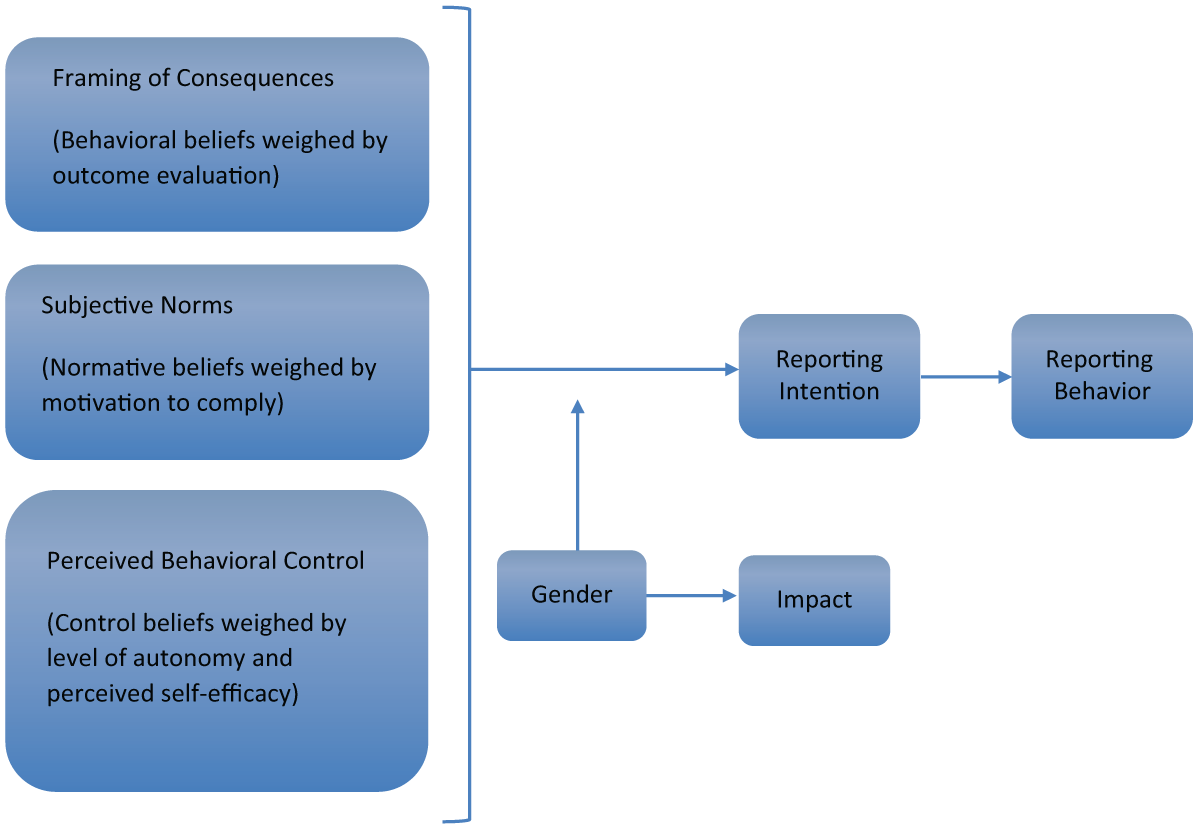
Model of cyberbullying reporting response.
This model incorporates the results of this study in the following ways. First, it shows that adolescents evaluate and frame their reporting decision in terms of their beliefs regarding the costs or potential consequences of that reporting behavior, consequences such as parental overreaction and withdrawal of communication platforms, potential loss of autonomy in resolving the issue, perceived credibility and trustworthiness of teachers to effectively resolve the problem (based on experience or observation), and beliefs as to whether reporting will negatively affect their existing social group positioning. Second, the model recognizes that peers and siblings exert a significant influence on adolescents’ reporting intentions and behavior. In doing so, it incorporates understanding provided by social cognitive theory, as well as the work of social influence researchers such as Underwood (2003) and Bandura (1999), who have shown that adolescents’ beliefs and behavior are influenced by others with whom they interact, in this case, peers and siblings. Third, the model also recognizes that adolescents’ control beliefs influence their reporting response. In this case, the adolescents’ control beliefs relate to their autonomy and perceived self-efficacy in dealing with the cyberbullying issue. Fourth, these three factors are interlinked. For example, if the adolescent’s evaluation of the potential outcomes of reporting are negative, even if his or her level of self-efficacy in dealing with the situation is low and parental or teacher intervention is highly desirable, the adolescent is unlikely to seek their intervention by informing them of the cyberbullying experience. Similarly, even if peers encourage reporting, in cases where evaluation of consequences is negative, the adolescent’s motivation to comply with peer wishes is likely to be weak. However, the opposite will also apply when consequences of reporting are positive, but peer influence dictates that it is unacceptable to inform parents or teachers. In summary, the weighting attributed to these three core influences will determine intention to report cyberbullying and must inform any school or parental intervention. Finally, the model recognizes that gender moderates the relationship between evaluation of reporting risks and actual reporting outcomes, with males framing risks in terms of image and self-perception, and females tending to evaluate reporting risks in terms of social costs. Both, however, influence reporting outcomes. Similarly, gender moderates the relationship between normative influence and actual reporting outcomes, with girls more likely than males to perceive confiding in peers (and to a lesser extent to parents) as a legitimate social action. By distinguishing between intention and behavior, this model provides a more accurate representation of the fact that adolescent intention to report does not necessarily manifest in reporting behavior. In many cases, other factors must be considered for that outcome to be achieved, such as the weighting attributed to peer influence or the weighting of consequences. This distinction between intention and behavior incorporates the work of researchers such as Mayer, Davis, and Schoorman (1995) on Risk Taking in Relationship (RTR) and is consistent with social psychology models such as the Theory of Planned Behavior (Ajzen, 1985), the Decomposed Theory of Planned Behavior (Taylor & Todd, 1995), and the Theory of Reasoned Action (Ajzen & Fishbein, 1980; Fishbein & Ajzen, 1975). In summary, this model is a representation of Irish gifted adolescents’ reporting responses. It shows that a combination of three sets of beliefs (i.e., framing beliefs, normative beliefs, and control beliefs), as well as the weighting attributed to each of them, can be used to explain the individual’s progression from intention to report cyberbullying to actual reporting behavior.
Limitations
A number of limitations were identified in this study. These limitations are as follows: participant sample, transcript confirmation, individual perspectives, and influences on self-reporting in focus group sessions. These are discussed below.
The study explored the experiences of a specific group of intellectually gifted adolescents. The sample size was limited as was the cultural context of the study. A similar study using a sample of Irish adolescents drawn from the general population would be necessary to state, with confidence, whether the results obtained in this study reflect the broader Irish adolescent population.
The focus group interviews consisted of three groups of adolescents who were coming to the end of their summer camp period at CTYI. Due to the fact that the focus groups were scheduled for the final week of their summer camp, which was full of competing activities, and the fact that the interviews took place in a group rather than an individual situation, it was not possible to transcribe the interviews and present those scripts back to the students within the same week to gain their confirmation that this was indeed exactly representative. Moreover, while the researcher does, in most cases, seek confirmation of transcript from individuals who participate in research interviews, as this sample of 59 students were interviewed in a group format rather than individually, it would have been difficult to obtain and have confidence in such group confirmation.
Although some of the student sample was critical of how teachers had responded to their complaints, it is worth noting that due to the study focus, neither teachers nor principals were afforded the opportunity to counter those claims or indeed to provide their perspective as to why they responded in such as way. Therefore, a note of caution should also be expressed, given that teachers did not participate in this research and, as a result, their voice has not been heard.
It is possible that the impact of social desirability on self-reporting in focus groups (rather than 1:1 interviews) influenced the amount of detail provided in these focus group sessions. Although 1:1 interviews may have yielded a richer and more informative understanding of the personal reasons for nonreporting of cyberbullying behavior, this option was restricted due to issues regarding time availability and research ethics policy.
Conclusion
In this study, key factors that influenced whether academically gifted students report their cyberbullying experiences to adults were identified. The findings in this study provide guidance for parents, teachers, and policy makers as they formulate interventions. Second, in this first study of its kind in an Irish context, cyberbullying exerted a greater impact on Irish female adolescents than male adolescents, thereby providing considerable support for arguments that gender-based impact outcomes may be independent of culture. Third, the majority of international studies on cyberbullying have measured and captured broad impact, but did not provide granular self-reported descriptions of the actual nature of the impact. On the contrary, this study provides powerful, important self-report narratives of a large sample of female adolescents to guide those who educate adolescent females, highlighting the need for greater sensitivity and deeper awareness of the impact of cyberbullying on female adolescents. The narratives also underscore the urgency of reformulating school policies to specifically address female–female cyberbullying in terms of prevention, addressing existing complaints, and providing postexperience support. Finally, it is important to note that these findings are based on the perception of the adolescents in this study and may not correspond with the experience of teachers. Therefore, further work is needed that focuses on the experience and perception of the teaching community to gain a broader perspective on this issue.
Footnotes
Appendix
Declaration of Conflicting Interests
The author declared no potential conflicts of interest with respect to the research, authorship, and/or publication of this article.
Funding
The author received no financial support for the research and/or authorship of this article.