







Abstract
This article explores how the teachers and students in Tanzania’s special secondary schools conceptualize giftedness and talent. It draws on focus group discussions and interview data from a sample of 30 teachers and 73 students and analyzed through a reflexive thematic analysis procedure. The findings revealed commonalities in conceptualizing giftedness and talent between the teachers and students while suggesting the need for more information on the constructs among the participants. It implies that the development of students’ academic talents in the schools is at stake despite the efforts put in place. The study recommends training teachers on giftedness and talent to improve their understanding and promote a growth mindset among teachers and students to develop the students’ academic potential adequately. Further, the findings suggest the potential to embrace the students’ prior knowledge to develop their academic talents and as an essential resource for improving their provisions in Tanzania.
The development of students’ academic talents has been acknowledged as a way of ensuring their right to meaningful education (United Nations [UN], 1948, 1989) and embracing the significant contributions they are expected to make in society (Renzulli, 2012; Subotnik et al., 2011). Various factors can determine such potential development, including how those directly involved in academic talent development, such as teachers (Antoun et al., 2020; Laine et al., 2016) and students (Coleman et al., 2015), conceptualize giftedness and talent. Although the literature has revealed the role of teachers and students’ conceptualizations of these constructs in academic talent development (Coleman et al., 2015; Kuusisto et al., 2017; Laine et al., 2016; Vreys et al., 2018), what giftedness and talent mean is yet to have empirical evidence from the Tanzanian educational context. The limited empirical information on giftedness and talent from Tanzania is concerning when literature supports the need for context-specific conceptualizations for the meaningful development of the students’ academic talents (Borland, 2005; Ngara & Porath, 2007; Plucker & Barab, 2005; Sternberg, 2007).
The existing conceptions range from traditional to more liberal conceptualizations (Gagné, 2005; Renzulli, 2005, 2012; Subotnik et al., 2021). For instance, although they reflect Western conceptions, the traditional conceptualizations of giftedness are associated with the work of early scholars like Lewis Terman, in which giftedness is associated with one’s high intellectual ability measured through intelligence quotient (IQ) tests (Lubinski, 2016; Warne, 2019). Despite the criticisms levelled against such conceptualizations, his work in intellectual precocity is recognized as groundbreaking in gifted education, with important ideas of his time still applicable to the field (Lubinski & Benbow, 2021; Warne, 2019). Relatedly, associating individuals’ high intellectual ability as determined by standardized tests such as IQ tests resonates with schoolhouse giftedness (Renzulli, 2005, 2012). According to Renzulli (2012), as opposed to creative-productive giftedness, schoolhouse giftedness concerns itself with the traditional aim of schooling that emphasizes students’ academic excellence or mastery of the school subjects signified by high performance with little application of the acquired competencies beyond the school contexts.
On the other hand, liberal conceptualizations advocate the dynamic and developmental view of giftedness and talent by embracing multiple means of identification situated within different social-cultural contexts (Gagné, 2005; Pfeiffer, 2012; Renzulli, 2005, 2012; Subotnik et al., 2021). Akin to the later conceptualizations are the Eastern conceptions of giftedness and talent like the Confucian-heritage cultures, which view giftedness as the outcome of an individual’s inherited high ability and deliberate efforts to achieve excellence in certain domains, as illustrated in the relevant policies to provide for the students (Nguyen, 2011; Zhang, 2017). It implies that the effective promotion of giftedness has its roots in the nation’s relevant educational policies. When the policies are not robust, the chances for developing effective gifted education systems become narrower.
A lack of consensus on what giftedness and talent mean across contexts suggests the need for research from those contexts for more informed practices on their development. In this regard, the lack of such conceptualizations from the literature based in Tanzania provided space for understanding how the teachers and students conceptualized giftedness and talent within their specific educational contexts. The continued research on the subject, thus, points to the evolutionary nature of the constructs, as “new areas of theory and research hold a promise for the re-conceptualization of talent development efforts” (Plucker & Barab, 2005, p. 204).
Despite the varied conceptualizations of giftedness and talent existing in the gifted and talented literature, according to Gagné (2021b), giftedness entails the potential individuals have, making them demonstrate outstanding abilities in academic and nonacademic domains, whereas talents are the systematically developed potentialities. Based on Gagné’s (2021b) conceptualizations, the two constructs are essentially developmental. As talent development catalysts, how teachers and students view giftedness and talent determines the success of talent development efforts. As such, understanding how teachers and students conceptualize the constructs can help establish factors supporting or inhibiting the development of students’ giftedness into specific talents in schools. Although limited information exists regarding how teachers and students conceptualize giftedness and talent in the Tanzanian context, the need to promote gifted education for high-achieving learners has increased internationally. Chonaill (2020) regarded gifted education as a “curriculum and pedagogy appropriate to meeting the learning needs of exceptionally able pupils” (p. 93). It is a kind of education devoted to identifying and nurturing the exceptional abilities of gifted and talented learners in multiple domains (Basister & Kawai, 2018; Gargiulo, 2012).
The success of gifted and talented students in schooling partly depends on how teachers and students themselves conceptualize giftedness and talent. Literature shows that teachers need accurate conceptualizations of giftedness and talent for meaningful student talent development (Laine et al., 2019; Laine & Tirri, 2016; Porta et al., 2022; Vreys et al., 2018). It means that the teachers working with high-ability students need to have an informed understanding of giftedness and talent regarding how they view gifted and talented students, how they can learn best in schools, and what is expected of the teachers and students in realizing their academic potential. Teachers’ understanding of giftedness and talent can shape their classroom practices to actualize students’ potential (Vreys et al., 2018; Worrell & Erwin, 2011). Such conceptualizations determine how they plan and provide for the gifted in the classrooms.
On the other hand, the students’ conceptualizations of giftedness and talent have the potential to understand students' devotion to the learning process for successful academic talent development in specific educational contexts such as Tanzania’s special secondary schools (SSS); (Gagné, 2010, 2021b). Their conceptualizations may also relate to how the students describe themselves and whether they identify as gifted or talented (Coleman et al., 2015; A. Kaplan et al., 2019). It also relates to whether they endorse fixed or growth mindsets in learning to optimize their academic potential (Haimovitz & Dweck, 2017). Thus, the students’ conceptualizations of giftedness and talent along those dimensions have repercussions on actualizing their potential in combination with other factors. For instance, within the Differentiated Model of Giftedness and Talent (Gagné, 2021a), the students’ conceptualizations of giftedness and talent are ascribed to psychological energy, such as the motivational level they direct toward accomplishing learning tasks to achieve academic success (Gagné, 2010, 2021b). Students’ motivation and volition in pursuing learning tasks are some of the broader psychological characteristics of gifted and talented learners. Therefore, students’ conceptualizations of giftedness and talent significantly influence their commitment to and eventual school success. In countries like Tanzania, where scanty research on giftedness and talent exists, implies that teachers and students’ conceptualizations are mainly unknown, making this study substantial.
Study Context
This study was conducted in Tanzania, one of the countries in East Africa. Tanzania’s education system is subdivided into pre-primary education (1 year), primary education (6 years), ordinary secondary education (4 years), advanced secondary education (2 years), technical education (3 years), and a minimum of 3 years of higher education (MoEST, 2023). This study was conducted at the secondary education level in Tanzania’s SSS. These are government secondary schools recruiting high-performing students on either the Primary School Leaving Examination (PSLE) or the Certificate of Secondary Education Examination (CSEE) nationwide to nurture their intellectual potential. Such students are referred to in this study as high-achieving because of their high academic performance, which has been the primary criterion for placing them in the SSS for decades (MoEVT, 2014). The secondary criterion has been considering the representation of students from across the country through a quota system believed to enhance national cohesion. However, relying on examination scores as a sole means of selecting the students is concerning because the literature supports multiple and multidimensional identification practices given the fluidity of giftedness and talent (McClain & Pfeiffer, 2012; Pfeiffer, 2012; Worrell & Erwin, 2011).
The introduction of special schools for the gifted and talented in the early 1990s attests to the Tanzanian government’s awareness of the presence of potentially gifted learners and the need to develop their abilities into different academic talents (Liwa, 2001; Mathias, 2010; MoEC, 1991, 1993; Possi, 2003), desiring to have proper means of identifying and nurturing gifted and talented students in the country (MoEC, 1995). However, a lack of comprehensive and robust identification procedures for the students has continued to exist (MoEST, 2021, 2022; MoEVT, 2014). Such a situation can partly be attributed to the existing educational policies regarding providing learning experiences consistent with the high-ability students’ academic potential. Although the existing educational policies have been playing a crucial role in guiding Tanzania’s education practices, their role in promoting gifted education through identifying and addressing the unique needs of gifted and talented students has been minimal.
Evidence suggests that a robust gifted education system can be realized through a comprehensive policy that articulates crucial aspects such as the context-specific conception of giftedness or talent, procedures for identifying gifted and talented learners, and teacher professional development in gifted education (Antoun & Plunkett, 2023; VanTassel-Baska, 2009). However, for several decades, references to gifted education evident in Tanzania’s education policies have been limited to recognizing the presence of high-ability learners and the desire to nurture their intellectual potential. For instance, the ETP of 2014, as reviewed in 2023, stated that “The Government will establish a system to identify and develop students with various talents and abilities at all levels of education” (MoEST, 2023, p. 44), This policy desire responds to the persistent lack of identification procedures that take broader aspects of giftedness and talent.
Lately, however, some progress has been signified by a definition of gifted and talented learners in Tanzania’s 2021/22–2025/26 National Strategy for Inclusive Education (MoEST, 2021). The strategy defines gifted and talented learners as those who give evidence of high achievement capability in areas such as intellectual, creative, artistic, or leadership capacity, or in specific academic fields, and who need services or activities not ordinarily provided by the school in order to fully develop those capabilities. (MoEST, 2021, p. 17)
Although the strategy is relevant in embracing the development of giftedness and talent, it does not outline all the essential components of a gifted education policy, as stated earlier (VanTassel-Baska, 2009). A possible explanation for the limited inclusion of gifted education components in the existing education policy is that it is not specific to giftedness and talent; instead, it is a holistic framework guiding national education in Tanzania. This policy gap can be bridged by developing a specific gifted education policy or a strategy for improving gifted education in the country.
Arguably, a lack of a comprehensive gifted education policy since the introduction of special secondary schools for high-ability students explains the current state of gifted education in Tanzania. However, the latest developments suggest a bright future for gifted education in the country, provided that research-based evidence informs such efforts. Like the policy issue, the curriculum used in the special schools for gifted and talented students represents yet another gap in providing for the high-ability students in Tanzania. Admittedly, when this research was conducted, a common (standard) curriculum was being implemented in Tanzania’s SSS just like in other secondary schools, contrary to the perceived need to differentiate curriculum and instruction for students being educated in special schools (Kaplan, 2013, 2019, 2022). This practice suggests a potential area of inquiry regarding how teachers optimize the development of students’ potential in the context of a common curriculum implementation.
Notwithstanding the potential for context-specific conceptualizations of giftedness and talent, empirical literature documenting such conceptions from the Tanzanian context before this research was unknown. For adequate education provision for high-ability students in SSSs, grounded in more explicitly, contextually relevant conceptualizations of giftedness and talent, it was deemed essential to find out how the teachers and students conceptualized giftedness and talent in Tanzania. Notably, there was a handful of information on gifted and talented education from the Tanzanian context (Liwa, 2001; Possi, 2003, 2007), especially regarding how teachers and students conceptualize giftedness and talent. Studying giftedness and talent helps educators and other education stakeholders dispel existing negative stereotypical thoughts and myths about giftedness and talent and individuals possessing these attributes in society (Subotnik et al., 2011). In Tanzania, the need for research-based evidence to support educational development for potentially gifted and talented students is vital, leading to this study.
Theoretical Framework
Gagné (2021a) Differentiated Model of Giftedness and Talent (DMGT) guided this study. The DMGT’s major components are giftedness (aptitudes), talents, catalysts, and developmental process (Gagné, 2021b). Within this model, an individual’s giftedness refers to possessing and using outstanding natural abilities in at least one ability domain that places them among the top 10% of age peers (Gagné, 2010, 2021b). The natural abilities manifest in multiple domains, which can either be mental (i.e., intellectual, creative, social, or perceptual) or physical (i.e., muscular or motor control; Gagné, 2021b). These abilities are considered “building blocks” of an individual’s talent development in multiple fields (Gagné, 2021b). It means that, within the DMGT, talents have their genesis in natural abilities, which are slowly transformed into specific competencies through meaningful schooling (Gagné, 2004, 2010, 2015, 2021b). As such, talents are an individual’s outstanding mastery of systematically developed competencies in at least one field of human activity that places an individual at least among the top 10% of learning peers (Gagné, 2010; 2021b), The systematically developed gifts may lead to excellence in particular occupational fields such as academics, technical, science and technology, arts, and games (Gagné, 2010, 2021b).
As a component of DMGT, catalysts incorporate factors that play a crucial role in transforming giftedness into talent (Gagné, 2021b). This role can be facilitative or inhibitive. Two types of catalysts are distinguished: environmental and intrapersonal (Gagné, 2021a, 2021b). Environmental catalysts are factors external to an individual, yet they may influence one’s talent development. This component comprises three distinct subcomponents, which are social, interpersonal, and educational environments (Gagné, 2021b). The social environment encompasses cultural background and socioeconomic status. The interpersonal environment highlights the influence of significant persons on one’s talent development, such as parents, teachers, peers, and mentors. The educational environment represents curricula and pedagogical strategies to support talent development (Gagné, 2004). Of interest to this study is the interpersonal environment subcomponent regarding the influence of teachers on developing students’ potential into talents in terms of their conceptualizations of giftedness and talent.
On the other hand, the intrapersonal catalysts constitute factors within the individual that either facilitate or inhibit the development of one’s gifts into talents. In this study, the intrapersonal catalysts of interest are high-ability students’ conceptualizations of giftedness and talent and their impliceations for talent development in terms of the level of dedication and effort to this end. For example, when students conceive giftedness as something naturally given, their approach to developing their talents can be affected if they are misguided. This is so because how the students attach meaning to giftedness and talent can influence actualizing their full potential in terms of their motivation and volition to engage in learning (Gagné, 2010, 2021b).
Another component of the DMGT, the developmental process, is manifested through learning, training, and practice to transform outstanding natural abilities into talents (Gagné, 2004). It entails formal arrangements created for transforming giftedness into talent. It means that for one’s talent to be developed, the individual should gain access to systematically organized learning opportunities and activities based on established criteria and standards (Gagné, 2021b). In this study, the students gain access to SSS through their scores on either PSLE or CSEE to develop their academic talents. Such opportunities and activities include learning experiences offered to the learners within a specific learning environment, such as school, along with its associated pedagogical practices to implement it.
In the Tanzanian context, high-ability students’ receive learning experiences in the form of the common curriculum being implemented in secondary schools, in contrast to what Kaplan (2013) suggested on the relevance of having differentiated learning experiences for high-achieving learners educated in special schools. Thus, in this study, for the students’ high-ability potential to be developed into academic talents in the SSS, together with the catalysts, they need to be subjected to the developmental process through formalized schooling (Gagné, 2010, 2021b). In this context, the developmental process relates to formal education concerning the learning experiences in curriculum and associated instructional practices and other relevant resources needed for developing the students’ academic talents in Tanzania’s SSS.
Based on the descriptions in the preceding paragraphs, the DMGT is suited to this study because it first categorically conceptualizes giftedness and talent, acknowledging their developmental nature. Exploring how the teachers and students conceptualized giftedness and talent was believed to serve as a way of reconsidering the education for these students in the country. Second, the model considers the influence of various factors on the development of students’ talents in multiple domains. This study explored how students conceptualized giftedness and talent, providing an example of an intrapersonal catalyst described in the DMGT. On the other hand, teachers’ conceptualizations of giftedness and talent provide an example of an environmental catalyst that can potentially influence the students’ actualization of their potential.
Third, previous studies similar to the current study used the DMGT (Makkonen et al., 2022; Mathias, 2010; Mhlolo & Mhlolo, 2024). For instance, Mhlolo and Mhlolo (2024) investigated how the needs of mathematically gifted children were being met in some selected primary schools in Zimbabwe and South Africa. The study found that teachers were less informed about gifted education, and the education system was not adequately responsive to the gifted students’ needs. Its use in these studies, especially from other contexts, shows the model’s suitability in understanding the various aspects of gifted education related to Tanzania. To extend the available research, using the model in this study has the potential to show how the perspectives of teachers and students from the Tanzanian context reflect its components relevant to this research.
Teachers and students must possess an appropriate understanding of giftedness and talent to develop the students’ gifts into talents effectively. How the Tanzanian teachers and students conceptualize giftedness and talent has been unexplored. Although the DMGT originated in the Western world and is mainly practiced in those contexts, using it in a non-Western context implies the possibility of the theory being used in the study context to guide gifted education provision. The adoption is relevant when gifted education in the study context is emerging, possibly because it lacks a context-specific theoretical basis for its advancement.
Teachers’ Conceptualizations of Giftedness and Talent
Teachers’ conceptualizations of giftedness and talent are fundamental for working with high-ability students. The teachers’ conceptualizations of these constructs may either facilitate or impede educational provision to students, as these conceptions impact their instructional practices (Vreys et al., 2018). Like in other countries, Tanzanian teachers’ conceptualizations of giftedness and talent are most likely bombarded with the existing, deep-rooted myths, stereotypes, and concerns about the need for differentiated educational experiences consistent with the students’ learning needs. Such myths include the idea that gifted students can achieve and make academic progress independently without special teaching, support, and services (Callahan, 2011; Subotnik et al., 2011). Similarly, concerns about elitism and educational inequality are leveled against the need to provide academically gifted and talented students with educational opportunities beyond the general education curriculum in many countries (Brown & Wishney, 2017; Fu, 2017). When myths and misconceptions about giftedness and talent prevail in society, the learning needs of gifted students may be ignored (Brulles & Winebrenner, 2011). Importantly, when the teachers of high-ability students have misconceptions about giftedness and talent, their decisions to differentiate for these students are likely to be negatively affected (Laine et al., 2016; Plunkett & Kronborg, 2011; Schmitt & Goebel, 2015). Berman et al. (2012) reported that teachers’ preconceived ideas about gifted and talented students strongly influence their willingness to differentiate instruction for these students.
When teachers understand giftedness and talent appropriately, they can engage better in relevant instructional practices to develop the students’ academic talents (Laine et al., 2016; Plunkett & Kronborg, 2011; Vreys et al., 2018). Teachers’ conceptualizations of giftedness and talent can influence their ability to work with high-ability students (Dixon et al., 2014). This has led to a large body of empirical research to establish how teachers conceptualize giftedness and talent elsewhere (Jaffri, 2012; Laine et al., 2016; Leavitt & Geake, 2009; Speirs Neumeister et al., 2007). Results from this research indicate a diversity of conceptions about giftedness, talent, and individuals possessing these attributes and their education. For instance, Laine et al. (2016) investigated Finnish primary and secondary school teachers’ conceptions of giftedness in their qualitative study. They found a diversified view of teachers about giftedness, indicating that cognitive, innovative, and motivational factors are important in differentiating the gifted from others. In addition, the study found that, in Finland, some teachers perceived giftedness as a developmental and malleable quality. It was also found that Finnish teachers had divergent views of giftedness due to a lack of training on the subject and strong egalitarian beliefs about educational provisions for high-ability students. The teachers were concerned about equity for all students. As a result, some were unsupportive of the gifted and their education.
In a mixed-methods study in Malaysia, similar findings were reported by Jaffri (2012), whereby in-service and preservice teachers held the view that giftedness and talent are non-unitary concepts and can pertain to different domains, creativity, and general intellectual abilities. In this study, a dearth of information regarding gifted education leads to teachers’ lack of scientific understanding and knowledge to support gifted students in Malaysia. Speirs Neumeister et al. (2007) explored primary teachers’ understanding and teaching of gifted minority students in the United States. This study indicated that teachers’ view of giftedness was relatively narrow, and they more often identified giftedness by performance and ignored underachieving students due to cultural and background disadvantages. To address such concerns, Leavitt and Geake (2009) highlighted that teachers’ conceptions of giftedness can be broadened by attending appropriate training programs. In this way, teachers can conduct more multidimensional identification and provision. However, no empirical research from Tanzania reports on how teachers and high-ability students’ conceptualize giftedness and talent in SSSs.
In their mixed-methods study, Antoun et al. (2020) investigated primary school teachers’ understandings of giftedness from a Lebanese perspective concerning how they perceived highly able or gifted students in Lebanon. The findings showed that the teachers generally had positive perceptions of the students while acknowledging that they had insufficient knowledge of giftedness and the practices of gifted education, which largely are Western-oriented. The findings offered insights into the need for instituting gifted education courses in teacher education programs to acquaint teachers with appropriate knowledge of gifted education, including identifying students with gifted potential in the Lebanese context.
Students’ Conceptualizations of Giftedness and Talent
Research on high-ability students’ conceptualizations of giftedness and talent seems sparse. Their voices are underrepresented in the field. This lack of students’ own voices undermines our understanding of how their potential could be advanced in different domains. Perhaps this study seeks to contribute to this gap in knowledge by showing how the students conceive the constructs in the Tanzanian context. Knowledge of how the students conceptualize giftedness and talent plays a vital role in working with the students to develop their talents. Although it appeared difficult to find empirical literature focusing on how students view giftedness and talent generally, some literature relating to their perceptions of giftedness could be found. Siegle et al. (2017) contended that academically high-achieving students’ perceptions of their intellectual ability may influence their academic success. Kaplan et al. (2019) regarded such perceptions as “self-perceptions and self-definitions” (p. 61).
Coleman et al. (2015), who synthesized the literature on the lived experiences of gifted students published over the previous 25 years, found that this cohort of learners had varied experiences as implicated in their kind of schooling, labeling, and how they identify themselves. It was indicated that the learning needs of gifted learners should be addressed by considering the social contexts of their learning and interaction with peers, teachers, and other members of the school community. In one study with elementary school pupils, Gallagher (2015) found that highly able learners exhibited less intellectual capacity than they possessed because they tried to fit in with their average-ability peers to avoid social rejection. Schmitt and Goebel (2015) reported similar findings in their case study research with high-ability students in a high school context in Indiana. The study explored the educational experiences of three high-ability students. Schmitt and Goebel (2015) found, among others, that the students perceived themselves as different from their peers due to their advanced learning skills, tended to fit in with their average peers, and preferred working with like-minded peers. Coleman et al. (2015) stated that “this denial of ability could be due to the student’s implicit definition of giftedness wherein giftedness equates to effortless learning, and not that giftedness is an outcome of hard work, dedication, practice, motivation, and persistence” (p. 361). This may negatively impact students’ academic talent development in Tanzania’s SSS; thus, understanding how they conceptualized giftedness and talent in those settings might help plan intervention strategies for these students.
In their quantitative study, Kuusisto et al. (2017) investigated whether students perceived intelligence and giftedness as developing or inherent and how their perspectives on talent development relate to their learning outcomes. The results showed that students perceived the nature of intelligence as more malleable than giftedness. Additionally, unlike the findings of previous studies, Kuusisto et al. found mixed results on the relationship between implicit beliefs about giftedness and students’ academic achievements, whereby both growth-oriented and fixed-oriented views of gifted had some influence on high academic achievement among students.
In a quantitative study, Dixon et al. (2016) investigated the structural representation of the self-perceived multiple intelligences concerning their culture and school experiences in primary school children in Dar es Salaam. The findings indicated that children’s perceptions of their multiple intelligences were strongly related to their cultural and school experiences. Given the examinations-oriented nature of the Tanzanian school system (MoEVT, 2014), Dixon et al. (2016) observed that teachers hardly addressed the educational needs of potentially gifted children in schools, as their pedagogical practices were entirely teacher-centric. The dominance of such instructional practices might impinge the development of a full range of learners’ potential. In the context where comprehensive official definitions of giftedness and talent were nonexistent, similar to the Finnish education context (Laine & Tirri, 2021), understanding how Tanzanian teachers and students conceptualized these constructs seemed crucial. This is because, for the teachers, such an understanding foregrounds effective instructional differentiation to address the learning needs of the students to develop their academic talents. For the students, it espouses how they commit to the learning process to actualize their full potential as described within the DMGT (Gagné, 2021a, 2021b). Notably, a concurrent exploration of teachers and students’ conceptualizations was meant to provide more substantial empirical evidence regarding how they understand the constructs within the context of SSS to enhance the provision of gifted services to high-ability students in Tanzania. Such an understanding can contribute to broader conceptions of the two constructs within Tanzania’s education system and practice. Ideally, in a context where gifted education is less developed, embracing the voices of teachers and students regarding their conceptualizations of the constructs helps ensure inclusivity in efforts to improve gifted education in the country.
Based on the preceding review of the related literature on teachers and students’ conceptualizations of giftedness and talent, it can be reiterated that their informed understanding of giftedness and talent is important for meaningful teaching and learning. However, the study of giftedness and talent is rarely reflected in empirical literature under review based on the Tanzanian context. This silence implies that research regarding how teachers and students conceptualize giftedness and talent was needed to offer empirical evidence to provide relevant educational experiences to the students in the schools. Thus, the study addressed the following research question: How do teachers and students conceptualize giftedness and talent in Tanzania’s SSS?
Methods
Research Approach and Design
This study explored how the teachers and students in Tanzania’s SSSs conceptualized giftedness and talent. It was exploratory research due to little information on giftedness and talent in the Tanzanian context (Mathias, 2010; Possi, 2003). It used a qualitative research approach to understand the teachers and high-ability students’ conceptualizations of giftedness and talent. The adopted approach was relevant because it enabled an understanding of how the participating teachers and students interpreted giftedness and talent within the context of SSSs. The study used a multiple case study design to address the research question thoroughly. In this case, four SSSs were involved. Therefore, using this design was prompted by the need to obtain more authentic findings because the evidence from multiple cases provides richer and more reliable findings than in a single case (Cohen et al., 2018; Creswell, 2014). The study was underpinned by a constructivist research paradigm that considers reality as always involving multiple interpretations of the world.
The four schools used in this study served as cases because they represented a few government schools that had been identified to enroll students with high academic potential in the country. For instance, in 2021, when the study commenced, there were 4002 government secondary schools in the country (MoEST, 2021). Only seven government secondary schools were identified as places to enroll high-ability students in Tanzania. The four schools involved in this study were coded as School One (SC1), School Two (SC2), School Three (SC3), and School Four (SC4). The schools enroll students in ordinary secondary education (O-Level) and advanced secondary education (A-Level). SC1 and SC3 enroll males, whereas SC2 and SC4 enroll females. The schools were found in two administrative regions of Tanzania with the highest number of SSS, two in each region in the country at the time the research was conducted. Notably, the SSS in the two regions equally represented the schools for boys and girls, which were selected purposively and conveniently by considering gender to ensure diversity of perspectives from males and females regarding giftedness and talent.
Participants
Teachers
The study involved 30 teachers as part of its sample. Purposive and convenience sampling strategies were used to sample them from the four study schools. The four schools seemed adequate in obtaining data to answer the research question effectively. Of these teachers, four were also heads of school. The DMGT acknowledges teachers’ role in supporting students’ talent development as an aspect of environmental catalysts (Gagné, 2021a). Given their practical experience working with the students, the teachers were recruited for this study. Such experience positioned them as individuals who provided insightful information on their conceptualizations of giftedness and talent in those schools. Their teaching experience was considered a prime factor for their selection, determined by their availability and willingness to participate in the study. The heads of school appointed a resident teacher to assist the researcher in selecting and accessing the teachers for the study based on their teaching experience of at least 5 years. However, due to teacher availability and willingness to participate in the FGDs, some teachers involved in the study had fewer than 5 years of experience.
Demographic Information of the Participants.
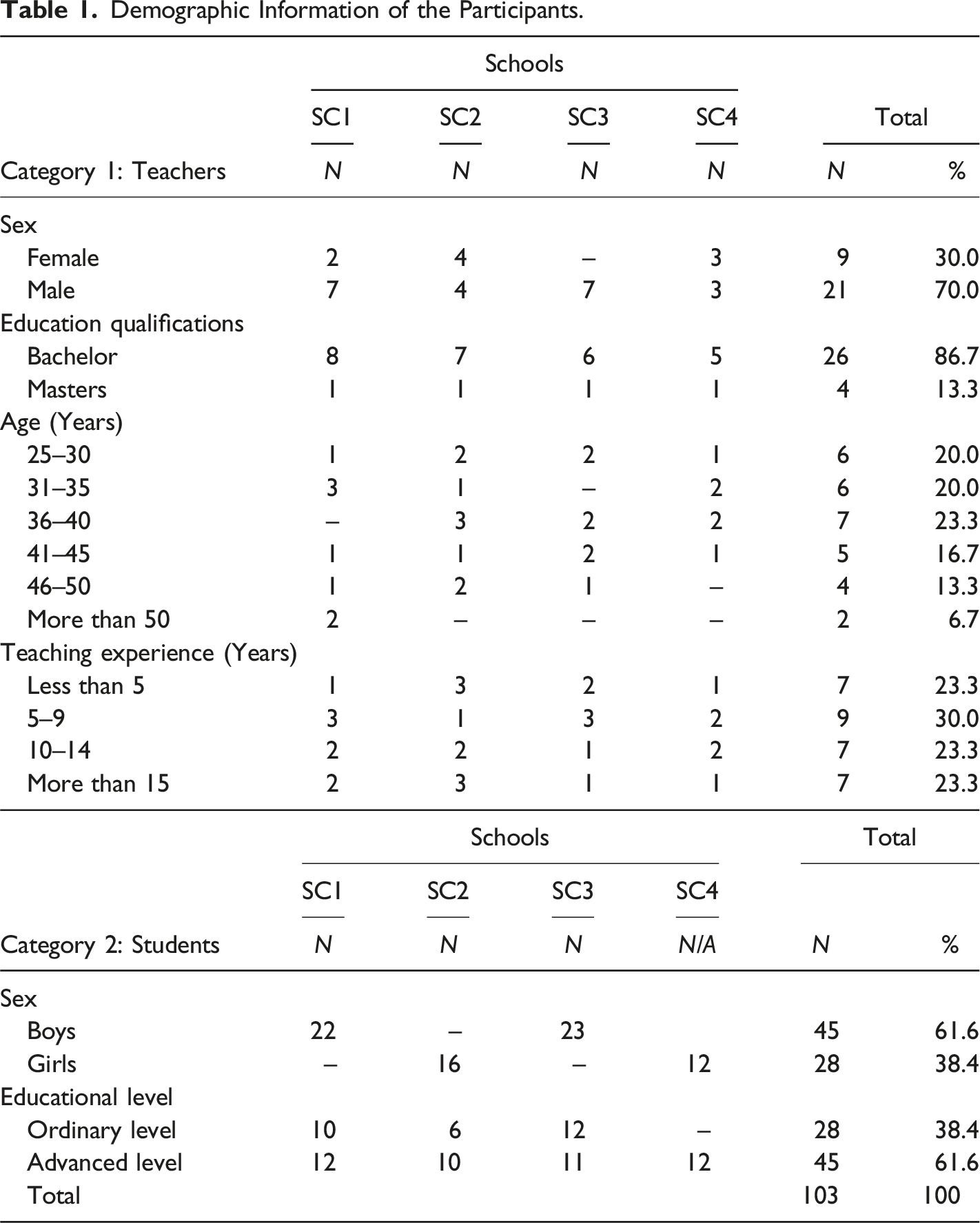
Students
In this study, seeking students’ perspectives was relevant for a comprehensive understanding of how giftedness and talent were conceptualized in Tanzania’s SSS. Acknowledged as an aspect of environmental catalysts within the DMGT (Gagné, 2021a, 2021b), involving the students in this study contributes to a fuller understanding of talent development in the study context. Purposive and convenience sampling strategies were used to select 73 students who participated in the study (Bryman, 2012; Cohen et al., 2018). In particular, students with extended stays in the schools were preferred because they were considered vital in their conceptualizations of named constructs. The students were initially grouped into educational levels: A-Level (lasting for 2 years) and O-Level (lasting for 4 years). Several reasons made the stratification necessary. It facilitated the conduct of FGDs by ensuring students’ homogeneity in terms of their level of education to ensure the free sharing of their perspectives. It also ensured a better and broader understanding of the participants’ conceptualizations of giftedness and talents within the SSSs. Such an understanding was possible because the students from the two strata meant capturing diverse perspectives to enrich the study findings. Notably, the stratification was not meant to achieve a statistical representation of the views regarding their conceptualizations of giftedness and talent in the SSSs. Then, the students were conveniently selected based on these two strata with the help of resident teachers. The students were coded based on the established strata to maintain the anonymity of their perspectives such as Student One, School One, O-Level class (ST1, SC1–O) and Student 12, School One, A-Level class (ST12, SC1–A). Table 1 presents the demographic information for the 73 students.
Data Generation Methods
Focus Group Discussions
Four and seven FGDs were conducted with teachers and students, respectively. The FGDs were primarily conducted in English. The duration for the FGDs ranged from 60 minutes to 104 minutes. Using Swahili or a combination of English and Swahili was permitted as long as the participants could express their views comfortably. The position of the two languages in the Tanzanian context is such that English is the medium of instruction at the secondary education level. In contrast, Swahili is the common language to most people in the country. I used a voice recorder to tape all information for future analysis. The sizes of FGDs ranged from 5 to 12 participants, consistent with the literature recommendations (Krueger & Casey, 2015). One FGD was conducted with teachers for each school. The DMGT considers the role of teachers in transforming student’s potential into various competencies as part of its environmental factors, touching upon the genesis of giftedness and talent in individuals. Based on these propositions, I developed open-ended questions used during FGDs and interviews with the participants to obtain data based on the study objective. The questions included the following: (a) What do giftedness and talent mean to you? (b) Where do giftedness and talent come from? (c) How do giftedness and talent develop or can be developed in students? and (d) Who are gifted and talented students? If necessary, additional questions or probes were used as the discussions progressed.
Regarding the students, although the initial plan was to conduct FGDs with the students from the four schools similar to the teachers, in actuality, I conducted seven FGDs instead of eight (the goal based on conducting two FGDs with the students in the four schools, one with O-Level and A-Level students, respectively). After completing the seventh FGD in SC4 with the students from A-level classes, it was apparent that the obtained data were enough to answer the research questions. Thus, I considered it to have reached saturation. In this study, I conceptualized saturation as a point when I had generated sufficient data and analyzed it to answer the research questions adequately. This consideration was consistent with Braun & Clarke's (2021b) caution that researchers need to conceptualize saturation in the context of their research being informed by analytic strategies other than coding reliability and codebook types of thematic analysis. This study employed reflective thematic analysis as described under the data analysis subsection provided in the later part of this article.
Such inclusion provided a comprehensive understanding of the research question. The student FGDs provided confidence in interpreting the findings and drawing conclusions. Just like with teachers described in the preceding paragraphs, students were asked or provided with open-ended questions/statements to reflect the intrapersonal catalysts within the DMGT described previously. Such questions/statements included the following: (a) Tell me your understanding of giftedness and talent. (b) Where do giftedness and talent come from? (c) How can giftedness and talent be developed in students? and (d) Tell me what you know about gifted and talented students and their learning needs.
Several factors inspired the use of FGDs. FGDs allow the participants to provide opposing views and elaborate and refine their ideas based on what others say regarding the topic at hand (Ritchie et al., 2014). In this way, their views can be filtered, leading to more meaningful data. They provided a constructed understanding of giftedness and talent. FGDs are also suggested when the topic of discussion is technical to the participants (Ritchie et al., 2014). In this study, it was assumed that the concepts of giftedness and talent were technical to the students. In a few cases, the researcher tried carefully to provide the students with some concrete examples, explanations, or alternative questions to convey a similar message so that they could provide their perspectives on giftedness and talent. This was consciously done to avoid potential bias associated with such explanations by the researcher. Such explanations/questions included the following: (a) In your schooling, you might have come across friends or colleagues whom you admired regarding their ability to learn or participate in similar activities; how are such individuals called? (b) In our society we have some people with outstanding abilities; have you ever come across such persons and what do you think makes them to be so? and (c) In your schooling experiences or life in general, you might have heard or come across people referring others as gifted and talented. Can you share with me your understanding of such people regarding what they possess that distinguishes them from other people?
Interviews
This study used semistructured interviews, permitting the modification of the questions during the interview process (Cohen et al., 2018). The interviews were conducted with heads of school in line with DMGT’s conception of interpersonal catalysts influencing the development of students’ academic talents (Gagné, 2021a, 2021b). To achieve this, four interviews were conducted with these participants individually. During the interviews, the participants answered a set of different types of open-ended questions that were based on the study objective. The questions included the following: (a) How do you describe the students in your school regarding their intellectual and academic abilities? and (b) Would you regard them as gifted, talented, or high achievers? Why? Notably, in all the interviews, the questions were followed by probes or follow-up questions to obtain the participants’ understanding of giftedness and talent. The use of semistructured interviews enabled the researcher to probe and pose follow-up questions to validate some of the information shared by the participants (Christensen et al., 2014). This way, obtaining more relevant data to answer the research question was possible. As in the case of the FGD questions, the interviews were designed and conducted in English with the flexibility of using Swahili as it was for FGDs. The interviews lasted from about 17 minutes to 44 minutes. The interview sessions were audio-recorded with the participant’s consent.
Procedure
This article draws findings from a PhD study on academic talent development in Tanzania’s SSS. All the research ethics protocols were ensured and approved by the university and the relevant authorities at the regional, district, and school levels where the data were obtained. Second, all the research participants were fully informed about the study’s purpose and the voluntary nature of their participation in it. Notably, heads of school introduced the researcher to the teachers and students through the appointed resident teacher(s). Before conducting the FGDs and interviews, the resident teachers introduced the researcher to the participants. Then, the researcher introduced themselves and the research to the participants, explaining why the study was important. Such introductory remarks ensured rapport building, which is essential for steering the discussions.
Data Analysis
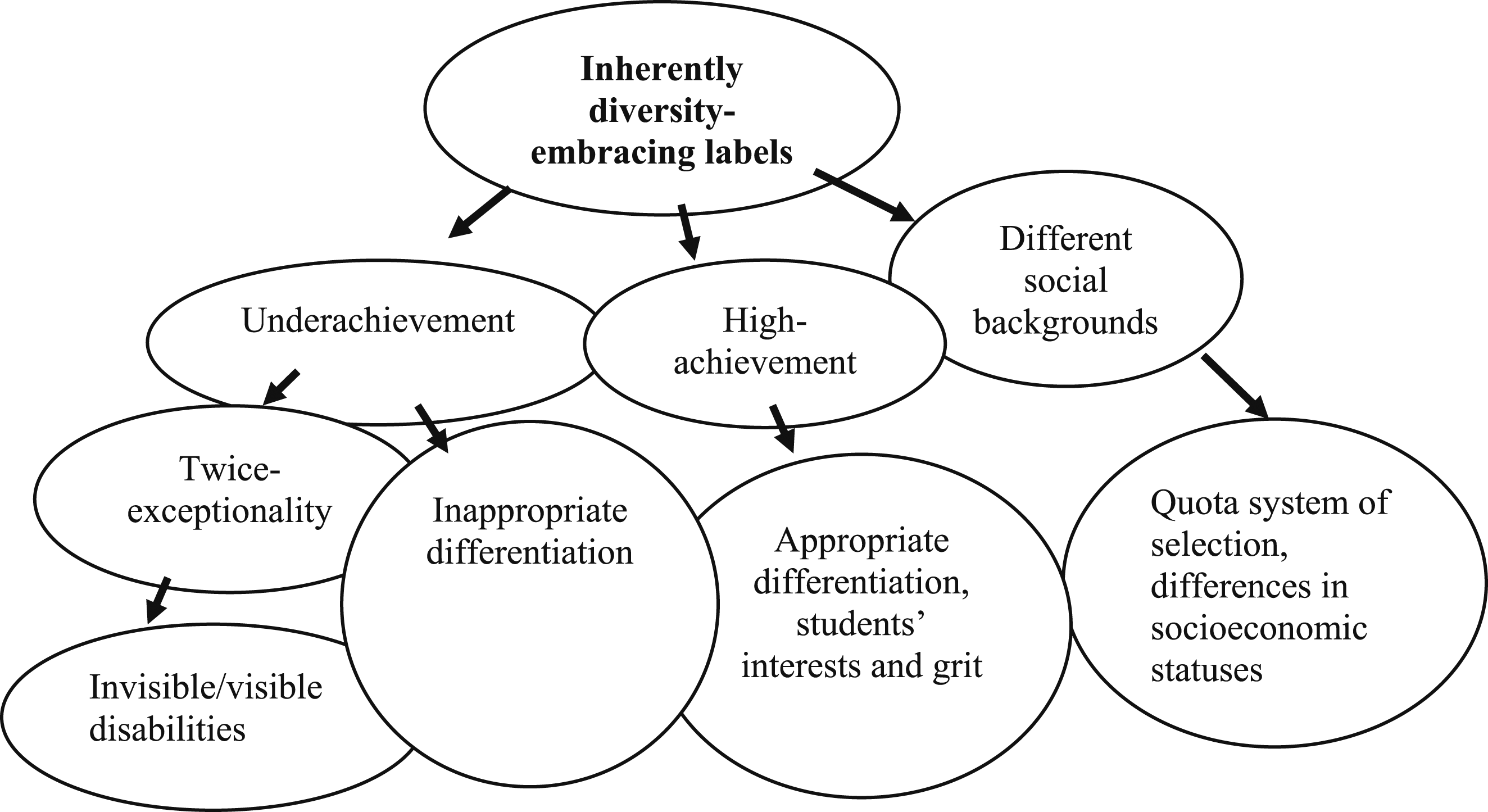
In this study, reflexive thematic analysis procedures organized around six stages, namely, data familiarization, data coding, generating initial themes, reviewing themes, naming themes, and writing the report, aided the analysis of the reported findings (Braun & Clarke, 2006; Terry et al., 2017). The data analysis to develop the themes was framed within the DMGT’s components relevant to this study, such as the various domains of giftedness and talent fields, along with their perceived genesis. For example, thematic maps highlighting the different aspects of data worth the theme in question were developed in refining and naming the themes. An example of this is given in Figures 1 and 2 on the themes “inborn ability versus learned ability” and “inherently diversity-embracing labels.” Like the other themes in the findings section, these illustrative themes attest to the critical components within the DMGT, suggesting its alignment with the reflexive thematic analysis adopted in this study. However, when using reflexive thematic analysis, the analysis does not follow a linear pattern covering the typical stages. Instead, it is usually done recursively until the data adequately produce the desired meaning to answer the research question(s). After data gathering, the audio data were repeated to achieve data familiarization. Data familiarization was also attained through transcribing and re-reading the transcripts. In transcribing the data, their accuracy was ensured by cross-checking it against the original audio data. Thematic map on the theme “inborn ability versus learned ability.” Thematic map on the theme inherently diversity-embracing label.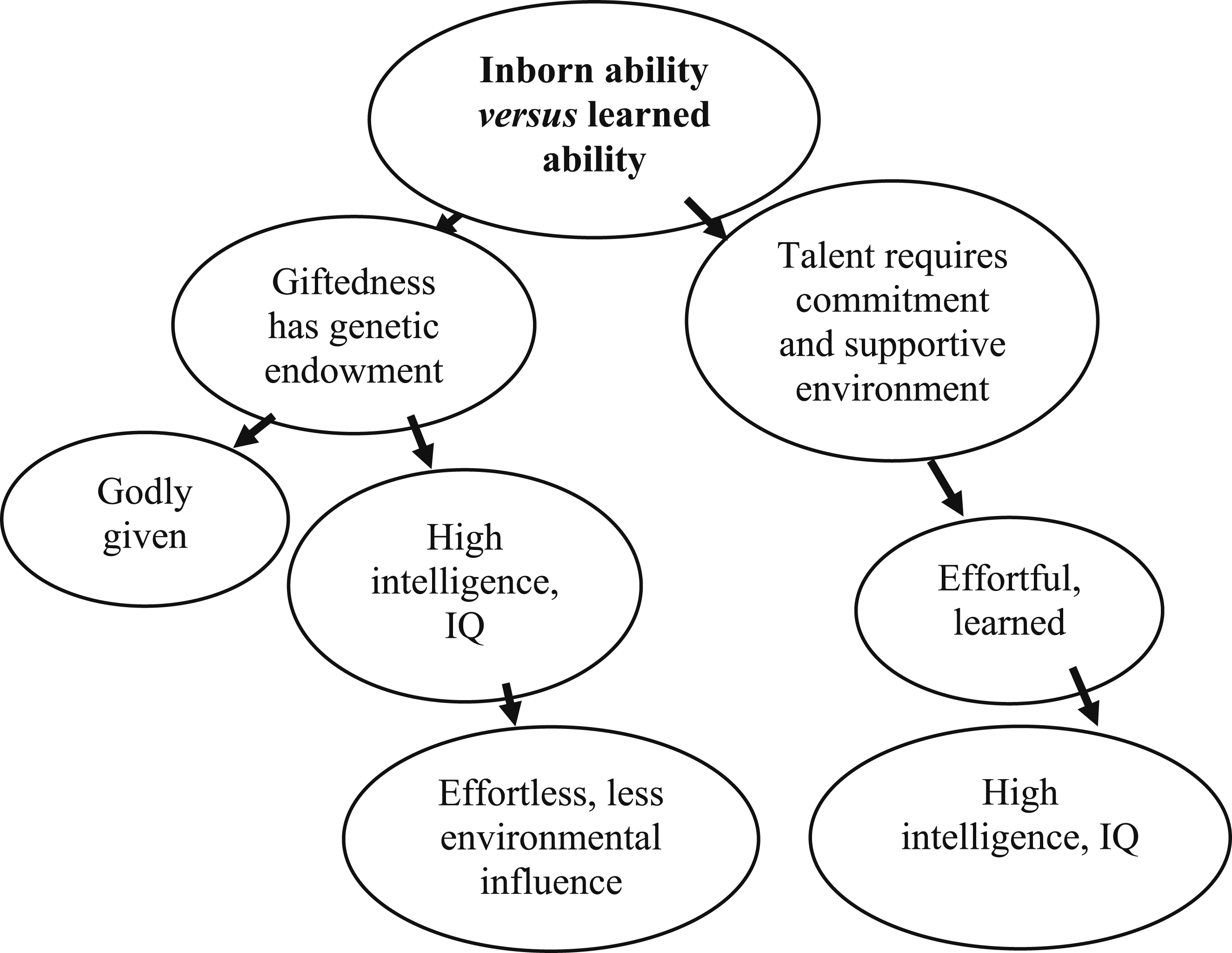
The analysis focused on the entire quote(s) given by the participant(s) to derive both surface and latent meanings as a basis for later theme development (Braun & Clarke, 2021a; Clarke & Braun, 2017). Such participants’ quotes were used as units of analysis to inform coding to achieve a surface and deeper understanding of the data and develop the themes. After data coding, initial themes were generated by establishing shared meaning among the codes. Consequently, after deeply reflecting on the initial themes against the data set, these themes were reviewed and renamed accordingly. Then, in reporting the findings, relevant participants’ quotations were used to support the interpretation of the data in response to the research question(s) addressed in this study. It is worth noting that the Swahili audio data were first translated into English transcripts by the author, who is bilingual in the two languages, consistent with what Chen and Boore (2010) suggested for effective translation. Then, I sent the Swahili and English transcripts to an expert translator at the University of Dar es Salaam to validate the translations. This way, the authenticity of the findings was enhanced.
Results
The study explored how the teachers and students conceptualized giftedness and talent in Tanzania’s SSS. The aim was to determine how the teachers and students conceptualized the two constructs and whether or not their conceptualizations reflected the existing theories, models, and empirical evidence. Data analysis led to the development of five themes: inborn ability versus learned ability, high ability in multiple fields versus high ability in a specific field, high ability in academic school subjects assessed through examinations versus high ability in performance-based learning experiences, characteristics of gifted and talented learners, and inherently diversity-embracing labels.
Inborn Ability Versus Learned Ability
Under this theme, the teachers and students’ conceptualizations of giftedness and talent revealed their understanding of the two constructs as either inborn or learned abilities, reflecting the DMGT’s conceptions that giftedness constitutes natural abilities, whereas talents are systematically developed competencies is specific areas. In this case, it was observed that most teachers and students perceived giftedness as an inborn capacity for an individual’s outstanding performance on some phenomena. The participating teachers and students had a strong belief that this genetic endowment enables individuals to perform things in quite an exceptional manner with little effort, if any. On the contrary, most participating teachers and students perceived talent as something that can be learned by or nurtured in the individual. They argued that it requires high motivation and a supportive environment for the person to acquire talent. They especially opined that acquiring talent is rather effortful, requiring personal commitment and relevant resources for someone to accomplish it. Representing the thoughts of the teachers regarding their conceptualizations of giftedness and talent, the following is worth quoting: From the little knowledge I have, I believe that giftedness is a natural ability that a person has, but talent, although it relates to giftedness, is something already developed, and one demonstrates it. Giftedness is not necessarily developed depending on one’s environment. (FGD, T5, SC2; January 2022)
According to their conceptualization, one of the teachers in SC1 testified to the inborn nature of giftedness. The teacher maintained that sometimes the environment could have far less impact on negatively affecting the progression of individuals’ giftedness, especially regarding academic achievement in schools. In some instances, gifted individuals can still demonstrate outstanding performance even when the environment seems restrictive. T6 stated that: Surely, on the issue of environment, an example is that last year, or before that, one child from a Ward school managed to be among the top ten students in the Form IV examinations. Surprisingly, the school didn’t have a Physics teacher, Chemistry teacher, or Mathematics teacher, but the student scored an “A” in all these subjects . . . So, giftedness looks like an in-born capacity, but talent sounds like an acquired capacity or as if the two are closely related. (FGD, T6, SC1; October 2021)
In their totality, the teachers’ conceptualizations suggest that giftedness relates more closely to someone’s ability and potential to undertake myriad tasks, whose realization is determined by the environment to which they are exposed, supporting the components of the DMGT, which may influence the development of one’s academic talent. Furthermore, in attributing giftedness to inborn ability, some teachers mentioned the Almighty God as the source of this ability as they referred to the creation process. The following statements from one of the teachers in SC3 exemplify the case: I understand that sometimes you need to go back to the process of human creation. Referring to the Holy Bible, we learn that our Almighty God gave everybody gifts during the creation process. Although we were all given gifts during the creation process, when it comes to schooling, these gifts become evident and distinguish one person from others. (FGD, T4, SC3; February 2022)
Consistent with teachers’ conceptualizations of giftedness and talent in terms of their genesis, students mentioned God as the central source of the same across the study schools. For instance, ST3 in SC2 explained that: The way I view talent, . . . a situation of doing something without much effort; that is natural. It just flows without any extra effort . . . . It is not like requiring much hard work; it’s something that is genetically originated and Godly given. (FGD, ST3, SC2–A; January 2022)
The finding suggests that because of being supported by God’s power, talented persons can do things without necessarily expending much effort, reflecting the notion of “natural ability” in the DMGT. In SC3, the students expressed similar understandings, stating that one’s giftedness and talent have their genesis in God’s grace: As we all know, giftedness and talent come from God; not everyone can be gifted or talented. My understanding is that God determines one’s giftedness and talent. Not everyone can sing, and not everyone can play. There are things that you can’t do, but others can. So, giftedness originates from God. (FGD, ST3, SC3–O; February 2022)
The preceding quotations regarding the power of natural or inborn ability of individuals match well with what was expressed by teachers, supporting further the role of innate drivers for one’s excellence in performing tasks. Apart from the shared conceptualizations that were found to exist between teachers and students regarding the innateness of giftedness and talent from a spiritual or biblical point of view, the students from among the four study schools further portrayed differing conceptualizations of the two constructs while revealing similarities with what the teachers narrated. For instance, some of these students conceived giftedness as an inborn ability and talent as the ability one acquires after birth; others had reverse conceptions. Regarding the conception that giftedness is inborn, for example, the following student in SC2 stated: As others have said, giftedness is something that one is born with, and one can do things in a unique way that is different from others. But talent is something that I love, and I can do it not necessarily that it should be inborn, but I can see something, learn, and then develop an interest to practice it. (FGD, ST4, SC2–A; January 2022)
In contrast, ST4 in SC1, in a rather conclusive thought with reference made from sports, stated that talent is an inborn ability as reflected in the following quote: “I can say one thing, talent is inborn, but giftedness is like conditioning. For instance, I consider a person like Lionel Messi talented but Christiano Ronaldo gifted” (FGD, ST4, SC1–A; October 2021).
In SC4, the students shared their thoughts emphasizing that giftedness naturally occurs in individuals, making such individuals expend little effort in doing various tasks. At the same time, talent is realizable through effort and perseverance in undertaking tasks. For instance, commenting on their conceptualizations of giftedness and talent, one of the students stated: As far as I understand it, giftedness is a unique ability that, whether you put the effort in or you don’t it will always be there, that you can do something whether you practice it or not; while talent is a unique ability, but it has to be discovered, and effort should be put for it to be noticed. (FGD, ST9, SC4–A; February 2022)
It can be noted that the student’s conception in the foregoing quote points to the influence of intrapersonal factors for giftedness to emerge while perceiving environmental factors to have more influence on the development of talents in individuals. This perception was in agreement with what was conceptualized by ST10 of the same school, expressing that “To my understanding, giftedness is inborn, but talent can be inborn or just made. You don’t need to be born with a talent; if you are interested in something, you can make it a talent, but giftedness occurs naturally” (FGD, ST10, SC4–A; February 2022).
The previous quotes from teachers and students highlight the innateness of giftedness, supporting the idea that giftedness is a natural quality on which one’s talent can be developed, provided that support structures are in place for it to grow. It means that the teachers’ and students’ explanations based on the given quotes indicate the perceptions that giftedness has a strong genetic basis, making it possible for individuals to perform the given tasks easily. In contrast, talent is strongly connected to one’s passion for a particular endeavor in combination with dedication and effort to carry out their accomplishments. Still, these perceptions must be interpreted and used cautiously to make the individuals excel in their areas of interest. The data further suggest that genetic and environmental influences may shape one’s giftedness and talent to a varying degree.
Additionally, in elaborating on their understanding of giftedness and talent, some teachers and students mentioned the idea of an intelligence quotient (IQ). In their explanations, they perceived giftedness as closely linked to individuals’ high intelligence, as demonstrated through their high IQs. Because of their high intelligence, the gifted make things happen more effortlessly. These exceptional qualities set them apart from others. The following participating teacher explained: “According to my understanding, giftedness and talent refer to students who have been identified as understanding IQ is greater than other students. So, even in their studying, they understand very quickly because of their high IQ of understanding” (FGD, T3, SC3; February 2022).
Similar conceptualizations were expressed by students across the four study schools when giftedness and talent were associated with IQ, which is transmitted from the parents to their children. In SC1, for instance, elaborating on the possible sources of one’s giftedness and talent, ST3 stated that: In my opinion, giftedness and talent are genetically related. It’s a fact that if parents have high IQs, their children are likely to have high IQs too. The same applies to a talent that a child might be born with high drawing ability; for example, . . . I also learned that giftedness could be developed. I once read a book on positive psychology that found that giftedness can be developed over time. (FGD, ST3, SC1–A; October 2021)
Although the participants frequently mentioned and associated the idea of IQ with one’s giftedness and talent, their knowledge of IQ appeared inadequate because they equated it with individuals’ high performance in school subjects mainly determined by their success in the examinations conducted in the schools. This is not the case, for IQ is usually measured or determined through standardized tests focused on cognitive ability, not achievement tests. Nonetheless, their conceptualizations present the message of high intellectual ability to denote giftedness and talent, which is ideal, notwithstanding portraying participants’ lack of information about the constructs.
High Ability in Multiple Fields Versus High Ability in a Specific Field
The participants’ conceptualizations of giftedness and talent tended to be associated with either one’s excellence in multiple or many areas of interest or one’s excellence in a particular area of human functioning. The findings of this study showed participants’ mixed conceptions of giftedness and talent under this theme, with some of them conceptualizing giftedness as a manifestation of one’s superior performance in many fields or domains. In contrast, talent was perceived to be more evident in individuals’ excellence in a specific field or domain. Their conceptualizations resonate with the DMGT subcomponents of giftedness and talent. The following statements from one of the participating teachers in SC4 provide supporting evidence of those described above: From my understanding point of view, giftedness and talent differ in a very narrow way, where a gifted person has a wide ability in learning which can be both in academic or physical activities, while talent is based on a particular thing in which a person can be a musician, a player, or if it is a student can be better in one subject like maths and very poor in other subjects. So, they are talented in that subject. (FGD, T2, SC4; February 2022)
The teachers from SC3 expressed similar conceptualizations, stating that giftedness is realizable in multiple areas while talent is more limited to a specific area. The following quote from T2 is worth considering in terms of their perception conceptualization: “I understand a talented learner does very well in a specific field, but a gifted learner can perform very well in many fields. They perform excellently in multiple fields, whether in music or other areas” (FGD, T2, SC3; February 2022).
The previous teachers’ conceptualization was supported by another teacher, whose conceptualization of giftedness and talent can be reflected in the following quote: We are among the teachers teaching in these special schools for gifted and talented students. We identify the students as gifted and talented based on their academic performance. For example, you can teach a Form I class and find the student scoring an “A” in all the subjects. On this basis, you identify that this student is gifted but also is in the high-achieving category because they passed all the subjects. On the other side, when you are teaching, you can find that in the examinations and exercises you provide, a student does quite well in all the subjects, but does excellently in one of the subjects, say Physics. From this, you learn that the student is talented in Physics because it is the one they understand best. (FGD, T2, SC3; February 2022)
This conception was not unique to teachers, as some students had similar conceptualizations. They conceived talent as being more specific to a particular domain than giftedness. For example, one of the students from an ordinary-level group in SC3 commented: “Talent is a special skill and unique ability that a person has. Not everyone has talent, but some few people are talented. And a gifted person can almost do anything coming their way” (FGD, ST11, SC3–O; February 2022).
In the following quote, a student from advanced-level classes in SC3 expressed a similar conceptualization. The student emphasized individuals’ peculiarity in accomplishing tasks in different areas, making multipotentiality one of the attributes relating more to giftedness than talent: When discussing giftedness, we look at an individual’s way of doing things differently from others. Also, when we talk of someone being gifted, someone can do more than one thing; they are multipurpose, and all they do is perfect. But when we talk about talent, I can probably play football better than others, but when you send me to other fields, I can’t fit in and progress (FGD, ST2, SC3–A; February 2022)
In SC1, the teachers demonstrated a different conception from the teachers and students expressed in the previous quotes, stating that one’s ability in multiple domains entails talent. In contrast, ability in one specific domain entails giftedness: When we talk about giftedness, a student has a high ability in a certain aspect, but a talented student has a high ability in multiple things. For example, one can be talented in academic subjects, sports, and discipline, with excellence in all aspects. The gifted one can be very good in academic subjects, but when it comes to sports, they do it poorly or can be very gifted in sports, but when it comes to academic subjects, they do it poorly. (FGD, T1, SC1; October 2021)
Students shared similar views. For example, one of the students in SC4 explained: A talented student has a high ability in many fields, not limited to academic subjects but also in other areas, like being good at football or netball. A gifted student has inner ability in such a way that when they study or don’t study, their ability will always be evident. (FGD, ST9, SC4–A; February 2022)
The participants’ conceptualizations of giftedness and talent under the preceding theme were mixed in that they conceived the constructs differently despite their underlying similarities. Most of them comprehended giftedness as involving excellence across domains or areas of expertise. In contrast, some believe talent entails the quality of one’s excellence in specific areas of expertise. Yet some of them had reverse conceptualizations of giftedness and talent. Such diversity of conceptualizations indicates their differing perspectives while also signifying the need for more information on the constructs among teachers and students to avoid potential misperceptions.
High Ability in Learning Experiences Assessed Through Written Examinations Versus High Ability in Learning Experiences Assessed Through Other Means
Regarding this theme, the participants’ conceptualizations of giftedness and talent were observed relating to high ability in academic school subjects assessed through written examinations versus high ability in performance-based learning experiences, respectively. Based on the DMGT components, these subjects reflect potential learning areas for students to develop competencies aligning with their interests through meaningful learning experiences (Gagné, 2021a, 2021b). The academic part relates to traditional school subjects like mathematics, languages, physics, and biology. On the other hand, the artistic dimension denotes entertainment-related fields, like music, sports, and games. The participants’ associations of giftedness and talent to either of these areas of expertise were recurring conceptualizations across the study schools. It was observed, however, that most participants conceived giftedness as relating more closely to the academic domain as assessed through written examinations, whereas talent to the art domain whose assessment is based on one’s actual performance in a specific area without necessarily including written examinations. One of the participating teachers gave the following views: According to what I know, both giftedness and talent mean extra or additional ability. In the case of giftedness, this is based on academic issues, meaning that extra ability is in academic issues, while talent is based on arts issues such as drawing, dancing and so forth. (FGD, T1, SC4; February 2022)
In SC1, the teachers had similar conceptualizations. One of them expressed that: “In my opinion, I’m not that much different from previous speakers. Still, my interpretation is that a gifted person has a gift relating to intelligence, but talent relates to extra ability in other aspects” (FGD, T4, SC1; October 2021).
From the quotations above, it can be stated that the teachers’ conceptualizations of giftedness were associated with academic ability. In contrast, talent denotes students’ high ability in extracurricular activities in which the students are involved in the school context. Students had a similar view as teachers, as illustrated in the following quote when one of the students said, “Students can develop talent by participating in different games and clubs, yeah” (FGD, ST2, SC4–A; February 2022).
Although emphasizing individuals may have different talents even beyond the classroom context, one of the students expressed at some length as follows: if we dwell on an academic point of view, not everyone is gifted academically, not everyone can be an academician, and not everyone can understand physics or mathematics or write an excellent essay. Still, I can say that talent and giftedness can be genetic but not necessarily in the same field. . . . genius is everywhere, and not necessarily that it should be in class. I can term genius a natural ability to perform something beyond average in any field. (FGD, ST5, SC1–A; January 2022)
From this quote, several issues can be identified, including people’s tendency to equate giftedness with individuals’ high academic performance. This student, however, had the perception that equating giftedness solely with academic excellence is delimiting and essentially denotes a narrower view of giftedness. According to the student in the preceding quote, and of course, a reflection of many other students across the study schools, giftedness and talent may all have a genetic basis. It, therefore, can manifest in individuals across various fields. The student conceives giftedness as cutting across different areas and not necessarily viewed from an academic point of view, suggesting the need for a broadened conception of giftedness among individuals. The students’ conceptualizations of giftedness and talent, as the case for the student in the foregoing quote, send a clear message that the way the two constructs are conceptualized in Tanzania has contributed to more attention being paid to academic achievements at the expense of other aspects of human function such as artistic domain.
Characteristics of Gifted and Talented Learners
In attempting to conceptualize giftedness and talent, it was observed that some teachers and students tended to provide the defining characteristics of gifted and talented individuals, representing the intrapersonal catalysts within the DMGT. These characteristics ranged from cognitive to noncognitive attributes. Their perceptions of giftedness and talent in this way were that gifted and talented learners, generally, are committed to learning and doing academic tasks, are fast learners, are curious, and enjoy learning by doing. The participants maintained that: According to what I said earlier about the difference between giftedness and talent, gifted and talented students are the same, but a gifted person is like inborn; it comes out and develops. It may be the case that the ability is inborn, but if the environment is not supportive, that ability diminishes and can finally perish. But a talented one has a passion for a particular thing, and they can do it excellently. (FGD, T1, SC2; February 2022)
Students from SC1 shared their understanding of individuals who are gifted and talented. An example of such views was shared by one of the students as follows: “For a person to be considered gifted, they should be able to do things that seem difficult to do to others but seem normal to the gifted” (FGD, ST2, SC1–O; October 2021).
Reflecting on the expected impact of the gifted and talented persons, the following student expressed, “My understanding of a gifted or talented person is that such a person has unique things that, when done, can be helpful to many other people” (FGD, ST4, SC1–O; October 2021).
In SC4, the students maintained that gifted individuals are characteristically able to demonstrate excellence in performing things even beyond the call of duty. When it comes to learning, these individuals, as the students perceived, seem ahead of what the teachers teach; thus, they can easily understand and learn things. The talented ones, in contrast, need to invest a great deal of effort if at all are to be successful in their learning. The following excerpt tells much of what the students described as gifted and talented individuals in this school: The gifted are those who know things even beyond what is expected. For instance, when a teacher teaches something, they know it all and beyond. We call them genius. But the talented ones are fighters, meaning they read now and then and finally pass examinations. What matters to their success is their efforts. (FGD, ST2, SC4–A; February 2022)
Based on the preceding quotes, in addition to being able to do things with seemingly much ease, the key to the quotes is the individual quality of having unique or different abilities in doing certain things in a high-quality manner. The students’ voices also show that exceptionally doing things to benefit others is an important quality of gifted and talented persons. Furthermore, the data analysis revealed some social-related problem behaviors that seemed to be associated with the students considered gifted and talented in the schools. Teachers in SC2 expressed that some of these students tend to isolate themselves from others in reading and, at times, do not want to share their materials with other students. Their unwillingness to share the materials with the other students was perceived as their competition regarding examination results. The teacher explained that: I usually tell my students that they are not competing with their classmates here but with students from other schools. I insist that they should be cooperative. Otherwise, these students are very selfish because everyone wants to be the first when they come here. Many of them come here with books bought by their parents. The teachers should understand that students of this nature are usually not social; they are not cooperative and won’t initiate cooperating with others. (FGD, T2, SC2; February 2022)
This teacher’s experience was comparable with what was expressed by students. For example, one of the students in SC4 explained that gifted and talented students have difficulty cooperating with others because they like associating with people with similar learning capabilities. Therefore, it’s also good if they are mixed with average-ability students so they can know that there are other things they need to learn from other average students. (FGD, ST1, SC4–A; February 2022)
Based on the quotes, in the context of examinations-oriented schooling, it can be said that building a sense of competition among students could lead the students to be less cooperative as everyone would strive to outperform others in examinations. Such negative social behavior may water down their potential intellectual development in the long run.
Furthermore, connected to the participants’ descriptions of gifted and talented individuals, there came incidences when they perceived such individuals as meaning the same thing. In this view, some participants tended to conflate the two constructs in their conceptualizations, maintaining that they refer to more or less the same thing. To these participants, giftedness and talent can be used interchangeably. They argued that such individuals perform remarkably in various things or activities, whether gifted or talented. They said, for example, that: I’m not talking from a professional perspective, but I can see these terms as if they are being used interchangeably on my side. It is a condition whereby a person has a . . . unique ability compared to others. So, this person is talented or gifted in a certain thing, which could be multiple things. It could be in academic subjects, sports, or technical skills. When they do in any of those areas, they are distinctively recognized by others due to excellent performance, probably without much effort. (FGD, T2, SC1; October 2021)
In this quote, the teacher’s expressions carry some undertones regarding their limited understanding of giftedness and talent. Furthermore, other teachers in other schools supported the idea that giftedness and talent almost mean the same thing. For example, T3 attributes this sameness in meaning to linguistic differences and cultural aspects of a given society. The teacher narrated that: Personally, my view is similar to what my brother has just said. It’s like words that are similar in meaning and used in parallel because languages such as Kiswahili and English may sometimes be challenging. These words have been used in English, but I don’t see a clear-cut difference between them in Kiswahili because they all denote someone with higher ability than others. So, languages can affect the meaning of translating or using the terms in another language and a different culture. (FGD, T3, SC1; October 2021)
Inherently Diversity-Embracing Labels
The participants’ conceptualizations of giftedness and talent reflected the inherent nature of these labels, which included various aspects of individual diversity in terms of having a certain disability alongside academic potential. In some interviews and FGDs, the teachers and students expressed that all individuals may be gifted and talented, given that they are provided with appropriate support to demonstrate and exercise their potential. This perception seems to include individuals who may have certain disabilities. The DMGT embraces disability or personality disorders as subcomponents of the intrapersonal catalysts in the development of students’ talents through schooling. As such, when asked what special educational needs the students in the SSSs require, some teachers referenced students with disabilities in those schools. Heads of school particularly recounted this. For instance, HoSC3, when asked about whether the students in this school had special educational needs, responded: Yes, that is why we have students with special educational needs who are also very talented. For example, we have now received a Form I student who is disabled and uses a wheelchair. [In the past] we used to have students with visual impairment who were very bright. We had one student with blindness who got Division I of 7 points in the CSEE with an “A” in six subjects and a “B” in one of his subjects. (Interview, HoSC3; February 2022)
Based on the findings, another aspect denoting inherent diversity within the usage of giftedness and talent was the participants’ perceptions that gifted and talented individuals may have different social backgrounds, especially regarding socioeconomic status, an aspect embraced in the DMGT. When asked about the presence of students who would require special care in their school, the HoSC2 explained that they had students with mild disabilities like low vision and physical disability who needed no substantial support in their learning. Instead, this head of school expressed that they had some students who required support, like getting supplies for their studies, such as school fees, exercise books, and so forth. This was because such students came from impoverished family backgrounds to the extent of failing to meet their daily needs. The HoSC2 explained that “Of course, yes, we have students with special needs because the concept of special needs has many aspects. Some students come from challenging environments, and we group them among students with special needs” (Interview, HoSC2; January 2022).
Thus, the experiences of HoSC2 portray that students in SSS were generally a heterogeneous group of students not only in terms of their academic and individual differences but also in terms of their socioeconomic backgrounds, suggesting the social environment as defined in the DMGT.
Based on the presented evidence in the quotes and the general impression of the participants during the interaction with the researcher during data generation, it is reasonable to state that references to special educational needs are commonly made to infer more students with disabilities and less to the gifted and talented ones. This perception seems to distance the students with disabilities from being regarded as gifted and talented. Conversely, gifted and talented students may be less considered for special educational needs, given their high academic abilities.
Thus, it was unsurprising to have a few participants mention the coexistence of disability and high academic ability among the students in their conceptualizations of giftedness and talent. However, in some of the study schools, it was reported more students with disabilities had been enrolled, especially in the past. Special education units had been established in these schools to support students’ schooling. However, the number of students with disabilities in these schools has been declining. One of the possible reasons for the decline has been the perceived academic underachievement of these students, which contributes to the lowering of schools’ rankings when it comes to students’ performance on national examinations.
Discussion
This section discusses the findings from the study, which explored how Tanzanian teachers and students conceptualized giftedness and talent within the specific educational contexts of special schools. It was generally revealed that the teachers and students had overlapping conceptualizations of giftedness and talent. Their conceptualizations appeared to represent a confluence of traditional and developmental views of the constructs (Klimecká, 2022; Olszewski-Kubilius et al., 2015; Subotnik et al., 2011), supporting the existing theories and research evidence conducted elsewhere. Some of those conceptualizations appear to reflect the Western and Eastern conceptions of the constructs, suggesting the potential to embrace some ideas from those contexts in advancing gifted education in Tanzania.
Regarding the theme of inborn ability versus learned ability, to a large extent, the findings revealed participants’ conceptualizations of giftedness as an inborn capacity that makes an individual demonstrate unique accomplishments. In contrast, talent was perceived as something that can be developed in the individual after birth. There was a general view that talent develops due to one’s grit and supportive environmental structures, entailing enormous investment in effort and appropriate resources. This conceptualization highlights the innateness of giftedness as intricately discussed in the DMGT, supporting the idea that giftedness is a natural quality on which one’s talent can be developed, provided that support structures are in place for it to grow (Gagné, 2004, 2005, 2021b). As such, the participants’ conceptualizations align well with the idea that giftedness serves as raw material for the students’ academic talent development (Gagné, 2004, 2005, 2010, 2021b). The findings support previous studies conducted elsewhere (Russell, 2018). In this case, the teachers need to have the appropriate knowledge to recognize such students’ potential and support their development through proper instruction to achieve excellence in different academic fields.
On one hand, participants’ conceptualizations of giftedness seem to reflect their traditional view of the construct, especially when some of them equated giftedness with students’ high IQs. To these participants, it may be argued that their understanding of giftedness was primarily related to the idea of a fixed mindset instead of a growth mindset, indicating their perceptions that giftedness is static and can hardly be changed. With such perceptions, myths about the development of individuals’ giftedness may be perpetuated among teachers and students, as environmental factors might be considered to have no bearing on one’s giftedness. On the other hand, the participating teachers and students’ conceptualizations of talent revealed their developmental view of it—that talent can be changed and developed over time due to interaction with their environment. The latter view supports the DMGT proposition regarding the malleability of giftedness and talent when subjected to an appropriate developmental process catalyzed by different factors (Gagné, 2004, 2005, 2021b). The conceptualizations are also in harmony with what is theorized by Olszewski-Kubilius et al. (2015) and Subotnik et al. (2011, 2021)—that talent development takes different trajectories and is modulated by a host of potential factors.
Accordingly, the DMDT on which this study was anchored strongly recognizes the role environmental factors have on transforming individuals’ high-ability potential into respective talents and academic talents in the context of this study. One such factor is the influence of teachers, which could be positive or negative. This relates, in part, to how teachers perceive giftedness and talent, the characteristics of their students, and their perceived educational needs. Their perceptions, in turn, may define how the teachers respond to those needs regarding their instruction to develop the students’ academic talents. When teachers strongly endorse entity or fixed views of giftedness and talent of their students instead of endorsing incremental or developmental views, the implications are that they may find it less efficacious in changing the students’ perceived abilities in terms of instruction. Such teachers might be influenced by the belief that what the students possess is sufficient for them to take a leading course for their learning to achieve excellence in different domains. Previous studies have stressed the importance of teacher efficacy in working with gifted and talented students (Dixon et al., 2014; Porta et al., 2022). Assuming that the students are exceptional and could do much of the learning assignments even without dedicated teacher instruction and guidance seemed to compromise academic talent development among students. Teachers’ limited knowledge of giftedness and talent appears to account for teachers’ seemingly inappropriate practices consistent with previous studies conducted elsewhere (Antoun et al., 2020; Antoun et al., 2022; Bangel et al., 2010; Dixon et al., 2014; Pablico, 2017; VanTassel-Baska et al., 2008; Vreys et al., 2018; Yuen et al., 2018). It implies that teachers should have an appropriate understanding of giftedness and talent to foster the development of students’ abilities in different areas.
Regarding students’ conceptualizations, like teachers, some conceived giftedness and sometimes talent as something occurring beyond human control; it comes from God. With this understanding, such participants may hold entity beliefs about giftedness, implying that their potential to attribute their success to good luck may be heightened. This view may be misleading when linked to students’ school success because it may result in students’ diminished effort and motivation in their studies (e.g., believing that their success is guaranteed, whatever the circumstances). Theoretically, the fact is that deliberate effort from within individuals and the external environment in which they live is crucial to transforming one’s giftedness into talents (Gagné, 2015, 2021b; Subotnik et al., 2021). Thus, teachers and other persons working with gifted and talented students holding the belief that high-ability students require no effort for their success is damaging because it tends to overlook the role of their initiatives and commitment in realizing excellent performance (Subotnik et al., 2011, 2021). Consistent with Gagné’s (2021a, 2021b) central ideas, these conceptions differ slightly from the Eastern thinking of giftedness, such as the Confucian-heritage cultures, where individual hardwork is capitalized for developing one’s bestowed or inborn high ability into specific talents (Zhang, 2017). The findings align with previous studies conducted elsewhere (e.g., Siegle et al., 2017).
Practically, however, it may not be right to argue that one may be successful given their effort and practice in the absence of potential abilities (Subotnik et al., 2021; Worrell et al., 2019). That is why Gagné (2004, 2015, 2021a, 2021b) has consistently argued that academic talent development begins with the ability potential of an individual; it has its genesis in a person’s giftedness. Instead, it is made to underline the idea that, in some instances, gifted and talented learners may withhold their explicit effort and commitment to tasks due to the perceptions individuals around them hold about their high academic abilities (Karlen et al., 2019; Zschaler, 2019). Consequently, this may endanger the development of their academic talents; therefore, a growth mindset must be promoted in the students. Among all those working with the students, the teachers are foremost given their vital role in ensuring students’ academic talent development. Previous studies have also demonstrated that students with fixed mindset beliefs are more likely to avoid challenging tasks for fear of failure, which distorts their gifted and talented identities (Coleman et al., 2015; Gallagher, 2015; Schmitt & Goebel, 2015). On the contrary, those holding incremental views are believed to appreciate the role of effort in their learning, for success breeds success (Gagné, 2004). However, as previous studies indicated (Siegle et al., 2017; Siegle et al., 2010), it is not always the case that students with fixed mindsets never appreciate the role of effort in their success.
The students’ conceptualizations of giftedness and talent indicate that, in addition to being able to do things with seemingly much ease, especially when it comes to learning in class, the key to these constructs is individuals’ uniqueness and high quality of doing things. This understanding aligns well with the demonstrability and excellence criteria for giftedness (Sternberg & Zhang, 1995). According to Sternberg and Zhang (1995), the demonstrability criterion points to the view that one must show evidence of superior ability or achievement in one or more dimensions that determine giftedness based on some valid assessments and be able to solve problems through compelling alternative ways. However, this view attests to the traditional conceptions of giftedness linked to the high IQ characteristic of an individual. Relatedly, the excellence criterion identifies individuals as gifted when they are superior in some dimension or set of dimensions relative to peers (Sternberg & Zhang, 1995). The students’ voices also show that exceptionally doing things to benefit others is an essential quality of gifted and talented persons, supporting findings of previous studies (Chowkase, 2022; Klimecká, 2022; Maker, 2021; Sternberg, 2020; Sternberg et al., 2021) and the existing theoretical literature (Renzulli, 2005, 2012). This conceptualization is particularly relevant given the current emphasis on developing pro-social attributes in highly able students, one being concern for others in one’s society (Maker, 2021; Sternberg, 2020). Such conceptualization implies that the students in Tanzania SSS know their unique abilities and are willing to serve their immediate society. However, they seem concerned about whether the school system aligns with this desire, suggesting the inadequacy of the learning they receive in developing their academic talents.
Concerning the theme of high ability in multiple fields versus high ability in specific fields, the participants’ conceptualizations of giftedness as denoting an individual’s high ability in multiple fields or areas can be looked at in two dimensions. First, when it comes to school subjects, the participants viewed giftedness in light of one’s ability to excel in all the academic subjects related to the mental domain (Gagné, 2010, 2021b). Second, it was perceived in terms of one’s excellence in academic school subjects and beyond these subjects to include the areas of sports and arts as they relate to the physical domain (Gagné, 2010, 2021b). Akin to the described dimensions, on the other hand, the teachers and students’ conceptualizations that talent involves one’s excellence in a particular field emphasized their high ability in one school subject. In contrast, excellence in either the mental or physical domain accounted for the latter dimension.
Like in other developmental models (e.g., Renzulli, 2005; Subotnik et al., 2021), in the DMGT, giftedness is viewed as being domain-specific because it presents with it different fields or domains in which one’s giftedness can be manifested and developed (Gagné, 2005, 2010, 2021b). One such domain is the academic domain, which reflects the different school subjects in the Tanzanian context, the basis on which the students are selected to join their schooling in the SSS. Ideally, by joining these schools, the students are expected to receive challenging learning experiences to develop relevant academic talents. It is stated that the development of giftedness among individuals is not uniform; rather, it takes varying developmental trajectories across different domains realizable through different talents, one of them being academic talent (Subotnik et al., 2021). To better address the students’ learning needs in line with these possible domains, teachers’ awareness of student diversity in terms of their needs and interests is vital. Such understanding may help provide appropriate differentiated learning experiences to the students; hence, the different talents can be actualized.
Furthermore, the domain-specific nature of giftedness is ascribed to its inherently uneven profiling characteristic, as in the case of twice-exceptional students (Reis et al., 2014). As reflected in the findings, students may be gifted in some particular fields, like the arts or sports, without necessarily performing exceptionally in academic school subjects and vice-versa. Teachers need to acknowledge and embrace the domain-specific nature of giftedness when planning and implementing instruction for high-ability students. This is particularly relevant to Tanzania SSS, where students may have diverse learning needs reflecting the possible domains to demonstrate and channel their career paths.
In another theme, high ability in academic school subjects assessed through examinations versus high ability assessed through other means, from the findings, it was observed that some participants perceived giftedness as relating more closely to an individual’s high ability in academic school subjects assessed through written exams, but related talent to high ability in performance-based learning experiences. It entails one’s excellence in the academic and arts domains, respectively. The teachers and students’ conceptions that giftedness is an individual’s high ability in academic subjects rightly reflect what Renzulli (2012) termed as schoolhouse giftedness as opposed to creative-productive giftedness, which, based on the current findings, the majority of the teachers and students conceptualized talent as such. The participants’ conceptualizations that giftedness is more aligned with schoolhouse giftedness attest to previous studies (e.g., Antoun et al., 2020, 2022). For instance, in their study with Lebanese teachers, Antoun et al. (2020) demonstrated teachers’ conceptualizations of giftedness regarding learners’ high academic ability, attributing the perception to the country and society’s valuation of academic excellence as one of the indicators of giftedness. Scholars have argued that the benefits of schoolhouse giftedness are more individualistic, a perception that seems to explain why it is not worthwhile injecting considerable resources into the education of gifted and talented learners in some countries (Chowkase, 2022; Sternberg, 2020; Sternberg et al., 2021). This could partly be why there has been a hesitancy in having special educational provisions for high-ability learners across the school system in Tanzania through comprehensive policy articulation and continuity (Mathias, 2010; MoEST, 2021; MoEVT, 2014; Possi, 2003).
However, based on the present findings, students portrayed a strong sense of wanting to impact their society and fulfill their aspirations. They seemed aware of both personal benefits and societal contributions from their schooling. These desires can be achieved if the teachers and the school system acknowledge the diverse students’ interests and needs with well-designed means to address them. One such potential means relates to the case of how teachers conceptualize giftedness. When the teachers and school system strongly uphold a narrow view of giftedness towards the schoolhouse perspective, cultivating students’ abilities in other domains may be hampered. It is high time for the Tanzania education system to embrace the view that giftedness is multidimensional and can manifest in different fields to broaden students’ areas of interest rather than being confined to the academic aspects of their learning experiences. This suggestion, however, does not mean that the current efforts to promote academic excellence among students should be abandoned. Instead, it is worthwhile exerting similar efforts in other areas of students’ learning to enhance their learning experiences more fully in the country.
The theme of characteristics of gifted and talented individuals was also pertinent to the study’s findings. The theoretical and empirical literature has presented defining characteristics of gifted and talented students. In conceptualizing giftedness and talent, the participants tended to provide some of these defining characteristics along the intellectual (cognitive)–social-emotional (noncognitive) continuum. Yet others largely perceived such individuals as the same thing, hence their conflated conceptualization of giftedness and talent. To these participants, giftedness and talent can be used interchangeably, given that, whether gifted or talented, the individuals seem to have performed outstandingly on several things. Although the participants’ conflated conceptualizations of giftedness and talent are unsurprising, given that consensus has not been reached within the gifted and talented education field, they also suggest their potential misconceptions.
Importantly, in examining the participants’ conceptualizations, both positive and negative characteristics of gifted and talented individuals could be deduced, although the former was more prevalent. Towards a more cognitive extreme, the participants described the students as having high intellectual ability, enabling them to grasp academic concepts quickly in their everyday schooling. The findings showed participants described gifted and talented students as committed to learning tasks with high motivation to accomplish them. Teachers particularly mentioned curiosity as one of the attributes of gifted and talented students, given their inquiring minds during the teaching and learning processes. It was also revealed that gifted and talented students prefer learning by engaging in learning activities. Comparable results were found in previous studies conducted elsewhere (Akgül, 2021; Firat & Bildiren, 2022).
On the other hand, in terms of social and emotional aspects, some participants ascribed to problem behaviors of the students, like social isolation tendencies of gifted and talented students in the SSS. Literature has presented mixed results regarding the social aspects of gifted and talented students. Some indicate the students as socially maladjusted, supporting the disharmony hypothesis that high intellectual ability is inherently costly in terms of the individual students’ negative social and emotional characteristics (Baudson & Preckel, 2013, 2016; Matheis et al., 2017). For instance, in their study with German teachers, Baudson and Preckel (2016) revealed that teachers negatively perceived gifted students regarding their social competencies. However, the perceived problem behavior of the students in this study may indicate the mismatch between the students’ learning needs and the ability of the learning contexts of the schools to meet those needs (Baudson & Preckel, 2016). When teachers have misconceptions about the characteristics of gifted and talented learners, serious repercussions are likely to be translated into their classroom practices, more often failing to meet the learners’ needs. In the findings of this study, teachers seemed to hold similar misperceptions regarding their students, perhaps because of being less knowledgeable on the students and what matters to them in terms of their schooling to develop their academic talents.
Inherently diversity-embracing labels constituted another theme that reflected the participants’ conceptualizations of giftedness and talent within the Tanzanian special school contexts. The two aspects that stood out quite strongly were related to the twice-exceptionality and social backgrounds of the students enrolled in the SSS. Regarding the first aspect, like giftedness and talent, twice-exceptionality has been a rare concept in Tanzania’s educational research comparable to other educational contexts and research. Students who are gifted and talented with one or more disabilities are at risk of marginalization when it comes to developing their academic talents in terms of meeting their learning needs (Reis et al., 2014; Ronksley-Pavia et al., 2019). The reason is that twice-exceptional learners’ strengths are likely to be overlooked at the expense of their disabilities (Reis et al., 2014).
Paradoxically, twice-exceptional learners are unique and perhaps challenging to identify and provide for them because “their gifts may mask their disabilities and their disabilities may mask their gifts” (Reis et al., 2014, p. 222). Due to the masking effect, the common practice has been to overlook the dual needs of the students along the exceptionality continuum by treating them as average learners (McCoach et al., 2001; Reis et al., 2014). The masking makes it challenging to identify twice-exceptional students in schools, and when identified, they are prone to academic underachievement (Mofield & Parker Peters, 2019; Ronksley-Pavia, 2015; Ronksley-Pavia et al., 2019; Wiley, 2020). This prevents the students from developing their academic talents. Within the DMGT, it is well-postulated that potentially gifted students may fail to attain competencies as their academic talents in the various academic subjects in the schools when their schooling is negatively affected by multiple factors. It is even more challenging for a country like Tanzania, where giftedness, talent, and, more importantly, twice-exceptionality are concepts yet to receive research attention and specific policy commitments. This situation perhaps explains why twice-exceptional learners were less represented for educational opportunities in the SSSs. The problem is overly similar to the contexts of the current study as participants’ voices regarding the students were relatively minimal, with few of them perceiving giftedness and talent in light of the twice-exceptionality sense.
As found in a study by Firat and Bildiren (2022), the current findings suggest that most teachers were entrenched with the perception that deficit and giftedness are naturally incompatible entities; as such, they cannot coexist in an individual. This kind of perception might have led to the participants’ inherent exclusion of individuals with disabilities from their conceptualizations of giftedness and talent despite the high-ability potential these individuals might have. However, in some of the interviews and FGDs conducted, the teachers and students expressed that all individuals may be gifted and talented, given that they are provided with appropriate support to demonstrate and exercise their potential. However, this view reflects the popular myth that “everyone is gifted.” The dangers of endorsing such a conception may include negligence in identifying and supporting the students’ high-ability potential through relevant provisions, as embraced in the DMGT. Nonetheless, the conceptualization seems inclusive enough to attract individuals who may have specific disabilities in combination with high ability potential. The view that twice-exceptional students may actualize their potential in the face of supportive structures coheres with the components of DMGT regarding the different factors to the development of individuals’ talents in other potential domains (Gagné, 2010, 2021b). Potentially gifted students may not necessarily actualize their academic talents because of some intervening factors in their learning.
Based on the findings of this study, it may sound more dissenting to argue that the number of twice-exceptional students in Tanzania SSS does represent the clear picture of the entire population of students who are potentially gifted and talented in combination with a disability. In addition to the selection criteria being used, an overly competitive, examinations-oriented education system can be one reason for this seeming underrepresentation of the students in the study schools. There is some evidence that the need to attend to the learning needs of twice-exceptional students is likely to be less prioritized when the education system strongly emphasizes the high academic achievement of its learners (Antoun et al., 2022). The evidence reflects the current practice with the high-ability students within the Tanzania SSSs. Such a practice may make students who are potentially gifted but tend to underachieve due to environmental deterrents and the conflicting nature of the disability and giftedness suffer from adverse environmental conditions in their schooling. Arguably, when the needs of gifted and talented students, including those of twice-exceptional learners, are redefined and well-articulated by policymakers and teachers, the education for the students can be made friendlier to reflect on and address their unique gifts and talents.
Regarding student diversity in terms of social backgrounds, there was evidence that some students come from low-income families. The use of a quota system and student examination performance to select the students justifies their presence in the schools. It supports the DMGT that gifted and talented students are inherently diverse and can be found in any society. It evidences that the gifted and talented are a heterogeneous group of learners presenting with their diverse needs, interests, learning profiles, characteristics, and social backgrounds (Reis & Renzulli, 2009) consistent with what is described in the DMGT (Gagné, 2010, 2015, 2021b). Although the current selection procedure of the students to join the SSSs appears to fall short of capturing a diverse population of high-ability students in terms of their manifest and latent academic abilities, its focus is on strengthening educational equity and national cohesion as students who access education in the SSS come from across the country regardless of their socioeconomic backgrounds. This consideration is essential, especially when education for high-achieving learners has yet to reach maturity, as it is not considered across all educational levels. As can be anticipated, as gifted and talented education should take its entire course in the future in Tanzania, laying solid foundations based on equity in its provision is essential. The reason is that the underrepresentation of learners in gifted and talented education due to factors like social background and ethnicity has been a concern in some countries with firm foundations of gifted education (Crawford et al., 2020; Ford, 2014; Lamb et al., 2019; Peters et al., 2019).
Generally, a definite pattern emerged between teachers and students and across the study schools regarding how they conceptualized giftedness and talent. This finding is interesting because one could expect clear-cut differences in conceptualizations. Their professional teacher training would have shaped the former’s conceptualizations, whereas the latter did not yet have such professional training. The commonalities in conceptualizing giftedness and talent between teachers and students explain the potential role of implicit conceptualizations in influencing individuals’ understanding of different aspects of life (Sternberg & Zhang, 1995). It also suggests a lack of emphasis on giftedness and talent in teacher education programs to broaden teachers’ understanding of the topic, which would demonstrate marked differences between teachers and students’ conceptualizations in the schools.
Conclusions and Implications
The findings of this study have shown that teachers and students in Tanzania’s SSS had similar conceptualizations of giftedness and talent but with inherent misconceptions. Their conceptualizations indicate their narrow understandings of these two constructs reflected in their traditional view of high-ability potential in the context where heavy reliance on examinations and high grades is embraced. These conceptualizations suggest the potentially negative impact on the students’ academic talent development in Tanzania’s SSS, especially in those areas of talent related to domains other than academic excellence. The practice suggests employing various assessment procedures to identify a wide range of students’ potential and areas of talent rather than relying heavily on examinations. Such identification procedures with the quota system considered in placing the students in the schools can promote inclusive practices to obtain high-ability students with multiple potentials and not limited to academic talent.
Various educational implications can be singled out based on the study’s findings. Because the study revealed some misconceptions about giftedness and talent among the study participants, this points to the teachers’ limited exposure to gifted and talented education during their initial teacher training. Thus, it is worthwhile to include the study of giftedness and talent in initial teacher education programs to prepare future teachers. Equally, professional learning programs should be designed and implemented with the in-service teachers in Tanzania’s SSS to enhance their understanding of giftedness and talent for better identification and support the students in actualizing their academic talent through relevant instruction. Such training will challenge an understanding of their students and how to approach them during instructional practices.
The students’ limited understanding of giftedness and talent is unsurprising because they did not undergo professional training like the teachers. The exciting finding is that their conceptualizations of the two constructs paralleled those of teachers both in terms of their ideal understanding and potential misconceptions. Perhaps the students’ desire for more learning contributed to their prior learning experiences beyond the regular curricula. The educational implications include teachers acknowledging the students’ prior knowledge when working with them. The study suggests the need to promote growth mindsets among the teachers and students in the schools for successful academic talent development among the students. The promotion could involve school-based training on giftedness and talent for teachers to enhance their understanding of the constructs and eliminate misconceptions about gifted and talented students. Providing guidance and counseling services for students to strengthen their self-perceptions in the schools could potentially promote growth mindsets among them. Equipped with essential knowledge of giftedness and talent and how to counsel and guide gifted and talented students, the teachers in the schools will be better positioned to address the students’ learning needs and promote their growth mindsets in return.
The study contributes to the gifted and talented field regarding how Tanzanian teachers and students conceptualize giftedness and talent within their teaching and learning contexts. By bringing the students’ voices to the understanding of giftedness and talent, the study offers an essential contribution to the field, especially in contexts where gifted education is new. Notably, the study shows the possibility of extending the DMGT to the study of giftedness and talent in low-income contexts where meaningful promotion of high-ability learners and their education has been minimal for decades. Consequently, it can be adapted to serve as a framework to improve gifted education in those contexts due to its relevance. Also, the study allows international readers, researchers, and practitioners to reflect on and take potential steps toward incorporating giftedness and talent in their specific educational contexts by including students’ voices in such efforts.
Footnotes
Acknowledgements
I sincerely acknowledge the support of my supervisors, Prof. Jaquiline Amani Moshi and Dr. Suitbert Emil Lyakurwa, during my doctoral studies on which this work is based. I also thank Mkwawa University College of Education for the sponsorship to support my PhD studies, the output of which includes this article. Finally, I thank all the research participants for their contribution to the publication of this article.
Declaration of Conflicting Interests
The author(s) declared no potential conflicts of interest with respect to the research, authorship, and/or publication of this article.
Funding
The author(s) received no financial support for the research, authorship, and/or publication of this article.
