






Abstract
Gifted and typically developing children exhibit some differences in their developmental processes. This study compares the friendship relationships, psychological well-being, and social problem-solving skills of these two groups. The participants included 526 primary school children, comprising 241 gifted and 285 typically developing children. Data were collected using scales that measured friendship, psychological well-being, and social problem-solving skills and analyzed using the Mann–Whitney U test. The results showed a significant difference in friendship scores, favoring typically developing children. Conversely, a significant difference in social problem-solving skills was found in favor of gifted children. No statistically significant difference was observed between the groups in terms of psychological well-being. These findings contribute to the growing body of research on gifted and typically developing children.
Gifted children are commonly characterized by advanced cognitive abilities, including superior reasoning, creativity, and problem-solving skills that exceed age-level expectations (Stephens & Karnes, 2000). Although these characteristics often provide academic advantages, increasing evidence suggests that giftedness cannot be explained solely through cognitive performance. Rather, gifted development unfolds within complex social and emotional contexts that may simultaneously involve protective factors and heightened vulnerabilities (Burkett-McKee et al., 2021; Samsen-Bronsveld et al., 2024). There remains limited consensus regarding whether gifted children display consistently adaptive social and psychological adjustment patterns compared to their typically developing peers (Cross, 2021; Neihart, 2002). A frequently discussed feature of gifted development is the potential asynchrony between advanced intellectual functioning and age-typical emotional regulation. Such discrepancies may place gifted children at risk for social mismatches with peers, heightened emotional sensitivity, and difficulties in managing everyday interpersonal challenges (Gross, 2004; Olszewski-Kubilius et al., 2015). Although some gifted children demonstrate strong social competencies and emotional resilience, others experience peer alienation, perfectionism, or social withdrawal. These experiences may negatively affect school adjustment and overall well-being, particularly in educational environments that do not adequately address both academic and emotional needs (Casino-García et al., 2019; Cross, 2021; Samsen-Bronsveld et al., 2024).
Giftedness is best understood as a multidimensional developmental profile in which social experiences, emotional functioning, and adaptive skills interact dynamically. Accordingly, the present study focuses on three interrelated psychosocial constructs—friendship relationships (FR), psychological well-being (PWB), and social problem-solving skills (SPS)—as complementary indicators of children’s social-emotional adjustment. Rather than representing isolated domains, these constructs are conceptually interconnected and mutually influential across development. FR represents a primary social context in which children experience belonging, emotional closeness, and reciprocal support during the primary school years (Erol, 2025). The quality of these relationships shapes children’s emotional experiences and provides a foundation for social competence and adjustment (Bukowski & Raufelder, 2018; Rubin & Bowker, 2018). PWB reflects how children internalize and interpret such social experiences, encompassing emotional balance, self-perceptions, and adaptive functioning in daily life (Akkoç et al., 2025; Aldbyani et al., 2025). In turn, SPS function as a regulatory mechanism that enables children to manage interpersonal difficulties, resolve conflicts, and sustain peer relationships effectively (Nezu et al., 2012).
From a developmental perspective, these three domains are closely intertwined. Effective SPS support constructive conflict resolution and peer inclusion, thereby strengthening FR (Trawick-Smith, 2014). Positive friendship experiences, in turn, provide emotional support that contributes to PWB, whereas higher levels of well-being facilitate more adaptive responses to social challenges (McPherson et al., 2014; Rothon et al., 2011). Conversely, difficulties in any one of these domains may place strain on the others, resulting in patterns of social or emotional vulnerability. This relational framework is particularly relevant for gifted children. Despite their cognitive strengths, gifted children’s heightened sensitivity, emotional intensity, or perfectionistic tendencies may complicate peer interactions and influence how effectively cognitive resources are translated into adaptive social behavior (Cross, 2021). As a result, strengths in one domain (e.g., social problem-solving) may not necessarily coincide with equally positive outcomes in friendship quality or PWB. Examining these constructs together, therefore, allows for a more nuanced understanding of psychosocial adjustment in giftedness. Thus, the present study compares gifted and typically developing primary school children in terms of their FR, PWB, and SPS.
Literature Review
Friendship Relationships
Friendships are one of the most essential parts of children’s social lives and play a key role in their emotional and psychological growth (Schwab et al., 2021; Yücel & Dincer, 2024). In elementary school, children increasingly shift from family-centered interactions to peer-based social networks, where the quality of friendships greatly influences well-being, school adjustment, and social skills (Antonopoulou et al., 2022; Erol & Köksal, 2025). Friendships offer emotional security and provide a unique environment where children develop important social-emotional skills, such as empathy, cooperation, and conflict resolution (McIntyre et al., 2018).
High-quality peer relationships have been shown to protect children from emotional issues and improve their PWB (Erol, 2025). Experimental research also shows that friendship-focused programs can strengthen students’ PWB and peer bonds, highlighting the importance of school-based interventions in fostering positive social connections (Erol & Köksal, 2025). The nature of friendships among gifted children may differ significantly from that of their typically developing peers. Despite their advanced cognitive abilities, gifted children’s emotional and social maturity may not develop at the same rate as their intellectual development (Papadopoulos, 2021). This imbalance can make forming and maintaining friendships more challenging due to mismatched interests, heightened emotional intensity, or differing interpersonal expectations (Eren et al., 2018; Gross, 2002).
Research consistently demonstrates that gifted children are more vulnerable to social isolation, peer rejection, and a perceived sense of being “different” (Unal & Sak, 2023). Gifted girls might experience feelings of exclusion due to limited shared understanding and emotional connection with peers, which can lead to social withdrawal. Even though gifted children typically possess strong social-cognitive skills, their heightened sensitivity and advanced perspective-taking can make friendships more complex and emotionally taxing (Tercan & Bıçakcı, 2022; Zanetti et al., 2024). Importantly, contrary to the stereotype of the “socially awkward genius,” recent research shows that the friendship quality of gifted children is not necessarily lower than that of their peers. Cognitive empathy, rather than intellectual ability alone, seems to be a crucial factor influencing the depth and quality of friendships in both groups (Akgül & Kaya, 2024). However, the distinct developmental patterns of gifted children underscore the need for targeted social-emotional support to foster satisfying and mutually beneficial friendships (Bergold et al., 2020).
Psychological Well-Being
PWB is broadly defined as realizing one’s potential, engaging in meaningful activities, and maintaining positive social relationships and extends beyond simple happiness or the absence of distress (Deci & Ryan, 2008; Ryff & Keyes, 1995). Whereas subjective well-being (SWB) reflects hedonic aspects such as life satisfaction and affective balance, PWB involves a eudaimonic focus on autonomy, self-acceptance, environmental mastery, personal growth, purpose in life, and positive relationships with others (Crous, 2017; Ryff & Singer, 2008). In children and adolescents, PWB encompasses both intrapersonal components (e.g., self-esteem and emotional regulation) and interpersonal skills (e.g., empathy and peer acceptance), which develop through interactions with factors such as family functioning, peer relationships, and school climate (Papadopoulos, 2021).
Empirical findings on the well-being of gifted children remain inconclusive. Some studies suggest that gifted children show greater emotional adjustment and fewer behavioral problems compared to their typically developing peers, possibly due to their advanced cognitive and problem-solving skills, which may protect them from psychological distress (Baudson & Preckel, 2013; Francis et al., 2016; Weyns et al., 2021). Conversely, other research highlights the increased vulnerability of gifted individuals, possibly due to emotional intensity, perfectionism, and heightened sensitivity to social conflict (Blaas, 2014; Zanetti et al., 2024). These traits can lead to feelings of loneliness, alienation, or internalizing difficulties, especially when their socioemotional needs are unmet. Several comparative studies, however, find no significant differences in PWB between gifted and typically developing children (Akgül & Kaya, 2024), indicating that cognitive giftedness alone does not determine well-being outcomes. Instead, the combination of personal traits, social experiences, and environmental support seems to influence the PWB of gifted children.
Social Problem-Solving Skills
Social problem-solving encompasses the cognitive and behavioral processes individuals employ to address social challenges and resolve real-world social dilemmas (D’Zurilla et al., 2011; Nezu & Nezu, 2021). Unlike academic or theoretical problem-solving, SPS emphasize flexibility in social settings, requiring skills such as recognizing problems, generating alternative solutions, evaluating potential outcomes, and selecting suitable responses (Walker et al., 2013). Effective SPS are strongly connected to emotional regulation, empathy, and executive functioning and have been positively linked to peer acceptance, prosocial behaviors, and school success in children (Şenol & Taş, 2023; Trawick-Smith, 2014).
Given their advanced reasoning and cognitive flexibility, gifted children are often believed to excel in problem-solving (Jauk et al., 2013; Solé-Casals et al., 2019). Evidence supports this view, showing that gifted students perform better than their peers in SPS and have better school adjustment (França-Freitas et al., 2014; Kroesbergen et al., 2016; Şenol & Taş, 2023). Their cognitive maturity enables them to employ various strategies and become more aware of social cues (Bergold et al., 2020; van der Meulen et al., 2014). However, high cognitive ability does not always lead to strong SPS results. When emotional and social development lags intellectual progress, this may limit gifted children’s ability to manage conflicts, understand peer behavior, or respond well in emotional situations (Papadopoulos, 2021; Peterson, 2009). Additionally, high expectations, emotional intensity, and perfectionism can increase stress and make social interactions more difficult.
Research indicates that gifted children often excel in structured or logic-based problem-solving tasks; however, they may struggle in spontaneous or emotionally complex peer situations, particularly when they feel misunderstood or unsupported (Peterson, 2009). Emotional overexcitability and self-imposed performance pressure can lead to avoidance or unhealthy coping strategies (Cross, 2021). The literature suggests that gifted children’s SPS potential can only be fully realized in environments that provide emotional support and social-emotional learning opportunities. Interventions that incorporate emotional intelligence, empathy, and real-life problem-solving experiences—beyond cognitive training alone—are crucial for fostering the balanced and adaptive social development of gifted children (Şenol & Taş, 2023; Tercan & Bıçakcı, 2022).
Current Study
Integrating psychosocial variables within a coherent theoretical framework allows for a more comprehensive understanding of gifted children’s development beyond cognitive performance alone. From an ecological systems perspective, children’s social and emotional functioning is shaped not only by individual characteristics but also by their ongoing interactions within family, school, and peer contexts (Bronfenbrenner, 1979). For gifted children in particular, these contextual interactions may either buffer or amplify developmental vulnerabilities associated with heightened sensitivity, asynchrony, or peer misfit. Social and emotional learning frameworks emphasize that competencies such as self-awareness, empathy, relationship management, and responsible decision-making are central to both PWB and effective social problem-solving (Cavioni et al., 2024). Despite the common perception that gifted children function well across all domains, accumulating evidence suggests that this assumption may obscure important social and emotional challenges (Dullaghan, 2011). As a numerically and experientially distinct group, gifted children may be more likely to encounter peer exclusion, feelings of loneliness, or difficulties establishing a sense of belonging, particularly when their cognitive, emotional, and social development proceeds unevenly (Tercan & Bıçakcı, 2022). Research indicates that heightened emotional sensitivity and distinctive social-emotional profiles can place some gifted children at risk for social isolation and emotional vulnerability, even in the presence of strong cognitive resources (Papadopoulos, 2021; Zanetti et al., 2024).
FR, PWB, and SPS emerge as key, interrelated domains for understanding gifted children’s psychosocial adjustment. Friendship quality reflects the extent to which children experience acceptance, emotional closeness, and reciprocal support in peer contexts; PWB captures how these experiences are internalized and regulated emotionally; and SPS represent the adaptive processes through which children manage interpersonal challenges. Although previous studies have examined these constructs separately, findings remain mixed. Some research points to heightened vulnerability among gifted children (Eren et al., 2018; Unal & Sak, 2023), whereas other studies emphasize resilience and adaptive functioning (Bergold et al., 2020). This inconsistency suggests that examining these domains in isolation may provide an incomplete picture. Accordingly, the present study adopts an integrative approach by examining FR, PWB, and SPS simultaneously in gifted and typically developing primary school children. Based on this framework, the study was guided by the following research questions: 1. Is there a significant difference in FR between gifted and typically developing children? 2. Is there a significant difference in SPS between gifted and typically developing children? 3. Is there a significant difference in PWB scores between gifted and typically developing children?
Method
Identification of Gifted Children in Turkey
There is no universal agreement on what defines giftedness, and the criteria used to identify gifted children can vary across different settings (Carman, 2013; Pfeiffer et al., 2018). In Turkey, the process of identifying gifted children is managed by the Ministry of National Education, specifically through the General Directorate of Special Education and Guidance Services and its affiliated Guidance and Research Centers (GRCs). Children identified as gifted are usually placed in Science and Art Centers (SACs), which offer specialized education tailored to their strengths. The identification process involves students in Grades 1 through 3 and includes multiple steps to ensure accuracy and thoroughness. First, classroom teachers nominate students based on their observations in three areas: general mental ability, visual arts, and music. These nominations are supported by standardized observation forms provided by the Ministry. Next, nominated students participate in group assessments, which include intelligence screening tools approved by the Ministry (e.g., the BILSEM Group Ability Test or other recognized instruments). Students who score above the set threshold in these group assessments proceed to the individual assessment stage, which typically involves one-on-one intelligence tests, such as the Cognitive Assessment System. Those who meet the criteria are officially recognized as gifted and placed in SACs, where they receive additional education aligned to their talents and interests.
Participants
Convenience sampling was used in this study. This approach offered practical benefits in terms of time, access, and cost, making it a common choice for studies with limited accessibility or those confined to a specific region. Reaching primary school students, the target group of this study, through probability sampling can be challenging. Therefore, recruiting participants from schools in Istanbul and Ankara, where the researchers had access, ensured an efficient and reliable process. The sample was formed in two stages.
In the first stage, the gifted group consisted of 241 third- and fourth-grade students (115 males and 126 females) enrolled in SACs across various districts in Istanbul and Ankara. Because all participants in this group had already been identified as gifted through the official national process described above, the researchers did not perform any additional testing. The students’ ages ranged from 8 to 10 years (M = 8.92, SD = 0.76). Regarding family background, 155 students came from households with above-average monthly income (M = 31,300 Turkish lira [TL]), whereas 86 students came from households with below-average monthly income. Concerning parental education, 108 mothers and 121 fathers held college degrees, 60 mothers and 72 fathers had postgraduate education, and 73 mothers and 48 fathers were high school graduates.
In the second stage, the typically developing group included 285 third- and fourth-grade students (140 males and 145 females) attending public schools in the same districts. These students were not referred for giftedness assessment and had no formal identification. Their ages ranged from 8 to 10 years (M = 8.97, SD = 0.68). Among them, 180 children came from households with above-average income (M = 30,450 TL), whereas 105 were from households with below-average income. The parents of this group had the following educational backgrounds: 86 mothers and 100 fathers held college degrees, 29 mothers and 43 fathers held postgraduate degrees, and 170 mothers and 142 fathers were high school graduates.
Additional subgroup analyses were conducted to examine whether gender was a potential confounding variable. Accordingly, independent samples t-tests were applied separately for the gifted and typically developing groups, comparing social problem-solving skills, PWB, and FR between girls and boys. The analyses revealed no statistically significant differences based on gender in any of the three variables examined (p > .05). For example, there was no significant difference between girls and boys in terms of SPS among typically developing children (t(283) = 0.84, p = .40). Similarly, no significant gender-related differences were observed in PWB (t(283) = 0.67, p = .50) and FR (t(283) = 0.91, p = .36). Analyses conducted with the gifted group revealed a similar pattern. No significant difference was found between female and male students in terms of SPS (t(239) = 0.73, p = .47), PWB (t(239) = 0.58, p = .56), and FR (t(239) = 0.89, p = .37).
Data Collection Tools
Friendship Relationships Scale
This scale was developed by Erol (2022) to determine the meanings that primary school students attribute to the concept of friendship. Exploratory factor analysis (EFA) was conducted to assess construct validity. As a result of the EFA, 14 items that showed overlapping properties and correlation values below .50 were removed from the measurement tool. The scale consists of two factors: friendships as a value and friendships as a skill, with 18 items. The first factor of the scale accounts for 35.24% of the total variance, and the second factor accounts for 26.442% of the total variance. The loading values of the friendships as a value factor (10 items) range from .56 to .96, and the loading values of the friendships as a skill factor (8 items) range from .62 to .87. Confirmatory factor analysis (CFA) showed that the fit indices were within acceptable limits (χ2/df = 2.13, RMSEA = .070, SRMR = .07). Cronbach’s alpha was calculated as .89. Sample items for the scale include “Friendship is sharing” and “I cooperate with my friends.” The Cronbach’s alpha for this study was .87.
Emotional and Psychological Well-Being Scale
The original scale was developed by Liddle and Carter (2015). The scale was adapted to Turkish by Akın et al. (2016). It consists of a single dimension and six items. The adaptation study involved 149 students (63 male and 86 female). The scale is a 5-point Likert-type scale ranging from 1 (never) to 5 (always) with 12 items and a single factor. The item-total correlation coefficients range from .57 to .73. Confirmatory factor analysis (CFA) was performed to verify the structure obtained through Exploratory Factor Analysis (EFA). The fit indices indicated an acceptable level of fit (x2 = 96.87, RMSEA = .073, SRMR = .051, CFI = .93, IFI = .93, GFI = .90). Cronbach’s alpha was calculated as .90. Sample items include “I think good things will happen in my life” and “What happens around me cheers me up.” The Cronbach’s alpha for the present study was .89.
Social Problem-Solving Skills Scale (SPS)
The scale was developed by Uzunkol and Yel (2016) to assess the SPS levels of primary school children. For this purpose, SPS steps were identified, and the performance levels needed for each step were established. The scale includes two separate forms, one for girls and one for boys. It comprises three subdimensions—generating alternative solutions, predicting the outcomes of solutions, and selecting appropriate solutions—totaling 13 items. Cronbach’s alpha values for each dimension were .78, .73, and .82. The scale begins with a social scenario, where children are asked to solve problems faced by the hero in the scenario. Responses are scored from 0 to 4 using a graded scoring key. For example, the subdimension for generating alternative solutions is scored as “4 = Provided four or more different solution suggestions, 3 = Provided three different solution suggestions, 2 = Provided two different solution suggestions, 1 = Provided only one solution suggestion, 0 = Did not offer any solution suggestion.” A higher score indicates higher SPS. Cronbach’s alpha for this study is .79. Confirmatory factor analysis was not performed on the original scale. However, based on the CFA conducted for this study, the model showed an acceptable fit to the data (χ2 (6) = 24.60, p < .001, CFI = .965, TLI = .913, RMSEA = .077, 90% CI [.0467, .109]).
Procedure
The data were collected face-to-face during the 2023–2024 academic year. Before collecting data, participants were informed about the study’s purpose, and participation was strictly voluntary. Parental consent was obtained for all children involved in the study; those without parental permission were excluded. Participants were instructed not to write their names or surnames on the data collection tools, only providing demographic information such as gender and parental education level. Data were collected anonymously and kept confidential. Prior to administering the scales, the researchers obtained both verbal and written consent. The participants completed the scales in approximately 15 minutes. During the process, the researchers explained how to complete the scales, answered any questions the participants had, and ensured that participants knew they could withdraw at any time. Eight gifted children chose not to participate, and their decision was respected in accordance with the principle of voluntary participation. The researchers and the classroom teacher offered guidance and support throughout the process. Ethical approval for the study was granted by the Human Research Ethics Committee of the university where the researchers are affiliated. Additionally, official permissions were obtained from the Ministry of National Education and the participating schools. Participants were informed about the study’s purpose and procedures using age-appropriate language, and only those with parental consent and personal assent were included in the final sample.
Analysis of Data
Before the analysis, the dataset was checked for missing data and outliers. No missing data were found. Specifically, standardized z-scores were calculated for each continuous variable, and values exceeding ±3.29 (Tabachnick & Fidell, 2007) were flagged as outliers. These cases were further examined and confirmed to fall well outside the expected range, indicating potential data quality issues such as response inconsistency or implausibly extreme scores. These cases were removed to improve the robustness and clarity of the results. All analyses were conducted using the jamovi 2.3.38 statistical software. To evaluate the suitability of parametric tests, assumptions of normality and homogeneity of variance were checked. Normality was tested with the Shapiro–Wilk test, which showed significant deviations from normality for all key variables: PWB (W = 0.919, p < .001), FR (W = 0.946, p < .001), friendship as a value (W = 0.930, p < .001), friendship as a skill (W = 0.939, p < .001), generating alternative solutions (W = 0.959, p < .001), predicting solution outcomes (W = 0.962, p < .001), choosing appropriate solutions (W = 0.927, p < .001), and overall SPS (W = 0.991, p = .003). These findings were further supported by visual inspection of histograms and Q-Q plots, which showed evident deviations from the normal distribution.
Although Levene’s test indicated that the assumption of equal variances was met, the non-normal distribution prompted the use of a nonparametric approach. Accordingly, Mann–Whitney U tests were used to compare the scores of gifted and typically developing children across relevant variables. Since Mann–Whitney U relies on ranks rather than means, differences between groups are interpreted based on medians and rank distributions. Therefore, we present descriptive statistics as both means (to provide interpretative context) and medians (to reflect the non-parametric nature of the tests). To further ensure this analytic decision, normality was also tested separately within gender and age subgroups (p < .05). Similar deviations from normality were found across all subgroups, indicating that the violation was not limited to a specific demographic. Using non-parametric tests appeared to be the most appropriate option. Given that multiple non-parametric comparisons were made (e.g., across FR, SPS, and PWB variables), we considered the risk of Type I error inflation. However, because each Mann–Whitney U test targeted different constructs and the analyses were exploratory rather than confirmatory, a Bonferroni correction was not applied. Effect sizes were reported alongside p-values to help interpret the practical significance of the results.
Findings
Friendship Relationships
*p < .001.
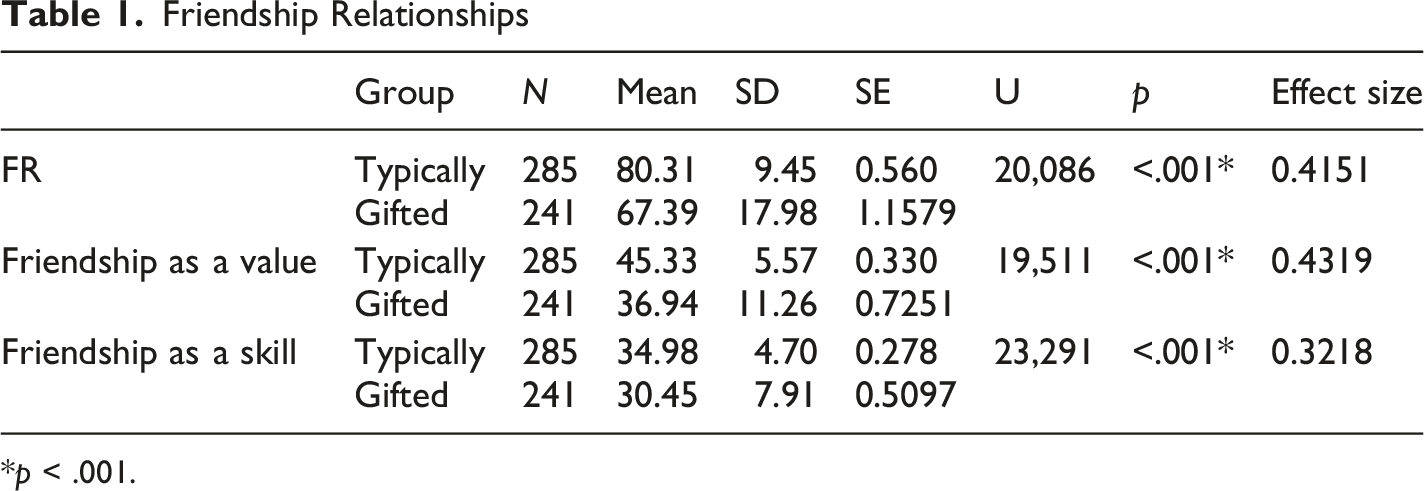
As shown in Table 1, there was a significant difference favoring typically developing children in the FR scores between typically developing children (M(Typically) = 80.31) and gifted children (M(Gifted) = 67.39) (U(524) = 20,086; p < .001). Significant differences favoring typically developing children were also observed in the subdimensions of friendship as a value and friendship as a skill within the FR scale. The differences in the groups’ mean scores on the FR are illustrated in Figure 1. Comparisons between typically developing and gifted children regarding SPS are shown in Table 2. Friendship relationships Social Problem-Solving *p < .001.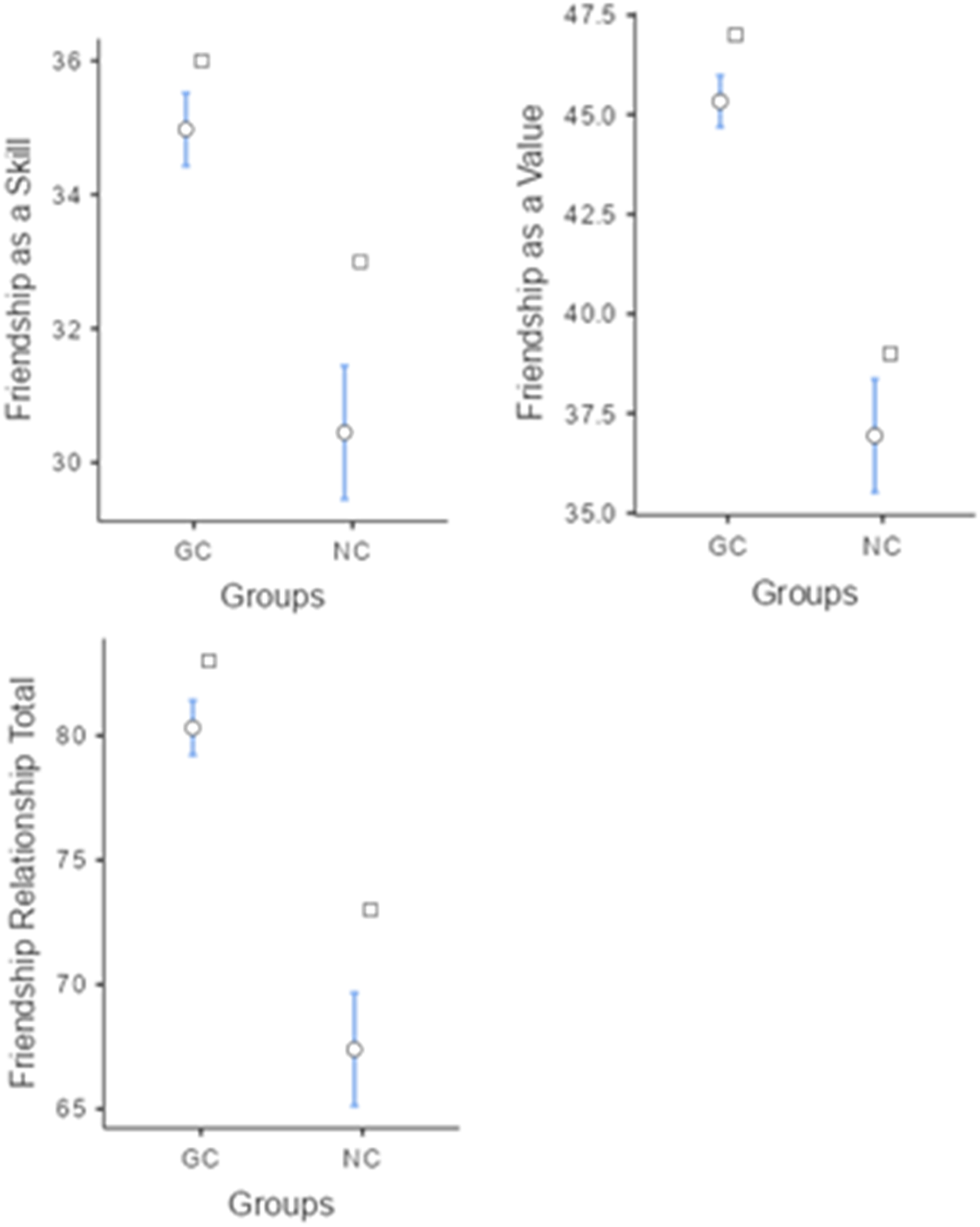
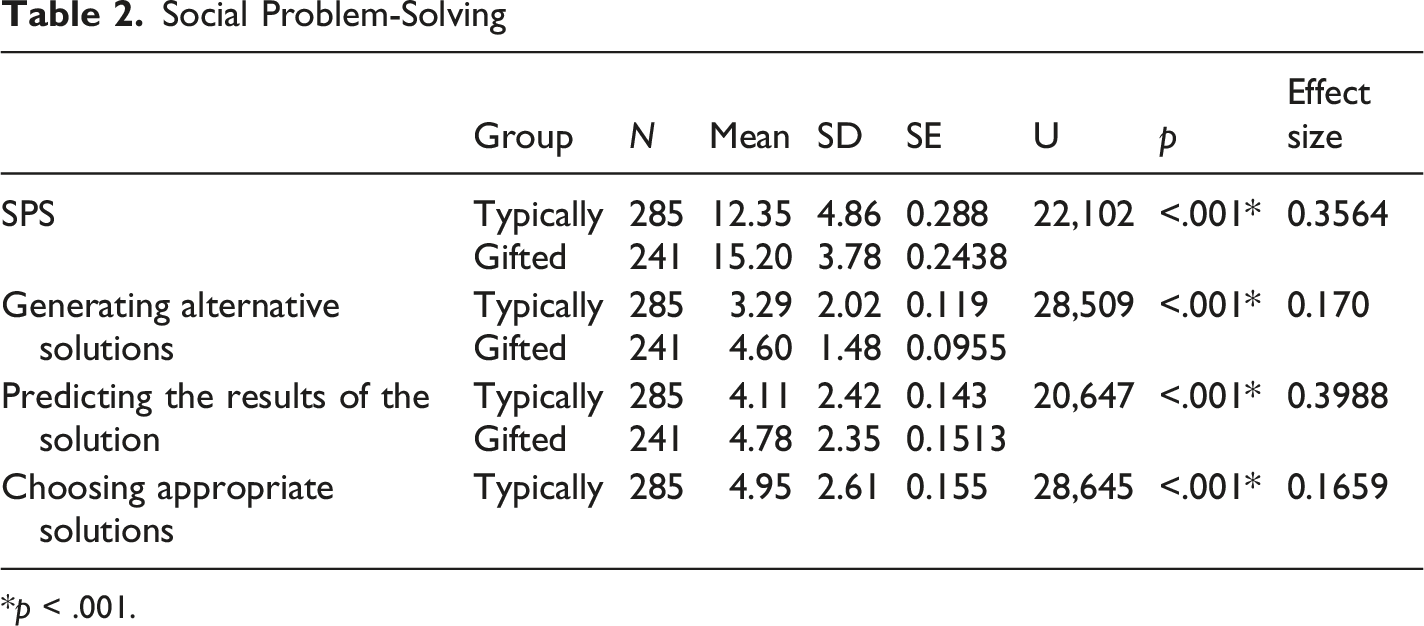
As shown in Table 2, a significant difference in SPS scores favoring gifted children were observed, with gifted children scoring higher (M(Gifted) = 15.20) than typically developing children (M(Typically) = 12.35), U(524) = 22,102; p < .001. Moreover, significant differences favored gifted children in generating alternative solutions, predicting the outcomes of solutions, and selecting appropriate solutions. The group mean scores in SPS are illustrated in Figure 2. Comparisons between typically developing and gifted children regarding PWB are presented in Table 3. Social problem-solving Psychological Well-Being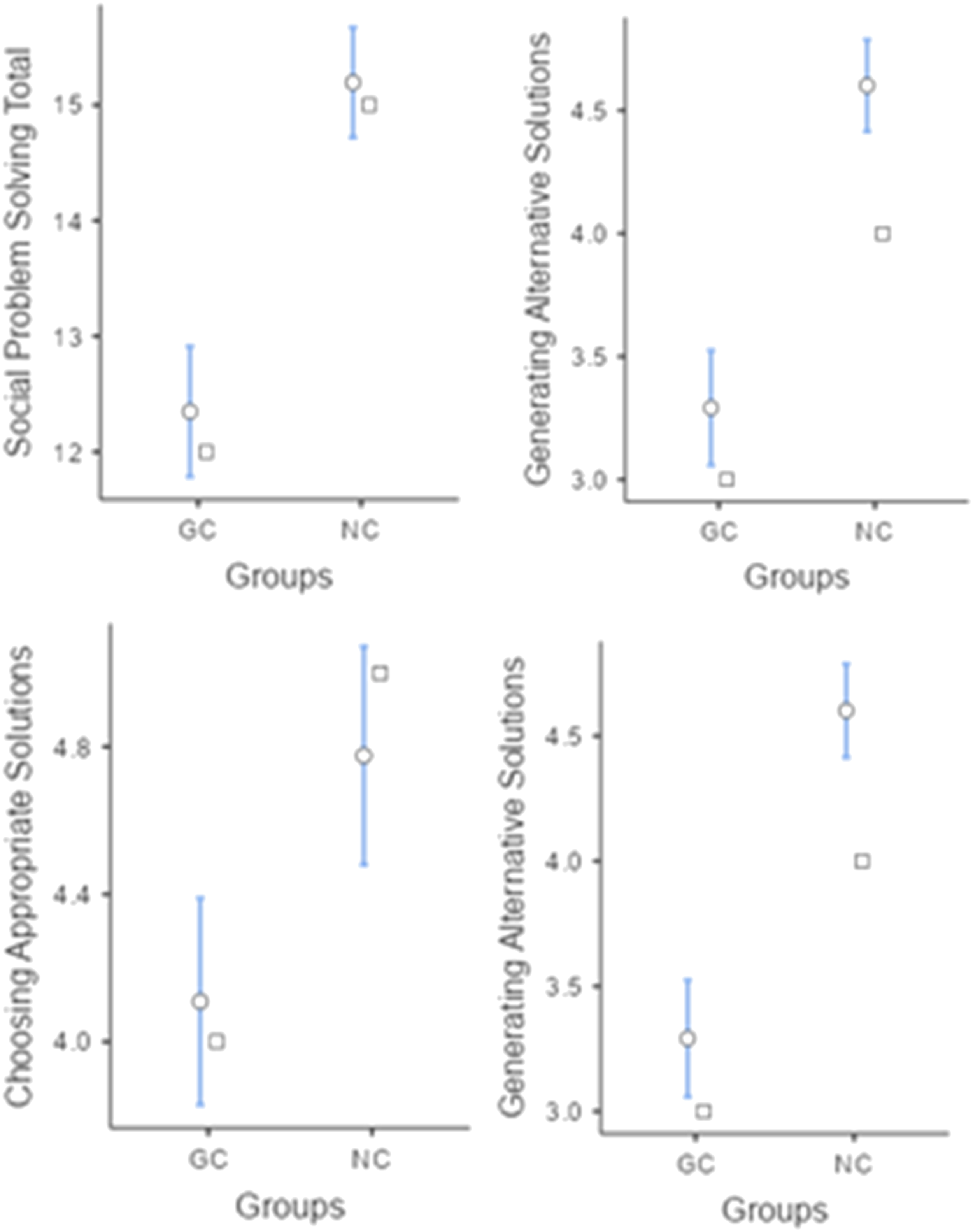

As seen in Table 3, there were no significant differences in PWB between typically developing (M(Typically) = 55.32) and gifted children (M(Gifted) = 54.62), U(270) = 33,167; p > .05. The differences in the mean scores of the groups in PWB are shown in Figure 3. Psychological well-being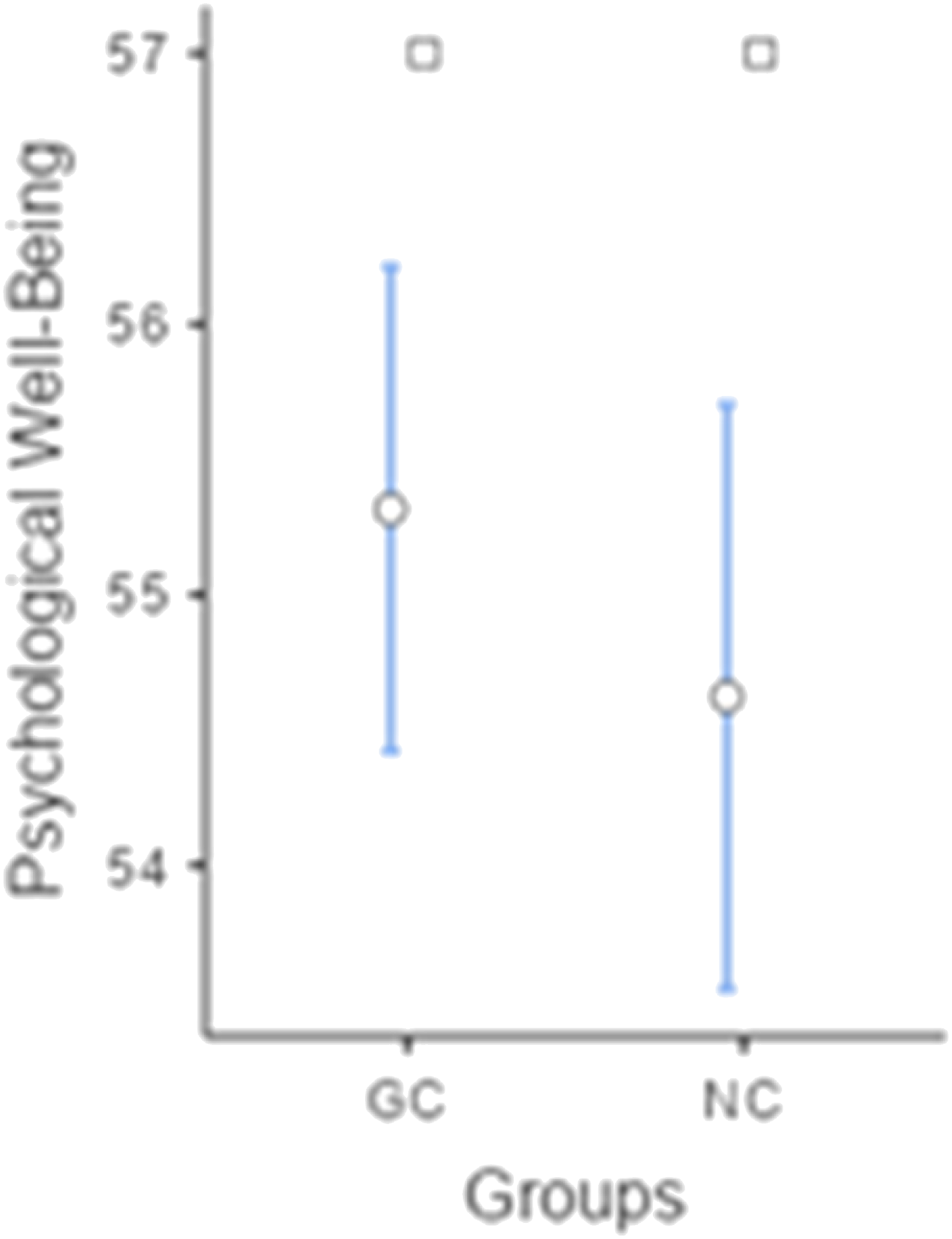
Discussion
This study compared the FR, PWB, and SPS of gifted and typically developing children. It was hypothesized that gifted children would score higher than their peers in SPS and that typically developing children would score higher in FR and PWB. The present study partially confirmed these hypotheses.
Friendship Relationships
The current study’s findings show that typically developing children scored significantly higher than their gifted peers in overall FR, including friendship as a value and friendship as a skill. Although these differences reached statistical significance, the effect sizes were relatively small, raising questions about their practical importance. Although it was initially expected that there would be no statistically significant difference between the two groups, these results challenge that assumption. One possible reason for these findings is the structural and contextual differences in the daily lives of gifted students. For example, gifted children who attend SACs often spend additional time in academic settings after school, which can limit opportunities for spontaneous peer interaction and the formation of informal friendships (Cross, 2021). This academic focus and reduced social exposure may result in a narrower range of social experiences compared to typically developing children.
Additionally, individual traits associated with giftedness can impact social dynamics. Research indicates that perfectionism, emotional intensity, and lags in social-emotional maturity relative to cognitive skills may impede the formation and maintenance of close peer relationships (Eren et al., 2018; Papadopoulos, 2021). Gifted children often prefer peers with similar cognitive abilities and may seek interactions with older or equally gifted children, which can limit their ability to connect with peers of the same age (Gross, 2002; Rinn, 2024). When their social needs are unmet, feelings of isolation or withdrawal can occur (Tercan & Bıçakcı, 2022; Unal & Sak, 2023). Moreover, social competence may develop more slowly than intellectual abilities. Olszewski-Kubilius et al. (2014) and Blaas (2014) suggested that a lack of proper social guidance and increased sensitivity to peer feedback or criticism may cause gifted children to avoid or struggle with social interactions. This pattern may help explain their relatively lower FR scores.
However, it is essential to acknowledge that not all studies align with the current findings. Several researchers have reported that gifted children can display strong social skills and peer competence. For example, França-Freitas et al. (2014) found that gifted adolescents often show good social skills and, in some cases, even surpass their typically developing peers in social adaptation and popularity. Peairs (2010) also found that gifted students were often nominated as preferred peers in sociometric assessments. These differences in the literature suggest that social outcomes in gifted populations are not uniform and are likely influenced by various moderating factors, including personality traits, empathy levels, environmental fit, educational placement, and gender (Bergold et al., 2020). Therefore, giftedness should not be viewed as a homogeneous category when evaluating social development.
Social Problem-Solving Skills
The present study’s findings showed that gifted children outperformed their typically developing peers in overall SPS and its subdimensions, such as generating alternative solutions, predicting the results of solutions, and selecting appropriate solutions. Although the differences observed were statistically significant, the small effect sizes suggest that the practical importance of these findings should be approached with caution. Nonetheless, the results support the study’s initial hypothesis, which expected superior SPS performance among gifted children due to their enhanced cognitive abilities. Problem solving is often regarded as a key cognitive feature of giftedness, and several studies support the notion that gifted children exhibit high-level thinking skills and advanced mental maturity, enabling them to navigate complex problems, including social ones (Jauk et al., 2013; Solé-Casals et al., 2019). These strengths allow gifted children to think flexibly, consider multiple viewpoints, and predict outcomes—core skills of SPS. Additionally, research indicates that SPS is closely related to school adjustment, social skills, and peer acceptance, areas where many gifted children tend to excel (Şenol & Taş, 2023). Studies by Cross et al. (2004) and França-Freitas et al. (2014) also highlighted that gifted children have higher levels of SPS due to their well-developed executive functioning and metacognitive skills, which enable them to assess the effects of social actions more effectively than their peers.
However, it is also important to recognize the variation within the gifted population. Although many gifted children display high levels of SPS, others may struggle due to social-emotional vulnerabilities. For example, gifted children who lack access to intellectually compatible peers often experience isolation, frustration, and loneliness, which can prevent them from applying their cognitive strengths in social settings (Cross, 2021; Unal & Sak, 2023). Likewise, Eren et al. (2018) found that the mismatch between a gifted child’s emotional maturity and cognitive capacity may increase vulnerability to stress, anxiety, or interpersonal conflicts. As Walker et al. (2013) suggested, traits such as shyness or social withdrawal can influence the development and use of SPS, indicating that cognitive ability alone does not entirely predict social competence. Therefore, it is crucial to interpret the results not as evidence of overall superiority in SPS among gifted children. Rather, they suggest a potential that may or may not be realized depending on emotional, environmental, and social factors.
Psychological Well-Being
This study found no statistically significant difference in PWB scores between gifted children and their typically developing peers. Although gifted children are often presumed to have higher emotional resilience due to their cognitive skills (Baudson & Preckel, 2013), research on their actual PWB outcomes presents a more complex view. Several studies highlight that gifted children are not a uniform group regarding emotional adjustment and that their well-being can vary widely based on individual and environmental factors (Papadopoulos, 2021; Zanetti et al., 2024). Some research suggests that gifted children show higher PWB levels than their peers—because of their advanced cognitive abilities and emotional intelligence (Kroesbergen et al., 2016)—but other studies point to increased sensitivity, anxiety, and stress due to factors such as perfectionism and high parental or societal expectations (Eren et al., 2018; Tercan & Bıçakcı, 2022; Unal & Sak, 2023). The label “giftedness” itself can have both protective and harmful implications. It may boost self-esteem and motivate achievement but also lead to social isolation and emotional struggles when peers or environments do not meet the child’s needs or when societal pressure results in unrealistic performance expectations (Crous, 2017; Freeman, 2006; Pfeiffer, 2011). Recent research also indicates that labeling can increase the risk of internalizing issues, especially in environments lacking support or understanding (Tercan & Bıçakcı, 2022; Zanetti et al., 2024). Bergold et al. (2020) further dispelled the stereotype of disharmony by finding no significant differences in subjective well-being between intellectually gifted and average-ability students, emphasizing the crucial role of social and educational contexts in shaping psychological outcomes.
Limitations and Future Directions
This study has several limitations that should be considered when interpreting the results. The research employed a cross-sectional design instead of a longitudinal one; therefore, the direction and underlying mechanisms of the observed relationships should be viewed with caution. Although the findings provide meaningful group comparisons, they do not account for potential changes or interactions that may occur over time. The sample included primary school students from Istanbul and Ankara, two major urban centers in Turkey. Although this context provides valuable insights into urban educational environments, it limits the generalizability of the results to children from different geographic or socioeconomic backgrounds. Using a convenience sampling method also presents a limitation, as participants were not randomly selected from a larger population, which may limit the external validity. Additionally, although standardized self-report instruments were used to ensure measurement consistency, such tools are inherently influenced by children’s limited self-awareness and social desirability bias. Future research could benefit from employing multiple methods, including teacher evaluations, peer assessments, and observational measures, to gain a fuller understanding of children’s social and emotional traits. Furthermore, adopting longitudinal or mixed-method designs could provide deeper insights into how FR, SPS, and PWB develop and interact across different developmental stages, thereby enhancing the explanatory power of future studies.
Although the effect sizes observed in this study were relatively small, they should not be considered trivial. In educational and developmental research, even modest yet statistically significant differences can have meaningful implications for practice, especially when they show consistent patterns across large populations. The small effect sizes in friendship and problem-solving outcomes indicate that while group differences are not substantial at the individual level, they can still accumulate to affect classroom dynamics, peer relationships, and the social climate of learning environments. Such incremental differences, when integrated into classroom routines, can produce significant developmental benefits over time.
Conclusion and Implications
This study enhances understanding of the developmental profiles of gifted and typically developing children by comparing their FR, PWB, and SPS. The findings showed that typically developing children scored higher in friendship relationships, whereas gifted children demonstrated higher SPS scores. No significant difference was observed in PWB, indicating that both groups had similar emotional well-being at this stage. These results highlight that giftedness should be viewed as a multifaceted construct that encompasses emotional, social, and contextual factors, in addition to cognitive abilities. Implementing social-emotional learning programs, encouraging peer cooperation, and increasing teacher awareness of gifted children’s emotional needs could enhance gifted children’s school adjustment and well-being.
Footnotes
Acknowledgments
We would like to thank the students and their families who contributed to the conduct of this study.

Ethical Considerations
Ethical approval, researcher consent form, written and verbal child consent form, and institutional and family permissions were obtained in the conduct of the research.
Author Contributions
The authors contributed equally to the execution of this study. ME played an active role in determining and designing the problem situation, AE in analysis findings and method, and ME and AE in the results and discussion.
Funding
The authors received no financial support for the research, authorship, and/or publication of this article.
Declaration of Conflicting Interests
There is no conflict of interest between the authors or other persons/institutions/organizations in the study.
Data Availability Statement
The data that support the findings of this study are available from the corresponding author upon reasonable request.
Clinical Trial Registration
This study was not structured as a clinical trial.