







Abstract
Given that children with autism spectrum disorders (ASDs) often require one-to-one individualized instruction, using tablets as teaching tools may represent an interesting option in classrooms with high student to teacher ratios. The purpose of our study was to extend research by evaluating the effects of tablet-based instruction on the generalization of skills in children with ASD. Specifically, we used multiple probe designs to assess the effectiveness of using an app to teach one-word receptive identification to five children with ASD between 4 and 11 years old. Our results indicated that three of the five children displayed generalization on at least two concepts following tablet-based instruction. The tablet-based app may promote generalization of learned concepts in some children with ASD, but our results suggest that it is not a one-size-fits-all solution. As such, our study underlines the importance of conducting individualized assessment prior to using tablet-based instruction with children with ASD.
According to recent estimates, approximately 1 in 68 children is diagnosed with autism spectrum disorders (ASDs) in the United States (U.S. Department of Health and Human Services, Centers for Disease Control and Prevention, 2016). Children with ASD encounter difficulties with their social and communication abilities, and engage in atypical and repetitive behaviors to various degrees (American Psychiatric Association [APA], 2013). Because of the previous difficulties, children with ASD often require individualized teaching (Eikeseth, Smith, Jahr, & Eldevik, 2002; Iovannone, Dunlap, Huber, & Kincaid, 2003; Lovaas, Koegel, Simmons, & Stevens, 1973). However, providing one-to-one instruction to children with ASD is not always feasible in school settings due to unfavorable staff to student ratios, especially in inclusive classrooms (Hess, Morrier, Heflin, & Ive, 2008).
To address this issue, researchers and educators have been increasingly turning to technology as an instructional tool. For example, diverse sets of abilities such as spelling, mathematics, reading, vocabulary acquisition, sentence imitation, matching, answering questions, sentence production, science, social skills, motor skills, adaptive skills, and employment skills have been taught using computer-assisted instruction (CAI; Heimann, Nelson, Tjus, & Gillberg, 1995; Hetzroni & Tannous, 2004; Kagohara et al., 2013; Knight, McKissick, & Saunders, 2013; Ploog, Scharf, Nelson, & Brooks, 2012; Ramdoss et al., 2011; Sansosti & Powell-Smith, 2008). With the increased availability and affordability of tablets, researchers have also evaluated their effectiveness as instructional tools targeting a multitude of abilities such as employment skills, language and communication skills, social skills, academic engagement, and problem behavior (Burke et al., 2013; Chien et al., 2015; Hourcade, Bullock-Rest, & Hansen, 2012; Lorah, Parnell, Schaefer Whitby, & Hantula, 2015; Neely, Rispoli, Camargo, Davis, & Boles, 2013; Smith, Spooner, & Wood, 2013; Stephenson & Limbrick, 2015; Wadhwa & Jianxiong, 2013). Tablets may thus represent interesting instructional tools for individuals with ASD because they offer (a) unlimited teaching opportunities children can access on their own; (b) the reliance and targeting of visual strengths often associated with ASD (Shane & Albert, 2008); and (c) increased structure, predictability, and controllability compared to direct intervention (Golan & Baron-Cohen, 2006).
Among the numerous articles published on using computers for teaching purposes, a seminal study by Bosseler and Massaro (2003) taught vocabulary words to children with ASD whose ages varied between 7 and 12 years old. Their results indicated that the computer program was effective at teaching new words to children with ASD. Furthermore, the children showed generalization of these new words to untaught exemplars. While this study represents a great example of the use of technology as a teaching tool, it has some specificities that require further investigation. Chief among those is the amount of support provided by a trainer during teaching. Specifically, Bosseler and Massaro used trainers to provide food reinforcement during computer instruction, therefore integrating a human component to the intervention. This form of human interaction applies to nearly all other studies that have used CAI to teach concepts to children with ASD (e.g., Heimann et al., 1995; Sansosti & Powell-Smith, 2008; Schery & O’Connor, 1997). For example, Sansosti and Powell-Smith (2008) made use of peer confederates and trainers to prompt and help the participants generalize communication skills. In a study conducted by Schery and O’Connor (1997), the trainers provided children with the objects that they requested while using the computer and occasionally played with them during this time. While including a human component to CAI has clear benefits, high levels of trainer involvement may not be feasible in certain settings. For example, it would be important to minimize human involvement during computer instruction in settings in which an educator is unavailable to provide one-to-one support.
Another issue highlighted in the Bossler and Massaro (2003) study is the reduced functional control between the computer program and the acquired vocabulary words. Some participants were already learning before the start of training as manifested by the increasing acquisition trends during baseline. Other studies seem to share the same limitation because they provided the lessons on the computer program in addition to the traditional teaching curriculum at school or additional intervention with a parent or trainer (Heimann et al., 1995; Schery & O’Connor, 1997; Wainer & Ingersoll, 2011).
A noteworthy concern when teaching new concepts to children with ASD is related to their difficulty with generalization. Children with ASD often have more difficulties than others applying newly learned concepts to novel stimuli or situations (Brown & Bebko, 2012; Carr & Kologinsky, 1983; Froehlich et al., 2012; Stokes & Baer, 1977). For example, a child may learn to label the color “red” when shown a red car image used during teaching but may fail to identify the same concept when shown a red pencil. As a result, targeting and evaluating generalization with children with ASD is crucial in any intervention program. However, not all studies evaluated the generalization of taught concepts with a computer to new untaught exemplars (e.g., Moore & Calvert, 2000) and those that have typically used images of the concepts (e.g., Bosseler & Massaro, 2003; Whalen, Liden, Ingersoll, Dallaire, & Liden, 2006).
Studies on the validity of preference assessments have shown that some children with ASD may readily show generalization across modalities from pictures (or videos) to objects when identifying potential reinforces (Brodhead et al., 2016; Clark, Donaldson, & Kahng, 2015; Snyder, Higbee, & Dayton, 2012). That said, it is was not always the case, and to our knowledge, no study has evaluated whether children with ASD were able to generalize between concepts taught using a two-dimensional modality (e.g., images) to their corresponding objects outside the context of reinforcement. In view of the difficulties individuals with ASD often showing generalization from one stimulus to another and from one context to the next, it would not be surprising to find the same difficulties between modalities. From a clinical standpoint, learning to name concepts on images, but not on real-life objects, has limited practical utility, which is why evaluating generalization while teaching individuals with ASD is important.
While computer technology seems to represent an interesting instructional tool and intervention medium for children with ASD, studies targeting language with those individuals share several limitations: (a) nearly all relied on a trainer to provide reinforcement; (b) only a few demonstrated functional control, while decreasing the amount of trainer interference; and (c) most evaluated generalization with images rather than objects. The abovementioned limitations may therefore require further investigation. The purpose of our study was to extend research on teaching one-word concepts to individuals with ASD (Bossler & Massaro, 2003; Heimann et al., 1995; Sansosti & Powell-Smith, 2008; Schery & O’Connor, 1997) by evaluating generalization to both pictures and objects while simultaneously minimizing threats to internal validity and trainer involvement.
Method
Participants and Settings
Five children diagnosed with ASD (based on the Diagnostic and Statistical Manual of Mental Disorders [DSM], Fourth Edition or DSM-V criteria; APA, 2000, 2013) by an independent multidisciplinary team participated in our study. We recruited participants from a French-instruction specialized school in Montreal, Canada, for children with ASD whose level of functioning or problem behaviors prevented their inclusion in integrated school settings. To participate in this study, the students had to (a) already have a diagnosis of ASD, (b) currently be learning one-word concepts, and (c) show challenges with generalization as reported by their teachers. The research project was approved by the school board as well as by the researchers’ university research ethics board. After presenting the research project to the teachers, we asked them to refer students meeting our inclusion criteria. Based on teacher referrals, we then explained the research project to the children’s parents and secured their written informed consent. After observing the children at school, we scored the Childhood Autism Rating Scale–Second Edition (CARS-2) to provide an estimate of the severity of their autistic symptomatology (Schopler, Van Bourgondien, Wellman, & Love, 2010).
Table 1 presents the age, gender, CARS-2 T-score, and the concepts we taught to each participant in the study. Since the children were French speakers or learners, the instruction was provided in French. To preserve confidentiality, all names were pseudonyms. Axelle was 10 years old at the beginning of the study, had mild-to-moderate symptoms of ASD on the CARS-2, and had no formal means of communication. Similarly, Carine who was 7 years old, had mild-to-moderate symptoms of ASD, and did not have a means of communication other than informal gestures. Corey on the other hand, was 4 years old, had mild symptoms of ASD, and displayed meaningful speech with often unclear pronunciation (four- to five-word sentences). Lastly, Aden was 5 years old and had mild-to-moderate symptoms of ASD, whereas Amy was 11 years old and had severe symptoms of ASD. Both participants could use one-word concepts to make simple requests to others. All participants had prior experience with tablets, which were often used to provide access to reinforcing activities (e.g., games, videos) in their classrooms.
Participants’ Characteristics, CARS-2 T-Scores, and Concepts Taught.
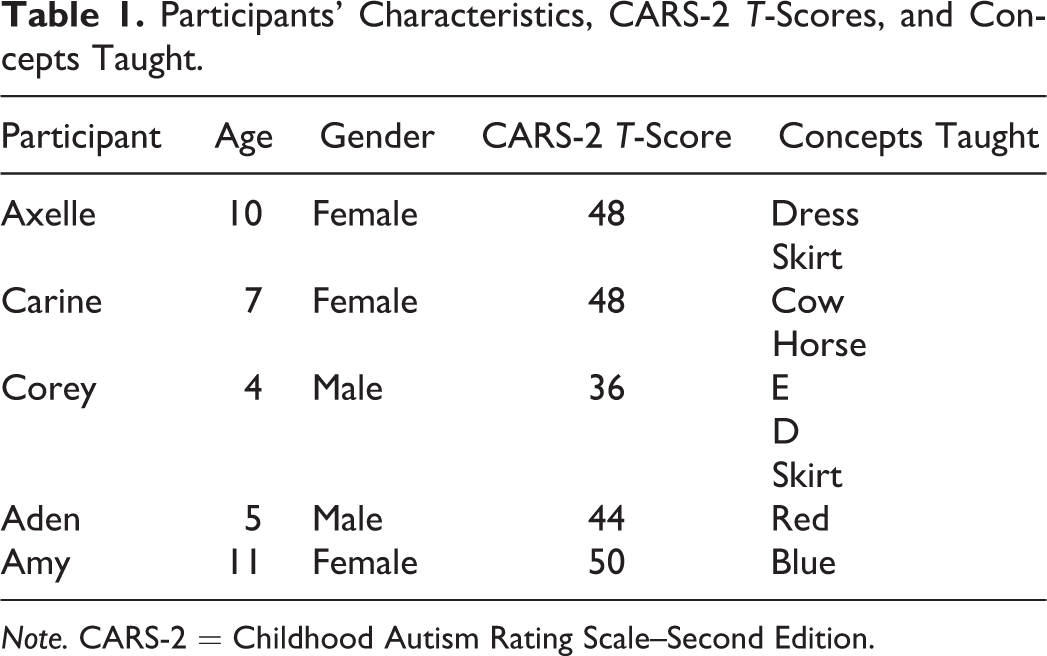
Note. CARS-2 = Childhood Autism Rating Scale–Second Edition.
All sessions were either conducted in an empty auditorium or in a private room within the school. We conducted all sessions with one child at a time; only the participant and the first author were present during those sessions. The participants were seated at a large table with the first author sitting on their right. The third author was present occasionally to measure interobserver agreement (IOA). When she was present, she sat in front of the first author.
Teaching Materials
To teach the concepts, we used an Android-based Samsung Galaxy Note 10.1 tablet with a 25.4-cm screen on which we installed an app, the OpenSource Discrete Trial Instructor, designed to teach one-word concepts. The OpenSource Discrete Trial Instructor was developed by the research team and was based on the principles of applied behavior analysis; that is, the app provided instruction in a discrete trial format, integrated video reinforcement, and included a prompting procedure. Since the app is still being improved, it is not presently available to the general public. The details regarding the presentation of the teaching trials by the app are described in the procedures section below.
The app taught different one-word concepts from seven categories (i.e., colors, animals, prepositions, food, clothes, musical instruments, and letters). Each category included five different concepts, and each concept included five different examples. For example, the categories “clothes” included five different clothing concepts (i.e., dress, skirt, pants, coat, and shoes), and the concept “dress” included five different examples of the concept (e.g., long dress, short dress, blue dress, red dress, and green dress).
Experimental Design and Procedures
We used a multiple probe design across concepts to evaluate the effectiveness of teaching one-word concepts with our app. Since the multiple probe design involves the repeated application of the intervention targeting different concepts, the recurrent evaluation of the intervention effect strengthens our conclusions regarding the functional relation between the intervention and the acquired behavior (Smith, 2012). Furthermore, we also integrated periodic generalization and follow-up probes to the research design. Each child participated in four to eight sessions per day, 3 days per week (depending on their availability) for a period of 15–30 min. We initially selected three concepts to teach each child based on their teachers’ and parents’ reports. Due to time restrictions (i.e., end of the school year), we only taught two concepts to two of the children and one concept to two other children. Concepts taught were based on the child’s lack of knowledge of those words and reduced risk of exposure to them outside of the experimental setting. For example, we taught Corey the skirt concept because he was a boy and was therefore less exposed to it on a daily basis. We also chose to teach Corey letters because he mastered nearly all the other concepts already programmed on the app. Similarly, Axelle rarely wore any dresses or skirts (based on her mother’s report), which is why we taught her the dress concept. We stopped teaching a concept when the child showed correct responding on 80% or more of trials on three consecutive generalization probes spread on at least two different days. In order to control for extraneous variables, we asked the children’s teachers and parents not teach the concepts targeted in our intervention during the course of the study.
Data Collection and IOA
To examine the effects of the app, we measured the children’s responding during baseline, teaching, generalization, and follow-up sessions. A correct response was defined as the child touching the image or object corresponding to the named concept within 3 s of the concept being named. An incorrect response was defined as touching an image or object other than the one associated with the named concept within 3 s, and finally, the absence of a response (nonresponse) was defined as the child not touching an image or object within 3 s. We calculated the percentage of correct responding by dividing the number of correct responses by the number of trials (i.e., always 5) and multiplying the quotient by 100. To inform us about the involvement of the trainer during instruction, we also measured the number of times the trainer prompted the child to sit down. A second research assistant was present for at least 33% of the sessions to score IOA. We calculated the IOA by dividing the number of agreements by the number of agreements and disagreements and multiplying the result by 100, which resulted in mean IOAs of 99% or above for each participant. For instance, while teaching Axelle the dress concept, the two observers agreed 100% of the time on correct responding, incorrect responding, and nonresponding.
Conditions
Baseline
We conducted all baseline sessions on the tablet, which allowed an evaluation of preintervention knowledge. We completed at least three baseline sessions for each child on at least two different days. We also assessed preintervention knowledge of the two other concepts targeted for later teaching. Every session included five trials. During each trial, three images (either colored photographs or colored drawings of the concept) were concurrently presented on the tablet’s screen with one image depicting the target concept and two others depicting distractors (images of associated categories not currently taught). An automated voice named the concept and the child had to choose the image associated with the concept by selecting it on screen. The app randomized the position of the correct responses to avoid rote memorization. The app did not provide any reinforcement or feedback to the participant during baseline. To minimize nonresponding, the instructor told the participant to listen to the instruction and select an image and moved on to the next trial (presenting a different example of the concept) if the child did not choose an image within 3 s of the instruction. If the child stood up from the chair, the investigator asked him to sit down within 3 s. If the child did not sit down following the vocal prompt, the instructor repeated the vocal instruction and pointed to the chair. If the child still did not sit down following the verbal and gestural prompt, the instructor manually guided him to the chair by placing his hand on his shoulder until he sat down.
Training
The training sessions were similar to the baseline sessions with the following exceptions. First, the app played a preferred video for 10 s contingent on correct responses. The trainer identified the preferred video prior to teaching using a modified paired-choice preference assessment and re-evaluated preference every 20 training sessions to maintain the child’s motivation (see Chebli & Lanovaz, 2016, for detailed preference assessment procedures). Second, an incorrect response was immediately followed by a prompting procedure whereby the correct image of the concept grew larger while the name of the concept was repeated simultaneously. The prompting procedure was implemented automatically by the app following incorrect responses (i.e., without input from the trainer). We collected no data during the prompted trials, but correct responses on these trials produced access to the video reinforcer. During all training sessions, we did not provide social reinforcement: The only reinforcer was the preferred video provided automatically by the app contingent on correct responding. Lastly, we only began teaching the second and third concepts after the participant demonstrated generalization of the previous concept (scored 80% or more on three consecutive generalization probes).
Generalization
In order to assess generalization to new examples, we evaluated the child’s knowledge of five different untaught examples of the target concept. These examples were all different than the ones used during training. The generalization probes were conducted periodically after each series of five sessions of taught exemplars. Since we were interested in evaluating generalization to real-life examples, we used both real objects and untaught images of the target concept. Generalization probes were similar to baseline probes except that a human trainer conducted them instead of an app. In order to assess generalization of a concept, we simultaneously placed 3 items on a large table facing the child. We placed the target concept and two other random items. The trainer named the target concept and the child had to manually select the item representing the concept. We did not provide any reinforcement or prompts during generalization probes as the purpose of our study was to examine whether the children would respond correctly on untaught exemplars. For each concept, we conducted five generalization trials, every trial presenting a different example of the target concept. If the child responded correctly on 80% of trials during the session, two more sessions were conducted on the following day in order to obtain three data points spread on at least two different days. As for the untaught concepts, we also conducted generalization probes when the child first began participating in the study and following 10 teaching and generalization sessions of the target concept in order to ensure the child had not learned the untaught concept in another context prior to the start of computer instruction.
Finally, it should also be noted that, after approximately 1 month of intervention, we noticed that some participants were not responding during generalization probes. We hypothesized that responding was not occurring as the participants never received reinforcement during probes with the trainer. We therefore modified the generalization procedure for all participants to conduct five mastered trials during generalization probes. The mastered trials were simple instructions that the child already performed correctly prior to their inclusion in the study (e.g., imitation of clapping). Correct responding on mastered trials was followed by both edible and social reinforcement (e.g., excellent, well done!) on a continuous reinforcement schedule (i.e., fixed ratio of 1). The sole purpose of the interspersed mastered trials was to maintain responding during the generalization probes; thus, we did not collect data on these trials. This change occurred after session 79 for Axelle, 40 for Carine, 55 for Corey, 65 for Aden, and 71 for Amy. Despite this change, we never provided edible or social reinforcement on the generalization trials.
Follow-up probes
Once the child had met the generalization criterion for a concept, we attempted to conduct follow-up probes every 2 weeks. However, we were not able to assess follow-up for some concepts due time constraints (e.g., end of school year). The follow-up probes were identical to baseline.
Data Analysis
First, we depicted the percentage of correct responding on multiple baseline graphs for each participant separately (e.g., see Figure 1). Each figure is composed of two panels per concept. For example, a figure contains four panels when two concepts have been taught. For each concept, the upper panel of the pair represents the percentage of correct responding on the taught exemplars, whereas the lower panel represents the same measure for generalization probes on the concept. Our decisions regarding whether the child had showed generalization were based on the lower panel. Then, we computed means and examined trends for both taught exemplars and generalization probes for each concept. Finally, we computed the percentage of nonresponse during tablet instruction to provide an indicator of participant engagement and the number of prompts to sit down per session during tablet instruction to estimate trainer involvement. These measures are reported directly in text as descriptive measures.
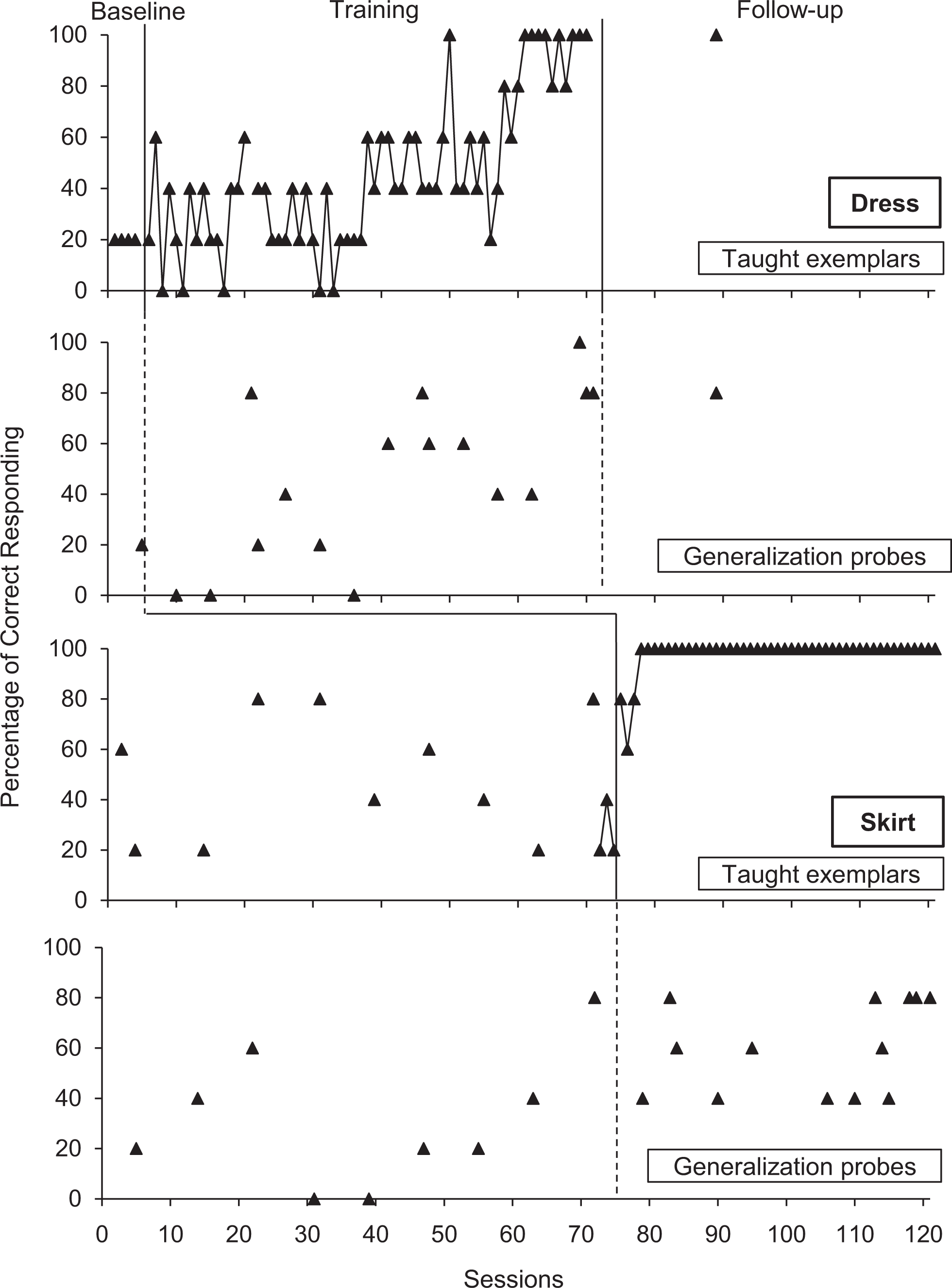
Axelle’s percentage of correct responding on taught exemplars and generalization probes for dress and skirt.
Results
Figures 1 –4 display the percentage of correct responding on the concepts for each child during baseline, training, generalization, and follow-up sessions. Axelle (Figure 1) initially displayed stable correct responding for the dress concept during baseline sessions on taught exemplars (M = 20%) and on the generalization probe (20%). Following the baseline sessions, Axelle’s correct responding on taught exemplars (M = 47%) increased gradually across sessions. The patterns were similar for generalization probes (M = 45%): Axelle required 64 training sessions to show generalization of the dress concept. As for follow-up probes, Axelle continued to show correct responding 2 weeks after training (100% for taught exemplars and 80% for generalization probes). After showing variable responding during the baseline phase on taught exemplars of skirt (M = 45%), correct responding increased almost immediately to 100% when the concept was taught (M = 98%). In contrast, generalization probes during baseline showed an increasing trend (M = 31%), but Axelle showed generalization only following 47 training sessions (M = 60%). Overall, Axelle’s percentage of nonresponse was 1% and she never required prompts to sit down.
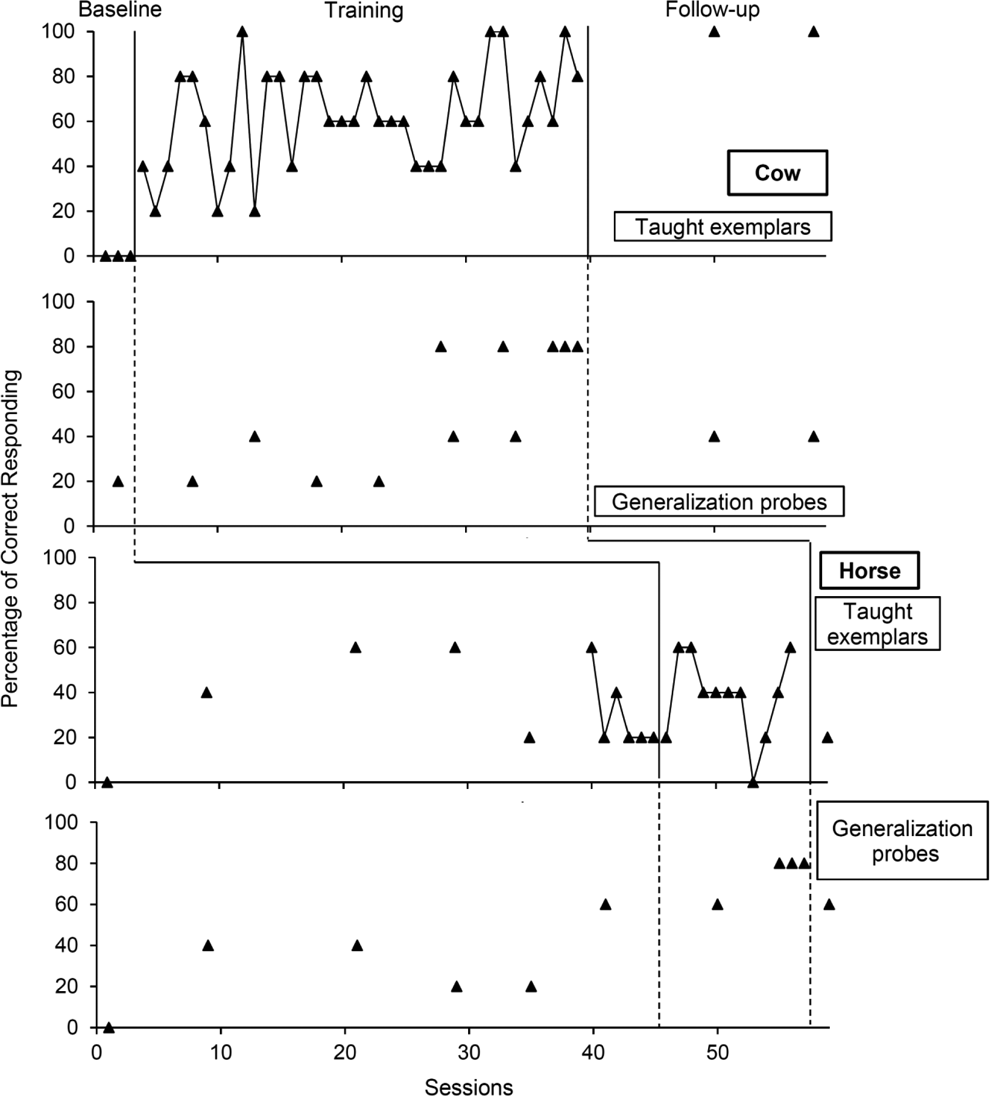
Carine’s percentage of correct responding on taught exemplars and generalization probes for cow and horse.
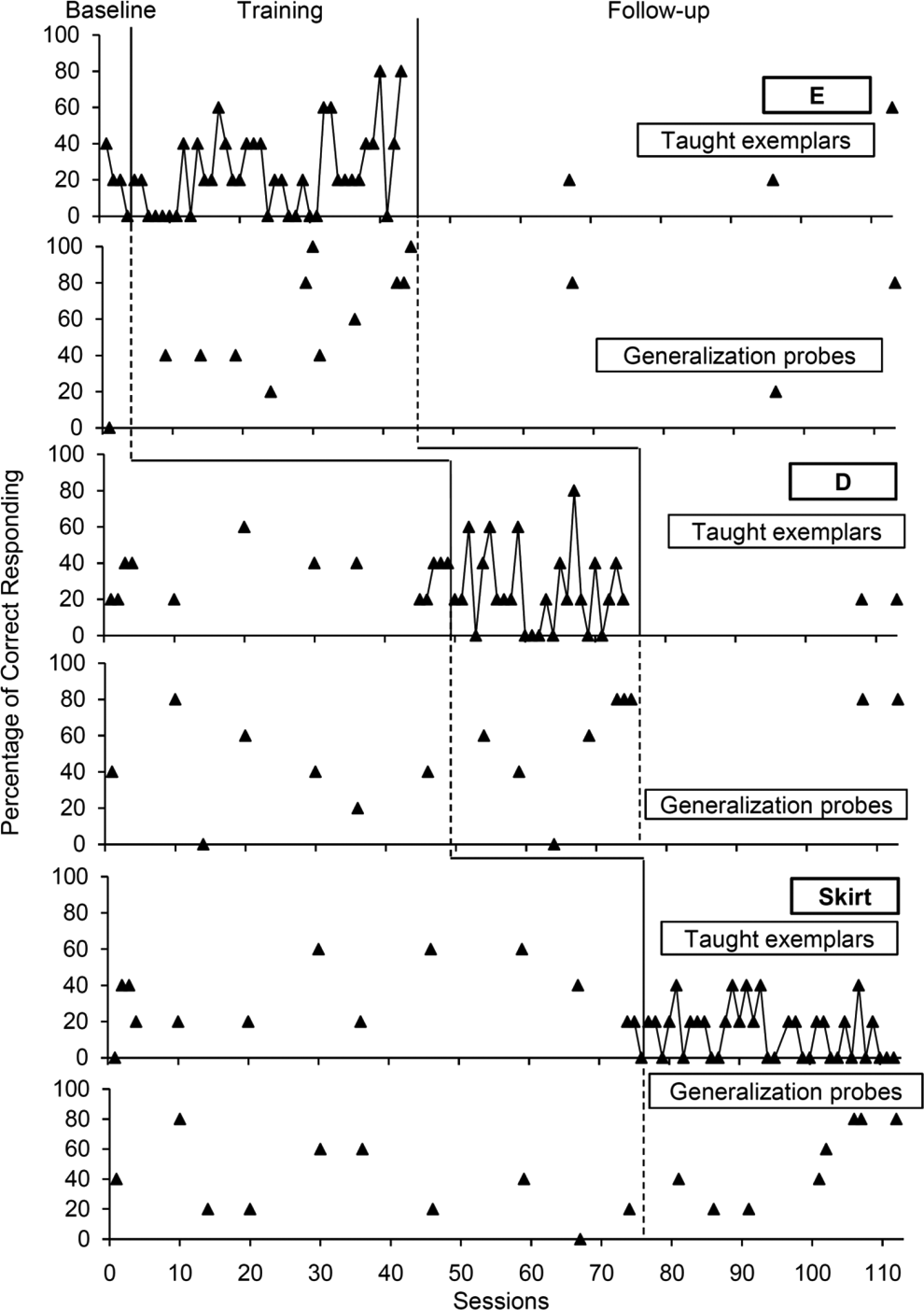
Corey’s percentage of correct responding on taught exemplars and generalization probes for E, D, and skirt.
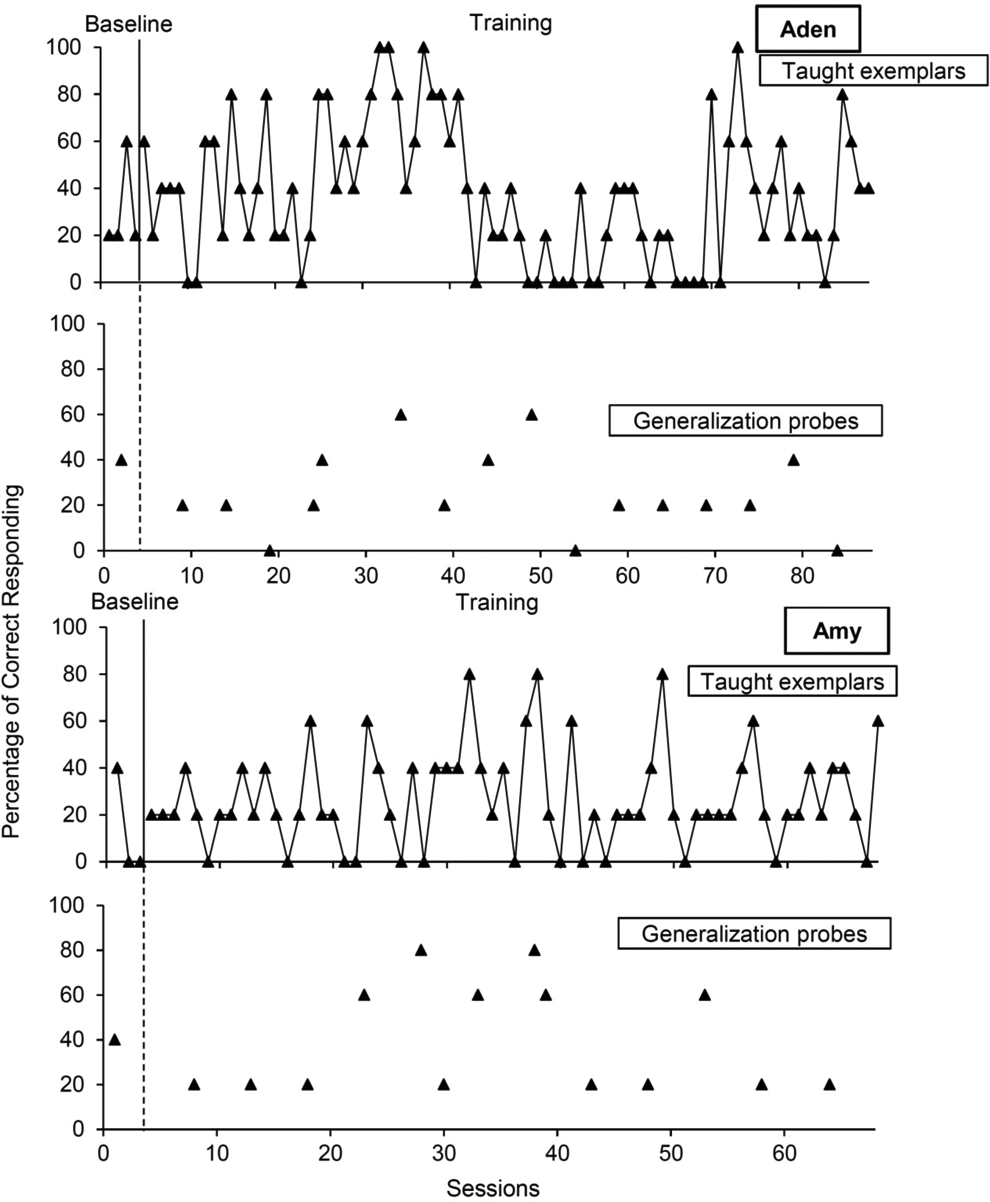
Aden’s (upper panels) and Amy’s (lower panels) percentage of correct responding on taught exemplars and generalization probes.
Figure 2 displays Carine’s results. Following no correct response on taught exemplars (M = 0%) and a single correct response on the generalization probe (20%) during baseline for cow, her correct responding became variable, but higher, on taught exemplars (M = 62%), and gradually increased on generalization probes (M = 53%). She showed generalization on untaught exemplars after 36 training sessions. Regarding follow-up, Carine was able to maintain adequate levels of correct responding on cow for taught exemplars a month following the end of training (M = 100%), but she did not maintain the same level of correct responding on generalization probes (M = 40%). As for horse, her correct responding on the taught exemplars remained stable the last three sessions of baseline (M = 33%) and varied between 20% and 60% during the initial generalization probes (M = 30%). Subsequent responding on taught exemplars was variable and only marginally higher (M = 38%), whereas correct responding on generalization probes (M = 75%) increased to meet the criterion within only 11 training sessions. Similarly, she did not maintain her high levels of correct responding on the horse concept (20% for the taught exemplars and 60% for the generalization probe). Finally, Carine’s overall percentage of nonresponse was 17%, and she needed on average 0.04 prompts per session to remain seated.
Figure 3 shows that, for the letter E, Corey had a decreasing level of correct responding on taught exemplars (M = 20%) and no correct responding on the generalization probe (0%). Despite variable and similarly low levels of correct responding on the taught exemplars during training (M = 25%), Corey showed a variable trend on generalization probes (M = 62%) and displayed generalization after 39 training sessions. At follow-up, correct responding remained low on the taught exemplars (M = 33%) and variable on the generalization probes (M = 60%). For the letter D, his correct responding during baseline was stable on taught exemplars (M = 34%) and variable on the generalization probes (M = 40%). Both training and follow-up correct responding remained low on taught exemplars (M = 25% and 20%, respectively). Contrarily, his responding during training and at follow-up on generalization probes met our criterion (M = 55% and 80%, respectively) after 25 training sessions. As for skirt, his correct responding on taught exemplars had a decreasing trend across the last five baseline sessions (M = 30%) and remained relatively stable and on average lower during training (M = 14%). On generalization probes, Corey initially had similar levels of correct responding during baseline (M = 36%), but correct responding gradually increased during training (M = 53%). He showed generalization after 35 training sessions. His overall percentage of nonresponse was 10%, and he required on average 0.30 prompts per session to remain seated.
Unlike other participants, Aden (upper panels of Figure 4) never showed generalization of the red concept to objects following 3 months of training. His correct responding on taught exemplars was low during baseline (M = 30%) and remained low, albeit variable, during training (M = 38%). His generalization probes showed similar patterns (M = 26%). Aden had a nonresponse rate of 7% and the average number of prompts for sitting was 1.13 per session. Finally, Figure 4 (lower panels) presents the results for Amy. She never showed generalization of the concept blue to new untaught exemplars. Similarly to Aden, her correct responding remained low during both baseline and training sessions for taught exemplars (M = 13% and 27%, respectively) and generalization probes (M = 40% for both). On average, Amy had a nonresponse percentage of 31% and the average number of prompts for sitting was 0.43 per session.
Discussion
Overall, three of the five children with ASD showed generalization on at least two concepts following tablet-based instruction. Our results are consistent with previous studies (Bosseler & Massaro, 2003; Moore & Calvert, 2000; Schery & O’Connor, 1997) and extend them in several ways. By integrating video reinforcement within the app in order to promote learner independence, we minimized trainer involvement, which would allow the implementation of the procedures with multiple students simultaneously. Furthermore, we reduced threats to internal validity by informing parents and teachers not to teach the target concepts to participants while the study was taking place and by regularly probing the participants’ knowledge of untaught concepts to make sure that increases in correct responding could be attributed to the app. In addition, two children were able to maintain correct responding on those concepts for several weeks posttraining, which may decrease the need for further instruction.
Two of five children never displayed generalization even though we conducted more than 60 training sessions. Compared to the other participants, Aden and Amy required a greater number of prompts to sit down and continue working, which could in part explain why they were not benefiting from the app. Amy also had the highest levels of nonresponses among all the participants. Requiring a greater number of prompts and higher levels of nonresponses may indicate a lack of interest for tablet-based instruction, which could possibly hinder the learning process. These results underline the importance of assessing generalization to real-life objects and that using tablet-based instruction is not a one-size-fits-all solution that will be effective with every child. From a clinical standpoint, individualized assessment prior to using tablet-based instruction appears paramount to ensure that children will benefit from CAI. Children needing a large number of prompts to sit down and continue working (or high levels of nonresponding) may be less likely to learn on their own from the app. In the future, researchers could examine whether children stop benefiting from tablet-based instruction beyond a certain threshold of off-task behavior, which could potentially be used as an assessment. Alternatively, practitioners could use a similar design as our study wherein educators evaluate whether the child is learning and displaying generalization within a preset number of sessions (e.g., 40), after which it would be advisable to switch to instructor-based training. Specifically, responders could be identified by conducting probes with two or three concepts to determine whether tablet-based instruction leads to generalization within an acceptable number of training sessions.
The effectiveness of the intervention for three participants might be attributable to several factors. First, the tablets were often used in each child’s classroom for providing reinforcing activities (e.g., games, videos). The teaching medium (i.e., tablet) may have been a conditioned reinforcer, which could have supported learning. Second, the structure, predictability, and controllability of tablet instruction may have facilitated the acquisition of the concepts (Golan & Baron-Cohen, 2006). Third, the teaching procedures relied on the principles of applied behavior analysis, which have strong empirical support for teaching children with ASD (Eikeseth, 2009). In contrast, the lack of effectiveness with some participants could be attributable to factors that are unique to each. Amy’s absence of generalization might be due to the fact that teaching with an app might not be the best method for her. As for Aden, he might have overgeneralized the color red to other colors (i.e., failure to discriminate). Therefore, his lack of success might be due to overgeneralization, a phenomenon whereby a “learner emits the target behavior in the presence of stimuli, that although similar in some way to the instructional examples or situation, are inappropriate occasions for the behavior” (Cooper, Heron, & Heward, 2007, p. 622). The presentation of only one image (without distractors) prior to teaching with others may be an option to deal with this issue in the future.
An interesting observation was that Carine and Corey showed generalization even though their percentage of correct responding during training (taught exemplars) sessions was not consistently 80% or above. One potential explanation is that the children responded arbitrarily during training as the video reinforcement was available for an equal duration following both prompted and unprompted correct responses. To address this issue, future studies should differentially reinforce correct responding following prompts and independent responding; the participant would thus receive a smaller magnitude of reinforcement (e.g., 3 s rather than 10 s of video) following a prompted response as opposed to independent responding in order to encourage the latter. Another observation is that it took Axelle more than 45 sessions to show generalization on both her concepts, which indicates that the procedures were not as efficient as for other participants. To determine whether CAI would still be a viable option for participants who require a great number of sessions, it would be necessary to compare its efficiency with trainer-delivered instruction in the future. There is a paucity of studies comparing tablet-based and trainer-based instruction. Only a handful of studies compared the relative effectiveness of the two teaching modalities and more research remains to be done in that area (Bryant et al., 2015, Moore & Calvert, 2000).
Despite the fact that the app offered both the instruction and the reinforcement to the participants, our results are limited insofar as a trainer still had to occasionally prompt the child to continue completing the task and sit down, therefore introducing a human component to the intervention. However, compared to traditional instruction, the frequency of trainer involvement was considerably reduced and the trainer could readily work with several children at the same time. A second limitation is that we introduced interspersed mastered trials 1 month after the start of study in order to encourage responding during generalization probes, possibly introducing threats to internal validity. That said, this modification did not coincide with immediate changes in correct responding for any of the participants, we continued to provide no reinforcement or prompting on the untaught exemplars, and we replicated the effects across at least one other concept, which suggest that the observed effects were the results of the tablet instruction. Third, we were unable to implement a multiple probe across concepts design for Aden and Amy as none showed generalization and we had to stop training due to the end of the school year. For these two participants, we used a quasi-experimental AB design that was not repeated across more than one concept. We did not inquire whether Aden or Amy had been tested for colorblindness and whether this medical condition could have explained their inability to generalize colors, which should be considered in future research.
The study should be replicated with a larger number of participants while directly comparing the CAI to a trainer-delivered intervention. We did not adopt exclusion criteria for the level of functioning of the participants; our sample was therefore heterogeneous. Given that not all children benefited from tablet-based instruction, future studies should evaluate which variables such as cognitive functioning, problem behaviors, and autistic symptomology moderate the association between tablet-based instruction and generalization. Future studies should also incorporate several levels of difficulties in terms of distractors presented at the same time as the target concept in order to avoid problems with overgeneralization that some children may have encountered in the current study. In sum, teaching children with ASD using a tablet might represent an interesting avenue for educators and teachers, especially given the current prevalence of ASD and the challenges of providing individualized one-to-one instructions to multiple children in classrooms with high student to staff ratios.
Footnotes
Authors’ Note
This article was written in partial fulfillment of the requirements of the PhD degree in Psychoéducation at the Université de Montréal by the first author.
Acknowledgment
We thank the École de l’Étincelle and Darine Ameyed for their support and collaboration in conducting this research study.
Declaration of Conflicting Interests
The author(s) declared no potential conflicts of interest with respect to the research, authorship, and/or publication of this article.
Funding
The author(s) disclosed receipt of the following financial support for the research, authorship, and/or publication of this article: The research project was supported in part by a doctoral research scholarship from the Fonds de Recherche du Québec—Société et Culture to the first author and an Insight Development Grant from the Social Sciences and Humanities Research Council (#430-2013-000836) to the second author.