






Abstract
Augmented reality constitutes a technology-enhanced learning environment that integrates digital 3D representations with real-world contexts, thereby offering multimodal, concrete supports for students’ understanding of complex and abstract scientific concepts. The current study investigated the effects of AR technology on teaching science concepts related to electric circuit components and body systems to three male secondary students with autism spectrum disorder aged 13–14 years. A multiple-probe design across participants was employed to evaluate an AR-delivered discrete trial intervention. Results showed that all students acquired, maintained, and generalized the targeted science concepts. Students also improved their knowledge of non-targeted information and rated the AR intervention as highly acceptable and enjoyable. The findings are discussed in relation to Universal Design for Learning and the potential of AR to create more accessible and motivating opportunities for students with ASD to learn science content.
Keywords
Introduction
Special education requires the adaptation of teaching methods to meet the diverse needs of students with autism spectrum disorder (ASD; Orrico de Azevedo & Nunes, 2018), who often face challenges such as difficulties with social communication, sensory processing, and executive functioning (American Psychiatric Association, 2013). While traditional teaching methods have evolved, they frequently fall short in addressing the complex, individualized needs of students with ASD, for instance, supporting joint attention or managing sensory overload (Mallory & Keehn, 2021). These limitations can lead to exclusionary experiences and stalled academic progress, as standardized strategies struggle to foster meaningful engagement for learners with ASD (Al Jaffal, 2022; Goodall, 2018).
In recent years, innovative technologies have shown promise in overcoming these educational challenges for students with ASD (Sandoval, 2023). Augmented reality (AR) stands out for its capacity to deliver immersive, interactive, and personalized learning experiences tailored to ASD characteristics, such as visual strengths and a preference for concrete, hands-on interaction over abstract verbal instruction (Denizli-Gulboy et al., 2023). Unlike traditional tools like textbooks or static visuals, AR overlays digital content onto the real world, enabling students with ASD to interact with virtual objects and environments in real-time helping bridge gaps in social reciprocity or emotional recognition (AlGerafi et al., 2023; Wu et al., 2013).
AR is particularly promising for science education where abstract concepts are difficult to understand, especially for students with special educational needs (Harrison et al., 2024). The selection of science as a focal point is necessitated by the discipline’s heavy reliance on invisible, micro-level, or fast-moving processes that traditional school resources often fail to make accessible for neurodivergent learners. While schools frequently have access to practical apparatus and instructional videos, these traditional mediums can present unique barriers for students with ASD. Physical lab equipment may trigger sensory sensitivities or cognitive overload due to unpredictable tactile, auditory, or olfactory stimuli, whereas standard videos are often passive and lack the contingent interactivity required to maintain the active attention of students with ASD (McMahon et al., 2016; Smith et al., 2021). Unlike these static or overwhelming alternatives, AR serves as a managed environment that filters out irrelevant environmental distractions while providing high-fidelity visual structures (Bryant & Hemsley, 2022). By incorporating 3D models, animations and simulations, AR transforms intangible scientific phenomena into tangible, visually rich experiences. For example, instead of just reading about the movement of the planets in a textbook, or watching a linear video of the solar system, students can virtually explore the solar system, observing planetary orbits and celestial events in an interactive and engaging way (Ibáñez & Delgado–Kloos, 2018). Furthermore, the dynamic and interactive nature of AR encourages deeper engagement and improves the maintenance of scientific concepts (Denizli-Gulboy et al., 2023). Rather than passively receiving information, students actively explore, manipulate and experiment in an inquiry-based learning environment (Dunleavy et al., 2009; Ibáñez & Delgado–Kloos, 2018). This approach fosters conceptual understanding and cultivates critical thinking, problem-solving skills, and spatial reasoning - skills that are essential for success in STEM fields and beyond (Cai et al., 2014).
While AR offers diverse benefits across various special education categories, its application is particularly salient for students with autism spectrum disorder (ASD) due to the specific alignment between AR’s technical affordances and the neurobiological profiles of these learners (Fuentes et al., 2025). Research shows that individuals with ASD generally prefer visual information over auditory information and are more successful at processing predictable digital stimuli rather than unpredictable social cues. (Gomot & Wicker, 2012). Consequently, for students with ASD, AR technology holds transformative potential in addressing key learning challenges by providing a structured digital bridge to the physical world (Gulboy et al., 2024). Students with ASD often struggle with abstract thinking, language comprehension, and sustaining attention in traditional classrooms (McMahon et al., 2016). AR decreases these challenges by providing interactive, visually engaging, and multisensory learning experiences tailored to their specific educational needs (Karaaslan et al., 2023). For example, AR can simplify abstract scientific concepts by presenting them as concrete visual representations, allowing students to engage with the material at their own pace. In addition, the structured and predictable nature of AR can reduce anxiety and increase engagement in students with ASD, making learning more accessible and enjoyable (Denizli-Gulboy et al., 2024).
Despite the recognized benefits of AR technology, relatively few studies have examined its effectiveness in teaching science concepts to students with ASD. Denizli-Gulboy et al. (2024) conducted a study in which they investigated the use of an AR application to teach science vocabulary to students with ASD. The results suggest that AR facilitates vocabulary acquisition by providing a structured and interactive learning environment. Additionally, the study highlighted that the immersive features of AR enhance students’ understanding of scientific concepts, while also increasing their motivation and engagement in the learning process. Gulboy et al. (2024) investigated the effectiveness of AR technology used in a small-group setting to teach occupations and tasks related to occupations to students with ASD. The results showed that AR is effective in helping students with ASD to acquire, maintain, and generalize occupations and their tasks in different contexts. In addition, Karaaslan et al. (2023) investigated the effectiveness of AR-based instruction in teaching sensemaking to students with ASD and concluded that AR-based learning promotes engagement and increases students’ motivation to learn. Similarly, McMahon et al. (2016) investigated the use of AR for teaching science vocabulary to postsecondary students with intellectual disabilities and ASD. Their results showed that the interactive and visual features of AR significantly improved students’ ability to acquire and retain science vocabulary.
The existing literature highlights the potential of AR technology in special education, particularly for students with ASD, and emphasizes its effectiveness in concretizing abstract concepts and supporting the acquisition of scientific knowledge. However, while initial evidence is promising, the field still requires more systematic research to fully realize and validate the long-term educational benefits of AR interventions. There is a pressing need for additional studies to explore how AR’s unique features such as visual-spatial mapping, real-time interactivity, and structured feedback can be consistently leveraged to address the persistent learning challenges associated with ASD. The core justification for further inquiry lies in the inherent alignment between AR’s technical affordances and the neurobiological profiles of learners with ASD. Given that these students typically exhibit a strong preference for visual-spatial information and thrive in predictable, digitally mediated environments, AR serves as a natural pedagogical bridge (Denizli-Gulboy et al., 2023). It transforms intangible scientific concepts into stable, manipulable 3D visuals, thereby reducing the cognitive load that often hinders learning in traditional settings. By conducting more rigorous and systematic evaluations, researchers can move beyond general efficacy to determine how AR specifically facilitates the acquisition, maintenance, and generalization of science concepts. In response to these critical needs, the current study aims to investigate the effectiveness of AR technology in teaching science concepts to students with ASD, thereby filling existing knowledge gaps and advancing more accessible, inclusive educational practices. In response to these needs, the current study aims to investigate the effectiveness of AR technology in teaching science concepts to students with ASD. (1) What are the effects of AR on the acquisition, maintenance, and generalization of electric circuit components and sensory systems for students with ASD? (2) What are the effects of AR on the acquisition of non-targeted information about electric circuit components and sensory systems for students with ASD? (3) Do students with ASD find AR intervention socially acceptable for learning science concepts?
Method
Participants
Students’ Characteristics

The primary researcher who conducted the intervention sessions holds a PhD in special education and has extensive experience in implementing single-case research designs. The researcher’s expertise includes behavioral interventions and instructional technologies for students with ASD, ensuring the rigorous implementation of the study’s protocols. The secondary observer responsible for collecting interobserver agreement (IOA) and procedural fidelity data holds a bachelor’s degree in science education and a master’s degree in special education. At the time of the study, the observer was also a doctoral student in special education.
Setting and Materials
The study was conducted in a 1:1 instructional format in the individual education classroom of a private Special Education and Rehabilitation Center, approved by Türkiye’s Ministry of National Education. These centers provide individualized education and rehabilitation services for students with special needs, including ASD, through multidisciplinary teams offering speech therapy, behavioral interventions, and skill-building per IEPs. The center serves ∼250 students (ages 3–18) with disabilities such as ASD, developmental delays, and sensory impairments, emphasizing independence and social inclusion.
During the intervention process, the student and the researcher sat side by side at a table throughout all sessions. The classroom was equipped with a table, two chairs, a blackboard, and a closed cabinet. The intervention materials included (a) a Tablet (iPad Air 2), (b) AR cards of the science concepts, (c) generalization materials (electrical circuit and systems unit visuals from the coursebook), and (d) data recording forms (discrete trial recording and social validity forms). AR Circuits 4D (for electrical circuit elements) and Body4D (for systems in the body) apps were used to teach science concepts. The apps are available for free on the App Store. AR cards should be purchased to run the Body4D application, and to run the Circuits 4D | Physics application, the images on the internet should be downloaded and printed. The apps did not have functions that automatically identified the image.
Variables, Data Collection, and Analysis
The independent variable in the current study was a combined AR-discrete-trial intervention. Specifically, this involved delivering AR technology via a mobile application that displayed interactive 3D visual cues and animations within a discrete-trial framework. Each trial followed the standard discrete-trial intervention sequence: (a) presentation of a discriminative stimulus through AR overlays, (b) a prompt or model if needed, (c) the learner’s response, and (d) immediate reinforcement (social reinforcement) contingent on correct responses.
Science Concepts and Their Non-targeted Information
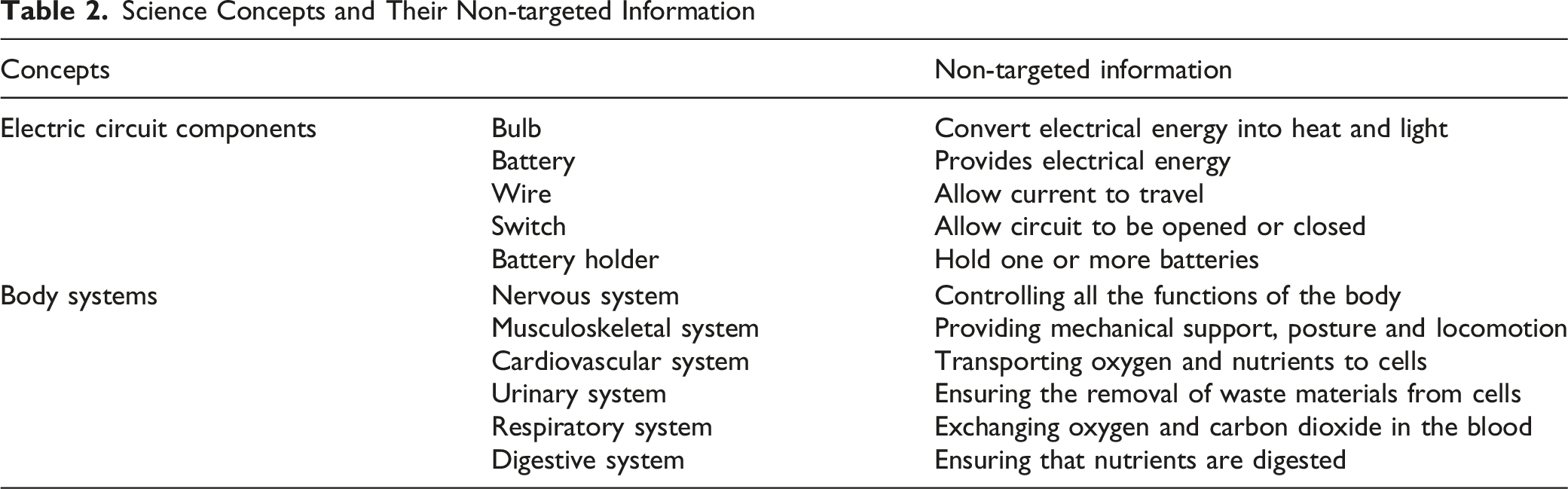
The first dependent variable was the students’ ability to name the science concept they viewed on the tablet screen within 5 seconds. Student responses were recorded in five different types. A correct response before the prompting was defined as the student correctly naming the science concept on the tablet screen within 5 seconds after the interventionist provided the target stimulus. An incorrect response before the prompting was when the student incorrectly named the science concept on the tablet screen within 5 seconds after the interventionist provided the target stimulus. No response means that the student did not respond to the target stimulus provided by the interventionist. Correct response after prompting was when the student responded incorrectly or remained unresponsive during the response interval, and after receiving the prompting provided by the interventionist at the end of the response interval (model prompting to say the name of the science concept), he correctly said the name of the science concept he viewed on the tablet screen. Similarly, an incorrect response after the prompt is when the student incorrectly named the science concept that he saw on the tablet screen within the response interval after the interventionist provided the prompt.
We considered the students’ correct answers before the prompt as correct responses and graphed the percentages of the responses. We considered the other responses (incorrect response before the prompt, no response, correct or incorrect response after the prompt) as incorrect responses. As a mastery criterion, we determined that students named the science concept with 100% accuracy for three consecutive sessions. Behavioral data were graphed by session to facilitate systematic visual analysis, which informed determinations of learning acquisition and decisions to initiate intervention for subsequent participants. Following established single-case research standards (Kratochwill et al., 2010), six dimensions were evaluated across phases: (a) level, assessed via mean or median outcome values; (b) trend, reflecting the direction and slope of the data path; (c) immediacy of effect, measured by latency to change following phase transitions; (d) data overlap, indicating nonoverlap between adjacent phases; (e) data consistency and variability, examined through range and standard deviation within phases; and (f) data path consistency across similar phases under identical conditions.
To further quantify data overlap, the Percentage of Non-overlapping Data (PND) was calculated by identifying the number of intervention data points that exceeded the highest (or lowest, depending on the target behavior) data point in the baseline phase, divided by the total number of intervention points and multiplied by 100. PND scores were interpreted using Scruggs and Mastropieri’s (1998) criteria: scores above 90% indicate a very effective intervention, 70%–90% indicate an effective intervention, 50%–70% indicate a questionable intervention, and scores below 50% indicate an ineffective intervention. Effect sizes were additionally calculated using Tau-U to quantify intervention magnitude. The Tau-U values, which ranged from 0 to 1, were interpreted in terms of effect size as follows: an effect size of .80 or greater was considered highly effective, an effect size ranging from .60 to .79 was considered effective, an effect size ranging from .20 to .59 was considered moderately effective, and an effect size less than .20 was considered slightly effective (Rakap, 2015).
The other dependent variable of the current study was the functions of the science concepts taught. The functions of science concepts are the non-targeted information variable of the study. We categorized the students’ responses to the non-targeted information into correct and incorrect responses. A correct response was when the student correctly stated the function of the concept within 5 seconds after the interventionist asked the function of the science concept (e.g., what is the function of the battery in an electrical circuit?), while an incorrect response was when the student incorrectly stated the function of the concept within 5 seconds after the interventionist asked the function of the science concept or remained unresponsive. The percentages of students’ correct responses were calculated and reported as pre-test and post-test data.
Experimental Design
A multiple-probe design across participants (Gast & Ledford, 2018) was employed to evaluate the effectiveness of AR technology in teaching science concepts. To meet What Works Clearinghouse (WWC, 2020) design standards, the independent variable was systematically staggered across three participants, ensuring a minimum of six phases with at least five data points per phase. Experimental control was assessed through the time-lagged introduction of the intervention, while IOA data were collected for at least 20% of sessions across all phases to ensure the reliability and integrity of the findings. In this respect, the study meets WWC design standards.
Procedure
Pre-baseline
In the pre-baseline sessions, procedures were designed to familiarize students with how to operate the AR apps (AR Circuits 4D and Body4D) and access the science content on electric circuit components and sensory systems without providing instruction on the target concepts themselves. This phase aimed to ensure that students could independently activate the AR content before baseline data collection commenced.
During this phase, students used the AR apps to visualize 3D representations of science concepts on the tablet screen. To access the AR content, students were required to unlock the tablet, locate and open the relevant AR app, and then position the tablet camera over the corresponding AR cards of electric circuit components or body systems. The Model–Lead–Test procedure (Adams & Engelmann, 1996, as adapted in AR studies such as McMahon et al., 2016) was used to teach students how to complete these steps. In the model sessions, the interventionist demonstrated how to open the AR Circuits 4D and Body4D apps and how to scan the AR cards so that the 3D images of the bulb, battery, wire, switch, battery holder and sensory systems appeared on the screen.
In the lead sessions, students were prompted to perform the same sequence of actions (opening the app and scanning the appropriate AR card) while the interventionist provided support as needed. A least-to-most prompting hierarchy was used, beginning with a verbal prompt as the first level, followed by a gesture plus verbal prompt, and escalating to a physical prompt only if needed. Each prompt level was separated by a 5-s response interval. Specifically, the verbal prompt was delivered first (e.g., '[student’s name], open the app and scan the card with the tablet camera’). If no correct initiation occurred within 5 seconds, a gesture plus verbal prompt followed (e.g., the interventionist pointed to the AR card of a bulb or a body system and repeated the verbal instruction). The physical prompt was provided last (e.g., the interventionist gently guided the student’s hand to hold the tablet while jointly positioning it over the AR card and completing the scan together). Verbal prompts were faded systematically across sessions by reducing their frequency and specificity, starting with full instructions in early sessions and progressing to partial cues (e.g., “Scan the card”) or none by later sessions, based on the student’s independent responding (achieving 80% unprompted correct responses for three consecutive sessions before full fading). If the student did not initiate the correct action within 5 seconds at any level, the next prompt was delivered until the sequence was successfully completed.
In the test sessions, students were given the opportunity to independently open the relevant AR app and scan the AR cards depicting electric circuit components and body systems across three consecutive sessions. No prompts or error corrections were provided during test trials; if the student failed to open the app and scan the AR card within 5 seconds, the session was terminated, and the student returned to the lead phase for additional practice. Participants were required to meet a mastery criterion of 100% independent performance across three consecutive test sessions. Once students consistently met this criterion, they were considered ready to move to baseline, at which point instruction on naming the electric circuit components and body systems and stating their functions began.
Baseline
Baseline sessions were conducted to assess each participant’s initial performance in identifying the target science concepts (electric circuit components and body systems) before introducing the intervention. Each participant completed at least five baseline probe sessions for each set of science concepts, and baseline probes were conducted twice a week until the data indicated stable levels with no upward trend in correct responses. In the baseline sessions, each trial lasted an average of 1 minute. Each session lasted an average of 5 minutes.
During baseline, the interventionist placed the tablet on the table and presented the AR cards for the targeted concepts (e.g., bulb, battery, wire, switch, battery holder, nervous system, musculoskeletal system, cardiovascular system, urinary system, respiratory system, digestive system) one at a time. For each trial, the student was instructed, “[student’s name], scan the card and say aloud the name of the science concept you see on the screen.” After the student scanned the card and viewed the AR image on the tablet, the interventionist waited for the student’s response and immediately proceeded to the next trial. No prompts, corrective feedback, or reinforcement specific to accuracy were provided during these sessions.
If a student asked for the correct answer (e.g., “What is this?”), the interventionist replied with a neutral statement such as, “We will learn together what you see on this screen,” and then continued with the next trial. Throughout baseline, the focus remained solely on measuring the students’ spontaneous naming of the science concepts when presented via AR. At the end of each trial, the interventionist took the tablet from the student, closed the AR app, locked the screen, and placed the tablet back on the table in preparation for the next trial or session.
AR Intervention
In the AR intervention phase, the target science concepts were systematically taught using the AR Circuits 4D and Body4D applications. The interventionist placed the tablet on the table, handed the student an AR card representing one of the target concepts (e.g., bulb, battery, wire, switch, battery holder, nervous system, musculoskeletal system, cardiovascular system, urinary system, respiratory system, digestive system), and asked the student to scan the card and name the concept displayed on the screen aloud. The interventionist stated, “[student’s name], scan the card and say aloud to me the name of the science concept that you see on the screen.”
If the student scanned the card within 5 seconds and correctly named the concept, the interventionist provided enthusiastic reinforcement (e.g., “Great! Yes, this is the battery”) and then delivered the non-targeted information about the function of that concept (e.g., “The battery provides electrical energy” or “The respiratory system is responsible for exchanging oxygen and carbon dioxide in the blood”). Correct responses before any verbal prompt were recorded as independent correct responses. If the student did not scan the card within 5 seconds, the interventionist provided a physical prompt to support the student in positioning the tablet so that the AR image appeared on the screen, and then allowed 5 seconds for the student to name the concept.
If, after scanning, the student did not name the science concept within 5 seconds or named it incorrectly, the interventionist delivered a verbal prompt (e.g., modeling the correct name of the concept) and waited an additional 5 seconds for a response. When the student then responded correctly, the interventionist again provided social reinforcement (e.g., You are great, you did a great job) and presented the corresponding non-targeted information about the function of the electric circuit component or body system. If the student still answered incorrectly or did not respond after the verbal prompt, the trial was terminated and the interventionist moved on to the next AR card without providing corrective feedback. At the end of each trial, the interventionist took the tablet from the student, closed the AR app, and placed the tablet back on the table with the screen locked in preparation for the next trial. In the intervention sessions, each trial lasted an average of 2 minutes. Each session lasted an average of 10 minutes.
Non-targeted information regarding the functions of the electric circuit elements and body systems was presented every time the student produced a correct response, either independently or after prompting. One intervention session was conducted per day, twice a week. The mastery criterion for this phase was set as 100% independent correct naming of the target science concepts across three consecutive sessions.
Maintenance
Maintenance probe data were collected for each participant on each target science concept 3, 5, and 8 weeks after the participant had completed the AR intervention phase. The procedures used during maintenance sessions were identical to those implemented in the baseline phase: the interventionist presented the AR cards, asked the student to scan the card and name the science concept shown on the tablet screen, and recorded the students’ responses. No prompts, corrective feedback, or informational feedback regarding the accuracy of responses were provided during maintenance sessions, and the interventionist simply proceeded to the next trial after each response.
Generalization
Generalization tests were conducted to examine whether students could transfer the skills they acquired through AR to more natural teaching materials, such as images in science textbooks. Generalization sessions were planned immediately before the AR intervention (pre-test) and after the intervention (post-test) when students met the proficiency criteria.
In this phase, the interventionist did not use the AR apps or AR cards. Instead, the student was shown pictures of the target science concepts (e.g., electric circuit components and body systems) taken from the science coursebook and other visuals prepared for generalization. The interventionist pointed to a picture (e.g., a bulb in a circuit or an illustration of the nervous system) and asked the student to say the name of the concept aloud (e.g., “[student’s name], tell me the name of this science concept”).
The procedures during generalization sessions paralleled those in baseline. The interventionist recorded the student’s responses but did not provide prompts, corrective feedback, or information about the correctness of answers. After each response, the interventionist moved to the next picture until all target concepts scheduled for that probe were presented.
Non-targeted Information Pre-test and Post-test Sessions
Non-targeted information pre-test sessions were implemented to assess participants’ initial levels of stating the functions of the target science concepts (electric circuit components and body systems) prior to the AR intervention, and post-test sessions were conducted following the completion of the intervention to evaluate the acquisition of this non-targeted information. During both pre-test and post-test sessions, the interventionist asked the student about the function of each science concept (e.g., “What is the function of the battery in an electric circuit?” or “What is the function of the respiratory system?”) and allowed 5 seconds for a response.
If the student correctly stated the function within 5 seconds (e.g., “The battery provides electrical energy” or “The respiratory system exchanges oxygen and carbon dioxide in the blood”), the response was scored as correct; inaccurate statements or failure to respond within the allotted time were scored as incorrect. Students’ responses were recorded on discrete-trial data sheets for each science concept, and no prompts, feedback, or corrective information was delivered during these pre-test and post-test probes, so that performance reflected their independent knowledge of the non-targeted information.
Reliability
The IOA data were calculated separately for each participant, for each set of science concepts (electric circuit components and body systems), and overall across all coded sessions. A science teacher with prior research experience in AR-based science education, who is also a doctoral student in special education, independently coded at least 33% of the sessions at each stage of the study. Cohen’s kappa coefficient was used to quantify agreement between the primary observer and the reliability observer, and the values were interpreted using Cicchetti’s (1994) criteria: below .40 = poor, .40–.59 = fair, .60–.74 = good, and .75 and above = excellent. For Erdi, the overall kappa was .94 (range = .89–1.00), with coefficients of .91 (range = .88–.96) for electric circuit components and .96 (range = .91–1.00) for body systems. For Faruk, the overall kappa was .93 (range = .87–1.00), with values of .88 (range = .81–.92) for electric circuit components and .99 (range = .99–1.00) for body systems. For Metehan, the overall kappa was .94 (range = .90–1.00), with coefficients of .94 (range = .89–.99) for electric circuit components and .95 (range = .92–1.00) for body systems. Across all participants, sessions, and science concept categories, Cohen’s kappa coefficient for non-targeted information was 1.00. These results indicate good to excellent agreement across all participants and concept categories.
Treatment fidelity was evaluated to determine the extent to which the interventionist followed the planned AR-based instructional procedures. The same doctoral student who collected IOA data completed a treatment fidelity checklist in at least 33% of sessions across all phases. The checklist included items such as preparing the AR materials, presenting the correct science concept, using the 5-s response interval, applying the specified prompting hierarchy, and delivering reinforcement and non-targeted information according to the protocol. Treatment fidelity for each observed session was computed by dividing the number of correctly implemented steps by the total number of planned steps and multiplying by 100. The mean treatment fidelity was 99% (range = 97%–100%), indicating that the intervention procedures were implemented with high accuracy throughout the study.
Social validity
A social validity assessment was conducted to evaluate students’ perceptions of the AR-based science instruction and the acceptability of the intervention procedures. A student survey was adapted from a previously developed Likert-type instrument used to examine attitudes toward AR interventions in science education and was revised to reflect the current study’s focus on electric circuit components and body systems. The final form included seven Likert-type items and two open-ended questions that asked students about the usefulness, enjoyability, and clarity of the AR activities, as well as their preferences for using AR in future science lessons.
Items were rated on a 5-point Likert scale ranging from 1 (strongly disagree) to 5 (strongly agree), with higher scores indicating more positive perceptions of the AR intervention. The open-ended questions invited students to describe what they liked most and least about learning science concepts with AR and to suggest improvements for future implementations. The survey was administered at the end of the study, after all instructional and maintenance sessions were completed. Students completed the forms individually and anonymously to encourage honest responses and reduce potential response bias.
Results
Figures 1 and 2 represent the percentage of independent performance of all students for science concepts. As shown in the Figures, there was a significant improvement in the students’ independent performance with the introduction of the AR intervention. The overall weighted Tau-U across behaviors and participants was 1.00 for the comparison of the baseline and AR intervention phases. Results also show that the AR intervention was effective in the students’ acquisition of non-targeted information. Students’ percentage of correct responses for the electric circuit compenents Students’ percentage of correct responses for the system of the human body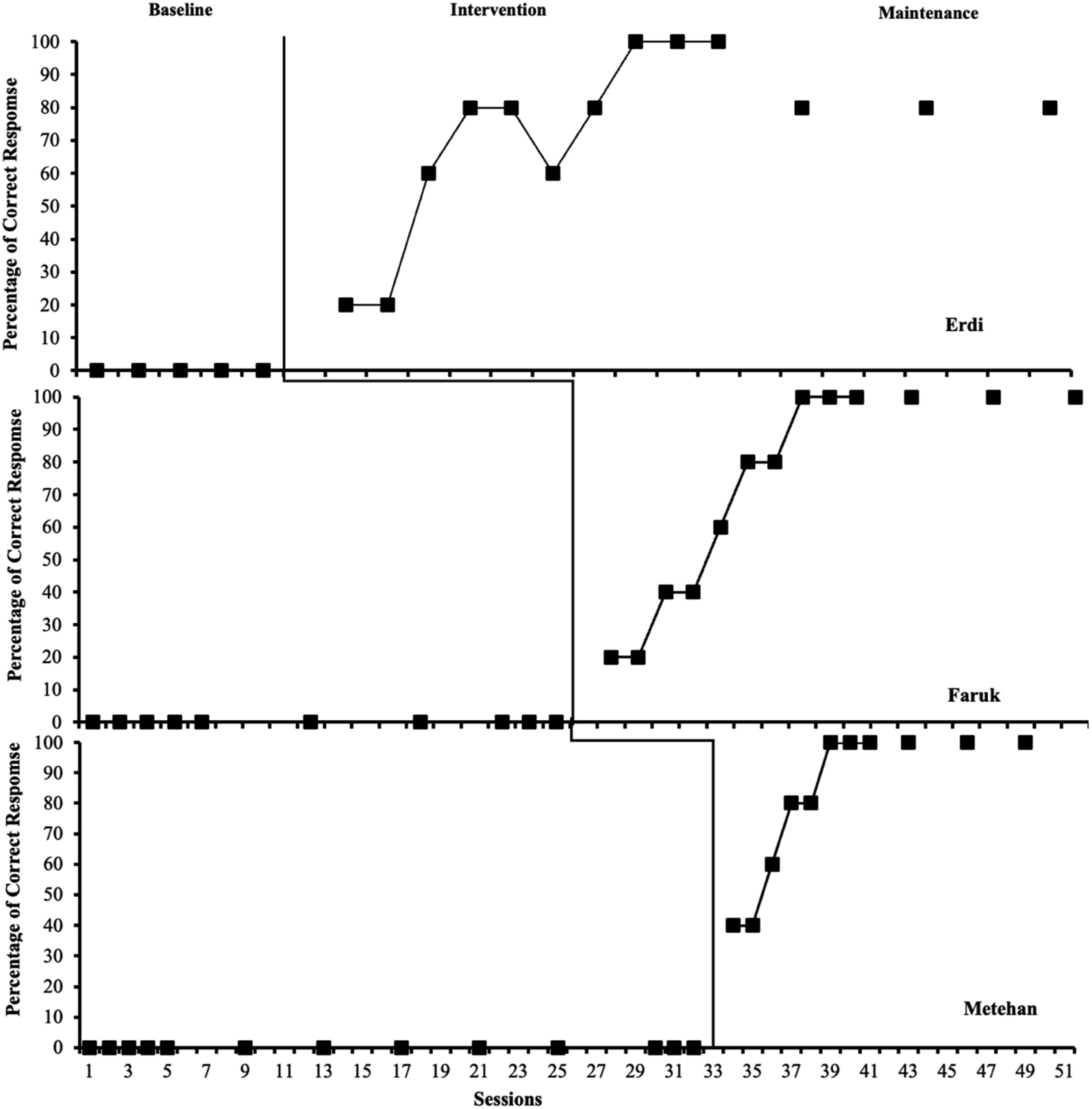
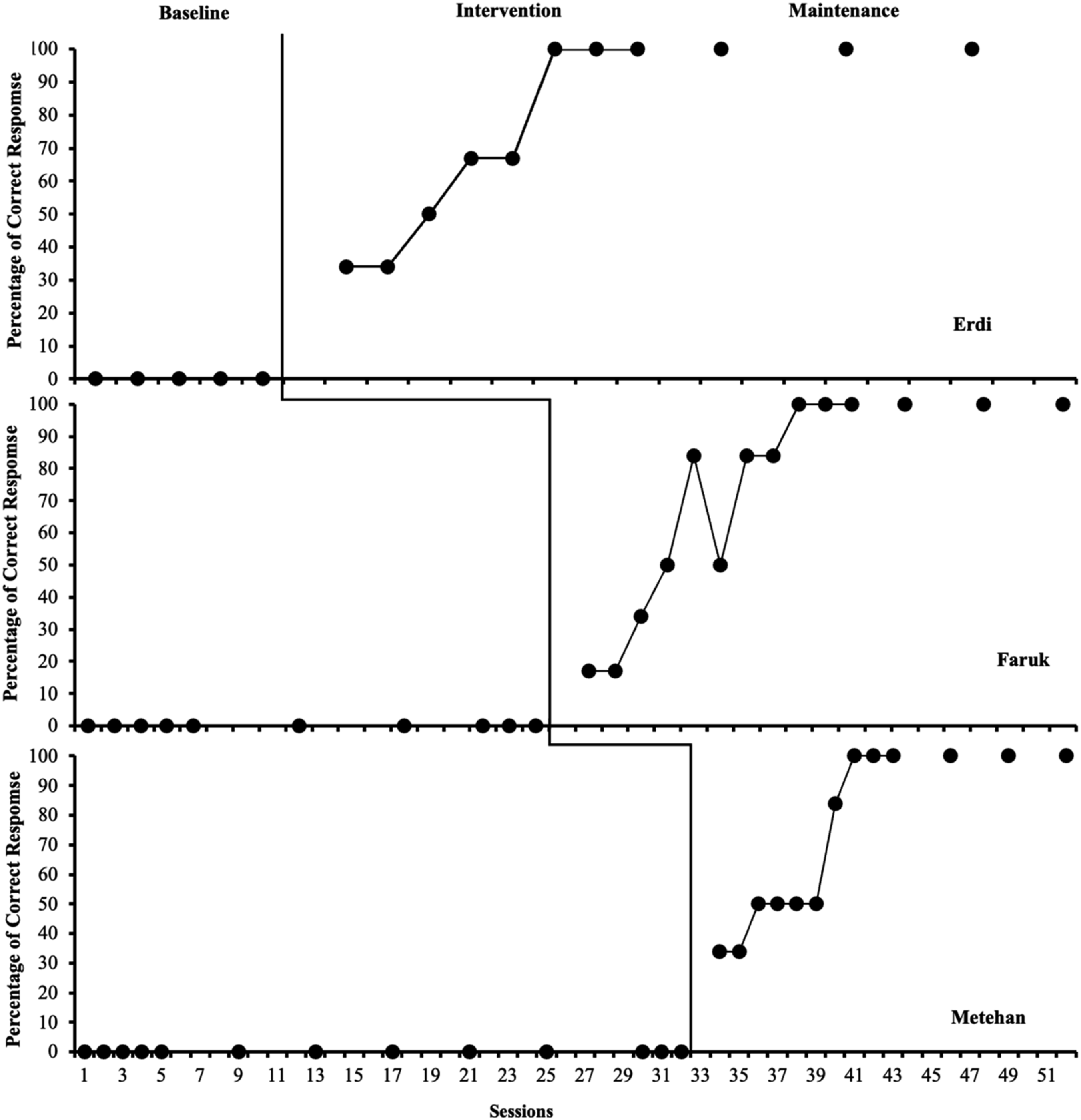
Erdi’s unprompted correct responding was also 0% across baseline sessions for both electric circuit components and body systems, demonstrating a stable baseline with no variability. During the AR intervention, Erdi’s mean percentage of unprompted correct responses was 74.8% (range = 34–100%) for electric circuit components and 77.1% (range = 20–100%) for body systems. Visual analysis of Erdi’s data revealed an immediacy of effect upon intervention, characterized by an immediate level change and a steep, accelerating trend for both sets of science concepts. Furthermore, there was zero data overlap (PND = 100%) between the baseline and intervention phases, indicating a strong functional relation. He met the mastery criterion for both concept sets by the end of the intervention phase. In maintenance probes conducted 3, 5, and 8 weeks after the intervention, performance remained stable with 100% correct responding for body systems and 80% for electric circuit components. Erdi’s generalization performance increased from 0% at pretest to 100% in the post-test sessions for both electric circuit components and body systems. In non-targeted information probes, Erdi’s accuracy increased from 0% correct at the pre-test to 100% correct at the post-test for both electric circuit components and 83% accuracy for the body systems.
Faruk’s unprompted correct responding was also 0% across baseline sessions for both electric circuit components and body systems. The baseline data showed a stable, zero-level trend. During the AR intervention, his performance increased to an average of 71.4% (range = 20–100%) for electric circuit components and 65% (range = 17–100%) for body systems. Visual analysis indicated a clear immediacy of effect, with a notable level increase in the second session of intervention. The data path showed a consistent upward trend with no overlap between baseline and intervention phases (PND = 100%). Although some variability was observed initially, the data became stable as he approached mastery. He achieved the mastery criterion for both concept sets in the later intervention sessions. At the 3, 5, and 8-week maintenance sessions, Faruk maintained 100% correct responses for all target concepts with high consistency. For Faruk, generalization scores rose from 0% at pretest to 80% for electric circuit components and 83% for body systems in the post-test sessions. For non-targeted information, Faruk’s correct responses increased from 0% at pre-test to 80% at post-test for both electric circuit components and 83% for body systems.
Metehan likewise demonstrated 0% unprompted correct responses during baseline across all target science concepts, reflecting a stable and predictable baseline level. With the introduction of the AR intervention, his average percentage of unprompted correct responses rose to 74.3% (range = 40–100%) for electric circuit components and 67.9% (range = 34–100%) for body systems. Visual analysis showed an immediate level change following the phase transition, followed by a sharp accelerating trend. There was zero data overlap (PND = 100%) across both concept sets, confirming a clear functional relation. He attained the mastery criterion for each concept set by the final intervention sessions. At the 3, 5, and 8-week maintenance sessions, Metehan maintained 100% correct responses across all target concepts, demonstrating consistent maintenance of learned skills. Metehan’s generalization performance improved from 0% at pretest to 100% in the post-test sessions for both electric circuit components and body systems. His non-targeted information performance improved from 0% at pre-test to 100% at post-test for both electric circuit components and body systems.
Social Validity Results
Student Responses to Social Validity Questions
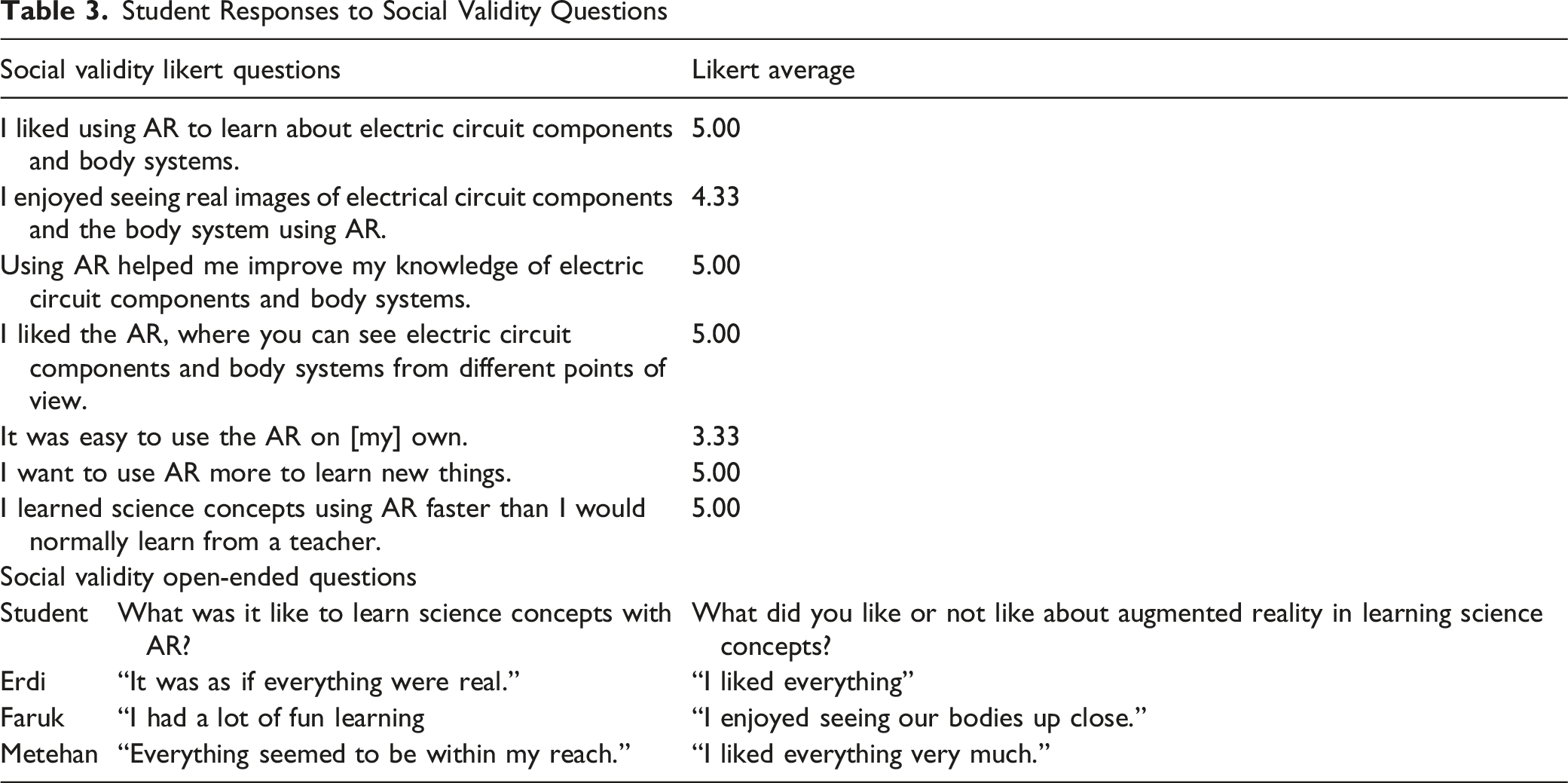
Responses to the open-ended questions further illustrated high social validity: Erdi stated that learning with AR felt “as if everything were real,” Faruk reported “having a lot of fun learning,” and Metehan noted that “everything seemed to be within my reach.” When asked what they disliked, students reported either that they “liked everything” or that they especially enjoyed examining the body systems up close, suggesting that no major negative aspects of the AR activities were perceived.
Discussion
The current study examined the effectiveness of an AR–based, discrete-trial intervention for teaching electric circuit components and body systems to secondary students with ASD, as well as the maintenance, generalization, non-targeted information outcomes, and social validity of the intervention. Across all three participants, levels of unprompted correct responding were at 0% during baseline and increased rapidly to mastery during the AR intervention, with strong maintenance at follow-up probes and across-material generalization to textbook visuals. Tau-U values of 1.00 for all participants indicate a very large intervention effect, aligning with effect sizes reported in prior AR research with students with disabilities. Students also acquired non-targeted information about the functions of electric circuit components and body systems, achieving marked gains in non-targeted information from pre-to post-test. Finally, social validity ratings were high, and open-ended responses emphasized realism, enjoyment, and perceived accessibility of AR-supported science learning, suggesting that the intervention was not only effective but also acceptable and motivating for students.
Multiple, converging mechanisms help explain why AR interventions appear to be a powerful medium for science instruction for students with ASD (Denizli-Gulboy et al., 2023, 2024; Gulboy & Denizli–Gulboy, 2025; Gulboy et al., 2024; McMahon et al., 2016). Firstly, the intervention embedded explicit instruction and systematic prompting within the AR context, elements known to be effective for students with ASD (McMahon et al., 2016; Morris et al., 2022). The Model–Lead–Test sequence used during pre-baseline training ensured that students could independently operate the AR system, minimizing technology-related barriers during baseline and intervention (Gulboy & Denizli–Gulboy, 2025; McMahon et al., 2016). Within the intervention, a least-to-most prompting hierarchy (physical assistance to scan, followed by verbal models of the concept name) with fixed 5-s delays helped maintain high opportunities to respond while promoting prompt fading and independence (Gulboy & Denizli–Gulboy, 2025). Similar combinations of AR and explicit instruction have produced strong gains in STEM skills for learners with disabilities in prior studies, suggesting that the potency of AR arises not from the technology alone but from its integration with well-designed pedagogical routines (Karaaslan et al., 2023; Morris et al., 2022; Turan & Atila, 2021).
Secondly, AR provides vivid, concrete, and manipulable representations of otherwise abstract or microscopic phenomena, such as electric current or internal organ systems, thereby reducing demands on abstract reasoning and supporting dual-coding of information (Denizli-Gulboy et al., 2024; Turan & Atila, 2021). Consistent with Mayer’s Cognitive Theory of Multimedia Learning, the combination of synchronized verbal labels, 3D visuals, and contextual animations can reduce extraneous cognitive load. This effect is strongest when content is tightly aligned with instructional goals and presented in brief, focused segments (Gulboy et al., 2024; McMahon et al., 2016; Rapti et al., 2023). In the current study, students viewed realistic 3D models of bulbs, batteries, wires, switches, battery holders, and major body systems, and immediately linked these visuals to concise verbal labels and functional information (e.g., “The battery provides electrical energy,” “The respiratory system exchanges oxygen and carbon dioxide”), which likely facilitated both naming and function recall.
Thirdly, AR maps digital content directly onto familiar physical referents (AR cards, textbook images, or classroom materials), creating a highly contextualized learning environment that can capitalize on preserved visual, spatial strengths observed in many learners with ASD. Studies by McMahon et al. (2016), Turan and Atila (2021), Gulboy and Denizli–Gulboy (2025), and Denizli-Gulboy et al. (2024) similarly report that AR helps learners with ASD or other learning difficulties connect vocabulary and concepts to concrete, situated experiences in science and occupational domains, leading to rapid acquisition maintenance, and generalization by connecting abstract vocabulary/concepts to concrete, situated experiences in science domains. Maintenance and generalization findings showed that all three participants maintained>80% accuracy during follow-up probes and near-perfect transfer from AR cards to textbook images across participants. Key mechanisms included: (1) systematic prompt fading promoting overlearning and response automaticity; (2) repeated AR exposures that strengthened stimulus-response connections resistant to forgetting; (3) multimodal encoding (visual-spatial-interactive), enhancing memory consolidation consistent with cognitive load theory; (4) stimulus similarity between AR cards and textbook visuals; and (5) Response generalization through behavior chains trained with AR transferred to similar materials.
Fourtly, AR can support core behavioral needs of students with ASD by providing a predictable, highly structured, and visually salient task environment (Morris et al., 2022). AR-mediated discrete-trial instruction in this study incorporated clear antecedents (presentation of the AR card and standardized instruction), fixed response windows, and consistent consequences (reinforcement and access to non-targeted information for correct responses, neutral transitions for incorrect or no responses), which align with established evidence-based practices in ASD instruction (Bahçeci & Yaratan, 2020; Gulboy & Denizli–Gulboy, 2025; McMahon et al., 2016). Prior research has emphasized that AR can enhance attention, motivation, and task engagement for learners on the spectrum, partly due to its novelty and interactive qualities but also because it allows for repeated, self-paced practice without social pressure (Gulboy & Denizli–Gulboy, 2025; McMahon et al., 2016; Rapti et al., 2023; Saidin et al., 2015). The rapid level changes from 0% to high levels of independent correct responding, the attainment of 100% maintenance performance at three delayed time points, and the high Tau-U values in the present study are consistent with these engagement benefits and with previous findings that AR-based instruction produces large, non-overlapping gains for students with ASD and intellectual or learning disabilities (Gulboy & Denizli–Gulboy, 2025; Morris et al., 2022).
The social validity data indicate that students perceived AR-supported instruction as highly acceptable, useful, and enjoyable. Several interrelated factors likely underlie these positive perceptions (Bahçeci & Yaratan, 2020; Denizli-Gulboy et al., 2023; Saidin et al., 2015). First, students reported that “it was as if everything were real,” “I had a lot of fun learning,” and “everything seemed to be within my reach,” highlighting the immersive and embodied nature of AR that allows learners to experience scientific phenomena as if they were manipulating real objects. Prior work has shown that AR can increase situational interest, enjoyment, and perceived authenticity of science learning, particularly when learners can control viewpoint and interaction with 3D models (Gulboy & Denizli–Gulboy, 2025). This sense of agency and control may be especially important for students with ASD, who often experience anxiety in traditional, text-heavy classrooms; AR allows them to focus on the content rather than on challenging social demands (Karaaslan et al., 2023; Turan & Atila, 2021).
Second, students rated items related to perceived learning and usefulness at or near the maximum, suggesting that they recognized tangible academic benefits from the intervention. The parallel between these self-perceptions and the observed gains in naming accuracy, generalization, and non-targeted information supports the argument that AR was not merely entertaining but also functionally instructional. This pattern aligns with findings from McMahon et al. (2016), Rapti et al. (2023), and Gulboy and Denizli–Gulboy (2025), who reported that learners with disabilities found AR to be both enjoyable and helpful for mastering science or foreign language vocabulary.
Third, despite generally high ratings, the item assessing ease of use of AR on students’ own devices had a lower mean (3.33), indicating that some aspects of the interface (e.g., scanning cards, holding the tablet steady, or navigating between apps) were perceived as moderately effortful. This nuance aligns with prior reports that technical glitches, device handling demands, and connectivity issues can pose barriers to AR integration, particularly for learners with fine-motor or attentional difficulties (Rapti et al., 2023). In the current study, several potential mechanisms likely contributed to the observed treatment effects by mitigating these barriers and enabling positive outcomes. Careful pre-baseline training reduced cognitive load through explicit procedural modeling, allowing students to internalize scanning and navigation sequences via repeated practice and immediate feedback, mechanisms that promote motor skill automation and error reduction (e.g., fewer failed scans). Ongoing access to physical prompts (e.g., visual guides or hand-over-hand support) provided external scaffolding, offloading working memory demands and compensating for attentional lapses common in ASD. Teacher management of app launching further minimized frustration from transitions, fostering a predictable workflow that enhanced engagement and sustained interaction with AR content. Collectively, these strategies transformed potential usability hurdles into opportunities for skill-building, contributing to overall positive ratings and effective learning gains despite some challenges.
Finally, the open-ended responses suggest that AR supported affective and motivational dimensions of learning that are central to inclusive education. Students expressed feelings of excitement (“I enjoyed seeing our bodies up close”) and overall satisfaction (“I liked everything very much”), which align with the Universal Design for Learning principle of providing multiple means of engagement through relevance, novelty, and challenge (Turan & Atila, 2021). For learners with ASD, who often face repeated experiences of academic failure, such positive emotional experiences may be important in reshaping their self-concept as capable science learners and in supporting long-term interest in STEM domains (McMahon et al., 2016).
The findings of this study should be interpreted in light of several limitations. The single-case design with multiple probes, conducted with only three participants, limits external validity despite Tau-U values of 1.00 and consistent response patterns among students with ASD. The focus on naming distinct science concepts and providing brief functional explanations also narrows the scope of the results and does not assess higher-order reasoning skills about circuits and body systems. Furthermore, long-term, ecologically valid generalizations to classroom tasks, assessments, or daily contexts were not systematically evaluated, which may not reflect typical school conditions. Finally, the use of commercial tablet-based applications requiring specialized AR cards or printed markers may limit the use of such applications in resource-poor settings and their adaptability to diverse curricula.
Future research should therefore prioritize systematic replication with larger and more heterogeneous samples across grade levels, cognitive profiles, and educational contexts, and include comparative designs that contrast AR-based instruction with other evidence-based practices such as video modeling, computer-assisted instruction, or low-tech visual supports. Studies that embed AR into inquiry-oriented simulations (e.g., building and testing virtual circuits or manipulating physiological parameters) and then track impacts on conceptual understanding, curriculum-based exams, project work, and life-skills applications would help clarify the broader educational value of AR for students with ASD. In parallel, implementation-focused research should examine teacher training models, ongoing coaching, and user-friendly authoring tools, as well as explore open-source or co-designed AR solutions whose interaction demands, narration styles, and visual complexity are systematically varied to optimize both accessibility and learning in inclusive classrooms.
Current findings and prior work on AR in science education suggest that AR is most useful as a focused support within well-structured teaching, rather than as a stand-alone solution. Short AR-based activities can efficiently introduce and reinforce terminology and functions for abstract concepts (e.g., electric circuits, body systems), provided that students receive clear pre-training on device use and teachers employ consistent prompting so that technology never overshadows content. Embedding AR within peer or small-group formats, planning explicit links from AR experiences to textbooks, physical materials, and real tasks, and then using the high motivation generated by AR as a bridge into reading, writing, and problem-solving work can help create more accessible and engaging science instruction for students with ASD and other diverse learners.
Footnotes

Funding
The author received no financial support for the research, authorship, and/or publication of this article.
Declaration of Conflicting Interests
The author declared no potential conflicts of interest with respect to the research, authorship, and/or publication of this article.