







Abstract
Images and anticipatory logic are intertwined. Humans have granted images the power to visually anticipate the future, which is traceable to the Palaeolithic but newly intensified in contemporary digital visual culture and platform economy. In this crosscurrent piece, we seek to interrogate the enduring and evolving nexus between images and anticipatory imaginaries and technologies, foregrounding what we refer to as anticipatory images: visual depictions of the not-yet with a performative effect in the present. We argue that images cannot be defined solely as representations of the outside world, as they also anticipate possible futures through acts of individual and collective imagination, thus acting out politics of temporality. Drawing on social theory on anticipation and visual culture and a selection of visual instances of anticipatory images, we highlight the sociocultural significance and role of anticipatory images as crucial analytical tools at the intersection of media studies, anthropology and social theory. Our aim is twofold: to reflect on how humans imagine and materialise anticipation through visual means and to unpack the politics embedded in contemporary anticipatory regimes by attending to visual culture, especially in the digital sphere, although not exclusively. Far from being confined to digital media, anticipatory images reflect a longer historical continuum of visualising futurity. Seeking to activate an interdisciplinary conversation, this piece calls for a more integrated scholarly approach to images and anticipation as co-constitutive forces in social life.
Introduction
In this article, we discuss the concept of ‘anticipatory images’, understood as images that depict events of the not-yet that may occur (in different degrees of certainty and probability) in the future. ‘Image’ and ‘anticipation’ are two interwoven concepts: all projections of the future entail, in one way or another, a visual dimension; inversely, all images are potentially anticipatory devices since they are capable of sparking acts of individual or collective imagination regarding the not yet, of what we (and the world we live in) might be in the future. On top of this, anticipatory images have a performative effect: by speculatively depicting or evoking the potential or imaginable future, they intervene in the present, shaping it. By bridging insights from media studies on anticipation in digital culture and the platform economy with discussions in visual anthropology and social theory on the politics of temporality, this crosscurrents piece invites readers to reflect on the connections between images, anticipation and future-making.
At least since the Palaeolithic Period (and more precisely, between 40,000 and 52,000 years ago), humans seem to have granted images the power to anticipate the future (Leroi-Gourhan, 1968). 1 By images, we refer to any form of visual sign or representation. Nowadays, in a worldwide state of polycrisis and systemic and chronified uncertainty, anticipatory images must be analysed as part of a broader process of production of all sorts of visual models and depictions – graphs, statistics, AI-generated images, to name a few – aimed at elucidating what the future might be – and at making it knowable and actionable.
Anticipatory images’ social and political effects have gained public visibility and scholarly attention in the last decade as part of a broader algorithmic ecology that orders human action at different levels, from policymaking (Erikson, 2018), the media attention economy (Jones, 2023), to daily life (Just and Latzer, 2017; Koivunen et al., 2024). The new ‘algorithmic imaginary’ (Schulz, 2022) and technological capacities for automation are reshaping the way images are made (Meyerend, 2022; Taffel, 2021; Zhang, 2022) and disseminated (Lin et al., 2023; Qian, 2022). The explosion of IA-generated images transforms how we relate to images (especially photo-realistic ones) regarding trust and mistrust (Canals, 2022), thus affecting their anticipatory character. This aligns with an overarching online misinformation problem (Hall et al., 2024), dominated by the fear of the ‘visual fake’ (Barclay, 2021) that shapes the actual narrative of anticipatory images.
Anticipatory images combine two powerful elements of our contemporaneity: visual depictions and the anticipatory quest to predict the future and intervene in the present. As such, anticipatory images have acquired a moral, geopolitical and almost mythological dimension (Humphry, 2014). Yet, despite the evident importance of anticipatory images in new media ecologies, we argue that it is crucial to consider the relevance of anticipatory images also beyond the digital landscape (or better said, in dialogue with it), as we will illustrate with examples stemming from agriculture or material religious divination practices. In this regard, our essay provides a cross-disciplinary exercise to show that anticipatory images transcend the technoscientific realm, thus becoming powerful analytic and methodological tools to better understand the current politics of temporality in a broad range of contexts. Throughout the piece, we reflect on whether there is any common feature among all anticipatory images. Are current technologies reshaping what we have understood thus far as anticipatory images? How do images shape our ways of seeing the future – and vice-versa?
In line with Laba’s (2024) call to attend to the construction of our symbolic realities and their shaping of our world, we aim to illustrate that anticipatory images condense a critical potential to endure such work. Throughout this piece, we argue that anticipatory images cannot be reduced only to digitally and algorithmically mediated ones or linked to a catastrophic narrative; anticipatory images are much richer socioculturally and are still an incipient area of empirical inquiry.
In what follows, we will first examine the concept of ‘anticipation’ through a condensed literature review. We will afterwards clarify what we mean by ‘images’. Finally, we will discuss a selection of visual instances of ‘anticipatory images’, to spur conversation on their sociocultural analytical potential. We aim with this article to foster a scholarly discussion about how processes of image-making of the not-yet shape (and are shaped by) politics of temporality. Following Rancière (2004: 13), we consider that ‘politics revolves around what is seen and what can be said about it, around who has the ability to see and the talent to speak, around the properties of spaces and the possibilities of time’. However, studying an orientation toward the future presents multiple challenges (Adam and Groves, 2007), as empirical evidence is considered lacking. We argue that engaging with concrete and heterogeneous images allows us to unpack future formations within the present, grounding the anticipation analysis.
Anticipation
For Adams et al. (2009: 245), anthropologists and science and technology scholars, anticipation is ‘an affective state, an excited forward-looking subjective condition characterised as much by nervous anxiety as a continual refreshing of yearning, of “needing to know”’. In their work on anticipation effects, politics and temporality, they unpack ‘anticipation’ through five dimensions: injunction, abduction, optimisation, preparation and possibility. In keeping with these dimensions, anticipation is a way of orienting oneself in temporal terms. It activates a will to act in advance, generating unlimited possibilities for optimisation and preparing interventions towards not necessarily actual objects or events but imagined, and therefore ‘potential’ ones. Sociologist Lemke (2024: 563) notes that anticipation ‘draws on a mode of reasoning that justifies measures and interventions in the present without laying claim to having proof that they will effectively avert the threats posed’. Anticipation – and anticipatory images – then point to forms of knowing, relating and governing.
The study of anticipation or anticipatory regimes and technologies has increased in the last decade. Several scholars have explored a permanent state of anticipation and the rise of anticipatory regimes as a characteristic part of liberal democracies (Anderson, 2010; Mackenzie, 2013). Media studies have stressed the linkages between the platform economy, anticipation and affect (Helmond, 2015; Koivunen et al., 2024). For instance, Lupinacci (2021) notes that ‘a permanent state of anticipation’ is present in contemporary use of scrolling down in social media, which even surpasses immediacy. Schulz (2022: 654) has also highlighted how anticipation is a key driving force for algorithmic designers. Bishop’s (2020) work illustrates how algorithmic imagination stems from anticipatory logics and practices, anticipating viral trends and calculating when and how interactions are expected to be more successful online to act upon them. However, not only are trends and events the objects of anticipation. Ananny and Finn’s (2020) work on ‘anticipatory news infrastructures’ shows how, through anticipatory practices in journalism that mix old ways of doing things with computational architectures, audiences are also ‘imagined in advance’. By doing so, anticipation assembles some publics, while excluding others.
Current discussions on anticipation cannot be dissociated from environmental preoccupations (Granjou et al., 2017), which have co-emerged with a rise in futures studies. Indeed, as we will show, anticipatory images act out the politics of temporality, mediating regimes of (in)visibility and imagination, which are key when looking at media portrayals of environmental and social issues (Frig and Penttilä, 2025), with a general focus on disaster or catastrophic events.
Overall, these studies around anticipation illustrate the relevance of attending to what Sharma (2014) calls the ‘power chronography’, which is to say, the biopolitical economy of time under all-encompassing global capital, from napping pods in metro stations and airports to the digital platform experience or, more broadly, speed culture. These ‘power chronographies’ are embedded in anticipatory images in different ways and forms.
At this point, we need to note that while we do not aim to make precise distinctions between prediction, forecast and anticipation, we do want to emphasise that while anticipation orders action and economies of intervention, neither prediction nor forecast necessarily attains injunction. We are in line with Bryant and Knight (2019: 28) reading of anticipation, understanding that ‘more than simply expecting something to happen; it is the act of looking forward that also pulls me in the direction of the future and prepares the groundwork for the future to occur’. Given all the above, anticipation interests us because it involves relationality and future-making that prioritises action – in this sense, anticipation is also linked to the concept of ‘trust’. The question of ‘how anticipation is made visible in the present’ (Adams et al., 2009: 256) connects images, imagination and the future and is unfolded in the following sections.
Images and imagination
Image is a polysemic word employed to refer to very different objects. A photograph is an image, as it is a tattoo, a traffic sign, an MRI, an abstract painting, and the footsteps we leave when walking on sand. The term ‘image’ is vast and can signify various experiences and socio-cultural artefacts. In some circumstances, the body may also be seen as an image, as some cognitive processes like visions, dreams, or acts of imagination. These instances share the commonality that they are objects ‘made to be seen’ (Banks and Ruby, 2011). As signs, images are acts of communication made by and for someone. Hence, images have a relational value. We constantly interact with the world and with others through images. The relational dimension of images encompasses three interrelated features: how images relate to one another, how we relate to images, and how we interact with other beings and objects through the mediation of images.
Images convey meanings, and they do so according to certain aesthetic conventions. In this regard, they also have a symbolic and ideological dimension, carrying one or several potential significations that need to be interpreted. In other words, images always point to something they are not, which must be found beyond the image. Images may depict concrete objects, emotions, beings or events (like the wild animals in the Caves of Lascaux or the storms in a meteorological forecast map) or be ‘abstract’ (like the Christian cross, which symbolises death and the hereafter, or a traffic sign). In all cases, images always have a transcendence: they are images of something.
At this point, Hans Belting’s work on the notion of ‘medium’ or ‘support’ is instructive. According to Belting (2011), no image exists without a medium. A medium is the device or support through which an image is presented. Belting identifies three types of images: material, corporeal and mental. Material images rely on physical support, such as paintings, sculptures or digital screens. Corporeal images use the body as a medium, as seen in acting or spirit possession, where the body becomes a visual sign. Mental images exist solely in consciousness, appearing as memories, dreams or acts of imagination.
These three kinds of images are intimately interwoven. For instance, the fact of seeing a ‘material’ image (like a photograph) sparks acts of imagination, thus generating mental images that may afterward turn into material images again (for instance, if we decide to take a photograph inspired by the one we have seen before). We may also reproduce with our body material images that we have seen (for instance, in movies) or have imagined or dreamt. Emphasising the interlinkages between the three types of images identified by Belting (2011), we stress how the notion of image goes beyond an optics paradigm. Although this article focuses on images – as the analysis is based on a methodological approach that works with images, in this case, for analysing anticipatory practices – we acknowledge the long-standing discussion about the mixture of senses and ‘sensory and semiotic ratios’ in any media (MacLuhan, 1964; Mitchell, 2015). In a nutshell, (visual) anticipation is an integral ‘affective state’ (Adams et al., 2009).
To ground our discussion, we have selected some images as examples without intending to exhaustively examine the full range of anticipatory images that might exist. Instead, the selected images serve as methodological and analytical tools to explore the potential relationships between anticipation and images, drawing on an interdisciplinary approach. This approach presents ‘anticipation’ as a human practice that engages with the politics of temporality through different channels, contexts and disciplines. We have selected images that are part of our anthropological research in science and technology, visual culture and religion. More concretely, the selection of images for our analysis has followed two main criteria: (1) we have included at least one example of material, mental and digital images to prove the connection between the different supports, highlighting the relevance of studying anticipatory images (and images in general) from a relational approach, that is, according to the relations they maintain with other images; (2) we have included images from our fields of research touching upon a broad range of topics, from the more obvious – such as science fiction films – to other topics, such as ritual divination, medicine, biodiversity, agriculture, architecture and media to expand the scope of the conversation.
The examples provided in the next two sections extend the reflection on media studies and anticipation by acknowledging a variety of instances in which anticipatory images are at play and the interwoven nature of anticipation and images. Therefore, the images evoked and displayed in this essay are concrete instances of modes of visualising anticipation and serve to examine the politics of temporality through specific examples. We aim to ignite an interdisciplinary dialogue that could enrich the analysis and reflections on anticipation and visual culture. 2 With these images, we address the following questions: What do we expect from images? How do they prompt us to do things? What is the role of anticipation in image-making processes and vice versa?
Anticipatory images
Since anticipatory images aim to depict what has not occurred yet, they are not only images of the future but rather future images, that is, images that may prompt us to do things. Anticipatory images have a performative value and, as noted above, may be material, corporeal or mental. In the field of predictive images of innovation, Pink et al. (2018: 196–199) describe anticipatory images as ‘representing a form of uncertainty that proposes possibilities but does not have the predictive authority that technology-driven change narratives are imbued with when articulated by government or industry’. We consider anticipatory images not representations, as copies or signs of an external, existing referent. They do not represent the world (although they are certainly engendered by it); they pre-present it and, therefore, have the power to shape it. They are also linked not only to uncertainty but also to ambiguity, hope, concern, and contradiction. 3 Indeed, anticipatory images that evoke hope and disaster can interact or even be entangled, and their degree of authority might vary depending on multiple factors, not necessarily linked to government and industry, as we will show throughout the selected examples.
Anticipatory images are activated or appear to warn or inform about what is yet to come, to ad visum (Marzo, 2021). They serve as a warning, an announcement of an event that might occur, based on a broad range of degrees of certainty. As observed in the study of prophets in anthropology and history (Barnay, 2012; Sarró, 2023), prophets are first denouncers and then announcers. Similarly, anticipatory images speak as much about the future as they do about the present, working simultaneously as speculative announcer and denouncer devices. Anticipatory images speak about an ongoing pivoting between interventions into the present spurred by anticipation and the not-yet.
In religion, for example, oracles and shamans have employed predictive dreams or forms of extraordinary vision to ‘see’ what has not yet happened. They have also used seashells, tobacco, or coffee grounds to foresee the future. The use of seashells is an excellent example of the relationship between material and mental images. When a shaman, oracle, or spiritual healer looks at the distribution of shells on the ground, she or he must interpret their hidden meaning and figure out how it connects with the present and future life of the ‘patient’. The resulting words will trigger mental images in the person seeking such knowledge. For instance, the anthropological film ‘Bea Wants to Know’ (Canals, 2018) tells the story of Bea, a young university student who feels that her life is stuck. She is unhappy with her family, boyfriend, and professional activities. She consults a spiritual medium called Pedro, who throws white and black stones on the table. A female dead person (un muerto) speaks and tells her that she will obtain what she wishes for (Figure 1).
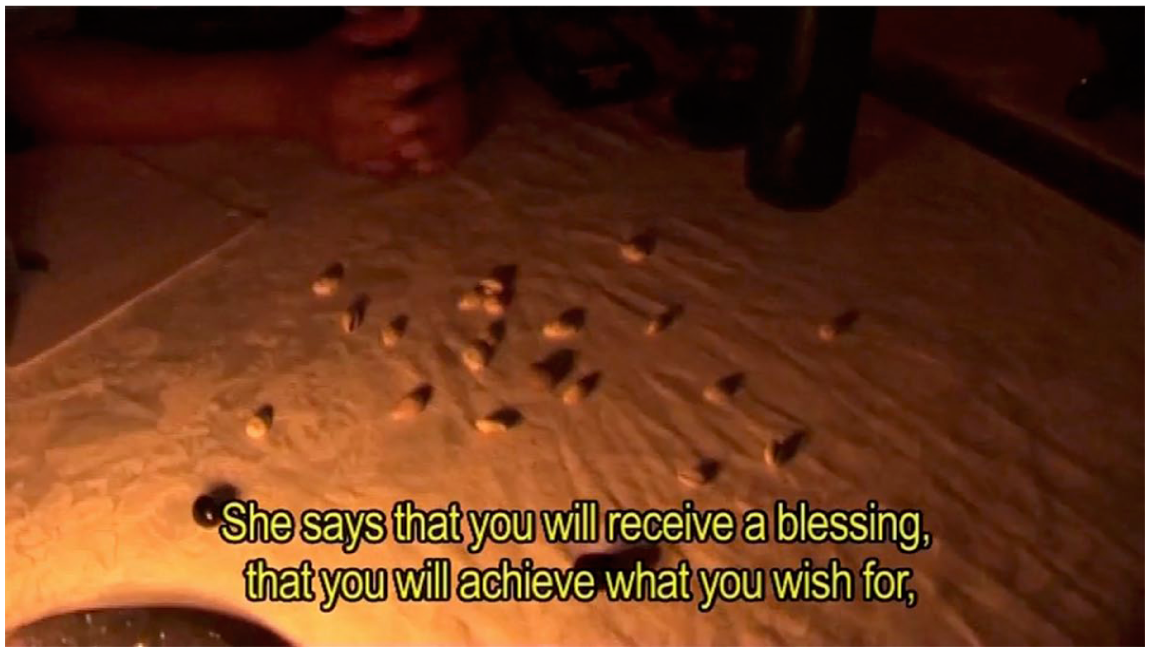
‘Bea Wants to Know’ photogram (2018), directed by Roger Canals.
This instance shows that, at a fundamental level, seeing is imagining. Religion is not a superannuated aspect of life. Astronomical maps used in popular horoscopes are a widespread form of contemporary religiosity inherited from old techniques geared to ‘reading the future’.
Anticipatory images play a central role today in many social domains, including medicine, architecture and urbanism, economy, design and astrophysics. One only needs to think about plans used to visualise projects in urbanism, economic predictions about future monetary fluctuations or scientific simulations depicting the future life of the universe. Many forms of data visualisation and image-making technologies are oriented to anticipating the future visually through simulations – what Wulf (2022) calls ‘the image as a technical simulation’ – putting scientific knowledge and technologies at work to promise anticipatory tools. Some of the more prominent ones are produced by means of computational neural networks, machine learning technology and AI. In medicine, for instance, AI is used to anticipate the evolution of cancer cells. At a popular level, AI is commonly used to visualise the future, often in a playful manner (recall, in this regard, the famous app showing how a face will look as it ages).
The notion of ‘anticipatory images’ has a track record in psychology and education studies due to the work of Piaget and Inhelder (1966), who distinguished between two types of mental images: anticipatory and reproductive. The former type refers to ‘figural imagination, [anticipatory images] represent events—movements, transformation or their culmination or results—that have previously not been perceived’. In contrast, reproductive images ‘evoke objects or events already known’ (Piaget and Inhelder, 1966: 2). However, both authors recognise that such sharp discursive differentiation is not so easy to delimit in practice. They go further, distinguishing between executional anticipation, when reproducing X requires anticipating a gesture by means of which X will be reproduced, and evocational anticipation, ‘when X is not already known and has itself to be anticipated’ (Piaget and Inhelder, 1966: 2). For instance, I can anticipate entering my office on my last day of work before retirement. This is executional anticipation. I do not know what I will look like then, but I know I will have to open the door as I do every morning. Yet I can ‘anticipate’ my farewell discourse. This is something that I have never done, but its mandate makes me evoke it.
Although further exploration of Piaget and Inhelder’s classification is beyond the scope of this essay, it does help to situate an archaeology of the notion of ‘anticipatory image’ and, more importantly, it recalls the frictions and overlaps between anticipation and reproduction. In other words, it prompts us to consider, to some extent, the fact that ‘every image is the image of an earlier image, and the promise of an image to come’ (Canals, 2025), meaning that we always anticipate the future visually according to our visual background. Anticipation concerns the future, yet it is deeply rooted in current life (Stephan and Flaherty, 2019) and incorporates traces of image legacies. This also applies to AI-generated images, which rely on a large sample of previous visual datasets. In this regard, even ‘fake’ photographs created through prompts can be considered to belong to the long history of images – and of photography in particular, as argued by Wasielewski (2024). Accordingly, Augé (1997) states that no cinematographic genre has become more rapidly outdated in visual terms than movies about the future. To see this, we only have to rewatch ‘Back to the Future’ and how it imagined what 2015 would look like. This suggests that we can only imagine the future based on our daily experiences and our personal and collective visual archives.
Another example of the traces and trajectories of image legacies is how news media fed mental images of climate change at the beginning of the millennium, with a limited diversity of clips, such as the clip of a disoriented polar bear or satellite images of the poles. The legacies of such anticipatory images remain reminiscent. It is still hard to disentangle how we understand and think about climate change from the mental traces of such images. Recurrence and hypervisibility of some anticipatory images that announce and denounce suffering or disasters in media bring back the question of whether ‘visual significance means moral insignificance’? (Tester, 1995: 481). It remains to be seen which anticipatory images of climate change will become a recurring tool in the mainstream media to convey climate change in the years to come. The polar bear clip may be replaced by images of people fetching jerry cans of water from droughts, flooded streets, or dumpsters full of computer garbage, and, as such, shape anticipatory imagination. Such examples show that image legacies are key to exploring the relations between different images (mental or otherwise).
In the next section, we will display some everyday anticipatory images accompanied by short reflective texts to invite readers to reflect on images of the not-yet and their analytic potential.
Anticipatory images in action
In winter 2023, a Spanish farmer walks through an olive grove with Violeta Argudo-Portal a week after pruning the trees. He touches the leaves to inspect for possible future disease in the tree, shows the pruning cuts he made, and explains why he made them: ‘I did this pruning because I want a single tree trunk, you see. Then, if the tree has one foot, it will be possible in a decade or so to use a self-propelled harvester if my grandchildren want to do that’. His mental image of the future tree intervenes in how to shape it in a particular way as he anticipates the form it will need if his grandchildren are to use machines to harvest the olives. With his pruning knowledge and anticipation of the future use of harvesting machines, the future abducts the present and intervenes, leaving a trace of blue paint (Figure 2).
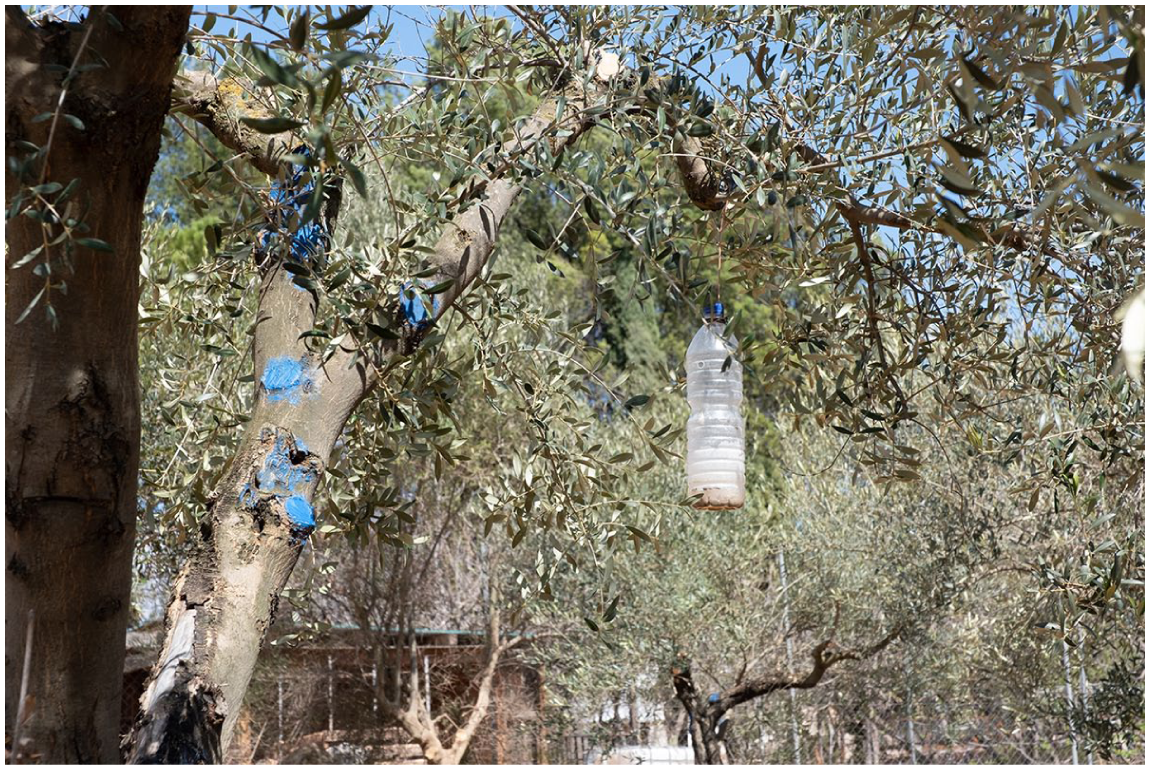
Olive trees with fruit fly traps (2023), fieldwork photo by Violeta Argudo-Portal.
Anticipatory images are embedded in the present, as are the awaiting fruit fly traps consisting of bottles of toxicant hanging from the olive trees to trap any fruit flies that might spoil the harvest. Corsín Jiménez and Nahum-Claudel (2019: 384–385) have noted that ‘traps are bridges between meaning and materiality, human and thing, predator and prey, technology and ecology, ontology and epistemology’. In the example of the olive tree, the traps are anticipatory devices in which multiple images are nested: the image of the bottle full of flies, the future crop’s success, the tree’s survival, the possibility for the farmer’s grandchildren tending to the olive trees . . . Hence, anticipation does reside in the present and intervenes in it by evoking possible future scenarios through different objects and practices.
Anticipatory mental images of future crop scarcity or natural disasters also influence the production of technoscientific infrastructures and architecture, such as the Svalbard Global Seed Vault, a seed bank facility known as the Doomsday Vault (Figure 3). Created in the Norwegian Arctic Svalbard archipelago in 2008, this anticipatory infrastructure stores frozen germplasm and crop seed samples as a backup for potential accidental loss of diversity. The Vault results from anticipatory images and temporal politics concerned with catastrophic times. With its majestic architecture, the vault presents itself as an image of a doomsday backup, and in turn, produces or activates other concomitant images of what a doomsday backup looks like, ordering particular ways of acting to anticipate the loss of natural life by banking seed samples as a form of preparedness. In this sense, Figure 2 serves as a more mundane example and Figure 3 as a more spectacular one of what Haber (2009) calls ‘landscapes of anticipation’, a terrain that is in constant preparation for what is to come, both a field of olive trees on the Mediterranean Coast and the Seed Vault in Norway.
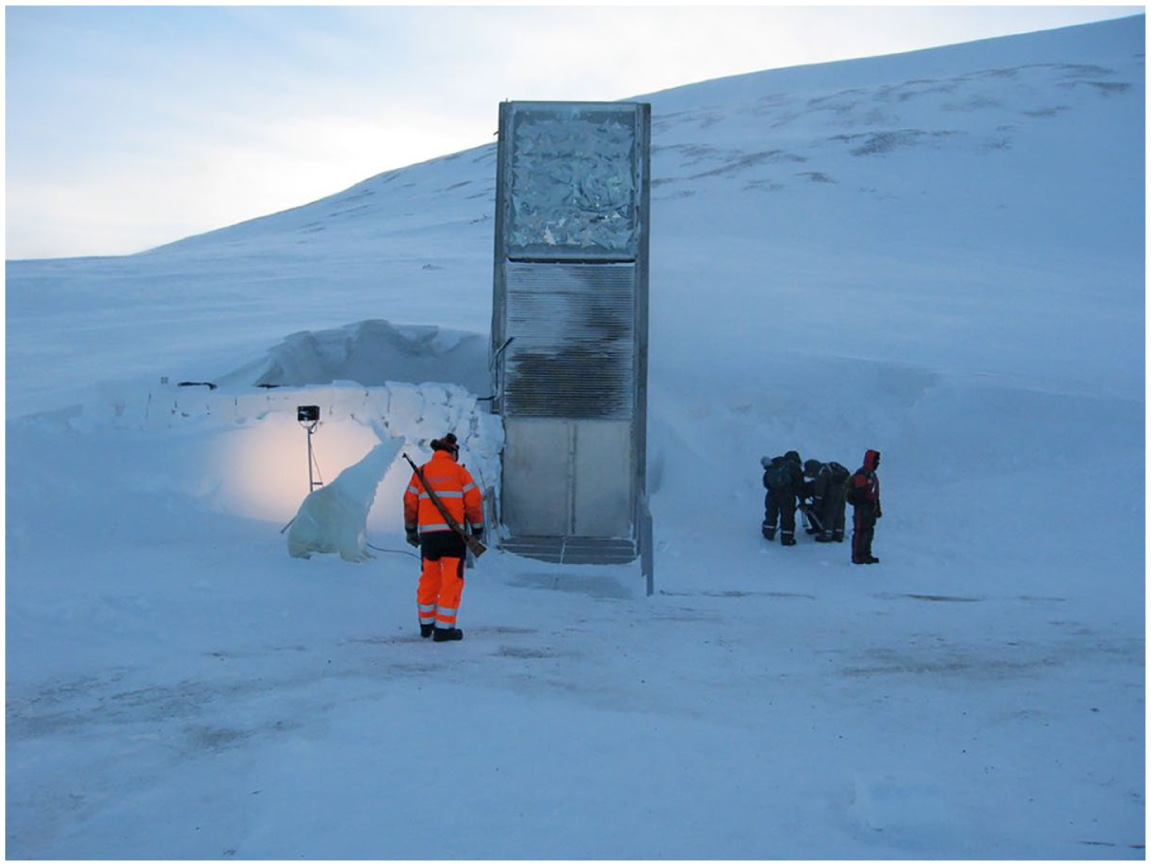
Svalbard Global Seed Vault (2008), photo by Dag Terje Filip Endersen. Licensed under CC-BY-3.0.
Other types of anticipatory images tend to appear in the news, emphasising technoscientific sophistication and focusing on the technical mediator. For instance, the European Ground Motion services produce anticipatory orographic and seismic images through satellite data (Figure 4). This service produces images of Earth that enable the calculation of ground motion and tagging areas in green when stable, blue for subsidence, and red for sinking areas. It is tagged when detected in a location where the ground is moving. When different points in a specific location are tagged in the same category, the anticipatory image is evoked through the production of a geographical image segmentation accompanied by a graph that indicates the ground displacement in millimetres on a temporal line. Where the graph ends, the speculation image appears. Accordingly, these types of satellite services not only serve to represent and distinguish ground motion but also to ad visum what might happen in an area showing increased subsidence. Such anticipation can activate different interventions, as do medical images that serve as anticipatory tools for future interventions, such as disease or fetal visualisation. Biomedical visualisations of tumour markers are composed to anticipate how aggressive breast cancer may develop (Figure 5), or patterns are crafted through visualisations to anticipate the course of a disease and its transformations.
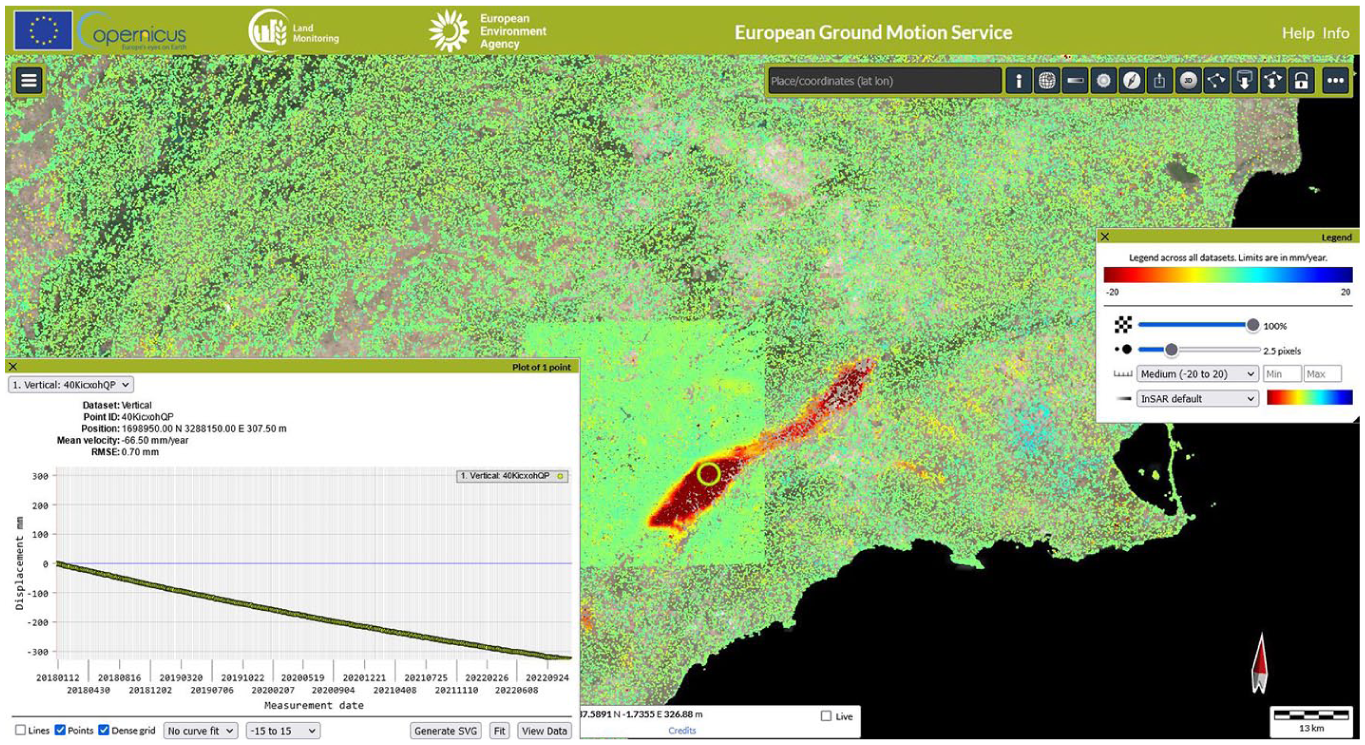
European Union’s Copernicus Land Monitoring Service information.
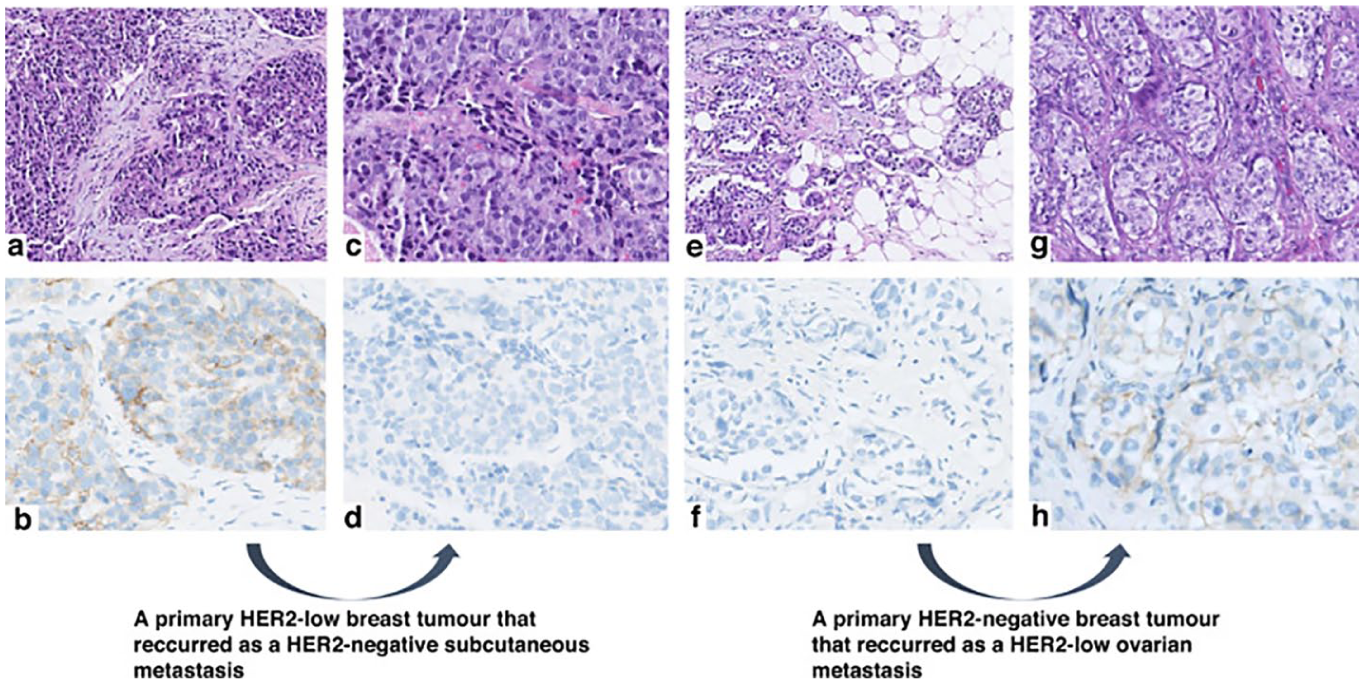
Two examples of HER2 status evolution between primary invasive breast carcinomas and their respective metastases.
One can also be hypnotised and shocked by ageing filters on the phone and end up scrolling on the Bright Side website blogpost on how humanity’s morphological evolution has evolved over 1000 years, supposedly following computational geneticist Dr Alan Kwan’s hypothesis, with an image of a human face with enormous eyes. 4 Once seeing that image, can one disentangle their prospective images of how future faces would look like from this one? How would you relate to this anticipatory visual prompt from now on when imagining a future human face?
Anticipatory images are also present in our daily commutes. In Barcelona, walking through a street where roadworks are in progress usually means coming across the marketisation of anticipatory images on billboards. These billboards with 3D renders tell a story about what tired pedestrians dodging the roadworks can expect from the disruption by projecting what will come (Figure 6). Billboard images might show a new leafy avenue and smiley normative bodies, a 10-storey renovated building with opaque windows or the outlining of a new bike lane. These ads of the future and the aesthetics of renders pollute our world and mental images. Anticipatory computer software such as 3D renders invite users to play at refurbishing a 20 m flat and anticipating its ‘potential’. 3D render models, in this case, are anticipatory images conjuring space optimisation. However, with attention to anticipatory images’ presences and absences, such 3D urban renders may also serve as an ad-visum of the neighbourhood’s impending gentrification or housing precarity.
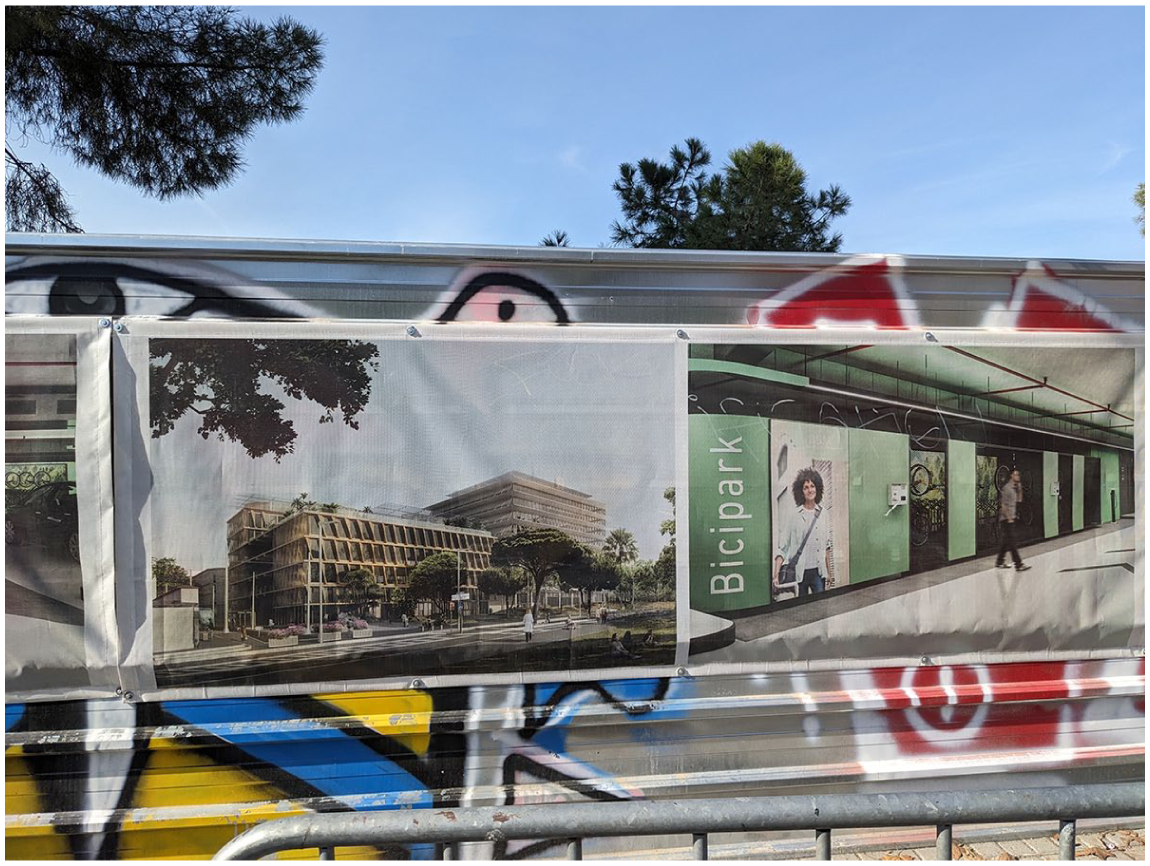
Barcelona street with a render of an urban transformation, photo by Violeta Argudo-Portal.
On the (in)visibility and presence/absence regimes in anticipatory images, Pink et al. (2018) work on visual media narratives of autonomous driving cars shows how such images of the future neglect cars’ messiness and everyday uses that surpass their role as mere vehicles, such images ‘do not account for the idea that people will seek to incorporate future technologies into their everyday worlds’. Similarly, Laba (2024) has observed that in the case of AI-generated images on wars, absences in visual depictions of the future are crucial political tools. In her work on visual generative media, the images of war produced avoid depicting soldier injuries, while stressing infrastructural destruction. Working with anticipatory images is a crucial methodological and analytical tool to unpack such (in)visibility regimes and study sociocultural orders.
Conclusions
In this article, we have argued for the importance of anticipatory images as analytical tools to better understand how we relate to and think with images, and how current narratives about the future are engendered. We have emphasised the need to consider not only AI-generated images but also all types of anticipatory visual devices. From our point of view, this approach has the advantage of analytically re-connecting non-digital forms of anticipatory images with digital ones, such as AI image making and photography transformations (Kember, 2014; MacKenzie and Munster, 2019), two themes that are spurring a strong debate in media studies. We consider that having a broader scope on the links between anticipation and images may also link media studies with anthropological theory in powerful ways. We could, for instance, take into consideration what ‘seeing like a neuronal network’ (Törnberg et al., 2025) has in common with other anticipatory images, such as divination practices, the shaping of a tree or the follow-up of cancer, in particular contexts as governance mediators. Such dialogue between different forms of anticipatory images and the genealogies of humans’ relation to futurity through visual depictions is crucial for following a cross-cultural approach, such as the one proposed by Chateau et al. (2025), which could help to better situate and amplify the analytical insights.
All these images, ranging from those of olive trees to the Doomsday Vault, Ground Motion, medical ones, and digital renders, depict a managerial and vigilant state, an act of government (Foucault, 2007) over neighbourhoods, fields, human bodies, and other populations of trees or seeds. In other words, are they all anticipatory images hatching capacities for governing our imagination in one way or another and eliciting some government intervention in the present? This open question requires further scholarly scrutiny. However, what is clear is that optimisation is embedded in these images and orient actions, and anticipatory images are crucial analytical tools in social anthropology and media studies.
The diversity of examples commented on shows how the paradigm of images as representations or copies of the world (a paradigm highly influenced by the irruption of photography in the 19th century) is limited. Such an approach to the limits of the representational paradigm adds to the current discussion regarding AI-generated images, as Laba (2024) has shown: greater technological sophistication does not equal greater representational range in visual generative media; that is, refined prompts do not necessarily generate a greater degree of representation. In ‘anticipatory images’, the image precedes the actual existence of what is depicted.
We have also shown how image, imagination and action are interwoven. Anticipatory images are not images of the future but future images that aim to craft the future by anticipating it. Anticipation holds transformative value in the present through multiple interventions, which can be physical or mental. These issues require further attention in research on images as warnings/ad visum to explore how surveillance and managerialism are embedded in anticipatory images.
One of the conclusions from this analysis is that we can tentatively distinguish two main sorts of anticipatory images: operational and speculative anticipatory images. Operational anticipatory images depict an event likely to happen in the near future (or in a distant future yet not too different from ours). These images are characterised, therefore, by a considerable degree of likelihood and trust in the certainty parameters that sustain such anticipation. This is the case for visual urbanistic plans, weather forecasts or AI biomedical projections of cancer cell development. On the contrary, speculative anticipatory images depict a hypothetical imagined future that is not prone to occur, at least not immediately, as there is no way to assess the degree of certainty. These images often involve provocative aesthetic resources aimed at triggering imagination in the observers and affecting them emotionally. Images of most sci-fi films or algorithmic images ‘showing’ how humanity will look in 1000 years belong to this second domain. However, in some instances, some anticipatory images can pivot from an operational to a speculative type. The same anticipatory image might be in a different category for different people. For instance, the visualisation of a mathematical model that announces heavy flooding can be read as an operational anticipatory image for some; simultaneously, for a climate change denier, it can be a speculative one or not even an anticipatory image at all. Of course, the distinction we have just described has only heuristic validity and cannot account for all kinds of anticipatory images.
As pointed out at the beginning, there are no neutral images. The future is a political matter. Anticipatory images in urbanism convey the legitimation of the uses of public space. The big eyes of the portrait of the girl in 3017 by Lamm indicate the centrality of visual devices in our present. Such illustration says a lot about the uncertainty of the present, especially concerning transformations in our visual ecology (excessive use of cell phones and their medical consequences, social control through visual devices, and loss of privacy). However, not all anticipatory images are only forms of social control, as the examples of olive trees, everyday scientific images, or the story of Bea show. Anticipatory images may be subversive, potentially liberating or crucial links to a more-than-human world. They may even entail an act of love and esteem.
We could have shown many other anticipatory images. Indeed, we acknowledge the selection’s limitations, which include a strong presence of digitally mediated images, the most prominent in our current research fields, and easier to incorporate in a digital journal. Yet, we hope such limitations could serve as a provocation for other colleagues working with non-digitally mediated images to extend the specific exercise we aim to activate with this essay. As a provocative thought experiment, we propose closing this paper with a mental exercise: look at Figure 7:

Blank image.
Now, imagine within this blank square something that could happen to the world in the future, something you do not want to occur. Think about what you might do to oppose this potential scenario. This way of visualising the non-yet and eventually taking action to challenge or subvert it constitutes an instance of the political dimension of anticipatory images. We are constantly generating this kind of image. We are anticipatory beings.
Footnotes
Data availability statement
The authors confirm that data supporting this study’s findings are available within the article and figures list. Interview data supporting this study’s findings are available on request from the corresponding author.
Funding
The author(s) disclosed receipt of the following financial support for the research, authorship, and/or publication of this article: The research and writing of this article were supported by the Juan de la Cierva Fellowship (Grant FJC2021-046469-I funded by MCIN/AEI/10.13039/501100011033 and the European Union “NextGenerationEU”/PRTR, PI Violeta Argudo-Portal), the ERC project Visual Trust. Reliability, accountability, and forgery in scientific, religious, and social images (PI: Roger Canals, 2021-2026). This project has received funding from the European Research Council (ERC) under the European Union’s Horizon 2020 research and innovation programme (Grant Agreement No. 101002897). And Programa ICREA Acadèmia-Generalitat de Catalunya.
Ethical approval and informed consent statements
The project for this article received ethical approval from the Universitat de Barcelona, and the authors obtained consent for the use of the interview excerpts.
