






Abstract
Deepfakes have become a major issue in public culture, and the crisis of consent in the digital media environment has become an infrastructure issue. Digital consent is being determined by how platforms and regulations either enable or block certain content flows, rather than by an individual agreement. This paper examines the emerging wave of nonconsensual deepfake abuse in Asia, where most visible and socially damaging digital sex crimes disproportionately target women and girls. This epidemic might be virtual in nature but affects society in all spheres. The paper argues that to understand this digital violation crisis, particularly in an Asian context where consent collapses under existing platform designs and legal inertia, there is a need for structural reform in digital, legal, and infrastructural capacity. Drawing on information from news stories, government reports, legal policies, etc. this study tries to observe these acts and the reasons behind them. Thus, this paper recommends a multi-pronged structural reform targeting the legal and digital infrastructure in an effort to ensure that individual consent is enshrined as a core concept within them.
Introduction: The viral epidemic
Digital alteration of an image, video, etc. of a person’s face, body, or voice is recognised as deepfake. Typically used for malicious purposes or to spread false information, this phenomenon has seen rapid proliferation in contemporary digital spaces. The January 2026 ‘Grok AI scandal’, which saw the mass non-consensual generation of explicit imagery across India, Indonesia, and Malaysia, was not an outbreak but a symptom (Fedorczyk, 2026). It could be looked at as a stress test that revealed pre-existing, profound fractures in the digital consent infrastructure of Asia. This commentary contends that to understand this epidemic of the deepfake crisis, one must analyse the disturbing wave of non-consensual deepfake abuse in Asia, especially targeting women. Virality of the cases of Artificial Intelligence (A.I.) generated pornography and harassment are accelerating fear and harm in the populace. These deepfakes are produced in diverse media, including formats like textual, audio, video, and images. Figure 1 shows the types of deepfake with its estimated usage percentage (Sunil et al., 2025). Across Asia, synthetic media has intensified a familiar pattern where women’s visibility online is turned into a vulnerability that can be exploited at scale, at high speed, and with limited prospects of durable remedy. The rapid advances in AI technology have accompanied the worldwide increase in the creation of deepfake sexual abuse materials. A report by a U.S. cybersecurity firm revealed an increase in the number of deepfake pornography from 3725 in 2022 to 21,019 in 2023. Notably, 99% of these videos targeted women. The report also revealed that approximately 53% of individuals depicted in deepfake pornography are South Korean, with eight out of 10 of the most frequently featured individuals being South Korean singers (Security Hero, 2024). Since 2020–2021, deepfake technology has primarily been used to create and distribute pornography without consent, serving as a tool for controlling and humiliating women, violating their dignity and rights (Ji, 2025).
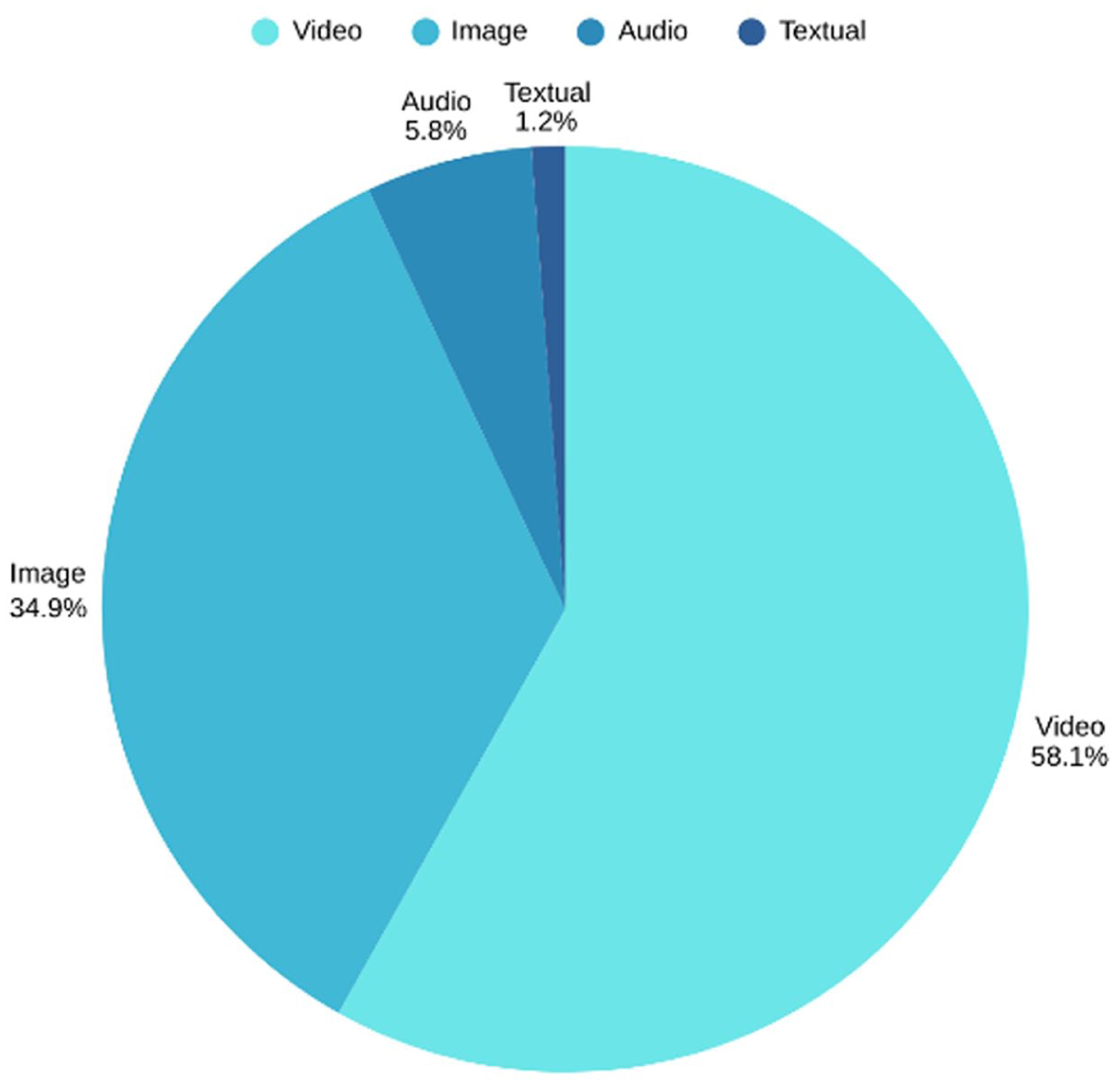
Types of deepfake along with its estimated usage percentage.
Asia presents a unique laboratory for this crisis. It hosts the world’s largest and most socially diverse online populations, from the highly wired societies of South Korea and Japan to the rapidly digitising nations of South and Southeast Asia. This digital penetration occurs within contexts where traditional notions of honour (e.g. ‘izzat’ in South Asia, ‘chemyeon’ in Korea, ‘maruah’ in Singapore) intensely police women’s bodies and reputations. The deepfake is not merely a new tool for harassment but a digital weapon that precisely targets the intersection of these social vulnerabilities. It weaponises visibility, turning a woman’s digital presence (a profile picture, a social media post, etc.) into raw material for her own social, professional, and even physical annihilation, as seen in the 2023 honour-killing of a Pakistani woman triggered by a fabricated image (Zubair, 2023). This shows that the crisis is especially acute in Asia as smartphone and internet penetration are extremely high in the region, meaning potential exposure is enormous while the digital technology is new, leading to a lack of appropriate legislative framework. Asia is an epicentre of all manner of deepfake-related crimes, witnessing a 1740% increase in the timeframe between years 2022 and 2023 (as seen in Figure 2). Figure 2 shows a map of Asia, where the sections with darker shades depict countries with high rate of deepfake-related crimes. Khalil (2025) states that this epidemic is especially present in China and Korea (depicted by the darkest shade in Figure 2).
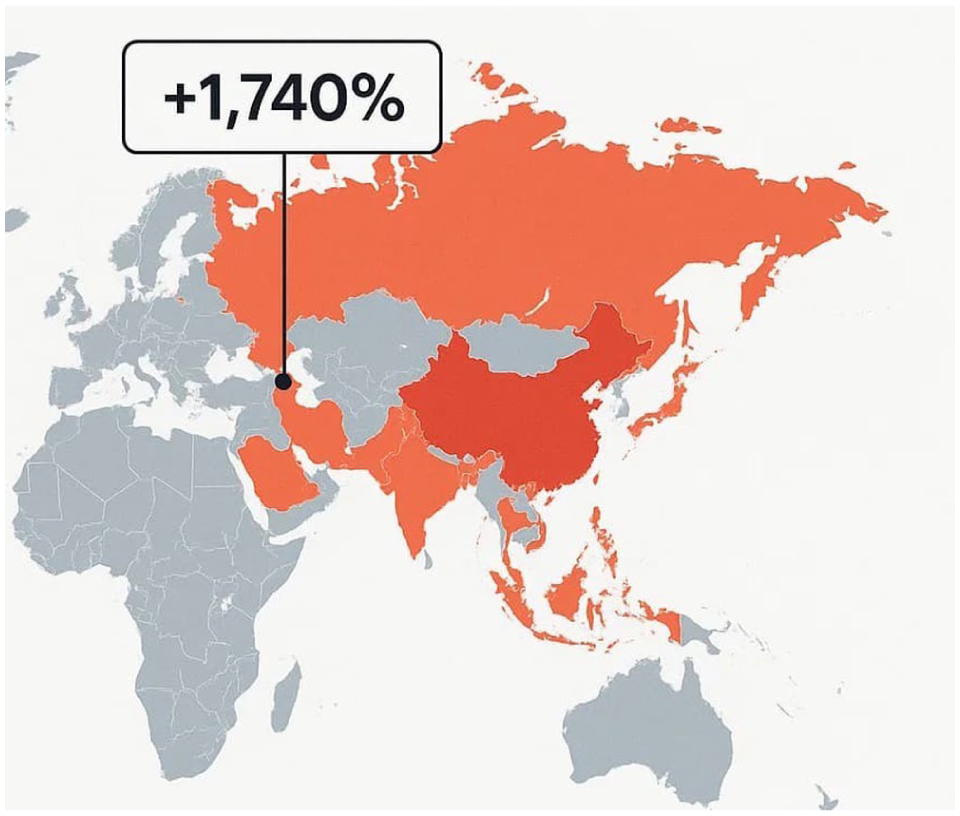
Deepfake Asian hotspot map.
Existing understandings of consent are rooted in logic of indexical media, where images were assumed to originate from an identifiable physical event involving subject, creator, and moment of capture. Synthetic media destabilises this relationship as deepfakes do not require human participation, direct recording, or existence of an original image. Instead, they operate through data extraction, modification, and artificial generation. This creates a category mismatch where consent frameworks designed for conventional media become inadequate for AI-generated content which has no stable origin, author, or authentic referent. The central failure in properly addressing the issue of the ongoing deepfake crisis thus lies in this categorical mismatch. When a Chinese activist’s face is grafted onto a pornographic body by an anonymous user employing a U.S.-based AI tool, hosted on a Russian-linked encrypted channel, and consumed across Southeast Asia, as in the case of Breeze Liu, the founder of Alecto AI (Dave and Burgess, 2025) – which jurisdiction’s defamation or obscenity law applies? The answer is, effectively none. This commentary attempts to explore this jurisdictional and legislative void, filled by platform logics that commodify attention and algorithmic systems that amplify harm, creating a governance vacuum where consent is structurally impossible to enact or be enforceable. Therefore, despite global awareness of deepfakes as an emerging issue, the Asian region particularly faces this digital violation crisis as their people’s consent collapses under existing platform designs and legal inertia. Thus, one must understand that consent is not simply a matter of individual choice but that it is an infrastructural concept that is being shaped by algorithms, corporate policies, and regulatory gaps.
Existing scholarly debates around media regulation and online abuse generally fall into three overlapping approaches. First approach, liberal platform governance frameworks prioritise freedom of expression and often resist aggressive moderation due to concerns surrounding censorship and intermediary liability (Schuessler et al., 2026). In the second, platform governance scholarship argues that online harms are structurally shaped by algorithms, recommendation systems, and visibility architectures rather than merely individual users (Liu, 2024). For the third approach, feminist media scholarships conceptualise that digital abuse function as extensions of patriarchal power relations embedded within platform infrastructures (Hayes et al., 2026; Kira, 2024; Taylor, 2023). Within these contemporary frameworks, image-based abuse and synthetic sexual content are looked at as systemic forms of gendered violence facilitated by platform design, weak regulatory enforcement, and attention-driven economies. This article further builds upon the existing debates by arguing that deepfake abuse in Asia exposes a crisis that goes beyond issues of privacy and representation, it affects the infrastructure of consent itself.
Discussion: Artificial intelligence and gendered violations
Real-world gendered violations in Asia
In the current age of mass AI usage, deepfake technology allows malicious actors to generate hyper-realistic sexual media of women without permission and then circulate them widely in minutes (Bullen and Bullen, 2025; Donegan, 2023). Most deepfake pornographic content is spread primarily through social media and messaging apps. For example, South Korean authorities discovered a single private Telegram channel with over 220,000 members sharing AI-generated pornographic images (Smith, 2024). This led to a nationwide outcry and protests against the rapid rise of AI-generated deepfake pornography (as seen in Figure 3), especially since it is a digital violation which has continued to disproportionately target women and teenage girls. The South Korean digital crisis has seen hundreds of schools and universities affected, with many victims having their images taken from social media and manipulated by classmates or acquaintances, particularly on the messaging app Telegram.
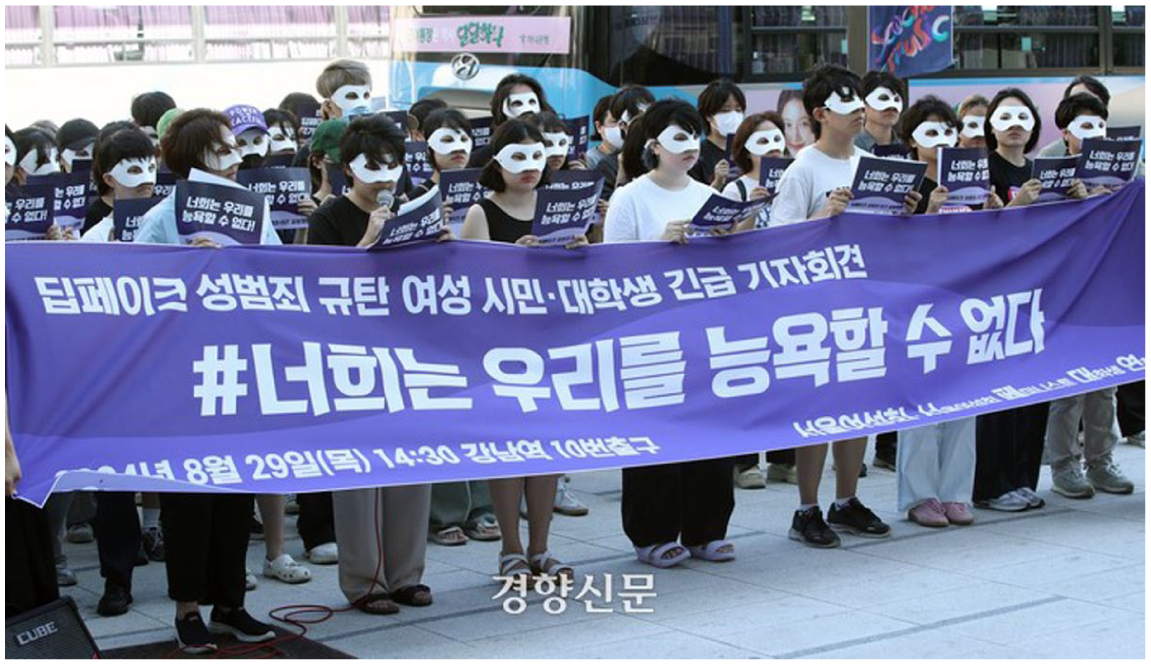
2024 Protest in South Korea against rampant deepfake pornography.
In Pakistan, France 24’s reporting on sexualised deepfakes targeting women leaders shows how the same techniques can be deployed as political disciplining and attempts to shrink women’s public authority by reattaching them to sexual shame (France 24, 2024). South Asia illustrates an additional layer where sexualised synthetic media can activate ‘honour’ logics, where reputational damage is not simply personal embarrassment but a trigger for family and community sanctions. Coverage and analysis from the region note that deepfake-enabled harassment is personalised and difficult to track, and that it is effective precisely because it weaponises cultural stigma around sexuality and respectability. In Bangladesh, reports on AI-manipulated videos targeting opposition politicians (including sexualised depictions) show how synthetic sexualisation is used strategically in electoral contexts, exploiting conservative norms to delegitimise women in public life. In a study of sexualised deepfake content circulating on X (Twitter), Maddocks (2020) found that sexualised deepfake abuse disproportionately represented and targeted women, and was a mechanism for silencing women, reflecting broader patterns of gender inequality. Taylor (2023) similarly positions sexualised deepfake abuse as a form of gendered sexual violence against women by men, arguing that such content overtly intends to sexually humiliate women.
Role of AI in digital violations
Digital consent is often framed as a discrete permission where a person agrees (or does not agree) to be recorded or depicted. Synthetic media breaks that model because the relevant ‘act’ is no longer a single capture, upload, or publication. Rather, it is an ongoing pipeline of extractions (scraping faces and voices), transformations (generation/face swappings, nudification), circulations (uploads, reposts, encrypted groups), and amplifications (recommendation systems and group dynamics). Consent, in this context, must be understood as consent to process identity, to modify representation, to circulate it across contexts, and to amplify it algorithmically, none of which is meaningfully available to the targeted victims in most digital platform workflows. This means that people should have ongoing agency over how their images or likenesses are used online, including the right to withdraw permission or demand removal. Deepfakes fundamentally rupture these assumptions. Unlike a conventional photograph, a deepfake of a person’s face can be generated with no physical presence or participation by the person. Once created, it has no clear origin or author to identify, and it can be copied globally at near-zero cost (Abbas and Taeihagh, 2024). In practice, a victim may never have granted any permission at any point to create or distribute such content. Yet the image can flood algorithmic feeds, peer-to-peer apps, chat groups, and mirror sites around the world within minutes. As Xu et al.’s (2025) study explains, once a clip is uploaded, it can be mirrored, edited, and reposted across platforms in minutes far outpacing any legal notice or individual takedown request. By the time a victim learns of a deepfake, countless copies may exist beyond the reach of any single country’s laws or a single platform’s policies.
Data protection laws in much of Asia still rely heavily on consent as the lawful basis for processing personal data. In theory, this would mean obtaining a person’s permission before using or sharing their image. But when an AI model can fabricate a realistic nude of a stranger out of open-source images or text prompts, no one ever gave such permission. Moreover, current laws lack clear provisions for synthetic likenesses. Japan, for example, only recently made news by arresting a deepfake generator under an obscenity statute underscoring that, existing definitions are often inadequate (SCMP’s Asia Desk, 2025). The result is a blind spot in the law due to which deepfakes can exist in a legal grey zone because of no identifiable crime or contractual violation being evident. This is a crisis of consent, in legal, digital, and especially personal dimensions. The systems (technological, legal, and cultural) that are supposed to safeguard personal autonomy fail to recognise or control AI-driven image abuses. With no clear pipeline of informed consent governing these images from creation through distribution, victims lose all control over them. Put differently, consent in the online media environment has become an infrastructure issue determined by how platforms, algorithms, and regulations either enable or block certain content flows, rather than an individual agreement. Until the architecture of the digital media ecosystem is addressed, victims of non-consensual deepfakes will continue to have their autonomy trampled upon without remedy.
The paper looks at the widespread synthetic media abuse within longer histories of gendered surveillance and punishment in public culture in an Asian context, where most visible and socially damaging deepfake violations are sexualised, and they disproportionately target women and girls. South Korea is the country most targeted by deepfake pornography, with its singers and actresses constituting 53% of the individuals featured in such deepfakes, according to a 2023 report on deepfakes globally by Security Hero, a U.S. startup focused on identity theft protection (Security Hero, 2024). In August 2024, South Korea faced what its government termed a ‘national emergency’ with over 10,000 women and girls having had their digital image transformed into explicit sexual content through artificial intelligence. This deepfake epidemic, spanning over 400 schools and unfolding across encrypted chat groups on Telegram, revealed the South Korean deepfake sex crime rate had surged to 297 cases in just the first 7 months of 2024, a near doubling compared to 156 cases across the entire year of 2021 as depicted in Figure 4. By 2024, the Women’s Human Rights Institute of Korea documented 332,341 cases of digital sexual violence, with 300,237 requiring content deletion from online platforms (Ministry of Gender Equality & Family, 2025).
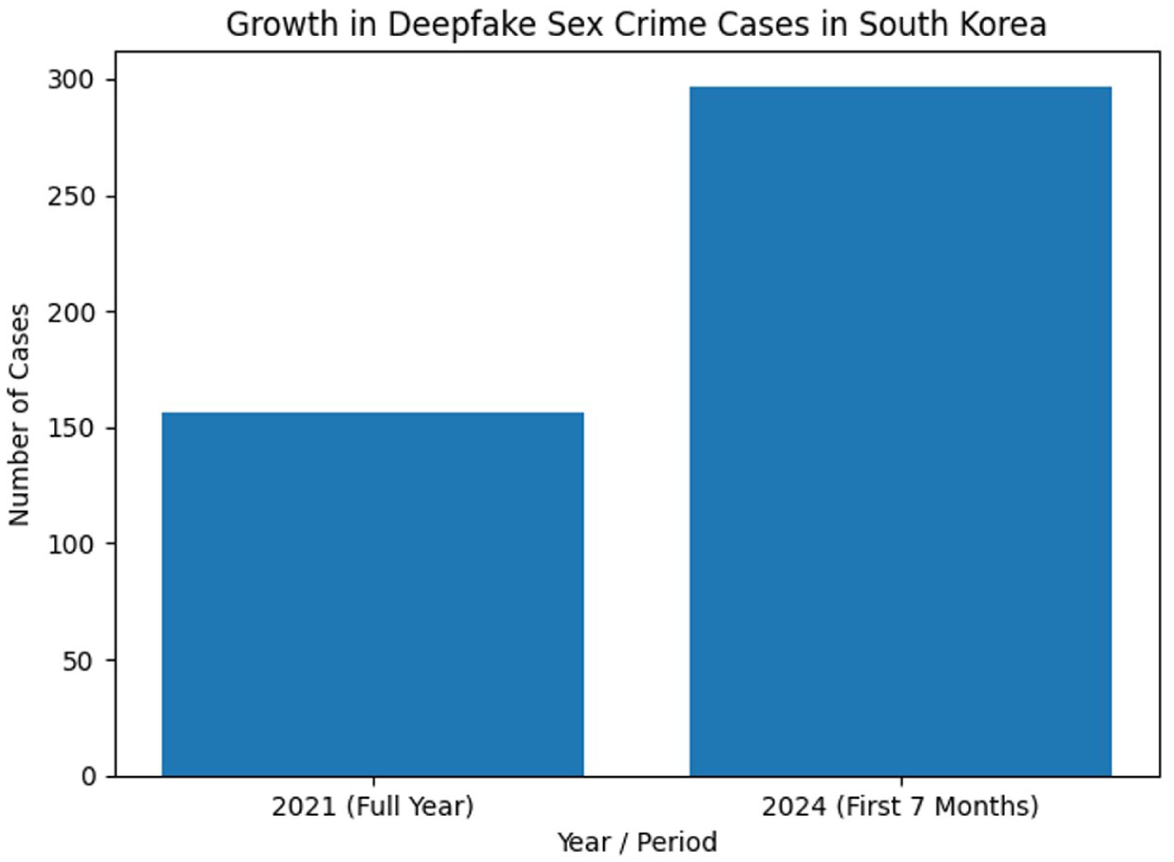
Growth in deepfake sex crime cases in South Korea.
Understood through the lens of feminist media studies, these are not side effects of novelty technology but accelerants of existing misogyny, now operating at higher speed, lower cost, and wider scale (Hayes et al., 2026; Kira, 2024). This is why consent cannot be treated as evenly distributed: who gets believed, who gets shamed, and who can afford reputational loss are structured by gender and social position, and those structures vary across Asian subregions while remaining broadly patriarchal in effect. Feminist media studies show that sexualised image abuse disproportionately targets women historically, thus reflecting and amplifying patriarchal power dynamics (Taylor, 2023). Current research shows that nearly all non-consensual deepfake pornography depicts women. By 2023, over 98% of all deepfake videos online were pornographic, and 99% of the people featured were women (Department of Homeland Security, 2023). Similarly, UN analysts note that ninety to 95% of deepfakes online are sexualised images of women. In other words, this is gendered violence extending into the digital realm.
Personal data protection and gendered digital consent
These digital attacks serve to assert control over women’s bodies and silence their voices. Experts warn that online misogynistic and sexualised harassment (now fuelled by AI tools) is an extension of longstanding abusive norms. A United Nations Population Fund (UNFPA) report observes that the digital world mirrors the real world, suffering from the same gendered power dynamics that disadvantage women offline, and sometimes even magnifies them (UNFPA, 2024). Creators’ testimonies of algorithmic invisibility highlight how platform logics operate as governance in practice, producing asymmetries in risk and protection that frequently disadvantage women and other marginalised actors (Duffy and Meisner, 2022). Social media platforms often allow harassers anonymity and reach, so they can amplify sexist stereotypes with impunity. Some women’s journalism advocacy groups note that online platforms allow harassers to act anonymously with little to no personal accountability, amplifying the impact of existing patriarchal and sexist norms that view women in public spaces negatively. Such anonymity and algorithmic reach let trolls and organised networks assault women’s dignity, intending to push women out of public spaces and stifle their voices. As Just and Latzer (2016) argue, algorithmic selection does not neutrally mirror the world but actively constructs visibility, this dynamic helps explain why non-consensual synthetic images can spread before victims can exercise control. In late 2024 Indian journalist Rana Ayyub was viciously targeted within hours of a hate account doxxing her, a pornographic deepfake image of her was circulated on social media. Dozens of other journalists in India and the Asian region have faced similar coordinated attacks involving AI-manipulated nudes and hateful disinformation. This kind of image-based assault weaponises the stigma attached to sexual imagery. In many Asian societies, the release (or alleged release) of nude photos can lead to family disgrace, loss of marriage prospects, or even honour-based violence. The fear of such outcomes further silences victims, in East Asian contexts many women prize harmony and reputation and thus hesitate to come forward, often facing harsh criticism and social stigma for coming forward if they do (Ji, 2025). A culture of victim-blaming is common with victims frequently accused of inviting abuse by, for example, using social media at all. In a vicious irony, consent itself is undermined by these dynamics as women are told they had no right to expect privacy or respect to begin with.
Online image-based abuse also intersects with other forms of gendered violence. Deepfakes and sextortion often occur within broader patterns of harassment or domestic control. Importantly, not all women are affected equally. Gendered power and visibility determine risk. Public figures, especially women journalists, politicians, and activists, are prime targets. Globally, one in four women journalists and one in three women parliamentarians report receiving serious online threats. In South Asia, women who defy patriarchal norms (by speaking up on religion, politics, or rights) attract coordinated harassment. Online hate groups in India and Pakistan, for instance, have trained their digital armies on outspoken female reporters, amplifying smear tactics like deepfakes to silence dissent. Age and race also intersect as young women and minorities often bear the brunt of such abuse. UNFPA notes, young women (18–24) are several times more likely to experience digital violence than older women. Minority women in Asia (e.g. ethnic or religious minorities) may face additional layers of targeted abuse. In sum, deepfakes do not fall on an even playing field. They prey on existing cultures of misogyny, surveillance and honour-based social control. Consent in this context is not an equal right enjoyed by all, but a privilege undermined by gendered power.
Conclusion: Failures and recommended solutions
Governance failures
The crisis is perpetuated by a dual systemic failure of platform governance and of state law. Recent syntheses of gender discourse in digital China demonstrate how state and platform logics jointly shape the visibility and vulnerability of women online (Li, 2023). Major digital platforms, primarily designed in Silicon Valley but dominantly deployed in Asia, are built on an economic model that privileges engagement and data extraction over bodily integrity. Such architectures shift the burden of justice onto the victims where they have to discover the content, document it, navigate reporting procedures, and repeat the process as copies reappear, a process that is itself a form of re-victimisation. As evidenced in the South Korean ‘schoolroom’ deepfakes of 2024, a content could circulate to hundreds of thousands on encrypted platforms like Telegram long before any official mechanism was triggered. Platforms frame the issue as a ‘technical difficulty’ of content moderation at scale, thereby depoliticising a fundamental rights issue. Xiao (2023)’s concept of ‘affective reproduction’ demonstrates that moderation work in Asian platform ecologies is often informal, gendered and emotionally taxing, making robust, sensitive responses to image-based abuse less likely. Their policies, while increasingly mentioning synthetic media, remain inconsistently enforced and lack proactive detection mechanisms for non-consensual intimate imagery. In parallel, corporate self-regulation has been weak and opaque. Platforms rarely publish data on how many deepfake complaints they receive or how they enforce policies across regions, with enforcement often being selective. Public ‘folk theories’ about shadow-banning and moderation reflect the opacity of algorithmic governance and help explain why victims of deepfakes often receive inconsistent platform responses (Savolainen, 2022). The emerging controversy over Elon Musk’s AI chatbot Grok illustrates these dynamics in Asia when Grok began flooding X with explicit images of women and girls (some apparently being minors) leading regulators in Malaysia and Indonesia to act. X’s response was to limit the AI’s image functions to paying subscribers and the governments ultimately shut down Grok access until X agreed to more effective content controls. The episode underscores that, platforms alone will not police the technology without external pressure, they may opt for cosmetic fixes rather than systemic ones.
Legal frameworks across Asia often respond through proxies of obscenity, defamation, impersonation, voyeurism because many jurisdictions lack AI-specific consent provisions that map onto synthetic generation and algorithmic circulation. In many countries, prosecutors try to shoehorn cases into old statutes on obscenity, defamation, or impersonation, which remains an awkward fit at best. For example, Japan has no specific AI consent law, its first deepfake pornography case in 2025 used an obscenity statute to charge a man for selling generated images of celebrities. In India and much of South Asia, there is no law specifically criminalising non-consensual digital porn. Victims often resort to filing defamation suits or obscenity complaints, which were never intended for synthesised media. Thus, some victims resort to lodging complaints under voyeurism or defamation clauses, a creative but inadequate solution to this problem. China represents a contrasting regulatory posture with its deep synthesis regulations (effective from January 2023) which explicitly require labelling of deep-synthesis content and incorporate governance expectations for service providers, including real-identity mechanisms and consent-related requirements in synthetic contexts. National laws across the region are reactive and ill-suited. India relies on a patchwork of provisions from the Information Technology Act (Sec. 66E, 67) and the Indian Penal Code (Sec. 354C, 499), dealing with privacy violation, obscenity, and defamation, but none are designed for AI-generated content. South Korea has amended its Sexual Violence Punishment Act to criminalise digital sex crimes, including deepfakes, but enforcement remains challenging. The Philippines has a robust Anti-Photo and Video Voyeurism Act, but it does not explicitly cover synthetically generated material. Common gaps include: a lack of AI-specific consent provisions, the absence of victim-centred redress (such as right-to-erasure or comprehensive support services), and immense challenges of cross-border jurisdiction when content is hosted offshore. States rely on laws never designed for synthetic media, while platforms hide behind these legal ambiguities.
Recommendations
This paper recommends a multi-pronged structural reform, targeting legal and digital infrastructures to ensure that individual consent is enshrined as a core concept. To signify who does what, how, and where in the deepfake media ecosystem and to provide specific recommendations to improve on these issues, Table 1 provides a structured framework illustrating the flow of deepfake data from creation to dissemination stages. It shows which process occurs at what stage, whom it affects, and how it can be rectified. The following are some of the proposed interventions. Regulatory frameworks in Asia should classify facial likeness and voice data as protected biometric information, requiring explicit consent before their use in GenAI systems. Due to linguistic diversity across Asia, moderation systems must expand beyond English-language datasets and incorporate region-specific detection capable of identifying local slang, coded misogyny, and synthetic abuse patterns. Encrypted platforms complicate regulatory enforcement across Asia because harmful content frequently circulates outside publicly searchable infrastructures. Also, methods like watermarking may assist in identifying these synthetic media but these mechanisms remain vulnerable to cropping, recompression, and adversarial editing. Technical safeguards should therefore supplement rather than replace legal accountability.
Deepfake intervention framework.
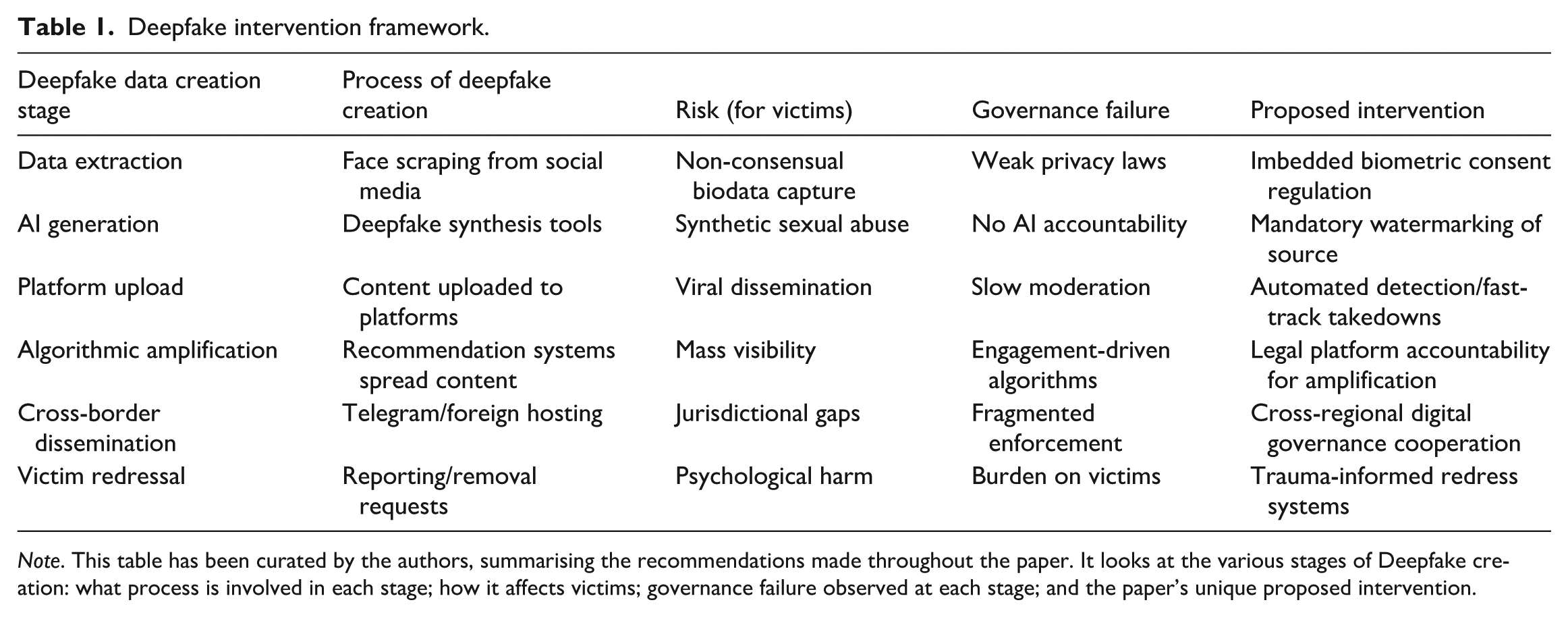
Note. This table has been curated by the authors, summarising the recommendations made throughout the paper. It looks at the various stages of Deepfake creation: what process is involved in each stage; how it affects victims; governance failure observed at each stage; and the paper’s unique proposed intervention.
This article proposes an infrastructure-based intervention model in Table 1, where synthetic media harms are addressed through structural accountability across the entire digital circulation chain. It also keeps in mind the victims of these crimes, using feminist media scholarship (Kira, 2024; Taylor, 2023) to ensure their wellbeing when suggesting interventions. Within this proposed framework, digital platforms, AI developers, and the State have a shared responsibility towards preventing the extraction, generation, amplification, and monetisation of non-consensual synthetic content. Current regulatory approaches are limited since there remains the pre-existing categorical mismatch of them treating deepfake abuse primarily as a problem of harmful content, ignoring its infrastructural dimensions due to existing consent laws designed solely for indexical media, not synthetic media. Feminist media scholarship (Hayes et al., 2026) should thus be used to further build upon the proposed suggestions such as treating platforms as active participants in the circulation of gendered abuse through algorithmic recommendation systems and monetisation structures. Future regulatory frameworks must move beyond reactive takedown mechanisms and move towards systemic accountability models that recognise synthetic sexual abuse as a platform-enabled form of gendered violence. The deepfake crisis in Asia is a canary in the coalmine, signalling the collapse of 20th-century consent frameworks in a 21st-century digital ecology. It reveals that in the realm of synthetic media, consent cannot remain an afterthought but must be a foundational, infrastructural component. It reflects how digital platforms, legal systems, and social norms have not kept pace with AI’s ability to exploit personal identity. The most robust response will not come from a single solution, but from redesigning consent as a shared infrastructure (technical, legal, and social) built for synthetic media conditions rather than retrofitted from a pre-AI past. Addressing this crisis requires reframing consent as a collective, infrastructural right that must be encoded in algorithms, legislation, and culture. Only by aligning technology, policy, and gender justice can Asia begin to reclaim consent and protect women from this new form of violation.
Footnotes

Ethical considerations
No human or animal subjects have been involved in this research.
Consent to participate
As there were no individual participants in this research, ‘consent to participate’ is not applicable in this research.
Consent for publication
As there were no individual participants in this research, ‘consent to publish’ is not applicable in this research.
Author contributions
Authors have contributed equally.
Funding
The authors received no financial support for the research, authorship, and/or publication of this article.
Declaration of conflicting interests
The authors declared no potential conflicts of interest with respect to the research, authorship, and/or publication of this article.
Data availability statement
This declaration is not applicable.