






Abstract
Older people living alone (OPLA) are considered vulnerable because of fewer resources, such as social support. As self-management becomes increasingly important in chronic care, evidence is needed on how to better support OPLA. This review synthesizes the evidence from 32 publications on the challenges as well as strategies of OPLA in managing chronic conditions. On the basis of a systematic database search and review process, being independent and being at home were identified as crucial when living alone in later life; both involve decision making and the adjustment of routines to manage everyday life and chronic conditions. These findings show that OPLA are vulnerable because of difficult living situations, limited resources, or a lack of support, and they actively manage their conditions using various strategies to remain independent, but these may cause fragile arrangements that can jeopardize independence. Awareness of these strategies is a starting point to develop interventions for self-management support in chronic illness.
Chronic illness self-management is considered a key element in chronic care and in health policy and practice. Interest has grown to control chronic conditions by empowering individuals to better manage challenges imposed by long-lasting illness and impairments (Adams, 2010; Wagner et al., 2001). Chronic illness self-management is what individuals and their families do; it includes a broad set of attitudes, behaviors, and skills they carry out in everyday life to control an illness, to minimize its impact on health and functioning, manage the health care system, and cope with the psychosocial consequences of living with chronic conditions (Gallant, Spitze, & Prohaska, 2007; Grey, Knafl, & McCorkle, 2006; Strauss & Glaser, 1975).
Diverse self-management interventions have been developed and implemented in various settings. Self-management programs focus on individuals with particular diseases, for example, arthritis, diabetes, asthma, or HIV/AIDS; also, generic lay-led self-management approaches exist, which have been adapted for culturally diverse populations in different countries (de Silva, 2011). Along with the trend of promoting self-management support, there is concern whether it addresses those most in need and embraces the challenges of vulnerable populations, meaning those most at risk for poor physical, psychological, or social health outcomes (Aday, 2001; Schröder-Butterfill & Marianti, 2006).
A particularly vulnerable and growing group in health care are older people living alone (OPLA). Living alone, meaning living in a nonfamily household by oneself, is a main demographic trend in Western societies, and this group has increased dramatically in industrialized countries (United Nations Department of Economic and Social Affairs, 2005; U.S. Census Bureau, 2007; ). OPLA are considered vulnerable for various reasons (Larkin, 2009; Shi & Stevens, 2005). They tend to have less social support, higher poverty rates, and greater challenges in everyday life, such as mobility issues, security risks, and housing problems (Age Concern, 2008; Collins & Paul, 1994; Davis, Grant, & Rowland, 1992; Fisher, Baker, Koval, Lishok, & Maisto, 2007). OPLA also experience complex health needs, such as higher rates of psychological distress or risks for developing certain chronic conditions because of lifestyle factors (smoking, alcohol, or dietary habits), which have an impact on their health services use (Burnette & Mui, 1994; Guzman, Sohn, & Harada, 2004; Lidfeldt, Nerbrand, Samsioe, & Agardh, 2005). Living alone is also considered a risk factor for poorer health outcomes after hospital discharge and higher readmission rates or nursing home admissions after hospitalization (Murphy et al., 2008; Schmaltz et al., 2007).
Given the rapid growth of the aging population and the rising number of OPLA, an in-depth understanding of their needs and challenges helps offer adequate self-management support. Therefore, this article’s objective is to describe the needs and challenges of OPLA, as well as strategies in chronic illness self-management when living alone in later life, on the basis of a review of systematically identified literature on the perspectives of OPLA.
Methods
A systematic integrative review was conducted incorporating multiple perspectives and types of literature (Conn et al., 2003; Whittemore & Knafl, 2005). A comprehensive database search covering publications from 1965 to December 2008 (updated February 2011) was combined with an extensive hand search (Figure 1). A two-stage search strategy was used for the health care–related databases. In a preliminary limited search (Stage 1) basic search terms were generated to develop database specific search concepts. Age and methodological aspects were used as primary search concepts to identify potentially relevant studies along with Medical Subject Headings and keyword search terms. In Stage 2, a full database search was conducted in MEDLINE, CINAHL, PsycINFO, and GeroLIT using database-specific search concepts. In the first search, priority was given to search sets on (a) “living alone” combined with (b) “self-care/self-management,” (c) “perspective of elderly people,” and (d) “chronic illness.” This combination produced few potentially useful articles, so priority was then given to the first search set (“living alone”) combined with disease-specific search sets on cardiovascular diseases, diabetes, arthritis, and depression, as well as an additional set on “aging” (see Table 1).
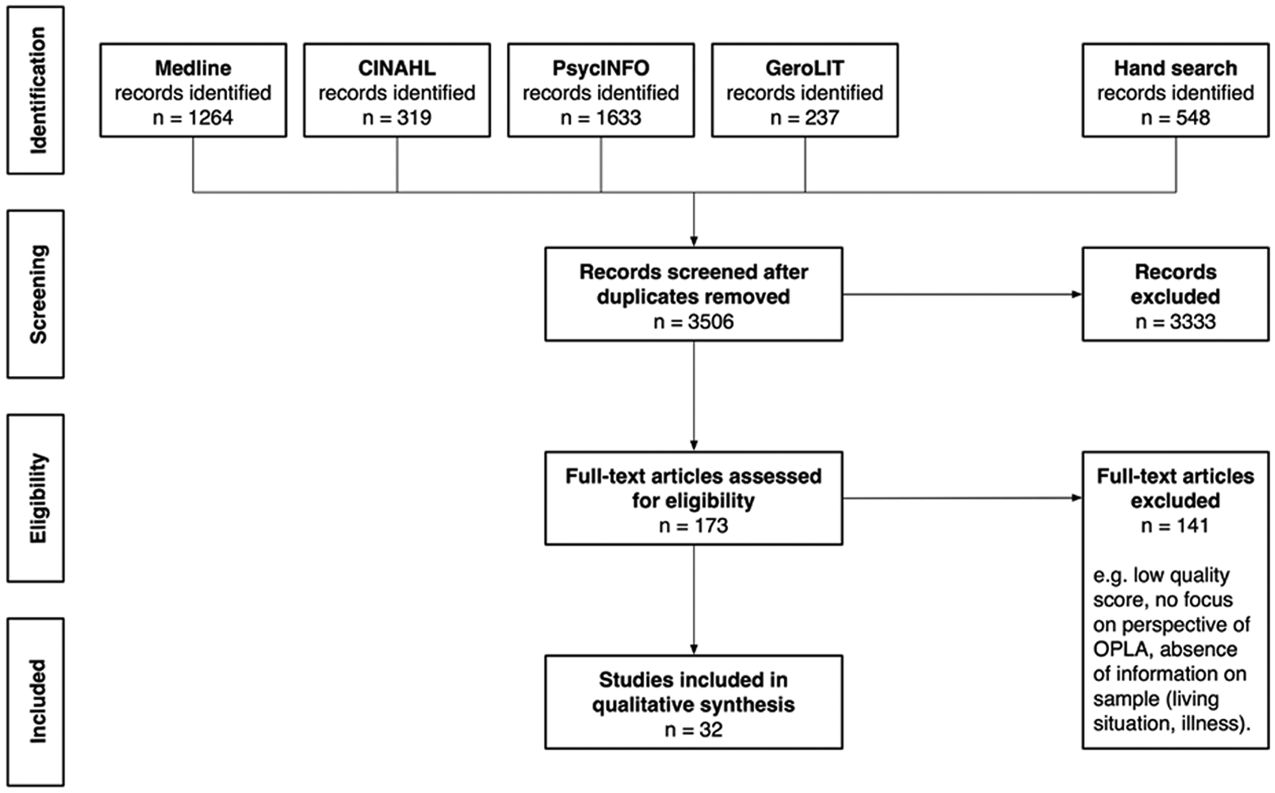
Search Process, Screening, and Inclusion
Adjusted Concept Table for Indexed Database Search 2 on Living Alone and Specific Diseases

The search sets also guided the hand search and reference mining, which consisted of the following parts: checking reference lists of most promising articles (via Scopus and the ISI Web of Science); manually searching annual issues of selected journals on health, aging, and chronic illness (3,903 abstracts with a minor output of 6 potentially relevant records); and searching Scopus for publications with qualitative research designs (updated February 2011). E-mail alerts and RSS feeds were used for an ongoing tracking of records published in key journals.
After screening the records, a total number of 173 references were assessed for eligibility with a priori defined inclusion and exclusion criteria (see Table 2). In selected promising cases, first authors were contacted for missing information.
Inclusion and Exclusion Criteria

To achieve rigor in the review process, different quality assessment instruments were used for each type of research design. Qualitative studies were evaluated with a focus, for example, on the clarity of objectives, audit trails in the data analysis, or adequate use of quotations following the recommendations of Evans (2007). For quantitative studies, a generic quality index score adapted from Beck (1995) was used. It included the following nine criteria: first author’s expertise, funding, sampling, sample size, research design, instrument reliability and validity, data collection, data analysis, and confounding variables. The scoring for each criterion ranged from 1 to 3, except for funding (0 or 1), instrument reliability and validity (0 to 3), data analysis (1 to 4), and design (1 or 2). The total possible score was 23 points. The first author evaluated records for quality, and they were excluded if they scored less than 10 points. In total, 32 publications were included with research findings from various disciplines (key characteristics are listed in Table 3, and a summary of studies appears in Table 4).
Summarized Key Characteristics of Included Studies (n = 32)

If applicable or provided.
Summary of Studies Retained in the Review

Note: ADL = activity of daily living; ANOVA = analysis of variance; IADL = instrumental activity of daily living; OPLA = older people living alone.
The evidence of the retained studies was extracted with a particular focus on the needs, challenges, and strategies in chronic illness self-management of OPLA. These findings were entered into a data collection form using tabulation (Evans, 2007). The descriptive data synthesis began while reading each article for quality appraisal and documenting its key findings. Books as well as book chapters were also included, and their findings were summarized with a thematic analysis on key topics of the research question. For the qualitative synthesis of extracted data, narrative summary was used to incorporate both qualitative and quantitative data (Dixon-Woods, Agarwal, Jones, Young, & Sutton, 2005).
Findings
Challenges in Chronic Illness Self-Management When Living Alone in Later Life
According to included studies, OPLA may differ in various ways and appear to be a heterogeneous group, yet there are similarities and common themes in terms of how they experience and manage everyday life and chronic conditions (see Figure 2). When living alone in later life, chronic illness becomes integral in everyday life and is regarded as a common aspect of life (e.g., Rubinstein, Kilbride, & Nagy, 1992). Its recognition may be practically subliminal; illness may be a phenomenon that is usually an undercurrent in everyday life, and its premature fatal outcomes may crystallize only in crisis (Burnette, 1994).
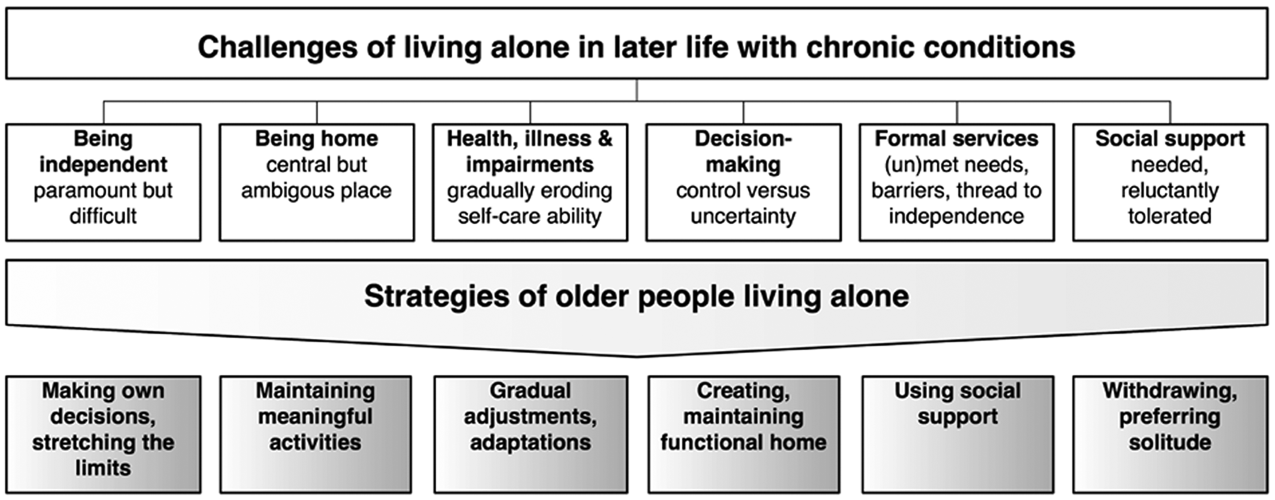
Key Findings
Being Independent: Paramount but Difficult
Being independent and maintaining independence is the key challenge of OPLA with chronic conditions (e.g., Aoun, Kristjanson, Oldham, & Currow, 2008; Rubinstein et al., 1992). Most studies emphasized their participants’ desire for independence as paramount, no matter the stage of functional and/or cognitive limitations (e.g., Schank & Lough, 1990). Independence stands for the ability to live alone and to make one’s own choices; it is regarded as one of the most enjoyable aspects of living alone, and some older persons are often proud that they are still able to live alone (Eshbaugh, 2008; Harris, 2006).
Various aspects contribute to the key role of independence while living alone in later life. Independence is embedded in the meaning of an individual’s life and work history; it can mean being financially secure, being liberated from previous obligations and gender roles, as well as having more personal freedom (e.g., Petry, 2003). Independence is linked to the meaning of home, as it signifies independence (see the next paragraph), and mobility (e.g., to drive or to walk) is crucial to live independently (Harris, 2006; Hinck, 2004).
Yet being independent is a continuous struggle when living alone in later life, and to lose one’s independence by ill health is most feared (Haak, Fänge, Iwarsson, & Dahlin-Ivanoff, 2007; Rubinstein et al., 1992). OPLA are facing “hardships of solo navigation” in chronic illness self-management (Burnette, 1994, p. 11) and have to cope with losses, anguish, or confusion during the life course affecting their health (Haak, Ivanoff, Fänge, Sixsmith, & Iwarsson, 2007). Along with functional and cognitive decline, this leads to role changes for OPLA in later life, summarized as a transition from an actor to a spectator: Formerly active persons gradually transition into more passive, less demanding activities.
Being Home: A Central but Ambiguous Place
Home is central for OPLA, but its status is also ambiguous (e.g., Dahlin-Ivanoff, Haak, Fänge, & Iwarsson, 2007). It is perceived as a symbol to remaining independent, but it is always threatened by age-related functional decline. During the aging process, home becomes increasingly important, and OPLA want to stay at home as long as possible because of their social networks and affiliations to home (i.e., Harris, 2006).
Home has many functions. It means privacy and freedom, as well as autonomy, and it is a symbol of being a person. It retains a connection to the community but is also the place where people can truly be themselves, and for OPLA, it is linked to autonomy as part of their emotional selves (e.g., Aoun et al., 2008). Home not only means structure and consistency but also security and safety, as OPLA experience comfort in the places with which they are familiar. It enables access to things needed the most as well as to support or care, and it is the locus of participation (Haak, Fänge, et al., 2007). Home allows OPLA to remain connected to a meaningful past or to feel togetherness with others, and it functions as an antidote for loneliness (Dahlin-Ivanoff et al., 2007; Hinck, 2004).
Yet the world at home has its challenges. Functional and cognitive decline jeopardizes freedom, autonomy, and privacy if the necessity to move to institutionalized care becomes apparent (Dahlin-Ivanoff et al., 2007). Home can limit choices and become a place where it is no longer safe to stay because of various reasons (e.g., rural or isolated areas with limited access to support and care, inability to care for one’s home, or impoverished communities with structural issues). All of these factors can raise concerns as to whether one’s home is still the right place for human habitation (e.g., Porter, 2005; Roberts & Cleveland, 2001). Severe emotional challenges such as feelings of loneliness and isolation are also frequently reported. The inability to leave home is considered a cause for depression, and subsequently, home may appear as a prison (Burnette, 1994; Rubinstein et al., 1992). Consequently, living alone can be experienced as if there is no way out of this situation, which is perceived as one of the most negative experiences of living alone (Black, White, & Hannum, 2007). In either way, home is best described as the “hub of existence” for OPLA (Dahlin-Ivanoff et al., 2007, p. 28).
Health, Illness, and Impairments: Gradually Eroding the Ability to Care for Oneself
Health and challenges in functional and cognitive decline are crucial when living alone in later life (e.g., Schank & Lough, 1990). Maintaining health is paramount for OPLA, as they must confront health problems without immediately available help. No one may be at hand to assist with tasks in day-to-day chronic illness management, such as reminding one to take medication, administering eye drops, talking to health care providers, and so on (Rubinstein et al., 1992). Progressive functional and cognitive aging gradually erodes one’s ability to carry out activities and to self-manage illness; OPLA may experience this as it slowly usurps daily life and leads to a loss of control (e.g., Jett, 2003; Nygard & Starkhammar, 2007).
OPLA may view illness and increasing impairments as normal in old age while still being positive about their health. Some do not deny their declining health; they expect pain or fatigue and have a realistic appraisal of their needs, even among those with mild dementia (e.g., Burnette, 1994). Yet, some OPLA are unaware of their needs and problems related to both declining health and living arrangements because of memory loss or denial (Harris, 2006). It may also be of importance in terms of when a person has a chronic condition and how successfully it is managed; if it is part of one’s identity at an early age because of successful adaptation, small changes in health may be less threatening than for someone who has not experienced health problems until later life (Rubinstein et al., 1992).
Declining health challenges everyday life and may cause severe emotional experiences, such as worrying about the risk for falling or being hindered from doing things (Aday, Kehoe, & Farney, 2006; Aoun et al., 2008). Fears exist that declining health may slow them down and jeopardize their active lives as it diminishes personal strength as well as out-of-home activities and thus is related to sadness and suffering (Black et al., 2007; Nygard & Starkhammar, 2003). An acute crisis in a chronic illness trajectory is most challenging for OPLA, as it brings their vulnerability to a sharp focus and may compromise their independence (Burnette, 1994; Rubinstein et al., 1992).
(Self-)Managing and Decision Making: Being in Control and Dealing With Uncertainty
For OPLA, it is crucial to both feel and be competent in managing everyday life as well as chronic conditions. Living on their own and making their own decisions were found to be of overriding importance (Brown & May, 2005; Petry, 2003). If daily life is managed actively and meaningfully, this may represent mastery and control (e.g., Haak, Fänge, et al., 2007). OPLA wish to be an integral part of decision making about their living arrangements or care, and they may regard themselves as the central actors in managing their conditions (Ahn & Kim, 2004; Harris, 2006). Some still feel competent with household chores or personal care in later phases of functional decline (Gilmour, Gibson, & Campbell, 2003), and especially the most vulnerable elders want to have the freedom of choice, which is synonymous with maintaining independence (Rubinstein et al., 1992).
When a person becomes fragile, it interferes with self-management as well as decision making, and dealing with uncertainty and even frustration become common challenges when living alone in later life (e.g., Gilmour et al., 2003; Shih & Shih, 1999). How to maintain independence in times of declining health, cognitive impairments, and environmental obstacles becomes a major challenge and balancing act while living alone in later life (Nygard & Starkhammar, 2003).
Formal Services: (Un)Met Needs, Barriers, and Threats to Independence
In later life, OPLA have an increased need for formal support. Home help as well as community nursing services are widely used, and institutionalized care is considered when people’s conditions change (e.g., Aoun et al., 2008; Huang & Lin, 2002). Again, staying at home as long as possible is imperative, and the help of others is perceived positively as long as OPLA feel in charge and have the ability to make decisions to remain independent (Haak, Fänge, et al., 2007). From the perspective of OPLA, there are various challenges, especially access to care: scarce assets but high cost (e.g., for medication), long distances to services, necessary but missing assistive technology for independent living, and so forth (Brown & May, 2005; Burnette, 1994). They also experience inadequate care and difficulties in interpersonal communication with health professionals, who may devalue or ignore problems. This causes feelings of anger, frustration, or distrust toward service providers and results in an inability to fully use services (Porter, 2005; Shih & Shih, 1999).
Health literacy is also crucial for OPLA. Poor understanding of illness and care protocols challenges their self-management, and culminating events can lead to injudicious decisions (Gilmour et al., 2003; Shih, Gau, Lo, & Shih, 2005). It can be precluded by complications of health and function or the complexity of health information, which are difficult to interpret and can be a barrier to certain benefits (Rubinstein et al., 1992). This may cause feelings of powerlessness because of a lack of adequate information or a limited understanding of the potential as well as the limits of services (Haak, Fänge, et al., 2007; Shih & Shih, 1999).
An underestimated challenge in using formal care is its threat to OPLA’s independence, self-management, and decision making. At home, service providers may be viewed as “intruders” to the person living alone because other people are in control and may decide how and when to perform activities (e.g., Porter, 2005). Formal services may change daily routines, be in opposition to one’s cultural values, decrease one’s freedom and spontaneity, affect one’s privacy and security, and involve various professionals, leading to uncertainty about their current and future status (Essen, 2008; Gilmour et al., 2003). The potential need for replacement of institutionalized care is also feared, even when it may be the only alternative if living independently becomes too difficult.
Social Support: Needed Yet Reluctantly Tolerated
Social support is crucial for chronic illness self-management, especially when living alone in later life. OPLA both use and need strong social networks such as children, friends, and neighbors to remain independent (Ahn & Kim, 2004; Roberts & Cleveland, 2001). These connections provide care, medication management, transportation, advocacy and representation, companionship, emergency help, and security (Hinck, 2004; Letvak, 1997). Social support is appreciated and also expected by OPLA. They appear optimistic about the availability and quantity of support they may receive (Burnette, 1994; Gilmour et al., 2003). Some are realistic about their needs and willing to accept help from others to continue living alone (Harris, 2006).
OPLA also experience challenges in terms of social support. Being a highly valued, precious, but also finite resource, this may cause reluctance to ask for help (Burnette, 1994). Being isolated because of distance from family or friends is a problem, and some OPLA report relationships of poor quality (Letvak, 1997; Roberts & Cleveland, 2001). Being in need of social support implies dependency, and some are afraid of being a burden to the family (Harris, 2006; Hinck, 2004). Social networks are not static because of illness, aging or death, which may cause a lack of companionship (Aoun et al., 2008; Eshbaugh, 2008).
Strategies of OPLA in Chronic Illness Self-Management
Even though OPLA are considered vulnerable and face various challenges in everyday life with chronic illness, included are studies that emphasize their active roles and engagement. Although some manage well and others struggle (Harris, 2006), their illness is essentially self-managed although often not optimally (e.g., Burnette, 1994; Rubinstein et al., 1992). This section addresses strategies of OPLA in chronic illness self-management. According to their overriding intention to continue living alone at home for as long as possible, it can be summarized as an ongoing adjustment and struggle to remain independent (Haak, Fänge, et al., 2007; Porter, 2005).
Making One’s Own Decisions and Stretching the Limits
To be able to make one’s own decision about remaining independent may be one of the most important factors from the perspective of OPLA. Especially when OPLA experience gradual functional and cognitive decline with impairments, being in charge of as well as involved with decision making about their lives and their care is vital (Harris, 2006). They are actively weighing their motivation and available resources about whether and how to use support from others (Burnette, 1994).
Decision making related to formal support is a prominent theme and characterized by ambiguity. From the perspective of OPLA, it can be either empowering or threatening to their independence, leading to a loss of control. They seek and use formal services on their own terms, demonstrating independence, self-reliance, and resourcefulness (Brown & May, 2005). Formal services are used, for instance, to restore health and functioning, for an adequate level of personal care, a safe home, and for companionship (e.g., Aday et al., 2006). Yet because formal services may be a potential threat to independence, studies have found that OPLA balance actual and future needs as well as resources, for example, by selectively choosing services (Aoun et al., 2008). Being loyal to trusted services and hesitating in seeking care from new, unknown services is also important (Brown & May, 2005).
In terms of decision making, OPLA may also stretch their limits. They may struggle to the utmost limits only not to become dependent and a burden to others, for instance, by delaying formal care, not using it regularly, or even rejecting it until it is severely needed and there is no other option but to use it; in emergencies, they seek help and set aside independence and self-reliance (e.g., Haak, Fänge, et al., 2007; Hinck, 2004). Informal support may also be rejected because it implies dependency, and they do not want to squander finite resources of social support (e.g., Gilmour et al., 2003).
Maintaining Meaningful Activities and Exercise
Aging and illness not only lead to functional and cognitive impairments but also to declining quality performance in activities of daily living and chronic illness management. This includes a shift in daily life from outside the home to at-home services (Haak, Ivanoff, et al., 2007). Yet OPLA express a need to manage their activities meaningfully and to construct as well as keep up a daily schedule; it is a strategy to stay healthy and have a sense of accomplishment (Hinck, 2004; Rubinstein et al., 1992). Being active is considered imperative to remain independent and to self-manage; it includes managing household chores, reading, listening to music, walking for exercise, eating a balanced diet, and so on (e.g., Jett, 2003; Letvak, 1997). Even small activities of daily living are used as a means of getting exercise to prevent limitations posed by age and illness and as a common coping strategy to deal with living alone (Birkeland & Natvig, 2009).
Creating a New Rhythm by Gradual Adjustments and Adaptations
Because of aging and illness, OPLA must constantly adjust to health changes, which may call for a new rhythm in life and gradually adaptations routines to accommodate impairments and forestalling frailty (Rubinstein et al., 1992). Often, they construct rigid daily and weekly routines at home and center on essential care around themselves. Patterns of living are modified to accommodate physical discomfort or restricted mobility and to adjust to the transition from an active, outward life to a difficult and involuntary life (Birkeland & Natvig, 2009; Hinck, 2004). For instance, new activities are needed, or existing ones are performed in other ways, which may take more time but be worthwhile because tasks such as preparing a meal or taking care of oneself independently provide meaning.
Adaptations may not always be based on planned strategies. Some challenges of everyday life and chronic illness are not deliberately evaluated, because everyday activities are mainly completed as nonconscious routines and patterns (Hinck, 2004). Chronic illness management may be based on learning by “trial and error”; for instance, the potential for injury may be discovered only after repeated falls or injury. OPLA pay attention to their symptoms, learn what is needed over time, and try to actively respond to problems either randomly or with strategies (Nygard & Starkhammar, 2003). Again, this appears to be a balancing act for OPLA between managing well at home, becoming fatigued, and declining (Hinck, 2004). Recognizing unsafe activities is a gradual process, and adaptability may face final limits when living at home is no longer safe; then, one must be adaptable enough to realize that the circumstances might call for change (Rubinstein et al., 1992).
Creating and Maintaining a Functional Home
Home becomes a central place in later life. Once access to the larger world is cut off for various reasons, OPLA intensively develop a multifunctional world in their remaining life space (Rubinstein et al., 1992). They adapt their environment according to their needs, and a functional home is a necessity for independence: It facilitates meaningful activities and avoids or at least delays the need for replacement (e.g., Dahlin-Ivanoff et al., 2007).
Creating a functional home has various dimensions. Adjusting the physical environment is important (e.g., organizing closets, adjusting toilet seat height, moving furniture, adjusting the lighting; Haak, Fänge, et al., 2007; Nygard & Starkhammar, 2003). Technical aids and assistive technology are also used (e.g., having a monitoring system installed or using the telephone); it provides OPLA with a sense of security if emergency assistance is required but also helps OPLA stay in touch with significant others (e.g., Birkeland & Natvig, 2009; Letvak, 1997). Information technology, especially computers, is used as a memory aid to keep track of appointments or to deal with memory loss (Harris, 2006). OPLA devise individual systems to organize their lives and to maintain control. Daily and weekly routines are part of this system, which most commonly includes written notes, color cues, or the use of regular places at home (Nygard & Starkhammar, 2003). For an outside observer, the multifunctionality of rooms can seem chaotic; the need to have things immediately accessible for daily activities and chronic illness management can make rooms multiplex, crowded, or even messy. Yet it obeys a new logic of ordering dictated by health needs and newly established perceptions of orderliness; the smaller the living space, the greater the potential for an intense involvement in it (Rubinstein et al., 1992).
From the perspective of OPLA, a functional home is constantly in jeopardy and has drawbacks as well. Assistive technologies may be ambiguous, because access to them is limited because of cost, and OPLA experience them as a sign of no longer being able to self-manage (Aoun et al., 2008; Dahlin-Ivanoff et al., 2007). In particular, monitoring systems may be regarded as constraining and a violation of privacy. OPLA may resist them for as long as possible and continue to perform activities they would have otherwise discontinued or transferred to others (Essen, 2008; Haak, Fänge, et al., 2007).
Using Social Support for Sharing, Compensating, Comparing, and Substituting
Social networks are crucial for independence and for chronic illness self-management (e.g., Nygard & Starkhammar, 2003). They provide a range of services, which help OPLA substitute or compensate for activities that can no longer be performed independently: food-related tasks, household chores, transportation, medication management, handling financials, socialization, or even emotional support (e.g., McDonald, Quandt, Arcury, Bell, & Vitolins, 2000). Even if OPLA become homebound, they can remain connected by bringing people into their homes and not allowing physical impairments or advancing age to limit them socially (Haak, Ivanoff, et al., 2007; Letvak, 1997).
Social networks are also used in chronic illness self-management to share experiences and to compare with others. Talking to others may be helpful to share problems with someone, to relieve emotional pressure, and to alleviate depression (Black et al., 2007; Dahlin-Ivanoff et al., 2007). It is an opportunity for OPLA to compare themselves and their situations with others and, if applicable, to realize that others are worse off (Jett, 2003). By sharing experiences, one also gets advice and inspiration through insights into other peoples’ perspectives, which can then be used for planning and seeking formal service use (e.g., Brown & May, 2005). Social networks are also important to mean something to someone; visiting others is seen as beneficial and is, if possible, an opportunity to leave home and create the feeling of being active (Burnette, 1994).
Yet using social support has its limits because its sustainability is dynamic. Although some studies found that OPLA were speaking to friends and relatives up to four times a week (Burnette, 1994) others identified extremely isolated individuals with hardly any sustainable social support (Rubinstein et al., 1992). Social networks may diminish in later life because of geographical distance to significant others (e.g. children living abroad, friends dying; Haak, Ivanoff, et al., 2007; Letvak, 1997).
Withdrawing and Preferring Solitude
Along with the previously mentioned self-management strategies comes the question of how to deal with the challenge of an altered ethos of choice when living alone in later life. A prominent strategy of OPLA is to develop a culture of living alone: they withdraw from social life and prefer solitude to assert their independence and to continue to make their own decisions (Rubinstein et al., 1992). It means being free to choose within the constraints of a diminished world and to be out of reach of other people’s demands; it helps maintain privacy, to escape being observed and intruded by others, as well as to keep one’s own choices when functional decline affects independence at home (e.g., Essen, 2008). Withdrawal is also used to deal with pain, stigma, side effects of medications, or the fear of being pitied (e.g., Black et al., 2007). It may explain why some OPLA hardly talk about their emotions regarding having chronic conditions, as they have adjusted to a means of silence as a part of being independent and resilient in the world (Aoun et al., 2008).
Discussion
The results of this review suggest that there is rich evidence on the needs and challenges of OPLA and their chronic illness self-management. For decades, living alone in later life has been claimed as relevant for health policy and research (Davis & Grant, 1990; Gubrium, 1975). The debate around this topic easily centers on OPLA being vulnerable, as old age is often associated with loneliness, isolation, and frailty (Campion, 1996; Shi & Stevens, 2005). There clearly is a gender-specific focus on women’s challenges of living alone with chronic conditions, and the situation of elderly men appears to be hardly investigated. Overall, the literature outlines an active role of OPLA in managing everyday life and chronic illness. Their motivation is based primarily on a wish to remain independent and to be at home for as long as possible, which becomes central in later life when living alone; they value positive aspects of living alone, especially being able to make their own decisions, and they use problem solving to adapt to life changes (Breheny & Stephens, 2009; Mack, Salmoni, Viverais-Dressler, Porter, & Garg, 1997).
The active role of OPLA corresponds with the general interest in user involvement in health policy and practice, which is condensed in the call for self-management support in chronic care (Adams, Greiner, & Corrigan, 2004). In chronic illness research, the key role of patients in health care as the central actor on stage has long been identified (Strauss, 1990). Yet this correspondence with the active engagement of OPLA outlined in this review must be handled carefully: Their role gradually changes from actor to spectator because of aging and declining functional capabilities, and there are risks inherent in their self-management strategies such as stretching the limits or withdrawing from social life. They make themselves invisible (Seale, Addington-Hall, & McCarthy, 1997) and this may shape social isolation among OPLA. It can be both an active as well as passive process; they withdraw from social life but are also forced into isolation because of changes in health, environment, or declining social networks. It may also explain why OPLA rarely seek help for themselves. The accepting as well as receiving of formal and informal support in old age must be considered carefully (e.g., Webber, Fox, & Burnette, 1994). The active component in becoming a hidden population should wave red flags in health and social care. The challenges of OPLA crystallize in crises, with sometimes fatal outcomes; unexpected situations such as accidents or critical events reveal the before hidden vulnerability of OPLA (Klinenberg, 2002; Sörensen & Pinquart, 2000). Poor strategies in everyday life and chronic illness self-management often only become visible in moments of complexity and crisis (Gallagher, Marshall, Fisher, & Elliott, 2008; Haslbeck & Schaeffer, 2009).
The meaningful activities and creative individual systems OPLA develop to manage everyday life and chronic conditions also seem of importance. Chronic illness self-management appears to be deeply embedded in everyday life, and OPLA use individual self-management strategies closely related to how they live their lives and tackle the challenges and problems related to it. This active engagement in managing everyday life and chronic illness was identified in various studies and may be related to a general positive attitude toward living alone in later life among individuals by being creative in problem solving despite reduced independence and physical limitations (Callen & Wells, 2003). In these individual systems, social networks play an important role (Gallant et al., 2007). Even though social support appears to be more and more limited in later life, OPLA may manage a surprisingly complex process of attaining and maintaining the support they need to deal with chronic conditions (Gallagher et al., 2008). Yet, again, these arrangements may be temporary as their situations make them vulnerable to rapid change, and their health must always be interpreted in relation to this (Fänge & Dahlin-Ivanoff, 2009).
Review Method and Limitations
The systematic integrative review approach has proven to be useful in identifying important themes on living alone in later life with chronic conditions. The findings can be used as a means of giving individuals such as OPLA a voice by documenting their experiences, preferences, and priorities captured by the growing evidence base from research in health care (Britten, 2011; Evans, 2007). Key topics in recently published studies, such as the struggle to remain independent, support findings that were reported 30 years ago (e.g., Rubinstein, 1986). Because traditional systematic reviews tend to focus primarily on findings from indexed database searches, the integrative approach is a useful way to also include such important evidence that would be otherwise left aside.
The review findings must be considered with care because of challenges and limitations in the review process. Existing evidence is spread across disciplines, including a “Babylonian-like” mix of terms related to living alone in later life, which may explain why literature on the subject under investigation and especially qualitative research appears to be poorly indexed in databases (cf. Evans, 2002). It explains the time-consuming search and evaluation process, as various relevant articles were located via reference mining and snowballing and not identified in the database search. Even though a team approach in evaluating the search findings and data extraction would have been preferable, the search was not performed in duplicate, and most records were evaluated and respectively analyzed by the first author because of the large number of potentially relevant references as well as limited resources and time.
Conclusions
The urge of OPLA for independence and to remain at home as long as possible matches trends in health policy and practice to provide support and care at home. Self-management support can enhance services to help OPLA maintain their autonomy in everyday life and to slow down the trajectory toward becoming dependent on others. It also highlights a well-known topic: the need to shift the focus, organization, and resource flow in health care toward the home, where the majority of work in chronic illness management is done (Strauss, 1990), and this is where self-management support in chronic illness should happen in the first place. A “one-size-fits-all” strategy in self-management support therefore may not be beneficial for OPLA (cf. de Silva, 2011). Our review findings support the call for tailoring self- management interventions to individual demands of people (Lawn & Schoo, 2010). Self-management support should primarily be targeted toward the home and be flexible so that it can adjust to the needs of an individual or a community.
It may be difficult to identify evidence on the subject matter because of heterogeneous study populations; thus, it is challenging to translate research-based recommendations in health policy and practice (Bayliss et al., 2007). However, future research activities should embrace a synthesizing approach in terms of existing literature. It is also important to focus on carving out the needs and challenges of particular groups, such as older men living alone, given that almost three decades ago, they were declared a minority among older people and have been a neglected group both in research and care (Rubinstein, 1986). Finally, for future research, it is important to both understand and further investigate the contributing or even causal factors that influence the self-management strategies of OPLA. For instance, withdrawal and preferring solitude as well as developing a culture of living alone may be related to or even the result of depression. How interventions such as the treatment of depression may have an impact on chronic illness self-management can therefore guide approaches on influencing withdrawal and isolation.
Footnotes
Acknowledgements
Dr. Haslbeck gratefully acknowledges Ruth McCorkle’s support as well as the guidance of Penny Feldman, director of the Center for Home Care Policy and Research, Visiting Nurse Service of New York, during his 2008 to 2009 Harkness/B. Braun-Stiftung Fellowship in Health Policy and Practice. The authors also express their gratitude to Janene Batten and Janis Glover (Yale Cushing/Whitney Medical Library), Michael Simon (Senior research fellow, University of Southampton, United Kingdom), Robin Whittemore (Yale University School of Nursing), and two anonymous reviewers for careful comments on the literature search and the article.
Declaration of Conflicting Interests
The authors declared no potential conflicts of interest with respect to the research, authorship, and/or publication of this article.
Funding
The authors disclosed receipt of the following financial support for the research, authorship, and/or publication of this article: This review was supported by The Commonwealth Fund, a private independent foundation based in New York City, and the B. Braun-Stiftung (Melsungen, Germany). The views presented here are those of the authors and not necessarily those of the funding institutions or their directors, officers, or staff members.