







Abstract
Children (n = 202; 4 to 7 years old) witnessed a confederate break a toy and were asked to keep the transgression a secret. Children were randomly assigned to a Coaching condition (i.e., No Coaching, Light Coaching, or Heavy Coaching) and a Moral Story condition (i.e., Positive or Neutral). Overall, 89.7% of children lied about the broken toy when asked open-ended questions about the event. During direct questions, children in the Heavy Coaching condition lied more than children in the No Coaching and Light Coaching conditions. Older children were influenced by both Heavy Coaching and Light Coaching, whereas younger children were influenced only by Heavy Coaching. Children in the Positive Story condition were less likely to maintain their lies than those in the Neutral Story condition. An interaction between Coaching and Moral Story conditions influenced lie-maintenance.
Introduction
The issue of the veracity of child witness reports is of central concern for forensic interviewers and the courts. In court, defense lawyers frequently argue that children claim abuse because they have been coached (e.g., Bala & Schuman, 1999; Brennan, 1994). Abusers often impose enormous pressures on child victims to conceal their abuse (Sgroi, Blick, & Porter, 1982; Summit, 1983). As a result, children are often seen as less credible than adults because their testimony is believed to be susceptible to coaching (Talwar, Lee, Bala, & Lindsay, 2006), and it is assumed that a child may be readily manipulated into reporting events that did not occur (Ekman, 1989). While previous studies have found that children will lie for others and keep transgressions secret (e.g., Bottoms, Goodman, Schwartz-Kenny, & Thomas, 2002; Lyon, Malloy, Quas, & Talwar, 2008; Talwar, Lee, Bala, & Lindsay, 2004), the effect of different types of coaching by an instigator on children’s deceptive attempts has yet to be empirically investigated. Given that young children have difficulties maintaining their lies (e.g., Talwar, Murphy, & Lee, 2007), it is important to understand how coaching can affect young children’s abilities to keep another’s transgression a secret and maintain the lie when further questioned. Moreover, truth induction techniques that overcome children’s likelihood of lying for another are needed.
One method of promoting honesty, that has been found to be effective with children’s reports of their own transgressions, is the use of moral stories. Stories that emphasize the importance of honesty and its positive consequences promote children’s truth-telling (Lee et al., 2014). However, their influence with regard to fostering honesty in children who have been coached to keep a secret has yet to be examined. The aim of the current study is to determine developmental trends regarding the influence of various amounts of coaching, the truth-promoting effect of moral stories, as well as the interaction between these factors, on children’s tendencies to lie (i.e., lies of omission to conceal a transgression) and successfully maintain their lie for another.
The Development of Children’s Lie-Telling and Secret-Keeping
Children’s lie-telling behavior emerges during the preschool years with most children telling lies by 4 years of age (e.g., Evans & Lee, 2013; Talwar & Lee, 2002); Initially, children’s lies are relatively unsophisticated and involve the simple denial of the truth, often to conceal one’s own misdeeds (Talwar & Crossman, 2011; Talwar & Lee, 2008). These primary types of lie-telling require developing cognitive abilities, and as such, younger children are unlikely to further maintain these lies. Consequently, these lies become easily detectable (Talwar & Lee, 2002). With age, and children’s social–cognitive advancements, children’s lie-telling becomes sophisticated (e.g., Evans & Lee, 2011; Talwar & Lee, 2008; Talwar et al., 2007). That is, children become increasingly better at maintaining their lies during follow-up questioning.
Furthermore, lies told in early childhood are commonly self-serving in nature. Children as young as 2 ½ begin to lie to escape imminent punishment or to gain personal rewards (Williams, Moore, Crossman, & Talwar, 2016 ). Children may also be asked to conceal another’s transgression. Such lies are generally recognized as antisocial, and manifested in the form of secret-keeping. Research on children’s evaluations of secret-keeping has been mixed. Some researchers have indicated that younger children are more likely to endorse the disclosure of secrets (Piaget, 1932/1965; Watson & Valtin, 1997), and older children are more prone to keep another’s wrongdoing a secret (Lyon, Ahern, Malloy, & Quas, 2010). However, others suggest that young children might believe that to disclose an act, which they have been asked to conceal, would be disobedient and, therefore, they are more likely to comply with the request (Laupa, Turiel, & Cowan, 1995). As such, the developmental trend of children’s evaluations of secret-keeping remains unclear.
Empirically, children’s secret-keeping has been investigated in experiments where children witness a minor transgression and are subsequently asked to keep the incident a secret. While evidence suggests that young children will keep secrets at the request of an adult stranger or parent (e.g., Bottoms et al., 2002; Gordon, Lyon, & Lee, 2014; Talwar et al., 2004), there are mixed scientific results with regard to the likelihood of disclosure in children of various ages. Some studies have reported a decrease in secret-keeping behavior with age (Pipe & Wilson, 1994 ). For instance, Pipe and Wilson (1994) found that the majority of 6-year-old children concealed their knowledge about a wrongdoing (i.e., magician spilling ink on white gloves) when asked open-ended questions about what happened, while 10-year-old children were more likely to report the incident. Other studies have found that secret-keeping increases with age (Bottoms, et al., 2002; Gordon et al., 2014). For example, Bottoms, Goodman, Schwartz-Kenny, and Thomas (2002) examined 3 to 6-year-old children’s disclosures of a parent’s transgression (i.e., breaking a doll). They found that older children who were asked to keep the transgression a secret withheld more information than those who were not asked to keep a secret, while younger children were less likely to lie to keep the secret overall. Furthermore, Talwar, Lee, Bala, and Lindsay (2004) found no age differences in their study where the majority of 3- to 11-year-old children told the truth when asked to keep a parent’s transgression (e.g., breaking a puppet). Talwar and colleagues (2004) also found that children were more likely to reveal the transgression when asked direct questions.
While the findings are inconsistent with regards to age, it appears that children are more likely to disclose a transgression when asked direct questions. Nevertheless, in these studies, children were not coached; rather, they were solely asked to not tell anyone or “keep a secret” so the instigator (e.g., parent, or magician) would avoid any trouble. Given that children may receive more than a request to keep a secret and receive instruction on how to conceal their answers by an instigator, the examination of the influence of coaching is important.
Adult Coaching
While studies have examined children’s tendencies to keep a secret for another person, relatively few have examined the influence of adult coaching on lie-telling. In one such study, Lyon, Malloy, Quas, and Talwar (2008) referred to coaching as “efforts by an instigator to encourage and rehearse dishonesty in children”, and involved the instigator coaching children (4 to 7 years old) to report that they either did or did not play with a toy house. The instigator helped children rehearse their false story with practice questions and provided a cover story. When children were interviewed immediately following coaching, they found that coaching had a consistent and robust effect on their false reports. Older children (6 to 7 years old) disclosed less information than younger children (4 to 5 years old). However, this age effect emerged only with respect to open-ended questions. With direct and suggestive inquiries, no age differences were found. In a more recent experiment by Fogliati and Bussey (2015), researchers found further evidence of a relationship between coaching and deception in children 6 to 8 years of age. In this study, children who witnessed an adult’s transgression either received coaching (i.e., the opportunity to rehearse a false report with practice questions), or no coaching (i.e., no preparation of a false report). Children were then immediately interviewed about the adult’s transgression. Fogliati and Bussey (2015) found that coaching was associated with a greater tendency to lie and maintain one’s lie during direct follow-up questions. As such, the findings regarding the effects of coaching on children’s false reports to open versus direct questions is uncertain.
Cognitive Mechanisms Underlying Coaching
According to the cognitive load/working-memory model of lie production (see Sporer & Schwandt, 2006; Vrij, 2000; Vrij, Fischer, Mann, & Leal, 2008; Walczyk, Harris, Duck, & Mulay, 2014), generating, remembering and maintaining a lie imposes a high cognitive load, and thus greater constraint of one’s cognitive resources. Such a cognitive overload can result in the delivery of obscure and implausible lies. This is often observed with younger children, who are still developing crucial cognitive functions such as memory capacity, language skills, and conceptual knowledge about time (Goodman, 2006; Malloy, Johnson, & Goodman, 2013).
Empirical research has shown that coaching can influence the quality of children’s true and false reports by improving how that report is generated, maintained, and concealed (e.g., Vrij, Akehurst, Soukara, & Bull, 2004). Increased coaching may facilitate a reduction in information processing demands due to increased practice time for rehearsing the false report. However, less is known, from a developmental perspective, about how much coaching (minimal vs. extensive) is needed to enhance the lies children tell. It may be that any coaching aids all children’s abilities, eliminating age differences in lie maintenance when children are asked multiple questions. Alternatively, younger children due to their limited cognitive abilities, may require more extensive coaching than older children who become increasingly capable of planning ahead (see Friedman & Scholnick, 1997) to construct more plausible lies (Vrij et al., 2004). As such, even minimal coaching may help older children’s ability to plan their answers to questions and avoid detection (Warren, Dodd, Raynor, & Peterson, 2012) whereas younger children may need more extensive coaching. The current study examined the impact of children’s disclosure of another’s transgression when they received varying levels of coaching (i.e., none, light, and heavy) to keep a secret.
Promoting honesty
Given the potential influence of coaching, there is a need for effective truth-promoting mechanisms (Fogliati & Bussey, 2015) to encourage children’s truthful disclosures, particularly in the face of external pressures to lie (Lyon et al., 2014). Currently, there is some evidence to suggest that verbal requests or discussions centered on the positive consequences of honest behavior have a truth-promoting effect. From an early age, children are exposed to an abundance of traditional stories and fables (e.g., George Washington and the Cherry Tree, and Pinocchio) that have been shown to help develop children’s sense of self, their understanding of the world, and their moral knowledge and awareness (e.g., Biskin & Hoskisson, 1977; Thomas, 1999). Thus, moral stories can serve to convey teachings about honesty and models of behavior that can promote positive moral action in children (Bandura, 1991).
More specifically, the tale of George Washington and the Cherry Tree conveys a lesson emphasizing honesty, highlighting the benefits of telling the truth to an adult about a wrongdoing. Recently, Talwar, Arruda, and Yachison (2015) and Lee and colleagues (2014) found that stories such as George Washington and the Cherry Tree promoted truthfulness and significantly decreased lie-telling in children over and above stories that emphasized the negative consequences of lying or had no relevance to the topic of honesty. While Lee et al. (2014) examined the impact of these stories on children’s ability to falsely deny their own transgression when asked one direct question, Talwar and colleagues (2015) examined children’s ability to deny another’s transgression with both open-ended and direct questions. However, neither of these two studies examined the impact of adult coaching on children’s lie-telling behavior, despite been having read a moral story. Thus, it remains unknown as to whether this effect of honesty promotion continues to exist when children are faced with external pressures to lie and how it impacts children’s ability to maintain their lies during an extended interview. Thus, the current study examined the influence of positive moral stories when children are coached to varying extents to keep a secret, and their ability to maintain that secret over extended questioning.
The Current Study
The aim of the current study was to examine the effect of coaching and moral stories on children’s reports of a wrongdoing involving another person. Children between the ages of 4 and 7 were examined due to the variability in lie-telling observed at this age. In the current investigation, an adult confederate played with the children using a forbidden toy box and the children witnessed the confederate accidentally break a toy. Children were asked to keep the forbidden play and broken toy a secret by the confederate. Children received varying amounts of prompting and practice to lie (No Coaching, Light Coaching, and Heavy Coaching). Children were then read one of two moral stories (i.e., a Positive Story, which discussed the benefits of truth-telling or a Neutral Story, which did not pertain to the topic of honesty in any way). A research assistant (RA) interviewed children with open-ended and direct questions about their interaction with the confederate.
Based on previous studies on children’s lie-telling for others (Pipe & Wilson, 1994; Wilson & Pipe, 1989), we hypothesized that the majority of children would agree to conceal the confederate’s transgression in response to open-ended questions. According to previous studies on coaching (e.g., Fogliati & Bussey, 2015; Lyon et al., 2008), it was expected that children who received Light Coaching or Heavy Coaching would be more likely to lie than children who received No Coaching. Furthermore, we hypothesized that children in the Light Coaching and Heavy Coaching conditions would be better at maintaining their lies throughout open-ended and direct questioning than children in the No Coaching condition. Based on the cognitive load theory, we hypothesized that additional practice and the generation of a cover story would increase children’s likelihood of concealing the transgression and their ability to maintain their lie to both open-ended and direct questioning. Thus, children in the Heavy Coaching condition would be more likely to maintain their false report across all questions than children in the Light Coaching condition. Findings regarding children’s secret-keeping according to age are inconsistent, however, based upon studies which suggest younger children have difficulty concealing their lies when asked direct questions (e.g., Talwar & Lee, 2008), we hypothesized a significant interaction between age and coaching. We expected that 4- to 5-year-old children would be poorer than 6- to 7-year-old children at concealing their false reports during direct questioning, yet, with greater coaching (i.e., more rehearsal and/or the generation of cover story), the younger children’s abilities to conceal their lies when answering direct questions would improve. Finally, based on findings by Talwar et al. (2015) and Lee et al. (2014), we hypothesized that children in the Positive Story condition would be less likely to conceal their lie than children in the Neutral Story condition. However, as no previous research has examined the effects of moral stories in relation to coaching to conceal another’s transgression, it is unclear how the truth-promoting effects will influence children’s ability to keep a secret after being coached.
Method
Participants
Participants were 202 children (85 boys) between 4 and 7 years old. There were 45 4-year-olds (19 boys), 54 5-year-olds (25 boys), 55 6-year-olds (23 boys), and 48 7-year-olds (18 boys). Thirty-three children participated in the No Coaching-Positive Story condition (mean age in years (Mage in years) = 5.32, standard deviation (SD) = 1.19, 12 males); 33 children participated in the No Coaching–Neutral Story condition (Mage in years = 5.31, SD = 1.01, 16 males); 33 participated in the Light Coaching–Positive Story condition (Mage in years = 5.71, SD = 1.25, 16 males); 34 participated in the Light Coaching–Neutral Story condition (Mage in years = 5.78, SD = 1.36, 15 males); 35 participated in the Heavy Coaching–Positive Story condition (Mage in years = 5.57, SD = 1.14, 14 males); and 34 participated in the Heavy Coaching–Neutral Story condition (Mage in years = 5.77, SD = 1.28, 12 males). Analyses revealed no significant differences in age between conditions, F (201, 5) = 0.70, p = 0.65, and no significant differences in sex of child between conditions, χ2(5, 202) = 4.33, p = 0.63. The majority of children were from Caucasian, middle income and upper-middle income families in a medium-sized North American city.
Procedure
Parents signed a consent form prior to their child’s participation in the study. Children were tested individually by an adult RA and an adult confederate after they gave verbal assent. The RA played a short game with the child. Afterwards, the RA pretended to have forgotten important papers in another room. The RA instructed the child to play with the confederate for a few minutes while they left the room to retrieve the materials.
Target Event
The confederate executed a coin tossing game with the child to develop rapport, before drawing the child’s attention to a toy box. The toy box contained a variety of objects including puppets, musical instruments, and a transparent bag including five ping pong balls (of which four were painted green, and one was yellow). The confederate encouraged the child to open the box, look inside, and remove the toys to play with. The confederate then pulled out the bag of ping pong balls, and suggested to the child that the yellow one was special and valuable before proceeding to play with it. After the confederate bounced the ball on the table several times, it was dropped onto the floor and “accidentally” stepped on by the confederate. The confederate then picked up the deformed ball and, in a nervous tone, explained to the child they had broken it, and had forgotten that the RA had said the toy box was off limits, and they would get in trouble for playing with it. Seemingly worried, the confederate prompted the child to assist them in quickly returning the toys back into the box.
Coaching Condition
Children were randomly assigned to a condition where the confederate provided varying forms or amounts of coaching.
In the No Coaching condition, the confederate told the child that they suddenly remembered that the toy box and its contents were not to be touched, and they would get into trouble if the RA found out. The confederate asked the child to keep the event a secret, and gave no further instructions.
In the Light Coaching condition, in addition to a request, the confederate provided two practice questions (e.g.,“If the RA asks you ‘What happened while I was gone?’ what are you going to say?”; and “If the RA asks you about the toy box, what are you going to say?”) and repeated their initial request after each question to increase understanding and promote compliance (e.g., “Remember, please don’t say anything about the toy box or the broken toy”).
In the Heavy Coaching condition, in addition to a request, the confederate provided three practice questions (e.g.,“If the RA asks you ‘What happened while I was gone?’ what are you going to say?”; “If the RA asks you about the toy box, what are you going to say?”; and “If the RA asks ‘Did you play with the toys?’ what are you going to say?”) and suggested a cover story to assist the children in maintaining the secret (e.g., “Just say we played the coin tossing game the entire time. Say we saw the toy box, but decided not to play with it because it wasn’t ours”). The confederate repeated their request to conceal the forbidden play and toy breaking and reminded the child of the cover story (e.g., “Remember please don’t say anything about the toy box or the broken toy. Say we played the coin tossing game the entire time and that we saw the toy box, but decided not to play with it because it wasn’t ours”).
Interview
The RA returned and the confederate exited the room. According to their random assignment to a story condition, children were read one of two stories: the Positive Story (George Washington and the Cherry Tree) or the Neutral Story (The Tortoise and the Hare). The Positive Story depicted the positive outcomes of telling the truth where the character discloses a transgression (i.e., chopping a tree down). The Neutral Story (The Tortoise and the Hare) was considered a control as it was unrelated to the virtue of honesty. After the story, the RA then interviewed the child about what happened with the confederate during their absence. The interview consisted of open-ended and direct questions.
The open-ended questions consisted in the following: “What happened in here while I was gone?” Two prompts followed the question, encouraging the child to elaborate on their response (“What else happened?”). Next, four direct questions related to the toy box were asked: “Did you and the confederate play with the toy box on the floor?”; “Did you take a look inside the toy box?”; “Did you and the confederate play with the toys inside the box?”; and “Was the toy broken when you opened the box?”.
Children’s disclosures were coded in open-ended, direct questions and across interviews to see if children disclosed or concealed the transgression. To code whether they told the truth or a lie during the open-ended questions, children received a score of 1 if they withheld information and did not mention the toy box or the broken toy and a score of 0 if they referred to playing with the toy box and/or the broken toy. Responses to each direct question were scored as the truth (score of 0), or a lie/indirect response (score of 1). Children’s responses were summed out of 4 to determine lie concealment to the four aforementioned direct questions. Lastly, to examine whether children maintained their lie successfully throughout the interview, children were given a 1 if they denied any knowledge about the transgression and 0 if they revealed any information about the transgression. For all scores, two independent raters coded responses from 25% of children. Inter-rater reliability ranged between 90% and 95% across open-ended and direct questions. Any disagreements between raters were discussed and resolved by agreement.
Following the interview, the confederate returned to the room and told the interviewer that they were responsible for breaking the toy and playing with the toys in the toy box. The children were then debriefed about the purpose of the study with the two researchers and their parent. They were given the opportunity to ask questions and discuss the importance of honesty. The parent was given a debriefing package that provided information on various issues with regards to children and lying. Children received a small toy gift for their participation in the study.
Results
Preliminary analyses revealed no significant effects or interactions of gender and the data were collapsed for this factor in the subsequent analyses.
Children’s Agreement To Lie
Children received a score of 1 if they agreed to lie for the confederate and a score of 0 if they did not agree. Overall, 194 (96.0%) children agreed to lie for the confederate. Similar numbers of children agreed to lie across conditions (No Coaching: 94.3%, Light Coaching: 93.9%, Heavy Coaching: 100.0%). Eight children who did not agree to lie when asked by the confederate were not included in further analyses.
Children’s Truth and Lie-Telling Behavior
Children’s lie-telling and truth-telling scores for both open-ended and direct questions were examined, as well as their lie maintenance across all direct questioning.
Open-Ended Questions
Concealment
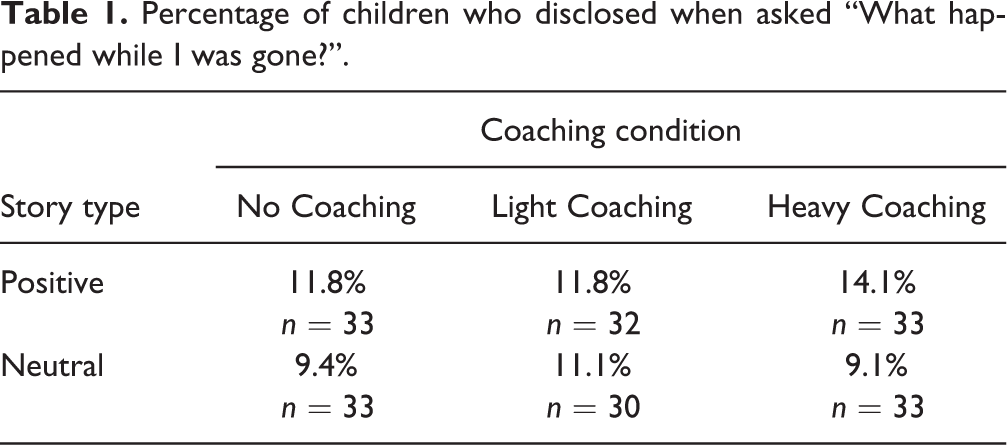
Prior to being asking the question “What happened while I was gone”, no child openly confessed to the toy breakage. When asked the open-ended question, 174 (89.69%) children withheld information about the target event (i.e., did not mention the toy box or broken toy). A logistic regression was conducted to examine the outcome variable of children’s lie-telling behavior (0 = mentioned toy box or broken toy; 1 = did not mention toy box or broken toy). For this and subsequent logistic regression analyses, the independent variables (i.e., Age in months, Coaching condition, and Moral Story condition) and the Coaching X Moral Story interaction were entered as predictors. Additional predictors (i.e., interactions) were added individually to the model to determine whether they would contribute significantly. The method employed to enter the predictors was the standard method on one step (Tabachnick & Fidell, 2013). Significance was assessed by a Block χ2 test. The logistic regression analysis was nonsignificant, χ2(4, 194) = 1.50, p = 0.870. Thus, Age, Coaching and Moral Stories did not predict children’s lie-telling behavior when they were asked “What happened in here while I was gone?” Similar numbers of children withheld information across conditions (see Table 1).
Percentage of children who disclosed when asked “What happened while I was gone?”.
Disclosure details
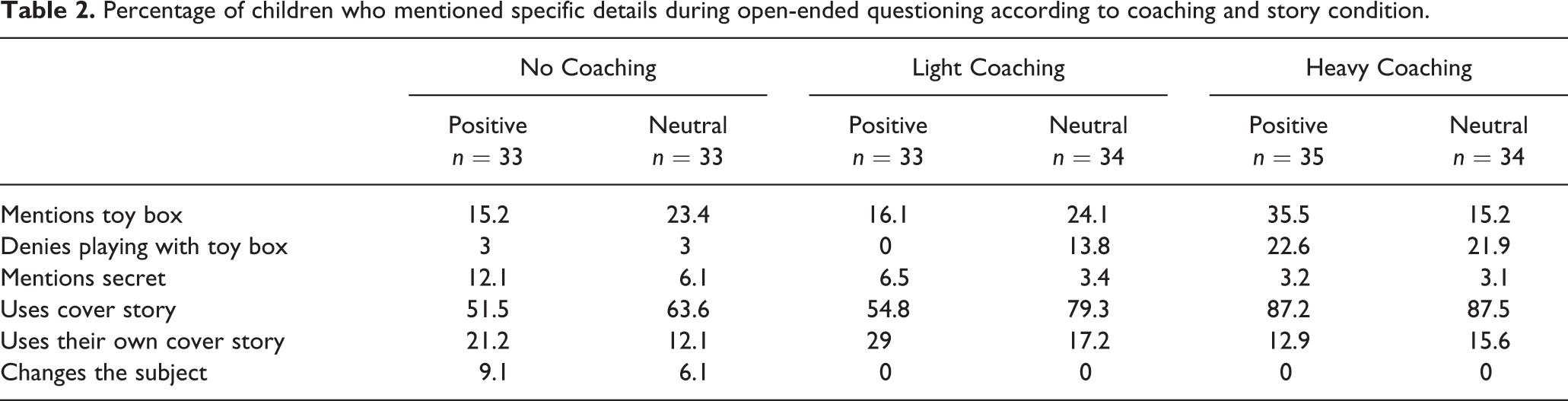
Next, the details children disclosed during the open-ended questions were examined (see Table 2). Overall, only 23% of children spontaneously mentioned the toy box, and only 10.2% spontaneously explicitly denied playing with the toy. Moreover, 69.5% of children used the coin tossing game as their cover story to explain what they had been doing with the confederate. A logistic regression was conducted to further investigate if there was any effect of Age in months, Coaching or Moral Story on children’s spontaneous use of the coin tossing game as the cover story (1 = used cover story; 0 = did not use cover story). The model was significant, χ2(4, 194) = 31.85, Nagelkerke R2 = 0.213, p < 0.001. Moral story condition was not significant, ß = 0.23, standard error (SE) = 0.02, p = 0.19. Age in months was a significant predictor. That is, older children (81.0%) used the coin tossing game as a cover story more often than younger children did (54.0%), ß = 0.048, SE = 0.012, p < 0.001, odds ratio = 1.044 (95% confidence interval: 1.028, 1.070). Coaching condition was also a significant predictor, Wald (2) = 13.30, p = 0.001. A priori contrasts, with the No Coaching condition as the reference, showed that more children used the coin tossing game as a cover story in the Heavy Coaching (87.3%) condition compared to the No Coaching condition (57.9%), ß = 2.32, Wald (1) = 4.69, odds ratio = 9.316 (95% confidence interval; 2.231, 9.397), p = 0.030, whereas the Light Coaching condition was not significantly different (61.40%) from the No Coaching condition, ß = -0.23, Wald (1) = 0.08, p = 0.59. A second prior contrast, with Light Coaching as the reference, showed that the Heavy Coaching condition was significantly different from the Light Coaching condition, ß = 1.36, Wald (1) =7.80, odds ratio = 3.40 (95% confidence interval; 1.50, 10.16), p = 0.005. A test of the interaction between Coaching condition and Age was not significant.
Percentage of children who mentioned specific details during open-ended questioning according to coaching and story condition.
Direct Questions
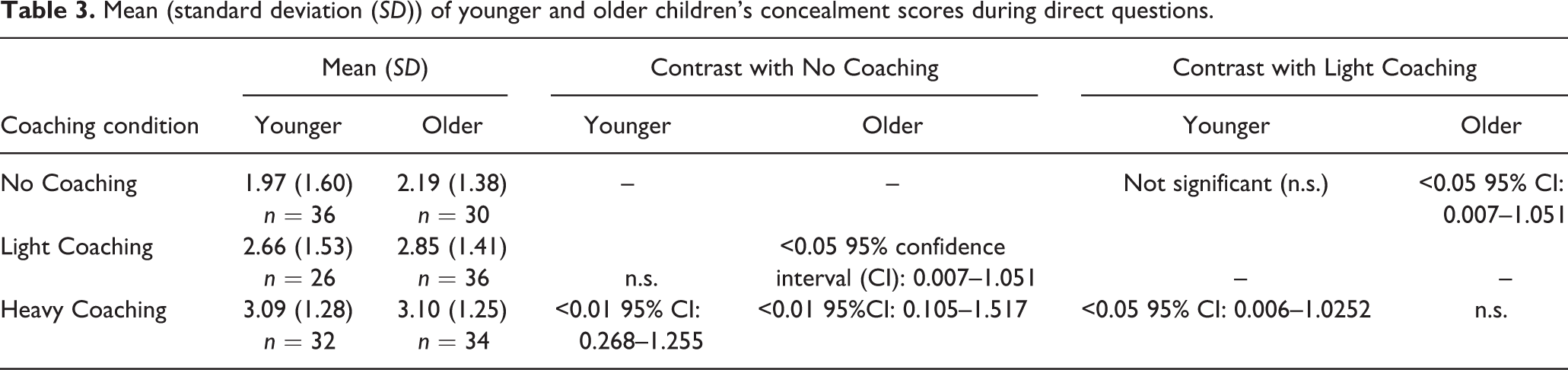
Children’s responses received an overall concealment score out of 4 based on whether they lied (e.g., denied playing with the toy box, looking inside the toy box, taking out toys from toy box, or concealed information that the broken toy was already broken in the box). Overall, only 45.5% of children concealed information across all four direct questions (score of 4), while 11.9% did not (score of zero). An analysis of variance was conducted with children’s overall concealment score when asked direct questions about the event, with Age in months (continuous variable), Moral Story and Coaching condition as the independent variables. Children’s concealment was significantly different between Moral Story conditions, F(1, 189) = 4.28, p = 0.040, partial eta2 = 0.02. Children in the Positive Story condition had lower lie concealment scores on direct questions (mean (M) = 2.32, SD = 1.62) than children in the Neutral Story condition (M = 2.91, SD = 1.26). Children’s lie-telling behavior was significantly different between Coaching conditions, F(2, 189) = 8.95, p < 0.001, partial eta2 = 0.09. Moreover, the test of interaction between Age and Coaching condition was significant, F(2, 189) = 7.73, p = 0.001, partial eta2 = 0.08. To explore this interaction, children were divided into two groups: younger children (4–5 years); and older children (6–7 years). For the younger children, lie-telling concealment scores for direct questions were significantly greater in the Heavy Coaching condition compared to the Light Coaching condition (p < 0.05) and the No Coaching condition (p < 0.01), whereas there was no significant difference between the Light Coaching and No Coaching conditions. For the older children, their ability to lie was significantly greater in the Heavy Coaching condition compared to the No Coaching condition (p < 0. 01), and in the Light Coaching condition compared to the No Coaching condition (p < 0.05). There was no significant difference between the Light Coaching and Heavy Coaching conditions (see Table 3). When children’s responses in the Light Coaching condition only were examined, there was an effect of Age, F(2, 189) = 4.22, p = 0.001, partial eta2 = 0.88. No age effects were found when the No Coaching conditions or the Heavy Coaching conditions were solely examined. There was no significant interaction between Coaching and Moral Story conditions, F(2, 189) = 0.43, not significant.
Mean (standard deviation (SD)) of younger and older children’s concealment scores during direct questions.
Lie-Maintenance Across All Questioning
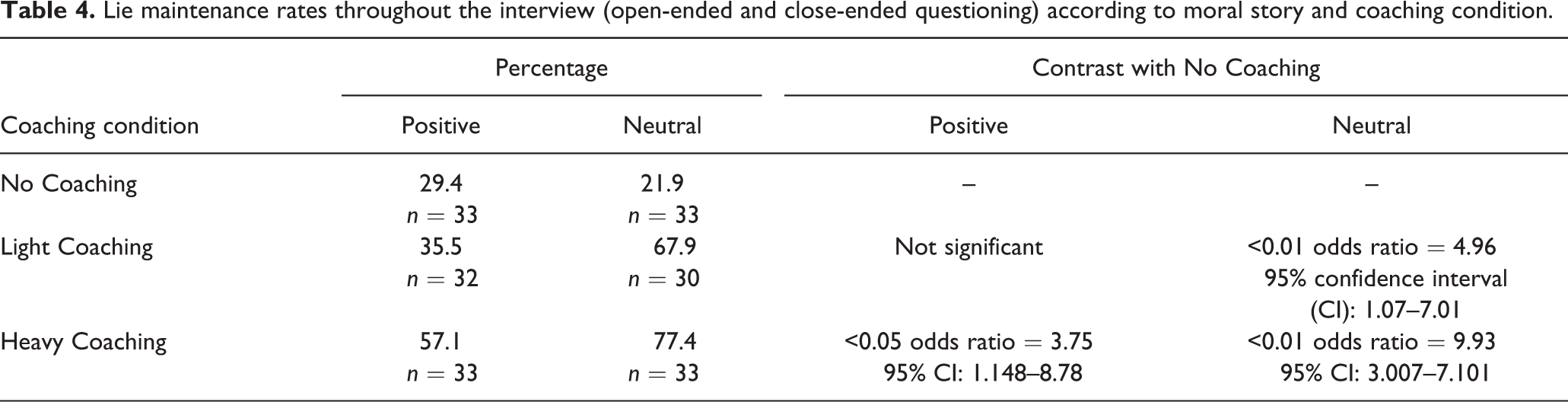
Overall, 44.84% of children successfully maintained their lie in response to all the questions. A logistic regression analysis with children’s ability to maintain their lie throughout the direct questions of the interview (0 = revealed any information about transgression; 1 = denied any knowledge about transgression) was conducted with Age in months, Coaching condition, and Moral Story condition and Coaching X Moral Story interaction entered as predictors. The model was significant, χ2(4, 194) = 19.16, Nagelkerke R2 = 0.13, p = 0.001. Moral Story condition (ß = 1.57, SE = 0.51, p = 0.002, odds ratio = 0.28), and Coaching Condition (ß = 0.83, SE = 0.29, p = 0.004, odds ratio = 0.44), were significant predictors of children’s ability to successfully maintain their lie across all of the questions. The Coaching X Moral Story condition interaction was also significant, ß = -0.93, SE = 0.34, p = 0.017, odds ratio = 2.10. Further inspection revealed for the Positive Story condition, that there was a significant difference between the Heavy Coaching condition and the No Coaching condition (ß = 1.32, SE = 0.53, p = 0.013, odds ratio = 3.75), but no significant difference between the Light Coaching and the No Coaching conditions (ß = 0.59, SE = 0.54, p = 0.310). In the Neutral Story condition, there was a significant difference between the Heavy Coaching and the No Coaching conditions (ß = 2.30, SE = 0.59, p = 0.000, odds ratio = 9.93), as well as between the Light Coaching and No Coaching conditions (ß = 1.60, SE = 0.56, p = 0.004, odds ratio = 4.96). Thus, within Coaching conditions, there was only a Moral Story effect for the Light Coaching condition (p < 0.05). However, there was no such effect for the No Coaching condition, where few children maintained their lie across questioning, nor for the Heavy Coaching condition, where coaching significantly increased children’s lie-maintenance regardless of the Moral Story condition (see Table 4).
Lie maintenance rates throughout the interview (open-ended and close-ended questioning) according to moral story and coaching condition.
Discussion
The current study was the first to investigate children’s willingness and abilities to lie on behalf of another person, given varying amounts of adult coaching to lie and a moral story pertaining to the importance of honesty. Children, 4 to 7 years of age, received varying forms of prompting and practice to withhold information about an observed transgression. All children in this study were requested to keep a secret about a transgression; however, the extent to which they were primed by the perpetrator to provide false statements in response to open-ended and direct questions was manipulated. Children received coaching in the form of No Coaching, Light Coaching or Heavy Coaching. Overall, it was found that the level of coaching influenced children’s ability to conceal information and maintain their lie about a transgression. However, age and a moral story about honesty also influenced their ability to conceal information.
Effects of Coaching Condition
Initially, most children attempted to keep the confederate’s secret. Consistent with our first hypothesis, the majority of children verbally agreed to lie when asked to do so by the transgressor, regardless of the form of coaching received. Furthermore, the majority of children did not disclose the transgression during open-ended questioning. While all children participated in a coin tossing game with the confederate, significantly more children in the Heavy Coaching condition used the game as a cover story to explain what they had done with the confederate. Across all conditions, few children mentioned any incriminating details regarding their play with the forbidden toy box or the toy breakage. Thus, when they received No Coaching or Light Coaching, children were more likely to omit details as a concealment strategy during open-ended questioning. When children received Heavy Coaching, they were more likely to provide a cover story and provide details about their interaction with the confederate to conceal the actual transgression.
However, during direct questioning, children were more likely to reveal details of the transgression. While 89.7% of children concealed when asked open-ended questions, only 45.5% maintained concealment of the transgression in their answers to the direct questions. This is similar to previous studies which have found that direct questions are more effective than open-ended questions in eliciting details about an event children have been asked to keep secret (Lyon et al., 2014; Pipe & Wilson, 1994). With regard to coaching, we hypothesized that children in the Light or Heavy Coaching conditions would be better lie-tellers than those in the No Coaching condition. Our hypothesis was partially correct, as children who received some degree of coaching were more likely to successfully conceal details of the transgression relative to those who received no coaching. However, the effectiveness of coaching in helping children conceal the transgression differed according to the child’s age.
Effects of Age
While there were no significant differences for age in children’s concealment in open-ended questions, there was significant variability in the strategies children used to conceal information. Unlike the younger children, older children were more likely to use the coin tossing game as cover story to explain what they had done with the confederate in the experimenter’s absence. Thus, older children’s strategy was not only of omitting details, but also supplying details that would answer the interviewer’s question and account for their time spent with the confederate. Perhaps, older children understood that some explanation was required in order to reduce the interviewer’s “suspicions”. They may have used this strategy to direct the interviewer’s attention away from the toy box. This ability may be related to increasing cognitive abilities in 6- to 7-year-old children, such as perspective-taking and inhibitory control (Talwar & Crossman, 2011), which helped children understand the need to provide a plausible explanation and inhibit responses that would reveal the transgression. While younger children were willing to keep the secret, and attempted to do so by omitting details, they were less likely to use a cover story.
When asked direct questions, the effect of coaching also differed according to children’s age. We hypothesized that Heavy Coaching would overcome a younger child’s poorer abilities to conceal information about the transgression when asked follow-up direct questions. Previous research has found that children between 3 and 5 years of age are poor at concealing information to direct questions, and it is only children 6 years and older who are better able to keep their answers to direct questions congruent with their previous lie (e.g., Talwar & Lee, 2002). In the current study, when younger children had received Heavy Coaching, their ability to conceal during direct questions improved significantly compared to those children who received No Coaching. For older children, both Light Coaching and Heavy Coaching seemed to improve their ability to conceal their lies during direct questioning relative to children who received No Coaching. Thus, while the most extensive form of coaching helped all children conceal the transgression, a small but significant age effect was found in the Light Coaching condition. That is, even minimal coaching served to scaffold 6- to 7-year-old children’s abilities to omit any incriminating details. It is possible that through coaching, the cognitive load of lie-telling is reduced, as children utilize the practice that was offered to them to overcome the cognitive demands of direct questioning. For younger children, whose perspective-taking and inhibitory control abilities are less advanced (e.g., Evans, Xu, & Lee, 2011; Talwar & Lee, 2008), more extensive forms of coaching involving opportunities for practice and help with generating a cover story was required to help them successfully conceal information when directly questioned.
Effects of Moral Story
Our hypothesis that a moral story about honesty would encourage greater honesty among children was partially supported. Initially, the Positive Story did not appear to encourage honesty. Namely, children who heard the Positive Story were just as likely to conceal the transgression in response to the open-ended questions as those who had heard the Neutral Story.
This finding contrasts with Lee et al. (2014) who found that children who heard a moral story about the benefits of truth-telling were more likely to disclose their own transgression. However, Lee et al. (2014) did not ask children open-ended questions. This finding is consistent with Talwar et al. (2015) who found that the majority of children, regardless of the story, initially withheld information. It may be that omitting details about a transgression may be less incriminating than overtly creating a false statement about what happened. As such, children may have experienced less of a moral conflict when being asked open-ended questions, and thus there was less of an influence of the Positive Story. In the current study, when children were questioned further with direct questions, those in the Positive Story condition were more likely to divulge information. Thus, it appears that moral stories about honesty may not facilitate children’s immediate disclosure of another’s wrongdoing, but when asked direct follow-up questions, children who are reminded of the positive consequences of honesty are more likely to disclose details regarding another’s transgression.
However, the results of the current study suggest that the effect of such stories is attenuated by the amount of coaching that children received. The Positive Story impacted children’s likelihood of an honest report when they had received Light Coaching. In other words, when they heard the story related to truth-telling they were more likely to tell the truth about the confederate’s transgression despite having received some degree of rehearsal. However, when children heard the Positive Story but had received Heavy Coaching, they were significantly more likely to maintain their lies. In contrast, the Neutral Story had no influence on children’s reports. Regardless of the amount of coaching received, children were more likely to conceal information about the transgression than not. Thus, the Positive Story was powerful enough to overcome a request to keep the transgression a secret with rehearsed practice questions, but was not powerful enough when a more extensive form of coaching had taken place, such as the generation of an alibi in addition to a request and practice questions. Further research is needed to study how truth induction methods can be used to improve children’s disclosures and overcome the deleterious effects of coaching on the veracity of children’s reports.
Limitations and Future Directions
The developmental differences found in the current study are worthy of further investigation. Namely, older children did not seem to require the generation of a cover story to successfully conceal information across questions, while younger children did. From a developmental perspective, this is likely due to younger children’s limited perspective-taking and inhibitory control skills. Accordingly, future research should look at the relation between cognitive factors, such as theory of mind and executive functioning, and children’s reactions to coaching or moral story telling conditions. Similarly, from a cognitive load perspective, we posited that the additional details provided to younger children (in the form of a cover story) alleviated the demands of lie-telling. Future research could investigate the effect of coaching on these age groups when cognitive demands are increased. Specifically, when the cover story is multi-stepped or when questions are posed by interviewers that are designed to increase cognitive load (e.g., Saykaly, Crossman, & Talwar, 2016), such as requesting the child to state their alibi backwards, it is suspected that the effect of such extensive coaching would not be as helpful in the concealment of information, especially for younger children.
Furthermore, the current investigation did not examine the extent to which direct questioning elicits higher disclosure rates in comparison to open-ended questioning. Open-ended questions are typically asked before direct questions to elicit disclosures using the child’s own words and reduce vulnerability to suggestibility (e.g., Lamb, Orbach, Hershkowitz, Esplin, & Horowitz, 2007). While further examination can be conducted on the number of direct questions asked, such questioning must be tempered by concerns about increasing false positives by children who are telling the truth.
Finally, it should be noted that the transgression in the current study is relatively minor, and children’s secret-keeping may differ according to the severity of the wrongdoing. While the moral transgression (i.e., property damage) resembles situations children could encounter, it is less severe than the types of situations children may report in legal settings. Previous research suggests that children’s evaluations of different secrets and disclosure of transgressions may vary according to the person involved (e.g., Kim, Harris, & Warneken, 2014). For instance, when children are abused they may be conflicted about loyalty to and fear of the abuser if they report truthfully. Children may be also more likely to lie for a parent than a stranger (e.g., Lyon et al., 2010). In the current study, the perpetrator was a stranger who had only a few minutes of interaction with them prior to executing a plea to keep a secret. Despite these limitations, our study was designed to be ethically analogous to situations children might testify about. Furthermore, the children were involved in the play with the forbidden toy box, which partially involved them in the transgressive behavior. Children often feel complicit in abusive acts when testifying and may fear consequences to themselves when disclosing (Quas, Goodman, & Jones, 2003). The challenge for future research is to examine further the effects of coaching and methods of facilitating truthful reports in ecologically valid, yet ethically acceptable situations.
In conclusion, coaching influenced children’s ability to give false reports. However, the results of the current study suggest that the degree of coaching may have a differential impact on children’s ability to maintain their reports depending on question type and age. Specifically, extensive coaching improves children’s ability to conceal information when asked direct questions. This effect is particularly influential in younger children, who normally have difficulty with lie-telling and maintenance in comparison to their older peers. When younger children do not receive extensive coaching, our findings suggest that their lies can still be detected through direct questioning. However, more research is needed to examine interactions between coaching, age and children’s concealment. Nonetheless, the results provide a first step in understanding the susceptibility of child witnesses to extensive forms of coaching relative to a simple request to lie from adults, as well as the effectiveness of truth-induction methods in eliciting honest disclosures under these circumstances.
Footnotes
Funding
The authors declared receipt of the following financial support for the research, authorship, and/or publication of this article: This research was supported by grants from the Social Sciences and Humanities Research Council of Canada to V. Talwar.