







Abstract
This study was designed to explore the longitudinal relations among parenting, internalizing symptoms, and different forms of prosocial behavior in Turkish children. The study tracked 293 mothers and their preschool-aged children (48% girls, Mage = 49 months) over 3 years. Mothers reported on their parenting practices, including demands for obedience, warmth, and inductive reasoning when children were 4 years old. They reported children’s internalizing symptoms at age 6 and prosocial behaviors such as helping, sharing, comforting, and cooperation at ages 4 and 7. Path analyses showed that obedience-demanding parenting positively predicted children’s helping behavior. Maternal warmth and inductive reasoning were negatively associated with children’s internalizing symptoms, which, in turn, were negatively related to all forms of prosocial behavior. These results emphasize the need for culturally informed parental socialization models of prosocial development that account for the multidimensional nature of prosocial behavior.
Introduction
Parents play a critical role in children’s prosocial development (Eisenberg et al., 2015; Eisenberg & Valiente, 2002). This role is significantly influenced by culture, which shapes parenting practices, how those practices are interpreted, and ultimately their impact on children’s prosocial outcomes. Most studies on the correlates of prosocial development have been conducted in European and North American cultures (de Guzman et al., 2014). More research is needed to understand how parenting influences prosocial behavior in non-Western cultures that prioritize interdependence. Turkish culture serves as a particularly valuable context for examining the development of prosocial behavior within this framework. In Turkish culture, family relations are typically hierarchical and authority-oriented (Sunar & Fisek, 2005). Parents are seen as the primary figures of authority who provide support and affection while expecting loyalty, respect, and obedience from their children (Sen et al., 2014). There is a strong emphasis on close-knit bonds and emotional interdependence among family members, which influences child-rearing practices (Kagitcibasi, 2007; Kagitcibasi & Ataca, 2015; Sunar, 2002). Cultural values such as hospitality and a strong sense of responsibility to support and care for family and community members are deeply ingrained in Turkish society. These values are likely to influence how Turkish parents nurture prosocial behavior in their children (Kagitcibasi, 2007; Kumru & Yağmurlu, 2014; Yağmurlu & Sanson, 2009). In this three-wave longitudinal study, we aimed to explore how Turkish parents’ practices, such as warmth, inductive reasoning, and demanding obedience, are directly and indirectly linked to different types of prosocial behavior in children.
One potential indirect pathway involves internalizing symptoms, which may represent an important mechanism underlying the relationship between parenting and prosocial behaviors. Previous studies in Western societies have found that internalizing symptoms are associated with parenting (Rose et al., 2018) and prosocial behaviors (Joosten et al., 2015; Maiya et al., 2021). However, research on internalizing symptoms and these associations in Turkish families is limited and presents mixed results (Acar, Ahmetoglu et al., 2021; Yavuz et al., 2017). In addition, the mediational pathway linking parenting to prosocial behaviors through internalizing symptoms remains unexplored. While positive parenting practices like warmth and inductive reasoning can mitigate internalizing symptoms (Anderson et al., 2022; Cicchetti & Toth, 1998; Natsuaki et al., 2007), power-assertive practices may exacerbate them, depending on cultural context (Bayer et al., 2006; Rothenberg et al., 2020; Yavuz et al., 2017). In turn, these symptoms can hinder children’s prosocial behaviors by impairing their social functioning (Eisenberg et al., 2001; Maiya et al., 2021; Rubin et al., 2009). This study addresses this gap by examining longitudinal associations between parenting, internalizing symptoms, and prosocial behaviors in Turkish families, as well as the mediational role of internalizing symptoms in these associations.
Previous research has often treated prosocial behavior as a unified construct, but recent studies emphasize its multidimensional nature (Carlo & Padilla-Walker, 2020). While different forms of prosocial behavior share a common goal of benefiting others (Eisenberg et al., 2006, 2015), they differ in their social, emotional, and cognitive demands. These behaviors are also driven by different motivations (Paulus, 2018) and shaped by various underlying processes (Dunfield, 2014). This study acknowledges the diversity inherent in prosocial behavior and examines some of the most prevalent forms, including helping, sharing, comforting, and cooperation, viewing them as separate yet interconnected behaviors. It aims to elucidate the distinct pathways through which each form of prosocial behavior develops.
In sum, this study contributes to the literature by examining the longitudinal links among parenting, internalizing symptoms, and prosocial behavior. Furthermore, it explores how internalizing symptoms serve as an underlying mechanism connecting parenting to different aspects of prosocial behavior within an interdependent cultural context. Ultimately, this study provides a clearer picture of how different forms of prosociality are cultivated in Turkish children.
Parenting and Prosocial Behavior
Positive parenting practices, such as warmth and inductive reasoning, are linked to positive development in children (Carlo et al., 2011; Gülseven et al., 2018; Pastorelli et al., 2021; Wong et al., 2021). Parental warmth, expressed through supportive and positive interactions, plays a crucial role in fostering prosocial behavior in children. By displaying warmth, parents model empathy, understanding, and kindness, providing children with a direct example of positive social interaction. This modeling effect instructs children on expressing care and consideration toward others (Bandura, 1986; Eisenberg et al., 2015). Furthermore, parental warmth contributes to the development of a secure attachment between parent and child. Such a secure bond fosters feelings of safety and trust, which can diminish self-centered concerns while interacting with others. When children feel safe and valued, they are more inclined to focus on the needs of others, thereby promoting empathy and helping behaviors (Deneault et al., 2023; Gross et al., 2017; Hoffman, 2000; Panfile & Laible, 2012). In addition, the warmth of the parent–child relationship enhances children’s responsiveness to parental messages. Feeling connected and understood makes children more receptive to their parents’ moral guidance, which leads children to internalize parental moral values and encourages prosocial behavior (Grusec et al., 2014; Grusec & Goodnow, 1994). In Turkish culture, where family bonds are deeply rooted in emotional closeness and interdependence, parental warmth aligns with cultural expectations of nurturing parenting (Sen et al., 2014), which makes it particularly relevant for cultivating prosociality. Studies in both Western (Carlo et al., 2011) and Turkish contexts (Gülseven et al., 2018; Yavuz, Colasante, & Malti, 2022) support its association with prosocial behavior, though some Turkish studies report inconsistent findings (Yağmurlu & Sanson, 2009).
Moreover, moral socialization theorists emphasize the role of inductive reasoning in helping children understand and internalize moral values. This approach directs children’s attention to the consequences of their actions for others and encourages reflection on how their behavior impacts those around them (Grusec, 2022; Hoffman, 2000). Unlike controlling parenting approaches that make children focus on personal consequences like punishment (Eisenberg et al., 2015), inductive reasoning aligns with Turkey’s collectivistic values by encouraging attention to interpersonal consequences over self-focused outcomes. Inductive reasoning helps children begin to recognize the potential harm and benefit of their behaviors (Hoffman, 1983; Hoffman & Saltzstein, 1967; Smetana, 1999). This reflection allows children to develop a sense of responsibility for their behaviors (Eisenberg et al., 2006). In considering the consequences of their behaviors, children often experience moral emotions, such as guilt, which motivate them to act more compassionately toward others. This awareness also nurtures empathy and sympathy, as children become more attuned to the feelings and needs of those around them (Carlo et al., 2011; Hoffman, 2000; Krevans & Gibbs, 1996; Yavuz, Dys & Malti, 2022). Furthermore, inductive reasoning supports perspective-taking development by encouraging children to see situations from others’ viewpoints (Hoffman & Saltzstein, 1967). This cognitive skill is essential for prosocial behavior (Eisenberg & Murphy, 1995). However, limited research on Turkish children has yielded inconsistent results. While Yağmurlu and Sanson (2009) found no significant link between maternal inductive reasoning and prosocial outcomes, another study found a positive relationship between inductive reasoning and prosocial development in early childhood (Gülseven et al., 2017).
The influence of power-assertive parenting on children’s prosocial development demonstrates even greater cultural variation. This variation is likely due to differing interpretations of power-assertive parenting practices between cultures (Chen et al., 2019; Halgunseth et al., 2006). Power assertion denotes controlling a child’s behavior through the exertion of authority or dominance (Straus & Fauchier, 2007). One dimension of this approach is obedience-demanding parenting, which refers specifically to parental expectations for unquestioned compliance and respect for authority, without necessarily involving punitive methods. While obedience-demanding practices emphasize behavioral conformity, they do not inherently include harsh punishment or verbal hostility that characterize more punitive forms of power assertion (Chen et al., 2026; Park & Lau, 2016; Sorkhabi, 2012). This distinction is especially relevant in interdependence-oriented cultures where the legitimacy of parental authority is strongly upheld (Lansford, 2022). For example, Sunar and Fisek (2005) note that traditional Turkish families expect strong parental authority and child obedience while maintaining a close, supportive family atmosphere. Consequently, in interdependence-oriented cultures, children tend to view power-assertive, obedience-demanding parenting as a normative practice. In contrast, in independence-oriented cultures, they are more likely to interpret such parenting as a form of parental hostility (Kagitcibasi, 2007), which is linked to poor prosocial outcomes. In such cultures, parental focus on obedience may lead children to follow external expectations without internalizing moral values (Hoffman, 1983; Hoffman & Saltzstein, 1967). In line with this, prioritizing obedience and compliance in parenting has been shown to have adverse effects on the prosocial behavior of White American children (Eisenberg et al., 1992). However, in interdependence-oriented cultures like Turkish culture, where maintaining social harmony and fulfilling group obligations are central (Kagitcibasi, 2007), parental emphasis on obedience may support prosocial behavior by encouraging children to prioritize collective well-being. Only one study has explored the relationship between Turkish parents’ obedience-demanding practices and children’s prosocial behavior and found a positive association (Yağmurlu & Sanson, 2009). However, its cross-sectional design prevents causal inferences and underscores the need for further longitudinal research in this cultural context.
There is limited research on the role of parenting in shaping different forms of prosocial behavior. However, some findings suggest that socialization experiences have more influence on specific types of prosocial behavior. For instance, supportive and responsible parenting has been shown to correlate with comforting behavior but not instrumental helping in toddlers (Schuhmacher et al., 2017). Another study found that maternal warmth is indirectly linked to helping behavior by reducing emotional reactivity in preschoolers, but it was not associated with sharing, comforting, or cooperation (Laible et al., 2017). These findings suggest that the mechanisms through which parenting influences prosocial behavior may vary depending on the form of behavior and the developmental stages.
Internalizing Symptoms and Their Associations With Parenting Practices and Prosocial Behavior
One potential mechanism that could explain the link between parenting and children’s prosocial behavior is internalizing symptoms. These symptoms, which are heavily influenced by poor parenting practices (Rose et al., 2018), can undermine children’s ability to interact with others and engage in prosocial behavior. Research suggests that parental warmth fosters a sense of security and self-worth in children, which reduces the likelihood of internalizing problems (Cicchetti & Toth, 1998; Rothenberg et al., 2020). Similarly, inductive reasoning protects against internalizing symptoms by validating children’s perspectives through explaining parental requests and involving them in discussions. This approach builds emotional security and a sense of control, which makes children less vulnerable to internalizing symptoms (Natsuaki et al., 2007). Consistent with the literature, limited research on Turkish children suggests that low maternal warmth is associated with higher internalizing problems (Yavuz et al., 2017). However, to our knowledge, no studies have examined the role of inductive reasoning in the development of internalizing symptoms in Turkish children, and this study is the first to examine this relationship.
Power-assertive parenting can foster feelings of incompetence and low self-confidence in children by limiting their opportunities to develop independence and autonomy. This hinders their ability to navigate challenges effectively and leads them to view the world as threatening, which increases their susceptibility to internalizing symptoms (Bayer et al., 2006; Bögels & Brechman-Toussaint, 2006). However, research on the impact of power-assertive parenting on internalizing symptoms in interdependence-oriented cultures like Turkey yields mixed results (Acar, Ahmetoğlu et al., 2021; Yavuz et al., 2017). These inconsistencies may arise from a lack of distinction between the obedience-demanding and punitive aspects of power-assertive parenting. In cultures like Turkey, where obedience-demanding practices are culturally normative, it is essential to differentiate these behaviors from punitive approaches (Yağmurlu & Sanson, 2009). While punitive and harsh parenting are associated with maladaptive outcomes across cultures (Pinquart, 2021), the prevalent parental expectation of obedience in Turkish families (Kagitcibasi, 2007) suggests that such practices may not necessarily be associated with internalizing symptoms. This study seeks to clarify this relationship by examining longitudinal links between obedience-demanding practices and Turkish children’s internalizing symptoms.
Internalizing symptoms can undermine prosocial behavior in children by depleting the emotional and cognitive resources necessary for engaging in such acts (Batson & Powell, 2003; Joosten et al., 2015; Maiya et al., 2021). Children with internalizing symptoms often struggle to regulate intense negative emotions (Eisenberg et al., 2001; Zahn-Waxler et al., 2000), which can interfere with their ability to behave prosocially in different ways. First, this emotional overload may diminish children’s capacity to attend to and comprehend others’ distress, which is an essential first step toward prosocial responding (Eisenberg et al., 1989). Furthermore, when children with internalizing symptoms perceive others’ distress, their difficulties in emotion regulation may lead to personal distress, a self-focused and aversive response, rather than sympathy, which reflects an other-oriented concern. In contrast to sympathy, personal distress promotes avoidance or withdrawal as children prioritize alleviating their discomfort over addressing others’ needs (Eisenberg et al., 2015; Song et al., 2018). Numerous studies have shown that difficulties in emotion regulation are associated with lower prosocial behavior (e.g., Hein et al., 2018; Scrimgeour et al., 2016; Spinrad & Gal, 2018). These regulatory difficulties are also prominent in anxiety and depression, the most common internalizing conditions (Zahn-Waxler et al., 2000), and have been repeatedly linked to poor prosocial outcomes across studies, in part because of their disruptive effects on children’s emotional and interpersonal functioning (Davis et al., 2016; Zhang et al., 2022). Thus, internalizing symptoms hinder prosocial engagement by obscuring others’ suffering and amplifying personal discomfort when it is perceived.
Children with internalizing symptoms often experience social withdrawal, which further interferes with their prosocial development (Rubin et al., 2009). Avoidance of social settings not only reduces opportunities for interaction but also deprives children of critical learning experiences (Hipson & Coplan, 2021). Through social engagement, children observe prosocial behavior in others, practice their responses, and receive feedback that helps shape future prosocial actions. Without these experiences, they may struggle to develop or refine prosocial competencies (Busching & Krahé, 2020; Wentzel, 2014; Yin & Lee, 2023). Social withdrawal also weakens their ability to interpret social cues, such as recognizing a peer’s discomfort or need for help, which are fundamental to initiating appropriate prosocial responses (Eisenberg et al., 2015; Rubin & Chronis-Tuscano, 2021; Wentzel et al., 2007). Furthermore, children with internalizing symptoms often show low self-confidence and feelings of inadequacy (Bornstein et al., 2010). These self-perceptions may interfere with the spontaneity that many prosocial behaviors require. When children lack confidence in their social abilities or fear negative evaluation, they may overthink their responses or expect failure, even when they recognize someone in need (X. Fu et al., 2017; Huber et al., 2019). This self-doubt can lead to hesitation or inaction, particularly in unstructured situations that require quick and unprompted support. As a result, internalizing symptoms may suppress motivation and behavioral readiness to act prosocially. To our knowledge, no study has specifically examined how internalizing symptoms are related to different forms of prosocial behavior, and this study examines this relationship further.
Consistent with socialization models of prosocial development, internalizing symptoms can serve as a mediator between parenting and children’s prosocial behavior. Prosocial socialization fosters children’s motivation to help, their understanding of others’ needs, and their capacity to regulate behavior in social contexts (Eisenberg & Valiente, 2002; Hastings et al., 2007). When children experience higher internalizing symptoms, these processes can be disrupted: they may feel less motivated to act prosocially, struggle to interpret social cues, and have difficulty translating prosocial intentions into action. In this way, parenting may influence children’s prosocial behaviors indirectly, through its associations with internalizing symptoms.
The Present Study
This study was designed to examine (a) the associations between parenting, specifically maternal warmth, inductive reasoning, and demands for obedience, and four types of prosocial behavior, and (b) whether internalizing symptoms mediate these associations. We examined these relations from preschool to school age, a period marked by significant growth in key social-cognitive skills, including language, theory of mind, emotion understanding, and regulation (Eggum et al., 2011; Grazzani et al., 2018). These developing skills increase children’s responsiveness to parental socialization and support the internalization of prosocial values (Eisenberg et al., 2006; Hastings et al., 2007), which offers an important opportunity to examine the role of parenting in shaping prosocial development. This study focused on maternal parenting because, in Turkish culture, mothers typically serve as the primary caregivers. They are extensively involved in socializing children (Kumru et al., 2019; Sen et al., 2014; Sunar & Fisek, 2005), which likely strongly influences both prosocial behavior and internalizing symptoms.
We hypothesized that maternal warmth, inductive reasoning, and obedience-demanding parenting at age 4 would predict children’s prosocial behaviors at age 7 directly. We also expected that maternal warmth and inductive reasoning would negatively predict internalizing symptoms at age 6, which, in turn, would be negatively related to children’s prosocial behaviors at age 7. Due to the limited research linking parenting and internalizing symptoms to different forms of prosocial behavior, we did not formulate specific hypotheses regarding their relationships with each form of prosocial behavior. We approached this aspect with an exploratory focus. Additionally, given the mixed findings in prior research on the link between obedience-demanding parenting and internalizing symptoms, we refrained from positing a specific hypothesis regarding the mediating role of internalizing symptoms in the association between obedience-demanding parenting and prosocial behavior. Therefore, this investigation adopted an exploratory approach as well.
Method
Participants
The sample consisted of 293 mothers and their preschool children (Mage = 49.01 months, SD = 3.86, range 39–58 months; 48.1% girls). Mothers had, on average, 13.81 years of education (SD = 3.46). Participants were followed through four waves of data collection; however, the present study includes data from only three waves (Wave 1: Mage = 4 years, Wave 3: Mage = 6 years, Wave 4: Mage = 7 years). None of the scales used in this study were administered at Wave 2. In Wave 3, the attrition rate was 35% (n = 102), and in Wave 4, the rate was 46% (n = 134). The data were collected from March 2007 to March 2010. Results from attrition analyses demonstrated that participants who stayed in the study were more likely to have higher levels of education and income than those who withdrew. The sample generally represents urban, middle-class, and educated Turkish families.
Procedure
After receiving approval from the Turkish Ministry of National Education on December 13, 2005, recruitment letters were distributed to mothers through their children at participating schools.A total of 96.7% of the mothers consented to participate in the study. Mothers signed informed consent forms and then completed questionnaires, which were returned to the researchers in sealed envelopes through the schools. At the conclusion of the study, mothers were debriefed and thanked for their participation.
Measures
Parenting Practices
Mothers completed three subscales from the Child-Rearing Questionnaire (CRQ; Paterson & Sanson, 1999) when their children were approximately 4 years old: warmth (10 items; e.g., “My child and I have warm, intimate times together”), obedience-demanding parenting (six items; e.g., “I expect my child to do what he or she is told to do, without stopping to argue about it”), and inductive reasoning (six items; e.g., “I try to explain to my child why certain things are necessary”). The CRQ consists of 30 items, and parents rated the frequency of each behavior on a 5-point scale (1 = Never, 5 = Always). The Turkish version of the CRQ has been previously validated (Yağmurlu & Sanson, 2009). In this study, Cronbach’s alpha values were .75 for obedience-demanding parenting, .73 for warmth, and .85 for inductive reasoning.
Prosocial Behavior
Mothers reported their children’s prosocial behaviors when they were about 4 and 7 years old on a 7-point scale (1 = Never, 7 = Always) using the modified version of the 19-item Parent Rating Questionnaire of Prosocial Behavior (PRQPB; Iannotti, 1985). The Turkish version of the PRQPB has been validated (Yağmurlu & Sanson, 2009). The measure includes four subscales: helping (five items; e.g., “Helps another child or adult to clean up something spilled or dropped”), sharing (six items; e.g., “Agrees to share the toy he or she is playing with”), cooperation (two items; e.g., “Collaborates with another child while completing a task”), and comforting (six items; e.g., “Comforts another child who is scared, unhappy or afraid”). In this study, Cronbach’s alpha values were .80 for helping, .79 for sharing, .74 for cooperation, and .83 for comforting.
Internalizing Symptoms
Mothers reported children’s internalizing symptoms when they were 6 years old on a 3-point scale (0 = Not true, 2 = Very true) using the Child Behavior Checklist (CBCL; Achenbach & Rescorla, 2000). The CBCL has been adapted into Turkish and demonstrated good validity and reliability (Dümenci et al., 2004; Erol et al., 1995). Internalizing symptoms were measured using the mean scores of the subscales for anxious/depressed, social withdrawal, and somatic complaints (27 items, α = .77). Higher scores indicated more severe internalizing symptoms.
Analytic Plan
A longitudinal path analysis was conducted using Mplus version 8 (Muthén & Muthén, 2017) to explore whether parenting practices (warmth, inductive reasoning, and obedience-demanding parenting) at age 4 predicted children’s prosocial behaviors at age 7, with children’s internalizing symptoms at age 6 serving as a mediator. Full information maximum likelihood (FIML) estimation was employed to address missing data. The model included direct paths from parenting practices at age 4 to prosocial behaviors at age 7. Indirect effects of parenting practices on prosocial behaviors, mediated by children’s internalizing symptoms at age 6, were also examined. Parenting practices (maternal warmth, inductive reasoning, and obedience-demanding) were allowed to correlate, as were the prosocial behaviors (helping, sharing, cooperation, and comforting). Children’s four forms of prosocial behaviors at age 4, gender, and maternal education were included as statistical controls. Model fit was evaluated using the following criteria: comparative fit index (CFI) ⩾ .95, root mean square error of approximation (RMSEA) ⩽ .06, and standardized root mean square residual (SRMR) ⩽ .08 (Hu & Bentler, 1999). A bootstrap procedure with 5,000 resamples was conducted to assess the significance of indirect effects. An indirect effect was considered significant if the 95% confidence interval did not include zero (MacKinnon et al., 2002).
Results
Descriptive Statistics and Correlation Analysis
Table 1 presents the bivariate correlations and descriptive statistics for the variables. Maternal warmth and inductive reasoning at age 4 were positively correlated with helping, comforting, and cooperation at age 7 and negatively correlated with internalizing symptoms at age 6. Internalizing symptoms were negatively correlated with all forms of prosocial behaviors at age 7. Obedience-demanding parenting was positively correlated with helping at age 7.
Descriptive Statistics and Correlations for Main Study Variables.
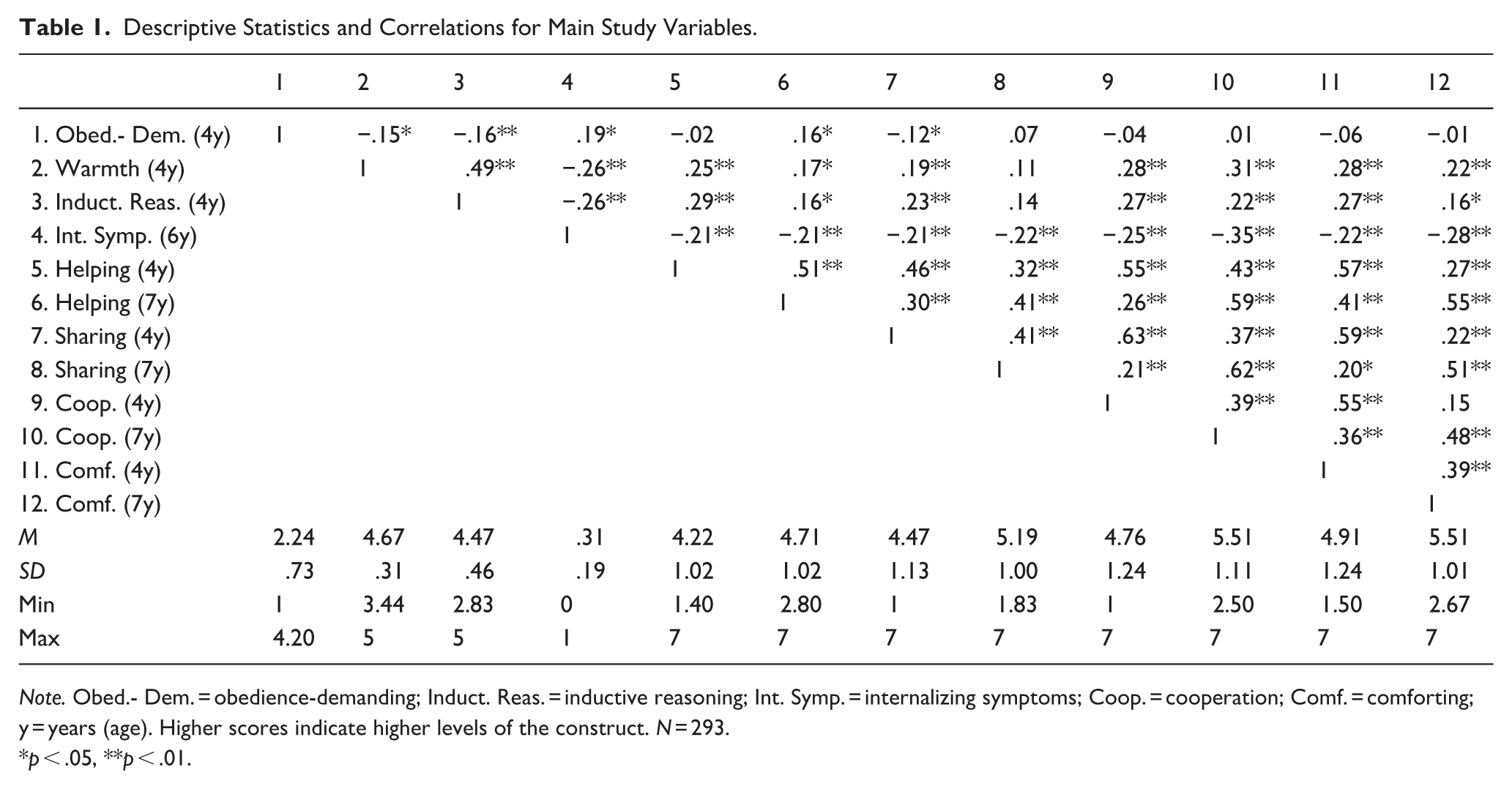
Note. Obed.- Dem. = obedience-demanding; Induct. Reas. = inductive reasoning; Int. Symp. = internalizing symptoms; Coop. = cooperation; Comf. = comforting; y = years (age). Higher scores indicate higher levels of the construct. N = 293.
p < .05, **p < .01.
Test of the Path Model
The path model fits the data well: χ2(16) = 34.88, p = .004; CFI = .95; RMSEA = .06; SRMR = .05. Results (Figure 1) indicated that obedience-demanding parenting at age 4 predicted children’s helping behavior at age 7. Maternal warmth and inductive reasoning at age 4 were negatively associated with children’s internalizing symptoms at age 6, which in turn were negatively associated with children’s helping, sharing, comforting, and cooperation at age 7 (see Table 2). The R2 values for the variables were as follows: internalizing symptoms = .12; helping = .25; sharing = .19; cooperation = .24; and comforting = .18.
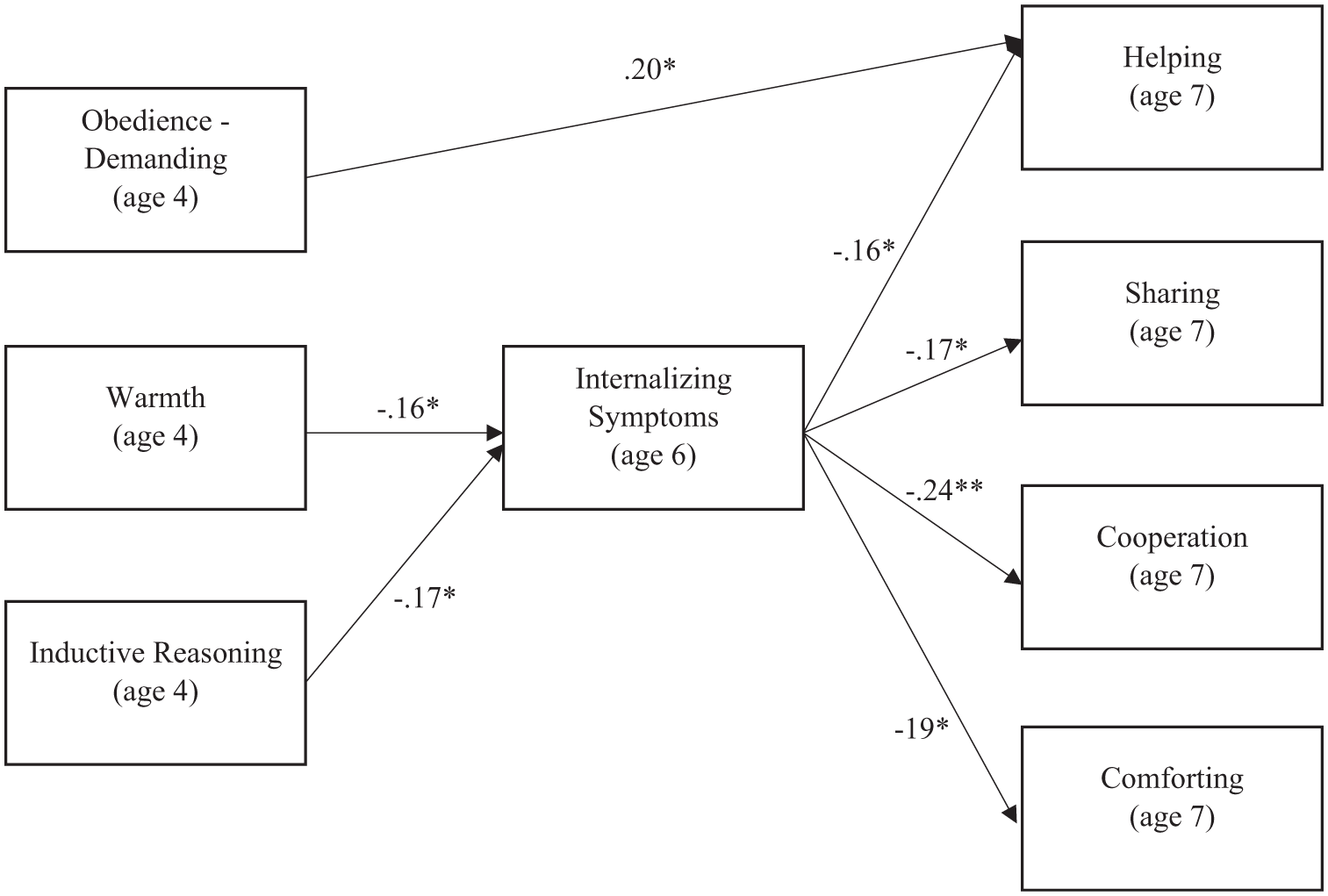
Structural Model Depicting Longitudinal Paths Between Parenting, Internalizing Symptoms, and Prosocial Behaviors.
Direct Paths From Parenting and Internalizing Symptoms to Prosocial Behaviors.
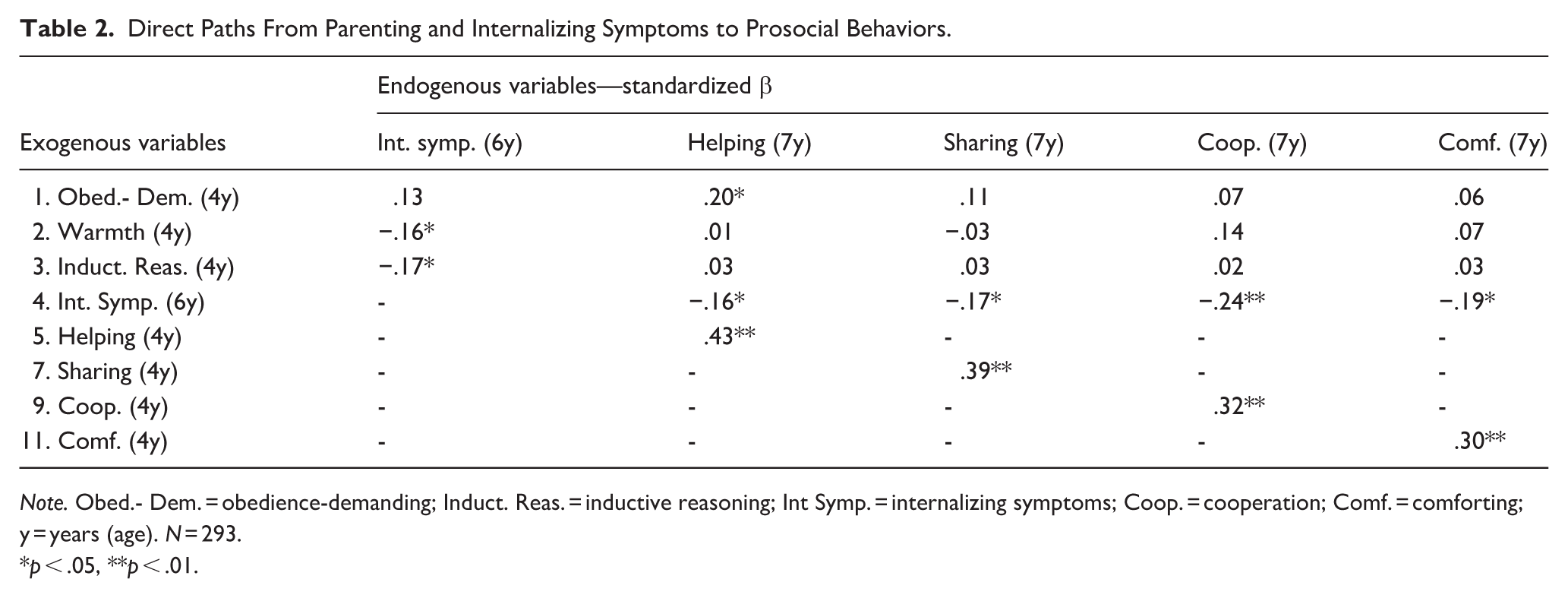
Note. Obed.- Dem. = obedience-demanding; Induct. Reas. = inductive reasoning; Int Symp. = internalizing symptoms; Coop. = cooperation; Comf. = comforting; y = years (age). N = 293.
p < .05, **p < .01.
The indirect effects of maternal warmth on helping, sharing, cooperation, and comforting through internalizing symptoms were all significant: helping (β = .08, 95% CI [0.006, 0.244]), sharing (β = .09, 95% CI [0.004, 0.263]), cooperation (β = .14, 95% CI [0.019, 0.356]), and comforting (β = .10, 95% CI [0.007, 0.279]). The indirect effects of inductive reasoning on helping, sharing, cooperation, and comforting via internalizing symptoms were all significant: helping (β = .06, 95% CI [0.006, 0.174]), sharing (β = .06, 95% CI [0.004, 0.187]), cooperation (β = .10, 95% CI [0.017, 0.234]), and comforting (β = .07, 95% CI [0.005, 0.277]). No other indirect paths were significant (see Table 3).
Indirect Paths From Early Parenting to Children’s Prosocial Behaviors via Internalizing Symptoms.
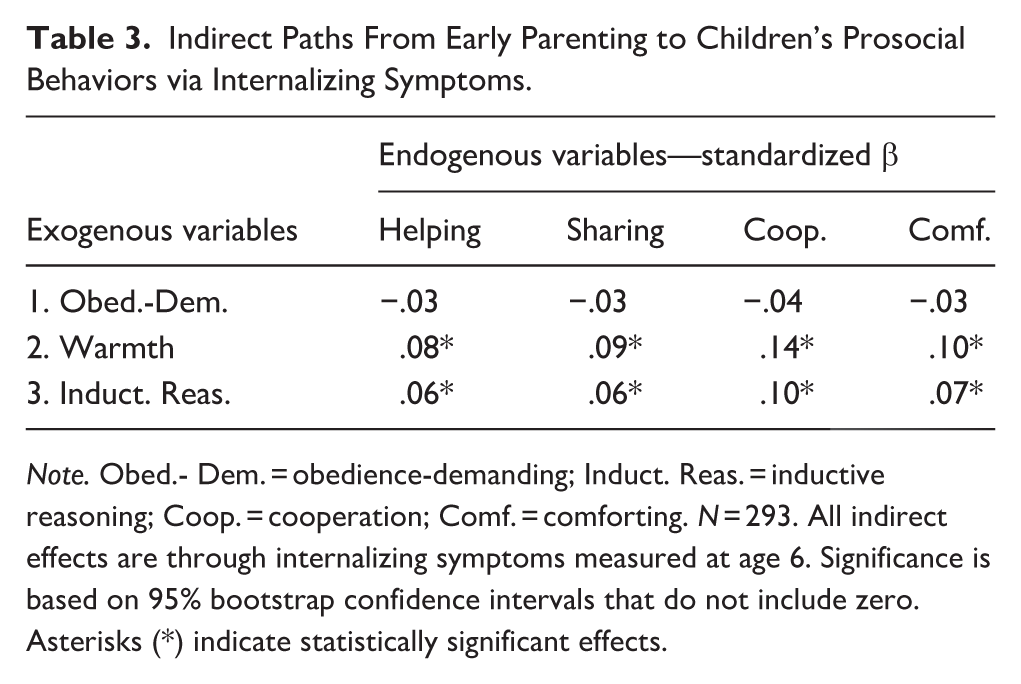
Note. Obed.- Dem. = obedience-demanding; Induct. Reas. = inductive reasoning; Coop. = cooperation; Comf. = comforting. N = 293. All indirect effects are through internalizing symptoms measured at age 6. Significance is based on 95% bootstrap confidence intervals that do not include zero.
Asterisks (*) indicate statistically significant effects.
Discussion
The goal of this longitudinal study was to examine the links between parenting, internalizing symptoms, and different forms of prosocial behavior in Turkish children. Overall, there was partial support for the hypotheses. As hypothesized, the findings suggest that children with mothers who were warm and used inductive reasoning had fewer internalizing symptoms at age 6. These symptoms were also negatively linked to all forms of prosocial behavior at age 7. However, no direct links were found between maternal warmth and inductive reasoning, and prosocial behaviors after controlling for previous levels of prosocial behaviors. Indirect links were found between inductive reasoning and all forms of prosocial behavior through internalizing symptoms. Similarly, maternal warmth demonstrated significant indirect associations with prosocial behavior via internalizing symptoms. Moreover, obedience-demanding parenting at age 4 predicted helping behavior at age 7, but not other forms of prosocial behavior. These findings illustrate that supportive maternal parenting fosters prosocial development in Turkish children through its buffering role against internalizing symptoms, while obedience-demanding parenting shows a distinct association with later helping behavior. Together, these results show how culturally embedded parenting practices differentially shape children’s emotional adjustment and prosocial outcomes.
As expected, maternal warmth and inductive reasoning at age 4 were both associated with lower levels of internalizing symptoms at age 6. While prior studies, such as Yavuz et al. (2017), have identified a negative link between maternal warmth and internalizing symptoms in Turkish children, this study is the first to demonstrate the role of maternal inductive reasoning in relation to internalizing symptoms in Turkish children. These positive parenting practices may help build positive self-concept and emotional security, which may allow children to feel more capable of managing stressors and may reduce the risk for internalizing symptoms (Cicchetti & Toth, 1998; Natsuaki et al., 2007). Maternal warmth and inductive reasoning may foster better mental health outcomes by promoting emotional regulation skills (Acar, Veziroğlu-Çelik et al., 2021; Gündüz et al., 2015; Morris et al., 2017). However, in contrast to research on power-assertive parenting in independence-oriented cultures (Bayer et al., 2006; Bögels & Brechman-Toussaint, 2006), mothers’ demands of obedience at age 4 were not related to internalizing symptoms in Turkish children at age 6. This may be due to the Turkish cultural context, where children perceive obedience as normative rather than oppressive (Sen et al., 2014). Because young children in Turkish culture are not expected to assert independence early on (Kagitcibasi, 2007; Sunar & Fisek, 2005), they might be less likely to experience conflict or distress over mothers’ obedience demands. As a result, mothers’ obedience demands may not have the same negative impact seen in independence-oriented cultures. However, this pattern may shift during adolescence, when the expectation for independence typically rises, even in Turkish culture (Sunar & Fisek, 2005), which suggests a need for further research.
Internalizing symptoms at age 6 were negatively associated with all forms of prosocial behavior, including helping, sharing, comforting, and cooperation, one year later. Children experiencing higher levels of internalizing symptoms were less likely to engage in these behaviors. Since all prosocial behaviors require recognizing others’ negative states, identifying appropriate ways to address those states, and taking the initiative to respond (Dunfield, 2014; Eisenberg et al., 2015), internalizing symptoms may interfere with one or more of these core processes. For example, children with internalizing symptoms are often more self-focused (Eisenberg et al., 2001), which can limit their ability to notice others’ distress. Their limited social engagement (Rubin et al., 2009) may further restrict opportunities to develop effective strategies for addressing others’ needs. In addition, the emotional distress they experience (Achenbach & Rescorla, 2000) may diminish their motivation and ability to engage with others in supportive ways. Thus, internalizing symptoms may substantially influence children’s overall social functioning and hinder prosocial development. These findings suggest that internalizing symptoms are important to address, as they affect children’s well-being and may hinder their ability to engage in social processes that foster positive relationships and social harmony.
In partial support of our hypothesis, Turkish mothers’ demands for obedience positively predicted children’s helping but not sharing, comforting, or cooperation. Specifically, mothers with higher expectations for obedience had children who were more likely to engage in helping behaviors. This is partly in line with previous findings that link obedience-demanding parenting to prosocial behavior in Turkish preschoolers (Yağmurlu & Sanson, 2009), though the relationship appears to vary by type of prosocial behavior. This pattern may reflect the cultural view of helping as a familial or societal obligation (Kagitcibasi & Ataca, 2015; Sen et al., 2014) rather than voluntary behavior or a personal choice. Helping behaviors often involve observable actions aimed at achieving a concrete goal (Dunfield et al., 2011). Helping may align with the structured and rule-oriented nature of obedience-demanding parenting. In such contexts, behavioral compliance is prioritized, and children might be expected to respond to clearly observable needs. Turkish mothers who emphasize obedience may encourage helping as a way for children to develop responsibility and fulfill family duties, such as helping parents or elders. This obligation to help may also extend to broader social circles. Indeed, research shows that children across age groups are more likely to view helping as something one must do (Jackson & Tisak, 2001). In contrast, sharing, comforting, and cooperation require more advanced social-cognitive skills that obedience-demanding parenting may not support. Sharing entails the recognition of another’s unmet material needs, the capacity to inhibit self-interest, and the motivation to relinquish valued resources. Comforting depends on detecting subtle emotional cues and selecting effective responses to alleviate distress. Cooperation requires coordination and negotiation with others (Dunfield, 2014; Dunfield et al., 2011; Paulus, 2018). These complex prosocial behaviors go beyond following rules or reacting to concrete needs and may be limited by parenting that focuses mainly on obedience.
Interestingly, no direct significant links were found between maternal warmth and inductive reasoning, and children’s later prosocial behaviors, once earlier levels of prosocial behaviors were controlled for. This is unlikely to be due to cultural factors, as the correlations between these parenting practices and prosocial behaviors were positive and significant. Instead, this result is likely attributable to the strong stability of prosocial behaviors across childhood, as demonstrated in other studies as well (Newton et al., 2016; Sticker et al., 2023). Once early prosocial behaviors are taken into account, it becomes harder to detect the direct and indirect impact of parenting practices on later prosocial behaviors. Moreover, the indirect effects of maternal warmth and inductive reasoning on different forms of prosocial behavior through internalizing symptoms were statistically significant. However, the effects were small for helping, sharing, and comforting, and moderate for cooperation. These findings can be understood within socialization models of prosocial development, which suggest that parenting influences children’s social and emotional skills, thereby creating the foundation for prosocial behavior (Eisenberg & Valiente, 2002; Hastings et al., 2007). In this context, positive parenting may reduce internalizing symptoms, which in turn allows children to respond to others’ needs and engage effectively in prosocial interactions, particularly cooperation. Since cooperation involves working together toward shared goals and requires social skills like effective communication, negotiation, problem-solving, and perspective-taking (Ashley & Tomasello, 1998; Brownell et al., 2006; Melis & Warneken, 2016), internalizing symptoms can hinder these skills and make cooperation more challenging for children. In addition, cooperation requires children to constantly interpret social and emotional cues while balancing their own needs with those of others (Imuta et al., 2016; Johnson, 1975), which can be particularly difficult for those struggling with emotional distress. Positive parenting can help children build the social and emotional resilience needed to navigate these demands successfully. In contrast, the weaker indirect links for helping, sharing, and comforting suggest that different processes may be more relevant for these behaviors. Future research is needed to examine alternative pathways.
Several limitations should be considered when interpreting the findings. First, the study relied on self-reports from a single reporter, mothers. Future research should incorporate multiple reporters, such as fathers, teachers, and children themselves, to provide a more well-rounded perspective. Including additional data collection methods, such as observational techniques, would help reduce social desirability biases and strengthen the validity of the findings. Furthermore, even though the longitudinal design of the study allowed us to control for prior levels of prosocial behaviors, we could not control for prior levels of internalizing symptoms, as they were not measured at earlier time points. This limitation restricts our ability to draw conclusions about the directionality of the relationship between the variables. Another limitation is the relatively high attrition rate, which led to a sample skewed toward families with higher education and income levels. Although we addressed missing data using FIML and controlled for maternal education, this shift may constrain the generalizability of the findings. Future research should include more demographically diverse samples. Finally, data for this study were collected nearly two decades ago and may not fully reflect today’s parenting norms or developmental environments. However, the core mechanisms linking parenting to internalizing symptoms and prosocial behaviors are grounded in well-established socialization theories. These findings guide future research to validate these associations in contemporary settings.
This study is the first to demonstrate longitudinal links between parenting, internalizing symptoms, and different forms of prosocial behavior in Turkish children. The findings provide partial support for applying socialization models of prosocial development to children in interdependence-oriented cultures like Turkey. They also point to the need for culturally informed models that explore how specific parenting practices shape different kinds of prosocial behavior. Moreover, the distinct direct and indirect associations observed between parenting and different forms of prosocial behavior show the importance of examining the multidimensional nature of prosocial behavior. In addition, the links identified between internalizing symptoms and prosocial behavior suggest important directions for the development of future interventions. These findings suggest that targeting internalizing symptoms may be a promising way to enhance prosocial behavior in Turkish children. Interventions could include parent training programs that encourage warm and supportive parenting practices, which may help reduce internalizing difficulties and, in turn, support prosocial development. Providing parents with strategies to promote children’s emotional well-being could be especially valuable in fostering various forms of prosocial behavior.
Footnotes

Ethical Considerations
This study received approval from the Turkish Ministry of National Education on December 13, 2005.
Informed Consent
Informed consent was obtained from all participants.
Funding
The authors disclosed receipt of the following financial support for the research, authorship, and/or publication of this article: This study was supported by a research grant from the Scientific and Technological Research Council of Turkey—TUBITAK (SOBAG 104K068) to Prof. Asiye Kumru.
Declaration of Conflicting Interests
The authors declared no potential conflicts of interest with respect to the research, authorship, and/or publication of this article.
Data Availability Statement
The data that support the findings of this study are available from the corresponding author upon reasonable request.