







Abstract
The software development industry is characterised by swift innovation and competition. To survive, software engineering (SE) organisations need to develop high-quality software products in a timely fashion and at low cost. Knowledge-based approaches to software development are extremely supportive to acquiring new knowledge and leveraging existing knowledge from software projects; this enables constant improvement of software development practices. In this empirical study of Indian SE organisations, we study the impact of managing knowledge for perceived software process improvement (PSPI) and its effect on software product quality. Information technology (IT) in knowledge management (KM) is an important facilitator for any SE organisation desiring to exploit evolving technologies for management of their knowledge assets and for carrying out various KM processes of knowledge capture, storage, retrieval and sharing. Surveys collected from Indian SE organisations were analysed to propose a model using a structured equation modelling (SEM) technique. Our findings reveal that the relation between KM and quality of software product is positively mediated by PSPI. These findings reinforce an arena that is of growing importance to researchers and practitioners and which has seen only a limited number of empirical studies to date in the context of Indian SE organisations.
Keywords
1. Introduction
Software is rooted in every sphere of life, be it medical science, transportation, communication or education. Due to increasing dependence on software in our day-to-day lives, more sophisticated software products are required. Software also enables software engineering (SE) organisations to overcome the challenges of cost reduction, quality maintenance and time to market. Thus, software is involved in different facets at individual and organisational levels. For a long time, the common perception of clients about software development has been that cost overruns while delayed projects deliver lower quality software. According to the Standish report on software projects, 18% of projects are outright cancelled before their completion, 51% of projects cost more than their original assessments and were completed late [1]. Due to the increasing dependence on software, problems in software development are an important area of concern for SE organisations. In addition, the continuing modifications in technology and the growing need for software has an impact on software processes and practices, changing their nature from static to dynamic; the quality of developed software is dependent on the software development processes. Software development teams pursue similar projects from scratch without realising that they could have attained better and faster outcomes by learning lessons from previous projects. However, due to loss of project and process-related knowledge after completion of a project, reuse of oriented software development is not supported. Hence, the improvement of software development processes is a significant area of study for software engineers and researchers. Software process improvement (SPI) is a methodical and effective method for enriching the experiences of software organisations and is carried out by the assessment of the prevailing practices of the organisation as well as improvement of the software processes grounded on the expertise and experiences of the practitioners of the organisation.
Software engineers, through SPI, attempt to develop high-quality software and thus improve and build an organisation’s knowledge and experience. Insights from the knowledge management (KM) arena are thus of significant use in SPI for enabling the design, alteration and sharing of software development processes in an SE organisation. KM refers to the management of ‘experience knowledge’ by capturing, storage and retrieval, prototyping and using/reusing knowledge of the development teams and employees of the organisation, having learned from their experience and who have acquired knowledge [2].
Information technology (IT) is an enabler for KM [3,4] and supports the creation, collaboration and search for knowledge. There are fundamentally two methodologies of KM in organisations: people-centred and technology-centred [5]. Studies report that for success, people, process and technology should have a balance in a 50/25/25 relationship [6].
IT deals with a varied range of tools to facilitate and manage knowledge associated with knowledge management systems (KMS). KMS assist people to digest explicit knowledge and to support knowledge externalisation, that is, converting tacit knowledge into explicit knowledge. Among numerous other factors, KMS are IT-based systems functional for managing (acquisition, storage/retrieval, sharing and application) organisational knowledge [3]. IT may not be applicable to all facets of KM; however, it facilitates KM in various ways. In recent years, several researchers have identified the significance of the ‘soft’ dimension of KM initiatives [7]. Software development, when carried out in diverse geographical locations, means the use of IT becomes inevitable. SE organisations have very well comprehended the need for KM associated with software product or the process of development [8]. Also, numerous research works have described the implications of the applications of practices and techniques for information technologies as enablers for different phases of KM [7,9–11]. The applications of IT to KM initiatives cover three general areas: (1) the coding and sharing of best practices, (2) the creation of corporate knowledge directories and (3) the creation of knowledge networks [3]. IT-enabled KM in software development organisations contribute to increasing the quality of knowledge creation by providing a forum for creating and collaborating belief. Moreover, information systems may assist individuals to attain new visions and/or understandings that are more precise and stimulate growth of knowledge, communication, conservancy and sharing [12]. As a result, quality and rate of recurrence of knowledge creation is improved. IT tools as query languages, database management system, online directories or groupwares aid knowledge storage and retrieval by enriching organisational memory as well as sharing of knowledge in virtual teams across time and space, thus learning about customer needs. Emails, corporate directories, electronic bulletin boards and discussion groups construct an environment for sharing knowledge among individuals seeking knowledge and those who have access to the knowledge. XML (eXtensible Marketable Language) usage supports interpretation of a knowledge item with metadata, confirming the organisation’s predefined ontology and hence facilitates searching for a particular knowledge item with ease. Coding and automation of organisational routines also improve the pace at which knowledge integration and application takes place.
Adoption of KM practices in the process of software development by SE organisations helps to improve the quality of software product [13]. Aurum and colleagues [14] point out that software development can be enriched by identifying related knowledge content and structure; this in turn improves software product quality in terms of design performance and adaptation [15]. In their study, De Vasconcelos et al. [13] talk about the improvement of quality of design which includes correctness, maintainability and verifiability using KM [16]. Second, quality of performance includes the characteristics of software as efficiency, integrity, usability and testability that is also supported by KM; various researchers in their studies support this finding [17,18]. Next, quality of adaptation includes reusability, flexibility, portability and expandability; researchers and practitioners are in agreement with the school of thought that this is also impacted by KM [18]. The aim of this research paper is to improve the understanding of the effect of IT on KM initiatives in perceived software process improvement (PSPI) for an improved software product experience (SPE).
This study proposes a model which depicts the role of IT in improving the SPE through PSPI. The following sections discuss the concepts and practices of KM and the role of IT in various KM processes for PSPI. Based on the results from a survey of Indian SE organisations, we formulated and tested a set of hypotheses relating KM (software experience), PSPI and SPE with regression models. The hypotheses are verified by a structured equation modelling (SEM) technique for analysis of the data from 18 Indian SE organisations using IBM.SPSS.Amos.v21-EQUiNOX with simple random sampling. The work concludes with a discussion of the findings and their implications.
2. Related works and hypothesis formulation
This section comprises an overview of epistemological dimensions of KM, software product, SPI and technology as a moderator for PSPI.
2.1. KM and software product
Software development projects require constant planning and communication among the stakeholders; it is essential for effective collaboration to take place during the various phases of software development. Taking the insights from existing literature, we can infer that research in software product development is oriented towards managing the knowledge of stakeholders to positively influence the SPE.
Knowledge is a blend of information, experience and standards, which could be in the form of records, technical reports or standards [19,20]. Managing knowledge is the management of ‘intellectual assets’ or as a weapon of competitive advantage that is linked with the improvement of organisational processes for the development of software. KM supports organisations by acquisition, storage, retrieval and transfer of knowledge through systematic procedures. These procedures also facilitate the reuse of explicit knowledge for improvement of performance. Researchers have believed that application of KM techniques facilitate in developing a reliable, cost-efficient, secure, usable and maintainable software product. KM practices when adopted will positively affect software development and maintenance [13,16,21].
The study conducted by Khosravi et al. [22] linking KM enablers, KM and software quality in software companies in Iran proposed a framework to enhance the performance of a new product and reduce its cost. KM techniques and methods restrict loss of knowledge and support software developers to share knowledge to improve the SPE by reducing costs and defects [23]. In line with the views that exist in current literature, it is anticipated that KM contributes to enhancing the quality of software product or the SPE. Hence, it is hypothesised that:
HA1. There is a significant positive relation between KM and SPE in the Indian software industry.
2.2. KM and SPI
SPI was originally developed at the Software Engineering Institute (SEI) at Carnegie Mellon University and was introduced by Humphrey [24]. SPI is the group of activities by which an SE organisation attempts to develop software with the optimum use of resources, minimum cost and the time for development to achieve a good quality product; this is attainable through SPI. The existing processes have to be modified and improved grounded on ‘best practices’. SPI enhances product quality, lessens time-to-market and lowers the cost of development [25].
Various researchers in their studies have suggested that SPI should take into consideration the knowledge of software engineers in refining the processes for software development and techniques for acquisition, management, flow and reuse of knowledge to escape echoing the inaccuracies and faults and to learn from previous development experiences and practices [26]. Ward and Aurum [14] stated that KM is significant for effective SPI. They also state that many remedies are in place – fourth-generation programming languages, structured techniques and object-oriented technology, software agents, component-based development and agile software practices. However, a silver bullet has yet to be found. The study discusses the conceptual relationship between KM and SPI.
Knowledge flow is significant for SE organisations to improve the services that they offer. Mitchell and Seaman [27] investigated the use and flow of knowledge in software development and posit that elimination of hindrances to knowledge flows will enrich SPI. Their findings further show the removal of knowledge flow hindrances generally decreases the time to accomplish a software engineer’s work, aids in meeting deadlines and improves quality of work; SPI is the result.
In the comprehensive survey of the literature, our observation is that KM has application in various phases of software development for PSPI. Serna et al. [23] have suggested approaches for the management of knowledge in requirements engineering. The foremost approach centres on social interaction processes for capturing individual knowledge and its consequent relocation into shared knowledge space. The other approach relates to models based on artificial intelligence (AI) to enhance the quality of the requirements elicitation process. The final approach is based on procedures associated with dynamic gaming techniques in combination with agile software development frameworks. De Souza et al. [28] have mapped KM initiatives in software testing, concluding that KM in software testing is a very promising research area. Other studies remark on the significance of KM in software evolution, maintenance and architecture [13,16,29,30]. Drawing inferences from the above cited literature, it is hypothesised that:
HA2. There is a significant positive relation between KM and PSPI in the Indian software industry.
2.3. PSPI: a mediator for KM and SPE
During the 1990s, software development processes were supposed to be potentially useful in improving the quality of the software delivered. Models such as capability maturity model (CMM), SPICE and BOOTSTRAP are demonstrative of the effort of software developers to achieve SPI. Software development at all times is knowledge-intensive and the intricacy of software development processes has increased dependence on the knowledge processes to solve glitches. Software development teams work in cross-functional environments and collaboration of knowledge among software developers becomes critical in reducing the redundant work in the process of software development [31]. Research in SPI is motivated by the notion that the quality of software product is reliant on PSPI [25]. García-Mireles et al. [32] have given an account of approaches that have been proposed or implemented in SPI initiatives to improve software product quality. The findings reveal that security is an important quality measure in addition to usability, reliability and maintainability. Almomani et al. [33] placed emphasis on the view that insights and experiences of humans influence software quality; the human perception is stressed as it is the base for implementing SPI and is accountable for attaining actual, competent and quality processes. Thus, there is a correlation between human experiences, SPI and quality of software product. Therefore, it is anticipated that:
HA3. The positive relation between KM and SPE is positively mediated by PSPI in the Indian software industry.
2.4. IT – a moderator in KM initiatives for PSPI
SE organisations manage information related to the financial cost of production, the quality of the product, customers and suppliers. Capture of information is no longer a difficult task due to the availability of technical support; however, obtaining accurate, reliable, relevant and timely information is difficult. The IT revolution has enabled the procedures for searching and recovering information. The volume of information and knowledge in a modern SE organisation which is to be captured, stored and transferred; the topographical distribution of sources and users; and dynamic generation of information make the use of technology support not an alternative but inevitable.
SE organisations have comprehended the need for capturing and sharing the product and process knowledge [8]. This has led to growing significance for KM. KM facilitates unremitting learning of software organisations and has aspects of socio-cultural, organisational and technological significance. The longing for competitive advantage and sustainability has directed appreciation of the competent usage of information and communication technologies as an essential component for existence and success in the knowledge-based economy. On the other hand, software organisations also have an impact on rapid technological advancements, a short software product life cycle and market instability. A number of research studies have discussed the significance of the implementation of practices and procedures for information technologies as enablers for KM practices [7,10,11,34,35].
Aurelie et al. [7] gave an account of the challenges and issues faced when applying IT to KM initiatives. These issues include choice and acceptance of technology, professed advantages and cost-based models. Kulkarni et al. [36] developed and tested a KM success model which highlighted KM-related IT research on refining KM applications and their application through corporate intranets, that is, the centre is on technology. Rodríguez-Elias et al. [37] also presented a framework to analyse IT as a knowledge flow facilitator. Authors also illustrate the applicability of framework with a case study conducted in a software development group. One of the lessons learned from the study reveals that participants considered the autonomy of tools to be the most valuable aspect.
Various studies in different countries present insights into the role of IT for KM initiatives for PSPI. López et al. [10] discuss the relationship between IT competency and KM initiatives. The empirical study conducted with 162 Spanish firms show that IT has a direct impact on KM processes for knowledge capturing, storage and retrieval and sharing. Sharma et al. [38] discuss IT tools usage for knowledge acquisition, storage, and retrieval and transfer as software agents, document management systems, electronic mail and group support systems in the Indian software industry. Ravindran and Iyer [39] presented an analysis on knowledge reuse with the support of knowledge repository. Moreno and Cavazotte [11] in their study into Brazilian organisations suggest a model that incorporates the critical success factors for KM initiatives and the effective use of KMS. The authors propose the partially confirmed results of the analysis in the study and propose that results can be improved by increasing sample size and by means of a more sophisticated tool, such as SEM. Sher and Lee [40] in their study into Taiwanese organisations mention IT as an indispensable component in the present-day practices of KM. Merlo [41] conducted a quantitative study consisting of IT managers, IT supervisors and chief information officers as participants in IT enterprises in the southern United States.
In the exhaustive survey of the literature, we have found that there are studies related to the use of IT in different countries; however, there is a dearth of studies on the significance of IT in KM initiatives for PSPI in Indian SE organisations. Thus, it is proposed that (Figure 1):
HA4: The positive relation between KM and PSPI is positively moderated by IT in the Indian software industry.
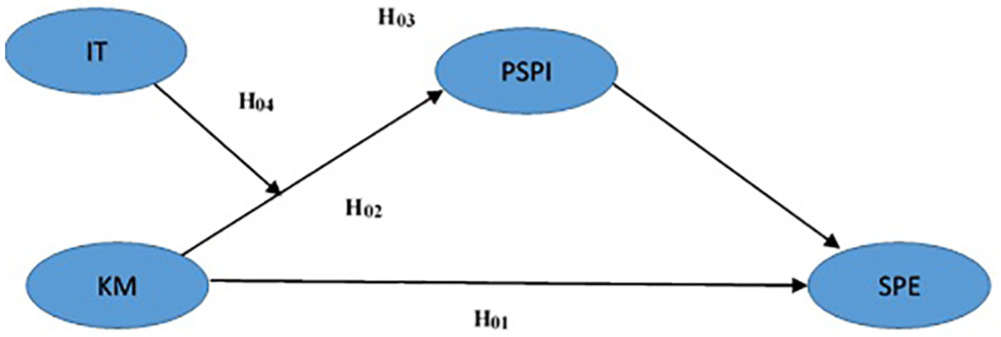
Baseline hypothesised model.
3. Research methodology
This study involves an empirical investigation through survey and process modelling as the research methods. A literature survey has been used to identify the prevailing IT-based KM practices of SE organisations and to identify how KM affects the SPE when mediated by PSPI and IT usage for KM initiatives. The action research through survey questionnaire has been applied to gain insights on the use of KMS for enhanced software process experience. Grounded on the responses from the survey, a knowledge-based model for PSPI has been designed and tested empirically.
3.1. Population and sample
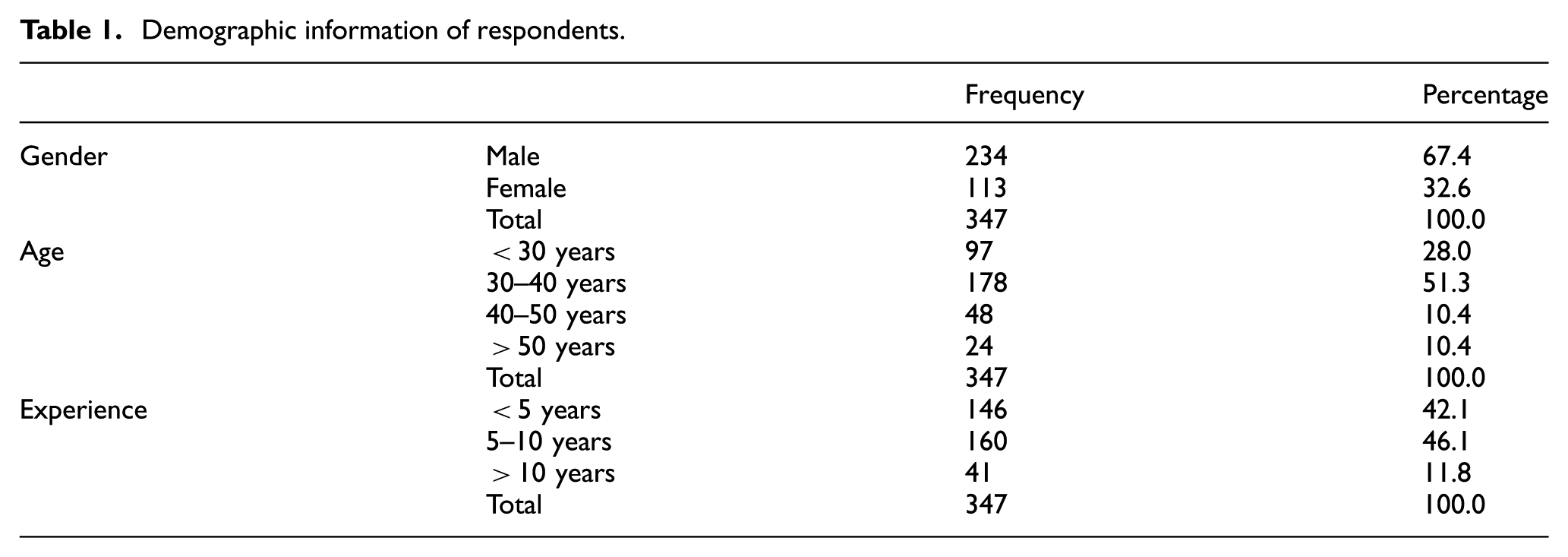
The data were collected from employees of SE organisations operational across the national capital region (NCR) in India. Software organisations included in the study are both private and public sector organisations of varying sizes involved in software development. Software managers (project manager, database administrator, system administrator, analysts, programmers, designers and testers), quality managers and knowledge workers (chief knowledge officers, chief executive officers) of SE organisations were asked to fill in the questionnaire on behalf of their organisation. The SE organisations incorporated in the study are those having KMS for evaluation of the role of KM in PSPI and SPE. The sample was drawn over the period from December 2017 to March 2018 using simple random sampling. A total of 30 SE organisations were contacted and asked to complete the survey; those who decided to contribute to the survey numbered 18. The regular follow up was completed through emails, cell phones and personal visits. The total number of employees who consented to participate was 500 from 18 organisations and the response rate out of 18 was 80.3%. The elimination of unfinished questionnaires gave a final sample comprising 347 employees, with a response rate of 69.4%. The percentage response rate is above the minimum standard of 40% as recommended for academic studies by Baruch [42] in 1999. Table 1 shows the demographic information of the respondents.
Demographic information of respondents.
3.2. Construct design
The questionnaire was developed based on the recommendations of Straub [43] and is inspired by Alavi and Leidner [3]. According to these recommendations, a rigorous review of literature of empirical SE, KM, SPI and software product was carried out to include all possible items to be incorporated in the questionnaire. Also, practitioners and experts from the industry including software managers, KM experts and quality managers were consulted prior to concluding the items in the questionnaire. The draft of the questionnaire was altered accordingly for content, style, phrasing and arrangement of the items. The pilot study of the survey questionnaire showed that 18–20 min were required per respondent for completion. The sensitivity check is done by taking multiple questions concerning a similar subject. The questionnaire comprises the following sections: (1) KM: Knowledge Creation, Knowledge Storage and Retrieval, Knowledge Transfer, Knowledge Application; (2) SPE; and (3) PSPI.
KM was measured using knowledge creation, knowledge storage/retrieval, knowledge transfer, knowledge application and initiatives and the role of IT in KM. Construct items were adapted from Alavi and Leidner [3] and were numbered on a 5-point scale (1–5, that is, strongly disagree to strongly agree). Cronbach’s alpha value of scale for KM was 0.957; Cronbach’s alpha value of scale for use of IT was 0.937. This section includes items such as ‘IT enables/supports creating working groups with members from different companies for external knowledge acquisition’; ‘IT enables/supports exchanging best practices for leveraging external knowledge’; ‘IT provides efficient searching and retrieving mechanisms for finding or tracing relevant information’; and ‘IT supports knowledge to be accessed and applied at different locations’.
Perceived SPI was measured using 18 items on a 5-point Likert-type scale (1-5, that is, strongly disagree to strongly agree). In this study, construct items using PSPI were adapted from the Dyba [44] questionnaire and is used in the PSPI context. Cronbach’s alpha value of scale for PSPI was found to be 0.934. This section includes items such as ‘IT Applications to KM for PSPI include generation of more revenue’; ‘IT applications to KM for PSPI include decrease in cost’; and ‘IT applications to KM for PSPI include competitive advantage’.
SPE consists of nine items and are measured on the scale from Ashrafi [15]. Measurement was done on 5-point Likert-type scale (1–5, that is, strongly disagree to strongly agree). Cronbach’s alpha value of scale for SP was 0.944. This section includes items such as ‘IT when incorporated in KM for perceived SPI makes software product to be more reliable’ and ‘IT when incorporated in KM for perceived SPI makes software product to be more correct (fit in with its specification and declared objectives)’.
The use of IT was measured using four items on a 5-point Likert-type scale (1–5, that is, strongly disagree to strongly agree). In this study, construct items for use of IT were adapted from Jones et al. [45] questionnaire and is used in IT context. Cronbach’s alpha value of scale for IT was found as 0.937. Section comprises items such as ‘I am using IT at its fullest potential for supporting my work’ and ‘I am using all capabilities of IT in the best fashion to help me on the job’.
4. The results
4.1. Descriptive statistics
The means, standard deviations, correlation matrix and internal consistency of scale are shown in Table 2. An analysis was performed using SPSS 20. In total, 27 items measured the components of KM, 4 items for use of IT, 18 items of PSPI and 9 items of SPE to ascertain the internal consistency of the scale. The reliability coefficient (Cronbach’s alpha) of the constructs has been illustrated in bold diagonally; this shows good internal consistency (>0.7) of the construct [46].
Means, standard deviations and correlation matrix.
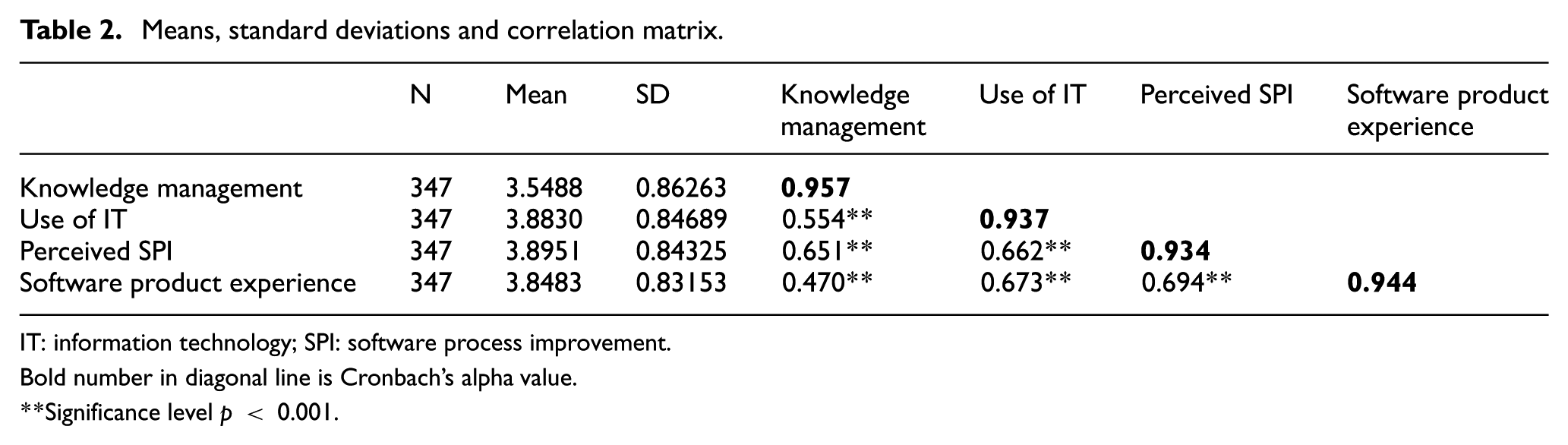
IT: information technology; SPI: software process improvement.
Bold number in diagonal line is Cronbach’s alpha value.
Significance level p < 0.001.
5. Assessment of measurement model
5.1. Confirmatory factor analysis
Prior to analysis, confirmatory factor analysis (CFA) was performed. Data collection was done by a single questionnaire; therefore, common method bias is an important concern in the study. The test we used in the study was ‘unmeasured latent factor’, the method suggested by Podsakoff et al. [47] and Siemsen et al. [48]. In comparison, the standardised regression weights with and without the addition of common latent factor (CLF) show that none of the regression weights are affected by CLF, that is, the deltas are less than 0.200. Composite reliability (CR) and average variance extracted (AVE) for each construct are within the threshold limits as exhibited in Table 3. In addition, a multi-group invariance test [49] was conducted along with the traditional measures of reliability and validity. The results demonstrated that the diverse groups of respondents (based on gender, age and experience) have inferred a particular measure in a conceptually similar manner.
Reliability and validity tests.
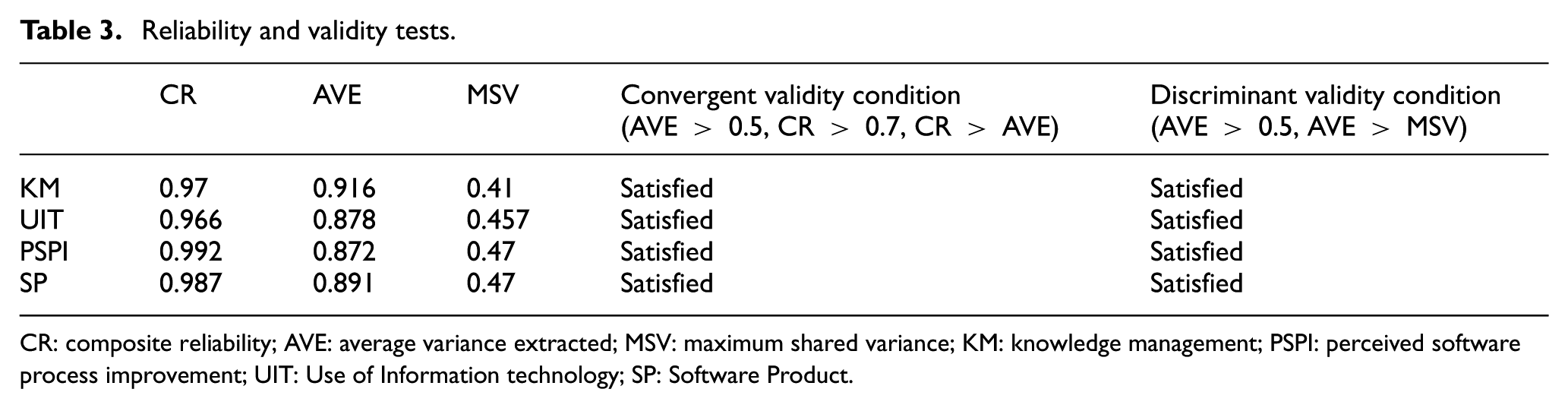
CR: composite reliability; AVE: average variance extracted; MSV: maximum shared variance; KM: knowledge management; PSPI: perceived software process improvement; UIT: Use of Information technology; SP: Software Product.
5.1.1. Reliability analysis
A CR, also referred to as McDonald’s coefficient measurement scale, is one which is consistent. Constructs have McDonald’s coefficient values, ranging from 0.97 to 0.99, exhibited in Table 3. Coefficients of 0.7 or greater are considered satisfactory [50]. Thus, the scales developed for this study are considered reliable [51].
5.1.2. Validity analysis
In order to ensure content validity, the study uses Cronbach’s [51] and Straub [43] as references:
A comprehensive survey of the literature was carried out to identify all probable items to be incorporated in the scales;
Analysis of the planned scales by professionals for KM and PSPI and SPE;
Experimental trial of the scales on a group of respondents similar to the target population.
The convergent and divergent validity constitutes the construct validity of measurement scales. For all constructs, AVE > 0.5, CR > 0.7 and CR > AVE; hence, convergent validity for the constructs was verified [52]. Discriminant validity was evaluated by checking that maximum shared variance (MSV) is lower than the AVE for all constructs [51]. Table 3 shows the outcomes of reliability and validity tests. These results indicate that the instrument has the desired psychometric properties.
5.1.3. Model fit
The model fit using CFA is shown in Figure 2 (Table 4).
Model fit summary of confirmatory factor analysis.
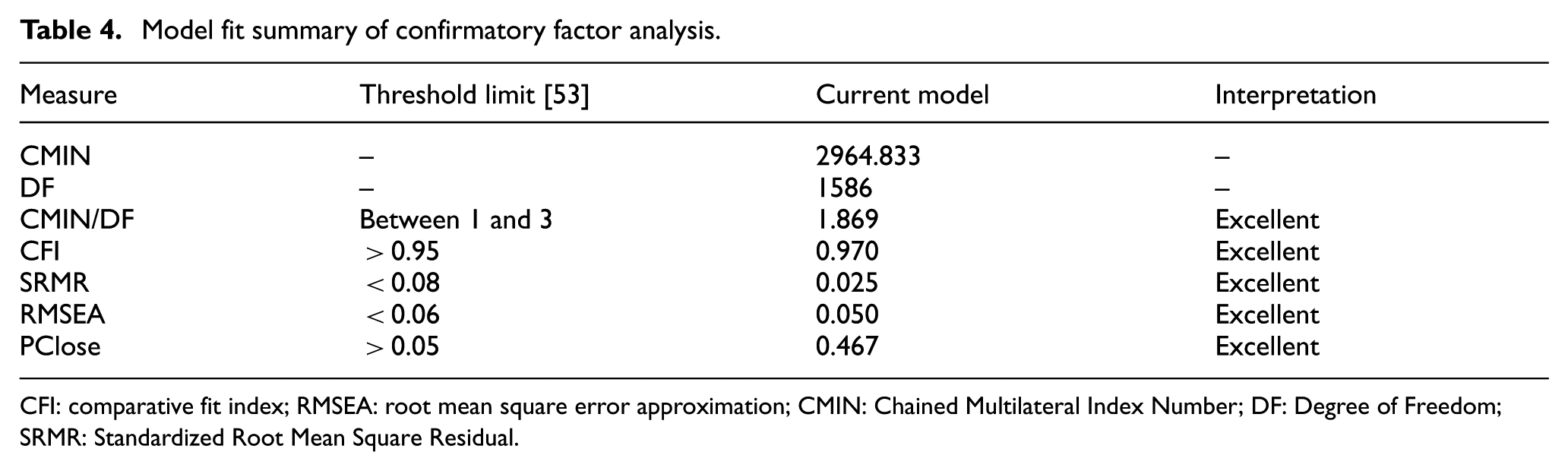
CFI: comparative fit index; RMSEA: root mean square error approximation; CMIN: Chained Multilateral Index Number; DF: Degree of Freedom; SRMR: Standardized Root Mean Square Residual.
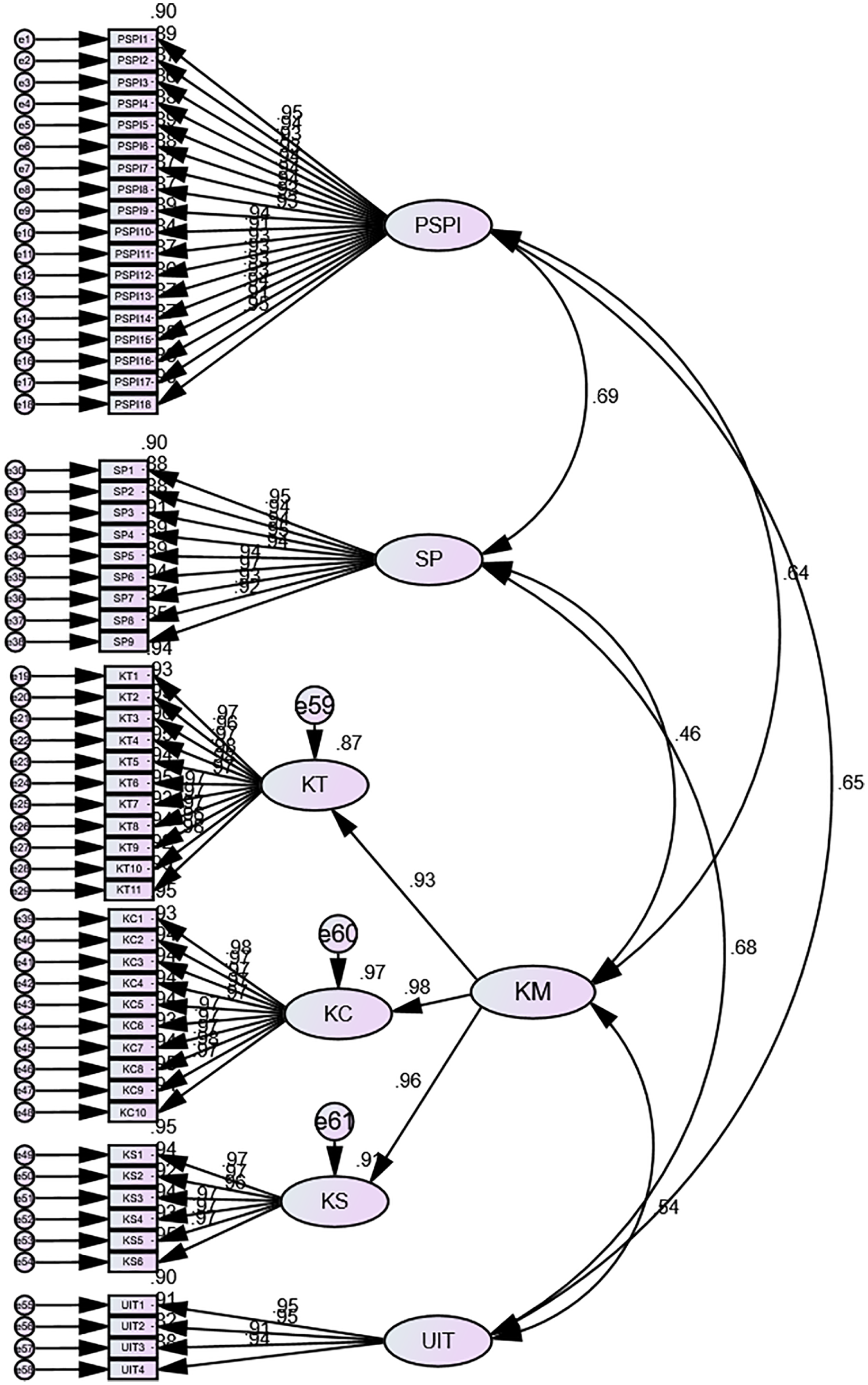
Confirmatory factor analysis.
Based on the represented values obtained during CFA, path modelling for research hypothesis was conducted.
6. Hypothesis testing (path analysis)
6.1. Model fit
Considering the measures based on minimum value of discrepancy function, we interpret the results of model fit for our study. The model yields a chi-square of 3105.924; a higher CMIN value indicates stronger evidence against a NULL hypothesis, df = 1642 and p value = 0.000 which shows that the model fits perfectly to the population. The chi-square value varies with respect to the sample size so it is desirable to inspect the other fit measures. Fortunately, other fit measures similarly point to the goodness of fit of the model to the data. CMIN/df = 1.892 is suggestive of an adequate fit between the hypothetical model and sample data [54]; comparative fit index (CFI) = 0.970 which approaches 1, indicating a very good fit. Root mean square error of approximation (RMSEA) = 0.051 also indicates a close fit to the model [55] with respect to degree of freedom. Thus, it can be inferred that the path model fulfils the criteria for model fit analysis (Figure 3). Now we can test the hypothesis by interpreting the empirical values obtained for paths in the model. Table 5 demonstrates the results for H1, H2 and H3. As hypothesised in H1, a robust positive association is seen between KM and SPE in the absence of all other variables considered in the study. Standardised regression weights = 0.47, t = 9.51 and p < 0.001, which supports hypothesis H1, suggesting that there is a significant positive relation between KM and SPE in the Indian software industry. Also a strong positive association was observed (β = 0.66, t = 14.10, p < 0.001) between KM and PSPI in the absence of other variables considered in the study; this indicates that KM is significantly related with PSPI and thus validates H2. For the full hypothesised model, the bootstrap analysis showed that KM indirectly affects SPE through PSPI positively (β = 0.296, p < 0.001). Moreover, the insignificant direct effect (β = 0.04, t = 0.700, p = 0.484) of KM on SPE in the presence of PSPI (mediating variable) indicates that the relationship of KM and SPE is fully mediated by PSPI and thus validates H3.
Mediation.
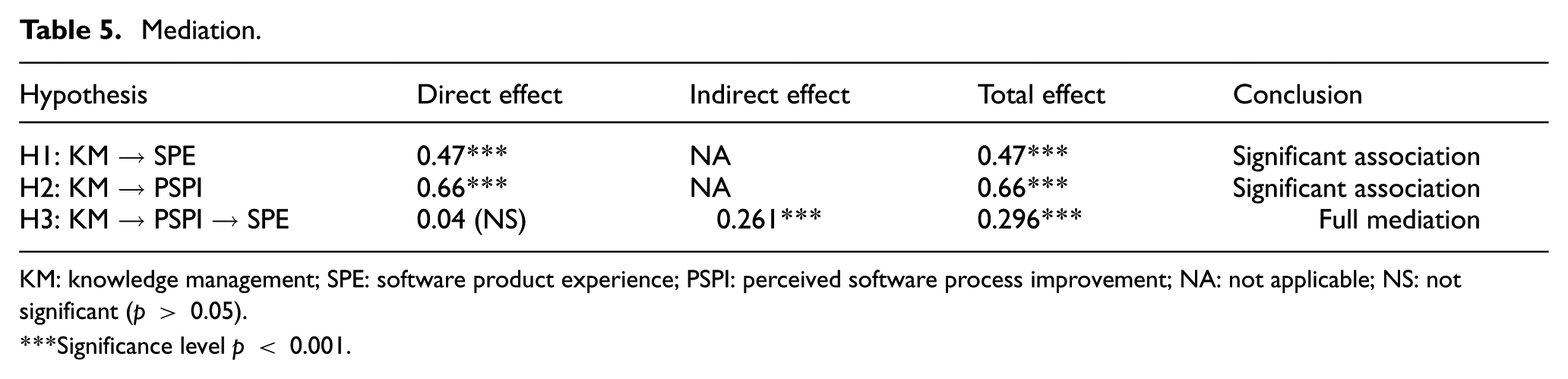
KM: knowledge management; SPE: software product experience; PSPI: perceived software process improvement; NA: not applicable; NS: not significant (p > 0.05).
Significance level p < 0.001.
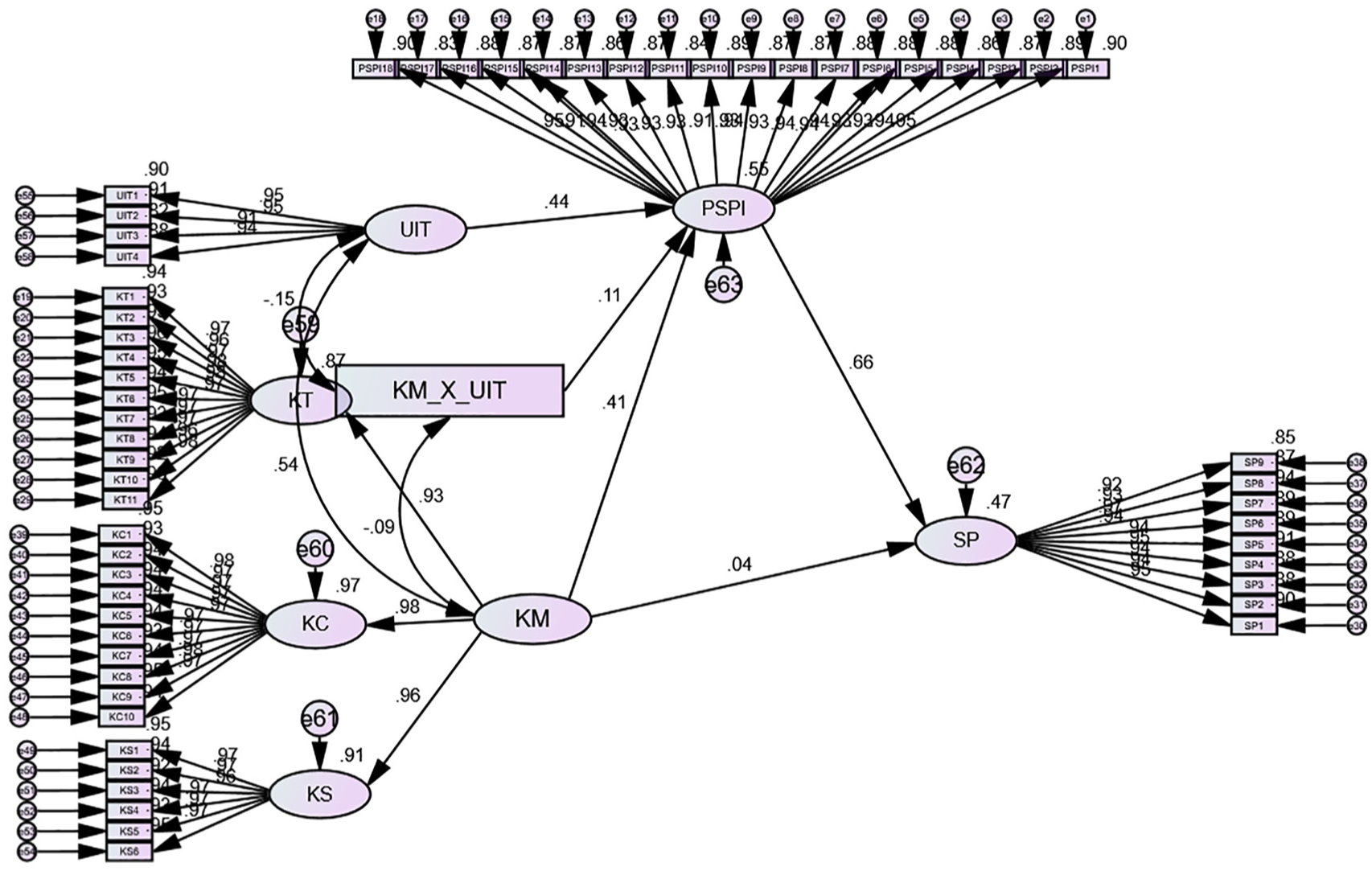
Path analysis.
7. Moderating effect of IT
IT being a moderator specifies the conditions under which KM influences PSPI and enhances the relationship between the exogenous variable KM and the endogenous variable PSPI. The effect of H4 predicts the positive relation between KM and PSPI; this is positively moderated by use of IT in the Indian software industry. The value in the path model from interaction (KMXUIT) to PSPI (B = 0.062, t = 2.912, p < 0.05) is significant and the findings support the hypothesis. Figure 4 shows the results of the reflective research model with path coefficient values. IT in this study is typically expressed as an interaction between KM and IT. In order to examine the interaction hypothesis we standardised the independent variable in the study, that is, KM and then generated a product variable.
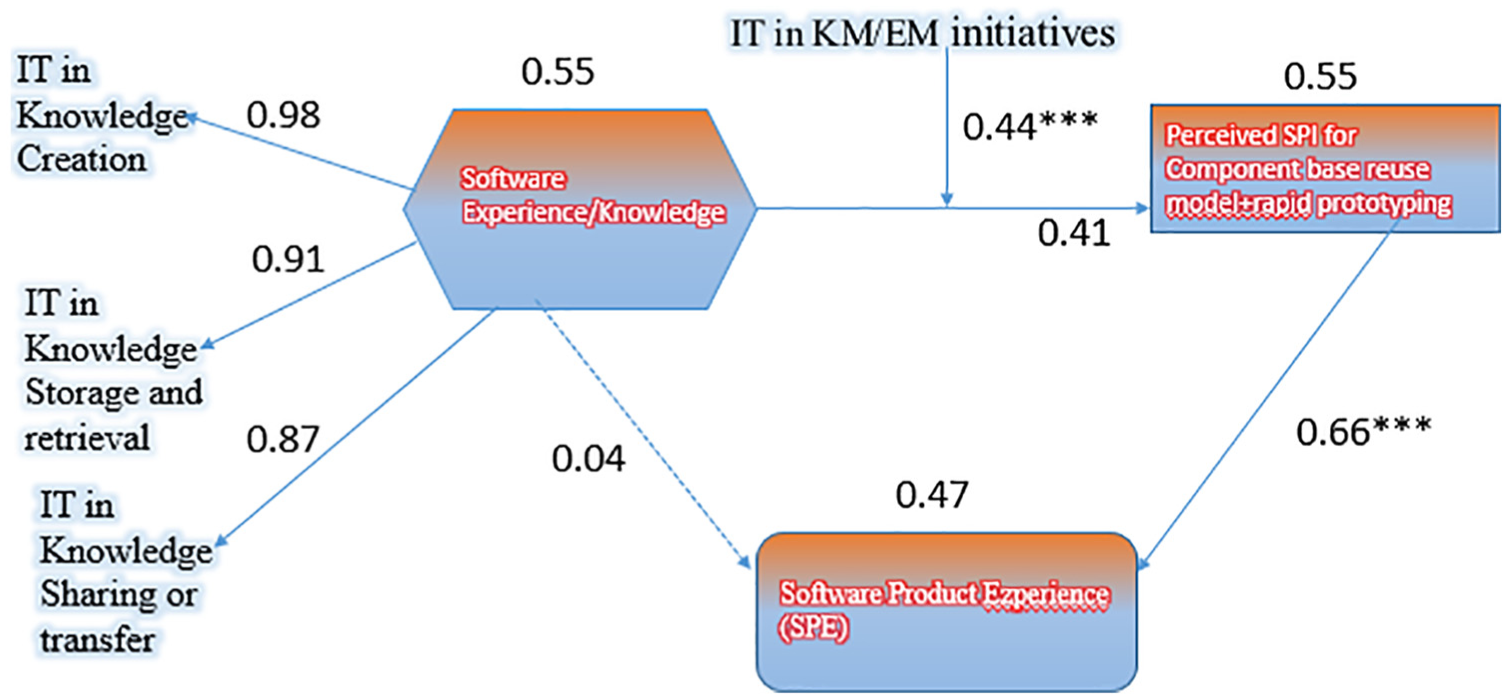
Results of reflective research model along with their path coefficient values.
In this case, the interaction was found to be significant. The interaction plot is shown in Figure 5. Low IT effect leads to a weaker relationship between KM and PSPI. However, when the effect of IT is high, the relationship is strengthened between KM and PSPI. Therefore, IT strengthens the positive relation between KM and PSPI. This supports H4. Table 6 shows the summarised results for interaction/moderation tests.
Results of interaction effects.
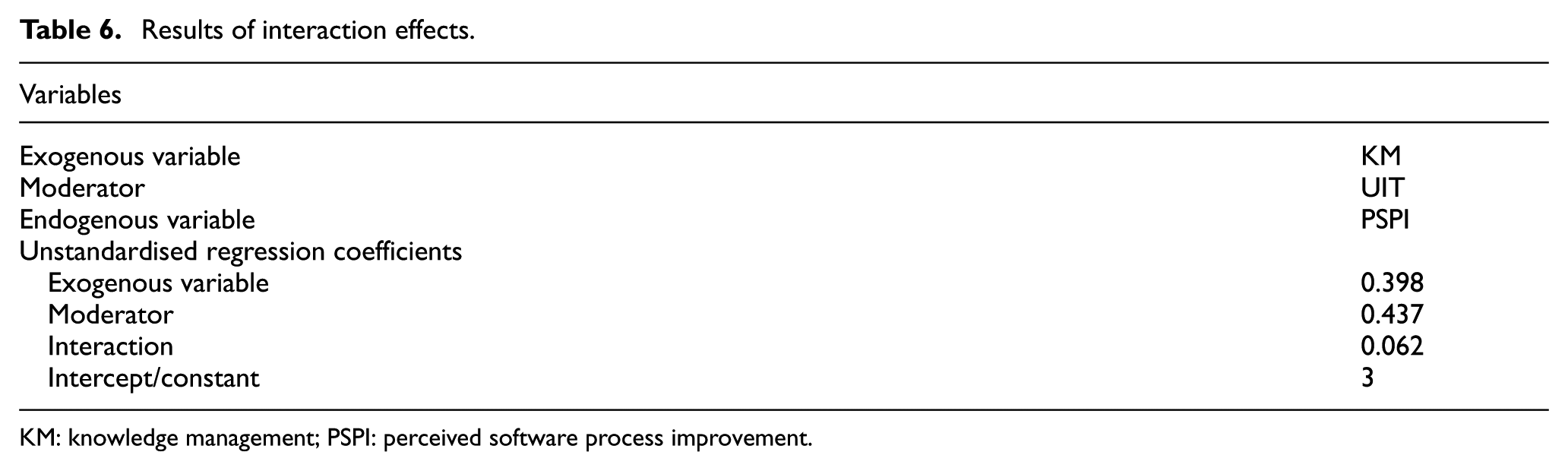
KM: knowledge management; PSPI: perceived software process improvement.
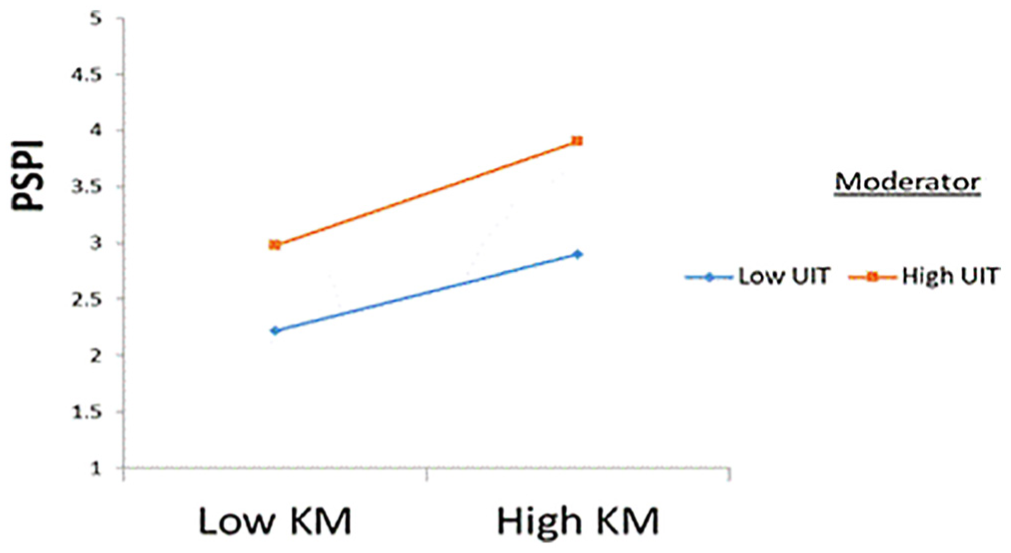
UIT strengthens the positive relationship between KM and PSPI.
The empirical results of moderation demonstrate that IT facilitates KM in its various phases. In line with the same notion, we can visualise IT as an enabler for KM. Technology such as Groupwares supports online access to organisational information; this requires interpretation of information and contributes to knowledge creation. IT also eases knowledge storage and retrieval through its sophisticated storage and retrieval technology as database management systems, data warehouses and so on. On the other hand, technologies such as computer networks or bulletin boards support knowledge transfer between interested individuals. A number of SE organisations now provide their policies and standards on corporate intranet for easy accessibility and maintenance. IT can also provide support for codification of organisational routines as in expert systems, workflow automation systems and so on.
8. Discussion
Diverse studies exist in literature, emphasising the importance of IT-enabled KM to enhance SPE. The literature in general identifies that IT has a positive relation to KM; however, scholars do not empirically analyse how IT enables and eases each of the individual processes (knowledge creation, knowledge sharing, knowledge storage/retrieval and knowledge applications). An integrative/holistic model is also missing. Although there are studies in the literature that investigate the relationships among KM and PSPI [16,23,56], PSPI and software product quality [15,57] and the role of IT [41], they fail to explore the relationships between these elements simultaneously. If managers comprehend these associations in an integrative manner, they can stand a better chance of improving their organisation’s performance. Moreover, it is not clear how IT facilitates each phase of KM. The practical implementation of KM processes in SE, predominantly in the Indian context, is addressed in this study.
Standardised SPI models such as CMM, IDEAL or SPICE and the SPI Bottom up approach based on total quality management, which includes a quality improvement programme (QIP), pay little attention to accumulation and management of SPI knowledge and experience. Moreover, a very few studies present views on how the SE organisations in India are using KM [58–60]. Alagarsamy et al. [61] recommend a balanced investigation of knowledge-based approach for SPI. They propose a knowledge-driven model based on the IDEAL model. The model provides an account of knowledge-based SPI. There are a few or no initiatives on KM in SE organisations in India. Infosys since its inception in 1981 is a forerunner in KM-based SPI efforts [62].
On the other hand, some researchers have concentrated on the adoption of a specific technology. Talib et al. [63] proposed a multi-agent system–based KMS to support knowledge sharing in the software maintenance phase while García-Mireles et al. [32] focused on the use of wikis as web 2.0 for knowledge access, query and reuse. This work, on the contrary, chose to consider IT from a comprehensive outlook. The study findings highlight numerous unanswered concerns in the literature concerned with the Indian software industry. The aim is to study the effective usage of IT for information management in an SE organisation that is beneficial in decision-making.
This study attempts to answer IT-related factors for KM and PSPI to improve the software product by proposing an integrative reflective model for KM, PSPI and SPE with the moderating effect of IT. The results show that KM improvement factors positively relate to PSPI; this agrees with the results of previous studies [3,15,38,44], even though some of the measured items used in this study were dissimilar.
The presence of information systems evens out the organisational structure and stimulates better dissemination of information to all stakeholders; this eventually facilitates the various phases of creation, storage and reuse of knowledge. Organisations that separate KM risk dropping its merits, which are highest when it is coordinated with IT and competitive strategy [64]. ‘Best Practices Repositories’ are the utmost efficient technology support instrument for management of knowledge in Indian software organisations [38]. The repositories help to reuse the formerly developed functions in the software development organisation. This concept is widely used in software development as component-based development. One of the core contributions of the proposed reflective model has been to analyse the impact of IT on various phases of KM. The empirically tested results of the model support the view that IT has an important moderating role in all four processes: creation, sharing, storage/retrieval and application of knowledge. IT constantly develops as a source of advantage for PSPI for ease of use and cost for software product [65].
The outcomes of this research have reinforced the new additions, causal relations in the IT-based model for KM and PSPI related to component-based reuse model and rapid prototyping. The influence of new additions and causal relations has not been tested in earlier studies. The SEM results show that there is a significant and positive effect of KM on PSPI. The path coefficient is 0.41 with p < 0.001. This indicates that when we adopt KM, PSPI strengthens. The relation between the path coefficients for use of IT in KM is depicted in Figure 4. The higher the use of IT, the greater the strength of relation between KM and PSPI. It is clear that a KMS needs the support of appropriate IT (tools such as AJAX, UBUNTU that have a front end and back end); the outcomes back up the technology-based view of the organisation in PSPI for better SPE.
In light of the findings, the software companies involved in the implementation of IT for the KM initiatives can plan implementation in a more systematic manner by utilising ongoing inputs from alpha and beta testers involved in the process of software development. Business intelligence and business analytics as two business processes always help in building/strengthening the KM of the company and these three ingredients will help in building the effective decision-making support system of the company; at strategic level, the CEO/COO and VP IT can take the decision easily. Our technique as a value addition will certainly help IT companies to provide better governance through effective KM. This study is a noteworthy contribution to the field of empirical SE for both research and practice.
9. Implications of study for research and practice
KM is vital for gaining a competitive edge for software organisations. To get this competitive edge, software companies must develop efficient techniques for managing software knowledge in SPI initiatives. SPI is influenced by the tacit knowledge of practitioners. Software development practices of SE organisations, at the end of the day, are centred on the experiences of its software developers. Hence, SE organisations while planning for SPI initiatives should make proficient strategies for managing knowledge/experience relevant to software development.
In this study, we focus on the discussion and analysis of KM and its positive correlation with PSPI for enhanced SPE. We consider this to be very significant because many SE organisations still struggle with the challenging task of developing software products that come up to desired quality standards and also meet the time and budget constraints [15]. Through analysis of theory and empirical testing, this research intensely supports the view that the relation between KM and SPE is positively mediated by PSPI; IT acts as the moderator for KM initiatives in the Indian software industry. We accept that the findings of the study may not reveal all general practices of the Indian software industry due to the restricted number of SE organisations being surveyed. However, it offers an understanding for the research field and software industry with the perception of KM to back up the software development processes. This study also emphasises the necessity for future studies into state-of-the-art practice for the use of KM in PSPI; this is acknowledged as an important aspect for practitioners. In addition, other beneficiaries of this work include all the stakeholders in software development organisations who plan to incorporate IT into their KM initiatives in software development processes. The researchers in the arenas of empirical SE and KM will recognise this study as a landmark for integrating KM practices in PSPI for improved SPE.
10. Limitations of study
One of the limitations of this approach of making a presented structure is that findings cannot simply be applied in a general manner across software organisations. Therefore, we should be cautious to limit our findings to the domain of analysis, that is, to Indian SE organisations. In addition, the question of the number of participants also remains significant. If we desired to improve the validity of our results, we should include more stakeholders in developing a more robust proposed model for the Indian software industry.
Footnotes
Declaration of conflicting interests
The author(s) declared no potential conflicts of interest with respect to the research, authorship and/or publication of this article.
Funding
The author(s) received no financial support for the research, authorship and/or publication of this article.
