







Abstract
This study aims to synthesise the findings of research on Internet of Things (IoTs) adoption and use in libraries. This systematic literature review is based on Preferred Reporting Items for Systematic Reviews and Meta-Analyses (PRISMA) method and comprises publications in the five world-renowned databases. The libraries adopted IoTs for saving time, enhance performance and efficiency, improve the quality of services, and ease in collection accessibility. This study identified various IoTs-based practices including auto-notification of circulation tasks, inventory management, tracing users’ data from virtual/physical card, user tracking and self-guided virtual tour of library. To adopt and use IoTs, libraries faced several challenges such as security and privacy, cost, lack of standards and policy, require highly integrated environment, and lack of management interest. The critical IoTs adoption and usage factors as well as various challenges identified would provide valuable insights to library professionals to design state-of-the-art smart technologies drive services.
1. Introduction
The development of cutting-edge technologies for monitoring, automating and directing activities is a reaction to the expanding human needs and desires. IoT makes life better and processes of producing and consuming data easier [1]. IoT has recently drawn a lot of interest because of the potential effects they might have on both society and the economy. IoT applications provide a new pattern that enables businesses to discover new markets, increase productivity, optimise daily activities, and better meet consumer needs while keeping competitive advantages [2]. Global [3] predicted that by 2025, IoT might have an annual economic impact of US$3.9 trillion to US$11.1 trillion, which is equivalent to around 11% of the global GDP. Thus, IoT technologies enable all organisations to transform from conventional to smart business settings. There has been an exponential expansion that has produced around 10 billion linked IoT devices now, with a forecast increase to nearly 75 billion by 2025 [4].
The term IoT was first proposed by Kevin Ashton in 1999, but the concept of interconnecting objects has been around since the late 1970s [5,6]. This concept was known as embedded Internet or pervasive computing at the time [7]. However, it is challenging to define the IoT due to the newness of the field, and despite several academics’ descriptions, there is still no agreement on a single definition [8,9]. Kumar et al. [10] defined as IoT is a collection of connected computing devices that may exchange data across a network without human intervention. IoT is a network of interconnected nodes that rely on sensors, transmissions, and information processing technologies and interact with one another as intelligent components to accomplish a specific task. It uses the Internet as a communications channel with no time or space restrictions [11,12].
IoT has slowly crept into every aspect of modern life over the past few years, including healthcare [13], agriculture [14], the environment [15], businesses [16], smart homes [17] and smart cities [18]. IoT technologies also impacted libraries like other sectors of the economy [19,20]. Recently, there has been discussion among librarians about the adoption and usage of IoT in libraries, and there is a compelling case that doing so will result in libraries having a more promising future [21,22]. IoT would dramatically change libraries in several ways, most notably by transforming them into smart organisations [23,24]. Emerging technologies such as IoT can aid libraries by managing daily tasks including self-borrowing, self-returning, smart inventory, intelligent querying, and the integration of books and information systems [25]. Hahn [26] demonstrated the use of mobile technologies in combination with Bluetooth low energy beacons to implement an IoT for location-based services in libraries. IoT applications have a wide range of potential uses in libraries, such as inventory control and theft management using RFID systems, circulation desk operations, face recognition, user identification through scanning card, auto-fire detection alarm, monitoring the movement of inventory, assistive technology, and mobile user-generated virtual library tours [27].
Academicians and professionals have recently introduced knowledge on the deployment of IoT in libraries [21]. The review of the literature indicates that academics have produced systematic reviews on the adoption of IoT in several sectors, such as, smart healthcare system [4], business [12], education [28], and small and medium enterprises [29]. However, the extant literature indicates a dearth of systematic review on the adoption of IoT in libraries. The discovered knowledge gap compelled us to review and summarise the findings of the study on the adoption of IoT and highlight the major challenges to employing these pervasive technologies in academic libraries. Thus, the goal of this study is to offer a thorough evaluation of the corpus of prior research on the adoption and usage of IoT in libraries.
2. Research questions
With the IoT gaining popularity in the library industry, it is crucial to research how this technology can assist the provision of high-quality services and resources in libraries. The primary aim of this systematic review is to provide a knowledge of the scenarios that necessitate installing IoT technologies in libraries. This study also intends to provide a foundation for future research on this subject. We developed five primary research questions to achieve the objective:
Research question (RQ1). What are the publication trends (in terms of year, country and journal) in the extant literature of IoT use in academic libraries?
Research question (RQ2). Which methodologies are employed to investigate IoT in academic libraries?
Research question (RQ3). What are the benefits/reasons of adopting IoT in academic libraries?
Research question (RQ4). Which types of IoT practices are carried out in academic libraries?
Research question (RQ5). What are the challenges in the adoption/use of IoT in academic libraries?
3. Research methodology and design
The Preferred Reporting Items for the Systematic Review and Meta-Analysis (PRISMA) principles were followed for conducting a systematic review of the pertinent literature. PRISMA assists researchers in reporting a set of minimal criteria that are evidence-based and useful for critically evaluating published material [29]. PRISMA considers four parts of a study: identification, screening, eligibility and included records/studies. PRISMA was first developed as a guideline for the healthcare field, but it has since been shown to be useful in other fields. PRISMA standards have been effectively applied in recent research studies in the library and information science (LIS) profession to conduct systematic reviews of scientific literature [30–32].
3.1. Search strategy
The researchers devised an inclusive search strategy to extract the maximum relevant literature on the topic. Initially, we searched eight leading academic databases (Web of Science (WoS), SCOPUS, Library, Information Science and Technology Abstract (LISTA), Google Scholar, Emerald Insight, Science Direct, Taylor & Francis, and Sage) using various keywords (adoption of Internet of things in libraries, IoT and libraries, smart libraries) to check the amount of literature on the adoption and uses of IoT in libraries. However, after evaluating the results there was a consensus among all two authors to eliminate the Science Direct, Taylor & Francis, and Sage since only one or two studies found on the adoption and uses of IoT in libraries. Moreover, it observed that the studies found in these three databases were also available in the other five selected databases. After the selection of five databases for this SLR study, we developed a following search string to retrieve the comprehensive literature on the adoption and uses of IoT in academic libraries.
(‘Internet of things’ OR ‘IoT’ OR ‘ubiquitous technologies’ OR ‘internet of library things’ OR ‘internet of every things’) AND (‘academic libraries’ OR ‘university libraries’ OR ‘College libraries’)
The database searches with above search string were carried out in November 2022. All pertinent data was extracted from the five databases and placed into an Excel sheet. One team member performed searches in Scopus, WoS, and LISTA, while another applied search sting in Emerald Insight and Google Scholar to locate the literature. The same process was performed to ensure the accuracy of the data. The assessment procedure (screening, eligibility and included studies) was completed in 1 week by one member and then revisited by the second member. Finally, data extraction was carried out by two researchers then both researchers double-checked it. All these processes, from data download to data extraction were carried out by all two researchers and replicated at each level to confirm the correctness and authenticity of the obtained data.
3.2. Inclusion and exclusion criteria
SLR inclusion and exclusion criteria assist researchers in identifying relevant studies on a topic. Studies are chosen if they fulfil the inclusion criteria and rejected if any of the exclusion criteria are not met [33]. The details of the inclusion and exclusion criteria of this study are explained in Table 1.
Inclusion and exclusion criteria.
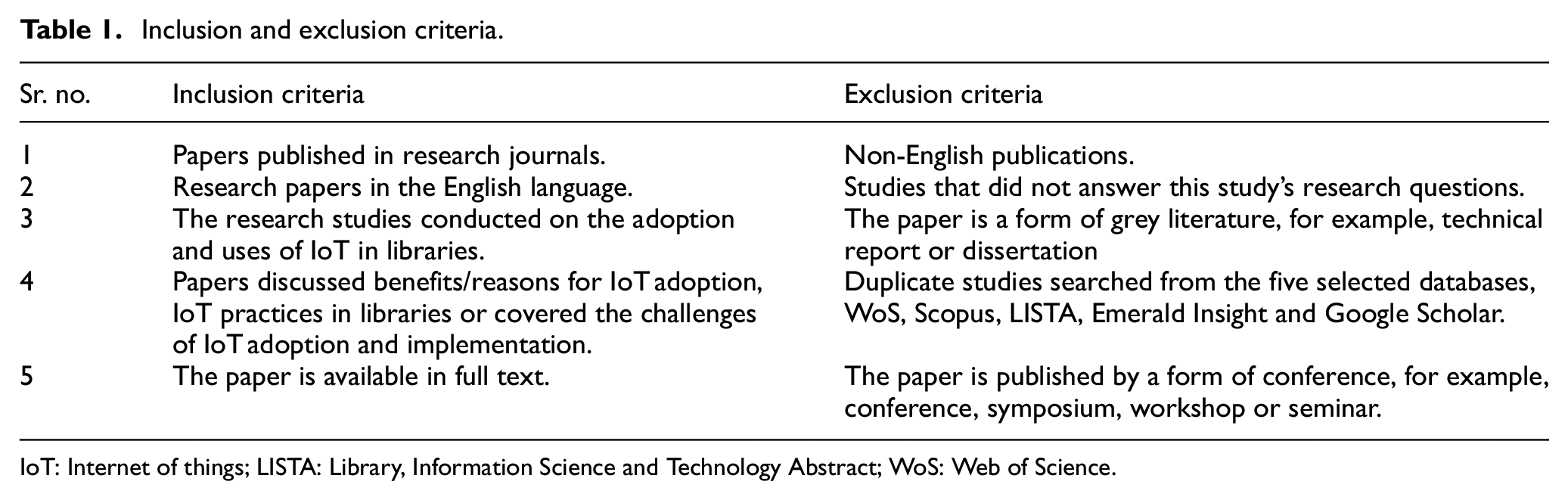
IoT: Internet of things; LISTA: Library, Information Science and Technology Abstract; WoS: Web of Science.
3.3. Filtering
A final set of articles was identified for review by following a four-stage screening procedure depicted in Figure 1. In the initial iteration of the search query, 4818 research papers were identified and used to begin this investigation. The irrelevant or duplicated papers were deleted. The title and abstract of the papers were used to screen the articles. To reduce the possibility of bias, the publications were examined using predefined inclusion and exclusion criteria. Backward and forward searches were also performed to reach the maximum literature. A total of 51 studies were found relevant but 26 full text studies were excluded based on quality assessment. Finally, 25 studies provided concrete evidence to address this study’s research questions.
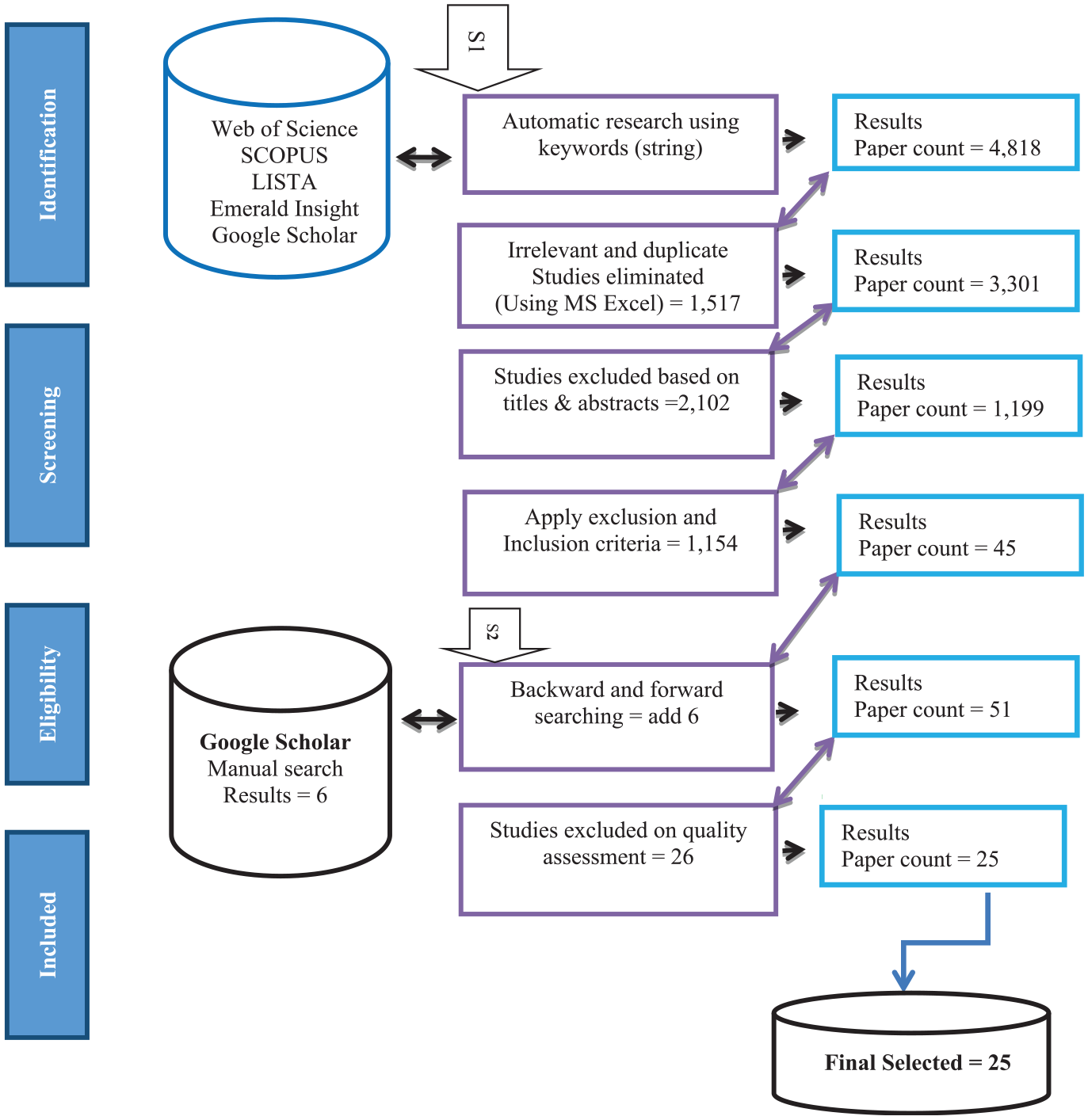
Four-phases flow diagram of PRISMA guidelines.
4. Results and interpretation
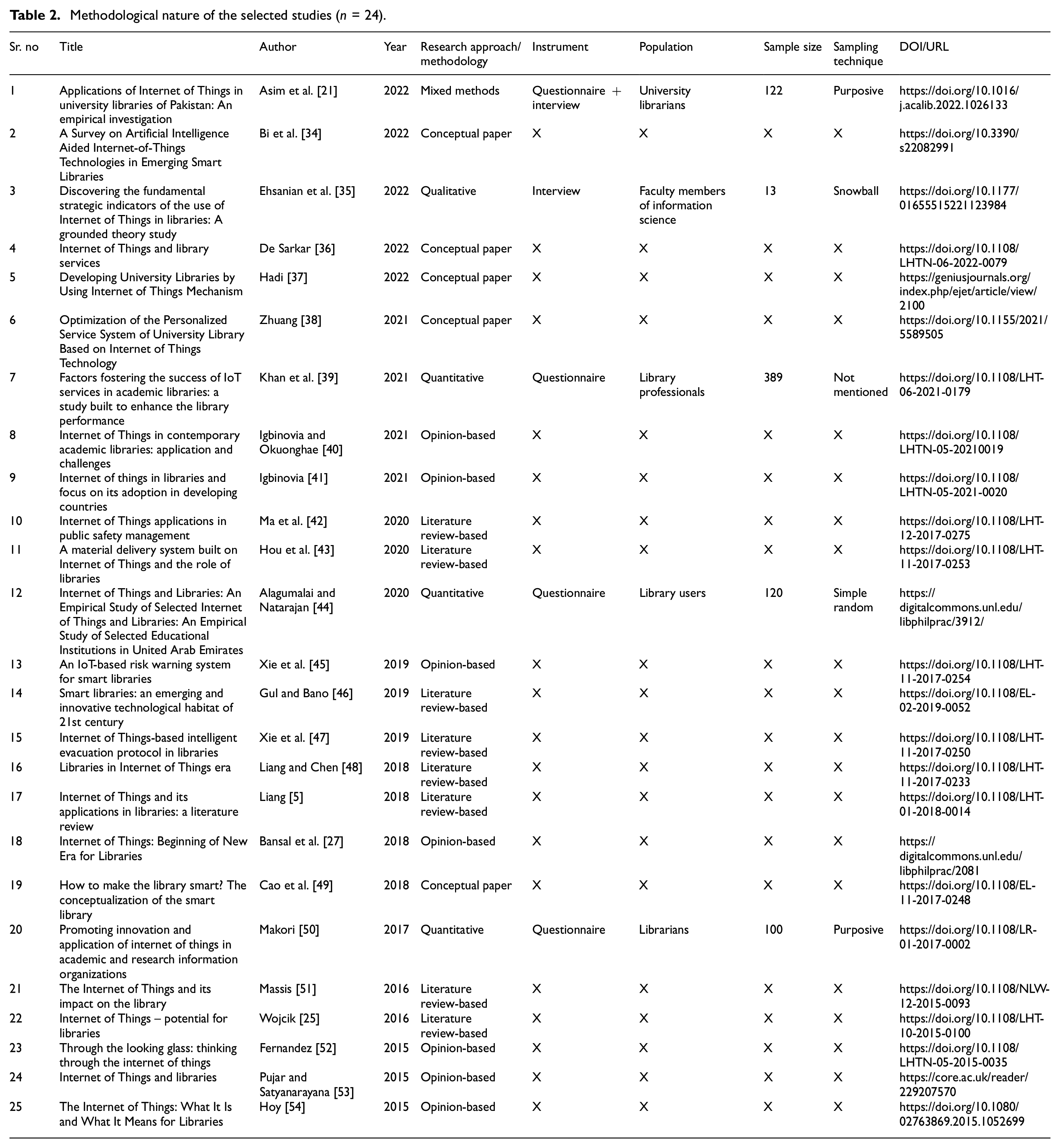
4.1. Methodologies employed in the selected studies
Table 2 summarises the methodologies employed to investigate the IoT in academic libraries (RQ2). Figure 2 depicts the methodologies used in the selected 25 studies with percentage of each methodology. Literature review-based papers represent 32% of the sample with eight articles and was the most widely used method in the reviewed articles. Opinion-based was the second most used method with seven papers, accounting for 28% of the sample. Five studies were conceptual papers that were 20% of the sample, followed by three papers used quantitative method that were 12% of the sample. Only one study used mixed-methods and one used qualitative approach. Three studies used questionnaires and one study applied interview as a research instrument to collect the data from population. Table 2 reveals that among five empirical studies, the population of three studies consisted of library professionals while one study population was library users, and one was faculty members. The sample size ranged from a maximum of n = 389 to a minimum of n = 13. Two studies applied purposive sampling technique while one study used snowball and one employed simple random for the selection of the respondents.
Methodological nature of the selected studies (n = 24).
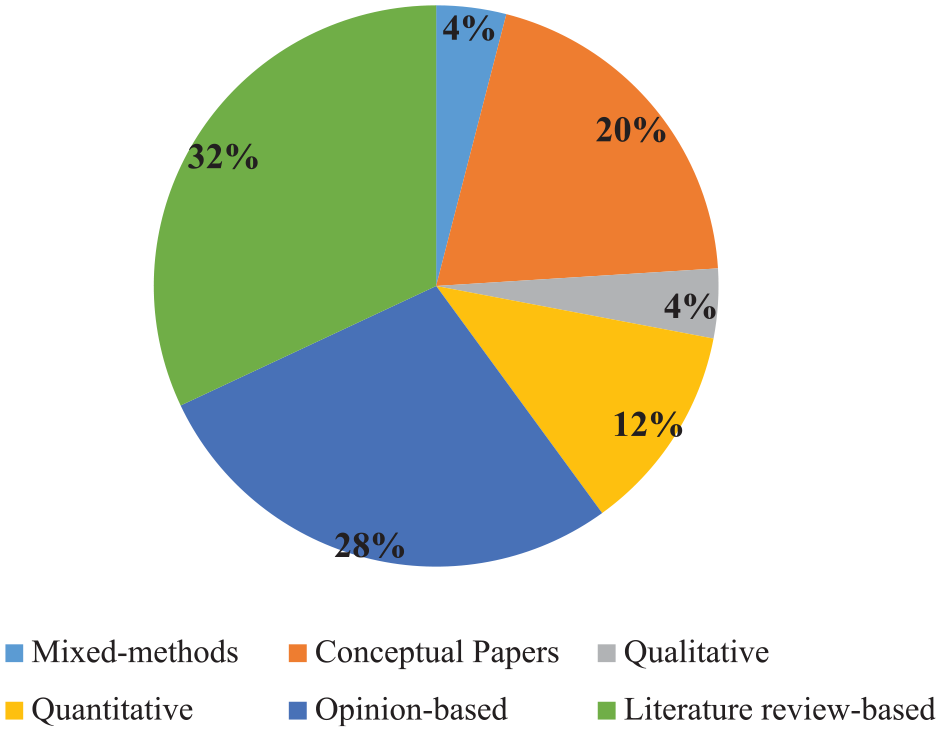
Research methodologies used.
In general, the methodology reflected scarcity of quantitative, qualitative and mixed-methods of studies conducted in the literature; this may be attributed to the phenomenon’s novelty. However, the popularity of IoT is supported by a significant number of literature reviews, conceptual and opinion-based research by senior library professionals.
4.2. Publication trends of IoT in literature
First, this SLR study describes the publication trends (in terms of year, country and journal) in the extant literature of IoT use in academic libraries (RQ1). Figure 3 demonstrates that a sample of 25 research were published in a diverse range of countries, including China, India, the United States, Nigeria, Pakistan, Iran, Kenya, the United Arab Emirates, Poland and Iraq. Ten research on the adoption and applications of IoT in libraries were performed in China out of the 25 studies. Among 10 articles, nine articles were literature review-based, conceptual, or opinion based while only one paper used quantitative research approach. India led the way with four studies on IoT in libraries, followed by the United States with three research and Nigeria with two studies. Figure 3 depicts one research study in each nation, including Poland, Pakistan, Iran, Iraq, Kenya and the United Arab Emirates. This is an indicator that China is leading the way in doing IoT research in academic libraries. However, it is also implied that the phenomenon of IoT in academic libraries is arising in both developed and underdeveloped countries.
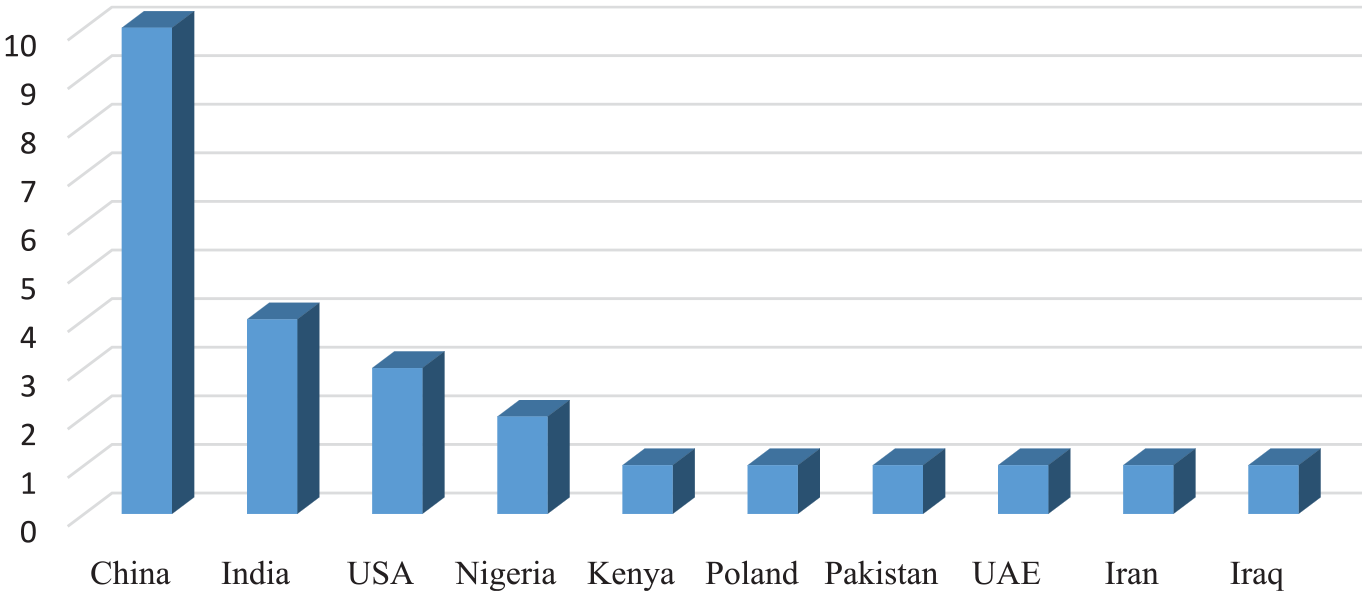
Geographical distribution of the studies (n = 25).
The graph in Figure 4 displays the publications that were published between 2015 and 2022. It shows that most articles were published in 2022, 2021, 2018, 2020, 2019 and 2015, with the lowest appearing in 2016 and 2017. It indicates that the phenomenon is quite novel because there is no study selected below from the year 2015 and arising day-by-day. Five of the 25 papers published in 2022 indicate that researchers are interested in writing about IoT adoption and usage in academic libraries.
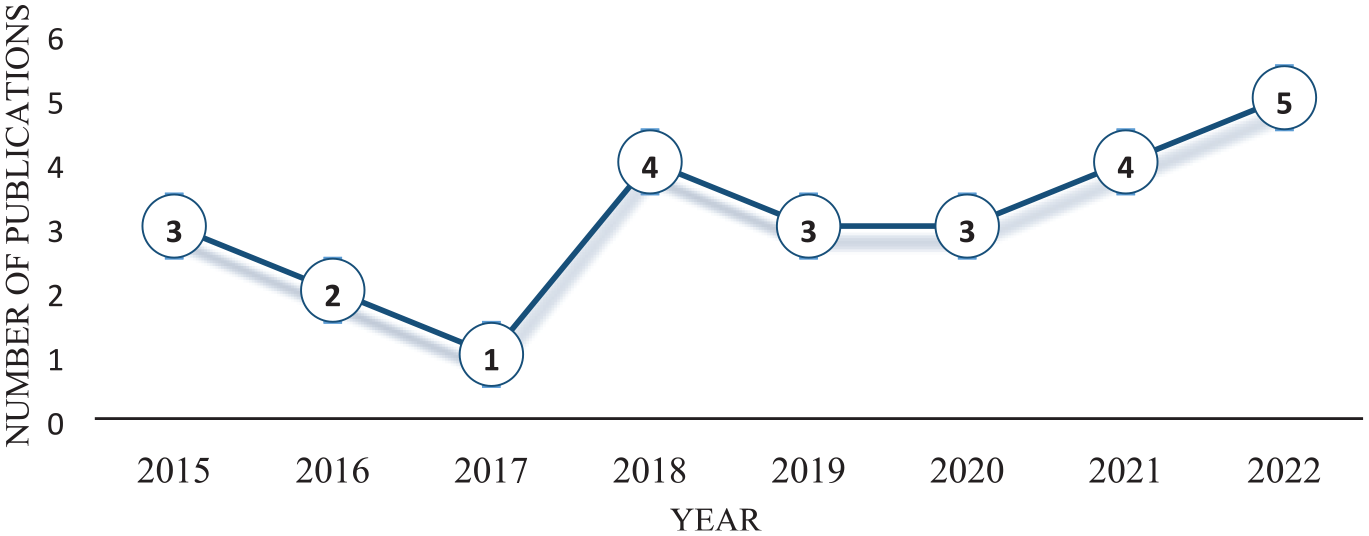
Distribution of articles published from 2010 to 2022.
Figure 5 shows the distribution of articles on IoT adoption and use in academic libraries published in different journals. Most of the articles were published in Library Hi Tech journal. Library Hi Tech News was the second most popular journal, with four articles on IoT applications in academic libraries. Two articles appeared in Electronic Library Journal, and two in Library Philosophy and Practices.
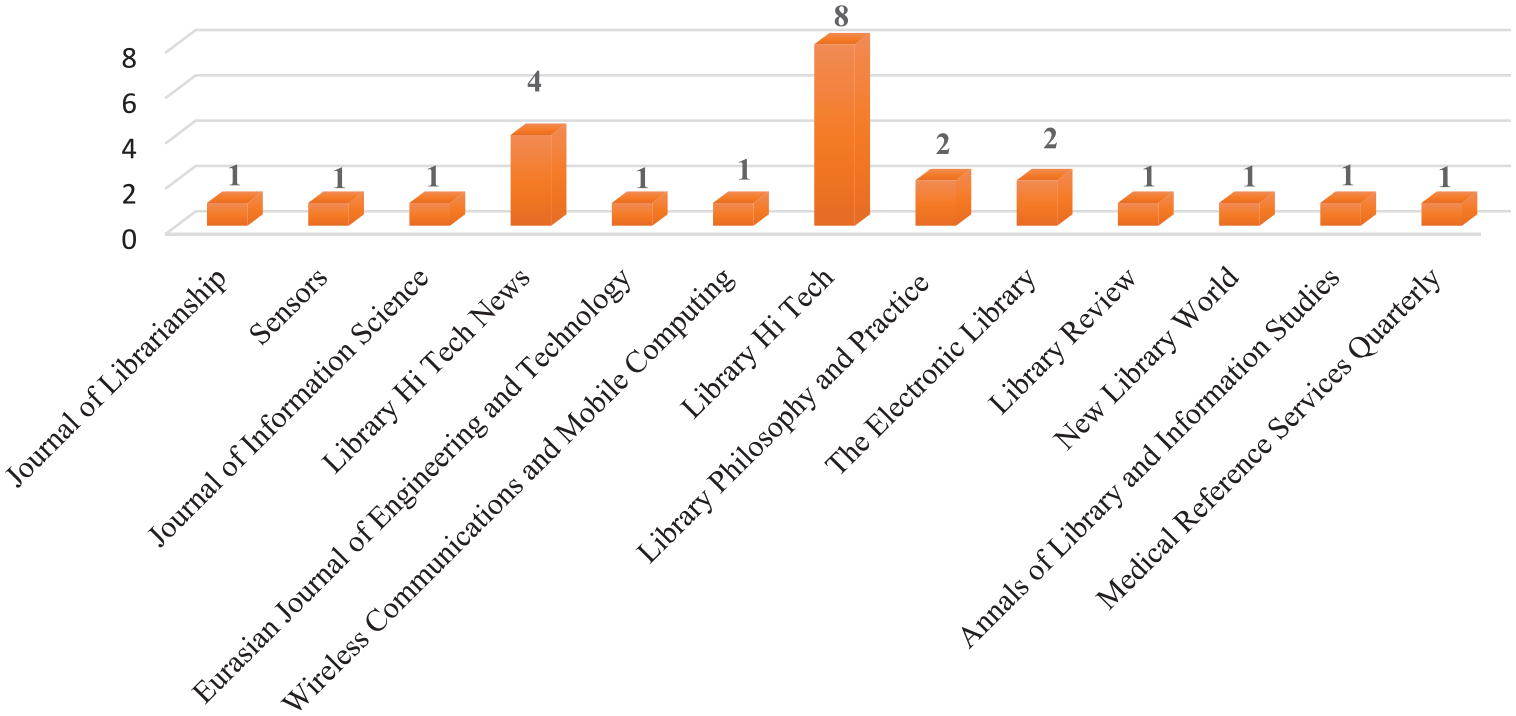
Distribution of articles published in different journals.
4.3. Benefits/reasons of IoT in libraries
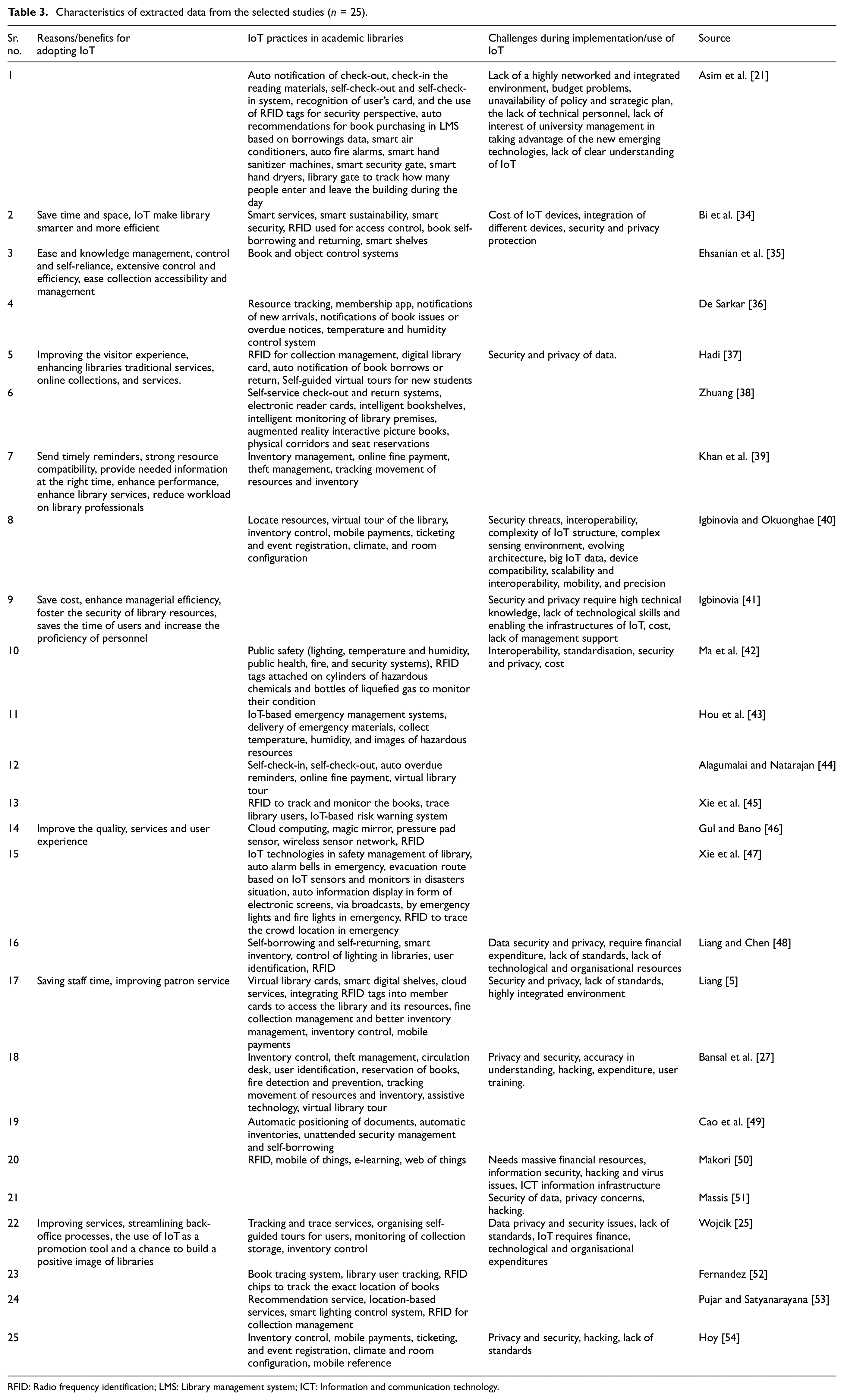
RQ 3 addresses the benefits/reasons for the adoption of IoT in academic libraries. Table 3 lists the reasons/factors for adopting IoT in libraries. Eight studies describe the benefits/reasons to adopt IoT in academic libraries (Table 3). Most of the articles identified the benefits/reasons of IoT adoption including save time, enhanced performance and efficiency of the library, improve the quality of the services, ease collection accessibility, increased library services, improving the visitor experience, reduced workload on library staff, save cost, increased positive image of the library, ease knowledge management, and control and self-reliance.
Characteristics of extracted data from the selected studies (n = 25).
RFID: Radio frequency identification; LMS: Library management system; ICT: Information and communication technology.
4.4. IoT practices in academic libraries
A range of IoT practices in academic libraries were extracted from selected 25 studies and listed in Table 3 (RQ4). However, these practices comprised four main categories including library software-related IoT, library building-related IoT, track and trace IoT, and smartphone-related IoT (Figure 6). Various types of library software–related IoT highlighted in selected 25 studies including auto notification of books/reading material’ check-out, check-in, and overdue, self-check-out and self-check-in, auto recommendations for book purchasing in LMS based on borrowings data, and notifications of new arrivals.
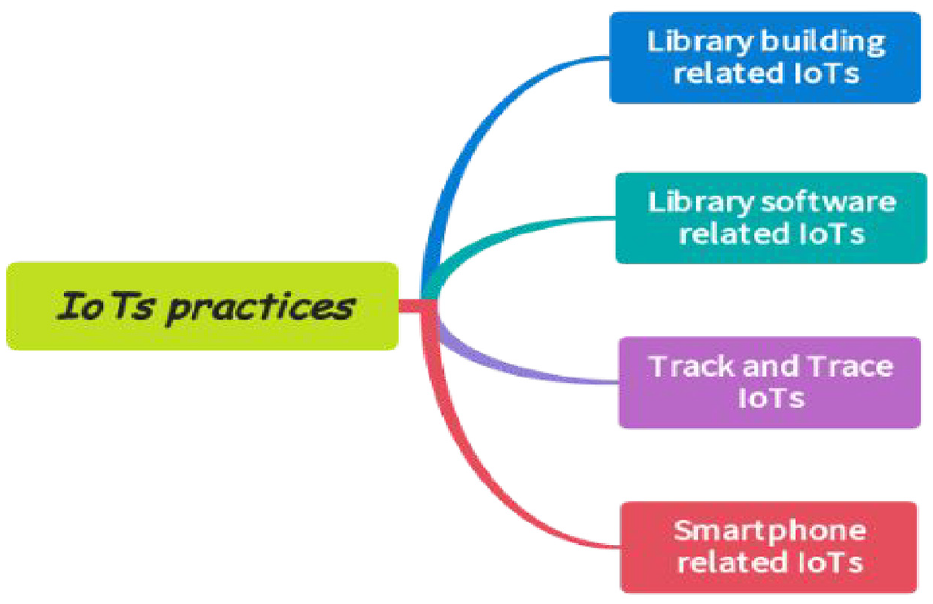
Major categories of IoT practices in academic libraries.
Table 3 depicts many types of libraries building-related IoT. These IoT-based technologies, also known as smart appliances, are used in homes and other commercial buildings instead of just libraries. These IoT-based technologies include fire detection and auto alarm, smart lighting system, temperature and humidity control system, smart security gate, smart hand dryers, smart hand sanitizer machine. The third category of IoT highlighted in the selected 25 studies is track and trace IoT-based services which includes inventory management, tracking movement of resources and inventory, tracing users’ data from virtual/physical card, tracing library users, track of users entered in library in a day, and use of RFID for security of resources. The fourth and last category is smartphone-related IoT that includes self-guided virtual tours of library, online fine payment, seat reservations, mobile as platform, and control of appliances.
4.5. Challenges in the adoption/use of IoT
Table 3 presents various challenges of IoT that are highlighted in 25 selected studies (RQ5). However, these challenges fall into four categories including technological challenges, financial challenges, organisational challenges and standards/policy challenges (Figure 7). The selected 25 studies identified different IoT challenges including security and privacy, cost of IoT devices, lack of standards and policy, require highly integrated environment, lack of management interest, lack of knowledge/understanding of IoT, lack of technical personnel, interoperability and complexity of IoT structure.
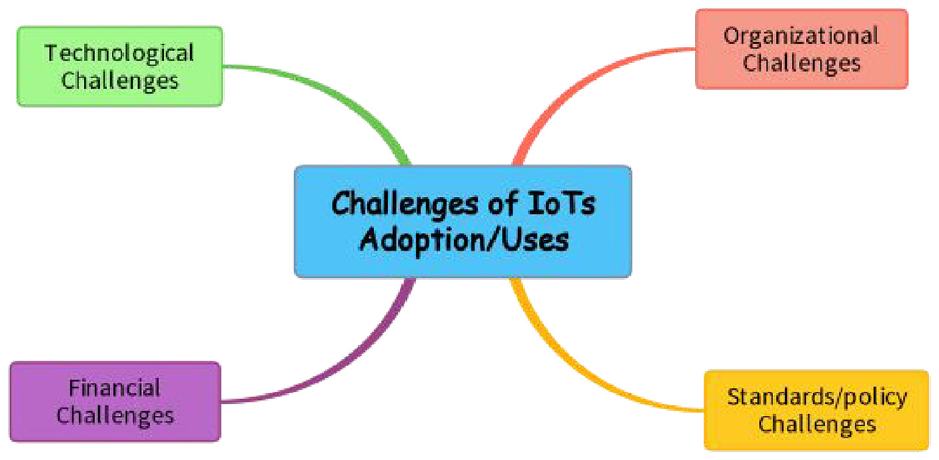
Major categories of IoT adoption/uses challenges.
5. Discussion on findings
The library community is taking interest in technology advancement, and one of the subjects of debate is the use of IoT in libraries. IoT applications have already permeated every aspect of society, and libraries hold enormous promise for IoT applications. As a result, IoT-based applications have grown in popularity in libraries throughout the world in recent years [22,25]. Twenty-five studies were selected using PRISMA guidelines for this SLR. Most of the studies were literature reviews or conceptual papers and few were empirical studies. Moreover, this SLR study extracted benefits/reasons, IoT practices in libraries, and challenges of IoT.
The IoT practices reported in selected 25 studies fall into four main categories including library software-related IoT, library building-related IoT, track and trace IoT, and smartphone-related IoT. The library software-related practices were auto notification of books/reading material’ check-out, check-in, and overdue, self-check-out and self-check-in. Most IoT-based services are associated with a library automation system. Various open-source library automation systems that are freely available and widely using around the world, such as Koha [55], can give automatic alerts of check-out, check-in, overdue, and other events, as well as enabling library patrons to self-check-out and check-in. As a result, library personnel are using the most simple and inexpensive IoT practice. Various types of IoT-based appliances are used everywhere including libraries [53]. This SLR also found use of various appliances in libraries including fire detection and auto alarm, smart lighting system, temperature and humidity control system, smart security gate, smart hand dryers, smart hand sanitizer machine. Nonetheless, these IoT-based products are not inexpensive but recent advancements, such as IoT benefit on a wide scale and individuals are attracted to these technologies. As a result, academic librarians should try to instal smart appliances to attract patrons by providing novel library services [21].
The second category is tracking and trace services that includes RFID use for inventory management and security purposes, tracking movement of resources and inventory, tracing users’ data from virtual/physical card, tracing library users, track of users entered in library in a day. RFID is the oldest IoT application that most libraries utilise [50]; hence, the library community is well familiar with the usage of RFID technology. RFID, however, is not a cheap solution for IoT because it requires a large expenditure to execute. Although, the usage of RFID is limited in academic libraries around the world; however, this technology may be utilised for resource mobility and inventory management, allowing library workers to manage resources more wisely [56]. Scanning users’ data from virtual/physical cards is another low-cost IoT application. This service is often used in academic libraries for library access, check-out and check-in of reading materials. However, the usage of library cards can be improved by embedding RFID tags/chips in the cards, which can detect user movement within the library. Nowadays, almost every library has a security gate that also provides data about how many people walk through it in a day. It is an excellent way to learn about a library’s readership. A library may use this IoT application to assess daily readership and make different decisions based on the data provided.
Various smartphone-related IoT including virtual tours of library, online fine payment, seat reservations and mobile as platform reported in the selected 25 studies. The IBM Simon was the first smartphone that was designed in 1992 and distributed to the public in 1994. Smartphone revolution happened in 2002 with the release of the BlackBerry smartphone, and it gained off in 2007 with the release of Apple’s groundbreaking iPhone [57]. Smartphone technology is rapidly spreading throughout society and has become a necessary part of today’s life. Smartphones are an excellent supporting element in the IoT framework [58], which is also used for IoT in libraries. Libraries now employ mobile applications to serve their patrons, such as providing a virtual tour of the library. Libraries used to have library orientation sessions for newly enrolled students, but today libraries may give virtual tours of the library using mobile apps, saving both users and library employees’ time. Seat reservations using smartphone applications are another IoT application. Users of the library can see the availability of seats on the mobile application and reserve it for themselves.
Different benefits/reasons explained in selected 25 studies includes saving time, enhanced performance, and efficiency of the library, improve the quality of the services, ease collection accessibility, increased library services, improving the visitor experience, reduced workload on library staff, increased positive image of the library. Because of the utilisation of developing technology, such as IoT, the library has become more efficient and improved its services for patrons [34]. Another advantage for library personnel is that IoT lessens their burden by allowing patrons to utilise the library with minimal assistance from library employees, such as self-check-out and check-in service. With the use of sophisticated technology such as IoT, the favourable image of the library may be enhanced, and users/visitors will be enticed to come and use these types of services [5]. IoT has great potential for academic libraries and library professionals around the world should pay attention to reap the fruit from this technology.
IoT applications are still in their infancy. Adopting and deploying IoT presents several challenges, including technological, standards, security and privacy concerns [40]. The selected 25 studies highlighted different types of IoT challenges including security and privacy, cost of IoT devices, lack of standards and policy, require highly integrated environment, lack of management interest, lack of knowledge/understanding of IoT, lack of technical personnel, interoperability and complexity of IoT structure. IoT are being adopted, but privacy protection is a major worry. As more devices become traceable via IoT, the threats to privacy rights become more serious; hence, IoT security protection is essential [59]. Cybercriminals can utilise IoT devices and software platforms to steal data from a wide range of IoT devices, including mobile smartphones [60]. The IoT can give numerous advantages to libraries regarding daily operations management, however many libraries lack the economic and technological resources required to implement IoT [25]. The adoption of IoT in academic libraries is hampered by a lack of financial resources.
Another significant IoT difficulty is the requirement for a highly networked and integrated environment to deploy IoT; however, IoT integration with existing ICT systems is a significant challenge [48]. It might be due to a lack of competent individuals in organisations that are unable to integrate numerous IoT technologies. It is concluded that IoT has enormous potential in academic libraries, but most applications are too costly. Libraries in developed countries with no financial constraints should implement many types of IoT applications. However, one of the possibilities to adopting IoT technologies for developing nations may be to focus on implementing low-cost IoT applications such as virtual library cards, auto-notification of overdue and fine notifications, and virtual library tours.
6. Implications of the study
This SLR presents research outcomes on IoT acceptance and use in academic libraries from across the globe. Because each nation has a distinct level of technological advancement and deployment, the reasons for acceptance, implementation challenges, and satisfaction with IoT may differ between countries. Thus, the crucial adoption and usage variables, as well as the numerous problems revealed in this study, will give library professionals with significant insight into how to use IoT to create novel services in academic libraries.
7. Limitation and future research directions
Despite the substantial significance of this research, it does have several shortcomings. This SLR examined five databases and included only papers published in English. Users and future researchers should be mindful of the limitations when assessing the data offered in this study. An SLR is based on recent and widely accessible research publications. Although the authors conducted a comprehensive literature search across world-renowned academic databases to locate substantially related studies, some articles on the subject may have been overlooked in our evaluation. Future researchers should investigate additional relevant databases to perform a more thorough investigation. Most previous investigations were literature reviews and conceptual articles. In future, researchers may explore IoT adoption and use in academic libraries using quantitative, qualitative, and mixed methods approaches. Furthermore, future studies on a wide range of IoT-related topics, such as the preparedness of IoT adoption in academic libraries, cloud computing in IoT, green computing infrastructure, the Web of Things, the Internet of library things, and integrated IoT technologies in academic libraries, could be conducted.
8. Conclusion
Recently, there has been a significant increase of literature on IoT applications in libraries. However, there is a void on systematic literature reviews in IoT adoption and use in libraries. This research provides a comprehensive overview of the current literature on IoT adoption and utilisation in academic libraries. The selected studies highlighted various benefits/reasons to adopt IoT including it to save time, enhanced performance, and efficiency of the library, improve the quality of the services, ease collection accessibility, increased library services, improving the visitor experience, reduced workload on library staff, and increased positive image of the library.
This SLR discovered various IoT-based practices in academic libraries including auto-notification of check-out, check-in, and overdue, self-check-out and self-check-in, inventory management with RFID, tracking movement of resources and inventory, tracing users data from virtual/physical card, tracing library users, track of users entered in library in a day, self-guided virtual tours of library, seat reservations, fire detection and auto alarm, smart lighting system, temperature and humidity control system, smart security gate, and smart hand dryers. Moreover, this study identified that security and privacy, cost of IoT devices, lack of standards and policy, require highly integrated environment, lack of management interest, lack of knowledge/understanding of IoT, lack of technical personnel, interoperability and complexity of IoT structure were the major challenges of IoT.
Footnotes
Declaration of conflicting interests
The author(s) declared no potential conflicts of interest with respect to the research, authorship and/or publication of this article.
Funding
The author(s) received no financial support for the research, authorship and/or publication of this article.
