







Abstract
Interdisciplinary knowledge, representing an ex-ante perspective, amalgamates fresh insights from diverse domains, while disruption serves as a post hoc metric of innovation, gauging the capacity of scholarly endeavours to challenge entrenched scientific paradigms. We study the relationship between interdisciplinary knowledge and disruption, examining 38 million papers across all fields from 1960 to 2020. We find that interdisciplinarity has steadily increased, while disruption – measured by how much research challenges existing scientific paradigms – has been on the decline. Larger research teams tend to produce more interdisciplinary work but are less likely to make disruptive contributions. Nevertheless, there is a clear positive link between interdisciplinarity and the disruptive potential of research papers. We also show that the impact of interdisciplinarity on disruption has grown over time, with a stronger effect in STEM fields compared with social sciences and humanities. Larger research teams also have a greater effect on disruption than smaller teams. We further examine factors like team diversity, reference variety, and delayed citation recognition to explain how interdisciplinarity contributes to disruption. Overall, our findings highlight the important role of interdisciplinary knowledge in driving scientific innovation.
1. Introduction
Scientific innovation is a multifaceted concept, ranging from the recombinant process of existing ideas to the transformation of established paradigms [1,2]. Interdisciplinary knowledge [3,4], which offers a forward-looking perspective on innovation, integrates insights from various fields, while disruption serves as a retrospective measure, evaluating how scholarly work challenges and redefines existing scientific frameworks [5].
Recently, some researchers argue that scientific innovation is slowing down [6,7]. Studies suggest that today’s papers and patents are less likely to trigger major advancements [8], raising concerns for policymakers. A decline in innovation could hinder progress in critical areas like healthcare, security and economic development. Despite the increasing trend towards interdisciplinary research, a puzzling question remains: why is modern multidisciplinary science becoming less disruptive over time? What is the relationship between interdisciplinarity and innovation, and what mechanisms drive this connection?
To investigate these questions, we analysed 38 million scientific papers published between 1960 and 2020. We observe a consistent increase in interdisciplinarity alongside a decline in the disruptiveness of research across various fields. We also identify a paradox: larger research teams tend to produce more interdisciplinary work but less disruptive research, confirming findings from prior studies [9,10].
Through regression analysis, we find a positive correlation between interdisciplinarity and the disruptive potential of papers. This relationship holds true across different measures of interdisciplinarity and disruption, regardless of how long the citation window is. We also explore how the connection between interdisciplinarity and disruption varies in different contexts. Notably, the impact of interdisciplinarity on disruption has grown stronger over time. This trend is more pronounced in STEM fields compared with the social sciences and humanities, and in larger teams compared with smaller ones. We propose several factors that help explain the positive link between interdisciplinarity and disruption. These include the expertise and diversity of research teams, the age and variety of their references, and the phenomenon of delayed recognition in citations. Overall, our findings highlight the significant role of interdisciplinary knowledge in driving disruptive research.
The remainder of this article is organised as follows: Section 2 provides a review of the literature on the dynamics of interdisciplinarity and the disruptiveness of papers. Section 3 outlines the data set used in the analysis, while Section 4 describes the methods and metrics employed. Section 5 presents the results of the study. Finally, Section 6 discusses the implications, as well as the limitations and potential directions for future research.
2. Background
Interdisciplinary knowledge and disruptive innovation are central to scientific progress. Interdisciplinarity involves combining ideas, methods and perspectives from different fields to address complex problems. Disruption refers to the ability of new ideas or technologies to challenge established norms and create significant shifts in knowledge or practice [5,11]. As science becomes more specialised, researchers increasingly recognise the limits of working within rigid disciplinary boundaries. Tackling modern challenges like climate change or healthcare inequities often requires blending insights from multiple fields. Advances in technology and communication have made interdisciplinary collaboration easier [12,13], while funding agencies and academic institutions promote such efforts through specialised grants and research centres. As a result, interdisciplinarity has been steadily rising.
At the same time, scientific progress faces challenges. The ‘low-hanging fruit’ theory suggests that as knowledge grows, the easiest breakthroughs have already been achieved, making future innovations harder [7,14]. Mature fields may also become more resistant to disruptive ideas, as they often require extensive specialised knowledge and resources. Increasingly complex and interconnected research tends to build on existing ideas rather than overturn them [15]. This leads to our first hypothesis:
H01. Interdisciplinarity is increasing over time, while disruptive innovation is decreasing.
The rise of larger research teams reflects the growing complexity of scientific inquiry [16]. Teams bring together diverse perspectives and expertise, making them better equipped to tackle interdisciplinary problems [17]. However, while larger teams may excel at integrating knowledge from multiple fields, they often struggle to produce disruptive breakthroughs [9]. Disruptive ideas frequently originate from small, nimble teams or individuals working outside conventional frameworks [9]. In contrast, larger teams, constrained by structure and bureaucracy, may favour incremental advances over bold, paradigm-shifting ideas. This leads to our second hypothesis:
H02. Larger teams show greater interdisciplinarity but lower disruptive potential.
Previous research shows that interdisciplinary work contributes significantly to scientific impact [18]. For instance, interdisciplinary papers tend to have broader and longer-lasting citation influence, and they often play a key role in technological innovation. Unlike citation counts, which measure popularity, disruption assesses the ability of research to change the direction of a field [11,19]. Interdisciplinary knowledge fosters disruption by breaking traditional boundaries and introducing fresh perspectives [20]. We hypothesise that interdisciplinarity is positively associated with disruptive potential:
H03. Interdisciplinary knowledge enhances the disruptive potential of scientific papers.
The relationship between interdisciplinarity and disruption evolves over time. Innovation often emerges from recombining knowledge from diverse domains. As scientific challenges become more complex, the benefits of interdisciplinary approaches are expected to grow [4,21]. The effects of interdisciplinarity also vary by discipline. STEM fields, with their focus on empirical and problem-solving approaches, are more likely to benefit from interdisciplinary work than social sciences and humanities, which traditionally emphasise understanding human behaviour and culture.
Team size further influences these dynamics. Larger teams tend to focus on practical applications and can leverage interdisciplinary collaboration more effectively for complex problems. Smaller teams, by contrast, are better suited to generating new theories but may benefit less from interdisciplinarity [22,23]. This leads to our final hypothesis:
H04. The positive effect of interdisciplinarity on disruption increases over time. It is stronger in STEM fields than in social sciences and humanities, and larger teams see greater benefits compared with smaller ones.
3. Data
In this study, we use the Microsoft Academic Graph (MAG) data set, known for its extensive coverage and reliability in scholarly research. Our version of the MAG data set spans from 1800 to 2021, encompassing over 200 million documents, including journal articles, conference papers, preprints, and other research publications. For our analysis, we focus on papers published between 1960 and 2020. To ensure quality and relevance, we include only papers with at least five references, which allows us to analyse their knowledge sources and excludes non-research articles or incomplete records. We further narrow our scope to journal articles to maintain consistency in citation behaviour, resulting in a data set of 38,879,575 research papers.
To measure interdisciplinarity, we analyse the topic distribution of a paper’s references using MAG’s comprehensive citation data, which includes over 1.5 billion citation records. The MAG taxonomy organises research fields into two hierarchical levels: 19 broad fields (such as Medicine, Physics, and Computer Science) and 292 more specific subfields. Each paper is assigned one or more field labels based on machine learning models, with associated confidence scores. In cases with multiple labels, we use the subfield with the highest confidence. This structured classification enables detailed assessments of interdisciplinarity.
We also measure interdisciplinarity using a second approach: examining the diversity of journal pairs in a paper’s references. MAG includes 39,893 distinct journals, each representing a unique topic. This method provides a more detailed view of interdisciplinarity and complements our analysis of field labels. The descriptive statistics of all variables in our sample are reported in Appendix Table 3. And the Pearson correlation of all variable pairs is reported in Appendix Figure 7. Together, these metrics create a robust framework for studying the interdisciplinary nature of research.
4. Methodology
4.1. Measures of interdisciplinarity
4.1.1. Rao-Stirling framework
Drawing upon the landscape of 292 second-level disciplines delineated within the MAG data set, we endeavour to quantify interdisciplinary characteristics through an analysis of the distribution of disciplines among references cited in papers (see Appendix 1 Figure 5). Aligning with the framework advanced by Stirling [24], our investigation delineates interdisciplinarity into three dimensions: variety, imbalance 1 and disparity.
For a given paper i and its reference set
Variety is represented by the number of fields covered by the references of i

Imbalance is based on the normalised Shannon entropy of the distribution of disciplines among the references of i

where
Disparity is represented by the maximum distance between fields present in the references of i

where

Finally, the Rao-Stirling index is defined as

where
4.1.2 Atypicality
To quantify atypical combination of knowledge, we follow the work of Uzzi, Mukherjee [3]. Specifically, we first conduct ten Monte Carlo simulations [25] to generate reshuffled networks by randomly reassigning edges while preserving the temporal and distributional characteristics of the original citation network. Based on the real network and reshuffled network, we examine the distribution of journal pairs found within a paper’s reference list.
For each referenced journal pair, we convert them into z-scores, a standardised representation. The calculation of
The distribution of atypical knowledge combinations is denoted as a set {

4.2. Measures of disruptiveness
We examine the disruption score as pivotal metrics for assessing disruptive innovation within the realm of scientific research. The disruption score [8,9,19] serves as a quantitative measure to assess disruption within scientific papers. The disruption score is defined as

where
As shown in Appendix 1 Figure 6, a lower disruption score indicates extensive citation of references by papers referencing the FP, aligning with established knowledge and consolidating existing paradigms. Conversely, higher disruption values signify highly disruptive papers capable of inducing paradigm shifts. Understanding disruption sheds light on knowledge dissemination patterns and scientific paradigm shifts [26]. As the disruption score distributed around zero, we following the existing study [22], using the dummy variable disruption score above 0 as the main dependent variable

In our data set, just 25% of papers exhibit a disruption score above 0. We leverage the Nobel-winning papers to illustrate that disruptive papers are adept at capturing the majority of significant scientific breakthroughs (refer to Appendix 3, Figure 9). In addition, we employ alternative disruption measures to corroborate the robustness of our findings (see Appendix 3).
4.3. Possible mechanisms
(1) Team expertise and diversity: We assess the interdisciplinary nature of teams by evaluating the diversity of expertise among their members, as a surrogate for the breadth of knowledge accessible to the team [22]. This evaluation involves categorising the primary field of each team member, thereby distinguishing between monodisciplinary and interdisciplinary teams.
For a paper’s co-author list

In addition to assessing the presence of authors with unique expertise, we also measure the overall exposure of the team to a diverse array of expertise. By computing the weighted distribution of expertise within the team, where the weighted portion of topic-related expertise k is denoted as

(2) Reference age and diversity: Reference age is a metric defined as the temporal difference, measured in years, between the publication year of the focal paper i and the publication years of its cited references. This metric offers insights into the temporal spread of the cited literature relative to the focal paper, providing a measure of the temporal dynamics and historical context underlying the research.
We further evaluate the diversity in reference age within a paper’s reference list. This entails calculating the weighted distribution of reference ages, where the weight assigned to each age category represents its proportion relative to the total number of references

(3) Delayed recognition: We employ parameter-independent metrics [27] to assess the delayed citation of papers based on their citation trajectory. The beauty coefficient (B) is computed through a systematic comparison of a paper’s citation trajectory, the peak annual citation count, and the year of this peak attainment. The citation trajectory line

where

4.4. Empirical specification
To ensure the reliability of our analysis, we include several carefully selected control variables to minimise bias and strengthen the validity of our findings. To account for variations between scientific disciplines and over time, we use fixed effects in our models. Specifically, we include 19 primary fields in MAG to capture differences across scientific domains [28]. We also incorporate year fixed effects to address changes and trends over time [8]. In addition, we include fixed effects for 39,893 individual journals to account for variations in the characteristics of publication outlets.
We control for differences in citation practices by including the number of references in each paper as a variable [29]. This ensures that differences in how frequently papers cite other works do not skew the results. We also account for team size by including the number of authors on each paper. This helps us consider the impact of group dynamics on research outcomes [9,22]. In addition, we account for the potential influence of grant funding on research outcomes. We include a variable indicating whether a paper received funding from the National Institutes of Health (NIH) or the National Science Foundation (NSF) [30,31].
To reflect author expertise and prestige, we include the average career age of the authors, their past publication counts, their top 5% highly cited publications [32] and the prestige of their affiliations (measured by the citation impact of their institutions). These factors help us control for differences in the reputation and ability of the authors.
The fixed-effect logistic regression model is employed to evaluate the impact of diversity on the likelihood of a paper being disruptive

where i represents the article, y the year of publication, f the field and j the journal. This framework facilitates an in-depth exploration of the nuanced relationships between diversity and scientific impact/disruptive papers while effectively controlling for various confounding factors.
5. Result
5.1. Reversed patterns of interdisciplinarity and disruption
Figure 1 shows a clear upwards trend in interdisciplinarity alongside a decline in disruptive potential over the past six decades. This increase in interdisciplinarity is evident across several measures, such as diversity, imbalance, disparity, the Rao-Stirling index and atypicality. Appendix Figure 8 shows that the total number of papers and knowledge also increase over time. These trends are observed across multiple fields, including Science and Engineering, Social Sciences and Arts and Humanities. 3 In Science and Engineering, which makes up 86.8% of our data set, we see a 57% rise in the average Rao-Stirling index, from 0.144 to 0.226, while disruptive potential drops by 62.5%, from 0.40 to 0.15.
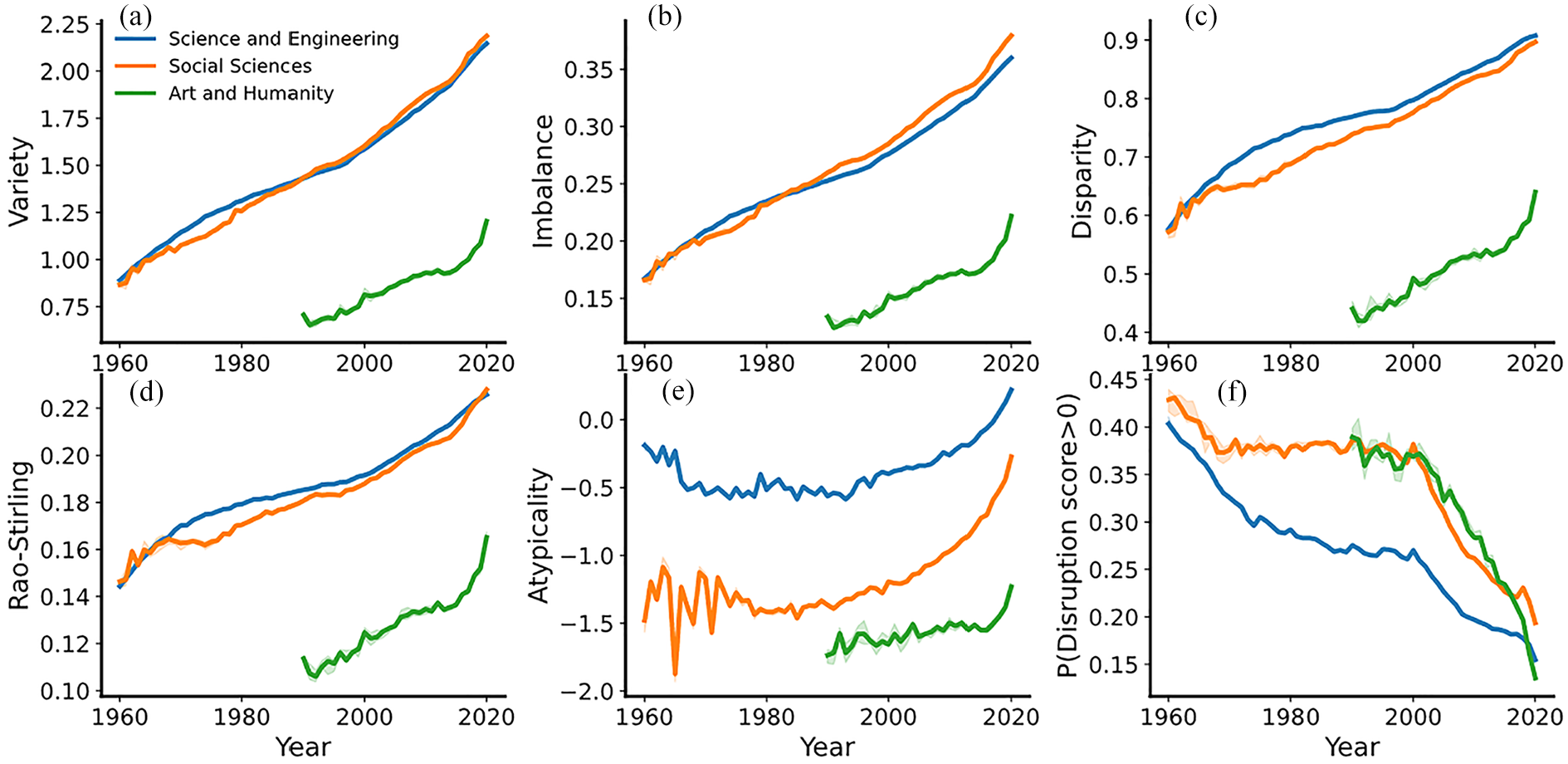
Interdisciplinarity increases over time, while disruption decreases over time. It illustrates the temporal evolution of interdisciplinarity and disruption in scholarly publications from 1960 to 2020, utilising a dataset comprising MAG 38,879,575 journal papers. The analysis focuses on the average values of various metrics: (a) variety, (b) imbalance, (c) disparity, (d) Rao-Stirling index, (e) atypicality, and (f) the proportion of disruptive papers. Shaded regions denote 95% bootstrapped confidence intervals. Notably, trend lines for papers in the Arts and Humanities before 1990 are excluded due to their scarcity in the data set (constituting only 0.2% of the total) and substantial fluctuations during that timeframe.
Figure 2 illustrates the relationship between team size, interdisciplinarity, and disruptive potential. As team size increases, interdisciplinarity grows, reflected in higher diversity, imbalance, disparity, Rao-Stirling index and atypicality. On the contrary, the disruptive potential of papers, measured by the proportion of papers with positive disruption scores, decreases as team size increases. These trends hold consistently across Science and Engineering, Social Sciences, and Arts and Humanities.
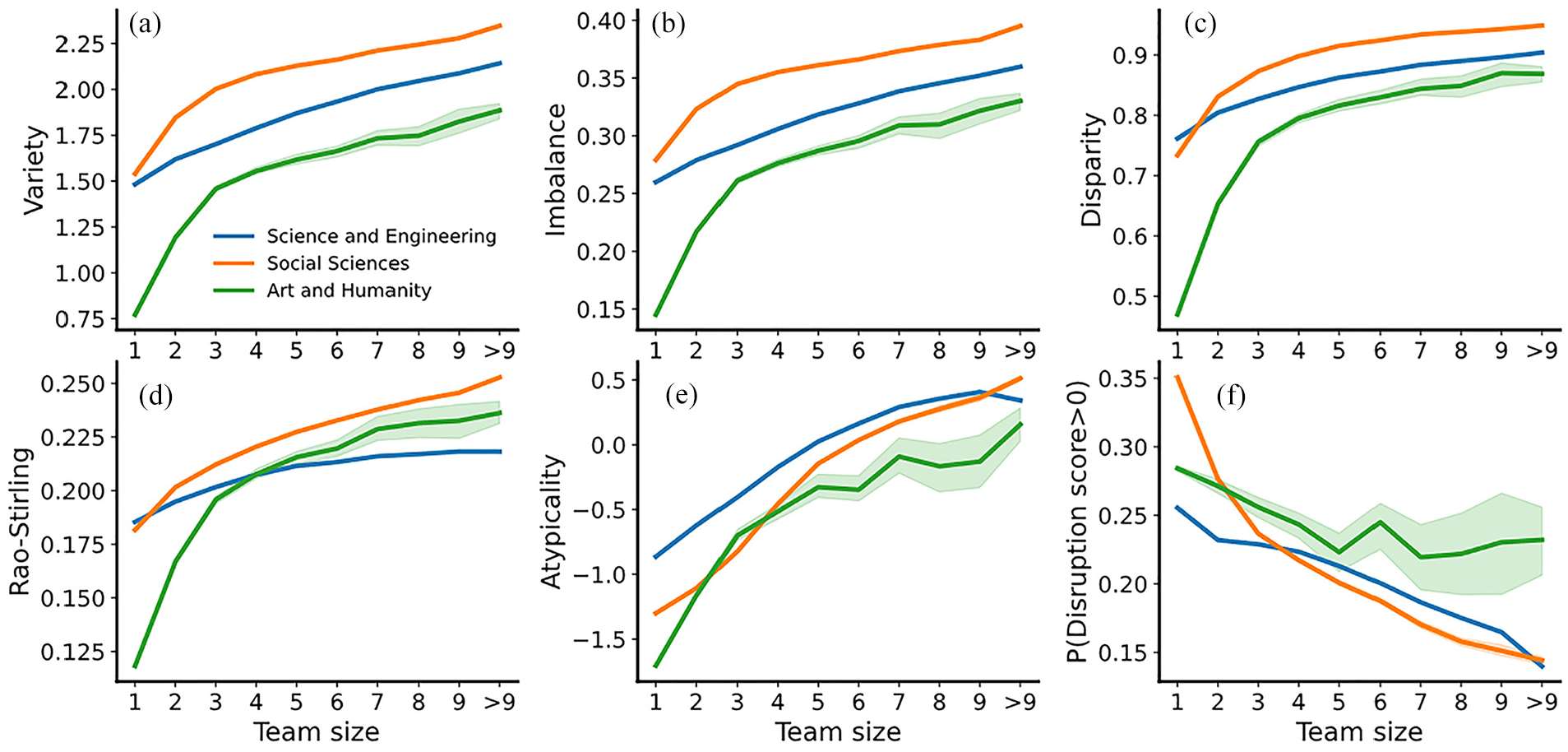
Larger teams exhibit greater interdisciplinarity but demonstrate reduced disruptive potential. We analyse the average interdisciplinarity and disruption measures for papers with different team sizes. The analysis focuses on the average values of various metrics: (a) variety, (b) imbalance, (c) disparity, (d) Rao-Stirling index, (e) atypicality and (f) the proportion of disruptive papers. Shaded areas represent 95% bootstrapped confidence intervals.
5.2. Positive relationship between interdisciplinarity and disruption
The reversed trends and intricacies inherent in interdisciplinarity and disruption within scholarly papers prompt an inquiry into the potential correlation between interdisciplinary knowledge and disruptive potential. Herein, we posit interdisciplinarity as an ex-ante measure, ascertainable at the time of publication, while disruption serves as an ex-post measure, discernible through the forward citation network.
Table 1 presents the estimated coefficients for interdisciplinarity alongside the disruptive potential of papers, with all columns derived from multivariate fixed-effect logit regression models. These models account for potential confounding factors, including reference count, team size, affiliation prestige, career age, publication records of authors, grant funding, year fixed effects, field fixed effects, and journal fixed effects.
Basic results: the positive relationship between interdisciplinarity and disruptive potential.
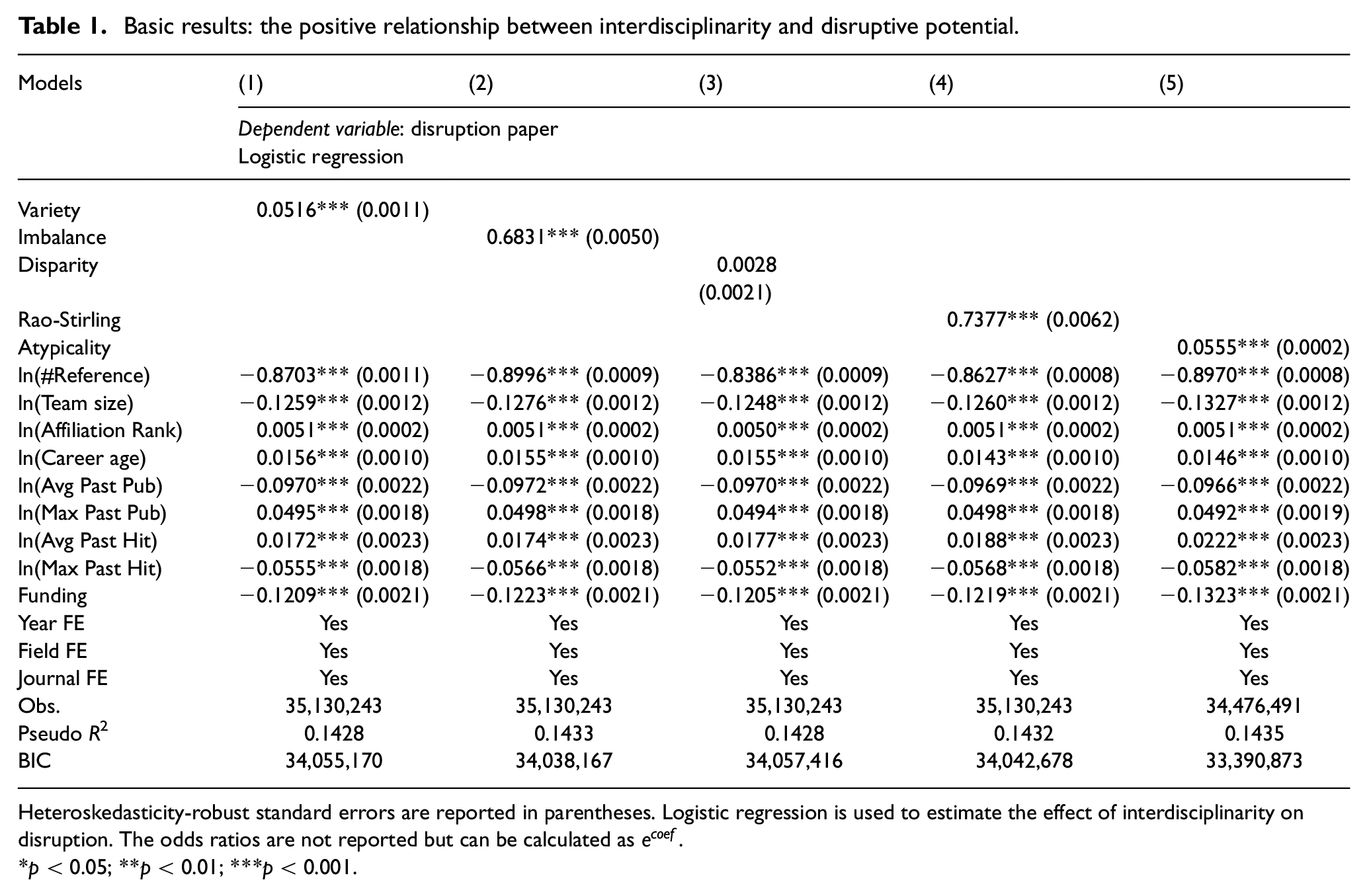
Heteroskedasticity-robust standard errors are reported in parentheses. Logistic regression is used to estimate the effect of interdisciplinarity on disruption. The odds ratios are not reported but can be calculated as
p < 0.05; **p < 0.01; ***p < 0.001.
Our findings consistently reveal a positive association between interdisciplinarity – measured in terms of variety, imbalance, disparity, Rao-Stirling and atypicality – and disruptive potential. Although the coefficient of disparity is not significant, it still exhibits a positive trend. Specifically, a one-standard deviation increase in variety (STD = 0.56) leads to a 2.9% increase in the logit odds of disruptive papers (
5.3. Split-sample regression
We further explore how interdisciplinarity affects the production of disruptive scholarly papers in different contexts. Figure 3(a) and (b) shows how interdisciplinarity influences disruptive papers over different time periods. From 1960 to 1975, when interdisciplinary research was still emerging, we observed a negative correlation between the Rao-Stirling index and disruptive papers. However, from 1975 to 1990, the relationship became more positive, although not statistically significant. From 1990 onwards, a strong positive relationship between interdisciplinarity and disruptive papers emerged, with the effect growing stronger over time. We also find that the positive influence of atypicality on disruptive innovation has remained steady over the past six decades, across various disciplines and team sizes.
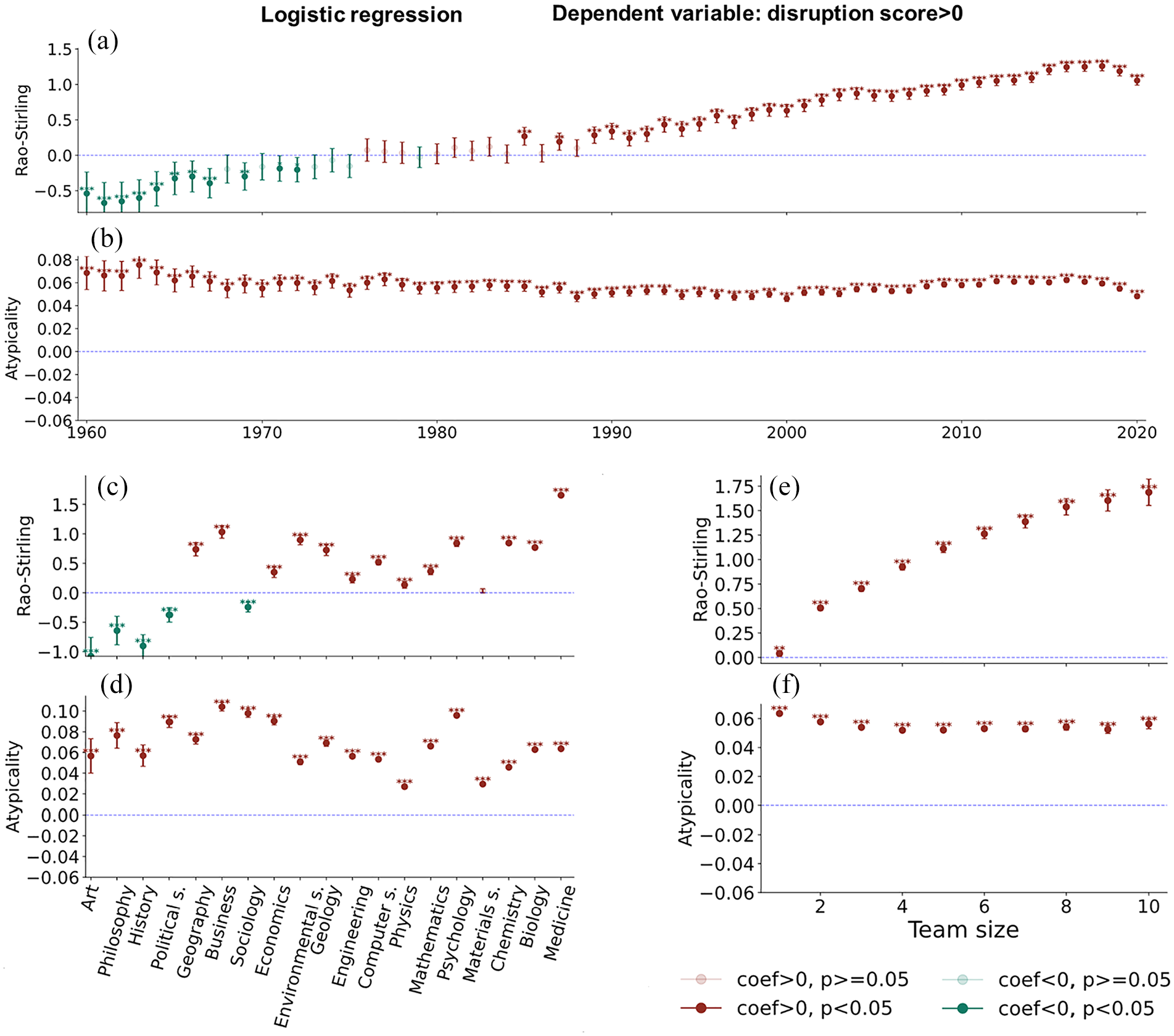
Split-sample regression of interdisciplinarity on disruption. (a, b) Estimated effects of the Rao-Stirling index and atypicality on disruptive papers in each year, spanning from 1960 to 2020. (c, d) Estimated effects of the Rao-Stirling index and atypicality on disruptive papers across 19 MAG first-level fields. (e, f) Estimated effects of the Rao-Stirling index and atypicality on disruptive papers for different team sizes (ranging from 1 to 10). All control variables are included in the regression. Error bars depict the upper and lower bounds of the 95% confidence intervals based on robust standard errors. The odds ratios are not reported but can be calculated as
Figure 3(c) and (d) examines the impact of interdisciplinarity in different disciplines. In STEM fields, there is a consistent, statistically significant positive relationship between interdisciplinarity (as measured by the Rao-Stirling index) and disruptive research. In contrast, disciplines within the social sciences and humanities, such as art, philosophy, history, political science and sociology, show a negative relationship between interdisciplinarity and disruptive papers.
Figure 3(e) and (f) analyses how team size affects the relationship between interdisciplinarity and disruptive research. Our findings reveal a positive association between the Rao-Stirling index and the likelihood of producing disruptive papers across all team sizes. Notably, larger teams tend to have a stronger effect, suggesting that bigger teams benefit more from interdisciplinary collaboration. Smaller teams show a weaker effect.
5.4. Robustness check
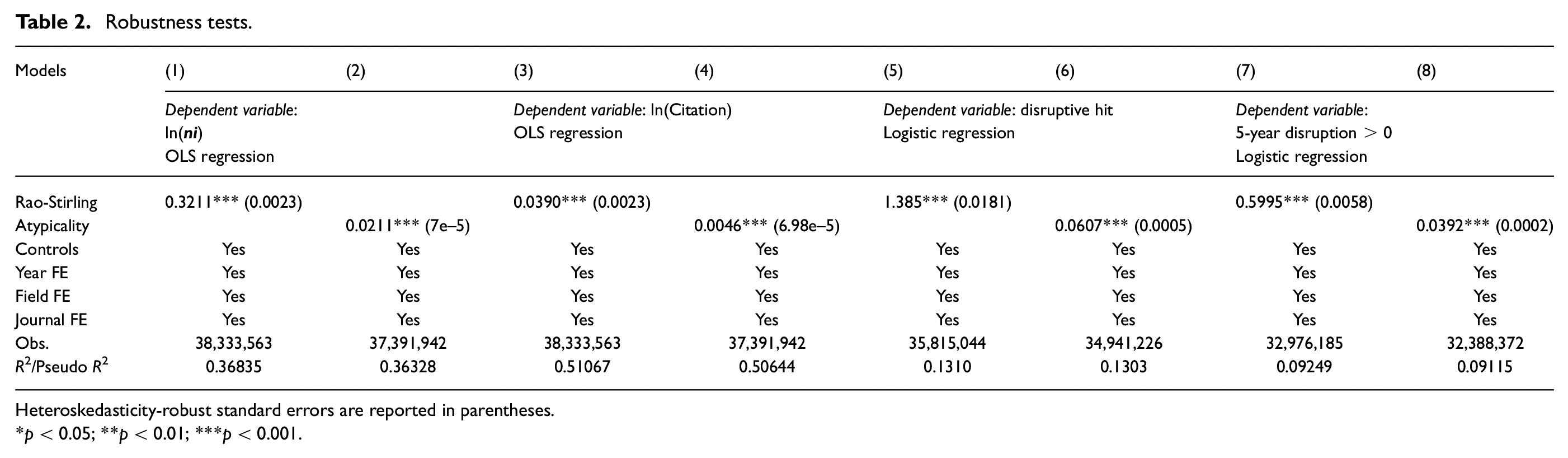
We use alternative disruption measures, as outlined in Appendix 2, and various models to assess the robustness of our results. Table 2 shows the robustness analysis results. In columns (1) and (2), we analyse the impact of the Rao-Stirling index and atypicality on disruptive citations (i.e. the number of publications that cite the focal paper without referencing its cited sources). Columns (3) and (4) examine the effect on total citation count, while columns (5) and (6) explore the influence on disruptive hits (papers ranked in the top 10% of citations within their publication year and field, with a disruption score above 0). Finally, columns (7) and (8) look at the effect on the 5-year window disruption score. In all cases, we control for potential confounding factors, such as reference count, team size, affiliation prestige, career age, author publication records, grant funding, and fixed effects for year, field and journal. The positive significance of the Rao-Stirling index and atypicality coefficients across all models supports the reliability of our findings.
Robustness tests.
Heteroskedasticity-robust standard errors are reported in parentheses.
p < 0.05; **p < 0.01; ***p < 0.001.
5.5. Potential pathways
Finally, we explore how interdisciplinary knowledge leads to more disruptive scientific contributions by examining several key factors. First, we look at whether exposure to diverse expertise from different fields helps explain this link. The results are shown in Appendix 4 (Tables 4-7). Table 4 shows that interdisciplinary knowledge involves a wide range of expertise. Table 7 (columns (1) and (2)) further reveals that both team expertise and team expertise diversity are positively correlated with the disruptive potential of research papers. Second, we examine the role of diverse reference sources. Table 5 shows that interdisciplinary research engages with a variety of reference ages, and Table 7 (columns (3) and (4)) demonstrates that both the average reference age and the diversity of reference ages are positively correlated with disruptive potential. Third, we explore the role of delayed recognition in interdisciplinary research. Table 6 shows that interdisciplinary research is more likely to experience delayed recognition, as measured by the beauty coefficient and awakening time. Table 7 (columns (5) and (6)) indicates that both the beauty coefficient and awakening time are positively correlated with disruptive potential.
We also test regression models to predict disruptive potential based on the Rao-Stirling index or the atypicality of papers, controlling for other factors. Figure 4 shows the logistic regression results, where we find that while the influence of the Rao-Stirling index and atypicality decreases when considering other factors, the strong link between interdisciplinarity and disruption remains consistent.
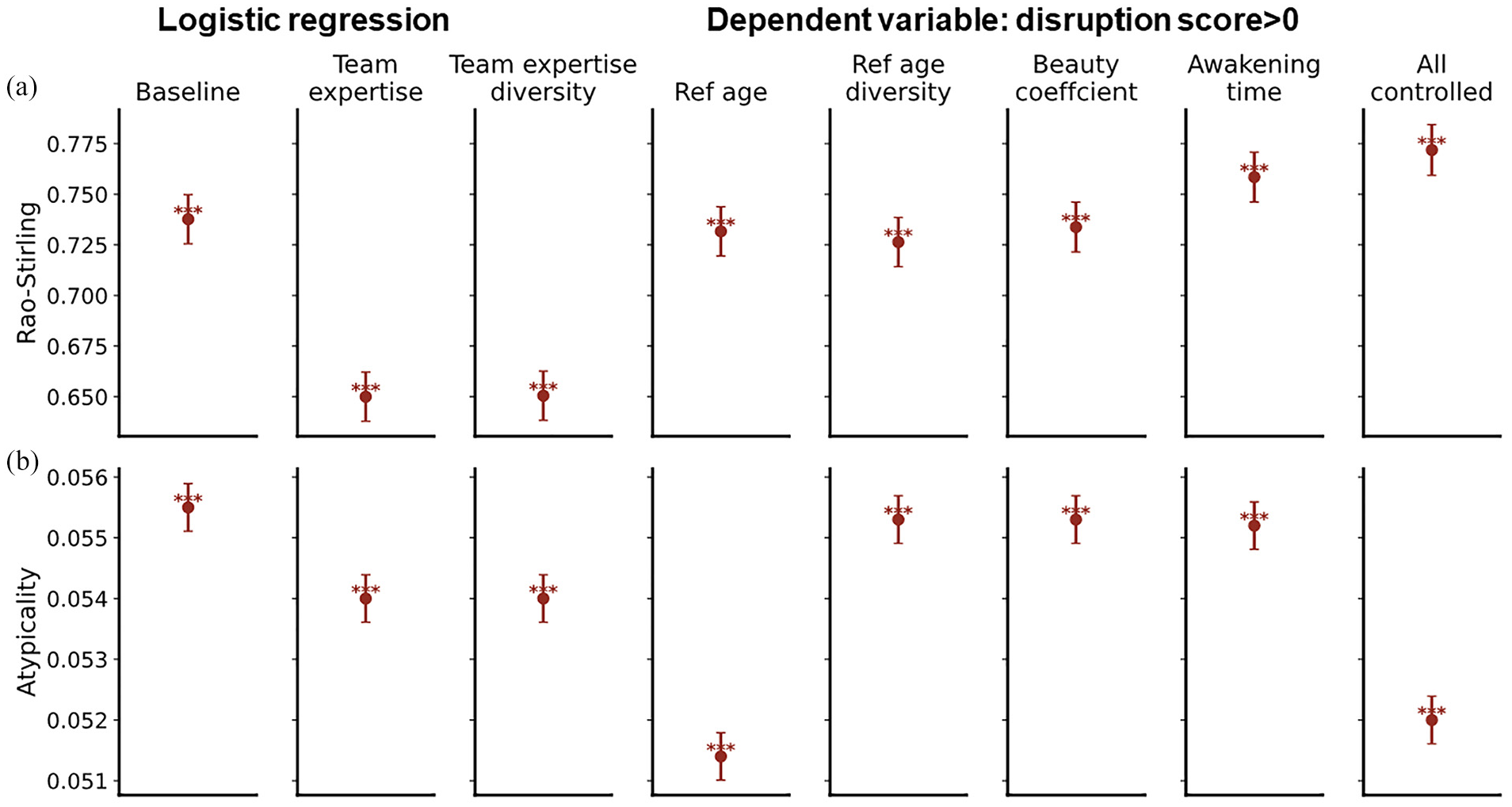
Interdisciplinary knowledge and disruption relationships controlling for numerous factors. (a, b) The regression coefficient and 95% CIs for (a) the Rao-Stirling index and (b) atypicality predicting disruptive papers while controlling for the features indicated in the panel headings. The leftmost panels indicate the coefficients of baseline regressions, corresponding to results in Table 1 columns (4) and (5). The rightmost panels indicate the coefficients after controlling collectively for team expertise and diversity, reference age and diversity, and the phenomenon of delayed recognition in citations.
Taken together, our findings suggest that interdisciplinary research is connected to several factors – team expertise, reference age diversity, and delayed recognition – that contribute to its innovative success. However, these factors alone do not fully explain the disruptive potential of interdisciplinary knowledge, which appears to be a powerful driver of scientific breakthroughs.
6. Discussion
Our analysis highlights the evolving relationship between interdisciplinary knowledge and disruptive innovation in science. Building on recent studies [8,9,22], we found that while interdisciplinarity has steadily increased over time, the potential for disruptive innovation has declined. Larger research teams tend to be more interdisciplinary, but this comes with a decrease in disruptive potential. Despite this, we show that there is a strong, positive connection between interdisciplinarity and disruptive innovation, which has become more pronounced in recent years.
This shift from a historically negative or neutral relationship to a strong positive one underscores the growing recognition of the role interdisciplinary approaches play in driving innovation. As scientific knowledge becomes more specialised, interdisciplinary collaboration has increasingly led to breakthroughs. Our study also reveals differences across disciplines. In STEM fields, interdisciplinarity consistently correlates with disruptive innovation, while in the social sciences and humanities, the relationship is more complex, with some areas showing a negative correlation. This suggests that the impact of interdisciplinarity on disruption varies by discipline, and it is important to consider the unique characteristics of each field when evaluating this relationship.
Our H02 (Larger teams exhibit greater interdisciplinarity but lower disruptive potential) and H03 (Interdisciplinary knowledge enhances the disruptive potential of scientific papers) appear to conflict, suggesting that team size mediates these effects. However, our findings demonstrate that higher ex-ante interdisciplinarity is significantly linked to greater ex-post disruption in science, irrespective of team size. This interplay between H02 and H03 indicates that while larger teams often achieve higher interdisciplinarity, their work tends to align more closely with established paradigms, limiting their disruptive potential. Our results emphasise that the diversity of knowledge inputs is crucial for driving breakthrough innovations, highlighting the importance of fostering interdisciplinarity within teams of all sizes to maximise their capacity for challenging scientific conventions. In addition, we found that larger research teams benefit more from interdisciplinary approaches, leading to greater disruptive outcomes. Smaller teams, while still benefitting from interdisciplinarity, exhibit a smaller effect size due to limited resources or narrower expertise.
From a policy perspective, encouraging interdisciplinary research, particularly in larger teams and STEM fields, is a practical strategy for fostering disruptive innovation. Policymakers could support this by funding interdisciplinary research initiatives and creating environments that facilitate collaboration across different fields. By assembling diverse teams with complementary skills, research institutions can maximise their potential for groundbreaking discoveries.
However, our research has some limitations. We measured interdisciplinarity based on reference lists, which does not capture other types of diversity, such as gender, ethnicity or collaborative diversity. We also used citation networks to measure disruption, which can be biased by factors like preferential citation. In addition, our study used fixed-effect regression models rather than causal analysis, which may limit the robustness of our conclusions. Finally, we focused on individual papers, and future research could explore the effects of interdisciplinarity at the level of individual scientists, teams, or institutions for a more comprehensive view of its impact on scientific disruption.
Footnotes
Appendix 1
Appendix 2
Appendix 3
Appendix 4
Author contribution
Declaration of conflicting interests
The author(s) declared no potential conflicts of interest with respect to the research, authorship and/or publication of this article.
Funding
The author disclosed receipt of the following financial support for the research, authorship and/or publication of this article: This research was supported by the National Natural Science Foundation of China Young Student (Doctoral) Project (#724B2015). Furthermore, the author wishes to express sincere gratitude to the editors and anonymous reviewers for their invaluable insights and feedback, which have greatly contributed to the improvement of this work.
