






Abstract
Deepfake videos are widely recognized for their potential to manipulate and distort reality. This study aims to identify prevalent deepfake identification strategies among an often-overlooked age group, seniors (55 years and older) and how these strategies develop over time. We conducted a 3-week diary study with 30 seniors, guided by prior work on information credibility and deepfake identification. Four main deepfake identification strategy categories emerged: (1) source, (2) endorsement, (3) media, and (4) content. A common combination was the use of strategies from the media, source, and endorsement categories. Another common combination was the content, endorsement, and source categories. Notably, the number of strategy combinations employed increased over the 3-week data collection period. By incorporating a longitudinal perspective, the study offers a more dynamic understanding of how seniors’ identification strategies evolve over time. Practically, the insights from this study can inform targeted interventions and collaborative programs that aim to enhance seniors’ resilience against video-based disinformation.
Keywords
1. Introduction
The proliferation of disinformation significantly erodes public trust and complicates the maintenance of social stability. Among the most subtle forms of disinformation are deepfake videos, which use artificial intelligence (AI) techniques to generate fake footage by swapping, synthesizing, and re-enacting a person’s face, voice, and body expression so convincingly real that it easily deceives the public. Due to technological advancements, deepfake videos are increasingly found in news, politics, and pornography [1,2]. Deepfakes have demonstrated the potential to undermine privacy and trust, shaking the foundations of democratic institutions and public confidence [3]. The risks associated with these manipulations underscore the need for stringent oversight and remedial action.
Unsurprisingly, there is a growing body of research in deepfake identification, encompassing both algorithmic and user-based perspectives. From a technological standpoint, AI and machine-learning algorithms play a crucial role [4], with recent advancements like AI-assisted blind watermarking offering promising results [5]. These techniques can detect tampering, but may be imperfect, struggling to keep up with new and evolving deepfake methods [6]. User-focused studies complement these technological efforts by enhancing our understanding of how individuals discern and interact with deepfakes. For example, Goh [7] applied the elaboration likelihood model (ELM) [8] and revealed the types of strategies that individuals use to identify deepfake videos and the challenges encountered. In addition, Groh et al. [9] examined whether people can identify deepfakes of different modalities. The study found that spotting additional audio and video cues can enhance individual discernment accuracy compared with text alone, informing the importance of comprehensive digital literacy programs.
Despite the useful insights offered by user-oriented studies, there exists a noticeable gap in the demographic scope of these investigations: a substantial body of research focuses on the general population (e.g. see [10]) or younger individuals (e.g. see [11]), while the senior age group remains underrepresented. This is concerning, given that seniors are especially vulnerable to disinformation, including deepfakes. Research shows that seniors are more likely to believe and share disinformation compared with young adults [12,13], a susceptibility that is largely attributed to lower digital literacy [14]. Moreover, seniors’ reliance on traditional news sources and their potentially diminished capacity to discern manipulated media content substantially increase their risk of deception [15].
While the literature highlights antecedents that account for the vulnerability of seniors to deepfake videos [16,17], there is little research investigating their proactive behaviors when dealing with deepfakes. Seniors are not just passive recipients of information; they actively seek, interact with, and share online content [18]. While seniors might face certain limitations, such as lower digital literacy compared with younger generations, they may possess strategies derived from their extensive life experiences and accumulated knowledge, which could be instrumental in combating disinformation [19]. Here, Tang et al. [20] provided an important contribution by focusing primarily on the heuristic cues seniors use when assessing deepfake credibility. However, their study was cross-sectional and did not explore how these strategies evolve over time. This dearth of research on seniors’ interaction with deepfakes from a longitudinal perspective represents an important gap that potentially hinders the development of methods to mitigate the harms of deepfake-related disinformation on this significant segment of the population.
Hence, in this study, we seek to identify prevalent deepfake identification strategies within this age group and examine how these strategies evolve. We conducted a 3-week diary study to examine the dynamics of deepfake identification strategies employed by seniors based on the framework by Goh [7] and Hilligoss and Rieh [21]. By doing so, we address two research questions: (1) What strategies do seniors use to identify deepfakes? (2) How do the strategies change over time?
Our research will not only refine existing frameworks but also deepen our understanding of how people detect deepfakes. Ultimately, our work aims to aid in the development of tailored educational and technological interventions that safeguard this vulnerable demographic from digital disinformation.
2. Literature review
2.1. Human-oriented studies on deepfake identification
Recent research highlights the importance of human-oriented perspectives in identifying deepfakes. Vaccari and Chadwick [3] found that only 50.8% of their participants correctly identified a deepfake video. Tahir et al. [22] reported an accuracy rate of 58% in visual-only deepfake videos. Similarly, Goh [7] found that only 13 out of 38 university students correctly identified all four deepfake videos received via email. These mediocre performances are notably poorer compared with the identification of static disinformation [23], where people exhibit greater proficiency. What is discouraging is that individuals are often overconfident in their deepfake identification abilities and neither raising awareness nor offering financial incentives increases their accuracy [24]. This evidence suggests the increased complexity of identifying deepfake videos, with the cognitive bias of “seeing is believing” making people more vulnerable compared with other disinformation modes [25]. Such identification failures can lead to downstream effects, including the spread of deepfakes [26] and influence behaviors such as voting [27].
Dual-process models, such as the heuristic–systematic model [28] and the ELM [8], have been used to explain how people evaluate misinformation under varying levels of cognitive effort [29,30]. Because deepfakes are a highly deceptive form of disinformation that often combines multiple modalities, including visual and audio cues, authenticity judgments become more complex [31]. In such multimodal contexts, people’s judgment outcomes may depend on whether they engage in quick, cue-based assessments or more effortful scrutiny of the content. As a result, dual-process theories have been widely applied to uncover human-oriented strategies for deepfake identification. Specifically, in the heuristic or peripheral route, Shin [32] demonstrated that users often rely on bandwagon cues and source attribution, when making authenticity judgments about deepfakes. Another prominent strategy involves evaluating surface media characteristics, such as media presentation and overall audio and visual quality. For instance, Appel and Prietzel [33] suggested technological glitches, such as poor lip-sync, as important deepfakes markers. Similarly, Thaw et al. [34,35] identified media-based characteristics like blurring and unnatural voice, which are used to detect deepfakes; yet these strategies result in unsatisfactory identification performance. The cue-rich nature of deepfake videos makes individuals, even well-educated and careful ones, more likely to be influenced by heuristic processing and less likely to critically evaluate content, compared with textual disinformation [36,37]. This reliance on peripheral route processing may lead to false positives or negatives in authenticity identification [7].
Apart from peripheral cues, individuals may expend more cognitive effort by utilizing the central route of processing. Goh [7] identified two additional strategies: knowledge-based and search-based strategies. Knowledge-based strategies rely on analyzing the messages conveyed in the video, while search-based strategies involve external verification. Generally, central-route processing enhances identification performance, as domain knowledge and verification behaviors positively impact disinformation detection [38]. Hameleers [39] discovered that for political deepfakes, participants flagged discrepancies between the politician’s stance and the manipulated statements, or a lack of factual evidence, as reasons to doubt such videos, highlighting the importance of content-wise examination. However, scrutinizing content has its limitations. Checking the argumentation may not confirm a video’s authenticity and can still depend heavily on subjective perceptions due to confirmation bias [36]. In addition, search-based strategies demand relatively high cognitive input and access to tools, which are often unavailable to the general public.
Despite the valuable insights from past literature, several limitations in scope remain. First, previous studies predominantly involved the general population or younger adults (e.g. see [24,33]). Alternatively, some research investigated specific contexts like journalistic practice, which may not directly relate to regular users [40]. While there is a recognition that seniors could be more susceptible to false information [14], to the best of our knowledge, there is only one recent work by Tang et al. [20] focusing on how this age profile identifies deepfakes. Their findings reveal five categories of strategies, primarily on heuristic cues. Furthermore, it was cross-sectional and did not study changes in strategies over time. A longitudinal perspective on how identification performance and strategies evolve over time is lacking, which is crucial for developing future interventions.
2.2. Identifying disinformation and verifying information: how seniors differ
Past literature has identified factors that influence the ability to discern disinformation, such as technological adaptability [41], reflection thinking [42], and digital literacies [16,23,43]. Seniors may be particularly disadvantaged in identifying disinformation due to a confluence of these factors [14,15]. First, seniors, compared with younger age groups, often exhibit lower levels of knowledge about deepfakes [44]. Scholars have provided substantial evidence that media and information literacies predict the ability to distinguish false information from authentic content [23,45]. These inadequate literacy levels stem from age-related factors like lower education levels and economic constraints [17], in turn inhibits seniors’ ability to identify critical cues for identifying deepfakes, such as subtle inconsistencies in argumentation and discrepancies with the ground truth [46]. Furthermore, seniors’ familiarity with traditional media formats such as newspapers, radio, and television, which are less interactive, further exacerbates this issue [47].
Second, despite a general human tendency toward heuristic processing [8], age accentuates the lack of comprehensive information processing and disinformation identification. Age-related cognitive changes, including slower information processing speed and diminished short-term memory, significantly affect seniors’ ability to detect deepfakes [[48,49,50]]. For example, Bol et al. [48] highlighted that seniors and younger individuals exhibit distinct patterns when processing textual and graphical online information. Consequently, seniors may struggle to detect behavioral anomalies in complex deepfake videos. This vulnerability is further compounded by large volumes of content on social media platforms, where cognitive ability significantly impacts misinformation discernment and sharing [51]. Therefore, for seniors, these cognitive factors may reduce the effectiveness of media-based strategies that seniors employ to discern authenticity.
Moreover, seniors often lack the motivation and means for information verification, primarily due to limited Internet access and digital skills [52,53]. They tend to place higher trust in the media content they receive [16], making them less sensitive to the imperfections that could indicate a deepfake. Evidence shows that older adults are more reluctant to use new technologies and perceived a lack of benefits from them, such as AI debunking tools, compared with younger generations [54,55]. Another critical factor contributing to seniors’ challenges in information verification is the lack of a robust network of digitally savvy contacts—friends, family, or colleagues—who can assist them in navigating complex websites or using fact-checking services. This absence of digital social support reduces their motivation and diminishes the resources necessary for actively seeking help online or consulting reliable external information sources.
In sum, seniors’ interaction with deepfake media content is shaped by their levels of knowledge, information and digital literacy, cognitive ability, and social support. While they may face limitations in these areas, seniors also possess skills derived from their extensive life experiences and develop new practices in their use of information technologies, which can be instrumental in combating disinformation [15,56]. Their familiarity with historical knowledge, especially in areas frequently targeted by deepfakes, such as politics, could enable them to spot manipulations in content [33]. Hence, a deeper examination of the specific types of deepfake identification strategies utilized by seniors is necessary to develop targeted interventions that enhance their resilience in this digital age.
3. Methodology
3.1. Participants
We recruited 30 participants from a local senior activity center and through personal contacts. This single center was selected for its accessibility and its capacity to offer a consistent setting for recruitment and follow-up procedures across the 3-week period. Eligible criteria required individuals to be healthy and able to use their mobile devices independently. There were 21 females and 9 were males. Among the participants, 22 were between the ages of 61 and 70 years, 7 were between 55 and 60 years, and there was 1 above the age of 80 years. A majority had an educational level of secondary school or equivalent, with seven of them holding a diploma and above. For this latter group, their field of study included hospitality and tourism, education, engineering, and business. Due to their age, 20 participants were retirees at the point of the study.
A vast majority of participants (24) accessed social media sites at least once a day, with the rest doing so at least two to three times a week. Most participants (26) watched online videos at least once a day, with two indicating more than four times a week and two quoting two to three times a week. On average, those who watched videos at least once a day spent 60–120 min online. The top three most utilized platforms were YouTube (26), Facebook (14), and WhatsApp (14).
3.2. Data collection
To address the research questions, the diary method was employed to capture richer, detailed data. This qualitative approach was chosen over quantitative methods due to the scarcity of work on deepfake identification among seniors. The data were collected with approval from the University Institutional Review Board, and all participants provided informed consent before participation.
Six videos, three real and three deepfakes, were downloaded from the Internet. All were in English and comparable in quality. The real videos were (A) Mark Zuckerberg said that he could predict people’s behaviors online due to the vast amount of information available; (B) Donald Trump blamed congressional attackers and told his supporters to calm down; (C) Hillary Clinton spoke about fake news dangers. The fake videos were (D) Mark Zuckerberg said that he could control billions of people’s confidential data and thus owned their future; (E) Jeremy Corbyn supported Boris Johnson as Prime Minister; (F) Obama reminded people to be more alert to fake news in the future. The videos were selected on the basis that they are all non-local, allowing for a more unbiased study, as the participants would be less familiar with them.
There were three rounds of data collection, with weekly distributions of two videos and instructions via text messages. Instructions included how to watch the two videos as well as how and when to complete the diary questions. The instructions did not indicate the videos’ authenticity, and the word “deepfake” was not mentioned to avoid biases. Only the term “fake” was used throughout. The diary questions covered steps taken in ascertaining a video’s authenticity and characteristics of the video that were used to ascertain authenticity. Mid-week reminders ensured timely submissions, and incomplete or inconsistent responses were clarified through follow-up calls.
Furthermore, during the first week of data collection, a questionnaire collected data such as demographics, video consumption behaviors, and social media habits. The questionnaire asked participants to share their experiences with online information verification.
3.3. Data collection
In total, 90 diary responses, representing 3 weeks from 30 participants, were analyzed. Content analysis of the responses was performed using NVivo 14, guided by the research questions, to identify strategies participants used to identify real and deepfake videos. The process was structured into three main phases.
In the initial phase, preliminary codes were established based on known identification strategies and categorized based on the ELM [8]. Peripheral route codes were adapted from deepfake identification research, while central-route codes were informed by prior work on information credibility assessment [21,57]. To augment the codebook, media, knowledge and search-based strategies from Goh [7] were integrated. In the second phase, two coders independently analyzed a subset of data, generating new categories collaboratively and resolving discrepancies to refine the coding scheme. Finally, intercoder reliability was calculated using Cohen’s kappa, resulting in a value of 0.67, indicating a substantial level of agreement [58].
4. Results
Encouragingly, participants performed better than expected. Figure 1 shows the accuracy rate for deepfake identification and real video identification across 3 weeks. Accuracy rate at week 1 was 66.7% but climbed to 70% at week 2 and 73% at week 3. The accuracy rate for real videos increased from 63% in week 1, 73% in week 2 and peaked at 90% in week 3. Across the 3 weeks, the average accuracy rate for deepfake video identification was 70% and 75% for real video identification.
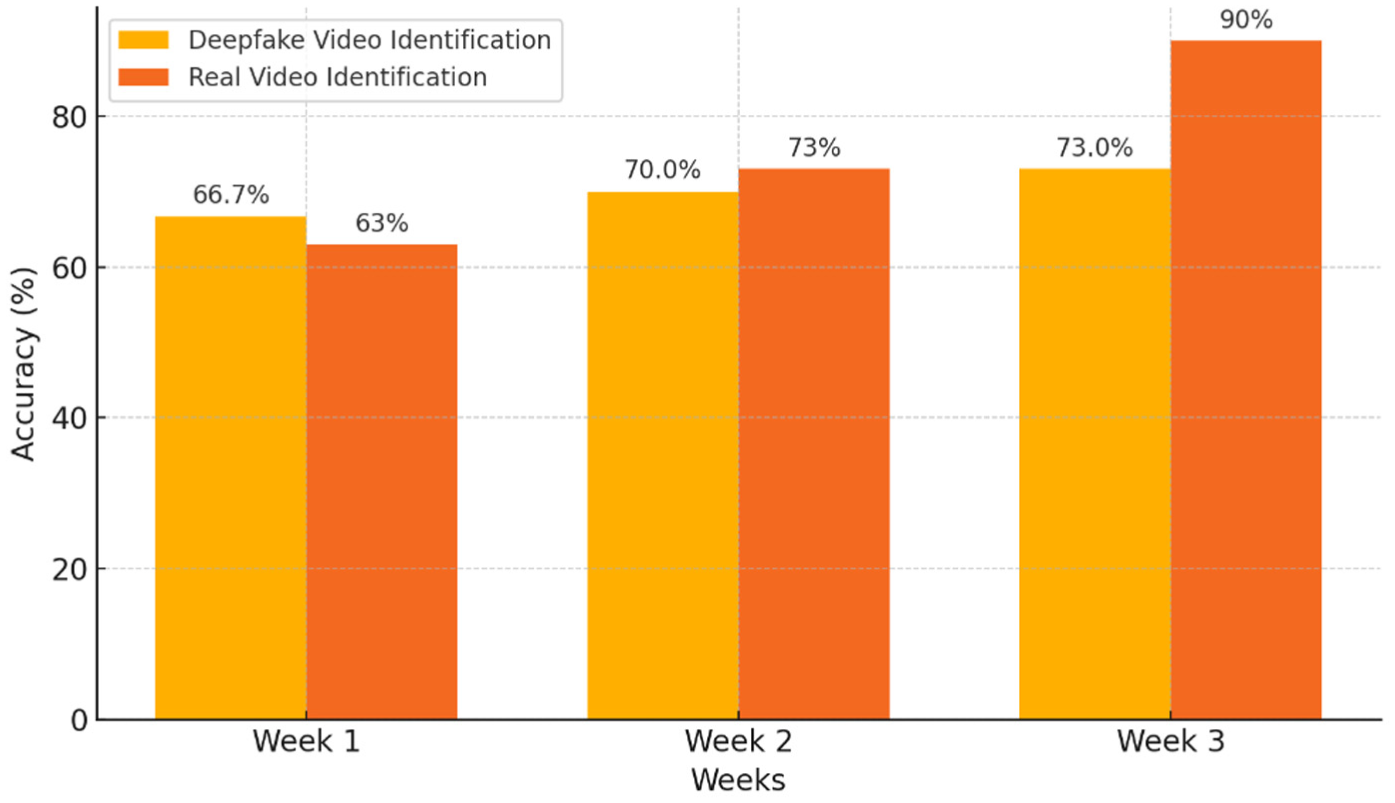
Accuracy rates for deepfake and real video identification.
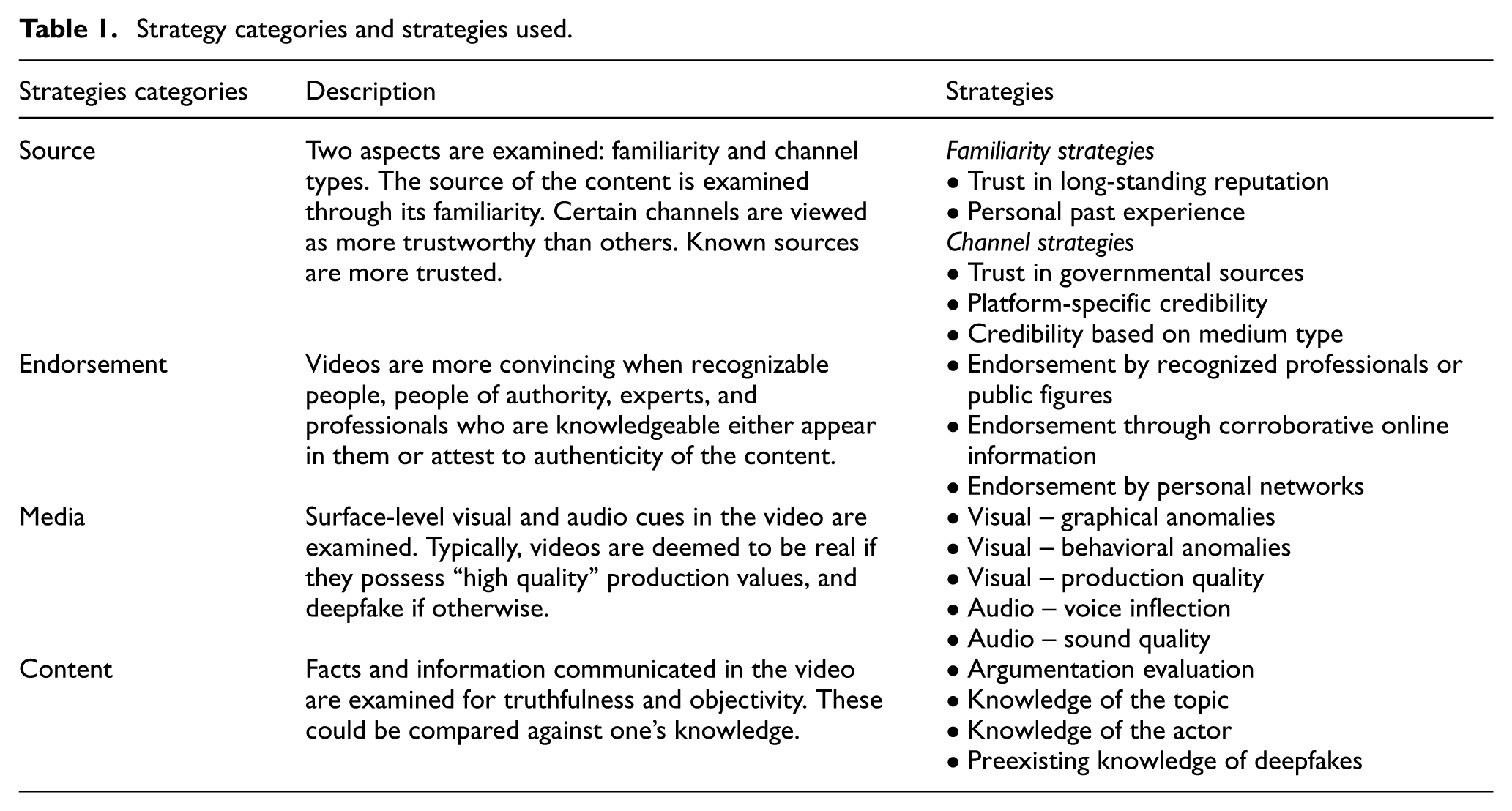
Our analysis of the diary entries yielded four main deepfake identification strategy categories: (1) source, (2) endorsement, (3) media, and (4) content. These are shown in Table 1, which also lists the corresponding strategies within each category.
Strategy categories and strategies used.
4.1. Source
For this category, participants’ ascertained a video’s authenticity by focusing on the perceived credibility of the source, its familiarity, and the channel in which the content was delivered.
First, participants appeared to maintain a hierarchy of source trustworthiness. At the top of the hierarchy were governmental sources due to perceived better accountability. For example, a participant (P203, female, 57 years) shared of the deepfake video of Jeremy Corbyn, “I only trust news coming from official or government sites these days,” in response to how she identified whether a video she was assigned to watch was a deepfake. Furthermore, a participant (P102, female, 72 years) noted the real video of Donald Trump, “Besides recognizing Donald Trump in the video, I know of this incident through an official speech made by the white house.”
Second, familiar sources were trusted if they were perceived to be reliable and trustworthy in the past. In particular, content from mainstream news organizations was considered more trustworthy due to past experience and exposure to digital literacy training. For example, one participant (P118, male, 85 years) remarked on the Mark Zuckerberg deepfake, “I relied heavily on articles that I have read and there were also other media reports previously on Mark, and people accusing him of using his power.” Here, because of the participant’s trust in the media reports, he established the authenticity of video, which unfortunately turned out to be incorrect. In another example, a participant (P104, female, 71 years) highlighted the real video of Donald Trump, “Arrived at my decision due to the way content was presented, and how I have seen news of him before on similar topics.” Trust was built through consistent, trustworthy experiences with a source.
Third, channel types that delivered the content were considered next. It appeared that participants had certain notions about which channels were considered more credible. For example, professional channels like LinkedIn were considered more trustworthy than TikTok and Facebook even though these were all social media platforms. For example, a participant (P207, female 56 years) remarked of the Jeremy Corbyn deepfake, “Heavily based on my experience encountering AI (such as deepfakes), which is now a common part of our culture. I watch videos from YouTube, and TikTok … which helps me determine whether this video is credible or not.”
4.2. Endorsement
In the endorsement category, participants’ perceived video content as more credible when people who were deemed to be trusted or in authority either appeared in the video or provided positive testimony of the content. In the words of one participant (P201, female, 59 years), “Other than relying on my own knowledge, I turned to my daughter for her opinion to help me make my final decision.” There were three key strategies that surfaced within this category.
The first was endorsement by recognized professionals or public figures. A video was deemed authentic when recognizable people such as government officials, celebrities, experts or well-known people appeared in it. Stated differently, the video was perceived to be real simply because of their presence and therefore the content being delivered was more credible because of their “authority,” such as their public stature and/or expertise. One example involved a participant (P115, male, 68 years) who correctly identified the real video of Hillary Clinton’s speech and said, “The person giving the information is a well-known figure and I recognized her.”
Second, for endorsement through corroborative online information, participants relied on cross-referencing information across multiple sources perceived to be credible such as mainstream news websites. These sources are typically found through search engines. If these sources endorsed or denied the authenticity of a video, participants would probably adopt the same stance. One participant (P204, male, 59 years) explained of the real video of Donald Trump, “I arrived at my decision by finding the person on the video on YouTube, and searching up similar articles on ABC news. Seeing that there are over 16 million subscribers, I found it to be legitimate.”
Third, for endorsement by personal networks, participants often turned to people they personally knew and trusted, such as their family, friends, and colleagues for validation of video content. These consultations helped shape participants’ beliefs in a video’s authenticity. One example was a participant (P110, male, 73 years) who was unsure about the real video of Mark Zuckerberg. He recalled, “Normally, when I have doubts or am really curious about a topic or news, I will call my siblings or colleagues to consult with them.” Another participant (P202, male, 63 years) also shared about the deepfake video of Jeremy Corbyn, “Other than analysing the video itself, I will speak to my wife and we will usually discuss about what is shown.”
4.3. Media
For the media category, visual and audio surface cues were employed. More specifically, this category focused on audio and visual anomalies rather than content to ascertain signs of manipulation. In general, high production quality was associated with credibility, while inconsistencies reduced trustworthiness.
More visual cues were examined than audio cues. First, participants looked for graphical anomalies, such as blurriness, distortions or presence of artifacts. A participant (P110, female, 73 years) commented about the deepfake video of Obama, “When he speaks, the shape of the face not only looks strange but seems darker than usual, and the face also looks jumpy.” The second visual cue was behavioral anomalies, such as unnatural or inconsistent behaviors not consistent with what “normal” people who do. One common example was lip synchronization, in which the lip movements did not match what was heard. This is illustrated by a participant (P111, female 69 years) who commented about the deepfake video of Jeremy Corbyn, “… his mouth movement is very stiff and unnatural, it does not match the voice.”
The third visual cue was overall video production quality, which involved assessing the technical and aesthetic quality of the video. Examples included transitions between scenes, camerawork, lighting, and video resolution. Higher production quality increased perceptions of authenticity. An example was a participant (P204, male, 59 years) who commented on the deepfake video of Mark Zuckerberg, “I think the video is a fake as it seems to be heavily edited using AI, looking at the angle, movement, and frame; it just does not tally at all.” Another participant (P113, male, 65 years) remarked about the real video of Donald Trump, “… it looks credible due to the background colour, there is no pixelation of sorts and it is very clear.”
Two audio cues were examined. The first was voice inflections, referring to the naturalness of speech that includes voice, tone, pitch and rhythm. When voices in the video sounded more natural, participants perceived the video as more credible. One participant (P115, male, 68 years) who correctly identified the Obama deepfake shared that, “… there are breakages in his speech, the tone sounded dull and strange.” The second audio cue pertained to overall sound quality. Like its production quality counterpart, this was a high-level concept that assessed clarity, volume, as well as lack of distortion and background noise. A participant (P204, male, 59 years) noted of the real video of Mark Zuckerberg, “Video is credible because speech is natural and it tallies with his movement. His vocal tone here is clear and not exaggerated.”
4.4. Content
For this category, participants analyzed a video’s content for accuracy and truthfulness. Four main strategies emerged.
The first involved argumentation evaluation in which participants determined if the content in the video was understandable and plausible using logical reasoning and critical thinking. At this stage, truthfulness was not yet assessed. Put differently, argumentation evaluation was a fundamental strategy upon which others are built upon. For example, one participant (P107, male, 62 years) observed that in the real video of Mark Zuckerberg, Mark should be credible in this video as he is sharing on how our data online can be easily abused, which is very true. Based on what I have seen regularly, my own knowledge, through news broadcasts, or the facts of the content provided in this video, it should be credible.
Another participant (P120, female, 67 years) echoed similar sentiments of the Barack Obama deepfake video, “I judge by the narrative being brought up in the video, which was not very realistic.”
The second strategy assessed the content of the video with the participant’s knowledge of the topic. When the content aligned with their existing knowledge or experience, participants found it more credible, and vice versa. One example was a participant (P207, female, 56 years) who said about the real video of Hillary Clinton, “I have prior knowledge of this video as I have watched it previously on YouTube. The information given is not exaggerated, and it also helped me make my decision.”
The third strategy involved participants’knowledge of the actor in the video and was employed for people they recognized. In particular, participants assessed whether the actor’s behavior and statements were consistent with their known persona. If inconsistencies arose, the video was deemed a deepfake; otherwise, it was considered probably to be authentic. For instance, a participant (P208, female, 59 years) commented about the Jeremy Corbyn deepfake, “I am aware of who Jeremy Corbyn is, and that Boris Johnson is from another political party, I concluded that the video is not true.” Another participant (P202, male, 63 years) referred to the Mark Zuckerberg deepfake, “This is not a real video as the subject matter here is extremely sensitive, and this is also not his usual way of speaking.”
Finally, there were participants who had knowledge of deepfakes and scrutinized their assigned videos for signs of manipulation, using many of the cues found in the aforementioned media category. As observed by a participant (P204, male, 59 years) on the Obama deepfake, “The deepfake is very obvious, all the angle and movement looks like its heavily edited using AI.” Next, a participant (P112, male, 64 years) commented on the real video of Donald Trump saying, “Trump mannerisms is similar to past videos I have seen, there is no signs of manipulation or irregularities here … Overall I believe that this video is being portrayed correctly with no signs of it being fake.”
4.5. Use of strategies
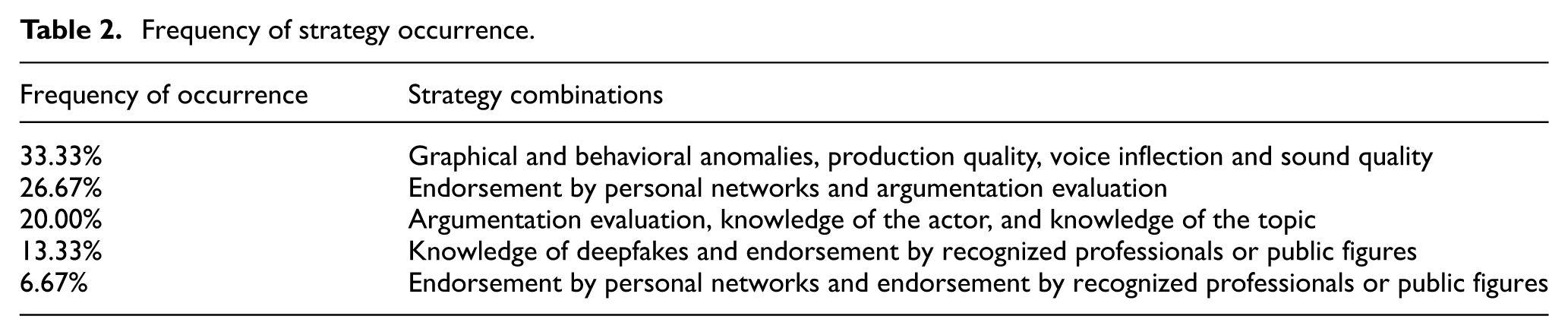
Notably, our analysis suggests that participants who used multiple strategies, particularly across categories, were more accurate in identifying real and deepfake videos. A common combination included strategies from the media, source, and endorsement categories. Examples involve analyzing graphical and behavioral anomalies, production quality, voice inflection, sound quality, and endorsement by personal networks. Another common combination was the content, endorsement, and source categories, encompassing argumentation evaluation, knowledge of the actor, knowledge of the topic, knowledge of deepfakes, endorsement by recognized professionals or public figures, and endorsement by personal networks. For instance, a participant (P112, male, 64 years) identified the deepfake video of Mark Zuckerberg by combining endorsement and content strategies, stating, “I had read about deepfakes and how to distinguish fake videos, using good old google search.” Similarly, another participant (P118, male, 85 years) analyzed the real Hillary Clinton video using media and content strategies, I have seen her often on the television during her election campaigns. Her voice is familiar as there are no cuts in the presentation, and her lips are also synchronised with the words she is saying. Her facial expressions and mannerisms also match her usual style.
Table 2 shows the frequency of occurrence in terms of strategy combinations used by participants.
Frequency of strategy occurrence.
In contrast, participants who only employed one strategy category tended to perform poorer in identification accuracy. One participant (P201, female, 59 years) referred to the real video of Donald Trump, “I am guessing it is not a real video based on the way he talks.” Here, the participant employed voice inflection as a standalone strategy and the identification turned out to be incorrect. Another participant (P113, female, 65 years) inaccurately judged the Obama deepfake, saying, “Looked at the facial expression … I believe that the video looks realistic.”
As well, there were participants who made guesses of their assigned videos either because they did not know what else to do or simply “gave up” as in the case of a participant (P105, female, 73 years), who lamented about the Jeremy Corbyn deepfake, “I don’t watch that in the news and don’t know who he is.” Correspondingly, another participant (P119, male, 68 years) said of the real video of Mark Zuckerberg, “I am not sure as it is very amateurish taken, can’t really tell anything too.”
Interestingly, the number of strategy combinations used by participants increased across the 3 weeks of data collection. In week 1, most relied on content strategies, such as knowledge and argumentation evaluation. By week 2, participants incorporated media strategies, detecting graphical and behavioral anomalies alongside content strategies. In week 3, endorsement strategies, including reliance on personal networks, were added. Table 3 illustrates these changes.
Changes in strategies.
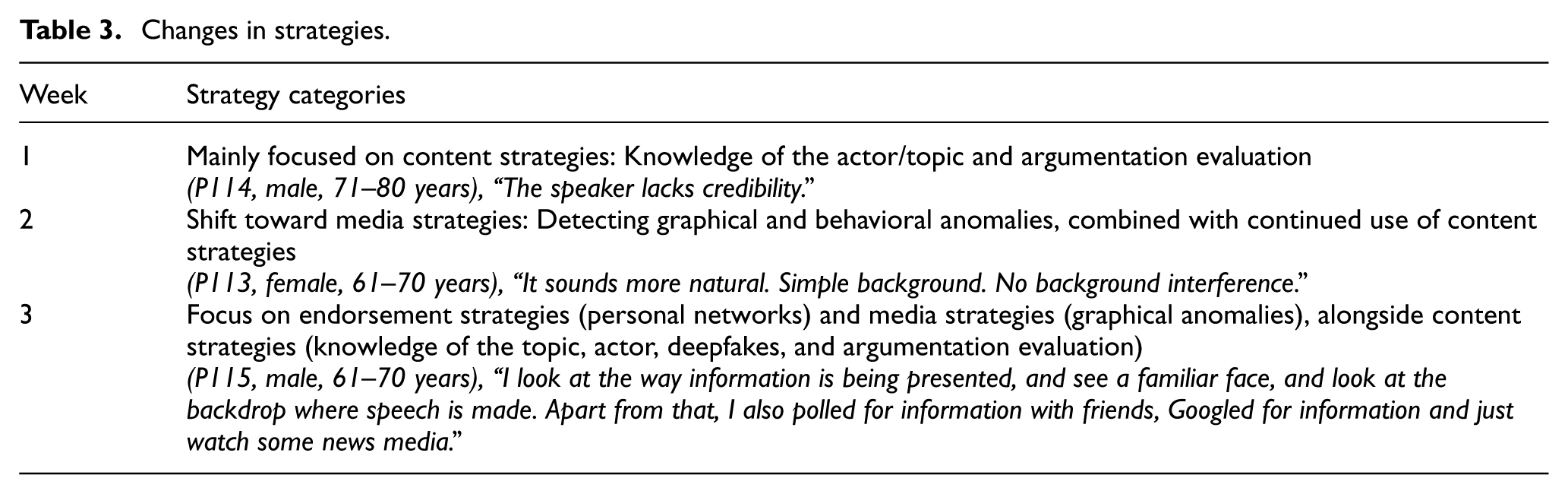
Apart from the week-3 example presented in Table 3, which employed a combination of all four strategy categories, two additional examples further illustrate the diversity of strategies used. First, a participant (P208, female, 59 years) shared her strategies for the Jeremy Corbyn deepfake, I know of his affiliation and the party he is from, however to be sure I googled and found related articles and news, hence concluded that the video is not credible and is a fake. Beyond that, the video looks like it has been edited, as there is a stark difference between Jeremy Corbyn and the background. Video feels somewhat unnatural due to repetitiveness of expressions and lack of body movement.
Another participant (P204, male, 59 years) elaborated on his analysis of the Obama deepfake, The video is not legit and the details does not buy my trust, from the part where it is heavily edited, the mouth movement does not match the speech or voice. In this video, Obama is being too casual, and the background office looks fake. Furthermore, what he had delivered was way too unprofessional. Looking at these details, I know that it is a deepfake video, and not proper to public. Likewise, to make sure again, I search the net and found that this video has actually been edited using AI and it is indeed a deepfake. As I look back again, I scrutinised little details to make sure that I am not misled in anyway.
Here, the participant had covered all possible grounds to ensure that he had uncovered the possible manipulations in the video.
5. Discussion
In this study, we investigated the strategies that seniors used to identify deepfakes and how these strategies changed over time. We found that seniors employed a wide range of identification strategies that aligned with the existing literature [7,33,35]. These strategies include those that tapped on peripheral cues (e.g. familiar source, trustworthy endorsement, production quality) and those requiring central processing (e.g. argumentation evaluation, utilizing topic knowledge). Importantly, the identification accuracy rates were better than expected, achieving 70% for deepfake videos and 75% for real videos. Seniors did not exhibit significant shortcomings compared with the general population, as reported in previous studies [3,7,22].
The findings revealed several notable behavioral tendencies and biases in deepfake identification among seniors. First, beyond the encouraging accuracy rates, the findings showed seniors’ resilience and capacity to adapt their identification strategies. Over the 3 weeks, participants demonstrated an increased awareness of deepfake content and actively sought to validate information through online communities and interpersonal networks. For instance, one participant (P107, male, 62 years) described “applying mindfulness as an additional means,” while another (P115, male, 68 years) noted “polling information from friends, Googling for info, and checking news media” by week 3. These patterns suggest a shift toward more effortful processing including cross-checking sources and seeking additional evidence, aligning with the systematic route described in dual-process models such as ELM and the heuristic–systematic model. Corroborative online information and shared insights may enable seniors to validate and refine their judgments, consistent with prior evidence that more mindful processing can make individuals more skeptical of information validity before reaching a conclusion [59]. Another plausible reason for our participants’ performance could be the nature of the diary study which aligns with what McGuire [60] termed “active inoculation.” Here, individuals are tasked with actively generating their own defenses in response to potential persuasion attempts [60]. McGuire suggests that this process strengthens individuals’ resistance by requiring them to construct their own refutations. In our context, the diary study acted as a form of active engagement, encouraging seniors to articulate their thought processes, fortifying their cognitive defenses, and enhancing their ability to critically evaluate video content. The findings, therefore, underscore the importance of “learning through practice,” suggesting a promising avenue of longitudinal collaborative support and feedback loops in fostering seniors’ resilience against disinformation.
Another notable observation was that seniors relied heavily on familiarity, including known and trusted sources as well as endorsements from personal networks. This finding suggests that familiarity and source heuristics function as salient cues when seniors engage in peripheral processing in the context of deepfake identification. This behavioral pattern is perhaps shaped by their life experiences and social contexts and aligns with previous research on seniors’ encounters with misinformation. Studies suggest that seniors tend to trust traditional news sources [61] and often rely on familiarity and source heuristics when evaluating news, particularly as cognitive effort becomes more challenging with age [15,62]. In addition, a lack of motivation to investigate information comprehensively can lead seniors to resort to their social groups [17,63,64]. While concerns have been raised in the literature about how such reliance on familiarity with interpersonal networks or on intuitive trust can negatively impact deepfake discernment and facilitate the spread of disinformation [65,66], our findings suggest a more optimistic perspective. Despite relying on familiarity heuristics such as trust in known sources and social endorsements, rather than scrutinizing information closely, our seniors demonstrated relatively satisfactory accuracy rates in deepfake identification. These results indicate that their reliance on trust and social connections is not inherently less effective; rather, it highlights the compensatory role of lived experience and community ties in navigating technological limitations. These findings lead us to rethink the concerns regarding seniors’ perceived vulnerability to deepfakes due to cognitive decline or lower digital literacy in the existing literature [14,17] and offer age-specific insights into deepfake identification.
Third, seniors tended to misidentify deepfakes when relying solely on one category of strategies for deepfake identification. This reflects the limitations of relying on a single route, as suggested by the dual-process model [8]. For instance, in the first week, participants predominantly relied on argumentation evaluation, which presents a central-route strategy in information credibility assessment [67], but this alone did not guarantee accurate identification. Similarly, seniors, when relying exclusively on peripheral cues, such as graphical anomalies or voice inflections, faced inconsistent identification results. While peripheral cues are often considered less reliable due to their heuristic nature, our study shows that they can complement central processing when used thoughtfully, particularly when cognitive resources or topic familiarity are limited. As illustrated in Table 3, this combined approach led to improved identification performance, with participants gradually adopting more comprehensive strategies over time. This progression aligns with findings by Chen et al. [68], who observed that peripheral cues play a significant role in identifying false information, especially when paired with content-focused central strategies.
Finally, participants exhibited a tendency to perceive videos they were exposed to as more truthful than manipulated, consistent with the “truth bias” phenomenon [14,69]. Truth bias occurs because individuals have a propensity to interpret messages as true by default unless given reasons to doubt their authenticity. This bias may explain why the overall accuracy rate for identifying real videos was higher than that for detecting deepfakes in our study. From the perspective of ELM, truth bias may be more likely to persist when individuals lack either the motivation or the ability to engage in central-route processing [8]. Under such conditions, truth bias is more likely to persist, leading individuals to accept disinformation as truthful at face value [70]. This is particularly concerning, as truth bias can leave individuals more vulnerable to disinformation. Our findings reveal moments of participants expressing a sense of resignation or cognitive fatigue, such as one participant (P207, female, 56 years) lamenting, “I have no personal knowledge on this video and just purely based on my instinct.” This observation aligns with prior research showing a negative relationship between truth bias and engagement in elaborative thinking when discerning disinformation [70]. Notably, the discrepancy between accuracy rates for real and deepfake videos widened over the 3 weeks, suggesting that although seniors’ identification performance improved, the influence of truth bias persisted or even intensified, warranting attention due to its potential negative impact.
6. Conclusion
This study offers the following research contributions. First, this work extends the field of information credibility assessment and disinformation identification into the increasingly dominant video medium. Videos combine visual, auditory, and textual elements, presenting unique challenges and heightened persuasive potential compared with text or static images. This complexity requires a deeper understanding of how individuals process multimodal disinformation and the unique challenges it poses for identification. Despite the fact that most popular online spaces like TikTok contain difficult-to-detect video content, there is surprisingly limited research on evidence-based strategies for combating video-based disinformation, particularly among older adults. Current efforts instead examine non-video media, for example, seniors’ ability to accurately judge the veracity of news headlines [14]. While Tang et al. [20] were among the first to examine how seniors assess deepfake credibility through audio and visual cues, our study uncovered additional strategies, particularly those related to source and endorsement, which serve as crucial cues in seniors’ deepfake identification process. These findings add to a more comprehensive understanding of how seniors identify deepfakes.
Second, and on a related note, this study fills an important demographic gap in deepfake research by focusing on seniors, an often-overlooked group, whose voices and decisions can exert significant societal influence. For example, in global political systems, seniors consistently exhibit higher voter turnout rates than younger demographics [71]. By addressing this gap, the study contributes valuable insights into the skills and strategies needed to enhance resilience against deepfake videos, particularly for vulnerable demographics. Therefore, this study adds to the body of research that aims to understand information credibility assessments by seniors and how they should be equipped for combating video disinformation at scale.
Third, unlike prior studies on information credibility, which focus on static or text-based content and rely on cross-sectional designs, this study delves into video-based disinformation with a longitudinal perspective. For example, Hilligoss and Rieh [21] developed a unifying framework of information credibility, focusing on general concepts, heuristics and interactions across media types. More recent social media studies such as Cheng and Chen [72] examined credibility assessment of static posts but overlooked the specific demands of video-based disinformation. Crucially, existing frameworks rarely explore how identification strategies develop and adapt over time. By adopting a longitudinal approach, our study begins to shed light on how deepfake identification strategies evolve, offering a preliminary understanding of the learning curve and the strategy adoption process among seniors.
This study also offers practical implications. First, the results demonstrate that seniors are not only capable of learning but also refining their identification strategies over time. This suggests that building knowledge about deepfakes is both feasible and impactful. Targeted interventions should capitalize on this insight by incorporating feedback loops and longitudinal tracking to support sustained learning and adaptation.
Second, our findings suggest the value of leveraging both peripheral and central strategies in tandem to improve deepfake identification outcomes. Practitioners and educators should design intervention programs that encourage seniors to adopt a comprehensive approach by combining these strategies. For example, interventions could teach seniors to combine media-related cues (e.g. visual anomalies, production quality) with endorsement validation (e.g. corroboration by trusted networks) and content evaluation (e.g. factual accuracy).
Third, this study reveals the value of community-based learning in identifying deepfakes. Our seniors frequently relied on validation from personal networks to assess video authenticity. While there have been efforts to promote social media literacy skills through individual-level interventions to combat misinformation [73], this study highlights the need to complement these efforts with collaborative learning environments where seniors can consult with trusted individuals or community groups. Interventions could involve community-oriented programs that include familiar and trusted local figures or celebrities to disseminate information about deepfakes and identification techniques.
Fourth, this study identifies limited digital literacy and unfamiliarity with advanced verification tools as barriers for some seniors. This indicates the need for tailored education programs that address varying levels of digital skills. Digital tools and educational programs can be developed to integrate credibility markers for trusted sources or community-based endorsements. For example, apps or browser extensions could highlight platform-specific credibility, providing real-time and accessible assistance in identifying deepfakes. Training programs should aim to enhance seniors’ understanding of deepfake technologies and focus on building familiarity with the subject areas where deepfakes commonly appear. Moreover, as suggested by previous research, inoculation and pre-bunking by third-parties are effective ways to address truth bias and help seniors approach video content with greater healthy skepticism [70,74].
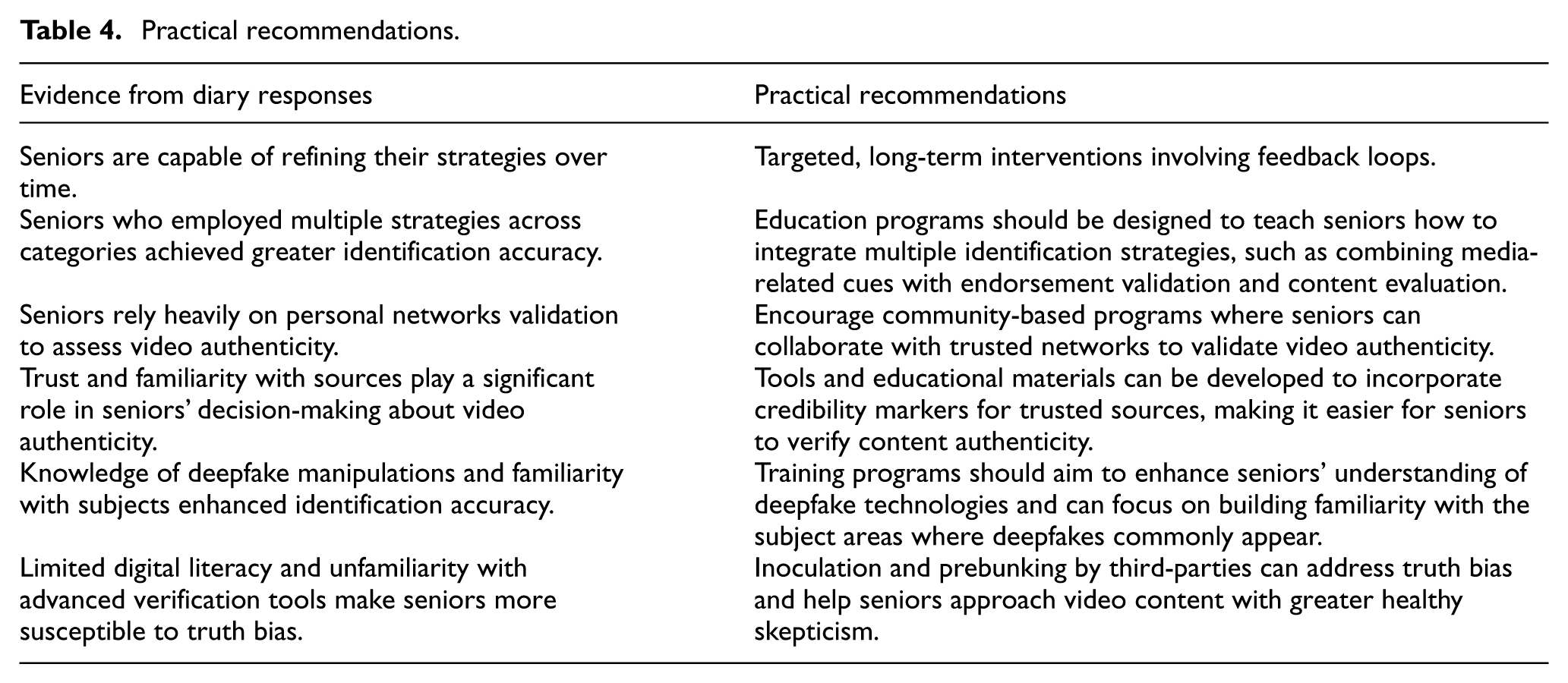
In sum, based on our findings and combined with prior literature, we present a list of practical recommendations aimed at helping seniors to identify deepfakes and protect themselves from disinformation in Table 4.
Practical recommendations.
While this study contributes to the deepfake research, several limitations must be acknowledged. First, the study collected data from a single activity center, which may limit the diversity of perspectives captured in the data and thus may not be fully generalizable to other demographic, cultural or socioeconomic contexts. In addition, the sample was not balanced in gender. This could influence the findings, particularly if willingness to engage with a sustained educational diary study differs by gender. In sum, we acknowledge that the sampling method and sample size, while appropriate for qualitative work, may not account for the full range of differences that are likely to influence individuals’ deepfake identification processes and outcomes. We need to corroborate with alternative perspectives, such as studies adopting cross-national and cross-lingual comparative approaches [75] to develop a more comprehensive understanding.
Second, the 3-week study period probably captures only the initial learning curve rather than sustained changes in learning and behavior. While the findings suggest seniors can adopt and refine strategies over a short term and their performance improved, the study cannot assess longer-term retention, usage, or the durability of these strategies. When interpreting the results, we need to be cautious of underestimating the challenges of maintaining these strategies over time. Research indicates that adopting and internalizing new strategies, particularly among seniors who may face cognitive or technological barriers, often requires more time than younger age groups [15]. Future longitudinal research needs to examine how strategies stabilize, evolve or decline over months or years. Third, while this study identifies the strategies seniors use, it does not examine the underlying cognitive or psychological mechanisms driving their choices. Questions remain about why seniors prioritize certain cues, how they weigh different strategies and whether central-route strategies yield consistently better results over time. Understanding these mechanisms would provide deeper insights for tailoring interventions to enhance motivation and optimize strategy use.
Footnotes

Ethical considerations
This study was approved by the Institutional Review Board of Nanyang Technological University (approval no. IRB-2024-427).
Informed consent statements
Informed consent to participate and for publication was obtained from all participants included in the study.
Funding
The authors disclosed receipt of the following financial support for the research, authorship, and/or publication of this article: This research was supported by the Ministry of Education (Singapore) Tier 2 grant (grant no. MOE-T2EP40122-0004).
Declaration of conflicting interests
The authors declared no potential conflicts of interest with respect to the research, authorship, and/or publication of this article.
Data availability statement
The data that support the findings of this study are available from the corresponding author, upon reasonable request.