






Abstract
In contrast to other disciplines, data reuse is less common in the social sciences. Online social cues (an indicator of a particular social significance) can provide a possible solution to this problem by providing additional information for data assessment and screening. This study generalized three cues (impression data cues, interaction data cues, and impression publisher cues) that serve the data reuse and three relative reuse criteria (data quality, data relevance, and source reliability). We focused on the influence of online social cues and their match effects with the criteria of perceived usefulness and reuse assessment performance. In total, 220 participants (41 young scholars and 179 students) were randomly sampled for a data reuse experiment, and their behavior, eye-movement, and perception data were collected using the experimental platform and eye-tracking device. Results confirmed the positive effects of cues and the match effects on enhancing users’ perceived usefulness and reuse assessment performance. This study shed light on the theoretical understanding of online social cues in improving data reuse and also provided practical implications for scientific data-sharing platforms to design different types of cues.
1. Introduction
In recent years, researchers have increasingly adopted Internet-based scientific communication. Open science data serve as a foundation for this communication, enabling secondary analysis and knowledge building [1]. Many countries have established scientific data-sharing and data-open platforms, such as re3data.org, the Open Access Directory, and Open DOAR [2], which provide data for users and spaces for academic exchange [3].
However, datasets in the social sciences and arts and humanities are cited less frequently than those in science, engineering, and technology [4]. This disparity may stem from disciplinary characteristics or data attributes. On one hand, a culture of data sharing has yet to be fully established in the social sciences. Researchers in these fields often worry that if others reuse their data and publish findings, it could undermine their own paper publication opportunities [5]. On the other hand, social science data include diverse types, creating multiple challenges for reuse. For example, textual content such as interview transcripts and observation notes, as well as metadata such as attribute names or variable representation in government statistics and income surveys, require extensive contextual information. To properly understand and integrate such data, reusers often need access to codebooks, documents, and other supporting materials from the original research [5–7]. However, during the screening and assessment phase, it is often impossible for researchers to download all candidate datasets; furthermore, access to data documentation (e.g. researcher memos and participant profiles) may be restricted due to confidentiality or other requirements [6,8]. Consequently, a comprehensive assessment of scientific data becomes extremely challenging, requiring social science data reusers to frequently invest considerable time in initial screening and assessment. In this context, rather than investigating the entire lifecycle from data discovery to final utilization, this study specifically narrows its focus to the preliminary stage: the data screening and assessment process. The complexity of such tasks highlights the necessity of using proxy indicators to facilitate efficient filtering and decision-making. We argue that providing additional cues could help reusers rapidly narrow down datasets of interest, allowing them to concentrate their efforts on in-depth analysis of a smaller selection.
Online social cues offer a potential solution. In consumer decision-making, cues such as peer purchases, reviews, and product ratings effectively convey information about product quality and seller credibility [9,10]. Similarly, social cues also assist users in information selection. For instance, on social media, design elements and popularity metrics (e.g. likes) significantly shape impression formation and community engagement [11,12]. This concept can be extended to data sharing and reuse. Extensive evidence has confirmed that indicators such as publication reputation, the credibility of data collectors, and peer recommendations serve as proxy evidence for data reusability, helping researchers identify appropriate datasets [13,14]. While not formally defined, ‘social cues’ are embodied in existing platform features. Figure 1 illustrates a dataset detail page from the Harvard Dataverse platform. Here, the number of downloads acts as a typical online social cue, signaling the perceived quality and relevance of a dataset.
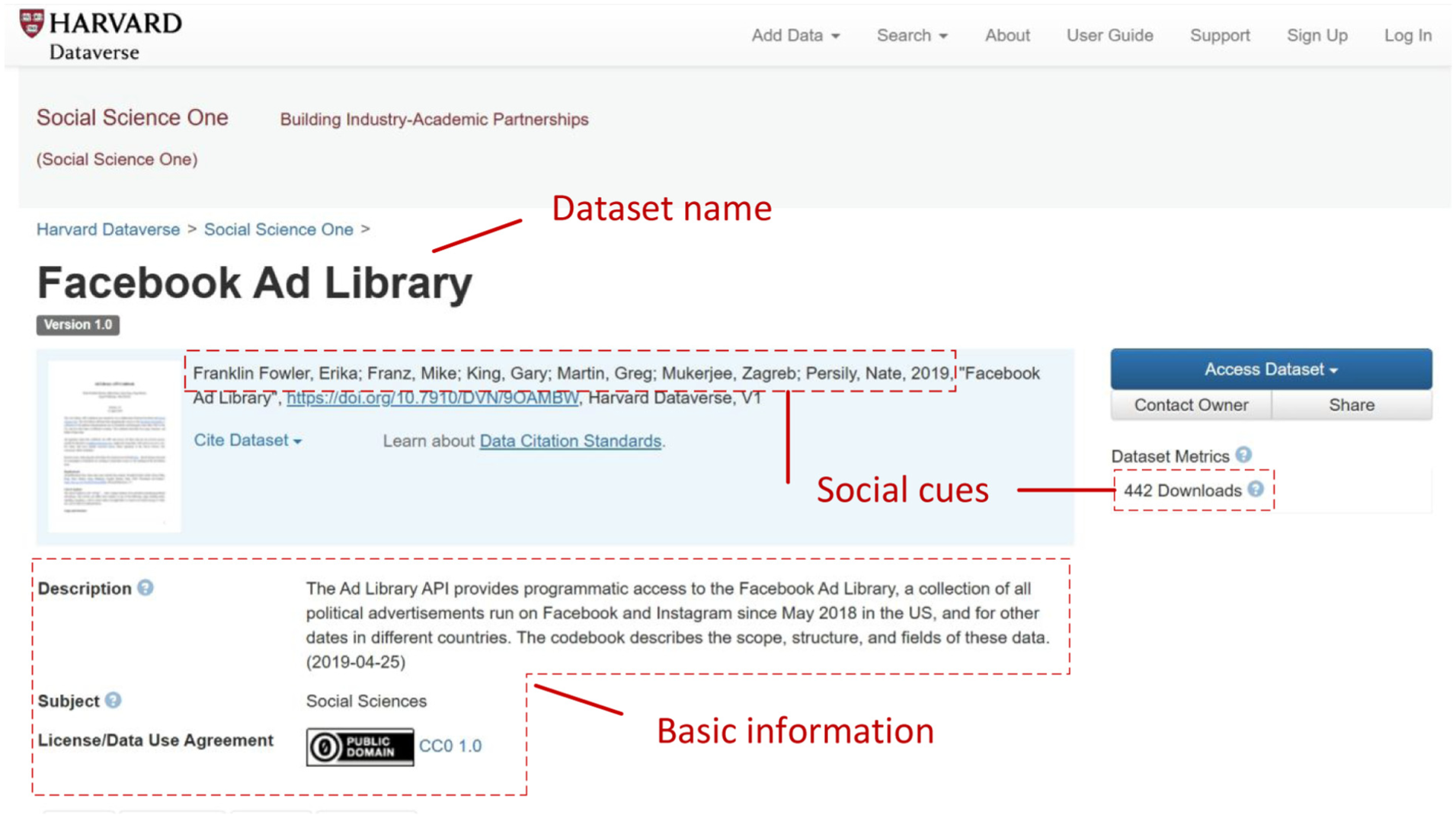
Science data and online social cues on Harvard Dataverse.
That said, social cues do not always function effectively. Their impact depends on factors such as an individual’s level of trust and prior impressions. For instance, smiles and eye contact may fail to convey positive perceptions when they are perceived as insincere [15]. In the context of data reuse—a rigorous and scientific information behavior—researchers require strong cues or evidence to confirm that the data are useful and meet their preliminary assessment criteria. Social cues lose their effectiveness when the information or evidence provided does not align with a reuser’s expectations. In short, existing research still treats scientific data reuse as a holistic process, failing to isolate the pre-use screening and assessment process. Consequently, the specific role of online social cues in this process has not been thoroughly explored, and the underlying mechanism by which they support data reuse remains to be fully revealed.
Building on this discussion, we argue that only when online social cues match reusers’ assessment criteria can they effectively help narrow down the scope of potential datasets. By isolating the data screening and assessment process, this study seeks to examine how researchers assess a dataset’s potential value before committing to the resource-intensive tasks of full download and integration. Specifically, we explore the matching relationship between cues and assessment standards to uncover the theoretical mechanisms supporting scientific data reuse. To test this framework, we matched different types of online social cues with users’ data reuse criteria and then hypothesized and validated the mechanisms by which such cues improve perceived usefulness and reuse assessment performance. Accordingly, we proposed two research questions.
To answer the questions, we developed an experimental platform and conducted an experiment, randomly sampling participants using eye-tracking devices. By introducing social cues into the research process, this study extends its role beyond consumer behavior into the domain of information behavior, thereby contributing to the literature on data reuse. The findings may also help inform the design of interactive modules on data-sharing platforms to improve data reuse assessment performance.
2. Literature review and theoretical background
2.1. Data reusability assessment
Data reuse is a multi-stage process, encompassing discovery, screening, understanding, and utilization [16]. Within this lifecycle, the preliminary screening phase is critical. Since the full integration of data is typically labor-intensive, this preliminary assessment serves as a necessary step to mitigate the costs associated with inefficient data reuse. Distinct from post-use satisfaction [17], data reusability assessment involves a rapid judgment of data usefulness and accessibility before in-depth understanding, aiming to determine whether the data can be used correctly [18]. To this end, reusers typically rely on a set of criteria, including availability, data trust, applicability, accuracy, source reliability, validity, and completeness.
The inherent characteristics of social science data make its reusability assessment particularly difficult and complex. Qualitative research data—such as interview transcripts and observation logs—are highly contextual, experience-dependent, and subjective [19]. Without access to original research designs or participant information, it is challenging for reusers to determine whether such data can be reused. Social media data illustrate similar difficulties. In recent years, it has become valuable for studying customer feedback and political communication [20,21]. Yet its sheer volume and fragmentation make it difficult to grasp semantic connections without sufficient context and background information [22], posing further challenges for assessing reusability.
Given these complexities in social science data, reusers must prioritize specific dimensions to make efficient assessment and screening decisions. Among the criteria mentioned above, we focus on three representative ones: data quality, relevance, and source reliability. Data quality refers to the ‘health status’ of the data [17]. It encompasses multiple competing indicators (e.g. completeness and accuracy [23]) whose importance varies across disciplines [24], making evaluation complex. Data relevance concerns the context to which a dataset can address a specific research question. Because relevance is tied to researchers’ research objectives [25], it is often a top priority [26]. However, its assessment typically relies on descriptions, attribute lists, and contextual information about data generation resources that are not easily accessible [27,28]. Source credibility is also a core element [29]. Information from highly credible sources is more persuasive and increases reuse satisfaction [7,30]. Reusers often rely on proxies such as the producer’s reputation, institutional affiliation, and competence [17,31,32], but these require effort and prior knowledge for evaluation.
The core challenge is thus evident: in the data assessment and screening process, reusers must make rapid judgments on quality, relevance, and reliability without sufficient resources for in-depth examination. They need additional support beyond data documentation to reduce the cognitive burden of evaluation. We argue that the experiences and attitudes of past reusers can serve as this vital support [33] and propose that online social cues may function as heuristic mechanisms that signal data utility.
2.2. Online social cues
Social cues are signals that convey information about self-image, intention, and credibility [34], influencing how individuals form impressions and make decisions [35,36]. In the context of scientific data reuse, these cues function as indirect heuristic signals that help reusers screen and identify viable datasets within expansive data repositories. According to signaling theory, when the latent quality of a resource (such as a complex dataset) is difficult to assess directly, evaluators rely on external signals to reduce uncertainty [37]. In the context of data reuse, factors such as the journal reputation, opinions from community members, and guidance from faculty advisors serve as vital academic signals during data selection. Faculty advisors, for instance, often provide novice reusers with ‘trust signals’ through references on integrating multi-source data and strategies for reuse [32]. Similarly, researchers may look for published articles by community members who have reused datasets to verify their applicability through peer-vouching [32]. Information about data producers and the reputation of their institutions can also serve as valuable credibility proxies [38]. Crucially, while these cues formally resemble indicators in consumer behavior research, their functions in data reuse are distinct. As data reuse constitutes a highly complex information behavior, these cues do not serve as substitutes for scientific evaluation; instead, they function as heuristic tools to assist in the screening and assessment of data reuse.
There are multiple approaches to categorization of online social cues, with emphasis depending on research objectives. At a broad level, cues can be grouped by the object they describe—for example, cues related to providers versus those related to data products [39]. They can also be classified by functions. In their study of virtual community social cues, Ma and Agarwal identified four functional features that enhance perceived identity verification: virtual copresence, persistent labeling, self-presentation, and deep profiling [40]. Among them, the user IDs and user names (persistent labeling and self-presentation) are primarily used to communicate users’ identities and information, whereas virtual copresence and deep profiling strengthen communication through tools such as chat rooms and private messages.
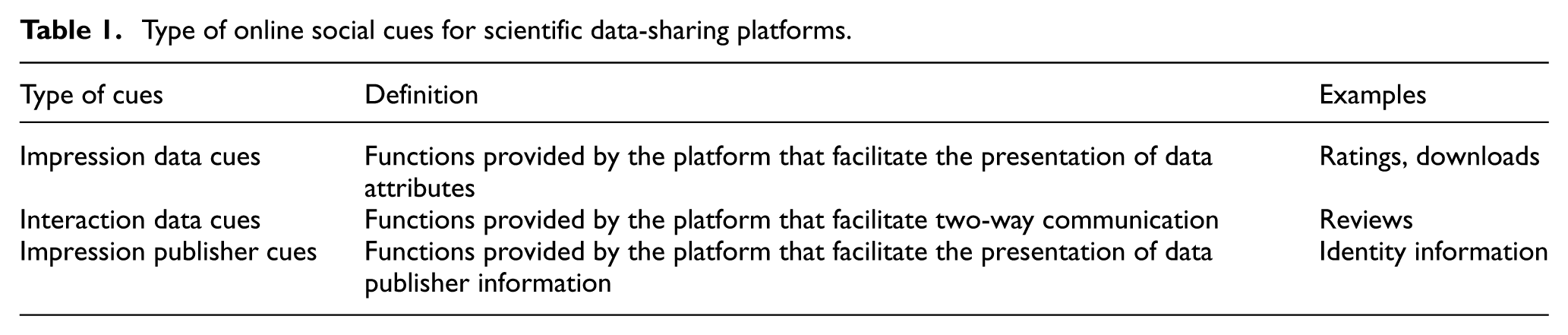
In this study, we define the online social cues from the description object and function. Based on this framework, we identify three types of online social cues: impression data cues, interaction data cues, and impression publisher cues, as shown in Table 1. Both impression data cues and impression publisher cues shape the impression of datasets by presenting their fundamental attributes, while interaction data cues facilitate user-to-user communication. The former reflects characteristics of the data itself, such as download counts, popularity, and ratings. The latter provides information about the publishers, including their affiliated institutions and authority metrics. In contrast, interaction data cues offer feedback from other reusers, facilitating communication among users. Together, these three categories provide a multidimensional heuristic framework for the preliminary assessment and screening. We will discuss the specific relationships between these cues and reusability assessment criteria in the following section.
Type of online social cues for scientific data-sharing platforms.
2.3. Integrating prominence–interpretation theory and cognitive fit theory
This study investigates the match effect between online social cues and reusability assessment criteria. Specifically, this match effect refers to the informational fit and mapping relationship that occurs when online social cues align with the information requirements of specific assessment criteria. To reveal the underlying logic of this phenomenon, we integrate prominence–interpretation theory (PIT) and cognitive fit theory (CFT). This dual-theory framework helps address both the validity of cues as proxy indicators and the performance of reuse assessment.
First, PIT, a cornerstone of web credibility theory, provides a theoretical justification for using social cues as proxy indicators for reusability assessment. According to PIT, the evaluative process in online environments involves two primary stages: noticing something (prominence) and making a judgment about it (interpretation). In the context of data reuse, online social cues serve as prominent signals that reusers interpret as manifestations of a dataset’s latent value. The applicability of PIT has been extensively validated in various digital domains. For instance, in e-commerce, researchers have utilized this theory to explain how consumers use visual design and seller ratings as prominent cues to interpret product quality and vendor trustworthiness [41]. Similarly, in health information seeking, it has been used to analyze how users prioritize specific professional markers to assess the credibility of online medical advice [42]. This theory offers a framework to understand how reusers leverage external cues as heuristic proxies to rapidly narrow down datasets during the initial assessment and screening phase.
Second, CFT explains the necessity of alignment between specific cues and assessment criteria. Classic CFT primarily focuses on the correspondence between information presentation formats and the nature of tasks [43]. Because human information-processing capacity is limited [44], the mismatch between information presentation formats and the nature of tasks forces individuals to exert unnecessary cognitive effort to convert information, thereby increasing cognitive load and reducing decision-making efficiency. In this study, the application of CFT is not limited to this narrow technical definition; instead, we extend its core principle to the context of heterogeneous informational signals. This broader application is rooted in the research on online review content–product congruity. Prior studies have confirmed that content fit—such as the alignment between review contents and search goals—can significantly reduce perceived cognitive effort and foster deeper level information processing [45,46]. These findings effectively transition CFT from a traditional format-task correspondence to a broader semantic-cognitive dimension, providing a robust theoretical foundation for our framework. Accordingly, in the context of data reuse, we argue that the data reusability assessment process is optimized only when the social cue (as an information representation) cognitively fits the specific requirements of reusability assessment criteria (as a cognitive task).
In conclusion, the integration of PI and CFT offers a theoretical framework for understanding the role of social cues in data reuse. The former provides the justification for utilizing cues as heuristic proxies to signal latent data value, while the latter explains why the alignment between cues and assessment criteria is essential for optimizing the assessment and screening process. Based on this integrated framework, we next derive a set of research hypotheses.
3. Hypothesis development
Figure 2 presents the research model. In this study, the three types of online social cues—impression data cues, interaction data cues, and impression publisher cues—correspond, respectively, to the three reusability assessment criteria: data quality, data relevance, and source reliability. We first propose Hypotheses 1 and 2 to examine the overall impact of cues on perception and reuse assessment performance, addressing RQ1. Subsequently, we introduce Hypotheses 3 to 6 to test the role of the match effect between cues and criteria in enhancing users’ perceived usefulness and reuse assessment performance, corresponding to RQ2.
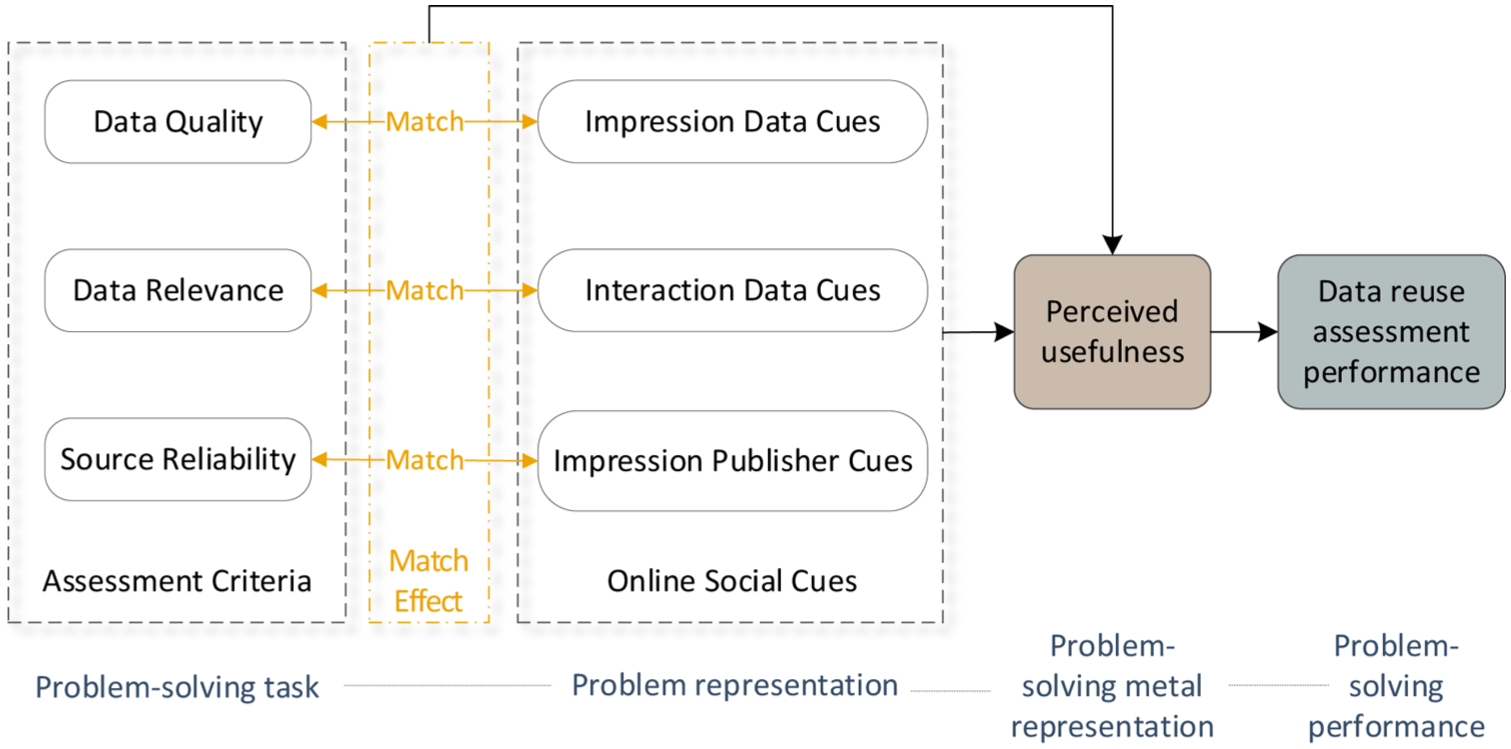
Research model.
3.1. The effects of online social cues on the perception and behavior of data reuse
With respect to perceived usefulness, this study argues that reusers form an overall impression of datasets through the cues presented on a platform, which in turn shapes their judgment of usefulness. In the context of scientific data sharing, perceived usefulness refers to researchers’ subjective assessment of the potential benefits of reusing data, such as saving resources, improved research efficiency, or increasing academic influence [7]. According to PIT, social cues serve as prominent signals that capture reusers’ attention, whereby these cues are subsequently interpreted as manifestations of a dataset’s latent value. Basic platform information (e.g. dataset name and release time) creates a preliminary impression, but richer, multidimensional cues (e.g. detailed descriptions, usage feedback, or source information) compensate for the lack of direct interaction in online environments [47], thereby strengthening perception of usefulness and influencing subsequent behavior [48].
As for the mechanism through which cues improve assessment and adoption, prior research in information systems has established that ratings, scores, and reviews can facilitate rapid decision-making [49,50]. We extend this finding to data reuse by offering multidimensional cues related to quality, usage feedback, and source reliability. Platforms can reduce uncertainty and support more efficient screening. From the perspective of PIT, these cues function as heuristic proxies that enable reusers to rapidly interpret the dataset reusability without exhaustive manual verification. This cue-based decision-making mechanism shortens the time consumed in the initial stage of data screening, ultimately improving the overall performance level of data reuse. Based on this reasoning, we propose the following hypotheses:
Hypothesis 1 (H1): Users’ perceived usefulness of social science data is higher when social cues are provided than when no social cues are provided.
Hypothesis 2 (H2): Users’ reuse assessment performance of social science data is higher when social cues are provided than when no social cues are provided.
3.2. Match the effect of online social cues and reuse criteria
This study applies CFT to explain social science data reuse behavior under the influence of online social cues. Within this framework, problem presentation corresponds to different types of online social cues, solving task corresponds to reusability assessment criteria, psychological presentation reflects the user’s attitude toward the data, and data reuse represents problem-solving. In practice, users possess their own reusability judgments (i.e. criteria) and evaluate whether datasets meet these criteria before reuse. Multiple types of social cues are available, but only when a particular cue aligns with a user’s criteria does it influence, as the social cue–reuse criteria match effect. In this study, three match effects are considered: data quality–impression data cue, data relevance–interaction data cue, and source reliability–impression publisher. Social cues can effectively influence users’ perceptions and reuse behavior only when these matching effects occur. The following sections provide a detailed description of each match effect.
3.2.1. Data quality–impression data cue
3.2.1.1. Data quality
High-quality data are those that meet users’ expectations and needs [24]. Accessibility is an important factor of quality and a fundamental condition for data reuse. Attributes such as unbiasedness and trustworthiness can all be grouped under accuracy, another key indicator of data quality and a basis for unlocking the data’s value [24,51,52].
3.2.1.2. Impression data cue
In this study, the impression data cues include two metrics: data ratings and downloads. In the e-commerce literature, ratings reflect consumer approval and serve as an important external cue for product quality. By analogy, dataset ratings can similarly indicate data quality. By analogy, dataset ratings and download counts function as credible quality signals that allow reusers to infer the data quality. These signals help reusers reduce uncertainty about a dataset’s actual value before they decide to reuse it. Ratings are inherently experiential, representing other users’ satisfaction and complementing the available information about the dataset. Users often prefer highly rated datasets [53], making ratings an important criterion for initial screening. Similarly, downloads are also significant, as they represent the popularity of the data [54]. Meanwhile, downloads can also be used to measure the potential academic impact of scientific data and related articles [55]. In the social sciences and humanities, downloads are strongly correlated with citation rates [56], allowing predictions of subsequent scholarly influence [55].
Together, impression data cues provide valuable reference points for assessing data quality. Specifically, ratings and downloads reflect both the intrinsic quality of the data by previous users and its recognition by previous users, aligning closely with the concept of data quality. Based on this, we propose the following hypotheses:
Hypothesis 3a (H3a): When impression data cues match the data quality criterion, users’ perceived usefulness of social science data is higher than when they do not match.
Hypothesis 3b (H3b): When impression data cues match the data quality criterion, users’ reuse assessment performance is higher than when they do not match.
3.2.2. Data relevance–interaction data cue
3.2.2.1. Data relevance
In the social sciences, data relevance is a central concern for researchers. It is a complex relevance judgment process—a subjective assessment of the degree to which the information is related to a specific topic [57], influenced by intertwined factors such as cognition, motivation, situation, and system relevance [58,59]. In the context of scientific data reuse, this assessment mainly relies on contextual information about the data generation process [60,61], data documentation, and other supporting material [13]. By reviewing these resources, data reusers determine whether a dataset aligns with their research needs in terms of collection standards, theoretical frameworks, and measurement criteria [17]. However, this information is typically accessible only after downloading and reviewing the data and its documentation, making a quick assessment difficult. Furthermore, the scientific data-sharing platforms often cannot display all the detailed information describing data production, utilization, and methodology. Therefore, reusers cannot always identify a dataset that perfectly matches their needs [17].
3.2.2.2. Interaction data cue
In this study, reviews serve as a key type of interaction data cue. Previous research has shown that reviews provide consumers with information about products, enabling informed decision-making before purchase [44,62]. Similarly, when reusing data, researchers must evaluate applicability and interpretability [18]. In reviews, data producers can provide detailed explanations of how datasets were used and highlight potential limitations for reuse [63]. Reusers themselves can also share experiences, plans, or questions, offering additional guidance to the community. By screening these reviews, potential reusers can quickly access information relevant to data relevance [53,63]. By screening these reviews, potential reusers can perform rapid relevance judgments by accessing peer-generated insights that supplement dataset descriptions with practical experiences.
Given the diversity of research methods and data formats in social sciences [64], direct understanding of shared data can be challenging. In this context, reviews play a crucial role by supporting rapid screening and evaluation. Scientific data-sharing platforms with user review functions thus provide channels for users to express their attitudes and experiences while simultaneously meeting the information needs of others assessing data relevance. Based on this reasoning, we propose the following hypotheses:
Hypothesis 4a (H4a): When interaction data cues match the data relevance criterion, users’ perceived usefulness of social science data is higher than when they do not match.
Hypothesis 4b (H4b): When interaction data cues match the data relevance criterion, users’ reuse assessment performance is higher than when they do not match.
3.2.3. Source reliability–impression publisher cue
3.2.3.1. Source reliability
Before reusing science data, researchers must assess its data reliability and establish trust [60,65]. If reliability has not been confirmed, data reuse is likely to be hindered [66]. Key criteria for establishing trust include the reputation and authority of the data producer [16,17,31,67], the credibility of the affiliated institution [23], and the reusers’ familiarity with data providers [68].
3.2.3.2. Impression publisher cue
In this study, impression publisher cues refer to the identity information of data publishers, including their institutional affiliations and institutional reputation. This cue serves as an authority signal that characterizes the credibility of the data source. Before a full review of the data, reusers often regard the publisher’s prestige as a proxy for reliability to form a preliminary judgment [69]. Simply put, data publishers with a strong reputation are more likely to produce high-quality scientific data, provide professional knowledge support for reusers, and reduce doubts about the reliability of the data [17]. Based on this reasoning, we defined the impression publisher cues on social science data-sharing platforms as the identity information of data publishers and argue that the disclosure of such information can shape perceptions of data reliability. Accordingly, we propose the following hypotheses:
Hypothesis 5a (H5a): When impression publisher cues match the source reliability criterion, users’ perceived usefulness of social science data is higher than when they do not match.
Hypothesis 5b (H5b): When impression publisher cues match the source reliability criterion, users’ reuse assessment performance is higher than when they do not match.
At the same time, user perception plays a critical role in decision-making. Impression formation theory suggests that impressions of others strongly influence social behaviors [70]. When individuals hold a more positive impression of someone, they become more socially motivated, which in turn fosters social relationships [71]. Accordingly, this study argued that the perceived usefulness of data affects people’s data reuse screening decisions. When users get the information they need, they perceive data as more useful, which in turn increases their intention to reuse it, thus promoting efficiency and effectiveness. In this sense, perceived usefulness serves as a bridge between scientific data and reuse behavior. Therefore, we propose the following hypotheses:
Hypothesis (H6): The effect of the match effect between social cues and reuse criteria on data reuse assessment performance is mediated by the users’ perceived usefulness.
4. Research methodology
4.1. Experimental design
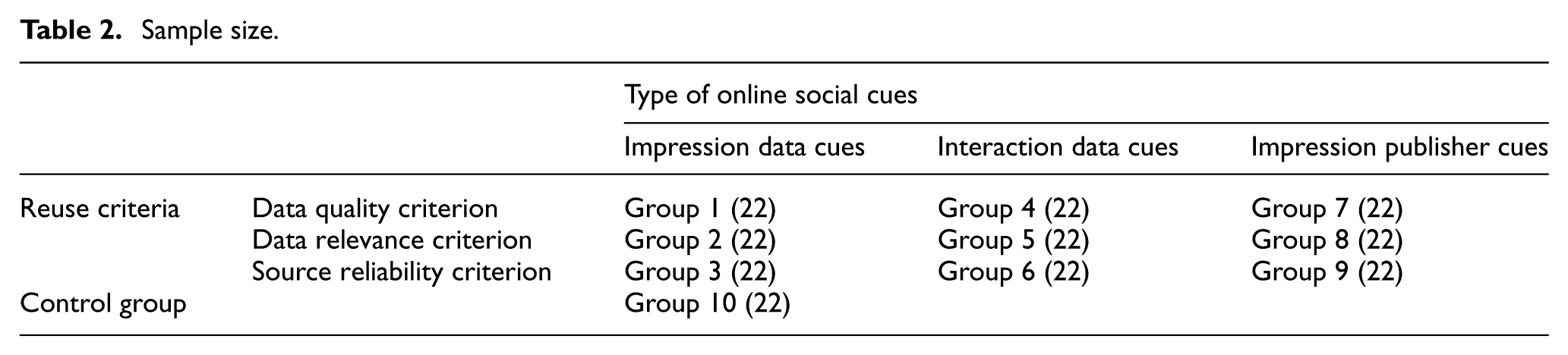
The overall objective of this study was to investigate how perceptions and behavior in data reuse are influenced by online social cues and their match with reuse criteria in a controlled environment. Crucially, rather than examining the entire lifecycle of data reuse, this study focuses specifically on the assessment and screening process preceding the formal data reuse task. To test these hypotheses, we conducted a laboratory experiment at a university in Xi’an, Shaanxi Province, China. We employed a 3 (reuse criteria: quality criterion vs relevance criterion vs. source reliability criterion) × 3 (impression data cues vs interaction data cues vs. impression publisher cues) between-subjects design, with an additional control group to verify the effectiveness of our manipulation of the reuse criteria. Participants were required to have experience in social science research and prior experience with data reuse. They were asked to browse shared scientific data provided by the platform, perform a preliminary evaluation of the datasets, and ultimately make reuse decisions.
For participant recruitment, invitations were sent to teachers and students at this university. From the respondents, we randomly selected 220 participants, including 41 young scholars and 179 students. The sample consisted of 106 males and 114 females. Notably, the young scholars were all actively engaged in scientific research, while the majority of the students were in their final year preparing graduation theses; thus, they possessed a genuine need for and practical experience in reusing scientific data. All participants were randomly assigned to one of the 10 experimental groups (see Table 2).
Sample size.
4.2. Experimental apparatus and materials
4.2.1. Experimental platform design
For experimental purposes, we developed a platform to simulate a scientific data-sharing environment. Participants were presented with a search result page displaying. Eight sets of social science datasets drawn from different databases or journal articles. These datasets were balanced in terms of subject attributes, release time, and relevance to the search topic. The only variation across conditions was the type of online social cues, which were manipulated and presented to the corresponding groups. Impression data cues include ratings and downloads. Ratings reflected the average scores assigned by previous users, using a standard 5-point scale (e.g. 4.3). Downloads represent the total number of downloads of this data (e.g. 135 downloads). Interaction data cues consisted of users’ reviews describing the process and effect of data reuse (e.g. I compared this framework with others, and they seem to be similar). Impression publisher cues displayed the name, unit, and unit attributes of the data publisher (e.g. Lab for Digital & Mobile Governance, Fudan University). Appendix B shows an example of the search results page.
4.2.2. Activation article
To manipulate participants’ reuse criteria in a laboratory setting, we adapted methods from marketing and psychology research [72]. Specifically, we activated participants’ specific implicit concern by asking them to read articles related to reuse criteria, thereby influencing their subsequent task decisions. The activation article, adapted from a journal publication and formatted in a combination of graphics and text (similar to academic WeChat platforms), focused on the question, ‘What indicators do scholars use to judge the reusability of social science data?’ It provided different conclusions for each of the three reuse criteria, while all other content remained consistent across conditions. Appendix C presents the activation article for the data-quality-criterion condition.
4.2.3. Eye-tracking device
Eye-tracking has garnered significant interest from scholars [73]. This technology enables researchers to explore deeper motivations behind user behavior, particularly regarding cognitive processing and attention [74]. Specific eye-tracking metrics, such as pupil diameter and fixation count, can effectively capture individuals’ cognitive effort; notably, this effort is significantly reduced under conditions of cognitive matching [75]. In this study, participants were equipped with the Eyelink Portable Duo eye-tracking device, which records fixation and pupil data at a sampling rate of 500 Hz. This setup provides accurate measurements suitable for complex laboratory studies of eye movement and attention.
4.3. Experimental procedure and data collection
4.3.1. Experimental procedure
Upon their arrival in the laboratory, the participants were briefed about this experiment and the equipment by the research assistant. After this, they were then required to complete a pre-test survey to collect basic information, and the following tasks in order.
4.3.1.1. Activate article reading
The research assistant asked each participant to read the activation article before officially starting the experiment. The article was different for each group (participants in the control group did not need to read the article).
4.3.1.2. Eye-tracking device wearing and calibration
Each participant was required to wear an eye-tracking device for the purpose of recording his or her fixation data and pupil data as a measure of cue perception and reuse assessment performance. After two sets of calibrations, participants entered the data reuse task wearing an eye-tracking device.
4.3.1.3. Data assessment and screening task
During the task, participants could freely browse the search result pages and repeatedly view the data without a time limit. All click behaviors and fixations would be recorded. Finally, they made reuse decisions through selection and comparison and clicked the ‘Add to Data Cart’ button to signify the completion of the pre-reuse assessment and screening process. For the purpose of the experiment, we asked the participants to stay on the search results page and not to switch to other pages until the end of the task and the completion of the post-survey. Each subject received 20 RMB as compensation.
4.3.2. Experimental datasets
After finishing the experiment, we have obtained a total of three kinds of data from the participants, which were behavior data, perceptual data, and eye-movement data. Among them, the behavior data consisted of the duration from the time the participant entered the data reuse task to the time he or she chose to reuse (i.e. ended the task). It was obtained through the screen-recording function that comes with the eye-tracking device. Perceptual data contained their perceptions of the data reuse criteria, the cues we provided, the usefulness of the data, and the task difficulty and were obtained through a survey. Eye-movement data were collected with the aid of the eye-tracking device and contained the fixation counts and fixation duration in the cue area, as well as pupil size changes.
4.4. Measurements
4.4.1. Manipulation check-reuse criteria perception
Participants’ perceived data quality, perceived relevance, and perceived source reliability were measured to verify the effectiveness of the criteria activation. Changes in these perceptions after reading the activation article were used as indicators of successful manipulation. Perceived quality, relevance, and source reliability were all measured using three, two, and four survey items, respectively.
4.4.2. Cue perception
Cue perception assessed whether participants noticed the social cues provided. This measure included two fixation metrics and one survey item (e.g. for the data relevance activated group: ‘Did you notice the reviews provided by the platform?’). The fixation metrics were percentage of fixation and percentage of fixation time [76], calculated using the following formulas.


4.4.3. Mediator variable—perceived usefulness
Perceived usefulness was measured using four self-reported items adapted from prior studies on computer system adoption [77].
4.4.4. Dependent variable—data reuse assessment performance
In this study, performance refers to data reuse assessment and screening performance, rather than the long-term outcomes of data reuse. In the context of the pre-use phase, high performance is not characterized by traditional correctness or reuse quality, but by efficient and easy screening experience—the ability to screen datasets with minimal cognitive and time cost. Consequently, the performance in this study was assessed using task difficulty, reuse duration, and pupil dilation rate. Task difficulty consisted of two self-reported items adapted from the Cognitive Load Scale to measure participants’ mental effort and task difficulty [78,79]. Reuse duration was defined as the total time from when participants first viewed a dataset to when they decided to reuse it. In information seeking, a shorter screening time indicates higher efficiency in processing information [80,81]. Since all groups received identical data, a shorter reuse duration indicates higher efficiency. Pupil dilation rate served as an objective of cognitive effort [82], as pupil size changes in response to mental activity (psychosensory pupil response). According to CFT, when external cues match internal criteria, the cognitive effort is significantly reduced, even if the task itself remains complex [75]. Consequently, a lower pupil dilation rate represents reduced cognitive strain, indicating high performance in this study. To reduce noise from lighting conditions [83], baseline pupil tremors, and individual differences, a subtractive baseline correction was applied using the mean pupil size during the first 500 ms of each participant’s data reuse task [84]. The formula used for pupil dilation rate is as follows

4.4.5. Control variables
Three control variables were also measured: age [85], sex [86,87], and task familiarity [88].
All measures were adapted from prior studies, with self-report items using a 7-point scale (see Table 14 in Appendix 1).
5. Data analysis and results
Data were analyzed using SPSS 29.0. Different statistical methods were applied to address specific research objectives. First, for the cue manipulation check, ANCOVA was used to compare participants’ perception of reuse criteria across, controlling for covariates. Second, to examine the main effects of online social cues on perceived usefulness and data reuse assessment performance, we conducted a series of ANCOVAs. Third, to test the ‘social cue–reuse criteria’ match effects, we conducted multiple linear regression analyses including interaction terms (cue × criteria). Finally, to examine the mediating role of perceived usefulness in the effect of the ‘social cue–reuse criteria’ match on data reuse assessment performance, we used the PROCESS macro by Hayes with bootstrapping. Table 15 in Appendix 1 provides descriptive statistics for the experiment.
5.1. Manipulation checks and cue-perception checks
5.1.1. Manipulation checks
The success of the reuse criteria manipulation was tested using two approaches (see Table 3). The first one was perceptions of scientific data. After reading the activation article, participants evaluated the data in terms of its quality, relevance, and reliability. Results showed that participants in the quality-criterion activation group perceived significantly lower data quality than those in the control condition (F = 7.599, p < 0.01). Similar results were found in the relevance criterion group (F = 4.219, p < 0.05) and the source reliability group (F = 6.700, p < 0.05).
Results of manipulation checks.
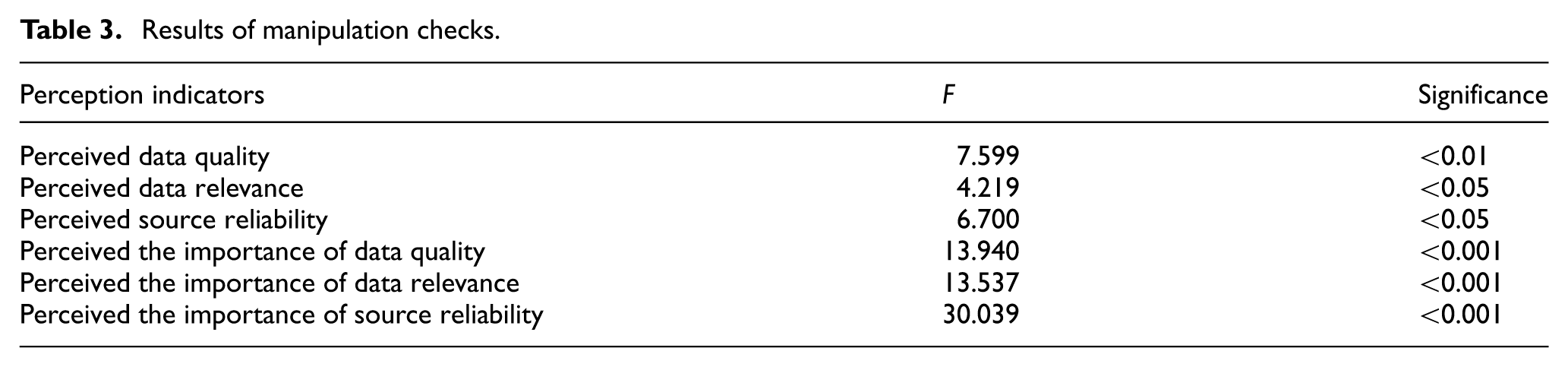
The second approach is the perceived importance of reuse criteria. After reading the activation article, participants rated the importance of the activated criterion (quality, relevance, or reliability) in assessing data reuse. Results suggested that participants exposed to the quality-criterion article rated the importance of data quality significantly higher than those in the control group (F = 13.940, p < 0.001). Comparable effects were observed for the relevance and source reliability (F = 13.537, p < 0.001; F = 30.039, p < 0.001). Together, these findings confirmed that the activation manipulation of the data reuse criteria was successful.
5.1.2. Cue-perception checks
We examined participants’ self-reported data and two eye-tracking fixation measures to verify whether they noticed the online social cues provided. The results showed that, on average, participants allocated an average of 22.16% of their total browsing time and 20.90% of their fixation to the online social cues. In addition, a self-report item confirmed that the majority of participants noticed the cues during the data reuse task (M = 5.52/7). The fixation and survey data indicated that participants paid attention to social cues.
5.2. The effect of social cues on perceived usefulness and reuse assessment performance
When analyzing the role of social cues, participants in the no-cue group were excluded from analysis involving reuse duration, since they did not view cues. For this reason, only self-reported perceived usefulness, task difficulty, and pupil dilation rate were used as dependent variables in these comparisons.
The results showed that impression data cues significantly increased participants’ perceived usefulness of scientific data compared with the no-cue group, regardless of whether they were primed with quality, relevance, or source reliability criterion (F = 5.188, p < 0.05), which supports H1. Similarly, interaction data cues significantly increased participants’ perceived usefulness (F = 5.803, p < 0.05), providing further support for H1. Furthermore, impression publisher cues led to the largest effect, with a highly significant increase in perceived usefulness (F = 21.973, p < 0.001), again confirming H1 (see Table 4).
Hypothesis testing results for H1.

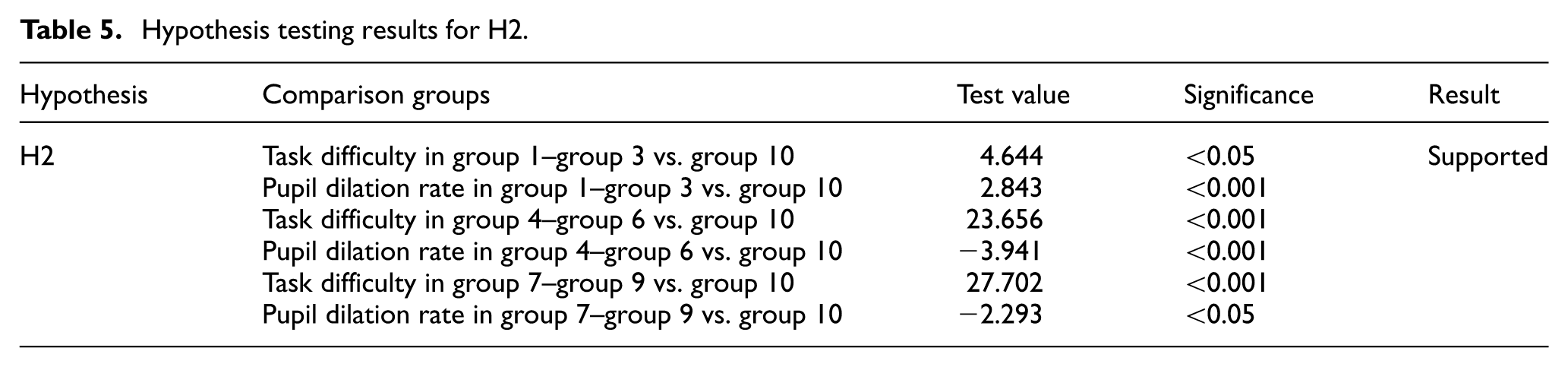
Both self-reports of task difficulty and pupil dilation rate were used as indicators of reuse assessment performance. Results showed that, regardless of which data reuse criteria were activated for the participants, impression data cues significantly reduced task difficulty (F = 4.644, p < 0.05) and pupil dilation rate (z = −2.843, p < 0.001) compared with the control group, supporting H2. The positive effects of interaction data cues on reducing task difficulty (F = 23.656, p < 0.001) and pupil dilation rate (z = −3.941, p < 0.001) were also validated, providing strong support to H2. Finally, impression publisher cues significantly reduced task difficulty (F = 27.702, p < 0.001) and pupil dilation rate (z = −2.293, p < 0.05), fully supporting H2 (see Table 5).
Hypothesis testing results for H2.
5.3. The effect of match effects on perceived usefulness and reuse assessment performance
In this section, we examined how the match effect between online social cues and reuse criteria influences perceived usefulness and reuse assessment performance. To test these effects using a single integrated model, multiple linear regression analyses were conducted with dummy coding. The impression data cue and data quality criterion were designated as the reference categories. Consequently, their baseline performance was captured by the model intercept rather than a separate interaction coefficient. Simple effects analysis further demonstrated the superiority of this match.
5.3.1. Regression analysis
The results of the regression analyses are summarized in Table 6. All four models were statistically significant (F > 3.320, p < 0.001), with
Results of regression analysis.
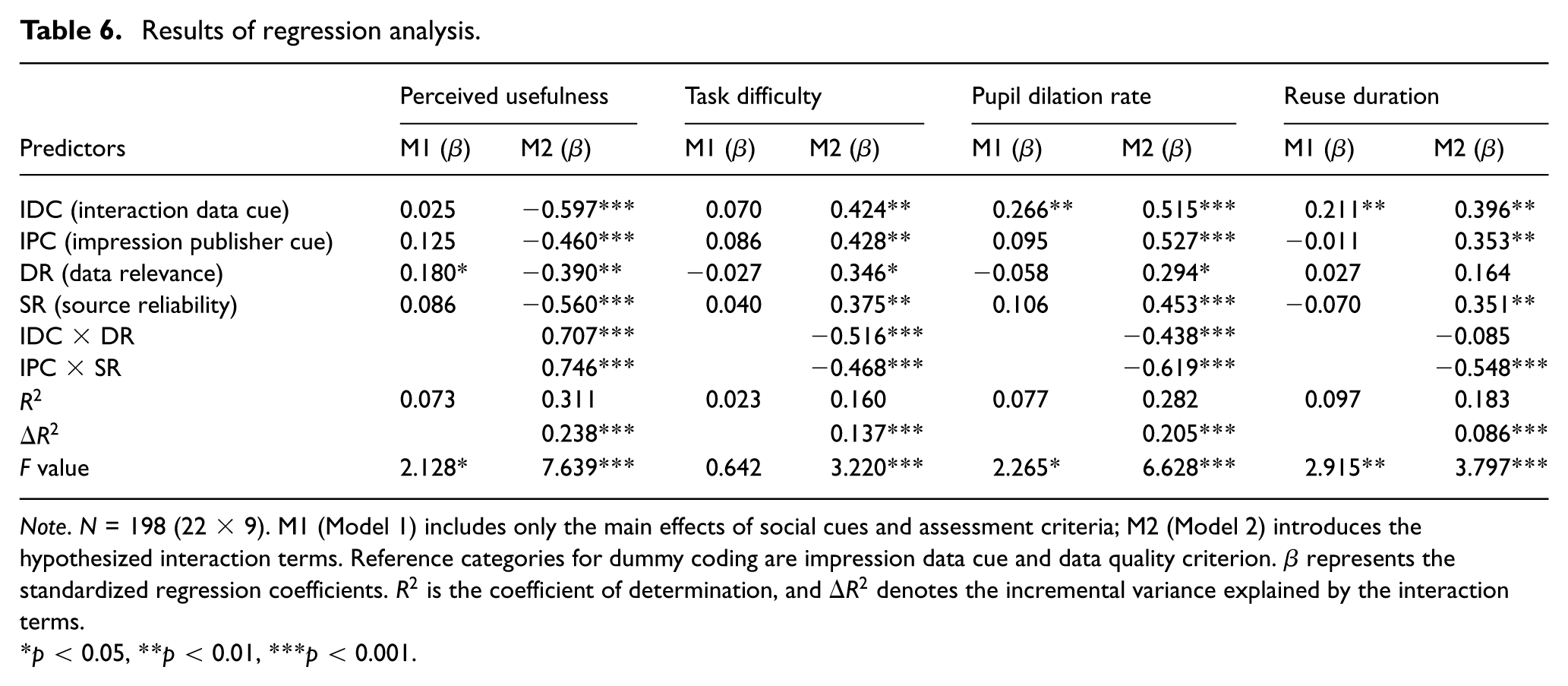
Note. N = 198 (22 × 9). M1 (Model 1) includes only the main effects of social cues and assessment criteria; M2 (Model 2) introduces the hypothesized interaction terms. Reference categories for dummy coding are impression data cue and data quality criterion. β represents the standardized regression coefficients.
p < 0.05, **p < 0.01, ***p < 0.001.
5.3.2. Simple effects analysis
Given the significant interaction effects identified in the regression models, simple effects analyses were subsequently conducted to further examine the match-effect hypothesis, with results illustrated in Figure 3.
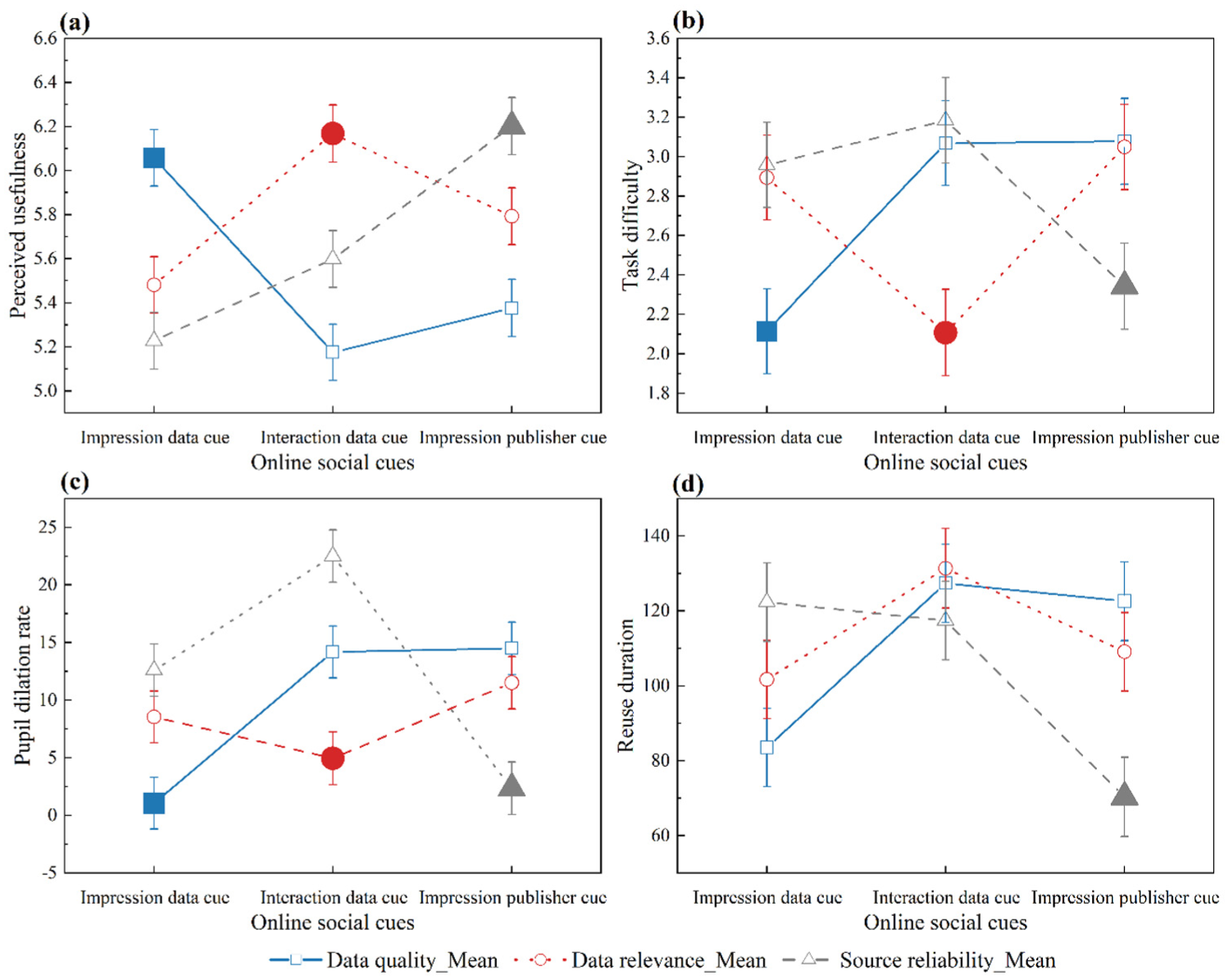
Interaction effects of online social cues and assessment criteria on four variables.
5.3.2.1. Perceived usefulness
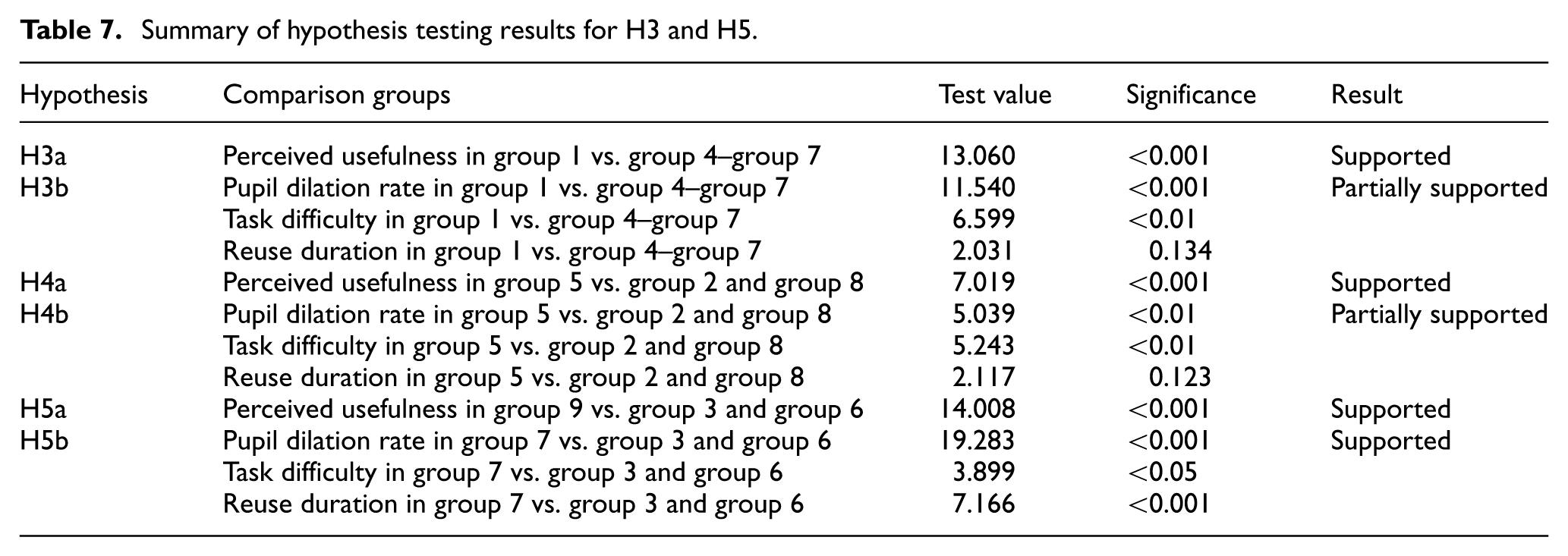
In the data quality condition, the impression data cue yielded higher perceived usefulness than the interaction data cue (ΔM = 0.581, standard error (SE) = 0.18, p < 0.001, 95% confidence interval (CI) = [0.45, 1.32]) and the impression publisher cue (ΔM = 0.87, SE = 0.18, p < 0.001, 95% CI = [0.24, 1.12]), supporting H3a. In the data relevance (DR) condition, the interaction data cue significantly outperformed the impression data cue (ΔM = 0.97, SE = 0.18, p < 0.001, 95% CI = [0.24, 1.13]) and the impression publisher cue (ΔM = 0.58, SE = 0.18, p < 0.01, 95% CI = [0.13, 1.01]), providing evidence for H4a. Finally, in the source reliability condition, the impression publisher cue was found to be the most effective, scoring significantly higher than both the impression data cue (ΔM = 0.81, SE = 0.19, p < 0.001, 95% CI = [0.53, 1.42]) and the interaction data cue (ΔM = 0.43, SE = 0.19, p < 0.01, 95% CI = [0.16, 1.05]). These results provide robust support for H5a (see Table 7).
Summary of hypothesis testing results for H3 and H5.
5.3.2.2. Reuse assessment performance
Similar but more nuanced results emerged. In the data quality condition, the impression data cue consistently outperformed other cue types across multiple metrics. It significantly reduced task difficulty compared with the interaction data cue (ΔM = −0.75, SE = 0.30, p < 0.01, 95% CI = [−1.69, −0.22]) and the impression publisher cue (ΔM = −0.80, SE = 0.31, p < 0.01, 95% CI = [−1.70, −0.22]). This superior performance extended to physiological load, with the pupil dilation rate being significantly lower than that of the interaction data cue (ΔM = −7.50, SE = 3.17, p < 0.001, 95% CI = [−20.78, −5.44]) and the impression publisher cue (ΔM = −11.431, SE = 3.20, p < 0.001, 95% CI = [−21.16, −5.68]). However, its impact on reuse duration was non-significant (p > 0.05). Collectively, these results partially supported H3b. In the DR condition, the interaction data cue emerged as the optimal match, showing a distinct advantage over alternative cues. Specifically, it led to significantly lower task difficulty than the impression data cue (ΔM = −0.98, SE = 0.31, p < 0.05, 95% CI = [−1.53, −0.04]) and the impression publisher cue (ΔM = −1.09, SE = 0.31, p < 0.01, 95% CI = [−1.69, −0.19]). Similarly, the pupil dilation rate for this match was significantly lower than that of the other two conditions (all p < 0.05), indicating reduced cognitive effort. Nevertheless, the expected reduction in reuse duration did not reach statistical significance (all p > 0.05). Thus, H4b was partially supported. Regarding the source reliability condition, the impression publisher cue not only significantly reduced task difficulty compared with the impression data cue (ΔM = −0.75, SE = 0.31, p < 0.01, 95% CI = [−1.69, −0.19]) and the interaction data cue (ΔM = −0.73, SE = 0.31, p < 0.05, 95% CI = [−1.59, −0.09]) but also yielded a significantly lower pupil dilation rate (p < 0.01). Furthermore, the match effect extended to behavioral efficiency, as it effectively shortened reuse duration compared with that of the impression data cue (ΔM = −53.46, SE = 15.08, p < 0.01, 95% CI = [−88.41, −15.44]) and interaction data cue (ΔM = −37.23, SE = 15.03, p < 0.01, 95% CI = [−83.35, −10.73]). Consequently, H5b was fully supported (see Table 7).
5.4. The mediation effect test results of perceived usefulness
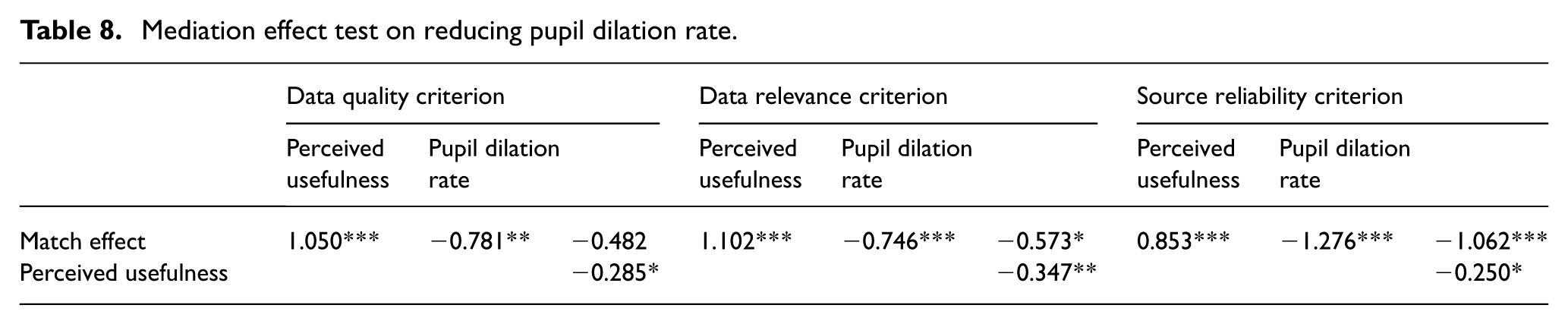
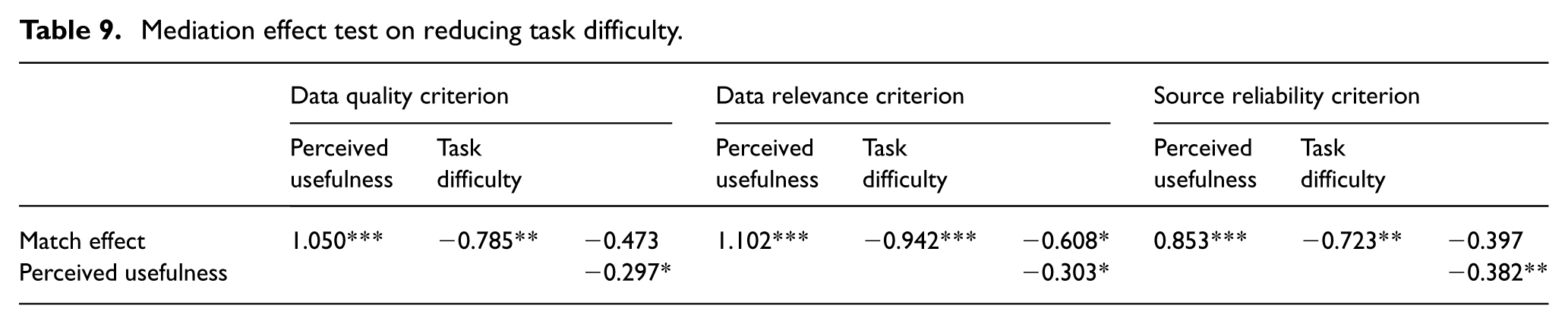
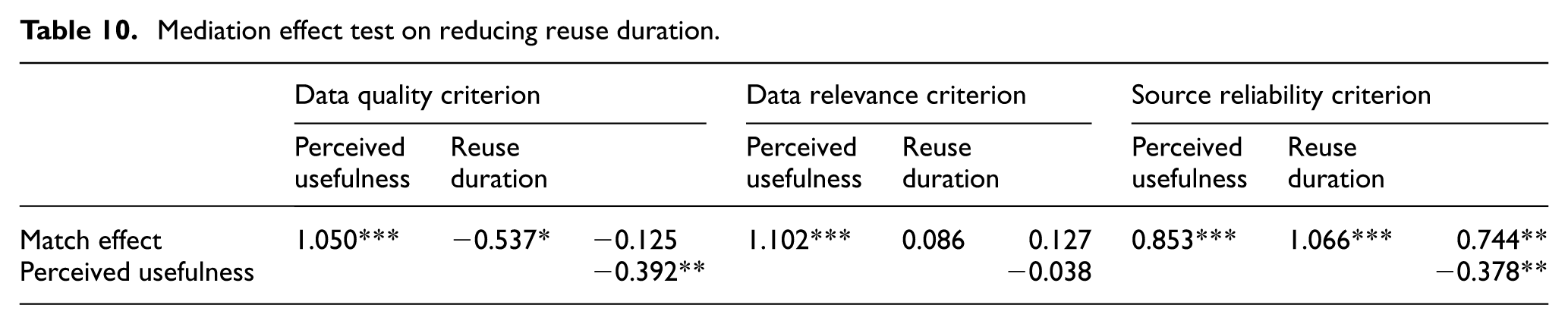
As shown in Tables 8 to 10, perceived usefulness mediated the effects of cue-criteria matches on reuse assessment performance. The impression data cue–quality criterion match effect increased perceived usefulness, which in turn reduced task difficulty (p < 0.05), the pupil dilation rate (p < 0.05), and reuse duration (p < 0.01). Similarly, perceived usefulness mediated the interaction of data cue–relevance criterion match effect, leading to reductions in pupil dilation rate (p < 0.01) and task difficulty (p < 0.05), ultimately improving reuse assessment performance. Finally, perceived usefulness mediated the impression publisher cue–source reliability criterion match effect, reducing pupil dilation rate (p < 0.05), task difficulty (p < 0.01), and reuse duration (p < 0.01), and directly enhancing reuse assessment performance (see Figure 4).
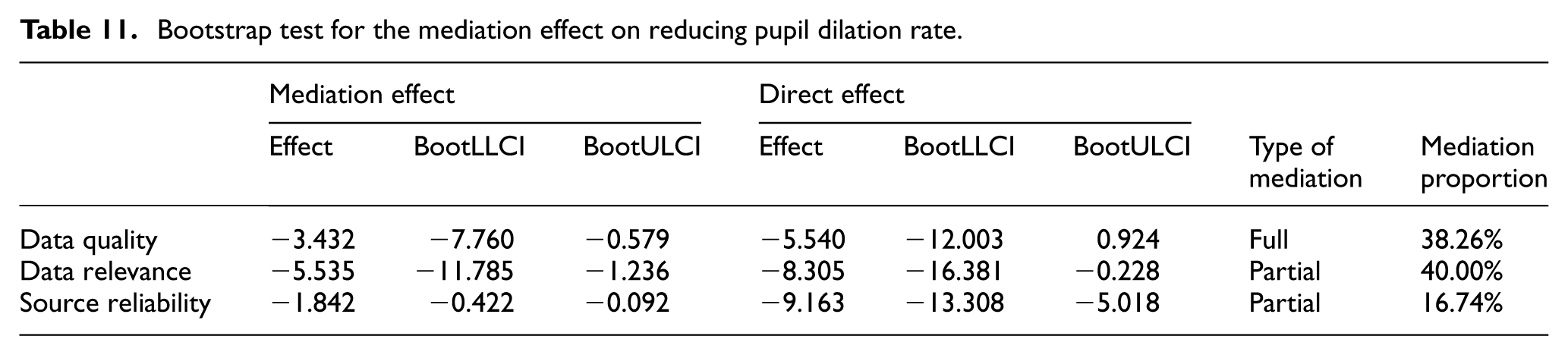
Mediation effect test on reducing pupil dilation rate.
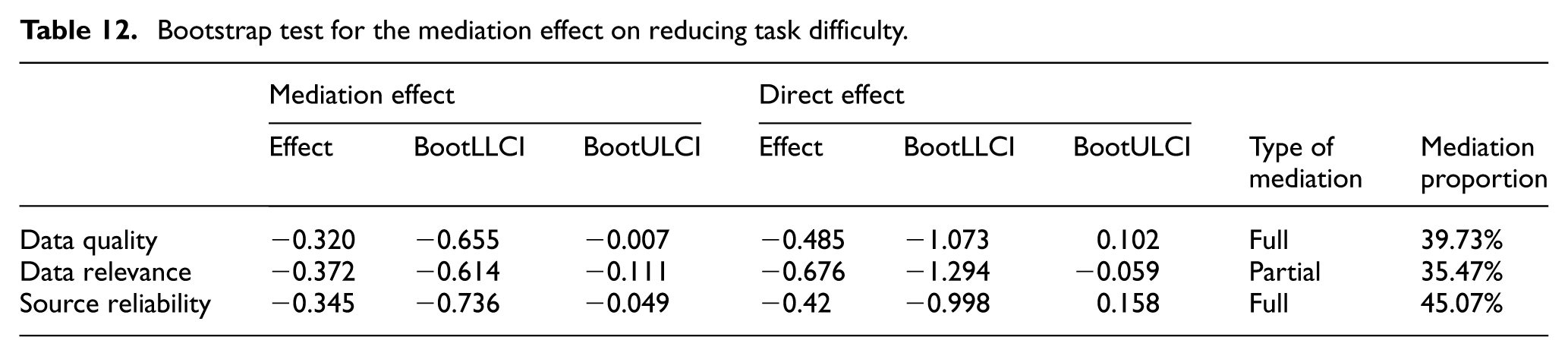
Mediation effect test on reducing task difficulty.
Mediation effect test on reducing reuse duration.
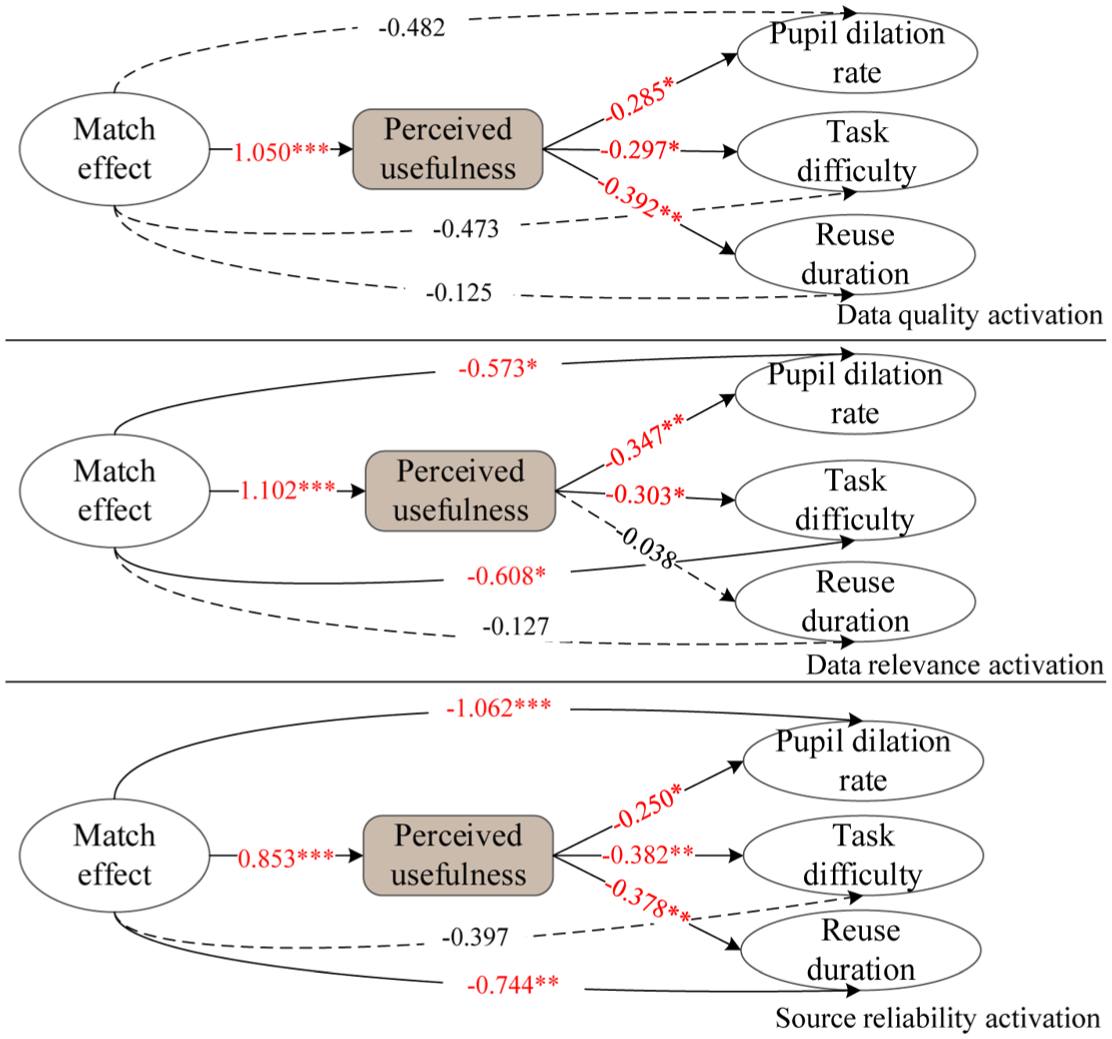
The mediation effect test results of perceived usefulness.
We further tested the mediation of perceived usefulness using the Bootstrap method (Model 4), as shown in Tables 11 to 13. Bootstrap is a non-parametric resampling technique that estimates the sampling distribution of a statistic, such as an indirect effect. It is especially useful for small samples, providing more accurate and robust estimates of mediation effects and their CIs [89]. In this procedure, 5000 bootstrap resamples were utilized to generate 95% bias-corrected CIs. To ensure the consistency of the models, all control variables (e.g. age, gender, and task familiarity) were consistently included as covariates in all mediation paths.
Bootstrap test for the mediation effect on reducing pupil dilation rate.
Bootstrap test for the mediation effect on reducing task difficulty.
Bootstrap test for the mediation effect on reducing reuse duration.
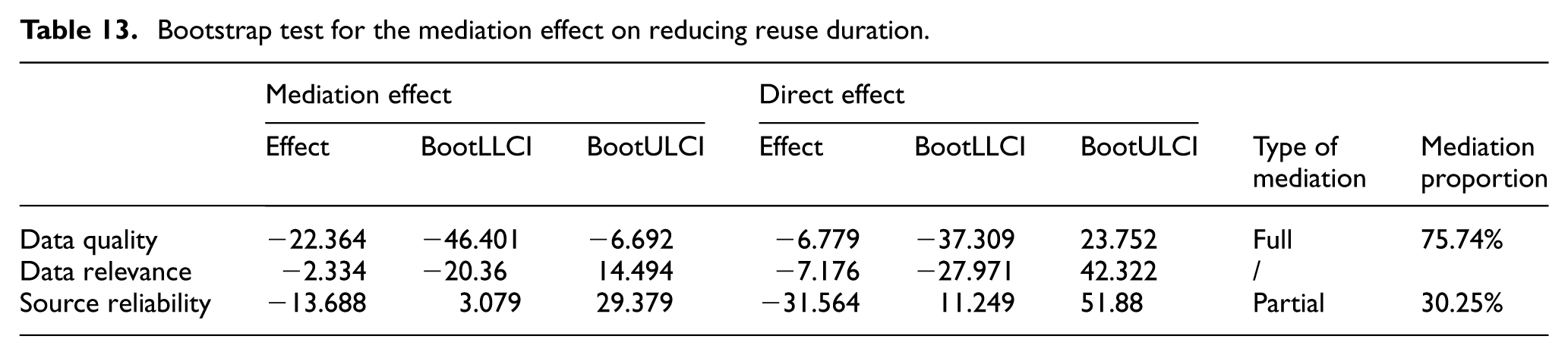
The results showed that the 95% CI for the indirect mediation effects did not include zero, indicating the presence of mediation in several conditions. Moreover, perceived usefulness fully mediated the impression data cue–quality criterion match effect. The indirect effect accounted for 38.26% of pupil dilation, 39.73% of task difficulty, and 75.74% of reuse duration. Second, perceived usefulness significantly mediated the interaction of data cue–relevance criterion match effect on pupil dilation rate (40%) and task difficulty (35.47%), both partially mediated. However, the mediation effect on reuse duration was not validated, and no direct effect was observed. Finally, perceived usefulness also mediated the impression publisher cue–source reliability criterion match effect, on pupil dilation rate (16.74%, partially), task difficulty (45.07%, fully), and reuse duration (30.25%, partially). In summary, most positive effects of cue-criteria match on reuse assessment performance were mediated by perceived usefulness, confirming that the match effect can indirectly influence performance by shaping users’ perceptions of usefulness. Thus, H6 was partially supported.
6. Discussion
6.1. Discussion of results and serendipity
This study focused on exploring users’ perceived usefulness and reuse assessment performance during data reuse under the influence of three types of online social cues. The results showed that online social cues could increase perceived usefulness and enhance reuse assessment performance, providing answers to RQ1. This is similar to how consumers need to make decisions based on certain information when making purchases, whether online or offline [90,91]. The IS literature has come to the same conclusion [92], and endorsements from friends or online rating cues can influence users’ adoption of IT products [39]. However, this positive impact is complex and does not occur in all cases. This is because the match relationship is particularly important for problem-solving performance during information processing [43]. When seeking information, the match relationship between task type and user characteristics affects the user’s information querying performance [93]. There is also a match effect between task type and information representation style [94]. In addition, this match effect also occurs in e-commerce environments, where the match effect of information format with task type and customer channel preference affects purchase intention and behavior [95–97]. In the process of data reuse, reusers have their reusability assessment criteria. It was found that perceived usefulness and reuse assessment performance can be enhanced only when the criteria and social cues are matched, supporting RQ2.
There were some serendipitous findings in this study. The results pointed out that for the group activated by the data quality criterion and the DR criterion, reuse duration was not significantly shorter when matching cues were provided. In other words, once these criteria were activated, participants spent time reviewing the cues regardless of the cue type. We suspect this is because assessing data quality and relevance is more complex than assessing source reliability [17]. Revealing a publisher’s occupation, profile, or other identifying information can quickly signal source reliability [98], allowing users to make a basic judgment. By contrast, evaluating data quality and relevance typically requires more detailed information. In particular, current scientific data quality assessment systems involve multiple dimensions [99,100].
To explain this phenomenon, we conducted several two-by-two comparisons of reuse duration within the three groups activated by the data quality criterion and within the three groups activated by the DR criterion. We also analyzed responses to the final open-ended post-survey question: Why did you choose to reuse this data? First, in the data quality criterion activation group, there was no significant difference in reuse duration between group 1 (impression data cues) and group 4 (interaction data cues), but there was a significant difference compared with group 7 (impression publisher cues; p < 0.05). That suggests that, after being primed with the data quality criterion, participants not only checked ratings and downloads but also read review contents. For example, one participant in group 4 noted, ‘I read the reviews of other users and felt that this data is of high quality’. This response indicates that he or she relies on review content (i.e. interaction data cues) when assessing data quality. Second, in the DR criterion activation group, reuse duration did not differ significantly between group 5 (interaction data cues) and group 8 (impression publisher cues), which differed from group 2 (impression data cues; p < 0.05). In other words, once the DR criterion was activated, participants not only reviewed contents but also publisher information as indicators of reliability. For instance, one participant explained, ‘I see that this data publisher is in our research field’. This shows that participants sometimes inferred the DR from publisher information.
From these two observations, we infer that some users need multiple cues when assessing data quality and relevance. They may seek additional information beyond the explicit matching cues. Among these, user reviews contain rich information [101] such as emotions, attitudes, and item attributes. Such details can help users judge both the relevance of data to their task and the item’s reputation [102], thereby influencing perceptions of quality. In addition, impression publisher cues proved more useful than we expected. Publisher’s names, institutional affiliations, and institution types can convey the authority and reliability of the data source. Interestingly, they may also suggest relevance: researchers familiar with their field might infer whether the publisher’s work is too likely to be relevant to their own research.
6.2. Theoretical implication
This study offers several theoretical implications for research on data reuse and social cues. First, we provide a fine-grained categorization of the types of online social cues that contribute to data reuse. Prior research on online social cues is well established, and new types of cues continue to emerge. In online environments, nonverbal cues often play a more prominent role than verbal cues [103], and scholars have studied them in depth. However, existing categorizations of online nonverbal cues are not necessarily applicable across all online contexts and tasks. For example, reminders or nicknames used in virtual communities are not suitable for data-sharing platforms where authenticity and scientific rigor must be ensured and where data publishers may not always be online [40]. To this end, we surveyed current data-sharing platforms and data reuse tasks, delineated the relevant online social cues, and explained their functional characteristics. In doing so, our study provides a new standard for the fine-grained categorization of online social cues in the context of data reuse.
Second, we advance the theoretical understanding of data reuse performance by isolating the assessment and screening stage as a distinct research focus. While existing literature often treats reuse performance as a holistic outcome influenced by researchers’ background or academic availability [104], we argue that the data reusability assessment is a critical but often overlooked bottleneck. Our findings contribute to this field by demonstrating that online social cues significantly support researchers in their data screening tasks, leading to more efficient and simpler data assessment. Specifically, we reveal how online social cues serve as cognitive heuristics that enhance perceived usefulness, thereby reducing cognitive effort and reuse duration during the assessment process. In the current environment of open science, this perspective shifts the research focus from ‘whether data can be reused’ to ‘how reusers efficiently screen reusable data’, providing a new theoretical pivot for understanding complex decision-making processes.
Third, this study introduces a new perspective for examining the factors that influence data reuse by focusing on the match effect between social cues and reuse criteria. Prior studies have focused on enhancing users’ understanding of data through detailed metadata or on developing unified standards to accelerate data sharing and circulation. However, these approaches may overlook researchers’ need for assessing data reusability. A mismatch between assessment needs and available information can negatively affect reuse decisions and hinder data selection. By aligning data reuse criteria with online social cues, this study elaborates on the complex process through which social cues shape users’ perception and behavior. To accurately assess the impact of these cues on data reuse, it is first necessary to identify users’ reuse criteria. Our study provides a step in this direction. Our study provides a step in this direction.
Furthermore, the match effect theoretically supports the goal of helping data reusers quickly narrow down their data selection scope. By categorizing and validating the effects of different types of online social cues, we offer a cognitive framework that explains how users align dataset filtering behaviors with their reuse criteria. On one hand, this framework clarifies the theoretical pathway through which social cues serve as cognitive heuristics to reduce cognitive load and reuse duration, addressing a gap in existing literature on information cues and cognitive efficiency in data reuse. On the contrary, it theorizes the role of cue-based filtering in guiding users’ attention toward high-relevance datasets.
Finally, this study contributes by introducing social cues into the rigorous context of scientific research. While prior research on social cues has largely focused on communication and e-commerce, confirming their positive impact on user behavior, scientific research activity is a far more rigorous form of information behavior, and the role of online social cues in this context has received little attention. By integrating online social cues into the scientific research process, we expand their scope from consumption-oriented to information-oriented behavior, proving a deeper understanding of their impact and value for social science data reuse. Our study attempts to bridge general information behavior and academic information behavior, analyzing the influence of social cues on scientific data reuse and suggesting possible directions for applying them to other areas of research activities.
6.3. Practical implications
Researchers must assess the quality, relevance, and reliability of data when considering reuse. This study clarifies the match relationship between different types of online social cues and reuse criteria, revealing how these matches can enhance reuse assessment performance.
First, our findings demonstrate that online social cues positively influenced perceived usefulness and reuse assessment performance, while also explaining how perceived usefulness mediates these effects. Because of the complexity and format diversity of social science data, researchers often struggle to fully understand shared datasets or quickly assess their reusability, which hinders both efficiency and uptake. By delineating online social cues relevant to the data reuse process and verifying their positive impact, this study shows that providing such cues can indeed help researchers select reusable data more effectively. However, when researchers already have strong criteria, platforms may need to provide social cues more selectively. Overall, our results confirm that browsing cues can help researchers deepen their understanding of data and improve both the efficiency and effectiveness of reuse.
Second, this study identifies three types of online social cues that can directly inform the functional design of scientific data-sharing platforms. Currently, most platforms display impression cues such as data release time and publisher information, but fewer have integrated interaction cues such as reviews, resulting in limited engagement and underuse of open datasets. By classifying and validating three cues and their effects, our research provides a concrete reference for platform design. Platforms can use these cues to help reusers more efficiently assess data quality, relevance, and source reliability without exhaustive manual screening. This allows researchers to devote more time to in-depth analysis of curated datasets, ultimately leading to higher-quality reuse and stronger research outcomes.
6.4. Limitations and future research
We acknowledge three primary limitations in this study. First, laboratory experiments may inherently compromise external validity and generalizability. Online social cues serve primarily as heuristic proxy indicators of data quality, DR, and source reliability; the actual value of the data must ultimately be confirmed by integrating these cues with the data itself. Moreover, the limited domain-specific expertise of the student sample might have led to an over-reliance on simplified cues, such as ratings. To enhance realism and facilitate broader generalization, future research could collect samples from a broader range of researcher groups and explore the synergistic effects of social cues and data content on reuse decisions.
Second, in each experimental group, we activated only one data reuse criterion to test our hypothesis. The reality is that researchers may have more than one criterion for data reuse. There is a prioritization relationship between the criteria. Moreover, the assessment of data quality is a multidimensional process that may involve complex trade-offs. Future studies can employ more sophisticated experimental designs to explore the matching relationship between social cues and multiple criteria based on the situation where researchers have multiple data reuse criteria.
Finally, our experiments did not provide data download and viewing functions, so the measurement of the participants’ data reuse assessment performance may not be comprehensive enough. As previously emphasized, data reuse is a long-term, multi-stage process, and this study specifically focused on the initial assessment and screening stage. Capturing the complete reuse lifecycle is inherently time-consuming and resource-intensive, presenting a significant longitudinal challenge. Future studies could employ a longitudinal design to examine the evolution of researchers’ perceptions from initial screening to data reuse, and the process, effectiveness, and efficiency of data reuse.
7. Conclusion
Online social cues are a key factor in user behavior and decision-making. We deeply analyzed the role of social cues on influencing social science data reuse and verified the positive effects of cues on enhancing perceived usefulness and reuse assessment performance. We also discussed how the cue-criteria match effect influences perceived usefulness and assessment performance. Compared with no cues, any type of cues can improve the perceived data usefulness to the user, thus positively impacting reuse assessment performance. When users have prior data reusability judgment criteria, providing cues that match them can maximize the positive effect of cues in improving perceived usefulness and reuse assessment performance. Our study introduces online social cues into a scientific research context and provides insights into the impact of different types of cues and their matching relationships with data reuse criteria on complex scientific information behavior. The results of the study have certain theoretical and practical implications, provide a basis for future research on the influencing factors of scientific data reuse, and can assist in the functional design of scientific data-sharing platforms.
Footnotes
Appendix 1
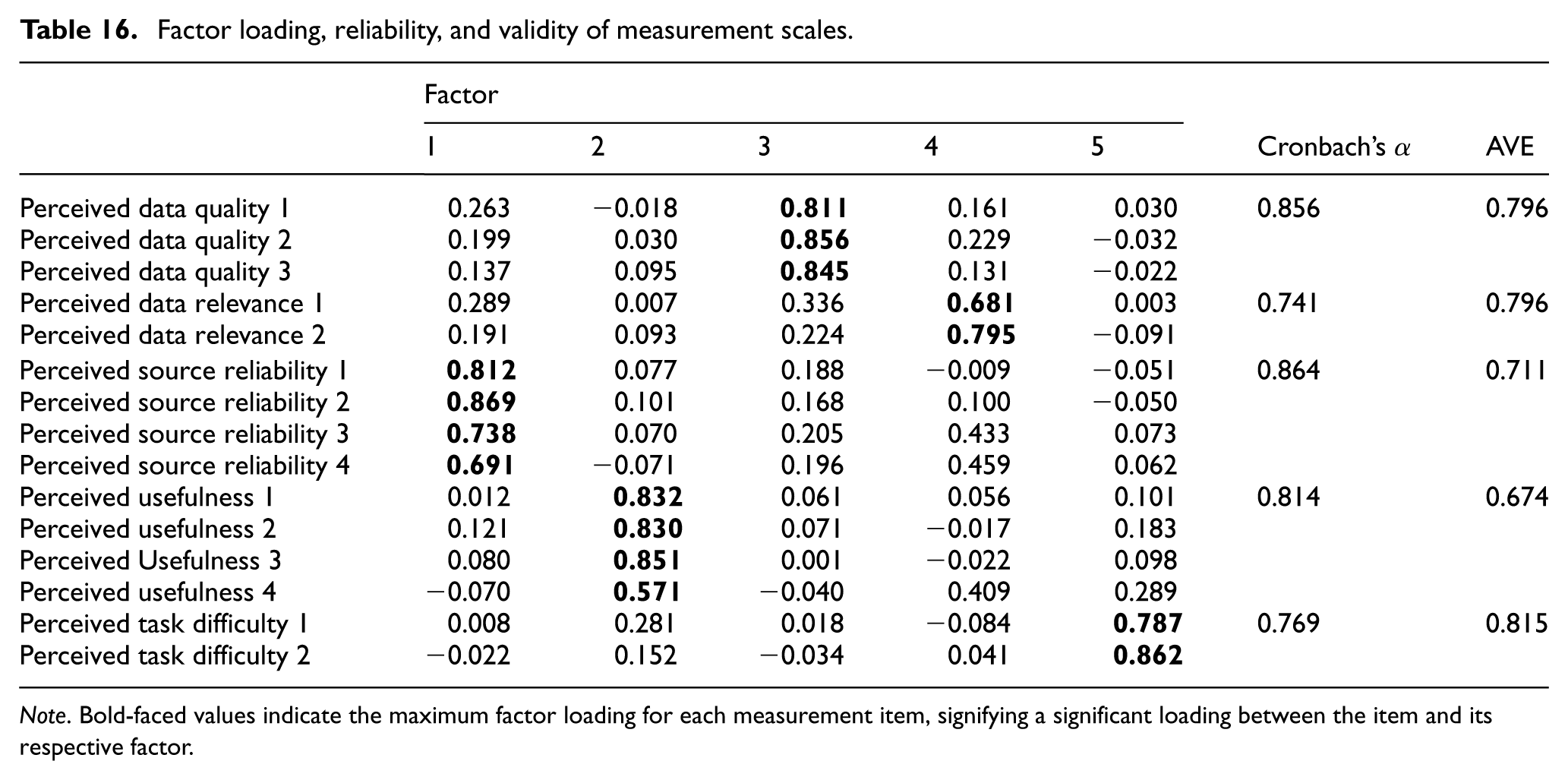
Factor loading, reliability, and validity of measurement scales.
| Factor | |||||||
|---|---|---|---|---|---|---|---|
| 1 | 2 | 3 | 4 | 5 | Cronbach’s α | AVE | |
| Perceived data quality 1 | 0.263 | −0.018 |
|
0.161 | 0.030 | 0.856 | 0.796 |
| Perceived data quality 2 | 0.199 | 0.030 |
|
0.229 | −0.032 | ||
| Perceived data quality 3 | 0.137 | 0.095 |
|
0.131 | −0.022 | ||
| Perceived data relevance 1 | 0.289 | 0.007 | 0.336 |
|
0.003 | 0.741 | 0.796 |
| Perceived data relevance 2 | 0.191 | 0.093 | 0.224 |
|
−0.091 | ||
| Perceived source reliability 1 |
|
0.077 | 0.188 | −0.009 | −0.051 | 0.864 | 0.711 |
| Perceived source reliability 2 |
|
0.101 | 0.168 | 0.100 | −0.050 | ||
| Perceived source reliability 3 |
|
0.070 | 0.205 | 0.433 | 0.073 | ||
| Perceived source reliability 4 |
|
−0.071 | 0.196 | 0.459 | 0.062 | ||
| Perceived usefulness 1 | 0.012 |
|
0.061 | 0.056 | 0.101 | 0.814 | 0.674 |
| Perceived usefulness 2 | 0.121 |
|
0.071 | −0.017 | 0.183 | ||
| Perceived Usefulness 3 | 0.080 |
|
0.001 | −0.022 | 0.098 | ||
| Perceived usefulness 4 | −0.070 |
|
−0.040 | 0.409 | 0.289 | ||
| Perceived task difficulty 1 | 0.008 | 0.281 | 0.018 | −0.084 |
|
0.769 | 0.815 |
| Perceived task difficulty 2 | −0.022 | 0.152 | −0.034 | 0.041 |
|
||
Note. Bold-faced values indicate the maximum factor loading for each measurement item, signifying a significant loading between the item and its respective factor.
Appendix 2
Appendix 3

Ethical considerations
This study was approved by the Ethics Committee of XIDIAN University in April, 2023.
Informed consent
All participants provided written informed consent before enrolment in the study.
Consent to participate
After participants arrived at the laboratory, the research assistant introduced the purpose and process of the experiment. The experiment was conducted after obtaining the consent of the participants and their signatures in written informed consent forms.
Consent for publication
The authors have obtained written informed consent to publish, and the written consent is held by them. Consent to publish was obtained within the article text. The participants agreed to analyze and publish the data from the experiment (excluding personal and private information).
Author contributions
Yafan Xiang: Writing—original draft
Xubu Ma: Writing—review and editing
Chunxiu Qin: Methodology
Dongsu Liu: Supervision
Jin Zhang: Writing—review and editing
Funding
The authors disclosed receipt of the following financial support for the research, authorship, and/or publication of this article: This work was supported by the General Project of National Social Science Fund of China (#22BTQ053) and the Special Research Project of Philosophy and Social Sciences in Shaanxi Province (No.2026YB0148).
Declaration of conflicting interests
The authors declared no potential conflicts of interest with respect to the research, authorship, and/or publication of this article.