







Abstract
Keywords
Introduction
Against the backdrop of rapid development in the internet platform economy and the suppression of offline consumption due to the COVID-19 pandemic, the live-streaming e-commerce model, represented by Key Opinion Leaders (KOLs) and their product endorsements, has emerged as a driving force for growth in e-commerce platforms. 1 Live-streaming e-commerce, also known as “live with goods,” refers to the behavior of using online platforms, such as e-commerce platforms or celebrities, internet celebrities, public figures, etc., to showcase, promote, sell, and endorse goods or services through live-streaming technology. It is a comprehensive advertising-based “live streaming + e-commerce” sales model that has evolved rapidly with the development of online live streaming. 2 As an internet platform economic business model, the core process of live-streaming e-commerce can be summarized as follows: “no fixed script - host control - lucky draws and giveaways - product recommendations - product explanations - real-time interactions - product placements - product negotiations - start purchasing - after-sales feedback.” This process has formed a standardized full-cycle model. 3 According to the 49th Statistical Report on the Development of China’s Internet released by the China Internet Network Information Center (CNNIC), as of December 2021, the user base of live-streaming e-commerce in China reached 464 million, an increase of 75.79 million compared to December 2020, accounting for 44.9% of the overall internet user population. It shows that in 2020, the number of professionals in China’s live-streaming industry grew rapidly, with 1.234 million individuals working as live-streaming hosts. The entire live-streaming e-commerce market exceeded 12 trillion yuan, with a year-on-year growth rate of 197.0% (IRESEARCH, 2020). While live-streaming e-commerce continues to expand, the hosts have obtained legitimate professional status. In July 2020, the Chinese Ministry of Human Resources and Social Security, in conjunction with several departments, released a document that added “live salesperson” as a new occupation under the existing “internet marketer” category, marking the initial formation of the “live-streaming e-commerce” ecosystem.
However, as live-streaming e-commerce brings novelty and practical benefits to the public, it also faces five urgent problems that need to be addressed. The first problem is whether the healthy development of the live-streaming e-commerce industry is dependent on government regulation. If government regulation is not necessary, then discussions about how the government should regulate become meaningless. This is an important but under-researched question. The second problem is false advertising by live-streaming hosts. 4 Through scene marketing and frequent two-way interactions to stimulate viewers, internet celebrities use live-streaming e-commerce to identify consumer preferences and rely on their personality traits or physical advantages to gain consumer trust and recognition, thereby increasing consumer willingness to adopt new products. 5 As a result, hosts may exploit consumer trust for their own unjust gains. The third problem is the difficulty consumers face in seeking legal recourse when they suffer losses due to false advertising. 6 On one hand, scholars have pointed out that live-streaming e-commerce has hidden risks, and consumers can seek compensation from the relevant parties, including businesses, platforms, and hosts, through legal means after their rights and interests are damaged. 7 However, consumers may struggle to determine whom to hold accountable. On the other hand, according to the psychological account theory, 8 people tend to allocate funds into different accounts, each with specific purposes and rules. This means that compared to offline transactions and traditional e-commerce, people may be more willing to accept losses incurred during live-streaming e-commerce and may be less inclined to seek legal recourse.
The fourth problem is the inadequate supervision resulting from unclear regulatory responsibilities of live-streaming platforms. Some scholars argue that the legal nature of live-streaming e-commerce is a form of advertising for product sales under internet conditions, and live-streaming platforms should only be responsible for providing advertising platforms, with limited obligations regarding product quality. 2 However, other scholars argue from the perspective of gatekeeping theory, stating that as the new generation of gatekeepers, online live-streaming platforms have new characteristics such as contractual, technical, and collaborative aspects, and they should bear the responsibility of establishing a scientific and reasonable mechanism for regulating online live streaming. 9 Determining the specific regulatory responsibilities of live-streaming platforms and implementing appropriate regulatory measures are essential topics for further exploration.
The fifth problem is that due to lagging legislation specific to live-streaming e-commerce, governments may face challenges in appropriate regulation. In response to the proliferation of irregularities in live-streaming e-commerce, various levels of government in China have introduced multiple policy documents attempting to regulate the behaviors of platforms, hosts, and businesses. 8 However, some governments still have a limited understanding of live-streaming e-commerce as a nascent phenomenon. Therefore, it is worth exploring how to avoid wasteful regulatory resources and reduce the costs and risks faced by participants in live-streaming e-commerce.
In this study, individual participants in live-streaming e-commerce make decisions based on the effectiveness and adaptability of their strategies, and these individuals engage in interactions and games with each other, where the game results affect their adaptability and survival abilities. Therefore, this research applies evolutionary game theory to depict the learning mechanisms and strategy evolution among the participants. In the live-streaming e-commerce ecosystem, there are five main entities: government, platform, host, consumer, and product manufacturer. Although some researchers have studied the issue of government regulation regarding suppliers, 10 to theoretically demonstrate the necessity of government regulation, this study excludes the government from the constructed four-player evolutionary game model and analyzes the decision-making behaviors and game processes among the platform, host, supplier, and consumer. Finally, the necessity of government regulation is demonstrated based on the game results. Based on the problems, the following conclusions can be drawn.
Firstly, the four-player evolutionary model, excluding the government, ultimately yields two stable evolutionary strategies. In one scenario, if live-streaming platforms choose a lenient regulatory strategy, hosts engage in deceptive practices, suppliers opt for dishonest business practices, and consumers choose not to pursue legal action, this demonstrates that the live-streaming e-commerce industry may enter a vicious cycle and eventually collapse without government regulation. In the other scenario, where hosts still engage in deceptive practices, it also reinforces the necessity of government regulation.
Secondly, reducing the cost of consumer protection can have a positive impact on the behavior of live-streaming platforms and hosts. In the four-player game, each participant is independent and mutually constrained. Under the premise of strict government regulation, providing convenient channels for consumers to protect their rights and reducing the difficulty of seeking legal recourse can decrease the likelihood of deceptive advertising by hosts and inadequate platform supervision.
Thirdly, increasing the benefits for consumers in seeking legal recourse can regulate the behavior of hosts and live-streaming platforms. However, excessively high compensation amounts may incentivize malicious complaints from consumers. Therefore, government intervention is necessary to regulate the scope of compensation, striking a balance that promotes the healthy development of the live-streaming e-commerce ecosystem.
Fourthly, relying solely on consumer complaints is insufficient to foster the healthy development of the live-streaming industry; proactive government regulation is required for both live-streaming platforms and hosts. In ancient China, there was a saying, “The people do not report, and the officials do not investigate,” meaning that if wrongdoing is not reported to the authorities, they should not intervene. However, if the government only acts against illegal behavior reported by consumers, disregarding cases where consumers do not complain, it is detrimental to the healthy development of the live-streaming industry. Therefore, on one hand, the government should encourage legitimate consumer protection actions and combat malicious complaints. On the other hand, the government should utilize various means, including internet social platforms, to proactively address hidden illegal activities in the live-streaming e-commerce industry.
This study contributes primarily to four aspects. Firstly, this study conducts an in-depth analysis of the current situation and challenges faced by the live-streaming e-commerce industry in China, including inadequate government regulation, false advertising, and consumer rights protection. This provides a theoretical foundation and practical guidance for further research and addressing these issues. Secondly, from a theoretical perspective, previous research on live-streaming e-commerce has rarely employed the four-player evolutionary game approach. Instead, most studies focused on two-player or three-player game models involving platforms, hosts, and consumers.11,12 This research constructs a four-player evolutionary game model, describing and analyzing the evolutionary stable strategies among platforms, hosts, suppliers, and consumers, providing a more comprehensive and in-depth perspective. Thirdly, existing research primarily provides decision-making references for effective government regulation from a practical standpoint. However, for the premise question of whether government regulation is necessary, most studies merely present phenomena without rigorous demonstrations. In this study, we first theoretically demonstrate the necessity of government regulation through stability analysis of the four-player game strategy combinations, followed by specific recommendations for government regulation to promote the stable development of the live-streaming e-commerce industry. Fourthly, this study also emphasizes the importance of protecting consumer rights and platform regulation. It suggests that measures such as reducing the cost of consumer protection, increasing the incentives for consumers to seek legal recourse, and enhancing the proactive nature of platform regulation are crucial for promoting the healthy development of the live-streaming e-commerce industry. This provides guidance for both businesses and government agencies to formulate more effective policies and measures to safeguard the legitimate rights and interests of consumers.
The remaining sections of this study are organized as follows: Section 2 discusses relevant literature. Section 3 constructs the four-player evolutionary game model. Section 4 discusses the replicator dynamics equations and evolutionary stable strategies of the four-player game. Section 5 analyzes the stability of the strategy combinations in the four-player game. Section 6 presents numerical simulation results. Finally, Section 7 provides conclusions and regulatory suggestions.
Literature review
In this study, we constructed an evolutionary game model to investigate the interactive decision-making process among various actors in the context of live-streaming e-commerce. The main objective of our research is to provide regulatory recommendations for the government and live-streaming platforms. Therefore, the relevant studies associated with our research can be categorized into three aspects: research on the connotation and extension of live-streaming e-commerce, research on the regulation of live-streaming e-commerce, and research on the application of evolutionary game theory in related fields.
Research on the connotation and extension of live-streaming e-commerce
The emergence of live-streaming e-commerce is driven by intensified competition in traditional Internet e-commerce and the rise of short video platforms such as TikTok. It represents the convergence of online shopping and live broadcasting, bringing forth new market dynamics and profit models while offering consumers a novel shopping experience. 13 It provides a new “social” marketing scenario for traditional e-commerce, where brand service providers play a role in connecting with live hosts, determining live-streaming content strategies, introducing e-commerce live-streaming platforms, and guiding consumers to realize content output and monetization through e-commerce platforms. 14 Live hosts, through scene marketing and frequent interactive engagement with viewers, gather consumer preferences and leverage their personality traits or physical advantages to foster greater consumer identification and trust in the hosts or products, thereby increasing consumers’ willingness to adopt new products. 15
Live-streaming e-commerce is a form of advertising and sales behavior that utilizes new formats under the Internet environment, providing new momentum for consumption in lower-tier markets. 2 However, it also faces challenges such as inadequate platform and product regulation, necessitating continuous improvement in aspects such as industrial chain integration, support for hosts, and regulatory oversight of all parties involved. 16 In cases where consumer rights are infringed upon during live-streaming e-commerce, consumers have the recourse to legally hold platforms, hosts, and other relevant parties accountable. 17 Overall, research on the connotation and extension of live-streaming e-commerce has garnered significant attention from scholars, providing a rich theoretical foundation for this study.
Research on regulatory aspects of live-streaming e-commerce
Numerous scholars have addressed the issue of regulatory aspects of live-streaming e-commerce from different theoretical and methodological perspectives. Taking a perspective rooted in the new developments of gatekeeping theory, some researchers argue that through theoretical exploration, that online live-streaming platforms, as a new generation of gatekeepers, possess new characteristics such as contractual, technological, and cooperative aspects. 16 They propose that the regulation of live streaming should be based on contractual governance, incorporating theories such as algorithmic regulation, crowd governance, reputation mechanisms, and push theory, with a focus on platform entry, platform operations, and post-platform stages.
Adopting a perspective from communication theory, some discuss the phenomenon of live-streaming e-commerce and identify ritualization theory, scene theory, and script theory as the theoretical core for exploring live-streaming e-commerce at a deeper level. 18 Drawing upon stakeholder theory, some examine the evolutionary game of governance strategies in online live streaming, suggesting that the level of standardized development of live-streaming platforms exhibits an inverted U-shaped relationship with the punitive measures of regulatory authorities, a positive relationship with incentive intensity, and a diminishing marginal effect of user guidance with increasing platform incentives. 16
Utilizing the principal-agent theory, some explain the reasons behind government officials engaging in “live-streaming e-commerce,” highlighting that the behavior of government officials in online live streaming essentially falls under the category of “assisting commercialization” methods. 19 Some scholars construct a theoretical framework for examining the influence of online celebrities’ live-streaming on consumer decision-making, incorporating both qualitative and quantitative research methods. 5 They argue that the regulation of live-streaming platforms fundamentally involves networked governance derived from the Internet.
Based on the perspective of contractualization of user rights and the dependence on private power of internet intermediaries, explore the networked governance structure of the Internet. They suggest that the operation of communication law in the online space is mainly driven by the interplay between private power of internet intermediaries and public authority, forming a three-party game mechanism composed of the government, internet intermediaries, and users at a macro level. 6
From a practical perspective, governments worldwide primarily regulate live-streaming e-commerce through legislation and enforcement targeting the corresponding tech companies behind various live-streaming platforms. The underlying logic is that e-commerce and the globalized supply chain pose challenges to a fragmented, highly technical regulatory system that struggles to quickly adapt to dynamic market changes. New roles within the supply chain, such as fulfillment service providers or live-streaming platforms, have fallen into regulatory gaps. 20 In response to this unsatisfactory situation, the United States emphasizes a self-regulatory model, while the European Union stresses the role of state legislation in providing legal protection to e-commerce consumers. 21 The Cyberspace Administration of China (CAC) is the main regulatory body for the online live-streaming industry in China, with key regulations and policies including content review, licensing requirements, user protection, cybersecurity, and data protection. 22
Some scholars express concerns that current laws may be insufficient to protect consumers from long-term potential harms such as price increases, reduced content quality and variety, or erosion of data privacy. They propose solutions such as strengthening enforcement, reforming consumer welfare standards, public utility regulation, preventative bans on vertical integration, and imposing fines or company breakups. 23 In practice, similar cases can be seen, such as antitrust investigations and lawsuits against tech companies like Meta, Apple, and Google in the U.S. and EU, and recent crackdowns by Chinese competition regulators on Alibaba and Tencent.24,25
Protecting innovation to promote economic growth and safeguarding consumer interests are both regulatory goals, 26 and governments should consider balancing these two objectives in enforcement. Some scholars argue that overly stringent legislation against live-streaming platforms is detrimental to the development of live-streaming e-commerce, 27 and that future enforcement should facilitate the entry of more small and medium-sized enterprises into this industry. 28 The massive transformation brought about by the information revolution is profoundly altering society, presenting both significant opportunities and challenges to regulatory adaptation to new organizational forms. The effectiveness of regulatory policies should be judged by whether digital markets exhibit strong vitality, generate substantial innovation, and yield consumer benefits. The global internet is primarily dominated by U.S.-developed technologies and business models. Although regulations are not perfect, the U.S. market has significantly contributed to global economic progress. 24
From an enforcement perspective, some scholars analyze the landmark decision by China’s State Administration for Market Regulation (SAMR) against Alibaba in 2021. Their research found that the announcement of the antitrust investigation negatively impacted Alibaba’s abnormal return rate but had no significant effect on its e-commerce competitors. 29 From a legislative perspective, China’s “Anti-Monopoly Guidelines on Platform Economy” (2020) did not enhance competition in the affected markets. On the contrary, competition in these markets weakened, venture capital inflows decreased, and fewer startups entered these markets. 30 A possible reason for this outcome is China’s emphasis on technology neutrality in consumer protection, with general protection principles rather than specific guidance on applying these principles across different technological environments. In contrast, U.S. consumer protection policies establish detailed protection standards tailored to specific types of digital products or technologies to address their unique challenges. 31 Hence, when regulating platform antitrust issues, the Chinese government should carefully consider potential unintended consequences. Combining the existing regulatory models of the U.S. and the EU could be a more effective approach. 32
Scholars have also studied e-commerce regulation in some developing countries. Brazil has established a solid regulatory framework for e-commerce, with robust laws on cybersecurity and data protection and stringent penalties in cases of data breaches. On tariffs and internal taxes, Brazil does not impose tariffs on electronic transactions and implements different tax regimes for goods and services, adjusting for other innovative fields like streaming, cloud computing, and software in the digital environment. 33 In Indonesia, most e-commerce platforms cooperate with fintech companies in payment services, and researchers suggest that laws should support e-commerce development in areas such as electronic transactions, intellectual property, and consumer protection. 34 Saudi Arabia’s rapid expansion of e-commerce involves policy issues related to consumer protection, cross-border trade, and taxation. 35
The above studies provide valuable references for the Chinese government to improve its regulation of live-streaming e-commerce.
Application of evolutionary game theory in related fields
In recent years, many scholars have conducted research on live-streaming e-commerce using evolutionary game models and computer simulation techniques, providing theoretical and methodological support for analyzing the “live-streaming e-commerce” ecosystem from a four-party evolutionary game perspective. The concept of evolutionary game theory originated in the 1970s, proposed by John Maynard Smith, George R. Price, and others. They applied the principles of evolutionary biology to game theory to study the dynamic evolution of strategic choices and outcomes. Evolutionary game theory is a theoretical framework that combines game theory with evolutionary processes, focusing on how game participants select strategies to achieve dynamic equilibria.36,37
The application of evolutionary game theory in the field of live-streaming e-commerce can be broadly categorized into the following three areas.
Firstly, research on consumer complaint behavior. Scholars have constructed a four-party evolutionary game model consisting of the government, traditional e-commerce platforms, merchants, and consumers. They found that consumer complaint behavior contributes to promoting strict government regulation, rigorous platform management, and honest business practices by merchants. 38 Although this research does not directly investigate live-streaming e-commerce, its methodology and approach provide significant inspiration for this study.
Secondly, research on live-streaming e-commerce. Scholars have constructed three-party behavioral strategy evolutionary game models from the perspective of platform regulation theory, involving suppliers, live-streaming platforms, and hosts. They have simulated the evolutionary process of their strategies through computational simulations. 9 Some researchers have built a two-party dynamic evolutionary game model between the government and live-streaming platforms, exploring the punitive measures of the government against platform violations, as well as key variables such as the platform’s potential benefits and illicit gains. They used numerical simulation tools to analyze the strategic interactions between the parties. 39 Furthermore, other researchers have focused on the three-level supply chain system composed of live-streaming platforms, e-commerce platforms, and hosts. They established a three-party Stackelberg game model under the promotion support of live-streaming platforms to investigate the operation process of live-streaming e-commerce. 40
Thirdly, other related research. Overall, existing studies have analyzed the competition and cooperation behaviors of e-commerce internet platforms from an evolutionary game theory perspective. They have explored the evolutionary and simulation analysis of cooperation and discovered that the additional revenue generated by cooperation and government rewards have a positive impact on cooperative behavior. They have also examined the influence of fair distribution of cooperative additional revenue on promoting cooperation. 41 Moreover, researchers have built an information broadcasting and propagation game model based on social evolutionary game theory and conducted simulation analysis. The results indicate that reputation environment, relationship adjustment frequency, and reward ratio influence information dissemination in the live-streaming e-commerce environment. 38 These findings are further supported by a three-party evolutionary game model of e-commerce platform “deception of acquaintances” behavior based on prospect theory and psychological accounts. 8
Summary of literature review
In summary, in the post-pandemic era, with the continued popularity of “internet celebrities” and the rise of short video platforms, live-streaming e-commerce has gradually gained attention from e-commerce companies and the general public, indicating the urgency of research on live-streaming e-commerce. Among the literature involving participants in live-streaming e-commerce, most of the research focuses on the interactions and game dynamics between the government, suppliers, live-streaming platforms, and hosts. They explore what regulatory measures the government should adopt. However, there is a lack of rigorous evidence regarding the premise of whether the government should intervene, and this study provides a detailed argument for this premise.
In terms of research methods, although evolutionary game theory has been successfully applied to live-streaming e-commerce and other fields, most studies have focused on two-party or three-party evolutionary games, with only a few studies constructing evolutionary game models involving four parties. This study aims to build a four-party evolutionary game model involving platforms, hosts, suppliers, and consumers and provides recommendations for government regulation of live-streaming e-commerce, filling the gaps in existing research.
Construction of the quadrilateral evolutionary game model
Problem description
This study explores the evolution and stable strategies of participants in the live-streaming e-commerce industry and adopts an evolutionary game theory framework (see Figure 1) that effectively captures the learning mechanisms and strategy changes of live-streaming platforms, hosts, suppliers, and consumers. The government is a key participant in the live-streaming e-commerce industry, and researchers have provided examples of consumer interests being compromised due to inadequate government regulation. They have also proposed regulatory recommendations for the government.
16
However, there is insufficient in-depth research and a lack of a solid theoretical foundation on the necessity of government regulation. Therefore, this study deliberately designs an evolutionary game model that includes live-streaming platforms, hosts, suppliers, and consumers but excludes the government to address the premise of whether government regulation is necessary. Four-dimensional evolutionary game theory framework of livestreaming e-commerce.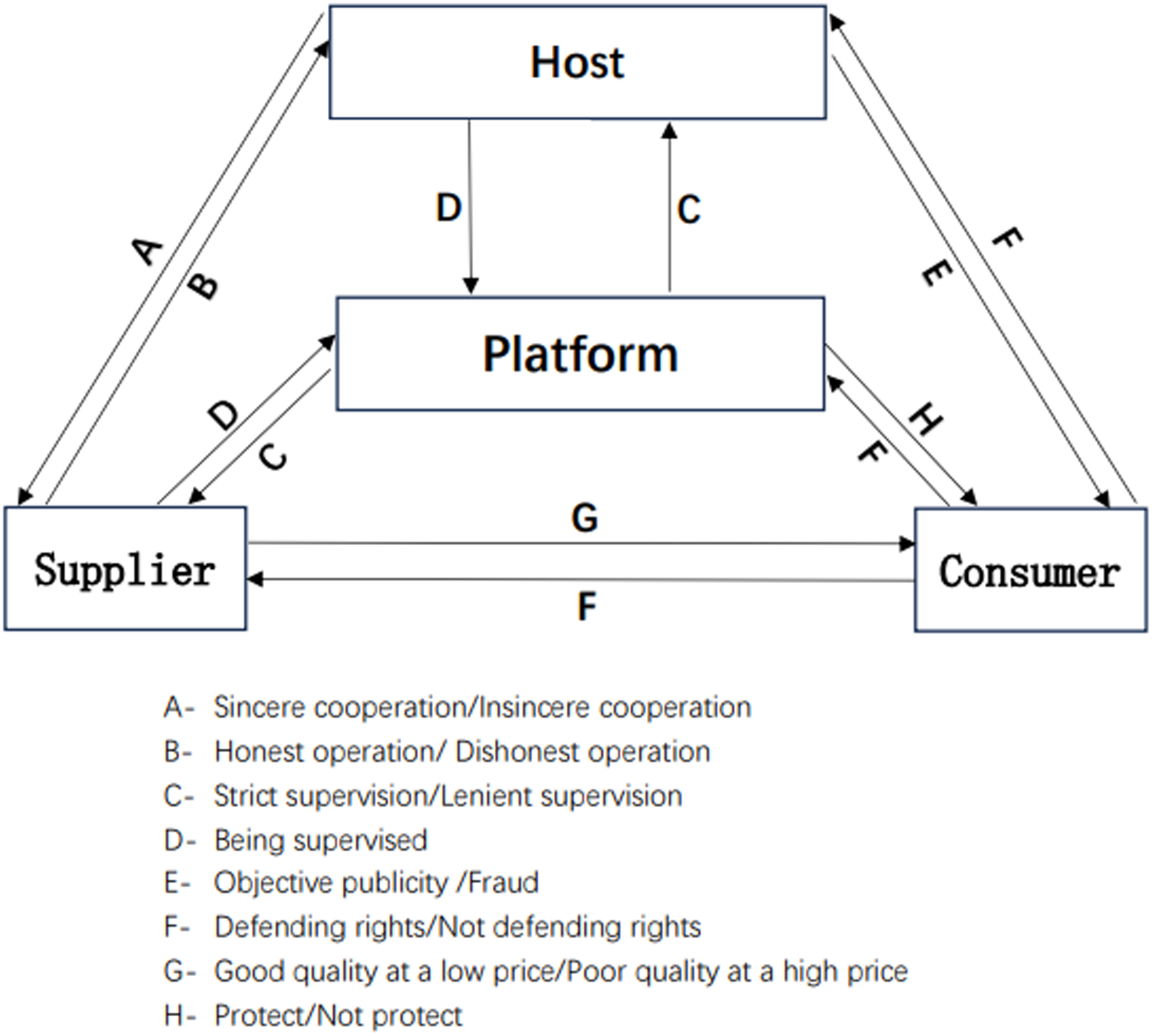
The live-streaming platform regulates both hosts and suppliers by monitoring transaction and logistics information within the platform, enabling timely detection of compliance risks and protection of consumer interests. However, regulatory and protective measures come with costs, leading platforms to make choices between strict and lenient regulation. When consumers file complaints against hosts or suppliers, the live-streaming platform may face the choice of protecting or not protecting them. The survival of hosts relies on guiding consumer purchasing behavior, where deceptive practices may yield short-term benefits while objective promotion is beneficial for long-term development. Hosts must strike a balance between these two approaches. Hosts’ income directly comes from sales commissions provided by suppliers, and the conflict between long-term and short-term interests forces suppliers to choose between sincere cooperation and insincere practices. Suppliers rely on the live-streaming platform to commission hosts to promote their products to consumers, and their considerations of income and costs lead to strategies of either honest or dishonest operations with hosts and offering products of either good quality or inferior quality to consumers. Consumers in the live-streaming e-commerce industry have impulsive consumption tendencies, and even if their interests are violated, the psychological satisfaction derived from hosts may sway them between asserting their rights and not doing so. Based on these observations, this study constructs a four-party evolutionary game model by considering the behaviors of the live-streaming platform, hosts, suppliers, and consumers.
As previously mentioned, the first issue facing the development of the live-streaming e-commerce industry in China is whether government regulation is necessary. In the EU and the United States, the government places the e-commerce industry under predetermined prohibitions while enforcing competition laws to restrict digital platforms from engaging in specific anti-competitive behaviors. The Cyberspace Administration of China (CAC) is the main regulatory body for the live-streaming e-commerce industry in China. By implementing an entry system and indirectly regulating the industry through live-streaming platforms, CAC significantly expands the authority of these platforms, which may harm consumer interests.
So, the live-streaming platform has the option to choose between “strict regulation” (with a probability of x) and “lenient regulation” (with a probability of 1-x) when dealing with hosts and suppliers. The revenue of the live-streaming platform comes from the commission paid by hosts based on their sales income, and it should be noted that strict regulation incurs higher costs compared to lenient regulation. Consequently, it is assumed that when the live-streaming platform chooses “strict regulation,” it tends to protect consumer interests, whereas it does not prioritize investor protection when choosing “lenient regulation.”
False advertising by hosts is another issue that needs to be addressed. The Chinese government provides education and guidance to live-streaming platforms and hosts to promote responsible and ethical practices. This includes training on content creation, user protection, and legal compliance. The government also encourages platforms to promote positive content creation, support emerging talent, and oppose harmful or unethical behaviors, such as restrictions on advertising and commercial activities. However, this may limit the opportunities for platforms and hosts to earn revenue through sponsorships, product placements, and other forms of advertising.
Under the regulation of the live-streaming platform, hosts cooperate with suppliers to serve consumers. Hosts have the choice between “objective promotion” (with a probability of y) and “deceptive practices” (with a probability of 1-y) when interacting with consumers. In turn, it is assumed that when hosts choose “objective promotion,” they tend to select “sincere cooperation” with suppliers, whereas they opt for “insincere cooperation” when choosing “deceptive practices.”
The essence of live-streaming platforms and hosts is that of intermediaries, aggregating suppliers and consumers. Live-streaming platforms can not only harm consumer interests but also abuse their power over suppliers, with the most common practice being exclusive dealing, where a platform prohibits its suppliers from trading with competing platforms. This strategy is colloquially known in China as “choose one of two,” as it undermines the multi-platform nature of e-commerce, transforming it into single-platform use. If this strategy continues, e-commerce giants will achieve monopolies as smaller existing platforms or new entrants will be unable to survive, potentially leading to monopolistic outcomes.
Live-streaming platforms may also enter restrictive contracts with suppliers, such as tying, refusal to deal, and discriminatory transactions, which can have exclusionary effects on competing live-streaming platforms. Regulatory authorities in some countries have enforced laws against the various restrictions imposed by live-streaming platforms on suppliers. However, similar enforcement by the Chinese government is relatively rare, and the government still needs to balance the need to protect suppliers with the interests of consumers.
Suppliers, in their interaction with hosts, can choose between “honest operations” (with a probability of z) or “dishonest operations” (with a probability of 1-z). Correspondingly, it is assumed that when suppliers choose “honest operations,” they offer products of good quality at reasonable prices to consumers, whereas they provide overpriced and low-quality products when choosing “dishonest operations.”
Consumers may suffer losses due to false advertising, and because the regulatory responsibilities of live-streaming platforms are unclear, they may face difficulties in seeking legal recourse. The Chinese government requires platforms to implement measures to protect users’ rights and interests. This includes combating false information, online harassment, and the spread of harmful content. Platforms need to provide mechanisms for users to report inappropriate behavior and content and take appropriate action based on these reports. However, platforms need to invest in systems and personnel to monitor and review content, which can lead to increased operational costs.
Regarding live-streaming content review, the responsibilities of live-streaming platforms are clear. The Chinese government has implemented strict content review measures to ensure compliance with laws and regulations. Live-streaming platforms must monitor and review content to prevent the spread of illegal, harmful, or inappropriate material.
In terms of cybersecurity and data protection regulations, live-streaming platforms may face certain regulatory challenges. The government has implemented cybersecurity and data protection regulations to safeguard users’ personal information. Platforms must take measures to protect user data and prevent unauthorized access or misuse. However, with the development of information technology, user data breaches may occur across multiple platforms and stages, making it difficult to delineate regulatory responsibilities.
When consumers perceive their interests being violated, they have the option to choose between “asserting their rights” (with a probability of w) or “not asserting their rights” (with a probability of 1-w). Once consumers decide to assert their rights, the hosts, live-streaming platform, and suppliers may all become subjects of their claims.
Basic assumptions and symbol description (see appendix for details)
The probability of strict supervision of the live broadcasting platform is
The income of live broadcasting platforms under strict supervision is
The income of the anchor with goods comes from the commission paid by the supplier.
The supplier’s profit of honest operation is
The consumers who choose to protect their rights will spend a cost of
The symbols involved in the above assumptions and their meanings are explained in Table 1 (see appendix for details).
Model building
Based on the above assumptions and the strategy selection of the four-party game players, a four-party evolutionary game model of the “live-streaming with goods” e-commerce system is constructed, which includes the income matrix under 16 strategy combinations, as shown in Table 2 and Table 3, respectively (refer to the appendix).
Based on the above model, we make the following assumptions: (1) (2) (3)
Replication dynamic equation and evolutionary stability strategy of the quadrilateral game model of “live-streaming with goods” (see appendix for details)
The stability analysis of strategy choice of “live-streaming with goods” platform
The expected revenue of the live broadcasting platform when choosing the “strict supervision” strategy is:
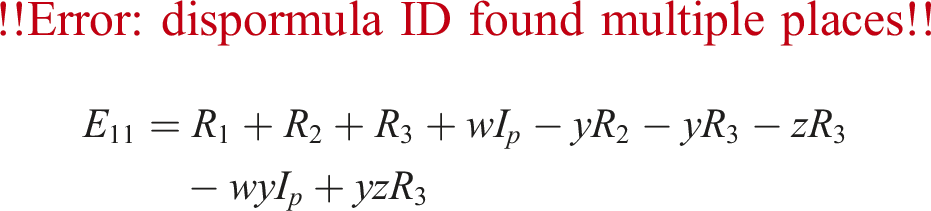
The expected revenue of the live broadcasting platform when choosing the “loose regulation” strategy is:

Therefore, the average revenue of the live broadcasting platform is:

The replication dynamic equation of the live broadcasting platform is:

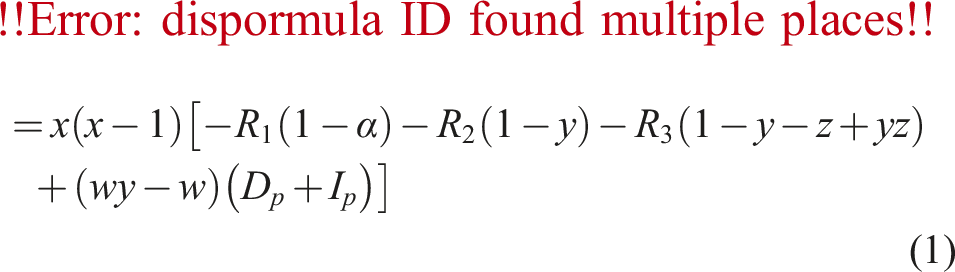
When
When the revenue
The stability analysis of strategy selection for anchor with goods
The expected revenue of the anchor with goods choosing the “objective publicity” strategy is:

The expected revenue of the anchor with goods choosing the “fraud” strategy is:

Then the average revenue of the anchor with goods is:

When
When the live broadcasting platform is strictly supervised, the greater the penalty
The stability analysis of supplier’s business strategy
The expected revenue of the supplier’s selection of the “integrity management” strategy is:

The expected revenue of the supplier choosing the “dishonest operation” strategy is:

Then the average revenue of the supplier is:

When
The probability of the supplier choosing the “integrity management” strategy increases with the punishment
The stability analysis of consumers’ choice of strategy
The expected revenue of consumers choosing “rights protection” is:

The expected revenue of consumers choosing “no rights protection” is:

Then the average revenue of consumers is:

The replication dynamic equation of consumers is:


When
When the compensation
Stability analysis of the quadrilateral evolutionary game strategy combination of “live-streaming with goods”
Based on the previous analysis of the quadrilateral evolutionary stability strategies, we will further discuss the combination of evolutionary stability strategies under the joint action of all parties.
According to the dynamic equations of quadripartite replication (1), (2), (3), and (4), we can build a dynamic system of quadripartite replication for the live-streaming with goods:
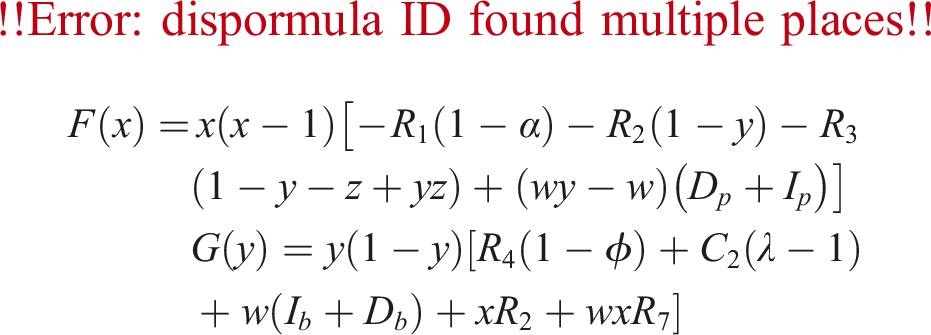
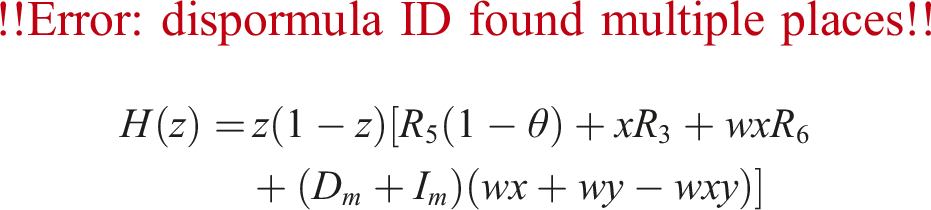

Based on the replicative dynamic system (6), combined with Lyapunov’s first law, the Jacobian matrix of the quadrilateral replicative dynamic system as shown in equation (7) can be constructed (Friedman, 1991).
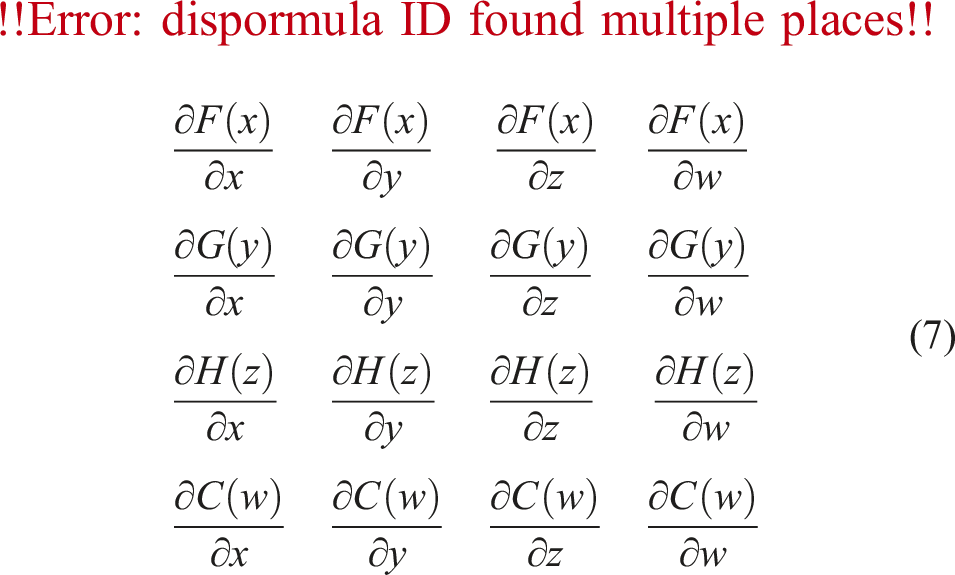
The Jacobian matrix eigenvalues of each equilibrium point are shown in Table 4 (see appendix for details).
Numerical simulation
Basic data settings
The MATLAB R2018a software was used to analyze the evolutionary paths and sensitivities of the live-streaming platform, hosts, suppliers, and consumers, in order to validate the correctness of the four propositions. The numerical settings adhere to the constraints specified in the model. The allocation of parameter values was based on the study conducted by Wang et al. (2022). The initial state parameters of the evolutionary game are presented in Table 5 (see appendix for details).
After the assignment is completed, conditions (2), (3), and (4) are satisfied; that is, in the case where the anchor with goods chooses the “false propaganda” strategy, the evolutionary game process of the live broadcasting platform, suppliers, and consumers is shown in Figure 5, and the system finally stabilizes at the strategy combination of (1, 0, 1, 1).
Next, we discuss the influence of different parameters on the strategic choice of all parties in the game.
The impact of e-commerce platform reputation loss
on platform strategy selection
When the live broadcasting e-commerce platform is “loosely regulated,” it is unable to properly deal with the protection of consumers’ rights, which leads to the loss Evolution process of strategies of all parties under conditions (2), (3), and (4).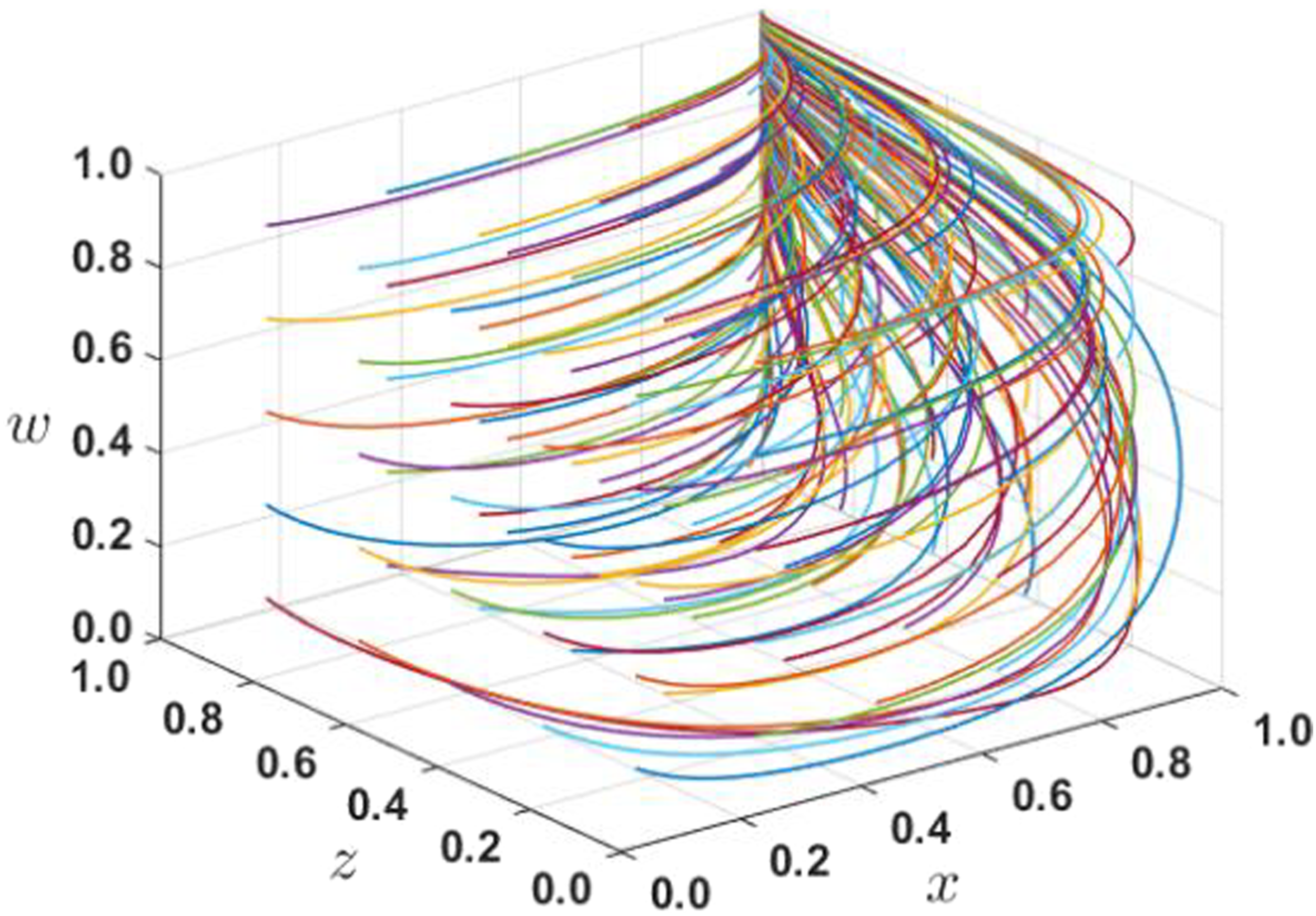
It can be seen from Figure 3 that with the increase of Impact of the change of live broadcasting platform reputation loss 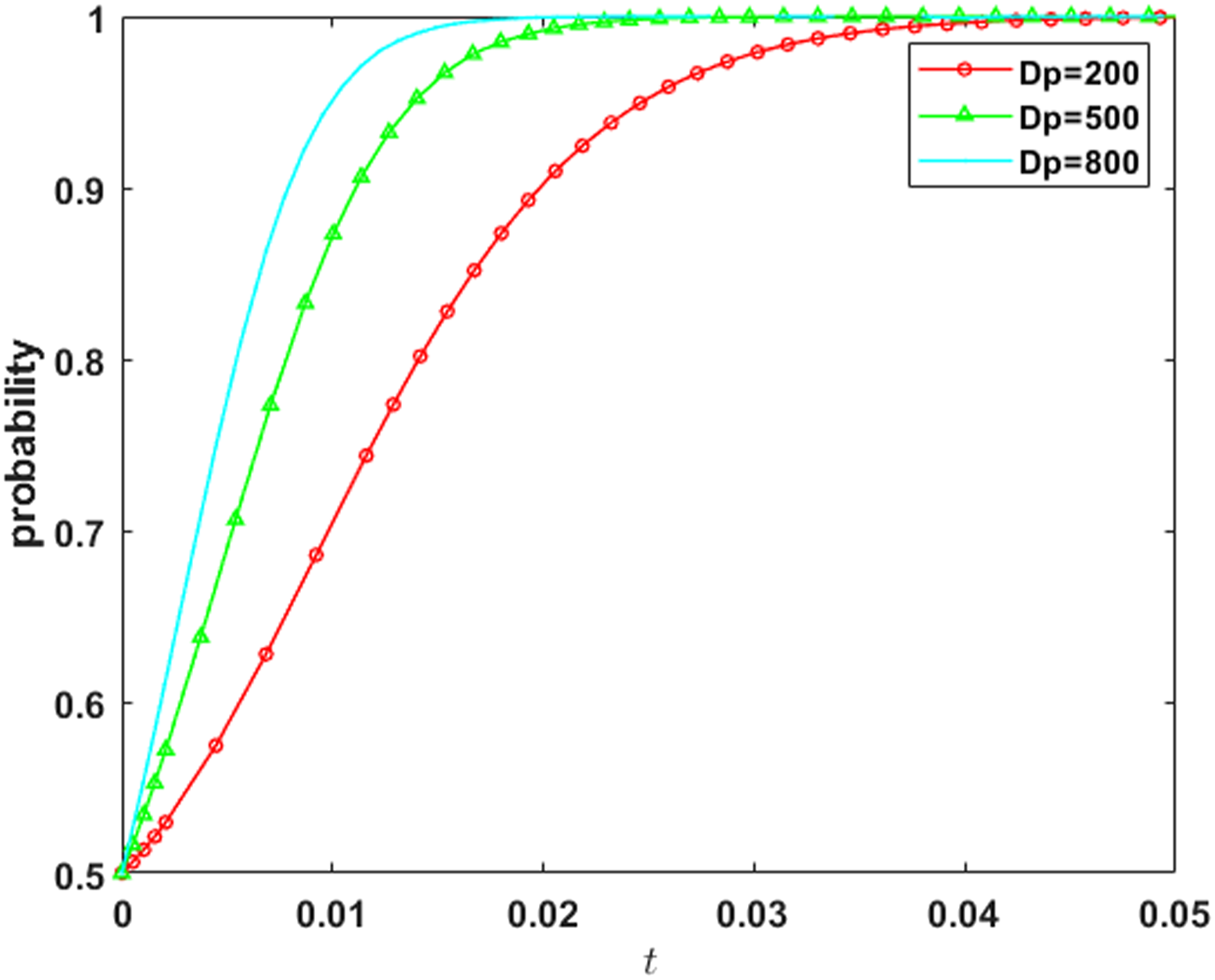
The influence of the reputation loss
of the anchor with the goods on the strategy choice of himself and the e-commerce platform
When choosing the “fraud” strategy, the anchor with goods will suffer reputation loss due to the consumers’ rights protection behavior. Assuming that other parameters remain unchanged and conditions (2), (3), and (4) are satisfied, values of The influence of changes in the reputation loss D of the anchor with goods on his own strategy choice.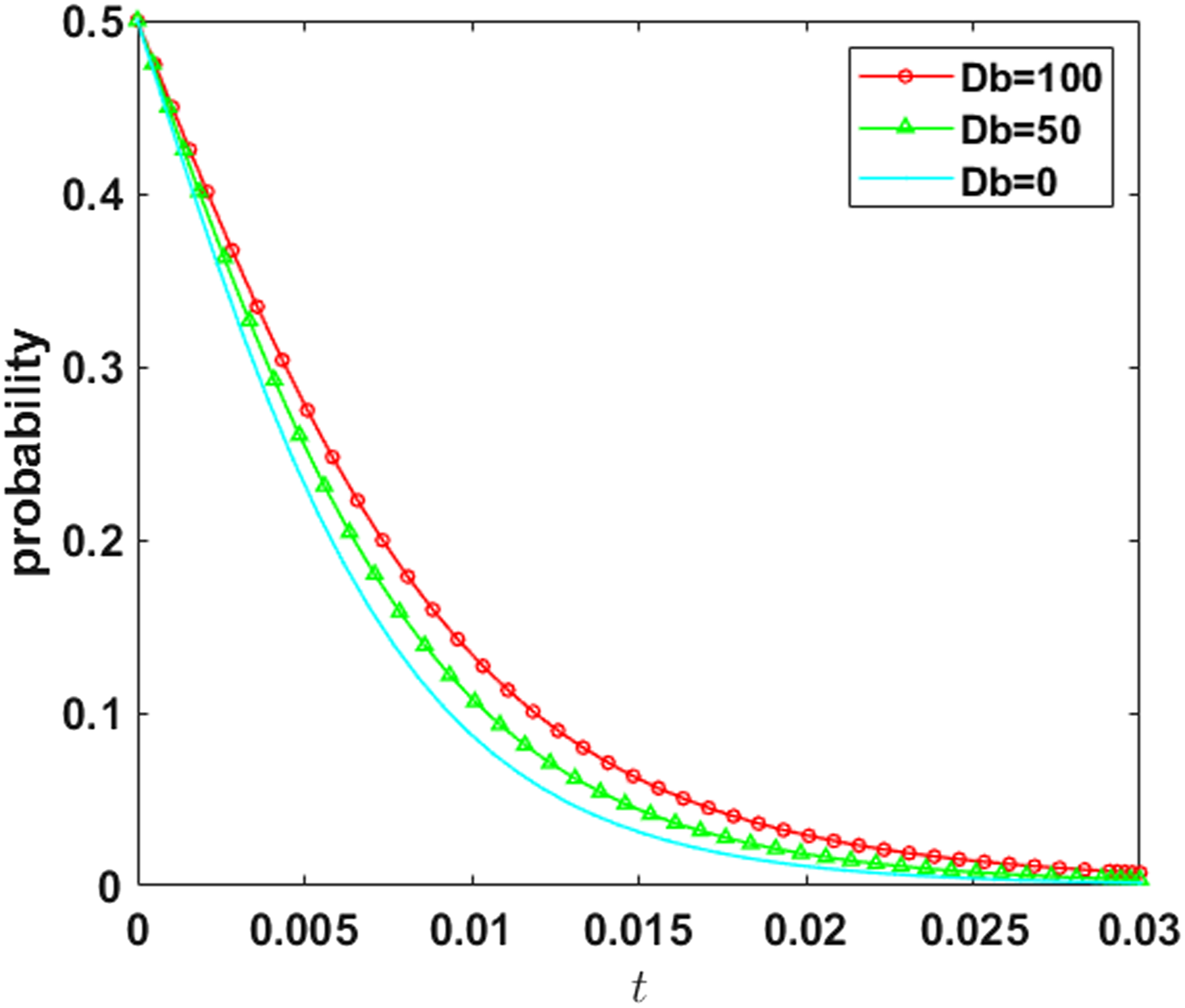
In the current environment of live broadcasting with goods, the live broadcasting e-commerce platform is responsible for supervising the anchors with goods. The influence of different values of the reputation loss The impact of the change in the reputation loss 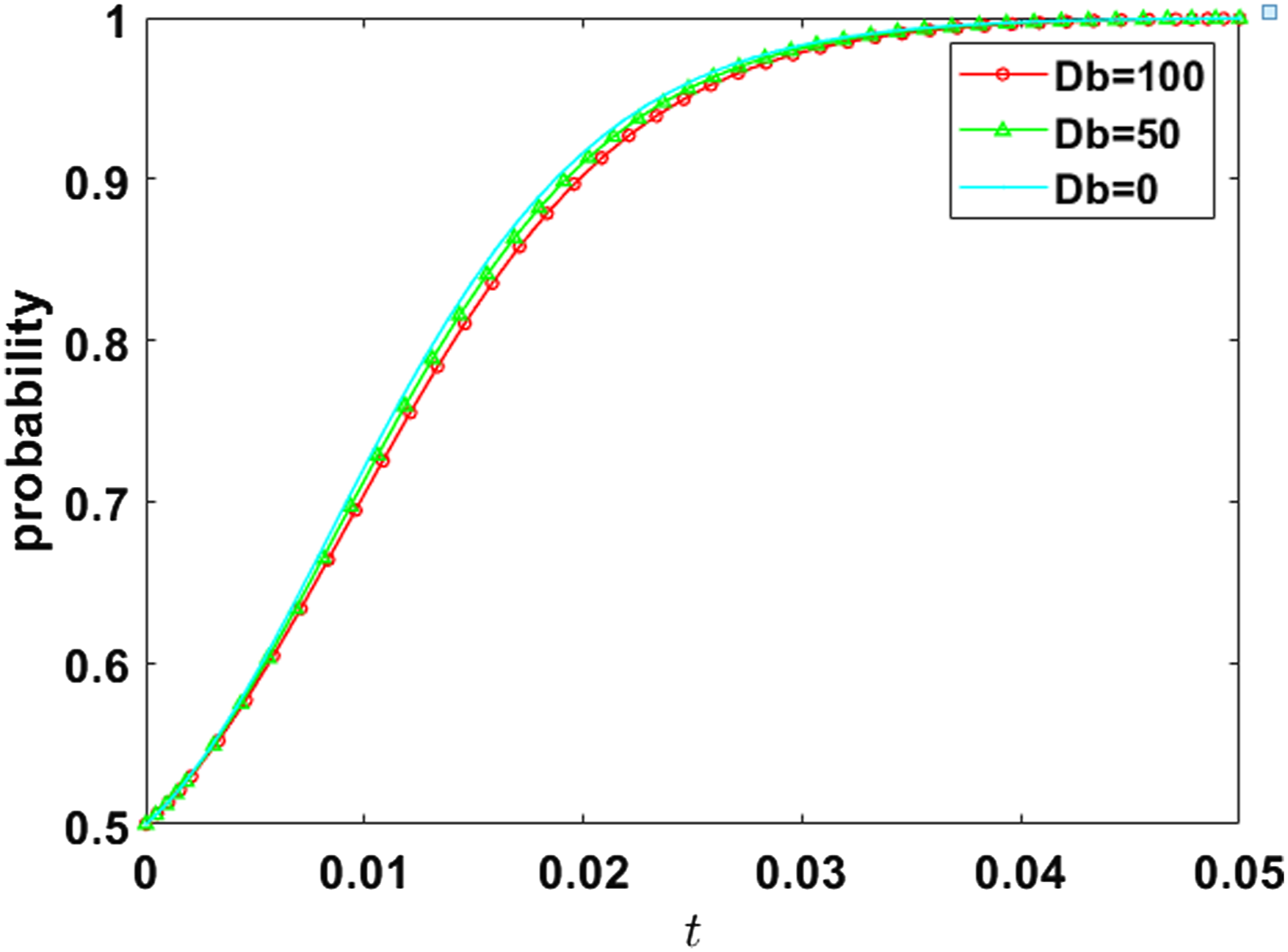
The impact of compensation received by consumers on the anchor, supplier, and their own strategic choice
Under the strict supervision of the live broadcasting e-commerce platform, if the anchor with goods chooses the “fraud” strategy, he needs to pay compensation The impact of changes in compensation received by consumers on their own strategies. The impact of changes in compensation received by consumers on supplier strategies.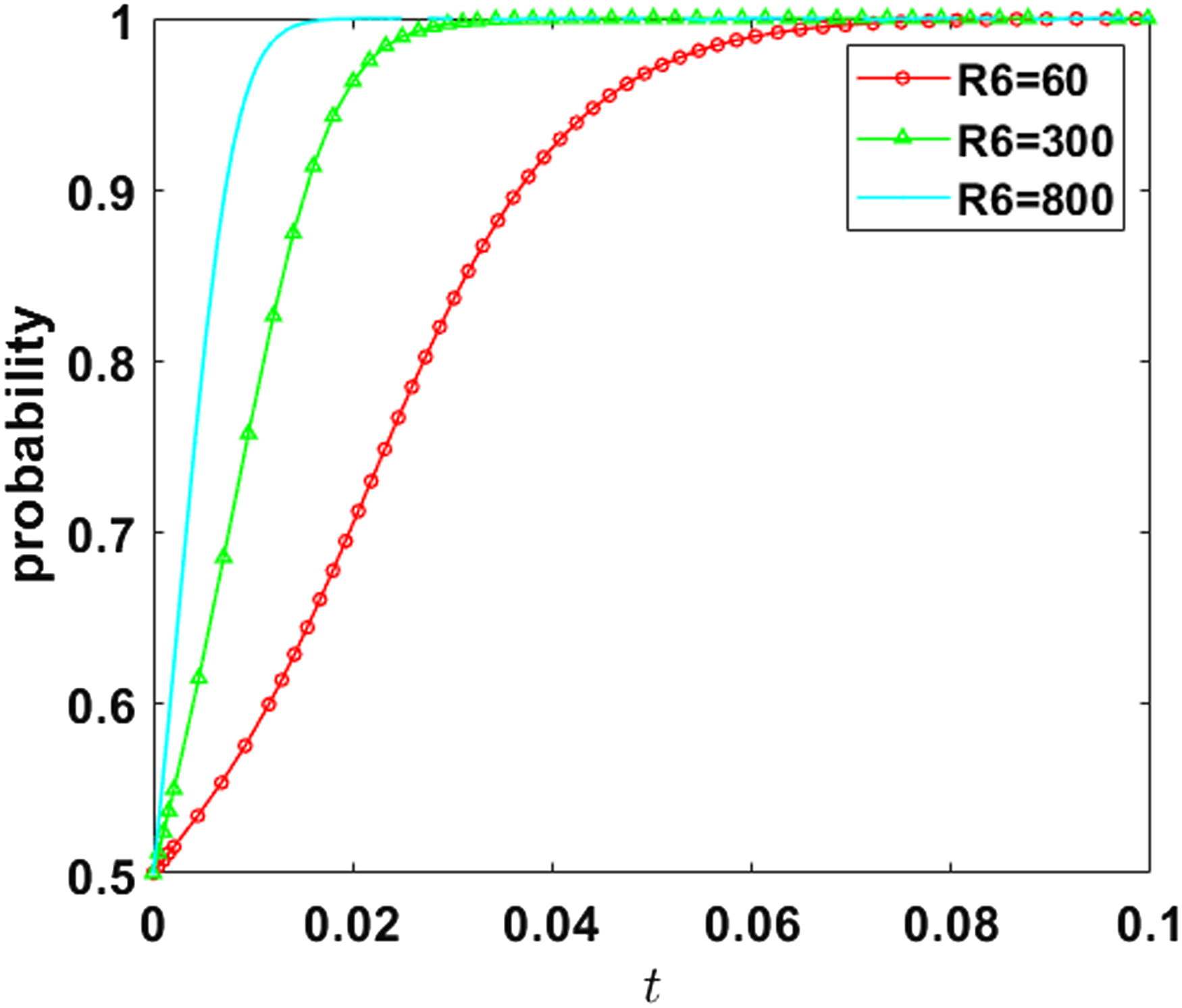
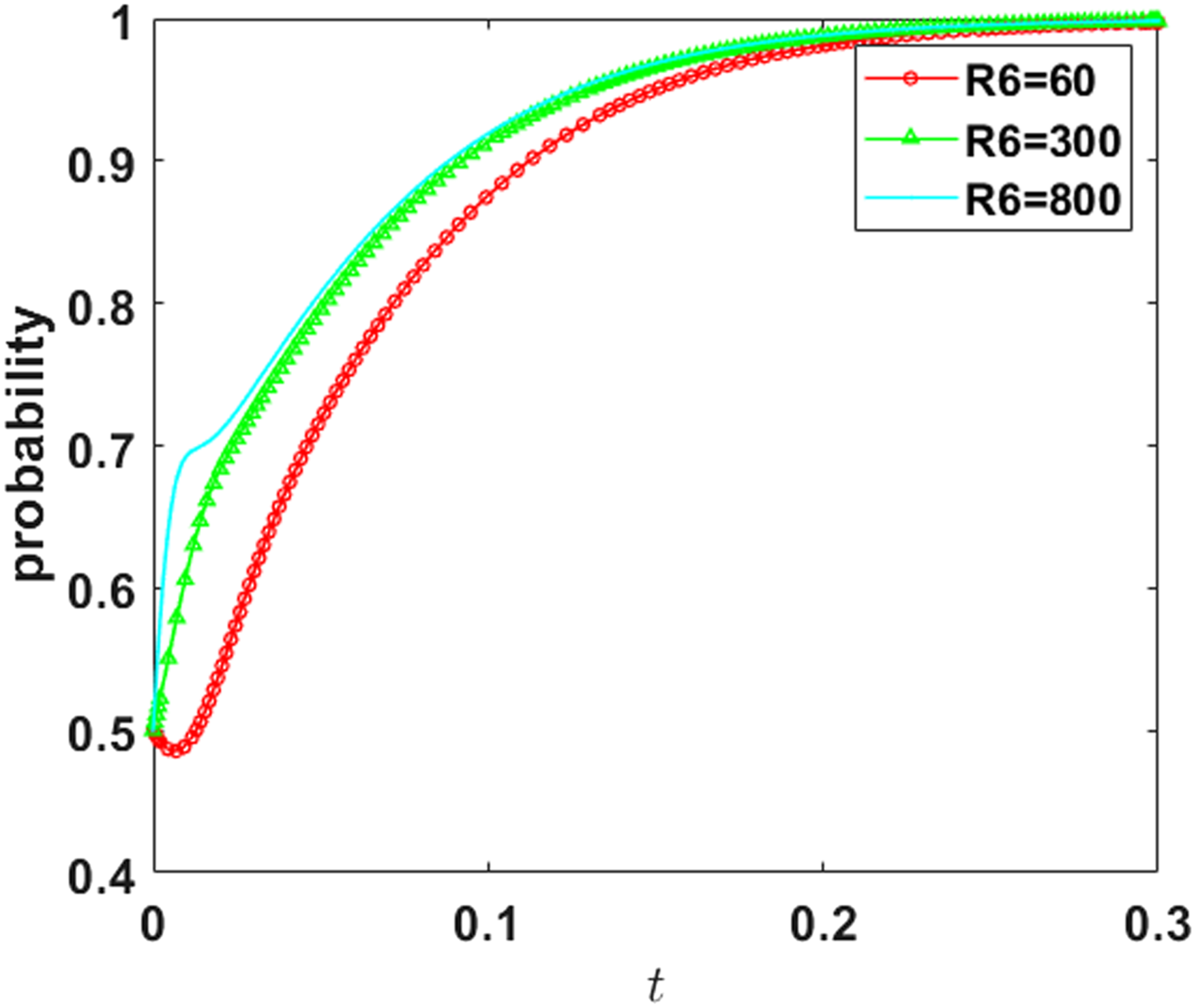
It can be seen from Figure 6 that with the increase in compensation received from suppliers, consumers tend to “rights protection” at an accelerated rate, which shows that the increase in compensation can increase the enthusiasm of consumers to defend their rights. When
As can be seen from Figure 7, with the reduction of compensation paid by suppliers to consumers, the evolution speed of suppliers choosing the strategy of “integrity management” is slowing down. It can be seen that the increase of compensation can encourage suppliers to choose the “integrity management” strategy. At the same time, it can be observed that, unlike the evolution process of consumer strategies, the small gap between compensation and rights protection costs will not cause significant fluctuations in supplier behavior in the short term.
When consumers choose to protect their rights, the anchor with goods may also need to pay compensation for infringing on the interests of consumers. Under the assumptions of formula (2), (3), and (4) and parameter setting The impact of the change in the compensation R7 paid by the anchor with the goods on the consumer’s strategy choice.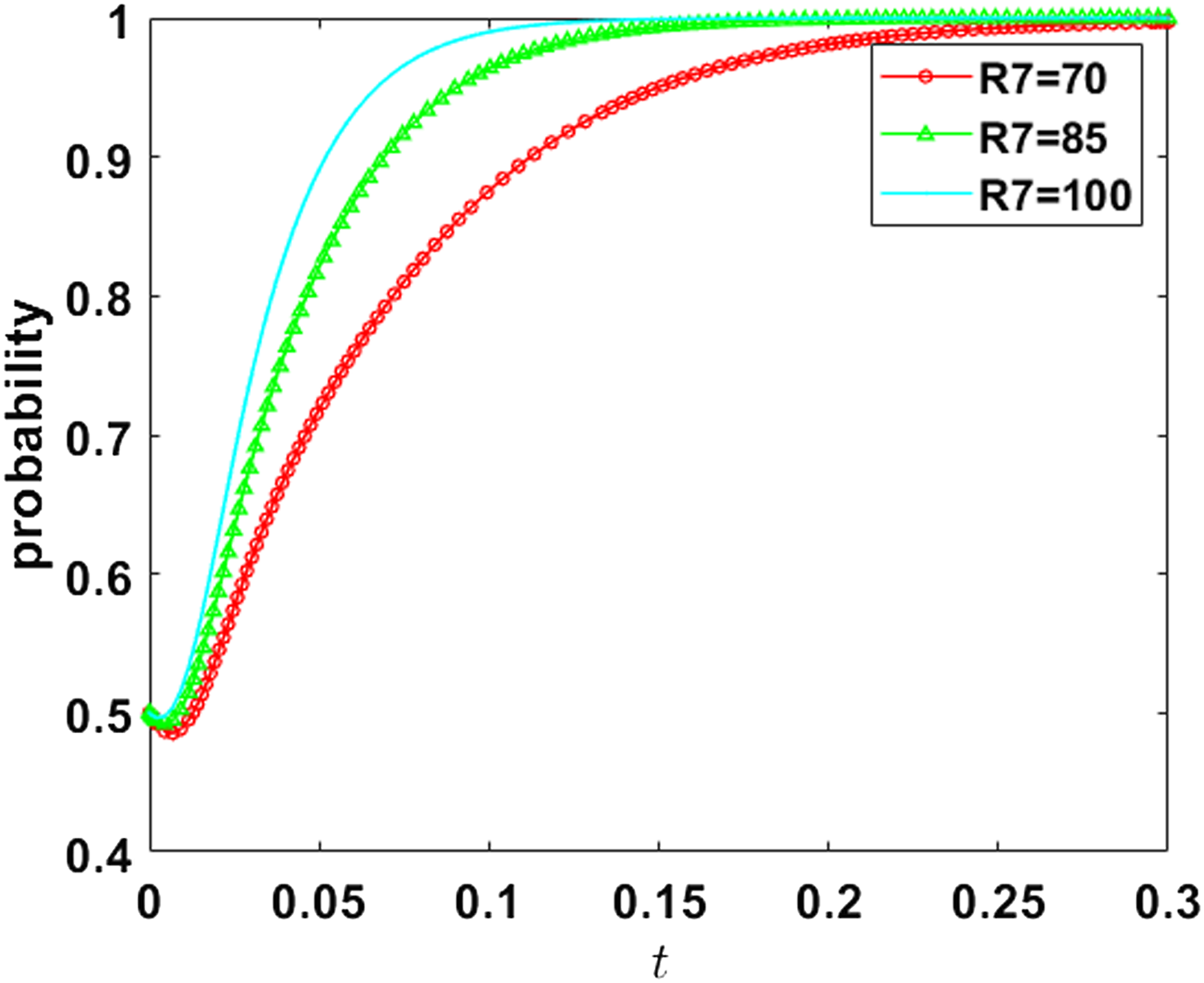
It can be seen from Figure 8 that, similar to the situation of compensation from suppliers to consumers, with the increase in consumers’ compensation from the anchor with goods, consumers tend to speed up the “rights protection” strategy. Therefore, the amount of compensation has a positive impact on improving consumers’ awareness of rights protection. When
It can be seen from Figure 9 that with the increase of compensation paid by the anchor with goods to consumers, the evolution speed of anchor with goods choosing “fraud” strategy is slowing down. It can be seen that the increase in compensation has a certain deterrent effect on suppliers choosing “fraud” strategy. At the same time, it can be observed that, unlike the evolution process of consumer strategies, the impact of the changes in compensation on the behavior of anchor with goods is not as significant as that of consumer behavior, which may reflect that the size of compensation is not the most important factor affecting the behavior of anchor with goods. The influence of the change of R7 in compensation paid by anchors to consumers on their own strategy choices.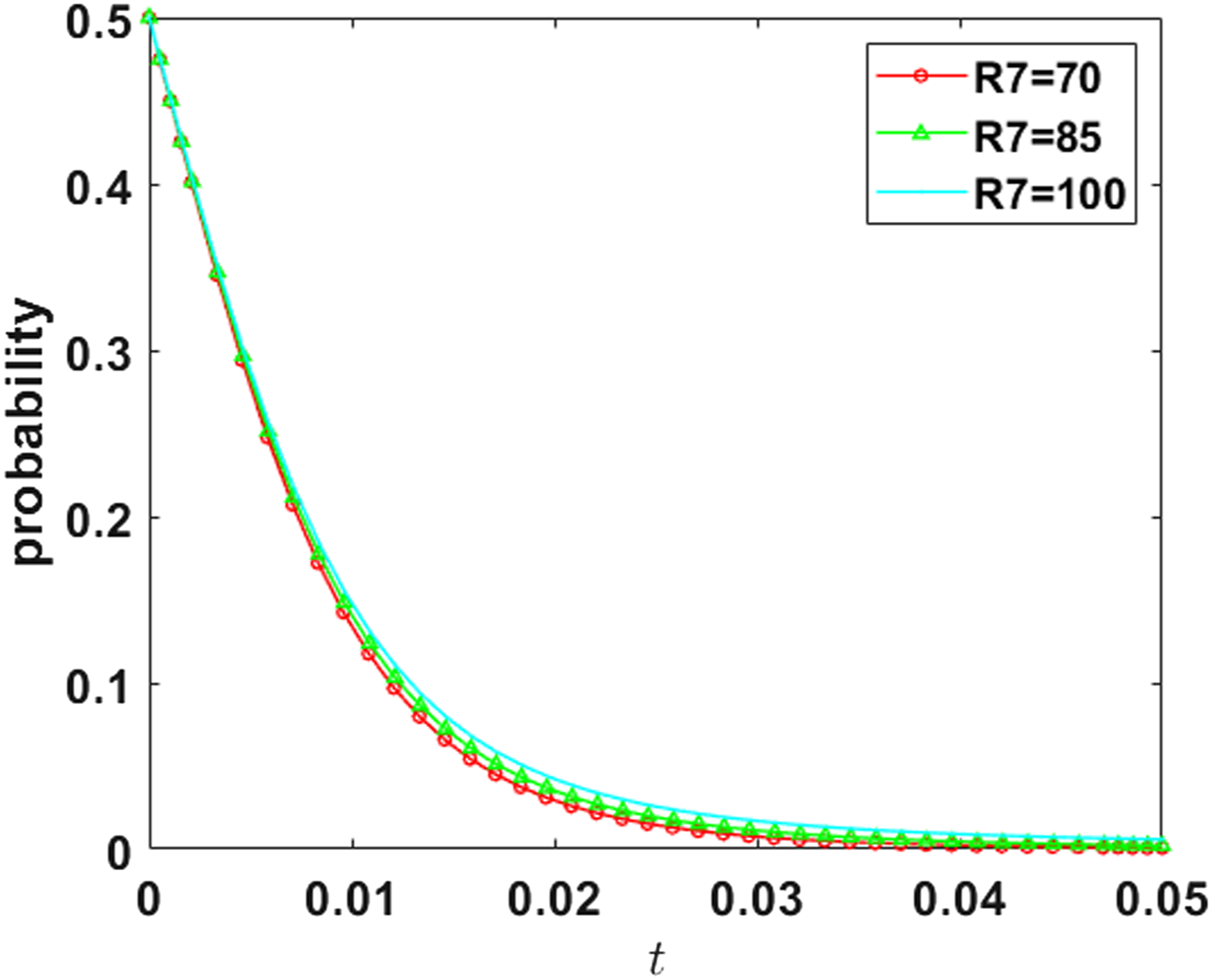
Conclusions
The four-party evolutionary game model used in this study is highly adaptable and can be replicated in other countries facing similar issues. By incorporating government regulation, the model analyzes the behavioral evolution of live-streaming platforms, hosts, consumers, and suppliers under various scenarios and its impact on market order. This model is not only applicable to China’s live-streaming e-commerce industry but can also be extended to other countries or regions, especially developing countries where live-streaming e-commerce is rapidly growing and regulatory frameworks are underdeveloped. When addressing common issues in the live-streaming e-commerce sector, such as false advertising, inadequate platform regulation, and difficulties in consumer rights protection, countries can adjust and apply the framework of this model to better balance interests, optimize regulatory policies, and promote the healthy development of the industry.
Theoretical insight
Firstly, through the analysis of the stability of equilibrium points in the replicated dynamic system, we find that the absence of a four-party evolutionary game model involving government participation leads to the formation of two stable evolutionary strategies. In one scenario, it results in rampant counterfeit products in the live-streaming industry with no one paying attention. In another scenario, hosts choose deceptive strategies. Therefore, the introduction of government regulation is necessary in the live-streaming industry.
Secondly, when discussing the behavior of each participant in the four-party evolutionary game model, we find that reducing the cost for consumers to protect their rights positively affects the behavior of live-streaming platforms and hosts. Under the premise of strict government regulation, lower consumer protection costs lead to a lower likelihood of deceptive promotion by hosts and inadequate regulation by live-streaming platforms.
Thirdly, through numerical simulations, we observe that as consumers’ gains from protecting their rights increase, the behavior of hosts and live-streaming platforms becomes more standardized. However, excessively high gains from consumer protection can lead to frequent consumer complaints, including malicious complaints. In such cases, government regulation is necessary to control the evolutionary trends.
Fourthly, influenced by consumer complaint behavior, the potential reputation loss for live-streaming platforms and hosts increases, leading to more positive behavior. Specifically, the evolutionary trend of live-streaming platforms tends toward “strict regulation,” while hosts tend toward “no deception.” Similarly, the increase in potential compensation amounts also has a regulatory effect on the behavior of suppliers and hosts. However, in the four-party evolutionary game model of this study, deceptive behavior by hosts is one of the stable strategies, indicating the essential role of government regulation.
Existing literature has extensively studied the behavior of various actors in live-streaming e-commerce ecosystem, including consumers and hosts, from the perspective of evolutionary game theory. This study validates many of their conclusions. However, there is disagreement in existing literature regarding whether government regulation is necessary for live-streaming e-commerce ecosystem. Regardless of whether two-party, three-party, or four-party evolutionary game models are used, a common flaw in existing literature is the analysis of optimal strategies for each actor without providing a convincing theoretical explanation for why specific actors should be included in the model. This study addresses this gap by comparing models with and without government involvement, analyzing the optimal strategies of other actors in the live-streaming e-commerce ecosystem, and concluding that government regulation is necessary. This not only resolves the controversy in existing literature but also potentially proposes a new approach to addressing the problem of actor selection in evolutionary game theory.
Overall, the findings of this study highlight the theoretical significance of introducing government regulation in the live-streaming e-commerce ecosystem. The analysis of stability, behavior influence, and the impact of consumer protection on the behavior of participants provide valuable insights for understanding and regulating the live-streaming e-commerce industry.
Practical insight
This study provides insights into filling legislative gaps and implementing regulatory changes for live-streaming e-commerce. The healthy development of live-streaming e-commerce relies on appropriate government regulation of live-streaming platforms, with regulatory policy goals prioritizing the encouragement of innovation to promote business activities and economic growth, while balancing consumer protection and market fairness.
To enhance the specificity of the regulatory recommendations and strengthen the validity of the proposed model, the following refined and expanded regulatory changes are presented.
Tiered content review system
Implement a three-tiered system for content review based on platform size. (1) Large platforms: Maintain strict real-time monitoring and review. (2) Medium platforms: Implement a mix of automated filtering and random manual checks. (3) Small platforms: Allow self-regulation with periodic audits.
Government-subsidized compliance costs
Establish a fund to subsidize compliance costs for small and medium-sized live-streaming platforms. For example, cover 50% of content moderation costs for platforms with annual revenue below a certain threshold (e.g., 10 million yuan).
Collaborative data management
Introduce a dual-responsibility model for data management. (1) Financial data: Require joint management by live-streaming platforms and licensed fintech companies. (2) Non-financial data: Maintain platform responsibility with regular audits.
Technology-specific consumer protection standards
Develop detailed protection standards for different types of digital products or technologies in live-streaming e-commerce. (1) Virtual goods: Implement a 24-hour cooling-off period for purchases. (2) Physical goods: Require platforms to provide detailed product specifications and authenticity guarantees.
Supplier protection measures
Mandate transparent fee structures for suppliers using live-streaming platforms. (1) Set maximum commission rates (e.g., 20% of sale price) that platforms can charge suppliers. (2) Require platforms to provide clear, written agreements outlining all terms and conditions for suppliers.
Data sharing policy
(1) Require large platforms (e.g., those with over 50 million active users) to share anonymized marketing data with competitors and researchers. (2) Implement a data sandbox environment where smaller platforms can access and analyze data from larger platforms under controlled conditions.
Host certification program
Introduce a mandatory certification program for live-streaming hosts selling products. (1) Basic level: Online course on consumer rights and ethical advertising (required for all hosts). (2) Advanced level: In-depth training on product knowledge and sales techniques (required for hosts with over 100,000 followers).
Dynamic trust score system
Implement a real-time trust score for hosts and suppliers. (1) Score factors: Customer satisfaction, accurate product descriptions, timely shipping. (2) Display prominently during live streams. (3) Tie score to platform privileges.
Automated complaint resolution system
(1) Develop an AI-powered complaint resolution system. (2) Automatically categorize and prioritize consumer complaints. (3) Provide instant responses for common issues. (4) Escalate complex cases to human moderators within 24 hours.
Cross-border transaction regulations
(1) Require platforms to clearly display import duties and taxes for cross-border purchases. (2) Implement a standardized returns process for international transactions. (3) Establish a joint task force with major trading partners to address cross-border e-commerce disputes.
These specific regulatory changes address the key issues identified in the study while providing concrete, actionable measures that can be implemented and evaluated. By incorporating these detailed suggestions, the model becomes more robust and applicable to real-world scenarios, enhancing its validity and potential impact on policy development in the live-streaming e-commerce industry.
Limitations and future work
In this study, we employed a four-party evolutionary game model to demonstrate the importance of government regulation for live-streaming e-commerce and offered policy recommendations. Regulatory policies for live-streaming e-commerce need to be optimized to address industry development issues and achieve social objectives. For instance, there must be a balance between antitrust measures and encouraging innovation, as antitrust enforcement can temporarily dampen firms’ motivation to innovate, while unchecked monopolies will ultimately stifle innovation. However, the model we used has certain limitations because all participants (economic agents and the government) are constantly learning: economic agents learn rational, utility-maximizing behavior, while the government learns to optimize its objectives through policy choices. This learning dynamic limits the model’s practical applicability and prevents it from capturing the complexity of the real world. 42 Moreover, our empirical research is challenged by the Lucas critique, which argues that historical data cannot adequately capture behavioral responses to policy changes. 43
Limitations of the model
Exclusion of the government
The model intentionally excludes the government as a player to theoretically demonstrate the necessity of regulation. While this serves the study’s purpose, it limits the ability to directly analyze regulatory impacts.
Simplified player interactions
The model simplifies the complex interactions between platforms, hosts, suppliers, and consumers. Real-world relationships are often more nuanced and multifaceted.
Static parameters
The model parameters are fixed, which may not capture the dynamic changes in the live-streaming e-commerce ecosystem over time.
Limited strategies
Players may have a binary choice of strategies (e.g., strict vs lenient regulation), which may not reflect the full range of strategic options available in reality.
Assumption of perfect information
The model may assume all players have complete information about others’ strategies and payoffs, which is rarely the case in real markets.
Potential extensions and solutions
To overcome these limitations, the structure of the evolutionary game model can be adjusted to achieve various research objectives and outcomes.
Expand player diversity and interactions
Include government as a fifth player and introduce more strategic options for all players. This would allow direct modeling of regulatory impacts and reflect the nuanced decision-making processes in the real world. Additionally, extend the model to include multi-platform competition and consumer segmentation to capture market dynamics more comprehensively.
Implement dynamic and asymmetric modeling
Utilize time-dependent parameters and incorporate asymmetric information to model how the ecosystem evolves over time and account for incomplete information among players. This approach would better reflect real-world conditions and capture the dynamic nature of the live-streaming e-commerce market.
Incorporate network effects and external factors
Model how platform growth affects other players’ strategies and payoffs, and introduce external shocks (e.g., technological innovations and economic shocks) to test the model’s resilience and adaptability. This would help capture the interdependencies within the ecosystem and its response to external influences.
Utilize advanced analytical methods
Employ machine learning techniques to improve strategy prediction, simulate agent behavior, identify complex nonlinear relationships, and enhance the model’s explanatory power. This approach will better predict how different economic agents respond to policy changes, providing data-driven support for optimizing regulatory policies.
Implement layered modeling
Distinguish the decision-making levels of different economic agents, combining individual behaviors with collective dynamics to simulate how individual decisions impact overall market evolution. This approach can help address the challenge of modeling the vast number of consumers and suppliers in the real world.
Integrate empirical research
Continuously update and adjust the evolutionary game model with real-time data from the live-streaming e-commerce market. This ensures that the model reflects the latest market dynamics and changes in agents’ behaviors, bridging the gap between theoretical modeling and practical applications.
Furthermore, the evolutionary game model’s structure can be adjusted according to different application scenarios to achieve various research objectives and outcomes. The differences in resource endowments among agents of the same type can be reflected by adjusting their respective payoff functions and probabilities. For example, to study competition and cooperation between different live-streaming platforms, the model settings for platforms can be modified, potentially providing insights for optimizing antitrust regulatory policies.
By implementing these expansions and improvements, we can develop a more comprehensive and nuanced understanding of the live-streaming e-commerce ecosystem. This enhanced model would not only provide valuable insights for academic research but also offer practical, data-driven support for policymakers and industry stakeholders in developing effective regulatory strategies and business practices.
Supplemental Material
Supplemental Material - Evolutionary strategies in live-streaming E-commerce: A four-player game model analysis
Supplemental Material for Evolutionary strategies in live-streaming E-commerce: A four-player game model analysis by Yangchun Xiong and Baifu Chen in Human Systems Management.
Statements and declarations
Footnotes
Author’s note
The authors of this article would like to extend their special thanks to Xi-yan Zhang from the School of Economics and Trade, Guangdong University of Finance, and Jin-fang Liu from the School of Economics and Management, Dongguan University of Technology, for their suggestions on the translation and revision of the paper.
Author contributions
Conflicting interests
The authors declared the following potential conflicts of interest with respect to the research, authorship, and/or publication of this article.
Funding
The authors disclosed receipt of the following financial support for the research, authorship, and/or publication of this article: This work was supported by the Guangzhou Huashang Vocational College under Grant 2023WTSCX330.

Supplemental Material
Supplemental material for this article is available online.
References
Supplementary Material
Please find the following supplemental material available below.
For Open Access articles published under a Creative Commons License, all supplemental material carries the same license as the article it is associated with.
For non-Open Access articles published, all supplemental material carries a non-exclusive license, and permission requests for re-use of supplemental material or any part of supplemental material shall be sent directly to the copyright owner as specified in the copyright notice associated with the article.
