







Abstract
Background
This study examines the intersection between AI-enabled technologies and Human Resource Management (HRM) by analyzing 288 peer-reviewed articles from the Elsevier Scopus and Clarivate Web of Science databases, published over the last two decades, within the context of a digitized economy.
Objective
This research clarifies AI-enabled technologies’ role in HRM using the SPAR-4-SLR framework and a three-stage methodology with RStudio, VOSviewer, and Excel.
Methods
The methodology systematically examines articles by performance mapping, co-word analysis, co-citation analysis, and bibliographic coupling to unveil knowledge clusters, trends of research productivity, and significant contributions to the AI-HRM literature.
Results
The results highlight the most prevalent themes related to scientific production, leading publications, and influential researchers. Four knowledge clusters are identified using co-word analysis, three using co-citation analysis, and five using bibliographic coupling, reflecting prevailing trends in the subject. Based on this synthesis, we propose a conceptual framework that advances the theoretical understanding of the intersections between AI and HRM.
Implications
This study offers valuable insights for researchers and HR professionals by highlighting the evolving dynamics in the AI-HRM relationship, thereby enriching an integrative understanding of the discipline. The study identifies research gaps and suggests future investigation directions to enhance knowledge on AI-based HRM.
Keywords
Introduction
Various industries and sectors around the world have embraced emerging digital information technologies, particularly artificial intelligence (AI), in diverse fields such as human resource management (HRM),1–3 manufacturing,4,5 supply chain management, 6 and business.7,8 The growing integration has a significant impact on various sectors, introducing exciting changes to businesses, society, and economies. Prior studies stress the potential of AI to facilitate digital transformation by strategically responding to market forces and adapting to external environmental pressures, 9 enhancing organizational capabilities, 10 and even solidifying competitive advantages. 4 This remarkable technological transformation is achievable because AI can perform complex cognitive processes, including learning, reasoning, cognition, and decision-making, much like humans.3,5,11
According to the International Data Corporation (IDC), 12 worldwide expenditure on AI spending is projected to exceed $512 billion by 2027, more than twice its 2024 market size. Additionally, leading technology companies have significantly increased their AI investments, reporting a 47% year-over-year growth. 13 The advances in machine learning (ML) and large language models (LLMs) have complemented predictive analytics and optimized workforce management in domains such as staffing, operational efficiency, and employee engagement,14–16 constantly revealing the potential uses of AI in HRM. 17 As technological advancements, 18 demographic shifts, and evolving employee expectations reshape the workplace, organizations must carefully adapt to and assess these changes.2,19
HRM is crucial to organizational success, as it involves managing structures, processes, and employee engagement.2,20 Furthermore, the impact of AI on organizational behavior, decision-making, and strategic planning illustrates its potential to revolutionize conventional employment frameworks. 21 Therefore, AI-based HR solutions can enable organizations to achieve superior performance by automating staffing, training, and performance evaluation tasks, facilitating continuous learning and development based on knowledge extracted from data.22,23
The rapid integration of AI in HRM necessitates a thoughtful synthesis of current literature and a clear outline of future research directions. As AI applications and HRM processes continue to merge, it’s essential to explore how they impact organizational performance, boost employee engagement, and shape the future of work.19,24 With the advent of advanced technologies like generative AI,
25
there is a growing need for research into how organizations can develop new capabilities and strategically respond to the rapidly evolving AI landscape.4,26 While prior reviews have examined AI in HRM, they often lack cohesion and a comprehensive framework tracing evolving themes and technologies.19,27,28 Unlike earlier studies limited to single databases or tools (see Appendix A), this study employs a multi-method approach, utilizing data extracted from Scopus and Web of Science, which are analyzed using tools such as RStudio, VOSviewer, and Excel to ensure methodological rigor and broader coverage.
29
Following the SPAR-4-SLR protocol and utilizing bibliometric techniques such as co-word analysis, co-citation, and bibliographic coupling, we reveal key trends and provide a more cohesive and future-oriented view of the AI-HRM field. This research has addressed five research questions alongside two main research objectives.
30
RQ1: What is known about AI and HRM that reflects the last two decades, while looking ahead to the next in the literature? RQ2: What are the most valuable papers for advancing the domains of AI and HRM? RQ3: Which countries are most active concerning AI and HRM, and what are the key contributors? RQ4: What is the dominant intellectual paradigm shaping AI in HR management? RQ5: How can we envision the combination of AI and HRM to enhance organizational performance?
We plan to achieve the following goals by solving the above-mentioned research questions: (1) The fundamental structure of AI and the prevailing AI trends in HRM research. (2) The prevailing themes that scholars frequently study regarding AI in HRM.
As AI becomes more integrated into HRM, organizations need to assess its advantages and disadvantages to promote a positive workplace culture. 2 Research indicates that the fragmented nature of interdisciplinary collaboration between AI and HRM hinders the development of cohesive frameworks, underscoring the necessity for improved cross-domain cooperation. 2 Ethical issues further complicate this integration; instances such as Amazon’s AI recruitment tool, which displayed gender bias, underscore the importance of human-centered and ethically consistent decision-making processes. 20 Researchers emphasize that AI-driven recruitment must be tailored to the specific data, tasks, and contexts of various sectors to meet the distinct needs of each industry.14,19 New guidelines are emerging to enhance AI’s role in HRM, increasing efficiency, promoting informed decision-making, and automating routine tasks, enabling HR professionals to focus on strategic priorities. 27 Companies that are reluctant to adopt these technologies may fall behind their competitors. 31 Moving forward, AI is expected to support rather than replace HR decision-making processes.32,33
Methodology
Protocol Employed: scientific methods and rationales for conducting systematic literature reviews (SPAR-4-SLR)
Identification and acquisition
Keyword search strings.

The initial search identified 1407 publications. After filtering out 52 articles that did not meet the criteria for publication year or were not in English (refer to Figure 1(a) and 1(b)), the results from both databases were merged. This process revealed 225 duplicate entries, which were subsequently removed. (a) Flow diagram based on the SPAR-4-SLR framework (author’s work). Note: Articles (*) were added through the ancestry approach. (b) Review methodology based on the SPAR-4-SLR framework.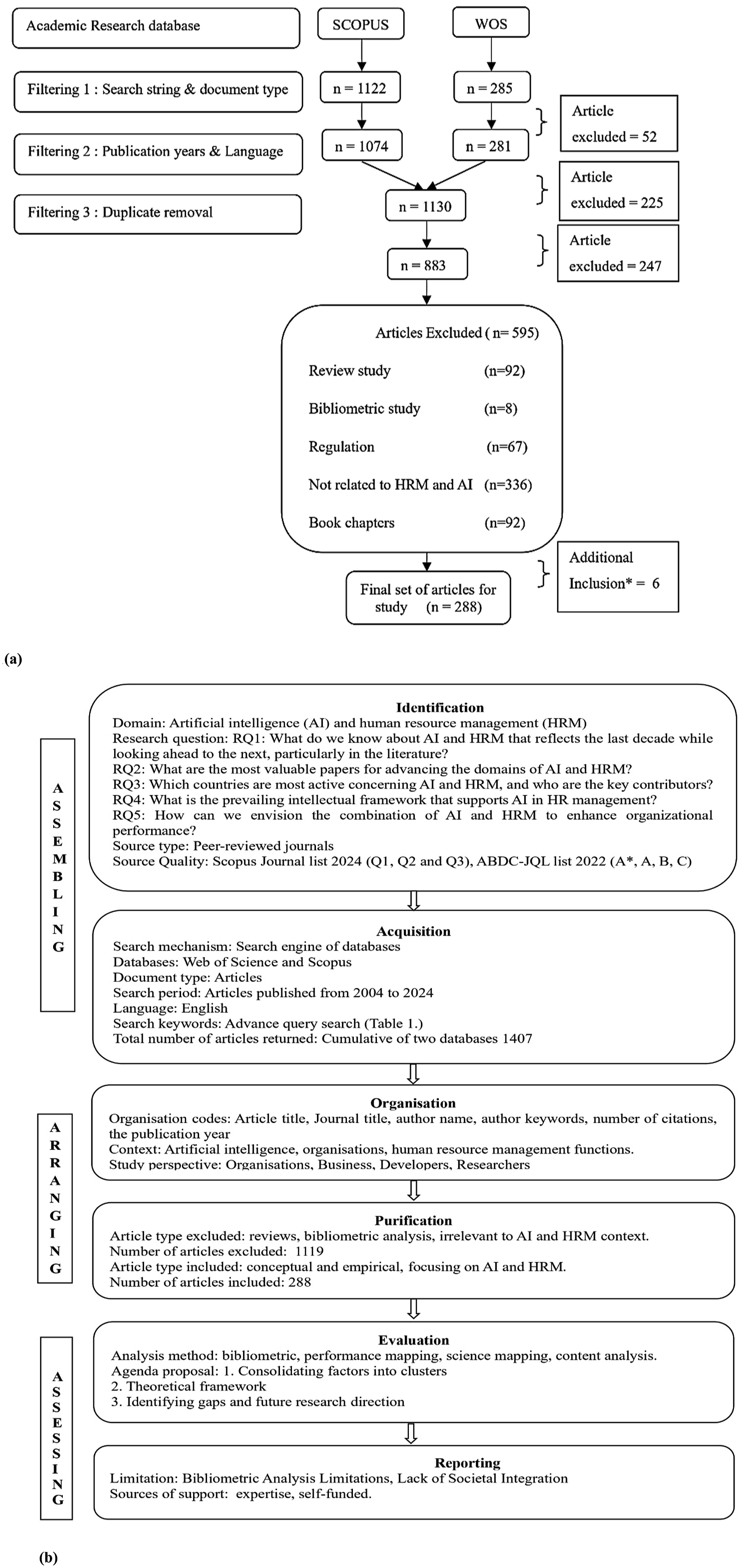
To ensure quality, only articles published in reputable journals were included. Specifically, journals listed in the 2022 ABDC Journal Quality List (rated A*, A, B, or C) and Scopus-indexed journals ranked Q1 to Q3 were considered.29,40 As a result, 247 articles that did not meet these standards were excluded, thereby refining the dataset.
Organization and purification
Each remaining article was manually reviewed for its relevance to the intersection of AI and HRM, with a focus on peer-reviewed sources to ensure academic rigor and originality. Conference papers, book chapters, and government publications unrelated to AI and HRM were excluded from the analysis. This filtering process resulted in a refined selection of 282 articles. Additionally, six more relevant articles were added later using the ancestry approach, 29 bringing the final dataset to 288 articles out of the initial 1407. This curated collection provides a robust foundation for analyzing current research trends, identifying key themes, and exploring future directions in context of AI and HRM.
Evaluation and reporting
The evaluation stage details the procedures used for both analysis and the development of a research agenda. This review adopts an inductive strategy, where insights are derived from observable patterns in the data, as supported by prior literature.
29
To support this, a range of bibliometric tools were employed (refer to Figure 2), falling into two primary categories: performance analysis and science mapping. Bibliometric analysis tools for AI in HRM (source: Author’s work).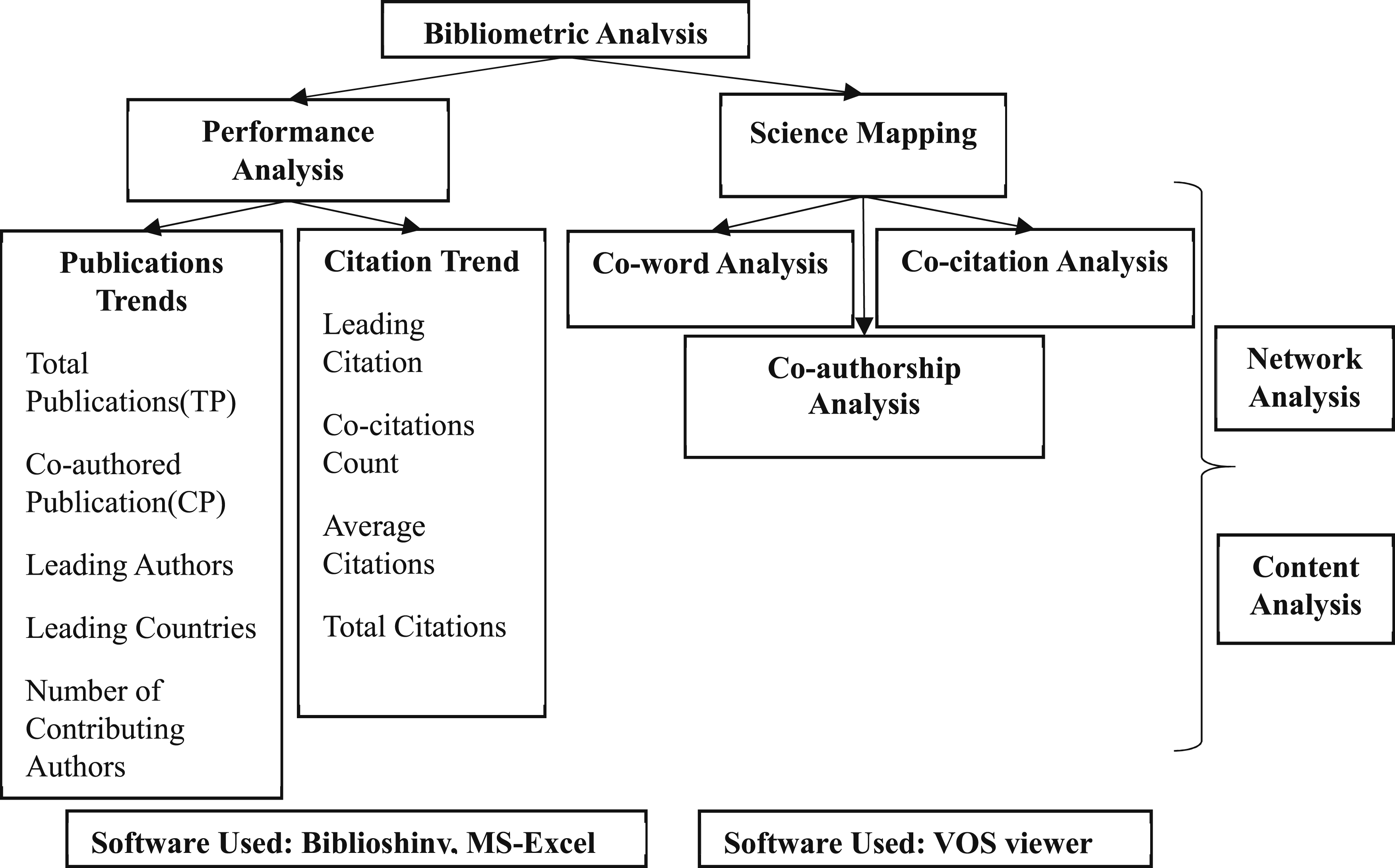
Science mapping was conducted using several methodologies. First, co-authorship analysis was applied at both the author and country levels to investigate collaborative relationships within the academic community. 29 Second, keyword co-occurrence (or co-word) analysis was used to examine the relationships between key topics discussed within the literature, offering insight into both current and emerging research themes. 41 These techniques enabled the identification of key thematic areas and potential directions for future inquiry.
In line with established practices,29,34 this study employed a combination of software tools, including Excel, RStudio (with Biblioshiny), and VOSviewer, to ensure a rigorous and transparent bibliometric analysis. Excel was used for data organization and descriptive analysis, leveraging its formula-based tools and customizable charts for effective data presentation.29,34,39 RStudio, supported by the Biblioshiny interface, enables advanced statistical testing, automates routine tasks, and generates open visualizations, aiding both performance analysis and science mapping.29,42 VOSviewer was used to construct two-dimensional bibliometric maps that illustrate relationships among authors, institutions, keywords, and publications. 39 By utilizing co-word analysis, co-citation, and bibliographic coupling, the study identified emerging themes, significant collaborations, and impactful contributions in the domains of HRM and AI.34,39 This integrated workflow enabled data processing in Excel, analysis in RStudio, and visualization in VOSviewer, ensuring analytical depth, enhancing insight triangulation, and strengthening the overall reliability and clarity of the review.
The following section presents bibliometric findings, including performance analysis, science mapping based on co-word analysis, co-citation analysis, and bibliographic coupling analysis. Together, these results reveal the intellectual structure and evolution of the field.
Results, discoveries, and prospective research directions
Evaluation of AI performance in HR management
Publication and citation trend (RQ1)
Panel A: Metrics on publication
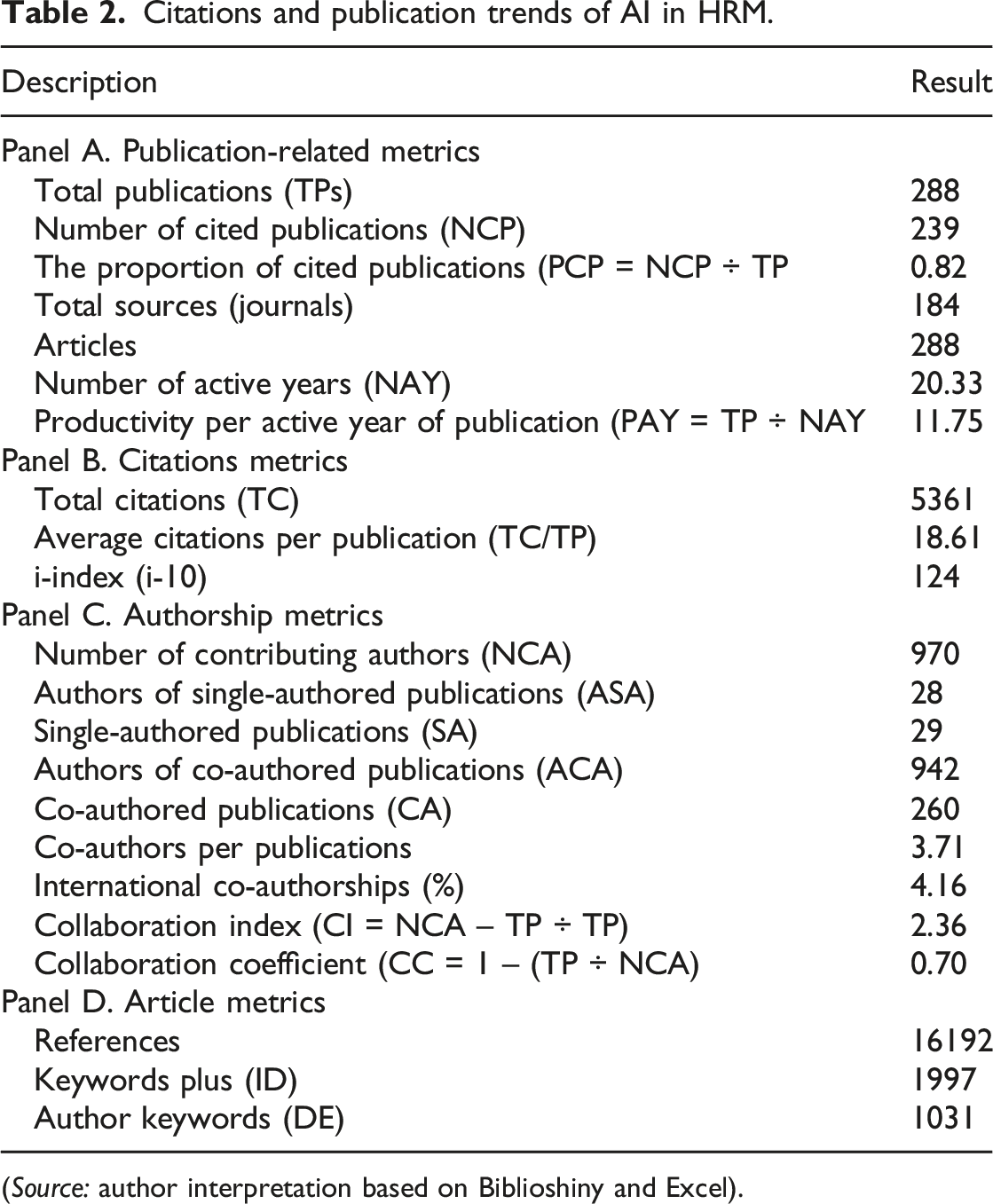
Citations and publication trends of AI in HRM.
(Source: author interpretation based on Biblioshiny and Excel).
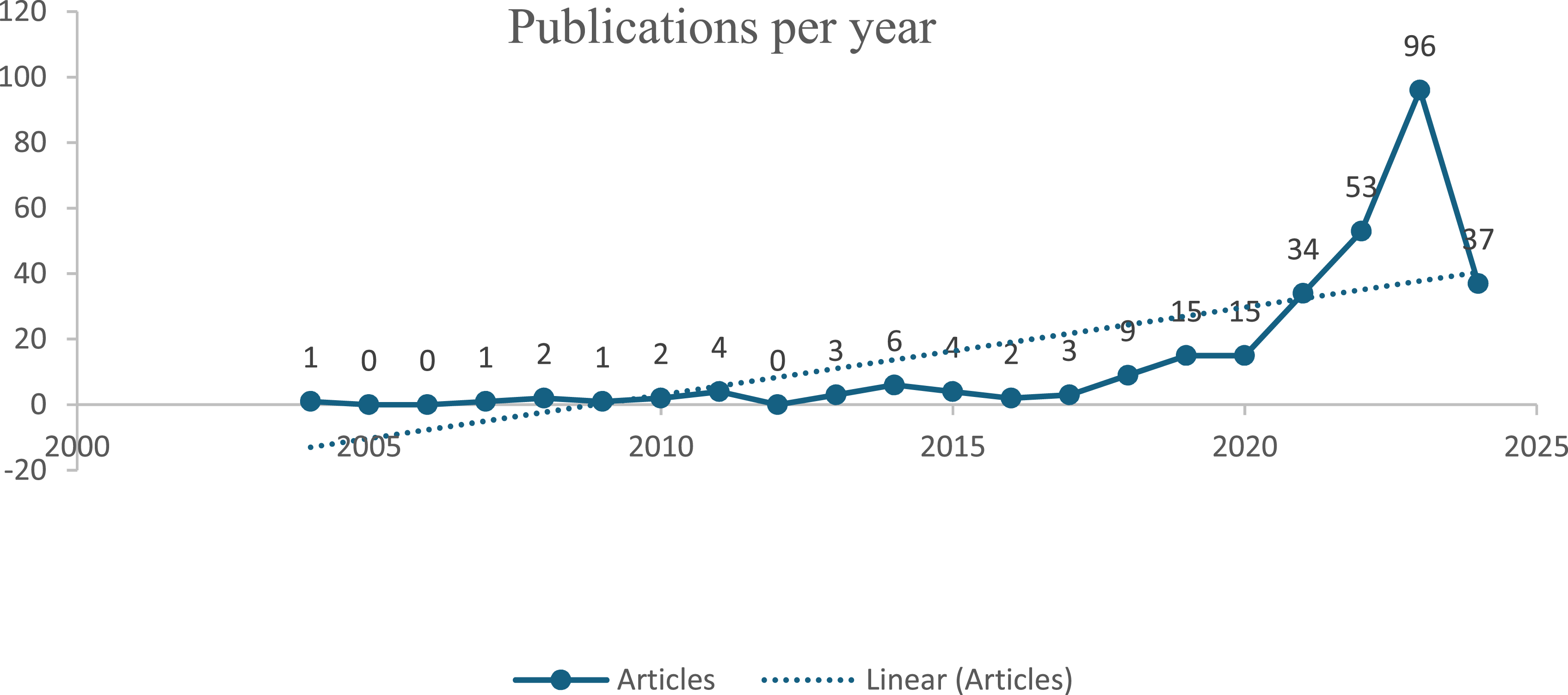
Trends of AI in HRM Article (Source: Authors’ interpretation based on Biblioshiny and MS-Excel).
Panel B: References
The publications received 5361 citations, averaging 18.61 citations per publication. The dataset has an i-index of 124, indicating 124 publications with at least ten citations each. This statistic offers insight into the impact and significance of scholarly research.
Panel C: Metrics of authorship
A total of 970 contributing authors were involved in the study, among which 28 were single authors of AI in HRM articles, having a total of 29 such articles. In addition, 942 authors co-authored 260 publications, with an average of 3.71 co-authors per publication. International co-authorships comprised 4.16% of the co-authorships. We discovered the collaboration index (CI) to be 2.36 and the collaboration coefficient (CC) to be 0.70.
Panel D: Article metrics
The articles cited a total of 16,192 sources. We also discovered 1997 Keywords Plus (ID) and 1031 Authors Keywords (DE).
Notable publications (articles and platforms) in the field of AI in HRM research (RQ2)
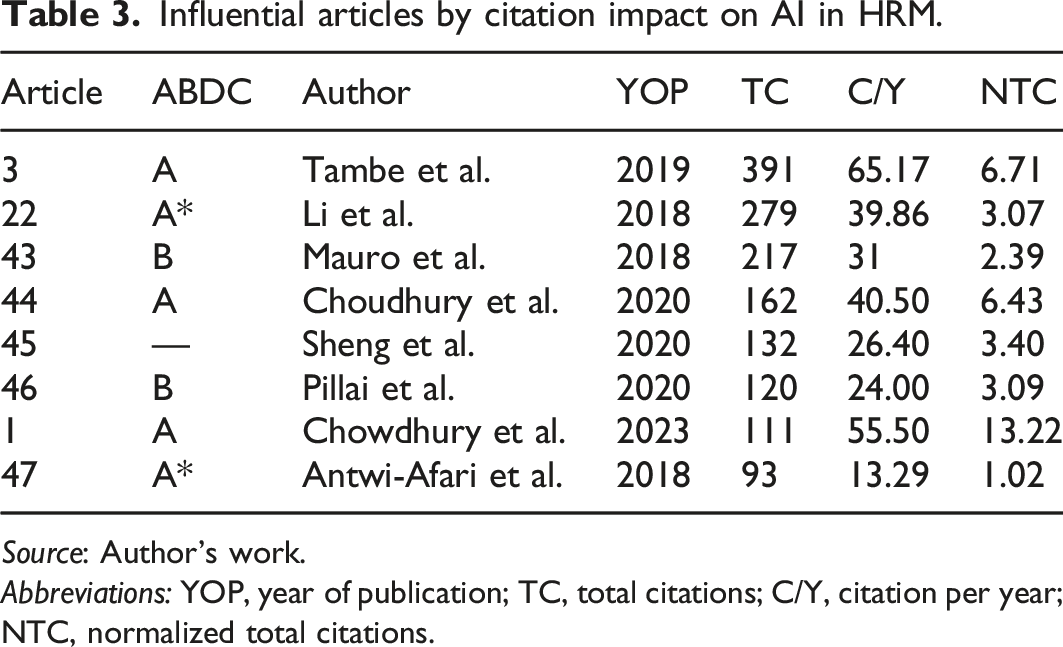
Influential articles by citation impact on AI in HRM.
Source: Author’s work. Abbreviations: YOP, year of publication; TC, total citations; C/Y, citation per year; NTC, normalized total citations.
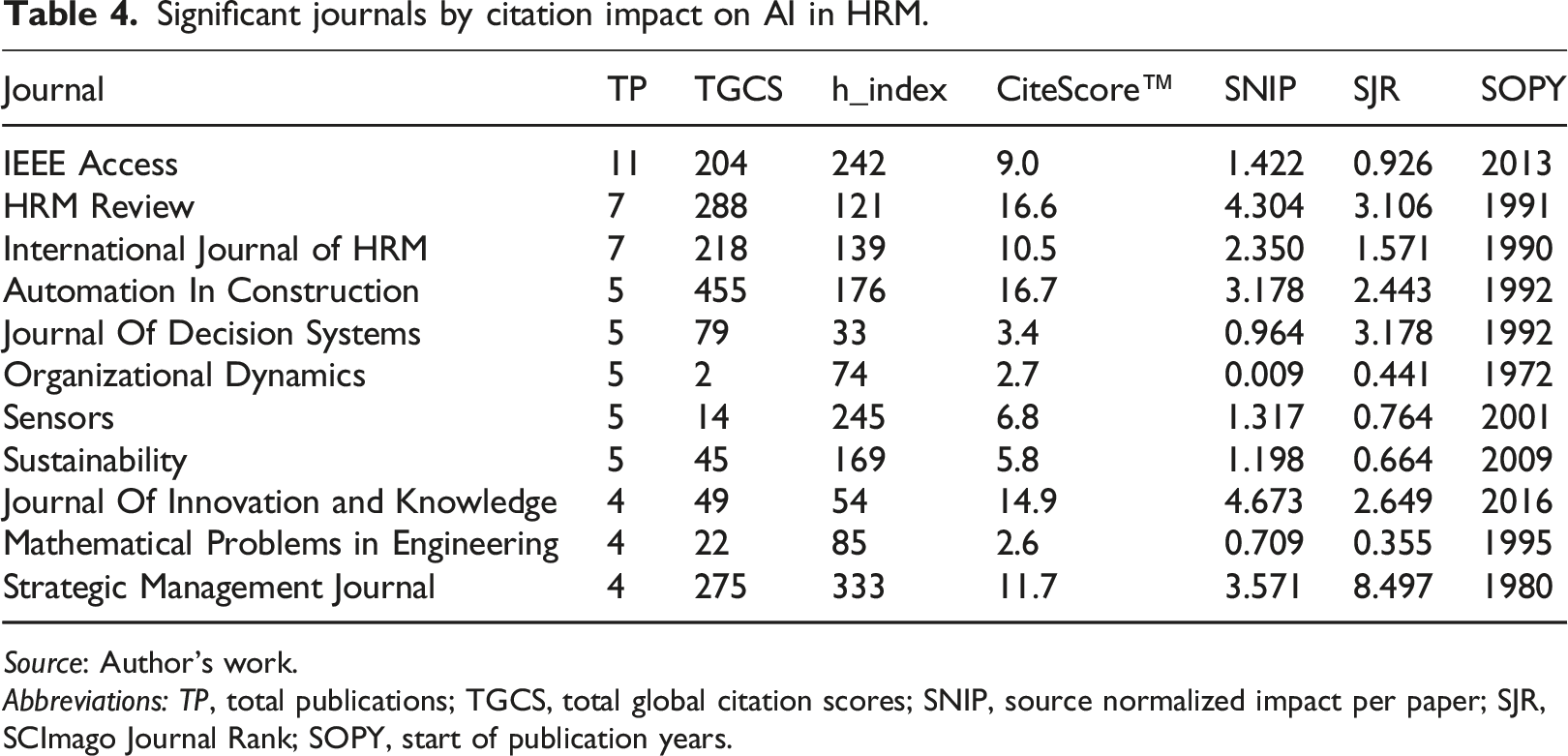
Significant journals by citation impact on AI in HRM.
Source: Author’s work. Abbreviations: TP, total publications; TGCS, total global citation scores; SNIP, source normalized impact per paper; SJR, SCImago Journal Rank; SOPY, start of publication years.
Significant impactful articles
Tambe et al. 3 lead with 391 citations and highlight the significant influence of AI routinization on HRM. Li et al. 22 integrated Building Information Modeling (BIM) and the Internet of Things (IoT) in the construction sector, receiving 279 citations. De Mauro et al. 43 explore the application of AI and big data in human resources (HR), while Sheng et al. 45 focus on the integration of IoT and AI in waste management. Study 44 demonstrates that machine learning (ML) can enhance productivity by mitigating biases arising from incomplete input data, especially when organizations integrate domain expertise with AI-specific knowledge. Pillai et al. 48 investigated automation in talent acquisition, and Chowdhury et al. 1 emphasized the importance of human-centric AI in HRM. Earlier research has also examined the impact of IT, big data, and AI on organizational performance, recruitment strategies, and workplace safety, underscoring the broad scope of digital AI innovation across sectors. 49
Significant impactful journals
Table 4 emphasized the impact of key publications like IEEE, HRM Review, and the International Journal of HR Management and Automation in Construction, which were recognized for their high h-indexes and total global citation scores (TGCS). Notably, automation in construction has a TGCS of 455 from five articles, while Sensors had fourteen. Among the twelve journals analyzed, six are notable in AI and HRM: HRM Review, the International Journal of HR Management, Organizational Dynamics, Journal of Innovation and Knowledge, the Strategic Management Journal, and Automation in Construction with rating A* or A by ABDC 2022. The first four have a rating of A, while the Strategic Management Journal and Automation in Construction have an A* rating, indicating the prominence of management journals in the AI and HRM fields (Figure 4). Co-authorship network among authors. (Source: Biblioshiny).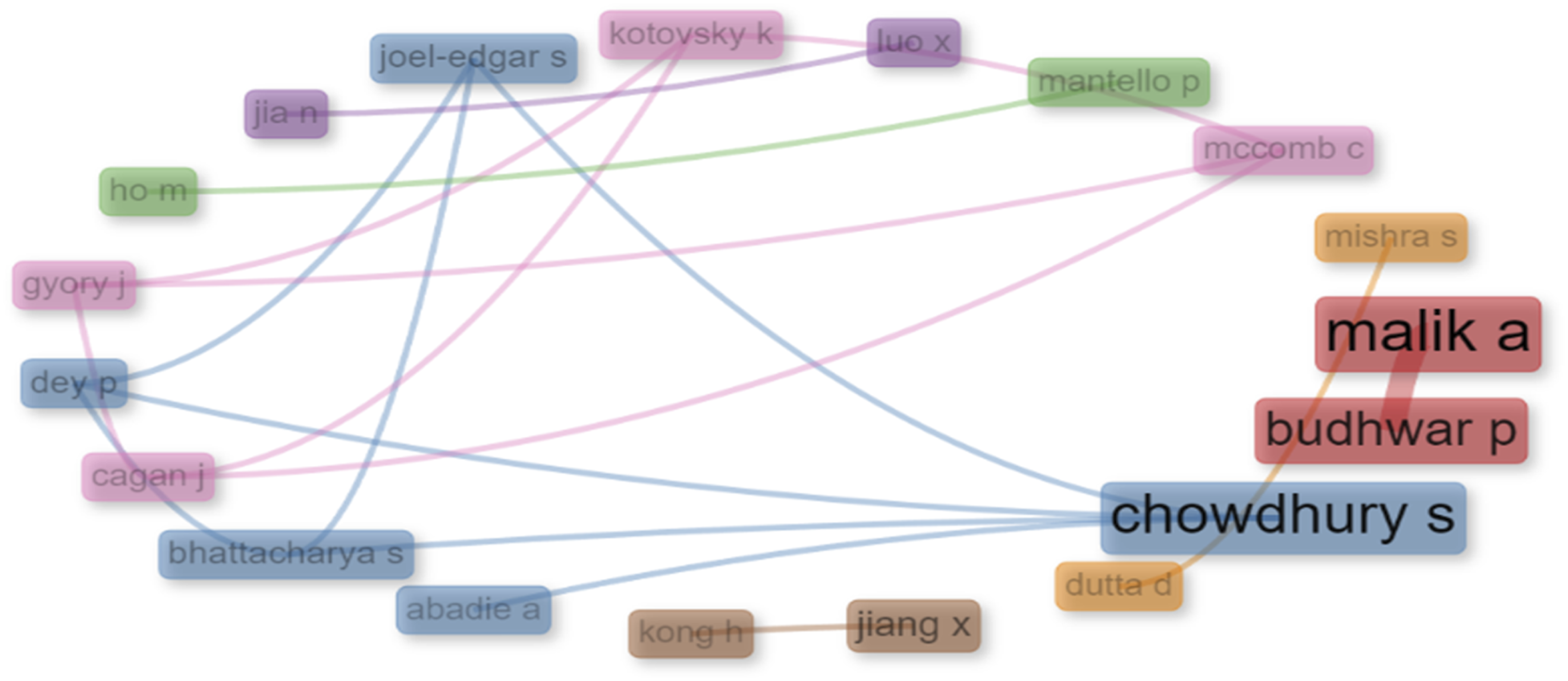
Principal contributors (authors, nations) on AI in HRM (RQ3)
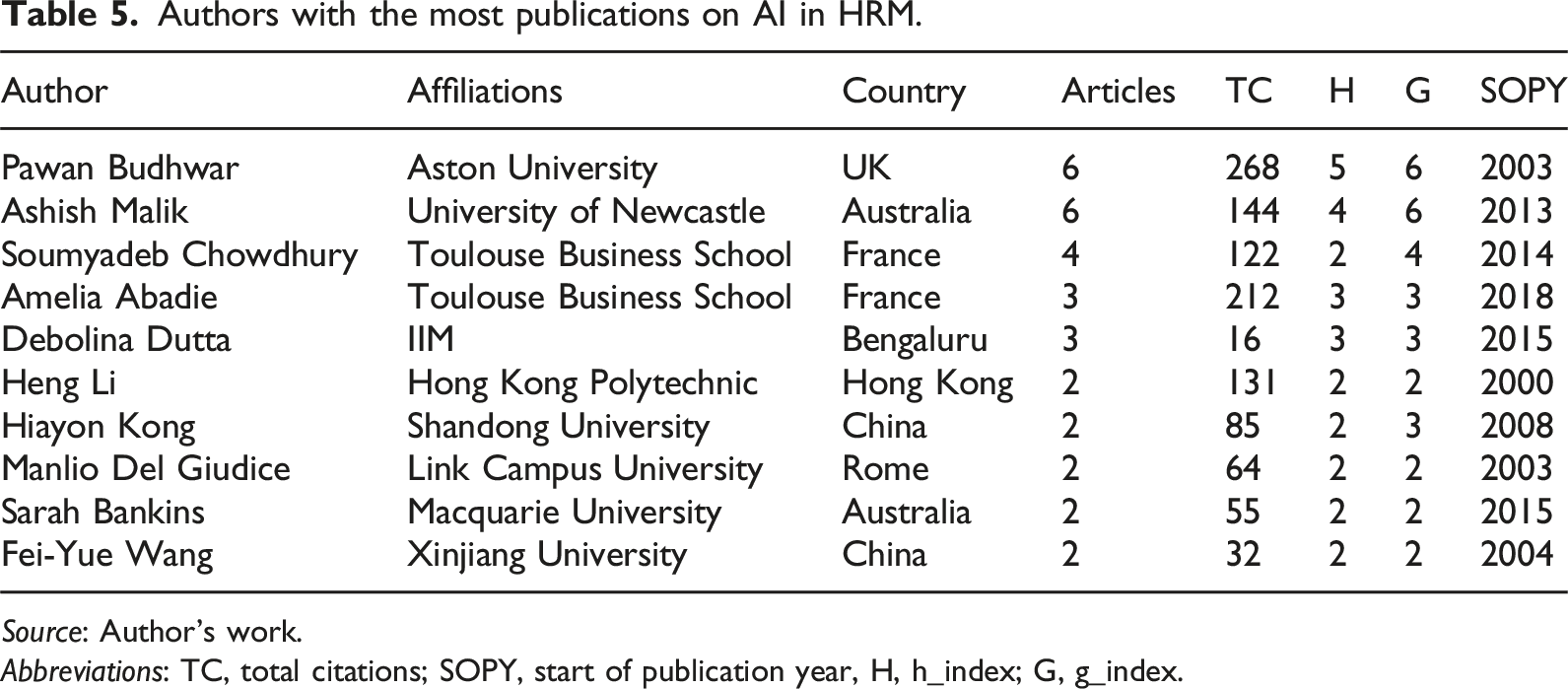
Authors with the most publications on AI in HRM.
Source: Author’s work. Abbreviations: TC, total citations; SOPY, start of publication year, H, h_index; G, g_index.
Group 1 features Ashish Malik and Pawan Budhwar, who have explored how AI can enhance HRM both strategically and experientially,
50
as well as innovations in AI’s role in improving HR cost-effectiveness.
51
Group 2 includes Soumyadeb Chowdhury, Bhattacharya, Amelia Abadie, Prasanta Kumar Dey, and Sian Joel-Edgar, focusing on the incorporation of AI in HRM1,35 and SME supply chains.
6
Group 3 includes Dutta and Mishra, focusing on the impacts of AI adoption on learning, development, and employee well-being through human-technology interactions in various organizations.
24
Group 4 features Nan Jia, who published AI fairness in evaluations
52
(Figure 5). Co-authorship network among countries. (Source: Biblioshiny).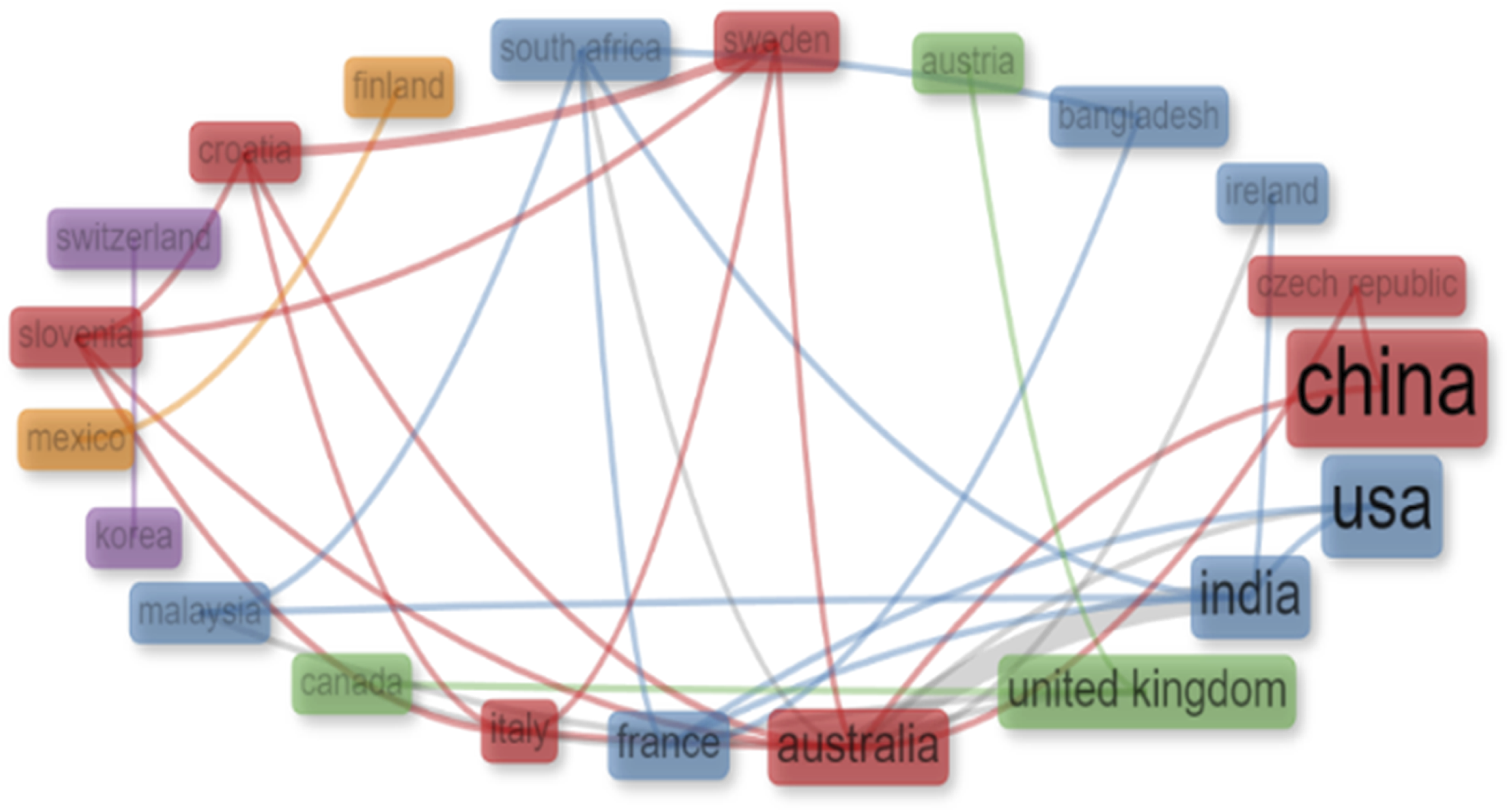
Prominent countries and their co-authorship network
Countries with the most publications on AI in HRM.
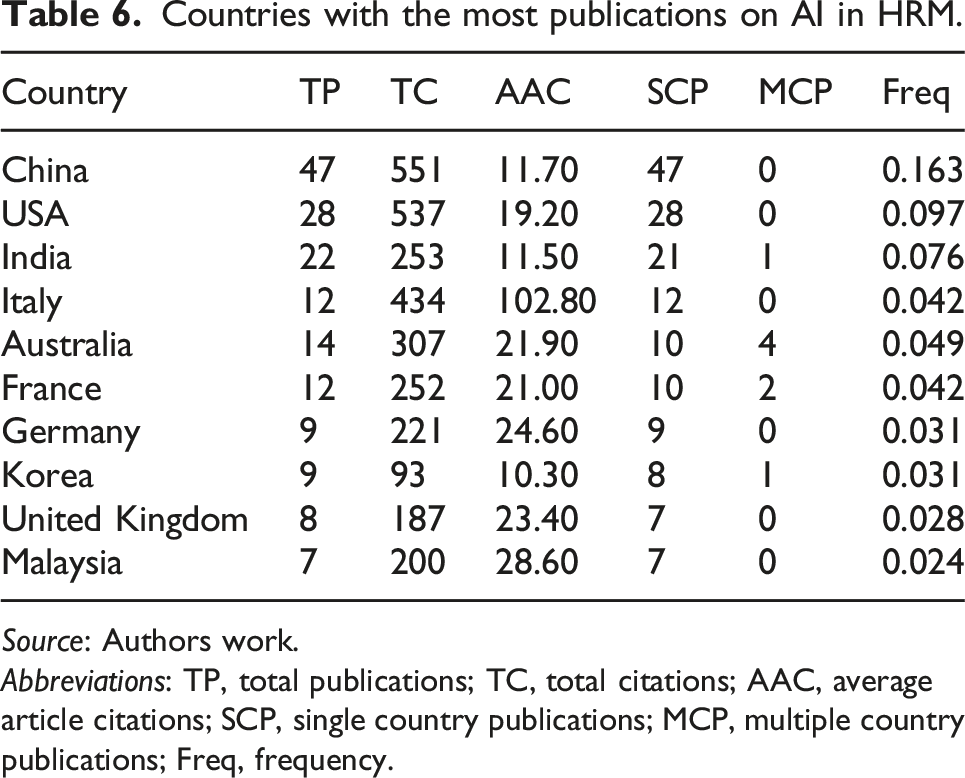
Source: Authors work. Abbreviations: TP, total publications; TC, total citations; AAC, average article citations; SCP, single country publications; MCP, multiple country publications; Freq, frequency.
Additionally, this research examines collaboration among authors from different countries through co-authorship networks using Biblioshiny. China (Red) leads a group collaboration with the Czech Republic, Australia, Italy, Slovenia, Croatia, and Sweden. The United States (Blue) has partnered with France, India, Malaysia, South Africa, Bangladesh, and Ireland, while the United Kingdom (Green) collaborated with Austria and Canada. These networks highlight strong existing connections and suggest opportunities for future research collaborations. Expanding these collaborations could enrich the literature by offering diverse perspectives contributing to theoretical development and framework formulation. 29
Scientific mapping of AI and HRM research
Knowledge clusters through co-word analysis (RQ4)
Co-word analysis is a bibliometric method for examining the interconnectedness of keywords and topics in academic literature. It helps researchers uncover themes and insights into knowledge structures.29,41 To reveal the thematic structure of scholarly research at the intersection of AI and HRM. We created a network visualization map of keywords using VOSviewer, as shown in Figure 6. A threshold of 5 recurrences identified 47 co-occurring terms from 2601 keywords, resulting in 4 clusters. Data visualization was achieved by removing plurals, abbreviations, and synonyms using the VOSviewer thesaurus file, enhancing group analysis and cluster identification based on predominant nodes. The mapping, based on keyword co-occurrence and total link strength (TLS), identified four distinct clusters that reflect the evolving landscape of AI adoption in HRM. Scientific mapping based on co-words. (Source: authors’ interpretation based on VOSviewer).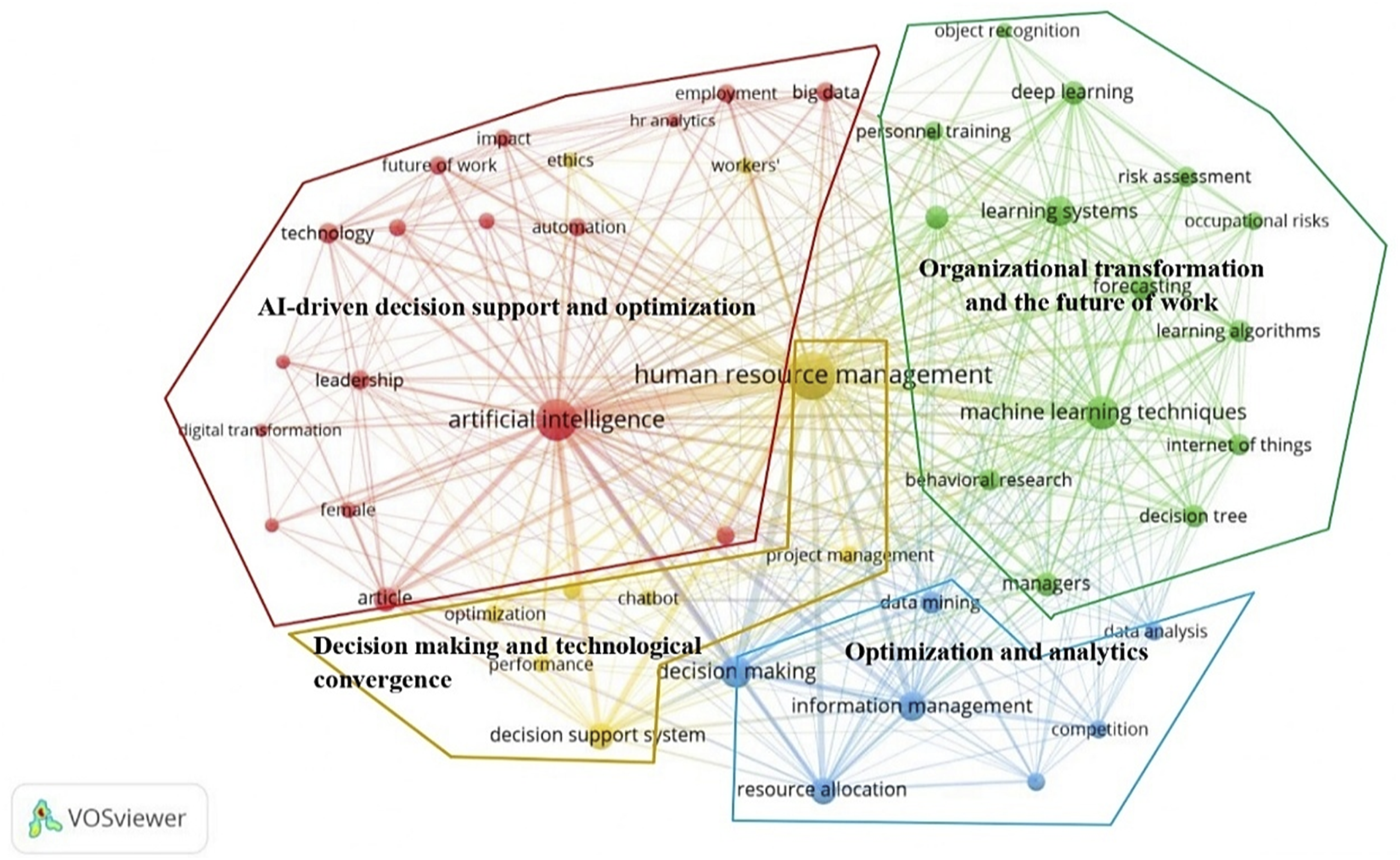
Cluster 1: AI-driven decision support and strategic optimization (Red Network)
This cluster highlights the central theme, defined by 18 key terms, which underscores the strategic shift from traditional HR practices to an evidence-based model enhanced by technology. The term “artificial intelligence” (OC:156, TLS:425) is at the core, often accompanied by “leadership,” “digital transformation,” “big data,” “HR analytics,” and “automation.” These terms signify a significant evolution in HRM, aligning with Strategic Human Resource Management (SHRM) and reflecting how AI tools are revolutionizing workforce planning, leadership development, and organizational responsiveness.
Cluster 2: Optimization and analytics infrastructure (Blue Network)
The second cluster focuses on the infrastructure necessary for facilitating advanced analytics within AI-supported HRM. Key phrases such as “information management” (OC:27, TLS:122), “decision-making” (OC:41, TLS:174), “data analysis,” and “resource allocation” (OC:21, TLS:97) are prominent. The inclusion of “project management” (OC:8) and “data mining” indicates a practical emphasis on strategic planning, risk assessment, and ongoing process enhancements. It highlights a platform-driven intelligence framework where AI applications are integrated into HR analytics systems to produce real-time insights and encourage data-informed planning.
Cluster 3: Organizational transformation and future of work (Green Network)
This cluster highlights the growing impact of ML and cognitive systems on HRM in the workplace. The terms “ML techniques” (OC:38, TLS:192), “deep learning” (OC:24, TLS:119), “learning systems” (OC:28, TLS:135), and “forecasting” (OC:16, TLS:78) emphasize the role AI in redefining HR activities from basic automation to intelligence enhancement. The term “object recognition” encompasses the enhancement of computer-aided candidate evaluation, particularly in the context of video interviews or capability demonstrations. For instance, AI tools can identify and assess non-verbal signals, gestures, and interactions with objects during simulations or task evaluations. This provides additional insights that can inform recruitment decisions.
Cluster 4: Ethical implications and technological convergence (Yellow Network)
This cluster focuses on “HRM” (OC:192, TLS:599), the most frequently appearing term, alongside “decision support systems” (OC:23, TLS:105). Terms such as “chatbot,” “project management,” and “optimization” indicate a convergence of digital interfaces with human-centric HR processes. Research in this sphere reveals a growing concern regarding the ethical adoption of AI in areas related to employee interaction, privacy, and bias reduction.
The four clusters collectively enhance the understanding of AI in HRM by emphasizing its strategic, infrastructural, transformational, and ethical dimensions. Theoretically, they strengthen the integration of AI into SHRM, digital capability frameworks, and algorithmic ethics in HRM. From a managerial perspective, the findings highlight the importance of AI-ready infrastructures, ethical governance, and skill development in fostering data-driven and human-centric HR practices. These insights position AI as both a technological enabler and a strategic partner in shaping the future of work.
Figure 7 outlines the evolution of keywords at the intersection of AI and HRM. This figure updates and extends the foundational analysis previously conducted by,
36
incorporating more recent developments and trends in the field that extend beyond the initial scope. Evolution of keywords of AI and HRM (Source: Biblioshiny).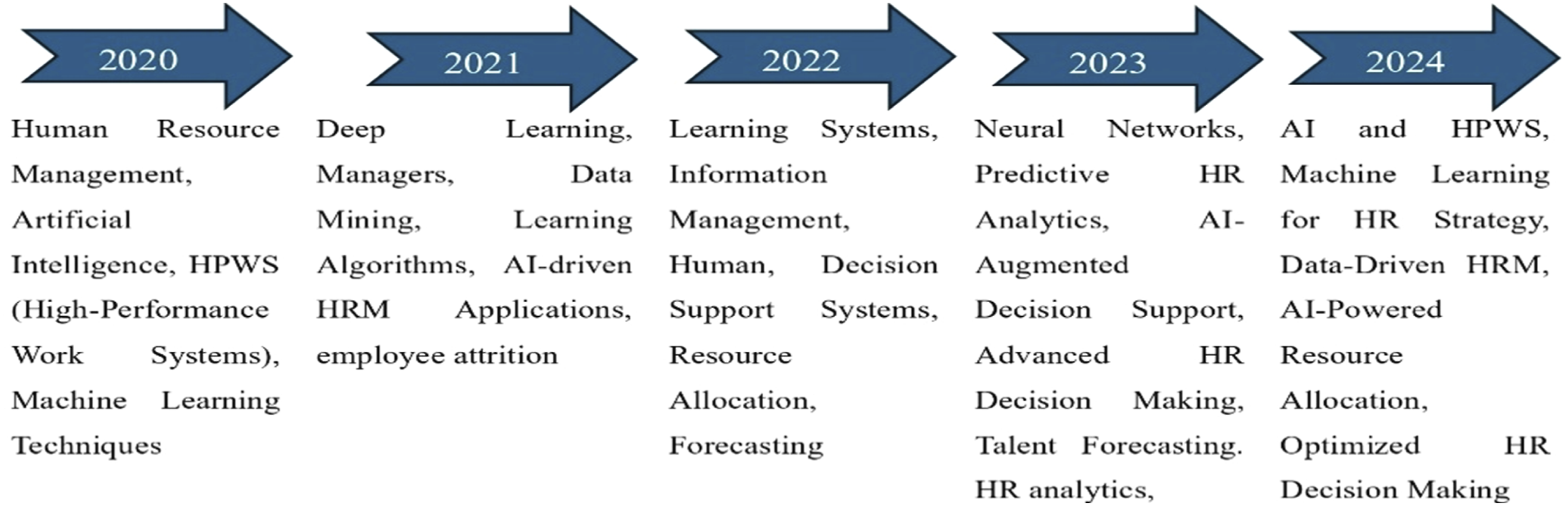
Co-citation analysis (Reference-based)
To ensure that methodologies are aligned with research aims, we utilized co-citation analysis as both a mapping technique and a way to identify the underlying intellectual structure of AI-HRM studies. The method examines how frequently the papers are cited together, indicating shared topics or methodologies. It helps identify thematic clusters around foundational work, thus understanding the knowledge base and the historical evolution of the discipline. 41 Hence, it serves to complement our mapping goal of the leading theoretical and conceptual forces within this discipline.
We established a minimum of five citations for references across 288 documents, resulting in only 21 out of 14,047 unique references meeting this criterion. After excluding unrelated items, we focused on forty-three connected references, selecting the five-citation threshold to form a cohesive network.
Appendix B summarizes the outcomes of the co-citation analysis depicted in Figure 8, where the diameter of the circles indicates the number of citations, and the space between the two nodes reflects their similarity. The co-citation network unveiled three clusters showcasing AI technologies in HRM. Co-citation Analysis. Source: Authors’ interpretation based on VOSviewer.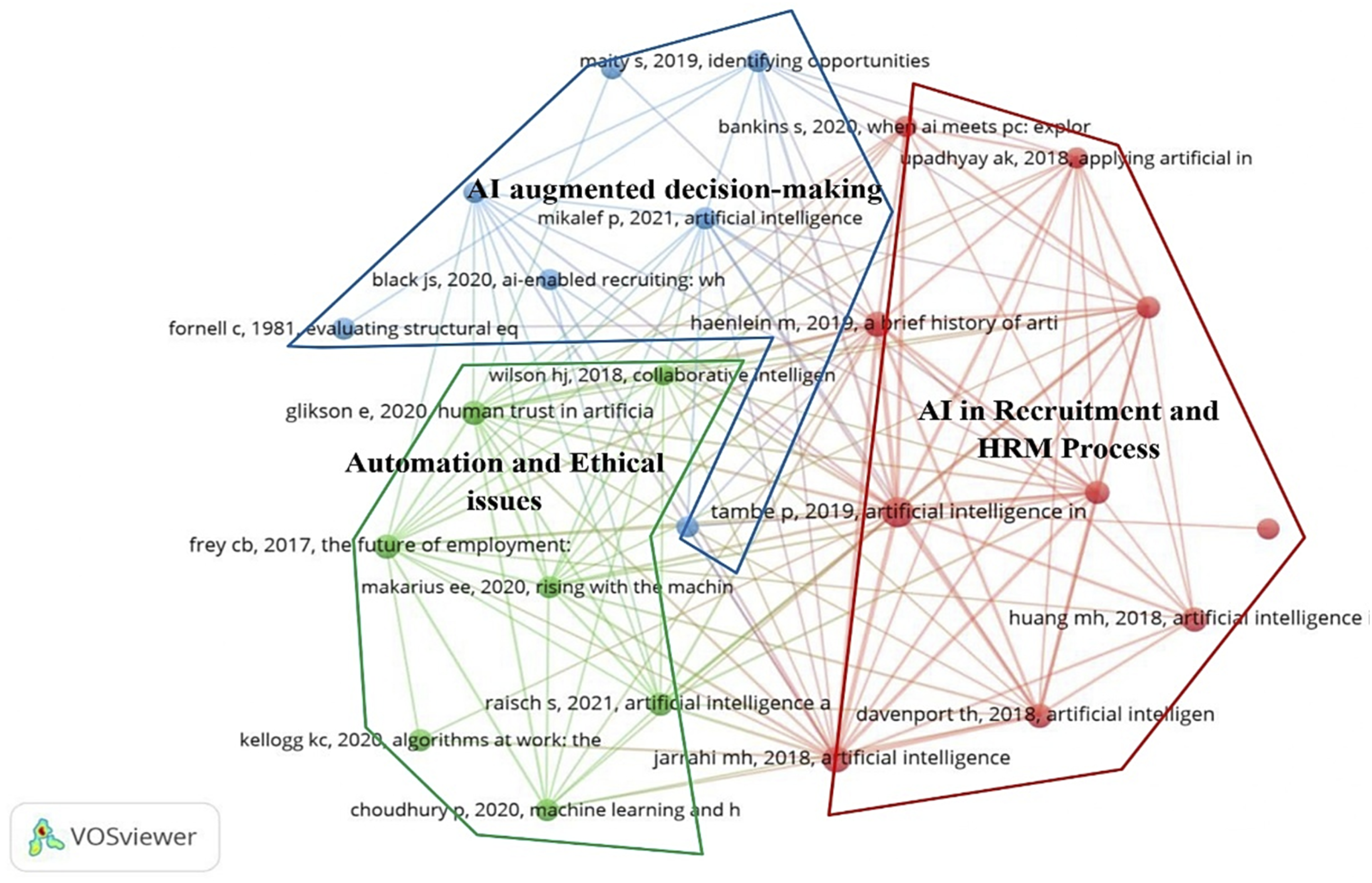
The red cluster was the most extensive, focusing on AI in staffing and HRM processes. It included Upadhyay and Khandelwal’s 53 work on AI’s potential and the challenges of AI implementation in HRM to enhance the staffing process. The green cluster addressed critical issues like automation, AI trust, and challenges, featuring studies like Frey and Osborne 54 on automation’s impact on HR management and others' AI integration strategies. The blue cluster, smaller and more distant from the others, centered on AI in strategic decision-making, examining how humans have collaborated with AI. Additionally, Jarrahi 55 emphasizes the importance of enhancing decision outcomes and the role of AI in customized training. 2 Overall, the clusters explored the benefits, vulnerabilities, and integration of AI in HRM.
The co-citation clusters collectively strengthen the theoretical foundation of AI in HRM by emphasizing themes such as human-AI collaboration, emotional intelligence, algorithmic governance, and workplace automation. Cluster 1 focuses on recruitment, training, and the ethical adaptation of AI; Cluster 2 highlights trust, bias, and the evolution of psychological contracts; while Cluster 3 aids in conceptualizing AI-driven productivity and integration frameworks. Theoretically, these works enhance strategic, behavioral, and ethical perspectives in AI-HRM field. Managerially, they guide the design of AI-integrated HR systems, emphasizing responsible adoption, building employee trust, and implementing continuous re-skilling strategies.
These findings validate the appropriateness of co-citation analysis in our study, as it not only reveals clusters of scholarly influence but also highlights the conceptual maturity and fragmentation within the AI-HRM field insights that are less accessible through keyword-based analysis.
Bibliographical coupling network (Author-based)
Bibliographic coupling complements co-citation analysis by highlighting emerging thematic developments. Unlike co-citation, it forms clusters based on shared references, enabling the inclusion of recent and less-cited contributions.
41
This method captures contemporary research fronts, which is essential for a forward-looking perspective on the field. It is frequently used to cluster large datasets automatically and identify instances where two publications cite the same source.
34
Applying this method to AI and HRM research papers, connections were successfully visualized. As shown in Figure 8 and Appendix C, five unique study clusters were identified, with an aggregate link strength of 4964 and 159 connections. The network size reflects the intensity of affiliations, with the most significant node representing the author of each cluster (Figure 9). Bibliographical coupling network (author-based).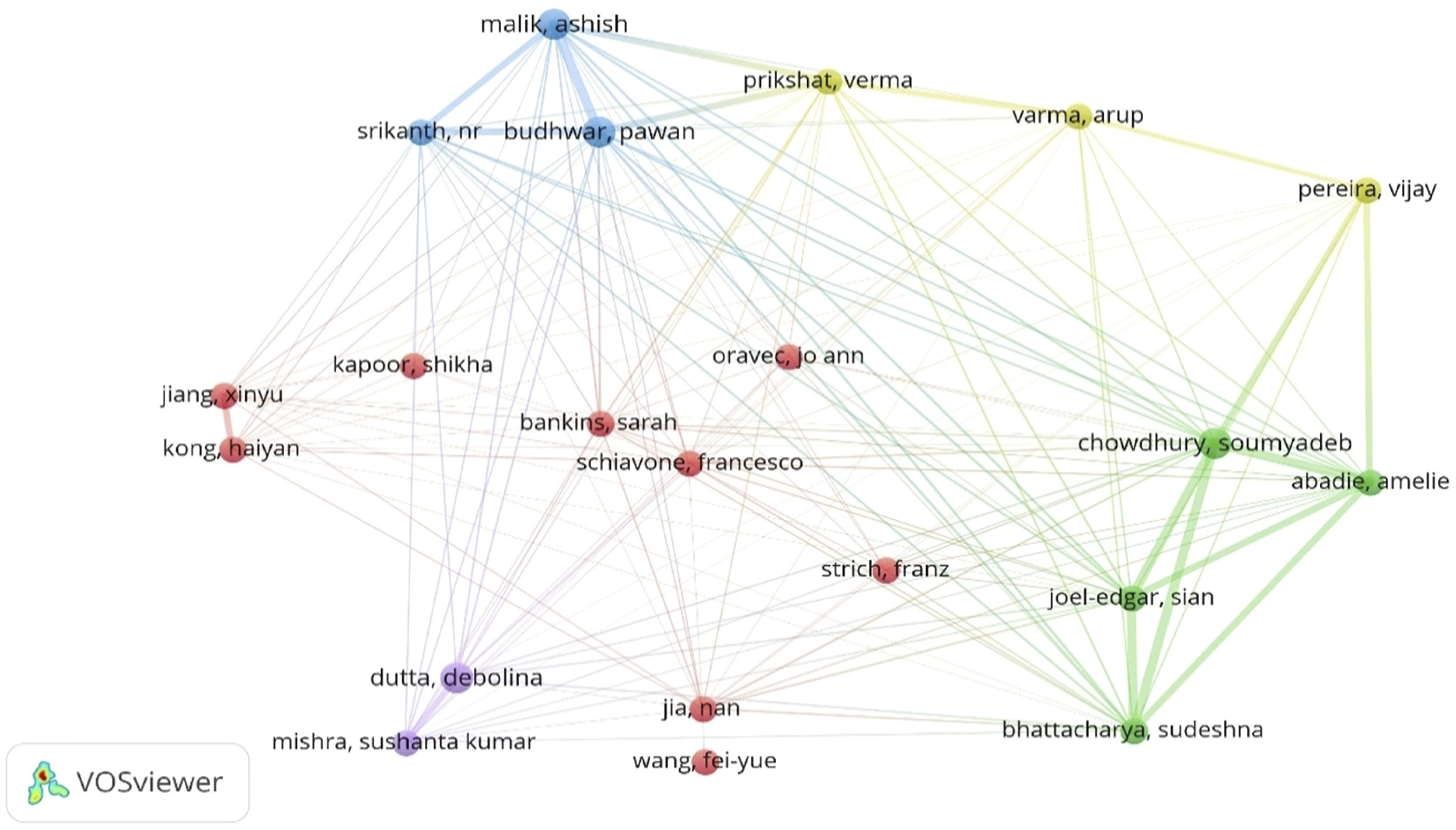
Cluster 1 (Red) highlights the rise of “bossware” to monitor employee behavior, including cyberslacking. 40 Research by Jiang, Kong, and others (2020–2024) examines ethical concerns about transparency, fairness, and autonomy in sensitive areas like lie detection. Hong Kong 26 focuses on technology’s role in career resilience and informal learning, while Jiang and Kong 56 link awareness of these tools to job burnout. Wang proposes smart organizational frameworks to transform workplace systems. Bankins 57 emphasizes HRM’s ethical responsibility to integrate socially intelligent robots while safeguarding employee rights amid changing workplace dynamics. Collectively, these studies advocate for human-centered approaches in the workplace.
Cluster 2 (Green) highlights organizational capabilities beyond technology in AI adoption within HRM and SMEs. Chowdhury 35 has conducted substantial research on HR’s ability to navigate the complexities and paradoxes of AI integration. Their proposed AI capability framework highlights the importance of leadership, skills, and culture in overcoming obstacles and unlocking the value of AI in HRM. Roux 6 emphasizes that the capacity of small and medium-sized enterprises (SMEs) to manage organizational change, along with their intangible resources, is essential for improving productivity, resilience, and low-carbon management in AI-enabled supply chains. This finding underscores the importance of combining technical expertise with human-centered capabilities to support both innovation and sustainability in the successful adoption of AI.
Cluster 3 (Blue) focuses on integrating AI into HRM to enhance employee experience (EX), engagement (EE), and efficiency. Studies by Malik et al.50,51 examine AI-driven HR ecosystems in multinational enterprises (MNEs), demonstrating that automating routine tasks improves cost-effectiveness, personalization, and employee satisfaction. Using frameworks such as person-organization fit and social exchange theory, they highlight the positive impacts on employee attitudes and retention. Other researchers expand on this by addressing the broader risks of generative AI, including privacy and bias, and argue that ethical governance is essential for building trust and ensuring the sustainable adoption of this technology.
Cluster 4 (Yellow) comprises contributions from Pereira, Prikshat, and Varma (2021–2023), focusing on the ethical integration of AI in HRM. Their work emphasizes stakeholder responsibility, transparency, and fairness in the deployment of AI. For example, 48 proposes a multi-stakeholder framework with 11 ethical principles for AI in HR. At the same time, 28 introduces a framework addressing theoretical, contextual, and practical gaps across four levels of HRM(AI) development. Together, these studies stress the balance between technological innovation and ethical governance.
Cluster 5 (Purple) examines the impact of AI on learning, development, and employee well-being. Dutta and Mishra highlight the use of bots, AI-based mental health tools, and machine learning algorithms to improve employee engagement and predict behavioral outcomes. Their study demonstrates that AI can enhance return on investment (ROI) in learning and development while also addressing mental health concerns. However, the authors caution that the research is still in the exploratory phase and needs more validation across different industries and demographic groups.
The five clusters offer a comprehensive view of AI’s impact on HRM, including ethical governance, organizational capability, employee experience, surveillance and autonomy, and workforce development. These findings synthesize current theoretical sophistication and offer practical guidance for HR practitioners seeking to deploy responsible AI.
Original construct and relationship (RQ5)
The AI-HRM framework addresses gaps in HRM research by providing a structured approach to integrate AI tools, thereby enhancing organizational efficiency and staff productivity (refer to Figure 10). It involves HR specialists, employees, and management, leveraging technologies such as NLP, ML, and generative AI to improve HR processes. Key HRM functions, such as recruitment, performance evaluation, and training, are highlighted, alongside ethical considerations in the deployment of AI. Aligning task-technology fit with ethical AI principles enables responsible, context-sensitive human and machine decision-making, thereby improving organizational outcomes and employee well-being.
57
This framework also fosters innovation through human-machine collaboration and promotes ethical behavior.8,27,58 Future research can explore further applications of this methodology in various HRM domains. Framework for AI-HRM Integration. (Source: author’s work).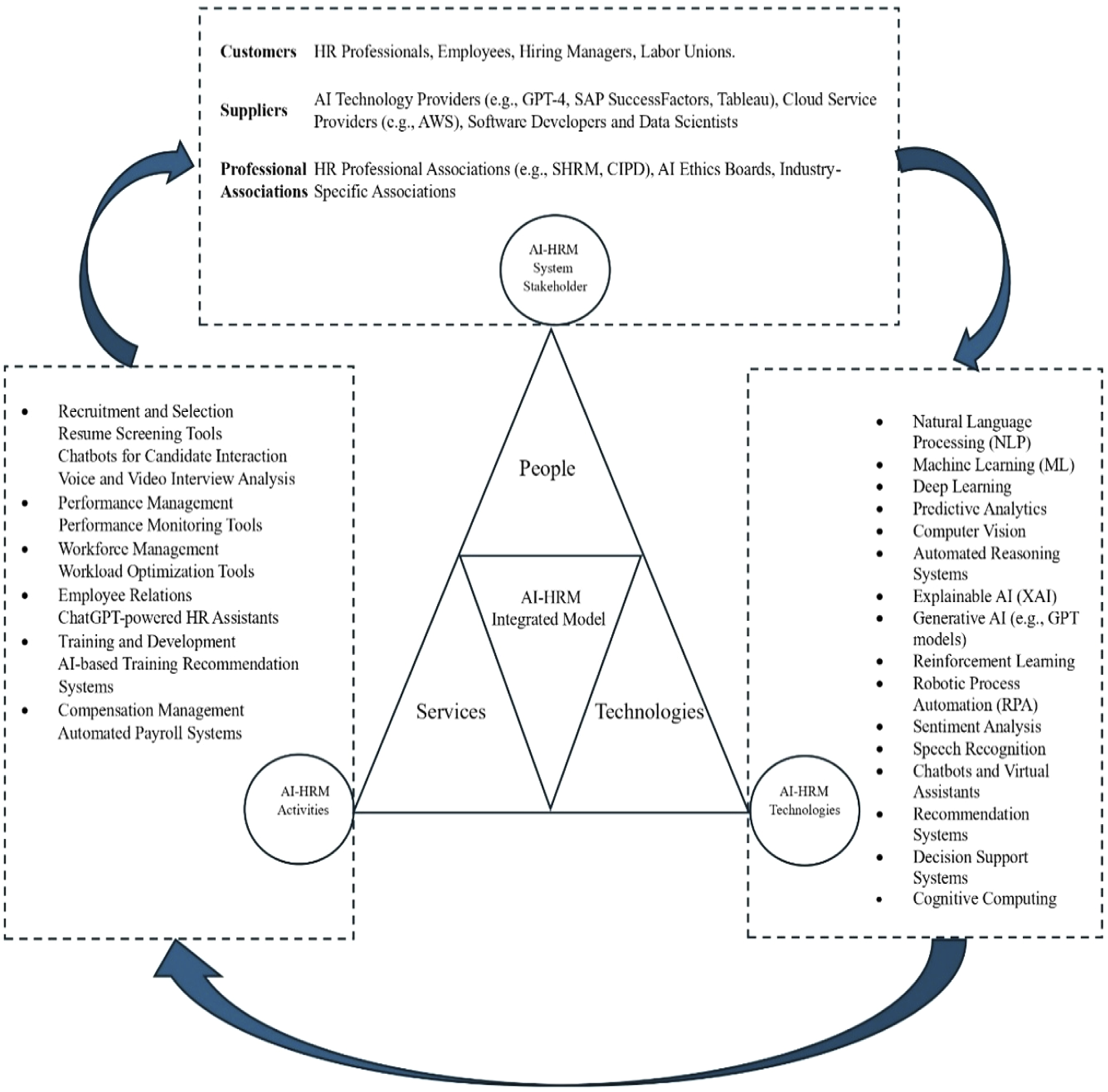
Implications for theory and practice
Theoretical implications
This study advances the theoretical understanding by interpreting the bibliometric clusters to highlight the evolving paradigms in AI-integrated HRM. Co-word analysis reveals thematic clusters like AI-driven decision support, intelligent data infrastructure, organizational transformation, and ethical implications, highlighting the shift in HRM research toward data-centric and technology-enabled models. Findings suggest that theories such as social cognitive theory and the resource-based view1,35 may have limited relevance in explaining the complex interactions between AI systems and human actors in contemporary HRM contexts.
As AI increasingly influences workforce planning and decision-making, it’s essential to update theoretical models to address the emerging dynamics between AI and humans. The co-citation analysis highlights key works by Frey and Osborne, 54 Jarrahi, 55 and Upadhyay and Khandelwal 16 that contribute to the discussion on automation, ethics, and AI in HR decision-making.
Practical implications
The suggested research agenda functions as a roadmap for prioritizing R&D in areas such as AI-driven talent acquisition, employee engagement, and the adoption of ethical AI. By recognizing the interconnection between AI and HRM, organizations can better anticipate future challenges and opportunities brought about by technological advancements, thereby fostering a more innovative and adaptable workplace culture.
The AI-HRM framework enables HR practitioners to integrate AI tools, including NLP, expert systems, and big data analytics, into key functions such as recruitment and performance management. It highlights the significance of human-machine collaboration for inclusive, data-driven, and ethical decision-making. AI applications, including virtual assistants and predictive analytics, are becoming increasingly essential in streamlining processes, particularly in data-driven industries such as finance. 59 AI integration can reduce hiring bias 60 and enhance employee engagement through personalized HRM interactions,21,24 thereby improving fairness and efficiency in HRM processes. 61
The ethical and transformational themes highlight the importance of human-centered AI strategies that prioritize employee welfare. Tools like EmpowHR and TalentAI can support strategic decision-making and re-skilling initiatives to maintain workforce adaptability. AI as a Service (AIaaS) in developing regions can bridge digital divides and offer scalable HR solutions, fostering inclusive economic and technological growth.
Future research agenda
Future research agenda.
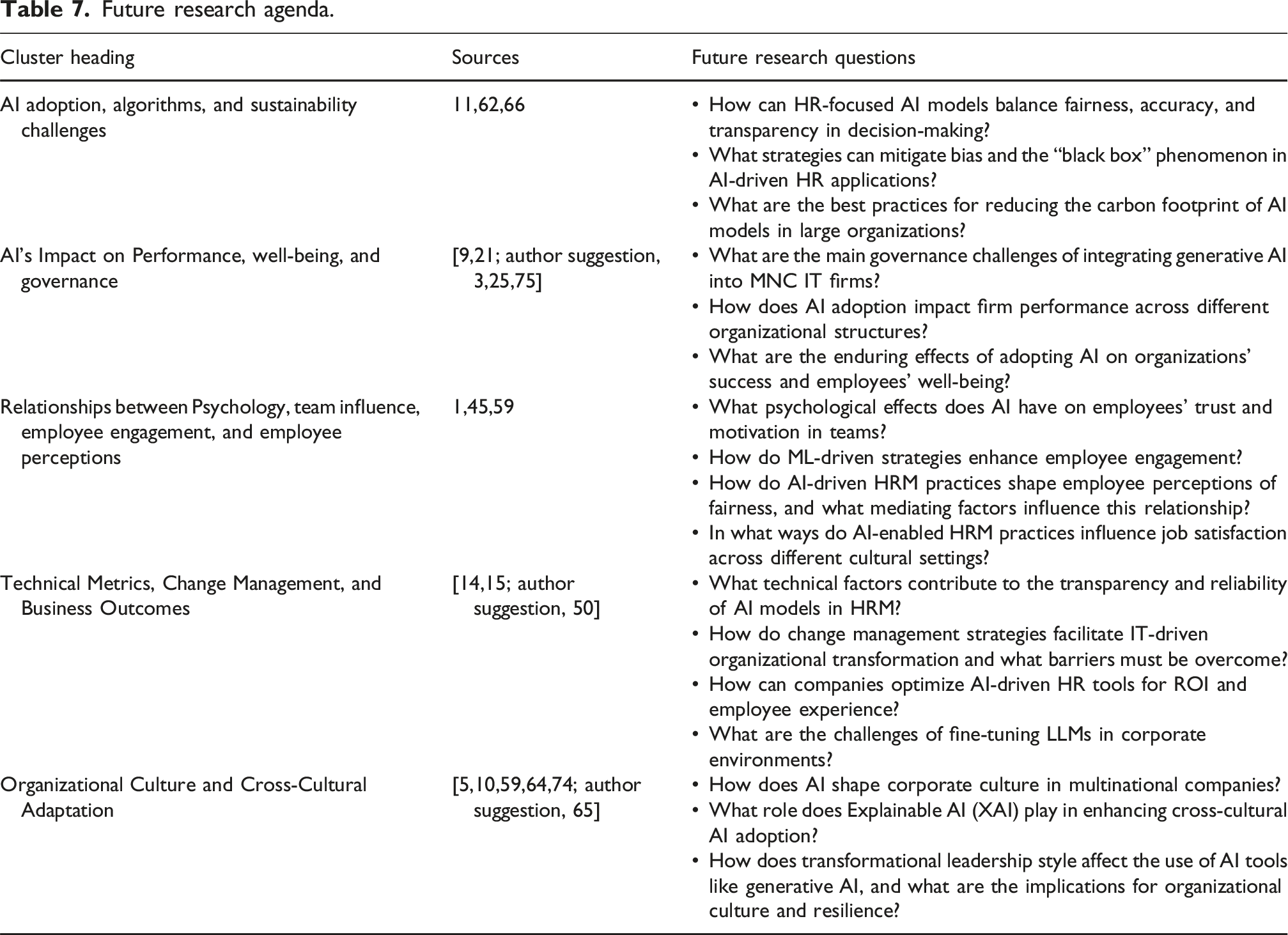
A critical area involves developing public policies to promote sustainable AI, such as achieving carbon neutrality and fostering international cooperation to reduce the environmental impact of generative AI models. 62 Additionally, studies on AI adoption in business processes should be examined, exploring the roles of IT leadership, governance, and their impact on firm performance.4,5,59 Psychological and team dynamics in AI, and their effects on employee well-being and HRM interventions in both developed and developing nations, are vital for future research. Furthermore, issues related to AI algorithms in HRM must be addressed, particularly fairness, explainability, and accuracy limitations. Research into explainable AI (XAI) can help mitigate bias and build trust among HR professionals. 63 Emphasizing cross-cultural leadership and communication can support inclusive AI adoption in multinational firms.64,65 Ultimately, a focus on technology and people-centered policies is needed to guide responsible AI development in HRM.
Limitations
This study comes with certain limitations. First, we limited our review to papers corresponding to journals listed on ABDC-JQL and Scopus, potentially overlooking valuable insights from lower-tier and non-peer-reviewed publications. Additionally, we excluded conference papers that significantly highlight the latest trend in the field. Future studies should incorporate additional resources, such as DBLP, SSRN, and SpringerLink, to broaden the range of AI studies in HRM. Second, bibliometric analysis provides a quantitative method for evaluating research success by analyzing academic publications. Nonetheless, it possesses constraints in accommodating the complete intricacy of investigation as it emphasizes quantity, such as citation metrics.
Footnotes
Acknowledgments
The authors express gratitude for the diligent work of the anonymous reviewers.

Author Contributions
Rahul Rana—Writing original draft, methodology, acquisition of data, and analysis. Sachin Kumar—Supervision, conceptualization, and resources.
Funding
The authors received no financial support for the research, authorship, and/or publication of this article.
Declaration of conflicting interests
The authors declared no potential conflicts of interest with respect to the research, authorship, and/or publication of this article.
Data Availability Statement
The data used in this study were obtained from licensed sources (Scopus and Web of Science) and are subject to copyright restrictions. As such, the data are not publicly available but may be made available from the corresponding author upon reasonable request and with permission from the data providers.
Overview of selected reviews in the field of AI in HRM
#
Database
Time frame and sample size
Review focus
Limitations
Software used
67
No database
2008–2018 and not defined
HR analytics, human capital, and AI-driven solutions
Missing quantitative data and reliance on non-peer-reviewed
None
36
Scopus
not defined and 344 articles
Bibliometric Exploration of AI Integration in HRM Practices
Reliance on narrow search terms from a single database, lack of a defined timeframe, and insufficient exploration of themes
Biblioshiny and Vos viewer
38
Web of Science and Scopus
2018–2022 and 73 articles
Exploring AI integration in HRM with bibliometric and content analysis
Analysis limited to recruitment/selection over the past 4 years, excluding other HRM sub-areas
R studios
37
Web of Science
2000–2023 and 163 articles
Evaluating non-economic AI innovation dimensions through bibliometric analysis
Relying on the Web of Science limits scope; non-economic aspects of AI remain underexplored
R studios
68
Scopus
1990–2022 and 317 articles
A bibliometric review of AI in marketing to map themes and trends
Reliance on Scopus may omit key studies; theoretical frameworks for AI marketing remain underdeveloped
Vos viewer
Present Review
Web of Science and Scopus
2004–2024 and 288 articles
Analyze AI in HRM using the SPAR-4-SLR methodology, incorporating performance and science mapping; provide a conceptual framework for integrating AI and HRM
Excludes non-peer-reviewed and conference papers, potentially missing recent trends and lower-tier insights
Biblioshiny, Vos viewer, and MS-Excel
Highlights of co-citation analysis network clusters
Cluster
References
Year
Summary of the Contribution of AI in HRM
Clusters Theme
Future research suggestions
Cluster 1 (Red nodes)
Upadhyay and Khandelwal
53
2018
Examines AI’s catalytic role in staffing, emphasizing its cost-effectiveness in hiring
Through trust and bias mitigation, AI integration emphasizes efficiency, emotional intelligence, and human-machine collaboration in recruiting, services, and workplace dynamics
Research on predictive analytics, AI-human collaboration, and ethical AI regulations in employment, recruitment, and decision-making processes requires further exploration
Huang et al.
69
2018
Explore how mechanical, analytical, intuitive, and emotional intelligence change, affecting service employment
Tambe et al.
3
2019
Link AI Potential with Practical HRM, Tackling Complexity, Data Constraints, Equity, and Employee Trust
Haenlein and Kaplan
70
2019
AI enhances decision-making and HRM by allowing humans to focus on emotional and interpersonal skills, thereby highlighting the value of emotional intelligence in the workplace
Bankins and Formosa
57
2019
Enhance AI’s role, particularly in the form of friendly robots, in HRM. Revise psychological contracts to include human-robot collaborations, reflecting changing workplace dynamics
Barro et al.
58
2019
Examines the disruptive impact of AI on the workplace, the evolving human-machine relationship, and the need for balanced investments in AI and workforce development to foster innovation
Jarrahi, M. H.
55
2018
Investigates “intelligence augmentation,” emphasizing how the collaboration of human intuition and AI improves decision-making in HRM by addressing uncertainty and complexity
Cluster 2 (Green node)
Frey and Osborne
54
2017
Examines job susceptibility to computerization, highlighting AI’s potential to automate a broad range of tasks, from routine to complex, thus significantly impacting HRM
Extension of conceptual and theoretical legitimacy surrounding AI’s integration in the workplace
Examine job automation, human capital, and AI trust frameworks in AI productivity, and non-technical training
Wilson and Daugherty
8
2018
Examines AI reshaping industries' capabilities through human-machine collaboration, enhancing customization, decision-making, and personalization
Chowdhury et al.
44
2020
Explain how AI enhances productivity via ML and tackles biases from incomplete inputs. Organizations can mitigate these biases by utilizing domain expertise and industry-specific skills
Makarius et al.
71
2020
Conceptualized a structured framework for AI socialization and highlighted its role in integration, trust-building, and creating stability in the workplace
Glikson and Williams
72
2020
Highlights AI representation like robotic, virtual, or embedded, and machine intelligence levels for building trust in enterprise AI integration
Kellogg et al.
73
2020
Explores the “6Rs-restricting, recommending, recording, rating, replacing, rewarding” of workplace algorithmic control, its hidden influence, changing job roles, and activism
Raisch and Krakowski
48
2021
Examine automation’s impact on low-skilled jobs, assess human capital’s role in ML and productivity, and create frameworks for trust in AI
Cluster 3 (Blue node)
Maity, S.
2
2019
Enhance the capabilities of the AI system (limited memory) to revolutionize training and development via personalization and efficiency
AI-augmented decision-making, human-robot collaboration, algorithmic governance, and employee resistance disrupt HRM. Enhancing AI learning algorithms
Analyze reciprocity mismatches in human-robot contracts, social robot dynamics, and AI theory validation for effectiveness and ethics
Black and van Esch
31
2019
Implementing AI-driven recruitment via Digital Recruiting 3.0 markedly enhances efficiency, necessitating managers to employ these solutions
Wamba-Taguimdje et al.
59
2020
AI transforms organizational performance by emphasizing automation, predictive insights, and process efficiency alongside an AI capabilities model
Mikalefa and Gupta
74
2021
AI integration in HRM boosts efficiency and satisfaction, while a moral framework mitigates ethical risks, including privacy concerns
Vrontis et al.
16
2022
The impact of AI and robotics on HRM functions, like job automation, collaboration, and learning
Highlights of bibliographic coupling network cluster
Clusters
Authors
Emphasis
Research summary
Homogeneity
Schedule
1 (red node)
Bankins, S; Jiang, X; Kapoor, S; Kong, H; Oravec et al; Strich, F.26,40,56,57
AI bossware impacts cyberslacking, raises the ethics of AI lie detection, and influences the impact of generative AI on creativity, hospitality, and workers' career resilience
AI monitoring (bossware) tracks employee behavior (Jo Ann). Ethical concerns include transparency, fairness, and autonomy AI enhances learning and resilience, but may also cause burnout, which is moderated by commitment. AI enables new management models
Medium
2020–2024
2 (green node)
Abadie A; Bhattacharya, S; Chowdhury, S; Joel-Edgar, S.; Roux,6,35,44
Organizational capabilities, including technical and non-technical resources, leadership and skills development, AI-employee collaboration, change capacity in SMEs, and theoretical frameworks (RBV, KBV, and POS), with outcomes such as productivity, resilience, and sustainability
AI adoption depends on integrating technical infrastructure, fostering leadership, culture, and human skills, enabling organizational change, driving innovation, and sustainable HRM and supply chains
Medium
2023–2024
3 (blue node)
Badhwar, P; Malik, A; Srikanth, N. R.50,51
Integrating AI into HRM and assessing its outcomes, cost-effectiveness, and ethics
AI routinization in HRM enhances efficiency and satisfaction, while a moral framework addresses ethical risks such as privacy concerns
High
2020–2024
4 (yellow node)
Pereira, V; Prikshat, V; Varma, A.16,28,48
Ethical foundation for AI-augmented HRM; ML-based STP on HRM results
Outlines an ethical AI framework for HRM, AI validation in performance management. Advocates balance between innovation, corporate responsibility, and compliance
Low
2021–2023
5 (purple node)
Dutta and Mishra, Sushant, K
24
AI adoption impacts learning, development, and employee well-being through human-technology interactions in various organizations
AI in L&D, ROI, Bots for mental well-being and employee engagement chatbots
High
2022–2023