







Abstract
Background
Saudi Arabia is becoming digital rapidly. However, despite these digitally mediated experiences, there exists limited research explaining how they translate into cosmopolitan consumer orientations (CCOs), particularly through learning pathways.
Objective
This study investigates how digital cultural environments shape CCO, placing emphasis on the mediating role of cross-cultural learning (CCL). The study examines the influence of exposure to international content (EIC) and perceived cultural diversity (PCD) on individuals’ openness.
Methods
A cross-sectional survey comprising 211 Saudi consumers was conducted using convenience sampling. Partial least squares-structural equation modeling (PLS-SEM) was applied to test the relationships that have been proposed in the current study.
Results
The findings revealed that EIC and PCD did not directly predict CCO. Instead, CCL emerged as the primary driver of cosmopolitan orientation. EIC and PCD significantly enhanced CCL, which in turn strengthened CCO. CCL fully mediated the relationship between PCD and CCO.
Conclusions
Cosmopolitanism in Saudi Arabia is a learning outcome and should not be seen as a direct result of exposure. The study offers theoretical clarification as well as practical guidance for marketers seeking to build cosmopolitan attitudes in those societies witnessing digital change.
Keywords
Introduction
Nowadays, the marketplace of the kingdom of Saudi Arabia is thought to be moving fast toward becoming digital. Owing to this change of market, Saudi consumers are now being exposed to a wide variety of products, cultural expressions and global ideas which they may not have come across ever before. Social media, streaming services, and online commerce have eased the access of people to different styles of life from many parts of the world. The recommendation systems that are powered by AI have had a similar effect and they have widened consumers’ access to these narratives and products. It is in this sense that the way consumers learn about the world and form their market identities can be said to have been experiencing a big change.1–4 The CCO, which is generally defined as being open to other cultures and interested in experiences worldwide, has grown to be remarkably important. The Saudi Vision 2030 contributes to this international engagement and it hastens the act of people embracing technology in the kingdom.5–7 However, seeing content online is not enough. It is in fact a process of cross-cultural learning. This CCL takes place through digital encounters. In this respect, it can be pointed out that when users encounter content in different languages, new traditions, and other value systems, their cultural understanding can then be deepened.8,9 What distinguishes cosmopolitanism in the Arab Gulf countries is however its internal tensions. On one hand, governments are seen to be promoting cosmopolitan ideals. Exclusionary policies, and urban diversity, on the other hand, are enforced and these are often consumed within socially maintained boundaries. This pattern is called “segregated cosmopolitanism.” 10 Cosmopolitanism in Saudi Arabia has been challenged by nationalist ideologies. 11 It also interacts with “ethnocentrism” which is understood to be an act of people’s preference of their own culture. This sense of ethnocentrism is expected to influence the perceptions of authenticity and purchase intentions, such as when buying perfume. 12
The pivotal role of CCL can be best felt in its ability to turn exposure to global content into a real acceptance of the cultures of other people. We cannot assume here that international exposure directly brings about openness. CCL entails some actions to be taken and without these basic requirements, the optimal openness may not be reached. For example, it requires people to actively reflect on what they see. The list also involves some other demands with the development of their cultural intelligence as well as the expansion of their sense of identity being among the most important ones. These processes are thought to be some of the effective factors that may shape the behaviors of global consumers.13–15 When taking into account the evidence presented by recent studies, it may be argued that the AI-personalized content and creators of social media can widen people’s horizons and spark their interest to know and learn from foreign cultures.16–18 Yet, this transition is complex due to certain considerations that we need to bear in our mind. The Acculturation to Global Consumer Culture (AGCC) is one such example telling us that the adaptation of people to global culture depends on their local contexts. This condition underscores the need for current studies and future ones to avoid dealing with general contexts and be necessarily grounded in specific local settings.19–21 The Saudi context is one of these local ones. The large immersion of younger consumers in Saudi Arabia in global content environments may shape their identities and preferences in unique ways. 22
When carefully reviewing the prior literature, we find that exposure, learning, and cosmopolitanism are dealt with in isolation. There are very few exceptions and only small number of integrated and tested models can be found; yet it is believed that these models have not been conducted outside Western settings. 21 Studies on cosmopolitan consumption in Saudi Arabia are limited and they are considered outdated when being compared to how rapidly the market has been changing in the last few months. 12 Although various tools can be used to detect diversity in the messages of social media, one can argue here that few studies have examined the Perceived Cultural Diversity (PCD) on platforms. There are also a limited number of studies that connect this PCD to the learning outcomes and cosmopolitan attitudes. 23 Research shows intercultural competence can grow through immersive experiences. Nevertheless, based on prior literature and to the best knowledge of the authors of this study, no full understanding has been provided on how the mechanisms of learning happen in everyday digital contexts. 24 Furthermore, the interactions between technology and culture are underexplored in non-Western societies. This gap exists in the literature at a time when many consumers throughout the world, especially Saudi ones, are encountering a large amount of international content across various apps and platforms.25–30 In their attempt to encourage more studies on this topic, scholars also have called for clearer definitions and better measurement for cosmopolitanism and the concepts that are related to them.21,31 Finally, the pathways through which digital exposure might influence attitudes via CCL remain theoretically noted. These have been also found to be empirically thin in the context of Saudi Arabia.32–37
This study adopts a socio-technical perspective. In the current study, digital platforms and AI-driven personalization are viewed to be systems in which algorithmic curation and human agency interact.
38
While algorithms structure EIC and PCD, it is the job of consumers to actively interpret and learn from these encounters through CCL. This process in turn shapes CCO within those digitally mediated environments. This study has four main objectives; it specifically aims to: 1. Understand CCO by putting in the context of digital ecosystem of Saudi Arabia. 2. Examine how experiences of digital cultural environments relate to consumers’ cultural understanding. 3. Use validated measures to improve construct precision. 4. Provide practical insights for platforms and brands.
The questions that guide this study are:
The people whom we have targeted in this study are the young Saudi consumers whose ages are between 18 and 40 years old and who actively use social media, AI-driven apps such as streaming and e-commerce, and global content platforms like TikTok, YouTube, and Instagram. The recruitment of the respondents was carried out through online platforms, university networks, and digital communities to ensure relevance and accessibility. The study used the PLS-SEM due to its suitability for prediction and construct validity. This approach can also accommodate complex models and theory-informed structures with reflective indicators.21,31 In the current study, cosmopolitanism and CCL are situated in everyday digital practices. This research also draws on contemporary cultural and technological trends in Saudi Arabia. The study attempts to improve how we measure these concepts. It seeks also to expand the scope of research beyond the Western contexts. This study also presents a clear understanding of how digitally mediated cultural environments matter for market mindsets.10,22,39–42
Literature review
CCO
The progress that we have been witnessing in digital technologies changes how people all over the world buy and shop, including but not limited to goods, services, and cultural experiences.1,4 These days, social media and artificial intelligence are exposing us to many aspects of different cultures and lifestyles and the medium of this exposure is global platforms.2,3
The Saudi Vision 2030 has led to a steady increase in the number of people adopting digital technology. This uptake is so strong that it has made global content a regular part of people’s lives across many areas and various sectors in the kingdom of Saudi Arabia. 5 Despite these huge changes, one will not fail to notice a big gap in research regarding the effect of digital tech on Saudi consumers’ cosmopolitanism and their flexibility to be open to other cultures. As Saudi Arabia continues to move fast for modernity, understanding this shift is of high importance.6,7 We know less about how this change affects individual consumers. The focus of the majority of studies has been found to be for the most part on how digital tools help businesses; they do not explain how it changes people.41,42
Consumer cosmopolitanism means having a sense of tolerance and liking for cultural diversity. It guides us on what products we like or dislike and what global experiences we may seek to try.40,43 The word “Kosmopolites,” comes from Ancient Greece and its meaning is “citizens of the world.” It was the Greek philosopher, Diogenes of Sinope who first used this word around 412 B.C. 40 Globalization and cosmopolitanism are interrelated. Cosmopolitanization grows from within individuals, whereas globalization happens around them. 40 The digital connection that we experience in the world of today is an influential force that can by no means affect our cosmopolitan tendencies. We here come to learn from international content on digital platforms.8,9 By way of an example, social media influence can make us more open to those cultures and products of a foreign origin.17,18 Even the personalized content being driven by AI also plays a role here. It can suggest diverse cultural experiences and boost our curiosity and openness. 16
Studies from different countries demonstrate the impact of digital learning on cosmopolitan identities, and this effect is clearer among younger consumers in new markets. 22 Cleveland and Laroche 19 created the AGCC scale. AGCC measures the degree to which we succeed in adapting to global culture. Studies using this scale and cosmopolitanism show a positive link. Still, the strength and nature of this relationship vary and depend on local culture, society, and economy.20,21
Theoretical foundation
A number of theories are used here. They have been integrated so that we can describe clearly the relationships among EIC, PCD, CCL, and CCO. The use of these theories is meant for strengthening the conceptual foundation of this study. The following framework draws on social learning theory (SLT), social identity theory (SIT), and transformative learning theory (TLT), and it captures both learning and identity viewpoints.
SLT
SLT was proposed by Bandura. 44 Using this theory in the current study helps us to build a strong foundation for explaining the influence of EIC on both CCO and CCL. According to SLT, individuals tend to acquire values, attitudes, and behaviors through these techniques: “observation, imitation, and modeling.” In the context of CCO, repeated exposure to international advertising and media as well as cultural interactions allows consumers to observe cosmopolitan values such as openness and enjoyment of diversity. This can over time foster preferences among individuals for global products and lifestyles.45–47 Likewise, SLT highlights how EIC also assists people in building CCL in the sense that it provides them with opportunities for observing and internalizing different languages, customs, and practices. Here, people can become culturally intelligent and interculturally competent. In this regard, prior studies confirm that multicultural experiences can improve learning and adaptability through studying abroad or their engagement in digital cultural content.48,49
SIT
Developed by Tajfel and Turner, 50 SIT claims that individuals tend to divide themselves into groups. The theory adds that people derive part of their identities from their membership in these groups. When it is applied in those culturally diverse contexts, SIT becomes influential because it can clarify how PCD shapes both CCO and CCL. Exposing a group of consumers to diversity is sure to encourage them to identify with other broader groups or even global ones in addition to their local ones. Such a big shift in identity increases their openness to foreign cultures and their preferences for global products.51–53 Similarly, SIT highlights that identities are not fixed. They are rather reconstructed through interaction, and this makes diversity of cultures a catalyst for learning. 54 CCL, in turn, enhances global identity, reduces ethnocentric bias, and strengthens cosmopolitan tendencies.55,56 Prior research confirms that cosmopolitan consumers often transcend national boundaries as they see themselves as citizens belonging to the world. Therefore, these costumers will definitely make consumption choices that suit their broader identities.14,57
TLT
It was Mezirow 15 who introduced the TLT and in this theory, it is claimed that individuals may change their views by means of reflection and experiences. The explanation provided by this theory about how people alter their perspectives makes TLT very appropriate to be applied in cross-cultural contexts. TLT further adds that a change may take place by pointing out that exposure to cultural diversity urge people to put the existing assumptions into question. In this case, individuals feel obliged to reconsider the way the view the world around them and they may therefore adopt more inclusive orientations. CCL, as illustrated in this process, will be the mediating mechanism that converts PCD into CCO. The engagement with diverse cultural practices has some other advantages. When using this opportunity effectively, individuals can cultivate their cultural intelligence. In addition, they eventually become able to value and navigate those environments that have a multicultural nature.58,59 It has been proved in a number of studies that openness to global perspectives and cosmopolitan attitudes are also fostered by such transformative learning experiences.60,61 Consequently, we find TLT to be a strong theoretical framework for this study. The theory proposes that the recognition of cultural diversity is not adequate. We still need CCL so that we can process this awareness and translate it into a cosmopolitan orientation. It is through reflective learning that people can achieve this change.
The integration of theories for model development
The SLT, SIT, and TLT explain the cognitive and identity-based mechanisms through which consumers process such exposure. The integration of the three theories of SLT, SIT, and TLT provides a coherently multi-level foundation for the proposed model (Figure 1). Within digitally structured environments and at the cognitive level, SLT provides a clear explanation illustrating how cosmopolitan values and attributes of being culturally smart are fostered by EIC through the act of observing, modeling, and imitating other cultures.44,45 TLT clarifies the process of transforming such exposure into CCL and greater openness asserting that this can take place through reflection and adaptive application.
15
From an identity perspective, SIT demonstrates how PCD influences identity reconstruction and global consumer orientations by expanding “in-group” boundaries.50,53 Finally, TLT emphasizes deeper perspective transformation. It shows that cultural diversity, if processed through reflective learning, can definitely drive continued cosmopolitan orientations.15,60 These theories collectively describe how structured exposure becomes a type of internalized learning that ultimately influences cosmopolitan consumer outcomes. Research model.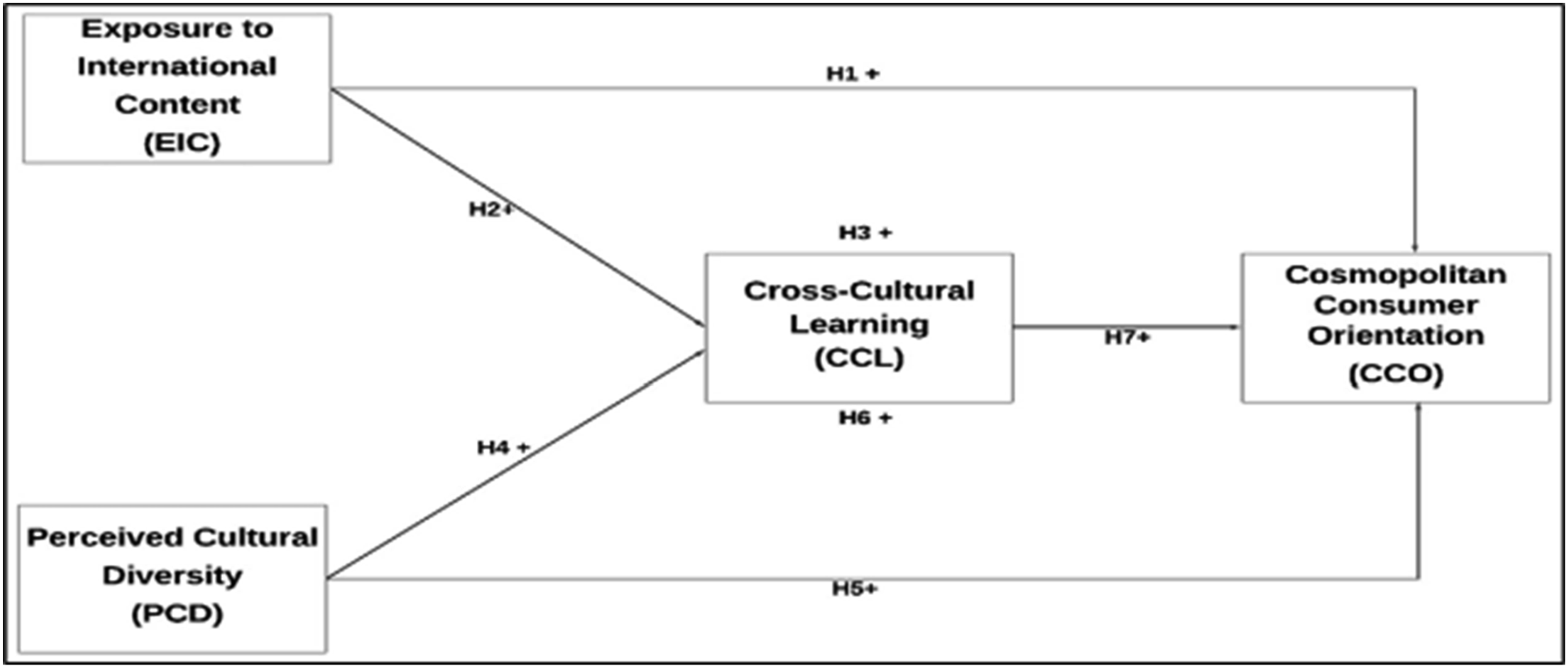
Hypotheses development
EIC
As things stand now, consumers are provided with a large number of foreign advertising and promotional messages. They happen to encounter these messages in digital media, billboards, and public spaces on a daily basis. EIC in Saudi Arabia can be considered to be a reflection of two main issues. EIC shows the visibility and frequency of international marketing. Moreover, it demonstrates that such type of marketing may affect the knowledge and openness of Saudi consumers toward global products.
Bandura’s SLT 44 can be a great source of help for those who are interested in understanding how EIC influences CCO. SLT posits that individuals watch others and they then imitate what they see. In doing so, people come to learn other values and behaviors. Global media, advertising, or international travel expose local people to cultures that are different from their own. The sense of openness and appreciation of diversity will then begin to grow where consumers start absorbing this diversity. This process is one of the main attributes of cosmopolitanism. Preferences for foreign lifestyles are likely to be shaped and this can appear in various forms. One such manifestation for this change can be seen in the local consumers’ act of modeling the behaviors they see in international contexts.45,47 Globalization and the availability of foreign brands further fuel these practices. They seem to encourage more cosmopolitan attitudes. 46
The previous literature is rich with evidences highlighting the effect of digital platforms, international trade, and travel. Studies proved that such content broadened people’s cultural horizons, and it made them also feel more connected to the world.50,62–64 Studies also showed that international content exposure played a decisive role in creating a sort of appreciation of foreign cultures.65,66 This effect was further promoted and improved by social media influencers and AI-driven personalization.67,68 In Saudi Arabia, such exposure is evident as well. The preference of Saudi consumers for global brands has grown considerably. For instance, they prefer Western perfumes and leave traditional products.12,69
Therefore, in this study, we hypothesize that EIC significantly impacts CCO. Such exposure nurtures openness. It also reshapes consumption preferences and it ultimately aligns individuals with global cultural identities. Thus, we assert that:
EIC has a significant impact on CCO.
Apart from its numerous benefits mentioned above, SLT theory can be used to explain how EIC helps build the CCL. SLT stresses that new behaviors and skills may be assimilated and acquired by individuals by observing and imitating other people. If we apply this understanding to intercultural contexts, we will have a similar conclusion. The result will be exposure to global media, and languages assists individuals in interacting effectively with people from different backgrounds and cultures. Attention, remembering, and reproduction are key learning steps that are noteworthy mentioning here. These mechanisms allow learners to internalize culturally appropriate behaviors. They deepen people’s understanding of other cultures as well.48,49
There are examples that can be found in the existing literature showing the impact of international content on cultural learning in Saudi Arabia. For example, the Korean Wave, K-dramas and K-pop, increased Saudi youth’s interest in Korean culture and language to unprecedented levels. This Korean wave has reshaped fashion, beauty, and social norms in Saudi Arabia. 70 There is also another example of cultural adaptation caused by media that we can present here. It has been found that exposure to American, Egyptian, and Indian movies has influenced perceptions of family dynamics including even women’s roles. 71 Similarly, online education platforms have exposed students to diverse content. This foreign content has fostered inclusivity and it has improved communication skills. 72
Thus, this study hypothesizes that EIC significantly enhances CCL. EIC provides opportunities for observational learning. It can be argued that this type of learning can expand cultural knowledge, reshape norms, and strengthen intercultural competence. Therefore, we propose that:
EIC has a significant impact on CCL.
The mediating role of CCL can be better proved by a framework derived from TLT. 15 TLT implies that change happens when people reflect on their experiences. EIC provides raw material for learning. That is to say, EIC is an experiential input and its function is to enable people to engage with various cultural practices. These people then use their reflective learning to build their capability of understanding and navigating other cultural differences.73,74 The role of such process is deemed instrumental. Its effectiveness can be attributed to the fact that it can convert this exposure into a bigger cultural understanding. In this sense, EIC is turned into genuine openness to global orientations.58,75
Empirical studies confirmed such type of mediation. In several previous studies, CCL was demonstrated to be able to enhance cultural intelligence, and this therefore led to cosmopolitan consumption preferences.76–78 It was also shown that global exposure encouraged openness. However, it should be made clear here that national identity and cultural sensitivity are still seen to be influential. Their influence is even larger in Saudi Arabia where people try to balance their cosmopolitan tendencies with local traditions and values.79,80 Prior literature confirmed that global exposure ought to be managed by using CCL. The result of this process will be a greater appreciation of cultural diversity and a better willingness to buy those products manufactured in foreign countries.14,81
Thus, in this study, it is hypothesized that CCL mediates the relationship between EIC and CCO. This mediating role is made by transforming global exposure into intercultural capabilities and cosmopolitan viewpoints. Consequently, we propose that:
CCL mediates the relationship between EIC and CCO.
PCD
The individuals’ perceptions of encountering a wide variety of cultural content on digital platforms is referred to what can be called “perceived cultural diversity.” This PCD includes, but is not limited to, seeing people from different cultures, various traditions, different languages, and symbols. PCD captures the awareness of consumers of multicultural content in their digital environments. It also shows the influence of this awareness on their openness and cultural sensitivity within the Saudi digital landscape.
Within SIT, 50 how PCD shapes CCO can be clearly described. SIT posits that individuals define themselves partly by the groups which they belong to. The interaction of these people with various other groups can change their attitudes and behaviors.52,53 In those multicultural environments, consumers may start identifying with global groups. They may not stick to local groups. Such change increases their willingness to be open to different cultures. It further creates a sense of preference for foreign products. Their identification with global content also underpins an important attribute of cosmopolitanism. More specifically, this identification shows the customers’ cosmopolitan mindset and that their consumption of products has gone beyond their national borders. 51
This link has been proved in previous literature. People who perceive diversity in digital platforms have better chances to broaden their cultural perspectives and their ethnocentric bias may be reduced.66,82,83 TikTok and YouTube may allow Saudi consumers to immerse in multicultural narratives; this immersion will strengthen their global identity.84,85 Similarly, diverse content sparks their curiosity. It fosters their engagement with foreign products and boosts their feelings of being connected to the rest of the world.86–88
Based on this, this study hypothesizes that PCD significantly impacts CCO. PCD promotes sense of global identification and encourages people to be open minded with a tendency for international consumption. Accordingly, we assert that:
PCD has a significant impact on CCO.
Social identity theory is a useful tool for explaining the influence of PCD on CCL. SIT puts it rightly that the perceptions of individuals regarding cultural diversity affects the way they interact with “in-groups and out-groups.” The process of constructing and reconstructing social identities in those diverse environments has a great deal of influence on what we learn. 54 Thus, the fact that cultural differences may become barriers for CCL or opportunities depends largely on how we perceive these differences.
In the previous studies, it has been demonstrated that PCD improves our cultural awareness and competence in many contexts. PCD in organizations and workplace was proved to encourage learning, widen people’s perspectives, and drive innovation. 89 As far as those people living abroad are concerned, seeing cultural differences to be opportunities helps them to learn and adopt in an effective manner. 74 However, the learning process takes time. This short-term intervention may not be sufficient and therefore more efforts are still needed. 90 Additionally, people react to this diversity differently. Their individual differences in perceiving such diversity will shape how much they learn from multicultural environments. 91
Building on this, we hypothesize that PCD significantly impacts CCL. PCD influences the formation of individuals’ identities, their intercultural interactions, and the acquisition of cultural knowledge. Therefore, we assert that:
PCD has a significant impact on CCL.
TLT 15 can justify why CCL mediates the relationship between PCD and CCO. According to TLT, exposure to cultural diversity may cause a “disorienting dilemma” where in this moment we begin to challenge our assumptions and worldviews. However, true change is said to occur only when we engage in critical reflections on these experiences and shift our perspectives. In this sense, PCD represents what can be referred to here as a stimulus. It makes people aware of diversity. CCL, however, is the reflective and interpretive process that restructures people’s thinking and what they value. It is through this sort of engagement that individuals will manage to build their capability of being intelligent and able to deal with multicultural settings.58,59 Developing such abilities is undoubtedly essential so that they can maintain a continuous cosmopolitan outlook. Importantly, when shaping CCO, CCL is more powerful than being exposed passively to international content. The point is that exposure alone does not mean that people will surely internalize what they have seen. Diversity in this case might be superficial and it may have negative effects such as perpetuating the current identity boundaries. Still, CCL is believed to promote deeper understanding, empathy, and the expansion of one’s identity and this multicultural encounter will be eventually turned into lasting openness toward international products and styles.60,61 Prior research has already highlighted this mechanism. When carefully reviewing previous literature, we find studies demonstrating that appreciation of diversity increased because of CCL. Peoples’ openness to global consumption patterns was also strengthened.51,92 Not only CCL equips individuals with the skills to interpret and engage with many cultures, but it also increases their willingness to engage with products and practices from different parts of the world. 78
Furthermore, prior studies confirmed that CCL can mediate between diversity perception and cosmopolitan orientation. Here, CCL is a pathway; it converts exposure into cultural capabilities and global attitudes. 14 Therefore, CCL can be said to be operating here as a supplementary factor and an explanatory mechanism whose function is to transform perceived diversity into cosmopolitan consumer behavior. From this discussion, we propose the following:
CCL mediates the relationship between PCD and CCO.
CCL
The process by means of which people gain knowledge, understanding, and awareness of various cultural customs, values, and practices is called cross-cultural learning (CCL). CCL in digital settings has numerous advantages. For example, it shows the way online interactions and content exposure improves our cultural sensitivity. CCL also demonstrates how online interactions make people in Saudi Arabia better at comparing cultures and navigating them effectively.
How CCL shapes CCO can be explained clearly by SIT. 50 It is posited within the framework of SIT that individuals’ understanding of themselves is partly derived from their feeling of being affiliated to certain groups and from interacting with various groups they form or reshape their identities and manners.52,53 Apart from enabling them to gain knowledge and skills, engaging in cultural learning provides people with chances to expand their identities beyond their local communities. The outcome of such engagement is that people also show flexibility as the bias toward their own cultures begins to diminish and their preference for products of other cultures begins to grow as well.14,56
In addition, people become open minded due to this CCL. Such type of learning creates a sense of “global citizenship” among customers.55,57,93 Digital platforms also speed up this process of CCL by exposing individuals to various narratives and worldviews that turn interactions into CCO.94–97 CCL makes local people feel affiliated with their counterparts in different cultures and countries of the world.98,99
Based on the above discussion, we propose that:
CCL has a significant impact on CCO.
Methodology
Sample
The population of this study consists of Saudi consumers aged 18 to 40 who are active users of digital platforms. Furthermore, the sample of Saudi university students was selected because they represent a key demographic segment characterized by high engagement with international digital content. For that, the findings of this study should be interpreted within the context of young adult consumers in Saudi Arabia. These platforms involved social media, AI-driven applications (streaming services and e-commerce apps), and global content platforms such as TikTok, YouTube, and Instagram. The participants involved in this study are those literate users who, in a meaningful way, can reflect on their experiences with AI-personalized global content including its cultural impact. Respondents were approached in multiple ways: via online platforms, university networks, and digital communities to ensure their accessibility and relevance.
Because there was no available sampling frame, a convenience sampling technique was used to gather the data needed to analyze the research model. According to Teddlie and Yu, 100 convenience sampling is a non-probability sampling method where participants from the target population are selected based on their accessibility, ease of contact, and willingness to participate. This method is frequently used in business research to address problems such as low participation rates and non-response bias. 101 Its simplicity and affordability make it feasible for researchers to quickly reach respondents with comparable demographics. 102
To reduce potential bias in data collection and ensure the validity and reliability of the scale, a two-stage pretest was carried out before the questionnaire was distributed. The first step involved a review of the questions’ purpose and wording by a number of marketing experts and scholars. Participants were asked to offer input on the question format, wording, length, and sequence in the second stage, in accordance with Perneger et al. 103 Before finalizing the questionnaire for data collection, only minor changes were made in response to their feedback, mainly rearranging the order of some questions.
Initially, 384 responses were targeted. A 55% response rate was obtained, of which 211 were received and were judged complete and appropriate for analysis. A total of 211 responses made up the final sample, which satisfied Henseler et al. 104 guidelines for performing PLS-SEM.
To calculate the statistical power and precisely estimate the minimum necessary sample size, G*Power analysis was employed. 105 The model that was developed in this study included three predictors: EIC, PCD, and CCL. With a medium effect size (f2 = 0.15), a significance level of 0.05 and a power level of 0.80, the analysis suggested that at least 43 participants were needed for this study. Fortunately, the current study collected data from 211 respondents; this number is well above the minimum number of participants. This larger sample size gives us enough statistical power to detect effects of moderate size, including even those involving interaction terms. As a result, the model is sufficiently supported to explore the direct and moderation effects with confidence.
The analysis of the demographic information revealed that most respondents were aged between 18 and 24, with a percentage of 87.7%, with equal participation from both males and females in the study. In other words, male participation reached about 51%, while female participation reached about 49%. Finally, the findings revealed that most respondents had bachelor’s degrees, with a percentage of 53.8% followed by diploma degrees of 28.3%.
Measurement
This study uses a deductive research approach, positivist paradigm, and is quantitative in nature. The measurement tool was based on specific items from the literature that had previously been validated. EIC was measured with 3 items adapted from AGCC Scale. 20 PCD was measured with 4 items adapted from Ferraro et al. 106 and Zhao. 107 CCL was measured with 4 items adapted from Shadiev et al.96,108 CCO was measured with 3 items adapted from AGCC Scale.20,43 Responses were evaluated using a five-point Likert scale ranging from 5 (strongly agree) to 1 (strongly disagree). In this study, the authors adapted measures following established translation and back-translation procedures. The purpose of this was to ensure cross-cultural validity and to make sure that the measures worked well in the Saudi context. Bilingual academic experts revised the Arabic version for the sake of ensuring two essential requirements: semantic equivalence and contextual relevance. A pilot test was conducted with Saudi university students to assess that the questions were clear and culturally appropriate. The validity and reliability of the measurement were later confirmed using standard PLS-SEM criteria, including factor loadings, composite reliability and other important ratios and tests.
Data analysis and results
PLS-SEM via SmartPLS was used in analyzing the data of the study. 109 This tool is preferred because of its user-friendly interface and its ability to model latent constructs through PLS-SEM and covariance-based-structural equation modeling (CB-SEM) techniques. 110 Analyzing the collected data using PLS-SEM requires two analysis steps: measurement and structural model. The first step is the measurement model analysis, and the key tests implemented there are reported below.
Measurement model assessment
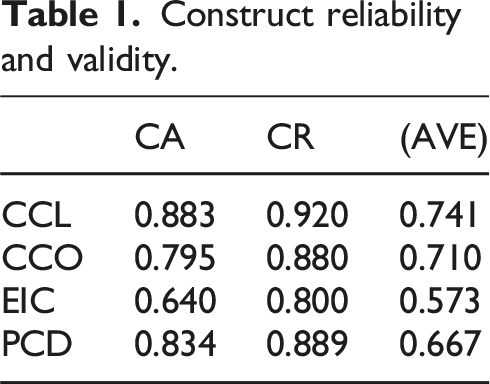
Construct reliability and validity.
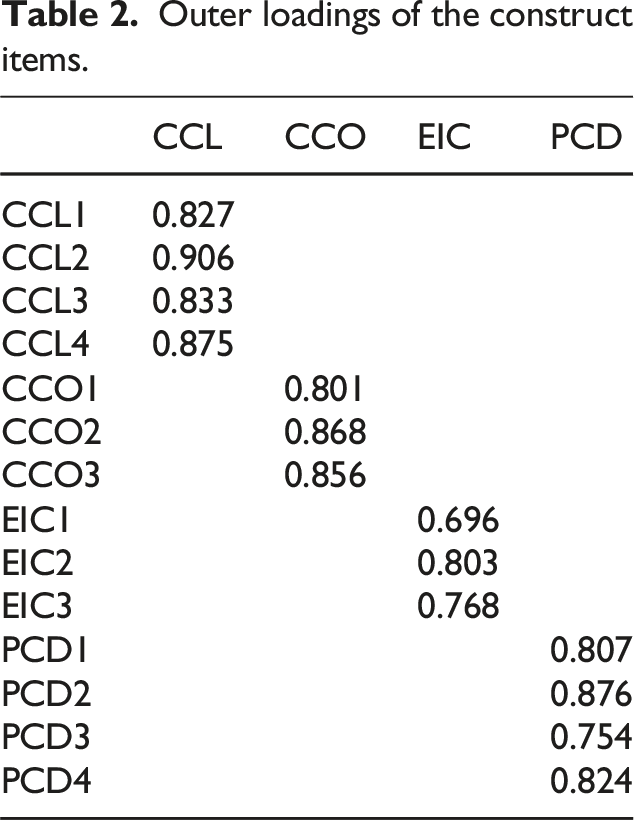
Outer loadings of the construct items.
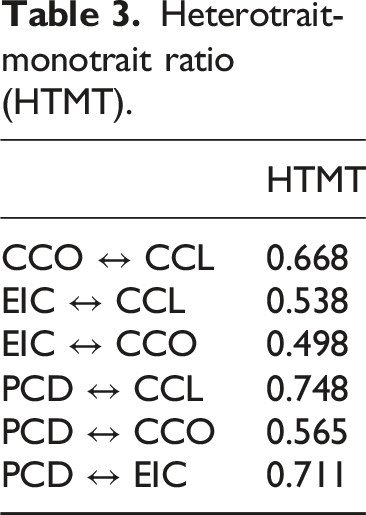
Heterotrait-monotrait ratio (HTMT).
Correlations among the variables of the study.
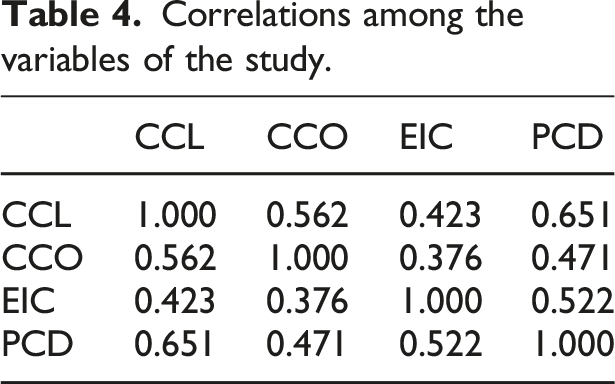
Table 4 indicates a strong positive correlation between CCL and PCD, with (r = .65), followed by a moderate correlation between CCL and CCO, with (r = .56).
Structural model
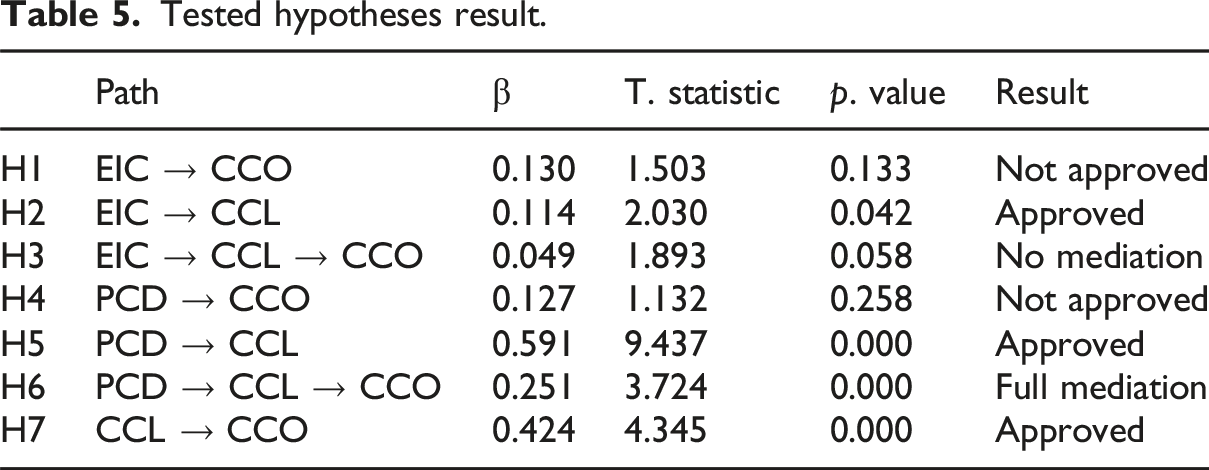
Tested hypotheses result.
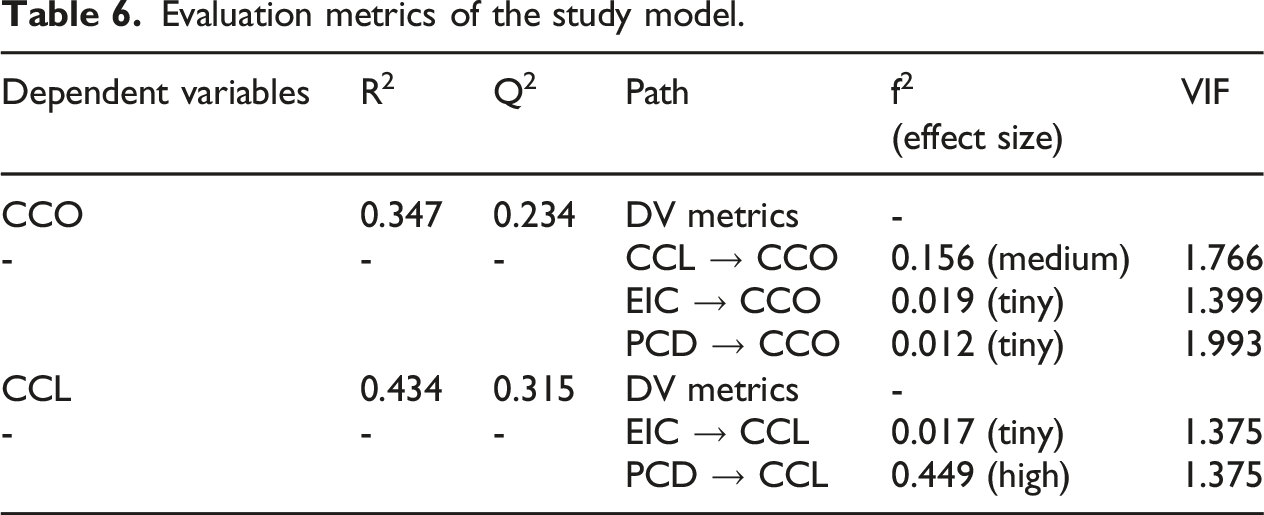
Evaluation metrics of the study model.
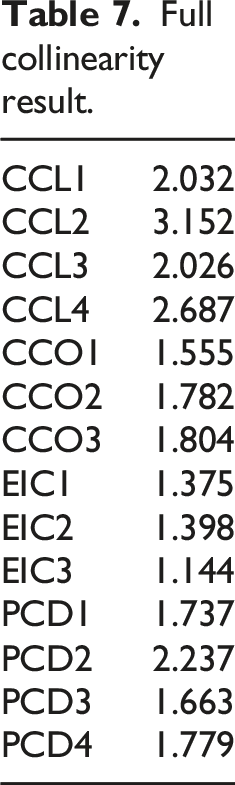
Full collinearity result.
PLS predict results (out-of-sample predictive assessment).
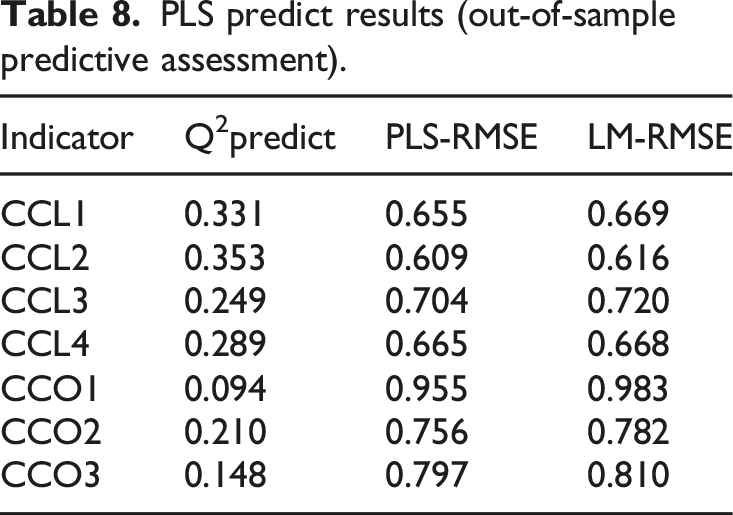
Figure 2 reports the different paths for the study’s model, along with the factor loadings of the items. Paths and structural model.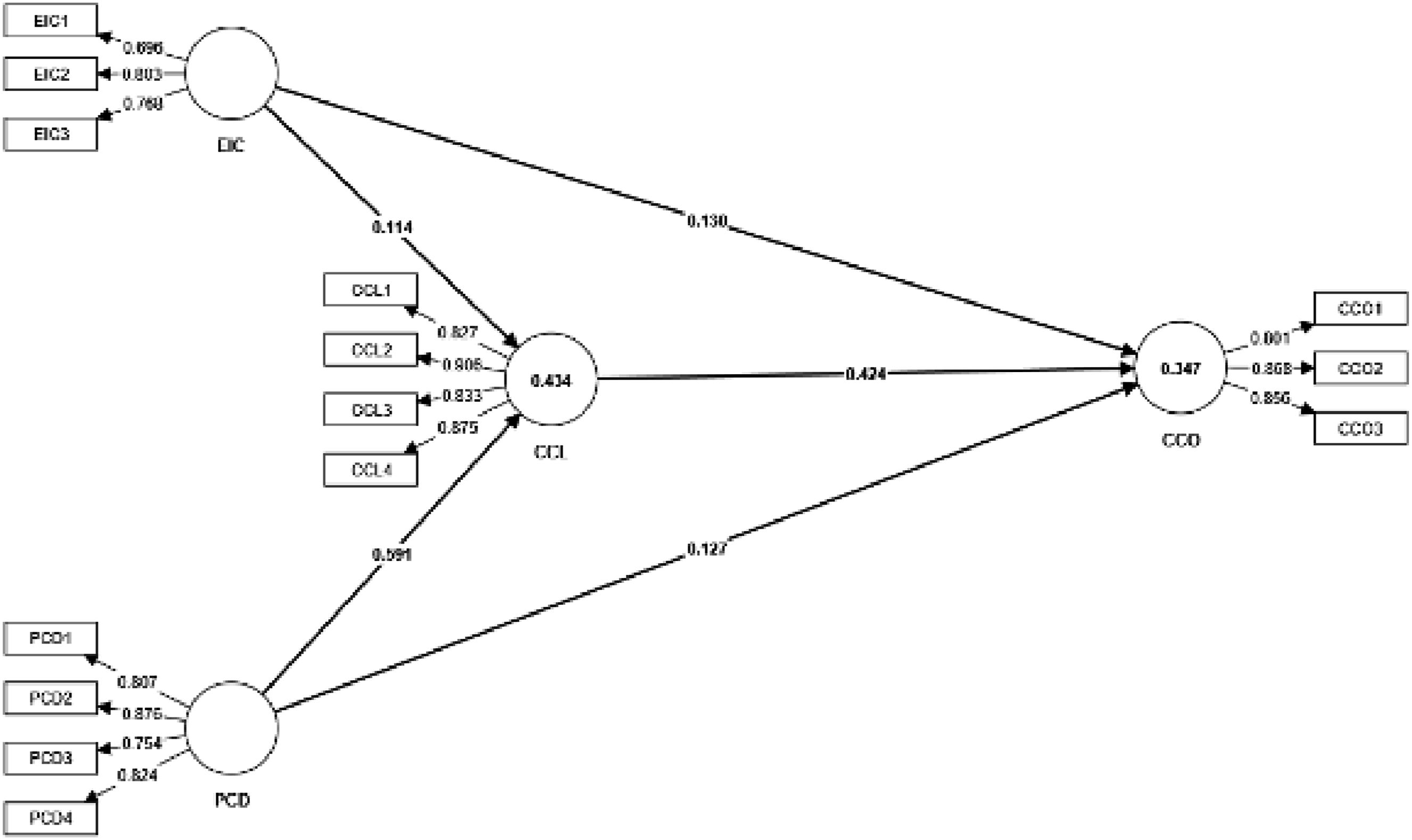
Discussion
Explaining how digitally experienced cultural environments shape Saudi consumers’ CCO was the main purpose of this study. When explaining this relationship, the emphasis was placed on CCL and its role. To carry out this inquiry, we chose an environment where global content is almost everywhere. Such content is widespread in multiple ways including social media, online shopping and AI-driven features.2,3 The Vision 2030 has added value to this setting due to its role in the acceleration of digital adoption. 5 All the findings we obtained in this study affirm a significant result regarding cosmopolitanism in Saudi Arabia. The results revealed that this cosmopolitanism was less a direct result of being exposed or seeing diversity. The findings showed that it was more an active learning process with digital platforms facilitating this learning.8,9
The H1 proposing the impact of EIC on CCO was not supported. It was observed that simply encountering international advertising and content did not lead to CCO. As already highlighted in our discussion of SLT, exposure is a necessary condition, but it is insufficient. The observation made by young costumers when seeing content must be accompanied by internalization as well as modeling so as to influence their attitudes. 44 Prior research similarly showed that the effects of globalization were filtered by local meanings and identity, so the links between global exposure and cosmopolitanism can be said to vary across different contexts.20,21 This result has been highlighted in previous studies that stressed the necessity of looking beyond how digitalization affects business and that we need to consider how individuals in Saudi Arabia make meaning from it.41,42
H2 was supported confirming that exposure led to learning. The result of this second hypothesis is exactly what SLT expects to happen when people pay attention to rich cultural content, remember it and apply what they have seen.45,47 Examples from Saudi Arabia show this pathway to be true. The Korean Wave and numerous film traditions have stimulated interest in languages, changes in aesthetics, and social reinterpretations among young people.70,71 Meanwhile, online education has extended intercultural communication skills. 72 These examples match with previous studies showing that digital technologies broaden access to global lifestyles and ideas.1,4
H3, which proposed the mediation of CCL between EIC and CCO, was not supported. The absence of mediation suggests that although the experiential inputs from exposure were educational, they did not transform into CCO in a consistent manner. Reading this from TLT standpoint, it can be said that the reflective processes needed for change may have been incomplete. Young consumers in Saudi Arabia may need more time and opportunities to be motivated to move from learning to actual change of identity. 15 This interpretation is consistent with prior research that indicated that experience alone may not lead to change if there is no reflection or application accompanying it. 13 In the context of this study, we can say that exposure provided concrete experience to young Saudi consumers, but the cycles of reflection and practical application may have been incomplete, or they may have been for the most part constrained by the commitments of local identity. This finding of H3 echoes evidence that the strength of the relationship between adopting to global culture and cosmopolitanism varies to a large extent by social and cultural settings.19,21 It also highlights the need for us to specify when digital interactions progress from awareness to identity change. 22 The result we got for H3 was that the indirect effect associated with H3 was marginally non-significant (p = 0.058). Although it did not meet the conventional 0.05 threshold, its being close to significance suggested a possibly weak mediating effect. This finding may indicate that the mediating mechanism is marked by a feature of operating differently within the young Saudi student context. That sort of mediation is possibly due to certain factors such as culture, development, and exposure.
With regard to the fourth hypothesis, it was not supported. Perceiving platforms to be culturally diverse did not directly yield CCO. Depending on how identities are built or made important, SIT argued that diversity can either push people to identify with global groups or remain loyal to their groups.50,54 Seeing diverse content can spark curiosity and reduce bias.66,83,86 However, our result implies that to change their identity, young Saudi consumers need more than being exposed to content. They specifically need additional learning and reflection before they change their consumption habits. 51
Regarding the fifth hypothesis, the result demonstrated that this hypothesis was supported. Consistent with SIT, perceiving diversity appears to activate intercultural engagement, widen frames of reference and stimulate learning.52,53 In the organizational and expatriate research, it is likewise shown that diverse environments encourage the acquisition of knowledge and cultural cleverness when seen to be opportunities.74,89 The regular exposure to mixed narratives in Saudi digital spaces, such as TikTok and YouTube, builds the everyday intercultural skill of young consumers.84,85
The strongest finding of this study was the support of H6 as full mediation. This is the main contribution of the current study: diversity shaped CCO only through learning. TLT explains this result well. TLT anticipates that changes in perspective follow the critical reflection and meaning reconstruction both of which are prompted by challenging cultural encounters. 15 We find in prior research evidences documenting this and showing how transformative and experiential learning build cultural intelligence and more inclusive outlooks.58–61 Our finding aligns with the calls raised by previous studies concerning the importance of linking perceived platform diversity to learning outcomes instead of simply assuming that it directly changes attitudes. 23
Finally, the seventh hypothesis was supported. Learning itself predicted CCO. The support for H7 aligns with SIT’s view that identities can expand beyond local affiliations via the exchange of knowledge and contact with other groups.14,55–57 Digital experiences that encourage comparative understanding and cultural sensitivity appear to cultivate openness and curiosity and these are central to CCO.94–97 This agrees with prior evidence confirming that digital learning helps younger people in the newly emerging markets to form their cosmopolitan identities. 22
Theoretically, the findings reinforce a type of cosmopolitanism view being based on learning in Saudi Arabia. It brings together SLT, SIT, and TLT. Exposure and diversity are inputs; identity change follows from structured learning and reflection. Managerially and based on the above findings, platforms and brands should design AI-personalized features that scaffold cultural understanding and not just increase the amount of content.16–18 Policy and education stakeholders can leverage digital curricula and partnerships with content creators to convert multicultural content into meaningful CCL. This is consistent with Vision 2030s human-capital goals. 5
Implications
The findings of this study detailed in the preceding discussion provide valuable contributions at both theoretical and practical levels. Theoretically, they improve our understanding of how CCL drives CCO. Practically, the findings highlight strategies for businesses, policymakers, and educators. The purpose of these strategies is to foster cultural intelligence, digital engagement, and global mindsets in the evolving marketplace of Saudi Arabia.
Theoretical implications
This study contributes to the advancement of our theoretical understanding of how digital cultural environments shape CCO. The study puts emphasis on CCL making it at the center of this process. As shown in the findings discussed above, exposure does not cause cosmopolitan orientation to happen; this CCO rather comes from learning.
First, the rejection of a direct connection between EIC and CCO in this study provides support for the view of SLT proving that observation is insufficient. In order to form their attitudes, people should internalize what they encounter. 44 This finding poses a challenge to the previous assumption that exposure is an outcome by framing exposure as a starting point for learning. Additionally, the support for the hypothesis proposing that EIC enhances CCL is significant. This endorsement strengthens the proposition of SLT that repeated encounters with varied cultural cues expand our knowledge and intercultural skills. 45 Yet, the absence of mediation that we observed in H3 in which learning was not translated into CCO highlights that something more like reflective transformation is still needed. 15 This nuance adds theoretical depth in that it suggests that contextual constraints, such as local identity anchors, may limit the TLT’s explanatory power in new markets. Third, the findings regarding PCD confirm the SIT’s argument. Like SIT, the findings of this study assert that diversity influences attitudes through identity processes. PCD promoted learning but not direct cosmopolitan orientation, stressing that it is necessary that group identity is reconstructed before consumption preferences shift.50,54
Most important of all, the full mediation of PCD and CCO by CCL validates the point of view of TLT. Diversity fosters cosmopolitanism if it is processed through reflection and the change of consumers’ perspectives. 15 This result connects identity and learning theories, showing how situational diversity is transformed into cosmopolitanism via deeper learning processes.
Finally, the strong effect of CCL on CCO is also important. Such effect confirms SIT’s view that identities expand through intercultural engagement and it at the same time supports TLT in framing learning as a key mechanism of cosmopolitanism. Theoretically, this study places emphasis on the position of CCL treating it as the central pathway and it therefore reframes cosmopolitanism in Saudi Arabia as a phenomenon that is more driven by learning than by exposure.
Practical implications
The current study has important practical implications for marketers, policymakers, and educators in Saudi Arabia. The findings show that CCO is not a direct result of international content exposure or perceived diversity but develops through CCL. For businesses, this means that marketing strategies should go beyond displaying global products and, as an alternative, they should focus on facilitating cultural learning experiences. For instance, brands can design interactive campaigns, co-creation platforms, and AI-personalized recommendations that encourage deeper engagement with cultural stories, practices, and values. Such approaches help consumers move from this surface-level exposure to a kind of reflective learning that leads to openness as well as cosmopolitan orientations.
Regarding to policymakers, the study sheds light on the necessity that they align digital change initiatives under Vision 2030 with those goals concerning cultural learning. Digital platforms such as TikTok and YouTube have already exposed consumers to diversity, but the results suggest that exposure must have been combined with structured learning opportunities. It is the job of policymakers to encourage the creation of partnerships between cultural organizations, technology firms, and universities to create digital literacy training and programs aiming to build intercultural capability. These initiatives would not only support consumer cosmopolitanism but also build the cultural intelligence needed for Saudi citizens to thrive in an interconnected economy.
The role of educational systems is also necessary to be made use of, so universities are advised to include cross-cultural digital learning modules and make them part and parcel of their curricula. The reason why they should include such learning is to help students develop intercultural sensitivity, global awareness, and critical reflection competencies that translate into more cosmopolitan consumption and better participation in global markets.
The policy recommendations inspired by this study are summarized as in the following: 1. Encourage platforms to provide localized and culturally diverse content that promotes learning instead of focusing on passive viewing. 2. Support intercultural exchange initiatives within digital spaces to help young people develop a global identity. 3. Embed cultural intelligence training into students’ digital literacy strategies.
All of the efforts mentioned above can turn Saudi Arabia’s digital growth into being a vehicle for cultivating global mindsets. The achievement of this goal aligns with the objectives of the kingdom’s Vision 2030, which highlights the importance of human capital and economic diversification.
Limitations and future directions
Although the current study provides valuable insights into how digitally mediated cultural environments shape CCO through CCL, a number of limitations must be acknowledged here. The cross-sectional survey design restricts the ability to draw conclusions about cause and effect. This limitation highlights the need that longitudinal or experimental approaches should capture how cosmopolitan orientations develop over time. Moreover, when relying on convenience sampling with 211 responses, we may run the risk of limiting generalizability. We therefore recommend that future research should adopt probability or stratified sampling to reflect Saudi Arabia’s diverse population. There is also the issue concerning self-reported measures that may introduce bias. In this respect, integrating behavioral data or mixed-method approaches could enhance validity. We also acknowledge that the sample is highly skewed toward students aged 18–24 (87.7%), limiting its representativeness and the application of its findings on the entire Saudi populations. For this reason, future studies should consider a sample size that better reflects the population. In other words, future studies may examine varied samples of groups having different ages and socioeconomic backgrounds. This will enhance national representativeness. The authors also acknowledge that the study relies on self-reported survey data and consequently responses might be influenced by social desirability bias. Participants may have provided answers that align with socially favorable norms, particularly regarding openness to global cultures. Although anonymity was assured to reduce this effect, future research may incorporate procedural remedies such as social desirability scales or multi-source data collection. Due to the cultural specificity of the Saudi sample, future research should examine additional mediators like “cultural intelligence” and global consumer identity. This will help clarify how EIC and PCD foster cosmopolitanism across various contexts. Moderators including technology readiness, digital literacy, and national identity strength may explain when global engagement promotes openness versus boundary reinforcement. The comparative and multi-country studies that may use representative sampling will strengthen generalizability and they can surely deepen our understanding of digital cosmopolitanism in the diverse markets of the world of toady.
Conclusion
This study contributes to the existing research on cosmopolitanism by combining three theories, namely, social learning theory, social identity theory, and transformative learning theory to show the pivotal role played by CCL that served as a tool by which digital cultural environments shaped CCO in Saudi Arabia. The findings demonstrated that cosmopolitan attitudes are not created by EIC and PCD. These factors are found to be working through learning. More specifically, they work via what can be called a reflective process whose job is to convert awareness of diversity into real openness and identity expansion. The learning-centered perspective that was revealed in this study redefines our understanding of cosmopolitanism in emerging markets. It shows cosmopolitanism to be a process being influenced by how people engage with and reflect on digital content while paying little, if no, attention to the question of how much content consumers are exposed to. Finally, it is worth noting here the study, with its focus on CCL as a main pathway, provides a clearer and more focused framework for those who are interested in understanding the way the behavior of global consumers develops in the digitally connected societies.
Footnotes

Author contributions
Conceptualization: WA, ASA, YHA, and MA; methodology: WA and ASA; resources: WA, ASA, YHA, and MA; data curation: WA, ASA, YHA, and MA; data collection and data analysis: WA and ASA; writing—original draft preparation: WA, ASA, YHA, and MA; writing—review and editing: WA, ASA, YHA, and MA; supervision: WA and ASA; project administration: WA and ASA. All authors have read and agreed to the published version of the manuscript.
Funding
The authors disclosed receipt of the following financial support for the research, authorship, and/or publication of this article: This work was supported by the Deanship of Scientific Research, Vice Presidency for Graduate Studies and Scientific Research, King Faisal University, Saudi Arabia (KFU261608).
Declaration of conflicting interests
The authors declared no potential conflicts of interest with respect to the research, authorship, and/or publication of this article.