






Abstract
Background
Teacher burnout is a global issue that negatively affects educators, student learning outcomes, and the overall effectiveness of educational systems. Despite extensive research on burnout worldwide, burnout among higher education teachers in China remains underexplored, particularly within its unique cultural and institutional context.
Purpose
This study aims to examine the effects of perceived organizational support and psychological capital on teacher burnout and to investigate the mediating role of teacher motivation in these relationships.
Research Design
A quantitative research design was employed using a cross-sectional survey approach. Structural equation modeling (SEM) was utilized to test the proposed relationships among the study variables.
Study Sample
The study involved 235 teachers from higher vocational colleges located in Hebei Province, China.
Data Collection and/or Analysis
Data were collected through a structured questionnaire and analyzed using SmartPLS 4.0.9.6. Partial Least Squares Structural Equation Modeling (PLS-SEM) was applied to evaluate the measurement and structural models.
Results
The findings revealed that perceived organizational support and psychological capital significantly influence teacher burnout. Furthermore, teacher motivation was found to mediate the relationships between perceived organizational support and teacher burnout, as well as between psychological capital and teacher burnout.
Conclusions
The study highlights the importance of organizational support, psychological capital, and teacher motivation in reducing burnout among higher education teachers. These findings provide valuable insights for educational institutions and policymakers seeking to enhance teacher well-being and improve the sustainability of the higher education system.
Keywords
Introduction
Occupational burnout is considered a severe risk within the spectrum of work-related stresses, especially in fields that entail a great deal of responsibility and/or emotional investment. The teaching profession, in particular, is especially precarious, due to the multidimensional nature of the profession, requiring emotional, cognitive, and physical investment.1–3 Employees in the education sector, and especially teachers, are exposed to multiple stressors absent from other work environments. The combination of significant stressors from workload, emotional, and teaching expectations increase the risk of burnout.1,3 This risk is particularly high in situations characterized by systemic issues such as inadequate resources, and inconsistent policies, where the imbalance increases the strain on teachers. In response to the relationship between the risk on the teachers and the quality of the education, teacher burnout has gained attention as an important issue of study.
Teacher burnout is defined as a psychological response to prolonged work-related stress, usually manifested as emotional fatigue, an increase in cynical detachment from work, and a decline in feelings of self-efficacy. 4 Beyond its detrimental effects on teachers’ psychological well-being, burnout has broader implications for the sustainability of the teaching workforce. Specifically, burnout contributes to teacher absenteeism, turnover intention, early retirement, and attrition from the profession, thereby intensifying the shortage of qualified teachers and undermining workforce stability.5,6 In this regard, burnout affects the availability of teachers by reducing retention and discouraging long-term engagement in the profession.
Simultaneously, burnout also undermines the quality of teaching and educational outcomes. Teachers experiencing burnout are more likely to demonstrate reduced instructional engagement, emotional detachment, lower commitment to students, and decreased innovative teaching behaviors. In recent years, studies have further associated burnout with “quiet quitting” behaviors, in which teachers psychologically disengage from their professional responsibilities while remaining formally employed.7,8 Such conditions negatively influence classroom climate, student academic achievement, and students’ emotional well-being, ultimately weakening educational effectiveness and institutional performance. Consequently, teacher burnout should not merely be viewed as an individual psychological issue, but rather as a systemic challenge affecting both the sustainability and quality of educational systems.
Research on teacher burnout has shown that its effects, as well as the level of teacher burnout, can greatly differ depending on the particular level of education and type of educational institution. For example, teachers in vocational and higher education face particular challenges that arise from the nature of their role, the position they occupy within the organization, and the structure of the institution. These challenges are especially important in the context of a country such as China, which has a particularly complex and multi-layered educational system.
The analysis performed by Persson et al. 9 shows that, compared to other countries, teachers at Chinese universities report the greatest degree of work-related stress. This phenomenon is most severe in the case of higher vocational colleges, which are among the largest institutions in the Chinese higher education system. Work-related stress and burnout among higher vocational teachers are exacerbated by a high workload coupled with a lack of colleagues. Zhang et al. 10 report that 86% of higher vocational teachers suffer from burnout, which is significantly higher than the 51% burnout rate of university teachers.
Out of the total number of higher education institutions in China, higher vocational colleges comprise 50%, representing 1,547 schools, showcasing their prominence in the higher education scene in China. 11 Though there is a consistent increase in the number of these colleges, teaching staff’s research and innovation performance showcases inconsistency, and some of the performance indicators have a downward trend. For example, there is a documented decline in the academic productivity of the teaching staff of these institutions, as the number of research papers published in 2024 fell from 64,938 to 59,607. Likewise, the percentage of recipients of research and technological awards also decreased from 1.8% in 2023 to 1.1% in 2024. 11 These statistics point towards a worrying decline in the performance of teaching staff in critical areas of higher education, notwithstanding the growing vocational education system.
It is imperative to analyze educator burnout in higher vocational institutions considering the disproportionate amount of stress institutional demands have in comparison to the dwindling educator output. In studies conducted in the Chinese context, research has focused on primary and secondary school educators, leaving the higher vocational education sector unexamined in terms of unique stressors and adaptive strategies of higher vocational educators.12–14 Additionally, most literature provides scant consideration to the impact of organizational context, especially perceived organizational support, on educators’ burnout. The role of psychological capital has been documented with evidence in prior studies to buffer burnout.1,12,15 However, this is the case of Chinese context and higher vocational education particularly where this psychological resource has been largely overlooked. In spite of the evidence regarding psychological capital and perceived organizational support to buffer educator burnout, the need analysis with regard to the mechanisms psychological capital and organizational support have to burnout, warrant substantial attention.
Therefore, the study aims to better understand and respond to educator burnout in higher vocational colleges in the People’s Republic of China. This research attempts to integrate relevant theories like the JD-R model and Self-Determination Theory (SDT) to analyze the individual, organizational, and motivational elements from micro to macro perspectives. The predicted results are likely to yield some positive achievements both theoretically and practically regarding higher vocational educators’ well-being and professional work in China. This work strives to assist educational policymakers and practitioners in addressing issues facing teachers and students, as well as addressing issues that are transferrable from the Chinese context to other countries.
Literature review and development of hypotheses
The Job Demands and Resources Framework (JD-R) and Self-Determination Theory (SDT) have been utilized in explaining teacher burnout and its evolving stages.16–18 These studies have explained burnout as stemming from high work demand and low work resources, and personal and organizational support systems. Other recent studies that focus more on motivation have applied some motivation-related components to the JD-R framework in order to develop more elaborated explanations for the processes of burnout.19,20
Overall, the antecedents of burnout have been shown to be predominantly related to work factors. 21 Within the JD-R theory, organizational support is perceived as a critical job resource that can mitigate the negative consequences of job demands. This is true for places like China, where relational cohesion and support from the institution are of paramount importance. Edú-Valsania et al. 21 also stressed the importance of understanding what personal factors, together with certain situational factors, might increase or decrease the expression of burnout. Researchers have also documented a number of personal and situational antecedents of teacher burnout.22–26 On the basis of the existing literature, the current study combines both job resources and personal resources to explore their effects on teacher burnout in the context of teachers in China.
While earlier studies often use the Job Demands–Resources (JD-R) framework to describe burnout, there is still some theoretical vagueness about the internal psychological processes that bind workplace factors to employee well-being. Although Self-Determination Theory (SDT) presents a strong framework for motivation, the empirical attempts to combine JD-R and SDT remain few and far apart in the Chinese educational framework. Teacher motivation and burnout studies in the Chinese context are few and often limited to specific groups of educators, like young teachers27,28 or English teachers.27,28 These studies are important, but do not consider the specific role related and goal-related challenges that higher vocational teachers face.1,27,29 The high role diversity and expectation can make the burnout motivation dynamic within this group of teachers more complex. This body of work situates the Chinese vocational education context and leaves an unfinished picture in this context of how motivation relates to burnout in this group of teachers. Thus, this study intends to combine JD-R model and SDT to analyze the organizational and individual factors that contribute to burnout in higher vocational teachers in China.
Job Demands–Resources Framework and Self-Determination Theory
Interaction with work environments play a major role with regards to an employee’s well-being, performance, and even burnout. The Job Demands–Resources (JD-R) model helps explain these interactions. Demerouti and colleagues 30 built the JD-R model based on the Job Demands-Control and Effort-Reward Imbalance models by factoring in newer models related to the work environment and psychological response. In their model, workplace stressors and/or stimuli involved in the work environment are classified as job demands and job resources. Job demands refer to emotional exhaustion caused by sustained psychological and emotional efforts while job resources refer to employees lacking the proper emotional and psychological resources (i.e. autonomy, and professional development). The JD-R model will be used to analyze factors contributing to teacher burnout in China. Job resources will be used to analyze the work-related factors while personal job resources will analyze the individual factors and how these factors contribute to the burnout of the teacher. Job motivation will be used to measure the burnout of the teacher by acting as the mediating variable that connects resources to the burnout of the teacher.
Additionally, this study is also supported by Self-Determination Theory (SDT). In relation to organismic theory, SDT argues that the individual is inherently capable of constructive self-integration and self-regulation towards order, and connection to the environment. However, this intrinsic motivation is not spontaneous. It requires supportive input from surrounding socio-cultural contexts. In this way, SDT provides a structure to understand the interaction of personal and situational variables in motivation and psychologically. Thus, the present study is anchored on the SDT framework and proposes teacher motivation as a mediating variable to examine the influence of personal and situational factors on the level of motivation and teacher’s psychological state, especially burnout.
Perceived organizational support
Studies show that among teachers, social and personal factors are less relevant than organizational factors when predicting burnout. 2 In the Job Demands–Resources (JD-R) model, organizational support (POS) is viewed as a primary job resource that replenishes job-related energy and helps boost the motivation and commitment of employees. Employees perceive organizational support when they feel that the organization takes into account their efforts and is concerned about their job-related well-being. This support can be demonstrated through the provision of resources, information, support, training, career advancement opportunities, and flexible jobs. 31 Based on the organizational support theory, such perceptions substantially alter employees’ attitudes, behaviors, and work outcomes. 32
The body of literature is uniform in finding a negative correlation between POS and teacher burnout. For example, Anomneze et al. 33 established that POS lessened emotional exhaustion and depersonalization of teachers in secondary schools in Nigeria. Also, Yew and Ramos 34 found that in the case of Malaysian academics, burnout was negatively influenced by POS and in this case, age operated as a moderator. Further, Rizvi et al. 35 POS was shown to reduce burnout and in addition, increase teachers’ innovative behavior, with thriving at work serving as a mediator. Organizational support as a strong predictor of burnout symptoms has also been found in university teachers and Silva and Oliveira 36 researched this among Brazilian teachers.
When viewed together, the findings show a pattern of more positive perceptions by educators of their organization’s support the lower their likelihood of burnout. Support from one’s organization and positive perceptions of one’s organization’s decision-making has been shown to result in greater individual satisfaction and lower burnout levels among educators. 37 While these findings are important, the literature has gaps, such as, a lack of multidimensional assessment of POS and a lack of attention to different teaching demographic groups, especially higher vocational education teaching. Due to the restrictions and peculiar circumstances of higher vocational education teaching in China, there is justification for examining this relationship more comprehensively in a more representative context.
Higher vocational teachers have more serious mental health problems and the pressure on vocational college teachers comes more from the pressure borne by vocational education itself, and is relatively less affected by social changes. This means that researching resources that are more relevant to the organizational level has more practical significance for addressing burnout among vocational college teachers, such as organizational support. 38 Therefore, the following hypothesis is proposed:
Perceived organizational support has a significant effect on teacher burnout.
Psychological capital
Combatting burnout has led a considerable amount of attention towards an individual’s Psychological Capital (PSYCAP). Positive Organizational Behavior focuses on an individual’s PSYCAP, encompassing 4 core psychological traits of an individual 39 —hope, efficacy, resilience, and optimism. These traits allow individuals to overcome workplace challenges, while adapting to changes. PSYCAP acts as an internal resource to manage stress and resist burnout as guided under Conservation of Resources (COR) Theory.40,41
There is great deal of empirical evidence that supports psychological capital symptoms and burnout. Demir and Demir, 42 Ferradás et al., 43 and Zhang et al. 44 found that emotionally exhausted teachers, as well as teachers who exhibit a lack of individual accomplishment and depersonalization, show higher levels of psychological capital. Positive capital also impaired Freire et al. 45 burnout, as it is a large-scale study that reduces the three dimensions of educator burnout. PSYCAP stressed on the importance of educator well-being. Similarly, Anjum et al. 46 indicate burnout frequency and intensity for South-Asian primary school teachers is predicted negatively by the South-Asian primary school teachers’ psychological capital. PSYCAP’ s multiple studies Hansen et al. 47 and Cheung et al. 48 have acknowledged PSYCAP concerning burnout, emotional expression, and subjective well-being. These studies have shown evidence of capital having a role in burnout and quality of professional life and job satisfaction of teachers. 49
Regarding the position of China, primary and secondary school educations have been the focus of the majority of studies mentioned above1,44,50,51 and attest to the negative relationship of psychological capital and burnout, while it is clear primary and secondary school teachers in China have been experiencing burnout to an concerning level. Having to endure performance evaluations, research-oriented job position, and heavy teaching assignments is what inevitably leads to burnout. While the evidence for this phenomenon in higher education is lacking, it is assumed higher vocational and university educators are experiencing burnout; however, it is clear they are experiencing burnout at a more extreme level than educators at other levels of teaching.
Considering the robust theoretical groundwork and the unwavering empirical support, it is plausible to assume that psychological capital will also be instrumental in alleviating burnout among higher vocational teachers in China. Teachers who have high levels of hope, resilience, self-efficacy, and optimism are more likely to answer stressors in an adaptive manner and sustain their professional engagement. Thus, the following hypothesis is put forward:
Psychological capital has a significant effect on teacher burnout.
Teacher motivation
Teacher motivation is widely recognized as a central construct in educational psychology because it influences teachers’ professional engagement, persistence, and psychological functioning. In the present study, teacher motivation specifically refers to the intrinsic values and contextual factors that drive individuals to enter, sustain, and invest effort in the teaching profession, thereby influencing the intensity of their work engagement, persistence in teaching-related activities, and commitment to professional responsibilities. 20 Rather than focusing narrowly on motivation for specific instructional tasks or professional skill acquisition, this study conceptualizes teacher motivation as a broader form of sustained professional motivation that supports teachers’ continued involvement and psychological investment in teaching.
Among the various theories of motivation, Self-Determination Theory (SDT)52,53 has become one of the most influential frameworks in teacher motivation research.23,54 SDT posits that the fulfillment of three basic psychological needs—autonomy, competence, and relatedness—promotes autonomous motivation, psychological well-being, and sustained professional engagement. In educational settings, teachers who perceive sufficient organizational and psychological resources are more likely to experience self-determined motivation, which enhances persistence, work investment, and resilience against occupational stress.
The integration of SDT with the Job Demands–Resources (JD-R) model provides a useful framework for understanding how motivation operates in relation to teacher burnout. From this perspective, organizational resources such as perceived organizational support and personal resources such as psychological capital can satisfy teachers’ psychological needs and strengthen autonomous professional motivation.16,55 Consequently, motivated teachers are better equipped to cope with job demands, maintain engagement in teaching activities, and reduce susceptibility to burnout.
Motivation has been shown to protect people from burnout. For instance, Sato et al. 20 reported that teacher motivation predicted burnout positively among EFL teachers in Chile. This means that motivated teachers are less emotionally drained and are more accomplished. Motivation results from an interaction between job demands and job resources, with adequate resources increasing motivation and lack of resources increasing burnout. 56 Also, previous studies suggest that perceived organizational support increases autonomous motivation, which decreases burnout. 57 Karatepe 58 also recognized intrinsic motivation and self-efficacy as substantial individual assets that connect organizational support to emotional results. According to Lin, 59 work motivation, as a partial mediator, strengthens the relationship between organizational support and teachers’ work engagement. This depicts work motivation as playing an indirect role in lessening burnout.
Motivating teachers is vital for maintaining successful systems of education. Research shows teacher motivation is positively impacted by psychological capital. 60 Self-determined motivation is positively correlated with job satisfaction and psychological wellness.61,62 Furthermore, teachers with greater psychological capital, exhibit greater intrinsic motivation and less amotivation. 63 Consistent with this, Zewude and Hercz 64 reported that work task motivation completely mediates the impact of psychological capital on teacher well-being of higher education teachers.
Guided by the theoretical and empirical evidence, this research utilizes teacher motivation as an intervening variable to analyze the impact of organizational and personal assets on teacher burnout. With this, the hypotheses that follow, and the research framework is illustrated in Figure 1. Research framework.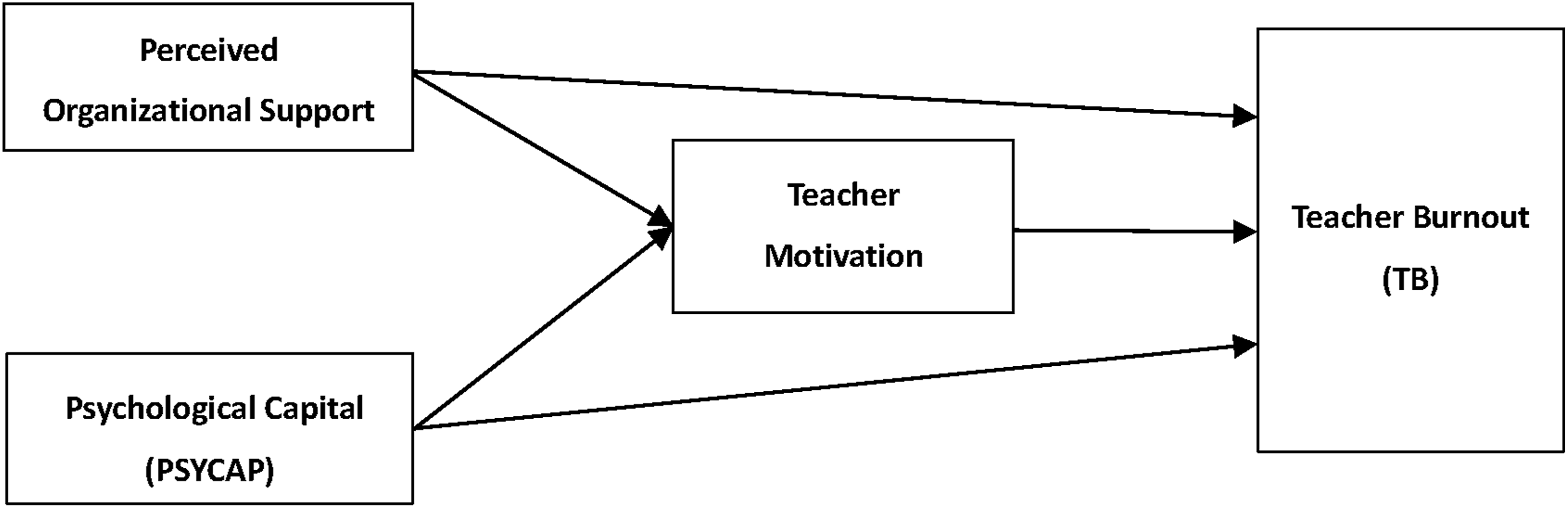
Teacher motivation has a significant effect on teacher burnout.
Perceived organizational support has a significant effect on teacher motivation.
Psychological capital has a significant effect on teacher motivation.
Teacher motivation has a significant mediating effect between perceived organizational support and teacher burnout.
Teacher motivation has a significant mediating effect between psychological capital and teacher burnout.
Methodology
Research design and approach
The purpose of the research is to determine which elements contribute to educator burnout in China’s higher vocational institutions. The researcher employed a quantitative approach to illustrate the direct correlations between perceived organizational support, psychological capital and educator burnout and the impact of the burnout on educator motivation and the relationships between the independent and dependent variables. The researcher also executed a cross-sectional analysis to examine the phenomenon of educator burnout during a particular period of data collection and analysis.
This study employed a quantitative research methodology, using a structured questionnaire to collect data and statistical analyses to test the relationships among the variables. Such an approach provides an objective and systematic means of examining the proposed associations. This process further adds to the body of knowledge through empirical analysis, and possibly revising or extending the current theory on educator burnout in higher vocational education. The researcher commenced with the relevant theory, constructed the hypotheses, obtained a sample, and validated the results.
Data collection and data analysis
This present study employed a multi stage, consisting of combination of probability and non-probability sampling. In the first stage, stratified sampling was applied based on geographical stratification by zones, namely, Southern, Central, and Northern in Hebei province. This geographical stratification ensured proportional representation of teachers operating in different area level contexts, which may differ in terms of urban density, college conditions, and educational and cultural environment. In the second stage, purposive sampling was applied through explicit selection criteria to ensure respondent relevance. Only teachers who were active, and who were currently engaged in teaching activities were included in the study. The application of purposive sampling ensured that all respondents possessed direct and relevant experiential knowledge aligned with the objectives of the study, particularly in relation to motivation behavior and burnout. To mitigate potential biases and enhance the credibility of the findings, the researcher will adopt several strategies to introduce elements of randomization and mitigate potential biases inherent in convenience sampling. One strategy involves location/time randomization, wherein the researcher randomly selects the specific locations or periods where respondents will be recruited. Another approach is interval-based selection, which establishes a systematic interval for selecting respondents. Finally, after data collection, researchers can employ post-stratification weighting techniques to adjust the sample to reflect the target population’s characteristics better.
It should be clarified that participants in this study were not pre-screened or clinically identified as belonging to a “burnout group” prior to data collection. Consistent with the majority of burnout research in educational settings, teacher burnout in the present study was conceptualized as a continuous psychological construct rather than a categorical clinical condition. Therefore, the study examined variations in burnout levels among higher vocational teachers using a validated self-report measurement scale.
Although some individuals may not explicitly recognize or acknowledge experiencing burnout, validated burnout instruments are designed to assess burnout-related symptoms indirectly through dimensions such as emotional exhaustion, cynicism, and reduced professional efficacy. Accordingly, the use of standardized measurement scales helps improve the reliability and validity of burnout assessment in non-clinical educational populations.
Using the G*Power analysis it was determined that a sample size of 153 (N = 153) was needed to attain a statistical power of 0.95 with a significance level of 5% and an effect size of 0.15. Thus, the sample size constraint being over 153 meets the conditions for the desired statistical power, effect size, and minimum sample size proposed by the power analysis. Research data was obtained through a survey questionnaire; analysis of the data was performed on Smart PLS 4.0.9.6. The sample size for this research consisted of 235 teachers from higher vocational colleges in Hebei, China.
Findings and discussion
Demographic profile
Demographic profile of respondents.
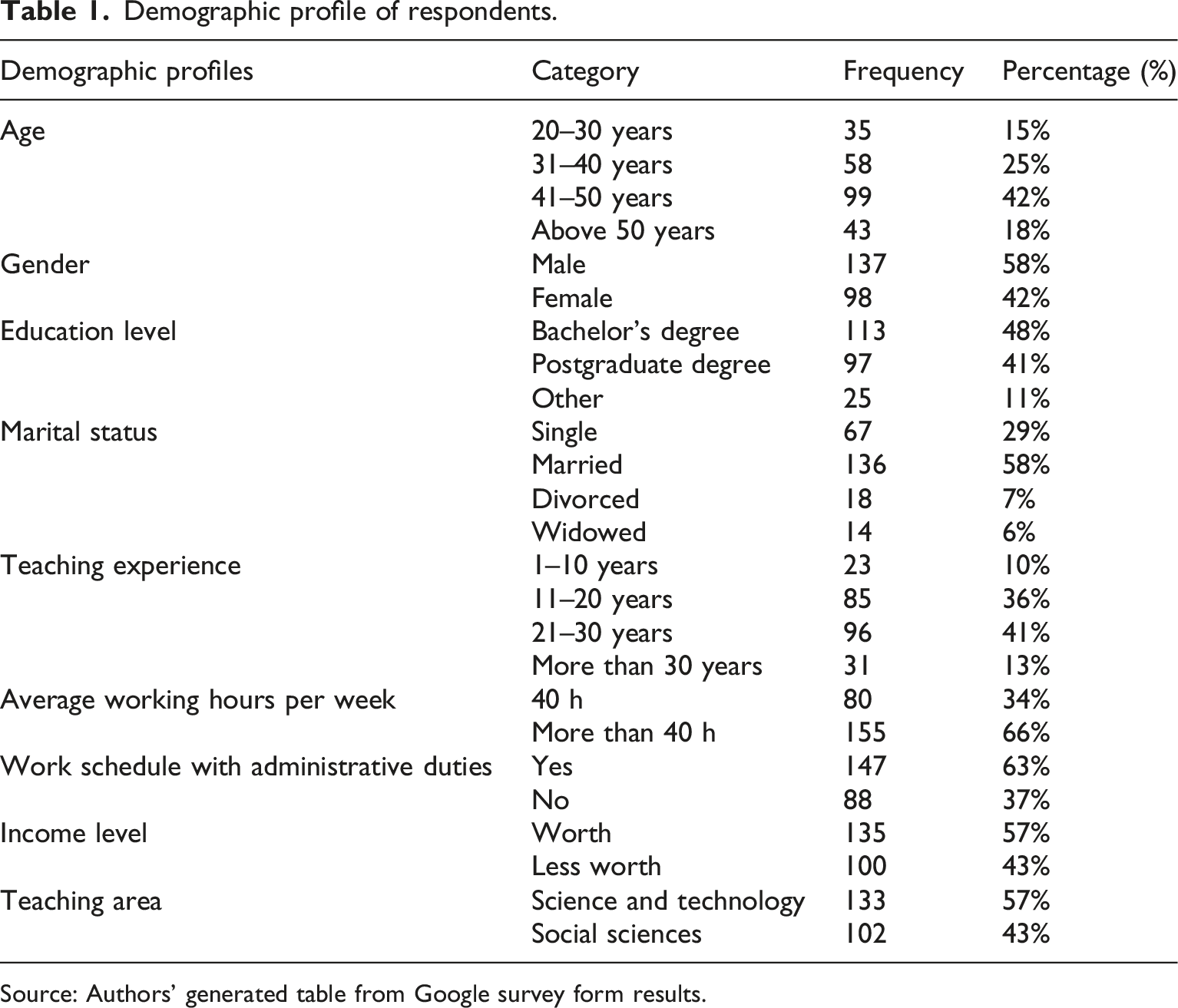
Source: Authors’ generated table from Google survey form results.
The demographic characteristics of respondents provide an insight into key features of higher vocational college teachers involved in this research study. Considering the age distribution, the majority of participants, about 42% of the sample, aged in the range of 41–50 years. This means that the majority of participants had reached the mid-career stage, where considerable teaching experience and professional anchors have been obtained. The age group of 31–40 years formed the second largest proportion with 25%. This illustrates a healthy representation of early to mid-career teachers. 18% of the sample were respondents aged above 50 years, while 20–30 years old respondents formed the smallest group of 15%.
Considering gender, the sample comprised 58% male and 42% female respondents. In terms of educational qualifications, 48% of the respondents had a bachelor’s degree, and 41% had a postgraduate degree, which points to a highly qualified sample. The rest of the respondents, 11%, had other qualifications, which could consist of a mix of professional qualifications and diplomas in the vocational teaching area. Most of the 58% sample that was married could be a result of the age concentration in the 41 to 50 age brackets. Younger or early career teachers may be represented by the 29% that were single. Teaching experience data indicate, for 41% of respondents, a range of 21 to 30 years of experience, which is consistent with the concentration of middle-aged respondents. The second largest group is formed by teachers with 11 to 20 years of experience, and they represented 36%.
People with more than 30 years of experience made up 13% of the sample, while teachers with 1 to 10 years made up the smallest group 10%. In terms of average working hours, 66% worked more than 40 h, while 34% worked about 40 h per week. 63% of respondents have work schedules that involve administrative tasks, while 37% do not. About income 57% of the respondents viewed their income as worth, while 43% viewed it as less worth. Most respondents were from the field of Science and Technology, which constituted 57% of the sample, while 43% were from the field of Social Sciences.
From the demographic analysis, it can be seen that the sample consisted of predominantly experienced teachers who were middle-aged and held senior administrative responsibilities. This was appropriate and provided a relevant sample to the objectives of the study.
Assessment of measurement model
Outer loadings score.
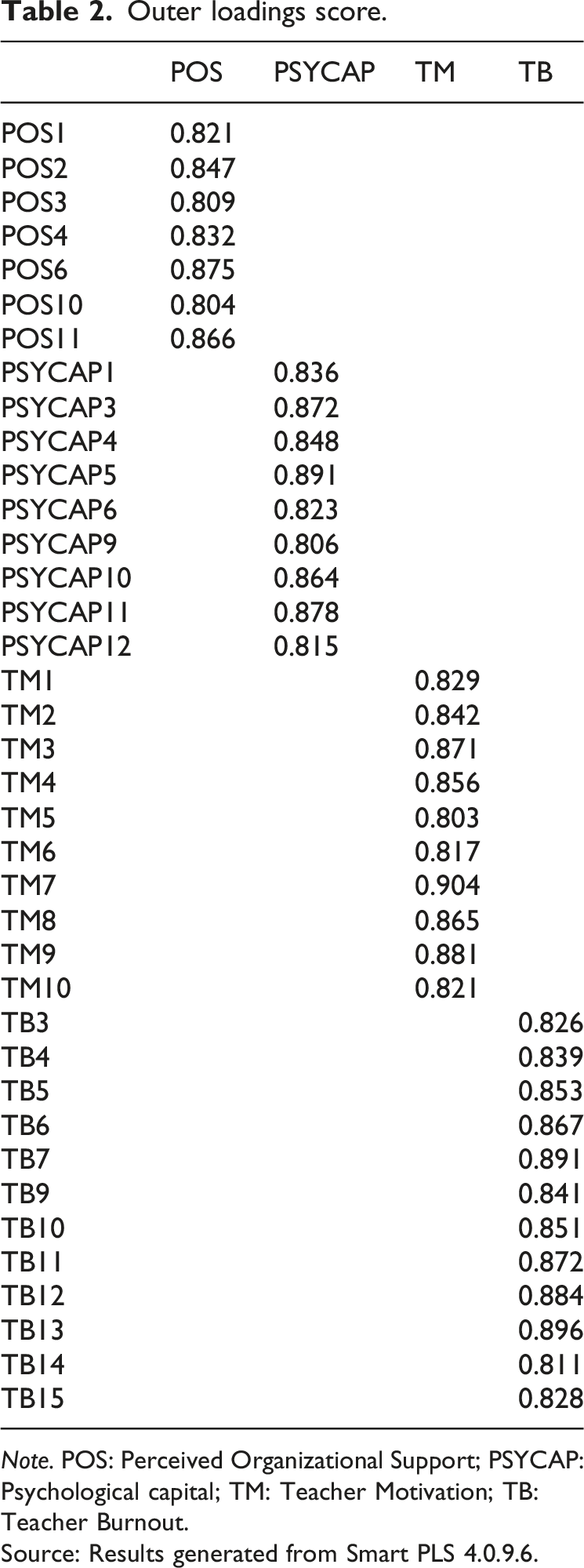
Note. POS: Perceived Organizational Support; PSYCAP: Psychological capital; TM: Teacher Motivation; TB: Teacher Burnout.
Source: Results generated from Smart PLS 4.0.9.6.
The first step taken to evaluate the reliability of the measurement model was to determine the internal consistency using composite reliability (CR). For structural equation modeling, CR values above 0.70 are considered to have reliable consistency. 65 Composite reliability is preferred to Cronbach’s alpha because it does not make the tau-equivalence assumption. This assumption requires all indicators to have the equal loadings which is not realistically the case. 65 This result indicates that all constructs in this study exceeded the required threshold for CR, internal consistency is confirmed.
Reliability and convergent validity scores.
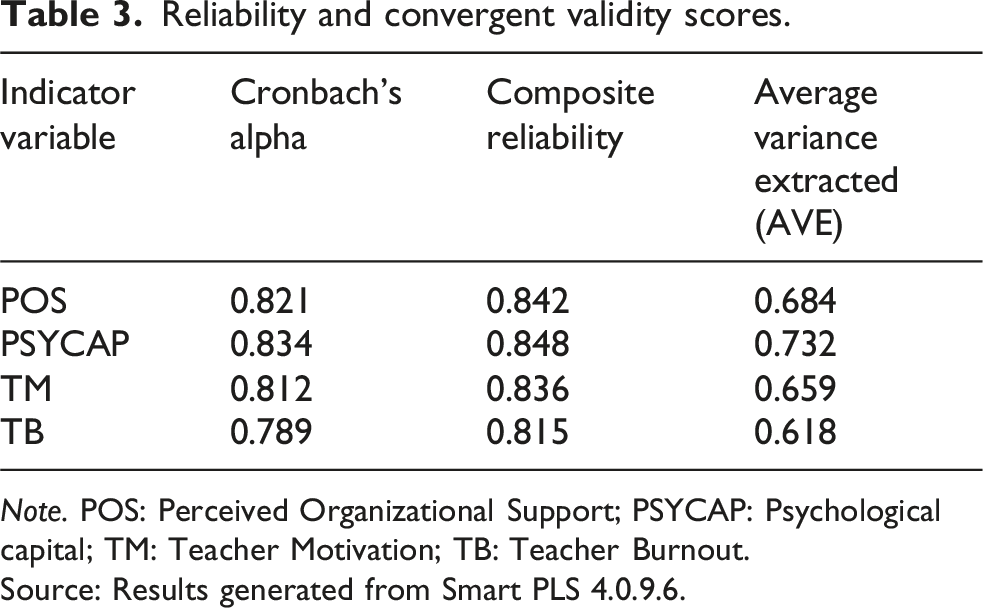
Note. POS: Perceived Organizational Support; PSYCAP: Psychological capital; TM: Teacher Motivation; TB: Teacher Burnout.
Source: Results generated from Smart PLS 4.0.9.6.
Fornell-Larcker criteria.
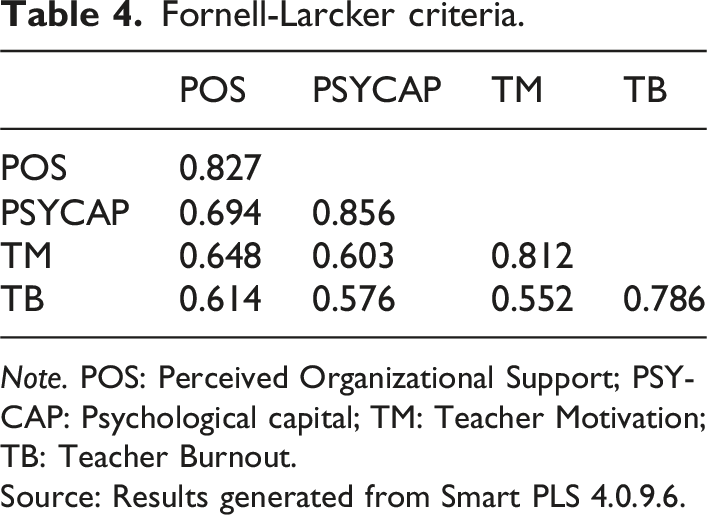
Note. POS: Perceived Organizational Support; PSYCAP: Psychological capital; TM: Teacher Motivation; TB: Teacher Burnout.
Source: Results generated from Smart PLS 4.0.9.6.
HTMT ratio.
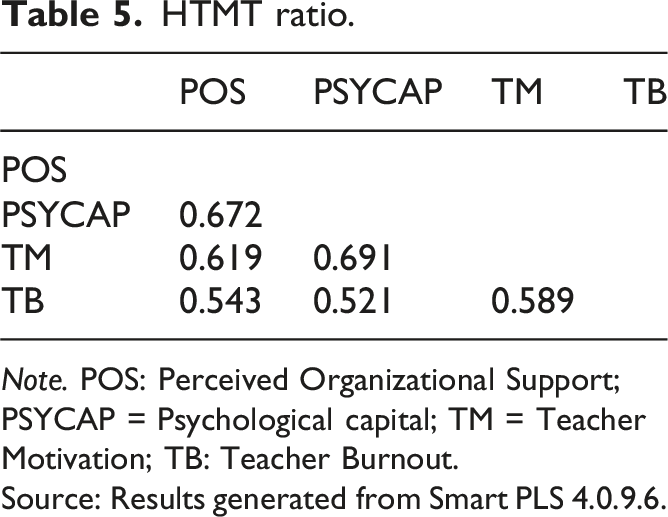
Note. POS: Perceived Organizational Support; PSYCAP = Psychological capital; TM = Teacher Motivation; TB: Teacher Burnout.
Source: Results generated from Smart PLS 4.0.9.6.
Assessment of structural model
In Partial Least Squares analysis, model evaluation of the structures, or the inner model, is performed only after establishing the measurement models. The structural model evaluations seek to explain the predicted associations of the constructs in the research framework. 65 This includes analyzing collinearity amongst the constructs, evaluating and determining the impact and direction (R2) of the path coefficients, and assessing the effect sizes through f2, as well as evaluating predictive relevance through Q2.
VIF scores.
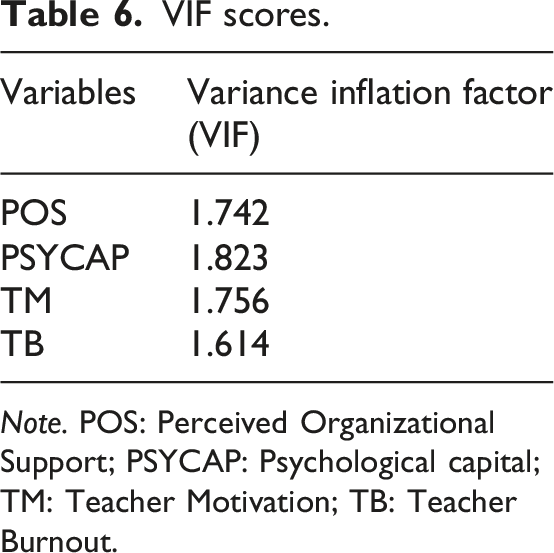
Note. POS: Perceived Organizational Support; PSYCAP: Psychological capital; TM: Teacher Motivation; TB: Teacher Burnout.
Using the PLS SEM approach of the Construct Equation Modeling, the first hypotheses was tested. Path coefficients are estimated, and these indicate the presence and magnitude of relationships between the constructs. A bootstrapping approach was used to determine the significance of the direct relationships. Bootstrapping resampling calculates the variance and consistency of the parameters by drawing new samples from the original dataset. Bootstrapping is a technique used for PLS SEM, and because it does not depend on distributions, it is preferred for PLS SEM. Consistent with the claims of Hair et al., 65 the researcher used 5000 bootstrap samples to get more accurate estimations of the path coefficients.
The evaluation of direct path coefficients was done by evaluating their t-statistics and their p-values. p-values and t values are used to determine significance. A two-tailed t test with t values of 1.96 and above is accepted for 0.05 significance.
69
A p-value of 0.05 or less is used to determine a relationship to be significant. Figure 2 illustrates the direct path relationships examined in the study, while Table 7 presents the results of the direct path analysis. Specifically, Table 7 reports the path coefficients (sample estimates), sample means, standard deviations, t-statistics, and p-values for each hypothesized relationship, enabling the assessment of their significance and strength. PLS Mediation Structural Mode. Note. POS: Perceived Organizational Support; PSYCAP: Psychological capital; TM: Teacher Motivation; TB: Teacher Burnout. Direct path coefficients results. Note. POS: Perceived Organizational Support; PSYCAP: Psychological capital; TM: Teacher Motivation; TB: Teacher Burnout.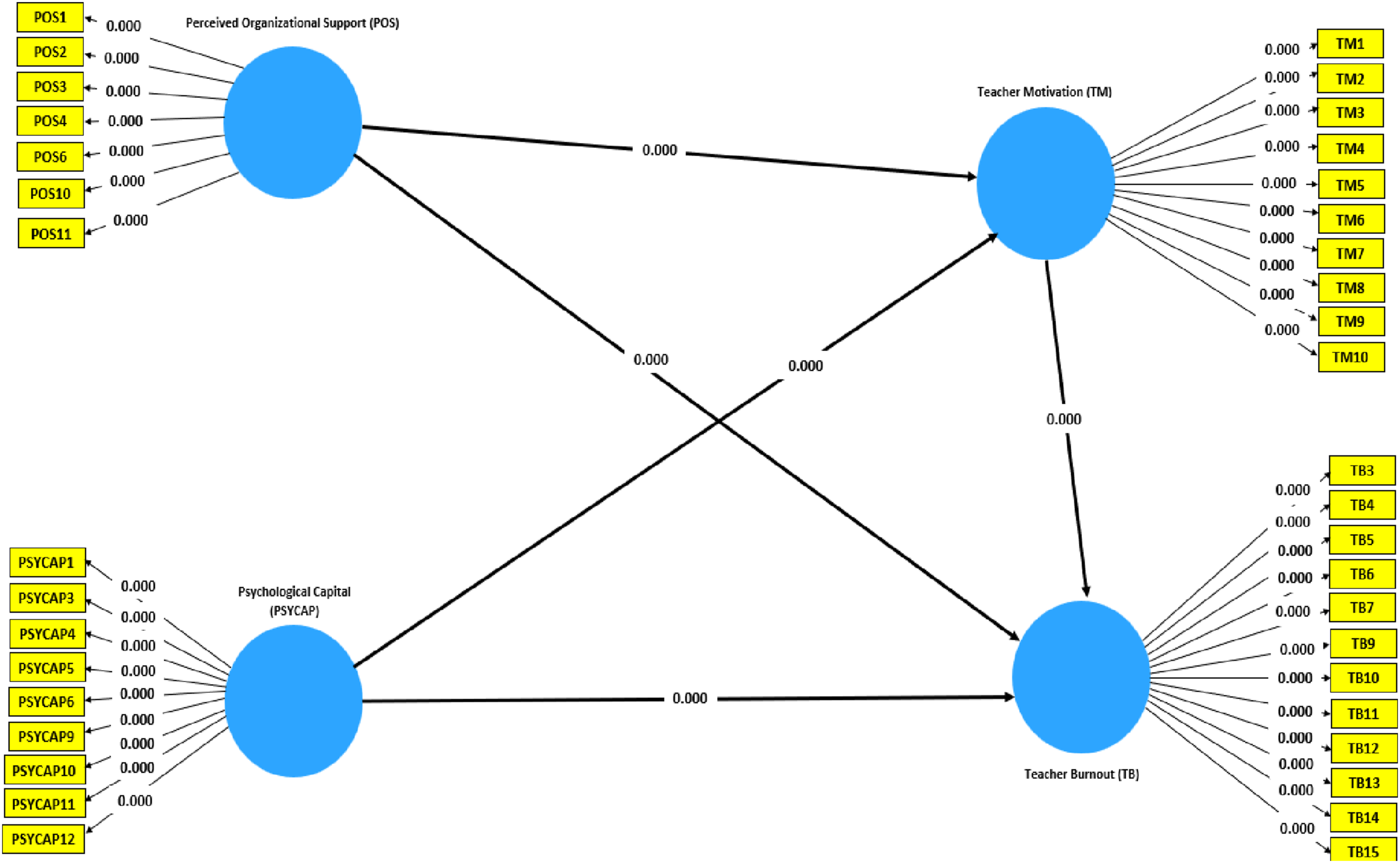
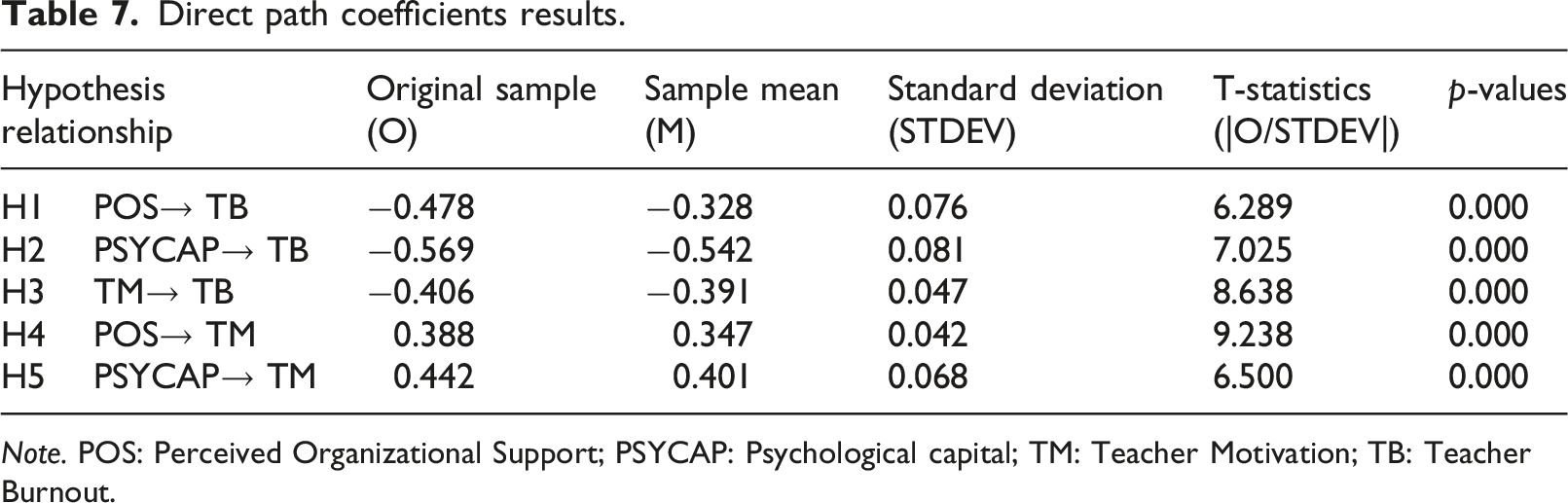
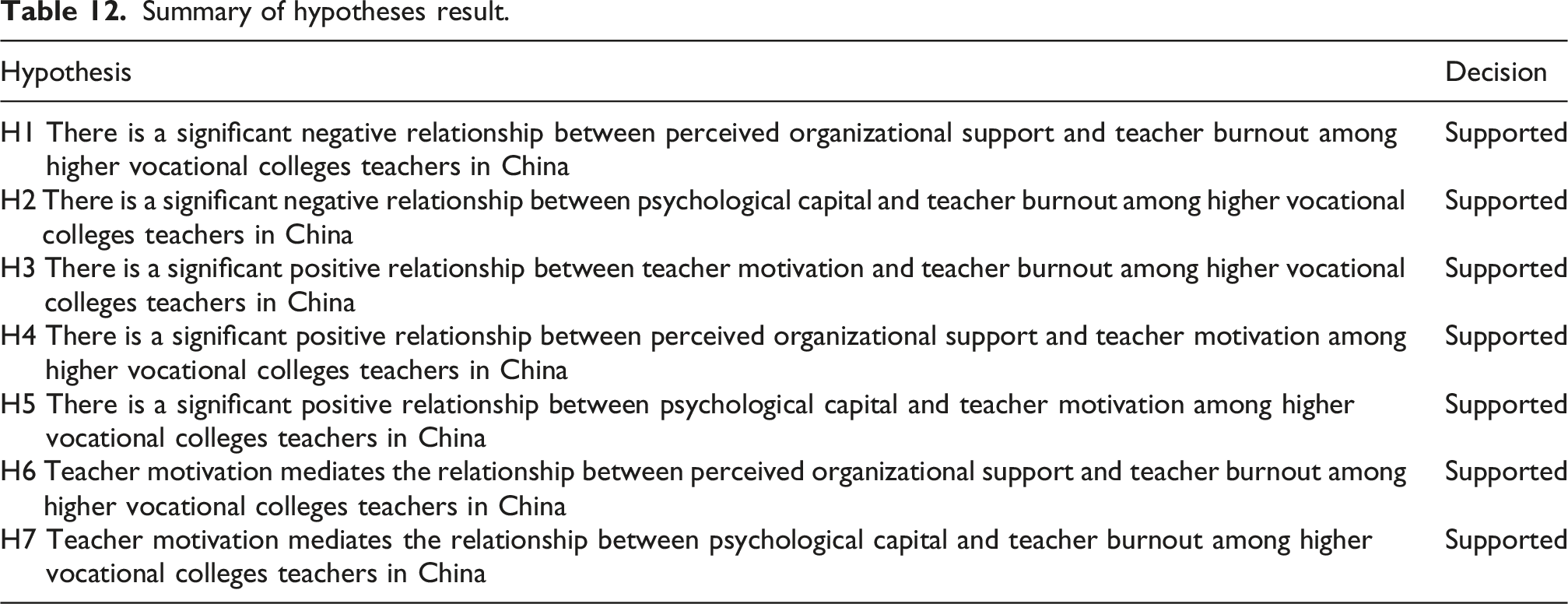
The p-value associated with each path coefficient indicates whether a hypothesis for a study is accepted or rejected. For a hypothesis to be considered accepted, its p-value needs to be <0.05. In reference to Table 6, all study hypotheses p-values are <0.05, meaning all study hypotheses are accepted. Therefore, H1, H2, H3, H4, and H5 are accepted.
Mediating effects assessment of teacher motivation
Having established direct effects, the next step is the testing of mediation effects. Carrión et al. 70 suggest that mediation occurs when an independent variable affects a dependent variable indirectly, through a mediator. Carrión et al. 70 explain that mediating effects could only be proven when the t-value, calculated from the bootstrapping outcome, showed that the indirect effect concerning (a) x (b) was significant.
Hair et al. 65 claim that bootstrapping is one of the best non-parametric resampling methods for estimating the mediatory effect. Hair et al. 65 also state that, in contrast to previous authors, the most up-to-date researchers following Preacher and Hayes 71 advocate bootstrapping for the indirect effect in order to obtain the mediation effect(s). The bootstrap method, therefore, is appropriate for both simple and complex mediator models and suits PLS-SEM because it imposes neither distributional assumption about the variables or sample size.65,71
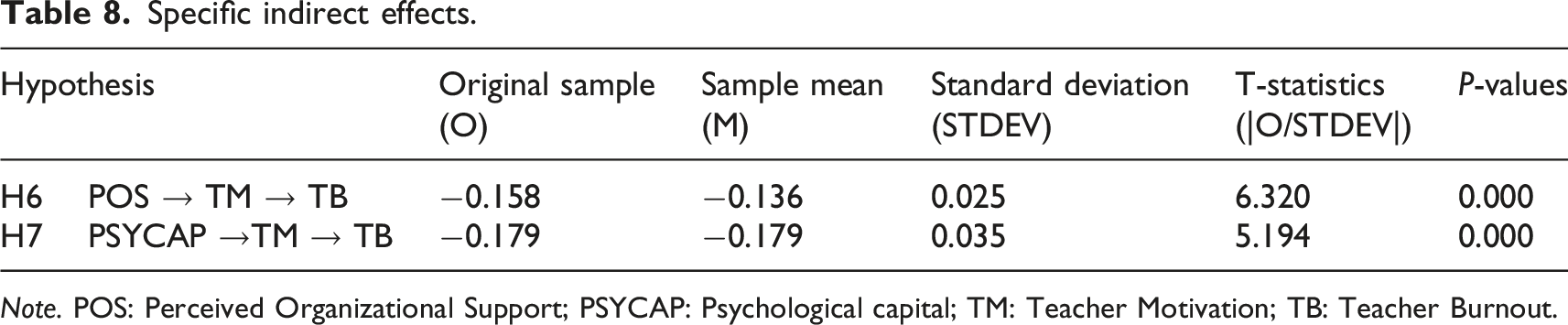
Specific indirect effects.
Note. POS: Perceived Organizational Support; PSYCAP: Psychological capital; TM: Teacher Motivation; TB: Teacher Burnout.
Hypothesis (H6) of the study proposed that TM mediates the relationship between POS and TB. The findings related to this hypothesis, as shown in the specific indirect effects between POS→TM→TB with a T-statistic of 6.310 and a p-value of 0.000 (refer to Table 8), support this hypothesis. The p-value, below the standard significance level of 0.05, suggests that the POS→TM→TB relationship is statistically significant. Therefore, H6 is supported.
Hypothesis (H7) of the study proposed that TM mediates the relationship between PSYCAP and TB. The findings related to this hypothesis, as shown in the specific indirect effects between PSYCAP→TM→TB with a T-statistic of 5.194 and a p-value of 0.000 (refer to Table 8), support this hypothesis. The p-value, below the standard significance level of 0.05, suggests that the PSYCAP→TM→TB relationship is statistically significant. Therefore, H7 is supported.
Coefficient of determination (R2)
Coefficient of determination (R 2 ) value.
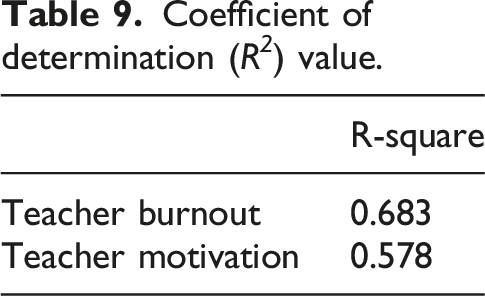
Table 9 indicates the coefficient of determination (R2) values to provide insight into how well the predictors of Person-Organizational Support, Psychological Capital, and Teacher Motivation explain the variance in the teacher burnout model. For teacher burnout, the R2 value of 0.683 indicates that 68.3% of the variance in this behavior is accounted for by the predictors (Person-Organizational Support, Psychological capital, and Teacher Motivation). This is a strong value, demonstrating that the predictors included in the model significantly influence teacher burnout. Similarly, for Teacher Motivation, the R2 value of 0.578 signifies that 57.8% of the variance is explained by Person-Organizational Support and Psychological Capital. Although slightly lower than the R2 for teacher burnout, this is still a moderate-to-strong level of explanation, highlighting the relevance of the predictors in understanding Teacher Motivation.
Effect size (f2)
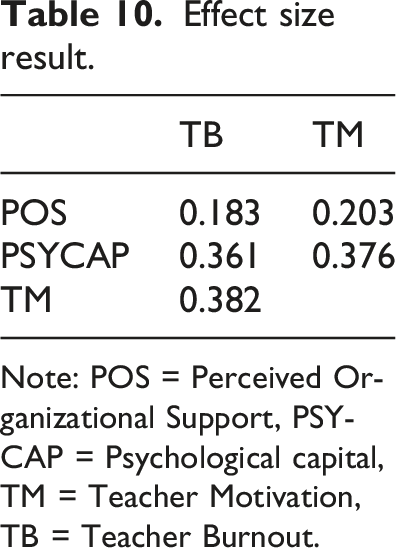
Effect size result.
Note: POS = Perceived Organizational Support, PSYCAP = Psychological capital, TM = Teacher Motivation, TB = Teacher Burnout.
Table 10 suggests how exogenous constructs impact the endogenous constructs Teacher Burnout (TB) and Teacher Motivation (TM). For TB, Person-Organizational Support (POS) has a medium effect (f2 = 1.83). Meanwhile, TB and TM have a large effect PSYCAP (f2 = 0.361) and (f2 = 0.382) which suggests a substantial effect. For Teacher Motivation (TM), POS has a medium effect (f2 = 0.203), which suggests a moderate effect on teachers’ motivation. However, PSYCAP has a large effect (f2 = 0.376), which suggests that it is a major contributor to teachers’ motivation.
In conclusion, the analysis identifies the significant effect POS and POF have which is of medium measure on TB and TM. PSYCAP is a significant contributor with large effects to both. TM’s large effect as a mediator is fundamental as it amplifies the relationship of the antecedents to teacher burnout.
Predictive relevance (Q2)
Predictive relevance (Q 2 ).
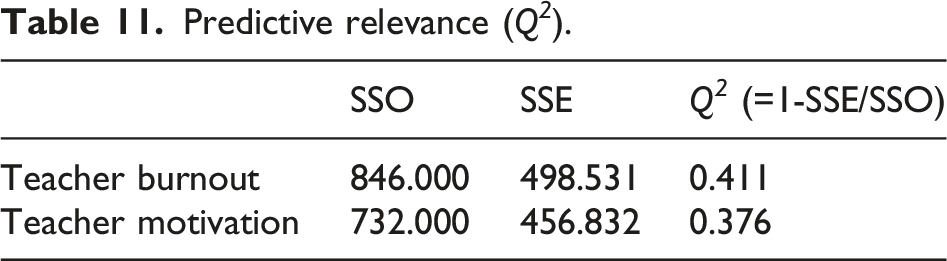
As shown in Table 11, all Q2 values for endogenous constructs are above 0, which means the structural model shows sufficient predictive accuracy. For Teacher Burnout, the related Q2 value is 0.411, which means that in the structural model, TB has large predictive relevance. On the other hand, the Q2 value for Teacher Motivation is 0.376, which also shows large predictive relevance, thus, confirming the proposed path model’s predictive abilities.
Discussion
Utilizing the Job Demands–Resources (JD-R) model along with Self-Determination Theory (SDT), the study examined the effects of perceived organizational support (POS), psychological capital (PSYCAP), and teacher motivation on burnout of higher vocational teachers in China, both directly and indirectly. The results lend considerable support to the proposed research framework and provide a number of significant contributions, both practically and theoretically.
The first hypothesis (H1) was confirmed; perceived organizational support is shown to significantly impact teacher burnout. The results indicate that teachers who receive perceived organizational support, fairness, equity, and concern, are more likely to experience less emotional exhaustion and less disengagement. When referring to the JD-R model, organizational support is a significant job resource that mitigates the impact of work demands. 74 Consistent with studies showing that perceived organizational support is correlated with burnout reduction of educational and other occupational groups33,34,36 Cheng et al. 75 state that in collectivist cultures, such as China, organizational support may be a prominent consideration. The emotional impact of organizational support is more important than the instrumental impact of organizational support. Thus, it is important to implement organizational-level changes to reduce burnout among higher vocational teachers.
Furthermore, psychological capital was demonstrated to have a strong and significant negative impact on teacher burnout, thereby confirming H2, and having an even larger impact than perceived organizational support. Teachers with high levels of optimism, resilience, hope, and self-efficacy find it easier to cope with work-related stress and stay psychologically intact, even in stressed teaching situations. This is also in congruence with the Conservation of Resources (COR) theory, which stresses the importance of one’s own self psychological resources which serve as a buffer for the negative impact of stress. 41 The outcome is also in agreement with the existing evidence that psychological capital helps predict burnout and increases well-being in teachers and employees in diversified fields.1,42,43,45 Indeed, the pronounced effect of PSYCAP in this study implies that personal psychological resources stand out as differentiating factors in the high adversity situation of Chinese higher vocational education, characterized by heavy teaching, administrative, and evaluative workload.
Third, the amount of motivation a teacher has influences their burnout, confirming H3 and positing that the more motivation, the less burnout. Self-Determination Theory states that motivation influences the individual’s cognitive and emotional involvement and the energy within the individual, which helps the individual cope with pressure stemming from work. 53 Teachers who are motivated tend to consider their job emotionally satisfying and meaningful, thus, emotional exhaustion is alleviated. This is consistent with the pioneer studies that documented that the protective role of motivation against burnout.20,56 It is also a justification to the recent attempts to place motivational factors within the JD-R framework to enhance its explanatory ability. 19
Positive effects of psychological capital and perceived emotional support from the organization on teachers’ motivation affirm hypotheses H4 and H5. Organizational support makes teachers feel the degree of autonomy, competence, and relation, increasing motivation types as the SDT 76 suggests. Also, teachers with enough Psychological Capital (PSYCAP) feel more confident and positive about the outcome, increasing their intrinsic motivation. Past studies that document organizational support and psychological resources are motivating to the educators’ work and engagement57–60 hold true.
Summary of hypotheses result.
Conclusions
By applying the JD-R model alongside Self-Determination Theory, this study analyzed the antecedents and factors for teacher burnout in Chinese higher vocational colleges. The research evidence indicates burnout is significantly reduced by organizational support and psychological capital, both in direct and indirect ways through the motivation of teachers. Burnout is alleviated by the psychological resources, organizational resources, and the motivation of the particular individual.
Theoretical contribution
There are noteworthy contributions this study adds. It is the first study to merge both the JD-R and Self-Determination Theory, making the burnout motivation framework of teachers more robust. It is the first study to hypothesize teacher motivation as the mediator for organizational and individual resources in burnout outcomes. It is the first study to focus on vocational educators in China, as prior studies have only been on primary and secondary teachers. This is also the first study to demonstrate psychological capital as the personal resource in an educational setting with elevated demands.
In addition to extending the empirical literature on teacher burnout, the present study contributes theoretically to both the Job Demands–Resources (JD-R) model and Self-Determination Theory (SDT). From the perspective of the JD-R framework, the findings provide further evidence that both organizational resources (perceived organizational support) and personal resources (psychological capital) play protective roles against burnout through motivational mechanisms. By identifying teacher motivation as a mediating pathway, this study extends the JD-R model beyond the direct resource–burnout relationship and highlights the importance of motivational processes in explaining how resources translate into reduced burnout among teachers.
Furthermore, this study enriches the application of SDT in educational settings by demonstrating that teacher motivation is not solely an individual psychological construct, but is also shaped by contextual and organizational conditions. The findings suggest that supportive institutional environments and positive psychological resources can foster more self-determined and sustained professional motivation, which subsequently reduces burnout risk. In this regard, the integration of JD-R and SDT offers a more comprehensive explanatory framework for understanding teacher burnout, particularly within high-demand vocational education environments.
Managerial implications
The findings suggest actionable recommendations for policymakers and managers working in higher vocational education. First, institutions can improve perceived organizational support through enhancing fairness, recognition, developmental opportunities, and involvement in decision-making. Second, resilience training, and positive psychology should be considered in developing teacher’s psychological capital. Third, teachers’ psychological needs for autonomy, competence, and relatedness should be addressed to create conditions for supporting self-determined motivation. Collectively, these actions should improve teachers’ well-being and performance, while also reducing the incidence of burnout.
Limitations and future research
This study provides important insights. However, it has a number of important limitations. First, a cross-sectional study design does not support the making of causal claims. Longitudinal studies in the future should be designed to study burnout in a more dynamic context. Second, self-reported data is used and may result in common method variance. Third, the single province sample limits the generalizability of the study. Diverse geographic areas and different levels of education should be the focus of future research. Future studies should also consider moderating variables like leadership style and organizational culture.
In addition, future research could further examine how burnout mechanisms differ across specific teacher subgroups and professional contexts. For example, variations in age, career stage, teaching discipline, and instructional responsibilities may influence the relationships among organizational support, psychological capital, motivation, and burnout. Younger teachers may experience burnout differently from senior educators due to differences in career expectations, professional identity, and coping resources. Likewise, teachers in technical and practice-oriented disciplines may face distinct occupational pressures compared to those in more theory-oriented teaching fields. Future studies could also explore whether the motivational processes identified in this study differ across teaching areas, institutional types, or levels of professional experience. Such investigations would provide a more nuanced understanding of teacher burnout and contribute to the development of more targeted intervention strategies.
Footnotes

Funding
The authors received no financial support for the research, authorship, and/or publication of this article.
Declaration of conflicting interests
The authors declared no potential conflicts of interest with respect to the research, authorship, and/or publication of this article.
Appendix
Measurement instruments.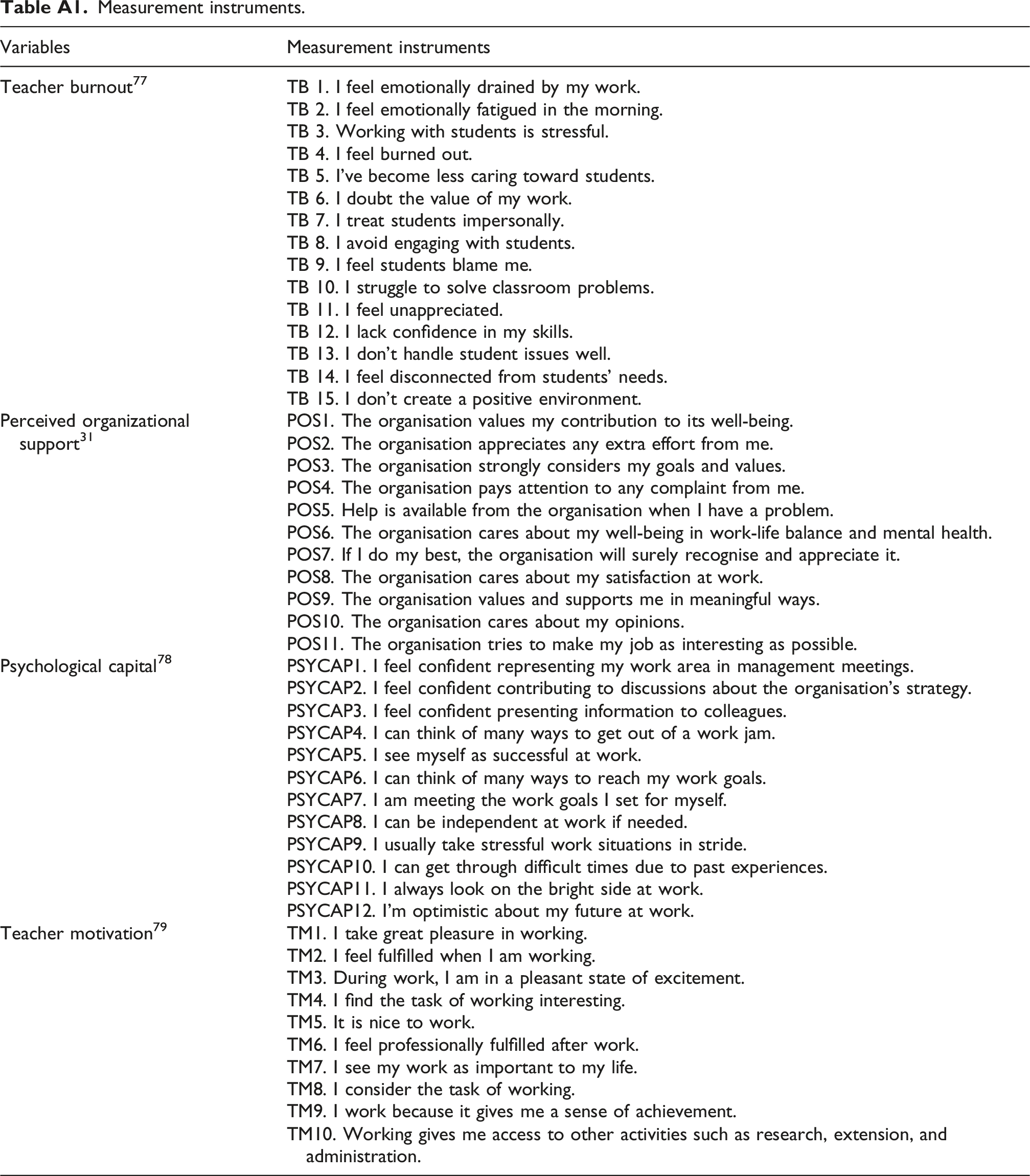
Variables
Measurement instruments
Teacher burnout
77
TB 1. I feel emotionally drained by my work.
TB 2. I feel emotionally fatigued in the morning.
TB 3. Working with students is stressful.
TB 4. I feel burned out.
TB 5. I’ve become less caring toward students.
TB 6. I doubt the value of my work.
TB 7. I treat students impersonally.
TB 8. I avoid engaging with students.
TB 9. I feel students blame me.
TB 10. I struggle to solve classroom problems.
TB 11. I feel unappreciated.
TB 12. I lack confidence in my skills.
TB 13. I don’t handle student issues well.
TB 14. I feel disconnected from students’ needs.
TB 15. I don’t create a positive environment.
Perceived organizational support
31
POS1. The organisation values my contribution to its well-being.
POS2. The organisation appreciates any extra effort from me.
POS3. The organisation strongly considers my goals and values.
POS4. The organisation pays attention to any complaint from me.
POS5. Help is available from the organisation when I have a problem.
POS6. The organisation cares about my well-being in work-life balance and mental health.
POS7. If I do my best, the organisation will surely recognise and appreciate it.
POS8. The organisation cares about my satisfaction at work.
POS9. The organisation values and supports me in meaningful ways.
POS10. The organisation cares about my opinions.
POS11. The organisation tries to make my job as interesting as possible.
Psychological capital
78
PSYCAP1. I feel confident representing my work area in management meetings.
PSYCAP2. I feel confident contributing to discussions about the organisation’s strategy.
PSYCAP3. I feel confident presenting information to colleagues.
PSYCAP4. I can think of many ways to get out of a work jam.
PSYCAP5. I see myself as successful at work.
PSYCAP6. I can think of many ways to reach my work goals.
PSYCAP7. I am meeting the work goals I set for myself.
PSYCAP8. I can be independent at work if needed.
PSYCAP9. I usually take stressful work situations in stride.
PSYCAP10. I can get through difficult times due to past experiences.
PSYCAP11. I always look on the bright side at work.
PSYCAP12. I’m optimistic about my future at work.
Teacher motivation
79
TM1. I take great pleasure in working.
TM2. I feel fulfilled when I am working.
TM3. During work, I am in a pleasant state of excitement.
TM4. I find the task of working interesting.
TM5. It is nice to work.
TM6. I feel professionally fulfilled after work.
TM7. I see my work as important to my life.
TM8. I consider the task of working.
TM9. I work because it gives me a sense of achievement.
TM10. Working gives me access to other activities such as research, extension, and administration.