






Abstract
Background
The increasing adoption of artificial intelligence (AI) in organizations has significantly transformed work processes and employee experience. However, the successful implementation of AI depends not only on the availability of technologies but also on how employees perceive and respond to AI systems. In this context, organizational support, digital competencies, and confidence in AI governance may shape employee readiness for AI-enabled workplaces.
Objective
This study examines the relationships between employer-provided AI support, employees’ digital skills, and attitudes toward AI, with particular attention to the mediating role of digital skills and the moderating role of perceptions of AI regulations.
Methods
Using cross-sectional data from the 2024 Special Eurobarometer 554 survey, collected from 7,942 employees across 27 European Union countries, the study employs Partial Least Squares Structural Equation Modeling within the framework of Job Demands-Resources theory.
Results
The findings indicate that employer-provided AI support is positively associated with employees’ digital skills, which in turn are linked to more positive attitudes toward AI. Digital skills partially mediate this relationship, accounting for 51.12% of the total effect. Additionally, perceptions of AI regulations modestly moderate the relationship between digital skills and employees’ attitudes toward AI.
Conclusions
The results imply that organizations and policymakers should place greater emphasis on employee upskilling, continuous training initiatives, digital competency development, and transparent AI governance to cultivate more positive employee attitudes toward AI. These factors play a complementary and equally critical role in supporting the effective and sustainable integration of AI technologies within workplace environments.
Keywords
Introduction
Institutions encounter significant challenges across sectors due to the unprecedented acceleration of artificial intelligence (AI) technologies. The emergence of AI has increased the need for organizations to assess employees’ perceptions of AI in order to enhance performance.1,2 It is estimated that 72% of the entities utilize AI in routine operations, with significant advancements realized in service sectors.1,2 According to Special Eurobarometer 554 conducted by the European Commission (EC), 3 62% of the workers in Europe are aware of AI and digital technologies and 68% of them have access to digital tools to perform their activities.
Although AI functions as a valuable enabler with the potential to increase productivity through its application in business environment it may lead to potential technostress that may cause fatigue and work–family conflict for employees.4,5 Employing a three-wave survey of 600 employees across diverse industries, Mayer et al. 5 show that while AI efficacy positively impact productivity, AI technostress simultaneously increases exhaustion, exacerbates work–family conflict, and lowers job satisfaction, underscoring the dual nature of AI in workplaces. Similarly, drawing on the Job Demands-Resources theory, empirical evidence shows that AI awareness triggers a serial mediation chain through job insecurity and work interference with family, ultimately leading to emotional exhaustion among employees—work interference with family accounting for 24.2% of the total effect. 6 A recent study held by Gálvez Ruiz et al. 7 on 1,037 employees in banking sector confirm that technology-related stressors significantly increase both emotional exhaustion and work–family conflict, with the effects intensifying during periods of rapid digital transformation. Stamate et al. 8 indicate that AI significantly reshapes employees’ work experiences, task structures, and decision-making processes within organizations, creating both opportunities and new challenges for workforce management.
These organizational and psychological changes highlight the growing importance of examining employees’ responses to the AI implementation in the workplace. Understanding how employees perceive AI is essential for organizations seeking to successfully integrate AI into their operations as the attitudes can extensively influence its adoption. 9 Employees that have favorable attitudes towards AI can assist in its implementation, enhance collaboration between humans and AI tools, and boost the level of creativity, whereas employees that unfavorably perceive AI may hesitate to use it, leading to lower productivity.10,11 Beyond individual performance outcomes, the attitudes of employees toward AI influence their job satisfaction and psychological well-being. 12 AI adoption in organizations can evoke contrasting emotional responses, ranging from positive engagement driven by AI-supported autonomy to avoidance behaviors triggered by anxiety over job displacement and heightened competitive pressure, 13 highlighting that the psychological consequences of AI may extend beyond task performance. In this regard, corporate climate plays a vital role in shaping AI acceptance, as it encompasses the atmosphere, culture, and relational dynamics in which AI technologies are adopted. 14
In this regard, employer-provided support emerges as a key factor to understand employees’ responsiveness toward AI-driven efficiency improvements. 12 This study is grounded in the Job Demands-Resources (JD-R) theory developed by Bakker and Demerouti13,14 and further extended by Bakker et al. 4 According to the JD-R framework, environmental and occupational conditions function as job demands and resources, influencing employee well-being through both health-impairment and motivational processes. Within this perspective, technostress constitutes a significant job demand that can impact employee fatigue, exhaustion and negative attitudes toward technology adoption,15–17 while resources such as digital competencies and organizational support can foster more favorable attitudes toward AT by enabling employees to better cope with technological demands and adopt to digital transformation.18,19 The JD-R theory has also implications for developing training programs to address job insecurity and enhance superagency, workers’ ability to leverage AI to achieve greater autonomy, adaptability and performance outcomes. 5
In the context of AI adoption, this framework is particularly well-suited to the present study, as it allows for the simultaneous examination of how organizational job resources, that is, AI awareness, training provision, and regulatory clarity, as well as personal resources such as digital skills and AI self-efficacy motivate employees toward positive AI attitudes, while job demands such as AI-related insecurity and uncertainty may impair this motivational process. Prior studies highlight that employees’ attitudes toward AI adoption are shaped by technological attributes, perceived usefulness, and organizational factors that influence behavioral intentions to engage with AI systems.20–22 By applying the JD-R framework to the workplace AI context, this study connects macro-level organizational conditions and individual-level attitudinal responses, providing a theoretically grounded explanation for why some employees are more willing to embrace AI technologies, while others show resistance toward their adoption.
While prior studies have identified digital skills as a vital resource influencing employees’ acceptance of digital technologies in the workplace,19,23 the underlying mechanisms linking organizational AI support, digital competence, and employees’ attitudes toward AI remain underexplored. Existing literature has predominantly focused on the direct effects of technological and organizational factors and AI adoption outcomes,21,24,25 with relatively limited attention devoted to the processes through which digital skills may function as a mediating resource between employer-provided support and employees’ AI perceptions. Consequently, the extent to which organizational support contributes to positive attitudes toward AI through the development of digital competencies remains obscure. Additionally, the role of AI governance perceptions has not yet been adequately clarified in the literature. Perceiving AI regulations as important may foster institutional trust and enhance employees’ sense of psychological safety regarding AI use. At the same time, such perceptions may signal heightened concerns related to surveillance, privacy and AI-related risks. This dual nature suggests that the relationship between organizational AI support, digital skills, and employee attitudes toward AI may vary depending on how employees perceive AI governance and regulation. However, these conditional dynamics are not sufficiently explored empirically. To address these gaps, the present study examines the relationships among employer-provided AI support, digital skills, and employees’ attitudes toward AI using Eurobarometer 554 survey data collected from 7,942 employees across 27 European Union member states. Drawing on the JD-R framework, the study also investigates the mediating role of digital skills and the moderating role of AI regulation perceptions in shaping workplace AI attitudes. By integrating organizational resources, digital competencies, and governance perceptions into an analytical framework, this study offers a more comprehensive explanation of the factors associated with employees’ evaluations of AI technologies in organizational contexts.
The remainder of the study is organized as follows: The theoretical background section develops the hypotheses. The data and methodology section describes the dataset, variables, and analytical approach. The findings section presents the empirical results. Finally, the conclusion section discusses the implications of the study.
Theoretical background and hypotheses development
The Job Demands-Resources theory
The systematic analysis of the interplay between organizational conditions and employee AI attitudes requires a robust theoretical framework, one that can simultaneously account for the enabling role of workplace resources and the constraining role of job-related pressures. Rooted in occupational psychology, the JD-R theory offers an integrative lens to explain how workplace conditions shape employee motivation, well-being, and behavioral attitudes across institutions. 13 The theory asserts that work factors can be classified into two categories: demands and resources. These factors produce distinct psychological processes that have a direct impact on employees’ well-being. 15 Job demands (JD) include the physical, psychological, social, and organizational aspects of the work environment that requires employees’ persistence and have consequences for the body and mind. 26 In the context of AI, demands could be the complexity of AI technology, the fear of change associated with the AI utilization, as well as the requirement to develop new digital skills.16,24,27 The health impairment process suggests that employees’ expectations may cause them to exhaust resources, leading to burnout and detrimental health problems such as work–family conflict.28,29 Job resources (JR), on the other hand, assist employees achieve goals, reduce pressure, and facilitate personal growth. 14 In this regard, the JD-R theory claims that the motivational process occurs when employees’ resources fulfill their basic needs for autonomy, competence, and relatedness. 4
The JD-R theory has been recently expanded to include digitalization and technological developments. Scholze and Hecker 17 show the validity of a model that assesses both aspects of digitalization, comprising digital job demands such as techno-complexity and techno-insecurity, and digital job resources such as awareness and technological support to improve digital competence. Digital resources play a significant role in shaping employee motivation and workplace engagement. The Job Demands-Resources (JD-R) theory has evolved considerably by incorporating perspectives related to person–environment fit, multilevel organizational processes, and proactive employee behavior. 4 Within this framework, AI can be conceptualized simultaneously as both a JD and JR. As a JD, AI may generate concerns related to job insecurity, role ambiguity, and the pressure to adapt to rapidly changing technological environments. In this regard, organizational training and skill-development initiatives can assist employees cope with these demands by fostering “superagency,” the capacity to leverage AI to enhance autonomy and maximize work performance. 5 Conversely, as a JR, AI has the potential to improve work efficiency, optimize task performance, and support decision-making processes, contributing positively to employee well-being, motivation, and organizational outcomes.24,29
Employer AI support and digital skills
Human resources are psychological capacities that allow an individual to cope with unfavorable conditions and achieve his goals. 30 In workplace, digital competencies that include technical skills, management skills, communication skills, collaboration skills, creative thinking, critical thinking, problem-solving skills, and information and communication technology skills, are essential resources. 21 Similarly, AI self-efficacy serves as a resource, depicting the level of self-confidence that employees possess to work with AI systems.17,31 It is an extension of digital skills that is likely to emerge among technologically proficient employees, thereby facilitating their adaptability to technology-based environments. 26
Employer-provided digital resources, AI-related training and transparent AI governance policies may function as organizational enablers that support employees’ competence and adaptability in technologically changing work environments.4,14,17 The supporting efforts in mastering how to work effectively with AI via training help upskilling and reskilling employees to close digital talent gaps, amplify AI integration and foster the AI adaptability of workers. 19 These enhancements are related to motivational dimension and contribute to the development of individual resources against job stressors such as technostress.4,24 Additionally, human resource management in digital transformation is vital in bridging the digital divide through the development of digital adaptability.32–34 Vitezic and Peric 18 highlight the importance of digital skills for the adoption of AI, and training programs for increasing individuals’ AI perceptions in service sectors. On this respect, the development of more inclusive learning pathways for advanced AI adoption is critical. Building on these arguments, we propose the following hypothesis:
Employer AI support has a positive impact on employees’ digital skills.
Digital skills and employees’ attitudes toward AI
Digital skills and AI self-efficacy play a key role in shaping employees’ attitudes toward AI. According to social cognitive theory, 35 self-efficacy has a significant impact on cognition, motivation, and actions. Skilled employees in digital technologies are more likely to perceive AI as an opportunity rather than as a threat.11,22 Innovative technologies improve self-efficacy, influence well-being and attitudes and convert anxiety into positive adoption. 21 More skilled employees take advantage of AI technologies to increase productivity.2,5 They consider AI as a challenge rather than a hindrance.25,29 This favorable appraisal leads to more positive attitudes toward AI. From a cognitive appraisal perspective, employees that perceive themselves as digitally competent may experience lower uncertainty and greater control when interacting with AI systems, reducing technology-related anxiety and increasing openness toward AI-enabled work processes.25,35,36 In this sense, satisfaction with psychological needs such as competence and autonomy affects whether employees use AI in their daily and professional lives. On the other hand, unskilled employees in digital technologies may experience techno-anxiety and treat AI as a threat to their job security. 36 Thus, poor digital skills often lead to psychological barriers like distrust and technostress. These dual appraisals of AI technology play a critical role in shaping the responses of employees.25,37 Therefore, we propose the following hypothesis:
Digital skills have a positive impact on employees’ attitudes toward AI.
The mediating role of digital skills
The role of digital competencies intervenes between employer AI support and attitudes of employees. Skill development mediates whether employees view AI as a supportive tool or a threat. When employees possess the necessary digital skills to interact with AI, the anxiety of job displacement drops dramatically, transforming a fear-based attitude into one characterized by confidence. Investment in AI training programs creates the base upon which the improvement of human resources is built, and shapes the attitudes of employees.4,18 Prior studies have shown that the impact of training programs is only evident through the intermediary variables that connect training programs with the outcome. 30 On the AI domain, although the impact of employer AI support is evident, the actual impact comes out through the intermediary role of digital skills.22,38 This is consistent with the JD-R theory’s resource-building mechanism proposing that the development of job resources initiates a gain cycle that ultimately results in the development of personal resources and work engagement.14,24 Thus, we propose the following hypothesis:
Digital skills mediate the relationship between employer AI support and employees’ attitudes toward AI.
The moderating role of AI regulations
The relationship between digital competencies and attitudes toward AI depend on some contextual factors, including the perceptions of workers on AI governance. 31 The AI Act of EU and the regulations in other countries intend to safeguard the privacy of workers, enhance transparency in decision-making, and restrict the use of AI-based surveillance.3,39 Workers that perceive AI regulation as necessary may feel more secure about the potential negative impact of AI implementation in the workplace. This may foster the relationship between digital competencies and employees’ attitudes toward AI. Digitally skilled workers may be more inclined to use AI systems due to their knowledge of the regulations that protect them from the adverse effects of its implementation.18,40 Empirical studies have shown that AI regulations and governance are important for the development of trustworthy working environment. 40 However, perceptions of AI regulations may operate through more than one psychological mechanism. On the one hand, employees may interpret AI governance as a safeguard that reduces uncertainty, increases transparency, and enhances psychological safety regarding the use of AI technologies in the workplace.31,40 Under this interpretation, strong endorsement of AI regulations may reinforce positive evaluations of AI by increasing trust in organizational and regulatory protections. 31 On the other hand, strong AI regulations may reflect heightened concern regarding surveillance, automation risks, algorithmic bias, and loss of employee autonomy.16,29,37 Therefore, employees who perceive AI as potentially threatening may place greater importance on regulatory intervention since they are skeptical about the organizational consequences of AI adoption. These competing interpretations imply that the role of AI regulation perceptions in shaping employees’ AI attitudes is complex and warrants further examination as these approaches might form different views on AI in interaction with psychological characteristics. If employees believe that there are rules to deal with the adverse impacts of using AI, they may more likely utilize digital skills, feel comfortable, whereas if they believe the rules are not protective enough, they may hesitate in using AI even if they know how to use it.24,29 Therefore, we propose the following hypothesis:
Perceptions in AI regulations positively moderate the relationship between digital skills and employees’ attitudes toward AI.
Figure 1 shows the conceptual framework. Conceptual framework.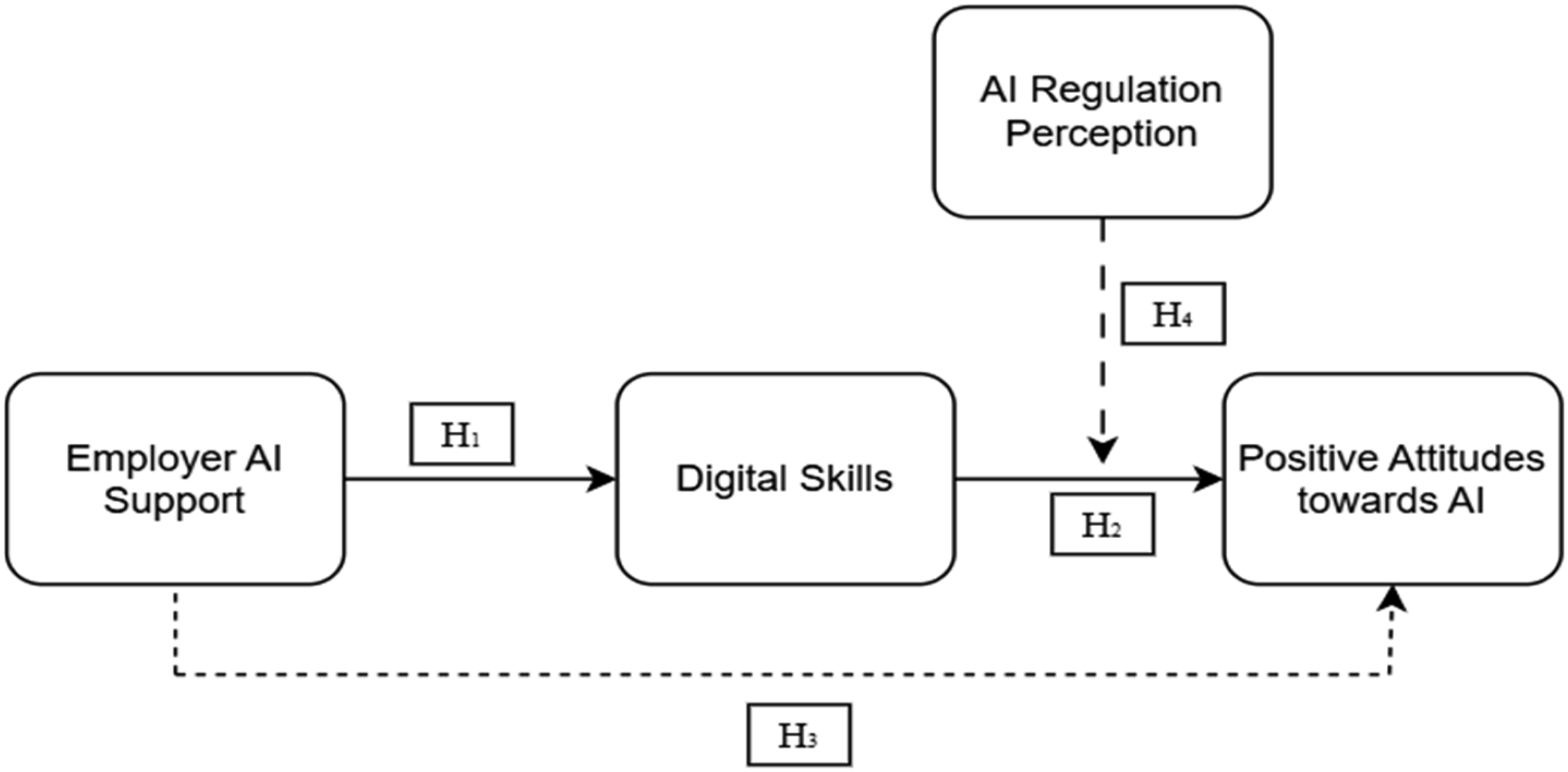
Data and methodology
Data
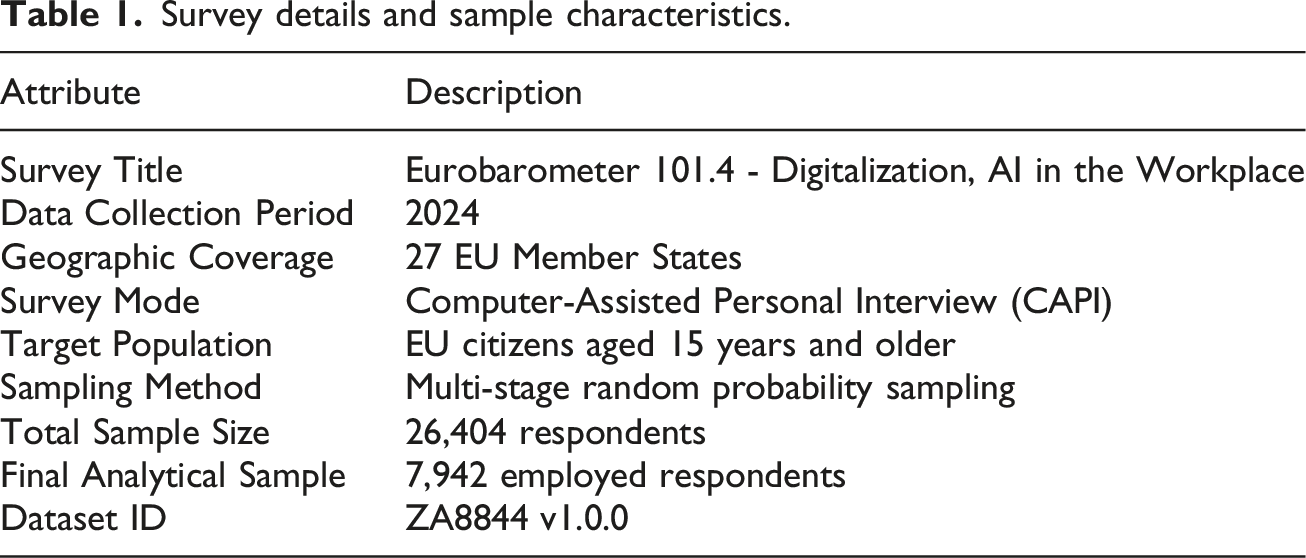
Survey details and sample characteristics.
Variables and measurement
Out of the 349 variables available in the dataset, 15 indicators were selected on theoretical grounds to represent the four constructs included in the proposed model. The sample was then established through a three-step selection process. First, the measures capturing employer AI support (items qb3 and qb4) were administered only to respondents engaged in paid employment. Consequently, the analysis was inherently limited to employed individuals, reducing the eligible sample from 26,404 to 10,973 respondents. This restriction is justified, as the study focuses specifically on workplace-level antecedents of attitudes toward AI. Such factors can only be meaningfully examined among individuals who are currently situated within organizational environments where AI technologies, employer support mechanisms, and AI-related training are present or accessible. Second, Eurobarometer-specific response categories indicating “don’t know,” “not applicable,” and refusals were recoded as system-missing values following standard survey data processing conventions. Third, missing data across the 15 selected indicators were handled using listwise deletion. After applying these procedures, the final sample consists of 7,942 respondents from the 27 EU member states, representing 30.1% of the original dataset and 72.4% of the employed pool.
A comparison of country distribution before and after the application of listwise deletion indicates only minor changes in the sample composition. The largest absolute shifts were observed for Croatia (+1.8 percentage points (pp)), Romania (+1.7 pp), Lithuania (−1.1 pp), and Latvia (−1.0 pp), while the distributions for most other member states changed by less than 0.5 pp. These results suggest that the final sample largely maintains the cross-national structure and representativeness of the original subsample. With a final sample size of 7,942 respondents, the study exceeds the minimum sample requirement recommended for PLS-SEM, the widely applied “ten-times” rule of thumb. 42 The sample size also provides strong statistical power for bootstrap-based estimation and hypothesis testing, including the assessment of direct, mediating, and moderating effects within the proposed model.
Eurobarometer datasets provide several post-stratification weights designed to adjust for unequal selection probabilities and patterns of non-response across national samples. 41 To evaluate the potential impact of omitting these weights on the findings, all structural model coefficients were re-estimated using w1, within-country weight available for all respondents. The comparison revealed only negligible differences between weighted and unweighted estimates across all structural paths, with absolute deviations remaining below 0.012. For instance, the coefficient for the relationship between Employer AI Support and Digital Skills changed only marginally from β = 0.532 in the unweighted model to β = 0.526 in the weighted model, while the effect of Digital Skills on AI Attitudes shifted from β = 0.384 to β = 0.374. Importantly, the overall pattern of results remained fully consistent, including the direction, magnitude, and statistical significance of the direct, mediating, and moderating effects. Given the high degree of robustness between the two estimation approaches, the unweighted results are reported in the main analysis to facilitate clearer interpretation and presentation of the findings.
Independent variable
We used employer AI support as an independent variable. It was operationalized to the extent to which organizations provide employees with resources for engaging with digital and AI-based technologies in the work. It was measured using two items from the Eurobarometer 101.4 questionnaire: (a) “Considering your current job and looking ahead to the next five years, please tell me to what extent you agree or disagree with the following statement: My employer provides me with the necessary tools and training to do my job in the digital environment” (variable qb3); and (b) “To what extent are you aware that your employer uses or has used artificial intelligence in workforce management?” (variable qb4). Both items were assessed using four-point Likert scales. Responses for qb3 range from 1 (“totally agree”) to 4 (“totally disagree”), while responses for qb4 range from 1 (“totally aware”) to 4 (“totally unaware”). Prior to analysis, the responses for both variables were reverse scored so that higher values reflect greater employer AI support. Spontaneous responses such as “not applicable” and “don’t know” were treated as missing values.
Dependent variable
Employees’ attitudes toward AI were used as the dependent variable. It was measured using four items assessing perceptions of the impact of recent digital technologies, including AI, across different life domains (variables qb1_1 to qb1_4). Respondents were asked: “Considering the most recent digital technologies, such as artificial intelligence, would you say that they currently have or will have a very positive, fairly positive, fairly negative or very negative impact on the following?”. The items referred to: (a) the economy, (b) society, (c) your quality of life, and (d) your current job. Responses were recorded on a four-point scale ranging from 1 (very positive impact) to 4 (very negative impact), and reverse coded prior to analysis so that higher values reflect more positive attitudes toward AI. Spontaneous responses such as “don’t know enough,” “it depends,” and “don’t know” were treated as missing values.
Mediating variable
Digital skills were used as the mediating variable and conceptualized as a personal resource. It was measured using four items assessing respondents’ perceived digital competence across different domains of use (variables qb2_1 to qb2_4). Participants were asked to indicate their level of agreement with the following statement “Please tell me to what extent you agree or disagree with each of the following statements. You have the necessary skills to use digital technologies…” across four areas: (a) in your daily life, (b) to do your current job, (c) to do your future job, and (d) to be able to benefit from digital online learning opportunities. Responses were recorded on a four-point Likert scale ranging from 1 (“totally agree”) and 4 (“totally disagree”). Prior to analysis, all items were reverse coded so that higher values reflect greater self-assessed digital competence. Spontaneous responses such as “not applicable” and “don’t know” were treated as missing values.
Moderating variable
Perceptions of AI regulations were used as the moderating variable and operationalized using five items. Respondents were asked to evaluate the importance of regulatory framework addressing the risks and benefits of digital technologies and AI, using the following statement: “How important is it to have rules addressing the risks and benefits of digital technologies and artificial intelligence for…?” Responses were recorded on a 4-point Likert-type scale ranging from 1 (Very important) to 4 (Not at all important). The following five items were used to assess the perceived importance of regulatory provisions: (a) the protection of workers’ privacy, (b) the prohibition of fully automated decision-making, (c) the restriction of automated monitoring in the workplace, (d) the assurance of transparency in AI-assisted hiring processes, and (e) the assurance of accountability in the deployment of AI systems. Higher scores reflect lower perceived importance of AI regulation. The items were reverse coded so that high values reflect strong regulatory perceptions.
Construct specification and reflective measurement
All four latent constructs in the model were specified as reflective. This specification is appropriate as each construct represents an underlying psychological or organizational condition that is assumed to cause its observed indicators rather than being formed by them. For AI attitudes, respondents’ overall evaluative toward AI are expected to shape their perceptions of its impact across the economic, social, personal, and occupational domains qb1_1 to qb1_4. Similarly, digital skills reflect an underlying sense of respondents’ self-assessed digital competence that manifests across the daily-life, current-job, future-job, and online-learning items (qb2_1 to qb2_4). Likewise, perceptions of AI regulations capture a general orientation toward the importance of regulating AI in the workplace, which is reflected in respondents’ evaluations of specific regulatory provisions.
The reflective specification of Employer AI Support, measured by two indicators (qb3: provision of tools and training; qb4: awareness of employer AI use in workforce management), requires particular justification. Conceptually, both items capture complementary aspects of how organizations engage with digital and AI-enabled environments. Specifically, qb3 reflects the extent to which employers provide operational support and capability-building resources, whereas qb4 captures organizational transparency and employee awareness regarding the managerial use of AI technologies. Although these two items address different organizational practices, both share a common sense in the employer’s strategic orientation toward digital and AI integration. This supports their treatment as reflective indicators of a common latent construct.
Constructs measurement and reflective measurement.
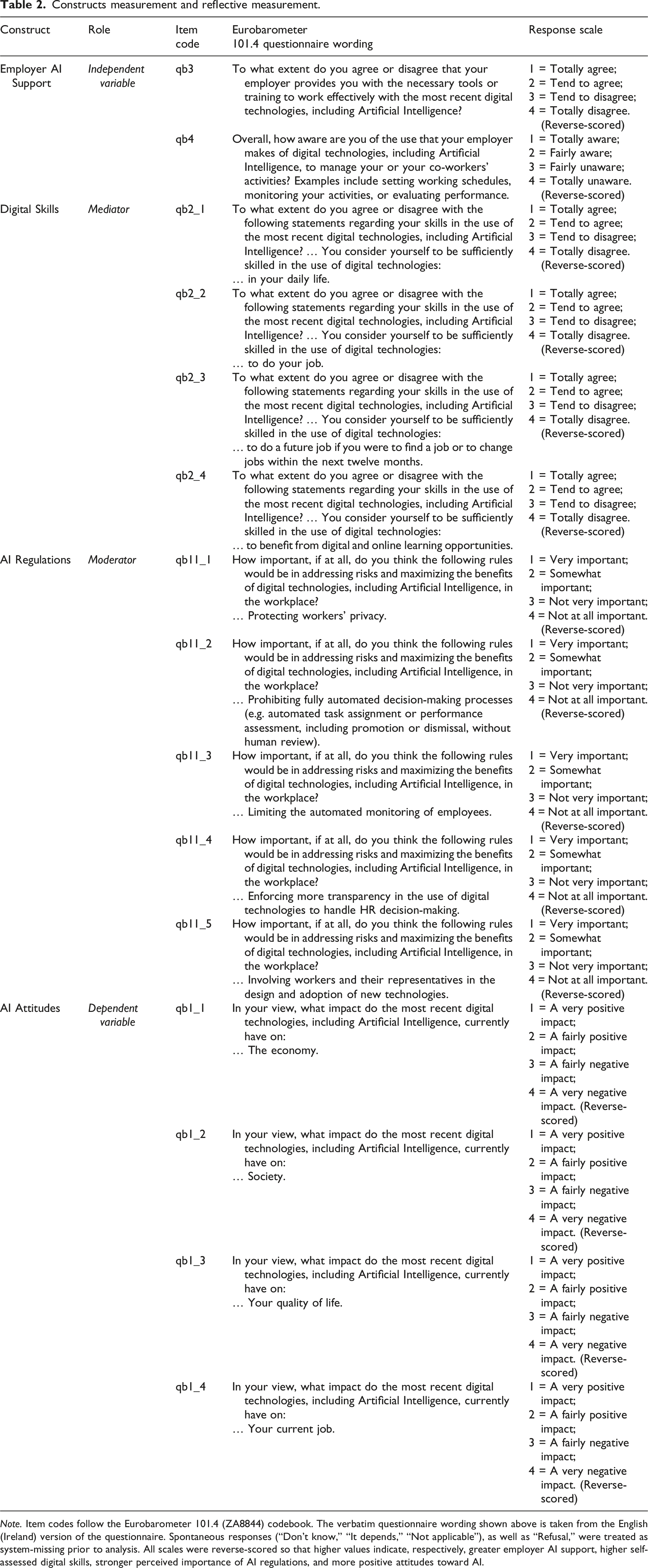
Note. Item codes follow the Eurobarometer 101.4 (ZA8844) codebook. The verbatim questionnaire wording shown above is taken from the English (Ireland) version of the questionnaire. Spontaneous responses (“Don’t know,” “It depends,” “Not applicable”), as well as “Refusal,” were treated as system-missing prior to analysis. All scales were reverse-scored so that higher values indicate, respectively, greater employer AI support, higher self-assessed digital skills, stronger perceived importance of AI regulations, and more positive attitudes toward AI.
Methodology
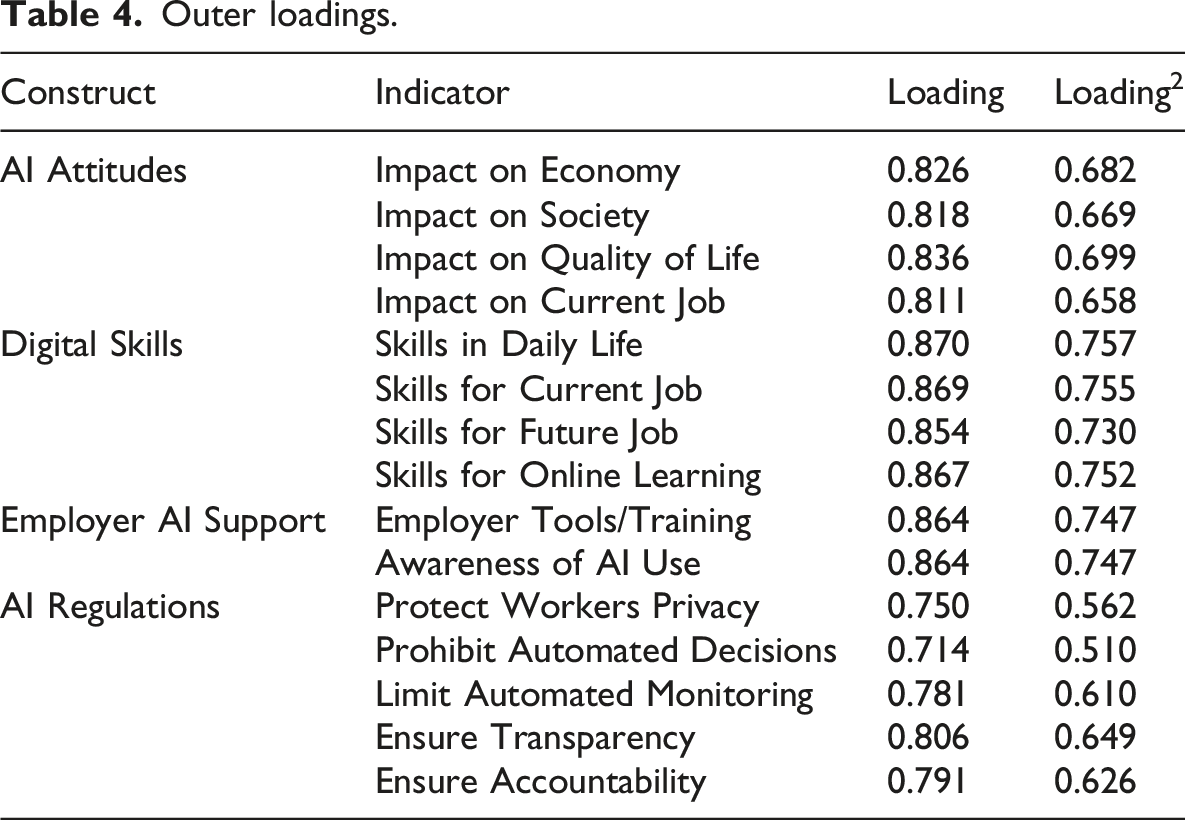
In this study, we employed Partial Least Squares Structural Equation Modeling (PLS-SEM) to make the analysis. PLS-SEM is a variance-based approach that is appropriate for complex models involving numerous constructs. 42 We followed two-step procedure: first, the analysis of the measurement model; and second, the analysis of the structural model. For the analysis of the measurement model, we relied on the criteria of indicator reliability (outer loadings > 0.708), internal consistency reliability (Cronbach’s alpha > 0.70; composite reliability > 0.70), convergent validity (Average Variance Extracted > 0.50), and discriminant validity (Fornell-Larcker criterion; HTMT < 0.90). The analysis of the structural model relies on the criteria of collinearity (VIF < 5), the significance of path coefficients via bootstrap with 5,000 samples, coefficient of determination (R2), and predictive relevance (Q2).
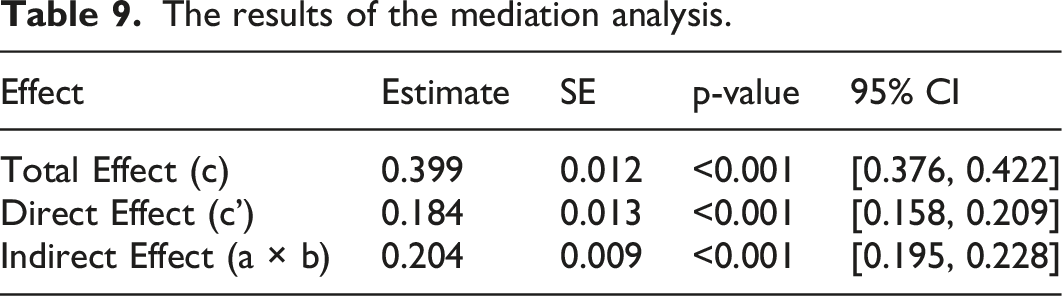
For the mediation analysis, we relied on the recommendations of Hayes 44 and Zhao et al. 45 The indirect effect of the constructs is calculated as the product of the relevant path coefficients. The magnitude of the indirect effect is considered significant if the confidence interval of the indirect effect does not contain 0. We used Python 3.11 for software analysis.
Empirical findings and discussions
Measurement model assessment
Construct reliability and convergent validity.
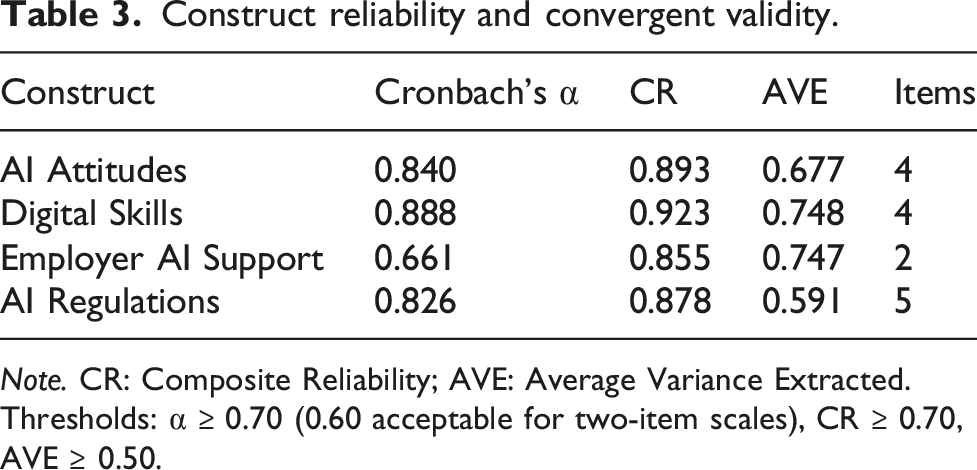
Note. CR: Composite Reliability; AVE: Average Variance Extracted. Thresholds: α ≥ 0.70 (0.60 acceptable for two-item scales), CR ≥ 0.70, AVE ≥ 0.50.
Outer loadings.
Discriminant validity (Fornell-Larcker criterion).
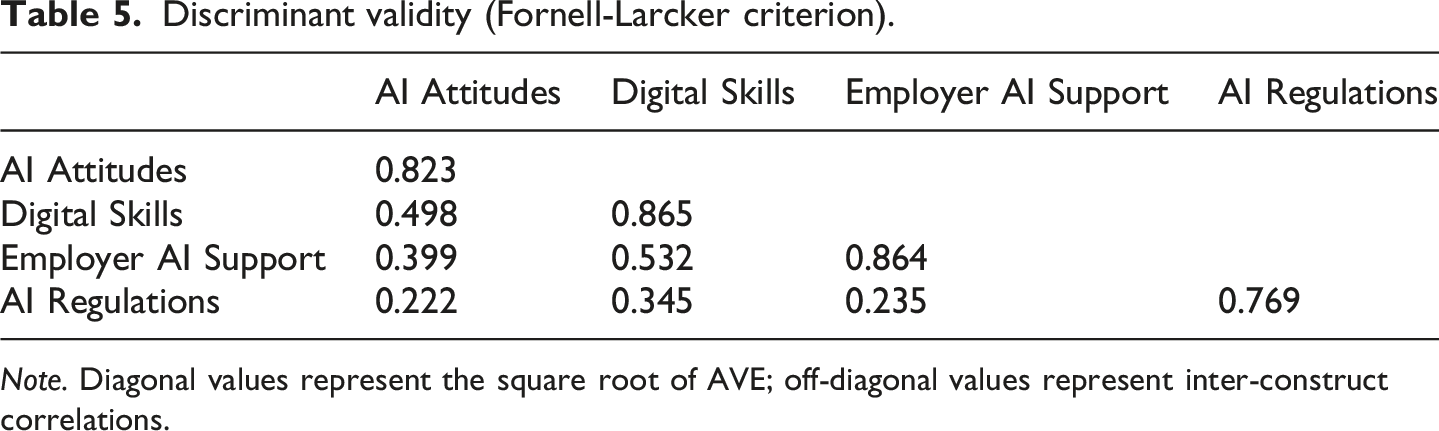
Note. Diagonal values represent the square root of AVE; off-diagonal values represent inter-construct correlations.
Discriminant validity (heterotrait-monotrait ratio of correlations (HTMT)).
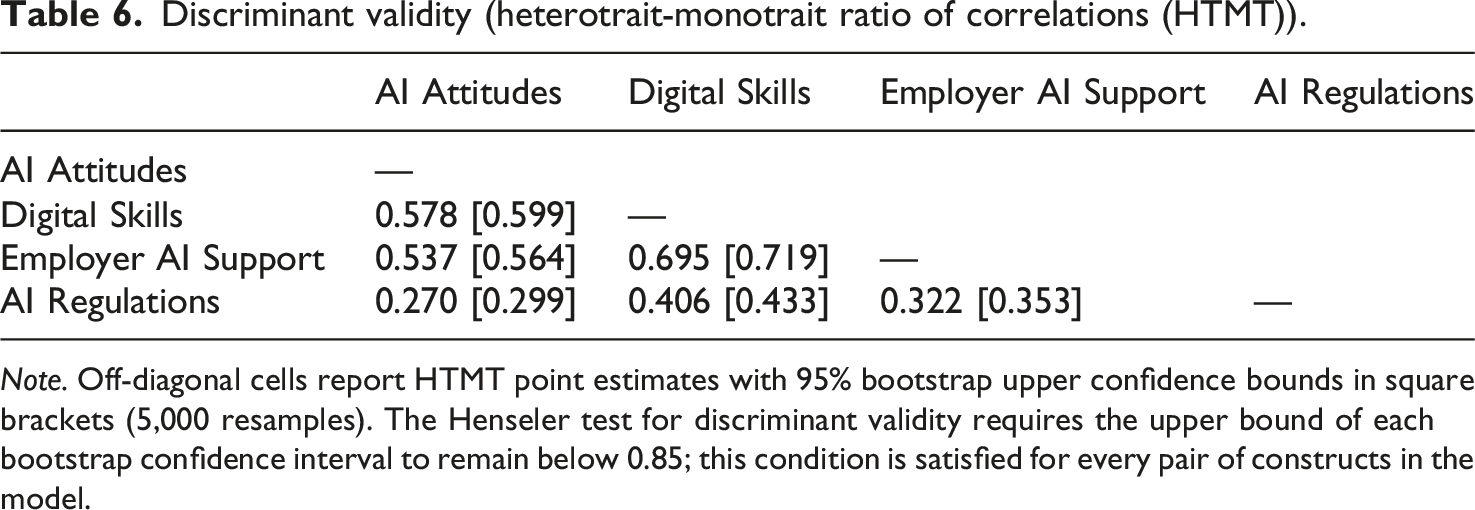
Note. Off-diagonal cells report HTMT point estimates with 95% bootstrap upper confidence bounds in square brackets (5,000 resamples). The Henseler test for discriminant validity requires the upper bound of each bootstrap confidence interval to remain below 0.85; this condition is satisfied for every pair of constructs in the model.
We further assessed discriminant validity using the heterotrait-monotrait ratio (HTMT) proposed by Henseler et al. 46 to identify discriminant-validity violations more reliably than the Fornell-Larcker criterion. Table 6 presents the full HTMT matrix with the 95% bootstrap upper confidence bounds (5,000 resamples). All HTMT values are well below the threshold of 0.85, with the highest value being 0.695 between digital skills and employer AI support. The upper bound of every bootstrap confidence interval remains below 0.85 (Henseler test), providing strong evidence of discriminant validity.
Structural model assessment
Structural model path coefficients.
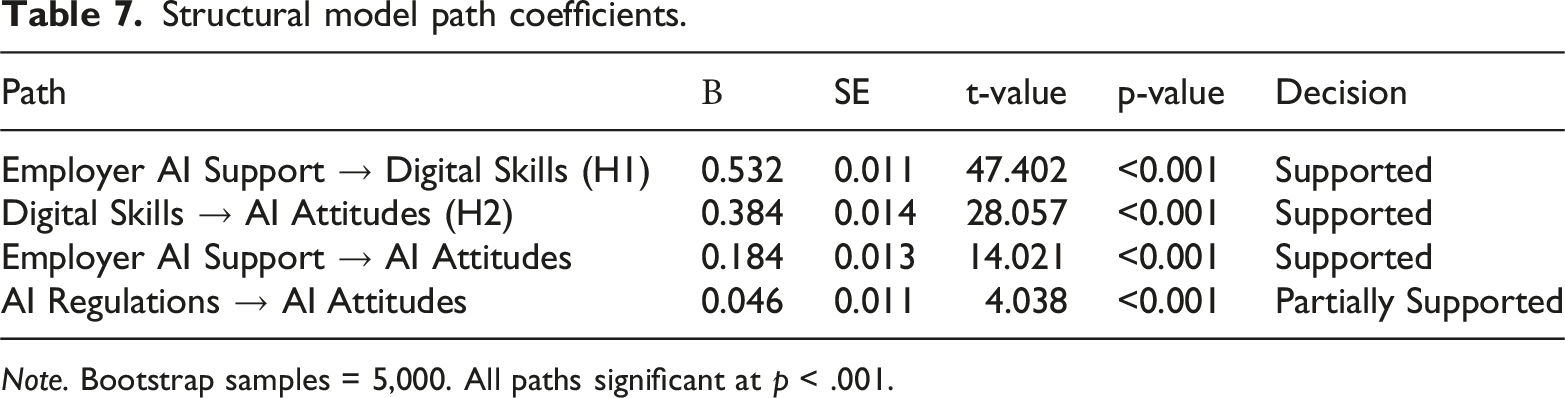
Note. Bootstrap samples = 5,000. All paths significant at p < .001.
Effect sizes (f2).
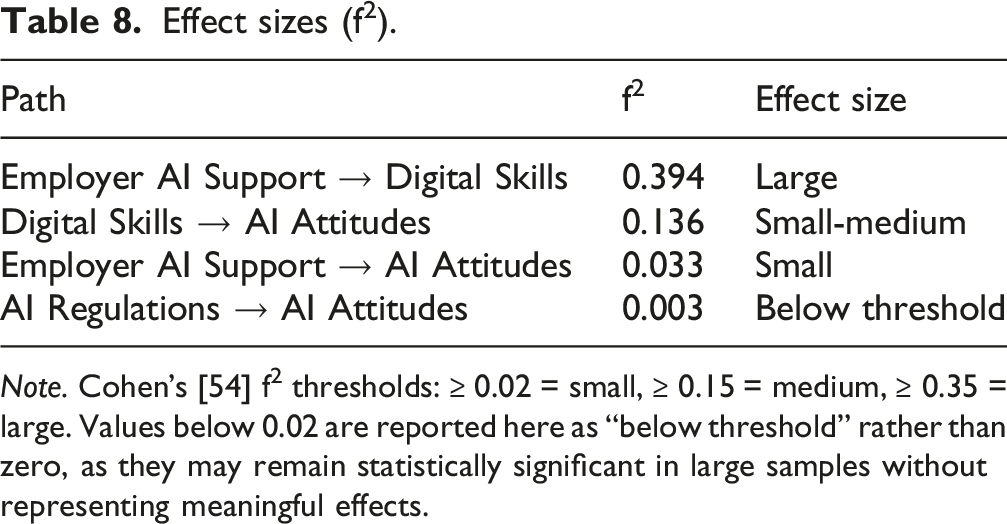
Note. Cohen’s [54] f2 thresholds: ≥ 0.02 = small, ≥ 0.15 = medium, ≥ 0.35 = large. Values below 0.02 are reported here as “below threshold” rather than zero, as they may remain statistically significant in large samples without representing meaningful effects.
The model explains 28.26% of the variance in digital skills (R2 = 0.283) and 27.49% of the variance in AI attitudes (R2 = 0.275). Although the R2 values fall within the weak to moderate range according to Hair et al., 42 the results are satisfactory given the nature of the data and the complexity of attitudes towards AI.
The effect sizes reported in Table 8 enable a calibrated interpretation of the relative practical importance of each path. Following Cohen’s 46 thresholds (f2 ≥ 0.02 small, ≥ 0.15 medium, ≥ 0.35 large), employer AI support exerts a large effect on digital skills (f2 = 0.394), confirming that organizational provision of digital tools and managerial transparency about AI is the strongest predictor in the model. Digital skills exert a small-to-medium effect on AI attitudes (f2 = 0.136), confirming digital competence as a meaningful—though not dominant—antecedent of positive AI evaluations. Employer AI support exerts a small direct effect on AI attitudes (f2 = 0.033), in line with the mediation pattern reported in subsection 4.3. By contrast, perceived AI regulations exert a small effect on AI attitudes (f2 = 0.003) that falls below Cohen’s threshold.
Mediation analysis
The results of the mediation analysis.
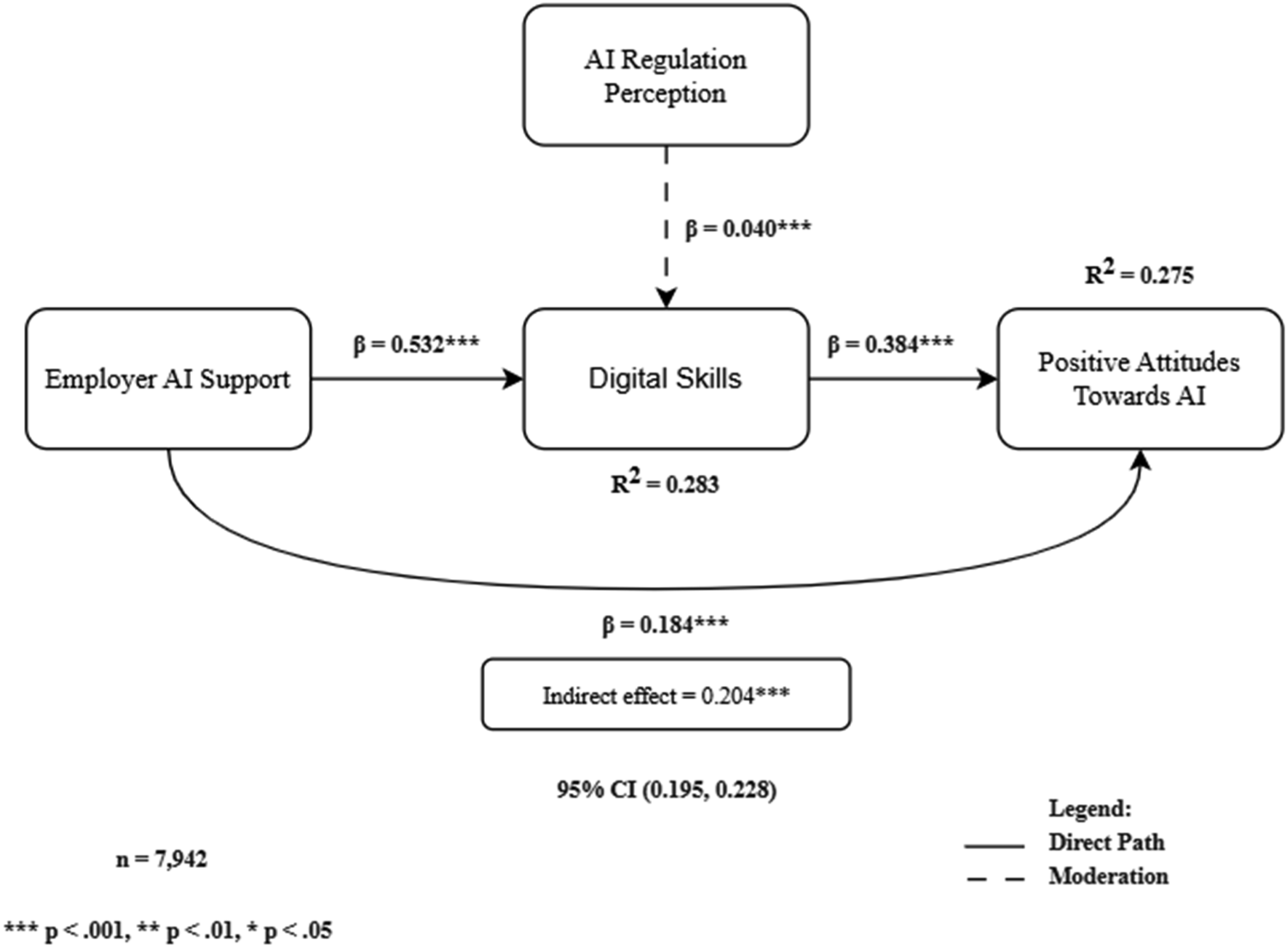
PLS-SEM structural model results.
Reverse-direction interpretations are also worth mentioning. Employees that hold favorable attitudes toward AI may be more inclined to invest in digital learning opportunities to leverage digital tools that their employer provides, and to interpret their organization’s AI-related practices in a more positive way. Although the JD-R framework4,13,14 provides theoretical ground for directional ordering (organizational and personal resources → motivational outcomes), it does not rule out reverse pathways. Designs that establish temporal precedence—for example, longitudinal panel surveys with repeated measurement of attitudes, skills, and perceived support—are required to disentangle these alternative directional interpretations.
Moderation analysis
The results of the moderation analysis.
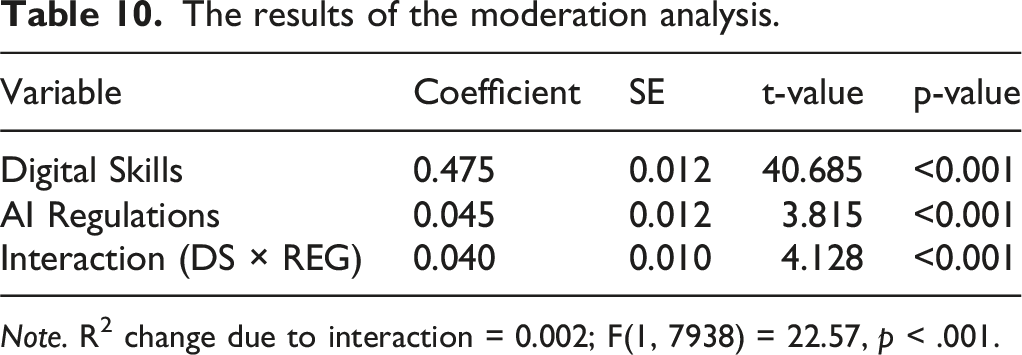
Note. R2 change due to interaction = 0.002; F(1, 7938) = 22.57, p < .001.
The interaction term is significant (β = 0.040, t = 4.128, p < .001), supporting Hypothesis 4. The positive value of the interaction coefficient implies that the relationship between digital skills and attitudes toward AI is moderated positively if employees perceive AI regulations in a positive way. Although the increase in R2 is low (ΔR2 = 0.002), the F-test is statistically significant (F(1, 7938) = 22.57, p < .001). These results suggest that employees that perceive the importance of AI regulations are more likely to have positive attitudes toward AI. This is in line with the findings of prior studies,21,24,29 underlining the role of safeguards in mitigating technostress.
Conclusions and discussions
Rapid technological advancements generate both opportunities and challenges for organizations seeking to integrate AI into work processes. Drawing on cross-sectional data from Eurobarometer 101.4, this study investigates the relationships between employer-provided AI support, employees’ digital competencies, and attitudes toward AI among 7,942 employed respondents across all 27 EU member states. The analysis employed Partial Least Squares Structural Equation Modeling within the framework of the Job Demands-Resources model. Before considering the broader implications of the findings, three key results warrant particular attention and discussion.
First, employer-provided AI support has a strong positive association with employees’ digital skills, while digital skills, in turn, are positively related to employees’ attitudes toward AI. These patterns are in line with the findings of Vitezic and Peric, 18 who identify digital competence as a key determinant of AI acceptance in the service sector, as well as with the resource-building proposition advanced by Bakker et al., 4 which posits that organizational resources facilitate the accumulation of personal resources. In this sense, the present study extends this line of evidence to a multi-country European workforce, implying that the relational structure operates through a resource-building pathway. Employer-provided AI support fosters digital skill development, while employees possessing strong digital competencies perceive their employer’s AI practices more favorably, producing positive attitudes toward AI adoption.
Second, digital skills account for 51.26% of the relationship between employer-provided AI support and employees’ attitudes toward AI, and both the direct and indirect paths are significant, yielding partial mediation. 45 Prior studies on the mediating role of digital competence in AI-related outcomes have predominantly examined single-sector or single-country cases,19,22 while only few studies have explored this pathway using multi-country data. Our findings are in line with those single-context results, yet the variance in AI attitudes remains modest, signaling that digital skills and employer-provided support together account for roughly one quarter of the variation in how employees evaluate AI. Factors such as occupational role, sector-level AI exposure, trust in management, and individual risk tolerance are other antecedents. Therefore, the partial mediation implies that digital skills are the primary determinant of AI attitudes within a wider set of antecedents.
Third, the moderation of AI regulation perceptions on the skills-attitudes relationship is statistically significant but practically negligible. This result suggests that AI governance perceptions and institutional trust shape employee orientations toward AI to a certain extent, 31 strengthening the association between digital skills and positive AI attitudes, yet the magnitude of this effect falls below Cohen’s threshold for a small effect. One explanation is that most of the employees captured by Eurobarometer surveys already perceive AI regulation as important, compressing the variance for the interaction. Another reason may be that perceptions on AI regulation operate through psychological channels, including trust in institutional safeguards and concern about surveillance risks, which may partially offset each other. These competing mechanisms warrant further investigation in future studies.
In conclusion, the findings provide support for the applicability of the JD-R framework to AI adoption within European workplace settings, while underlining the methodological limitations inherent in a cross-sectional research design. The results indicate that organizations seeking to improve employees’ attitudes toward AI may achieve the greatest impact through strengthening employer-provided AI support, as this pathway exhibits the largest effect size in the model. At the same time, digital skill development should be viewed as one component within a broader attitudinal and organizational process rather than as a sufficient condition for positive AI adoption. Furthermore, the weak moderation effects in the analysis indicate that policymakers should exercise caution in placing excessive emphasis on the promotion of AI-related regulations as a short-term mechanism for shaping employees’ attitudes. Future research employing longitudinal designs would offer a more robust basis for assessing the directional and conditional relationships identified in this study. Studies that track employer AI support, the development of digital competencies, perceptions of AI regulation, and attitudes toward AI across multiple time points would enable stronger inferences regarding the dynamic processes underlying AI.
Implications of the study
Theoretical implications
This study applies the JD-R framework within the AI adoption context, providing empirical evidence for its core propositions. The strong association between employer-provided AI support and digital skills implies that organizational resources support the development of personal resources. 17 In AI-enabled workplaces, where task demands shift rapidly and skill obsolescence is a pressure, digital job resources act as enablers of digital competence derived by the employer-provided support that remove technostress and skill stagnation.17,24,27,47
The positive association between digital skills and AI attitudes confirms the role of personal resources as antecedents of favorable technology appraisal. Employees that have digital competence are more likely to evaluate AI as an opportunity rather than a threat, fostering cognitive appraisal arguments of JD-R theory.22,35 However, the modest R2 for the AI attitudes signals that other personal resources including AI self-efficacy and tolerance for uncertainty may operate alongside digital competence. The partial mediation, where digital skills account for 51.12% of the total association between employer-provided AI support and employees’ attitudes, is in line with the JD-R’s resource gain spiral, where organizational resource provision associates with personal resource accumulation, which in turn creates motivational outcomes.14,46
The most nuanced finding of the study concerns the moderating role of perceptions of AI regulation. The relatively weak effect size raises an important theoretical question regarding the role that regulation perceptions occupy in the JD-R framework. Three interpretations may account for this relationship. From a trust-based perspective, support for AI regulation may function as an institutional resource that reduces uncertainty and enhances employees’ psychological safety.31,40 Alternatively, from a risk-oriented perspective, strong endorsement of regulation may reflect heightened anxiety regarding AI-related risks, implying that the moderating mechanism operates through perceptions of threat rather than resource buffering.16,29 A third interpretation conceptualizes regulation perceptions as an indicator of trust in governance structure at the macro level, distinct from individual feelings of safety and personal risk appraisal. The negligible moderation effect is consistent with the possibility that these mechanisms coexist simultaneously and partially counterbalance one another, limiting the strength of the moderating relationship.
Practical implications
The results provide important implications for organizations, policymakers and AI system developers. Organizations should implement AI training programs and promote transparent communication for building employee digital competence in the workplace. Since digital skills have a small-to-medium effect on positive attitudes toward AI, training programs designed on AI use cases may improve AI receptivity, elevate digital skills and support the attitudinal shift about how employees evaluate AI. Additionally, organizations may make promotional communication for framing AI as a supportive tool. Thus, as recent evidence suggests,29,47,48 by equipping the workforce with tools and skills to use AI and ensuring AI governance, organizations can create a workforce that views AI as a collaborator rather than a threat. These insights can foster adoption frameworks that mitigate both job-loss risk and raise AI’s capacity to augment human capabilities.49,50
For policymakers, the findings lay out noteworthy insights. Although the moderation effect of AI regulation perceptions is significant, its effect size is negligible, implying that regulatory communication alone is less likely to move employees’ attitudes toward AI in a positive way. Rather than framing AI regulation as a primary attitudinal lever, policymakers should treat the EU AI Act’s provisions on privacy, automated decision-making, and transparency as fundamental rights protections whose attitudinal benefits may be generated gradually. The results imply that disseminating accessible information about protective measures is worthwhile, but expectations about attitude change should be modest. Policymakers can improve this outcome by formalizing better AI governance policies and prioritizing proactive communication on AI regulations.
For AI system developers, the findings imply that the implementation of digital technologies in workplaces with limited digital proficiency may encounter significant resistance from employees. This challenge can be partially mitigated through technical design choices that prioritize usability and accessibility. Designing interfaces that minimize the cognitive demands associated with AI interaction, may provide interpretable outputs, and enhance the transparency of AI decision-making processes, reducing the level of expertise required for effective engagement with AI systems. Such design strategies can work alongside organizational training initiatives by making AI tools more approachable and less intimidating for non-specialist users. Additionally, developers may incorporate adaptive support features, such as guided workflows, contextual explanations, and interactive feedback mechanisms, to further facilitate user trust in AI systems.
Limitations of the study and future research avenues
While this study offers novel evidence in the drivers of employees’ attitudes and perceptions toward AI, there are several limitations worth mentioning. First, this study relies on cross-sectional survey data, which limits causal inferences for the relationships between employer-provided AI support, digital skills, regulation perceptions, and employees’ attitudes toward AI as response bias may impact the results, particularly for behavior measurement variables such as attitudes and perceptions. Also, the Eurobarometer indicators were not originally designed to operate JD-R constructs, and some measures, particularly Employer AI Support, rely on short reflective scales. Future longitudinal studies may address these concerns to better examine the temporal dynamics between employer AI support, digital competencies, and employees’ AI attitudes.
Second, although Eurobarometer offers a large representative sample of the EU-27, cultural, regulatory, and labor-market differences limit direct extensions to non-EU contexts. Future studies may make cross-regional analysis to increase the generalizability of the findings. Third limitation is the lack of cross-industry effects of AI integration. This is extremely important as some job roles are more at risk for automation and replacement than others. Future research should examine how differently AI affects workplaces by engaging with cross-industry effects.
Fourth, the variance in employees’ attitudes toward AI remained moderate, implying that additional antecedents such as AI self-efficacy, occupational AI exposure, managerial trust, algorithmic fairness perceptions, individual risk tolerance, sectoral AI intensity and institutional governance environments may play important roles not captured in the model. Future studies may use these variables to produce more refined results.
Finally, the moderation effect associated with AI regulation perceptions was significant but weak, indicating that governance-related perceptions may function through multiple competing psychological mechanisms that were not directly measured in this study. Future research could distinguish more explicitly between trust-based and risk-based interpretations of AI regulation perceptions, as these mechanisms may produce different attitudinal and behavioral outcomes.
Footnotes
Acknowledgements
We gratefully acknowledge the European Commission and Leibniz Institute for the Social Sciences (GESIS) for providing open access to the Eurobarometer 101.4 dataset used in this study. We also appreciate the valuable scholarly contributions of prior researchers whose work informed the theoretical development of this research.

Ethical considerations
This study used publicly available secondary survey data from Eurobarometer 101.4 (ZA8844), conducted by the European Commission and distributed by GESIS. No human or animal subjects were recruited or interacted with by the authors. The research was conducted in accordance with accepted academic and ethical standards for the use of public datasets. Original data content was not altered, and standard data-cleaning procedures were applied to address missing values and ensure analytical consistency.
Author contributions
All authors contributed to the conception and design of the study, theoretical development, data analysis, interpretation of findings, drafting of the manuscript, and final approval of the submitted version.
Funding
The authors received no financial support for the research.
Declaration of conflicting interests
The authors declared no potential conflicts of interest with respect to the research, authorship, and/or publication of this article.