






Abstract
This study examines the effects of extrinsic and intrinsic rewards on employee performance in private enterprises, with motivation tested as a mediating mechanism. Reward systems are treated as strategic human resource management practices rather than narrow compensation tools. A quantitative research design was applied, using data collected from 300 employees of private enterprises through a structured questionnaire. The data were analyzed through Exploratory Factor Analysis, Confirmatory Factor Analysis, and Structural Equation Modelling. The results confirmed a four-factor structure consisting of extrinsic rewards, intrinsic rewards, motivation, and employee performance. Findings show that both extrinsic and intrinsic rewards positively affect motivation, while motivation positively affects employee performance. Extrinsic rewards also have a significant direct effect on employee performance, whereas the direct effect of intrinsic rewards is not statistically significant. However, motivation significantly mediates the relationship between both reward dimensions and employee performance. These results indicate that extrinsic rewards influence performance both directly and indirectly, while intrinsic rewards affect performance mainly through motivation. The study contributes to reward management literature by showing that different reward dimensions operate through different performance pathways. Practically, private enterprises should design balanced reward systems combining financial incentives with recognition, autonomy, feedback, and development opportunities.
Introduction
Employee performance remains a central issue in human resource management because organizations increasingly depend on employees who can complete formal tasks, adapt to change, cooperate with others, and contribute beyond minimum job requirements.1,2 In this context, performance is not only the result of individual ability, but also of organizational practices that shape motivation, fairness perceptions, recognition, and the quality of the employment relationship.3,4 Among these practices, reward systems are particularly important because they represent a direct mechanism through which organizations communicate what they value, how they recognize contribution, and how they encourage desirable work behavior.5,6
Reward systems are no longer viewed only as financial compensation mechanisms. Contemporary HRM literature treats them as broader strategic practices that include salary, bonuses, promotion, benefits, recognition, feedback, autonomy, development opportunities, and non-financial appreciation.4,6 This broader view is important because employees do not evaluate rewards only through their economic value, but also through their symbolic and psychological meaning within the organization.2,3 When rewards are perceived as fair, transparent, and connected to actual contribution, they can strengthen motivation and performance-oriented behavior.5,7 However, when reward systems are unclear, inconsistent, or weakly linked to performance, their motivational effect may decline and may even create negative perceptions of control or unfairness.8,9
A useful analysis of reward systems requires a distinction between extrinsic and intrinsic rewards. Extrinsic rewards refer to externally provided outcomes such as pay, bonuses, promotion, job security, fringe benefits, and formal incentives.6,7 These rewards may increase effort when employees believe that performance will lead to valuable and attainable outcomes.5,8 Intrinsic rewards, in contrast, are embedded in the work experience itself and include recognition, autonomy, meaningful work, useful feedback, participation, and opportunities for professional development.4,10 These rewards are important because they influence how employees experience their work, how strongly they identify with organizational goals, and how willing they are to sustain effort over time.3,9
The distinction between extrinsic and intrinsic rewards is theoretically important because the two reward dimensions may influence performance through different motivational mechanisms. Extrinsic rewards may be more closely related to instrumental effort and measurable achievement, whereas intrinsic rewards may support deeper engagement, cooperation, knowledge sharing, and adaptive behavior.4,8 Motivation therefore becomes a key explanatory mechanism in the relationship between rewards and performance. Rewards do not automatically produce higher performance unless employees interpret them as meaningful, fair, and connected to their own goals and work effort.5,10 Motivation explains why employees decide to invest effort, persist in their tasks, and direct their behavior toward organizationally valued outcomes.1,11
Recent HRM research suggests that motivation-enhancing practices affect employee performance through psychological and behavioral mechanisms such as commitment, satisfaction, organizational citizenship behavior, and perceived support.1,2 Similarly, studies on intrinsic and extrinsic motivation show that performance outcomes are stronger when employees perceive both external incentives and internal work conditions as supportive.9,10 For this reason, motivation should not be treated only as a separate individual attitude, but as a mediating mechanism through which reward systems are translated into employee performance.
Despite the growing literature on rewards, motivation, and employee outcomes, several gaps remain. First, many studies focus either on financial incentives or on isolated non-financial rewards, while fewer studies examine extrinsic rewards, intrinsic rewards, motivation, and employee performance within one integrated model.4,6 Second, the reward performance relationship is often treated as direct, although motivation may explain how and why reward systems affect employee behavior.1,10 Third, employee performance is frequently treated as a general outcome, although contemporary performance includes task-related, contextual, and adaptive behaviors.3,2
Based on these gaps, this study examines the reward system as a strategic mechanism for improving employee performance in organizations. Specifically, it investigates the effects of extrinsic and intrinsic rewards on employee motivation and employee performance, while also testing the mediating role of motivation in these relationships. The study contributes to the literature by treating rewards as multidimensional HRM practices, positioning motivation as an explanatory mechanism, and linking reward systems to a broader understanding of employee performance. In doing so, it provides a more integrated explanation of how organizations can use reward systems not only to compensate employees, but also to motivate and improve their performance sustainably. The paper is organized in a manner that follows this conceptual and empirical logic. The next section reviews the relevant literature and develops the hypotheses. This is followed by the methodology section, which explains the sample, measurement scales, pilot testing, data collection, data screening, and statistical procedures. The results section then presents the descriptive statistics, exploratory and confirmatory factor analyses, reliability and validity assessment, structural model and mediation analysis. The discussion section interprets the findings in relation to the theoretical framework and previous research. Finally, the paper presents the theoretical and practical implications, followed by the conclusion, limitations and directions for future research.
Literature review
Reward systems as a strategic HRM mechanism
In contemporary human resource management literature, the reward system is no longer treated solely as a compensation mechanism, but as a strategic practice through which the organization structures the behavior, attitudes, and outcomes of employees. The systematic review by Figueiredo et al. (2025) shows that reward systems are repeatedly linked to motivation, satisfaction, commitment, and individual performance, which places reward at the center of the contemporary HRM debate. 12 Similarly, Li et al. (2023) argue that employees’ perception of the total reward package is not limited to monetary compensation alone but includes a broader configuration of financial and non-financial benefits, which are related to different levels of work performance. 13 Even the most recent sectoral evidence shows that incentive and reward systems can affect employee performance directly and indirectly, especially when mediated by job satisfaction or other organizational perceptions.14,15 This means that the reward system should be understood as an organizational mechanism with strategic importance and not as isolated payment.
In this sense, reward systems include not only financial rewards, such as salary, bonuses and material incentives, but also non-financial elements, such as recognition, development opportunities, flexibility, and work-life balance. Li et al. (2023) show that higher performance is not necessarily associated only with compensation-dominant profiles, but also with profiles where employees report higher satisfaction with development and career opportunities or work-life balance. 13 In addition, Ce et al. (2025) find that monetary and non-monetary motivations affect different dimensions of job performance, 15 while Figueiredo et al. (2025) synthesize this evidence by arguing that reward systems should be treated as integrated organizational packages. 12
Employee motivation and work performance
Motivation is a central construct in explaining employee behavior because it relates to direction, intensity, and persistence of effort at work. Recent literature treats motivation as a mechanism that translates organizational input into commitment, involvement, and concrete work outcomes. Layek and Koodamara (2024) find that both intrinsic and extrinsic motivation are positively related to employee performance. 16 Similarly, Ce et al. (2025) show that monetary and non-monetary incentives affect financial and non-financial job performance, 15 while Elamalki et al. (2024) report that motivation is significantly related to job performance in the public sector. 17 These findings support the treatment of motivation as a close explanatory link between organizational practices and work outcomes.
Regarding performance, contemporary literature rejects the approach that reduces it only to the fulfillment of formal tasks, treating it increasingly as a multidimensional construct that includes distinct dimensions of work behavior.18–20 Recent validations and adaptations of individual work performance instruments show that performance measurement should go beyond direct task output and include contextual and adaptive behaviors that support organizational effectiveness.21,18 In this vein, Lousã et al. (2024) confirm the three-dimensional structure of the Individual Work Performance Questionnaire in the Portuguese version and support the measurement of performance through task performance, contextual performance and adaptive performance. 18 Additionally, Krijgsheld et al. (2024) show that adaptive performance constitutes a distinct and methodologically valuable dimension, especially in dynamic, uncertain work environments with high demands for flexibility. 19 Also, more recent studies in contemporary organizational contexts show that task, contextual and adaptive dimensions are used together to better understand employee performance under conditions of change and high complexity.20,22 This means that employee performance should not be seen as a narrow operational outcome, but as a combination of task fulfillment, collaborative behaviors, and the ability to adapt to change. For the current study, this approach is more appropriate than limiting itself to task performance, because it allows for a more realistic and complete operationalization of performance behavior in the organization.18,19
Theoretical grounding of the study
The theoretical basis of this study is based on the idea that the relationship between reward, motivation and performance is not linear but passes through psychological and organizational processes that structure the way employees interpret their work experience. The literature of recent years strongly supports this position. Vo et al. (2022) show that work motivation is influenced by individual needs and social conditions, suggesting that motivation is not only shaped by material gain, but also by autonomy and social connection. 23 Similarly, Barriga Medina et al. (2024) show that motivation can play a mediating role in explaining work performance, 24 while Nusraningrum et al. (2024) treat motivation as a central factor in the relationship between working conditions, engagement and performance. 25 This makes the placement of motivation an explanatory mechanism in the current model theoretically sustainable.
At the same time, the literature on reward systems and incentives suggests that financial and non-financial rewards do not produce identical effects, but act in different ways and may have different consequences on motivation and performance. Figueiredo et al. (2025) show that reward systems are associated with a wide range of work outcomes and organizational behavior. 12 Li et al. (2023) argue that different configurations of total rewards produce different performance profiles. 13 Alkandi et al. (2023) show that incentive and reward systems affect employee performance with job satisfaction as an intermediate mechanism, 14 while Ce et al. (2025) confirm that both monetary and non-monetary incentives are associated with different forms of job performance. 15 Theoretically, this makes it reasonable to divide the reward system into more specific dimensions and place motivation as the central link connecting them with performance. Overall, the literature from 2022 to 2025 supports three main premises for the current study: reward systems are strategic practices that influence employee behavior, motivation is a central explanatory mechanism, and performance should be treated as a multidimensional construct. This creates the conceptual and empirical basis for moving toward hypothesis development.
Theoretical framework and hypothesis development
In the human resource management literature, the reward system is treated as a strategic mechanism through which the organization orients the behavior of employees towards its objectives. It is not reduced only to pay or compensation but represents a set of policies and practices through which the organization rewards the contribution, competence, and performance of employees. From this perspective, the reward system has not only an economic function, but also a motivational one, because it communicates which behaviors, results, and standards are valued by the organization. This logic is supported by classical approaches to motivation, especially by expectancy theory, according to which the individual is more inclined to invest effort when he believes that performance will lead to desirable results and that these results will be realistically rewarded. 26 Along the same lines, contemporary reward management literature argues that reward systems influence not only motivation, but also the selection, retention, and orientation of employees towards higher performance.27,28 Empirical evidence also supports this position. Güngör (2011) argues that reward management system applications have a direct role in promoting employee performance, 29 while Li et al. (2023) show that different profiles of total reward satisfaction are associated with different levels of job performance. 13 On this basis, the reward system should be treated as a broad strategic construct and not as an isolated payment.
A more precise analytical treatment of the reward system requires the distinction between extrinsic and intrinsic rewards. Extrinsic rewards include salaries, bonuses, fringe benefits, promotions, job security, and other forms of material or institutional benefits that originate outside the work experience itself. Their essence lies in the fact that they constitute outcomes separate from the work activity itself and are valued because of the benefit they bring to the individual. 30 From the perspective of expectancy theory, extrinsic rewards increase motivation when the employee believes that the effort will produce performance, the performance will be recognized by the organization, and the recognition will be accompanied by concrete reward. 26 Similarly, incentive-based perspectives suggest that when the reward is clearly linked to performance, the employee is more likely to orient his behavior towards measurable results.31,32 The literature on merit pays and pay-for-performance also supports this argument, showing that a clear link between performance and material reward can increase motivation, especially when the system is perceived as fair, transparent, and trustworthy. 33 Güngör (2011) also treats financial rewards as a key source of extrinsic motivation. 29 This means that extrinsic rewards do not only have a compensatory function but can act as external incentives that push the employee towards higher effort. On this basis, it is formulated:
Extrinsic rewards have a positive impact on employee motivation
Intrinsic rewards, on the other hand, stem from the work experience itself and from the way the employee experiences it. They include recognition, appreciation, autonomy, involvement in decision-making, constructive feedback, opportunities for learning and development, and a sense that work has meaning and importance. These forms of reward are particularly important within the framework of self-determination theory, which distinguishes between intrinsic and extrinsic motivation and argues that individuals are more deeply engaged when their needs for autonomy, competence, and social connection are met.30,34 In the same vein, the job characteristics model argues that the characteristics of the job itself, such as autonomy, feedback, and meaningfulness, directly affect the employee’s intrinsic motivation. 35 Turner (2017) argues that the performance culture in an organization is not built only on external incentives, but also on intrinsic motivation, 36 while Kuvaas et al. (2017) show that intrinsic motivation is more consistently associated with positive employee outcomes than extrinsic motivation. 37 This implies that non-financial forms of reward are not secondary elements, but central factors in building intrinsic motivation. For this reason, it is formulated:
Intrinsic rewards have a positive impact on employee motivation.
Literature supports not only an indirect link between extrinsic rewards and performance through motivation, but also a direct effect. From the perspective of reinforcement theory, behavior is influenced by its consequences, and when performance is explicitly rewarded, the likelihood of its repetition increases. 38 Similarly, expectancy theory and incentive-based perspectives argue that when employees perceive rewards as linked to achievement, they are more likely to direct their behavior towards valued outcomes.26,32 Empirically, Güngör (2011) shows that financial rewards appear as an important component of reward management system applications in relation to employee performance, 29 while Nyberg et al. (2016) show that merit pay and bonus pay are positively related to future employee performance. 33 Although these effects depend on the fairness, clarity, and structure of the system, literature provides sufficient basis to expect a positive effect of extrinsic rewards on performance. Thus, it is formulated:
Extrinsic rewards have a positive impact on employee performance.
At the same time, intrinsic rewards also have a strong theoretical basis for being directly linked to performance. The job characteristics model argues that when work is characterized by autonomy, meaning, and feedback, employees experience higher intrinsic motivation and perform better. 35 Similarly, self-determination theory emphasizes that meeting the needs for competence, autonomy, and social connection supports deeper engagement and more sustained performance.30,39 Empirically, Li et al. (2023) show that different profiles of total reward satisfaction produce different levels of task performance and contextual performance, and that higher results are not necessarily related only to compensation, but also to development opportunities and work-life balance. 13 This suggests that non-financial dimensions of the reward system can directly influence performance, because they strengthen the employee’s sense of appreciation, competence, and involvement. Therefore, it is formulated:
Intrinsic rewards have a positive impact on employee performance.
Motivation occupies a central place in this model, because it represents the psychological mechanism that transforms incentive into effort and effort into results. In the classical theory of Lawler and Porter (1967), motivation, satisfaction and performance are treated as interrelated, but not identical factors, 40 while Vroom (1964) explains motivation as the result of the individual’s assessment of the relationship between effort, performance and reward. 26 In this sense, motivation is not simply a passive psychological state, but a force that guides the intensity, direction and sustainability of employee behavior. Empirical literature strongly supports this connection. Güngör (2011) places motivation at the center of his model, arguing that reward systems are used precisely to increase motivation and, through it, performance. 29 Layek and Koodamara (2024) find strong positive relationships between intrinsic motivation, extrinsic motivation and employee performance, 16 while Deci, Olafsen, and Ryan (2017) argue that more autonomous forms of motivation are more consistently associated with higher performance and better functioning in the workplace. 39 This makes motivation a central determinant of performance. Therefore, it is formulated:
Motivation has a positive impact on employee performance.
The strongest theoretical point of the model is that motivation mediates the relationship between rewards and performance. In Güngör’s (2011) model, the reward management system influences employee performance not only directly, but also through motivation. 29 For extrinsic rewards, this logic is particularly clear, because salary, bonuses and performance-based incentives create external expectations that increase motivation to achieve. From the perspective of expectancy theory, the employee increases effort when he believes that high performance will lead to valuable rewards (Vroom, 1964), while equity theory suggests that motivation will be higher when the ratio between inputs and outputs is perceived as fair compared to others (Adams, 1965). This implies that the impact of extrinsic rewards on performance is not expected to be only linear, but to pass, at least partially, through motivation as an explanatory mechanism. On this basis, it is formulated:
Motivation mediates the relationship between extrinsic rewards and employee performance.
The same logic applies to intrinsic rewards. Non-financial rewards, such as recognition, autonomy, feedback, and development opportunities, do not affect performance simply because they are perceived as rewards, but because they change the way an employee experiences their work and their role in the organization. In the context of self-determination theory, these elements increase intrinsic motivation by fulfilling the individual’s basic psychological needs.34,30 Similarly, Hackman and Oldham (1976) argue that job characteristics create conditions for intrinsic motivation, which is then reflected in higher performance. 35 This logic is also supported by empirical literature, Güngör (2011) specifically links non-financial rewards to intrinsic motivation, 29 while Kuvaas et al. (2017) show that intrinsic motivation is more strongly associated with positive employee outcomes. 37 Consequently, intrinsic rewards are expected to initially increase the employee’s internal motivation and then, through this mechanism, be reflected in higher performance. This is how it is formulated:
Motivation mediates the relationship between intrinsic rewards and employee performance.
Regarding the dependent variable, the literature defines individual work performance as a multidimensional construct. Koopmans et al. (2011) identify four central dimensions: task performance, contextual performance, adaptive performance and counterproductive work behavior. 41 In the current study, the use of the first three positive dimensions is methodologically reasonable, because they cover the fulfillment of basic tasks, cooperative behaviors and the ability to adapt to changes. Furthermore, Koopmans et al. (2014) identify the most relevant indicators for each dimension and show that performance evaluation should not be limited to formal work output alone. 42 For this reason, employee performance in this study is conceptualized through task performance, contextual performance and adaptive performance, as three positive dimensions that more fully reflect performance behavior in the organization.
Based on the theoretical arguments and empirical evidence discussed above, the following conceptual framework was developed to examine the relationships between extrinsic rewards, intrinsic rewards, motivation, and employee performance. The model proposes that both reward dimensions influence employee performance directly and indirectly through the mediating role of motivation. Figure 1 presents the hypothesized structural relationships examined in this study. Research design.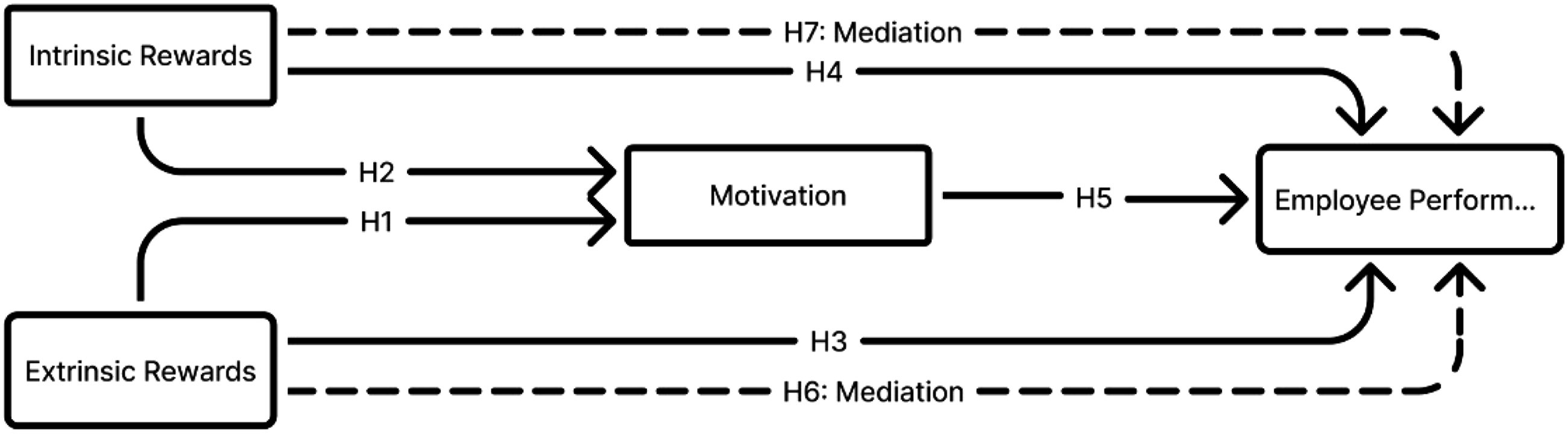
Research methodology
Respondents and sampling procedure
The target population of this study consisted of employees of private enterprises in Kosovo, while the unit of analysis was the individual employee. The study focused on the private sector because reward, motivation and performance practices are directly related to the way enterprises organize and manage their human resources.
Respondents were selected through purposive non-probability sampling. This approach was used because the study required participants employed in private enterprises who were able to evaluate reward practices, motivation, and performance within their organizational context. To ensure broader variation, the sample included 30 private enterprises from different sectors, including services, trade, manufacturing, finance, administration, and information technology. In terms of territorial distribution, the enterprises were selected from several economic centers of Kosovo.
The final sample included 300 respondents. To reach this number of valid responses, the initial distribution of 375 questionnaires was planned, considering an expected non-response rate of 20%. The required number of questionnaires was determined using the formula:

This indicated that 375 questionnaires needed to be distributed, corresponding to approximately 12–13 questionnaires per enterprise, with the aim of obtaining, on average, about 10 valid responses from each enterprise. The sample size was considered appropriate for testing the measurement and structural model, which includes four constructs: extrinsic rewards, intrinsic rewards, motivation, and employee performance. The dependent construct, employee performance, receives three direct paths from extrinsic rewards, intrinsic rewards and motivation.
In demographic terms, 56.0% of the respondents were female and 44.0% were male. The most represented age group was 25–34 years, accounting for 32.0% of the sample, while respondents aged 35–44 years accounted for 26.0%. Regarding education, 42.0% had completed bachelor’s studies and 32.0% had completed master’s studies. In terms of work experience, 27.0% had more than 10 years of experience and 26.0% had 4–7 years of experience.
Measurement scales
The research instrument was developed in accordance with the conceptual model of the study, which examines the relationship between reward systems, motivation and employee performance. The questionnaire was organized into two main sections. The first section included demographic questions related to gender, age, education level, work experience and monthly net salary. The second section included the items measuring the four study constructs: extrinsic rewards, intrinsic rewards, motivation and employee performance.
The construction of the instrument was guided by the reward-motivation-performance logic proposed by Güngör (2011). In the present study, the reward system was operationalized through two dimensions: extrinsic rewards and intrinsic rewards. Extrinsic rewards were measured with 10 items reflecting financial and material aspects of rewards, including fair compensation, bonuses, promotion opportunities, competitive salary, job security, additional benefits, transparency of reward policies, overtime compensation and additional compensation for exceptional engagement. Intrinsic rewards were measured with 10 items reflecting non-financial rewards, including verbal recognition, respect from management, skills development, meaningful work, participation in decision-making, autonomy, constructive feedback, responsibility, personal and professional fulfillment and symbolic recognition. Regarding motivation was treated as a mediating construct and was measured with 5 items. These items captured employees’ willingness to give maximum effort, the motivational role of achievement-based rewards, perceived organizational investment in employee development, clear communication of reward-related goals and the perceived link between individual effort and received rewards.
Employee performance was measured with a 12-item self-report scale adapted from the multidimensional logic of individual work performance proposed by Koopmans et al. (2014). In this study, employee performance covered three dimensions: task performance, contextual performance and adaptive performance. Task performance was measured through items related to completing work within deadlines, working accurately, achieving objectives and organizing tasks efficiently. Contextual performance was measured through items related to helping colleagues, taking initiative, maintaining professional and cooperative behavior and accepting responsibilities beyond minimum job requirements. Adaptive performance was captured through items related to adapting to changes, dealing effectively with unexpected situations, learning new work methods and maintaining stable performance under pressure.
All study construct items were formulated as statements and measured using a five-point Likert scale ranging from 1 = strongly disagree to 5 = strongly agree. Higher scores indicated stronger agreement with the respective statements and a higher perceived level of the measured construct. The items were adapted and contextualized for employees of private enterprises in Kosovo while preserving the theoretical meaning of the original constructs.
Pilot testing and preliminary reliability assessment
A pilot test was conducted before the main survey administration because the questionnaire was adapted and contextualized for the purpose of this study rather than used as a fully standardized instrument. The aim of the pilot phase was to examine whether the items were understandable, whether the questionnaire structure was logical and whether the measurement scale was suitable for employees of private enterprises in Kosovo. The pilot study included 30 employees from private enterprises with characteristics similar to the target respondents. These participants were not included in the final sample.
The pilot phase focused on three aspects of the instrument. First, face validity was assessed to determine whether the items appeared clear, relevant and appropriate for the intended respondents. Second, the structure of the questionnaire was reviewed to assess the logical order of the sections and the flow from demographic questions to the study constructs. Third, preliminary internal consistency was examined using Cronbach’s alpha for each construct: extrinsic rewards, intrinsic rewards, motivation, and employee performance.
The pilot results indicated that the questionnaire was generally understandable and suitable for the study context. Based on the feedback received, minor linguistic and technical adjustments were made to improve clarity and readability. Since the pilot sample was limited, Cronbach’s alpha was used only as an initial reliability check, while the main purpose of the pilot test was to refine the questionnaire before its administration to the final sample.
Data collection process
Primary data was collected through a structured questionnaire administered to employees of private enterprises in Kosovo. The data collection was conducted across 30 private enterprises operating in different sectors, including services, trade, manufacturing, finance, administration, and information technology. This approach was used to obtain responses from employees working in diverse organizational settings within the private sector.
Before completing the questionnaire, respondents were informed about the purpose of the study and the academic nature of the research. Participation was voluntary, and respondents were assured that their answers would be treated anonymously and confidentially. No financial or material incentives were offered for participation.
A total of 375 questionnaires were distributed, based on the planned final sample size and the expected non-response rate. After the data collection process was completed, 300 valid questionnaires were retained. The completed questionnaires were reviewed for completeness, coded and organized for subsequent statistical analysis.
Data screening and preparation
Before conducting the main statistical analyses, the dataset was screened for missing values, outliers and coding errors. Frequency distributions were examined for demographic variables, while descriptive statistics were calculated for the main constructs. The values of mean, standard deviation, median, minimum, maximum, skewness and kurtosis were used to assess the distribution of the data.
Normality was assessed using skewness and kurtosis values. The results showed that skewness ranged from −0.15 to 0.19 and kurtosis ranged from −0.66 to −0.38, indicating that the data did not show serious deviations from normality. This supported the use of further multivariate analyses, including Exploratory Factor Analysis, Confirmatory Factor Analysis and Structural Equation Modelling.
Statistical analysis
The data were analyzed using SPSS and RStudio. Before conducting the main analyses, the dataset was checked for missing values, coding errors and inconsistent response patterns. Only complete and usable questionnaires were included in the final analysis. Descriptive statistics were used to present the demographic profile of the respondents and to summarize the main study constructs. Frequencies and percentages were reported for categorical variables such as gender, age, education, work experience, and salary level, while means, standard deviations, skewness and kurtosis were calculated for the latent constructs.
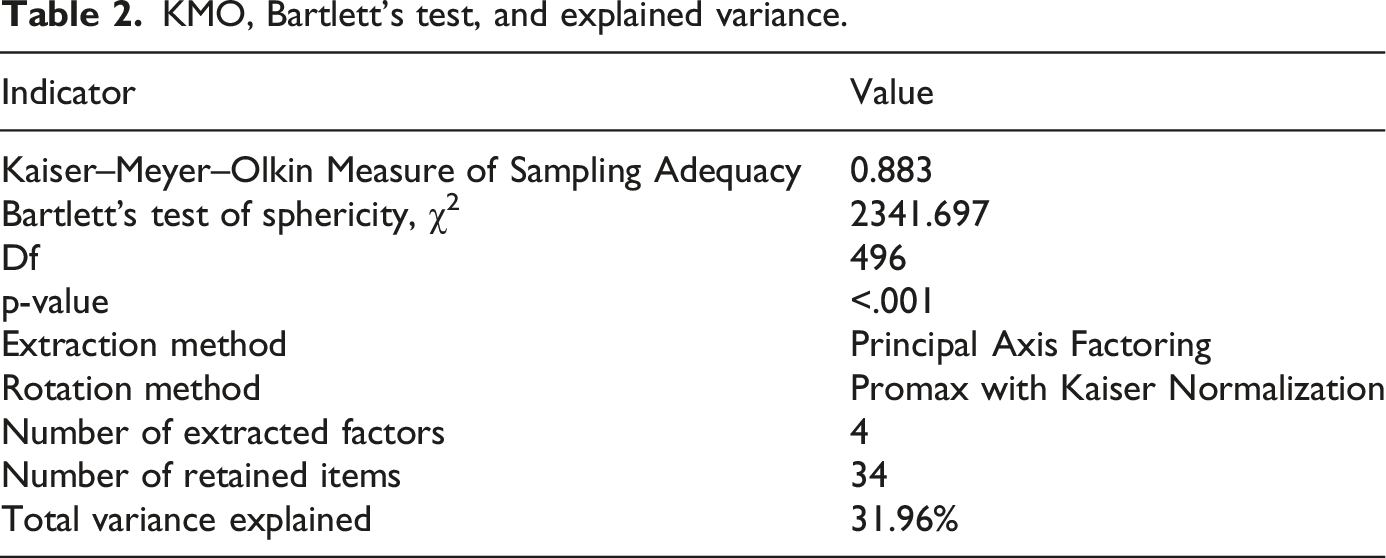
The measurement instrument was first examined through Exploratory Factor Analysis. Before factor extraction, the adequacy of the data was assessed using the Kaiser–Meyer–Olkin measure and Bartlett’s test of sphericity. The KMO value was 0.883, indicating very good sampling adequacy, and Bartlett’s test was statistically significant, χ2(496) = 2341.697, p < .001. These results confirmed that the data were suitable for factor analysis. Principal Axis Factoring with Promax rotation was applied, as the constructs were expected to be conceptually related. The analysis produced a four-factor solution corresponding to extrinsic rewards, intrinsic rewards, motivation, and employee performance. In total, 34 items were retained, all exceeding the minimum factor loading threshold of 0.40.
After the exploratory stage, Confirmatory Factor Analysis was used to assess whether the four-factor structure was supported by the data. The standardized factor loadings were positive and statistically significant at p < .001, indicating that the observed items were meaningfully related to their respective latent constructs. Although some loadings were moderate, they were retained because they were theoretically consistent with the constructs and acceptable for the purposes of the study. Model fit was evaluated using commonly reported fit indices, including χ2/df, CFI, TLI, RMSEA, and SRMR.
Reliability and validity were then examined before testing the structural relationships. Internal consistency was assessed using Cronbach’s Alpha and Composite Reliability. Cronbach’s Alpha values ranged from 0.737 to 0.813, while Composite Reliability values ranged from 0.740 to 0.815, exceeding the recommended threshold of 0.70. Convergent validity was examined through Average Variance Extracted. Although the AVE values were below the preferred threshold of 0.50, the constructs were retained because the reliability values were acceptable and all CFA loadings were statistically significant. Discriminant validity was assessed through inter-construct correlations, which showed moderate associations and supported the empirical distinction between the constructs.
The hypothesized relationships were tested using Structural Equation Modelling. The structural model examined the effects of extrinsic and intrinsic rewards on motivation, the effect of motivation on employee performance and the direct effects of both reward dimensions on employee performance. Multicollinearity was checked through Variance Inflation Factor values. Since the VIF values ranged from 1.142 to 1.258, they were well below the threshold of 5, indicating that multicollinearity did not represent a methodological concern.
Mediation analysis was also conducted to assess whether motivation explained the relationship between reward dimensions and employee performance. The indirect effects were estimated through the product of the relevant structural paths and evaluated using standard errors, z-values, p-values and 95% confidence intervals. This allowed the analysis to capture both the direct effects of reward dimensions and the indirect pathway through motivation.
Results
Descriptive statistics and normality assessment
Descriptive statistics and normality assessment.

The standard deviations show a moderate level of variation in the responses. Motivation had the highest standard deviation (SD = 0.84), which indicates that respondents differed somewhat more in how they perceived their level of motivation. In contrast, intrinsic rewards had the lowest standard deviation (SD = 0.69), suggesting more consistent responses for this construct. The skewness and kurtosis values were within acceptable ranges, with skewness ranging from −0.15 to 0.19 and kurtosis from −0.66 to −0.38. This indicates that the data did not show serious deviations from normality and were suitable for further analyses such as EFA, CFA, and SEM.
Exploratory factor analysis
KMO, Bartlett’s test, and explained variance.
Exploratory factor analysis pattern matrix.
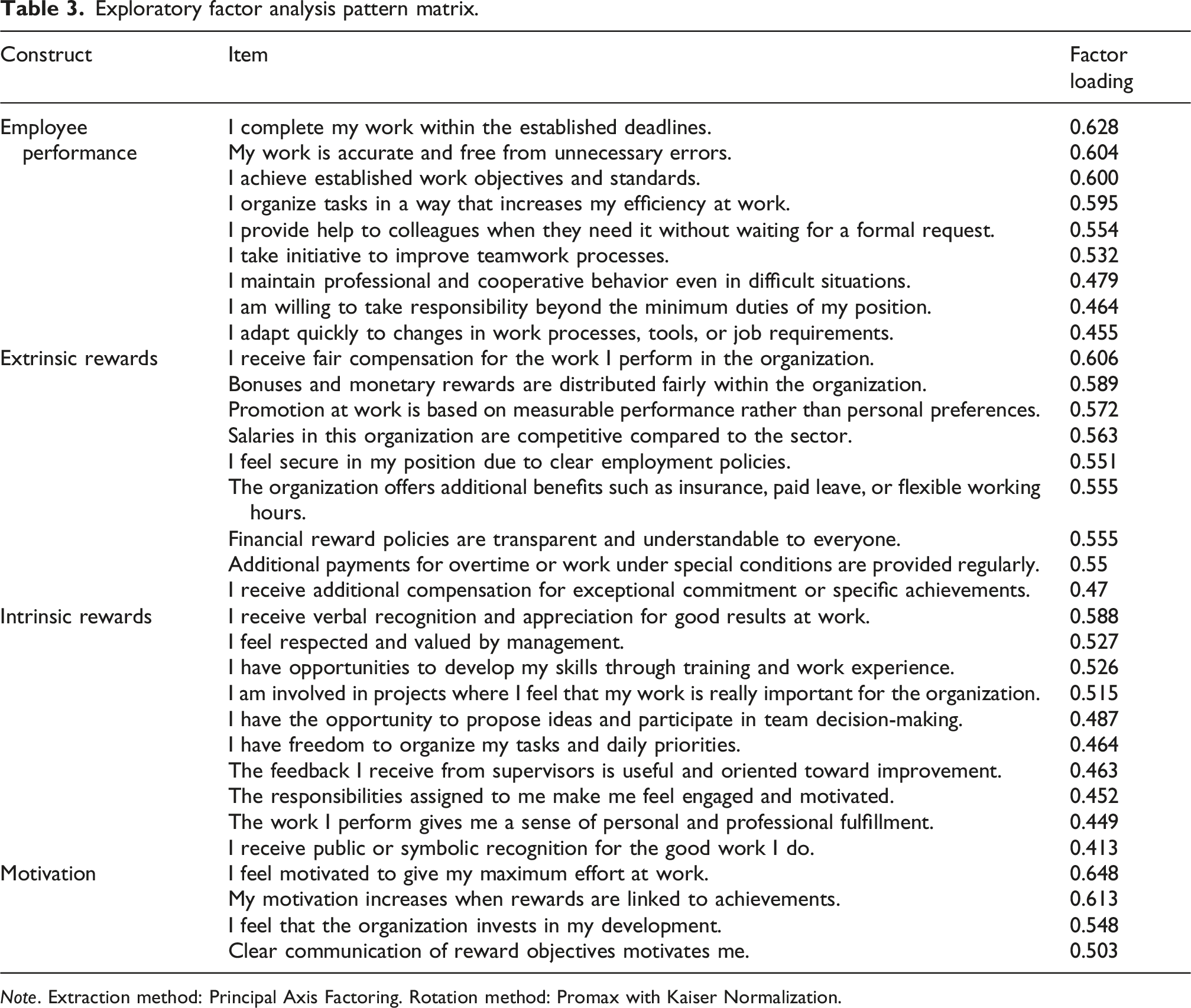
Note. Extraction method: Principal Axis Factoring. Rotation method: Promax with Kaiser Normalization.
Factor correlation matrix.
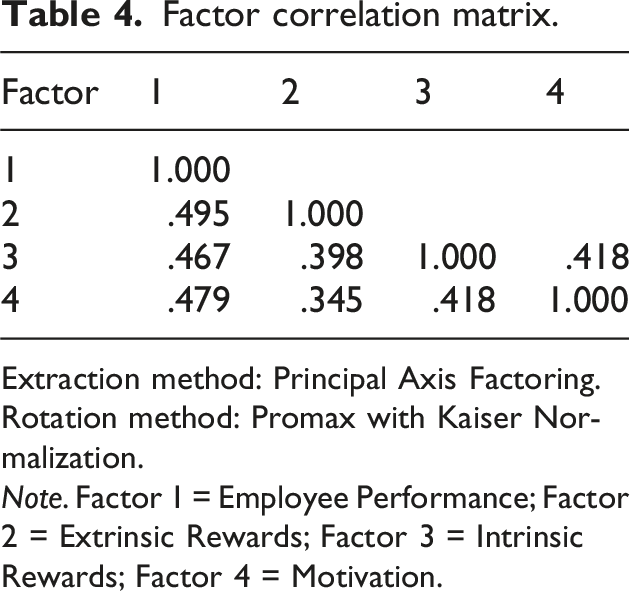
Extraction method: Principal Axis Factoring. Rotation method: Promax with Kaiser Normalization.Note. Factor 1 = Employee Performance; Factor 2 = Extrinsic Rewards; Factor 3 = Intrinsic Rewards; Factor 4 = Motivation.
Confirmatory factor analysis and measurement model evaluation
Standardized factor loadings.
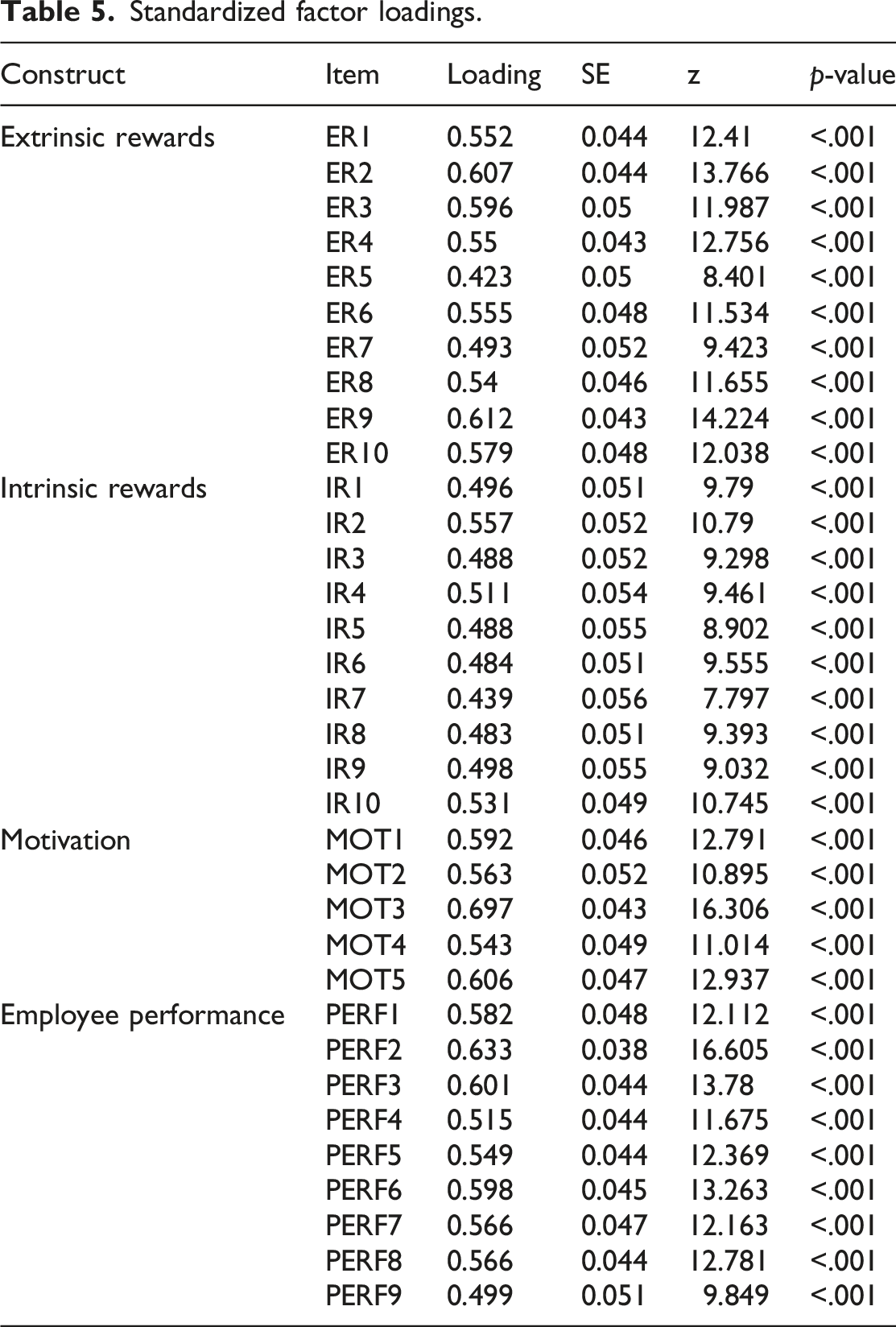
For extrinsic rewards, the loadings ranged from 0.423 to 0.612, with most indicators clustering around the moderate range. This suggests that the construct captures several related but not identical aspects of external reward practices, including compensation, bonuses, promotion, benefits, and reward transparency. A similar pattern was observed for intrinsic rewards, where the loading ranged from 0.439 to 0.557. These values indicate that non-financial reward experiences such as recognition, autonomy, feedback and development opportunities contributed to the construct, but with relatively moderate individual strength.
The measurement of motivation showed comparatively stronger loadings, ranging from 0.543 to 0.697. This indicates a clearer association between the motivation indicators and the underlying latent construct, particularly for the item related to organizational investment in employee development. Employee performance also showed a relatively stable pattern of loadings, ranging from 0.499 to 0.633, suggesting that the performance indicators consistently reflected the behavioral outcomes included in the model. The CFA results indicate an acceptable measurement structure. Although several loadings did not reach the preferred level of 0.70, all indicators were statistically significant and theoretically consistent with their constructs. On this basis, the measurement model was retained for further assessment of reliability, convergent validity, discriminant validity, and subsequent structural relationships.
Reliability and convergent validity.
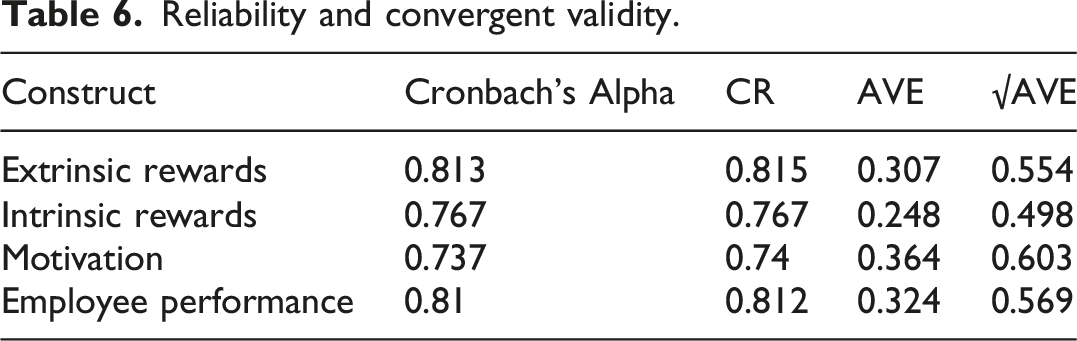
The AVE values ranged from 0.248 to 0.364, indicating that the average variance extracted by the constructs was below the conventional benchmark of 0.50. However, this result should be interpreted together with the reliability of coefficients and CFA estimates. Since all composite reliability values were above 0.70 and all standardized factor loadings were statistically significant at p < .001, the constructs retained sufficient measurement consistency for further analysis. Therefore, although the AVE values suggest modest convergent strength, the overall reliability and CFA evidence support the retention of the measurement model for testing the structural relationships.
CFA and SEM model fit indices.
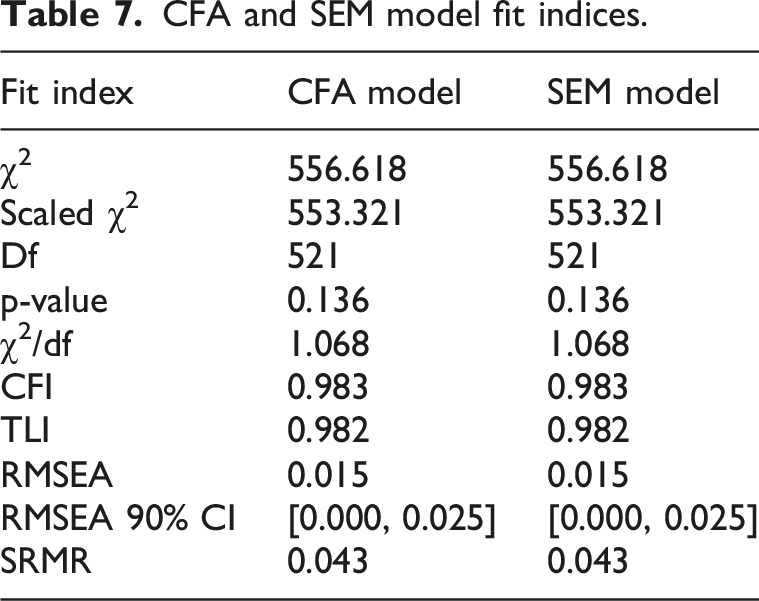
The incremental fit indices were also highly satisfactory, with CFI = 0.983 and TLI = 0.982 for both models. These values are well above the commonly accepted threshold of 0.90 and also exceed the stricter criterion of 0.95, indicating very good comparative model fit. The absolute fit indices further support this conclusion, with RMSEA = 0.015, 90% CI [0.000, 0.025] and SRMR = 0.043. The very low RMSEA value, together with its narrow confidence interval, suggests a close approximation of the model to the data, while the SRMR value indicates low standardized residuals. The identical fit indices for the CFA and SEM models show that the transition from the measurement model to the structural model did not reduce model fit. These results provide strong empirical support for the adequacy of the proposed model and justify the interpretation of the structural paths among rewards, motivation, and employee performance.
Discriminant validity assessment using correlations, square root of AVE, and HTMT.
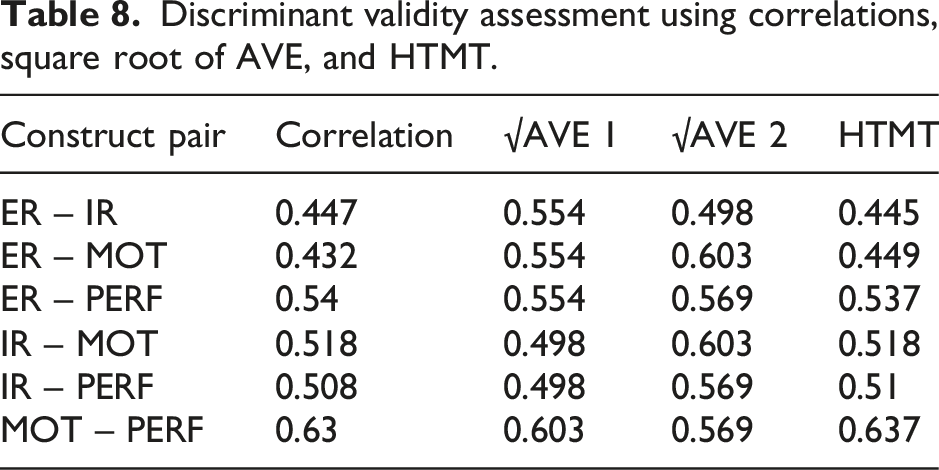
The Fornell-Larcker results show that the square root of AVE was generally close to the corresponding inter-construct correlations, with some pairs presenting marginal overlap. However, the HTMT results provide stronger evidence for discriminant validity, as all HTMT values ranged from 0.445 to 0.637, remaining well below the conservative threshold of 0.85. This indicates that the constructs are empirically related, but sufficiently distinct from one another. The discriminant validity results support the adequacy of the measurement model. Although the constructs share meaningful conceptual relationships, particularly motivation and employee performance, the HTMT values confirm that the latent variables do not represent overlapping dimensions. Therefore, the measurement model was considered suitable for the subsequent structural model analysis.
Structural model assessment and direct effects
Figure 1 presents the standardized estimates of the structural equation model. The measurement component shows positive factor loadings for all indicators on their respective latent constructs, consistent with the CFA results reported above. The structural component presents the five direct paths included in the model: extrinsic rewards to motivation, intrinsic rewards to motivation, motivation to employee performance, extrinsic rewards to employee performance and intrinsic rewards to employee performance.
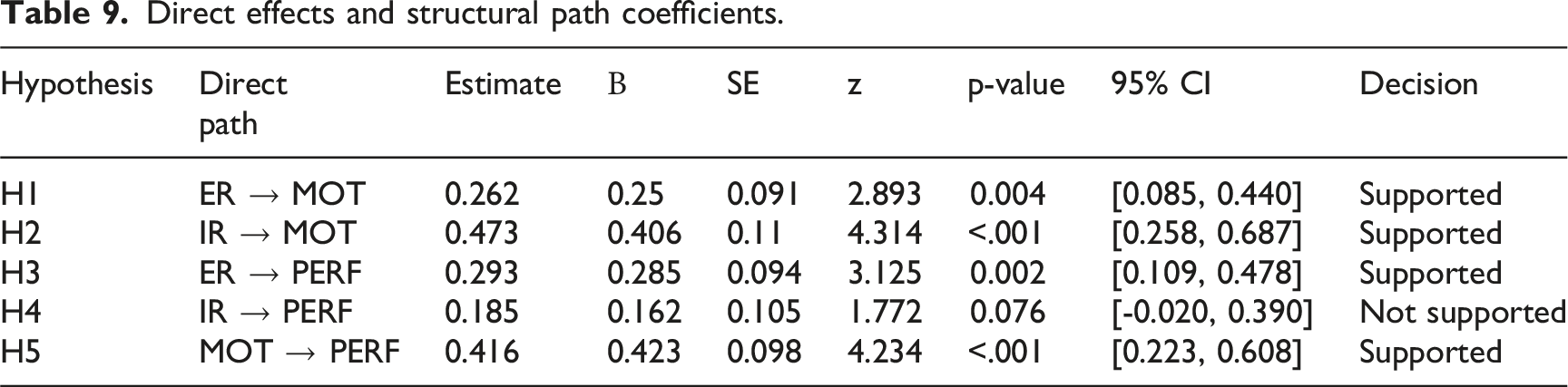
Direct effects and structural path coefficients.
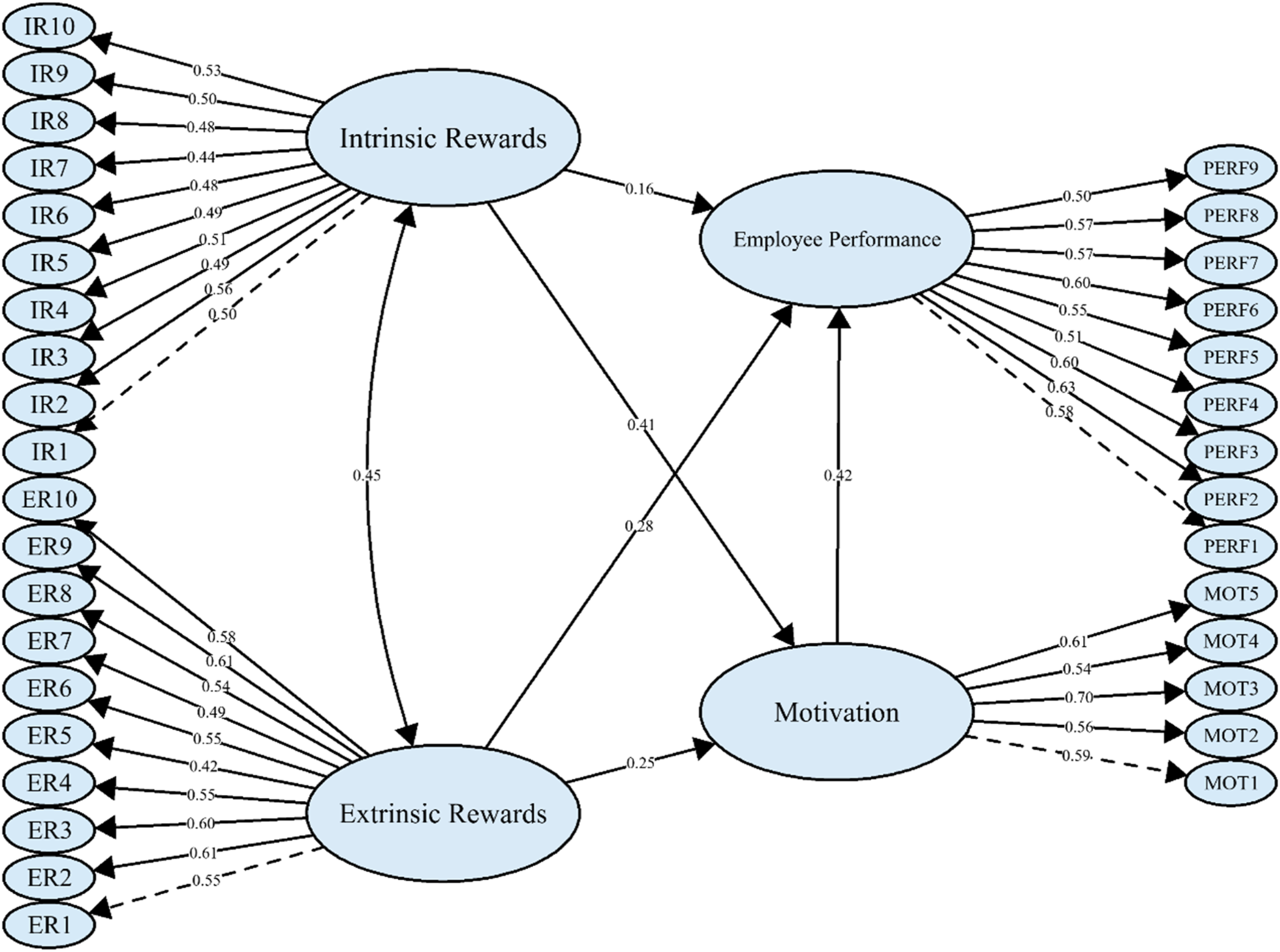
Standardized structural equation model results.
Based on the standardized coefficients presented in Figure 2, the structural relationships can be expressed as follows:

Table 9 reports the direct effects among the latent constructs included in the structural model. The results show that extrinsic rewards had a positive and statistically significant effect on motivation (β = 0.250, z = 2.893, p = 0.004, 95% CI [0.085, 0.440]), supporting H1. Intrinsic rewards also had a positive and statistically significant effect on motivation (β = 0.406, z = 4.314, p < .001, 95% CI [0.258, 0.687]), supporting H2. The higher standardized coefficient for intrinsic rewards indicates a stronger direct association with motivation compared with extrinsic rewards.
Regarding employee performance, extrinsic rewards showed a positive and statistically significant direct effect (β = 0.285, z = 3.125, p = 0.002, 95% CI [0.109, 0.478]), supporting H3. In contrast, the direct effect of intrinsic rewards on employee performance was positive but not statistically significant (β = 0.162, z = 1.772, p = 0.076, 95% CI [−0.020, 0.390]); therefore, H4 was not supported. Motivation had a positive and statistically significant effect on employee performance (β = 0.423, z = 4.234, p < .001, 95% CI [0.223, 0.608]), supporting H5. The direct effects indicate that both reward dimensions had significant positive effects on motivation. Among the direct paths to employee performance, motivation showed the strongest standardized effect, followed by extrinsic rewards, while the direct effect of intrinsic rewards did not reach statistical significance. This pattern indicates that the contribution of intrinsic rewards to employee performance is further assessed through the mediation analysis reported in the following section.
Explanatory power and multicollinearity diagnostics
Explanatory power and multicollinearity diagnostics.
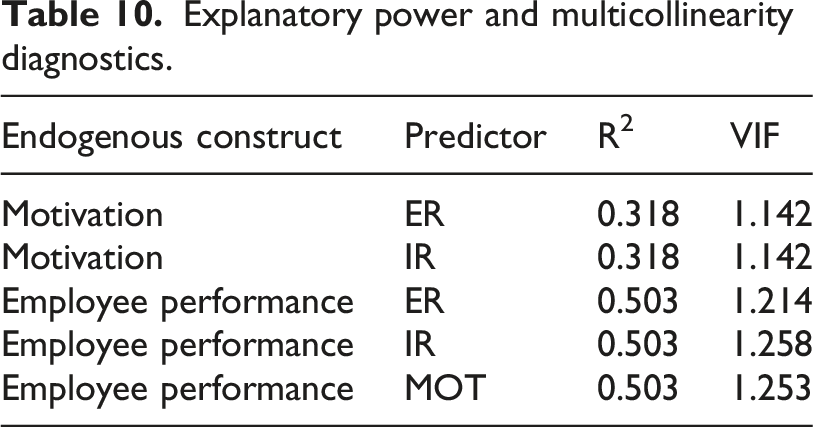
The VIF values ranged from 1.142 to 1.258, remaining well below the recommended threshold of 5. This indicates that multicollinearity was not a concern among the predictor constructs. Therefore, the structural path coefficients can be interpreted without evidence of distortion caused by collinearity.
Mediation analysis
After assessing the explanatory power and collinearity diagnostics, mediation analysis was conducted to examine whether motivation mediated the relationships between rewards and employee performance. The indirect effects were calculated using the standardized path coefficients as the product of the path from the independent variable to motivation and the path from motivation to employee performance. Following the assessment of the direct structural relationships, explanatory power and multicollinearity diagnostics, mediation analysis was conducted to examine whether motivation mediated the relationships between rewards and employee performance. The indirect effects were calculated using the standardized path coefficients. Specifically, the indirect effect was estimated as the product of the path from the independent variable to motivation and the path from motivation to employee performance:


The total effects were calculated as the sum of the direct and indirect effects:


Mediation, indirect effects, and total effects.
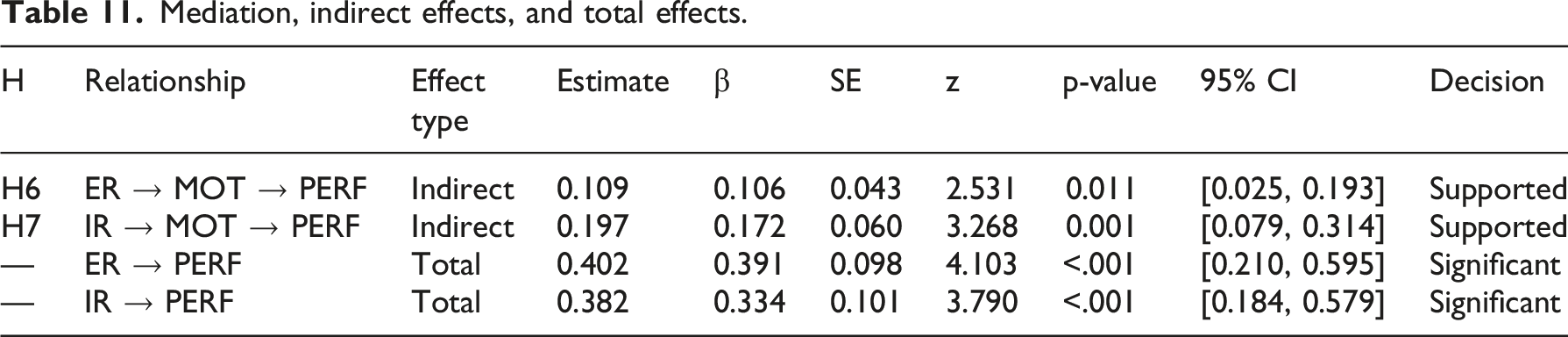
The indirect effect of intrinsic rewards on employee performance through motivation was also positive and statistically significant (β = 0.172, z = 3.268, p = 0.001, 95% CI [0.079, 0.314]), supporting H7. Although the direct effect of intrinsic rewards on employee performance was not statistically significant, the significant indirect effect indicates that intrinsic rewards are associated with employee performance mainly through motivation.
The total effects were statistically significant for both reward dimensions. The total effect of extrinsic rewards on employee performance was β = 0.391 (z = 4.103, p < .001, 95% CI [0.210, 0.595]), while the total effect of intrinsic rewards was β = 0.334 (z = 3.790, p < .001, 95% CI [0.184, 0.579]). These results show that both extrinsic and intrinsic rewards had significant total effects on employee performance when direct and indirect pathways were considered together.
The structural model provided support for six of the seven proposed hypotheses. The results confirmed the significant effects of extrinsic and intrinsic rewards on motivation, the significant effect of motivation on employee performance, and the significant direct effect of extrinsic rewards on employee performance. The direct effect of intrinsic rewards on employee performance was not statistically significant; however, its indirect effect through motivation was significant. Thus, the findings indicate that motivation plays an important mediating role in linking reward practices with employee performance.
Discussion
The discussion is organized around the main empirical relationships tested in the model: the effects of extrinsic and intrinsic rewards on motivation, the effect of motivation on employee performance, the direct effects of reward dimensions on performance and the mediating role of motivation. The results indicate that the two reward dimensions do not operate in the same way. Extrinsic rewards were related to both motivation and employee performance, whereas intrinsic rewards were more strongly related to motivation and became relevant for performance mainly through the motivational pathway.
The positive effect of extrinsic rewards on motivation shows that tangible rewards remain important in explaining employees’ willingness to invest in effort. Salary, bonuses, benefits, promotion opportunities, and job security may motivate employees because they make the employment relationship more concrete and visible. This result is consistent with Chi et al. (2023), who found that financial rewards strengthen work-related relationships involving job satisfaction and job performance. 43 It also corresponds with Camilleri et al. (2023), who showed that reward schemes can increase worker motivation when the reward structure is meaningful and understandable. 5 Newman et al. (2024) further showed that reward design and reward frequency influence employee performance, suggesting that employees respond not only to the existence of rewards, but also to how rewards are structured and delivered. In the present study, extrinsic rewards appear to motivate employees when they are perceived as attainable, fair, and connected to contribution.
The stronger effect of intrinsic rewards on motivation indicates that employees are motivated not only by material rewards, but also by how they experience their work. Recognition, autonomy, meaningful work, feedback, and development opportunities can create a sense of respect, value, and belonging. This result is consistent with Manzoor et al. (2021), who found that intrinsic rewards are linked to employee performance through motivation, also showed that recognition, fairness, and leadership are important factors in employee outcomes. 44 Presslee et al. (2023) similarly found that recognition-based practices can increase employee engagement and effort. Therefore, the present finding suggests that intrinsic rewards are not secondary or symbolic elements of reward management, but psychological drivers that strengthen employees’ internal willingness to contribute. 45
The positive and significant effect of motivation on employee performance confirms that motivation is a central mechanism in the model. Motivated employees are more likely to complete tasks, cooperate with colleagues, adapt to changes, and sustain work effort. Layek and Koodamara (2024) found positive relationships between motivation and performance, showing that motivation remains important for understanding how employees achieve work-related goals. 16 Aljumah (2023) also emphasized the role of intrinsic and extrinsic motivation in explaining employee-related outcomes, 46 while Cerasoli et al. (2014) showed that motivation and incentives jointly predict performance. 47 In the present study, motivation appears to be the psychological condition through which reward experiences become linked with actual performance behavior.
The significant direct effect of extrinsic rewards on employee performance indicates that tangible rewards may also influence performance independently of motivation. This result is consistent with Wood et al. (2023), who reported that performance-related pay can improve performance when the reward system creates a credible link between performance and rewards. 48 It is also supported by Garbers and Konradt (2014), who found positive effects of financial incentives on individual and team performance, 49 and by Condly et al. (2003), who showed that incentive programs can improve workplace outcomes. 50 However, this effect should be read with caution because financial incentives do not have identical effects across all work settings. Cerasoli et al. (2014) emphasized that extrinsic incentives should be considered together with intrinsic motivation, 47 while Choi and Presslee (2023) showed that reward type can shape employee effort differently. 51 In the present study, extrinsic rewards seem to support performance when they are perceived as fair, transparent, and connected to contribution.
The direct effect of intrinsic rewards on employee performance was not statistically significant. This finding is important because it shows that intrinsic rewards do not automatically translate into performance when motivation is included in the model. It differs from studies reporting a direct positive relationship between intrinsic rewards or intrinsic motivation and performance,47,44 but it is compatible with research suggesting that non-financial rewards often influence outcomes through intermediate psychological states. Presslee et al. (2023), for example, showed that recognition influences engagement and effort. 45 In the present study, intrinsic rewards seem to require motivational internalization before they become visible in task-related, contextual, or adaptive performance.
The mediation results further clarify the different roles of the two reward dimensions. Motivation mediated the relationship between extrinsic rewards and employee performance, indicating that tangible rewards improve performance partly by increasing employees’ willingness to invest in effort. This finding is consistent with Camilleri et al. (2023), who showed that reward schemes can influence both motivation and performance, 5 and with Condly et al. (2003), who found that incentives can direct effort toward expected outcomes. 50 Motivation also mediated the relationship between intrinsic rewards and employee performance. This result is strongly aligned with Manzoor et al. (2021), who identified motivation as a mediating mechanism between intrinsic rewards and employee performance. 44 It also corresponds with Presslee et al. (2023), recognition of increased engagement and effort. 45
The comparison between direct and indirect effects shows that extrinsic and intrinsic rewards have different behavioral routes. Extrinsic rewards appear to create more immediate performance-related responses because they are visible, tangible, and directly connected to outcomes. Intrinsic rewards, however, appear to work mainly through employees’ internal motivational states. This distinction is consistent with Cerasoli et al. (2014), who showed that extrinsic incentives and intrinsic motivation jointly predict performance but may operate through different mechanisms. 47 It also aligns with Bandhu et al. (2024), who distinguish external incentives from internal motivational drivers. 52 In the present study, the reward system is therefore better understood as a combination of material and psychological signals that influence motivation and performance in different ways.
Theoretical implications
This study contributes to the literature on reward systems, motivation, and employee performance by showing that rewards should be understood as strategic mechanisms rather than as isolated compensation practices. The findings indicate that extrinsic rewards are associated with employee performance both directly and indirectly through motivation, while intrinsic rewards become performance-relevant mainly through motivation. This distinction supports a more differentiated view of reward systems, where financial and non-financial rewards influence employee outcomes through different psychological and behavioral routes.53–55
The study also extends motivation-based explanations of performance by positioning motivation as the central mechanism through which reward systems are translated into employee behavior. The significant indirect effects suggest that rewards are not effective only because they are formally provided, but because employees interpret them as meaningful, fair, and relevant to their contribution. This supports the view that HRM practices influence performance through intermediate employee responses rather than only through direct organizational control mechanisms. 56
A further theoretical implication relates to the role of intrinsic rewards. The non-significant direct effect of intrinsic rewards on employee performance, combined with the significant indirect effect through motivation, suggests that recognition, autonomy, meaningful work, feedback, and development opportunities first influence employees’ motivational state before affecting performance behavior. This contributes to the literature by clarifying that non-financial rewards may operate mainly through internal psychological processes, while extrinsic rewards may create both direct and indirect performance effects.53,55
Finally, by treating employee performance as a multidimensional construct that includes task, contextual, and adaptive performance, this study broadens the theoretical understanding of how reward systems influence employee behavior. The findings suggest that reward systems should be conceptualized as strategic HRM practices that combine material incentives, psychological meaning, and motivational pathways. In this sense, the study links reward systems with a broader performance logic, where employee behavior is shaped not only by compensation, but also by the motivational interpretation of rewards.56,57,54 More specifically, this implication shows that reward systems may relate to different types of employee performance in different ways. Extrinsic rewards, such as salary, bonuses, promotion opportunities and financial incentives, are more directly associated with task performance because they are usually linked to clear work objectives, measurable results and formal job responsibilities. When employees perceive these rewards as fair, transparent and connected to their actual contribution, they are more likely to direct their effort toward completing tasks, meeting performance standards and improving measurable work outcomes.
By contrast, intrinsic rewards, such as recognition, autonomy, meaningful work, feedback, participation and development opportunities, may be more closely associated with contextual and adaptive performance. These rewards can strengthen employees’ sense of value, competence and involvement in the organization. As a result, employees may be more willing to support colleagues, take initiative, accept responsibilities beyond their formal duties and adapt to changes in the workplace. In this way, reward systems should not be understood only as tools for improving overall performance, but as broader HRM practices that can support task, contextual and adaptive performance through different motivational pathways.
Practical implications
The findings of this study offer several practical implications for managers and human resource professionals who aim to improve employee motivation and performance. First, organizations should design reward systems that combine both extrinsic and intrinsic rewards. Since extrinsic rewards were positively related to both motivation and employee performance, managers should ensure that salary, bonuses, benefits, promotion opportunities, and job security are perceived as fair, transparent, and connected to employee contribution. When employees perceive a clear relationship between effort, performance and reward, tangible rewards are more likely to strengthen motivation and support performance.43,48
Second, the results suggest that organizations should not rely exclusively on financial incentives. Although extrinsic rewards are important, intrinsic rewards have a stronger effect on motivation. Therefore, managers should place greater emphasis on recognition, autonomy, constructive feedback, meaningful work, involvement in decision-making, and development opportunities. These forms of non-financial rewards may be particularly valuable because they influence employees’ sense of respect, belonging, and personal value within the organization.44,45 In practical terms, this means that managers can strengthen motivation not only by increasing financial rewards, but also by improving the quality of employee work experience.
Third, the significant mediating role of motivation suggests that managers should evaluate reward systems based on their motivational effectiveness, not only on their formal existence. A reward system may be present in an organization, but if employees perceive it as unfair, unclear or unrelated to real contribution, its effect on motivation and performance may be limited. For this reason, organizations should regularly assess employees’ perceptions of reward fairness, transparency, and relevance through employee surveys, feedback meetings, and performance discussions. Such practices can help managers identify whether existing rewards are motivating employees or whether adjustments are needed. In the Kosovo context, this implication is particularly relevant for managers and human resource professionals in private enterprises. Given the importance of fairness, transparency and consistency in reward-related decisions, managers should ensure that salary increases, bonuses, promotion opportunities and other financial incentives are clearly linked to measurable performance criteria. This is especially important in organizations where employees evaluate the reward system not only through the value of the reward itself, but also through the perceived fairness of how rewards are distributed. A transparent reward system can strengthen the motivational effect of extrinsic rewards and help employees understand the connection between their effort, contribution and organizational recognition.
At the same time, human resource professionals in Kosovo should not rely exclusively on financial incentives. The findings show that intrinsic rewards are also important because they strengthen motivation and may support broader forms of employee performance. In practical terms, this means that enterprises should systematically use non-financial rewards, including recognition of good work, constructive supervisor feedback, professional development opportunities, employee participation in decision-making and greater autonomy in daily work. Such practices can help managers and human resource professionals build a more balanced reward system that supports not only task performance, but also contextual and adaptive performance.
Findings imply that reward systems should be flexible and aligned with different employee needs. Employees may respond differently to financial and non-financial rewards depending on their position, experience, career stage, and personal expectations. Therefore, managers should avoid applying a uniform reward strategy to all employees. A more effective approach is to combine material security with psychological recognition and professional development. Such a balanced reward strategy can strengthen motivation and create better conditions for improving tasks, contextual, and adaptive performance.
Conclusion
This study confirms that reward systems are strategic mechanisms for strengthening employee motivation and employee performance. The findings show that both extrinsic and intrinsic rewards have significant positive effects on motivation, while motivation has a significant positive effect on employee performance. The results also show that extrinsic rewards influence employee performance both directly and indirectly through motivation, whereas intrinsic rewards influence employee performance mainly through the motivational pathway.
The study provides evidence that reward systems should not be treated only as compensation instruments. They should be understood as broader human resource management practices that combine financial incentives, recognition, autonomy, feedback, and development opportunities. This distinction is important because extrinsic and intrinsic rewards do not operate in the same way. Extrinsic rewards create a more direct performance effect, while intrinsic rewards become relevant for performance primarily when they strengthen employee motivation.
The findings indicate that employee performance depends not only on the existence of reward practices, but also on employees’ perceptions of their fairness, transparency, and relevance to actual contribution. Reward systems are more effective when employees perceive them as meaningful and clearly connected to work effort, achievement, and organizational expectations. Therefore, organizations that aim to improve task, contextual, and adaptive performance should develop balanced reward systems that provide both material security and psychological recognition.
Footnotes

Ethical consideration
Ethical approval was not required according to institutional guidelines.
Consent to participate
Participation was voluntary and anonymous, and informed consent was obtained from all respondents prior to participation.
Author contributions
Conceptualization: F.Q. and A.Q.; methodology: A.Q., F.Q., and A.T.; software: A.Q.; validation: A.T. and F.Q.; formal analysis: A.Q. and F.Q.; investigation: A.Q., G.S., and B.S.; resources: G.S. and B.S.; data curation: A.Q. and B.S.; writing-original draft preparation: A.Q. and F.Q.; writing-review and editing: A.Q., F.Q., G.S., B.S., and A.T.; visualization: A.Q.; supervision: F.Q. and A.T.; project administration: F.Q.; funding acquisition: not applicable. All authors have read and agreed to the published version of the manuscript.
Funding
The authors received no financial support for the research, authorship, and/or publication of this article.
Declaration of conflicting interests
The authors declared no potential conflicts of interest with respect to the research, authorship, and/or publication of this article.
Data Availability Statement
The data that support the findings of this study are available from the corresponding author upon reasonable request.