






Abstract
Purpose
This study investigates how conversational AI, particularly ChatGPT, influences tourists’ purchase intention by reshaping decision-making processes within tourism service systems. It contributes to a deeper understanding of human–AI interaction and its role in contemporary consumer decision systems in the tourism and hospitality context. The study focuses on the mediating roles of perceived empathy, trust in AI-generated content, and content adaptability—three complementary emotional, cognitive, and contextual mechanisms that are integrated within a unified framework to explain how individuals engage with AI during travel planning and decision-making. Grounded in the Stimulus–Organism–Response (S-O-R) framework, the research captures both cognitive and emotional pathways linking AI interaction to behavioral outcomes.
Design/methodology/approach
Out of 2,256 responses, 1,438 tourists who confirmed using ChatGPT for travel-related decisions were retained for analysis.
Findings
The findings reveal that conversational AI significantly and directly influences tourists’ purchase intention, while also enhancing users’ perceived empathy during AI interaction, trust, and adaptability. These psychological responses partially mediate the relationship, highlighting the dual role of emotional and contextual mechanisms in AI-driven decision-making systems.
Originality/value
The study extends the S-O-R framework by simultaneously integrating emotional (perceived empathy), cognitive (trust in AI-generated content), and contextual (content adaptability) dimensions within a unified AI-enabled decision-making framework. From a managerial perspective, the findings emphasize the strategic importance of designing AI systems that foster trust, simulate empathy, and dynamically adapt to user preferences. Such integrated capabilities support more effective, self-directed decision-making processes and enhance engagement and conversion outcomes in tourism service ecosystems.
Introduction
Tourist purchase intention has long been a central concern in tourism and hospitality research due to its direct implications for market performance, service design, and strategic destination management. A wide range of factors has been identified as influencing this intention, including destination image, price perception, service quality, and psychological determinants such as motivation, perceived risk, and personal involvement. 1 In recent years, digital transformation has introduced a new category of influential variables driven by artificial intelligence (AI) and interactive technologies. 2 As tourists increasingly rely on digital tools throughout their travel journey, the psychological and experiential dimensions of technology-mediated interactions have become critical in shaping purchasing behavior. 3
Among the most notable innovations in this domain is ChatGPT, a generative AI model capable of engaging users in dynamic, human-like conversational interactions. 4 Unlike traditional travel websites or static recommendation systems, ChatGPT allows users to interact in real time, refine their queries, and receive responses that are coherent, contextually relevant, and tailored to individual needs. 5 This interactive capability positions ChatGPT not merely as an information provider, but as a potential influencer of consumer behavior, particularly in shaping tourist purchase intention. 6
The growing role of ChatGPT in tourism and hospitality reflects broader shifts in how tourists seek, process, and respond to information. 7 As digital travelers increasingly demand speed, accuracy, and personalization, ChatGPT offers a distinct advantage by delivering intelligent content through an intuitive conversational interface. 8 This functionality enables users to explore destinations, accommodations, and travel logistics while receiving immediate, tailored responses, thereby facilitating smoother transitions from information search to decision-making and enhancing purchase intention. 9
Beyond its informational role, ChatGPT influences key psychological drivers of tourist behavior, particularly perceived empathy, trust in AI-generated content, and content adaptability.10,11 In tourism contexts—where decisions are often emotionally driven—these factors play a critical role in shaping behavioral outcomes. When users perceive the system as responding in ways that reflect an understanding of their needs, providing reliable information, and adapting to their preferences, they are more likely to develop confidence and intention to act. 12 Accordingly, the effectiveness of ChatGPT lies not only in the information it provides but in the quality of interaction it delivers, combining perceived emotional responsiveness, cognitive assurance, and contextual relevance.
This study is conceptually grounded in the Stimulus–Organism–Response (S-O-R) framework, which provides a robust lens for understanding how external stimuli influence internal cognitive and emotional states, ultimately leading to behavioral responses. 13 Within this framework, ChatGPT represents the stimulus, triggering organism-level processes such as perceived empathy, trust in AI-generated content, and content adaptability, which in turn shape the response, namely tourist purchase intention. 14 This perspective enables a more nuanced understanding of how AI-mediated interactions translate into behavioral outcomes in tourism and hospitality settings.
Despite the increasing adoption of AI in tourism and hospitality, 15 existing research remains limited in capturing the experiential and behavioral implications of AI-driven conversational systems such as ChatGPT. Prior studies have predominantly focused on functional aspects of AI, including automation, efficiency, and algorithmic personalization,16–18 while largely overlooking the psychological and emotional dynamics perceived within human–AI interactions. Moreover, although constructs such as trust, empathy, and perceived relevance are well established in consumer behavior research,14,19 limited research has examined their collective and integrated role within a unified AI-mediated conversational framework, particularly in tourism contexts. Existing studies tend to examine these constructs in isolation or within static digital environments, failing to capture their dynamic interplay in real-time, adaptive interactions. In addition, the application of established behavioral frameworks, such as the S-O-R model, to generative AI contexts remains limited, particularly in tourism settings. This highlights a critical need for empirical research that explains how conversational AI stimuli translate into internal psychological states and ultimately influence tourist behavior.
Addressing these gaps, this study aims to provide an integrated understanding of how ChatGPT influences tourist purchase intention through the combined effects of emotional, cognitive, and contextual mechanisms within a single conceptual framework. Specifically, the study seeks to: 1) examine the effect of ChatGPT on purchase intention, perceived empathy, trust in AI-generated content, and content adaptability; 2) assess the impact of perceived empathy, trust, and content adaptability on purchase intention; and 3) investigate the mediating roles of these psychological factors in the relationship between ChatGPT and purchase intention. By adopting the Stimulus–Organism–Response (S-O-R) framework, this research not only extends consumer behavior theory into the emerging domain of generative AI in tourism, but also advances the understanding of how dynamic, conversational AI systems reshape decision-making processes in experience-driven industries. Furthermore, the study contributes to the literature by simultaneously integrating emotional (perceived empathy), cognitive (trust in AI-generated content), and contextual (content adaptability) constructs within a real-time interactive context, thereby offering a more holistic and theoretically integrated explanation of tourist behavior in digital environments. From a practical perspective, the findings provide actionable insights for tourism practitioners and destination managers on how to strategically leverage conversational AI technologies to enhance user engagement, build trust, personalize interactions, and ultimately stimulate purchase intentions in increasingly competitive digital marketplaces.
Literature review and hypothesis development
The increasing adoption of conversational artificial intelligence in tourism and hospitality has fundamentally reshaped how travelers search for information, evaluate alternatives, and formulate purchasing decisions. 20 Among recent AI applications, ChatGPT has attracted considerable scholarly and practical attention because of its ability to generate interactive, context-sensitive, and human-like communication in real time.21,22 Unlike traditional digital systems that primarily provide static information or standardized recommendations, ChatGPT enables continuous conversational exchanges through which users can clarify preferences, refine travel needs, and receive dynamically tailored responses. 9 In tourism and hospitality settings, purchasing decisions are shaped not only by the quality of information provided, but also by the extent to which communication appears responsive, personalized, and emotionally reassuring.22,23
To explain these interaction dynamics, the present study adopts the Stimulus–Organism–Response (S-O-R) framework, which proposes that external environmental stimuli influence individuals’ internal psychological states, which subsequently shape behavioral responses.24,25 Within the context of conversational AI, interaction with ChatGPT represents the external stimulus because users are exposed to AI-generated communication characterized by personalization, responsiveness, contextual adaptation, and conversational engagement.26,27 These interaction features may activate multiple organism-level psychological evaluations that shape how tourists interpret and respond to the communication experience. 28
More specifically, the present study conceptualizes perceived empathy, trust in AI-generated content, and content adaptability as complementary organism-level mechanisms that explain how tourists psychologically process interaction with conversational AI.27,28 Perceived empathy reflects the emotional dimension of the interaction, capturing the extent to which users perceive the system as attentive, understanding, and responsive to their needs. 26 Trust in AI-generated content represents a cognitive evaluation concerning the credibility, reliability, and dependability of the information generated by ChatGPT. 29 Content adaptability, in turn, reflects a contextual evaluation related to the system’s ability to dynamically tailor communication according to users’ preferences, situational conditions, and evolving travel requirements.30–32 Collectively, these mechanisms provide a multidimensional interpretation of the organism stage by integrating emotional, cognitive, and contextual responses within a unified AI-mediated tourism framework.
Drawing on the S-O-R perspective, these internal psychological responses are expected to shape tourists’ behavioral outcomes, particularly their intention to purchase tourism and hospitality services. Accordingly, the following sections develop the study hypotheses by examining the direct effects of interaction with ChatGPT on perceived empathy, trust in AI-generated content, content adaptability, and purchase intention, as well as the mediating roles of these organism-level mechanisms in explaining AI-influenced tourist behavior.
ChatGPT and intention to purchase
Conversational AI systems increasingly influence consumer decision-making by facilitating interactive and personalized experiences. 20 ChatGPT enables travelers to obtain immediate recommendations, refine preferences, and receive tailored responses aligned with their situational needs. 21 Such functionality may reduce decision complexity and reinforce confidence throughout the travel planning process. 9 Prior research has shown that users are more likely to develop favorable behavioral intentions when digital interactions are perceived as useful, responsive, and contextually relevant. 22 Given the experiential nature of tourism consumption, real-time conversational support may further encourage users to rely on AI-generated recommendations when making purchase decisions. 25 Accordingly, the following hypothesis is developed:
ChatGPT and perceived empathy
Perceived empathy has become an increasingly important aspect of digital communication quality, particularly in interactions involving personalized assistance and emotional engagement. 26 ChatGPT can generate responses that appear attentive, supportive, and aligned with users’ concerns and preferences 6. This responsiveness may create a perception of being understood and acknowledged during the interaction process, thereby supporting emotional engagement with the system. 14 Studies examining AI-mediated communication suggest that systems capable of simulating empathetic interaction can enhance perceptions of supportiveness and relational closeness. 27 This perceived responsiveness may play a particularly important role during tourism-related decision evaluation, where travelers often experience uncertainty and actively seek reliable guidance. 33 So, the following hypothesis is put forward:
ChatGPT and trust in AI-generated content
Trust remains a critical factor in digital tourism environments because travelers frequently depend on online information when making financially and experientially significant decisions. 29 As a generative AI application, ChatGPT produces detailed and contextually tailored recommendations that may influence users’ evaluations of reliability and credibility.30,31 Unlike static recommendation systems, conversational AI delivers adaptive responses that evolve according to user input and situational context.25,32 Previous research indicates that trust in AI-generated communication is influenced by informational clarity, coherence, usefulness, and perceived neutrality.15,34,35 When tourists perceive AI-generated content as dependable and accurate, they are more likely to rely on it during decision-making processes.36,37 Hence, the following hypothesis is proposed:
ChatGPT and content adaptability
A distinguishing feature of advanced conversational AI systems is their ability to adapt communication dynamically according to user input and evolving interaction contexts.4,38 ChatGPT demonstrates this adaptability by modifying response structure, tone, detail, and thematic focus in real time. 39 Such flexibility is particularly valuable in tourism and hospitality because travelers often seek recommendations that reflect individual motivations, constraints, and travel preferences. 40 Context-sensitive communication can improve perceived usefulness and enhance overall interaction quality. 41 When users perceive that the system adjusts effectively to their changing needs, they may evaluate the communication experience as more relevant and personalized.42,43 Accordingly, the following hypothesis is articulated:
Perceived empathy and intention to purchase
Empathetic communication has been widely associated with stronger engagement and more favorable behavioral outcomes in digital environments. 44 Tourism-related decisions frequently involve emotional uncertainty, anticipation, and experiential expectations, making emotionally supportive interaction especially important.23,45 When users perceive that ChatGPT responds in a thoughtful and attentive manner, they may feel more psychologically comfortable and emotionally connected during the interaction process. 14 Such perceptions can reduce hesitation and support confidence in acting upon the recommendations provided by the system. 46 Therefore, the following hypothesis is proposed:
Trust in AI-generated content and intention to purchase
Behavioral intention in digital environments is strongly influenced by the degree to which users trust the available information and recommendations. 47 In tourism and hospitality, purchasing decisions often involve uncertainty because consumers must evaluate intangible experiences before consumption occurs. 15 AI-generated content that is perceived as credible, reliable, and useful may therefore strengthen users’ willingness to rely on technological recommendations. 48 Prior studies suggest that trust reduces perceived risk and increases confidence in decision-making processes, particularly within technology-mediated service contexts. 49 As a result, tourists who trust AI-generated travel recommendations may become more willing to translate their evaluations into actual purchasing intentions.50,51 Accordingly, the following hypothesis is formulated:
Content adaptability and intention to purchase
Personalized communication has become increasingly important in digitally mediated tourism experiences because travelers expect information that aligns with their specific preferences and situational needs. 5 ChatGPT allows interactions to evolve dynamically according to users’ questions, concerns, and travel objectives. 11 This adaptability may increase users’ perceptions of relevance and interaction quality, particularly when recommendations appear tailored to individual circumstances. 6 Greater alignment between user expectations and AI-generated communication can enhance engagement and improve confidence in decision-making. 27 Consequently, adaptable communication may increase users’ willingness to rely on AI-supported recommendations when considering tourism-related purchases.52,53 Based on this rationale, the following hypothesis is proposed:
Perceived empathy as a mediator
The effectiveness of conversational AI may depend not only on informational quality but also on the emotional experience generated during interaction.54,55 Perceived empathy represents an affective mechanism through which users evaluate whether the system appears attentive and responsive to their needs. 44 AI systems capable of simulating empathetic communication may encourage users’ feelings of reassurance, relational closeness, and emotional comfort. 30 Such emotional responses are particularly relevant in tourism planning situations where travelers seek both informational guidance and psychological reassurance. 14 Through this process, perceived empathy may help explain how interaction with ChatGPT translates into stronger purchasing intentions.56,57 So, the following hypothesis is advanced:
Trust in AI-generated content as a mediator
The influence of conversational AI on behavioral outcomes is likely to depend on how users evaluate the credibility and reliability of AI-generated information. 34 Although ChatGPT can provide detailed and persuasive recommendations, purchasing intention may not emerge unless users perceive the generated content as trustworthy. 35 Trust therefore functions as an important evaluative mechanism through which users determine whether AI-generated communication is dependable enough to support decision-making. 36 Prior research suggests that higher levels of trust increase users’ confidence in acting upon technological recommendations and reduce uncertainty during online decision processes. 58 Accordingly, trust in AI-generated content may serve as an important pathway linking interaction with ChatGPT to tourism-related purchasing intention. Hence, the following hypothesis is proposed:
Content adaptability as a mediator
The ability of conversational AI to adjust communication dynamically may influence behavioral intention indirectly through users’ perceptions of adaptability and relevance. 6 ChatGPT can modify responses according to evolving user preferences, situational constraints, and interaction patterns, thereby creating a more personalized communication experience. 59 Such flexibility may strengthen perceptions of usefulness and increase engagement with the interaction process. 27 When travelers perceive that AI-generated recommendations align closely with their needs and planning logic, they may become more receptive to the system’s suggestions. 38 Through this mechanism, content adaptability may help transform interactive communication into stronger tourism-related purchasing intentions. 9 So, the following hypothesis is presented:
Figure 1 illustrates the proposed research model, which outlines the relationships between ChatGPT and tourists’ intention to purchase, mediated by perceived empathy, trust in AI-generated content, and content adaptability, based on the S-O-R theoretical framework. Proposed research model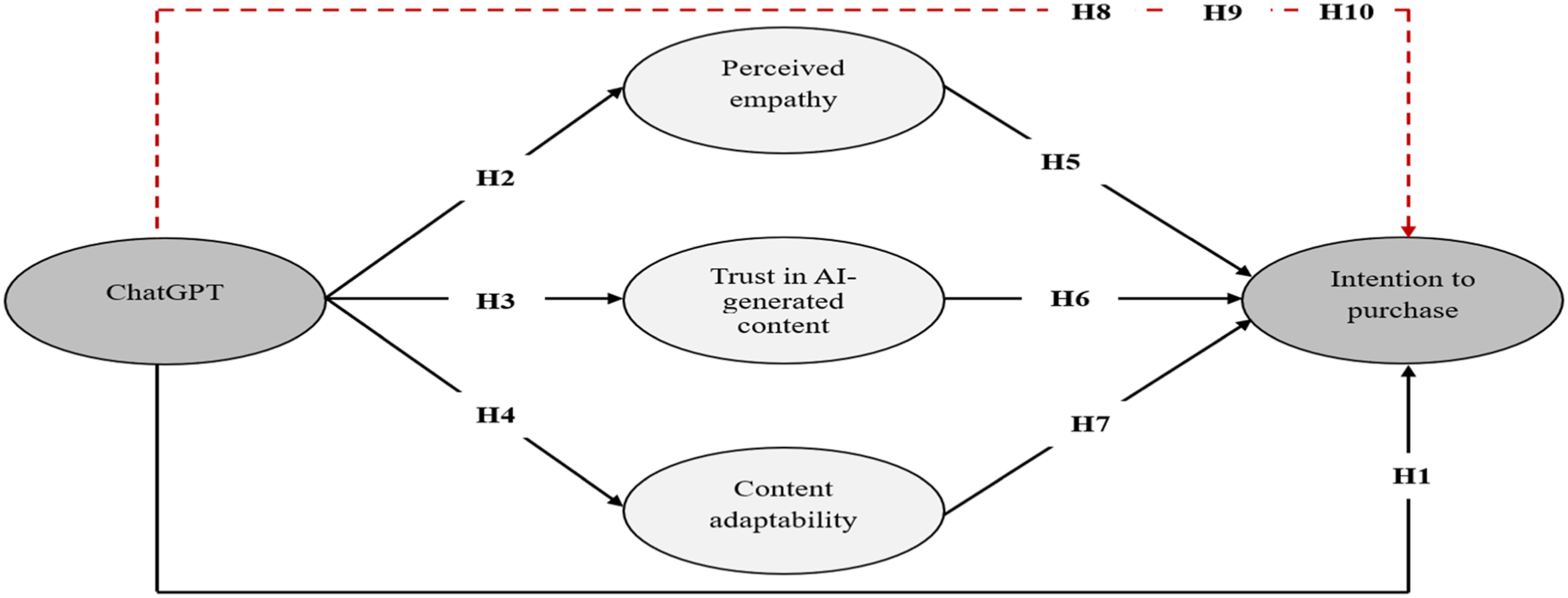
Measurement items were adapted from Han et al. 16 for ChatGPT, Shalan 11 for perceived empathy, Pham et al. 17 for trust in AI-generated content, Shalan et al. 54 for content adaptability, and Pillai et al. 18 for purchase intention.
Methods
Sample and data 5collection
This study employed an online survey methodology to investigate tourists’ behavioral responses to their interac ions with ChatGPT during the travel planning process. Given the digital nature of both the research topic and the target population, online data collection was deemed the most appropriate and efficient approach for capturing relevant user experiences. The survey was designed to reach individuals who had specifically used ChatGPT to support their travel-related decision-making, such as comparing destinations, planning itineraries, or seeking real-time travel guidance. A non-probability convenience sampling technique was adopted to access this population through social media platforms where tourism discussions and technology use are common. The survey link was distributed via travel-focused communities and pages on Facebook, Instagram, TikTok, and LinkedIn, capitalizing on the platforms’ broad user reach and the high likelihood of encountering tech-savvy travelers within these environments. The distribution campaign included public posts, direct messages, and promoted content targeting users who had demonstrated interest in both travel and digital tools.
Data collection took place over a 10-week period between April and mid-June 2025, using a structured electronic questionnaire hosted online. The questionnaire began with a short preamble outlining the study’s purpose, providing a clear explanation of ChatGPT’s relevance to the research, and assuring respondents of the confidentiality of their responses. Consent was obtained electronically before proceeding with the questions. To ensure that only relevant participants were included in the final analysis, two eligi bility screening questions were integrated at the beginning of the survey. The first asked whether the individual had used ChatGPT within the past year for tourism-related inquiries. Respondents who answered “no” were disqualified. Those who answered “yes” were then asked whether their usage was limited to general exploration or involved actual decision-making—such as selecting destinations or planning activities. Only participants who reported decision-support usage were allowed to proceed.
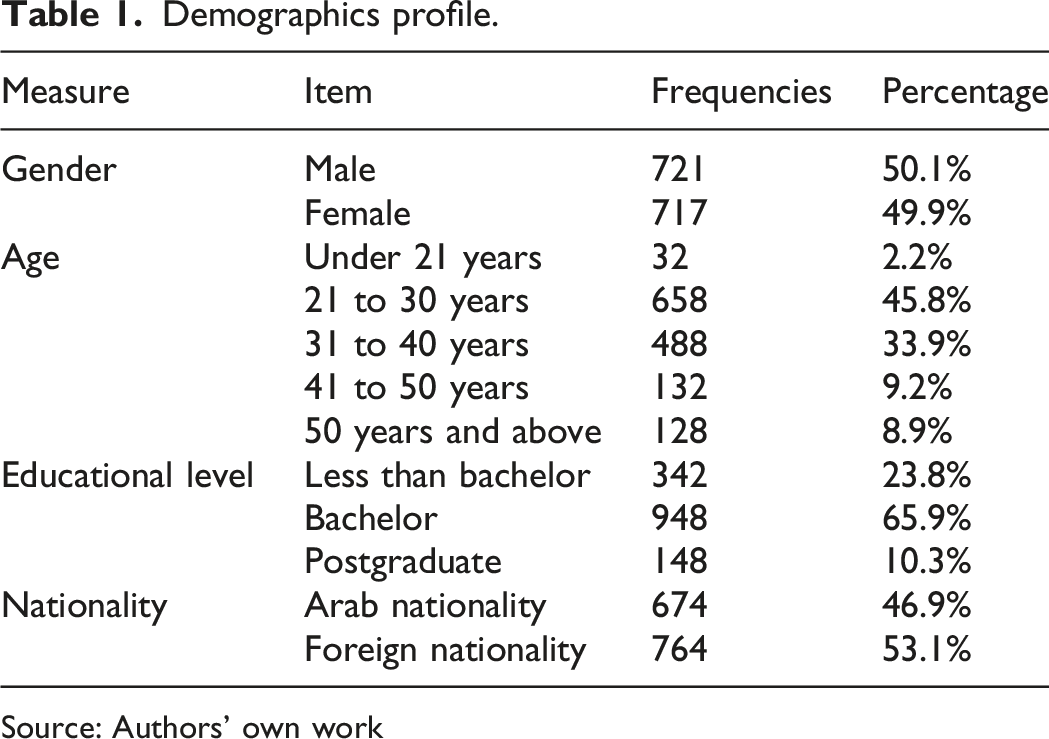
A total of 2,256 individuals accessed the survey. Among them, 1,438 respondents met the inclusion criteria and completed the questionnaire, while the remaining 818 participants were excluded based on their responses to the screening items. The final dataset of 1,438 valid responses constituted the core sample for the study’s empirical analyses and hypothesis testing.
Measures
To empirically examine the constructs included in the proposed model, the study utilized a structured survey instrument comprising validated multi-item scales adapted from prior research. All measurement items were rated on a five-point Likert scale. The independent variable, ChatGPT usage, was assessed using a three-item scale adapted from Han et al. 16 A representative item includes: “I will continue using ChatGPT for hospitality/tourism information searches.” To evaluate perceived empathy, six items were adapted from Shalan. 11 A sample statement is: “ChatGPT communicates with empathy and shows understanding of my travel-related concerns.” Trust in AI-generated content was measured using a four-item scale drawn from Pham et al. 17 For example: “ChatGPT’s response and advice can meet my expectations.” The construct content adaptability was operationalized through five items sourced from Shalan et al. 54 An illustrative item is: “ChatGPT customizes its recommendations based on my individual travel preferences.” The dependent variable, intention to purchase, was measured using a four-item scale adapted from Pillai et al. 18 A representative item reads: “I would like to repeat my experience in digital assistants.” In addition to the main constructs, the survey collected basic demographic data, including gender, age, nationality, and educational background.
Common method biases
Given the reliance on self-reported data collected through a single measurement instrument in a cross-sectional design, the study proactively addressed the potential issue of common method bias (CMB), which may compromise the integrity of inter-variable relationships by introducing artificial inflation or deflation. This concern is especially pertinent when all constructs are measured simultaneously using perceptual ratings from the same respondents. To evaluate the presence and extent of CMB, two diagnostic techniques commonly cited in behavioral research were employed: Harman’s one-factor test and Principal Component Analysis (PCA), following the recommendations of Hair et al. 60 All measurement items were subjected to an unrotated exploratory factor analysis. The results indicated that no single factor accounted for a substantial portion of the total variance, and the first emerging factor explained less than 50% of the overall variance structure. These findings suggest that the likelihood of systematic bias arising from the data collection method is limited. Therefore, concerns related to common method variance are not expected to significantly distort the relationships tested in this study, and the measurements can be considered reasonably robust for the purposes of subsequent statistical analysis.
Results
Demographics profile
Demographics profile.
Source: Authors’ own work
Measurement model
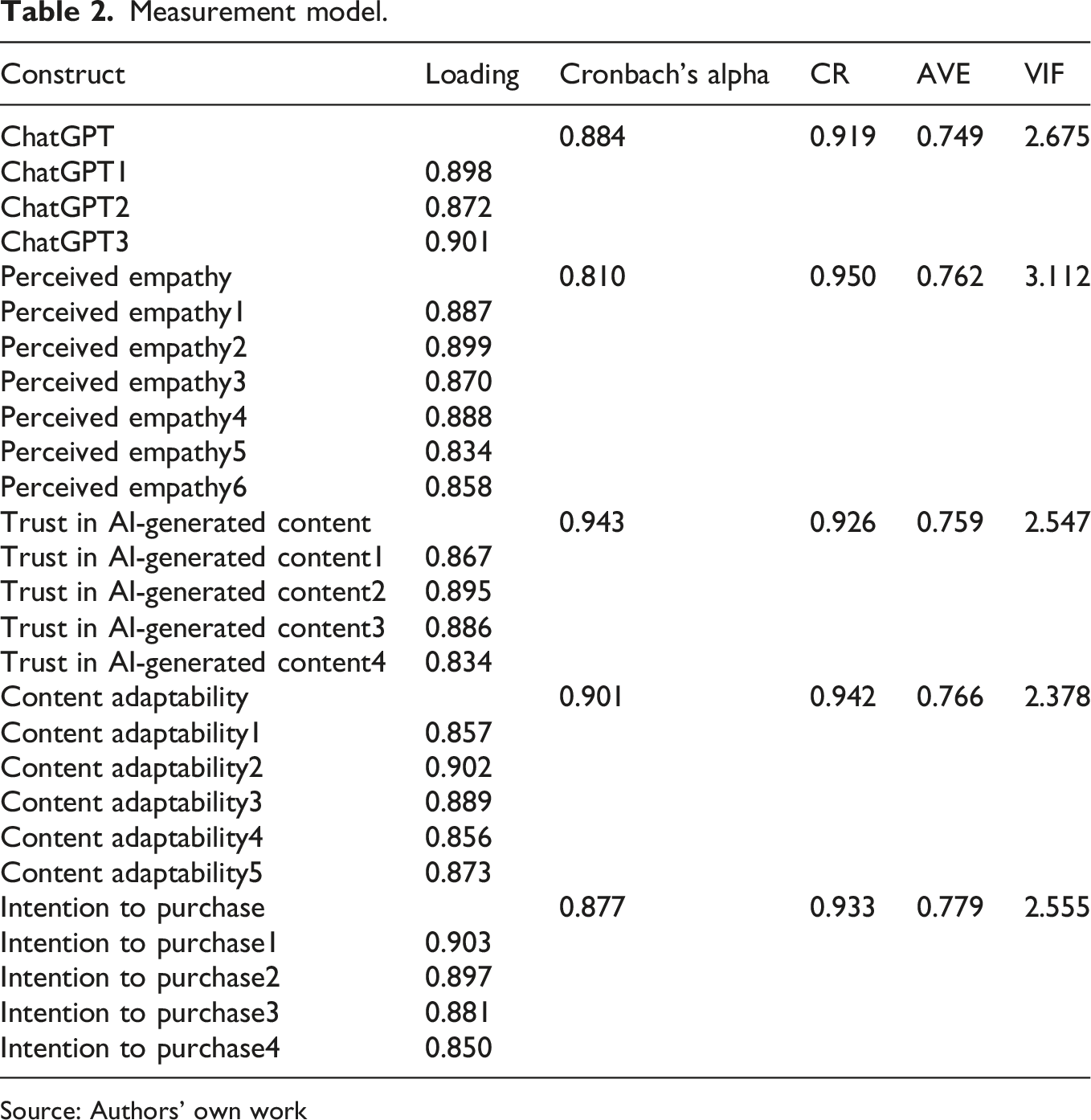
Measurement model.
Source: Authors’ own work
Measurement items were adapted from Han et al. 16 for ChatGPT, Shalan 11 for perceived empathy, Pham et al. 17 for trust in AI-generated content, Shalan et al. 54 for content adaptability, and Pillai et al. 18 for purchase intention.
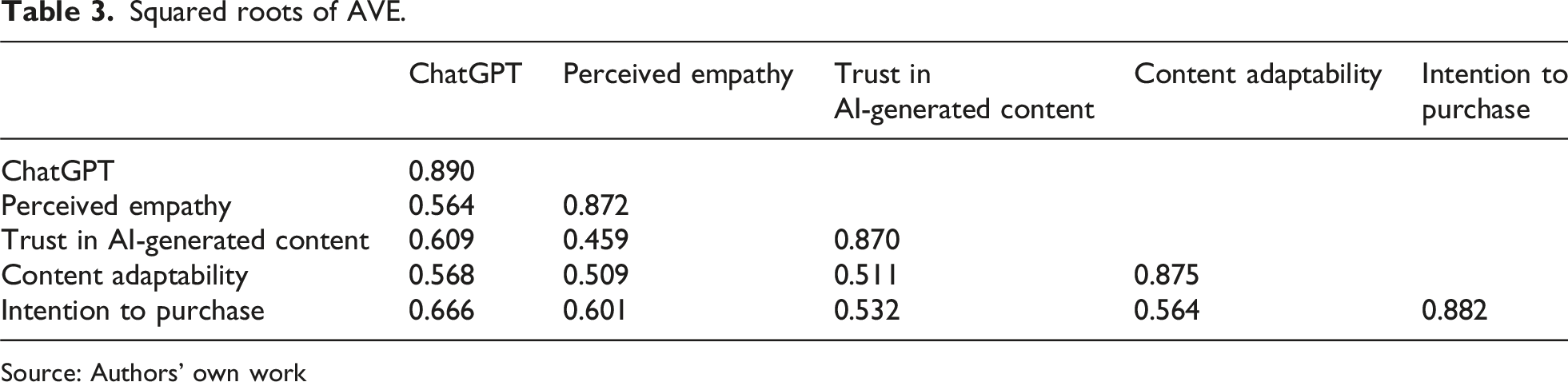
Squared roots of AVE.
Source: Authors’ own work
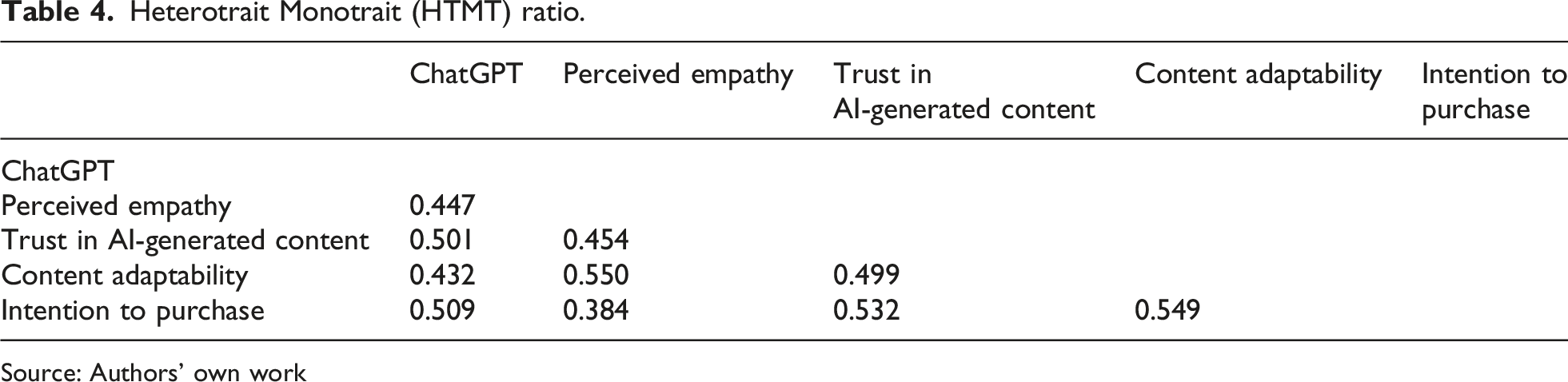
Heterotrait Monotrait (HTMT) ratio.
Source: Authors’ own work
Structure model
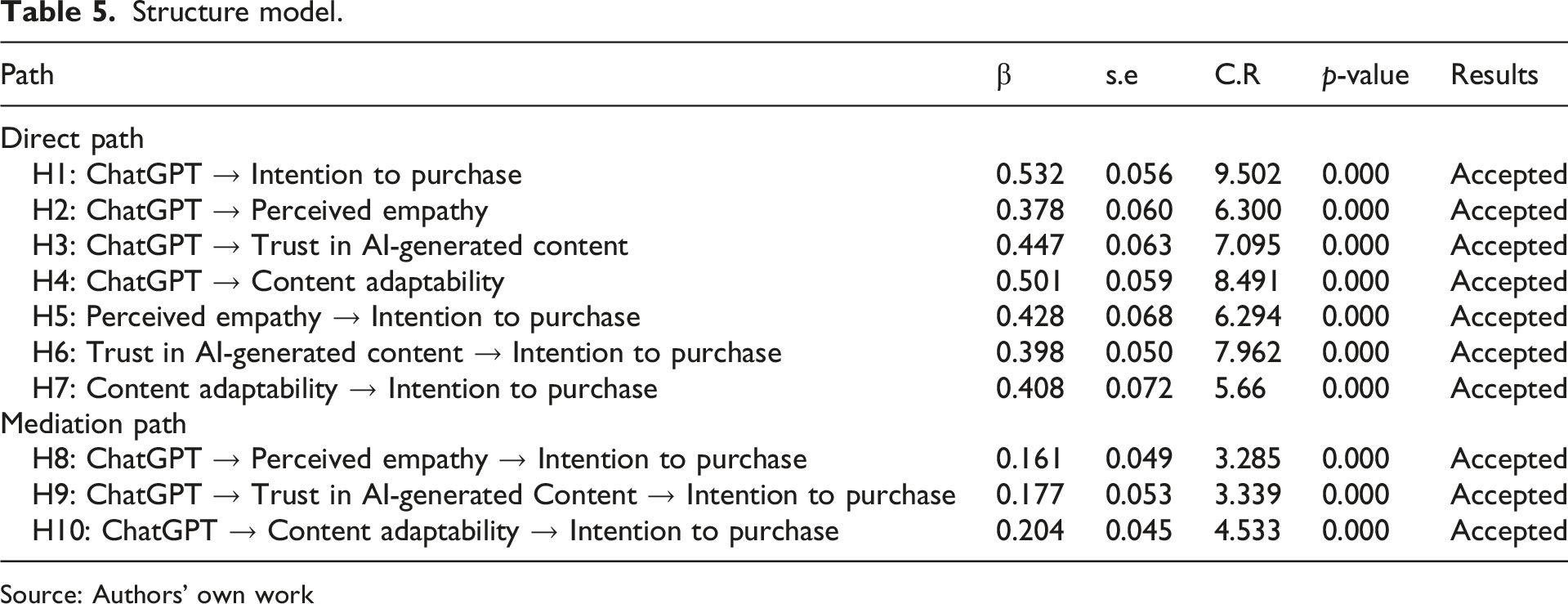
Structure model.
Source: Authors’ own work
The results further demonstrated that ChatGPT’s impact on tourists’ intention to purchase is exerted through both direct and indirect pathways. In addition to the significant direct effect, the model revealed three statistically significant indirect effects via mediating variables. Perceived empathy mediated the relationship between ChatGPT and intention to purchase (H8: β = 0.161, p-value = 0.000), indicating that interactions perceived as emotionally responsive play a role in shaping behavioral intentions. Similarly, trust in AI-generated content was found to function as a mediator (H9: β = 0.177, p-value >0.000), reinforcing the importance of content credibility and user confidence in driving consumer action. The most pronounced mediation effect was observed through content adaptability (H10: β = 0.204, p-value >0.000), highlighting the critical influence of dynamic, personalized responses on tourist decision-making. However, since the direct path between ChatGPT and intention to purchase (H1: β = 0.532, p-value >0.000) remained statistically significant even after accounting for these mediators, the results clearly indicate that all three mediation effects are partial rather than full. This suggests that while perceived empathy, trust, and adaptability explain a meaningful portion of ChatGPT’s influence, the system also maintains a direct behavioral impact on its own.
Discussion
This study examined how tourists’ interactions with ChatGPT influence their intention to purchase tourism and hospitality services, both directly and through key psychological mediators. Grounded in the S-O-R framework, the findings illuminate the complex interplay between technological stimuli and internal tourist responses that ultimately shape behavioral outcomes. The results contribute to the growing discourse on AI adoption in tourism by providing empirical evidence on the cognitive and emotional pathways through which conversational AI affects decision-making. The analysis confirmed that ChatGPT has a strong direct effect on tourists’ intention to purchase, highlighting its potential as a technology-driven influence on tourist behavior rather than merely an information tool. Shi et al. 12 highlight that when tourists engage with ChatGPT, the system’s real-time responsiveness, structured interaction, and ability to provide tailored travel recommendations contribute to a heightened sense of confidence and clarity. Farahat 9 further argues that the simulation of responsive dialogue in AI systems mirrors aspects of human travel consultancy, prompting users to perceive such tools as credible, practical, and worthy of reliance for decision-making. In line with these perspectives, the present study confirms that ChatGPT functions not merely as a source of information, but as a technological mechanism capable of shaping tourist behavior through interactive communication.
Furthermore, the findings demonstrated that ChatGPT significantly enhances perceived empathy among tourists. Gao and Zhang 61 assert that in emotionally driven travel contexts—such as selecting a sentimental destination, planning family vacations, or seeking reassurance during solo journeys—tourists are more receptive to systems that appear responsive to their emotional cues. Kodal 62 and Sousa et al. 63 clarify that empathy in this setting is not about genuine emotional intelligence, but rather about the tourist’s personal perception that the system is able to “understand” their needs and concerns. Ferreira and Pereira 64 and Ferrer-Rosell et al. 36 emphasize that this perceived emotional resonance fosters a perceived sense of relational closeness and sustained engagement, both of which are critical in transforming digital interactions into actual purchasing behavior.
The study also revealed that ChatGPT positively affects tourists’ trust in AI-generated content. Al-Romeedy and Singh 2 emphasize that trust is a fundamental element in digital interactions, especially in contexts where human support is absent and decisions involve considerable financial or temporal commitment. Stergiou and Nella 5 explain that when tourists perceive the information provided by ChatGPT as accurate, impartial, and personalized, they are more inclined to incorporate its recommendations into their travel planning. Xinlin et al. 38 further argue that trust serves as the cognitive anchor of the tourist’s decision-making journey, reducing uncertainty and enhancing their willingness to depend on AI-driven systems.
In addition, the results indicated that ChatGPT significantly improves perceptions of content adaptability. Stergiou and Nella 5 and Shalan et al. 54 argue that unlike static information sources or rigid booking interfaces, ChatGPT facilitates a dynamic, conversational exchange in which tourists can adjust their preferences, consider alternatives, and receive tailored suggestions. Huang et al. 65 note that this interactive flexibility fosters the impression that the system responds appropriately to the tourist’s specific goals, limitations, and situational needs. Morrison 1 and Leveau 15 further suggest that as perceived adaptability increases, so does the tool’s practical value, leading to greater user satisfaction and a stronger intention to act upon the recommendations provided.
The model further confirmed that perceived empathy has a significant positive effect on tourists’ intention to purchase. Li and Lee 66 indicate that when tourists perceive themselves as emotionally acknowledged during their interaction with ChatGPT, they are more inclined to trust the system, feel guided in their planning process, and follow its recommendations. Zaki and Al-Romeedy 14 and Dixit 27 emphasize that emotion-based constructs are equally—if not more—important than purely informational elements in influencing consumer behavior within digital tourism contexts. Their findings underscore that anticipation, emotional resonance, and personal relevance are central to decision-making in tourism, a sector deeply rooted in experiential and affective value.
Similarly, the findings highlighted that trust in AI-generated content significantly contributes to intention to purchase. Balaskas et al. 67 emphasize that trust plays a dual role in digital decision-making—not only by reducing perceived risk, but also by streamlining the process and encouraging users to take action. Foroughi et al. 10 argue that in situations characterized by information overload or contradictory online reviews, a trusted AI system like ChatGPT can serve as a useful source of clarity and direction. Ramos and Ramos 68 further note that when tourists view the system’s content as coherent, objective, and logically sound, they are more likely to transition confidently from exploration to purchase, minimizing hesitation and maximizing decision efficiency.
The results also established that content adaptability significantly enhances intention to purchase. Ilieva et al. 69 highlight that when tourists receive travel suggestions that align with their specific interests—be they cultural, financial, or logistical—they are more likely to perceive the interaction as meaningful and are thus more inclined to act on it. Singh et al. 70 add that this form of personalization fosters a perception of individualized attention within the digital environment, which not only strengthens trust in the system but also enhances the tourist’s perceived autonomy and control during the planning process.
Finally, the study demonstrated that perceived empathy, trust in AI-generated content, and content adaptability all serve as significant mediators in the relationship between ChatGPT and intention to purchase. These mediating variables reveal that the effect of ChatGPT is not purely a result of the content it delivers, but also how that content is perceived, processed, and emotionally interpreted by the tourist. The persistence of a significant direct effect alongside the indirect effects confirms that these are partial mediations, meaning that ChatGPT influences tourist behavior through both cognitive-emotional pathways and independent informational strength.
Theoretical implications
This study offers several theoretical contributions to the literature on AI-mediated consumer behavior in tourism by broadening the explanatory application of the S-O-R framework within a conversational AI context. Traditionally, the S-O-R model conceptualizes stimuli as environmental inputs that influence internal psychological states and subsequent behavioral responses. In the present study, conversational AI is positioned as an interactive technological stimulus capable of generating emotionally, cognitively, and contextually meaningful user experiences. The findings confirm that ChatGPT significantly influences tourist purchase intention, thereby supporting the fundamental S-O-R structure (Stimulus → Organism → Response). Rather than fundamentally redefining the S-O-R framework, this study enriches its explanatory relevance within AI-mediated tourism environments by identifying the complementary organism-level mechanisms through which conversational AI shapes behavioral intention. By incorporating perceived empathy, trust in AI-generated content, and content adaptability, the study provides a more comprehensive interpretation of the organism component through the simultaneous integration of emotional, cognitive, and contextual responses associated with AI interaction. This integrated perspective contributes to the literature by demonstrating that AI-mediated tourist behavior cannot be sufficiently explained through isolated psychological responses alone, but instead emerges through the interrelated operation of multiple complementary mechanisms within the organism stage.
The identification of perceived empathy as a significant outcome of AI interaction provides an important theoretical insight. The findings suggest that users may experience perceived emotional resonance even during interactions with non-human technological agents, particularly within conversational AI environments designed to simulate responsiveness and personalization. This observation contributes to expanding current discussions surrounding emotional processing within technology-mediated interactions and highlights the relevance of perceived empathy within digitally assisted tourism decision-making contexts. Accordingly, the study supports the growing view that emotional perceptions within AI interactions deserve greater consideration within behavioral and tourism-related models grounded in the S-O-R tradition.
Furthermore, the confirmed mediating roles of trust and content adaptability contribute to the theoretical understanding of how users interpret and evaluate AI-generated communication. These constructs connect technological capabilities with psychological interpretation, emphasizing that behavioral responses are shaped not only by informational quality but also by perceived reliability and contextual responsiveness. The simultaneous inclusion of emotional (perceived empathy), cognitive (trust in AI-generated content), and contextual (content adaptability) mechanisms provides a more integrated representation of the organism stage than is commonly addressed in prior tourism AI studies. Rather than examining these mechanisms independently, the present study demonstrates how they operate collectively in explaining tourist behavioral intention within conversational AI environments. In this respect, the study contributes a more conceptually integrated perspective for understanding AI-mediated tourist decision processes while remaining theoretically consistent with the core assumptions of the S-O-R framework.
In addition, this study contributes to bridging AI interaction research and tourism behavior literature by providing an empirically supported explanation of how AI-driven interactions translate into behavioral intentions. Rather than focusing exclusively on system performance or technological functionality, the findings emphasize the central role of user perception in shaping behavioral outcomes. This perspective reinforces the importance of psychological interpretation in explaining the effectiveness of conversational AI within tourism decision environments.
Finally, the identification of partial mediation effects provides additional insight into the complexity of AI-mediated behavioral responses. The findings indicate that conversational AI influences tourist purchase intention both directly and indirectly through internal psychological mechanisms. This dual influence suggests that AI-based stimuli may simultaneously trigger internal organismic responses while also exerting an independent persuasive effect on behavioral intention. Consequently, the study offers a more nuanced understanding of behavioral formation in technology-intensive tourism environments and further demonstrates the adaptability of the S-O-R framework for examining emerging forms of human–AI interaction within contemporary tourism research.
Practical implications
The findings of this study carry several practical implications for stakeholders in the tourism and hospitality industry as well as developers of AI-driven conversational systems. As tourists increasingly rely on digital technologies to inform their decisions, understanding how these tools shape behavior becomes essential for designing more effective, persuasive, and interactions perceived as emotionally resonant. For tourism organizations, the demonstrated direct and indirect influence of ChatGPT on tourists’ intention to purchase signals a strategic opportunity to integrate conversational AI into customer engagement touchpoints. By embedding tools like ChatGPT into travel websites, booking platforms, and mobile applications, service providers can offer tourists a more personalized and interactive planning experience—one that guides them seamlessly from information-seeking to purchasing. Moreover, leveraging AI to provide real-time, adaptive communication can reduce service load, enhance perceived service quality, and foster stronger digital engagement with prospective travelers. The findings further suggest that the combined integration of empathy-related interaction cues, trustworthy AI-generated content, and adaptive communication strategies can create a more comprehensive and effective digital service experience for tourists.
The study also underscores the importance of designing AI systems that not only deliver accurate content but also foster perceptions of simulated empathy, trust, and adaptability. For developers, this means moving beyond purely functional algorithms and focusing on the perceived emotional and psychological dimensions of interface design. For instance, programming ChatGPT to detect indicators of tourist sentiment, generate responses perceived as empathetic to user concerns, and adjust recommendations based on nuanced preferences can enhance both user satisfaction and conversion rates. AI systems designed to simulate emotionally responsive interaction does not require true consciousness but should simulate attentive and understanding communication patterns to strengthen the user experience. From a customer experience perspective, tourism providers should work with AI vendors to train models on domain-specific language, cultural nuances, and tourism-specific scenarios. This helps ensure that the AI is not only linguistically relevant but also perceived as contextually sensitive—two key components of perceived trust and adaptability. Moreover, transparency about how the AI works, how it generates responses, and how tourists can benefit from it will also help build trust and reduce skepticism regarding machine-generated content. Accordingly, tourism organizations should approach conversational AI implementation through an integrated strategy that simultaneously supports emotional reassurance, informational credibility, and contextual personalization rather than treating these dimensions separately.
Furthermore, the results suggest that a one-size-fits-all content strategy is no longer sufficient. Tourists expect AI systems to adapt to their unique needs, travel histories, and aspirations. Service providers should thus focus on data-driven personalization and real-time adaptation when deploying conversational AI in tourism environments. Features such as adjustable tone, multilingual capabilities, contextual memory, and feedback-driven learning can help AI systems maintain relevance across diverse customer segments and touchpoints. Finally, for tourism marketers and strategists, this study provides empirical evidence that AI tools are not merely cost-saving innovations, but revenue-generating assets. By influencing the tourist at both rational and emotional levels, ChatGPT and similar platforms can serve as AI-enabled digital sales support tools—driving higher engagement, stronger trust, and ultimately, higher conversion rates. Investment in AI systems capable of simulating emotionally responsive and context-adaptive interactions can thus deliver significant return on investment when deployed strategically.
Limitations and future research
While this study provides valuable insights into the psychological mechanisms through which ChatGPT influences tourist purchasing behavior, several methodological limitations should be acknowledged. First, the study adopted a cross-sectional design, capturing data at a single point in time. Although suitable for examining relationships between constructs, this approach limits the ability to establish causal inferences or assess how perceptions of ChatGPT evolve over time. Longitudinal research designs could offer a more dynamic perspective by tracking tourists’ interactions with conversational AI across different stages of the travel journey, from pre-trip planning to post-trip evaluation. Such an approach would enable a deeper understanding of how perceptions of trust, empathy, and adaptability develop with continued exposure.
Second, the study relied on a non-probability convenience sampling strategy targeting tourists with prior experience using ChatGPT for travel-related purposes. Although appropriate for the study’s objectives, this approach may limit the generalizability of the findings. Expanding future samples to include broader and more diverse populations—potentially through stratified or probabilistic sampling—would enhance external validity. Including both experienced and novice users could also reveal important moderating factors, such as technology readiness and digital literacy.
Third, the study focused exclusively on ChatGPT as the AI platform. While this focus ensures contextual relevance, it does not account for potential variations across different conversational AI systems. Comparative research examining multiple AI tools—such as Google Assistant, Trip.com chatbots, or proprietary hospitality bots—could provide deeper insights into how system-specific characteristics influence perceived empathy, trust, and adaptability.
Fourth, although demographic variables were collected, their potential moderating effects were not examined. This limits the ability to understand how different user segments may respond to AI-mediated interactions. Future research could employ multi-group analysis to explore variations across age, gender, cultural background, and levels of technological familiarity, thereby offering more nuanced and actionable insights.
Finally, the study focused on three key mediating variables—perceived empathy, trust in AI-generated content, and content adaptability. While these constructs capture essential dimensions of AI interaction, other psychological and contextual factors may also play a role. Variables such as perceived enjoyment, anthropomorphism, perceived control, and situational involvement may further enrich the explanatory power of the model. Expanding the organism component of the S-O-R framework to incorporate these dimensions would support the development of more comprehensive models of AI-driven tourist behavior.
Conclusion
The rapid integration of conversational AI into tourism and hospitality services is reshaping how tourists search for information, evaluate alternatives, and make purchase decisions. Within this evolving landscape, the present study demonstrated that ChatGPT functions as more than a technological information source; it represents an influential interactive stimulus capable of shaping tourist behavior through multiple psychological pathways. By applying the Stimulus–Organism–Response (S-O-R) framework, the study revealed that tourists’ behavioral intentions are significantly influenced by how AI-generated interactions are emotionally interpreted, cognitively trusted, and contextually adapted to individual needs. The findings further highlight that perceived empathy, trust in AI-generated content, and content adaptability operate collectively as complementary mechanisms that translate conversational AI interaction into purchase-related outcomes. In doing so, the study contributes to advancing the theoretical understanding of AI-mediated tourist behavior while emphasizing the growing strategic importance of conversational AI in tourism service ecosystems. As AI technologies continue to evolve, the ability of tourism organizations to design interactions that are trustworthy, adaptive, and psychologically engaging will likely become a critical determinant of competitive advantage and customer conversion in digital tourism environments.
Footnotes

Ethical considerations
This research complies with all relevant guidelines and regulations for studies involving human subjects.
Author contributions
Bassam Samir Al-Romeedy: Conceptualization, study design, and data collection. Ahmed Mohamed Hasanein: Data analysis, interpretation of results, and visualization. Aya Ahmed Abdel Majeed: Literature review, theoretical framework development, and drafting the manuscript. Abdullah H. Seraj: Supervision, critical revisions, and final editing of the manuscript. All authors contributed to the research and approved the final version of the paper.
Funding
The authors disclosed receipt of the following financial support for the research, authorship, and/or publication of this article: This research was funded by the Deanship of Scientific Research, Vice Presidency for Graduate Studies and Scientific Research, King Faisal University, Saudi Arabia, grant number [KFU261792].
Declaration of conflicting interests
The authors declared no potential conflicts of interest with respect to the research, authorship, and/or publication of this article.