






Abstract
Background
The metaverse represents a fully immersive virtual environment where digital interactions closely replicate real-world experiences. Although the metaverse has been explored across various sectors, there remains limited academic attention to its application in retail, particularly in understanding consumer perceptions and adoption mechanisms.
Objective
This study aims to develop and validate a comprehensive model, grounded in Flow Theory, to identify the key factors influencing consumer adoption of metaverse-based retailing (meta-commerce).
Methods
Data were collected from Jordanian consumers through a structured survey. Structural equation modeling (SEM) was employed to analyze the relationships among interactivity, vividness, perceived immersion, perceived telepresence, perceived product diagnosticity, enjoyment, perceived usefulness, and adoption intention.
Results
Findings indicate that interactivity and vividness significantly enhance perceived immersion. Perceived immersion, in turn, positively affects both perceived telepresence and perceived product diagnosticity. Perceived telepresence increases enjoyment, while perceived product diagnosticity strengthens perceived usefulness. Both enjoyment and usefulness serve as strong predictors of consumers’ intentions to adopt meta-commerce.
Conclusion
The study extends Flow Theory to the context of meta-commerce, demonstrating that both hedonic (enjoyment) and utilitarian (usefulness) factors shape consumers’ adoption intentions. The results provide practical insights for retailers designing engaging virtual shopping environments and establish a basis for future cross-cultural investigations into metaverse retail adoption.
Introduction
Digitization is creating more immersive experiences and widespread adoption of intelligent technology, which is changing consumer behavior to adapt to novel and engaging environments. 1 Understanding how modern realities affect customer needs, perceptions, aspirations, motivations, insights, and actions is crucial to this shift. 2 The metaverse, a multiuser framework that transcends traditional constraints and combines physical reality with digital virtuality, 3 is among the most powerful and appealing ways available to consumers to interact inside the digital sphere 4 . Yoo et al. 5 define the metaverse as “an online collaborative shared space built of 3D environments that leverage high consumer immersion techniques to reduce the perception of technological mediation alongside transferrable and unique digital assets while allowing user-generated digital personas to interact with each other.” With expected financial investments approaching $800 billion by 2024, 6 and a wide range of possible uses, enthusiasm for the metaverse is fast growing. 7 These encompass education, pedagogical practices, hospitality and tourism, creation of virtual employment opportunities, healthcare and medical services, academic pursuits, recreational gaming and leisure activities, virtual cosmetic trials, and online shopping experiences. 8
A report suggests that the world metaverse market made $44.1 billion in 2022, and it is expected to grow significantly more, reaching $484.8 billion by 2030. 9 The report also indicates that the United States, China, and Europe, which are the three biggest metaverse markets, are pushing this growth. In 2022, the U.S. made $14.13 billion, making it the market leader. The U.S. market will be worth more than $158.09 billion by 2030, thanks to a growth rate of 35.2% per year. China is the second-biggest market, with $10.49 billion in sales in 2022 and an expected CAGR of 30.3% that will bring that number to $87.15 billion by 2030. Europe, which was worth $9.93 billion in 2022, is expected to grow the fastest, at 36.5% CAGR, and be worth $119.35 billion by 2030. These figures reveal the fast expansion of the metaverse economy. Big marketplaces are funding their expansion and use with vast amounts of money.
E-commerce has undergone a transformation thanks to innovative technologies like Extended Reality (XR) experiences (i.e., Virtual Reality (VR), Augmented Reality (AR), and Mixed Reality (MR)), Artificial Intelligence (AI), Blockchain technology, and spatial computing technology.10,11 These technologies have transformed transactional, static platforms into dynamic, immersive, and highly engaging experiences. With the development of these sophisticated digital environments, a new digital universe has emerged, the metaverse. The metaverse concept is a fully immersive virtual environment in which users interact with digital entities and one another in a seamless manner, thereby blurring the boundaries between the physical and digital realms. 10 Emerging as the dynamic and interconnected digital world, the metaverse is an advanced and interconnected digital ecosystem that integrates several innovative technologies (i.e., XR, AI) to create shared spaces that are engaging. 12 The metaverse will have a variety of transformative applications, but one of those is the ability to reimagine the global retail business under new immersive, interactive, and custom consumer shopping experiences beyond traditional online shopping systems. 5 The metaverse is prepared to initiate a paradigm shift in the retail market, transforming business methods and customer contact because it can alter the customer connection to the digital environment. 13
Metaverse-based retailing (or meta-commerce hereafter) is the retailing of real-life commodities as well as virtual goods through the virtual environments of metaverse.14,15 The idea of immersive technologies (i.e., VR, AR, XR, AI) is to offer a stable, interactive digital economy where people can approach multiple commercial affairs. The metaverse enables a hybrid retail model where consumers can purchase both physical and digital products. Specifically, Consumers can buy physical goods in the metaverse and have them delivered to their real-world addresses. This integration of virtual and physical retail provides a seamless shopping experience, enhancing convenience and satisfaction. 16 Simultaneously, the metaverse supports the sale of digital assets such as virtual clothing, accessories, Non-Fungible Tokens (NFTs), and virtual real estate, offering businesses new monetization avenues and significant economic opportunities in the digital economy.15,17,18
The metaverse has become one of the main ways of retailers and scholars to change the shopping and marketing experience because of the opportunities to experience presence produced by avatars and that create constant immersive encounters (both on the lived experience and financial level) with figures and objects. 19 Through digital avatars, consumers can explore immersive virtual settings and interact in real time with the avatars of sales personnel and other consumers through meta-commerce. 20 Moreover, consumers’ avatars can engage with brands, acquire actual or intangible commodities, browse digital stores, and test products. 21 Furthermore, while traditional shopping paved the way for e-commerce, the metaverse delivers a unique digital retail experience, replicating the atmosphere of physical stores with features like 3D product visualization. 8 Additionally, retail stores in the metaverse will not be limited by physical locations. Like e-commerce, retailers can use a strong metaverse presence to provide customers worldwide a smooth and immersive purchasing experience, therefore transcending national boundaries. 22 Hence, these potentials have attracted leading brands such as Adidas, Gucci, Nike, Louis Vuitton, and fast-fashion retailers like H&M, Zara, and forever. 12
While the metaverse represents the next evolution of e-commerce, 23 its widespread adoption faces several challenges. This includes competition from well-established and easily accessible online shopping platforms, 20 and socio-cultural barriers like the digital divide. 24 Additionally, the cognitive and mental effort required to navigate virtual environments, 25 privacy/security concerns, 26 along with the potential for negative emotional experiences, 27 may further hinder user acceptance.
The gap in understanding of metaverse-related commerce and customer behavior is one of the motivations that prompted the development of this study. The involvement of a consumer in a retail environment of the metaverse is not well comprehended as the metaverse emerges as a distinct digital space of consumer interaction.28,29 To address this gap, it is essential to understand the differences between meta-commerce and traditional online retail since the metaverse environment is changing the shopping process radically. As opposed to the traditional form of e-commerce, meta-commerce goes beyond the traditional online shopping system by designing immersive 3D marketplaces where buyers can engage with their products, spaces, and other shoppers using AR and VR devices. 22 This fusion of virtual experiences and social interaction represents a significant evolution beyond the point-and-click nature of traditional online shopping. 30 It is vital to be aware of these unique factors since they govern the consumer behavioral patterns in the metaverse, including motivations, decision-making, and experiences in general. 31 In doing so, this study will describe these drivers and what they mean to businesses that are considering undertaking metaverse retailing even in light of many issues that surround it.
The nature of metaverse retailing and consumer purchasing behavior is under-researched.13,32 There is a vast dissimilarity in comprehending the metaverse-specific behavior and retailing since the majority of investigations into the adoption of the metaverse concentrate on such fields as online gaming, 33 healthcare, 34 marketing, 12 and education. 35 A further investigation should be conducted into metaverse shopping experiences, purchase behavior, intended purchase, and sustained use of virtual stores. The metaverse is a multi-factor and developing socio-technical system that needs to be viewed comprehensively and without focusing only on its technological or social aspects. 26 Understanding the interplay between technology-specific factors and social interactions is crucial for fostering meaningful consumer experiences in meta-commerce. Accordingly, this paper seeks to bridge the existing gap by examining the key determinants that influence consumers’ intention to adopt metaverse technology in retail environments. Employing a quantitative research design, the study collects empirical data through a structured survey administered to consumers with prior exposure to VR-related platforms. The data are analyzed using structural equation modeling (SEM) to uncover the underlying relationships between technological and social factors. By focusing on purchase intentions within meta-commerce settings, the study offers valuable insights into the socio-technical dynamics shaping consumer behavior in virtual retail spaces. In line with this objective, the study aims to answer the following research questions:
Q1: “What are the main factors influencing the intention to adopt meta-commerce?”
The research contributes to three major ways to the emerging evidence on metaverse adoption in consumer shopping experiences. First, it offers a comprehensive structure using a flow theory that would offer an alternative perspective compared to other existing theoretical frameworks and typically contains separate constructs. Flow Theory presents a unique idea to the traditional theory of technology acceptance (TAM, UTAUT, etc.) as it focuses on immersive and intrinsic experiences of users with technology. 36 Unlike others that focus mainly on cognitive and utilitarian issues (i.e., perceived usefulness, ease of use, social influence, etc.), Flow Theory adopts a focus on the psychological state of users in terms of using the technology including the psychological state of complete involvement, enjoyment, and self-Absorption. The traditional models are more apt to assume that the adoption of technology is a rational decision, which is motivated by the external incentives. Flow Theory pays its attention to the emotional and experiential aspects, which appear to facilitate the further use. The holistic perspective is particularly applicable to the metaverse, where immersive experiences are emerging as a significant contributor to consumer behavior, and, therefore, Flow Theory would be particularly applicable to meta-commerce adoption. This model provides a better insight into how the desire to consume these products through the metaverse is driven by focusing on how immersive and interesting metaverse experiences can be.37,38 Second, the research findings add to the already existing literature on the topic of customer experiences and technological acceptance since they present new insights on the impact of immersive digital spaces on customer behavior.
Finally, the study also investigates the Jordanian context in a distinct manner, offering a rather interesting location because of the presence of tech-savvy young population, rising digital economy, and rising willingness towards online shopping. Such contextual focus enhances the applied value of the study, as it offers marketers insights necessary to develop targeted strategies that align with the demands and preferences of the consumers, therefore, improving the level of adoption of meta-commerce to procure experience. The Middle East is quickly becoming one of the central figures in the metaverse field, with Saudi Arabia and the UAE becoming the pioneers of regional projects. Saudi Arabia plans to invest one billion in metaverse-related projects, and the ambitious metaverse strategy of Dubai is expected to make the city one of the top 10 metaverse economies in the world. 39 Such strategic investments are diversified across a wide range of industries such as tourism, real estate, education, retail, and government services. They will have a significant economic effect, and the contribution to annual GDP in Saudi Arabia is estimated to be between $20.2 and 38.1 billion, and that of the UAE between 8.8 and 16.7 billion by 2035. The metaverse space occupied by Jordan is quite isolated in terms of the fast digitalization witnessed in adjacent markets. However, the scale of economic impact in Jordan presents by the metaverse-related activities is relatively rather small, projecting on $0.9 to $1.7 billion/year in 2035, despite being located close to these developed economies. This difference highlights a significant gap in research, with most of the available literature on global trends and key regional actors; the context of Jordan has not been well studied. This study aims to bridge this gap by exploring the key factors influencing meta-commerce adoption in Jordan. It offers insights into the challenges and opportunities shaping the country’s digital future in the virtual economy.
Theoretical foundation
The Flow Theory was introduced by Csikszentmihalyi 40 in the psychology field. It has been used to tackle the notion of “optimal user experience” in several fields, including consumer behavior, management information systems, and human-computer interaction. 41 This optimum experience, also known as flow, occurs during involvement in an activity or the achievement of a specific task or goal that requires reaction and feedback. 42 In this context, Flow Theory emphasizes subjective experiences (challenges vs skills) and hedonic processes (i.e., enjoyment). 43 Flow is defined as “the holistic sensation that people feel when they act with total involvement.” When individuals enter a state of flow, they experience focused absorption in their activity. 44 Such a state is characterized by the fact that the scope of attention is narrow and irrelevant perceptions and thoughts are filtered out. Consequently, people lose self-consciousness. They are very open to specific objectives and responses, and this is what keeps them motivated. Moreover, they feel a high degree of control over their surroundings. It is noteworthy that the ratio of perceived challenges to skills is also an important set of determinants in the context of the Flow Theory. 45 On the one hand, the situation when the problems exceed the skill level of a person might generate anxiety and stress. The opposite of that is that when the level of the skill of a person is higher than the task difficulty, it can result in boredom. The consequence of this may be a lack of concentration. By using this, the congruence between the skill of the individual and the challenge of the task will play an important role in ensuring one remains focused. This agreement improves the flow condition.
According to Bölen et al., 41 Flow Theory’s adaptable nature allows it to be effectively incorporated into conventional theories and models to increase their explanatory power. Flow Theory therefore provides a more solid basis for guiding judgments about human free choices and situations where technological substitutes might emerge. Flow Theory has lately attracted great attention in the fields of computer-mediated and information technology studies.46–48 Especially, investigating the relevance of the flow concept as a measure to assess and comprehend the online customer experience has attracted increasing attention.49–51 The emergence of digital platforms (such as e-commerce websites and virtual worlds) has rendered the concept of reaching a state of complete immersion and participation in technologically mediated events more relevant than ever. Flow Theory elucidates the psychological dynamics and experiences of users interacting with digital interfaces and virtual environments, thereby offering critical insights into the psychological determinants of online consumer behavior.
The primary goal of the metaverse is to give an entirely immersive and persuasive virtual reality. The generality of the Flow Theory assists one to understand psychological conditions and feelings associated with such engrossing events. 52 The interactivity of the metaverse, its colorfulness, and the capability to induce immersive state set it in accordance with the requirements of a flow state, which is why the current trends recommend using Flow Theory as the lens of understanding users in the metaverse and their future behaviors.53–56 Moreover, another important feature of the Flow Theory is the full-concentration and immersion in a process, during which individuals become entirely immersed and forget about themselves. 57 This correlates with the concepts of immersion, telepresence, and product diagnosticity in the proposed model. Flow Theory’s emphasis on complete concentration and absorption is mirrored in the concepts of immersion and telepresence, where individuals become deeply engaged and lose self-consciousness.58,59 Both immersion and telepresence facilitate a state of flow by providing engaging and challenging environments.59,60 Furthermore, the idea of product diagnosticity aligns with flow theory in that accessible and relevant information can enhance engagement and satisfaction, similar to how clear goals and feedback contribute to the flow experience. 61 Fully immersed metaverse users exhibit greater focus and attention, enhancing their sense of presence and ability to evaluate products.
The Flow Theory emphasizes the inherent pleasure and satisfaction of the flow-inducing activities. The proposed construct of perceived enjoyment fits well in this attribute. The flow theory refers to a psychological state of complete absorption and focuses on an activity whereby intrinsic motivation and enjoyment is the highest priority resulting in the best performance and satisfaction.62–64 This state, often referred to as “being in the zone,” is characterized by a balance between high challenge and high skill, resulting in a highly focused and enjoyable experience. 65 Pleasure and delight may be created through the feelings of the behavior of being attached to and engaged and immersed in the metaverse. Consequently, this can also shape the intentions that people will have towards the adoption of meta-commerce. In addition, the state of flow can be achieved when the difficulty of the task is equal to the level of his or her competence. 66 When the task is too easy, users become bored and disengaged, while too hard makes them anxious and agitated. 67 In meta-commerce, interactivity, vividness, and immersion of the metaverse may be considered by the users as an ideal challenge. Being skillful in navigating and interacting within the virtual environment will make their navigational experience interesting and this can shape adoption intentions and attitudes towards its usefulness.
Flow theory suggests that there is a likelihood of a person being willing to deliberately do and continue having similar experiences due to the intrinsic rewards which come with doing activity that leads to flow state. Individuals are naturally drawn to activities that induce flow, a state of deep focus, intrinsic motivation, and optimal performance, because these experiences are inherently rewarding.
68
Flow occurs when there is a balance between the challenge of a task and an individual’s skill level. It leads to enhanced performance, well-being, and motivation, and fosters positive emotional and cognitive outcomes.62,65,69 Additionally, flow supports learning and development, especially in environments that offer clear goals and immediate feedback.
70
This aligns with the goal of the proposed model (Figure 1), which is to understand factors influencing meta-commerce adoption intention. Specifically, perceived enjoyment and usefulness derived from an immersive and engaging metaverse experience can drive meta-commerce adoption. Generally, using Flow Theory as the theoretical framework for this study helps understand the psychological processes and experiences that affect metaverse user perceptions and behaviors. The theory’s emphasis on immersion, focused attention, enjoyment, and intrinsic motivation aligns well with the constructs and relationships in the proposed model, making it a relevant and valuable theoretical framework to adopt. The research model.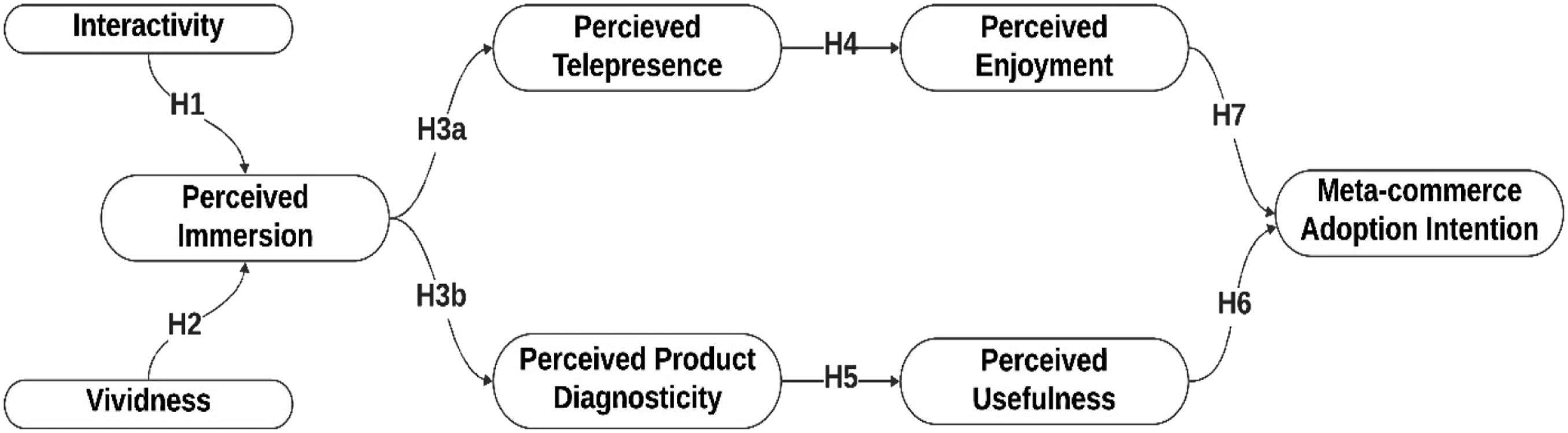
From a Flow Theory perspective, the research model (Figure 1) explains how technological features create an optimal experiential state that drives meta-commerce adoption. Interactivity refers to users’ ability to actively participate in and influence the digital environment in real time, fostering control and responsiveness, while vividness reflects the sensory richness and realism of the environment. These elements contribute to perceived immersion, which is one of the fundamental aspects of flow that involves deep engagement. The immersion then results in perceived telepresence (the sense of being there) and perceived product diagnosticity (the capacity to judge products effectively), which are the experiential and cognitive aspects of flow. Telepresence boosts perceived enjoyment (intrinsic value) whereas diagnosticity boosts perceived usefulness (extrinsic value). Finally, meta-commerce adoption intention is motivated by both enjoyment and usefulness, which emphasizes the synergistic nature of hedonic and utilitarian consequences in influencing user behavior.
This study adopts a hierarchical and process-based approach that distinctly separates the system characteristics and the psychological states of the users. In particular, interactivity and vividness are theorized as technological qualities of the digital environment, where interactivity is the extent of user control and responsiveness, and vividness is the richness of the senses and representational quality of the system. These constructs are antecedent stimuli that influence user experience and not the experience itself. Conversely, perceived immersion and telepresence are considered as different yet related psychological conditions. Perceived immersion is a general condition of intense cognitive and emotional engagement, the degree to which users are immersed in the virtual world, whereas telepresence is a more narrow experiential experience that involves the feeling of being present in the virtual world. In this regard, telepresence is framed as a by-product of immersion and not a superfluous phenomenon. This difference is in line with the previous literature that highlights that immersion is an overall engagement, whereas telepresence is a spatial presence in the mediated space.
Although TAM and UTAUT have been effective in describing the process of technology adoption based on cognitive beliefs like perceived usefulness, ease of use, and performance expectancy, they provide little information on the experiential processes that define immersive environments. Meta-commerce is not similar to traditional digital platforms since user behavior is not only influenced by logical considerations of technology but also by psychological conditions that occur due to profound involvement in the virtual space. Flow Theory overcomes this weakness by describing how technological affordances, including interactivity and vividness, create immersive experiences, which, in turn, affect user perceptions and behavioral intentions. Therefore, the contribution of the Flow Theory is not only the ability to predict adoption based on cognitive evaluation; it is the psychological processes that enable users to feel immersed, experience telepresence, enjoy, and feel that they are getting value in the metaverse. The combination of Flow Theory and adoption-related constructs contributes to the current body of technology acceptance research by showing that experiential, hedonic, and utilitarian processes are more important than cognitive evaluations in driving adoption in immersive environments.
Hypotheses development
Interactivity
Perceived immersion is the psychological feeling that the user is immersed and absorbed in a virtual environment, with the awareness of the physical environment reduced. Immersive digital environments are cognitively and emotionally engaging, causing users to pay more attention, engage more, and feel more present in the virtual world. In the context of meta-commerce, perceived immersion is crucial as it allows consumers to engage with products and services in a way that closely mimics real-world experiences, thereby enriching the shopping journey.
Interactivity has been defined as “the degree to which a communication technology can enable a mediated environment in which participants can communicate (one-to-one, one-to-many and many-to-many), synchronously and asynchronously, and engage in reciprocal message exchange.” 71 It has been demonstrated that perceived interactivity of an information system has a significant impact on the reactions of users to computer-mediated communications. 72 Previous research has shown that interactivity has a significant effect on users’ perceptions in different digital environments such as smartphone apps, 73 virtual reality systems, 74 and virtual reality shopping websites. 38 Moreover, interactivity has been identified as one of the most important aspects of consumer experiences and decision-making processes in all research studies on emerging media technologies.75–78
Interactivity is based on the concept of Flow Theory, which aims to provide a more immersive experience by allowing users to interact with the digital content instead of simply passively receiving information. The interactive exchange allows the user to be more psychologically engaged in the virtual environment, thereby enhancing the user’s feeling of engagement and absorption. 79 For instance, augmented reality applications with interactive capabilities have been shown to capture consumers’ attention to visual content, enhancing the immersive experience. 78 This increased immersion then leads to more positive attitudes towards the technology, such as higher levels of enjoyment and usefulness. 80
Interactivity has been consistently recognized as an important antecedent of immersion in shopping environments.72,75 Interactive systems have a participatory nature that enables the user to affect the outcome of the system, manipulate virtual objects, and control their experiences, which creates a greater sense of presence in the environment. This connection is especially important in the context of the meta-commerce, where VR, AR, and MR technologies allow consumers to interact with products and services in a much more realistic manner. 81 Consumers can interact with digital objects as if they were in the real world using features like 3D product visualization, virtual product demonstrations and simulated consumption experiences. These interactive experiences, like those in Flow Theory, increase the concentration, involvement, and engagement of the users, leading to a greater sense of immersion in the virtual shopping environment. Thus, increased interactivity should lead to an increased sense of immersion in the meta-commerce environment for consumers.
Vividness
Technological characteristics that enhance the richness and realism of the virtual environment are expected to strengthen consumers’ immersive experiences. This suggests that vividness may play a crucial role in fostering immersion within meta-commerce settings one of the key technological factors that contributes to perceived immersion is vividness. According to Steuer, 82 vividness is defined as “the representational richness of a mediated environment” and is associated with both sensory breadth and sensory depth. Sensory breadth refers to the variety and range of sensory channels simultaneously stimulated during an experience, whereas sensory depth relates to the quality and richness of the information conveyed through those sensory channels. 83 In online retail environments, vivid information can influence several aspects of consumer decision-making by reducing uncertainty, enhancing product understanding, and compensating for the lack of physical interaction with products. 84 Consequently, vividness has been widely associated with the quality of product presentation and the effectiveness of digital communication. 78
In this study, vividness is defined as sensory depth, which is the quality and richness of content provided in the context of meta-commerce. Empirical studies on vividness in the context of meta-commerce are still scarce, but research in virtual and immersive environments has consistently shown that vividness is a key factor in immersion.85,86 The use of rich visual representations, realistic simulations and high quality sensory cues helps users to interact with virtual environments and create more immersive experiences. Similarly, Vishwakarma 87 argued that panoramic virtual environments enriched with vivid virtual reality features and 3D representations significantly increase users’ feelings of immersion. Because virtual reality environments are inherently rich in sensory information, greater vividness can intensify users’ perception of being surrounded by and engaged in the virtual world.88,89 Therefore, higher levels of vividness in meta-commerce environments are expected to enhance consumers’ perceived immersion.
Perceived immersion
Immersion was defined by Witmer and Singer 90 as “a psychological state characterized by perceiving oneself to be enveloped by, included in, and interacting with an environment that provides a continuous stream of stimuli and experiences.” Immersion encompasses the concurrent engagement of both physical and psychological aspects. 91 It indicates a shift away from ordinary experiences and the adoption of a unique role or identity. Immersion has the potential to induce a loss of temporal and spatial awareness in individuals, as they totally commit themselves to the current moment. According to Vishwakarma et al. 87 individuals in immersive environments disengage from their tangible surroundings and real-world context, immersing themselves in the exploration of virtual places. According to Shen et al., 92 immersion represents the cognitive experience or perception of individuals being physically present within a nonphysical setting. Rose et al. 93 further contend that multimodal inputs including music, images, and free movement form users’ experience of presence and immersion in simulated settings.
In fact, the metaverse provides a wide range of immersive experiences that merge aspects of social interactions with the enjoyment obtained from consuming media. 7 In particular, it is argued that VR/AR-based devices offer means of accessing the metaverse, which exhibit similarities with pre-existing immersive media. 94 This suggests that current accessibility protocols for immersive content can be readily adjusted to accommodate metaverse-based applications. Perceiving a prominent level of immersion in the metaverse can foster a deeper sense of engagement and connection with both the virtual environment and fellow users. This increased engagement typically increases telepresence, merging the physical and virtual worlds and making users forget their physical location. 95 describe telepresence as a psychological phenomenon where individuals perceive physical presence in a nonphysical environment. This sensation is intensified by factors such as high-quality graphics, realistic audio, and interactive elements.
In meta-commerce, consumers engage with virtual products, creating a more immersive shopping experience than traditional online platforms. This interaction enables them to explore, test, and evaluate both the appearance and functionality of products before purchasing. As a result, customers develop a deeper understanding of products and experience an enhanced sense of telepresence. Telepresence also encompasses social presence; the feeling of connection with others in virtual spaces.96,97 By integrating social networking, chat features, and multiplayer gaming elements, meta-commerce platforms strengthen user engagement while fostering both telepresence and community connections.
Online shoppers mainly depend on the information offered by the stores as they are unable to physically interact with the products. 98 Without physical interaction with products, shopping online may make quality assessment harder and raise questions about suitability. Pavlou et al. 99 suggest that perceived product diagnosticity can be determined by signals. Product representation plays a significant role in shaping consumer perceptions and understanding of a product’s features, ultimately helping to inform better purchase decisions. 38
Considering the discussion above, prior e-commerce studies investigate the influence of visual and functional control on product perception. It is found that functional control, where users interact with product features, has a beneficial impact on perceived diagnosticity as compared to pallid image presentations. 100 Functional control outweighs visual control; heightened visual control minimally alters the representation format. It is also found that video presentations increase perceived diagnosticity more than pallid image presentations. 101 In fact, highly immersive VR shopping settings closely mimic physical stores in terms of visual presentation and interactive features. 102 Immersive technologies have the potential to effectively boost consumer experience by offering 360-degree views, hand gesture rotation, and customizable product positioning. 38 In addition, a valid product evaluation that mimics real-life activities can be performed through true-to-scale product representation.
The metaverse offers lifelike 3D product visualizations, allowing consumers to explore products from multiple angles, enhancing their understanding of product features. 29 The metaverse provides realistic real-world time simulations that provide users control over time settings and extensive information.81,103 Hence, meta-e-commerce simulates real-life use to help consumers decide if a product fits their lifestyle and meets their needs. Particularly, product manipulation, virtual fitting, and functionality testing are possible scenarios in the metaverse environment. 104 Such hands-on interactions can significantly support consumers to comprehend products’ features and performance, therefore, improving diagnosticity.
Perceived telepresence
Telepresence finds its roots in interactions within virtual settings, where the perceiver experiences real or simulated worlds. 105 It refers to the perception of presence in a technologically mediated virtual environment rather than in the physical real-world environment, as well as the sense of realism associated with objects (e.g., products or services) within that virtual space.95,106 Telepresence has been described in two main ways throughout the literature. One perspective emphasizes the broader environmental dimension, defining telepresence as the experience of existing in a setting created through electronic media. 82 The other adopts an individual perspective, viewing telepresence as a person’s ability to mentally transfer themselves to another location. 107 Consistent with the latter perspective, this study focuses on the individual’s perception of telepresence and defines it as the sensation of being mentally transported into a virtual environment such as meta-commerce.
Although immersion and telepresence are closely related concepts, they represent distinct psychological phenomena. Immersion is mainly a measure of how much a person is cognitively and emotionally engaged in a virtual environment. It is a measure of how much users become immersed in an activity and focus on the mediated experience. In contrast, telepresence is the feeling of being “there” in the virtual space, not in one’s own space. In other words, immersion is about how immersed users are in the virtual experience, while telepresence is about how they feel they are present in the virtual environment. Based on the concept of Flow Theory, immersion can be considered as a state of deep involvement and absorption, and telepresence as a perception that enables such immersion, resulting in a realistic sense of presence in the virtual world. Thus, while both constructs are important for enriching the meta-commerce experience, they are different aspects of the users’ virtual experiences and are treated as separate constructs in the proposed research model.
The importance of telepresence can also be explained through Flow Theory. Telepresence makes it easier for users to become absorbed in a medium and immersed in an imaginary world. In online environments, telepresence plays an important role in facilitating flow experiences by creating a strong sense of “being there” within the virtual environment. When users perceive themselves as physically present in a mediated environment, they are more likely to focus their attention on the activity, become immersed in interactions, and experience greater enjoyment.
Meta-commerce environments are particularly conducive to the development of telepresence. Unlike traditional platforms, the metaverse is a virtual 3D environment that allows people to interact and communicate with each other via virtual presence and avatars, thereby sharing activities and experiences. 108 The value of the metaverse is in facilitating interpersonal interactions via simulated physical proximity and 3D product displays. These environments can create a feeling of proximity between participants, even when they are physically apart, by using virtual spaces and avatar interactions. 109 Moreover, the metaverse can be used to showcase products in rich and detailed 3D visualizations, allowing consumers to assess them using rich and detailed visual information. 105 The immersive social environments of the metaverse allow product demonstrations to feel realistic and interactive. Moreover, the use of avatars enhances users’ perceptions of telepresence within the metaverse environment. 110
The immersiveness of meta-commerce is likely to foster a stronger sense of telepresence, as consumers increasingly feel as though they are present within a virtual store. Compared with traditional e-commerce, meta-commerce creates a stronger sense of presence through interactive features and richer sensory stimulation. Realistic interactions among consumers, avatars, products, and virtual locations contribute to an engaging and immersive shopping experience. Drawing on Flow Theory, such experiences facilitate deeper involvement and enjoyment by creating a compelling sense of presence within the virtual environment.
Previous studies provide evidence that telepresence significantly enhances enjoyment and satisfaction in digital shopping contexts.94,111–113 The realistic telepresence enabled by meta-commerce is likely to make shopping more entertaining, engaging, and intrinsically rewarding. By facilitating a compelling sense of presence in the virtual environment, meta-commerce provides an enjoyable and pleasurable experience that consumers perceive as valuable in itself. Therefore, telepresence represents a key experiential characteristic of meta-commerce that enhances consumers’ enjoyment of the virtual shopping experience.
Perceived product diagnosticity
A system’s usefulness refers to its ability to assist in carrying out desired tasks. 114 In shopping contexts, a key task is comprehending product information to inform purchase decisions. Jiang et al. 115 point out that the degree to which consumers believe a website can convey relevant product information assists them in comprehending and assessing the utility of products and services. In the same vein, Kempf and Smith 116 define perceived diagnosticity of a product trial as “the degree to which the consumer believes the trial is useful in evaluating the brand’s attributes.” It refers to the clarity and usefulness of online product information, enabling consumers to effectively evaluate and differentiate products. 117 High diagnosticity lowers consumer uncertainty and boosts purchase confidence, especially critical in online shopping where physical product inspection is unavailable. 118 This connects diagnosticity to usefulness. A primary consumer goal is attaining thorough understanding of products to enable informed assessments. 38 Shopping environments that enhance product knowledge should thus increase perceived usefulness. 119 Jiang and Benbasat 120 demonstrated this in a study comparing product presentation formats, finding that higher website diagnosticity led to higher perceived website usefulness.
Product diagnosticity in metaverse retailing is the measure of the dynamic, experiential setting in which products are made available, the way in which they are experienced and their interaction possibilities in the virtual world. Virtual stores duplicate and augment physical shop with in-depth, space expanding interactions in which users can explore, choose, and inspect merchandise using interactive functions and entertaining experiences that cannot be supported in a physical store. 28 Although technical limitations such as lack of access to accurate product information (e.g., color, fabric, or size) are hard to overlook, 121 metaverse retailing alleviates it by allowing virtual simulations, real-time customer support, and demonstrations become more expressive and engaging. 122 This combination of the Gamified Presentations and the adaptive information delivery can redefine the consumer interactions, that balances on limitations of the virtual environment and finds some novel ways and redefines the holistic and dynamic shopping experience. 123
Perceived diagnosticity of product is likely to influence perceptions of usefulness in metaverse shopping environments. If metaverse platforms allow shoppers to effectively assess products and reduce uncertainty, they will be perceived as more useful tools for informed purchase decisions. Metaverse provides consumers with a more engaging shopping experience where they can engage with products in a virtual environment, which can have a strong influence on their preferences towards the usefulness of the product.124,125 The metaverse provides a visualization and interactivity of products that is way more impressive than the traditional e-commerce. 13 Perceived diagnosticity can be improved in metaverse shopping spaces due to high-quality information and images, which allows users to make more accurate product assessments.94,126 The more diagnostic the platform is, the more useful it is perceived and the more useful it becomes in making informed decisions. 127 Interactional characteristics, such as 3D product manipulation and virtual tries-on replicate the physical interaction, whereas elements of trust, such as media richness and social presence, encourage the user-confidence.128,129 All of these enhance the clarity of the decision-making process, enhance the level of engagement, trust the reliability of the platform, and make the experience of shopping more practical and convincing. 130 Research on VR-based shopping has connected higher diagnosticity to increased usefulness perceptions. 38 Meta-commerce will likely show the same effect; the better a platform can help a customer gain product knowledge using interactive, vivid imagery and knowledge, the more successful the perception of its usefulness in making a knowledgeable and fulfilling purchase.
Perceived usefulness
It is possible to identify two different kinds of consumers; the problem solvers, and the fun seekers. 83 To identify the hedonic and utilitarian value of metaverse to the consumers during shopping, perceived enjoyment and usefulness are applied in the study. The facility of customers to locate and access basic product information to support purchase decisions can be discussed as perceived usefulness in online contexts. 78 Perceived usefulness represents the strong belief in the practical value of a technology. 114 It is the extent to which users believe technology will help them achieve their goals better than other options. This belief consistently serves as the foundation for technology adoption in various contexts, primarily owing to heightened user performance.131,132 Specifically, a technology’s usefulness is determined by whether it provides tangible benefits that make it worth incorporating into users’ everyday routines. Prior VR and metaverse adoption research in various contexts highlight perceived usefulness as a key facilitator of user adoption intention.35,133 Likewise, the literature of online shopping has steadily regarded perceived usefulness as a critical factor influencing behavioral intention.38,83,113 These studies demonstrate that VR-based environments offer more detailed product information than a conventional web platform. Consumers can effortlessly manipulate the content in VR to precisely determine product characteristics (e.g., size and fit). Accordingly, perceived usefulness in this study is related to consumers’ overall perceptions of the entire metaverse functional experience in enhancing their purchasing performance.
Aligned with previous research, this study suggests that having a positive perception of meta-commerce’s usefulness leads to amplified adoption intention. In particular, perceived usefulness boosts meta-commerce adoption intention by providing consumers with tangible benefits and valuable features (i.e., personalized recommendations and product diagnosticity). These features promote a favorable inclination towards adoption as they enhance shoppers’ experiences and outcomes. In addition, prominent levels of perceived usefulness can substantially lower feelings of uncertainty and complexity associated with meta-commerce. If customers think meta-commerce is simple, efficient, and meets their shopping needs, they are prone to adopting meta-commerce for shopping. Therefore, positive perceptions of usefulness can reduce perceived risks and barriers to adoption, leading to increased customer confidence and willingness to use meta-commerce.
Perceived enjoyment
Perceived enjoyment is associated with the hedonic aspect of shopping, as opposed to the instrumental aspect of perceived usefulness.132,134 Venkatesh 135 points out that enjoyment perception is the extent to which “the activity of using a specific system is perceived to be enjoyable in its own right, aside from any performance consequences resulting from system use.” According to Kim et al., 136 consumer affective responses such as enjoyable, pleasurable, humorous, and joyful conditions constitute enjoyment in a VR environment. The extant literature of online shopping has confirmed the perception of enjoyment has a direct positive effect on adoption intention.83,112,113 Perceived enjoyment in the present study pertains to the overall emotional hedonism of consumers as an experiential purchasing consequence of the entire metaverse experience. Consumers are inclined to form favorable attitudes towards utilizing meta-commerce platforms for online shopping when they find these platforms enjoyable and entertaining. The enjoyment derived from using meta-commerce platforms can stem from several factors. This includes features such as the ease of navigation, interactive features, personalized recommendations, immersive experiences, and social aspects such as peer interactions and user-generated content.20,110 These factors make meta-commerce more pleasurable and engaging, boosting customers’ likelihood to use it. Hence, consumers are more inclined to spend additional time exploring the features, browsing products, and making purchases on a meta-commerce platform when they find it enjoyable.
Methodology
Data collection and procedure
This study’s main objective was to identify the main factors influencing the adoption intention of meta-commerce. Meta-commerce in this study is defined as the use of metaverse-based virtual environments for the commercial exchange of both real-life goods and virtual goods. Specifically, our focus includes virtual retail environments where consumers can purchase physical products that are delivered in the real world, as well as purely digital goods such as virtual clothing, accessories, or NFTs. Given the limited implementation of actual meta-commerce platforms in Jordan, the study targeted online shoppers who have prior experience with virtual reality (VR)-based technologies, as they are more likely to understand and engage with the concept of meta-commerce. A purposive sampling technique was used to identify and recruit participants who met specific inclusion criteria: (1) they must be active online shoppers from Jordan and (2) they must have used VR technologies (e.g., VR headsets, immersive virtual environments, or VR-based shopping applications). Individuals who did not meet these criteria were excluded from participation. To operationalize this, a screening question was included at the beginning of the online questionnaire to confirm whether respondents met the eligibility criteria. Only those who indicated both online shopping activity and prior experience with VR technologies were allowed to proceed with completing the full survey. A survey questionnaire was created by means of Google Forms and the link to the questionnaire was shared via a targeted outreach on social media sources like Facebook, Instagram, LinkedIn, and others. Social media was exploited to access communities which might have people with the necessary experience by using relevant hashtags (e.g., #metaversebrand, #metaverse retail, etc.). This design was used to make the sample representative of the target population of the research. The period of data collection was about 3 months, between November 2nd, 2024, and February 8th, 2025.
The survey comprised two primary sections. The first section aimed to collect demographic data, while the second section measured the research model constructs. All items were measured using a five-point Likert scale, ranging from 1 “strongly disagree” to 5 “strongly agree.” The measurement items were adapted from recent, relevant, and well-established studies (see Appendix 1) and were carefully modified to align with the specific context of this study. For instance, the items measuring perceived product diagnosticity were adapted from Chen et al., 94 who originally developed them to assess diagnosticity in virtual reality shopping environments. To suit the meta-commerce context, these items were revised to emphasize users’ immersive and interactive experiences in evaluating product features, simulating physical interaction within a virtual environment. Similarly, the items for the other constructs were adapted from prior metaverse retailing research and were slightly modified to enhance readability and clarity. These modifications ensured that the constructs accurately reflected user experiences within the meta-commerce environment while maintaining the validity of the original scales. To ensure the face and content validity of the survey, two professors with extensive academic and research backgrounds in information systems and multimedia evaluated the survey items. They suggested minor corrections to improve the readability of some items. Additionally, the survey was pilot tested with 37 respondents, and the internal consistency evaluation was satisfactory.
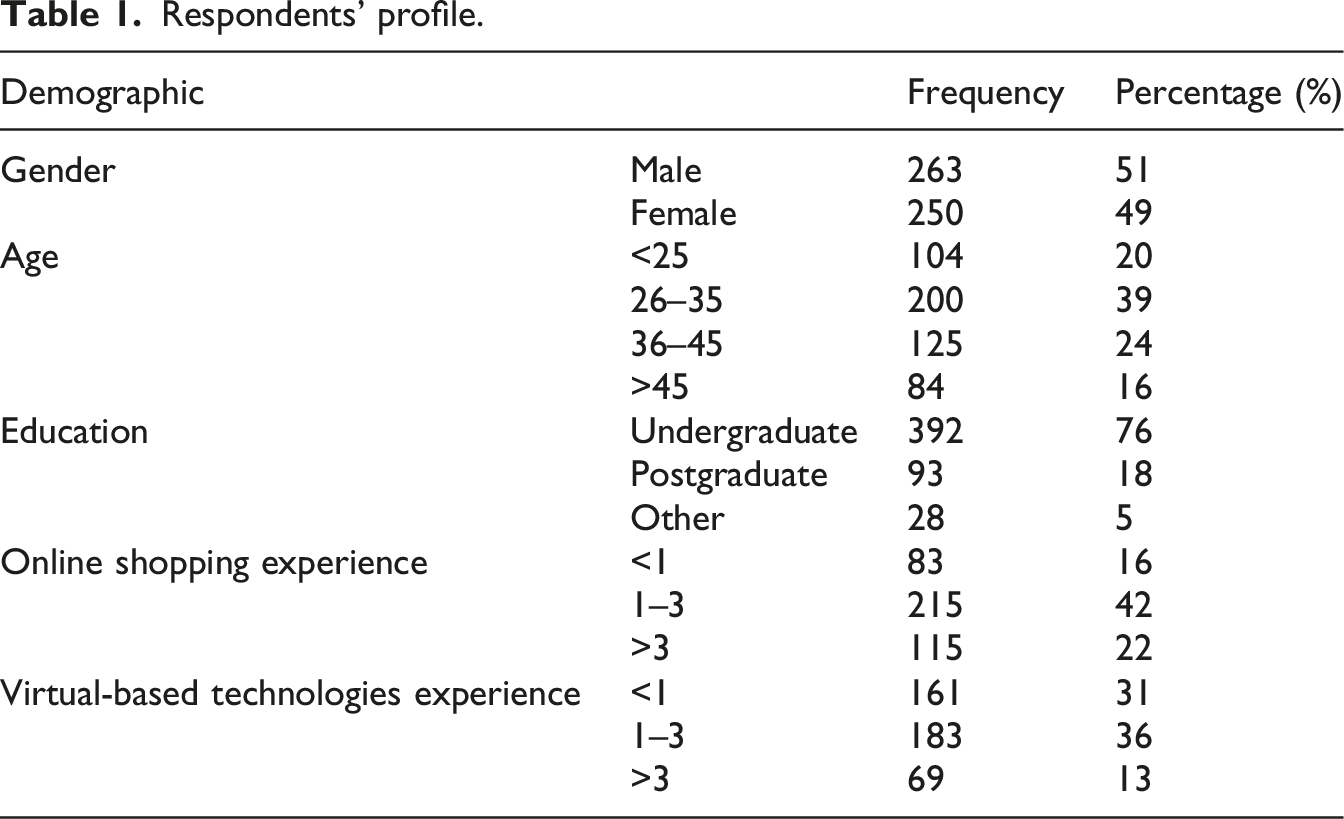
Respondents’ profile.
Common method bias
As the current study adopts a cross-sectional approach, it is susceptible to common method bias (CMB). Kock et al. 137 point out that CMB may arise when “both the independent (IV) and dependent (DV) variables are measured within one survey, using the same response technique.” Controlling CMB has the potential to affect the reliability of survey items and compromise the findings’ validity. In order to address the concern of CMB, two distinct categories of controls were employed in this study: statistical controls and procedural controls. 138 In particular, procedural controls are conducted before data collection, while statistical controls are carried out after data collection. Procedural controls involve designing the survey to provide clear instructions, safeguarding respondent anonymity, evading ambiguous items, and maintaining survey brevity. Furthermore, the survey design in this study has ensured diversification of survey scale layouts to collect the IVs and DVs, while also separating the measurement items of IVs and DVs proximally. Regarding statistical control, “Harman’s single-factor test” was utilized to analyze all the measurement items through “Exploratory Factor Analysis.” 139 The results indicate that all measurement items are grouped into eight factors, with the first factor explaining 44.3% of the variance (below the 50% threshold), suggesting no concerns regarding CMB.
Structural Equation Modeling using Partial Least Squares (PLS-SEM) was selected as the analytical technique due to the complexity of the conceptual model, which incorporates multiple latent constructs and simultaneous relationships. While PLS-SEM is robust to violations of normality, the data in the present study exhibited acceptable levels of normality, with skewness values ranging from −0.298 to −0.209 and kurtosis values ranging from −0.819 to −0.660 (Appendix 2). Consequently, the use of PLS-SEM was justified by the model’s complexity and the study’s predictive objectives rather than by concerns regarding non-normal data distributions. The data analysis in SEM-PLS is typically performed in two stages: the measurement model and the structural model. The measurement model stage focuses on assessing the reliability and validity of the constructs or latent variables in the model. In this stage, the relationships between the observed variables (indicators) and their corresponding latent variables are examined. After establishing a satisfactory measurement model, the structural model stage focuses on assessing the relationships between the latent variables (constructs) in the model.
Data analysis
Measurement model
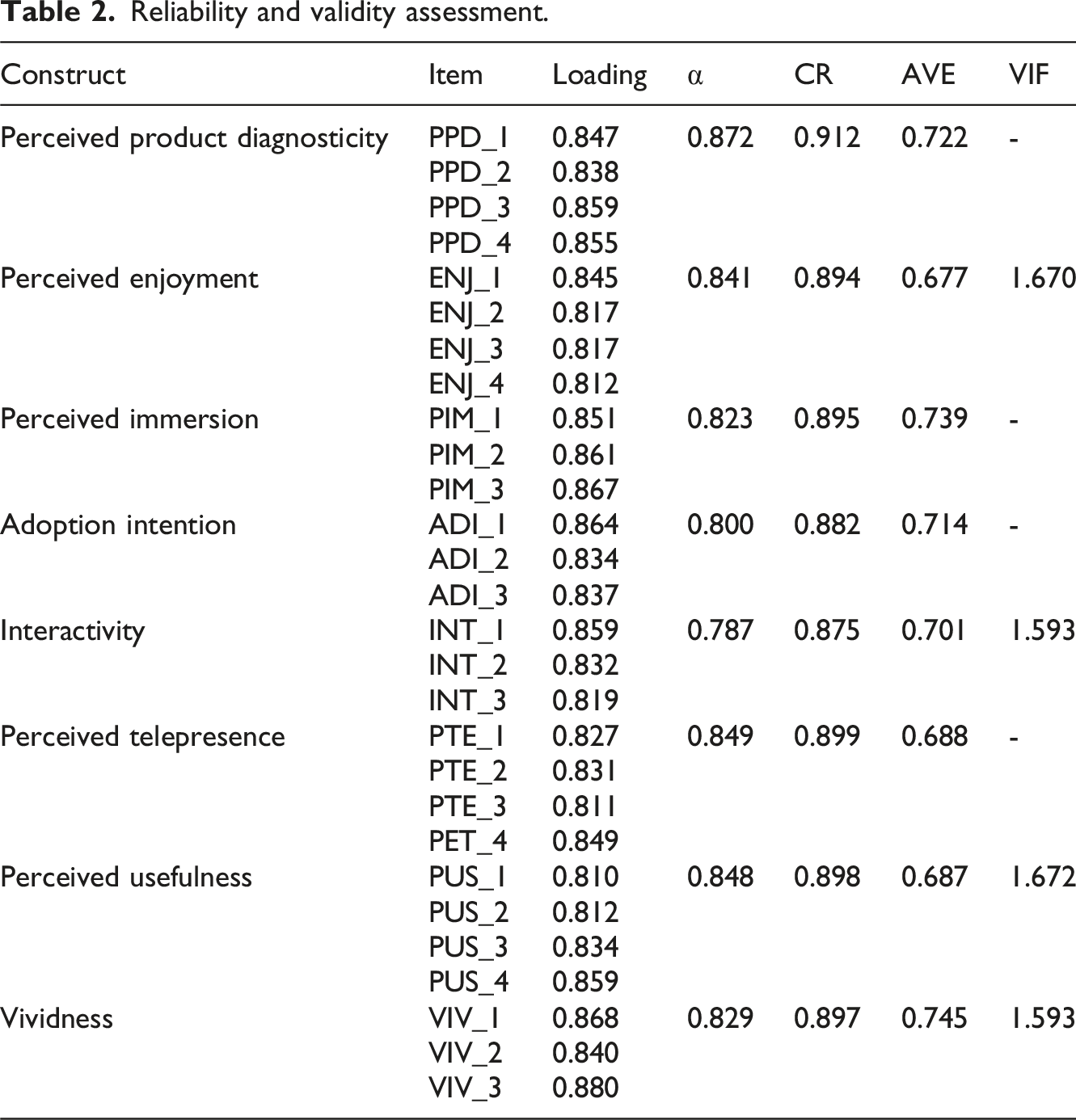
Reliability and validity assessment.
Discriminant validity assessment
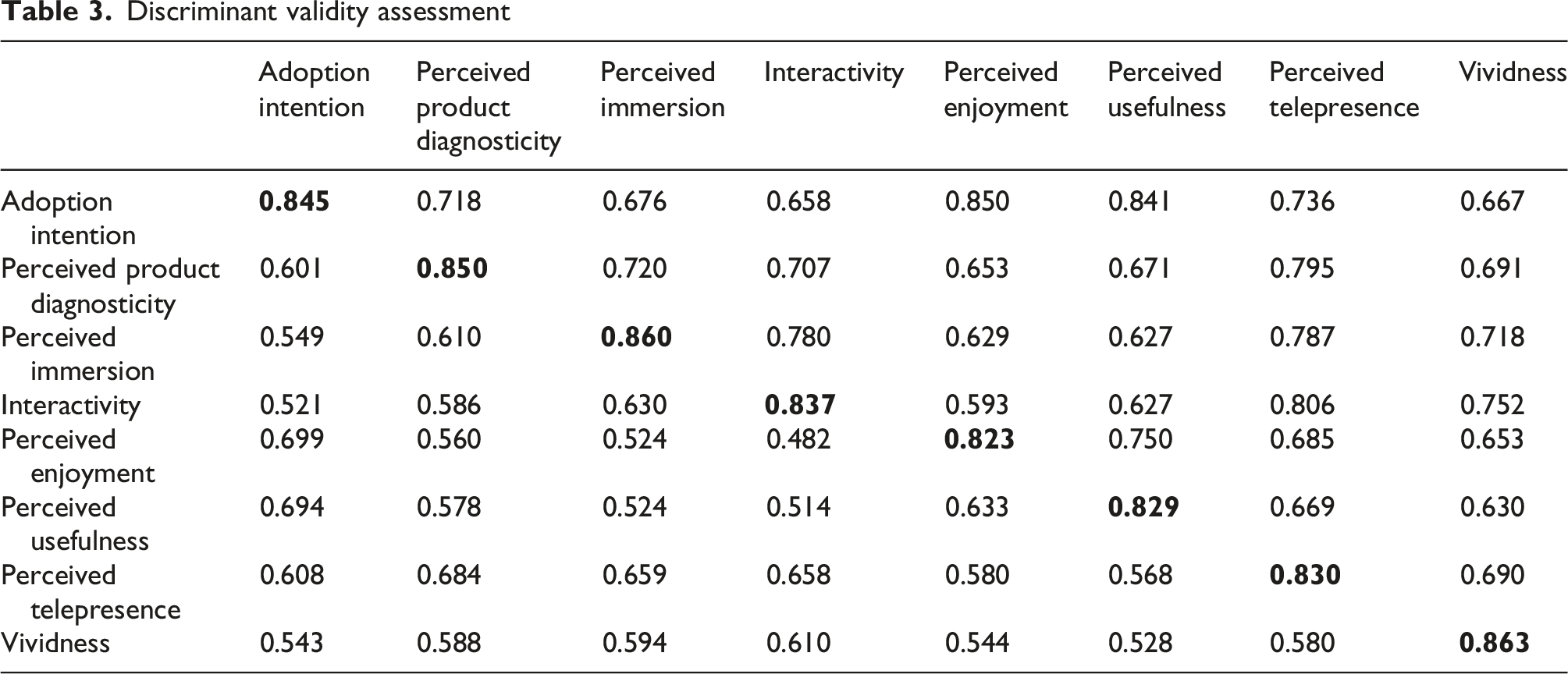
To confirm discriminant validity, we compared the √AVE for each construct with its correlations with other constructs. The √AVE values (main diagonal in bold) were higher than the correlations (below the main diagonal), supporting discriminant validity. The Heterotrait-Monotrait Ratio (HTMT) test values (above the main diagonal) were all below 0.85, further supporting discriminant validity.
Structural model
The model fit assessment indicates acceptable results for both the saturated and estimated models. The SRMR values (0.042 and 0.078) are below the recommended threshold of 0.08, indicating good fit. 140 The discrepancy measures (d_ULS and d_G) are within acceptable ranges, suggesting a reasonable alignment between the empirical and model-implied matrices. Additionally, the NFI values (0.912 and 0.903) exceed the 0.90 threshold, confirming adequate fit. The use of multiple fit indices enhances the robustness of the model assessment, as each index captures different aspects of model fit. While SRMR evaluates the average magnitude of residuals, d_ULS and d_G assess discrepancies between empirical and estimated matrices, and NFI compares the proposed model against a null model. The convergence of these indicators provides consistent evidence regarding the adequacy of the proposed model. Furthermore, the results of the measurement model evaluation support this conclusion. Specifically, all constructs demonstrated satisfactory reliability and validity, as evidenced by acceptable factor loadings, Cronbach’s alpha, composite reliability, and AVE values. In addition, discriminant validity was established through the Fornell–Larcker criterion and HTMT ratios. Collectively, these findings indicate that the measurement model is both reliable and valid, thereby reinforcing the robustness of the overall model fit and supporting the suitability of the proposed structural model.
Hypotheses testing.
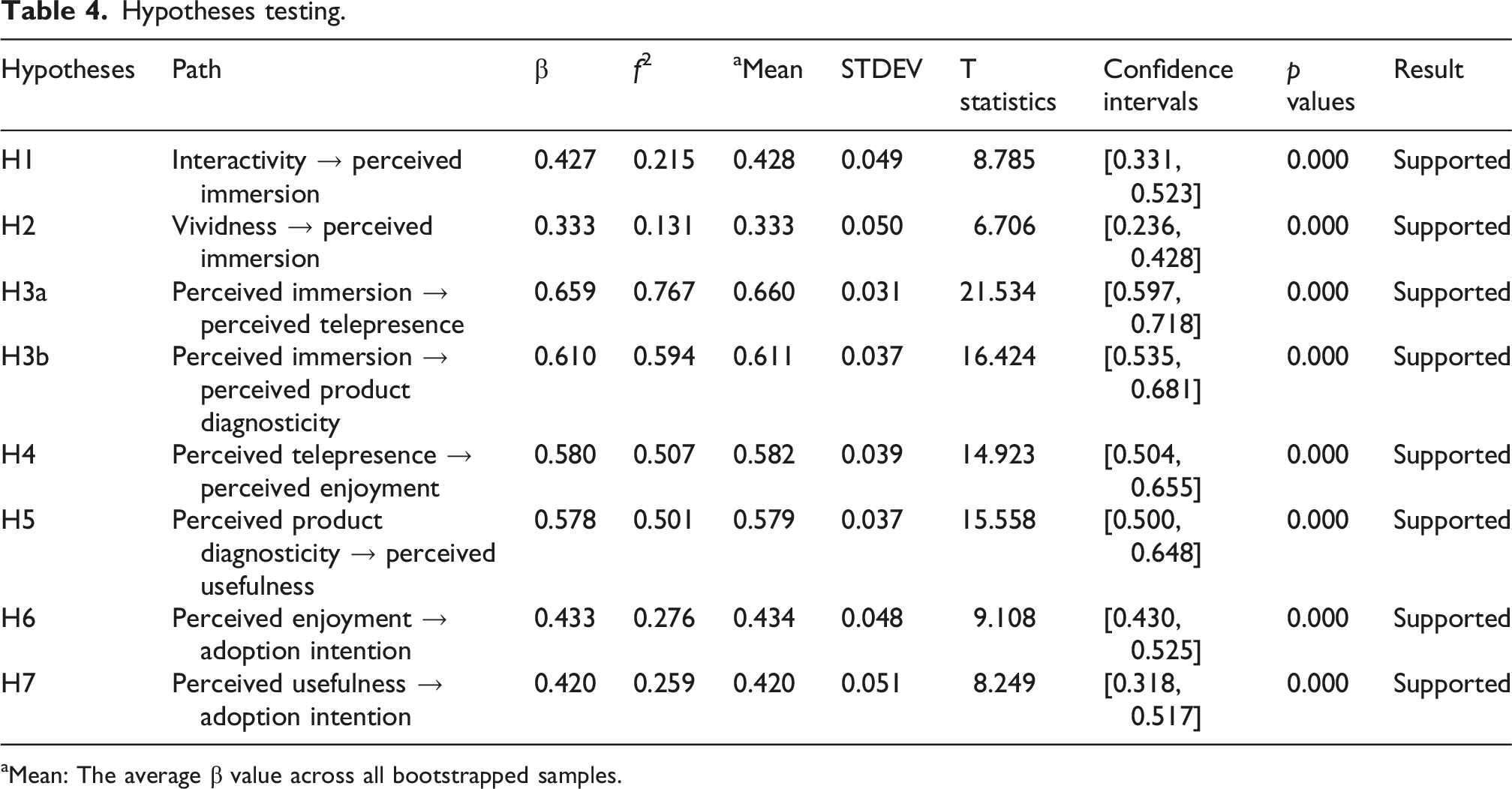
aMean: The average β value across all bootstrapped samples.
Perceived telepresence was found to exert a significant and substantial positive influence (β = 0.580, p < 0.001) on perceived enjoyment. This suggests that the increase in perceived telepresence leads to a considerable corresponding increase in perceived enjoyment among consumers. Moreover, perceived product diagnosticity demonstrated a significant positive impact (β = 0.578, p < 0.001) on perceived usefulness. This implies that increased perceived product diagnosticity is linked with prominently improved in perceived usefulness among consumers. This highlights the importance of product diagnosticity in shaping consumers’ evaluation of a meta-commerce’s utility. Finally, perceived enjoyment (β = 0.433, p < 0.001) and perceived usefulness (β = 0.420, p < 0.001) emerged as critical determinants of meta-commerce adoption intention. These findings highlight perceived enjoyment and perceived usefulness as essential drivers of adoption intention in meta-commerce.
Predictive performance evaluation.
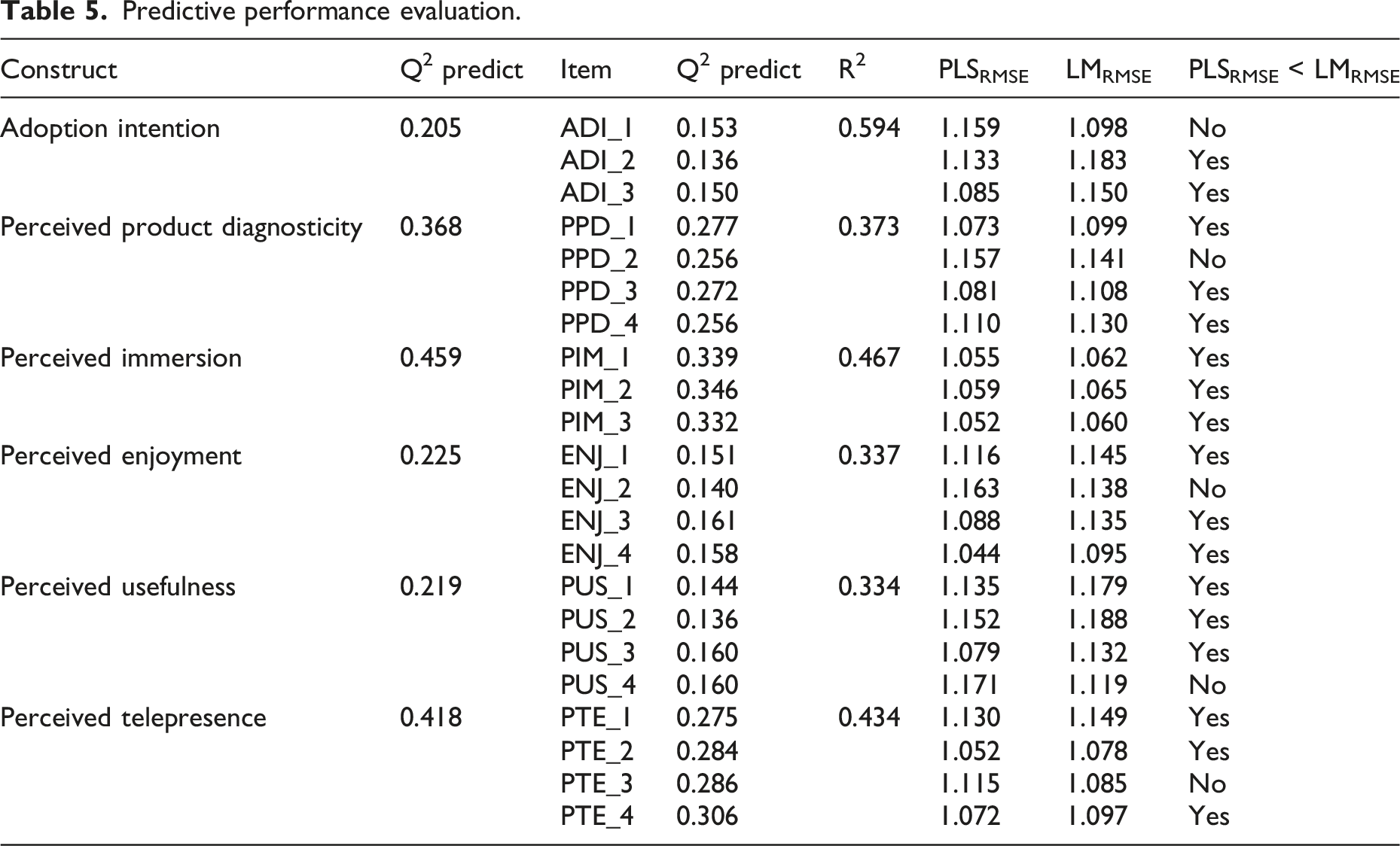
The Q2predict values, representing predictive performance on both construct and measurement item levels, for adoption intention, perceived product diagnosticity, perceived immersion, perceived enjoyment, perceived usefulness, and perceived telepresence were notably above zero, indicating satisfactory predictive performance of the research model. Furthermore, the predictive capacity of the research model is evaluated using the PLS Predict methodology, following the methodology proposed by Shmueli et al. 142 This evaluation involves comparing the root mean squared errors (RMSE) obtained from Partial Least Squares (PLS) with those from a baseline linear regression model (LM). As presented in Table 5, the PLS model consistently demonstrates lower RMSE scores across all indicators of the dependent variables, except for ADI_1, PPD_2, ENJ_2, PUS_4, and PTE_3. This indicates the robust overall predictive performance of the proposed research framework, as it effectively minimizes prediction errors.
Discussion
The results of the empirical study strongly support H1, which shows that there is a significant positive correlation between interactivity and perceived immersion in meta-commerce environments. This result is in line with previous studies by Hudson et al. 91 and Yim et al. 78 in VR and AR settings. The results of the validation of H1 build on previous results and indicate a similar trend for different types of immersive technologies in the domain of meta-commerce. There are several theoretical perspectives on the strong correlation between interactivity and immersion. First, this relationship is consistent with the core tenets of flow theory, indicating that meaningful user interaction with virtual environments enhances deep engagement and psychological immersion. In the context of meta-commerce, this interactivity appears to be a crucial link between the physical world of the user and the virtual marketplace, allowing the user to immerse themselves in the experience of involvement and presence. This advocates the previous research by Kowalczuk et al. 75 that revealed the fundamental character of interactivity in the generation of immersive digital experiences. The results emphasize the interactive features present in the meta-commerce platform as part of enhanced shopping experiences that cannot be achieved with conventional e-commerce. It immerses users as they can interact with virtual products, explore three dimensional environments, and perform in real-time activities. This indicates that the high levels of interactivity assist in bridging the psychological divide present between the consumers and the virtual settings in the list so that they can have a more immersive way of shopping.
These empirical findings give a high level of evidence to H2 which was that vividness positively significantly affects perceived immersion in meta-commerce settings. This result is in line with the previous research.85,86 It also expands on prior research by Kim et al. 143 and Mishra et al. 144 on the topic of sensory involvement as implemented to the virtual environment and demonstrates more significant effects through the implementation of the phenomenon in the context of the meta-commerce environment. From a Flow Theory perspective, the findings suggest that enhanced vividness contributes to users achieving a state of optimal experience or “flow,” where they become deeply absorbed in the virtual shopping activity. This aligns with 145 assertion that immersive experiences in metaverse shopping platforms are driven by perceived realism and presence, which are influenced by the vividness of the virtual environment. The findings of the validation of H2 provide support for the theory of psychological immersion and the theory of user engagement, which were proposed in previous studies, and for the theory of rich sensory experiences as a key factor in psychological immersion in virtual shopping environments.
Our results also show that there is a strong positive correlation between perceived immersion and telepresence in meta-commerce environments. Therefore, this result confirms H3a and is consistent with the research done in virtual environments.38,96 The correlation indicates that the more immersed users are in the context of meta-commerce, the more they feel like they are present in the virtual world. This discovery aligns with previous studies conducted by Steuer 82 and places it in the context of the new field of meta-commerce. This strong correlation can be attributed to a number of factors. In the context of meta-commerce, immersive environments often feature high-quality graphics, spatial audio, and interactive elements that enhance the sense of presence in the virtual space. Meta-commerce environments are typically rich in sensory experiences, including high-quality graphics, spatial audio, and interactive elements, which help users feel more present in the virtual space. Second, the natural and intuitive interaction with products and environments seems to increase the psychological link between the user and the virtual environment, thus improving the feeling of telepresence.
Likewise, the empirical results of our study support H3b by offering strong evidence that perceived immersion positively influences perceived product diagnosticity in the context of meta-commerce. The positive relationship between immersion and product diagnosticity is consistent with and builds on previous studies on virtual reality in retail settings. Previous research has shown that immersion is generally beneficial for user engagement 146 but our results quantify the effect of immersion on consumers’ ability to evaluate products effectively. The strong positive correlation suggests that higher levels of immersion enable shoppers to make more informed purchase decisions by providing richer, more detailed product information in an experiential format. Interesting patterns can also be found in the results showing how various aspects of immersion are used to increase diagnosticity. It is a development of the spatial presence theory, 147 except that an extra emphasis is placed on meta-commerce environments. The spatial presence element plays an essential role in that, it stresses the fact that the sense of the present with the product by the consumers in the case when there is a necessity to estimate its qualities is one of the most essential elements which condition the extent of his/her opportunity to estimate the qualities of the product.
Our empirical evidence demonstrating a significant positive relationship between perceived telepresence and enjoyment in meta-commerce environments supports H4. The result reflects and expands the existing studies in virtual spaces111,148–150 but also shows special features of the meta-commerce environment. There are a number of theoretical facilitating mechanisms behind the strong positive relationship between the concepts of telepresence and enjoyment. First, heightened telepresence likely creates a more immersive shopping experience that transcends traditional e-commerce limitations. Greater presence in the virtual environment fosters natural engagement with products and spaces, enhancing emotional responses and enjoyment. First, increased telepresence is likely to make the shopping experience more immersive than the traditional e-commerce experience, going beyond the limits of e-commerce. Being more present in the virtual world encourages natural interaction with products and environments, which improves emotional reactions and pleasure. The more “real” and “immediate” the interaction appears, the more pleasure users will find in it, this implies. Moreover, the discovery highlights the unique features of the meta-commerce platforms that enable social presence and spatial awareness. The concept of meta-commerce is not the same as the traditional online shopping experience, as it leverages telepresence technology to create a virtual environment that mimics the in-store experience, but also adds some elements that are unique and fun to the online experience. This implies that telepresence is a key intervening variable between virtual shopping activities and actual pleasurable experiences. Interestingly, this correlation could also suggest that a successful integration of the experiential gap that has been a challenge for e-commerce platforms is achieved in a meta-commerce environment. In industries such as fashion and home decor, where spatial perception and immersive experiences are crucial to the buying decision, the potential of telepresence to enhance consumer satisfaction suggests that meta-commerce may thrive.
The empirical study results support H5, showing a significant positive relationship between perceived product diagnosticity and perceived usefulness in the context of meta-commerce. This means that customers who correctly evaluate the characteristics of the product see the benefits of meta-commerce as greater than their shopping needs. This positive correlation can be attributed to a number of factors. First, the improved product diagnosticity in the meta-commerce allows the consumers to make better decisions about their purchases, as they can access rich and interactive product information. Meta-commerce environments are different from traditional e-commerce platforms because they provide immersive 3D product visualizations, enabling users to view products from various angles, manipulate virtual products, and even simulate how they might be used. This enhanced ability to assess product features appears to directly translate into higher perceived usefulness of the platform itself. These results are consistent with previous work in the traditional e-commerce setting, for example, the work of Peukert et al. 38 which showed that product diagnosticity is a key factor in online shopping environments. The current study, however, builds on this understanding by exploring the unique context of meta-commerce, where the relationship is even more pronounced, owing to the greater level of immersion of these platforms. The strong correlation between product diagnosticity and perceived usefulness seems to be related to the reduction of purchase risk. The virtual environment allows consumers to experience the product in a realistic way, thereby minimizing the anxiety of purchasing, and giving them a very realistic sense of what they are buying. This augmented evaluative capacity acts as a potent tool that converts product diagnosticity into intensified perceptions of utility, ultimately enhancing user assurance in their purchasing choices within the meta-commerce landscape.
Our results demonstrate a significant positive relationship between perceived usefulness and users’ intentions to adopt meta-commerce platforms, aligning with previous metaverse adoption research.26,151 This result provides empirical evidence to H6. The high impact of perceived usefulness on the adoption intentions indicates a prevalence of practices that would be perceived as more useful in determining the adoption intentions of the prospective users in these processes; feeling that they would acquire more practical benefits by adopting and engaging in meta-commerce. This is particularly relevant in emerging applications of virtual commerce where value proposition might not be apparent to all the users. The meta-commerce platforms will be more appealing to users when they add value to the shopping experience or deliver this added value that brings extra advantages beyond conventional e-commerce.
Lastly, it has been identified that the analysis supports H7, meaning that perceived enjoyment was shown to be significantly related to the intention to adopt meta-commerce (positively). It is a significant finding, which can take our knowledge a step further on the subject of technology acceptance in the context of immersive virtual environments. The observation given is consistent with the current studies concerning the matter.26,83,146,152
There are several theoretical directions which can help to understand the profound connection between enjoyment and adoption intention. This observation suggests that both the experiential and emotional elements play very critical roles in the way the user acts in the meta-commerce scenario. The meta-commerce is hedonic as compared to the traditional e-commerce in the sense that the latter is governed by utilitarian concerns. This follows greater understanding that immersive virtual worlds must offer fulfilling experiences of users to trigger the adoption. In the case of meta-commerce, the correlation between fun and intention to adopt is particularly high, as the platform combines entertainment and retail in a unique manner. The results indicate that user enjoyment in the context of meta-commerce contributes to overcoming obstacles to adoption, such as technological complexity and learning curves. This fun seems to serve as an essential motivational link, assisting users to move from conventional online shopping to more advanced virtual retail settings. This underscores the significance of fun as a motivational element that can aid users in moving away from the conventional online purchasing experience to more immersive virtual retail settings.
Research implications
Theoretical implications
The results of this study have important theoretical implications for the study of the adoption of meta-commerce. The study contributes to the existing literature on the adoption of meta-commerce, as there is limited research on the topic, and it explores the key drivers of adoption intentions using the lens of the Flow Theory. To the authors’ best knowledge, this is the first use of Flow Theory in the context of meta-commerce, providing a new insight into user behavior in virtual commercial environments. The R2 value of 0.594 for the research model confirms that the model is sufficiently explanatory, thus the theoretical basis of this study is appropriate for examining the intention to adopt meta-commerce. The findings of this successful implementation of Flow Theory in this study show that this theory can be applied in other contexts beyond the traditional e-commerce context, which provides new avenues for theoretical research in new digital markets.
The research model proposed by the flow theory is expanded to explain the scope of the meta-commerce phenomenon by adding context-specific factors. These factors also enhance its theoretical foundation and application. This not only adds to the growing body of literature on meta-commerce but also offers a deeper insight into the psychological and experiential aspects of meta-commerce adoption. Moreover, the novelty of the study’s use of the Flow Theory in the context of the meta-commerce provides a framework for future research and serves as an inspiration to researchers to investigate the applicability of other theories in this new field. The effectiveness of this theoretical framework in explaining adoption intentions could inspire a reconsideration of the current technology adoption models, and create more context-specific and comprehensive theories for virtual commerce environments.
Practical implications
The results of this study have several managerial implications for companies looking to create and market their meta-commerce platforms. First, the results show that interactivity and vividness have a significant effect on consumers’ sense of immersion. Thus, it is important for the developers and retailers to focus on the development of highly interactive and visually rich virtual environments that allow the user to interact with the virtual environment. Real-time interactions, immersive navigation, high-quality 3D product representations and extended reality (XR) technologies can enhance consumers’ sense of presence in virtual environments. This discovery builds on previous e-commerce studies that focused mainly on website usability and information quality, and now adds the role of immersive technological features in consumer experiences in the context of meta-commerce.
Second, the results show that product diagnosticity is significantly improved when the product is perceived as being immersed. This indicates that the benefits of immersive environments are not just in providing engaging experiences but also in helping consumers better assess products and understand their attributes. Therefore, managers should consider investing in advanced product visualization tools, including interactive 3D models, virtual product demonstrations, and virtual try-on technologies. These features can help consumers to examine products in greater detail, which can help to minimize uncertainty and enhance perceptions of product usefulness. In contrast to the majority of studies on e-commerce, which focused on the hedonic aspect of immersion, the present results show that immersion also brings utilitarian benefits, namely by increasing product diagnosticity.
Third, the findings suggest that enjoyment is an important factor in the use of telepresence. The results highlight the need to develop an engaging sense of presence in virtual shopping settings. Managers need to instead prioritize avatar realism, social interaction, and virtual co-presence, which would enable consumers to feel physically present in the virtual store. The present study has confirmed that telepresence is indeed a key feature of virtual environments and that it directly influences consumers’ enjoyment, further supporting its role in customer engagement and retention.
Fourth, perceived product diagnosticity was shown to significantly impact perceived usefulness. The discovery indicates that virtual environments can influence consumers’ purchasing decisions, making them more aware of the practical benefits of meta-commerce. Managers should therefore focus on technologies and design elements that help to understand and evaluate the product. Investments in detailed product information, interactive demonstrations and realistic visualizations can reinforce consumers’ perception of usefulness and, ultimately, their intentions to adopt.
Most importantly, the findings indicate that perceived usefulness and perceived enjoyment both have a significant impact on consumers’ intention to use the meta-commerce platform. This discovery underscores the need to consider utilitarian and hedonic motivations in tandem for successful meta-commerce strategies. The findings of the present study show that both dimensions are equally important in the context of meta-commerce, as the majority of previous e-commerce studies have focused on usefulness as the key determinant of technology adoption, and metaverse studies have tended to focus on experiential and entertainment value. Thus, businesses should not only emphasize on the functional benefits but also on the entertainment features. Rather, they should adopt a balanced approach that merges the functionality of shopping with the fun and immersion of the experience. For instance, gamification, personalization, product exploration and social shopping can all meet consumers’ utilitarian and hedonic needs at the same time.
The results also indicate that personalization can further enhance consumers’ experiences in the context of the meta-commerce. Consumer data and analytics should be used to tailor the amount of interactivity, product presentation formats, and immersive capabilities based on user preferences and actions. By tracking these indicators, organizations can continuously improve and enhance their virtual commerce experience. Last but not least, as the concept of “meta-commerce” is still new, it is essential to invest in educational and awareness campaigns that effectively highlight the benefits of virtual shopping environments, both from a practical and experiential standpoint. These can help alleviate consumer uncertainty, aid in onboarding, and speed up the adoption of meta-commerce platforms.
Conclusion
In this study, the intention towards adopting meta-commerce from the consumer perspective was explored, laid under the theoretical foundation of flow theory. By doing so, this study sheds new light on the intention driving the consumer adoption of meta-commerce, which obtains a significance theoretical contribution and practical implications.
The results indicate that interactivity and vividness are important prerequisites for the consumers’ immersion in the meta-commerce, and interactivity has a more positive impact. The results highlight the importance of developing highly interactive and immersive meta-commerce spaces to support consumers’ immersion. Moreover, perceived immersion proved to be a significant factor in both perceived telepresence and perceived product diagnosticity, underscoring its crucial role in shaping consumers’ meta-commerce experience. The study also found that perceived telepresence was significantly related to enjoyment and perceived product diagnosticity was significantly related to usefulness. The findings highlight the hedonic (fun) and utilitarian (useful) dimensions of the drivers of the adoption of meta-commerce. Ultimately, both enjoyment and usefulness were found to be significant predictors of meta-commerce adoption intention, suggesting that consumers value both the experiential and functional aspects of these platforms.
These empirical findings contribute to the proliferation of meta-commerce literature by providing support for a comprehensive model of adoption intention. From a theoretical point of view, this investigation extends the applicability of Flow Theory to the novel context of meta-commerce. It provides new insights into how immersiveness may influence consumer behaviors in the meta-commerce. For practitioners, the findings reflect that immersiveness can be achieved when interactivity, vividness, and product diagnosticity are well-balanced in the meta-commerce platform. It is also important to note that immersiveness needs to be enjoyable. Therefore, developers and marketers should continue to improve these key factors to increase potential consumers’ intention to adopt meta-commerce platforms.
Despite its contribution, the study suffered from certain limitations, which could be considered as opportunities for future study. Principally, this was a study conducted in Jordan, and the generalizability of the result to other cultural settings is uncertain. The characteristics of the market in Jordan, including its technological infrastructure, cultural practices, and consumers’ behaviors, had a profound effect on the results. Future research should consider replicating this study in diverse geographical and cultural settings to validate the model’s applicability across different contexts. Additionally, future studies could explore additional factors that may influence meta-commerce adoption, such as privacy concerns or social influences, which may be particularly relevant in diverse cultural settings. Meta-commerce technologies may become more common, and longitudinal studies could give a clue about how adoption intentions are reflected in subsequent usage behavior. Future studies of the different cultures may also show the impact that cultural diversities may have in adopting changes in the pattern of meta-commerce adoption worldwide using the basis that was created by this study in Jordan.
Footnotes

Ethical considerations
This study was reviewed and approved by the Ethical Review Board of Al-Ahliyya Amman University. Ethical approval was granted under reference number AAU-BUS2024-0ct-ETHICS-401.
Consent to participate
All respondents were assured that their participation was entirely voluntary. Prior to participation, they were informed of the study’s aims and objectives, ensuring that their consent was based on a clear understanding of the research purpose.
Funding
This research received no specific grant or financial support from funding agencies in the public, commercial, or not-for-profit sectors.
Declaration of conflicting interests
The authors declared no potential conflicts of interest with respect to the research, authorship, and/or publication of this article.