







Abstract
Patent has emerged as one of the core components of national competitiveness. University libraries, as repositories of literature and information resources, are uniquely positioned to support patent information services (PIS). The training mode, content, and specific practices for enhancing the capabilities of service personnel in patent information centers in Germany and the United States are investigated and the advantages and characteristics of these training methods are summarized in this study. The results of a comparative analysis with ALACCs are presented and six key directions for enhancing the PIS capabilities of university librarians are identified. Based on the above investigation, analysis, and summary, a PIS capability enhancement model for university librarians is constructed according to the development positioning of disciplines in universities, the current status of PIS in university libraries, and the levels and characteristics of service personnel. Four factors are included in this model, that is, environmental support, incentive mechanisms, education and training, and evaluation and feedback. Specific practical methods are also provided for each factor, aiming to cultivate specialized librarians with advanced PIS capabilities. This model offers valuable insights for establishing professional and systematic PIS in university libraries.
Keywords
Introduction
Intellectual property (IP) serves as a crucial barometer for assessing a nation’s innovative prowess and economic competitiveness (Shen & Sun, 2018). As an important component of IP, patents are a form of technological innovation. Patent documents are a rich source of information about the latest technology, covering almost every field (Feng & Zhao, 2015), and integrate technical, economic, and legal information. Patent information service (PIS) means to provide technical and any other pertinent information available to it on the basis of published documents, primarily patents and published applications (World Intellectual Property Organization, 2001).
Many institutions are actively promoting the development of PIS, such as national or local patent offices, IP protection agencies, patent agencies, IP rights protection agencies, technology and innovation support centers (TISC), etc. Most of these institutions employ service personnel with backgrounds in IP or patent disciplines, who have engaged in information service practices for many years. The professionalism and sustainability of their services are therefore evident. Universities, boasting a concentration of talent, intellectual density, and a comprehensive range of disciplines, constitute the primary force driving scientific and technological innovation (Shen & Sun, 2018). Due to the abundant literature resources, personnel, facilities and technology, university libraries have become an essential component of PIS network (Ma et al., 2024; Munyoro et al., 2025). From a library standpoint, patent information can be used as a way of incorporating information literacy into outreach aimed at science, technology, engineering, and math (STEM) subject areas (Zwicky & Stonebraker, 2021). University libraries play an effective role in managing IP or patents by protecting the rights of creators while facilitating users’ access to information (Eroglu & Kahvecioglu, 2025; Jones & Salo, 2018).
However, compared with the professional IP or patent service institutions mentioned above, university libraries are facing some difficulties such as a shortage of PIS librarians, insufficient PIS capabilities, and inadequate talent reserve and training systems (Eroglu & Kahvecioglu, 2025; Munyoro et al., 2025; Yu et al., 2023; Zheng, 2022). These issues all constrain the expansion and deepening of PIS. Therefore, the capability enhancement of PIS for university librarians not only helps promote the scientific research innovation and disciplinary development of universities themselves but also provides strong support for the economic and social development.
Countries in Europe and America have well-developed patent systems, with service personnel generally boasting high professional qualifications. The project of Patent information centers in Europe (PATLIBs) is supported by European Patent Office (EPO) in collaboration with national patent offices of member states. There are over 330 PATLIBs across 39 countries now (European Patent Office, 2026a). According to the PATLIB directory, many PATLIBs locate in national patent offices and universities or university libraries. PATLIBs bring experienced patent search experts closer to innovators, offering tailored advice and resources. The Patent and Trademark Resource Centers (PTRCs) program in the United States is established based on the United States Patent and Trademark Office (USPTO) (United States Patent and Trademark Office, 2026b). The program manages a nationwide network of academic, public, and state libraries, more than half of which are university libraries. PTRC specialists are trained to help inventors and small businesses find the information to protect their IP. Therefore, university libraries, as one of the important providers of PIS, can learn from the training methods provided by these centers to enhance their PIS capabilities.
This study investigates the training mode, content, and specific practices for enhancing the capabilities of service personnel in patent information centers in Germany and the United States, identifies the key directions for enhancing the PIS capabilities for university librarians, and constructs a PIS capability enhancement model for university librarians.
The study is guided by the following research questions: RQ1. What are the PIS modes of patent information centers and what are the training contents for service personnel? RQ2. What are the advantages and characteristics of the PIS provided by these centers? RQ3. Which skills do librarians already have and which need to be expanded? RQ4. What are the main directions for improving PIS skills of librarians? RQ5. How to construct a model for enhancing the PIS capabilities of university libraries and what key factors need to be considered in this model?
RQ1 and RQ2 are addressed while investigating training data of such centers presented on websites and in research papers. RQ3 is addressed by comparing with the contents of the American Library Association (ALA)’s Core Competences of Librarianship (ALACCs) (ALA Council, 2023). RQ4 is answered by systematically summarizing, generalizing, and categorizing the extracted directions for enhancing university librarians’ PIS capabilities, using the data collected in the previous investigation. RQ5 is addressed while developing a model based on the prior data analysis.
Literature Review
PIS in university libraries positively facilitates innovation entities’ patent creation, protection, application, and management. Libraries thus continue to explore how to provide more professional and effective PIS, with existing research focusing on three main aspects.
PIS for Innovation
Libraries play a unique role in the innovation ecosystem as providers of access to information (Eroglu & Çakmak, 2025; Molaro & White, 2015). Academic libraries support entrepreneurship by offering patent research and technology surveillance services (Gupta & Rubalcaba, 2022). Through in-depth comparison of top university libraries in China and the United States, such as PTRCs and Intellectual Property Information Service Centers (IPISCs) in China, an information service framework consisting of 5 dimensions and 15 elements was proposed (Ma et al., 2024), providing important references for university libraries to create or optimize their information services.
The practice of IP information services in China has turned university libraries from information providers into innovation catalysts, establishing close connections between universities, communities, and industries (Yang & Liu, 2021). In Brazil, an action study found that systematic collaboration between university libraries and technology innovation centers (NITs) can effectively support the IP protection of entrepreneurial universities through standardized processes, joint training of librarians establishing a new paradigm of collaborative services (Andrade et al., 2024).
PIS for Small and Medium-Sized Enterprises (SMEs)
The information resources, information retrieval services, and patent analysis expertise of the university libraries contribute to the innovation of SMEs (Wang & Lu, 2013). The German Patent Information Center (PIZs) provides financing channel information, entrepreneurial support, and other services (Lei, 2024). The PIS actively integrates commercial and IP resources for SMEs (Bell, 2000), uses information technology to build an integrated platform (Krestel & Gotz, 2002), explores the integration of intellectual property information into early industrial design processes (Tang et al., 2020), and demonstrates the key role of PIS institutions in reducing market information asymmetry and promoting effective allocation of technological resources (Mao et al., 2025). The PIS of PIZs in Germany leverages modern network technology to support for economic innovation (Schramm et al., 2001). The EED center in Finland integrates PIS into regional customer service centers, providing remote expert support to SMEs (Waris, 1999).
PIS Capability Development for Libraries
Based on a survey of the needs and current status of IP information service and a quality onion model for enhancing the service capabilities of university libraries, the research on the capability evaluation index system shows a substantial discrepancy between the actual and ideal values of librarians’ knowledge/skill-level capabilities (Zhang et al., 2021). An empirical research from Turkey shows that financial constraints and staff shortages are the main challenges for libraries to integrate into the innovation process (Eroglu & Çakmak, 2025). The challenges faced by information professionals of academic libraries in Tanzania are low morale and inadequate training, strategies such as regular training and employee participation in policy formulation are proposed (Kachota et al., 2025). Insufficient knowledge and inadequate IP management frameworks are challenges faced by University Library of Zimbabwe (Munyoro et al., 2025). The training program for service personnel in the Patent information centers (PATLIBs) in Europe (González, 2008; Sternitzke et al., 2007; Wurzer & Hundertmark, 2005) and the Patent and Trademark Resource Centers (PTRCs) in the United States (Irvin, 2018; Jenda, 2006; Sneed, 1999) provide support for librarians with professional development, education, and consulting time (Griffis & Hoppenfeld, 2021). Moreover, education and training courses or method for university librarians are proposed to enhance their patent literacy (Wang et al., 2020; Trencheva et al., 2017).
In the existing studies mentioned above, PIS in university libraries spans countries and regions at various development stages, including service practices and analysis of developmental challenges. However, these studies focus either on presenting the existing content and mode of PIS, or on some specific problems, challenges, and corresponding solutions faced by PIS. Although Zhang’s research (Zhang et al., 2021) on the capability evaluation system briefly suggests four strategies to improve librarian service capabilities including introducing a professional certification mechanism, deepening service content, participating in training and service projects, there is still limited research on a comprehensive and systematic model or framework specifically designed to enhance the PIS capabilities of university librarians. This model or framework can help university libraries establish a specialized and dynamic PIS team, promoting patent knowledge and providing innovative support for local researchers, thereby leveraging the educational and service functions of universities.
Methodology
Research Design
A qualitative research method was used in this study to investigate and analyze the training methods and content for PIS personnel in German PATLIBs and American PTRCs, as derived from research papers in databases and the relevant content published on the websites of PATLIBs and PTRCs. By compiling from multiple sources, the characteristics and advantages of PIS capability enhancement methods were analyzed. Combining the comparison results with the ALACCs framework, the study reveals the directions of service skills that need to be expanded for PIS librarians, and constructs a model for enhancing the PIS capabilities of university librarians.
Data Collection
Data were collected from database of Web of Science Core Collection (WoSCC), Google Scholar, Scopus, China National Knowledge Infrastructure (CNKI) including original articles and review articles addressing PIS and personnel training in universities or libraries.
The search strategy employed specific combinations of keywords aligned with the central theme of the investigation. The following keywords and search queries in database were formulated for searching relevant studies. For formulating the keywords used in the search strategy, relevant literatures were searched first and selected the keywords used in these studies. Maximum relevant keywords were added in the search query that were combined with OR, AND, NOT operators.
Keywords: “patent information,” “information service,” “library,” “patent center,” and “intellectual property,” “intellectual property information service,” “PATLIB,” and “PTRC.”
Search queries: (Patent service* or Patent information service* or intellectual property service* or intellectual property information service* or IP service* or ip information service*) and (librar* or patent center* or patent centre*), (Patent service* or Patent information service*) and (PATLIB” or “PTRC)
Websites of utilizing PIS have become the important medium through which individuals seek access to information or expert support (Ma et al., 2024). Considering the typical roles of Europe and the U.S. in the IP or patent field and the significance of their development of PIS in academic or university libraries, data were also collected in this study from the websites of EPO, DPMA, PATLIBs in Europe and PTRCs in the U.S. about the policy documents, research reports, and international organization publications to thoroughly examine how they are enhancing PIS capability through website-based strategies (European Patent Office, 2026b; German Patent and Trade Mark Office, 2025; German Patent and Trade Mark Office, 2026; Patentinformationszentren Deutschland (PIZ), 2026; PATON|Landespatentzentrum Thüringen, 2026). Furthermore, in order to identify the directions for improving current PIS librarians’ capabilities, it is necessary to study the skills that librarians already possess and to compare them with existing librarian competency frameworks, such as ALACCs. Therefore, this study also investigated the relevant content and documents on the website of ALA (ALA Council., 2023; American Library Association, 2026b; American Library Association, 2026a).
Data Processing and Analysis
The retrieved records from database was cleaned to remove irrelevant entries and structured for analysis. The first stage involved analyzing the titles; when necessary, abstracts were reviewed to confirm thematic relevance. The second stage involved full-text scanning of potentially selected studies to exclude records that were irrelevant to the research topic or object or duplicate ones. The data collected from the websites were organized and categorized based on the region, such as Europe (including Germany) and the United States, the training methods, such as consultation, annual meeting, seminar, courses, workshops, etc.
All the data collected from the database and websites were analyzed in four main steps. In the first step, basic details about training on the websites of EPO (categories of e-learning center, document of academy-training-catalogue of European Patent Academy, and Training activities), DPMA (Events, Workshops and seminars, DPMA User Forum), German PATLIBs (PIZnet, PATONakademie), and PTRCs in the U.S. (Core Collection of Reference Materials and Tools, PTRC locations, and Products and services offered to PTRCs) were collected. In the second step, these data were analyzed. The characteristics and advantages of PIS methods in these centers were summarized. In the third step, to identify the gaps in the service skills of PIS personnel, the ALA website (ALA Council., 2023; American Library Association, 2026b; American Library Association, 2026a) was investigated and the ALACCs framework was retrieved. By comparing against the nine contents in the framework, the study examined and proposed directions for expanding the skills of librarians. In the final step, a model was developed and constructed including four main factors for enhancing librarians’ PIS capabilities.
Findings
Capability Enhancement Mode for Service Personnel in PATLIBs and PTRCs
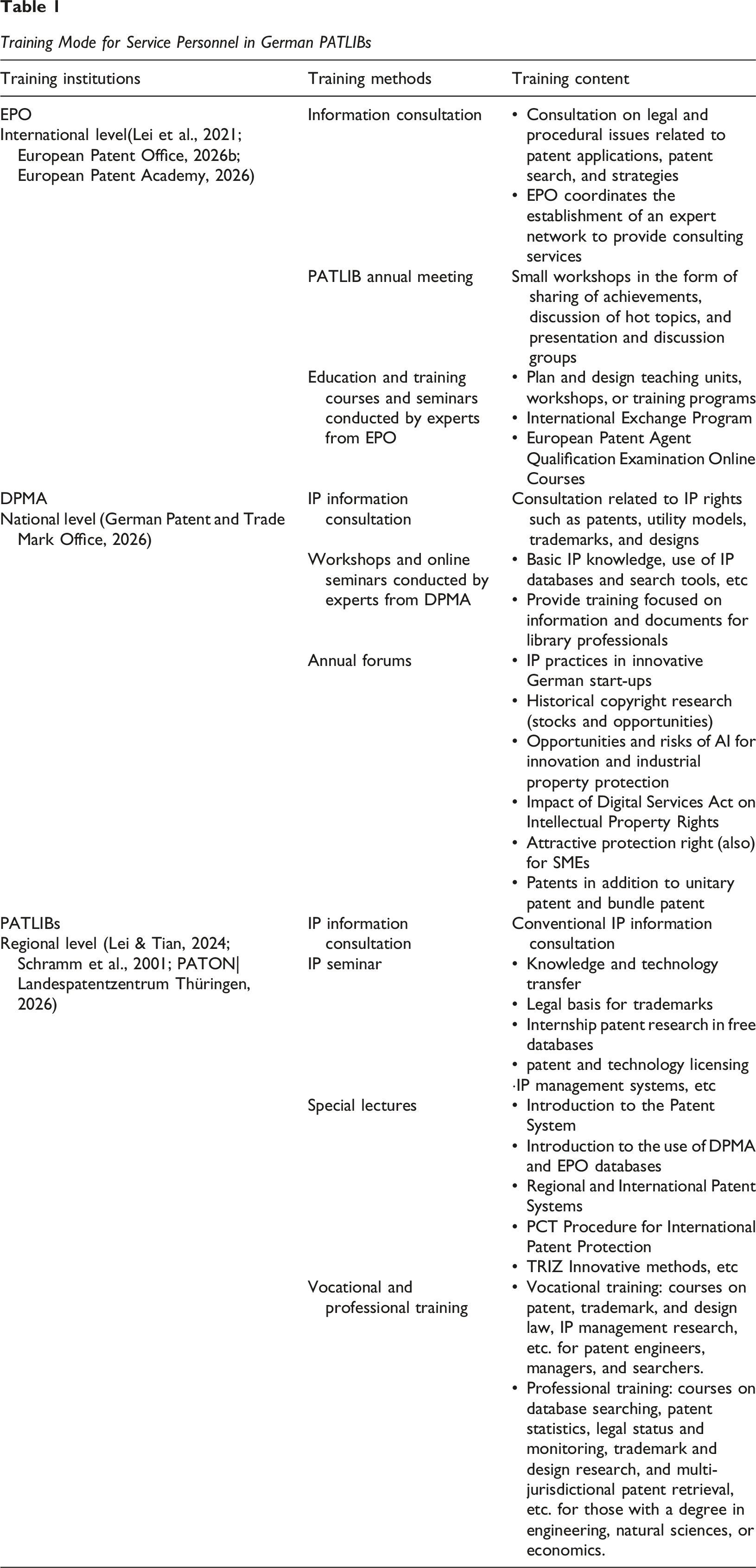
Training Mode for Service Personnel in German PATLIBs
Training Support Methods and Content Provided by USPTO for PTRCs
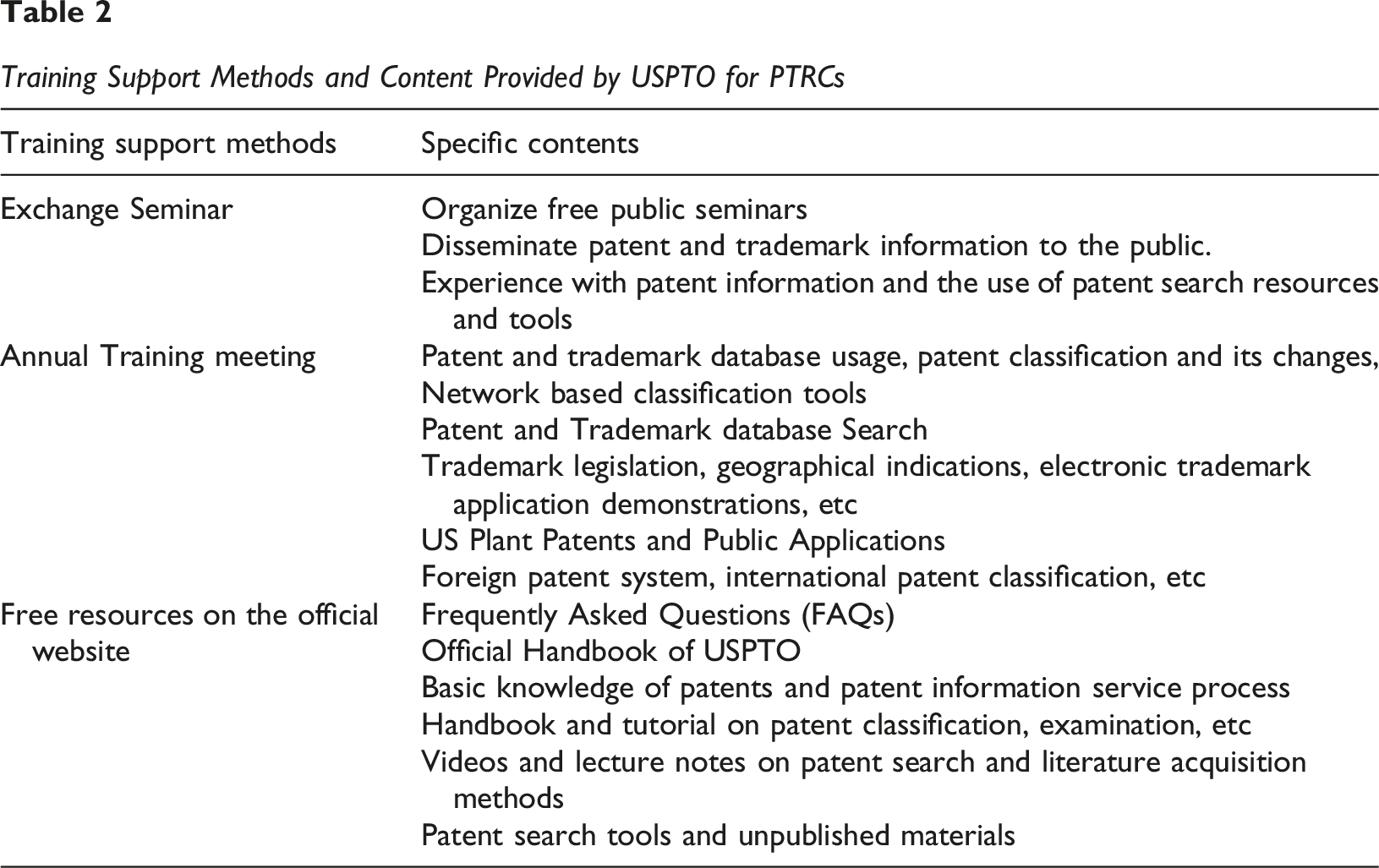
PTRC member libraries provide PIS to users in the university under the guidance and support of USPTO. Some of these member libraries have built a PTRC website about the PIS mode and content to users in the form of research guides.
The Advantages and Characteristics of PIS in these Centers
Firstly, the national patent offices always get involved in supporting the librarians for PIS in Europe and America. The training of service personnel at PATLIBs in Germany is predominantly conducted by experts from the EPO and DPMA, in accordance with established cooperation agreements. Similarly, PTRCs in the United States directly benefit from training and support provided by experts at the USPTO.
Secondly, diverse training methods are carried out in these centers, such as annual meeting, workshops, training courses and seminars, forums, etc. The training methods generally reflected in national level and regional level for service personnel in the patent information centers in Europe and America. At the national level, the training methods mainly include IP consulting, hosting annual conferences and seminars, providing online training materials, videos and courses, and organizing IP exhibitions. At the regional level, the training methods also include inviting external experts to provide vocational and professional training for service personnel, such as patent managers, patent agents, patent researchers, patent engineers, etc.
Thirdly, a full range of patent training is provided in these centers. The systematic training content ensures the professionalism, continuity, and hierarchy of the IP knowledge system. The free online learning materials on the EPO website will be provided in a categorized guide format based on Learning activities and paths, Learning resources by area of interest, and Learning resources by profile (European Patent Office, 2026b). For example, a librarian seeking suitable EPO training courses can choose “PATLIB” under Target audience in the Filter options, and five e-Learning Courses/Events will appear. The training courses offered by PATLIBs in Germany will be labeled with the users’ level and research direction of service personnel (PATON|Landespatentzentrum Thüringen, 2026). The training courses offered by PTRCs include the training on the use of patent and trademark search databases by examiners, the use of classification systems and tools in various countries, and patent search strategies.
Comparison With ALA Core Competences of Librarianship
The American Library Association (ALA), as the leader in the development, advocacy, and advancement of library and information services, will mark its 150th anniversary in 2026. ALA provides learning activities about continuing education for library professionals (American Library Association, 2026b) and eLearning resources, such as webinars, on-demand learning, and eCourses (American Library Association, 2026a).
Skills Needed to Expand for PIS in Comparison With Each Item of ALACCs
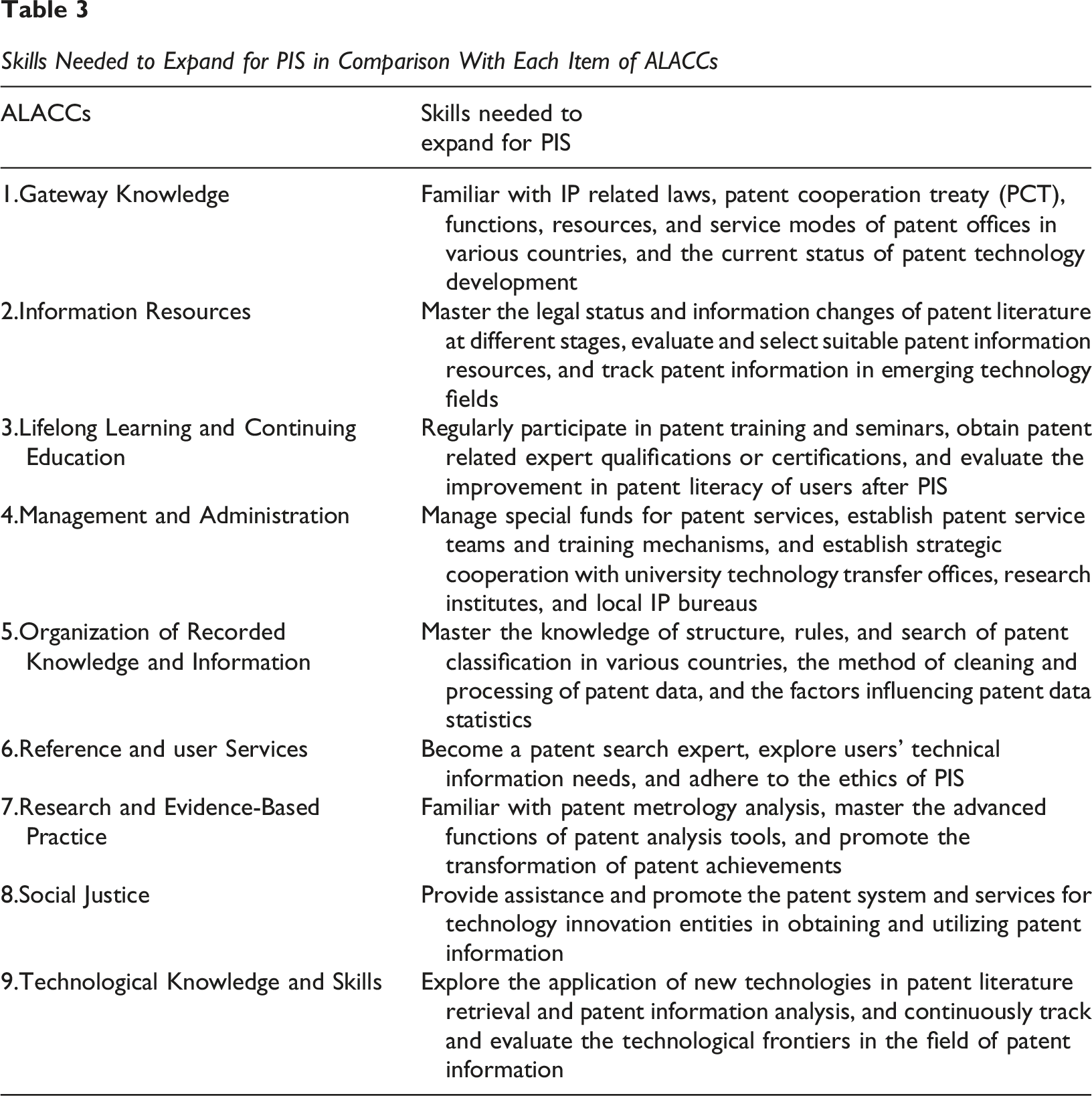
ALACCs place emphasis on foundational competencies including social justice, life-long learning and information ethics. These are also particularly important for PIS librarians. Social justice makes PIS librarians objectively balance the interests of inventors, applicants, and the general public. Competence of life-long learning requires PIS librarians to continuously update their knowledge of new patent search and analysis tools and methods. Competence of information ethics requires librarians not to disclose or misuse any unpublished patent information or data accessed during the service process.
The Main Directions for PIS Capability Enhancement for University Librarians
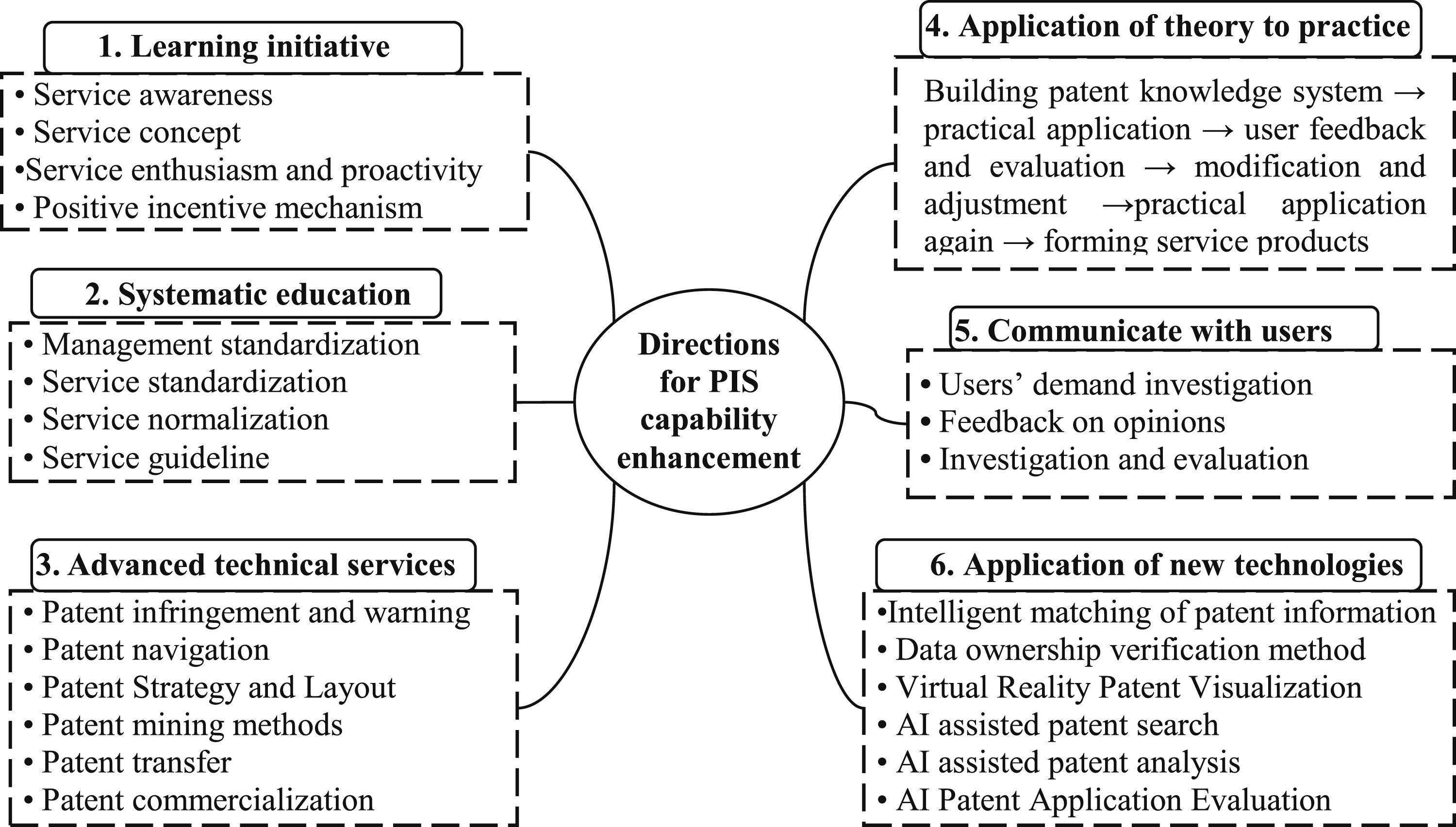
Based on the analysis data of the aforementioned literature research, the investigation into PIS service content of PATLIBs and PTRCs (Tables 1–2), and the comparison results of the contents of ALACCs (Table 3), six main directions for PIS capability enhancement for university librarians are summarized and categorized, as shown in Figure 1. (1) Strengthen the learning initiative of service personnel. An investigation shows that the scarcity of talent resources, inadequate professional capability of the team, imperfect incentive mechanisms and lack of motivation from institutions or teams are main difficulties or obstacles faced by university libraries in providing PIS (Zhang et al., 2020). Challenges such as low morale (Kachota et al., 2025) and limited staffing (Eroglu & Çakmak, 2025) also exist. The PIS librarian team consists of librarians who were previously engaged in technical retrieval, information literacy education, and subject services in some university libraries. However, PIS demands long-term reconstruction of the patent knowledge structure. Implementing effective incentive mechanisms is critical to boosting staff motivation for learning and service engagement. (2) Strengthen the systematic education of patent related knowledge. Insufficient IP knowledge among academic librarians is also one of the challenges faced by some university libraries (Munyoro et al., 2025). PIS requires librarians to have a diverse knowledge structure, the training content should focus on in-depth and extensive practical opportunities as well as a systematic and standardized training system. To address this, service norms, standards, and guidelines can be introduced to guide service delivery. (3) Strengthen the knowledge reserve of advanced technology-based services. The demands for PIS are evolving toward greater diversification and specialization. Influenced by their personal competencies and disciplinary backgrounds (Ma et al., 2024), PIS librarians vary in their knowledge reserves and learning capabilities. University libraries can easily deal with the basic PIS due to their abundant literature resources. Advanced technology-based PIS such as patent infringement and warning, patent navigation, patent strategy and layout, patent mining methods, pre application evaluation, patent technology transfer and commercialization, etc. require substantial knowledge reserves. (4) Strengthen the application of theory to practice of PIS. Library professionals should be able to demonstrate a range of data, evidence, and research skills in research and evidence-based practice (7 Rationale, ALACCs). As universities and their libraries increasingly prioritize PIS, librarians should broaden their practical service experience to better integrate patent knowledge across different domains. Through practice, they can summarize experience, identify issues, and enhance their service levels. (5) Strengthen deep communication with users. ALACCs indicate that librarians should understand and assess the information needs of a community, and assist and collaborate in meeting those needs (6D, ALACCs). The disciplinary background of PIS librarians usually does not fully match the technical field of the user’s current research direction. Therefore, it is necessary to repeatedly communicate with the users, embedding in their research units and groups (Feng & Zhao, 2015) from initial creation through the entire patent life cycle (Ma et al., 2024), address their needs, and receive their evaluation and feedback in order to enhance service recognition. (6) Track and keep abreast of the development of new technologies. Conducting regular evaluation of existing and emerging technologies and their impact on library services and resources is one of the competences of librarianship (9C, ALACCs). PIS needs to continuously track the technological frontier. Artificial intelligence (AI) has been widely applied in various fields nowadays. AI training data, derived data, and model-generated outputs are experiencing explosive growth. Data protection methods are also an emerging direction that deserves attention and emphasis in PIS. In addition, advanced AI technology will greatly improve PIS efficiency in terms of patent search and analytical visualization, patent evaluation, and the mining, identification, and commercialization matching of key patent technologies. Main Directions for PIS Capability Enhancement for University Librarians
Discussion
Based on the aforementioned main directions for PIS capability enhancement for university librarians (Figure 1), and drawing on the training contents for service personnel in PATLIBs and PTRCs (Tables 1 and 2), a model including four factors for PIS capabilities enhancement for university librarians has been constructed, as shown in Figure 2. PIS Capabilities Enhancement Model for University Librarians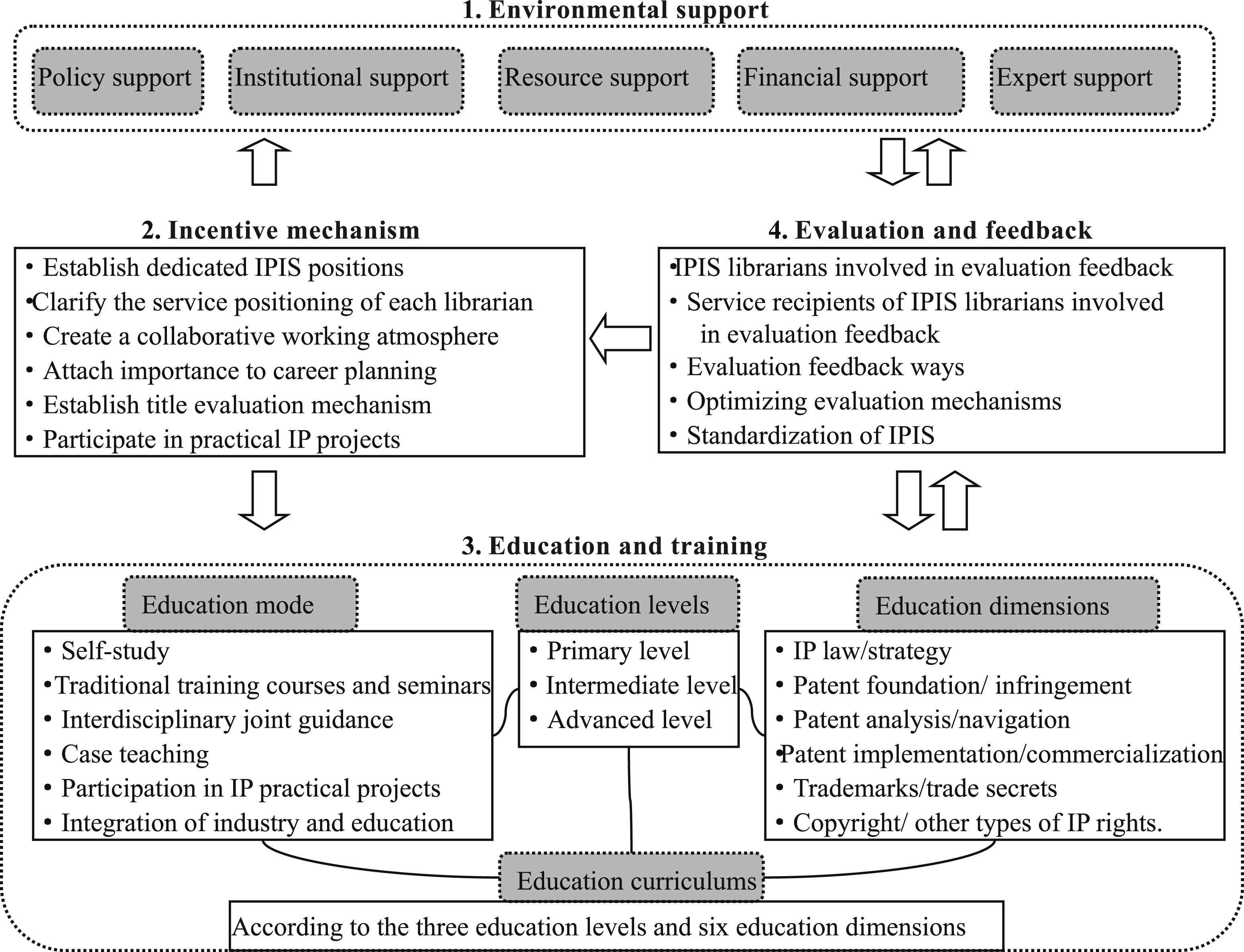
Environmental Support
According to the investigation on PIS provided by patent information centers in Germany and the United States in Tables 1 and 2, PATLIBs get training support at three levels, while PTRCs receive training support provided by USPTO. The national patent offices holds annual meetings and various online and offline trainings and provides consultation channels for these centers. The factor of environmental support in the model mainly involves the following aspects.
Policy Support
One direction mentioned in Figure 1 (2) for PIS capability enhancement is that service norms, standards, and guidelines can be introduced to guide PIS. The PIS related policy could include the contents of personnel, equipment, resources, funding planning, service standards, training programs, assessment mechanisms, incentive mechanisms, and coordination mechanisms. At the national level, guidance plan could be developed and IP information service platforms containing patent related resources could be established. Through policy guidance and support, the cultivation and introduction of PIS talents could be strengthened, and the quality of the team could also be enhanced (Li et al., 2023).
At the university alliance level, like the service mode in PATLIBs and PTRCs showed in Tables 1-2, PIS operational guidelines could be established to foster collaboration and communication amongst alliance members, facilitate the sharing of IP information resources, collectively enhance the capabilities of PIS, organize training sessions and competitions focused on PIS, and ultimately elevate the IP literacy and information utilization skills of university faculty and students.
At the regional level, targeted IP policies can be formulated based on regional characteristics and development needs to promote the creation, application, and protection of IP rights, strengthen the coordinated development of IP within the region, and promote integration and interaction between PIS and innovation needs.
At the university level, patent related courses can be introduced to patent literacy education. Universities should actively establish cooperative mechanisms with enterprises, research institutions, paten agencies and other non-governmental organizations (NGOs) of PIS.
Institutional Support
Librarians can learn about IP via the various training options available from the patent offices (WIPO, EPO, USPTO, national patent offices) and professional associations (Tyhurst, 2017). National IP offices can provide regular expert guidance and training for university libraries, update IP related knowledge, or support them to participate in some projects held by these offices. University alliance institutions can provide annual conferences and seminars for university libraries. Invite IP experts to give important special lectures on IP theory and practice.
Local IP or patent offices, regional PIS alliances, and regional strategic partners can also collaborate with university libraries to regularly conduct training seminars, discussions, and exchanges for learning because the experts from these institutions possess professional IP knowledge and its practice.
Universities themselves can establish dedicated institutions to clarify the responsibilities and authority scope of the IP librarian training institutions or departments. They should develop workflows and standards for PIS librarian training to ensure orderly progress, including setting training objectives and plans, determining training content and methods, arranging training courses and practical activities, etc.
Resource Support
The major considerations for libraries to provide services include staffing, spaces, and resource (Griffis & Hoppenfeld, 2021). Resource allocation can be based on the funding situation and service needs of the university. The specific methods can include the following aspects: • Enhance the storage and optimization of patent information resources, improve the management and construction of these resources. • Universities or university alliances can build IP resource sharing platforms containing training conference information, e-learning materials, and continuing education resources in order to promote interdisciplinary resource integration and efficient interaction. • University libraries should broaden their collaborative ways and attract external resources for promoting the improvement of their own service capabilities.
Financial Support
Financial investment is an important foundation for the full configuration and stable operation of facilities, equipment, and software systems. Firstly, the budget for PIS in university libraries should be included in the overall budget of their own universities. Libraries should actively take measures to guide the functional departments of their universities to recognize the value of PIS. Secondly, the libraries should develop a plan for the use of special PIS funds, clarify the budget and investment methods, strengthen supervision and auditing of these funds, and prevent waste and illegal use (Wang, 2024). Thirdly, university libraries should actively seek cooperation with external institutions to attract financial support.
Expert Support
The support of IP experts can ensure the professionalism and systematicity of librarians’ PIS. The training mode data of PATLIBs and PTRCs presented in Tables 1 and 2 show that experts from the EPO, DPMA, and USPTO delivered many of the training courses. University libraries should actively advocate and motivate multidisciplinary experts, enterprise, and social IP experts to undertake the training of librarians as teachers or guidance experts. This can specifically include the following categories: • Experts from the national, local, and regional IP or patent offices. They are familiar with various IP systems, relative laws and regulations, and have a professional understanding of the current status and problems of IP development in universities in their respective regions. • Teachers from some departments in the university. A joint teacher team composed of teachers from law school, management school, or economics school is established to promote IP literacy education. • Experts from the alliances and strategic partners of the libraries. The alliances are committed to building a communication and exchange platform for all members, organizing multiple academic exchange conferences and training seminars. Strategic partners can provide extensive cooperation in IP strategic planning research and information analysis consulting, technology strategic research and consulting. • Experts outside of universities. These experts include IP judges and lawyers, patent agents, technology intelligence and information service agencies, and technical personnel from commercial suppliers of patent database or tools.
Incentive Mechanism
The development of PIS in university libraries could rely on the service awareness and initiative of librarians. According to Figure 1 (1) about the learning initiative of service personnel, improvement of learning initiative is one of the directions for PIS capability enhancement. Appropriate positive incentive mechanisms should be adopted as the following methods.
Establish Dedicated PIS Positions
Dedicated PIS librarians have more time for systematic learning and contemplation, leading to a higher level of focus. Therefore, to enhance the service quality of the PIS team, it is advisable to establish dedicated PIS positions specifically aimed at improving PIS capabilities.
Clarify the Service Positioning of Each Librarian
The composition of the librarian service team should take into account the applicability, relevance, and diversity of team members’ disciplinary backgrounds (Ma et al., 2024). University libraries should develop personalized career development plans for each PIS librarian. Specifically, libraries can assist or negotiate with librarians based on their personality traits and professional backgrounds to determine their specific service direction, content, and objectives, forming a reasonable talent team for PIS. For example, some of the PIS librarians are responsible for IP law and strategic research, trademark and copyright research, and some of them are in charge of the patent analysis research, IP literacy education research, and IP promotion and publicity, respectively.
Create a Collaborative Working Atmosphere Within the Team
A learning team can be established within the library to encourage PIS librarians to actively explore and research new service issues, create a more open cultural atmosphere that is willing to learn and exchange, guide and share knowledge and experience, and stimulate PIS librarians’ sense of professional achievement and responsibility.
For example, in daily work, methods such as service scenario simulation, project collaborations, and team-building exercises can be utilized to encourage librarians to understand their interests, abilities, and personal characteristics. This allows for the targeted development of training programs for IP librarians, aligning training objectives closely with personal aspirations and laying a solid foundation for both current job responsibilities and future career development.
Attach Importance to Career Planning for PIS Librarians
Firstly, university libraries should provide a good career development platform, including promotion channels, training opportunities, academic exchanges, etc., to encourage PIS librarians to improve their professional abilities and qualities.
Secondly, university libraries should establish a reward mechanism for PIS librarians based on performance levels and multi-perspective evaluation, such as knowledge, skills, abilities, and quality, providing rewards for personnel and stimulating their enthusiasm and creativity.
Thirdly, university libraries should support PIS librarians for obtaining professional IP related certifications, such as patent agents, IP specialists, and IP managers, in order to increase their professional competitiveness.
Establish a Professional Title Evaluation Mechanism
Title assessment, award evaluations, and recognition of excellence serve as typical guiding, motivating, and evaluative functions (Li, 2024). University libraries can enhance the work motivation of their PIS personnel and ensure and promote the stable development of this talent pool by means such as commending outstanding performers, prioritizing their professional title promotions, and broadening evaluation pathways.
Encourage PIS Librarians to Participate in Practical IP Projects
PIS is a highly practical work, and the improvement of technical field capabilities, patent retrieval and analysis capabilities, and patent intelligence analysis capabilities all require continuous accumulation and precipitation of project experience (Zhang et al., 2021).
Therefore, university libraries should encourage PIS librarians to actively apply for individual or team projects, or participate in comprehensive projects of professional PIS institutions at the national or regional level. On the one hand, by hosting projects, creating independent thinking and exploration spaces, PIS librarians can mobilize various abilities and qualities such as learning, understanding, creativity, and teamwork ability. On the other hand, by participating in research projects, PIS librarians can broaden their horizons, combine IP theory with practice, and enhance teamwork skills.
Education and Training
The improvement of PIS capabilities enhancement for university librarians cannot be achieved without systematic training. Therefore, the purpose of this factor in this section is to draw on the practical experience of PATLIBs and PTRCs in training methods so as to provide specific methods for the directions for PIS capability enhancement mentioned in Figure 1.
Education Mode
PIS has the interdisciplinary nature and requires a lot of practice. Therefore, in the education and training mode for PIS librarians, the traditional education mode includes self-study (such as reading books and policy documents, listening IP courses and MOOC resources, focusing on the IP news and cases) and taking training courses and seminars. As indicated in Figure 1(4), PIS places a strong emphasis on practice, and the enhancement of service capabilities largely relies on more contact with and involvement in actual service cases. The following practical education modes can also be adopted.
Interdisciplinary Joint Guidance
IP or patent has the nature of multiple disciplines such as economics, law, management, information science, natural sciences, and sociology (Li et al., 2023). University libraries can cooperate with other departments within the universities, patent agencies, university alliances, government departments, industry associations, and enterprises to provide training and lectures. The cooperation methods may include experience exchange, sharing of successful cases, dual or multiple mentorship system, continuing education, etc.
Case Teaching Method
The case teaching method is an effective way and important means for PIS librarians to combine theoretical knowledge with practical application. The specific practical methods of case teaching can include the following aspects: • By holding mock trials, PIS librarians can understand how theoretical knowledge can be combined with case trial practice and pay attention to the key and difficult points in the application of IP knowledge and the direction for in-depth thinking when encountering similar cases in the future (He et al., 2021). PIS librarians’ critical thinking ability, language expression ability, comprehensive application ability of legal knowledge, and the concept of emphasizing the fairness of litigation procedures are cultivated. • By introducing controversial cases for discussion to train PIS librarians’ ability to analyze legal issues, comprehensive application of legal knowledge, and debating skills. • For a certain IP knowledge point, select corresponding judicial practice cases to help PIS librarians understand and master the knowledge point. For example, in the case of the judgment standards of patent validity in the patent law, some classic precedents can be used to deepen the understanding of the judgment standards, obtain practical experience in IP litigation, and also integrate the knowledge of patent agency practice and litigation practice to enhance the practical application level of IP law.
Participation in Patent Practical Projects
By encouraging PIS librarians to participate in various patent related practical programs or projects, practical skills could be cultivated and interdisciplinary integration of IP theoretical courses, technical courses, and specialized courses could be achieved through task driven and project driven approaches. The practical projects could include the following specific aspects: • Based on the information literacy contest, patent literacy education is embedded in it to enable PIS librarians to build their patent knowledge structure. • Based on the innovation and entrepreneurship project, with project driven as the main means, the task of each stage of the project is disassembled into topic selection, data collection, research plan, practice scheme, project application process management, etc. The initiative of PIS librarians to participate in the project can be mobilized. • Based on the real patent scientific research project that the research team owns, using task driven approaches as the main means, combining teaching tasks with research tasks, let the PIS librarians to master the interdisciplinary integration and application of patent related knowledge. • Based on the IP contests, including knowledge contests and debate competitions based on some hot IP issues, the understanding of IP knowledge, basic principles of IP law, and judicial practice should be deepened. • Based on IP activities such as summer camp or study tour, practical sessions such as expert lectures and enterprise research could be included to strengthen communication among PIS librarians and enhance their understanding of enterprise IP practices and the latest developments in IP.
Integration of Industry and Education
Interdisciplinary collaboration and the integration of industry, education, and research have become important methods and approaches for universities to cultivate innovative composite talents (Yao, 2021). Universities should perform the education functions through scientific research, industry, and enterprise to achieve complementarity and interaction. The specific practical ways can include the following aspects: • Based on the interests or majors of PIS librarians, arrange them to visit local enterprises or institutions that have social influence on patent application or patent technology transfer. • Based on the real IP related projects that the enterprises own, cultivate PIS librarians’ abilities to analyze and solve every task of each project, as well as promote team communication skills. • Offering social practice courses, including professional internships and practical training, enterprise visits and research, cultural exhibition visits, and participation in enterprise projects, to enable PIS librarians to personally experience the entire process of enterprise IP creation, application, and protection.
Education Levels and Dimensions
Education levels and dimensions can be divided according to the academic background, education level, and career planning and positioning of PIS librarians (General Office of the China National Intellectual Property Administration, 2014). The education levels of PIS librarians are divided into three levels: primary, intermediate and advanced. Librarians at a higher level need to fully master the curriculum content at a lower level. The education dimensions are divided into four dimensions: IP law/strategy, patent foundation/infringement, patent analysis/navigation, and patent implementation/commercialization.
The education curriculums for primary service personnel mainly focus on strengthening the awareness of IP rights, understanding the legal basis and patent application process related to IP rights, and possessing the basic skills of information retrieval and analysis.
The education curriculums for intermediate service personnel mainly focus on understanding the relevant systems of IP at home and abroad, including patents, trademarks and copyrights, and skillfully using IP retrieval strategies and skills as well as business skills in the use of IP information, and being able to interpret patent information at multiple levels.
The education curriculums for advanced service personnel mainly focus on understanding the patent application and review system, writing practice of patent documents, mastering the business capabilities of in-depth mining of IP information, such as patent navigation, IP analysis and review, patent early warning, patent layout, and providing high-quality technical in-depth services for users. The design of such curriculums can address the capability enhancement direction mentioned in Figure 1(3).
Education Curriculums
Education Curriculums for PIS Capabilities Enhancement for University Librarians
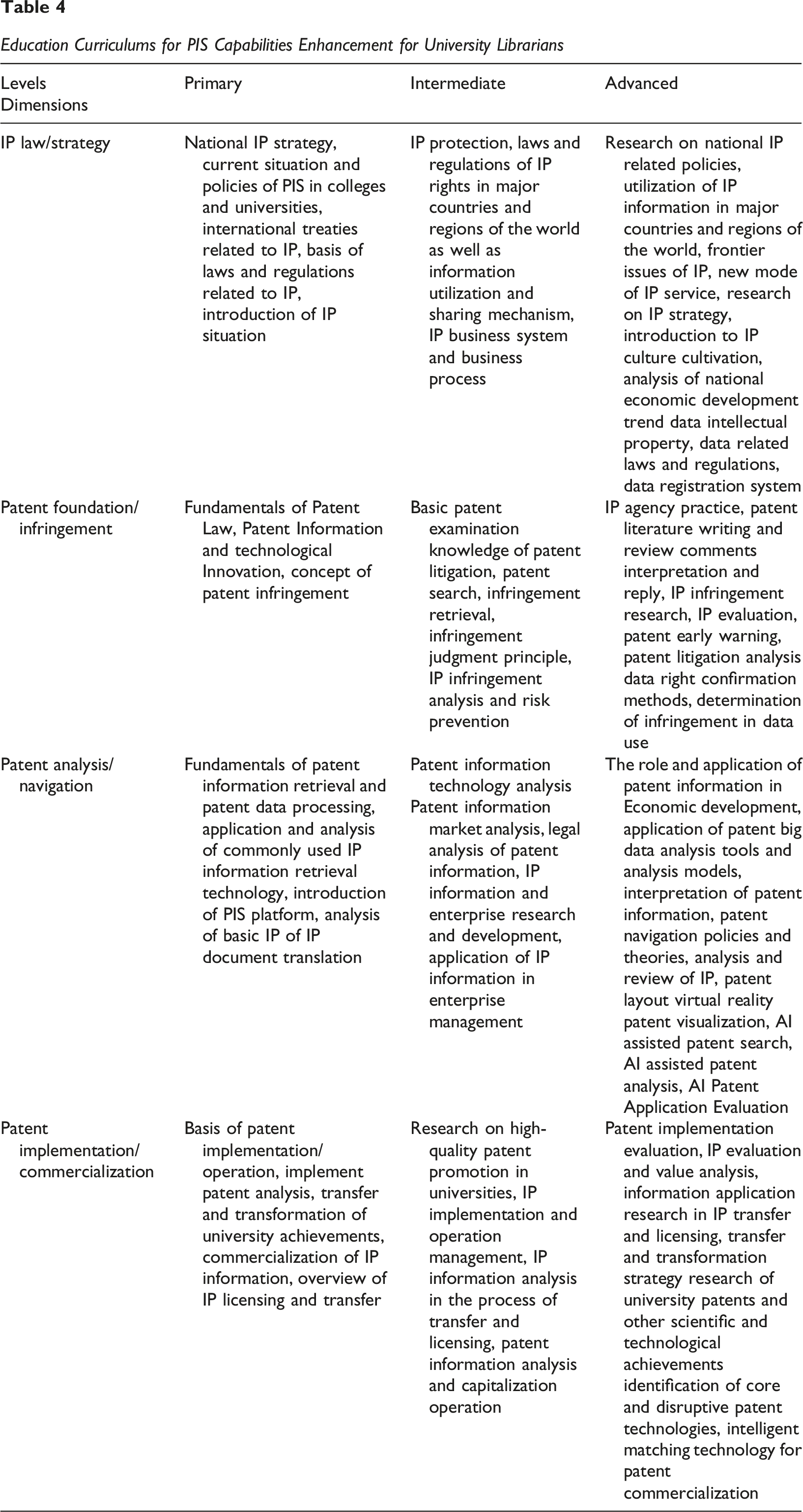
As noted in Figure 1(6), ALACCs highlights that librarians should continuously track the development of information technology in order to provide advanced services. In Table 4 above, the advanced dimensions now include courses on applying AI technology to PIS. The curriculums design in Table 4, covering four dimensions across three levels, addresses the capability enhancement direction mentioned in Figure 1(2), which can strengthen the systematic education of patent-related knowledge for PIS librarians.
Because IP or patent is a huge system, involving a variety of contents, it is impossible to enumerate all the course contents. University libraries can appropriately change, add or delete some education curriculums according to personnel structure, development planning and university’s discipline construction.
Additionally, in order to enhance the capabilities of the service team while continually refining the management system, an educational certification standard system encompassing educational levels, dimensions, and course content can be established within the educational curriculum system. Assessment and incentive mechanisms should be created. For instance, PIS librarians at various education levels, upon completing the stipulated training hours (both in-person and hands-on practice hours) and passing assessments (which can be a combination of written tests and practical operations), will be awarded a certificate of completion for PIS personnel training jointly issued by relevant departments. This will standardize and institutionalize the training system.
Evaluation and Feedback
The direction for PIS capability enhancement in Figure 1(5) is to strengthen deep communication with users. This section is crucial for identifying issues and areas for improvement in the other three factors. The role of communication with users lies in (1) understanding users’ needs in order to provide personalized and customized services, (2) compared to users, PIS librarians may be experts in patent information utilization but not patent technical experts, and (3) feedback from users can provide reference for improving service quality and bringing sustainable demands.
PIS Librarians Involved in Evaluation Feedback
Service personnel assess whether courses have achieved the desired outcomes based on their own levels and perspectives, thereby proposing improvement suggestions and optimization schemes. They gain insights into the effectiveness of training organizations, librarian participation, the depth and breadth of training implementation, etc. Through regular summaries, reflections, evaluations, and other measures, problems are promptly identified and rectified, leading to further training demands and enhancing librarians’ professional identity, thereby comprehensively upgrading the competencies of IP librarians (Wang, 2024).
Evaluation Feedback From Service Recipients of PIS Librarians
On the one hand, service recipients may encounter various issues such as inaccurate information retrieval and untimely service responses. They could actively provide feedback to the PIS librarians, pointing out the specific manifestations and possible causes. Upon receiving these feedbacks, the library can conduct in-depth analysis and improvements, thereby enhancing its service capabilities and improving service accuracy and efficiency. On the other hand, service recipients may discover potential service improvement points, which they can suggest to the library to help the librarians understand their needs and provide services that better meet their expectations.
Evaluation Feedback Ways
Librarians’ evaluation and feedback ways can include discussions on expert allocation, training methods, and course design while participating in various training courses or seminars, with the aim of providing suggestions for offering recommendations for the future training involvement of librarians. In terms of feedback from service recipients, university libraries primarily collect evaluation feedback through face-to-face interactions, e-mail, surveys, or visits by the librarians to academic departments, serving as the foundation and basis for future training course selection and work improvements.
Optimizing Performance Evaluation Mechanisms
The selection of evaluation indicators should comprehensively cover librarians’ information service competencies, such as research capabilities related to IP, management skills, team collaboration abilities, innovation, and basic work competencies. Clear assessment scopes and criteria, along with transparent information disclosure, create a conducive environment for the enhancement of librarians’ capability, fully leveraging the incentive effect of performance evaluations.
Standardization of PIS
Based on evaluation and feedback, the PIS content and process could be standardized. The creation of standardized and universal criteria for personnel qualifications, service offerings, business procedures, and pricing can promote the standardized development of PIS in university libraries (Ma et al., 2024). For service recipients, service standardization reflects the professionalism and reliability of an institution’s service work to a certain extent. For PIS librarians, service standardization provides clear reference for their work content, clear positioning for service division of labor, and clarification of their responsibilities, thereby enhancing the efficiency and quality of individual work and communication. For libraries themselves, standardization is the basic guarantee for the orderliness and fluency of the service process and a significant influencing factor of service capability levels (Li et al., 2023).
Conclusions and Future Work
PIS librarians in universities face challenges of insufficient staffing and deficiencies in knowledge structure. University libraries should gradually provide services based on their own conditions and development status, actively explore, expand, and deepen service content, and strive to improve the professional quality of service personnel to meet the growing service needs of service recipients in terms of quantity and quality.
The PIS capability enhancement model for university librarians constructed in this study includes four factors, that is, environmental support, incentive mechanisms, education and training, and evaluation and feedback. In this model, the environmental support establishes PIS as a regular function, enabling the expansion of services. The incentive mechanism establishes clear career pathways for PIS librarians in universities, motivating them to invest time and effort in continuous learning and professional growth. The systematic, practice-oriented, and continuously updated Education and training build the core professional competencies necessary for delivering high-quality PIS, directly addressing user needs. The evaluation and feedback mechanism completes a virtuous cycle of “service-evaluation-improvement-enhancement.” These four components in this model are interdependent and mutually reinforcing, offering a way to build professional PIS teams in university libraries.
In the future, our work could be extended to further aspects as follows:
Research on the Internationalization of PIS
The cultivation of IP talents should fit the PIS training for librarians into the current training, attach importance to the link with new technology, the teaching content should be adjusted in time according to the development and changes of new technology and new industries, and the professional curriculum modules should be constantly updated to reflect the era and internationalism. In the future, we can study the bilingual course module of international IP for university PIS librarians, promote the internationalization of IP talent training, and expand the international vision of service personnel.
Research on the Commercialization Service Capability Enhancement of PIS Librarians
This research includes identifying the IP technology level and application scenarios of enterprises to determine their IP value and commercialization prospects, the matching degree between university scientific and technological achievements output and market demand, and maximizing project value.
Research on PIS Librarian Capability Evaluation Model
Based on the theoretical model of the librarian’s capability framework, the research transforms each capability into qualitative or quantitative indicators and constructs a PIS librarian’s capability evaluation system. According to the evaluation and assessment results, track the professional development of PIS librarians, provide them with more targeted and personalized training guidance programs, and promote their ability.
Footnotes
Funding
The authors disclosed receipt of the following financial support for the research, authorship, and/or publication of this article: This work was supported by the Library Society of China (2026LSCFZZYB0089).
Declaration of conflicting interests
The authors declared no potential conflicts of interest with respect to the research, authorship, and/or publication of this article.