






Abstract
This study applied the quantitative method of PLS-SEM on a sample of 522 students, revealing that all proposed hypotheses achieved high statistical significance. The analytical results demonstrate that Digital Competence (DC) has a direct, positive, and strong influence on Academic Performance (AP), evidenced by significant path coefficients and clear empirical effect sizes. Furthermore, academic Self-Efficacy (SE) was found to play a statistically significant mediating role between DC and AP, suggesting that a majority of DC’s influence on AP is both direct and moderated through the increased self-belief and self-regulated learning capacity in learners. These findings support Bandura’s theoretical framework regarding the role of mastery experiences in shaping self-efficacy, while simultaneously highlighting the importance of developing digital skills as both a technical and psychological resource in the context of digitized education. The study also acknowledges methodological limitations, primarily the cross-sectional design, which restricts the ability to assert causal relationships over time, and the limited generalizability due to the concentrated sample. Consequently, future research is recommended to deploy a longitudinal design and mixed methods to enhance causal persuasiveness and deepen the understanding of the underlying mediating mechanisms.
Introduction
In the contemporary landscape of higher education, Digital Competence (DC) has evolved from a supplementary skill set into a foundational prerequisite for academic success and lifelong learning (Anthonysamy et al., 2020). Moving beyond mere technical fluency, DC represents a holistic integration of knowledge, skills, and attitudes requisite for the critical and ethical navigation of digital ecosystems (Ferrari, 2012). As a multifaceted construct, it entails sophisticated capabilities in managing, synthesizing, and creating information within complex digital infrastructures (Ala-Mutka, 2011).
Central to current pedagogical discourse are frameworks such as DigComp (Ferrari, 2013), which delineate DC through dimensions of information literacy, data management, and collaborative digital engagement. These competencies do not function in isolation; rather, they empower students to optimize cognitive offloading, engage in networked research, and cultivate digital critical thinking—elements essential for thriving in increasingly digitized academic environments (Chaw & Tang, 2024). Consequently, DC serves as a critical determinant of a student’s transition from the university setting to a technology-driven global labor market (Zhao et al., 2021).
However, the instrumental application of DC is intrinsically tethered to an individual’s psychological state—specifically Self-Efficacy (SE). Rooted in Bandura and Wessels (1997) social cognitive theory, SE denotes a learner’s conviction in their capability to orchestrate and execute actions necessary for achieving specific goals. Within the digital sphere, Digital Self-Efficacy acts as a primary internal catalyst, dictating the intensity of effort and resilience when encountering technological barriers.
While global literature frequently underscores a positive correlation between Digital Competence (DC) and Academic Performance (AP), existing research exhibits two critical gaps (Martin & Grudziecki, 2006). First, studies often conceptualize DC as general computer literacy, failing to align with specific, newly established national regulatory standards, such as the Digital Competence Framework for Learners issued under Circular No. 02/2025/TT-BGDĐT (02/2025/TT-BGDĐT, 2025) by the Vietnamese Ministry of Education and Training. Second, there is a scarcity of empirical evidence elucidating the underlying socio-psychological mechanisms—specifically how structured digital competencies translate into actual academic successes through psychological catalysts like academic Self-Efficacy (SE) in a developing higher education landscape.
To bridge these gaps, this study presents a twofold contribution. Theoretically, it introduces a novel conceptual model that bridges macro-level policy frameworks (the Vietnamese national DC framework) with micro-level cognitive-behavioral theories (Bandura’s Social Cognitive Theory). Practically, it provides empirical validation based on 522 higher education students, offering a scientific roadmap for institutional leaders in developing countries to optimize digital infrastructure investments by simultaneously addressing both technical skills and student psychological readiness.
Research Question
Literature Review and Research Hypothesis
Digital Capabilities
DC in the context of higher education is identified as a multifaceted construct, encompassing a set of knowledge, skills, attitudes, and behaviors required for learners to effectively, safely, and responsibly use digital technology in their learning, research, and academic activities (Ferrari, 2013). This concept extends beyond the ability to operate technical tools; it also refers to the level of effectiveness with which students can employ critical thinking and problem-solving skills when interacting with digital tools and resources (Austen et al., 2016).
The European Commission developed the Digital Competence Framework for Citizens (DigComp), defining DC as “the set of knowledge, skills, and attitudes required to use digital technology confidently, critically, and responsibly to achieve goals related to work, learning, leisure, social inclusion, and participation in society” (Ferrari, 2013).
In the context of higher education, DC is a crucial factor that helps students navigate online courses, interact with digital learning platforms, and participate in virtual classroom activities more easily (Johnston et al., 2018). This reflects the common assumption that current students, often regarded as “Digital Natives,” possess a high level of digital skills (Bullen et al., 2011).
However, the academic community has raised a crucial question regarding the nature of this proficiency: do students truly possess the digital competence to locate, evaluate, and, more importantly, critically analyze information (Audrin & Audrin, 2022)? The deficit in high-order cognitive skills in technology use has increased interest in researching DC. Consequently, investigating Digital Competence and its influence on students’ academic achievement is a priority topic that has attracted significant attention in recent higher education research (Audrin & Audrin, 2022).
Particularly in Vietnam, this interest is clearly demonstrated through the Ministry of Education and Training’s issuance of the Digital Competence Framework for Learners under Circular No. 02/2025/TT-BGDĐT (02/2025/TT-BGDĐT, 2025), which emphasizes the role of DC as a core component in the digital transformation process of education, setting proficiency levels from basic to advanced consistent with the orientation for lifelong learning development.
Self-Efficacy
SE, according to Bandura’s Social Cognitive Theory (1997), is an individual’s belief in their capacity to organize and execute the courses of action required to attain desired outcomes. SE is not a measure of actual skill but rather a subjective assessment of one’s own capabilities, serving as the most powerful motivator for individual behavior.
Bandura & Wessels (1997) defined self-efficacy as “the belief in one’s capabilities to organize and execute the courses of action required to attain designated goals” (Bandura, 2010). Self-efficacy is described as the confidence we have in our talents, particularly the ability to face challenges and complete tasks effectively (Feltz & Öncü, 2014). It enables students to excel through their dedication and persistence to fulfill academic responsibilities (Jeon & Kim, 2022).
Empirical studies have indicated that students with a high level of self-efficacy generally achieve better academic performance, engage actively in the learning process, and are highly adaptable to new teaching methods, especially in the context of digital transformation (Artino, 2012). Furthermore, self-efficacy is associated with the selection of effective learning strategies, emotional control, and confidence in the use of educational technology (Pintrich & De Groot, 1990).
However, the majority of research on self-efficacy has been conducted in Western contexts, where infrastructural conditions and academic cultures differ. In developing educational settings like Vietnam, clearly understanding the role of self-efficacy in higher education is essential for designing appropriate support programs, especially as students face rapid changes in technology and teaching methodologies.
Academic Performance (AP)
Numerous empirical studies have demonstrated that AP can be significantly improved through the application of Digital Competence and the fostering of learners’ Self-Efficacy (Alghamdi et al., 2020). In higher education research, Grade Point Average (GPA) is widely used as a reliable measure of academic success and a credible indicator for assessing the impact of educational interventions (Jeon & Kim, 2022). A high GPA is often regarded as a manifestation of high academic achievement and student progress (Kim et al., 2019).
Numerous contexts have established the connection between DC and AP. Students with technological skills and diverse access to digital tools often tend to achieve better academic results. The application of educational technology and digital transformation is emphasized as a key factor in improving academic outcomes through mechanisms such as content personalization, enhanced interaction, and flexible learning support (Mohamed Hashim et al., 2022).
Academic performance is influenced not only by technological skills but also by internal motivation and the belief in the ability to succeed (Self-Efficacy). When students are confident in their ability to effectively use and leverage digital technology, they tend to persist and engage more deeply in complex learning activities, leading to improved AP (Alghamdi et al., 2020).
However, in developing educational contexts like Vietnam, assessing the impact of DC and SE on AP requires careful consideration, particularly in light of specific factors such as uneven technological infrastructure, differing digital literacy levels among students across regions/universities, and the adaptation of faculty members to new teaching methodologies. These factors may moderate or alter the magnitude of impact found in other developed countries. Therefore, this study is necessary to provide empirical evidence that contextualizes this relationship within the Vietnamese higher education setting.
Vietnam’s Digital Competency Framework for Learners
In an effort to standardize and promote the digital transformation process in education, the Ministry of Education and Training (MOET) of Vietnam issued the Digital Competence Framework for Learners (under Circular No. 02/2025/TT-BGDĐT, issued on January 24, 2025, and effective from March 11, 2025). This policy document serves as a legal basis and professional orientation, clearly defining the essential digital competencies, skills, and knowledge that learners must possess to effectively, safely, and responsibly use digital technology in learning, work, and life.
This Digital Competence Framework is comprehensively structured, comprising six (06) main competence areas and twenty-four (24) component competencies. These competencies are divided into eight (08) proficiency levels, ranging from basic to advanced, suitable for each educational level and aligned with the orientation for lifelong learning development. The core competence areas include data and Information Exploitation, Digital Safety and Ethics, digital content creation, and Digital Communication and Collaboration, among other areas.
The issuance of this Digital Competence Framework aims to standardize digital competence across the entire national education system. The framework not only serves as a basis for assessing the digital competence of learners but also provides a crucial foundation for higher education institutions to design and adjust training programs, as well as to develop corresponding digital certificates.
Digital Competence Impacts Self-Efficacy
Both foundational theories and mounting empirical evidence strongly substantiate the hypothesis that Digital Competence (DC) exerts a robust, positive influence on academic Self-Efficacy (SE) within higher education ecosystems. Grounded in Bandura’s Social Cognitive Theory, as students cultivate proficiency in navigating multifaceted digital environments and advanced academic tools, they systematically accumulate cognitive mastery experiences, which directly catalyze an elevation in their task-specific SE (Bates & Khasawneh, 2007). Functionally, a high level of digital capability and the sophisticated capacity to filter and synthesize digitized information—as operationalized in contemporary DC frameworks—significantly enhance a learner’s perceived locus of control while mitigating the cognitive friction and anxieties typically triggered by complex technological tasks (Carretero et al., 2017).
This socio-psychological reinforcement fosters proactive, autonomous, and self-regulated learning behaviors, empowering students with the underlying confidence required to successfully execute rigorous academic milestones. As higher education paradigms rapidly evolve toward multi-dimensional, high-fidelity virtual spaces, the interaction between technology and student psychology becomes increasingly profound. Recent research on advanced educational technologies demonstrates that as immersive learning spaces and decentralized environments—often conceptualized as the “Eduverse”—become mainstream, the demands on student digital capabilities scale exponentially; consequently, a student’s pre-existing DC acts as a fundamental psychological buffer, determining their technological readiness and directly predicting their self-efficacy in these next-generation learning modes (Samed Al-Adwan et al., 2025).
Furthermore, numerous pedagogical interventions specifically designed to cultivate digital literacy have consistently resulted in substantial, empirical improvements in both learners’ self-regulatory capacities and their overarching academic self-beliefs (Artino, 2012). In sum, the positive linear relationship between DC and SE remains theoretically rigorous and empirically sound. Nevertheless, the precise magnitude and underlying structural mechanisms of this pathway warrant deeper contextual investigation, as they are inherently contingent upon the idiosyncratic institutional configurations, specific instructional design methods, and the structural digital infrastructure characteristic of the student population under study. Based on that, the study proposes the following hypothesis:
DC has a significant positive impact on SE.
Self-Efficacy Impacts Academic Performance
A substantial body of theoretical literature and rigorous empirical investigations have firmly established academic Self-Efficacy (SE) as a critical cognitive antecedent that positively predicts the academic outcomes of university students, most notably measured through Grade Point Average (GPA). Systematic meta-analyses and large-scale empirical operations consistently demonstrate a robust, positive, and statistically significant correlation between a learner’s self-belief and their ultimate academic achievement (Andrew, 1998). Within the higher education ecosystem, SE is intricately intertwined with a student’s strategic selection and sustained maintenance of sophisticated cognitive learning behaviors, methodical time management, and the capacity for structured Self-Regulated Learning (SRL). These underlying cognitive-behavioral mechanisms serve as vital conduits that directly translate internal motivational drive into optimized scholastic performance and higher GPAs (Zimmerman, 2000).
As contemporary higher education increasingly relies on complex pedagogical technologies, the predictive power of SE becomes even more paramount. Recent scholarly insights indicate that higher education teachers frequently navigate nuanced institutional and instructional divides when adopting educational technology, which can inadvertently create asymmetrical digital demands or mixed instructional signals in the classroom (Al-Adwan et al., 2024). In such technology-mediated landscapes, students possessing elevated levels of SE are better equipped to autonomously bridge these instructional divides, maintaining high self-regulatory focus and learning persistence despite variations in faculty EdTech implementation.
Consequently, the hypothesis asserting a positive, direct trajectory from academic SE to scholarly outcomes is not only conceptually grounded in Bandura’s Social Cognitive Theory but also heavily validated by extensive, multi-contextual empirical literature. Nevertheless, the magnitude and statistical weight of this direct path may fluctuate significantly, inherently contingent upon the specific disciplinary field of study, the precise operationalization and measurement scale of SE employed, and the idiosyncratic socio-demographic characteristics of the investigated student cohort. Based on that, the study proposes the following hypothesis:
SE has a significant positive impact on AP.
Digital Competence Impacts Academic Performance
Conceptually defined as a multi-dimensional configuration of knowledge, skills, and attitudes required to strategically exploit, critically evaluate, synthesize, and communicate digital information, Digital Competence (DC) serves as a fundamental catalyst that systematically drives university students’ Academic Performance (AP). Within contemporary technology-mediated pedagogical environments, high-capacity DC substantially optimizes learners’ resource acquisition capabilities, fosters sophisticated cognitive-behavioral learning strategies, and intensifies collaborative educational interactions. Specifically, digitally competent undergraduates exhibit superior proficiency in executing targeted information retrieval, leveraging advanced software tools for cognitive organization, and deploying self-regulated learning (SRL) mechanisms within virtual learning ecosystems; such structured behaviors critically facilitate deep cognitive processing of academic content, thereby directly translating into superior scholastic outcomes and higher GPAs (Van Laar et al., 2017).
Beyond direct operational advantages, DC functions as a powerful driver of favorable psychological and behavioral states. It systematically elevates students’ task-specific self-efficacy, intrinsic academic motivation, and cognitive resilience when confronting complex, ill-structured scholastic tasks, thereby broadening the channels toward academic efficiency. This constructive trajectory is further amplified by modern digital infrastructures—such as learning analytics tools and instantaneous automated feedback systems—which offer data-driven pathways for real-time pedagogical interventions and the personalization of instructional scaffolding (Ifenthaler & Yau, 2020).
However, from a critical perspective, the empirical boundary conditions of DC’s efficacy on AP are heavily moderated by external institutional configurations. The operationalization of digital skills into actual academic success is inherently contingent upon the robustness of technological infrastructure, the pedagogical quality of digital resource design, faculty digital-pedagogical readiness, and the systemic sustainability of institutional training interventions (Timotheou et al., 2023). Under the theoretical tenets of Social Cognitive Theory and Resource-Based perspectives, optimizing the educational dividends of digital transformation requires a holistic alignment that integrates technical skill acquisition with contextualized academic support frameworks. Based on these theoretical foundations and converging empirical insights, it is highly rational to postulate that robust digital capabilities directly foster superior scholastic performance. Based on that, the study proposes the following hypothesis:
DC has a significant positive impact on AP.
Mediating Role of the SE
Within the scholarly landscape of digital pedagogy, academic Self-Efficacy (SE) is prominently conceptualized as a critical mediating construct that elucidates the complex structural relationship between Digital Competence (DC) and Academic Performance (AP) among undergraduate cohorts (Ibrahim & Aldawsari, 2023). This mediation paradigm offers a robust socio-psychological framework to map the indirect mechanisms through which digital capabilities translate into scholarly achievements. Specifically, heightened proficiency in DC empowers students to seamlessly navigate, critically evaluate, and interact with complex digital platforms and digitized learning resources. This technical mastery systematic generates successful cognitive experiences, which, under the tenets of Social Cognitive Theory, diminish technology-related anxieties and elevate students’ task-specific self-efficacy when executing digital academic milestones. Subsequently, elevated levels of SE serve as an internal psychological catalyst that fosters academic resilience, enhances learning persistence, and prompts the strategic deployment of sophisticated self-regulated learning strategies, ultimately culminating in optimized AP and superior scholastic outcomes.
Methodologically, this indirect causal trajectory is rigorously validated within contemporary literature through advanced variance-based or covariance-based quantitative frameworks, such as Path Analysis and Structural Equation Modeling (SEM). Empirical evidence further underscores that this mediated pathway is not static but subject to contextual boundary conditions; systemic factors, including the caliber of institutional digital infrastructure, the availability of technical-pedagogical support from faculty, and idiosyncratic individual demographics, can actively moderate the strength of DC’s initial impact on SE (Van Laar et al., 2017; Zimmerman, 2000).
Consequently, establishing SE as a formal mediating mechanism provides imperative theoretical depth and empirical granularity to the model. Evidencing a significant mediating role for SE implies that institutional interventions cannot rely solely on localized, technical skill-building initiatives. Instead, to maximize educational dividends, digital transformation strategies must holistically integrate specialized DC cultivation with tailored psychological scaffolding designed to systematically reinforce students’ academic self-belief. Based on these intersecting theoretical pillars and structural dynamics, it is highly rational to assume that the dividends of digital competence on academic success are significantly funneled through the enhancement of psychological self-efficacy (Figure 1). Theoretical framework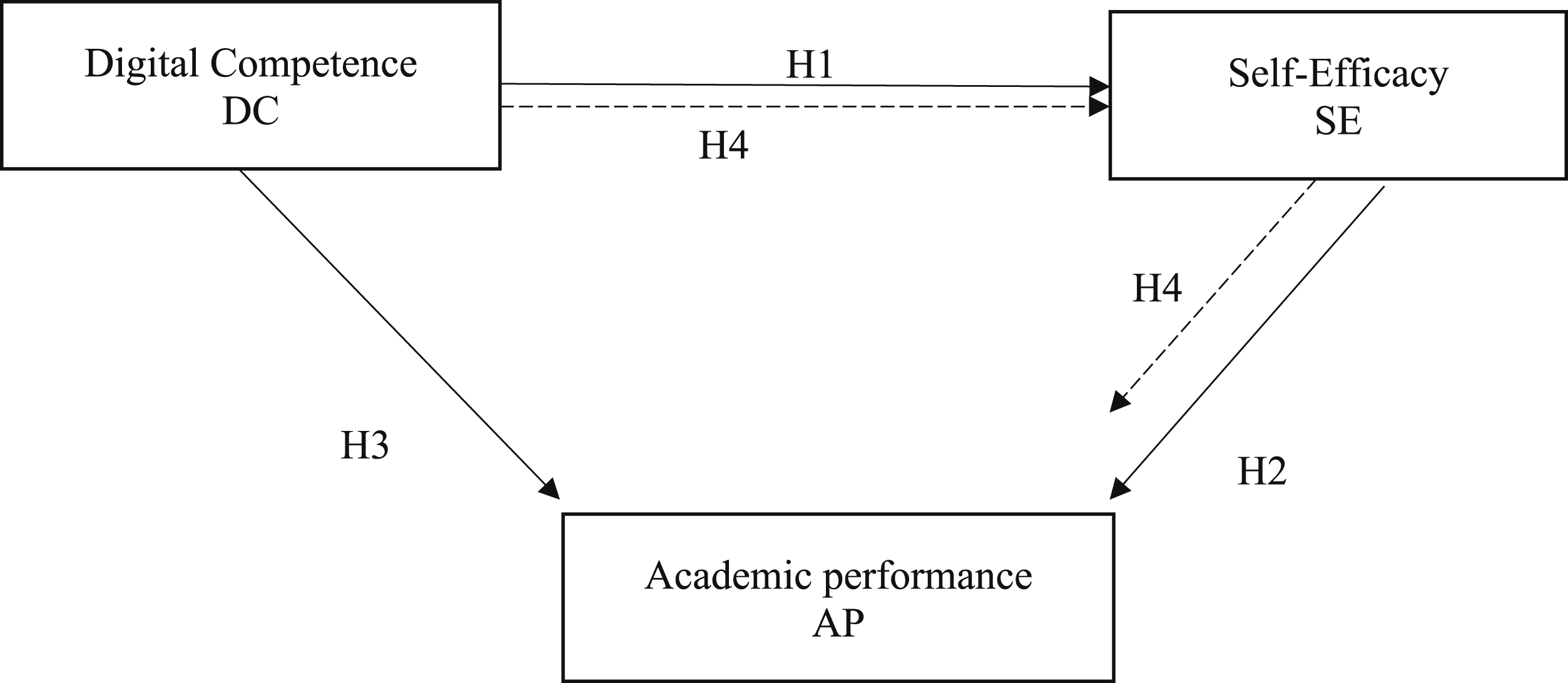
SE serves as a mediating variable (hypothesized) in the relationship between DC and AP.
Research Method
Research Approach and Strategy
Based on the research objectives, this study employs a quantitative approach by collecting data from students via a survey questionnaire to measure the research variables and test the proposed hypotheses (Taherdoost, 2021). The collected data were processed and analyzed using SmartPLS software, an appropriate tool for structural equation modeling analysis based on the PLS-SEM method (Cheah et al., 2024). The analysis procedure adheres to the standard two-step strategy: first, assessing the Measurement Model to check the reliability, internal consistency, and discriminant validity of the scales; and subsequently, evaluating the Structural Model to examine the causal relationships between variables and test the research hypotheses (Sobaih & Elshaer, 2022). This sequential two-step execution helps ensure the precision of the estimations and the logical validity of the research conclusions.
Sample
Description of the Survey Research Sample (522 Samples)
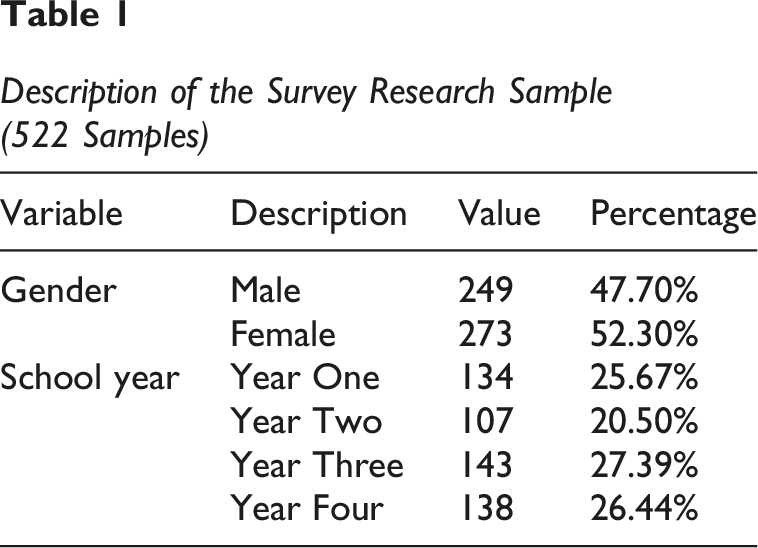
The final sample size of 522 satisfies and vastly exceeds the minimum requirements commonly prescribed in multivariate quantitative research. According to the “10-times rule” (Hair et al., 2011), the sample size must be at least ten times the maximum number of structural paths directed at a particular latent construct in the structural model. In our framework, the maximum number of structural paths pointing to an endogenous variable is 2 (DC and SE pointing to AP), making a minimum sample of 20 mandatory. Ultimately, 522 valid responses were selected for formal analysis, ensuring the necessary representativeness and reliability for subsequent statistical analyses.
Data Collection Method
This study developed the survey questionnaire based on the Digital Competence Framework for Learners issued by the Ministry of Education and Training (MOET) in Vietnam (02/2025/TT-BGDĐT, 2025) to ensure cultural and contextual appropriateness for Vietnamese university students. The use of this official framework provides a nationally validated theoretical basis, helping to model the constituent elements of digital competence comprehensively and precisely. The questionnaire is structured around six core domains of the Digital Competence Framework, including (1) Information and Data Exploitation, (2) Communication and Collaboration in the Digital Environment, (3) Digital Content Creation, (4) Safety in the Digital Environment, (5) Problem Solving with Digital Technology, and (6) Learning and Continuous Professional Development in the Digital Environment. This approach not only allows for the multi-dimensional measurement of students’ skills and attitudes towards technology but also facilitates the benchmarking of research results against national educational standards, thereby leading to more meaningful policy and practical recommendations within the context of digital transformation in Vietnamese higher education.
The current study adopted an empirical approach to data collection. Data was gathered through a structured questionnaire using a web-based platform, specifically Google Forms, or via direct in-person surveys distributed to students as presented in the Table Appendix A. The participants in the study were students presently attending universities in Vietnam. This methodology was chosen to ensure feasibility and achieve the necessary sample size for structural model analysis. To maintain objectivity in the responses, the questionnaire included a cover letter explaining the study’s objectives and assuring respondents that their answers would be kept confidential and their participation was entirely voluntary. A total of 560 students enrolled in Vietnamese universities participated in the survey. A total of 522 usable surveys were collected after excluding questionnaires with missing or invalid responses. Finally, PLS-SEM utilizing the Partial Least Squares software was used to test the 522 completed responses (Smart PLS version 3).
This study applied Variance-Based Partial Least Squares Structural Equation Modeling (PLS-SEM) using SmartPLS 3 software. PLS-SEM was chosen over Covariance-Based SEM (CB-SEM) due to several methodological advantages relevant to this study (Hair et al., 2017). First, the primary research objective is predictive and exploratory—aiming to maximize the explained variance (R2) of the ultimate endogenous construct (Academic Performance). Second, our model operationalizes Digital Competence as a complex, multi-dimensional construct drawn from a national policy framework, and PLS-SEM exhibits superior statistical flexibility when handling complex hierarchical path configurations without restricting assumptions of strict data normality (Usakli & Rasoolimanesh, 2023).
Measurement of Variables
Factor Loading, Mean, SD, CA, CR, AVE
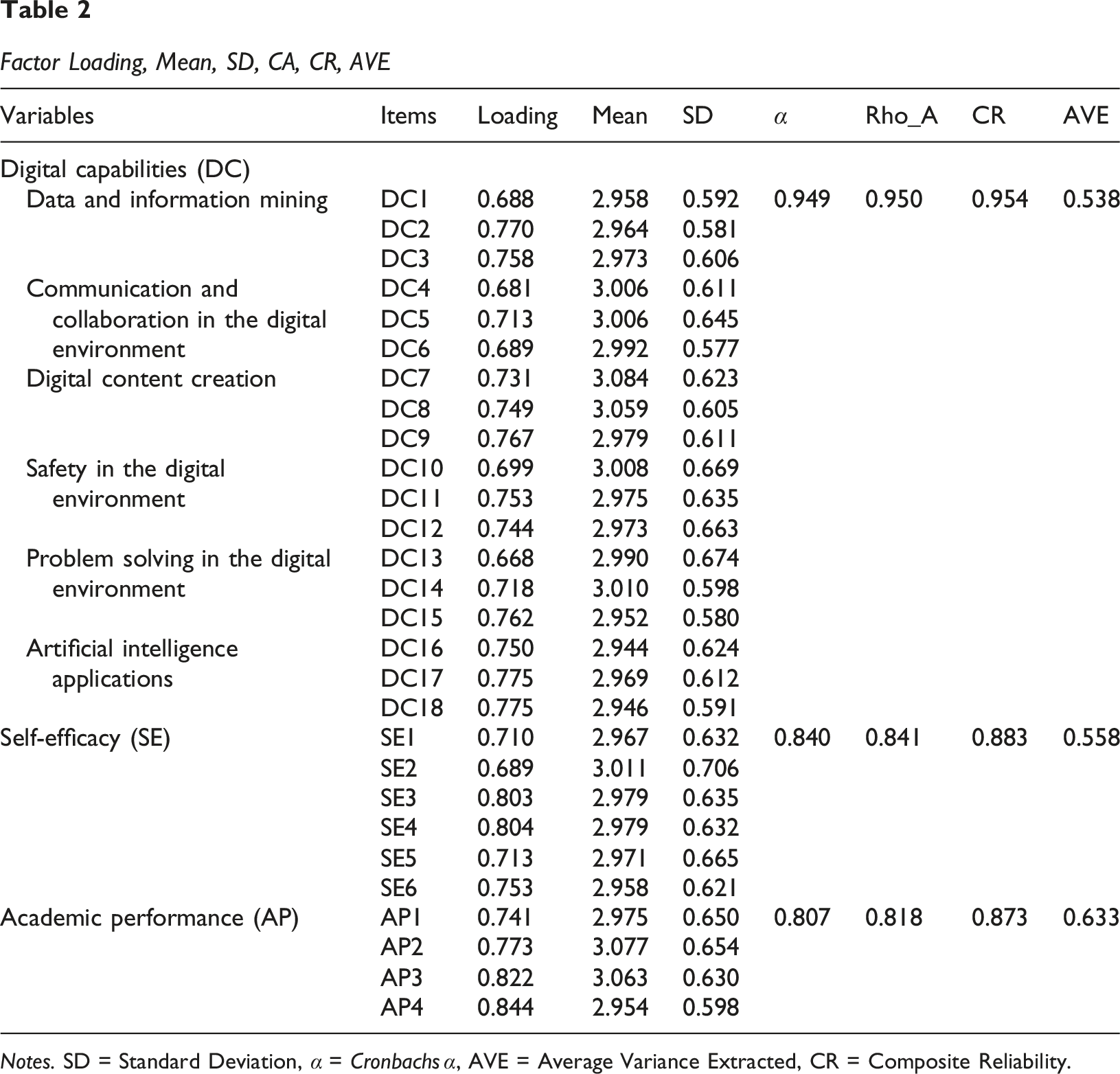
Notes. SD = Standard Deviation,
Statistical Procedure
This study adopted a confirmatory and explanatory approach to test the research hypotheses, utilizing the Partial Least Squares Structural Equation Modeling (PLS-SEM) technique via SmartPLS software (Sarstedt et al., 2019). PLS-SEM was chosen for its suitability with the study’s model structure: the model includes reflective first-order constructs where the definitive relationship between the latent variable and the measurement items is assumed, making PLS-SEM the appropriate method for estimation and testing (Sarstedt et al., 2016). Furthermore, PLS-SEM strongly supports the objective of theory testing when multiple relationships need to be estimated simultaneously, particularly when the model contains a mediating variable or multiple auxiliary paths (Astrachan et al., 2014). Finally, PLS-SEM performs effectively with small to medium-sized samples, making it suitable when a sufficiently large sample size is not available (Segarra-Moliner & Moliner-Tena, 2016). The entire analysis procedure adheres to standard steps: testing the measurement model (reliability, convergent, and discriminant validity) before proceeding to evaluate the structural model and test the hypotheses.
Reliability and Validity
Before releasing the survey link to students, the questionnaire was presented to a panel of experts in the field to gather professional opinions on the content and the measurability of the research variables, including DC, SE, and AP. Subsequently, following recommendations for scale development and assessment, the study conducted a pilot survey to evaluate the practicality, clarity, and suitability of each item before deploying the formal research (Hinkin, 1998). These pre-testing checks aimed to verify the completeness and accuracy of the measurement instrument; the internal consistency of the scales was assessed through the Cronbach’s Alpha coefficient. The pilot survey results, with 45 participants, showed that all constructs achieved a Cronbach’s Alpha coefficient exceeding the acceptable threshold of 0.70, confirming the internal reliability of the scales used (Bujang et al., 2018). Furthermore, feedback from the pilot test indicated that the items were highly comprehensible and the average completion time was approximately 15 minutes, suggesting the feasibility of the data collection procedure for the main study.
Results
Result and Interpretation
This study utilized the PLS-SEM method SEM (Henseler et al., 2016) to assess the reliability and validity of the measurement model. This is a crucial step to ensure the quality of the scales before proceeding with the structural model analysis.
The reliability of the scales was examined through two main indicators: Cronbach’s Alpha and Composite Reliability (CR). The values of both indicators exceeded the recommended threshold of 0.7 (Mohd Dzin & Lay, 2021). Table 2 shows that all constructs had Cronbach’s Alpha and CR values greater than 0.6, with CR ranging from 0.873 to 0.954. This result confirms the high internal consistency of the scales utilized in the study (Hair et al., 2019).
The convergent validity of the measurement model was examined through the Average Variance Extracted (AVE) value (Cheung et al., 2024). According to the standards established by Hair et al. (2014) and Fornell and Larcker (1981), the AVE value for each latent construct must be greater than 0.5 (AVE >0.5). The analysis results indicate that the AVE values for all constructs ranged from 0.538 to 0.633, fully satisfying the proposed criterion. This provides strong evidence that the observed variables in each scale are strongly correlated with the latent construct they are hypothesized to measure, thereby confirming the convergent validity of the model.
To ensure measurement quality, we also proceeded to examine the outer loadings of the items. Items exhibiting low correlation, generally signified by outer loadings beneath 0.40, should be eliminated to mitigate measurement error and enhance reliability, as they may originate from disparate conceptual domains. However, in this study, all items maintained satisfactory outer loadings. Furthermore, all Cronbach’s Alpha coefficients exceeded the recommended threshold of 0.6 (Hair et al., 2014), reinforcing the internal consistency of the scales. Consequently, no items were excluded from the subsequent analysis model.
Discriminant Validity: Fornell-Larcker Criterion
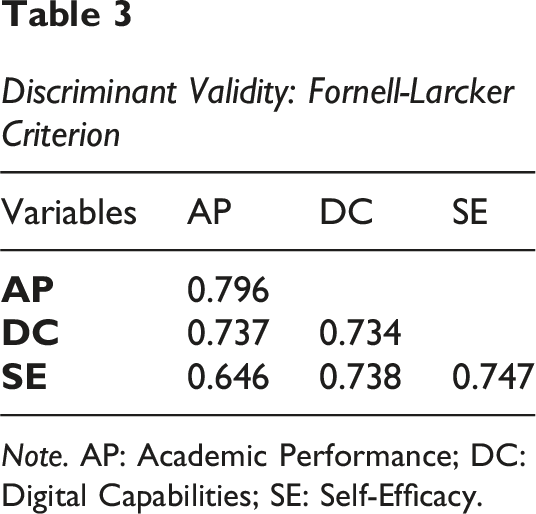
Note. AP: Academic Performance; DC: Digital Capabilities; SE: Self-Efficacy.
Heterotrait–Monotrait (HTMT) Ratio of Correlation
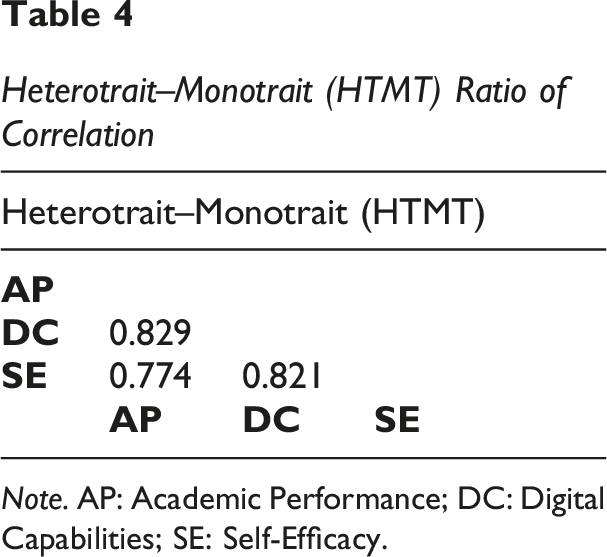
Note. AP: Academic Performance; DC: Digital Capabilities; SE: Self-Efficacy.
Test of Model Fit
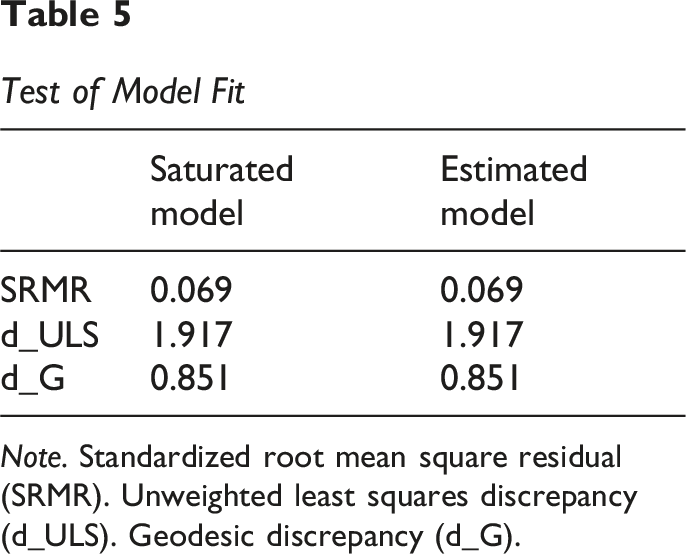
Note. Standardized root mean square residual (SRMR). Unweighted least squares discrepancy (d_ULS). Geodesic discrepancy (d_G).
Structural Analysis of the Hypothesis Contrast
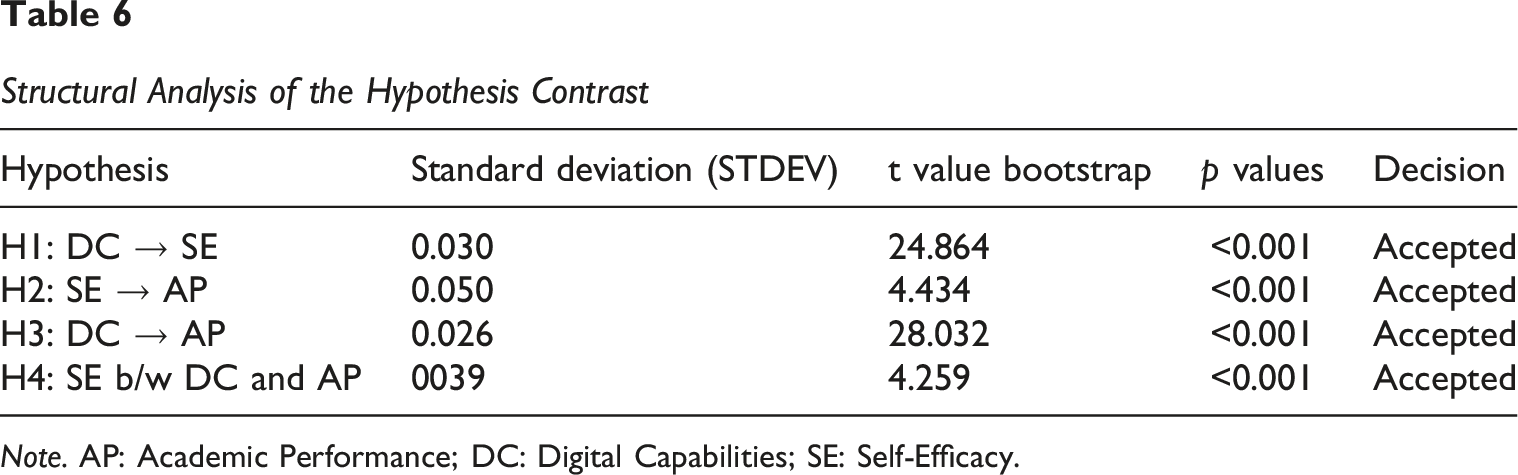
Note. AP: Academic Performance; DC: Digital Capabilities; SE: Self-Efficacy.
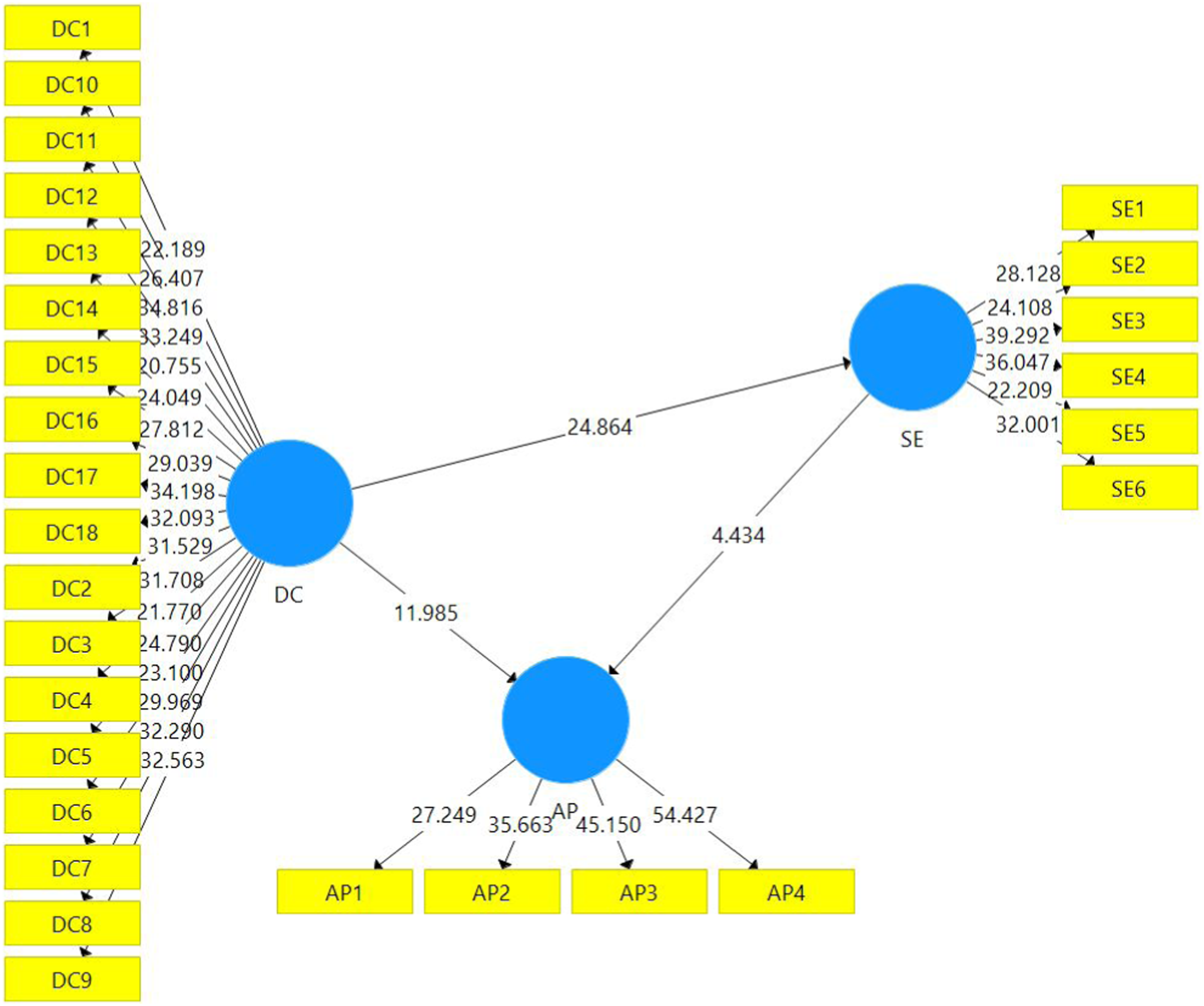
Results of PLS-SEM Analysis
Table 6 presents the results of the structural model analysis, including the testing of hypotheses regarding the relationships between the latent variables. The results indicate that all four hypotheses (H1, H2, H3, H4) are statistically significant at the p < 0.05 level. This provides strong evidence for the causal relationships within the research model.
H1: DC → SE (Direct effect of Digital Competence on Self-Efficacy): This hypothesis is accepted with t Bootstrap value of 24.864 (p < 0.001). This indicates that DC has a positive and statistically significant effect on SE.
H2: SE → AP (Direct impact of Self-Efficacy on Academic Performance): This hypothesis was accepted with a Bootstrap t of 4.434 (p < 0.001). The results confirm that SE has a positive and statistically significant impact on AP.
H3: DC → AP (Direct impact of Digital Competence on Academic Performance): This hypothesis was accepted with a Bootstrap t of 28.032 (p < 0.001). The results show that DC has a positive and statistically significant impact on AP.
H4: SE b/w DC and AP (Mediating role of Self-Efficacy between Digital Competence and Academic Performance): This hypothesis, which tested the indirect effect, was accepted with a Bootstrap t of 4.259 (p < 0.001). This confirms that SE plays a statistically significant mediating role in the relationship between DC and AP.
The results of the structural analysis show that all hypothesized relationships in the model are statistically significant, affirming that digital competence and self-efficacy factors affect the academic performance of university students in Vietnam.
Using the bootstrapping technique and PLS-SEM analysis, this study employed direct, indirect, and total effect measures to examine the mediating role of SE between DC and AP. Furthermore, the PLS technique was used to determine the path coefficients. Figure 2 illustrates the structural model.
Discussions
The empirical validation of the structural model via Variance-Based Partial Least Squares Structural Equation Modeling (PLS-SEM) yields critical theoretical insights and actionable pedagogical implications. The model exhibited robust statistical adequacy, evidenced by a Standardized Root Mean Square Residual (SRMR) of 0.069—well below the conservative threshold of 0.080—confirming that the conceptualized framework possesses strong explanatory power for the collected data. Furthermore, construct reliability and convergent validity were firmly established, with Cronbach’s Alpha and Composite Reliability (CR) coefficients consistently exceeding 0.7, and the Average Variance Extracted (AVE) surpassing 0.5. All four hypothesized relationships (H1, H2, H3, H4) were supported at an exceptionally high level of statistical significance (p < 0.001), establishing the DC-SE-AP framework as a robust causal model capable of explaining undergraduate academic achievement within Vietnam’s rapidly digitizing higher education landscape.
The Influence of Digital Competence on Academic Self-Efficacy
Hypothesis H1, which postulated that Digital Competence (DC) exerts a positive and significant impact on academic Self-Efficacy (SE), was strongly supported (t = 24.864, p < 0.001). This finding provides powerful empirical validation for Bandura & Wessels (1997) Social Cognitive Theory within the digital realm. According to Bandura, “mastery experiences” constitute the most potent source of self-efficacy beliefs. In contemporary higher education, DC represents the operational and cognitive capability to successfully execute digitized milestones—such as extracting complex data, synthesizing virtual content, and solving problems using educational technologies (Falloon, 2020). When Vietnamese undergraduate students systematically master these technology-mediated tasks, they continuously accumulate successful cognitive experiences. These mastery experiences directly mitigate technology-induced anxieties and enhance their perceived locus of control, serving as the psychological foundation for academic confidence (González-Prida et al., 2024).
Crucially, the Heterotrait–Monotrait (HTMT) ratio between DC and SE reached 0.821, approaching the strict discriminant validity threshold of 0.85. In the context of intensive digital transformation in Vietnam, this high correlation signifies that in the psychology of Vietnamese students, operational digital skills and internal academic confidence are deeply intertwined and virtually inseparable. This indicates that digital literacy is no longer merely an auxiliary technical asset; rather, it has evolved into a fundamental psychological resource (Calderón et al., 2022). For a student cohort transitioning into an increasingly hybrid university environment—often governed by new national frameworks such as the Digital Competence Framework for Learners (02/2025/TT-BGDĐT, 2025) —technical mastery over the six standard digital domains acts as an equalizer that directly fosters their internal psychological readiness to learn.
The Path From Academic Self-Efficacy to Academic Performance
Hypothesis H2, asserting that academic SE positively predicts objective Academic Performance (AP), was statistically accepted (t = 4.434, p < 0.001). This result aligns with extensive educational literature identifying self-efficacy as a robust cognitive driver of academic outcomes (Abdolrezapour et al., 2023). Mechanistically, students anchored by high levels of SE exhibit superior cognitive resilience, elevated task persistence, and a greater willingness to deploy effort when confronting complex or ill-structured scholastic challenges. Within digital learning environments, this psychological assurance prompts the autonomous selection and sustained maintenance of sophisticated self-regulated learning (SRL) strategies and methodical time management.
However, a critical nuanced finding is that the structural weight of this path (t = 4.434) is noticeably lower than that of H1 and H3. This statistical variance carries vital contextual meaning. In a complex, transitioning higher education system like Vietnam’s, the trajectory from a subjective psychological state (SE) to objective metrics of success (GPA) is inherently non-linear and susceptible to systemic boundary conditions. As highlighted by recent literature, higher education teachers themselves often navigate distinct instructional and institutional divides when adopting educational technologies, which can create uneven pedagogical landscapes for students. Consequently, external factors—such as asymmetrical institutional infrastructure, varying qualities of digital course design, and fluctuating faculty technological readiness—act as environmental noise that dampens the direct conversion of student self-belief into academic grades. Nonetheless, the significance of SE remains undeniable, acting as the critical intrinsic anchor that maintains purposeful, proactive learning behaviors.
The Direct Dividend of Digital Competence on Academic Performance
Hypothesis H3, which evaluated the direct trajectory from DC to AP, emerged as the most powerful relationship within the entire structural model (t = 28.032, p < 0.001). The sheer magnitude of this coefficient underscores that digital competence is not merely a supplementary skill but a core determinant of actual academic survival and success (Falloon, 2020). Students equipped with advanced DC can seamlessly navigate digital library repositories, critically appraise web-based information, and utilize specialized software tools to construct higher-quality academic products. These technical efficiencies directly shorten the time required for resource acquisition and knowledge organization, freeing up cognitive bandwidth for deep learning and collaborative online problem solving, which ultimately manifests in superior GPAs.
This direct path is highly meaningful within the specific socio-educational climate of Vietnam. As the Ministry of Education and Training actively enforces Circular No. 02/2025/TT-BGDĐT (02/2025/TT-BGDĐT, 2025) to standardize digital literacy across higher education institutions, these empirical results provide immediate justification for such macro-level policy shifts. The findings deliver empirical evidence that targeted investments in standardizing core student digital capabilities yield a direct, measurable return in terms of institutional academic quality and student performance benchmarks.
The Dual-Pathway Mediating Mechanism of Self-Efficacy
Hypothesis H4 confirmed that academic SE plays a statistically significant mediating role between DC and AP (t = 4.259, p < 0.001). This finding reveals a sophisticated, dual-pathway mechanism through which digital literacy exerts its influence. SE functions as a vital psychological bridge: DC constructs the necessary technical mastery experiences, which systematically elevate the student’s internal self-belief; in turn, this heightened self-belief drives deeper cognitive engagement and longer persistence, ultimately culminating in optimized academic success. This operates as a clear “skills build belief, and belief drives achievement” mechanism within digitized education (Dorobăţ et al., 2019).
Because both the direct effect (H3) and the mediated indirect effect (H4) are concurrently significant, DC operates through a complementary partial mediation model. This structural complexity matters immensely because it proves that addressing digital transformation solely through an engineering lens (i.e., focusing exclusively on software mechanics and hardware distribution) while ignoring the student’s psychological scaffolding will fundamentally underoptimize educational outcomes.
Theoretical Implications
This study offers several substantive theoretical contributions to the intersecting literature of digital pedagogy, cognitive psychology, and educational policy implementation. Primarily, it addresses a distinct empirical deficit by validating and concretizing the structural configurations of the Digital Competence–Self-Efficacy–Academic Performance (DC-SE-AP) model within the idiosyncratic context of an emerging higher education landscape in Vietnam. By doing so, the study moves beyond traditional descriptive accounts of digital literacy, providing granular, variance-based structural evidence that explains the complex mechanics through which technology-mediated capabilities dictate scholastic success.
Furthermore, these findings significantly extend the theoretical boundaries and reaffirm the contemporary robustness of Bandura & Wessels (1997) Social Cognitive Theory in the digital era. By empirically demonstrating that digital competence acts as a powerful antecedent to academic self-efficacy, this study successfully conceptualizes multifaceted digital literacy as a modern manifestation of “Mastery Experiences.” This theoretical extension proves that the foundational tenets of cognitive belief formation retain their robust predictive power and psychological validity, even when transposed from conventional analog classrooms into highly digitized, hybrid learning ecosystems.
Finally, this research bridges macro-level educational policy with micro-level cognitive-behavioral outcomes. By operationalizing the national Digital Competence Framework for Learners—promulgated under Circular No. 02/2025/TT-BGDĐT by the Vietnamese Ministry of Education and Training—as the structural foundation for the DC construct, this study provides critical empirical validation for a major national regulatory policy. The structural model demonstrates that the core competency domains formalized in this national directive possess a substantive, mathematically verifiable transformative relationship with students’ objective academic outcomes. Consequently, this study establishes a rigorous scientific and empirical foundation that justifies ongoing macro-level educational transformations and policy institutionalization in developing countries.
Practical Implications
From a practical standpoint, the empirical robustness of this model offers a specific, context-driven roadmap for university administrators, curriculum designers, and policymakers in Vietnam: • Curriculum Alignment with Circular No. 02/2025/TT-BGDĐT: Academic boards should immediately move away from teaching isolated, legacy IT literacy courses. Instead, university curricula must be restructured to explicitly map onto the six core competence domains mandated by the Ministry of Education and Training. Crucially, instruction should emphasize high-order cognitive domains—such as Information and Data Literacy and Digital Problem Solving—which this study proves are the primary drivers of student mastery experiences and GPA growth. • Dual-Focus Pedagogical Interventions: Since academic self-efficacy significantly channels digital competence into academic success, institutional interventions must adopt a dual strategy. Faculty members must complement technical software training with psychological scaffolding. This includes designing digital Learning Management System (LMS) environments that offer immediate, low-stakes constructive feedback, gamified progress tracking, and peer-led digital support networks. These mechanisms are explicitly designed to build task-specific confidence, mitigate technology anxiety, and protect student motivation when facing complex online assignments. • Overcoming the Faculty Digital Divide: Given that the impact of student self-efficacy is constrained by external instructional factors, universities must implement synchronous professional development programs to upgrade faculty digital-pedagogical readiness. Faculty must be trained to construct seamless hybrid learning environments that actively leverage students’ digital capabilities, thereby ensuring that institutional infrastructure investments are fully optimized to support student performance.
Conclusion and Limitations
Conclusions
This study successfully provided specific empirical evidence regarding the extent of the impact of DC and SE on the AP of university students in Vietnam. PLS-SEM analyses indicated that DC had the most direct and strongest impact on AP. More importantly, the research confirmed the significant mediating role of SE, demonstrating that digital proficiency reinforces students’ belief in their academic capabilities, and this belief, in turn, drives higher academic performance. Academic achievement in the digitized era depends on the combination of possessing digital skills and maintaining strong intrinsic motivation (Calderón et al., 2020). This finding emphasizes the necessity of a holistic digital transformation strategy that integrates both technological and psychological elements in global higher education, particularly in Vietnam.
Limitations
The study utilized a cross-sectional design for data collection. Although PLS-SEM allows for the theoretical testing of causal relationships, this design limits the ability to determine causality over time and cannot rule out the possibility that the variables have a reciprocal relationship. For instance, a higher AP might reinforce future learning motivation and belief, creating a positive feedback loop.
Although the study sample was large (N = 522) and employed a stratified sampling method, the scope of the research was still focused on students at Vietnamese universities. The generalizability of the results may be limited by differences in technological infrastructure and academic cultural context across various regions/universities.
Future Research
Future research should adopt a mixed-methods approach combining quantitative analysis with in-depth interviews to elucidate the perceptual barriers, motivations, and individual experiences of Vietnamese students, providing valuable explanatory depth for the strong path coefficients that have been found. Concurrently, research should expand the concept of mediating variables by evaluating other psychosocial factors, such as technology anxiety or self-regulated learning, to build a more comprehensive predictive model of academic performance in the digitized educational environment.
Footnotes

Ethical Considerations
Ethical review and approval was not required for the study on human participants in accordance with the local legislation and institutional requirements. Written informed consent for participation was not required for this study in accordance with the national legislation and the institutional requirements.
Author Contributions
Author contributed to conceptualization, formal analysis, investigation, methodology, writing, and editing of the original draft. Author have read and agreed to the published version of the manuscript. The authors has sufficiently contributed to the study and agreed with the results and conclusions.
Funding
The authors received no financial support for the research, authorship, and/or publication of this article.
Declaration of Conflicting Interests
The authors declared no potential conflicts of interest with respect to the research, authorship, and/or publication of this article.
Data Availability Statement
The data will be made available on request from the corresponding author. The datasets used and/or analyzed during the current study are available from the corresponding author upon reasonable request.
Appendix
Questionnaire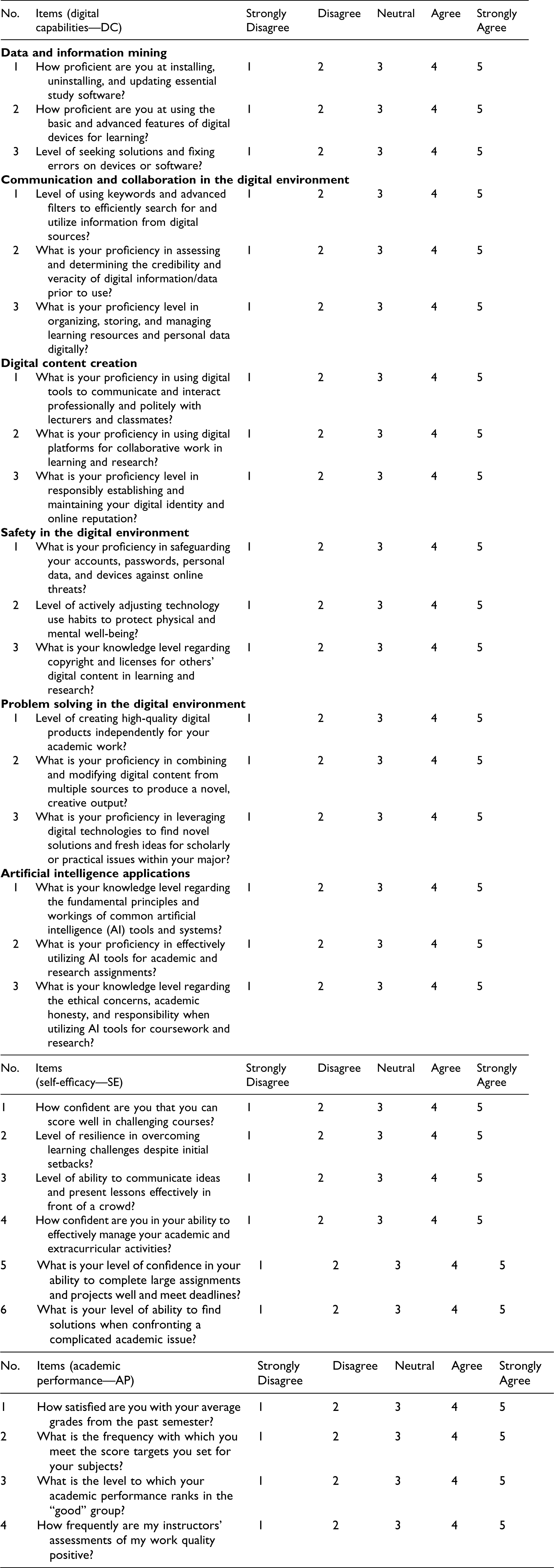
No.
Items (digital capabilities—DC)
Strongly Disagree
Disagree
Neutral
Agree
Strongly Agree
1
How proficient are you at installing, uninstalling, and updating essential study software?
1
2
3
4
5
2
How proficient are you at using the basic and advanced features of digital devices for learning?
1
2
3
4
5
3
Level of seeking solutions and fixing errors on devices or software?
1
2
3
4
5
1
Level of using keywords and advanced filters to efficiently search for and utilize information from digital sources?
1
2
3
4
5
2
What is your proficiency in assessing and determining the credibility and veracity of digital information/data prior to use?
1
2
3
4
5
3
What is your proficiency level in organizing, storing, and managing learning resources and personal data digitally?
1
2
3
4
5
1
What is your proficiency in using digital tools to communicate and interact professionally and politely with lecturers and classmates?
1
2
3
4
5
2
What is your proficiency in using digital platforms for collaborative work in learning and research?
1
2
3
4
5
3
What is your proficiency level in responsibly establishing and maintaining your digital identity and online reputation?
1
2
3
4
5
1
What is your proficiency in safeguarding your accounts, passwords, personal data, and devices against online threats?
1
2
3
4
5
2
Level of actively adjusting technology use habits to protect physical and mental well-being?
1
2
3
4
5
3
What is your knowledge level regarding copyright and licenses for others’ digital content in learning and research?
1
2
3
4
5
1
Level of creating high-quality digital products independently for your academic work?
1
2
3
4
5
2
What is your proficiency in combining and modifying digital content from multiple sources to produce a novel, creative output?
1
2
3
4
5
3
What is your proficiency in leveraging digital technologies to find novel solutions and fresh ideas for scholarly or practical issues within your major?
1
2
3
4
5
1
What is your knowledge level regarding the fundamental principles and workings of common artificial intelligence (AI) tools and systems?
1
2
3
4
5
2
What is your proficiency in effectively utilizing AI tools for academic and research assignments?
1
2
3
4
5
3
What is your knowledge level regarding the ethical concerns, academic honesty, and responsibility when utilizing AI tools for coursework and research?
1
2
3
4
5
No.
Items (self-efficacy—SE)
Strongly Disagree
Disagree
Neutral
Agree
Strongly Agree
1
How confident are you that you can score well in challenging courses?
1
2
3
4
5
2
Level of resilience in overcoming learning challenges despite initial setbacks?
1
2
3
4
5
3
Level of ability to communicate ideas and present lessons effectively in front of a crowd?
1
2
3
4
5
4
How confident are you in your ability to effectively manage your academic and extracurricular activities?
1
2
3
4
5
5
What is your level of confidence in your ability to complete large assignments and projects well and meet deadlines?
1
2
3
4
5
6
What is your level of ability to find solutions when confronting a complicated academic issue?
1
2
3
4
5
No.
Items (academic performance—AP)
Strongly Disagree
Disagree
Neutral
Agree
Strongly Agree
1
How satisfied are you with your average grades from the past semester?
1
2
3
4
5
2
What is the frequency with which you meet the score targets you set for your subjects?
1
2
3
4
5
3
What is the level to which your academic performance ranks in the “good” group?
1
2
3
4
5
4
How frequently are my instructors’ assessments of my work quality positive?
1
2
3
4
5
Please circle the number that best reflects your level of agreement with the statement. For instance, if you agree, circle 4.