






Abstract
This article is based on an in-depth study of the socio-economic changes experienced by agricultural laborers as a result of tobacco cultivation. Two villages in the Prakasam district of Andhra Pradesh, India—one where tobacco is extensively grown (Karavadi) and the other where it is not (Veerabhadrapuram) are studied. What emerges from the study is that tobacco cultivation has not only acted as a money multiplier, but has brought about a very high degree of social awareness among the hitherto so-called untouchables (now termed Dalits) in this district. They have become highly conscious of their political and social rights for improving themselves. In this process, some of the practices like untouchability, social exclusion and engagement in traditional occupations have been shaken at their roots.
Introduction
This article focuses on the impact of the cultivation of tobacco, a commercial crop, which has been grown in Andhra Pradesh for over 60 years. Tobacco cultivation has brought along with it large tobacco companies and factories which have been established in many villages and towns. These establishments have had an enduring impact on the rural population.
The post-Independence era has witnessed tremendous growth of commercial crops, such as, sugarcane, tobacco, groundnut, cotton, and oil seeds, which have received impetus from the new market economy. Among the commercial crops that have been grown in Andhra Pradesh, tobacco is one of the important ones and its cultivation was started extensively in Guntur and Prakasam Districts after 1952. The cultivation of tobacco in Andhra Pradesh has brought tremendous changes in the rural areas, providing employment for thousands of poor families in farming and tobacco industry. Not only that, employment in tobacco has impacted the social relationships in rural areas, and also the health of the people. This article is aimed at comprehending the complex situation of the impact of tobacco cultivation on the lives of Dalit laborers who have been working in tobacco farming and the tobacco industry for more than two generations.
While studying the significance of commercial crops in the country economists hold contradictory views on the consequences of the commercialization of crops: one view is that the economic as well as the living standards of the landless agricultural laborers are better in the villages where the commercial crops such as tobacco and cotton are raised (e.g., Chikkala, 2010, 2011; Nadkarni & Vedini, 1986; Ray, 2000; Reddy, 1985a, 1985b; Satyasai & Viswanath, 1997).
The other view is that the impact of commercialization of agriculture has made the rich farmers more resourceful than the poor farmers and the rich farmers often become local money lenders. The small farmers, who are faced with problems of credit and prices, depend upon the traders. Further commercialization of agriculture has increased unemployment among the casual laborers (Chaudhary, 1985; Rao & Rajashekar, 1991; Reddy, 1985a; Satyanarayana 1991; Sen, 1984). Thus attempts are being made to understand the growth of commercial crops on the attitude of farmers and the impact of commercial crops on wages and so on. But these studies do not show any concern for the impact on the society in general in terms of social structure, structural differentiations, adjustment and changes, etc. All these studies are oriented toward the economy, market, production and prospects of tobacco rather than on the social aspects such as the relationship between producers and labors or workers. They are also not concerned with the tobacco industry that creates a milieu of new social realities percolating down to the agricultural laborers. It may also be said at this point that there are very few anthropological studies (e.g., Breman, 1985) that have focused on the changes in the social structure and social relations in rural India due to changes in agricultural practices. It is in the context of this background that the present article attempts to understand the impact of tobacco cultivation on agricultural farmers and rural society in India.
As indicated already, the data for this article comes from an in-depth study undertaken in two villages in the Prakasam district of Andhra Pradesh during December and January 2008 as part of my PhD research. The data are for Karavadi where tobacco has been cultivated for more than 50 years and Veerabhadrapuram which is a village where tobacco has not yet been cultivated. These two villages are similar in all respects except tobacco cultivation, and are located in the same cultural region.
Before delving further into the subject, it is important to get a clear understanding of the term Dalit. Suffice to say, the Dalits could be considered a class of people who had been condemned to “social, educational and economic backwardness arising out of the traditional customs related to the practice of untouchability.” The Government of India Act, 1935, determined that these forms of deprivation, particularly social and economic, are suffered by the Dalits because:
They occupy a low position in the Hindu social structure; their representation in government service is inadequate; they are inadequately represented in the fields of trade, commerce, and industry; they suffer from social and physical isolation from the rest of the community; and there is a general lack of educational development among the major section of this community. (Thorat, 2009)
There have been campaigns by social reformers to spread awareness about the irrational basis for discriminating against certain classes of persons merely on account of being born in a particular family. The Dalits (those belonging to the oppressed classes) started claiming their rightful place in the sun and questioning their being denied access to a large number of occupations. Many of them were no longer prepared to accept their lot as something “divinely ordained.” The Dalits started demanding a more level playing field, where they would no longer be condemned to pursue only “traditional” occupations like scavenging, tanning and removing carcasses of animals. What was particularly obnoxious to them was the sub-human status accorded to them due to the practice of “untoucability.” An indication of their new-found assertiveness was the reluctance to accept benefits given in a patronizing manner by many “high caste” Hindus. Instead, they started demanding their legitimate rights to offset centuries of oppression and deprivation.
The government, on its part, has tried to carry out a two-pronged approach toward uplifting the Dalits:
First to overcome the multiple deprivations that SCs [Scheduled Castes] have inherited due to exclusion in the past and, to the extent possible, bring them on par with others in society; second to provide them with protection against exclusion and discrimination in the present by encouraging their effective participation in the social, economic and political processes in the country. (Thorat, 2009)
To that extent, the strategy has sought to include anti-discriminatory, protective and empowering measures.
This study focuses on the Mala and Madiga castes. Despite the fact that the government of India does not allow the practices of untouchability, rural Andhra Pradesh still experiences the practices of untouchability, though untouchables are no longer officially called “untouchables” and now called “Scheduled Castes” by the government officials; but they call themselves Dalits—those who are oppressed. Therefore, in this article, what are sometimes called the untouchables or Scheduled Castes are called Dalits throughout.
The Dalits in Andhra Pradesh
Dalits (which include persons belonging to the Scheduled Castes or Scheduled Tribes) have a noticeable presence (above 15 percent) of the total population in 19 of the 23 districts of Andhra Pradesh, according to Census date of 2001. For all the districts taken together, the figure works out to 16.19 percent. No wonder, the holistic development of States like Andhra Pradesh (with a very large percentage of Dalits) will be possible only when there are concerted efforts to significantly improve the lot of the Dalits. If Dalits continue to languish in poverty, ignorance and illiteracy, much of the economic development of the country will remain meaningless. To address the problems and issues of the Dalits, in whichever State of the country they are, it is imperative that we first understand their present condition and level of “development.”
While many employment avenues have opened up for the Dalits, it is significant to note that the Dalit workforce is largely concentrated in the agricultural sector. However, this predominance is not reflected in the ownership of agricultural land, which is a determinant of both social status and economic security. In a large number of cases, despite a number of land reform measures initiated by the various state governments, the landownership by Dalits is not commensurate with the number of persons of this class who are engaged in agriculture.
Against this backdrop, let us see to what extent tobacco cultivation has improved the lot of those who chose this vocation. Has this acted as a money multiplier, brought about a greater degree of social awareness among them and made them more politically and socially conscious? It also needs to be seen whether all these have freed them from the shackles of practices like untouchability, social exclusion and engagement in traditional occupations.
Reasons for Selecting the Particular Villages in Prakasam District
The Prakasam District was chosen for this study for two primary reasons. One, the District has the second largest Dalit population (21.29 percent) in the State, besides Nellore (22 percent). The other reason is that the author hails from this District and interaction with the major “players” in the two villages was relatively easy since he could speak to the concerned in the local lingo and establish an element of rapport and “acceptability” with them.
The details of the 2001 census make an interesting reading. Overall, the State had achieved more than 50 percent literacy in all but six districts. In the Prakasam District, a significant feature is that while the percentage of literate Dalit males was 65.13 percent, the corresponding figure for their female counterparts was 40.29 percent. The overall literacy percentage of Dalits worked out to 52.90 percent. The census data for 2001 establish the fact that Andhra Pradesh is a predominantly agricultural state. Prakasam District has a very significant percent (73.84 percent) of its laborers engaged in agricultural operations and occupies the fifth position in the state in terms of this parameter.
It is rather alarming that even 65 years after India’s independence, the “main workers” in agriculture (the Dalits) constitute less than 1 percent of the land owners in almost all the districts. The overall figure for the State of Andhra Pradesh worked out to be only 0.88 percent. This is despite the spate of land reform legislations and distribution of surplus government land from time to time. In Prakasam District, the percent of Dalit landowning is only 0.93 percent, which places it at the seventh position in the state on this parameter.
Both of the study villages Karavadi and Veerabhadrapuram have a number of similarities, including an almost similar caste composition and they are located in the same cultural region. In the former village, tobacco has been cultivated for more than 50 years, whereas in the latter tobacco has not been cultivated so far.
Karavadi is located at a distance of 12 kms from Ongole the district headquarters (Figure 1). In 2008, there were 1239 households in this village. There is a representation of 21 castes and two tribes there. Castes which are present in both villages are the: Mala, Madiga, Golla/Yadava, Reddy, Kummari, and Chakali. However, members of castes, such as, Rajput, Vadde and Yanadi, and Dommara tribes are present in Karavadi alone.
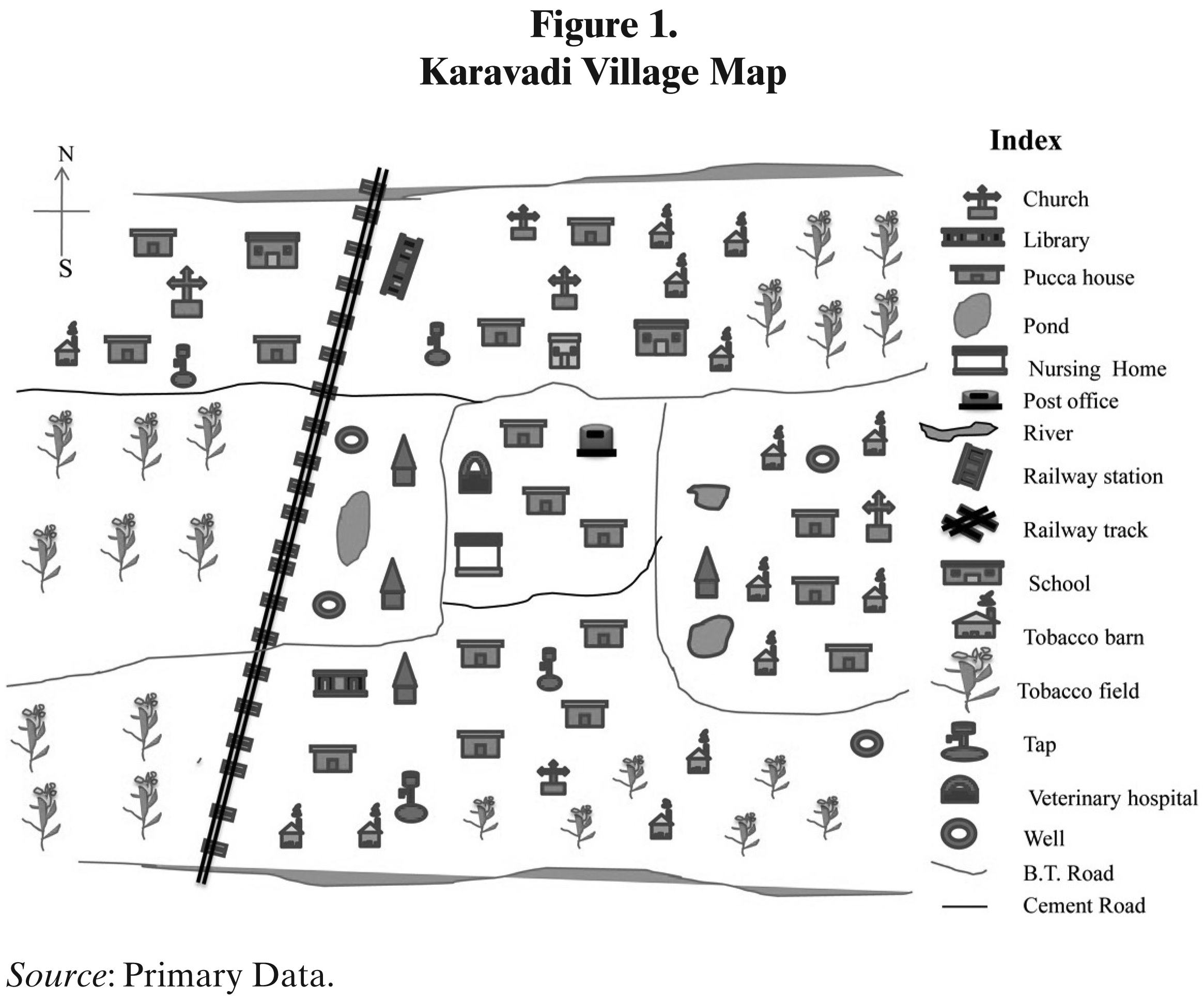
Source: Primary Data.
Veerabhadrapuram is at a distance of about 75 kms from the district headquarters, Ongole (Figure 2). In 2008, there were 1005 households in the village. There is a representation of seventeen castes and one tribe in this village. The Chenchu tribe, which is present in Veerabhadrapuram is absent in Karavadi village.
Wage and Labor Relations
In Karavadi, where tobacco is being extensively cultivated, the study shows that there is no direct relationship between the laborers and farmers regarding work and payment. The mutta-maistry works as the mediator between the farmer and laborers, and fixes the wages for a particular work, based on factors like size of the land and duration of the work. The level of demand for labor in the case of tobacco cultivation is nearly two to three times more than that for other dry crops such as jowar and groundnuts. Peak demand for labor is at the time of transplantation, de-pesting and harvesting operations. The demand of wages for harvesting and curing labor is done on the basis of barn size, rather than land size. The introduction of the Flue-Cured Virginia (FCV) tobacco technology and the consequent reorganization of the labor process in the agrarian and agro-processing sector marks a qualitatively new stage in the evolution of the district’s agricultural labor class.
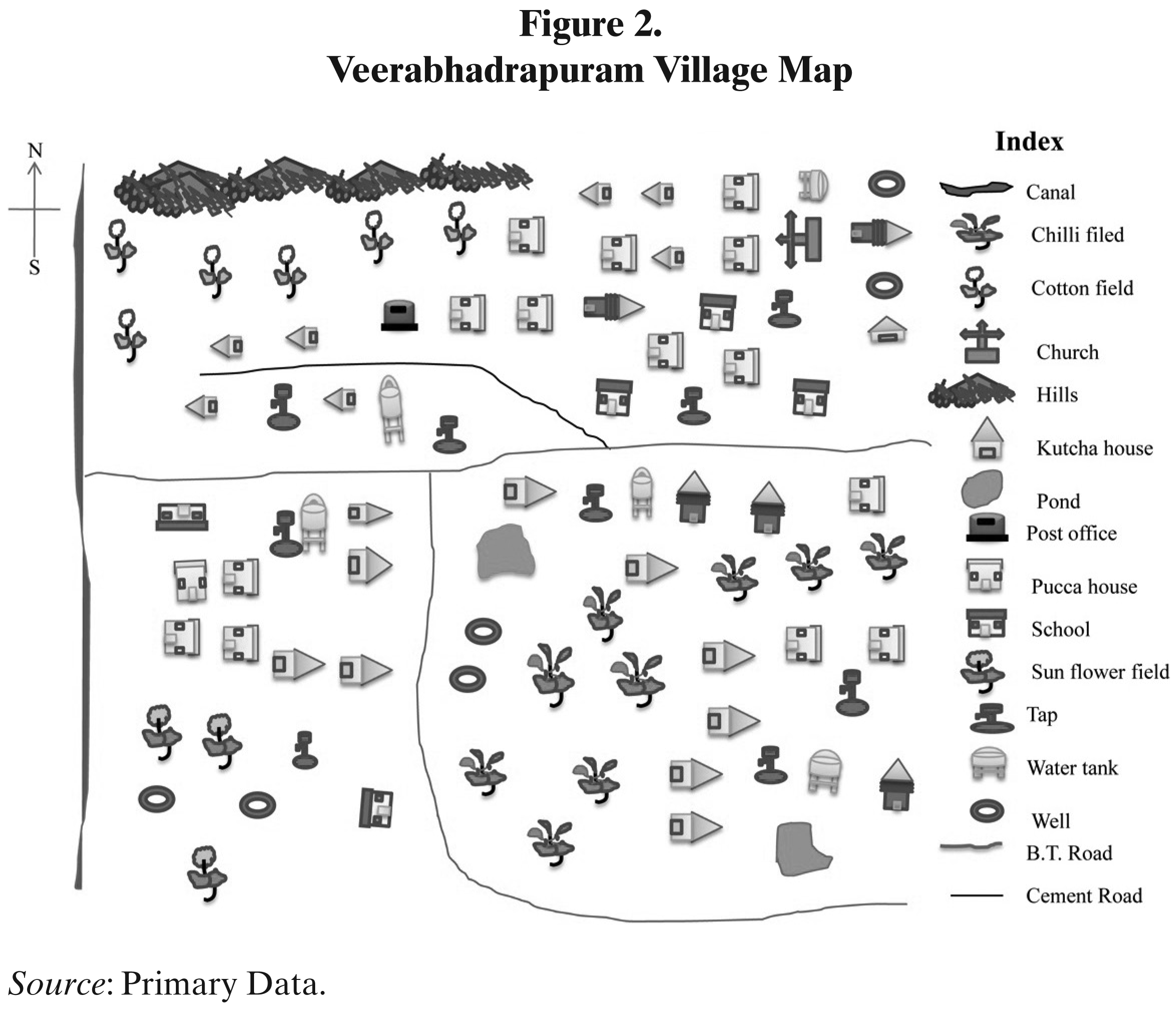
Source: Primary Data.
The element of “belongingness,” found in the traditional system, has rapidly disappeared and employment of casual labor is almost the norm now. Given the high demand for labor, the mutah laborers, especially those “managing” the curing workers, are now in a better position to assert themselves. By the end of 2006, there were numerous strikes (with the support of Communist Party of India activists) by agricultural laborers in this village demanding better wages. On the other hand, in Veerabhadrapuram, where the tobacco industry is almost non-existent, labor markets are unorganized and scattered. There is no mutah or agricultural team in this village, neither from the socially backward community agricultural laborers nor from non-Dalit community agricultural laborers.
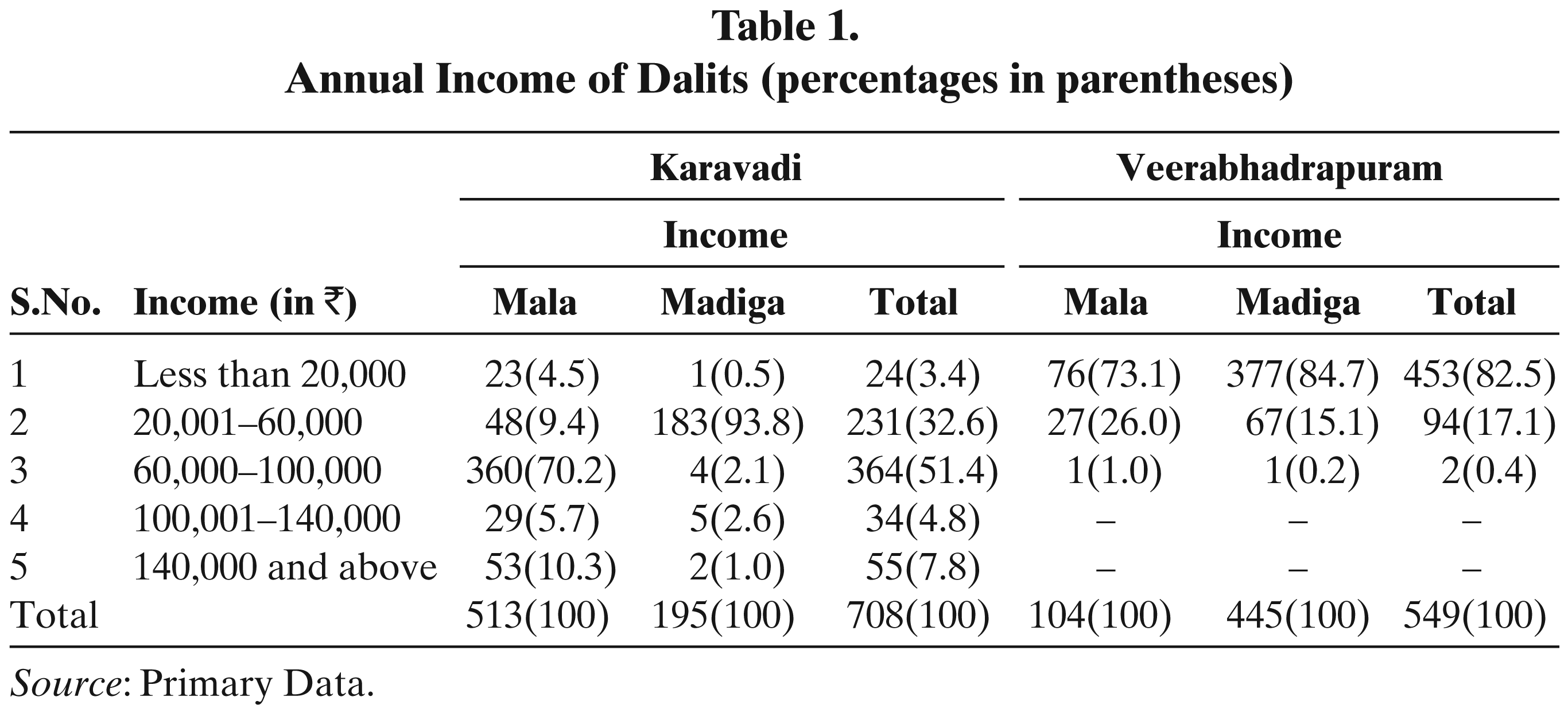
Annual Income of Dalits (percentages in parentheses)
Source: Primary Data.
During the study, the clear difference in the annual incomes of the Dalit households of Karavadi and Veerabhadrapuram came to light. The Dalits of the former village are much better off than their counterparts in the other village. Table 1 illustrates this point.
The following salient points can be seen:
Only 3.4 percent of the Dalits in Karavadi are earning less than ₹ 20,000 per annum. However, 82.5 percent of Dalits in the other village fall under this income bracket. There is no one earning more than ₹ 100,000 per annum in Veerabhadrapuram, whereas 83 (11.7 percent) of the Dalit households in Karavadi are earning more than this amount. The majority of Dalits in Karavadi (83.5 percent) earn between ₹ 20,001 and ₹ 60,000 per annum. If a comparison is made among the Malas
1
and Madigas
2
in Karavadi, in both the cases, majority of them earn between ₹ 20,001 and ₹ 60,000. The percentage of the households earning more than ₹ 100,000 is more among the Malas compared to the Madigas. Thus, it can be seen that the Malas are better off in their annual incomes.
Let us now examine Karavadi to get a better understanding of the socio-economic changes brought about by tobacco cultivation in this village.
In 1952,Tanga Venkateswarlu (84), belonging to the Balijja caste (who initially owned six acres of land) and Gorrumuchu Venkateswarlu (83), a Dalit (who inherited two acres of land) got together to construct a single barn at the cost of about ₹ 1,800 for storing the tobacco jointly cultivated by them. They earned a net income of ₹ 9,000 that year. They divided the money according to their shares. The following year, Gorrumuchu Venkateswarlu bought the barn for ₹ 1,500 from Tanga Venkateswarlu. He then took six acres of land on lease from some upper caste landowners and started cultivating tobacco from 1953 onwards. After five years, he bought another six acres of land for about ₹ 15,000. In 1980, he bought another four acres of land at a cost of ₹ 20,000. He has two sons who have families of their own. His elder son is doing business and he bought a new motor bike in 2000. His younger son is pursuing B.A. in Ongole. He is the top land holder among the Malas of the village and is still cultivating tobacco in the village.
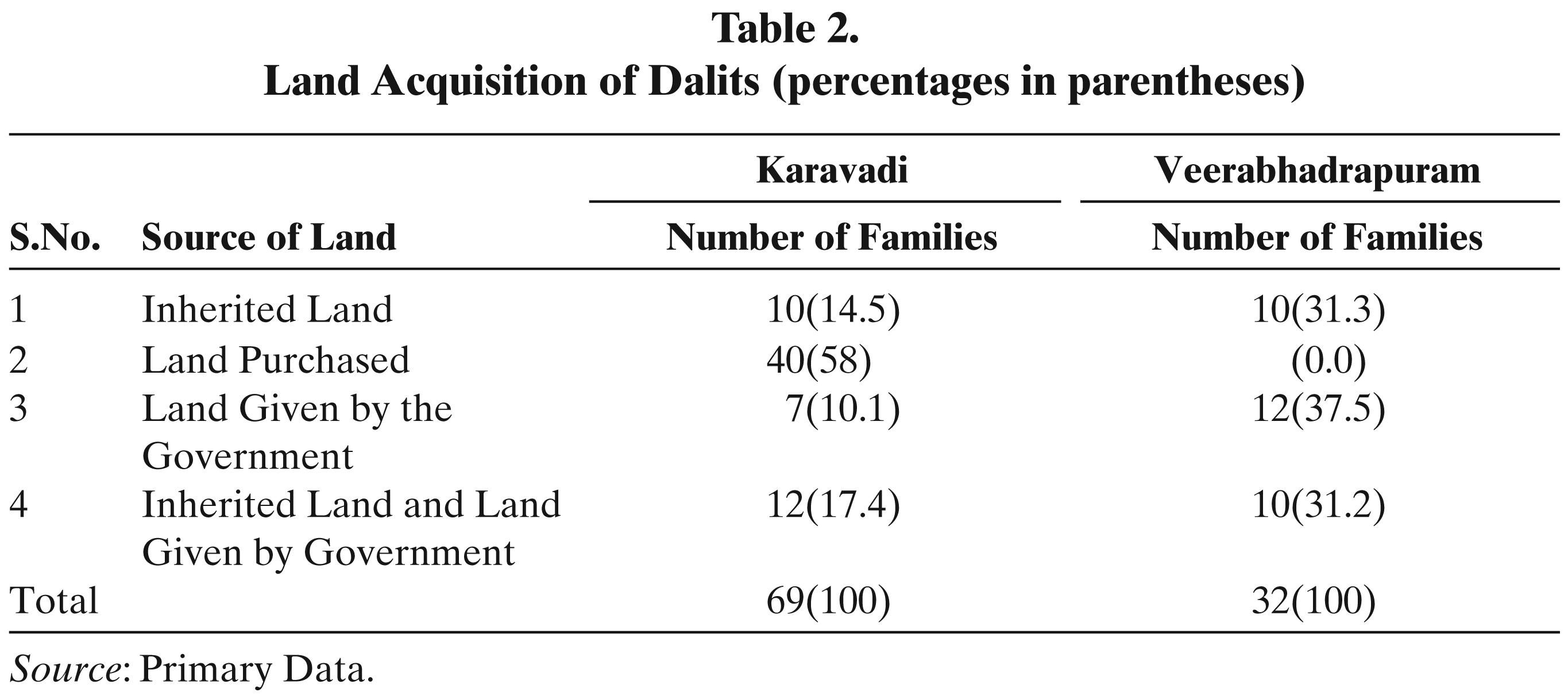
From Table 2 it can be seen that initially, only 10 Dalit households in Karavadi had inherited land. However, 40 of them subsequently purchased land. On the other hand, in Veerabhadrapuram, 10 households possessed inherited land, but none of them purchased land. While seven households have benefited from government land distribution schemes in Karavadi, the corresponding figure for Veerabhadrapuram is 12 households. From this, it is clear that the Dalits of Karavadi are economically better off as they have been able to invest on land. Their income has been generated from their employment in tobacco cultivation, wage labor and industrial labor.
Land Acquisition of Dalits (percentages in parentheses)
Source: Primary Data.
The field research revealed that 29 Mala households had taken land on lease—mostly from the Kamma households. A majority of them had taken 5 acres of land on lease. But in Veerabhadrapuram, only eight households ventured into such an initiative. This pattern shows that the Dalits of Karavadi are more progressive in agricultural activity. A perusal of the pattern of the land leased out shows that, while one Mala and one Madiga household have respectively taken two and four acres of wet land on lease, 11 Mala households have taken dry lands on lease mainly from upper caste landowners (who could not cultivate such lands themselves due to factors like old age and their children migrating to other places). In Veerabhadrapuram, there has been no instance of land being leased out. These facts reveal that the Dalits of Karavadi are able to move forward economically compared to their counterparts in Veerabhadrapuram. In Karavadi, some of the Dalits, who were earlier working as farm servants for the upper caste land owners, have become small farmers. They bought small plots or took small tracts of land in the village on lease.
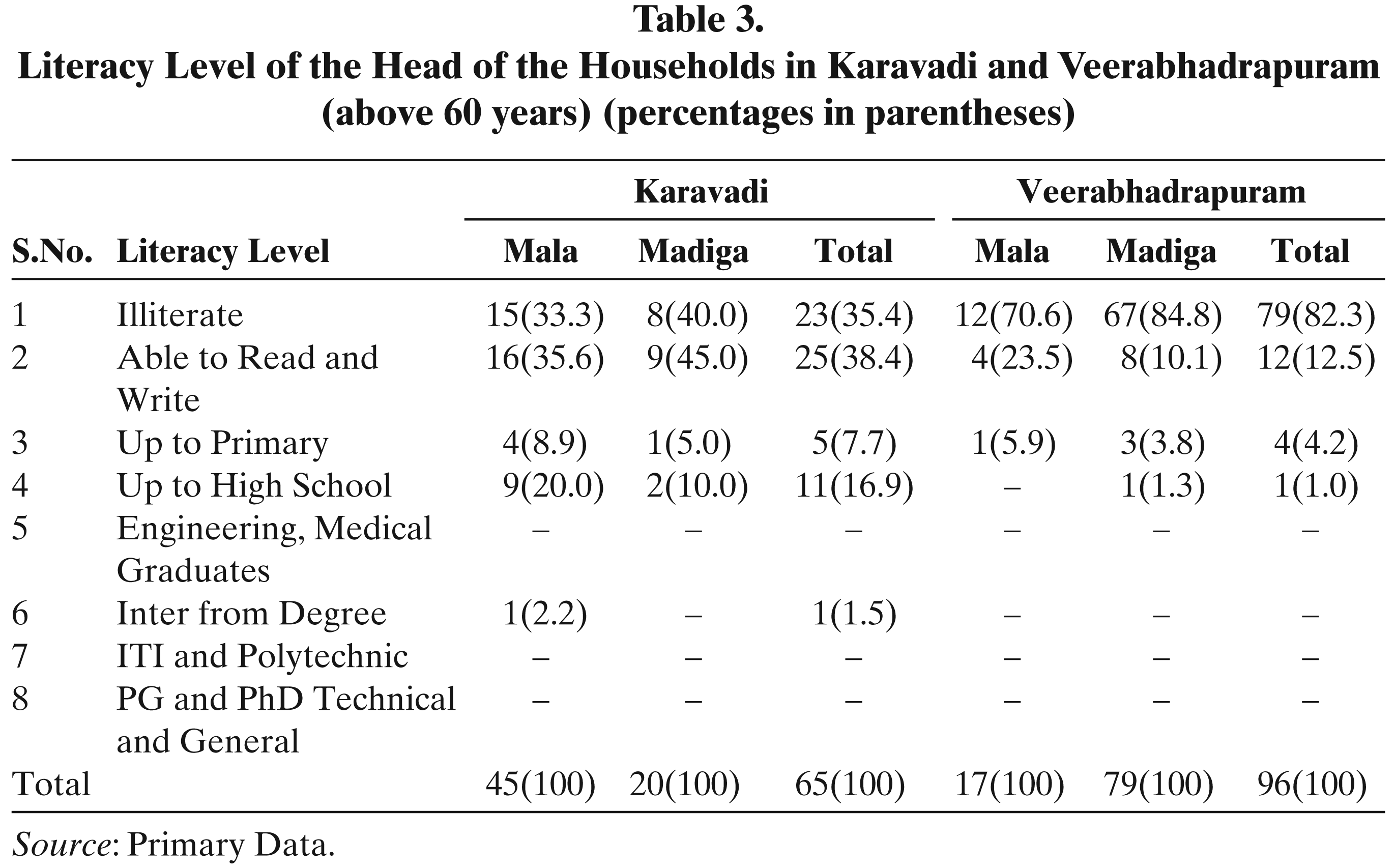
Literacy Level of the Head of the Households in Karavadi and Veerabhadrapuram (above 60 years) (percentages in parentheses)
Source: Primary Data.
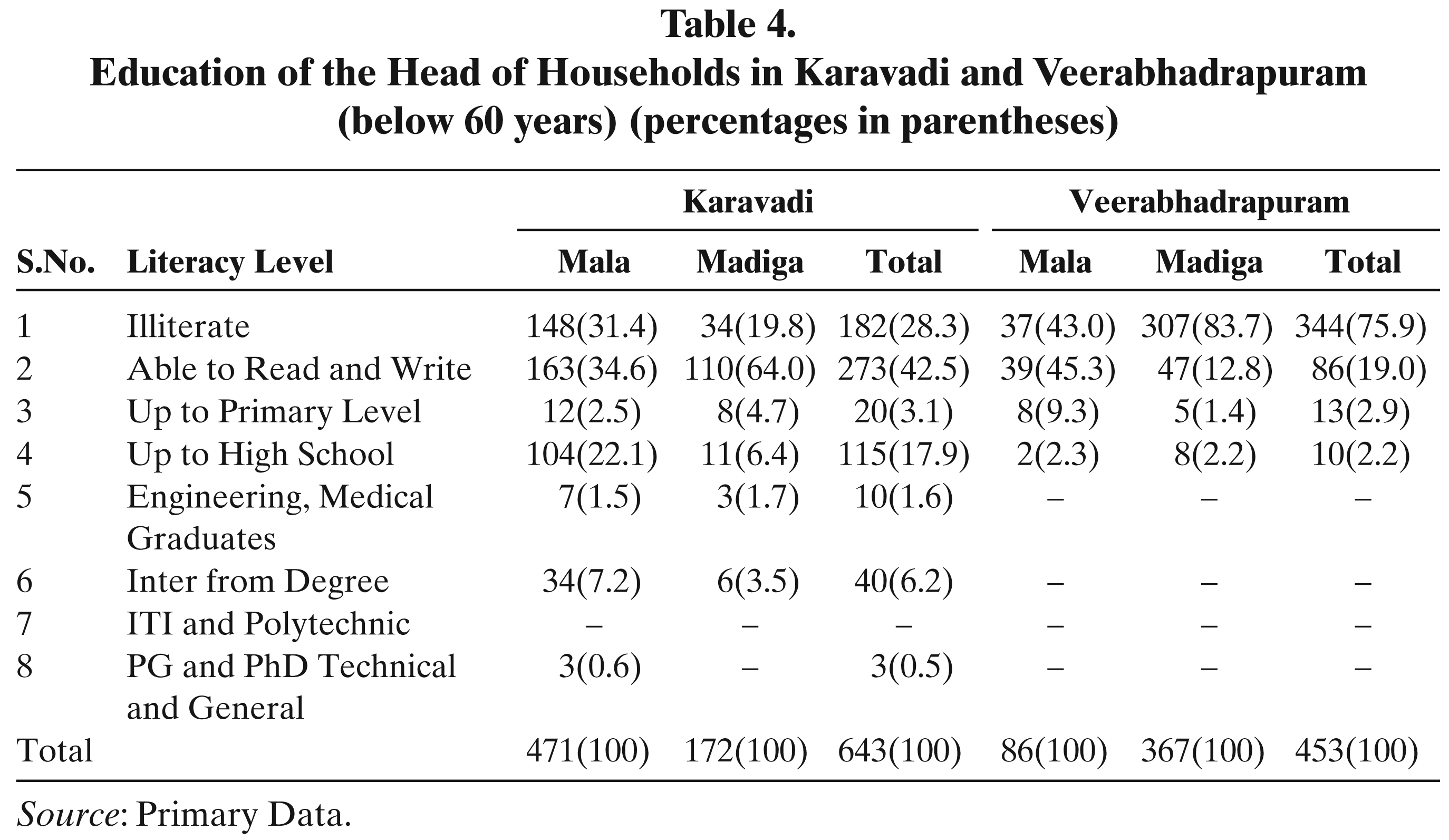
Education of the Head of Households in Karavadi and Veerabhadrapuram (below 60 years) (percentages in parentheses)
Source: Primary Data.
The details are presented in the Tables 3 and 4 above. The salient facts that emerged from this data are:
The illiterate Mala heads of the households, aged above 60 years, are 33.0 percent in Karavadi and 70.0 percent in Veerabhadrapuram. Similarly, there are 40 and 84.8 percent of Madiga heads of the households in Karavadi and Veerabhadrapuram respectively that are illiterate. In Karavadi, the percentage of those who are able to read and write Telugu is above 35 percent for both the castes. However, it is very less for both the castes in Veerabhadrapuram. In regard to the illiterate heads of households, who are below 60 years, the percentage is less in both the villages. However, the comparison between the two villages shows the percentage of illiterates has fallen in Karavadi from 35.4 to 28.3, but in Veerabhadrapuram, it has fallen from 82.3 to 75.9. The improvement in educational level in Karavadi is 7.1 percent, whereas it is 6.4 percent in Veerabhadrapuram. In Karavadi, the figure for Dalits, below 60 years of age, who are able to write, is about 42.5 percent, whereas in Veerabhadrapuram, it is 19 percent. In Karavadi, the percentage of those who studied up to primary school among those above 60 years is 7.7 percent, whereas it is 4.2 percent in Veerabhadrapuram. The percentage of those who studied up to primary level has come down in both villages among those below 60 years, compared to those above 60 years. In Karavadi, those below 60 years who have studied up to ITI and Polytechnic, engineering, medical and post-graduate levels is 29.3 percent, whereas in Veerabhadrapuram no one had studied up to this level.
Enhancement of Individual Skills and Development
The study has conclusively brought out that tobacco cultivation has led to improvement in the individual’s capacity to earn more and experience a state of psychological well being. Armed with these new skills, many Dalits have entered into a new era of organized labor as emerged as skilled agricultural and industrial workers.
The introduction of the Flue-Cured Virginia (FCV) tobacco technology has imparted new skills to the Dalit workers. As the farmers began to enjoy the benefits of the FCV tobacco cultivation, some of them started building their own barns, employing trained workers to manage the barns and also for curing of tobacco. Some others, even if they did not grow tobacco, have established barns which could be rented out to the farmers who grow FCV tobacco and want to get the tobacco cured. After the initial curing, the tobacco has to be graded into seven grades. This is a skilled activity. If there is improper curing or grading, the farmer will incur heavy losses. Therefore, only those with sufficient skills in these activities are employed. The workers who are not well versed in tobacco, could be deployed for cultivation of Bengal gram, paddy or any on other crop as these activities do not require any special skills. Thus, rural employment opportunity is high throughout the year for workers who are familiar with the farm works of tobacco and traditional crops of the locality than others.
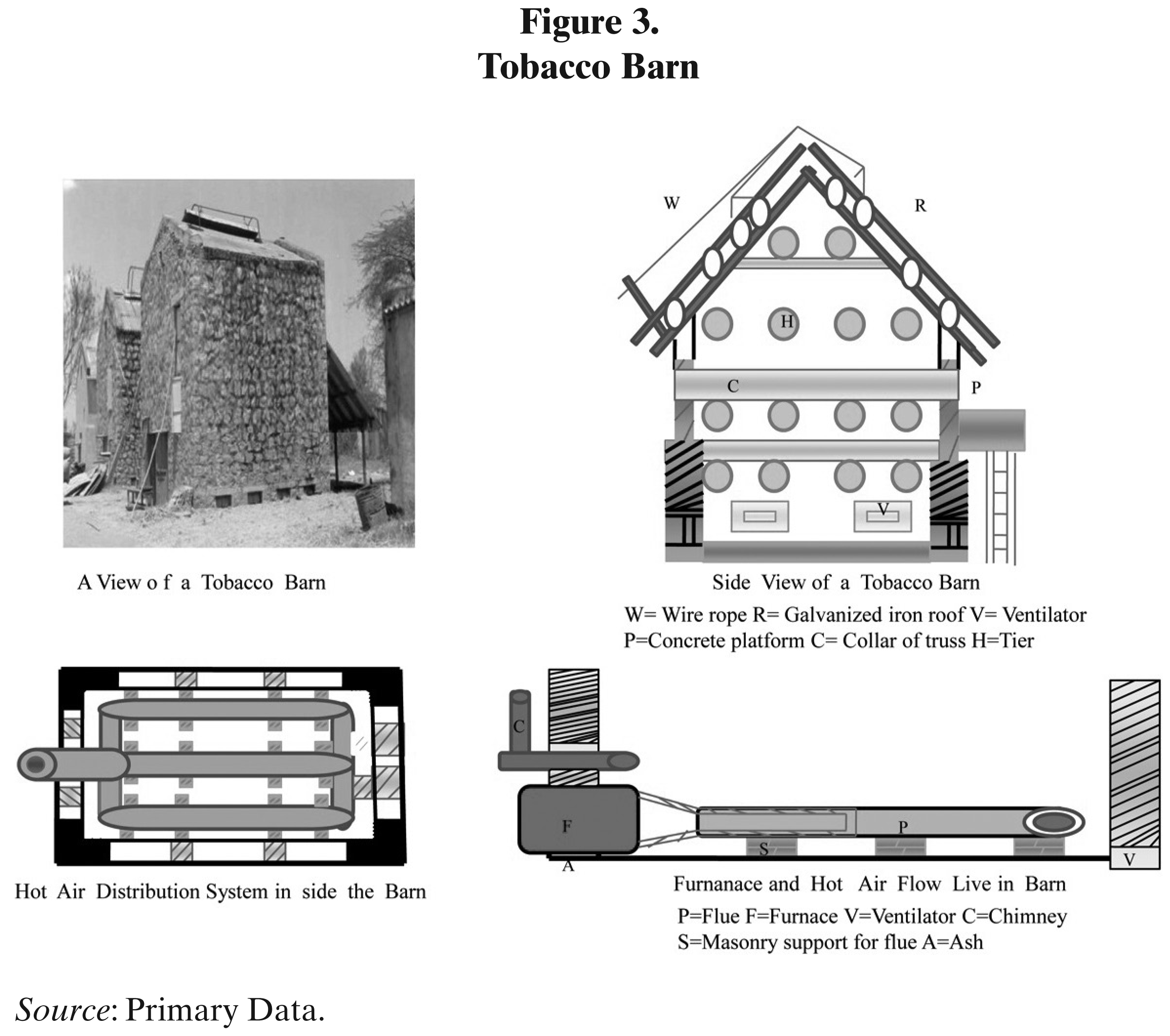
Let us now briefly discuss the role and functions of some of the unique class of workers engaged in the tobacco industry (Figure 3).
Tokers: Generally, men take up this position, but, on rare occasions, a woman may perform this task. The Toker knows the stacking arrangement of the leaves. In fact, this person’s initial job is sewing of tobacco leaves on the Gurralu. Once he gets proficiency in this work, he moves to the next job of stacking the leaves in the barn, which has to be done systematically. He should be aware of the process of heat circulation in the barn. Accordingly, the stacking has to be done so that the heat is circulated all over and all leaves are dried. He should supply the required quantity of firewood. A Toker earns about ₹20,000 during the tobacco harvesting season.
Drivers: The responsibility of curing the tobacco rests with the driver (not to be confused with the general notion of one who drives a vehicle). He, in fact, rises to this position after having worked as a Toker for at least five years. He spends day and night watching the temperature hour by hour and exposes himself to the heat constantly. He does not have regular continuous sleep, as he has to get up now and then in the night to keep a watch on the temperature. Among the Dalits of Karavadi, 18 are having their own barns, where they work as drivers and earn around ₹200,000 each per season. In addition, 31 Dalits are hiring barns belonging to the higher caste owners and work as drivers to process the FCV tobacco. Each of them earn around ₹150,000 during the tobacco harvesting season.
Source: Primary Data.
Mutah Maistry: These are men or women, who control the group of workers. The low paid workers in the ILTD and similar factories are recruited through a leader (Mutah Maistry) who collects workers with farm and company experience. He or she represents the group, and mediates between the company and workers and gets work on contract basis. The Mutah Maistry can earn nearly ₹50,000 or above during the period February through April.
Brokers: This person has complete knowledge of tobacco growing, grading process and also maintains personal and friendly relations with the tobacco farmers and agents of various tobacco companies. Usually, he has work experience in the farm or tobacco platforms or tobacco re-drying companies as a Maistry. He keeps a record of the information about the farmers who have grown tobacco and availability of discarded tobacco in the re-drying companies. When the agents visits the village for purchase of the discarded tobacco, which is useful for production of cigars, snuff or chewing powder, etc., he is ready with information about the prospective farmers or the companies and acts as the mediator between these two parties and earns a commission of 10 percent for this from either of the parties. Often, if he has enough money, he himself purchases the discarded material and sells the same to the agents. There are four brokers in Karavadi village and each of them earns around ₹100,000 during the period February through April. These are new skills and corresponding positions that came into existence after the introduction of FCV tobacco in the area. Many of the Dalits of Karavadi, who were earlier engaged for cultivation of traditional crops, have now have acquired the requisite skills and are in great demand in Karavadi and other villages where tobacco is grown. Now, the tobacco farmers are dependent only on the local laborers who are conversant with tobacco operations. This need has restricted the free flow of migrants, as only skilled laborers who are familiar with tobacco could only migrate to Karavadi. In this demand for scarce skills, the laborers are able to form labor gangs or groups and, enter into a contract system of labor. They can also demand higher wages.
The new skills have given the labor force confidence in themselves. There is assured employment and income throughout the year. This has enabled them to get loans or borrow money from the money lenders as they are confident of repaying the amounts from their earnings and accumulated savings. With this kind of assurance, they are able to buy livestock, furniture, consumables, etc., for their houses.
Impact on Caste Relations
The inter-caste relations, either in Karavadi or Veerabharapuram, or for that matter, any other village in Andhra Pradesh or India, are founded mainly on economic, political and religious domains, popularly known as jajmani system. While the economic relations are based on individuals, the caste element plays its role due to economic inequality, wherein the upper castes control the economic activity in the village.
Traditionally, there have been ties between the upper caste landlords (Asamis) and Dalit clients. Earlier, the Dalits, either Malas or Madigas, used to go to the house of the Asami to attend to the domestic tasks or farm work. At the end of the year, they were given some grain. This tradition is continuing in Veerabhadrapuram, where a Dalit goes to the house of the landlord early in the morning, as a farm servant and works there for a year. He is given three measures of jowar (three manikalu). At present, in Karavadi, there is no patron client-relation as regards the cultivation of tobacco. This is mainly due to cash economy which has replaced the grains. Since there is year round employment in the tobacco industries and tobacco cultivation, a Dalit need not depend on one farmer alone for the entire year.
The farmers have also tried to dissociate themselves from the Dalits as they do not like to take care of the Dalit agricultural workers during the non-agricultural season. Thus, the traditional ties between the farmers and the Dalits, both Mala and Madiga servants, have broken down. In fact, some of the Dalits have become cultivators. In several cases, their children are going to school or college due to improvement in their economic conditions. The improved economic condition, change of occupations and better education seem to have an impact on the family structure of the Dalits. In Veerabhadrapuram, the attachment of married brothers with the father seems to be stronger perhaps due to economic interdependence. Therefore, there are more nuclear families in Karavadi than in Veerabhadrapuram.
Impact on Consciousness of Women Workers
Tobacco cultivation, production and curing require a large work force of women. Women are also organized into groups or Mutahs, which have developed a spirit of solidarity and mutual help. The collective spirit among the women is so much pronounced that the landlords have to bargain with them. They cannot recruit these women individually, but have to negotiate with their spokeswoman or Mutah Maistries who, in turn, are controlled by the other women laborers. The necessity to recruit a large number of women for agricultural operations during certain periods of the year has engendered the development of women’s spirit of solidarity and organizational skills.
Many women of Karavadi have joined the state sponsored scheme of Self Help Groups (SHGs). There are 130 SHGs in this village. They are saving money in the banks for their children’s education and for the marriage of their daughters. The women have responded enthusiastically to the prospect of forming their own SHGs. The first women’s association was set up in Karavadi. Today, there are 130 SHGs in Karavadi village. Out of the 130 SHGs, 40 belong to Dalit communities. Since 1994, each member of the women groups has been saving ₹50 per month in the local branch of Syndicate Bank. Today, the women associations have saved ₹300,000. For every five groups, there is one women leader who collects the contributions from its members and deposits in the bank. All loan applications from the individual SHGs will have to go through this village women’s organization to the Syndicate bank. The loan will be sanctioned only when the consortium forwards the application.
The women’s organizations meet every week in its SHGs office and discuss various issues related to the functioning of various SHGs in the village. In this way, the Dr. B.R. Ambedkar women group got a loan of 1 lakh rupees from the Syndicate Bank in 2000. This group disbursed the amount of 1 lakh rupees to the tobacco farmers at 3 percent interest rate, while they got this money only for 25 paisa interest rate from the bank. Earlier, all group members of the Dalits groups were illiterate, but today all of them are literate. The concerned Villager Organizer and the committee members discussed the problem of the illiteracy and decided to educate illiterate women members. They bought slates and books for their members and organized an informal school in the night. This informal school functioned in the night after dinner. Every group leader taught letters of the alphabet and then lessons to the group members. As a result, today, all group members are literate. Regular weekly meetings are held in the village SHG office and women discuss a variety of subjects related to their lives. The meetings help in increasing their awareness about banking, markets, health of women and children, income generating schemes and bring solidarity among the women. The issues of wages and rising of wages and going on strike are also discussed.
In Veerabhadrapuram village, the wife of a big farmer also works in the field. Because economic relations between husband and wife have mostly remained unchanged, familial relations between them have also not changed very much. The wife shows her husband the customary respect. Women perform more agricultural operations than men. Like laborers, they work in the field for more months in the year than men.
Some of the upper caste women have joined SHG groups in this village and there are five SHGs in this village. Women in Veerabhadrapuram operate still largely within the limits of the substance economy, all money transactions are done by their men folk. The changes which have taken place in Veerabhadrapuram are in line with the traditional economy and, therefore, they have not led to significant change in roles and relations within the village. By contrast, in Karavadi, multifarious changes ‘have’ revolutionized its economic and political fabric. Karavadi farmers regard it a matter of prestige that their womenfolk do not have to work on their lands any more. Women have learnt to handle money matters, they sell milk and butter and purchase goods in Karavadi and also lend money. Their desire to earn more independently has affected the relationship between husband and wife. By purchasing a buffalo, a husband provides his wife with an independent source of income and, in turn, gives her a certain degree of independence.
These contradictory interests often lead to conflict situations between husband and wife. Economic differentiation has found different modes of expression in both villages. In Karavadi, it is claimed that a number of elderly women have given substantial help to their husbands for accumulating family assets. In Karavadi, the women working in tobacco companies spend considerable time outside the family, and some of them have developed intimacy with men of other castes. Often quarrels in their houses originate over alleged extra-marital relationships.
The Dalits, who for long have been victims of the practice of untouchability, were attracted to Communist ideology and they have regularly participated in the activities of the Communist Party. They have taken part in the election campaigns of the Communist Party. The Communist Party started awareness programs among the Dalits by staging dramas like Ma Bhumi. This drama is about the revolt against Chenna Reddy and Prakash Reddy, landlords (Doras) in Telangana. In this story, the Dalits were working under these landlords and the Doras were exploiting the Dalits by paying low wages, demanding free labor and so on, besides practicing untouchability. The Dalits revolt against the landlords and obtain their freedom.
In Karavadi, the Dalits participated in this drama by collecting money from the villages for organizing the drama, and also enacting certain roles in this drama several times in the village during 1961–1964. In 1974, the Communist Party agitated before the district administration for distribution of waste land for Dalits in Karavadi. Consequently, two hundred Dalits got 150 acres of land in Karavadi. The Communist Party organized several strikes against the tobacco farmers for an increase in their wages and also against the tobacco companies at Throvagunta in which the Dalits of Karavadi also participated. The Communist Party has since 1960–1970s been organizing song and essay writing competitions for young boys and girls on themes related to the social and economic issues of the villagers during the Sankranti festival and organized sports events in the village. They have also campaigned against evil habits like gambling and cock fighting on the occasion of festivals.
At the same time, the literacy levels of the villagers have also gone up and some of them got employment and there is an increase in economic prosperity. Further, the Dalits’ conversion to Christianity has also acted as a catalyst to fight against social inequality and practice of untouchability. The Dalit youth have also became conscious of the Constitutional rights granted to them and were greatly influenced by the ideology of Dr. B.R. Ambedkar. As a cumulative effect of all these, the Dalits, got themselves freed from the attached labor with the landlord, and gradually, the Chakalis 3 and Mangalis 4 have started providing services to the Dalits.
In the 1970s, the Communist Party leaders led a group of 50 Dalits into the Shiva temple. Since then, the Dalits enter the temple and offer prayers. This is a revolutionary change. The present day Dalits are more educated, and economically better off compared to their counterparts in the past. Earlier, in Karavadi, when the upper caste persons invited the Dalits for the weddings, the Dalits were not allowed to freely mingle with the other guests. But today, the Dalits are being allowed to sit along with other upper caste members where table meals are arranged. Similarly, the wedding of the Dalits are attended by the upper castes, who dine along with the Dalits. It was observed that when Venkateswarlu, a Kamma farmer came to the marriage function of Subba Rao’s son, Subba Rao had arranged separate tables and chairs for the upper castes and at the same venue the Dalits had separate tables. Earlier, the upper castes never attended the weddings of the Dalits—not to speak about eating along with them. But today, that gap has been bridged. However, in Veerabhadrapuram, upper caste persons do not attend the weddings of the Dalits. On such occasions, the Dalits go to the houses of the upper castes who give them a gift in cash or kind. The upper caste farmers do not invite the Dalits to their marriages. After the marriage, the Dalits are invited for dinner, where they sit on the floor and partake of the food served.
In Karavadi, today, the tobacco laborers are more politically conscious and socially empowered. However, in Veerabhadrapuram, the Dalits are very weak politically. In Karavadi, a Dalit contested the 2001 Panchayat election for the post of Sarpanch and got elected. In the Mandal Parishad elections of 2001, one Dalit woman was elected as the Mandal Parishad Territorial Constituency (MPTC) member. In Veerabhadrapuram, no Dalit has ever been elected as Sarpanch of the village.
The Malas and Madigas have improved their socio-economic and political status in Karavadi, compared to their counterparts in Veerabhadrapuram. However, one finds an interesting order in the social hierarchy in Karavadi. The Dalits here assert that they are superior to Chakalis and Mangalis. But the latter argue that the Dalits may be socially and economically superior, but are ritually inferior to them. Thus, a distinction between social-economic and ritual hierarchies is brought into play. In Karavadi in middle of the hierarchy we find the Kamsalis, Odde, Chakalis and Kummaris, along with the Dalits. In Veerabhadrapuram, in the middle order Chakalis, Kamsalis, Kummaris, and Mutharasis occupy the position above Mala and Madiga castes in the village. Thus, there is social mobility among the Dalits of Karavadi, compared to the Dalits of Veerabhadrapuram. This is mainly due to the cultivation and production of tobacco in Karavadi.
Conclusion
This article reveals that in the case of the tobacco laborers in Karavadi, the socio-economic conditions of the Dalits have generally improved. Also, the traditional relationships with the landlords have radically changed. However, in Veerabhadrapuram, where there is no tobacco cultivation, the agricultural laborers are continuing to depend on farmers along the traditional lines. Many Dalit families are sending their children to schools in Karavadi, whereas in Veerabhadrapuram village, most of the children are dropouts from school. The traditional relations between landlord and agricultural laborers have been disrupted. Consequently, the hereditary economic relations between upper caste farmers and the laborers have undergone a sea change.
In Veerabhadrapuram, the caste based ritual relationship between Dalit agricultural laborers is still in vogue. The Dalits continue to work as annual farm workers. There is a breakdown of the practice of untouchability in Karavadi village due to intervention of Communist Party, whereas, in Veerabhadrapuram, the practice of untouchability still continues. There is a very significant change in Karavadi, where the Dalits are able to get ritual status as they are able to enter temples. They have also improved their political status. In Veerabhadrapuram village, the Dalits are still facing the problems of untouchability at the hands of upper caste people, and their political status is also very weak.
What emerges from this study is that tobacco cultivation has not only acted as a money multiplier, but has brought about a very high degree of social and politicial awareness among some of hitherto untouchable Dalits in this part of India. The Dalits in Karavadi have become highly conscious of their political and social rights and have been improving themselves. As a result, their caste relations, former social exclusion and their engagement in traditional occupations have been transformed.
Footnotes
Acknowledgements
The author is grateful to Professor N. Sudhakar Rao, his post doctoral advisor, for his help in finalizing this article and also wishes to thank the anonymous peer reviewers and guest editors of the issue, for useful comments on the earlier drafts of the article.