






Abstract
The significance of cultural factors in economic development is analyzed. Culture here refers to values, behaviors, and beliefs. Culture alone cannot explain development, but there are some factors that help us understand why some countries develop faster than others. The study makes use of the World Values Survey as a road map for analysis using cross-cultural comparisons. The analysis focuses on two key core values: trust and achievement. This is applied to two regions: East Asia (Japan and Korea) and Latin America (Mexico and Peru). The aim is to examine how aspects of culture help accelerate or impede development.
Introduction
Economists consider leading economic indicators and policy options when assessing a country’s economic development. Less attention has been paid to the prevailing cultural attitudes shaping economic and political processes. Certain norms and behaviors at work can propel or distort the economic system. Cultural norms foster environments that strengthen or erode institutions.
This study aims to examine two key core values in two regions: East Asia (Japan and South Korea) and Latin America (Mexico and Peru). The former are areas characterized by robust economic development and well-established institutions, while the latter are regions that have grappled with developmental challenges. This study aims to understand how different values affect development.
Until recently, economists were reluctant to consider culture because it was somewhat broad and difficult to test accurately (Fernandez, 2010; Guiso et al., 2006). This study delves into the cultural values that serve as stimuli or impediments to mature development. However, unlike cultural determinism, which posits that culture determines economic and political arrangements, it is argued that cultural traits can lead to a better understanding of economic development. A discussion of the distinction between cultural determinism, which has been critiqued as insufficient in explaining economic development, and the framework used in this analysis follows in the third section.
Culture here refers primarily to values, attitudes, and beliefs, and to human and social interactions. How significant are cultural factors in a country’s economic development and growth? Such factors have historically been difficult to quantify. However, certain measurable data are now available for key dimensions (social, political, and economic) of core values. The analysis uses the framework designed by Inglehart (1990), Inglehart and Carballo (1997) and Basáñez (2016), the World Values Survey (WVS), which now includes more than 100 countries. The WVS provides a roadmap and categories for analysis using cross-cultural comparisons. Cultural dynamics can be considered to have social, political, and economic causal factors that encompass a larger meaning. Cultural traits also provide perspectives on how society behaves.
To build this hypothesis, this study relies on two key core values: trust and achievement. The value of trust moves along a continuum from trust to distrust. In case of achievement, the continuum ranges from an emphasis on hard work and achievement to an emphasis on joy or leisure.
Background on East Asia and Latin America
In the last five decades, East Asia has overtaken Latin America in economic success, propelled by rapid industrialization and resulting in an increase in the standard of living. Latin America has lurched along, unable to sustain growth; it has seen periods of recovery, only to falter again. Dramatic changes in economic development have sparked scholarly interest in documenting successful outcomes in East Asia.
Given the stark differences in economic policies between these two regions, it comes as no surprise that their developmental paths have led to contrasting outcomes. Success stories in East Asia include those of Japan, South Korea, Taiwan, Singapore, and China (Singh, 1993). However, for the purposes of this study, cross-country comparisons focus mainly on Japan and South Korea in East Asia and Peru and Mexico in Latin America. In each case, striking similarities exist between the countries in each set. The East Asian pair is more homogeneous, which is important for the national unity of the predominant culture, whereas Latin American countries are more heterogeneous, particularly in terms of race, ethnicity, and language.
Mexico and Peru are rich in factor endowments, whereas Japan and Korea are not. The latter two have a more unitary culture, while Latin American countries have a more interactive culture (Lavoie & Chamlee-Wright, 2001). Since colonial times and even after independence from Spain, the national culture of Latin America has transformed and been assimilated into the Spanish Catholic tradition. The enduring colonial system transplanted values and institutions, leaving an imprint on Latin American culture. For instance, politically, there are features that evolved from the Spanish system of centralized authority, paved with patronage politics and class divisions (Basáñez, 2006).
Peru has much in common with Mexico: both had powerful and prosperous indigenous civilizations (Inca and Aztec) that were conquered, and a more diverse population emerged, predominantly mestizo. The Spanish focused more on these two countries because of their significant gold and silver deposits. Colonial experience established what are known as extractive institutions, which are bent on trying to extract natural resources. However, political institutions endured. The legacy of these institutions creates inequality and exclusion (Acemoglu & Robinson, 2021). No system of checks and balances exists.
Cultural Factors
East Asian countries reveal strong cultural differences compared with Latin America. Porter (2000) argues that one of the reasons for the success of Asian countries is exemplified, particularly in terms of common behaviors, in how particular cultures behave. A nation’s prosperity is not entirely related to its endowment of natural resources and human capital, but also to its attitudes, values, and beliefs. Appropriate macroeconomic policies may not always be sufficient if challenges impede qualitative changes in promoting socioeconomic development.
Culture does not and cannot entirely explain underdevelopment, as initially proposed by Harrison (1985) and as Harrison and Huntington (2000) discuss in addressing Latin America’s development failures. Cultural determinism is an approach that emphasizes that culture shapes actions and beliefs. It has been used to frame discussions of why some nations/cultures succeed economically and others do not. Such arguments about the role of culture in economic development have been criticized for reinforcing the idea that economic success is the result of cultural traits within cultures. As Acikel (2006) points out, “ironically, instead of countering the excesses of crude materialism, they lead social theory into a form of Eurocentic historical culturalism.” Bash (2012) argues that at times this perspective has been used to promote a simplified version of “us” and the “others.”
For years Max Weber’s The Protestant Ethic and the Spirit of Capitalism was influential among many scholars arguing that a certain “set of attitudes, essential to trigger a development process, were culturally determined” (Branco, 2007, p. 409). Western scholars placed cultural change in poorer countries as central in the process of economic development. But in the 1980s, neo-Marxist scholars started focusing their attention on the relations of production and the economic structure, and relegated culture to the superstructure. But during those years, there was a reemergence of interest in culture. Most noticeable was the work of Lawrence Harrison (1985) and in the 1990s his collaboration with Samuel P. Huntington and also the work of Francis Fukuyama and David Landes. To these authors, culture for the most part is taken as an obstacle to development.
Rabie argues that “in order to explain the failure of most nations to adopt Western ideals and ideas of democracy, human rights, and free markets, some Western thinkers moved to develop a new model based on culture, claiming that culture is responsible for progress as well as backwardness, success as well as failure, peace as well as violence” (Rabie, 2016, p. 155). According to Zurndorfer (2017), there are two views on the interpretation of Confucius in past and present China. On the former, historian John K. Fairbanks (1982) interpreted China’s inability to modernize to “Confucian static traditional values.” In contrast others have argued that the success of East Asian economies is attributed to “Confucian values of hard work and thrift” (Zurndorfer, 2017, p. 1). Rabie points out that culture alone fails as an explanation for success in economic development. Fukuyama, who (unlike his mentors) signaled Confucianism as a positive factor in the success of the East Asian nations and argued that Confucian ethics undergirded the rapid and sustained economic growth of several Asian nations. Rabie asks why China and other East Asian nations did not industrialize earlier if their culture included traits favorable to economic development.
Dirlik (1987) notes that the culturalist assertion that reduces all realms of social experience to the question of culture is problematic. Dirlik refers to culturalism as embracing hegemonic ideology (or Western-centered view) that reduces the argument to a uniform cultural field.
As the debate about Confucian ethics makes clear, oversimplified use of cultural traits to explain behavior and an assertion that culture alone drives economic behavior must be avoided. Cultural determinism has rightly been criticized for taking culture as a constraint on development, not acknowledging the many factors that drive economic behavior and shape economic development.
The analysis described in this article, by contrast, focuses on elements of culture that, with other factors, can help explain why some countries succeed in achieving economic development and others do not.
From an economic viewpoint, when examining the national cultures of the two regions, one can explore overlapping aspects, such as managerial practices and the values and practices that exert pressure on how people behave. The central question is why some societies make better use of their resource endowments. Some cultures emphasize hard work, punctuality, and deferred gratification. Other cultures emphasize caution and skepticism, which can make people more suspicious and distrustful and less willing to take risks. North (1990) recognizes the dimensions and significance of culture and the institutions that make it work. Acemoglu and Robinson (2012) also argue that social norms can support institutions conducive to a more productive order or weaken them altogether.
Empirical Framework
This study utilizes the Inglehart and Carballo (1997) design of the world cultural map and adopts Basáñez’s (2016) approach. This serves as a foundation, providing empirical evidence of traditional values and cultural shifts. The map effectively captures global cultural variation and has remained consistent over the past three decades. It groups countries’ clusters according to religion and belief systems. The study captures each country’s placement on the cultural map, which was determined by factor analysis of survey data compiled by the World Value Survey (WVS) (
Cultural comparisons arise from the observations of different cultures over time. These assumptions touch on social, economic, and political dimensions. The two key values considered here and drawn from the WVS are trust and achievement (hard work). The findings present a two-dimensional analysis with two axes (collectivistic vs. individualistic). Collectivist attitudes tend to emphasize social conformity, a preference for working in groups, and acceptance of national authority. In what is often considered a more traditional society (Japan and South Korea), the most common defining values are family values (e.g., respect for parents, parents doing their utmost for their children, national pride, acceptance of authority, and low dissent). This is the most reflective of the two East Asian countries with secular-rational values. According to D’Andrade (2008), in a more collectivist type of culture, there tends to be a strong nationalist sentiment and respect for the rule of law and social order, and people tend to be polite, maintain tradition, and be thrifty. In contrast, individualism as a value orientation tends to be emotionally more open, fun, relaxed, and expressive. Oyserman et al. (2002) argue that under collectivism, high value is placed on sacrificing for the common good and maintaining a more harmonious relationship with others. An example is the overwhelming acceptance of wearing masks to protect against COVID-19 in East Asia. In addition, there is a more positive attitude toward institutions and groups that make up society.
Basáñez’s (2016) interpretation of the cultural map shows cultural clusters that represent the uniqueness of each country’s values. For instance, Protestant societies (Northern and Western Europe) score higher on the self-expressive dimension than the predominantly Catholic countries of Latin America. However, it should be noted that religion and strong philosophical beliefs (e.g., Confucius) have a significant impact on value systems in East Asian countries. Religion (Protestantism in particular) and work ethics are categorizations put forth by Max Weber, something that is taken up in the section on achievement.
Cultural Differences in Trust (Mistrust)
Trust plays a crucial role in shaping individuals’ behavior and the functioning of organizations and businesses. It is built on shared values and attitudes that inspire confidence. Trust holds immense significance as it underpins all transactions within the marketplace. A well-functioning economy necessitates trust between a government and its institutions. For example, business contracts must be upheld, and legal disputes must be resolved in court. However, when institutions like the police, courts, and governmental bureaucracies are weak, unreliable, or corrupt, business transactions become more cautious (Behrens, 2009). Distrust can lead to a relentless pursuit of self-interest, where individuals rely on favors, cheat to expedite processes, or engage in corruption to secure contracts. This pervasive erosion of culture distorts rules for personal gain.
In the most recent results of the WVS, trust is framed as trust in others. Figure 1 (Table A1) presents the data for all four countries, highlighting that the Japanese and Korean respondents reported higher levels of trust in others compared to respondents in Mexico and Peru. In Peru, only 4.2% of the 1,400 surveyed individuals believed that people could be trusted, while a significant majority of 95.6% expressed the need to be cautious. Similarly, in Mexico, only 10.5% of respondents expressed trust in others, indicating strong suspicion. In contrast, 32.9% of Koreans and 33.7% of Japanese respondents believed in trustworthiness. The 2017–2020 WVS data demonstrates that people in East Asia are three times more trustful compared to Mexico. When examining distrust toward specific institutions (such as the press, police, courts, government, parliament, and civil services), the level of distrust in the two Latin American countries surpasses that in the two East Asian countries. To provide clarity, bar graphs are utilized to visually depict the variations in responses to each question across the four countries.
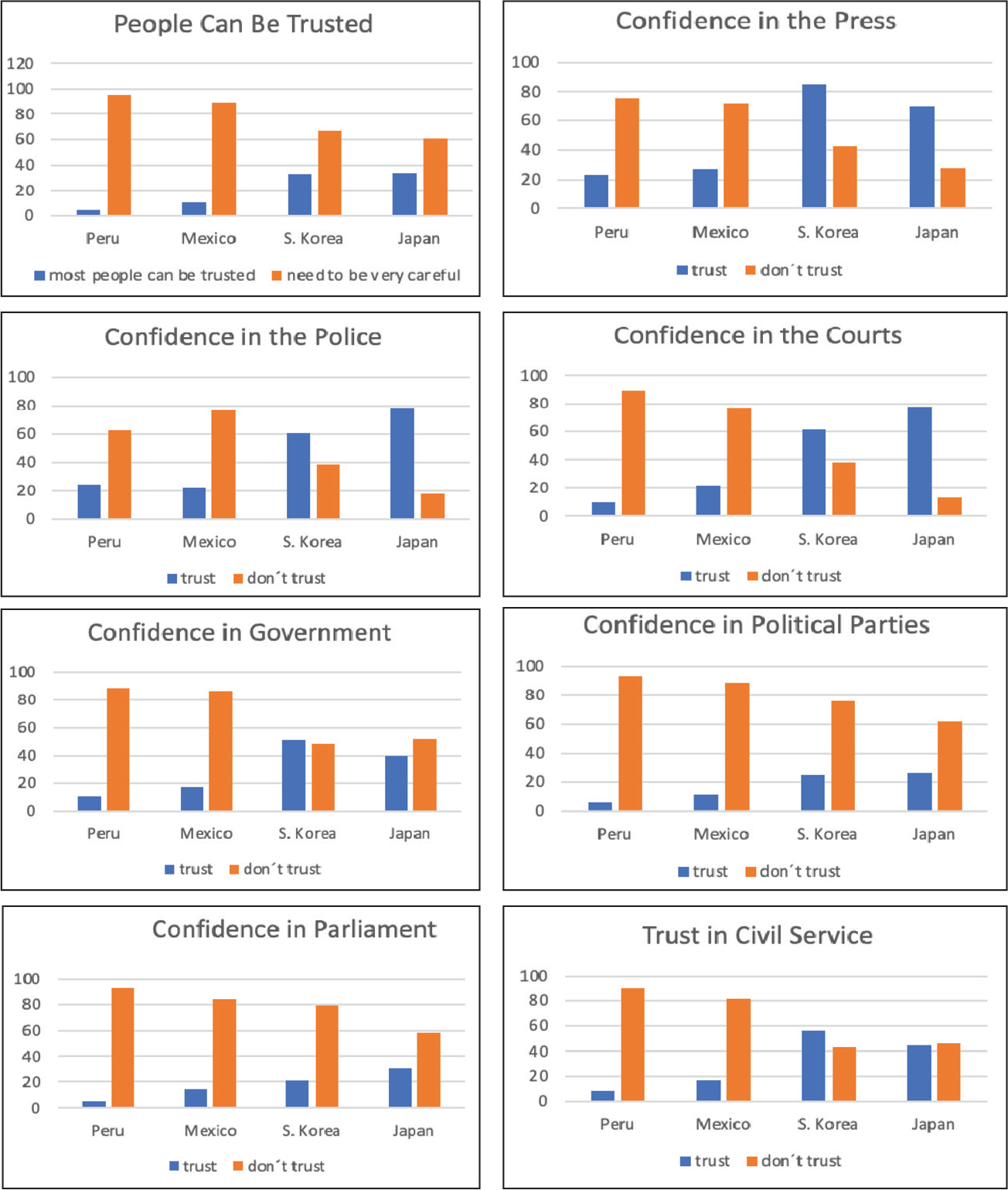
An Organization for Economic Co-operation and Development (OECD) (2018) report indicated that Koreans have high levels of trust in their institutions. This level has waned in recent years as Korea’s economic growth has slowed, similar to that of Japan, after several decades of sustained growth and prosperity. However, Koreans and Japanese still trust their institutions and other people in general.
Trust in a country’s formal institutions is important because it affects the economy and governance structure. North (1990) and Acemoglu and Robinson (2012, 2021) argue that well-functioning and reliable institutions are the key determinants of development. What drives the public’s trust in its institutions is the consistent enforcement of rules, the integrity of regulatory entities, and the efficient application of public policy. Thus good governance can generate higher levels of trust. Such countries would tend to be more inclusive and transparent.
Trust reduces transaction costs and improves economic performance (North, 1990), fostering resource allocation and collaboration. It also enhances market functioning and well-being (Fukuyama, 1995). In Latin America, lack of accountability weakens public trust in government institutions, leading to negative attitudes and low trust due to corruption (Berríos, 2010; Castañeda, 2011; Hira, 2016; Moreno, 2003; Seligson et al., 2009; Ugaz, 2020). Recent WVS data reveals low trust in political processes and institutions in Mexico and Peru. Widespread corruption and distrust erode public confidence, which has been well documented (Blake & Morris, 2009; Castañeda, 2011; Durand, 2007; Quiroz, 2009; Ugaz, 2020).
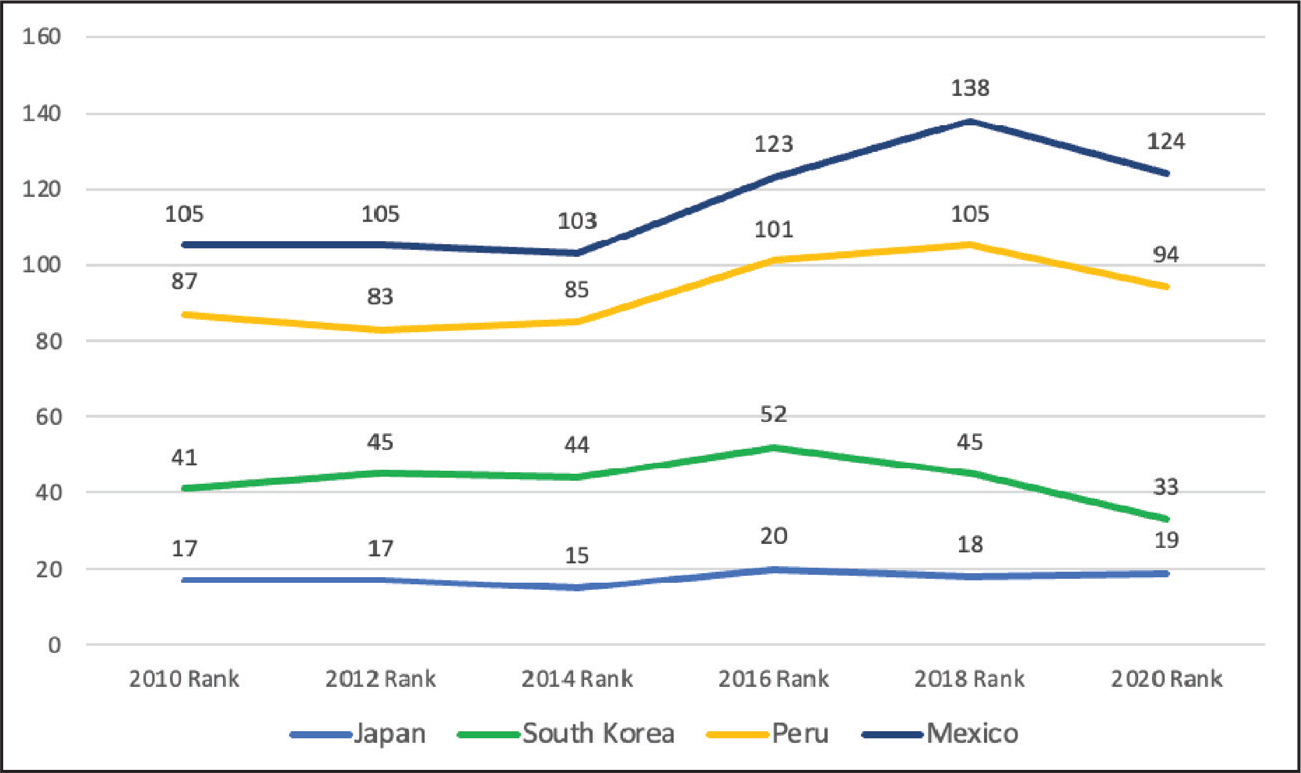
Corruption has been linked to weak institutions and changes in conduct; reforms to enhance good governance have not provided the desired results because they have not considered reforming the culture. As Hira (2016, p. 4) puts it, “for corruption to decline, culture must change.” The shift toward democracy, particularly since the 1990s, the liberalization of markets, and privatization have not reduced corruption. Efforts at reform have not changed behavior. In fact, there has been some backsliding, and Peru is a case in point. Some argue that indices of the perception of corruption might be susceptible to bias (Miller, 2006), but data from available measures of the perception of corruption show little change in rankings. Notably, Japan and Korea are ranked as countries with a low tolerance for corruption. It is also helpful to identify the governance levels for controlling corruption provided by the World Bank, where country rankings are consistent with the argument regarding the importance of trust.
Studies on the public’s perception of corruption underline the importance of trust. Data from Transparency International shows distinct differences between the two East Asian countries relative to Mexico and Peru, which are far lower in the world rankings of perceptions of corrupt practices. Figure 2 shows that the rankings of perceptions of corruption in Mexico and Peru are quite high relative to Japan and Korea.
Fukuyama (1995, 2000) stresses that trust in society predicts economic success. Glaeser et al. (2000) also note that trustworthiness increases efficiency and is meaningful for human relationships. Trust is an important element in business transactions. By contrast, mistrust can lead to more oversight and control, but enforcement is usually weak, even with more bureaucracy and increasing roadblocks. A simple transaction can often be slowed down because it requires graft or influence. Corruption can be a drag on economic development because distrust reduces investment, which slows economic growth (Berríos, 2010). This phenomenon can increase the level of inequality as it increases transaction costs.
Mexico and Peru are societies that have long been organized on the basis of personal relations, subject to exclusions and a lack of enforcement mechanisms. People depend on personal and community ties to request favors or assist others. Friendships, “connections,” and “contacts” become important in securing a position or advancing. These clientelist networks are either closed or generate social exclusion. In Mexico and Peru, one characteristic that has endured in political culture is nepotism, which is a way to obtain employment by recommendation, irrespective of the competency of the person. This practice is common in both countries (Castañeda Martinez, 2017; Durand, 2007; Rios-Figueroa, 2020). A person in charge assigns posts not based on merit but to further advantageous connections or expand power. In public administration, certain positions are provided as a way to return favors or seek favors from those in power.
Nureña (2023) uses the term “argolla” to describe the inner circle or informal network that operates based on preferential treatment, reflecting a culture of distrust. These connections form through personal relationships, friendships, family ties, or political affiliations, where favors are exchanged, loyalty is expected, and recruitment is based on recommendations. This informal network thrives on mutual support with the anticipation of future favors, similar to the concepts of “vara” and “enchufe” in Spain. Despite promises of change, new administrations often establish their own inner circles, perpetuating practices of favoritism and social exclusion. These practices, rooted in colonial times, foster mediocrity and enable the abuse of power.
Although discussions of corruption often focus on politicians, it manifests at all levels of society and in various forms. Political corruption has given rise to a culture of “anti-politics” because it is widely believed that higher levels of government and the inner circle of powerful top leadership are corrupt. People lack trust in the justice system because it is slow, inefficient, and corrupt. However, common distrust also manifests itself in common attitudes and behaviors, including disrespecting traffic rules, cutting cues, and disrespecting the law. Citing social psychologist Jorge Yamamoto, Valdivia Velez (2020) asserts that many Peruvians have a behavioral problem pertaining to not respecting rules, as was evident during the COVID pandemic. Disregard for cultural norms results in a lack of social discipline. Distrust in the rules often leads to petty corruption, such as trying to illicitly obtain something at a lower price (piracy, purchasing illegal goods, or contraband) or to get something done (bribery to get an inspection sticker). People might decry government corruption and complain about politicians, but at the same time they tolerate their own cheating as normal and acceptable. Most citizens are ambivalent about higher authorities and perceive them with distrust. This is what Klitgaard (2017) calls “corrupt cultures,” where people have the predisposition to behave in corrupt ways and tolerate it.
According to Moreno (2003), Latin America has shown itself to be more permissive of corrupt practices than East Asia. The author points out that in more stable democratic societies, there is less tolerance for corruption. In Mexico and Peru, perceptions of corruption are higher, as evident in Figure 2; this generates greater distrust, which impedes development efforts. Countries that stress economic success do not normally restrict access to opportunities and show higher levels of trust. In essence, there are cross-national differences in corruption permissiveness, suggesting cultural differences in the justification of corruption.
Evidence from the WVS, as well as that of Transparency International, shows that Japan and Korea demonstrate better governance and lower perceived levels of corruption. In these two cases, trust and corruption are negatively correlated. In addition, evidence from an OECD (2018) report indicates that institutions in East Asia have credibility and legitimacy; they still set national priorities and policy directions and promote collaboration. Overall, both Korea and Japan have credible governmental institutions. Both countries have a value-oriented culture with few cases of corruption. Public administration has a high degree of integrity. For the most part, the government is transparent, and government data are not manipulated.
However, in Mexico and Peru, several studies have stressed that graft is still a way to get things done, and there is some tolerance for the abuse of power (Blake & Morris, 2009; Castañeda, 2011; Morris, 2009; Quiroz, 2009; Ugaz, 2020). Cultural norms have a considerable influence on changing society because when people are less trusting of politicians and rules, tax avoidance is widespread, and there is a lack of social engagement. Davis (2004) argues that this is an important difference between Latin America and East Asia. Levitsky (2013) notes that Peru has a fragile democracy in which the executive branch, legislature, and judicial system are weak. He argues that any reform in an institutionally weak system does not have the intended potential impact. Castañeda (2011) examines the Mexican system and provides a similar argument. In essence, attempts at rooting corruption have failed thus far owing to a lack of change in culture.
Cultural Differences in Achievement and Hard Work
This section focuses on what Porter (2000) refers to as “cultural attributes that are deemed desirable, such as hard work, initiative, belief in the value of education” as well as other factors. Porter notes that prosperity has much to do with how people behave and the attitudes and values they demonstrate. The claim is that people’s behavior is also related to the country in which they live.
Weber’s (1905) The Protestant Ethic and the Spirit of Capitalism lays out his argument that there is a difference in attitudes toward work between Protestants and Catholics. In this early discussion of the role of culture, Weber argues that Protestant ethics place a higher value on work. Protestantism emerged in the countries of northern Europe that were considered cultures of achievement (McClelland, 1967), while in the Hispanic Iberian tradition, authors argued, Latin American Catholics had contempt for work. The Latin American elite had an abundance of servants who performed most of their manual work. In essence, Weber and others argued, Protestants have been more entrepreneurial, prosperous, disciplined, thrifty, and hardworking. While these oversimplified and stereotypical characterizations have not stood the test of time, the data indicate that there are different emphases on work in different cultures.
This is consistent with Basáñez (2016), who referred to East Asian countries, particularly Japan, as cultures of achievement. These cultures are heavily influenced by the philosophical beliefs advocated by Confucius, a system of ethical and social teachings that shapes values and behaviors. These cultural values are rooted in collective interests, strong families, righteousness, industriousness, and frugality. Although they bear some resemblance to Protestant values, Confucian ethical values are a philosophical belief system, not a religion (Tu, 1996). There is an emphasis on education, as Guo (2005) has pointed out. Both countries have created a skilled and educated labor force. Hard work is embraced because it is perceived as paying off and leading to a happy life. Workers often feel committed to the firm they work for and seldom move from one company to another to seek better pay.
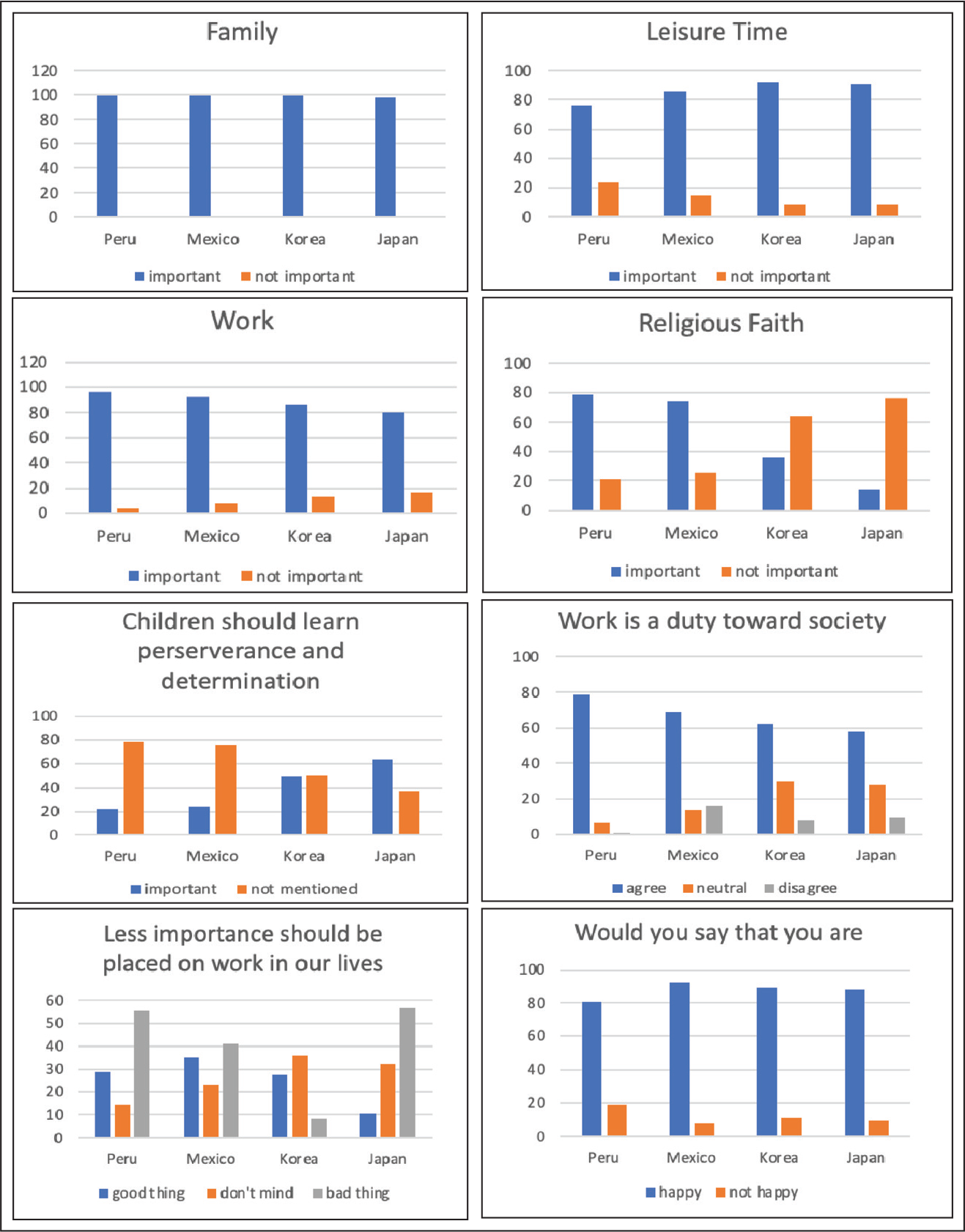
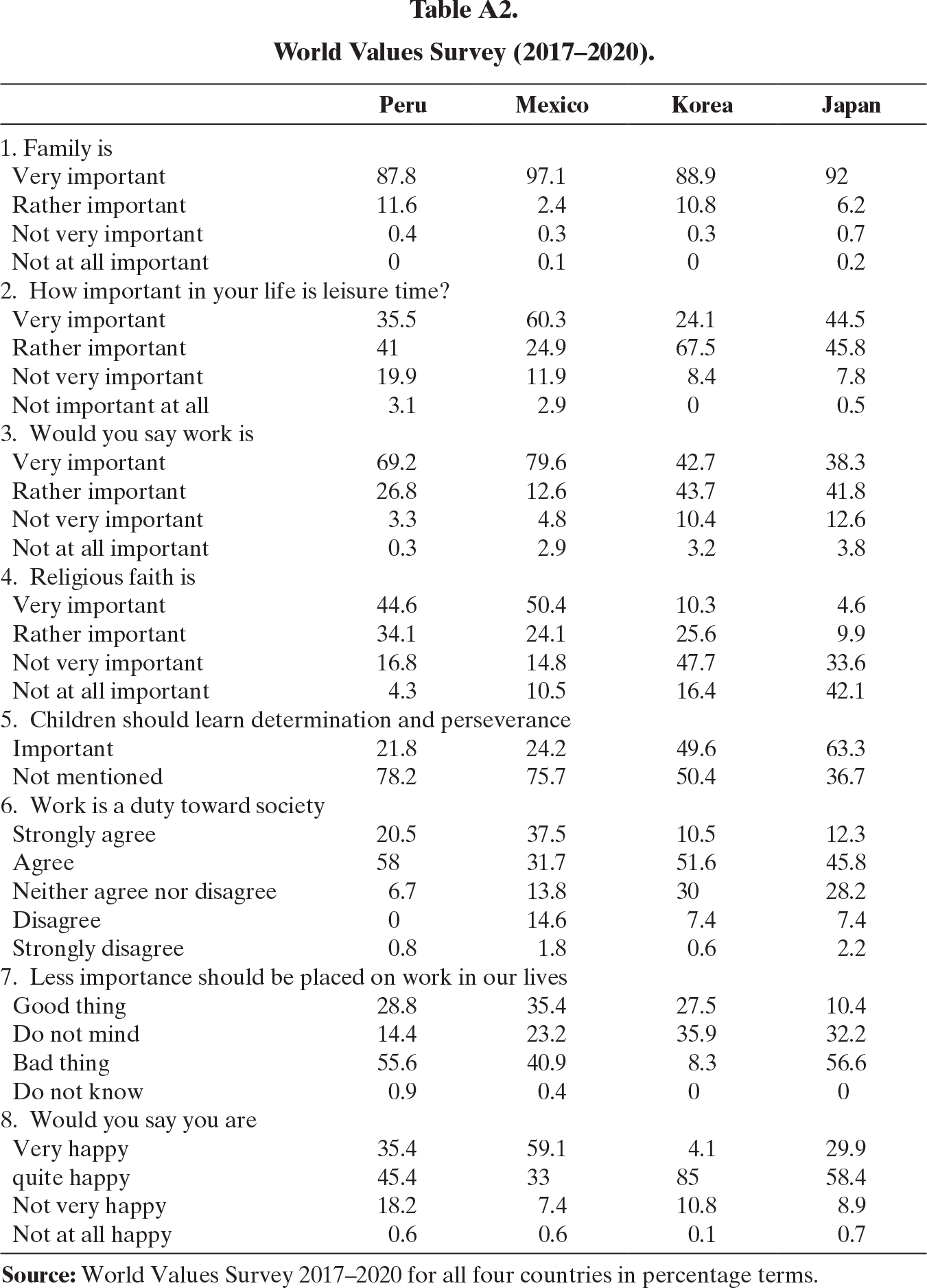
Figure 3 depicting Table A2 comprises eight questions from the WVS that elicit responses showing cultural values. The first question on the importance of family is a trait valued in all four countries. The question on leisure showed that this attribute is valued the most in Mexico and Peru. Religious faith, as the WVS responses show, is most important in Latin America but not so much in Korea and less so in Japan. Teaching children ‘determination and perseverance’ is particularly important in East Asia. Regarding the question of happiness, 92.1% of Mexicans claimed to be very happy or quite happy, while in Korea and Japan, it was 89.1% and 88.3%, respectively, and in Peru, only 80.8% claimed to be happy. Although on the question of the importance of work, the numbers are mixed, all other studies indicate that work is prioritized in East Asia. This does not minimize the importance of work in Latin America; it simply conveys the message that, for many in Latin America, there is more to life than just work.
Porter (2000) argues that overall prosperity, as displayed by Japan and Korea, represents a shift toward greater productivity, competitiveness, and efficiency in producing more and better. Their comparative advantage, irrespective of their lack of natural resources, starts locally. Their values, attitudes, and beliefs support and promote this degree of prosperity. By contrast, attitudes that do not prioritize productivity can lead to rent-seeking behavior, reliance on favors, or resorting to shortcuts.
According to Kunio (2006), Japan’s economic success can be explained in part by its culture geared toward hard work, strong investment in education, and high savings rates. For decades, Japanese workers have worked long hours. The burden has lessened in recent years, but the average worker does work longer hours than workers in other industrialized societies. Kunio (2006) argues that the Japanese work ethic is not just long hours but is also based on productivity (output per worker per hour). It is also emphasized that there is a better sense of team spirit, and workers develop a stronger sense of identification with the company for which they work. Similar arguments have been made in Korea by Chung (2007), Ekbladh (2004), Hira (2007), and Song (1997). Korea is a country where a 52-h workweek is the standard. The government has proposed capping three consecutive weeks at a 60-h workweek—at a time when some industrialized countries are considering a 35-h or four-day workweek.
Education is a priority in these two East Asian countries (Guo, 2005). Both countries have achieved unparalleled success and have a more educated middle class. In both countries, investment in education has been justified by a pragmatic approach and has become a source of national pride. The emphasis was placed on science and technology education and the emphasis was on the determination to advance economic growth. This pragmatic approach is consistent with Confucian practices of achievement and social harmony.
The Program for International Student Assessment (PISA), a standardized test, is one way to compare learning outcomes and how countries perform relative to others in education. Figure 4 shows student performance and learning outcomes from 2000 to 2018, suggesting that the two East Asian countries consistently performed quite well, while Mexico and Peru underperformed. The evaluations are based on reading ability and comprehension of math and science. Irrespective of its limitations, the results show that the quality of education, as reflected in exam scores, differed significantly between the two regions (van der Berg, 2018). Although the low PISA results for Mexico and Peru have generated much discussion in the two countries, attempts at educational reform have not yet produced the desired results. More importantly, pedagogy in East Asia is known to be more rigorous; teaching places more emphasis on group work, and children are in school for longer hours. In Japan and Korea, schools emphasize the importance of ethics and civic duties. From a young age, children are encouraged to have aspirations, and education is valued more by society. As data from the OECD and UNESCO show, East Asia has surpassed Latin America in terms of educational achievement (de Moura Castro & Verdisco, 2004).
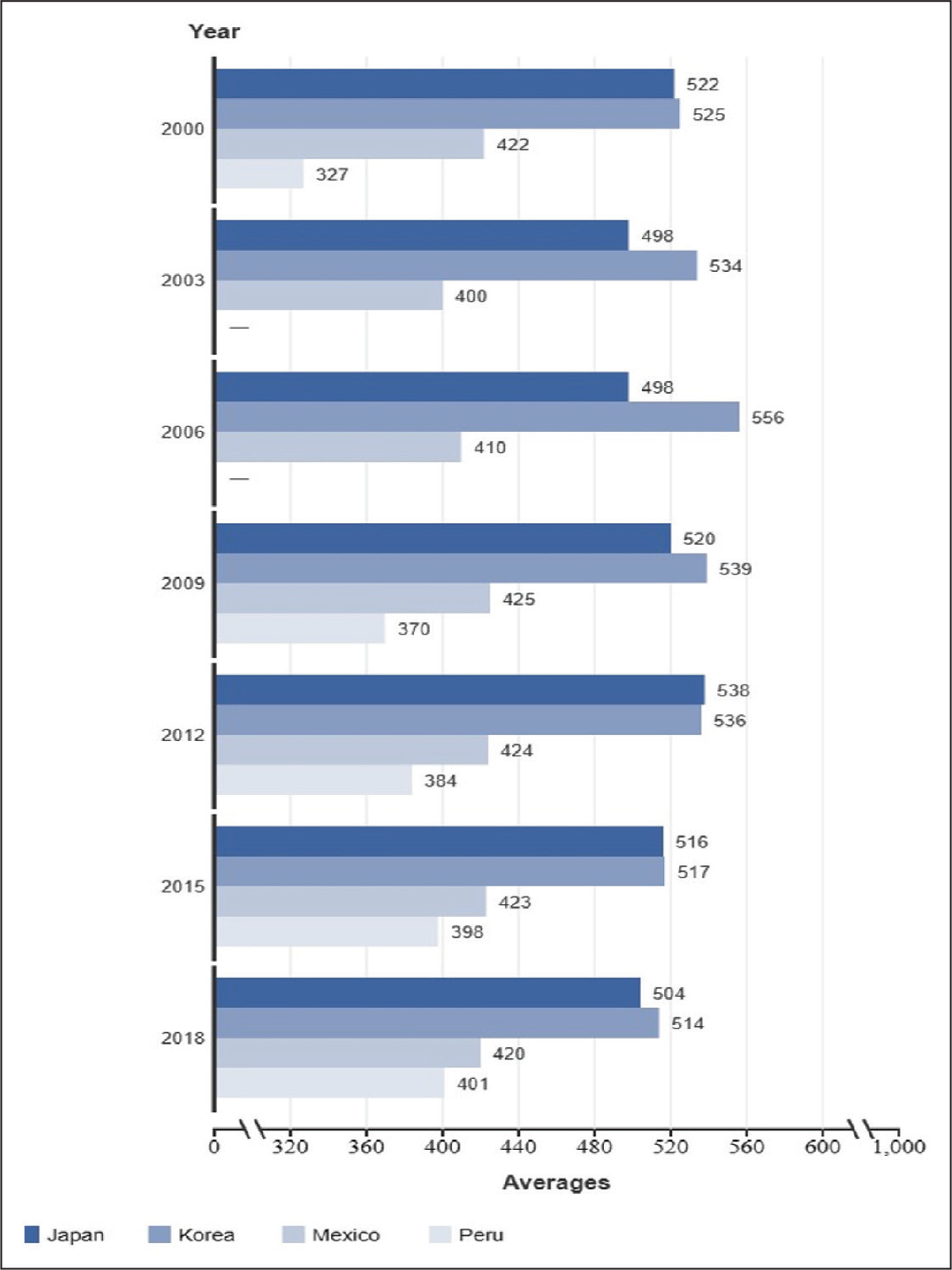
The Reading, Mathematics and Science scale ranges from 0 to 1000. Some apparent differences between estimates may not be statistically significant.
While there is no consensus on how collectivist or individualistic Japan is, there is abundant literature on the importance of groups in Japanese society (Hofstede, 2001; Libra, 1976). Businesses, families, and schools display strong solidarity with the group over an individual. Workers feel a strong commitment to the companies in which they work. They are expected to be loyal and devoted. Family is also a tightly knit social group. At the high school level, students strive to engage in a competitive process to secure a university position. The data show that both Japanese and Koreans have strong values for achievement and family. In both countries, education is highly valued, and children’s success in school is significant. On the WVS question that “children should learn determination and perseverance” is significant for Japan (63%) and also Korea (50%).
Other Cultural Factors
Disciplinary ethos and civil behavior refer to interaction, collaboration, and respect in dealing with others. For instance, punctuality is a cultural value that is considered more important in East Asia than in Latin America. In Japan, being late is seen as disrespectful of others’ time and may be considered insulting. In Latin America being late is not always a big deal.
Davis (2004, p. 11) focuses attention on a “disciplinary ethos which assumes a certain degree of austerity, self-regulation, and self-imposed personal restraint.” The author claims that “behaviors are often variably displayed, owing to personal idiosyncrasies … or general cultural and moral practices emergent in subgroups or society at large” (p. 12). She focuses on the middle class and highlights the significance of how self-discipline is embodied in individuals’ social norms and practices.
Civil behavior refers to order and cleanliness, which are displayed in public. There is strong respect for the rule of law in East Asia, and amid the chaos in highly dense urban centers, there is a certain degree of order and civility. People largely behave responsibly. This is often absent in Latin American cities, where more aggressive individuals can secure a spot, have access to, or prevail when it comes to purchasing something.
East Asia also has high expectations for quality and aesthetics. The expectation is that everything will function well most of the time. The expectation when providing a service is that it will work. This also extends to the workplace. In Japan and Korea, there is little tolerance for shoddy work. On average, the standards are of high quality. Labor is qualified, and those in management positions are experienced, qualified, and professionals. The Japanese and Korean cultures rely on consent, and their decisions are carefully assessed. Both countries produce high-quality products that are exported worldwide.
In Latin America, class differences are distinct and more pronounced. On the other hand, Japan and Korea have strong, broadly defined middle classes, which are considered protagonists of late industrialization. Davis (2004) argues that this is a somewhat accepted premise. The assumption is that the composition of a strong middle class is an indicator of development. In Mexico and Peru, the middle class consists mostly of white-collar workers, professionals, managers, technicians, and merchants. They tend to be concentrated in urban areas but are only a fraction of the population. Those who are considered new entrants to the middle class during times of prosperity are in a more precarious position because whenever there is a crisis, they are the first to disappear. In distinctly class-based societies, the marginalized are those who work mostly in the informal sector and also serve the upper-income groups.
Compared to East Asians, Latin Americans exhibit more relaxed, casual, and expressive behavior. One big difference between the two regions is that in Latin America, there are racial/ethnic disparities and inequities, with the Caucasian and Mestizo groups dominating the indigenous groups. In the case of Japan and Korea, this is not significant because both are largely homogenous. Although a class structure exists, there are no pronounced disparities or inequities based on ethnic or racial distinctions. Moreover, what is more concerning is that, owing to demographic and economic factors, cities in Latin America have grown beyond capacity. Part of the desborde popular or disorderly process of urban expansion has given way to a prevailing and growing culture of transgression, where norms and the law are violated and there is a lack of acceptable civil behavior. Durand (2007) notes that this has occurred because of the rapid growth of the informal economy, which generates self-employment but also has resulted in petty illegal activity (piracy, cheating, tax evasion, and petty crime).
Individualism and collectivism are opposing cultural values that refer to how people behave with one another. Individualism emphasizes independence and self-expression, whereas collectivism emphasizes sensitivity to others and group cohesion. Hofstede’s (2001) research inspired these type of cross-cultural studies using a comparative dimension that he termed individualism-collectivism. East Asian countries, such as Japan and Korea, tend to reflect more cooperative attitudes and are more attuned to following rules from higher authorities, with the belief that individuals in key decision-making positions are doing what is best for society as a whole. Individualism is highly valued in the West and Latin America. Hofstede (2001) and Henrich (2020) note that the most individualistic societies are the Western most advanced countries. Fatehi et al. (2020) argue that, compared with Westerners, East Asians are more cooperative in the sense that they view their needs and feelings as being more closely related to others and perceive themselves as an extension of their significant others. Studies point to the fact that collectivist cultures such as Japan tend to prioritize groups over individuals (Libra, 1976; Yamaguchi, 1994).
A collectivist attitude is one in which people are more willing to cooperate with the authorities. An example is the zero-COVID strategy that East Asian countries adopted to fight the pandemic. The approach involved severe lockdowns, and the outcome was, for the most part, successful. South Korea and Japan reported far fewer deaths than most Western countries. These countries also surpassed the United States in fully vaccinating their populations. Vaccines in South Korea and Japan have never been a polarizing issue. The overall consensus is the widespread belief in East Asia that vaccines and masks were the only ways to overcome the pandemic. In Peru and Mexico, which had early shutdowns, the overall outcome was disastrous, particularly for the former, because many people did not heed warnings from the authorities. Again, this is partly because both countries have a large informal sector, and vendors and other laborers must be out on the streets to earn a meager day’s pay. But it also speaks to the distrust in government by many citizens.
Richey (2022) and others also argue that people in Confucius East Asia are often described as collectivist inspired while in Latin America behaviors are more self-focused. In the case of Mexico, this was noted by a typology used by the Alduncin Abita (1993, 2004) survey of Banamex. The findings show that Mexicans since the first survey was conducted in 1981 until 2016 have become more individualistic and less supportive of the community at large or show less solidarity with others. In Peru, an Ipsos—El Comercio survey (2017) reveals that values that are less practiced are honesty, discipline, and respect for others. It is important to note that these two surveys reveal that Latin Americans are also less trustful of others aside from family and friends.
Growth strategies typically have long-term horizons. East Asia is an example of sustained long-term growth using key ingredients such as structural transformation, mobility, and political stability. A long-term orientation emphasizes persistence and perseverance. Unlike East Asia, Latin America does not have a clearly defined vision of long-term growth and development. Economic planning institutes that existed in the 1960s and 1970s were dismantled as neoliberalism became the dominant economic trend. For decades, Latin America has lacked political continuity and posted sluggish growth, policy coordination, and planning. Long-term orientation focuses on the future, while short-term orientation relies on immediate gratification. Transformative developmental changes may take several years to occur. This refers to a structured planning process that requires a long-term vision and objectives, a process that commits to societal and technological change; however, Latin America has so far displayed a lack of long-term vision, while East Asia has laid the groundwork for a stable and viable environment. Under such circumstances, both Asian countries have reached a general consensus on a clearer vision and have essentially leapfrogged and moved their countries to join the major leagues of industrialized nations.
Concluding Remarks
This study delves into the intricate relationship between culture and economic development, focusing specifically on two cultural dimensions: trust and achievement (hard work). The objective is to discern and differentiate sociocultural factors influencing the development process by comparing countries from distinct regions. Japan and Korea emerge as displaying stronger achievement motivation, higher levels of trust, and more robust institutional development compared with Peru and Mexico.
The evidence presented here underscores the significance of trust as a profound cultural trait within society. When trust is lacking, as in Mexico and Peru, it can have far-reaching consequences, causing individuals to hesitate in making investments, reject vaccinations, engage in tax evasion, or succumb to corrupt practices. In contrast, Japan and Korea, driven by their cultural values of trust and a relentless pursuit of achievement, have fostered institutions that generate trust and create an environment conducive to economic growth and development.
It is important to acknowledge the challenges inherent in defining and measuring cultural aspects. Nevertheless, with the advent of behavioral economics and innovative survey approaches, there is immense potential to explore how culture influences economic behavior by capturing attitudes, biases, and assumptions. Surveys such as the World Values Survey facilitate meaningful cross-country comparisons. Further research can unlock a deeper understanding of the complex role of culture in development.
In conclusion, this study recognizes culture as a formidable force driving human behavior. By delving into the realms of culture, economists can enrich their explanations and analyses, ultimately fostering a more comprehensive understanding of economic development. The model is simple but revealing in that it touches on some fundamental aspects that continue to impede development.
Footnotes
Acknowledgements
The author is grateful to Saskia Bolger and Milenka Moschella for their technical assistance with the graphs and tables and to Lillian B. Thomas for her editorial assistance.
Declaration of Conflicting Interests
The author declares no potential conflict of interest with respect to the research, authorship, and/or publication of this article.
Funding
Partial funding for this research was from a small grant awarded by the Commonwealth University of Pennsylvania.
Appendix
World Values Survey (2017–2020).
| Peru | Mexico | Korea | Japan | |
| 1. Family is | ||||
| Very important | 87.8 | 97.1 | 88.9 | 92 |
| Rather important | 11.6 | 2.4 | 10.8 | 6.2 |
| Not very important | 0.4 | 0.3 | 0.3 | 0.7 |
| Not at all important | 0 | 0.1 | 0 | 0.2 |
| 2. How important in your life is leisure time? | ||||
| Very important | 35.5 | 60.3 | 24.1 | 44.5 |
| Rather important | 41 | 24.9 | 67.5 | 45.8 |
| Not very important | 19.9 | 11.9 | 8.4 | 7.8 |
| Not important at all | 3.1 | 2.9 | 0 | 0.5 |
| 3. Would you say work is | ||||
| Very important | 69.2 | 79.6 | 42.7 | 38.3 |
| Rather important | 26.8 | 12.6 | 43.7 | 41.8 |
| Not very important | 3.3 | 4.8 | 10.4 | 12.6 |
| Not at all important | 0.3 | 2.9 | 3.2 | 3.8 |
| 4. Religious faith is | ||||
| Very important | 44.6 | 50.4 | 10.3 | 4.6 |
| Rather important | 34.1 | 24.1 | 25.6 | 9.9 |
| Not very important | 16.8 | 14.8 | 47.7 | 33.6 |
| Not at all important | 4.3 | 10.5 | 16.4 | 42.1 |
| 5. Children should learn determination and perseverance | ||||
| Important | 21.8 | 24.2 | 49.6 | 63.3 |
| Not mentioned | 78.2 | 75.7 | 50.4 | 36.7 |
| 6. Work is a duty toward society | ||||
| Strongly agree | 20.5 | 37.5 | 10.5 | 12.3 |
| Agree | 58 | 31.7 | 51.6 | 45.8 |
| Neither agree nor disagree | 6.7 | 13.8 | 30 | 28.2 |
| Disagree | 0 | 14.6 | 7.4 | 7.4 |
| Strongly disagree | 0.8 | 1.8 | 0.6 | 2.2 |
| 7. Less importance should be placed on work in our lives | ||||
| Good thing | 28.8 | 35.4 | 27.5 | 10.4 |
| Do not mind | 14.4 | 23.2 | 35.9 | 32.2 |
| Bad thing | 55.6 | 40.9 | 8.3 | 56.6 |
| Do not know | 0.9 | 0.4 | 0 | 0 |
| 8. Would you say you are | ||||
| Very happy | 35.4 | 59.1 | 4.1 | 29.9 |
| quite happy | 45.4 | 33 | 85 | 58.4 |
| Not very happy | 18.2 | 7.4 | 10.8 | 8.9 |
| Not at all happy | 0.6 | 0.6 | 0.1 | 0.7 |