







Abstract
In 2013, Ethiopia unveiled a plan to expand its capital, Addis Ababa, by appropriating over 1 million hectares of rural land—almost seven times bigger than South Africa’s metropolitan city of Johannesburg—from the surrounding Oromiya region. The plan, commonly known as the Addis Ababa Master Plan, was the then-ruling Tigray People’s Liberation Front-dominated Ethiopian People’s Revolutionary Democratic Front (TPLF/EPRDF) regime’s signature developmental state project and aimed at doubling down Ethiopia’s aspiration for structural transformation by establishing new urban and industrial centers. Nevertheless, farmers initially and subsequently students, youth networks, civil servants and other social groups from the surrounding Oromiya region resisted the plan because they believed it was the ruling elite’s strategy of land annexation. This article broadly assesses the interplay between the politics of land and development in post-1991 Ethiopia. Specifically, it explores how the protests against the planned expansion of Addis Ababa fed into fragmentation within the ruling elite and aggravated the structural tension within Ethiopia’s ethno-federal system and ultimately led to the collapse of the TPLF/EPRDF (1991–2019) regime—which was one of Africa’s strongest authoritarian regimes in the post-Cold War era. Ethiopia’s experience demonstrates the circumstances and implications of the perennial topic of “the land question” in contesting despotism and authoritarian political control by underscoring the significance of the interplay between national institutional factors, subnational identity politics and the contingency of intra-ruling elite dynamism.
Keywords
Introduction
Located in the geopolitically strategic but also turbulent region of the Horn of Africa, Ethiopia has significant political, diplomatic, and sociodemographic positions in Africa. Ethiopia hosts the headquarters of the African Union, United Nations Economic Commission for Africa, and over 100 embassies and diplomatic missions—the reason why the capital city, Addis Ababa, is often labeled the “diplomatic capital of Africa” (ENA, 2024). Ethiopia is the second most populous country in Africa after Nigeria. According to the United Nations Population Fund (UNFPA, 2025), Ethiopia currently has 135.5 million people. Like most African countries, Ethiopia is also a multiethnic country—endowed with over 86 distinct ethnic groups. The last national census shows the ethnic composition of Ethiopia’s population as Oromo (34.4%), Amhara (27%), Somali (6.2%), Tigre (6.1%), Sidama (4%), Gurage (2.5%), Wolayita (2.3%), Afar (1.7), Hadiya (1.7%), and several other ethnicities share the rest (CSA, 2007, pp. 90–92). Although there is no single ethnic group that constitutes a majority in Ethiopia, the Oromo and Amhara ethnic groups together account for some 62% of the country’s population.
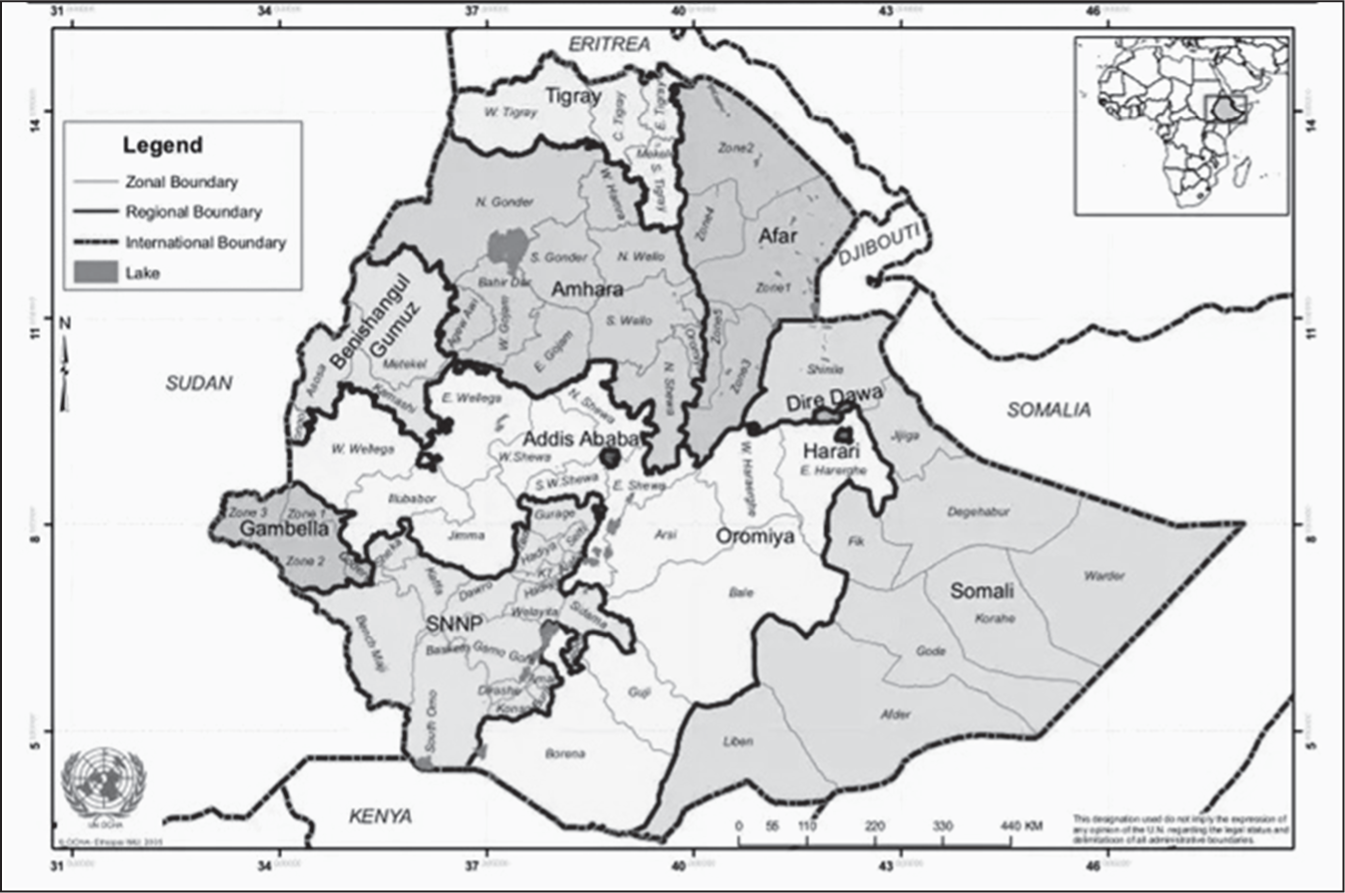
The present Ethiopian constitution, which was promulgated in 1995, in the spirit of the collective aspiration the country’s diverse ethnic groups, articulates Ethiopia’s vision of “building a political community [አንድ የፖለቲካ ማኅበረሰብ in the Amharic version], founded on the rule of law and capable of ensuring a lasting peace, guaranteeing a democratic order, and advancing economic and social development” (FDRE, 1995, p. 13). In so doing, although apparently paradoxical, the constitution sanctioned Ethiopia as a federal polity—in a manner that allows the country’s ethnic groups “unconditional right to self-determination, including the right to secession” (FDRE, 1995, p. 1). Ethiopia’s federal system has nine constituent national regional states of Tigray, Afar, Amhara, Oromiya, Somali, Benishagul-Gumuz, Southern Nations, Nationalities and Peoples (SNNP), Gambella, and Harari, and two chartered city administrations, Addis Ababa and Dire Dawa (see Figure 1). Nevertheless, the recent breaking-up and partitioning of the SNNP region into new national regional states of Sidama, Central Ethiopia, South West Ethiopia Peoples Region, and South Ethiopia Regional States de facto brings the number to 12—although this new rearrangement still awaits constitutional endorsement or amendment.
The constitution (Article 43) also stipulates the right to development of Ethiopians by underscoring that “each nation, nationality and people has the right to improved living standards and to sustainable development”, “to participate in national development,” and “to be consulted with respect to policies and projects affecting their community” (FDRE, 1995, p. 16). To this end, the TPLF/EPRDF regime zealously developed a wide range of national growth and transformation strategies, which collectively targeted party/state-centered expansion of mega energy and transport infrastructure projects, promotion of large-scale agricultural investments, and the construction of dozens of industrial parks (EIC, 2017b). TPLF/EPRDF officials have been arguing for long that Ethiopia’s approach to federalism, substantiated by party/state-centered development strategies, has laid a solid institutional and material foundations for accommodating ethnic diversity and fostering democracy, development, and peace in Ethiopia’s body politic (EPRDF, 2016).
Nevertheless, except for the gains in areas of mega infrastructure expansion and numerical economic growth (World Bank, 2016), the empirical reality of Ethiopia during the TPLF/EPRDF regime (1991–2018) was not as rosy as envisioned by the regime’s protagonists. Authoritarianism, gross violations of human rights, corruption, and economic hardships characterized Ethiopia’s sociopolitical landscape—to the extent of igniting intense academic debates among scholars. While some scholars anathematized the paradoxes of authoritarian politics in an ethnically diverse Ethiopia (Lyons, 2019; Vaughan, 2015); others boldly questioned the utility of Ethiopia’s identity-based federal arrangement given the growing sense of ethnic identity and intolerance of other ethnic groups (Ishiyama, 2021, 2023) and that the system constitutionally divides the Ethiopian “population into a permanent majority alongside permanent minorities” (Mamdani, 2019).
The Journal Developing Societies published a special issue under the title Ethiopia: Beyond Ethnic Federalism and the Statehood Solution in December 2022. The issue—consisted of a preface, an editorial essay, and three research articles—unapologetically assertted the danger of the existing constitutional system and its ethnic-based federal formula, for this has transformed Ethiopia from an integrated nation-state to “a loose collection of semi-autonomous warring ethnic regions” (Zegeye & Ganta, 2022, p. 391). While acknowledging the merit of such observations in advancing our knowledge on the legal, ideological, and empirical contentions underlying Ethiopia’s ethnic-based federal system, this article attempts to further the discussion by exploring the complexities of territorial politics and development policy-making in a multiethnic context. The article particularly demonstrates how the tension between Ethiopia’s land policy and TPLF/EPRDF developmental state project (otherwise known as party/state-led development) detonated into a wave of mass protests and led to the subsequent collapse of the TPLF/EPRDF 1 regime itself in 2018.
The Problem and Its Approach
Land is critical for livelihood, power, and identity construction—an intersection that has recently gained significant academic and policy traction, particularly because of the global phenomenon of governments’ appropriation of large-scale land in the name of promoting national development (Borras et al., 2022; Wolford et al., 2024). The phenomenon commonly referred to in the literature as large-scale land deals or appropriation (LSLD/A) goes beyond appropriation of land and in essence signifies “political processes about actual or potential change in social relations around access to land and natural resources”—with the propensity for power and institutional reconfiguration in society (Borras et al., 2022, p. 2). Consequently, the phenomenon has drawn both supporters and critics. Proponents argue that large-scale land appropriation constitutes a “development opportunity” (Robertson & Pinstrup-Andersen, 2010) to bring previously “underutilized,” unutilized, or “idle” land to production (World Bank, 2009), and enhances agricultural modernization in developing countries (Alhassan et al., 2018; Santiago, 2019) and/or brings land from lower-value rural and agricultural use to higher-value urban and industrial use (Whiting, 2022).
Critics, however, denounce these narratives and rather depict the process as an opportunity for “land grabs”—capital-driven and extractive-oriented “capturing of control of relatively vast tracts of land and other natural resources” (Borras et al., 2012, p. 851; Neef et al., 2023). They concur that most land deal initiatives are top-down and militaristic in approach (Hall, 2013; Schetter & Müller-Kone, 2021), with detrimental impacts on communities (Dell’angelo et al., 2017). Concurrently with critics, studies have reported reactions of affected communities, including organized protest (Dietz & Engels, 2020), solidarity movements (Dell’Angelo et al., 2021; Gagné, 2019), “everyday resistance” (Moreda, 2015; Suhardimana et al., 2015), and court litigations (Grajales, 2015).
Nevertheless, the literature appears flimsy regarding whether the reactions against land deal initiatives bore meaningful outcomes and the conditions and implications thereof, perhaps with the exception of recent works on so-called failed land deals (Borras et al., 2022; Chung & Gagné, 2021). This article seeks to contribute to these latter stands of the literature. While making a broader appraisal of state power and land policy symbiosis in Ethiopia, the specific focus is on the TPLF/EPRDF regime, where land became the nuts and bolts of the so-called developmental state project. An important aspect of the project was the state’s expropriation of large-scale land tracts (estimated to be around 3,677,820 hectares as accumulated in the federal land bank; (Soboka, 2022, p. 163)—for agricultural commercialization and industrial development (EIC, 2017a). Concurrently, land has also become a leading promotional incentive to attract investors—who would earn, along with a 10–15 year tax exemption, “up to 80 years land lease right at promotional rate, with sub-lease rights” (EIC, 2017b, p. 8). This was despite the country’s law stipulating that industrial and commercial land should be acquired through competitive (auction) prices—to ensure the government generates the necessary revenue to cover the “costs of public infrastructure development, site demolition, compensation to be paid to displaced persons and other relevant factors” (FDRE, 2011, p. 6222).
The regime often justified these aggressive actions and the compromises thereof by drawing parlance from the “miracles of authoritarianism” and state-centered development interventions (otherwise known as the developmental state) in China and other Asian countries. The 2013 unveiling of the so-called Addis Ababa Master Plan was part of this ideological love affair and signified the government’s signature initiative for the realization of the developmental state project. The plan, which targeted the appropriation of over 1 million hectares of land from the surrounding Oromiya districts, aimed at doubling down on Ethiopia’s aspiration for structural transformation by establishing new urban residential, service, commercial, and special industrial centers (AACA, 2013). Nevertheless, the local farming community in the Addis Ababa’s surrounding west, southwest, east, and north Showa provinces of Oromiya region (see Figure 1) resisted the plan because they believed it was a plan of land annexation. As the government flexed its authoritarian measures to suppress the dissent, protesters also shifted their focus of resistance from the master plan to against the regime itself—as captured by the famous motto: “down, down Woyane”—a local slang for TPLF.
The situation escalated into waves of protests across the Oromiya region. For instance, Armed Conflict Location and Event Data (ACLED) 2 recorded “an average of 23 protests per week”—each attracting hundreds and thousands, in some cases millions or protesters from November 2015 to February 2016 (ACLED, 2016, p. 2). The situation in Oromiya also had a domino effect and triggered a momentum for similar protests related to land and other territorial questions in the Amhara region. These two protests subsequently brought the nearly 30 years of TPLF/EPRDF’s authoritarian regime—a regime that has been one of “Africa’s strongest authoritarian regimes” of the post-Cold War era to collapse in April 2018 (Lyons, 2016).
The collapse of TPLF/EPRDF also brought an end to Ethiopia’s development state project—that was once acclaimed as “the alternative model of African development” (Clapham & Mills, 2015) and a “successful model on how to fight global poverty” (Soho Forum, 2018), although studies have characterized the development state project and its various policies as strategy of “oligarchy formation” (Gebregziabher, 2019; Gebregziabher & Hout, 2018), “power projection and political control” by the ruling elite (Gebresenbet, 2016; Lavers, 2012; Moreda, 2017), and widespread “rights restrictions” (Arriola & Lyons, 2016). This article demonstrates how the protest against the planned expansion of Addis Ababa ultimately led to the collapse of the TPLF /EPRDF regime by underscoring the interplay among institutional and contingent factors: intra-ruling elite dynamism, and subnational identities.
The data for this article are drawn from both primary and secondary sources, including the author’s two rounds of field work in Ethiopia for a monographic PhD dissertation (Yirgalem, 2021) and an additional update as part of the Land Deals Politics Initiative small research grant project (PLAAS, 2023) in October/November 2023 in Addis Ababa. The rest of the article is organized into four sections. The second section offers a framed appraisal of state power, land politics, and policy in Ethiopia and captures the TPLF/EPRDF shift from so-called Agriculture Development-led Industrialization (ADLI) strategy—that targeted the development of smallholder agriculture as a driver of industrialization—to the developmental state project—where the focus was on the development of large-scale commercial agriculture. The third section focuses on the core part of the article, the Addis Ababa Master Plan—the planned large-scale expansion of Addis Ababa city into the surrounding Oromo region’s territorial jurisdiction—and the mass protests that followed. The final section provides concluding remarks.
State Power, the Politics of Land, and Development in Ethiopia
In Ethiopia, land was and still remains to be at the heart of both controlling state power and the struggle against it (Crewett et al., 2008; Soboka, 2022). Given the country’s flimsy industrial and technological material basis, the state’s ability to rule has always been directly linked to the possession of land and the extraction/distribution of land-related values. Successive political regimes pursued different policy arrangements to have control over land, extract and distribute land-related values (Rahmeto, 2009; Tibebu, 1995). For instance, during the imperial era (1930–1974), the so-called gult system, practiced mostly in the newly incorporated 3 provinces in the south, entitled governors and administrators the right to collect taxes and tributes in lieu of salaries. The gult-holders had no ownership right. However, tributaries’ (in Amharic the gabbars) failure to pay obligatory taxes over time concentrated land in the ruling elite, with peasants facing either eviction or tenancy—a fundamental factor for the outbreak of the 1974 “Land to the Tiller” revolution. In many ways, this was the most consequential revolution in the history of modern Ethiopia. First, the revolution brought an end to Ethiopia’s over 3,000 years old monarchical system following the catastrophic overthrow of emperor Haile-Selassie by the socialist–military regime of Mengistu Haile-Mariam (1975–1991).
Second, the revolution led to the birth of two ideological political camps in Ethiopia: pan-Ethiopianism and ethno-nationalism. For the first group, Ethiopia’s predicament in general and the land question in particular was due to feudalist class exploitation. They saw collective struggle against feudalism as the only way out. For the ethno-nationalist (which overtime morphed into Marxist–Leninist insurgency including TPLF), however, the source of Ethiopia’s problem squarely rests on ethnic exploitation and oppression where land was an important instrument. This ideological division was so potent—and was an important element in Ethiopia’s bloody civil war of 1975–1991 between the socialist–military government and ethno-nationalist insurgents. The insurgents (TPLF/EPRDF) ultimately won the war and the ideological battle thereof. They subsequently introduced their vision of land policy. First, land became an important pillar of Ethiopia’s post-Cold War political settlement—ethnic identity oriented federal system. Corollary to this was the constitutional declaration of land as “the common property of the nations, nationalities and peoples of Ethiopia” (FDRE, 1995). Article 89 (5) gave the state the power to “hold, on behalf of the People, land and other natural resources and to deploy them for their common benefit and development.” Article 52(2b) decentralized land administration bestowing the regional states with the power “to administer land and other natural resources in accordance with Federal laws.” Under this constitutional arrangement, individuals have access to usufruct rights over land through government certification and lease payment, but cannot privately own or sell the land or use it for mortgage 4 purposes (Article 40(3)). The regime argued the approach, among others “empowers” the country’s over 86 ethnic groups to utilize the resources for development (Abbink, 2011) and ensure tenure security and protect people against identity oriented expropriation and evictions (Crewett et al., 2008, p. 1).
Second, land became the nuts and bolts of TPLF/EPRDF’s party/state-centered development approach—both during its ADLI phase (1993–2005) and particularly during the so-called developmental state phase (2005–2028; EPRDF, 2014). ADLI favored smallholder agriculture and saw it as a necessary condition for industrial transformation. But the shift to developmental state was justified along the narrative of the “urgency of Ethiopia’s renaissance” (EPRDF, 2014) by emulating the miracle of authoritarian development in east Asia (EPRDF, 2009). Ironically, however, the regime’s focus was on large-scale commercial agriculture, urban and industrial development, and investment in mega infrastructural projects, as enshrined in the country’s two successive long-term national development plans: the Growth and Transformation Plans (GTP I and II)—covering the period between 2010 and 2020 (MOFED, 2010; NPC, 2016). The plans urged Ethiopia to double down on its “fight against poverty” and capitalize on its rapid urbanization to attain national socioeconomic development and industrial transformation (MOFED, 2010, pp. 21–22). The planned large-scale expansion of Addis Ababa was therefore part of this broader ideological contour of the regime. It is also important to note the parallel political context of the planned large-scale expansion of Addis Ababa—a city where during the 2005 general election, the oppositions nearly defeated TPLF/EPRDF. Premised upon the need for a consolidated grip on power, the development project in general and the planned expansion of Addis Ababa in particular went in tandem with the regime’s enacting restrictive laws, including the controversial anti-terrorism proclamation and the charities and societies laws of 2009 (Arriola & Lyons, 2016).
The Addis Ababa Master Plan and the Oromo Protests
Ethiopia is one of the least-urbanized countries in the world as only 21% of the country’s population is urban (UN-Habitat, 2023, p. 2). However, the rate of Ethiopia’s urban population growth is around 5.4% per year (UN-Habitat, 2023) and with a high conversion rate of agricultural and peri-urban land to urban built-up area—as epitomized the capital Addis Ababa (Teklemariam & Cochrane, 2021, p. 2). Addis Ababa was established toward the end of the nineteenth century but evolved from “a small rural settlement up to the 1950s and into a vibrant modern metropolis today” (UN-Habitat, 2017, p. 6). Much of the transformation accelerated in the post-1991 era as the city gained demographic and economic prominence. The city’s population was 450,000 in 1960 and 1.4 million in 1984. The figure increased to 3.3 million in 2010 and currently stands at 4.5 million, making it Ethiopia’s primate city (Azagew & Worku, 2020; UN-Habitat, 2017, p. 11).
Addis Ababa is also the world’s fastest growing city (registering 12.4% annual average economic growth rate between 2008 and 2012) and dominates the urban side of Ethiopia’s economy (World Bank, 2018, p. 6). It is the country’s main industrial hub—accounting a third of Ethiopia’s manufacturing GDP, hosting 40% of financial and business services (34%), and contributing to 68% of Ethiopia’s urban jobs (UN-Habitat, 2017, p. 17; World Bank, 2018). According to a business directory from the Federal Ministry of Trade and Industry, out of Ethiopia’s total 1,732 registered large- and medium-scale manufacturing industries, 751 (43%) are based or have their main offices in Addis Ababa (MoI, 2019). Addis Ababa’s economic prominence becomes even more meaningful if we look at the wider functional economic region and include the surrounding smaller cities and towns in north, east, west, and southwest districts of Oromiya. Accordingly, as investment directory from the Federal Ministry of Trade and Industry reveals, 50% of large- and medium-scale manufacturing industries in Ethiopia are based in the Addis Ababa-surrounding Oromiya district corridor. A similar directory from Ethiopian Investment Commission (EIC) reveals Addis Ababa and its surrounding districts of Oromiya serve as important destinations of foreign direct investment (FDI)—respectively, attracting 52% and 31% of the total 5,474 licensed FDI projects between 1992 and July 2019 (MoI, 2019).
The Oromo Protest 1.0 (2010–2014)
Addis Ababa’s demographic and economic prominence has been in tandem with both large-scale urban redevelopment projects within the city (Yirgalem, 2018) and especially massive horizontal expansion of the city into surrounding Oromiya region’s administrative boundaries. While the city occupies a total area of 526.99 km 2 (Azagew & Worku, 2020, p. 3), for instance, its built environment (actual functional urban land use) increased from 134 to 200 km 2 (or at a speed of 4.5 km 2 annually) between 1999 and 2014 (UN-Habitat, 2017, p. 73). The city’s horizontal expansion came with several important ramifications including politico-administrative contentions between the Ethiopian federal government/Addis Ababa city administration and the Oromiya national regional state. As a matter of geographic fact, the Oromiya region completely encircles Addis Ababa. Under Ethiopia’s federal arrangement, Addis Ababa is the capital of the federal state. The city, despite having “full measure of self-government,” is however accountable to the federal government (FDRE Constitution (Art 49(3)).
The arrangement is quite different from the experiences of federal countries such as Germany or Belgium—where Berlin and Brussels are both the capital and equal members of the German and Belgian federations, respectively. Addis Ababa is not among the equal units of the Ethiopian federation, nor the constitution specifies or delimits the territorial jurisdiction of the city’s administration as in the same manner the Washington D.C. in the United States or New Delhi in India. The constitution stipulates, however, the so-called Oromiya’s special interest in Addis Ababa. The constitution states,
the special interest of the State of Oromiya in Addis Ababa, regarding the provision of social services or the utilization of natural resources and other similar matters, as well as joint administrative matters arising from the location of Addis Ababa within the State of Oromia, shall be respected. Particulars shall be determined by law. (FDRE Constitution Art 49(5))
Nevertheless, there has never been a follow-up legal enactment to determine these particulars—except the ruling TPLF/EPRDF ad hoc decision to move the seats of the Oromiya region’s presidency between Adama and Addis Ababa.
In the absence of legal structures to govern Addis–Oromiya relations and the lack of territorial–jurisdictional clarity, Oromiya regional officials and politicians have long perceived the city’s physical expansion as the “annexation of Oromo land” while undermining the region’s constitutional authority. Besides, there have been resentments regarding the displacement and gentrification of Oromiya farming communities. Although exact figures are difficult to retrieve, some sources, including a former government official, documented the displacement of over 150,000 Oromo farming households in 29 rural Kebele districts (Ethiopia’s lowest administrative unit) surrounding Addis Ababa (ESAT, 2014; Legesse, 2014). According to the same source, the displacement was without fair compensation and mediated by the state’s power of expropriation (as per Proclamation No. 80/1993 and Proclamation No. 455/2005), informal land transactions involving networks of politicians, speculators, and business firms like real estate developers (ESAT, 2014; Legesse, 2014).
In what appears to be a strategy to overcome the situation, the Oromiya regional state under the presidency of Abadulla Gemeda (2006–2010) adopted three seemingly strategic measures. The measures collectively signified the first phase of Oromo protest—Oromo Protest 1.0—although this was an unvoiced or silent protest. First, the region took the unilateral act of demarcating the boundary between Oromiya and Addis Ababa (there were reported clashes in the south-western outskirts of the city between residents and Oromia police). Second, the region also prepared a draft bill to give effect to the so-called Oromiya’s special interest over Addis Ababa. The draft bill, among others, proposed the region share 10% of Addis Ababa’s tax revenue and get a quota in the city council (Legesse, 2016, pp. 242–245). Third, basically having realized neither the bill nor the physical demarcation attempt worked (primarily due to an order from the federal government officials), the Oromiya regional government enacted Regulation No. 115/ 2000 in August 2008 to create a new territorial administrative structure, known as the Special Zone of Oromiya Surrounding Finfinne (Addis Ababa) (SZOSF). 5
The move brought 6 districts and 11 towns and municipalities, including the industrial centers in Burayu, Dukum, Gelan, and Sebeta that surround Addis Ababa under a single administration. SZOSF—being directly responsible to the regional state as unlike other districts (zones) in Oromiya—was established with the official aim of coordinating and facilitating the multipurpose relationships between Addis Ababa and its surrounding districts from Oromia’s direction. Accordingly, the regulation entrusted SZOSF with the power to administer land resources and to determine modalities of land use, to establish market and investment centers in the zone, to guide the socioeconomic and boundary relationships between Addis Ababa and the surrounding Oromia districts, and to regulate the expansion of the former into Oromiya’s territorial jurisdiction (Megelta Oromia, 2008). A part of this restructuring was also the regional state’s commissioning for the preparation of a structural plan to unleash the development potentials of SZOSF and promote the horizontal expansion of the Oromiya towns toward Addis Ababa.
The federal government (basically TPLF) feared not only that the regional state (OPDO) actions only negatively affected Addis Ababa’s future expansion but also that it would lose control of the significant economic and industrial corridor of the country. To curtail Oromiya’s growing appetite for economic and politico-economic assertions, the federal government masterminded various strategies, including maneuvering a regional leadership reshuffle—following through the 2010 national and regional elections result. Widely believed to be upon the order of Ethiopia’s late Prime Minister Meles Zenawi, the then Oromiya region president, Abadulla Gemeda, was removed from regional presidency and later appointed as the speaker of the nominal Federal House of Peoples’ Representatives in September 2010. This move was intended to deprive Abadulla Gemeda of his circle of influence within the Oromiya region rather than a gesture of political promotion. Meles had other ideas too—to use the opportunity to further undermine Abdulla’s regional circle of influence and create internal division within the OPDO political leadership and Oromiya cadre in general by launching a widely publicized crackdown against corruption. This was a political homework that the late Alemayehu Atomsa—the successor of Abadulla—had to embark on right away.
Most importantly, however, the federal government ordered Addis Ababa city administration officials to extend the scope of the city’s master plan that was already under preparation and include SZOSF and other nearby districts. A project task force was established to prepare the plan, which in mid-2013, unveiled the plan under the nomenclature Addis Ababa and the Surrounding Oromia Special Zone Integrated Development Plan, commonly known as the Addis Ababa Master Plan. It was stated that the plan would guide integrated socioeconomic development in Addis Ababa and the surrounding Oromia zone for 25 years (from 2013 to 2038). Geographically, the plan targeted Addis Ababa and its surrounding Oromiya region up to 100 km radius, covering 17 districts and 36 towns. The plan targeted a total land area of 1.1 million hectares—and with the some potential districts of Amhara region and former SNNP regional administration neighboring Addis Ababa (AACA, 2013, p. 1). The plan envisaged, among other goals, to reduce poverty, modernize agriculture, expand access to social and physical infrastructure, and accelerate urbanization and industrial transformation. To this end, for instance, by the end of the planned 25 years, Ethiopia’s urbanization was expected to reach 30% from the then 17% with a 75% increase in household’s income.
Regional officials resented the master plan not just as an outright snatch of the region’s initiative by the federal government but also because it would effectively bring SZOSF under Addis Ababa’s city administration. The concern was further echoed by Oromo opposition political forces, activists, and intellectuals at home and in the diaspora. They framed the master plan as a plan for state-sponsored mass eviction of Oromo farmers, to transfer their land to investors (Bloomberg, 2014), to undermine Oromo identity with a possible break-up of the region into two and diffuse Addis Ababa sociocultural values into nearby Oromiya districts. The situation led to a simmering political tension between the federal government/Addis Ababa city administration and the Oromiya regional government. In practical terms, the tension was between the Tigray People’s Liberation Front (TPLF) and Oromo People’s Democratic Organization (OPDO)—the two ethnic parties in the then-ruling EPRDF coalition. The death of Prime Minister Meles Zenawi in August 2012 fueled the tension as factions within the ruling coalition power struggled for the position of the premiership (Tsegab, 2019, pp. 2–3)—a struggle OPDO failed wining, but only momentarily.
The Oromo Protest 2.0 (2014–2018)
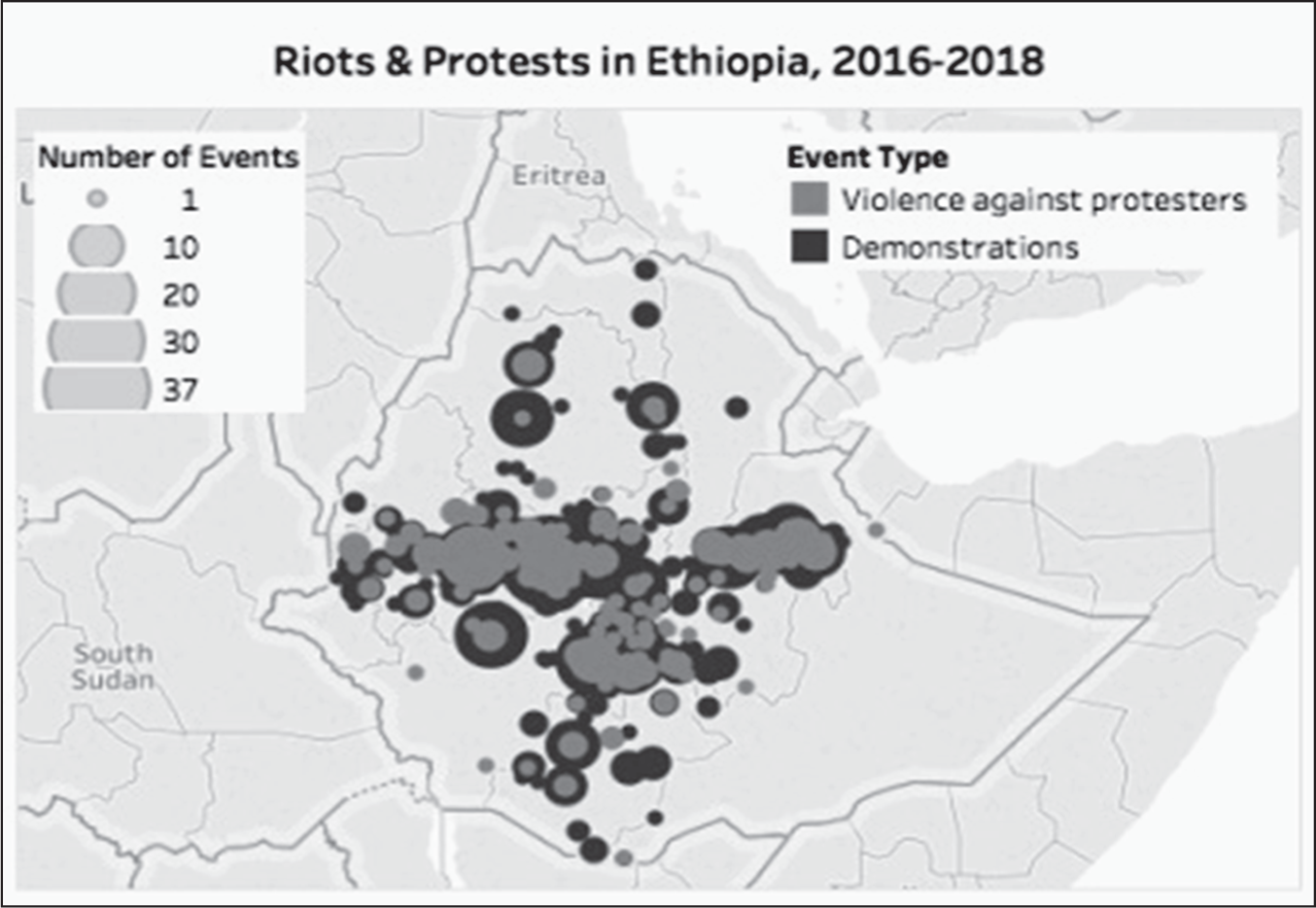
The actual protest in the Oromiya region, commonly referred to as the Oromo protest (Number 2), was the longest, most sustained, and consequential protest in Ethiopia since the Ethiopia student movement of 1960s under the slogan of Land to the Tiller. The Oromo protest was basically about land too. The protest erupted against the Addis Ababa Master Plan in April 2014 as students of Oromo ethnic background from universities and high schools—mostly from different Showa provinces of the region—made street demonstrations. An equally notable aspect of these demonstrations—like the 1960s Ethiopian student movement—was the regime unleashed its violence capacity to suppress the demonstrations (see Figure 2). As per the Armed Conflict Location and Event Data (ACLED), “an average of 23 protests were recorded per week as protesters mobilized against the planned expansion of the Addis Ababa administrative region which threatened to displace Oromo farmers” from November 2015 to February 2016 (ACLED, 2016, p. 2). Indeed, ACLED reported a total of 1,662 protests and incidents of riots occurred in Ethiopia between April 2014 and 2018—with Oromo protests accounting for about 85% of those incidences (ACLED, 2018a). Generally, the Oromo protests passed three phases: inception and resistance, consolidation, and solidarity and alliance formation.
Inception and Resistance
This phase covers the period between April 2014 and early January 2016. During this phase, the protests were primarily voicing concerns against the master plan and resisting its implementation. In terms of geographic coverage, ACLED data show that protest events (about 94) were mostly in West Shewa, including in the restive town of Ambo (125 km to the West of Addis Ababa), East and West Wellega districts of Oromia. The protests were largely peaceful, although security forces reportedly committed a number of civilian fatalities (ACLED, 2018a). Federal officials blamed the protests against the master plan as “anti-development and anti-peace” protests (EBC, 2016; FBC, 2016). The protests subsided in 2015. This was partly due to the May 2015 general election that kept both regional and federal officials busy.
Most importantly, however, the federal government also held several consultative forums to create a rapprochement with protesters, regional government officials, and community representatives about the master plan’s contribution to Ethiopia’s developmental ambitions. The forums, however, did not bear the desired results, but further aggravated the contradiction between the protestors (demanding for the plan to be abandoned) and the government (determined to implement the plan even without delay) especially after the widely circulation of audio alleged to be leaked from one of those consultative forums in 2015. The diaspora-based Oromo Media Network (OMN) aired late Abay Tsehaye, TPLF’s veteran, and by the time an advisor to prime minister Haile-Mariam Desalegn accused elements within OPDO and the Oromiya region’s political leadership of conspiring behind the public protest against the master plan. Abay Tsehaye reassured his comrades the master plan would be implemented without any delay, but threatened that the opposition against its implementation would be suppressed by all means necessary (OMN, 2015). Street protests against the master plan resumed in November 2015—this time with greater intensity and wider geographical coverage than the protests in 2014. ACLED recorded a total of 309 anti-regime protest events across Oromiya in November and December 2015 alone (ACLED, 2018a). The period also coincided with elements within Oromiya state and OPDO leadership beginning to publicly denounce the master plan. A Notable case was Lemma Megersa, then-Speaker of Oromiya State Council. In a public meeting in Burayu on 30 November 2015, Lemma noted: “if the Oromo people reject the master plan, it will not be implemented. The sky will not break up; nor will the earth burst” (OPride, 2017). Lemma’s speech was interpreted as a direct response to Abay Tsehaye and also a reminder to fellow regional officials and millions of OPDO grassroots cadre.
With the resumption of the protests and the anti-master plan sentiments among the regional leadership, the federal government officials learnt that the consultation mechanisms had visibly failed. They restored to violent crackdown against protestors and arrested protest activists and prominent opposition figures who were subsequently charged under the then anti-terrorism proclamation for instigating violence and rebellion (Reporter, 2016). The violent crackdown and arbitrary arrests that charged protesters as terrorists, although they somehow reduced protest events (in early 2016), further aggravated the already simmering tension between the OPDO leadership in Oromiya and the federal government (basically the TPLF). First, in a panel discussion held on the occasion of the OPDO’s 27th anniversary on 13 January 2016, Lemma Megersa the then-speaker of Oromiya State Council told party members: “our lord is our people, the Oromo people. We do not have other lords, so we must not bow down,” apparently to TPLF/federal government orders (BBC, 2019). Most importantly, however, the same month the regional government took a bold measure to suspend the master plan without any preconditions. The decision came after the region’s ruling OPDO Central Committee’s emergency meeting in the town of Adama (90 km east of Addis Ababa). Besides, the committee affirmed its “unwavering support towards the legitimate concerns of the Oromo public” (TVO, 2016). Oromiya’s unilateral action to reject the master plan was a blow to the TPLF-dominated EPRDF and its nearly three decades of rule in Ethiopia as the decision signaled division and factionalism within the ruling coalition. This provided the basis for the second phase of the Oromo protest—consolidation.
Consolidation
This phase covers the period between January 2016 and August 2017 and had several typical characteristics. First, the OPDO leadership earned the trust of the protesting public to the extent of Oromo activists at home and in the diaspora labeling OPDO “as the new opposition in the government” (Hussein & Ademo, 2017). This was important for OPDO to play the role of a vanguard of protesting or as Sideny Tarrow would call “tribunes” of Oromo public and shore up local support (Tarrow, 2011, p. 166). Second, the consolidation phase saw rapprochement among the different Oromo political groups. OPDO’s growing legitimacy and the concomitant rapprochement among various Oromo political forces shifted the focus of the protests from the master plan to broader political issues, including the end of the TPLF-dominated regime, as demonstrated by the 2016 annual Irreecha (Oromo cultural festival) celebration in the town of Bishoftu (40 km southeast of Addis Ababa). The celebration on 2 October 2016 did not appear to be a cultural show, but a festival of protest as hundreds of thousands of people in attendance chanted aloud what subsequently became the motto of the Oromo protest, down, down Woyane (HRW, 2017; VoA, 2016).
Third, during this phase the protests were less spontaneous, less-confrontational but more organized with a grassroots informal youth network locally known as the Qeerroo (in Oromo language, young bachelor) playing a key role. The Qeerroo had expansive informal network structures extending from neighborhood to higher administrations and involved an apparent division of tasks among network members, including on local/informal channels of information gathering and sharing to overcome internet and social media blockage. Their mode of operation involved a combination of various tactics of civil disobedience in places as diverse as places of worship, classrooms, football grounds, and mourning ceremonies (especially of those killed by the regime’s security forces). They turned every occasion and place into sites of anti-government demonstrations. Officials and businesses sympathizing with protestors received heroic publicity. Those who were alleged pro-TPLF or have trespassed calls to public actions, however, became the subject of naming, shaming, and informal hunting. These measures somehow showed the organizers’ concerted application of Gene Sharp’s methods of “nonviolent” protests. The prominent scholar on social movements, Sharp, listed about 198 strategies of nonviolence that included a combination of communication, pressure on officials and individuals, hunting and taunting officials, honoring victims, persuasion of defectors, socioeconomic and nonpolitical cooperation (Sharp, 2012, pp. 79–86).
To further inflict significant economic damage and to transfer the cost of repression to the regime, protestors also boycotted businesses and services affiliated to the ruling TPLF (e.g., Wegagen Bank, Dashen Bank, Mesebo Cement, Selam Bus transport services, and Dashen Brewery) and attacked factories and farms suspected of having links to the TPLF-led regime. For instance, in the town of Sebeta (25 km southwest of Addis Ababa) close to a dozen investment establishments with suspected links to the federal government and TPLF were attacked in response to the death of hundreds of protesters during Irreecha on 2 October 2016 (HRW, 2017, p. 1). Some of the lists include Saygin Dima Textile Company, Toto Garment factory (see Figures 3 and 4), Selam Flower Farm (EFFORT subsidiary), ET-Highland Flora, Arba-Minch Textile Factory, and BMET Cables (a Turkish cable factory and a business partner of the Ethiopian state-owned Ethio-telecom). For some of the cases, for example, the Toto Garment factory, it is not clear if they indeed had links with the government or TPLF/EPRDF. In fact, the company’s chief executive officer denied the existence of any such links, attributing that the company was established by a group of six Ethiopian nationals (including himself) and entrepreneurs during an interview in Addis Ababa.
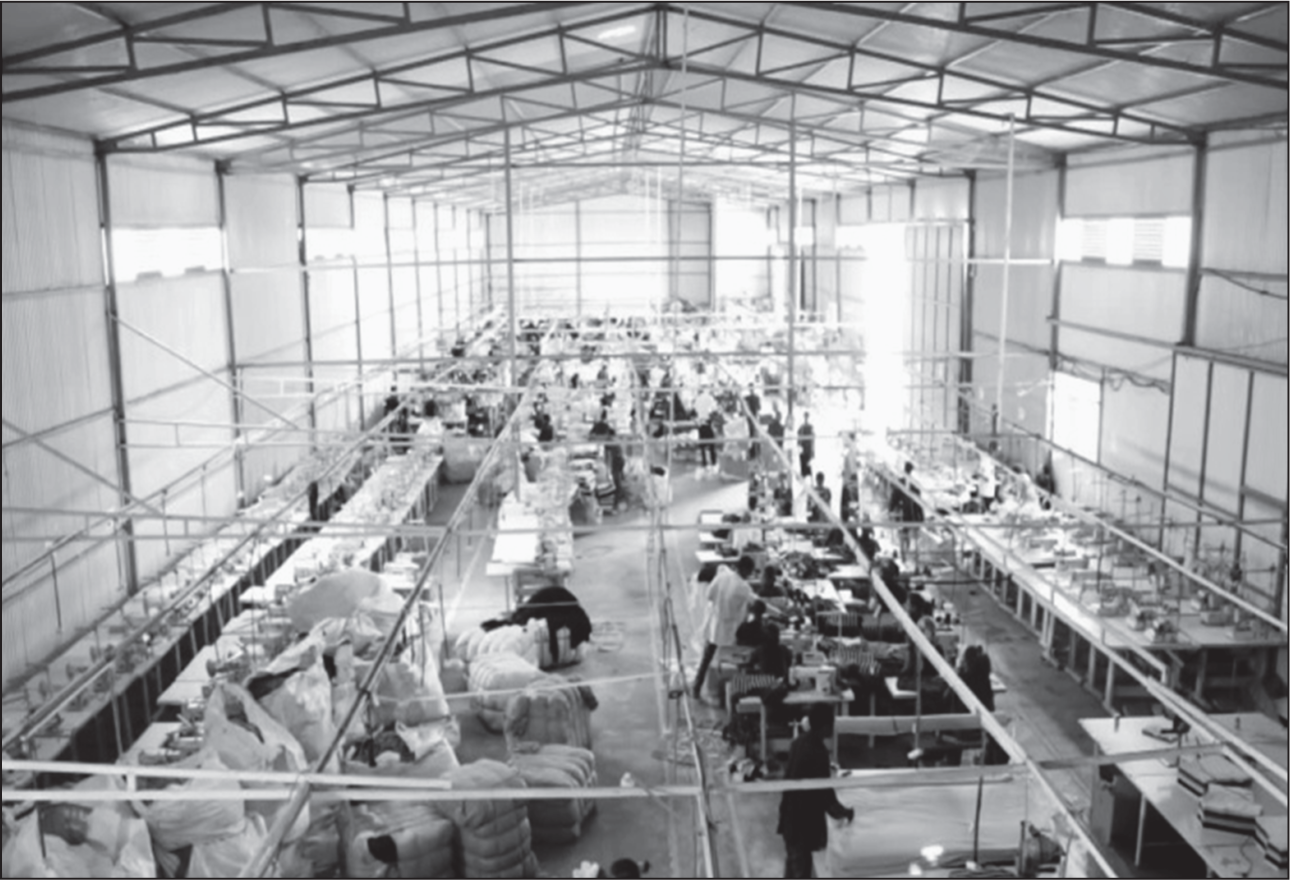
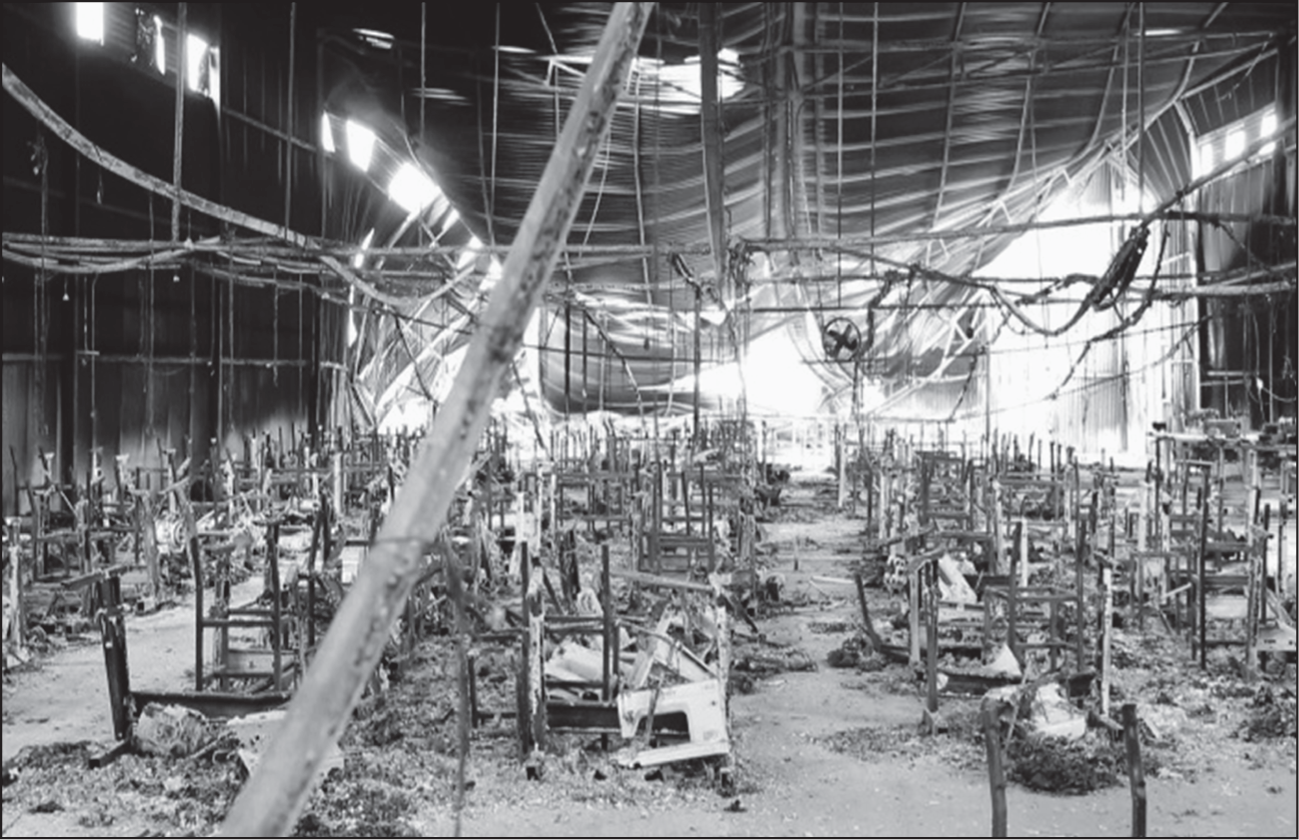
The case of Saygin Dima Textile Company was different. The company was established as a joint venture between the Ethiopian Privatisation Agency (60%) and Turkish investors (40%) with an initial capital of close to ETB 1 billion (USD 105 million) in 2008. The Turkish investors came to Ethiopia after an invitation from Ethiopia’s late prime minister, Meles Zenawi (Reporter, 2017). The investors benefited substantially in terms of bypassing legal hurdles, access to land, and finance. For instance, according to Proclamation No. 146/1998, the Privatisation Agency, which is accountable to the prime minister, has no legal mandate to enter into business shares with private investors. Besides, the investors were in charge of all management positions. When the company received 17 hectares of land from the Oromiya Investment Commission free of the lease payment, it was only bound to pay ETB 935,000 to compensate displaced farmers. In 2011, however, PA withdrew from the joint venture and sold its share to the Turkish investors after citing “unsatisfactory performance from the company” (Reporter, 2017). Surprisingly, it was the state-owned Commercial Bank of Ethiopia that provided ETB574 million (about USD 40 million) in loans to facilitate the Turkish investors’ takeover.
Fourth, the combination of the intensity of the mass protests and the ensuing popular support helped the emergence and consolidation of pro-protestors and reformist groups in Oromiya. In what can be described as intra-OPDO coup d’état, the outspoken Lemma Megersa became the party’s chairperson and subsequently president of Oromiya region in October 2016. Lemma’s ascendancy to the helm of power in the region also brought to the fore a plethora of pro-protestors OPDO cadre, including Abiy Ahmed, current Prime Minister of Ethiopia, and Shimeles Abdissa, current President of Oromia region, Takele Uma and Adanech Abebe, former and current mayor of Addis Ababa, respectively. Under the reformist group, often referred to as team Lemma, OPDO began to openly embrace the substantive demands of Oromo protestors, including to uphold their struggle for the Oromo language to become the working language of the federal government, the implementation of “Oromiya’s special interest over Addis Ababa,” and respect for the constitution and the rule of law (BBC, 2019). On the economic front, team Lemma introduced an ambitious scheme known as the Oromo Economic Revolution. Although the scheme aimed to address the challenges of unemployment, it was part of team Lemma’s agenda to garner more support from the public and, in the long run, to shore up Oromiya’s economic transformation.
The rise and evolving consolidation of pro-protestors’ political leadership in Oromiya regional state contributed to institutions such as Oromiya police, militia, and other security agencies to show sympathy toward the protestors. There were even reports of clashes between the Oromiya police force and federal security in some parts of the region (BBC, 2016). Likewise, the regional media such as Oromiya Television (TV Oromiya) under Oromo Broadcasting Network (OBN) also began to give space to more critical and dissenting voices from regional officials, opposition parties, and citizens. The chain of events subsequently enabled OPDO and the protesters to successfully turn the regional balance of power in their favor.
The federal leadership/TPLF countered by taking two measures. First, it activated a series of so-called deep-renewal programs for the ruling EPRDF. The program was an intra-EPRDF evaluation scheme, officially aimed to deliberate on and respond to pressing public demands, including the protest in the Oromiya region. In effect, however, the evaluations were geared toward purging dissenting party members, as partly demonstrated by the October 2016 cabinet reshuffle—the third within a space of 3 years. Second, the federal government declared a state of emergency in October 2016 for 6 months, but eventually extended it to 10 months until August 2017. Part of the reason for the declaration of the state of emergency was also the simmering critical security challenge in north Ethiopia, particularly in the Amhara region, following the outbreak of the Amhara protest in July/August 2016 (as highlighted in the following subsection). This protest in the Amhara region was so sudden and rapidly expanding. The simultaneous protests in the two largest and most populous regions of Ethiopia presented a worst-case scenario for the regime. Proclamation No.1/2016 rationalized the emergency “for the maintenance of public peace and security” and suspended almost all aspects of political and democratic rights. Within 4 months of the declaration, for example, 21,000 protestors, including prominent politicians, activists, and regional security personnel, and various district administrators of Oromiya region, were arrested and subsequently charged with terrorism, property damage, and attempting to overthrow the government by force (HRW, 2018).
The pro-protestors leadership in Oromiya regional state had two options: either to withstand the federal government’s aggressive purge-charge approach or to work toward turning the national balance of power in their favor. They choose the second and subsequently began to align protesters demands in Oromiya with mass grievances elsewhere in Ethiopia. In what appears vying for alliance and solidarity from non-Oromo Ethiopians, the already protesting Amhara public began to resort to nationalist rhetoric and spoke the languages of “equitable development, inclusive and participatory political system and justice” not just for the Oromo people but also to all Ethiopians (OBN, 2018). They paved the way for the Oromo protests’ third phase: the Oromo–Amhara solidarity and alliance protest.
Solidarity and Alliance Formation
Like in Oromiya, 2016 was also a year of protest in the Amhara region (Ethiopia’s second most populous region after Oromiya). The protest began in the summer of 2016 due to issues related to the long-standing territorial dispute 6 on Wolkite and other fertile districts between the Amhara and Tigray regions. Eventually, however, questions of broader political and economic issues––state structure, representation, justices, and equitable resources sharing––became prominent (Abebe, 2019). Like in the Oromiya region, protesters in the Amhara region also targeted business establishments. Notable in this regard was the attack on a group of commercial farms in Meshenti (a rural district of Bahir Dar city, 15 km southwest). The story of the farms is a bit complex. In 2005/2006, the Amhara regional state expropriated over 1,000 hectares of land from some 600 farmers. The farmers received an average compensation of some $0.4 per m 2 . By the time, the farmers complained that compensations were not commensurate with the land they were dispossessed of. In order to convince the farmers, however, the local administrators and cadres made two promises: first, they told farmers the land would be used to install factories, generating employment opportunities for the locals so that they would not migrate to Arab countries, and second, if there are no factories, then, after 10 years, the farmers will either receive additional compensation or will get back their land.
Instead of factories—which the local dispossessed farmers were hoping to see—however, the government transferred the land to horticulture companies. The list included the globally renowned Esmeralda Farms Inc (Dutch), Giovanni Alfano (Italian), Fontana Horticulture PLC (Indo-Kenyan), and Arini Flowers PLC (Indo-Dutch). After some 10 years, the farmers went to the local administration requesting the promised additional compensation. The authorities, however, asked if the farmers had any written agreement specifying that the terms of the compensation are renewable. The farmers had no written official evidence to prove their cases. The farmers brought the issue to the attention of the regional government. The responses were the same (personal communication, Bahir Dar). In the midst of such controversies between the farmers and authorities, anti-government popular protests broke out in the summer of 2016 in the nearby Bahir Dar city and later in other cities of the Amhara region. For the resenting farmers, 29 and 30 August 2016 were the days of “divine intervention”—to attack the farms and to clear the land. The farmers had the cooperation of farm employees, who had their own resentment about the working conditions with chemicals and especially their meagre daily average wage of ETB30 (by the time, less than $0.9 per day)—a wage that barely covered a laborer’s breakfast. By the time, Bloomberg reported, quoting Esmeralda Farms Ethiopia director, “They [the protesters] were so aggressive, there were also soldiers who couldn’t control them, so we just ran away, as it is life or death …. They came actually at once through our compound, through our fence, through our main gate, so everybody left” (Bloomberg, 2016). By the time, the Dutch company estimated the cost of the damage at $7.8 million. Like in the Oromiya region, an informal grassroots youth network locally known as the Fanno played a crucial role in mobilizing and organizing protests in the Amhara region, apparently with implicit supports from some members of the regional government.
In November 2017, about 250 Oromiya delegates (including government officials, Abba Gada, religious leaders, scholars, and representatives of youth and women) visited Amhara region. Officially, the aim was “to foster good relationships between the two largest communities” (AMMA, 2017). Implicit in the visit was, however, how to coordinate the anti-regime protests in the two regions (personal communication, key informant, Addis Ababa). Indeed, the visit had both symbolic (rapprochement between Ethiopia’s two historically competing groups) and substantive outcomes: a three-dimensional Oromo–Amhara solidarity and alliances, albeit all informal. The first dimension was solidarity at the protesters’ levels. This was mostly in the form of the simultaneous undertaking of civil disobedience tactics in the two regions as a way to stretch the federal government’s security capacity. The second was to achieve rapprochement among the politically diverse Ethiopian diaspora community. The diaspora group—apart from lobbying for diplomatic pressures on the TPLF/EPRDF regime—staged several street demonstrations in major cities in Europe and North America. During the state of emergency, influential activists from the diaspora and satellite media platforms (mainly OMN and ESAT) made immense contribution in maintaining protest momentum inside Ethiopia, exposing alleged human rights violation by state security, reporting leaked information and meeting agenda and decisions of ruling party—prompting the regime to make a “strange declaration” such as criminalizing of viewing diaspora-based OMN and ESAT programs in Ethiopia—under the 2016/2017 state of emergency protocol.
The third dimension was solidarity and alliance at the political level, specifically the informal alliance between OPDO and ANDM. Although, as compared to OPDO, the pro-protestors and reformist groups in ANDM kept a low profile for some time, eventually a group known as Team Gedu emerged. The group, tellingly named after Gedu Andargachew, the then president of Amhara regional state, consisted of several figures, including Demeke Mekonen, the current deputy prime minister, and foreign minister of Ethiopia. Solidarity between the pro-protestor and reformist groups in OPDO and ANDM was monumental in several respects, particularly in injecting a demand for a reformatory agenda into the EPRDF structure. For instance, following a 17-day-long closed meeting in December 2017, the EPRDF Executive Committee admitted its high-level leadership failure to address protestors’ demands as the “root causes” of the crisis in the country (EBC, 2017). Along the way, the committee pledged corrective measures including the release of prisoners. These were important concessions from a regime that used to portray protesters as anti-development and anti-peace to put the blame squarely on itself. Most importantly, it signaled a shifting national balance of power and the possibility for the regime to give-in more to street pressures.
Protests continued in Oromiya and Amhara regions but also expanded rapidly to the southern region. Amhara and Oromo activists called for a 3-day homestay and market boycott between 12 and 14 February 2018. The protesters in Oromiya region halted nonessential road transport to Addis Ababa, blocking the capital off essential supplies of fuel, gas, and agricultural products. On 15 February 2015, Prime Minister Haile-Mariam Desalegn (who was seen as a TPLF puppet) announced his resignation both from the premiership and from EPRDF chairmanship (FBC, 2018). Haile-Mariam Desalegn’s resignation was an important sign of clear division within the ruling elite and a victory for the pro-protestors in OPDO and ANDM. Those who opposed Haile-Mariam’s resignation declared a state of emergency in the backdoor the following day and were apparently pushing for the national army to take over state power. Parliament approved the emergency bill—despite stiff reaction from OPDO and ANDM members and the lack of transparency in counting the votes (Addis Standard, 2018). However, street protests continued in different parts of the country as protestors were less fearful of repression. This made it clear unless EPRDF underwent significant leadership change, the situation presented a clear danger to Ethiopia’s national security. After a fierce internal battle on voting procedures and nomination of potential candidates, on 19 March 2018, the EPRDF Council elected the pro-protestor and reformist Abiy Ahmed of OPDO as the chairman of the coalition (Tsegab, 2019, p. 520). Abiy was subsequently sworn in as Ethiopia’s new prime minister on 2 April 2018. The protests that began as Oromo farmers’ resistance against the Addis Ababa Master Plan not only changed the structure of intra-party relations within EPRDF but also brought an end to the nearly 30 years of TPLF/EPRDF authoritarian rule in Ethiopia.
Conclusion
The idea of land for development is always a contentious subject. The recent episode of contention has much to do with the global proliferation of large-scale appropriations of land by states often employing methods of authoritarian control and violence, and hence drawing fierce resistance and contestation from affected communities. This article has identified three mechanisms that depict the essences—and also point toward broader implications—of such contestation against state-directed large-scale land appropriation initiatives based on Ethiopia’s recent experience. First, from a broader political perspective, land was and remains at the center of Ethiopia’s political economy. It has served both as the instrument of projecting and legitimizing political power and driving contestation and de-legitimization of the power of the same. The land question has contributed to the rise and fall of political regimes, including the collapse of the TPLF/EPRDF regime, and the subsequent rise of Prime Minister Abiy Ahmed’s Prosperity Party in 2018/2019. The latest trajectory owes much to what (Borras & Franco, 2013) termed as “reaction from below”—Oromo framers’ protest against the large-scale expansion of Addis Ababa into Oromiya region’s territorial jurisdiction. The protest was Ethiopia’s most politically consequential mass political action centered on the question of land since the Land to the Tiller revolution of 1974.
Second, it is paramount to note that the link between land appropriation by the state and protests is not straightforward because the literature already tells us that affected communities may simply resort to acquiescence or incorporation (Hall et al., 2015) or that the regime can throttle protest actions or inflict high human and material costs on protest protagonists. Therefore, in an attempt to further explain protest-enabling factors, the article acknowledges the role of what might be called “reaction from above”—Oromiya regional government shows reluctance toward the master plan owing to justifications of constitutional, jurisdictional, and subnational identity concerns. Following Sidney G. Tarrow’s work on contentious politics, which asserts that success in protests owes to certain political, institutional, and contingent “opportunity” spirals (Tarrow, 2011, p. 27), the actions or inactions of the Oromiya regional government proved an important factor as it eventually aggravated cleavage politics. While the present article admittedly lacks deeper exploration into the full-grasp of the repertoire of contention and mobilizing structures (hence a recommendation for future research), it points to how the division within the ruling elite especially the rivalry between TPLF and OPDO wings of the ruling EPRDF coalition, and hence between the TPLF-dominated federal government and OPDO-run Oromiya regional state thereof, powered street protests and shifted the anti-master plan contestation toward anti-government resistance.
Equally important was also the timing and manner of the shift, the third mechanism. This relates to the role of alliance and solidarity formation. Oromo protesters successfully exploited the TPLF-OPDO rivalry and turned the regional balance of power in their own favor. Nonetheless, in order to hold out the national balance of power, the federal government adopted an aggressive purge-charge approach, especially by targeting key protest protagonists and the reluctant OPDO leadership. The protesters realized, as the saying goes, “it takes two to tango,” and countered by strategically aligning their agenda with mass grievances elsewhere and reframing it as part of the broader anti-TPLF/EPRDF authoritarian rule in Ethiopia. This successfully unleashed a sweeping momentum especially for Amhara region’s long-standing sociopolitical and economic grievances, including the territorial claims of Wolkite and other fertile districts. The solidarity between protesters in Oromiya and Amhara regions (two of Ethiopia’s largest and most populous regions) brought together a seemingly hitherto weakened and divided civic organizations, opposition politics, diaspora activism, and media landscape for a full-swing and coordinated campaign against the regime. The protesters strategically overlapped ethnic and class agendas—a situation that the ruling TPLF/EPRDF did not have an answer to, except to accept a defeat. Looking at the bigger picture, this demonstrates the game-changing role of intra- and inter-ethno-regional alliances in Ethiopia’s politics, and the cost one would pay if unable to forge concertedly or hold onto them.
The Ethiopian experience also demonstrates—rather latently—the “double-edged sword” nature of the country’s territorial politics and policy based on the constitutional fixation of land with ethno-regional identity. First, while the policy may have once again guaranteed land as the backbone of collective identity, in reality, it also creates a dilemma in view of Ethiopia’s urgency to utilize the resource amidst the challenges of rapid urbanization and population growth. The dilemma is particularly compelling in the case of rapidly expanding Ethiopian cities like Addis Ababa—which is Ethiopia’s primate city and fully encircled by Oromiya regional state. Of course, one may counterargue the “smooth” undertaking (without notable organized political reaction) of ongoing land-intensive projects like, among others, the so-called “corridor development projects” in Addis Ababa and other major regional cities (Endris, 2025) and the establishment of the Gada special economic zone in the Oromiya region (Addis Fortune, 2022). These initiatives are beyond the scope of this article and deserve empirical research. Yet, one thing is assured. In the absence of democratic constitutional procedures and collectively agreed-upon legal instruments (as it still appears the case) regarding land rights, jurisdictional discretion, preservation of cultural identity, and benefit sharing arising from market or nonmarket factors, the horizontal expansion of cities or unilateral actions of curbing this by enacting administrative barricade and “fencing” territories off would be nothing less than implanting “a time bomb”—sources of future political tensions across national, regional and subnational units.
Second, Ethiopia’s ethnic-based land policy did provide the incentives and institutional modus operandi for the rise of alternative movements—the Oromo and Amhara protest movements—against TPLF/EPRDF despotism and its policy of land dispossession despotism. The movements proved successful, especially considering Ethiopia’s weakened associational politics and organized civic advocacy. That does not mean, however, these alternative movements and movements of ethnic-nationalism in general are eternal politics of salvation and liberation. Ethnic-based movements can also be a force of widening cleavage politics. Instead of mobilizing collective leverage, they compete and conflict against one another along ethnic lines. This particularly makes sense in the context of Ethiopia’s internal politics today (post-TPLF/EPRDF era), which is already littered with ethno-regional polarization and ethnic-oriented political violence that is largely centered on competing group claims and counterclaims of control over territories and state power. The wave of violence in Oromiya and Amhara regions, and especially the devastating civil war in northern Ethiopia (2020–2022), can be attributed to such factors—if one accounts for the contestation over places like Wolkite in northwest Ethiopia. The war is estimated to have cost the nation around $28.7 billion—putting aside the additional $20 billion required for postconflict reconstruction (Financial Times, 2023). Besides the hundreds of thousands of causalities and ethnic-oriented violent conflict (coupled with environmental crisis) have led to internal displacements of over 4.5 million citizens in different parts of the country (OCHA, 2024). This indeed is the downside of the land–ethnicity nexus in contemporary Ethiopia’s body politic. The article does not call for an immediate policy change in favor of land privatization—a customary remark among Ethiopian policymakers and scholars alike. However, it calls for further research and more evidence-based discussion especially on whether this is the time for Ethiopia to amend its constitution, especially considering the predicaments of the existing constitutional fixation of land with ethno-regional identity. An important aspect of such discussions should also be regarding the form of land policy and territorial politics that helps foster national social cohesion and ensure sustainable land governance architecture and utilization practice in Ethiopia.
Footnotes
Acknowledgements
The author would like to thank Emeritus Professor Ben White and JDS anonymous reviewers for their insightful comments and constructive feedbacks on the article’s early draft and manuscript phase, respectively. The author also extends his appreciation to the Land Deals Politics Initiative team for their general support.
Declaration of Conflicting Interests
The author declared no potential conflicts of interest with respect to the research, authorship, and/or publication of this article.
Funding
The author disclosed receipt of the following financial support for the research, authorship, and/or publication of this article: This work was supported by the International Institute of Social Studies, Erasmus University Rotterdam, in the framework of Land Deals Politics Initiative II call for small research grant and Project ID 1848: RRUSHES-5; Commodity & Land Rushes and Regimes: Reshaping Five Spheres of Global Social Life; WBS: 18201030.029.