







Abstract
Recent research suggests that supportive relationships between coworkers benefit worker well-being. Less is known about the distribution of social support among different groups of workers. In this article, we use data from a random sample of state employees to examine whether black and white workers differ in the number of ties they have to coworkers, the quality of these ties, and the effects of social support on workplace emotional experiences. Our findings suggest that compared to their white counterparts, African Americans are disadvantaged in terms of workplace social ties and perceived coworker support. Race differences in job characteristics do not explain these differences; however, there is some evidence that the racial composition of the workplace may influence the formation of workplace social ties. In addition, both black and white workers experience similar emotional benefits of social support.
An extensive amount of research has illustrated the positive association between social relationships and physical and mental health (e.g., Cohen and Janicki-Deverts 2009; Thoits 2011; Turner 1999; Umberson and Montez 2010). More recently, researchers have focused on the specific benefits of social support provided by one’s coworkers such as increased job satisfaction, enhanced well-being, and help with the management of difficult work-related emotions (Ducharme, Knudsen, and Roman 2008; Lively 2008; McGuire 2007; Rumens 2010; Sloan 2012). Because most adults spend a significant portion of their daily lives working, the workplace has been cited as a primary arena for the development of close personal relationships (Hochschild 1997; Hodson 2001; Marks 1994; McGuire 2007). In accordance with the evidence demonstrating the benefits of social relationships in the general population, research that focuses on the workplace shows clear positive effects of having supportive coworkers (Ducharme et al. 2008; Ducharme and Martin 2000; Sloan 2012).
While research on coworker support has begun to accumulate, investigators have not thoroughly examined potential race differences in perceived coworker support or its benefits for workers. The extant literature suggests, however, that black workers may be disadvantaged relative to white workers in the quantity and quality of beneficial coworker relationships. For example, studies of the interpersonal costs associated with racism in the workplace show that the social experience of working is very different for black and white workers (Feagin and McKinney 2003; Harlow 2003; Harvey Wingfield 2010; Jackson and Stewart 2003; Roscigno 2007). 1 In particular, African American workers are frequently excluded from informal social networks (Feagin and Sikes 1994; Roscigno 2007; Vallas 2003). Racial discrimination in the workplace, both in the past and present, and the prevalence of racial stereotypes create an environment where African American workers often experience and feel social isolation from their white peers (Feagin and McKinney 2003; Harvey Wingfield 2007, 2010; Jackson, Thoits, and Taylor 1995). Due to the importance of informal social networks in terms of hiring, promotion, and advancement in the workplace, such exclusion disadvantages African Americans (e.g., Feagin and Sikes 1994; Payne-Pikus, Hagan, and Nelson 2010; Royster 2003; Song 2011; Wilson, Eitle, and Bishin 2006). Furthermore, social exclusion may deny black workers the emotional benefits associated with supportive interpersonal relationships (Bacharach, Bamberger, and Vashdi 2005; Harvey Wingfield 2007; Roscigno 2007; Vallas 2003).
Although the mental-health literature suggests that social ties, or social connections to others, are beneficial for individuals because they increase perceptions of the availability of social support (Berkman et al. 2000; Thoits 2011; Uchino 2004), the relationships between race and both workplace social ties and social support have been investigated in separate lines of research. On the one hand, the evidence of race differences in the quantity of workplace social ties comes largely from the organizational demography literature (Bacharach et al. 2005; Ibarra 1995; Mouw 2002). On the other hand, much of the research that suggests racial variation in the quality of coworker relationships, in terms of the amount of emotional support perceived, and workplace emotional experiences comes from qualitative interview studies of African American workers in selected occupations (Feagin and Sikes 1994; Harlow 2003; Harvey Wingfield 2007, 2010). One notable exception to this is a recent survey of social networks in a large financial services organization. McGuire (2012) found that black workers received less support from their network members (other employees who provided work-related or personal help in the nine months prior to the survey) than white workers; however, the reason for the race difference remained unclear (McGuire 2012). Taken together, the previous research on race differences in relationships with coworkers suggests that black workers are at a disadvantage compared to their white peers because they have fewer social ties in the workplace and may feel less supported. The ways in which race differences in workplace social ties relate to perceptions of social support and the emotional benefits of coworker support, however, have not been examined.
In this study we utilize survey data from a large sample of public sector workers to investigate race differences in the quantity of workplace social ties, the perceived availability of coworker support, and the emotional benefits of these factors. Research utilizing public sector workers is particularly advantageous for examining the experiences of white and black workers because the public sector includes a wide variety of jobs with different racial compositions. Due to its formalized hiring and promotion procedures, work in the public sector has provided African Americans with greater opportunities for upward mobility compared to work in the private sector (Llorens, Wenger, and Kellough 2008; Pattillo-McCoy 2000; Wilson 2006) and accounts for much of the growth of the black middle class in the United States (Collins 1983; Landry and Marsh 2011). Currently, black workers are more likely than whites or Latinos to be employed in public sector jobs (U.S. Department of Labor 2012). Although previous research has emphasized the economic gains made by African Americans in public sector jobs, the social experiences of blacks within the workplace have not been given similar attention. We seek to extend the current literature by: (1) analyzing race differences in the quantity and perceived quality of social relationships in the workplace, (2) evaluating structural and social psychological explanations of racial inequality in workplace social ties and coworker support, and (3) examining perceptions of coworker support as a mediator of the emotional benefits of workplace social ties. We also assess whether the emotional effects of coworker relationships are similar for both black and white workers.
Social Relationships in the Workplace
The workplace can provide a context that supports the development of significant emotional bonds with others (Hodson 1997, 2001; Marks 1994; McGuire 2007; Mirowsky and Ross 2003). Workers share many experiences with their fellow coworkers, including but not limited to experiences with clients and managers, other coworkers, workplace policies, and the physical workspace itself. These similar experiences can create a unique ability for coworkers to empathize with each other and develop close relationships (Korczynski 2003; Lively 2000; Rumens 2010; Thoits 1986, 2011). Workplace social ties can be psychologically beneficial by increasing the worker’s extent of social integration, sense of belonging, self-esteem, and positive affect (Cohen 2004; Cohen and Wills 1985; Thoits 2011; Uchino 2004). Social relationships with coworkers may also enhance worker well-being through perceptions of an increased availability of social support (Thoits 2011). Research suggests that perceived emotional support from coworkers is directly associated with higher levels of happiness and lower levels of negative emotions and depressive symptoms (Loscocco and Spitze 1990; Menaghan 1991; Pugliesi 1995; Sloan 2012; Turner and Marino 1994). Furthermore, coworkers can provide support for one another in dealing with work-related emotional experiences, including emotional labor that workers perform for others while on the job (Korczynski 2003; Lively 2000) and feelings of anger toward another individual in the workplace (Lively and Powell 2006; Sloan 2004).
Although substantial evidence suggests that social ties and social support are beneficial, these resources are not distributed equally in the population (McPherson, Smith-Lovin, and Brashears 2006; Schieman 2005; Umberson and Montez 2010). In particular, women typically have larger and more intimate support networks than men (McGuire 2012; McPherson et al. 2006; Pugliesi and Shook 1997; Turner and Marino 1994). Women also report more supportive coworkers and place greater emphasis on workplace friendships and their emotional benefits compared to men (Glass and Camarigg 1992; Loscocco and Spitze 1990; Morrison 2009; Schieman 2006). Yet, while researchers have identified a gender pattern in coworker support (both in terms of social ties and perceptions of support), race differences in workplace social ties, the perceived availability of coworker support, and their benefits for worker well-being have been largely unexamined. Considering the many benefits of social support, particularly the impact on the emotional well-being of workers, the paucity of research on race is problematic.
Race and Relationships with Coworkers
Race and Social Ties
The experience of racial inequality regarding workplace social ties and coworker support may stem from at least two sources: (1) structural conditions that lead to an overrepresentation of racial minorities in jobs that are not conducive to friendship formation and (2) social psychological preference for social similarity in interpersonal relationships, or homophily. In terms of structural factors, Melvin Kohn and colleagues have identified job characteristics, including close supervision, routine work, and a lack of job complexity, that indicate an inability of workers to exercise self-direction in work, thereby negatively affecting worker well-being (Kohn 1976, 1990; Kohn and Schooler 1973; Miller et al. 1979). In addition to limiting a worker’s occupational self-direction or “use of initiative, thought, and independent judgment in work” (Kohn 1990:40), jobs with these characteristics can prevent workers from forming meaningful relationships with others on the job because they exhaust workers physically and mentally and constrain autonomous behavior (Hodson 2001; Pearlin 1983; Ross and Wright 1998; Scheiman 2006; Sloan 2012). 2 A structural perspective recognizes that patterns of racial inequality limit the opportunity for African Americans to acquire the human capital necessary for high status jobs, while network-based recruitment and the discriminatory practice of status closure further deny African Americans access to the most rewarding jobs (McGuire 2012; Royster 2003; Smith 2002; Tomaskovic-Devey 1993; Tomaskovic-Devey, Thomas, and Johnson 2005). As a result of structural inequality, African Americans are overrepresented in low status jobs—those jobs with the kinds of undesirable characteristics that hinder the formation of supportive relationships with coworkers (e.g., Barnett, Baron, and Stuart 2000; Kalleberg, Reskin, and Hudson 2000; Presser 2003; Tausig 2012; Tomaskovic-Devey 1993)—and, therefore, may face greater difficulties forming supportive relationships with their coworkers compared to whites. Thus, in accordance with the structural perspective we expect:
Hypothesis 1: Black workers will report fewer workplace social ties compared to white workers.
Hypothesis 2: Occupational self-direction will mediate the relationship between race and workplace social ties.
In addition to structural impediments to the formation of workplace social ties, black workers face social psychological barriers to establishing social bonds with their coworkers. The principle of homophily, which refers to the tendency of people to form relationships with persons who are similar to themselves, contributes to racial segregation in social relationships (McPherson, Smith-Lovin, and Cook 2001; Wharton, Rotolo, and Bird 2000). Racial homophily in coworker relationships can leave black workers particularly isolated when there are few other African Americans in the workplace (Bacharach et al. 2005; Jackson and Stewart 2003; Roscigno 2007; Wharton et al. 2000). Because African Americans are a numerical minority in the United States, comprising approximately 13.5 percent of the population (U.S. Census Bureau 2010), they are likely to be a numerical minority in the workplace as well. In particular, most black workers in middle-class jobs, including many of the jobs in the public sector, work in racially integrated environments where a majority of their coworkers are white (Tomaskovic-Devey 1993; U.S. Department of Labor 2012). The racial composition of workplaces varies, however, from prestigious professional workplaces, where few, if any, African Americans work, to so-called “black jobs,” low status service positions in which African Americans are overrepresented (Hirsch and Schumacher 1992; Huffman and Cohen 2004; Tomaskovic-Devey 1993). If, as the principle of homophily predicts, social ties form along racial lines, then the likelihood of workers forming close ties with their coworkers should depend on the number of other same-race individuals in the workplace. For example, in workplaces where few racial minorities are present, we expect that the social exclusion of black workers from predominantly white informal social groups will be particularly pronounced. That is, for African American workers, workplace social ties should be positively associated with the proportion of African Americans in the workplace. In contrast, according to the homophily principle, white workers may report fewer workplace social ties when they work in jobs with a large proportion of nonwhite workers, as opposed to when they work in jobs where the workers are primarily white.
Hypothesis 3: The proportion of racial minorities in the workplace will moderate the relationship between race and workplace social ties.
Thus, the combination of structural and social psychological factors place African American workers at a double disadvantage where they are likely to be a numerical minority in the workplace, but the jobs in which African Americans are likely to work in greater numbers (and perhaps feel less socially isolated) are those characterized by features that limit supportive interactions with other workers. The inability to form close personal relationships with coworkers, then, limits access to the emotional benefits that supportive relationships can provide.
Perceived Social Support
One proposed mechanism through which social ties are expected to influence well-being is perceived social support (see Thoits 2011). That is, the presence of structural support in the form of social ties, or close relationships with others, should increase perceptions of the availability of functional social support, such as providing emotional assistance in coping with stress (Berkman et al. 2000; Uchino 2004). 3 Workers who have close relationships with others in the workplace should benefit because those relationships have the potential to provide social support. In contrast, workers who are socially excluded from their coworkers may feel unsupported because they lack the close relationships that can provide access to emotional support in the workplace. Qualitative studies have documented that black workers feel that they are not emotionally supported by their coworkers (Feagin and McKinney 2003; Harvey Wingfield 2007, 2010). These feelings of being unsupported in the workplace may stem from a relative lack of workplace social ties among black workers. Therefore, we expect that black workers will perceive less social support from their coworkers, and this racial disparity in perceived coworker support should relate to race differences in workplace social ties.
Hypothesis 4: Black workers will perceive less coworker support compared to white workers.
Hypothesis 5: The quantity of workplace social ties reported by workers will mediate the relationship between race and perceptions of coworker support.
Race, Social Relationships, and Emotional Experiences in the Workplace
Previous studies have linked perceived social support to higher levels of well-being, including more positive emotional experiences, fewer negative emotional experiences, and less emotional stress (Ducharme et al. 2008; Loscocco and Spitze 1990; Pugliesi 1995; Sloan 2012; Turner and Marino 1994). Furthermore, while there is substantial evidence demonstrating the stress-buffering properties of perceived social support (see Cohen 2004), perceived social support is also beneficial in the absence of significant stressful events (Thoits 2011; Uchino 2004). Everyday perceptions that social support is available can sustain psychological well-being and enhance positive affect, which in turn benefits physical health (Thoits 2011). Although there is evidence of the benefits associated with perceived coworker support, research has not examined whether workplace social ties also carry the benefits of perceived social support or enhanced emotional well-being.
Furthermore, the effects of social support may vary by race (Kiecolt, Hughes, and Keith 2008; Lincoln, Chatters, and Taylor 2003; Mabry and Kiecolt 2005; Umberson and Montez 2010). For example, in an analysis of data from a national probability sample, Kiecolt et al. (2008) found that in most cases African Americans and whites experienced similar benefits from social relationships, but a few relationships (e.g., marriage and kin support) benefitted African Americans more than whites. Along with the emotional benefits of workplace social ties, race differences in the emotional benefits of perceived coworker support have not been examined. Therefore, we explore the possibility of race differences in the effects of workplace social ties and perceived coworker support.
In sum, we expect that workplace social ties will have emotional benefits for workers through higher levels of perceived social support. In other words, perceptions of social support should mediate the relationship between social ties and positive emotional experiences. Because our interests are in social ties and perceptions of support within the work setting, we focus specifically on emotional experiences in the context of the workplace. We also explore the possibility of race differences in the effects of social support on worker well-being by testing Hypotheses 6 and 7 separately by race.
Hypothesis 6a: The quantity of workplace social ties reported by workers will be positively associated with positive emotional experiences in the workplace.
Hypothesis 6b: The quantity of workplace social ties reported by workers will be negatively associated with negative emotional experiences in the workplace.
Hypothesis 7: Perceived coworker support will mediate the relationships between workplace social ties and emotional experiences in the workplace.
Although we are primarily interested in race differences in coworker relationships and their outcomes, our emphasis on emotions warrants attention to the possibility of a direct effect of race on emotional experiences. Given the inequality and discrimination frequently experienced by blacks in the workplace (e.g., Elliott and Smith 2004; Feagin and McKinney 2003; Harvey Wingfield 2007; Tomaskovic-Devey 1993), we might expect blacks to report fewer positive emotions and more negative emotions in the workplace compared to whites. While studies in the general U.S. population have documented persistently lower levels of happiness among African Americans compared to whites (Hughes and Thomas 1998; Yang 2008), analyses of negative emotions, including anger, have shown no race differences (Mabry and Kiecolt 2005; Simon and Nath 2004). To date, there is a notable lack of research directly comparing the workplace emotional experiences of blacks and whites (Lively 2006; Mirchandani 2003; Stets 2012). Thus, we include an examination of the direct effect of race on workplace emotional experiences in our analyses.
Methods
Data
We test our hypotheses using data from a survey of public sector employees working for the state of Tennessee. In 2005, the first author designed and distributed a 10-page anonymous mail survey to a simple random sample of 2,500 state employees. All employees included in the sampling frame were “Career Service” workers and had worked in their position with the state for at least six months. Career Service jobs are all positions in which the workers do not serve the governor directly. 4 We followed Dillman’s (2000) tailored design method for the survey implementation and made up to three follow-up contacts with potential respondents in an effort to maximize participation. In an initial contact letter, respondents were given the option to decline participation using a response postcard. If a respondent indicated he or she did not wish to participate in the study, we discontinued follow-up contacts with that person.
The response rate for the survey was 62 percent (1,533 returned surveys out of 2,456 valid addresses in the sampling frame). Because of our interest in the workplace experiences of African Americans compared to those of whites, we limited our sample to respondents who self-identified as either African American/black or Caucasian/white. We excluded 54 respondents who identified with another racial group and 23 cases where no race was provided from the analyses. We also excluded cases with missing data on other key variables. The analyses presented here include 1,317 cases with full data on all measures. Females constitute 59 percent of the sample, 21.8 percent of the sample is black or African American, and the average age of the respondents is 47 years. 5
Measures
Workplace social ties
The social ties variable assesses the quantity of supportive coworker relationships. Workplace social ties are assessed by an estimated proportion of a respondent’s coworkers that he or she considers to be friends. Respondents were asked: “How many of the people who you work with would you say are your close friends?” The response options included: 0, 1, 2 to 3, 4 to 6, 7 to 10, and more than 10. Because the number of possible social ties for a worker depends on the number of his or her coworkers, we collapsed a measure of the number of a respondent’s coworkers into the aforementioned categories. Then, we divided the number of coworkers by the number reported to be close friends to create an estimate of the proportion of coworkers who are considered to be close friends of the respondent. 6 We also control for the amount of time a worker spends with his or her coworkers. Respondents reported how much time they “spend helping or working directly with coworkers” on a scale of 1 (none of my time) to 5 (almost all of my time).
Coworker support
To measure the quality of coworker relationships, perceived emotional support from coworkers was created by the sum of responses to the following three statements: “When things get tough, there are people at work that I can turn to for help,” “My coworkers do not take a personal interest in me” (reversed), and “I feel that I can talk to my coworkers about personal difficulties.” Each statement was rated on a Likert scale ranging from 1 (strongly disagree) to 5 (strongly agree). Values of the measure range from 3 to 15, with a higher score indicating perceptions of greater coworker support (Cronbach’s alpha = .80). Our coworker support measure is similar to measures used by others to assess perceived emotional support in the workplace (e.g., Ducharme and Martin 2000; Ganster, Fusilier, and Mayes 1986; Turner and Marino 1994).
To control for the possibility that race differences in perceived support may be due to race differences in the amount of support provided to others, we include a measure of emotional support offered to coworkers in the analyses of perceived coworker support. A scale was created by summing responses to the following three statements: “I often help coworkers deal with their emotional problems,” “My coworkers come to me for help with their personal problems,” and “My coworkers rely on me to help them handle their problems.” Responses were rated on a scale of 1 (strongly disagree) to 5 (strongly agree) (Cronbach’s alpha = .804).
Occupational self-direction
We utilize two job characteristic measures that assess components of occupational self-direction as identified by Kohn and colleagues (Kohn 1976, 1990; Kohn and Schooler 1973; Miller et al. 1979). To gauge job routinization, we use a summed scale of responses to the following three statements: “There is a lot of variety in the kinds of things I do at work” (reversed), “I keep learning new things in my job” (reversed), and “My job requires that I do the same things over and over.” Responses on the job routinization statements ranged from 1 (strongly disagree) to 5 (strongly agree), and a high score on this measure indicates greater routinization (Cronbach’s alpha = .66).
Worker autonomy, the inverse of close supervision, is measured by the sum of responses to the following three items: “My job allows me to make a lot of decisions on my own,” “I have flexibility in my work to decide when to do different tasks,” and “My supervisor decides how my work tasks should be done” (reversed). Each statement was rated on a scale of 1 = strongly disagree to 5 = strongly agree so that higher scores indicate greater autonomy at work (Cronbach’s alpha = .64).
Proportion minority
To assess the racial representation in a worker’s job, we obtained data on the Tennessee state workforce composition in 2005 by race for each state agency (e.g., agriculture, corrections, human resources, transportation) and job category within the agency (e.g., administrative support, professional, technician) from the Tennessee Department of Human Resources. In the state records, employees were classified as either “white” or “minority.” We divided the total number of workers in a job within an agency by the number of racial and/or ethnic minority workers in that agency job to obtain the proportion of minority workers. We then coded the proportion of minority workers within the job onto the respondents’ self-reported job titles. In approximately 13 percent of the cases, we were able to identify a job category for the respondent but could not identify an agency. For those cases, we used the proportion minority for the job category as a whole, across all agencies, to code the variable. 7 The proportions of minority workers in the jobs in our sample ranged from .03 to .49, with a mean and median equal to .24. While we are not able to determine the proportion of African American workers in a job specifically using the proportion minority data, this variable does provide an estimate of the predominance of white workers in the job and of the likelihood that African American workers are employed in the job.
Positive emotional experiences
A section of the questionnaire asked workers to report the frequency of various emotions that they experience while at work. We created a scale of positive emotional experiences by summing responses to the questions: “How often do you . . . ” (1) “feel happy at work?”; (2) “feel proud at work?”; and (3) “feel excited at work?” Responses to each emotion ranged from 1 = never to 5 = always, such that a higher score on this scale indicates greater positive emotional experiences at work (Cronbach’s alpha = .78).
Negative emotional experiences
We created the negative emotional experiences scale from the emotion questions asked in the series described previously. We summed responses to the following three questions: “How often do you . . . ” (1) “feel tense at work?”; (2) “feel angry at work?”; and (3) “feel irritated at work?” Responses to each emotion ranged from 1 = never to 5 = always, such that a higher score on this scale indicates greater negative emotional experiences at work (Cronbach’s alpha = .80). These two workplace emotional experience measures are similar to the “positive” and “agitated” measures used by Erickson and Ritter (2001) to assess workplace emotional experiences.
Race
As our key independent measure, we include a dummy variable to indicate whether the respondent self-identified as African American or white. On the survey, respondents answered the question “How would you describe yourself?” by a series of categories including Asian or Asian American, black or African American, Hispanic, Native American or American Indian, white or Caucasian, or other. For the purposes of this article, we limited the sample to respondents who self-identified as either black or African American or white or Caucasian. In the analyses, black is coded as 1 and white is coded as 0.
Control variables
We include several control variables in our analyses in order to account for demographic differences and work-related influences on emotional support. First, since working in a supervisory position may influence relationships with others and emotional experiences in the workplace, we include a dummy variable for working in a managerial position (1 = yes, 0 = no). In addition, length of employment may influence workplace experiences and relationships with coworkers; therefore, we include a measure of job tenure in the analyses. Respondents indicated how long they had worked in their current position using the categories less than 1 year, 1 to 2 years, 3 to 4 years, 5 to 10 years, 11 to 15 years, 16 to 20 years, and more than 21 years. We assigned the midpoint value in years to each category to create the following scale: 0.5, 1.5, 3.5, 7.5, 12.5, 18, and 21 years. 8
Finally, all models include demographic controls that may influence exposure to stress, perceptions of social support, and emotional experiences: sex (0 = female, 1 = male), age (in years), marital status (0 = not married, 1 = married), and the presence of minor children in the home (0 = no, 1 = yes). Level of education was included in all models as a set of dummy variables with the following categories: high school degree or less, some college, college degree, graduate school or degree.
Plan of Analyses
First, to examine the distribution of the sample on the key variables of interest, we present descriptive statistics for the full sample and then separately by race. Next, we test Hypotheses 1 through 3 using a series of ordinary least squares (OLS) regression models. In the first model we regress social ties on race and the demographic control variables to determine if African Americans report fewer workplace social ties than whites (Hypothesis 1). Then, we add the job characteristic variables to the model to assess the extent to which occupational self-direction accounts for any race difference in workplace social ties (Hypothesis 2). To evaluate our predictions based on the principle of homophily, we add the proportion minority variable in a third model and the race by proportion minority interaction in a fourth model. These two models test: (1) whether racial composition is a significant predictor of workplace social ties and (2) if the relationship depends on a worker’s race, such that the association between the proportion of minorities in a job and workplace social ties is positive for black workers and negative for white workers (Hypothesis 3). We follow a similar modeling strategy in an OLS regression of perceived social support to determine whether blacks perceive less support from their coworkers than whites (Hypothesis 4). We then add the social ties variable to the model to test whether workplace social ties mediate the relationship between race and perceived coworker support (Hypothesis 5).
Finally, to assess the emotional impact of workplace social ties, we regress positive and negative emotional experiences in the workplace, separately, on workplace social ties, job characteristics, and the control variables (Hypothesis 6). We then add perceived coworker support to the models to determine whether it mediates the relationships between workplace social ties and positive and negative emotional experiences in the workplace (Hypothesis 7). For the emotional experience analyses, we first run the full model, then we split the sample by race and test the equality of regression coefficients across the models to determine if workplace social ties and perceived coworker support affect the emotional experiences of black and white workers in similar ways (Paternoster et al. 1998).
Results
Sociodemographic Characteristics and Distribution of Key Variables for Whites and Blacks
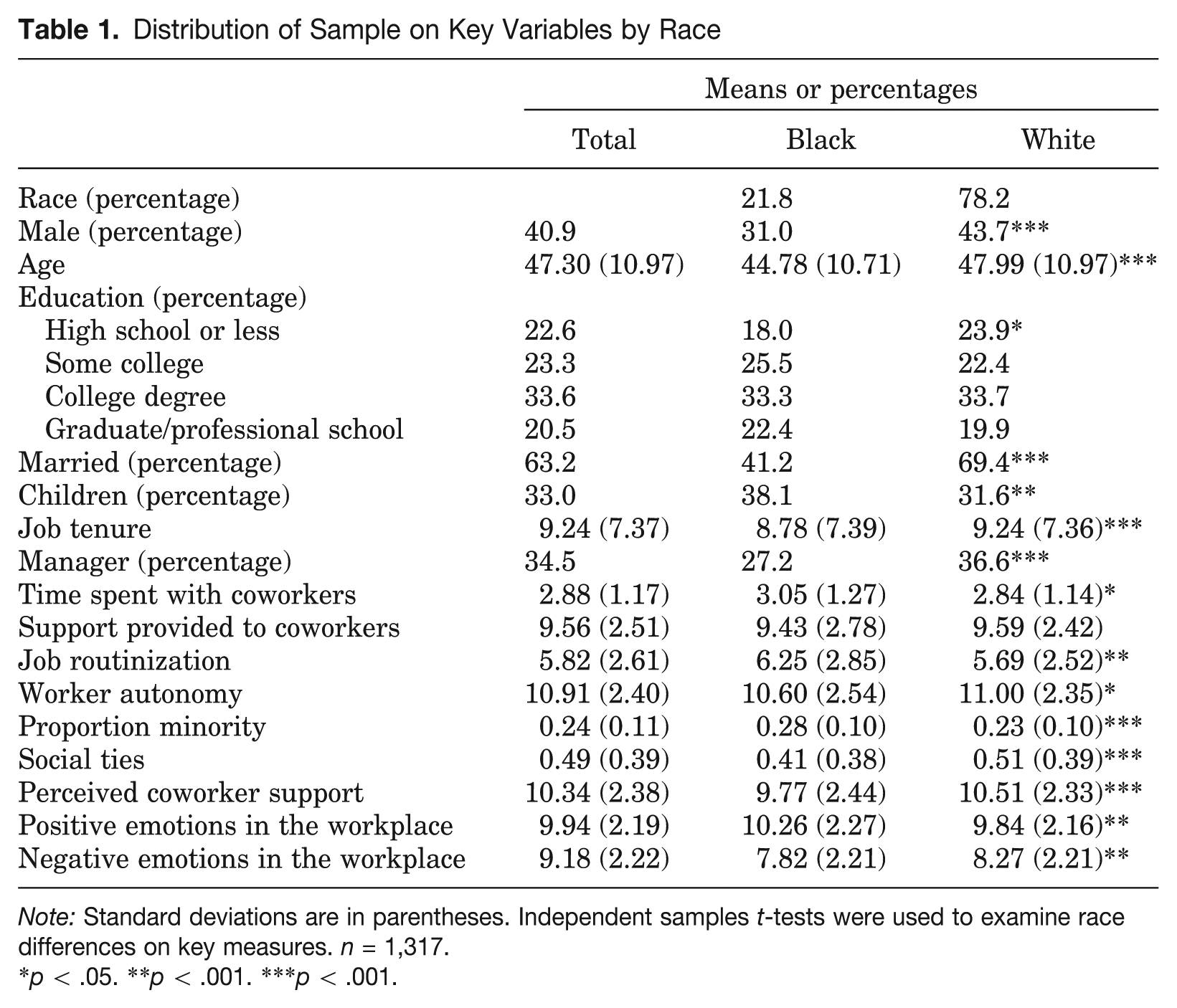
Table 1 presents the sociodemographic information and the social distribution of key variables for blacks and whites in our sample. As mentioned in the methods section, the sample consists of more whites than blacks, 78 percent versus 22 percent, respectively, and the majority of the sample is female (59 percent). The mean age of our respondents is 47, with the mean age of whites (48) being significantly older than the mean age of blacks (45). A larger percentage of white respondents reported having a high school degree or less education, compared to blacks (24 percent vs. 18 percent, respectively). Furthermore, a larger percentage of blacks have attended some college, and a larger percentage of blacks either have a graduate degree or have attended graduate/professional school than whites. The percentage of blacks and whites who hold a college degree is almost identical among this sample of respondents. The majority of respondents are married, although there is a higher percentage of married white persons in the sample (69 percent) than married black persons (41 percent). While a minority of respondents has minor children living at home (33 percent), a significantly greater percentage of blacks have children living at home than whites (38 percent compared to 32 percent).
Distribution of Sample on Key Variables by Race
Note: Standard deviations are in parentheses. Independent samples t-tests were used to examine race differences on key measures. n = 1,317.
p < .05. **p < .001. ***p < .001.
Turning to the descriptive statistics regarding the job characteristics of respondents, a number of patterns are noteworthy. For example, blacks have significantly higher scores on job routinization while whites have significantly higher scores on the worker autonomy measure. In addition, there are significantly more whites who are managers compared to blacks (37 percent vs. 27 percent, respectively), and on average, whites have been employed in their positions for a longer period of time than blacks. Taken together, these job characteristics seem to place white workers at an advantage compared to black workers. Furthermore, blacks spend a significantly greater amount of time working with coworkers compared to whites.
As expected, when turning to workplace social ties, compared to black workers, white workers consider a greater proportion of their coworkers to be close friends. In addition, white workers report significantly higher levels of perceived coworker support than black workers; however, both blacks and whites provide fairly equal levels of support to coworkers (mean = 9.43 and mean = 9.59, respectively). In other words, it appears that blacks, when compared to whites, are providing similar levels of coworker support but perceiving lower levels of support. Despite these patterns, blacks have significantly higher mean levels of positive emotions in the workplace and feel fewer negative emotions at work than do whites.
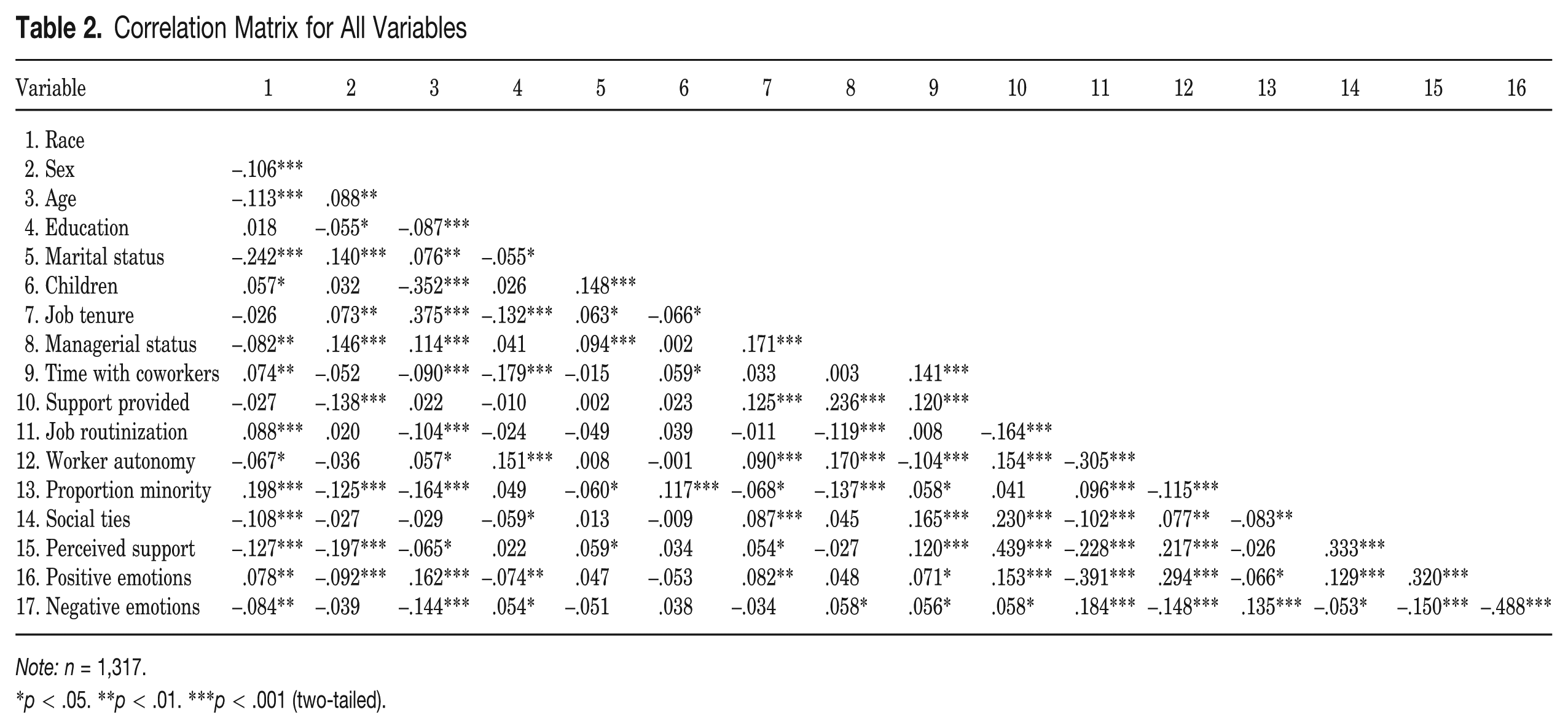
Table 2 presents the bivariate correlations between all key variables. 9 As expected according to the structural perspective, job routinization is negatively correlated with workplace social ties and perceived coworker support while worker autonomy is positively correlated with workplace social ties and perceived coworker support. In addition, the proportion of minority workers in a job is negatively associated with social ties. Because the majority of the sample is white, this correlation is consistent with the principle of homophily. As the proportion of minority workers in a job increases, the number of whites available to form relationships with decreases. Furthermore, greater proportions of social ties at work correspond to higher levels of perceived coworker support, and both social ties and perceived support are correlated with greater positive and fewer negative emotional experiences in the workplace. In the following we examine these patterns in multivariate analyses.
Correlation Matrix for All Variables
Note: n = 1,317.
p < .05. **p < .01. ***p < .001 (two-tailed).
Race Differences in Workplace Social Ties
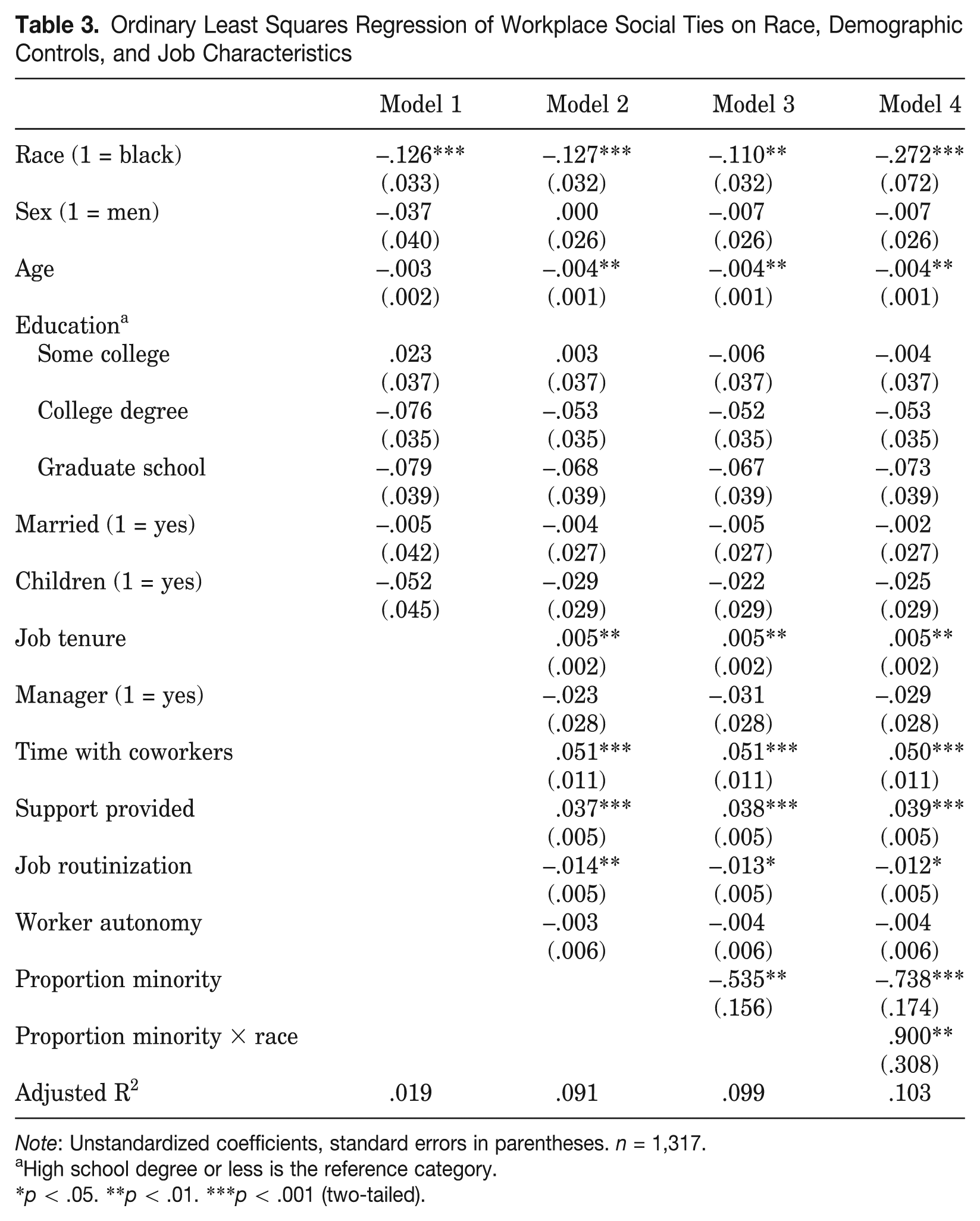
Table 3 contains the unstandardized coefficients from the ordinary least squares (OLS) regression of the proportion of workplace social ties on race, sociodemographic characteristics, and job characteristics. The first model displays the effects of race on workplace social ties, controlling for sex, age, education, and marital and parental status. In this model, race is the only significant predictor of workplace social ties, whereby blacks report significantly fewer workplace social ties than whites. When the job characteristics, including the occupational self-direction variables, are added in Model 2, we find that job routinization is negatively associated with workplace social ties, but worker autonomy is not a significant predicator of workplace social ties. Furthermore, contrary to Hypothesis 2, although blacks are significantly more likely than whites to work in more routine and less autonomous jobs, net of the control variables (analyses available upon request), occupational self-direction does not mediate the relationship between race and workplace social ties. The overrepresentation of blacks in routine jobs or those that are closely supervised does not explain why they report fewer workplace social ties than whites. Among the control variables, job tenure, time spent working with coworkers, and support provided to coworkers are positively associated with workplace social ties.
Ordinary Least Squares Regression of Workplace Social Ties on Race, Demographic Controls, and Job Characteristics
Note: Unstandardized coefficients, standard errors in parentheses. n = 1,317.
High school degree or less is the reference category.
p < .05. **p < .01. ***p < .001 (two-tailed).
To test Hypothesis 3, Models 3 and 4 of Table 3 include the proportion of minority workers in the job and the proportion minority by race interaction term, respectively. As shown in Model 3, proportion minority is negatively associated with workplace social ties. This is what we would expect by the principle of homophily, given that the majority of the sample is white. If white workers prefer to form relationships with white coworkers, at higher levels of racial diversity in the workplace, they would have fewer opportunities to form same-race relationships. The significant race (black) by proportion minority interaction term in Model 4 provides further support for Hypothesis 3 by demonstrating that the principle of homophily may also operate for African American workers. The race by proportion minority interaction is depicted in Figure 1. Although the results in Table 3 do not represent a direct analysis of the impact of the racial composition of the workplace on social ties, they do suggest that black workers may form more workplace social ties when there are greater proportions of other racial minorities in the job. In contrast, whites report significantly fewer workplace social ties at higher levels of racial diversity in the job.
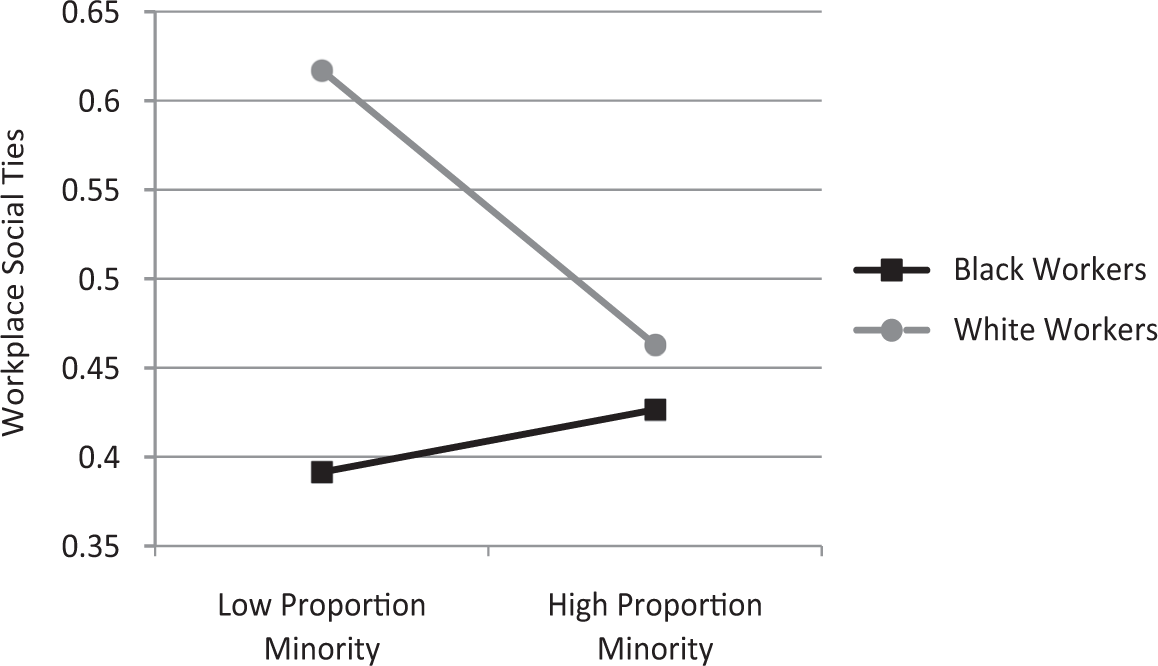
Relationship between Proportion of Minority Workers in the Job and Workplace Social Ties by Race
Race Differences in Perceived Coworker Support
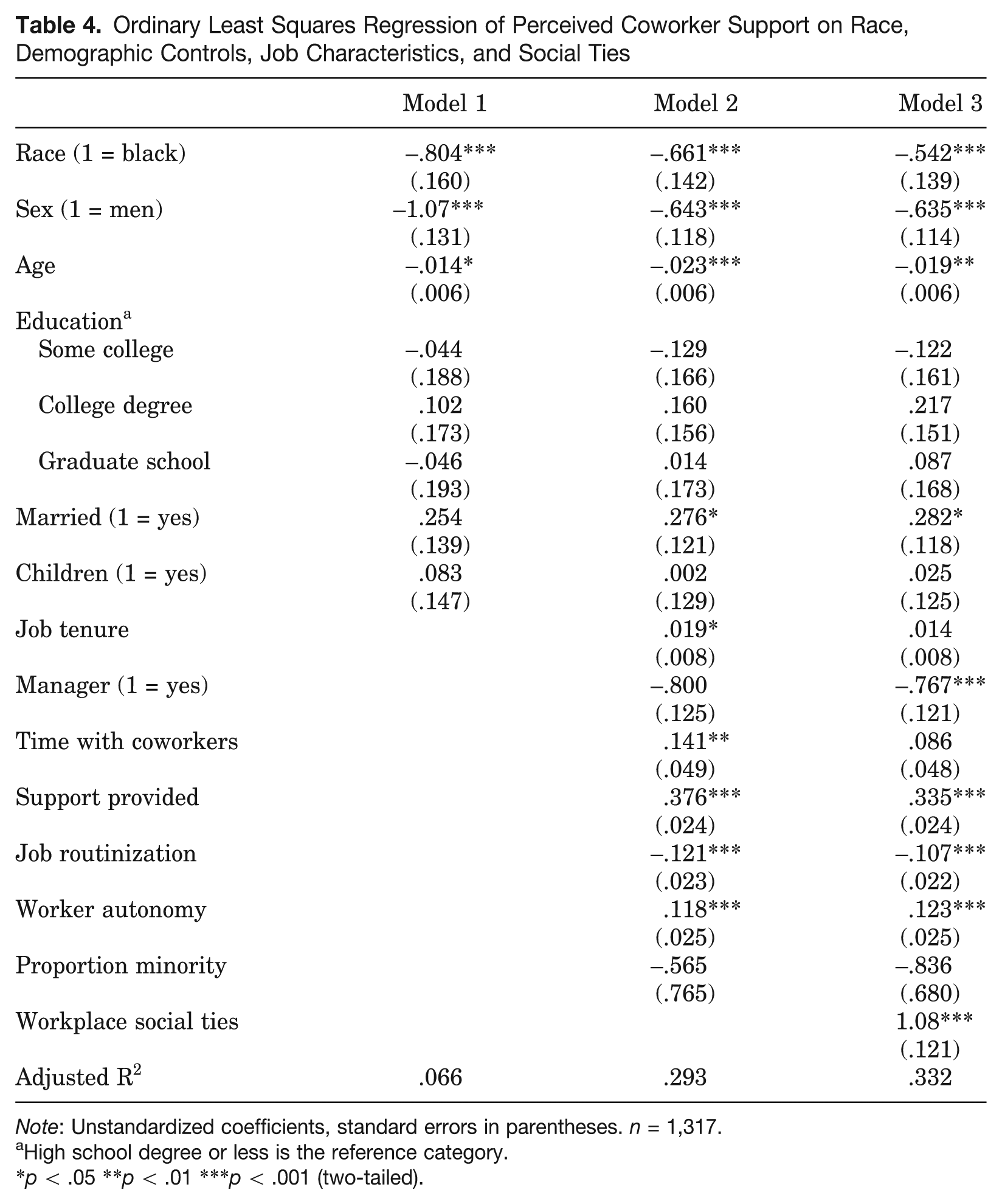
In addition to race differences in workplace social ties, we also predicted significant racial differences in perceived coworker support whereby black respondents would be at a disadvantage (Hypothesis 4), and we predicted that this relationship would be mediated by workplace social ties (Hypothesis 5). Table 4 includes the results of the OLS regression of perceived coworker support on race, demographic and job characteristics, and workplace social ties. As in the previous set of analyses, Model 1 includes race and the demographic controls, while Model 2 includes the job characteristic variables. As expected, black workers feel significantly less supported by their coworkers than their white counterparts, net of the demographic variables (see Model 1). In addition, consistent with the literature on gender and social support, women perceive more support from coworkers than men (e.g., Loscocco and Spitze 1990; Schieman 2006).
Ordinary Least Squares Regression of Perceived Coworker Support on Race, Demographic Controls, Job Characteristics, and Social Ties
Note: Unstandardized coefficients, standard errors in parentheses. n = 1,317.
High school degree or less is the reference category.
p < .05 **p < .01 ***p < .001 (two-tailed).
Model 2 reveals that net of the demographic characteristics, workers in jobs in which they can exercise autonomy feel more supported by their coworkers than those in jobs that are more closely supervised, while workers in routine jobs perceive less coworker support than workers in more complex jobs. Model 2 also shows that managers perceive less coworker support than other workers. This is likely due to the nature of the manager’s role—to provide support to his or her subordinates and not vice versa. Indeed, the bivariate correlation between managerial status and amount of support provided to others is significant and positive (Table 2). In general, these findings lend additional support to the structural perspective on coworker relationships. The characteristics of one’s work appear to shape the quantity and quality of his or her social relationships on the job. These structural job characteristics, however, do not account for the race differences in perceived coworker support. Model 2 of Table 4 also shows that the proportion of minority workers in a job is unrelated to perceptions of coworker support. Additional analyses including a proportion minority by race interaction term (not shown) indicate that the proportion of minority workers in a job does not influence perceived support for black or white workers (results available upon request).
Model 3 of Table 4 adds the social ties measure to the analysis. As expected in Hypothesis 5, social ties are positively associated with perceptions of coworker support. That is, workers who report having a greater proportion of close friends among their coworkers feel more emotionally supported than those with fewer close relationships at work. It should be noted that race remains a significant predictor of perceived support with the addition of social ties to the model. Thus, race differences in workplace social ties do not fully account for race differences in perceived coworker support. Furthermore, although the analyses reported in Table 3 show that the proportion of minority workers in a job significantly influences the quantity of workplace social ties, and the results reported in Model 3 of Table 4 indicate that workplace social ties influence perceptions of coworker support, workers’ perceptions of coworker support do not vary by the racial composition of the workplace. Neither the structural nor the social psychological processes examined here fully explain why black workers feel less supported by their coworkers, relative to their white colleagues.
The Emotional Effects of Social Ties and Coworker Support on Black and White Workers
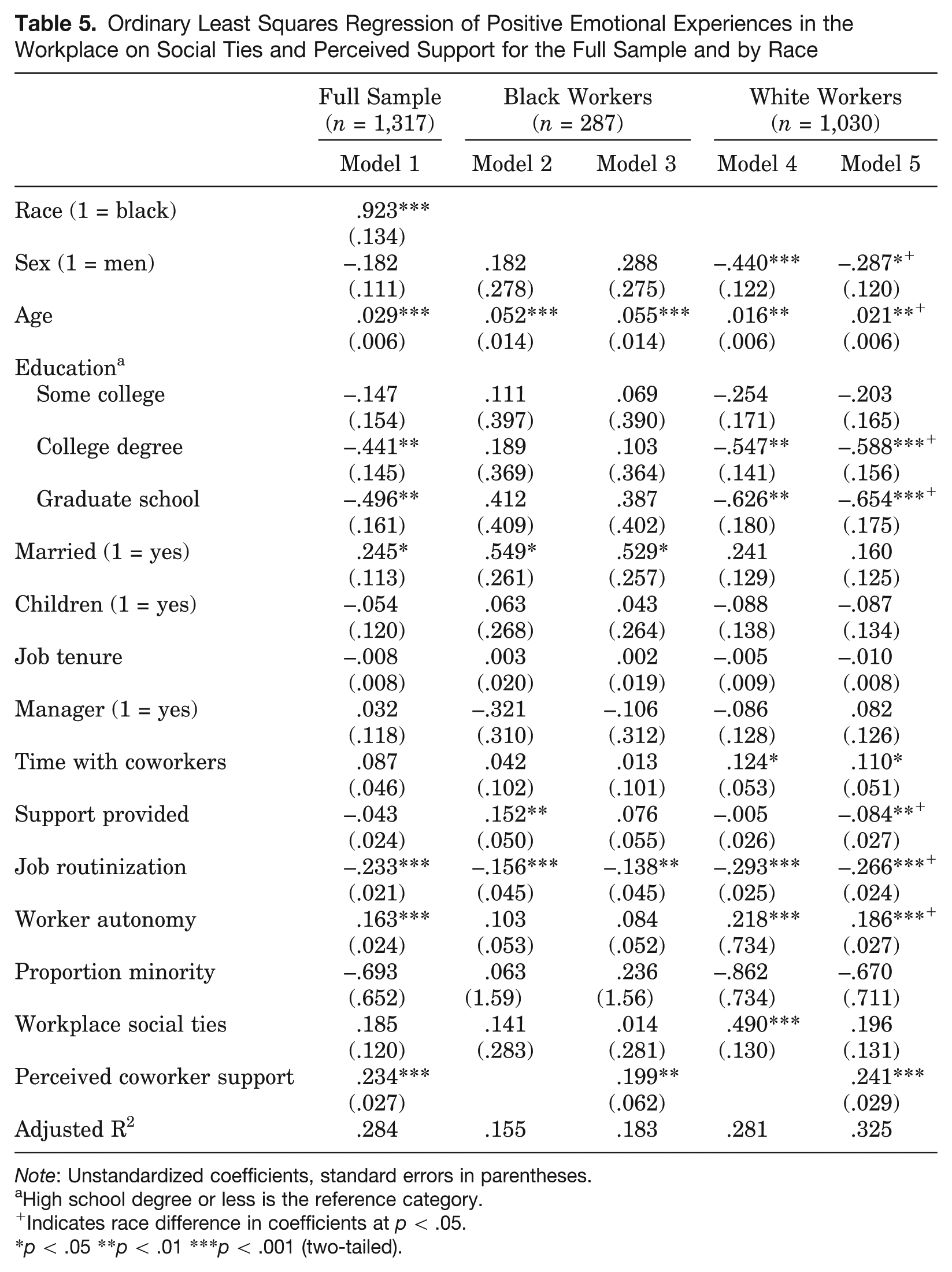
Based on the importance of the findings on racial differences thus far, the remaining sets of results are presented for the full sample first and then separately for blacks and whites. Separating the analyses by race allows us to assess whether the structural and social psychological factors, workplace social ties, and perceived coworker support have similar influences on the workplace emotional experiences of blacks and whites. As shown in Model 1 of Table 5 blacks report significantly higher levels of positive emotions at work than whites, net of the demographic and work-related control variables. One might expect blacks to feel low levels of positive emotion at work given that blacks frequently occupy positions of lower status than whites, have fewer workplace social ties, and perceive less coworker support compared to whites. In this sample of public sector workers, however, black workers are happier while at work than their white colleagues. Turning to the split sample analyses, we see that a significant association between workplace social ties and positive emotional experiences is present among white workers only (Model 4, Table 5). That is, for white workers, a greater number of workplace social ties corresponds to more positive emotional experiences in the workplace. Among black workers, social ties do not significantly relate to positive emotional experiences at work (Model 2, Table 5). Likewise, the proportion of minorities in the job is not associated with positive emotional experiences at work (Models 2 and 4, Table 5). Thus, although black workers may form more friendships in jobs with greater numbers of minority employees, the presence of other minority workers in a job does not influence the emotional well-being of black workers, as it is assessed in this study.
Ordinary Least Squares Regression of Positive Emotional Experiences in the Workplace on Social Ties and Perceived Support for the Full Sample and by Race
Note: Unstandardized coefficients, standard errors in parentheses.
High school degree or less is the reference category.
Indicates race difference in coefficients at p < .05.
p < .05 **p < .01 ***p < .001 (two-tailed).
To test Hypothesis 7, that social ties are associated with emotional experience because their presence increases perceptions of social support, we add perceived coworker support to the models. As shown in Models 3 and 5, perceived coworker support is a significant predictor of positive emotional experience in the workplace for both black and white workers. Tests of the equality of the regression coefficients showed no significant differences between black and white workers in the magnitude of the coefficients, indicating similar associations between perceived support and emotion in both groups. Furthermore, as shown in Model 5 of Table 5 we find support for a mediation effect of perceived support among white workers. These findings suggest that for white workers, social ties heighten positive emotional experiences at work through increased perceptions of social support. Thus, Hypotheses 6 and 7, that workplace social ties positively influence workplace emotional experiences and that this effect is mediated through perceived coworker support, receive partial support—they only hold among white workers.
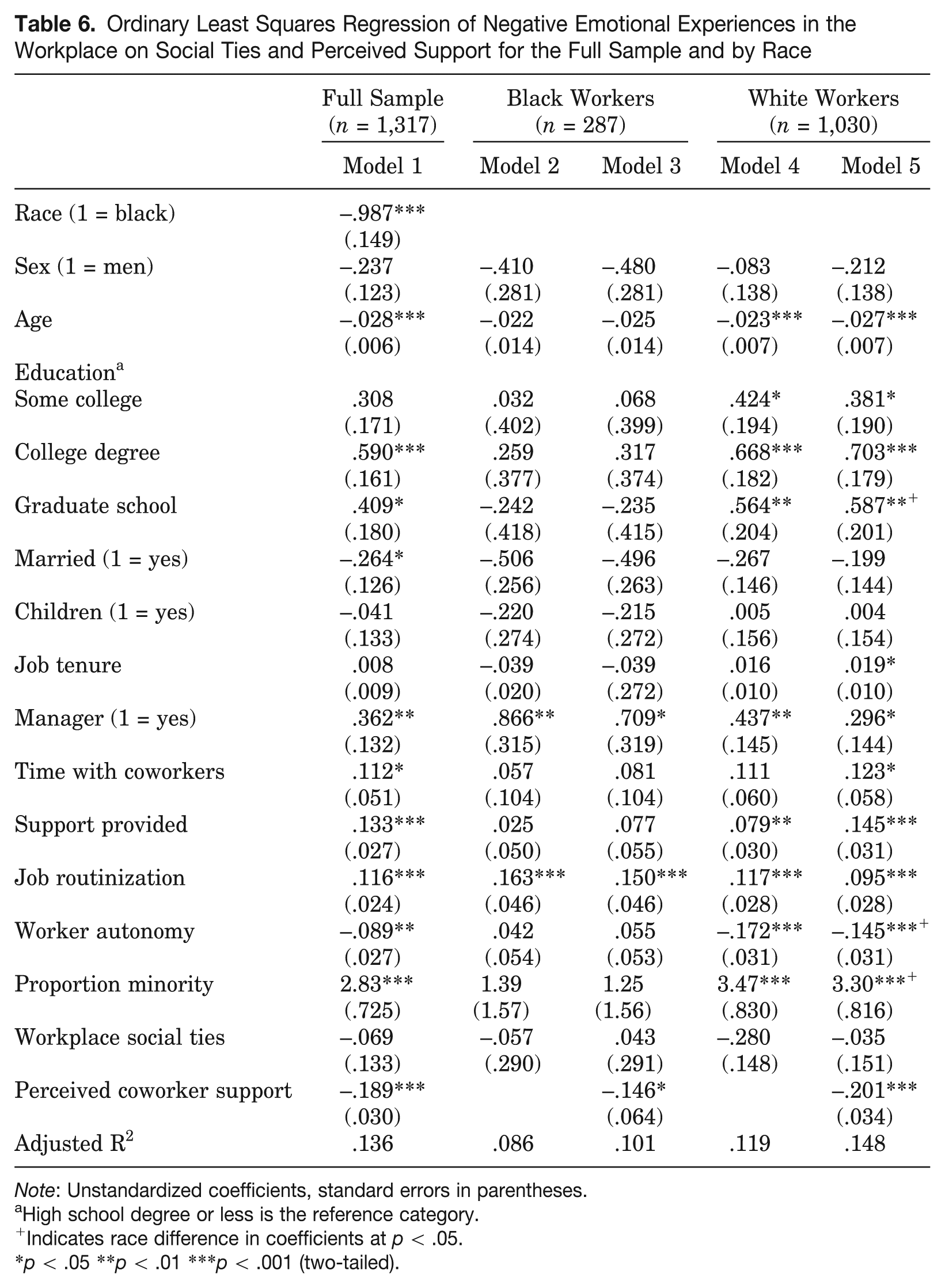
Turning to Table 6 we see similar patterns in the effects of coworker relationships on the negative emotional experiences of black and white workers. Again, Model 1 suggests fewer negative emotional experiences in the workplace for blacks relative to whites, and the demographic and work-related variables do not explain this association. In addition, among both blacks and whites, social ties are not significantly associated with negative emotional experiences in the workplace (Models 2 and 4). Both groups, however, report fewer negative emotional experiences at work when they perceive higher levels of coworker support (Models 3 and 5). Thus, for both black and white workers, perceived coworker support is associated with heightened positive and lowered negative emotional experiences in the workplace. While social ties do not significantly influence negative emotional experience, they are associated with positive emotional experience for white workers only. In general, these results suggest that the quality of coworker relationships matters more for workplace emotional experiences than the quantity of coworker relationships. 10
Ordinary Least Squares Regression of Negative Emotional Experiences in the Workplace on Social Ties and Perceived Support for the Full Sample and by Race
Note: Unstandardized coefficients, standard errors in parentheses.
High school degree or less is the reference category.
Indicates race difference in coefficients at p < .05.
p < .05 **p < .01 ***p < .001 (two-tailed).
It is noteworthy that there is a race difference in the effect of support provided to coworkers and emotional experience. This variable was included in the models as a control because workers who provide more support to others appear to perceive more support in return (Table 4). As shown in Tables 5 and 6 the amount of support white workers provide to others is associated with decreased positive emotional experiences and increased negative emotional experiences. This suggests that white workers do not enjoy providing support to other workers. In contrast, providing support to other workers is actually associated with increased positive emotional experiences for black workers (Model 2, Table 5). This effect is explained with the addition of perceived coworker support to the model, which suggests that positive emotions are associated with providing support to others for black workers because those workers perceive greater levels of coworker support. One possible explanation is that by providing support, black workers feel valued and more integrated into the work environment, which may lead to perceptions of greater coworker support, whereas white workers, who do not experience social isolation in the same way, find providing support to be a burden.
In addition to the findings related to our hypotheses, there are some striking race differences in the effects of the demographic and job characteristic variables on workplace emotional experiences. Notably, if we examine the entirety of the results presented in Tables 5 and 6 it is clear that a greater number of factors in the workplace appear to negatively impact the emotional experiences of white workers than is the case with black workers. For example, job tenure is positively associated with negative emotional experiences for white workers but is not associated with the emotional experiences of black workers. That is, for white workers, the longer they have worked in their jobs, the more negative emotions they experience in the workplace. Also, while level of education does not influence the emotional experiences of black workers, white workers with higher levels of education experience fewer positive emotions and more negative emotions while working compared to white workers with less education.
Tables 5 and 6 also show a race difference in the impact of job characteristics on workplace emotions. While job routinization and worker autonomy are both associated with workplace emotional experiences for white workers, among black workers only job routinization has these associations. Finally, although the proportion of minority workers in a job does not influence the workplace emotional experiences of black workers, Models 4 and 5 of Table 6 reveal that white workers in jobs with a greater presence of minority workers feel more negative emotions while at work than their white counterparts in less racially diverse jobs, net of the demographic and work-related controls. We originally theorized that the proportion of minority workers in a job would benefit the well-being of black workers. Given its negative association with workplace social ties and positive association with negative emotions in the workplace for whites, however, the proportion of minority workers in a job appears to affect the workplace experiences for whites even more so than for blacks.
Discussion and Conclusions
Using survey data from a large sample of state employees, we examined race differences in the quantity and quality of workplace social relationships. In addition, we assessed the emotional consequences of relationships with coworkers for both black and white workers. Previous research points to race-based inequality in the quantity and quality of workplace social ties and emotional closeness with coworkers (e.g., Feagin and Sikes 1994; Harvey Wingfield 2007, Roscigno 2007; Vallas 2003); however, race differences in the quantity and quality of coworker relationships and their emotional benefits had not been analyzed directly. Thus, the current study extends previous work by assessing the influence of structural and social psychological factors on workplace relationships and building on qualitative findings that suggest a disadvantage in coworker support for black workers.
In general, our findings point to a social disadvantage for African Americans, compared to whites, in terms of relationships with coworkers. More specifically, black workers reported having fewer workplace social ties than whites. Based on the argument that occupational self-direction, as assessed by job routinization and worker autonomy, influences a worker’s ability to establish close relationships with coworkers, we expected that the overrepresentation of black workers in jobs with less desirable characteristics would explain the race discrepancy in social ties. While we did find that black workers were working in jobs characterized by more routinization and less autonomy compared to their white counterparts, and job routinization was negatively associated with workplace social ties, these job characteristics did not account for the relative lack of workplace social ties among blacks.
Using an indirect measure of the proportion of racial minorities in the workplace, we found preliminary support for the principle of homophily in workplace social ties. In particular, consistent with homophily, blacks report more workplace social ties when there are greater proportions of minority workers in the job, while whites report fewer workplace social ties with higher proportions of minorities in the job. Thus, the racial composition of the workplace appears to influence the formation of social relationships among workers. This finding indicates that black workers may experience less social isolation when there are other racial minorities in the workplace; however, with increasing racial diversity in the workplace, white workers appear to form fewer friendships with their coworkers. While our data do not enable us to determine the race of those with whom workers are forming social ties, this pattern suggests that the presence of racial minorities in a workplace alone may not facilitate the formation of social ties across racial groups.
In addition to having fewer workplace social ties than whites, blacks also perceived less support from their coworkers. Although a greater proportion of workplace social ties corresponded to perceptions of more coworker support, workplace social ties did not fully mediate the relationship between race and perceived coworker support. Furthermore, workplace social ties were unrelated to negative emotional experiences for both black and white workers and were only associated with positive emotional experiences for white workers. Also, perceived coworker support mediated the association between social ties and positive emotional experience, but only among white workers. These findings illustrate that workplace social ties have different emotional effects for black and white workers. White workers appear to experience emotional benefits from social ties because they increase perceptions of coworker support. Among black workers, however, social ties are not correlated with similar emotional benefits. The only emotional benefit of workplace social ties found for black workers was perceptions of increased coworker support.
With regard to everyday emotional experiences in the workplace, blacks were not disadvantaged by their lack of workplace social ties relative to whites. Quite the contrary, our analysis of the direct effect of race on workplace emotional experiences revealed that despite working in more routine and less autonomous jobs, having fewer workplace social ties, and feeling less supported by their coworkers, blacks reported significantly more positive and fewer negative emotions in their workplace compared to whites. These findings illustrate the “race paradox in mental health,” where African Americans consistently report similar or better mental health outcomes than whites, despite their generally lower socioeconomic status and greater exposure to discrimination (Mouzon 2013:470). In addition, the advantage of African Americans over whites on our context-specific measures of work-related emotional well-being suggests that this paradox may extend beyond general mental health indicators.
Furthermore, our analyses also revealed unexpected race differences in the significant predictors of workplace emotions. Specifically, many more workplace factors negatively impacted emotional well-being for white workers than for black workers. Notably, among whites, the proportion of racial minorities in a job was positively associated with negative emotional experiences at work. Future research may consider how the increased negative emotions experienced by whites in racially diverse jobs might affect the social atmosphere of the workplace. While scholars have investigated the influence of various work characteristics on workers’ emotions, race is rarely considered as a key factor in such analyses (Mirchandani 2003). Our varied findings for black and white workers signal the need to more carefully consider race differences in examinations of workplace emotional experiences.
Although our analyses were limited in that we could not obtain a precise measure of the racial composition of the workplaces included in the sample, our findings indicate that an interesting direction for future research would be to incorporate measures of emotional experiences in organizational demography analyses. The organizational demography literature has provided valuable insight into access to social networks and race differences in job attainment and upward mobility (Bacharach et al. 2005; Elliott and Smith 2004; Ibarra 1995; Kanter 1977; Wharton et al. 2000). Yet, the more micro-level mechanisms behind the production and maintenance of racial inequality have not been thoroughly examined (DiTomaso, Post, and Parks-Yancy 2007; Reskin 2003). A greater focus on the emotional dynamics of workplace interactions and how they vary by workplace racial composition may provide further insight regarding the ways that African Americans and other racial minority group members experience the social atmosphere of the workplace. In addition, given the prior research demonstrating the effects of gender on coworker relationships and accounts of gendered racism in the workplace, it is likely workplace experiences vary by more complex combinations of racial and gender minority status (Harvey Wingfield 2007, 2010, 2012; Mirchandani 2003; Schieman 2006). Future research may assess the impact of race and gender and workplace context on coworker relationships and worker well-being.
While our results clearly show a racial disadvantage in workplace social ties and perceived coworker support for African Americans, it must be noted that longitudinal data are necessary to substantiate our findings regarding the emotional impact of coworker support. Although we can be sure that race precedes an individual’s perception of coworker support, we cannot determine if social support causes increased worker well-being or vice versa. However, previous research supports the causal influence of social support on health and well-being (e.g., Cohen and Janicki-Deverts 2009; Ertel, Glymour, and Berkman 2009; Thoits 1995, 2011; Uchino 2004). Thus, we have reason to believe that perceptions of coworker support may increase the positive emotional experiences and decrease the negative emotional experiences of workers. Future research may be directed toward identifying more long-term impacts of coworker relationships.
It should also be noted that the focus on state employees limits the generalizability of our findings to the experiences of public sector workers. A potential benefit of examining the workers in the public sector, however, is that our analyses may give us a conservative estimate of the disadvantage in coworker support experienced by African Americans. The public sector has been cited as responsible for an increase in the socioeconomic status of African Americans (e.g., Collins 1997; Wilson 2006). Because of its formalized hiring and promotion procedures, the public sector is viewed as less discriminatory than the private sector, and as such, the public sector employs a greater proportion of black workers than the private sector (Carrington, McCue, and Pierce 1996; Grodsky and Pager 2001; Reskin, McBrier, and Kmec 1999; Tomaskovic-Devey 1993; Wilson 2006). For these reasons, African American workers in the public sector may experience greater social psychological benefits of working, such as job satisfaction and organizational commitment, compared to African Americans in the private sector (Wilson 2006). Thus, our sample provides a case in which to examine potential race differences in social support where equality in other factors important to worker well-being should be maximized. Furthermore, while our focus on state employees enabled us to obtain a simple random sample in which 20 percent of respondents were African American, our analyses are limited by the relatively small number of African American workers in our sample (n = 287), and it is possible that those employees who chose to respond to the survey were those with more positive workplace experiences. Future research using larger samples of black workers is necessary for a more thorough examination of unique predictors of workplace emotional experiences.
In sum, our analyses reveal that black employees have fewer workplace social ties and perceive less coworker support than their white colleagues while perceived coworker support is equally beneficial to the emotional well-being of both black and white workers. Despite this race-based disadvantage in coworker relationships, blacks reported experiencing more positive and fewer negative emotions in the workplace compared to whites. These findings point to a need to examine race more carefully in studies of workplace emotional experiences. Some factors other than those considered here—job routinization, worker autonomy, coworker relationships—are contributing to better emotional experiences for blacks compared to whites in public sector employment. It should also be noted that the general social support literature documents health benefits of both the quantity and quality of social ties (Umberson and Montez 2010). Therefore, the lack of association between workplace social ties and the emotional outcomes that we analyzed should not serve to deemphasize the potential implications of the relative lack of workplace friendships reported by black workers. Furthermore, it is possible that the perceived coworker support and emotional experience measures used in this study do not adequately capture the quality and benefits of coworker relationships, particularly among blacks.
Much research looking at racial inequality in the workplace examines structural discrimination in hiring and promotion, which has become more hidden and covert since the passage of the 1964 Civil Rights Act (Bonilla-Silva 2003; Herring 2002; Pager and Shepard 2008; Tomaskovic-Devey and Skaggs, 1999). Our research reveals and makes visible yet another hidden, subtle, and often invisible form of structural inequality by demonstrating racial variation in the distribution of workplace social ties and perceived coworker support, which has implications for the emotional experiences of workers. It is likely that other racial and ethnic minority group members also experience such inequalities in the workplace, a line of inquiry that should be explored in future studies of social support. Our study also highlights the importance of examining the micro-level experiences of individuals in the workplace. For people of color, discrimination does not only affect gaining access to employment, getting one’s foot in the door, or opportunities for promotion; inequality is also found in how the workplace is experienced by non-whites in day-to-day interactions.
Footnotes
Acknowledgements
An earlier version of this article was presented at the 2012 annual meeting of the American Sociological Association. We would like to thank Peggy Thoits, the SPQ editors, and the anonymous reviewers for their valuable suggestions.
Funding
The author(s) disclosed receipt of the following financial support for the research, authorship, and/or publication of this article: This research was funded in part by a Dissertation Improvement Grant from the National Science Foundation (No. 0424969).
1
In this article we focus on race differences between whites and African Americans in the workplace. Certainly with the ever-changing sociodemographics of the American workplace, future research on social support in the workplace should examine the experience of other racial and ethnic groups as well.
2
Kanter (1977) suggested an alternative relationship, that women working in low status jobs with little opportunity for advancement would form social relationships with their coworkers and gain satisfaction from those relationships because they did not gain satisfaction from their jobs themselves. Although this reasoning suggests that workers with less desirable job characteristics may have closer relationships with their coworkers, this hypothesis has not been supported in empirical investigations ( ).
).
3
Here it is important to distinguish between received and perceived social support. Whereas the actual receipt of social support is typically only observed in times of stress, the belief that support is obtainable can have a more constant presence (Thoits 2011). In general, research has illustrated that perceived social support, rather than received support, has the greatest benefits for well-being (Cohen and Wills 1985; Kessler, Price, and Wortman 1985; Thoits 2011; ). Therefore, we focus our analysis on perceptions of social support.
4
The state employs over 37,000 individuals working in over 1,400 positions. The Career Service classification includes occupations in accounting, fiscal management, and statistics; administrative and clerical support; administrative specialty; agriculture, forestry, and wildlife management; recreation; architecture, engineering, drafting, and surveying; arts, library, publishing, and museum services; biological and physical sciences; computer and information sciences; consumer and personal services; corrections; crafts and trades; education and training; health services—mental, physical, and medical; public safety—fire, police, and law; purchasing, property, and stores; social, human, and employment services; and transportation and communications.
5
An analysis of nonresponse by gender and by region of the state did not reveal response bias. The sampling frame used in this study did not list employees by department or job status, therefore we could not include those factors in the nonresponse analysis. In addition, t-tests revealed that compared to the state population as recorded in the 2000 census, the sample contains significantly more non-whites, women, and married individuals than the proportions in the state as a whole. The overrepresentation of women and racial minorities is consistent with work in the public sector.
6
Because this measure is not a precise proportion of workplace social ties, we also estimated the models using variations of this measure. We analyzed the original ordinal variable workplace friends using ordinal logistic regression and included the number of coworkers as a control variable. We also treated workplace friends as a dichotomous outcome (0 = 0 friends, 1 = 1 or more friends) using binary logistic regression. In each analysis, we obtained a pattern of results similar to those obtained using ordinary least squares (OLS), with African Americans having significantly fewer workplace social ties compared to whites and job characteristics failing to account for this difference. For ease of interpretation, we present just the OLS models in the tables. The supplemental analyses are available upon request.
7
As a comparison, we ran separate analyses using 1,141 cases with full agency and job information and with the combined sample of the cases that had job category information only (n = 176) and those with full information (n = 1,141). The results from all analyses were consistent in both samples. In order to retain as much of the sample as possible for all analyses, we present the findings of the analyses with the sample of 1,317 cases. Furthermore, analyses revealed the respondents with data on this variable were significantly younger (46 years compared to 49 years on average) and had a significantly higher level of education (associate or four-year college degree compared to “some college”) than those without data on this variable but were similar to the sample on all key measures.
8
We also included a control for personal income and state pay grade, separately, but neither variable significantly contributed to any of our models. There was substantial missing data on these variables, and to retain as much of the sample for analyses as possible, we excluded the variables from the analyses presented in the article.
9
Separate correlation matrices by race are available upon request.
10
Additional analyses showed that the interactions between race and perceived coworker support and between support provided to others and perceived coworker support were not significant predictors of the emotional outcomes. Although recent research suggests that the benefits of social support depend on the equality of the supportive exchange, it is possible that we did not see this interaction effect because our measures of support provided and perceived support are not comparable (see Nahum-Shani, Bamberger, and Bacharach 2011).
Bios
References
Supplementary Material
Please find the following supplemental material available below.
For Open Access articles published under a Creative Commons License, all supplemental material carries the same license as the article it is associated with.
For non-Open Access articles published, all supplemental material carries a non-exclusive license, and permission requests for re-use of supplemental material or any part of supplemental material shall be sent directly to the copyright owner as specified in the copyright notice associated with the article.
