







Abstract
This study examined associations among marital quality, coparenting, and parenting self-efficacy in parents of young children. Of special interest were possible spillover and stress-buffering effects of the marital and coparenting relationships. The authors sampled 175 married and cohabiting couples. Participants were recruited via an online marketing company and completed surveys on the project’s website. Maintenance strategies were associated with higher parenting self-efficacy for mothers and fathers, and for mothers, their spouse’s reports of his own maintenance behaviors were associated with increased parenting self-efficacy. Undermining coparenting predicted lower parenting self-efficacy for mothers and fathers. There was support for the spillover and stress-buffering hypotheses as evidenced by significant interactions between marital qualities and coparenting predicting to parenting self-efficacy. Findings support a connection between marital and coparenting subsystems; whereby, positivity in one of these relationships can interact to buffer the effects of negativity in the other to maintain or increase parenting self-efficacy.
Parenting self-efficacy refers to parents’ perceptions of their abilities to complete the tasks necessary to raise their child (Coleman & Karraker, 1998). These cognitions are powerful as they are associated with taking on challenges, persevering, and mobilizing resources to achieve parenting goals (Bandura, 1997). They have also been shown to be correlated with engagement in parenting (Jacobs & Kelley, 2006; Shumow & Lomax, 2002), parental warmth, control and discipline (Izzo, Weiss, & Shanahan, & Rodriguez-Brown, 2000), and child management strategies (Ardelt & Eccles, 2001). Parenting self-efficacy can be influenced by various aspects of the environment, especially by other people with whom one shares a close relationship (Bandura, 1997). Because of the substantial impact of parenting self-efficacy on parenting quality, it is important to understand which factors may predict parenting self-efficacy, and parental close relationships may be key in this regard.
Marital Quality
In early studies of parenting self-efficacy, social support was identified as a predictor. Belsky (1981) argues that spousal support may be an even stronger predictor of parenting outcomes than network support. Subsequently, other qualities of parents’ relationships with their spouses have been explored as correlates of parenting, including parenting cognitions. Marital satisfaction predicts fathers’ perceptions of their parenting competence (Bouchard & Lee, 2000). Marital conflict has not been examined as a predictor of parenting self-efficacy but is associated with parenting outcomes, such as harsh parenting practices and controlling discipline (Sturge-Apple, Davies, Cicchetti, & Cummings, 2009).
Relational maintenance, a construct encompassing a number of strategies employed by romantic partners to maintain their relationship (Stafford & Canary, 1991), has not been examined as a predictor of parenting self-efficacy. These behaviors, however, are closely related to other relationship constructs such as satisfaction, commitment, and liking of the partner (Canary & Stafford, 1992; Stafford & Canary, 1991). Maintenance behaviors require thought, energy, and a desire to invest in the relationship. Thus, it is reasonable to infer that such an important relational construct would be a component in understanding parenting self-efficacy.
Coparenting
The coparenting relationship is another relationship that has been linked to parenting outcomes. Coparenting is the relationship between the people responsible for raising a child (Schoppe-Sullivan, Mangelsdorf, Frosch, & McHale, 2004; Van Egeren & Hawkins, 2004). This construct encompasses both the parents’ abilities to coordinate their activities and support one another as well as their nonsupportive responses or efforts to interfere with or undermine one another. Coparenting and marital relations are identified as separate and distinct subsystems within families (Feinberg, 2003; McHale, 1995). Coparenting has been shown to be related to parental involvement (McHale, 1995) or the parenting subsystem.
Less is known about coparenting effects on parental cognitions. Partners sharing parenting responsibilities can act as an almost constant source of information, whether supportive or undermining, regarding one’s performance as a parent. Therefore, it is not surprising that supportive coparenting from the mother is related to the father’s perceptions of his parenting competence (Bouchard, Lee, Asgary, & Pelletier, 2007). Furthermore, for mothers, partner support is associated with a perception of “mother mastery,” a construct similar to parenting efficacy (Martire, Stephens, & Townsend, 1998). In general, evidence linking supportive and undermining coparenting or characteristics of marital relations to parenting self-efficacy is scarce, and as noted, these could prove to be critical determinants.
Family Systems Theory
The present study will expand on existing evidence that qualities of the marital and coparenting subsystems are associated with parenting self-efficacy. Family systems theory (P. Minuchin, 1985) will be employed to this end. According to family systems theory, individuals within the family form subsystems and the concerns that affect one subsystem will likely affect the entire family (P. Minuchin, 1985; S. Minuchin, 1974). Marriage and parenting subsystems in families have been shown to be connected through spillover and stress-buffering processes (Erel & Burman, 1995; Grych, 2002). These processes will be explored as influencing connections among dimensions of marriage, coparenting, and ultimately parenting self-efficacy.
Spillover (additive associations)
One explanation for how the marital relationship influences parenting is through the spillover of affect from one relationship into another. An example of the spillover hypothesis is when marital conflict negatively affects parent–child relationships (Sturge-Apple et al., 2009). Negativity in either the marital or the coparenting relationship is expected to negatively affect parenting self-efficacy. Past investigations exploring spillover hypotheses have focused on direct associations between one relationship and another. Family systems theory discusses the fact that individual family members may participate in more than one relationship within families and that these different relationships can be operating simultaneously in influencing parents’ cognitive functioning. Investigators are producing results to support this contention. For example, there is evidence that coparenting may serve as a mediator between marital conflict and parenting (Fincham & Hall, 2005; Floyd, Gilliom, & Costigan, 1998; Margolin, Gordis, & John, 2001).
Stress buffering (compensatory association)
Compensatory effects may be observed when more positive qualities of one subsystem compensate for or buffer against negative qualities of the other dyadic subsystem (Erel & Burman, 1995). For the present study, we explored the possibility of parents’ coparenting relationships buffering the effects of negative marital quality on parenting self-efficacy or vice versa. For example, supportive coparenting may compensate for the potentially damaging effects on parenting self-efficacy of less satisfaction in a marriage, or more spousal conflict. Alternatively, marital relations characterized by their positivity may compensate for the potentially negative effects of undermining coparenting on parenting cognitions. The compensatory model is an extension of the stress-buffering model by allowing for a range of negative features of relationships beyond stress induction and focuses attention on the diverse functions of various subsystems within the family.
The Present Study
This review of the literature suggests that parenting self-efficacy is the product of a variety of contextual factors, including qualities of parents’ relational contexts. This study extends this line of exploration by examining multiple dimensions of marital quality simultaneously. The first question addressed was how different dimensions of marital quality and coparenting are directly related to parenting self-efficacy. It was expected that marital satisfaction, maintenance, and coparental support, regardless of reporter as self or partner, should promote or positively influence parenting self-efficacy. Similarly, marital conflict or high undermining coparenting, regardless of reporter, should negatively affect parenting self-efficacy. In addition to these predicted direct associations, the marital and coparenting systems may exert influence simultaneously and additively. These analyses explored the question of whether negativity in two subsystems would be even more detrimental in undermining parenting self-efficacy. Likewise, the reverse was asked; whether positivity in two subsystems would have an even more beneficial effect in promoting parenting self-efficacy.
Finally, it has been observed (Erel & Burman, 1995) that positive qualities of one subsystem may buffer or compensate for the impact of the experience of conflictual interactions or negative emotions in a second subsystem. This tenet results in two related questions explored here. Can supportive coparenting protect against/compensate for the negative effects of high marital conflict, low satisfaction, and few positive maintenance behaviors in potentially reducing self-efficacy? Similarly, can positive marital relations counteract or compensate for the potentially negative impact of undermining coparenting? Alternatively, a compensatory effect would be observed, whereby high levels of positive indices of marital quality (e.g., satisfaction, maintenance) would be associated with higher levels of parenting self-efficacy, even if parents are reporting higher levels of undermining coparenting.
Given the present data were all collected at one point in time restricting tests of mediation, we posited that the effects of qualities of relationships could be additive. That is, it was expected that in the context of a conflictual marriage, the associations between an unsupportive coparenting relationship and a diminished sense of self-efficacy would be stronger. As a result, a poor coparenting relationship in the context of marital conflict may have a greater influence on parents’ cognitions about their own parenting efficacy than if difficulties are experienced in only one of the relational contexts. By considering different kinds of family relations as additive, the family milieu and its influence on individual cognitions is more completely and adequately represented.
Although prior research has primarily explored negative affective spillover, the spillover hypothesis does not exclude the possibility that positive experiences can spillover. Thus, additive effects would be observed if spouses who are satisfied with their marriages, engage in maintenance behaviors, and/or report little conflict would report parenting cognitions identified with successful parenting when they are also in coparenting relationships characterized by shared parenting, solidarity, and mutual support.
Method
Sample
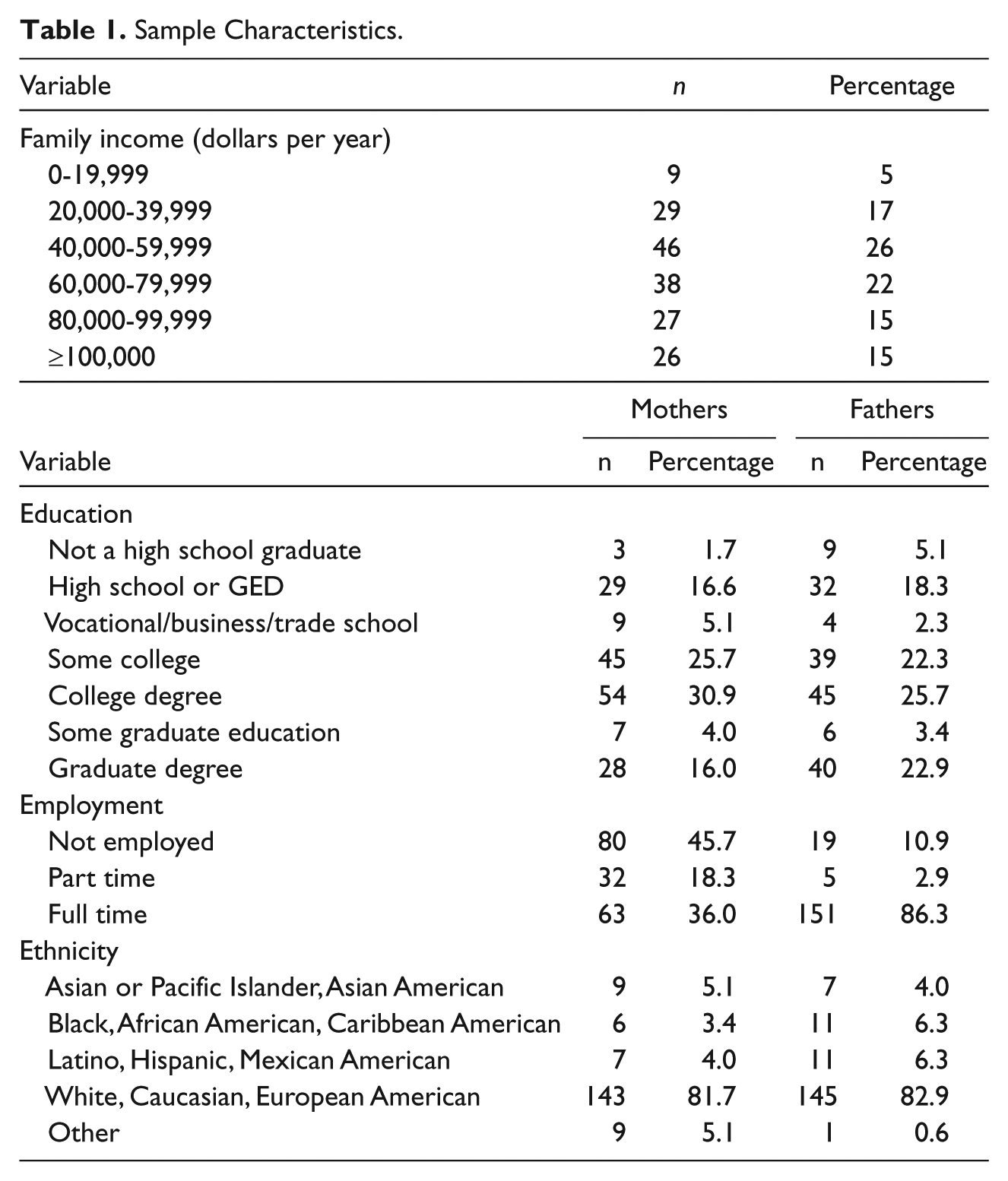
The present study consisted of 175 heterosexual, married, or cohabiting couples (350 total respondents). Criteria for inclusion were that parents must (a) be older than 18 years, (b) be the biological or adoptive parent of at least one child between the ages of 2 and 7 years, and (c) be married to or cohabiting with the biological or adoptive parent of this child. The majority of the mothers and fathers reported being White, Caucasian, or European American (mothers n = 143, 82%; fathers n = 145; 83%), and most couples were married (n = 149, 85%). The average age of mothers was 34.89 years (SD = 6.39) and that of fathers was 37.66 years (SD = 7.75). The children of these couples consisted of 85 boys (49%) and 90 girls (51%) and their average age was 4.89 years (SD = 1.29). Parents reported their relationship length to be on average 11.28 years long (SD = 5.49), and a majority of the families in this sample reported having an income of $50,000 or greater (66.9%). See Table 1 for more sample information.
Sample Characteristics.
Procedure
An Internet-based company specializing in online research panels was contracted to invite families to participate in the study and instruct them on how to access the web-based survey. Invitations to participate in this study were sent via e-mail. Included in the e-mail was information about the criteria for inclusion and the link to the survey that was hosted on the university website. The first parent was given a log-in number to be used by the second parent to gain access to the second survey. To assure confidentiality, identifiers such as names and e-mail addresses were not collected from participants. Participants earned $10 in points from the company for completing this survey.
We contracted with the research panel company to recruit and compensate 200 couples to our study. A total of 421 people went to the site, obtained an identification number for the study, and filled out at least part of the questionnaire. To participate in the study, both parents were required to fill out most of the survey and 203 couples filled out the questionnaires before data collection was closed. Of the 203 couples who completed both surveys, 28 couples were not included in the data analysis because they were not the parents of a child within the specified age range of between 2 and 7 years (they reported for an older child) or the parents reported on two different children. In total, 175 couples participated in the present study.
Measures
The means and standard deviations for the mothers and fathers are presented in Table 2.
Summary of Intercorrelations, Means, and Standard Deviations Among Study Scales.
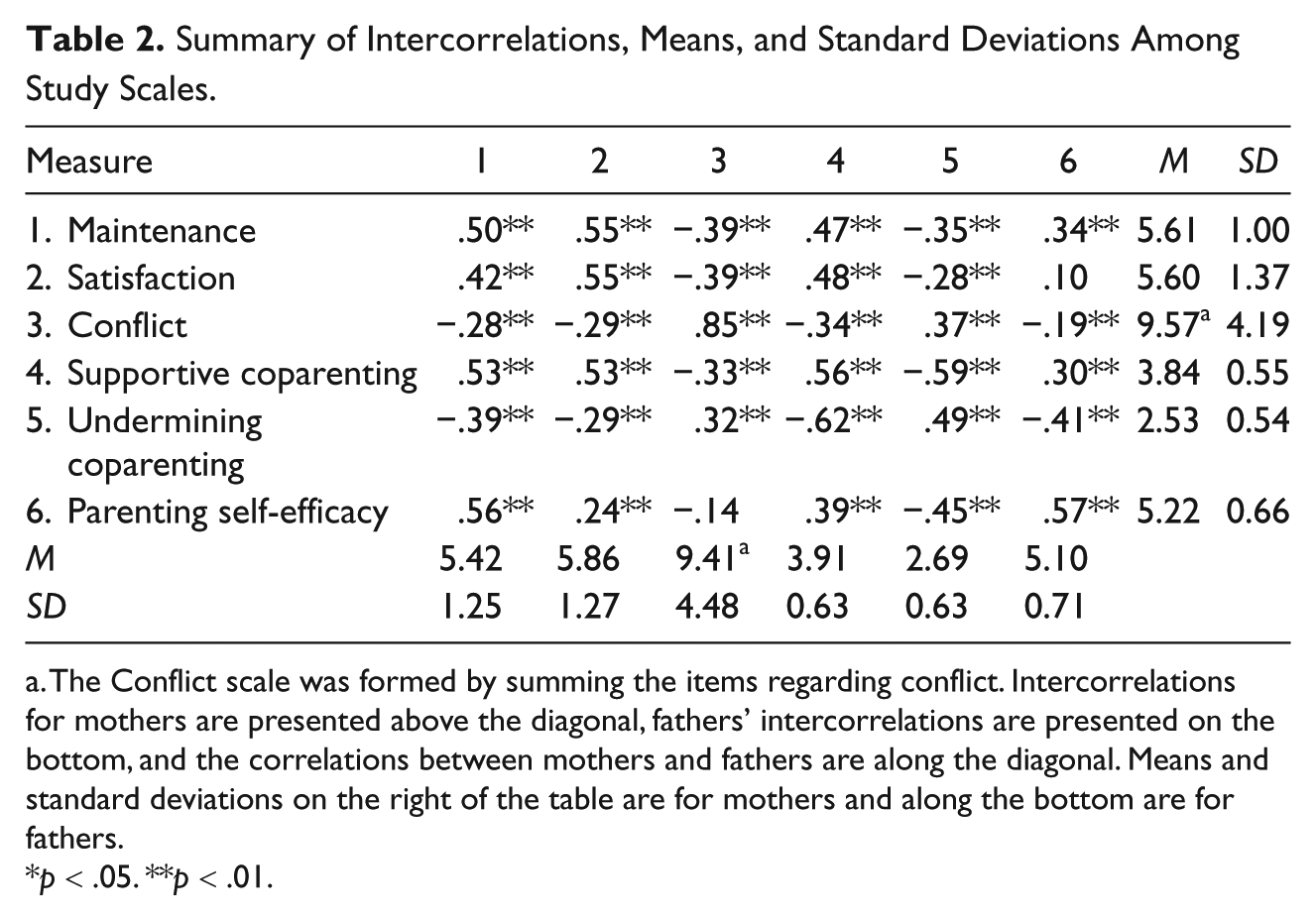
The Conflict scale was formed by summing the items regarding conflict. Intercorrelations for mothers are presented above the diagonal, fathers’ intercorrelations are presented on the bottom, and the correlations between mothers and fathers are along the diagonal. Means and standard deviations on the right of the table are for mothers and along the bottom are for fathers.
p < .05. **p < .01.
Maintenance
Maintenance behaviors were measured using a portion of the positive subscale of a maintenance scale developed by Stafford and Canary (1991). The entire measure of marital maintenance could not be included in the present study as this questionnaire was online and the questionnaire needed to be appropriate in length for the level of compensation respondents were given. Respondents were asked to report on their own positive maintenance behaviors. Eight of the 10 items were selected to assess the extent to which parents engaged in positive behaviors designed to promote enjoyable interactions with their partner. Respondents were asked to rate on a Likert-type scale ranging from 1 (never) to 7 (frequently) how often they engaged in specific behaviors, such as “Attempt to make our interactions very enjoyable, Am very nice, courteous, and polite when we talk.” Alphas were acceptable (fathers = .98, mothers = .87). Responses to these items were averaged to create a scale score for maintenance; higher scores on this scale represented more maintenance behaviors.
Satisfaction
Marital satisfaction refers to the extent to which the respondent was content with his or her marriage. For the present study, it was measured using the Kansas Marital Satisfaction Scale (Schumm, Paff-Bergen, Hatch, & Obiorah, 1986). The three items on the scale include “how satisfied are you with your marriage;” “how satisfied are you with your spouse/partner as a spouse/partner;” and “how satisfied are you with your relationship with your spouse/partner.” Internal reliability for this scale was good for mothers (α = .96) and fathers (α = .98). Respondents indicated their level of satisfaction by choosing 1 of 7 options for each question (1 = extremely dissatisfied, 7 = extremely satisfied). Responses to these items were averaged to create a scale score for satisfaction; higher scores represented greater relationship satisfaction.
Conflict
Four items were used to assess marital conflict. These items come from a study by Choi and Marks (2008). Respondents were asked to rate how often they fight about four topics: finances, sex, time together, and chores. A Likert-type scale ranging from 1 (never) to 6 (almost every day) was used. The four items were summed to form a conflict score. Internal reliability was good for mothers (α = .77) and fathers (α = .81). Higher scores for conflict represented higher amounts of conflict in the relationship. It was important to discriminate between conflict over marital issues and conflict over parenting issues. Thus, the couples were explicitly asked to report on conflicts about issues not involving the child.
Supportive coparenting
Supportive coparenting was measured by combining three subscales adapted from the Family Experiences Questionnaire by Van Egeren and Hawkins (2004) resulting in a total of 23 items. Examples of items from the supportive coparenting subscales are as follows. Coparenting solidarity (10 items), “Parenting has brought my spouse and me closer together.” Coparenting support (5 items), “My spouse appreciates how hard I work at being a good parent.” Shared parenting (8 items), “My spouse is willing to make some personal sacrifices in order to help with the parenting.” Respondents were asked to indicate their level of support using four choices (1 = strongly agree, 2 = agree, 3 = disagree, and 4 = strongly disagree). These items were reverse coded and averaged to make interpretation of the findings easier. Higher scores on the scale represented greater supportive coparenting. Coparenting solidarity, coparenting support, and shared parenting were all highly correlated with one another (r = .55-.95). To avoid issues of multicollinearity and to increase parsimony, these three constructs were averaged to create a single variable labeled supportive coparenting. Internal reliability was good for mothers (α = .95) and fathers (α = .93).
Undermining coparenting
Items from The Family Experiences Questionnaire adapted by Van Egeren and Hawkins (2004) were also used to assess undermining coparenting. Participants were asked to indicate their perceptions of the extent to which they feel they are undermined or denigrated by their spouse when it comes to parenting and we used the mean of the six items. Examples of items are “My spouse thinks I am a bad influence on the children,” and “As a parent, I cannot seem to do anything right in my spouse’s eyes.” Respondents had a choice of four responses for each question (1 = strongly agree, 2 = agree, 3 = disagree, and 4 = strongly disagree). Scores were reverse coded and averaged to make interpretation of the findings easier; higher scores represented more undermining. This scale had adequate internal consistency (mothers’ α = .83, fathers’ α = .87).
Parenting self-efficacy
To measure parenting self-efficacy, the Berkeley Parenting Self-Efficacy Scale (Preschool Version), developed by Holloway, Suzuki, Yamamoto, & Behrens (2005), was used. This scale contains questions designed to assess how well a parent believes he or she can parent his or her child. The scale consists of 10 items designed to measure how well a parent believes he or she can do specific parenting tasks. In addition to the 10 items described above, 15 items were added to the scale asking parents to rate themselves on their ability to help their child accomplish developmental tasks. Examples of the development tasks include respecting adults, expressing thoughts clearly, and continue trying even when something is difficult. Participants were asked to respond using a Likert-type scale (1 = not at all confident to 6 = very confident). These items were developed by Holloway et al. for the Berkeley Parenting Self-Efficacy Scale (Preschool Version) as well (personal communication, January 15, 2007). The two scales were combined, and the internal reliability for the 25-item scale was acceptable for mothers (α = .95) and fathers (α = .96). A mean score was computed with higher scores representing greater parenting self-efficacy.
Results
Both married and cohabiting parents were included in the present study; however, the possibility of differences between the married and cohabiting families on key study variables made comparing these two groups essential. Independent samples t tests were used to determine if there were significant differences between married and cohabiting parents for seven study variables. Cohabiting versus married mothers and cohabiting versus married fathers were analyzed separately. For mothers, only their reports of supportive coparenting were significantly different; mothers who were married reported more coparenting support (M = 3.88, SD = 0.51) than mothers who were cohabiting (M = 3.59, SD = 0.69), t(172) = −2.01, p = .05 (two tailed). Married fathers reported significantly less undermining coparenting (M = 2.65, SD = 0.59) than cohabiting fathers (M = 2.95, SD = 0.79), t(171) = 2.28, p = .02 (two tailed). Married fathers also reported greater marital/relationship satisfaction (M = 5.94, SD = 0.10) than cohabiting fathers (M = 5.33, SD = 0.33), t(171) = −2.23, p = .03 (two tailed).
Correlations Among Marital Quality, Coparenting, and Parenting Self-Efficacy
For both mothers and fathers, the marital and coparenting indices were highly intercorrelated (see Table 2). Additionally, mothers’ and fathers’ scores were highly intercorrelated with one another for each of those indices, particularly reports of conflict Parenting self-efficacy was positively associated with maintenance and supportive coparenting and negatively associated with conflict and undermining coparenting for mothers. For fathers, parenting self-efficacy was positively associated with maintenance, satisfaction, and supportive coparenting and negatively associated with undermining coparenting.
Regression Analyses
The following describes the regression analyses used to test associations among marriage, coparenting, and parenting self-efficacy. Direct effects of marriage and coparenting indices were tested as well as the interactive effects of marriage and coparenting on parenting self-efficacy. Because of the nonindependent nature of their reports, mothers and fathers could not be assessed in the same regression equations (Kenny, Kashy, & Cook, 2006). Mothers’ and fathers’ self-efficacy scores were run separately but their partners’ reports of the marriage and coparenting relationships were included in each analysis, respectively. A total of four regression analyses, two for mothers and two for fathers, were employed in testing the hypothesized associations on this study.
In the first step of each of the regression equations, four control variables were entered, namely, relationship length, relationship status, level of education, and child gender. Previous studies have established associations between child gender and parenting outcomes (e.g., Kaczynski, Lindahl, Malik, & Laurenceau, 2006; McHale, 1995). Additionally, exploratory analyses identified parents’ relationship length, parents’ marital status, and parents’ level of education as possible confounding variables.
The six marital indices (as reported by both the mother and father) and either the supportive coparenting or undermining coparenting subscale (from each parent) were entered into the second step of the equation to test direct effects of marriage and coparenting on parenting self-efficacy. To test possible interactions between marital quality and coparenting indicators, the steps outlined in Baron and Kenny (1986) were used. The third step of the equation contained the interactive terms created by multiplying centered versions of each of the marital and coparenting indices (both the individual’s and their partner’s reports). For each regression, six interaction terms were entered into the third step: three reflecting the individual’s reports of his or her marital quality interacting with either supportive or undermining coparenting and three reflecting the partner’s reports of the marital quality interacting with either supportive or undermining coparenting.
Significant interactions were graphed using high, medium, and low values obtained using the mean and plus one standard deviation and minus one standard deviation of the mean of the marital quality indicators, and simple slope analyses were run to determine if the slopes were significant at those values (Aiken & West, 1991). An alpha level of .05 was used for all statistical tests, and all four equations were significant overall with R2 values ranging from .28 to .52.
Control variables
An examination of the ΔR2 values for the four equations predicting to self-efficacy revealed that the first steps were significant in the equations associated with fathers’ parenting self-efficacy scores. In both equations, child’s gender was associated with a significant coefficient. Overall, fathers of girls reported being significantly more confident in their parenting abilities than fathers of boys. Gender of child was not a significant predictor of parenting self-efficacy for mothers. For mothers, relationship length was associated with a significant beta in association with parenting self-efficacy; however, the ΔR2 for the block of control variables was not significant.
Direct effects of marital and coparenting quality
When self-efficacy was regressed onto the control, marital, coparenting, and interaction terms, the ΔR2 values associated with these steps were statistically significant in all four equations. The variance accounted for by these direct effects was .20 to .23 for mothers and .32 to .39 for fathers (see Tables 3 and 4). Standardized betas are reported in the text and unstandardized betas are reported in the tables. The findings regarding the direct associations between marriage, coparenting, and parenting self-efficacy were mixed in their support for the present study hypotheses. Both mothers’ and fathers’ reports of their own marital maintenance behaviors were significantly associated with mothers’ reports of parenting self-efficacy (β = .23, p < .05 and β = .25, p < .05, respectively). The more mothers reported engaging in positive marital relationship maintenance, the higher they rated their parenting self-efficacy. Additionally, the greater the fathers’ (mothers’ spouses) reports of engaging in positive marital maintenance behaviors, the more likely the mothers were to rate their own parenting self-efficacy more positively. When fathers reported engaging in greater amounts of positive maintenance behaviors they reported being more confident in their own parenting behaviors (β = .40, p < .001, β = .51, p < .001, respectively).
Marital Qualities, Supportive Coparenting, and Parenting Self-Efficacy.
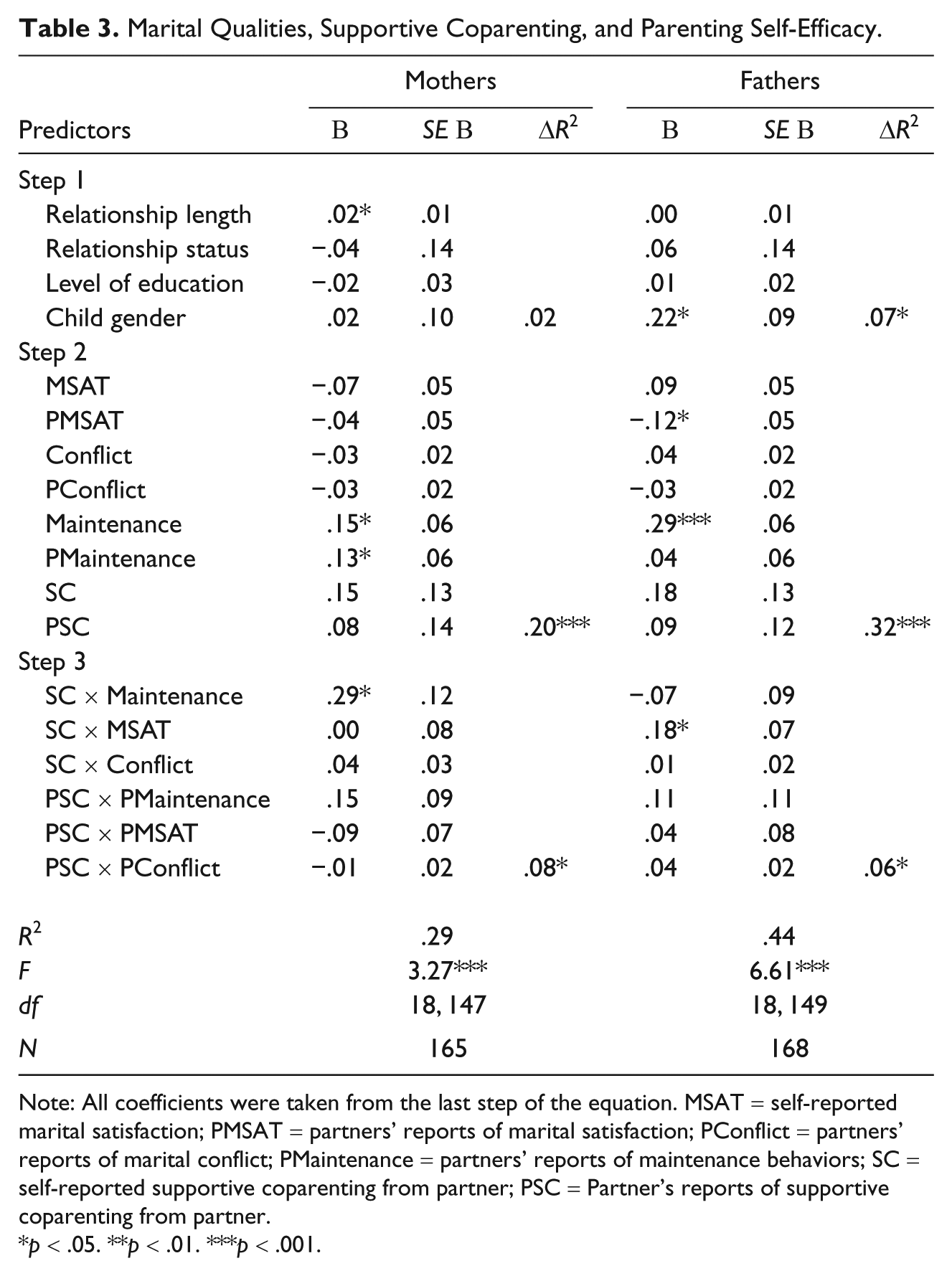
Note: All coefficients were taken from the last step of the equation. MSAT = self-reported marital satisfaction; PMSAT = partners’ reports of marital satisfaction; PConflict = partners’ reports of marital conflict; PMaintenance = partners’ reports of maintenance behaviors; SC = self-reported supportive coparenting from partner; PSC = Partner’s reports of supportive coparenting from partner.
p < .05. **p < .01. ***p < .001.
Marital Qualities, Undermining Coparenting, and Parenting Self-Efficacy.
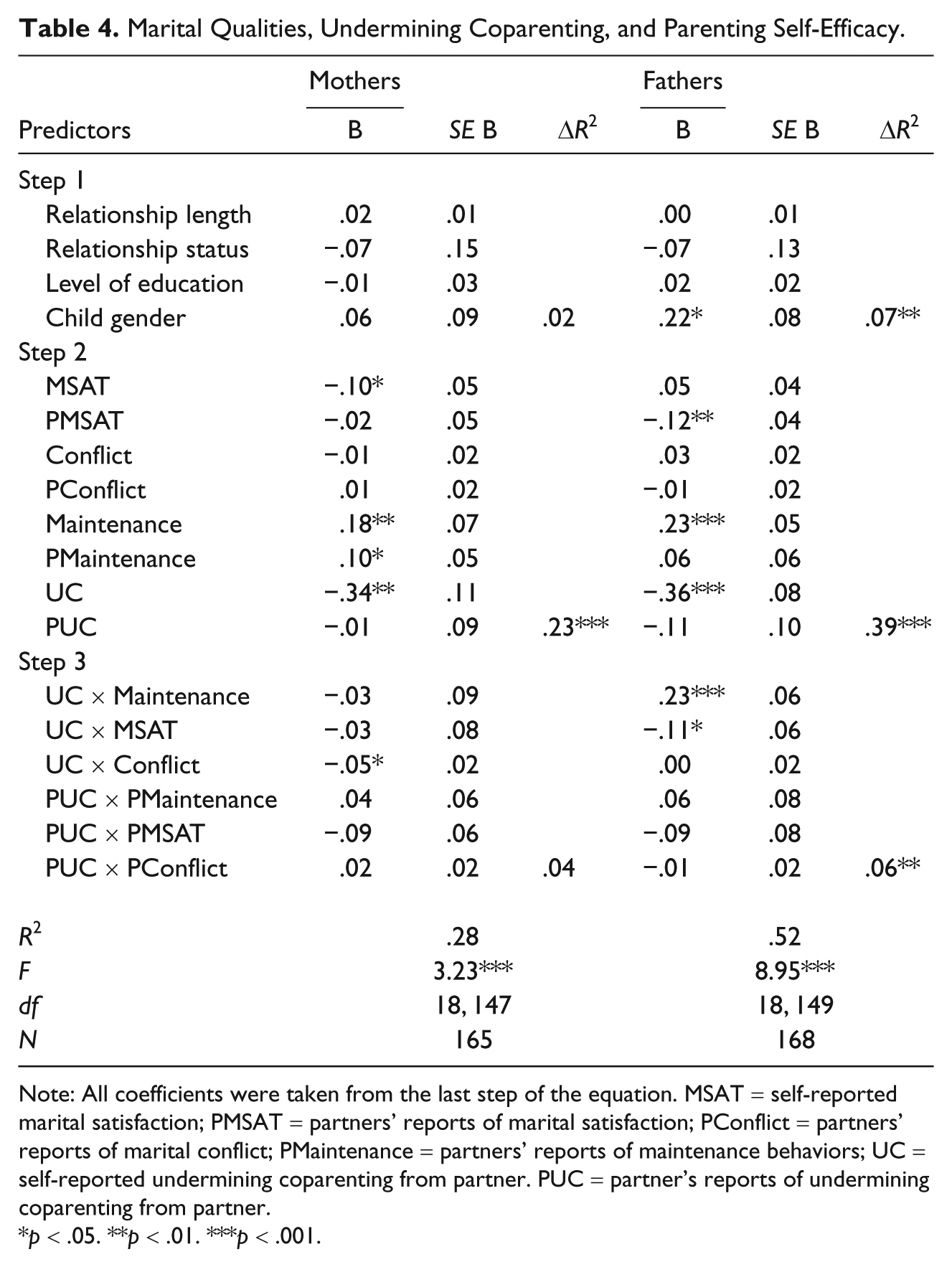
Note: All coefficients were taken from the last step of the equation. MSAT = self-reported marital satisfaction; PMSAT = partners’ reports of marital satisfaction; PConflict = partners’ reports of marital conflict; PMaintenance = partners’ reports of maintenance behaviors; UC = self-reported undermining coparenting from partner. PUC = partner’s reports of undermining coparenting from partner.
p < .05. **p < .01. ***p < .001.
Mothers’ reports of marital satisfaction were negatively associated with fathers’ reports of their own parenting self-efficacy in the equations including both of the coparenting terms (β = −.22, p < .05, supportive coparenting; β = −.23, p < .01, undermining coparenting). Higher maternal reports of martial satisfaction were related to lower parenting self-efficacy in fathers. For mothers, reports of their marital satisfaction were negatively associated with their own parenting self-efficacy when undermining coparenting was entered into the equation (β = −.21, p <.05). Higher maternal reports of their own marital satisfaction were related to lower reports of parenting self-efficacy.
Mothers’ and fathers’ reports of supportive coparenting were not significantly associated with parenting self-efficacy (p > .10). The parents’ reports of undermining coparenting were associated negatively with their parenting self-efficacy (mothers, β = −.28, p < .01; fathers, β = −.32, p < .001).
In summary, self-reported maintenance was predictive for both mothers and fathers regardless of which coparenting variable was in the equation. Self-reported undermining coparenting was significantly and negatively associated with parenting self-efficacy for both mothers and fathers. These significant associations were as hypothesized. It appears that the partners’ reports of marital quality and their experiences of the coparenting relationship were not generally related to the other parents’ reports of their own parenting self-efficacy as the cross-informant report was significant only for mothers’ marital satisfaction and fathers’ parenting self-efficacy. While not part of the hypotheses, child gender played a role for fathers in predicting parenting self-efficacy. The hypothesized direct association between supportive coparenting and parenting self-efficacy was not observed.
Interactive effects of marriage and coparenting on parenting self-efficacy
The interaction terms constructed by multiplying centered versions of the marital quality indices and the two coparenting indices were entered in the third steps of all eight equations, and three of the ΔR2 values associated with the third step were statistically significant. The interaction term consisting of maintenance and supportive coparenting proved to be significant in predicting to parenting self-efficacy for mothers (β = .26, p < .05). The post hoc analyses of this result, presented in Figure 1, demonstrate additivity. For mothers who are engaging in higher levels of maintenance activities, as supportive coparenting increases so does the likelihood of reporting more parenting self-efficacy. Levels of self-efficacy stay relatively constant at low levels of maintenance despite increases in supportive coparenting.
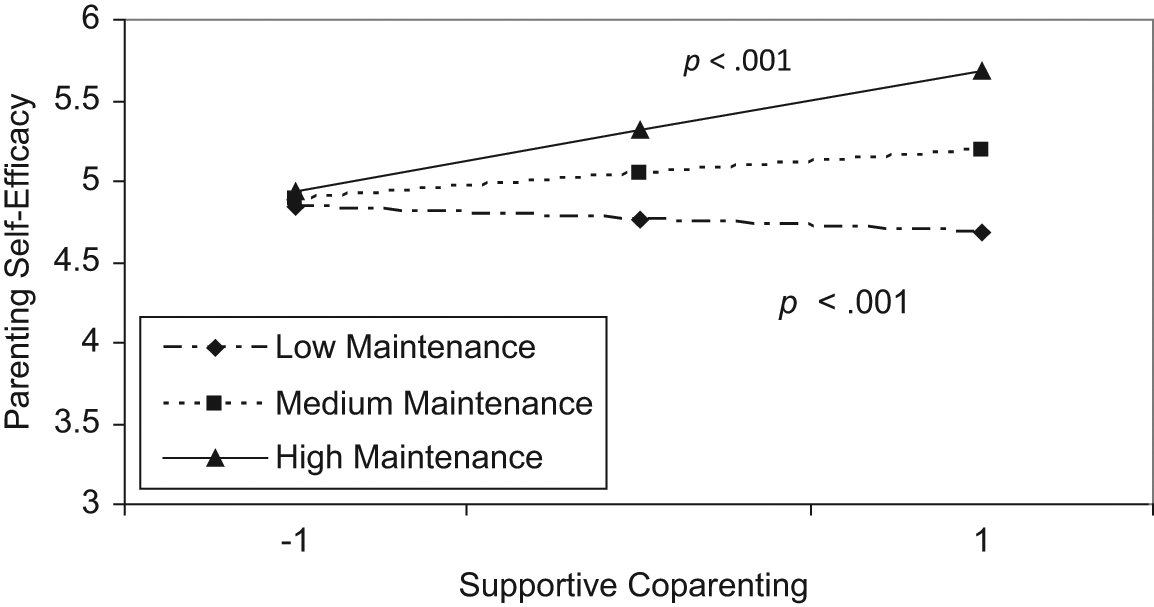
Supportive coparenting and maintenance in association with mother’s parenting self-efficacy.
Marital satisfaction and supportive coparenting also interacted significantly and additively to predict to parenting self-efficacy for fathers (β = .24, p < .05). This interaction is presented in Figure 2. Fathers’ reports of supportive coparenting were only associated with increases in parenting self-efficacy in the context of being more highly satisfied with the marriage. For fathers reporting low levels of marital satisfaction, supportive coparenting was not associated with higher parenting self-efficacy.
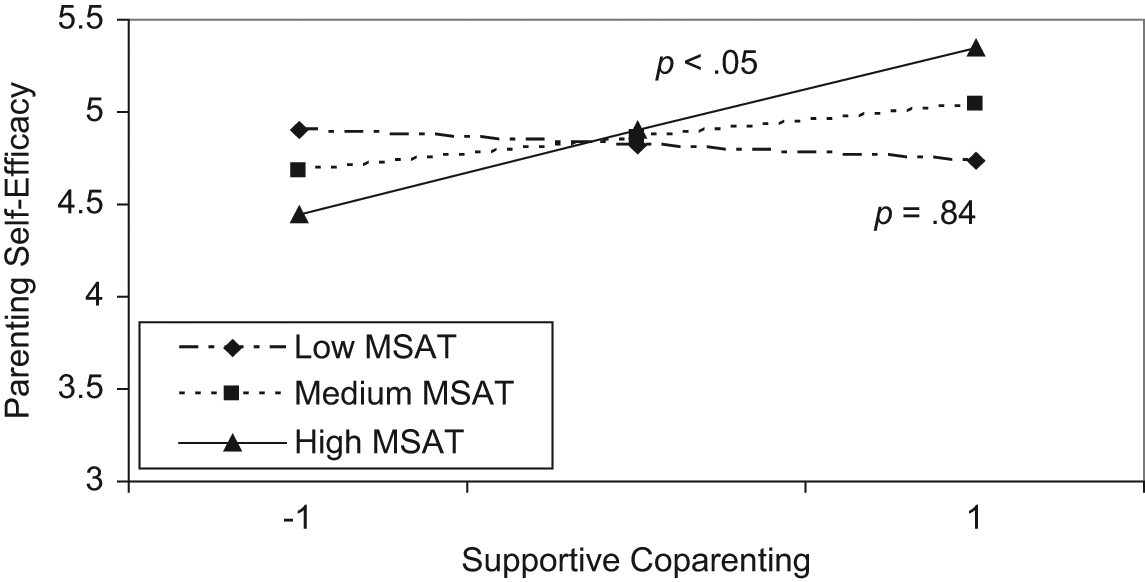
Supportive coparenting and marital satisfaction (MSAT) in association with father’s parenting self-efficacy.
Marital satisfaction interacted with undermining coparenting to predict parenting self-efficacy for fathers (β = .15, p < .05). This interaction is presented in Figure 3. While undermining coparenting was significantly associated with decreased parenting self-efficacy at high, moderate, and low marital satisfaction, the slope for fathers reporting greater marital satisfaction evidenced the greatest decline in parenting self-efficacy in the context of greater undermining coparenting.
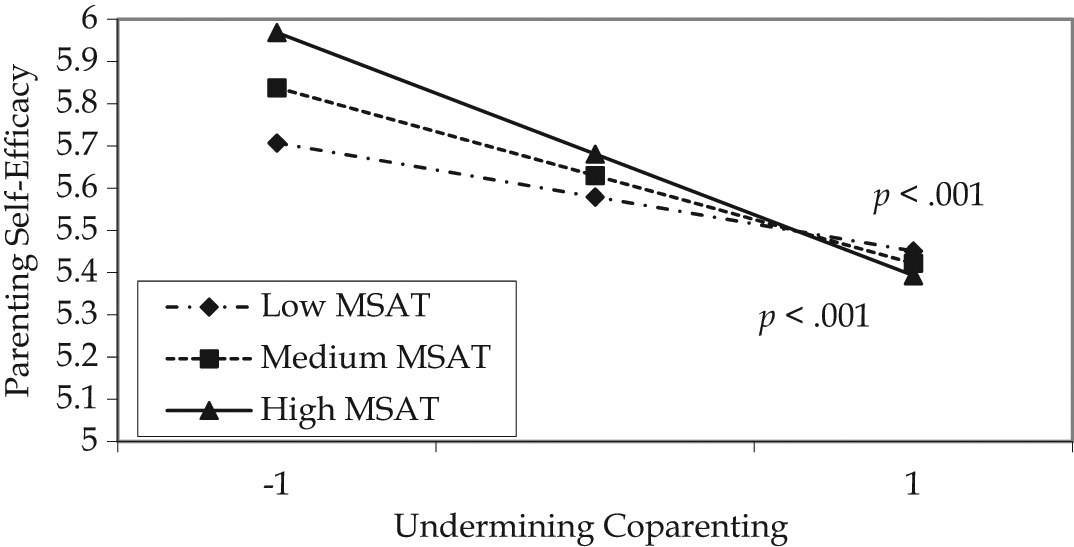
Undermining coparenting and marital satisfaction (MSAT) interacting in association with father’s parenting self-efficacy.
For fathers, the interaction term consisting of their reports of marital maintenance and undermining coparenting proved significant in predicting parenting self-efficacy (β = .29, p < .001). A graph of this interaction is presented in Figure 4. As undermining coparenting increased for fathers, their reports of parenting self-efficacy declined significantly and additively in the context of low maintenance. In the context of a marital relationship in which fathers reported engaging in fewer maintenance behaviors, undermining coparenting was associated with less parenting self-efficacy than for fathers reporting engaging in more maintenance behaviors.
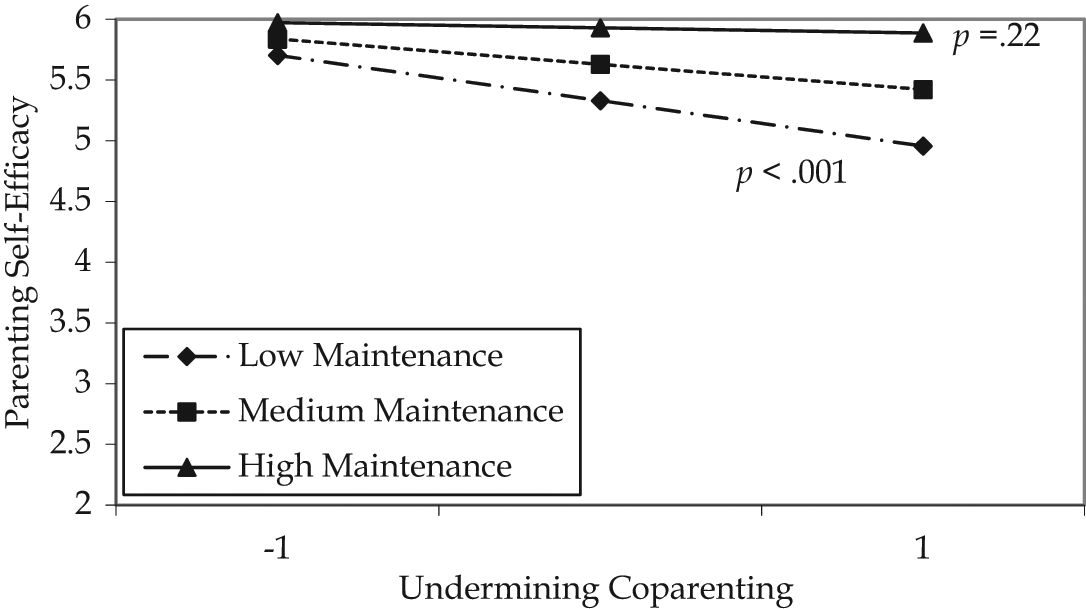
Undermining coparenting and maintenance for father’s parenting self-efficacy.
The compensatory effects of supportive coparenting on the associations between marital quality and parenting self-efficacy were not found. Higher levels of supportive coparenting did not buffer the effects of lower marital quality on parenting self-efficacy. For fathers reporting low levels of maintenance, the slope of the line representing the association between supportive coparenting and parenting self-efficacy was stable (ns).
There is some support for the proposed compensatory effect of marital quality on the association between undermining coparenting and parenting self-efficacy. High levels of maintenance compensated for higher undermining coparenting for fathers (Figure 4). Under conditions of high maintenance, the parenting self-efficacy levels are stable despite increases in undermining coparenting.
Discussion
The present study examined the associations among marriage, coparenting, and parenting self-efficacy. Direct and additive associations among indicators of marital quality, coparenting, and parenting self-efficacy were examined. Possible compensatory associations, where positive aspects of either the marriage or coparenting relationships (high maintenance, satisfaction, or supportive coparenting) could buffer parenting self-efficacy in the face of negativity in the other relationship (high marital conflict or undermining coparenting) were tested. Below, the findings from this study are discussed and possible limitations are addressed. Finally, logical next steps for future studies are posited.
Relationship maintenance and undermining coparenting proved to be robust correlates of parenting self-efficacy. These findings highlight the importance of examining maintenance behaviors in regards to parenting outcomes. Of particular importance was the consistent way in which reports of one’s own maintenance was associated with parenting self-efficacy. Maintenance was a significant predictor of parenting self-efficacy in every equation. It may be that maintenance is a powerful indicator of the climate of the relationship. In the past, maintenance behaviors have been associated with commitment to the relationship and liking the partner (Canary, Stafford, & Semic, 2002). Spouses who are investing energy into making their interactions positive may be people who have a sense of self-efficacy about their close relationships. These parents may feel more efficacious in their parent–child relationships because they have experienced success in promoting positivity in their marital relationship.
Undermining coparenting was, as hypothesized, associated with lower levels of self-reported parenting self-efficacy. Marital satisfaction, as reported by mothers was related to fathers’ parenting self-efficacy scores when supportive coparenting and when undermining coparenting were in the equations. These associations were in a surprising direction. Mothers’ reports of marital satisfaction were negatively associated with their spouse’s parenting self-efficacy. As mothers’ reports of marital satisfaction declined, fathers’ reports of parenting self-efficacy increased. It is possible that when the mothers are less satisfied in marriages, fathers put more effort into their parent–child relationship in order to compensate for the poor marriage. In contrast, when mothers experience more marital satisfaction, less of fathers’ energy is invested in parenting, thus making them less confident in their parenting abilities.
There was mixed evidence for a stress buffering or the compensatory association. When fathers reported their maintenance as being high, parenting self-efficacy did not decline in the face of high undermining coparenting. In this instance, fathers appear to be able to remain confident in their parenting abilities as long as they are engaging in activities meant to make the marital interactions positive. Supportive coparenting was not observed, however, to be effective in compensating for low maintenance or low marital satisfaction. Additionally, fathers’ reports of higher marital satisfaction were associated with a greater decrease in parenting self-efficacy in the context of reports of greater undermining coparenting.
Limitations
The data were collected via an online survey. As with any method of data collection, there are benefits and concerns. The benefits to using online data collection include quick return of surveys, less expensive, lower respondent error. Some possible concerns for using this method are low response rates and representativeness of the sample (Granello & Wheaton, 2004). There is evidence that there are no differences in online versus paper-based psychometric properties of questionnaires (Riva, Teruzzi, & Anolli, 2003; Schwarzer, Mueller, & Greenglass, 1999). In the present study, we found that our sample was not representative of the general population of parents in the United States in that Caucasian parents were overrepresented. It is recommended that caution be used when applying these findings to the general population of parents.
It is unclear whether respondents are more likely to misrepresent themselves on an online survey versus a paper-based survey. Even face-to-face interviews are not exempt from the possibility of respondents lying to the researcher. Until this issue is examined, empirically we can only acknowledge the possibility of deception on the part of the respondents for any type of data collection. Yet, as noted above, the existing empirical evidence suggests little difference in the psychometrics of online versus other survey instruments.
Future Directions
In the present study, it was beneficial to have self-reports of marital and coparenting quality as the focus was to understand how parents’ perceptions of their marital and coparental relationships were associated with parenting self-efficacy. Future studies should include an observational assessment of coparenting and marital quality to understand how behavioral indicators of relationship quality are associated with parenting self-efficacy. Examples of observational assessments are the Interactional Dimensions Coding System (Julien, Markman, & Lindahl, 1989) and the Coparenting and Family Rating System (McHale, Kuersten-Hogan, & Lauretti, 2000). Additionally, parenting behaviors and child outcomes should be examined. While parenting self-efficacy is important to study in its own right, it would be advantageous to assess how this cognition translates to parenting behaviors and child outcomes.
This study was unique in that it provided the opportunity to examine mothers’ and fathers’ reports of marital and coparenting quality and their associations with parenting self-efficacy. Because couples participated in the present study, it was possible to include partner responses to test associations among each parent’s report of his or her marriage, coparenting, and parenting self-efficacy, yet it was the self-reported perceptions of these close relationships that were most highly associated.
The current study consisted of mainly efficacious parents in, on average, moderately high-quality marriages and coparenting relationships. In future studies, more effort will need to be put into collecting data from parents who are experiencing difficulty in their marital and/or coparenting relationship in order to examine how qualities of the coparenting and marital relationships are related to parenting self-efficacy in the context of a struggling marital or coparenting relationship. Importantly, maintenance, a relational indicator previously not studied in association with coparenting or parenting outcomes was identified as a predictor of parenting self-efficacy, as a main effect and interacting with coparenting. These findings emphasize the relevance of relational maintenance to parenting outcomes and support the inclusion of maintenance in future studies.
The results of the present study paint a picture of the importance of understanding mothers’ and fathers’ adult family roles, as spouses and coparents, and their effects on personal evaluations of competence as parents. These findings have important implications for future research and in working with parents. To further understand and ultimately positively influence parenting self-efficacy, it is necessary to consider multiple, particularly the influence of parents’ experiences in the adult relationship roles they assume in their complex family systems.
Footnotes
Acknowledgements
Many thanks to Dr. Mari Wilhelm.
Authors’ Note
This article is based on data used in Kami A. Merrifield’s doctoral dissertation.
Declaration of Conflicting Interests
The author(s) declared no potential conflicts of interest with respect to the research, authorship, and/or publication of this article.
Funding
The author(s) disclosed receipt of the following financial support for the research, authorship, and/or publication of this article:
This study was funded by the Frances McClelland Institute for Children Youth and Family at the University of Arizona.