







Abstract
Recently, more attention is being paid to controlling behaviors within a continuum of intimate partner violence and abuse. However, it is unclear whether current scales are sufficiently valid to measure such behaviors. The current study assessed the factor structure and reliability of the revised Controlling Behaviors Scale (CBS-R) and the revised Conflict Tactics Scale (CTS2). Data were gathered from a U.K. general population sample (N = 405). Confirmatory factor analyses were carried out on the CTS2 and the CBS-R, for both perpetration and victimization items, using the weighted least squares estimation with mean adjustment method. Multiple factor models were confirmed in the analysis of the CBS-R and CTS2 for perpetration and victimization items. Reliabilities for the factors were satisfactory across both scales. This is the first validation of the factor structure of the CBS-R and the findings suggests that this a valid and reliable scale for measuring controlling behaviors.
Intimate partner violence and abuse (IPVA) remains a significant social issue in both the United Kingdom and in the rest of the world (World Health Organization, 2013). Lifetime victimization levels show that approximately one in four women and one in five men will experience physical intimate partner violence over the course of their lifetime (e.g., Desmarais, Reeves, Nicholls, Telford, & Fiebert, 2012). IPVA can comprise a range of abusive behaviors that include physical, sexual, psychological, and control (e.g., Fanslow & Robinson, 2011). Unsurprisingly, experiencing such abuse frequently has a severe impact on the victim (Jordan, Campbell, & Follingstad, 2010). In assessing the prevalence of IPVA, it is important that researchers are able to utilize valid and reliable measures. As such, this current study will assess the factor structure and reliability of two scales that measure IPVA: the revised Conflict Tactics Scales (CTS2; Straus, Hamby, Boney-McCoy, & Sugarman, 1996) and the revised Controlling Behaviors Scale (CBS-R, Graham-Kevan & Archer, 2005).
The CTS2 remains one of the most widely used questionnaires to measure IPVA (Yun, 2011). It is particularly useful in that it measures a broad range of IPVA behaviors including physical assault, psychological aggression, sexual coercion, injury, as well as negotiation skills. Despite this, there have been a number of criticisms consistently levelled at this measure (Straus, 2012). One of the major theoretical criticisms is that studies that use the CTS2 to assess IPVA, frequently demonstrate gender symmetry in the use of IPVA in intimate relationships (Dixon & Graham-Kevan, 2011). This can be a challenging issue, particularly for researchers who frame their research regarding IPVA in the context of violence against women and girls. Straus (2012) robustly refutes the suggestion that this gender symmetry is an erroneous finding due to the invalidity of the CTS2. Instead, he argues that other measures of IPVA (that do not demonstrate gender symmetry) lack the sensitivity demonstrated by the CTS2, which is detecting IPVA accurately. Further criticisms of the CTS2 center around a number of methodological points such as the following: unrealistic response categories, not accounting for IPVA in previous relationships, wording issues in relation to scale items, and measures of injury not directly relating to specific physical assaults; with some of these criticisms acknowledged as valid by Straus (2012) as accurate limitations of the CTS2.
A number of analyses of the factor structure of the CTS2 have been carried out over the years, however, these are frequently with forensic, clinical, student or more specialist populations (e.g., Anderson & Leigh, 2010; Straus, 2004), and/or with populations outside of the United Kingdom (e.g., Calvete, Corral, & Estevez, 2007; Signorelli, Arcidiacono, Musumeci, Di Nuovo, & Aguglia, 2014). For example, Jones, Ji, Beck, and Beck (2002) carried out separate exploratory factor analysis on the perpetration and victimization scale on a sample of U.S. incarcerated females. The principle component analysis (PCA) for the victimization items found that the data best fit a four-factor solution: general assault (comprising physical and psychological assault items), injury, negotiation, and sexual coercion. For perpetration, the data best fit a four-factor solution but the factors were less distinct with two clear factors of general assault (physical and psychological) and negotiation, whereas two factors composed of items from the sexual coercion scales. A similar PCA was carried out by Moraes and Reichenheim (2002) on a sample of data of postpartum women in Portugal. The analysis of the victimization items broadly agreed with the Jones et al. (2002) analysis with a four-factor solution: physical assault, sexual coercion, negotiation, and psychological assault. However, the perpetration differed substantially from the Jones et al. (2002) data with a five-factor solution: physical assault, sexual coercion, negotiation, injury, and psychological assault. Finally, Anderson and Leigh’s (2010) PCA of perpetration and victimization items in a sample of U.S. female, deaf, college students found very different solutions from the prior studies. The victimization items found that the data best fit a five-factor solution; however, factor one contained multiple types of IPVA behaviors including physical assault, injury, psychological aggression, and sexual coercion. The subsequent three factors identified more clearly aligned with the proposed CTS2 items of negotiation, sexual coercion, psychological aggression, whereas the final factor included a combination of sexual coercion and psychological aggression. For the perpetration items, nine factors emerged from the PCA, which does not conform to the intended factor structure. In relation to the proposed CTS2 perpetration structure, only the negotiation items loaded clearly on one factor. The remainder of the scale items loaded across the other factors with no discernible structure. The authors identified that this may be because of the lack of variability in response to some of the scale items (i.e., most respondents reporting very low or no levels of perpetration). However, as noted by Anderson and Leigh (2010), this does lead to questions regarding the validity of the factor structure of the CTS2, particularly as predominantly exploratory analyses of factor structure have been used with very different proposed factor solutions (e.g., Signorelli et al., 2014).
Lucente, False-Stewart, Richards, and Goscha (2001) did carry out a confirmatory factor analysis (CFA) using a sample of U.S. incarcerated women. This found support for a five-factor model (for both perpetration and victimization) that aligned with Straus’s original factor structure. However, these factors did not differentiate between minor and severe violence. Furthermore, the authors noted that although the items did load highest on their expected factor, there were examples of cross-loading among the items particularly in relation to psychological aggression, physical assault, and injury. Newton, Connelly, and Landsverk (2001) also found support for a five-factor model although this differed in composition to that of Lucente et al. (2001). This model proposed five factors comprising negotiation, minor psychological aggression, severe psychological aggression, minor physical assault, and severe physical assault (model also confirmed in Connelly, Newton, & Aarons, 2005). However, the model structure is likely to differ because both of these studies did not include items that assessed sexual coercion and injury.
Given the differing factor structure that have been proposed, determined using either exploratory or CFA, there is clear scope for further analysis to be carried out on the CTS2. As stated by Straus (2012), it is important to continue to critically examine this measure, given its contribution to the important discussion regarding IPVA. Therefore, this current study will uniquely add to the research regarding the assessment of the factor structure of the CTS2, by assessing this within a novel population of a U.K. community sample, while using confirmatory factor structure analyses.
Although the CTS2 has significant utility in the range of IPVA behaviors that it assesses, a recent broadening of how domestic violence and abuse in defined by the government in the United Kingdom means that there is now a necessity to use an additional measure of IPVA. This relatively new definition of domestic violence and abuse includes “any incident or pattern of incidents of controlling, coercive, threatening behaviour, violence or abuse between those aged 16 or over who are, or have been, intimate partners or family members regardless of gender or sexuality” (Home Office, 2012, p. 19). Before this change, controlling, coercive, and threatening behaviors were not always defined as IPVA resulting in less research attention being paid to these behaviors. In the context of IPVA, this means that the state of knowledge regarding the occurrence of psychological violence and controlling coercive behaviors is scant in comparison with what we know about physical and sexual violence.
However, there are challenges to developing this knowledge surrounding controlling behaviors because of the terminology that is frequently used when discussing this type of behavior. The literature frequently refers to controlling behaviors in the context of coercive control. For example, Day and Bowen (2015, p. 64) describe coercive control as “coercive controlling violence.” Similarly, Nielsen, Hardesty, and Raffaelli (2016) draw together controlling behaviors and coercive control to define coercive controlling violence as involving physical violence where the motivation of the perpetrator is to maintain power and control over their partner, with the violence acknowledged to involve behavior such as intimation and isolation (see also Johnson, 2008, 2011). Finally, the introduction of the “Serious Crime Act” (2015), in England and Wales, created a new offence of controlling or coercive behavior. In the statutory guidance framework, controlling behaviors were defined as follows: A range of acts designed to make a person subordinate and/or dependent by isolating them from sources of support, exploiting their resources and capacities for personal gain, depriving them of the means needed for independence, resistance and escape and regulating their everyday behaviour. (Home Office, 2015, p. 3)
In contrast, coercive behavior 1 was defined as “a continuing act or pattern of acts of assault, threats, humiliation and intimidation or other abuse that is used to harm, punish, or frighten their victim” (Home Office, 2015, p. 3). In the context of the current study, the above Home Office (2015) definition of controlling behaviors will be adopted, however, it is acknowledged that the literature does not always consider these two types of behaviors as distinct.
In developing this knowledge regarding controlling behaviors, there is a need to ensure that the measures being used to assess such behaviors are valid and reliable. The only comprehensive current scale to measure IPVA controlling behaviors is the CBS-R (Graham-Kevan & Archer, 2005). This measure was developed based on theoretical principles with data from men who had previously used domestic violence (i.e., Domestic Abuse Intervention Project; Pence & Paymar, 1993). It was subsequently revised to the current version that is now used within the research literature. This revised version reflects the broad nature of controlling behaviors by containing five subscales that assesses the multiple forms that this type of abuse can adopt. These five subscales include measures of control behaviors relating to economic, threatening intimidating, emotional, and isolating behaviors. This acknowledgment that controlling behaviors can be multifaceted is a particular strength to the CBS-R, in that it can assist researchers in identifying distinct types of IPVA controlling behaviors. However, at this point, the CBS-R has not been psychometrically tested or examined in general population samples, so it is unclear as to whether this measure is robust and valid. Due to recent legislative changes increasing the focus on IPVA controlling behaviors, it is important that this measure is established as being a useful component to the IPVA research at this early point. Therefore, the second aim of this current study is to assess the factor structure of the CBS-R to provide the first empirical validation of the factor structure of this scale, using a general population U.K. sample.
Method
Design
A survey design was utilized to gather data to assess the factor structure of the CTS2 and the CBS-R.
Participants
Four hundred and twenty-seven participants responded to the survey; however, 22 participants were removed due to only completing either the consent form and/or demographic data only. The resulting 405 participants comprised 217 females (53.58%) and 186 males (45.93%; 2 missing data). The age range of the sample was from 18.16 to 87.40 years (M = 40.44, SD = 15.08; 11 cases missing data). Three hundred and sixty-six participants (90.36%) identified as being from a White: English/Welsh/Scottish/Irish/Northern Irish/British background. Eighteen (4.4%) identified as being from a White: any other background. The remainder of the sample identified as being from a Black and Minority Ethnic background or a mixed/dual heritage. These data broadly align with those of U.K. national demographics that shows that the population comprises 49.3% males and 50.7% females. In relation to ethnicity, the Office for National Statistics (2011) last census data showed that the population comprises 86% White background, 8% Asian, and 3% from a Black background. This demonstrates that the sample is slightly overrepresentative of individuals from a White background.
In terms of sexuality, 375 (92.6%) identified as heterosexual, 18 (4.4%) identified as bisexual, 4 (1%) identified as lesbian, 2 (0.5%) identified as homosexual, and 4 (1%) identified as other (2 missing data). In terms of the highest educational qualification, 117 (28.9%) identified as having an undergraduate degree, 72 (17.8%) identified as having A-Levels, 70 (17.3%) identified as having a postgraduate degree, 49 (12.1%) identified as having O-Levels/G.C.S.E.s, 48 (11.9%) identified as having HND/HNCs, 21 (5.2%) identified as having a PhD, and 28 (6.9%) specified Other as their highest qualification. Two hundred and ninety-nine (73.8%) were currently employed. Current approximate salary for all participants ranged from 0 to £300,000 (M = £23,306.09, SD = £29,290.69). All participants had previously been in an intimate relationship, with 347 (85.7%) currently in an intimate relationship, ranging in length from 2 to 888 months (M = 266.07, SD = 291.37).
Materials
Revised Conflict Tactics Scale (Straus et al., 1996)
The CTS2 is one of the most widely used self-reported measure to assess prevalence and severity of IPVA in relation to both perpetration and victimization (Jose, Olino, & O’Leary, 2012; Straus & Douglas, 2004; Vega & O’Leary, 2007). The scale comprises 78 items that assesses IPVA across five subscales: Negotiation, Psychological aggression, Physical assault, Sexual coercion, and Injury. Participants respond to a 8-point scale that assesses the frequency of the behavior (0 = never, 1 = not in the past year, but it happened before, 2 = once, 3 = twice, 4 = 3-5 times, 5 = 6-10 times, 6 = 11-20 times, and 7 = more than 20 times). Analysis of the internal consistency of the CTS2 in the current study (using the factor structure determined from the analysis) revealed (across both victimization and perpetration) reliabilities ranging from .75 to .95. Previous studies have supported a five-factor model structure of the scores on the CTS2, although these are frequently with clinical and/or forensic populations (e.g., Lucente et al., 2001; Newton et al., 2001).
Revised Controlling Behaviors Scale (Graham-Kevan & Archer, 2005)
The CBS-R comprises 24 items that assess controlling behaviors, in relation to both perpetrator and victimization, across five subscales: Economic, Threats, Intimidation, Emotional, and Isolation. Participants respond to a 5-point scale to assess the frequency of the behavior ranging from never (0) to very often (4). The CBS-R is suggested to have good discriminant validity (Graham-Kevan & Archer, 2005), however, no previous testing of the factor structure of the scale has been published. Analysis of the internal consistency in the current study across the factors (as determined by the analysis) for both perpetration and victimization demonstrated reliabilities ranging from .73 to .91.
Procedure
This study was approved by the university’s ethics committee and followed the guidelines as laid down by the British Psychological Society. Participants were recruited through a large range of social (e.g., Rotary Club, Women’s Institute, Men’s Shed Association) and sporting organizations (e.g., Rugby, Archery, Rowing, Tennis). Two methods of data collection were used for the current study, online questionnaires (n = 373) or the option of a paper-based questionnaire (n = 54) for those who did not have access to computers or who preferred to answer the questions in this more traditional way. The team were not party to which organization members opted to use online questionnaires and which members opted for using the paper-based version, but the decision to do so was made on an individual basis. Once participants had indicated informed consent, they completed the online or paper-based demographic questions (e.g., age, ethnicity), followed by the CBS-R and CTS2. After completing these questionnaires, participants were fully debriefed about the content of the study.
Data Analysis
To validate the factorial structure of the CBS-R and CTS2 scales, for both perpetrator and victim versions, four CFAs were implemented in Mplus 7.1 (Muthén & Muthén, 1998-2012). Consistent with recommendations in the literature (Kline, 2010; Tanaka, 1993), the goodness-of-fit was evaluated using a variety of indices: (a) Chi-square, with nonsignificant values indicating a good solution, although this test is expected to be sensitive to sample size; (b) Comparative fit index (CFI; Bentler, 1990), with values indicating an adequate fit when greater than .90, and a good fit when greater than .95; (c) Root mean square error of approximation (RMSEA; Steiger, 1990), considered adequate when lower than .08 along with a nonsignificant test of close fit (Hu & Bentler, 1999). Composite reliability index was then computed for each factor.
Results
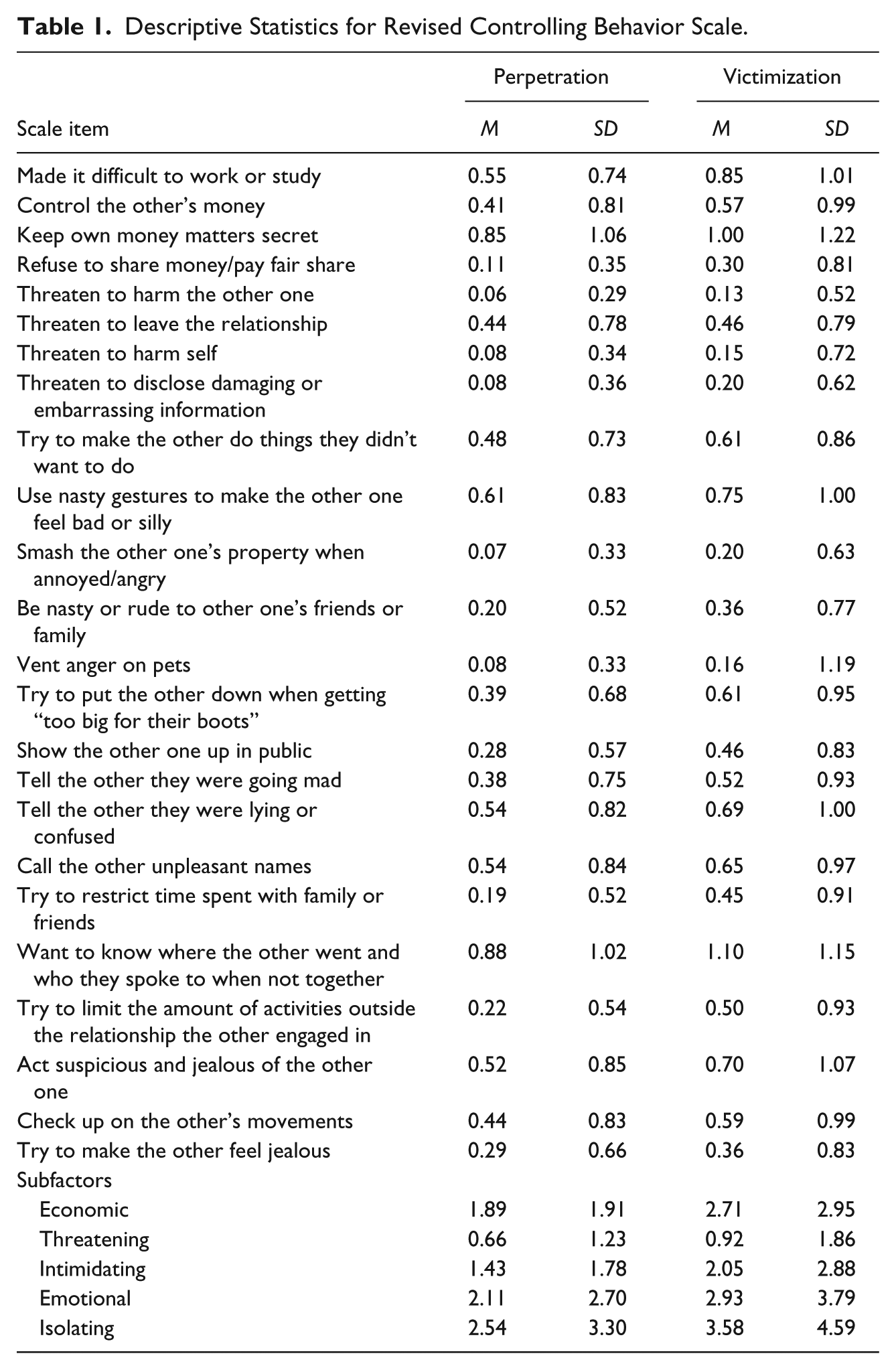
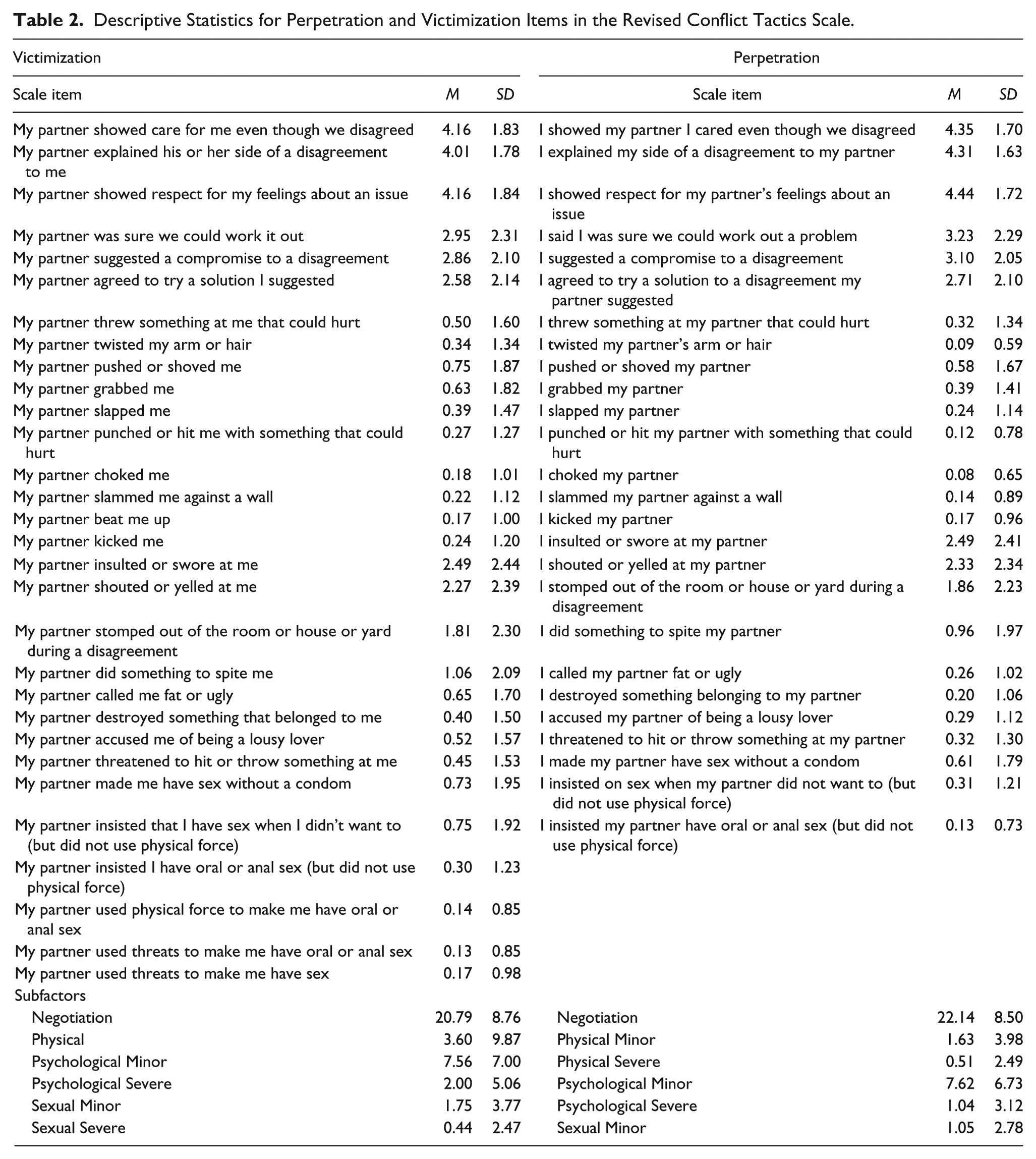
Descriptive statistics in relation to the CTS2 and CBS-R can be found in Tables 1 and 2.
Descriptive Statistics for Revised Controlling Behavior Scale.
Descriptive Statistics for Perpetration and Victimization Items in the Revised Conflict Tactics Scale.
CBS-R Perpetration and Victimization Items
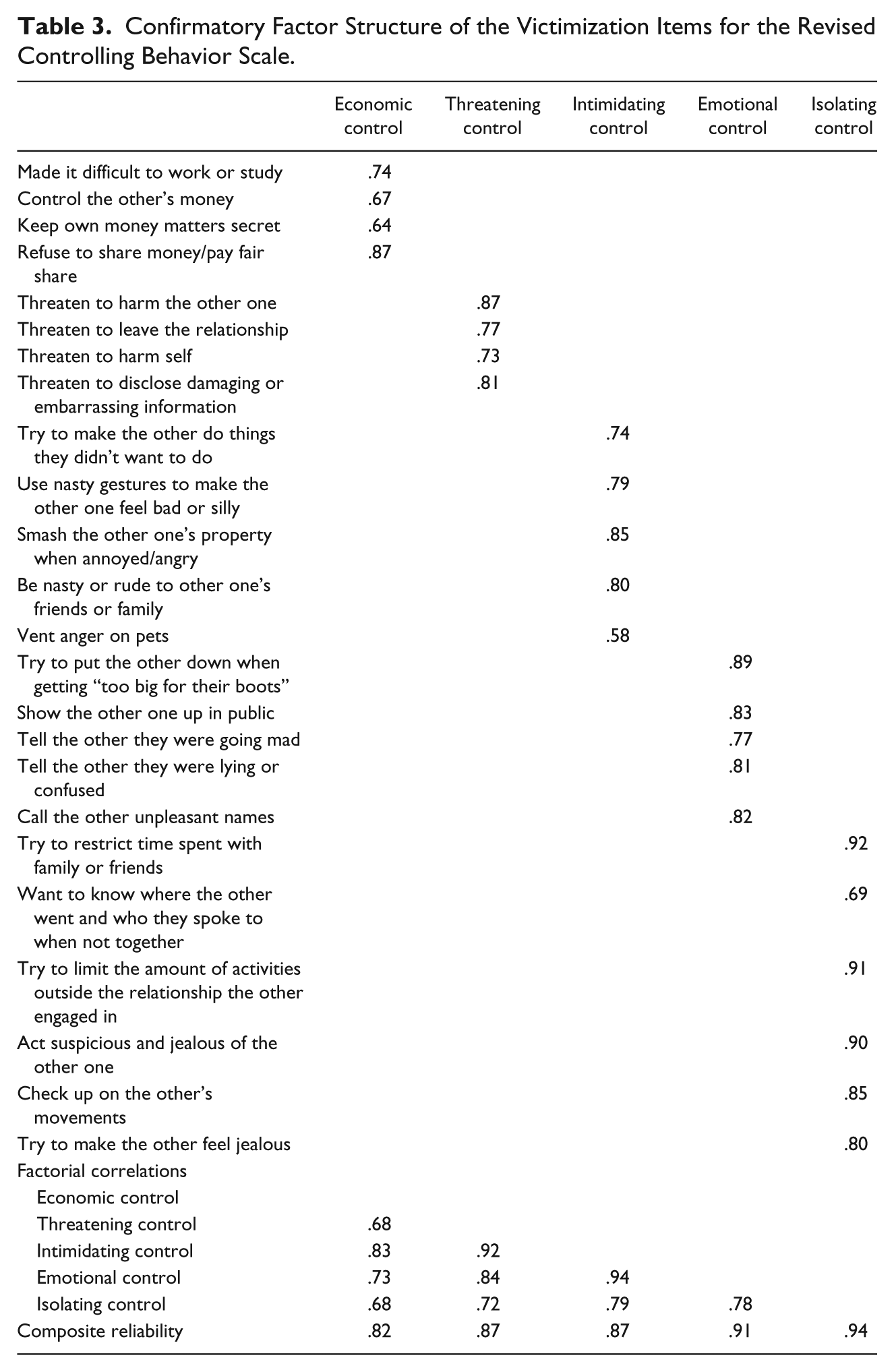
Items for both scales were strongly skewed, therefore the weighted least squares estimation with mean adjustment estimator method was used in Mplus to implement the CFA. The posited five-factor model led to a good fit for both versions of the scale. For the victim version, the fit was as follows: χ2 = 486.924 (degrees of freedom [df] = 242; p < .001), RMSEA = .051 (confidence interval [CI: .045, .058]; p = .37); CFI = .97. Standardized factor loadings, factorial correlations, and composite reliability are summarized in Table 3.
Confirmatory Factor Structure of the Victimization Items for the Revised Controlling Behavior Scale.
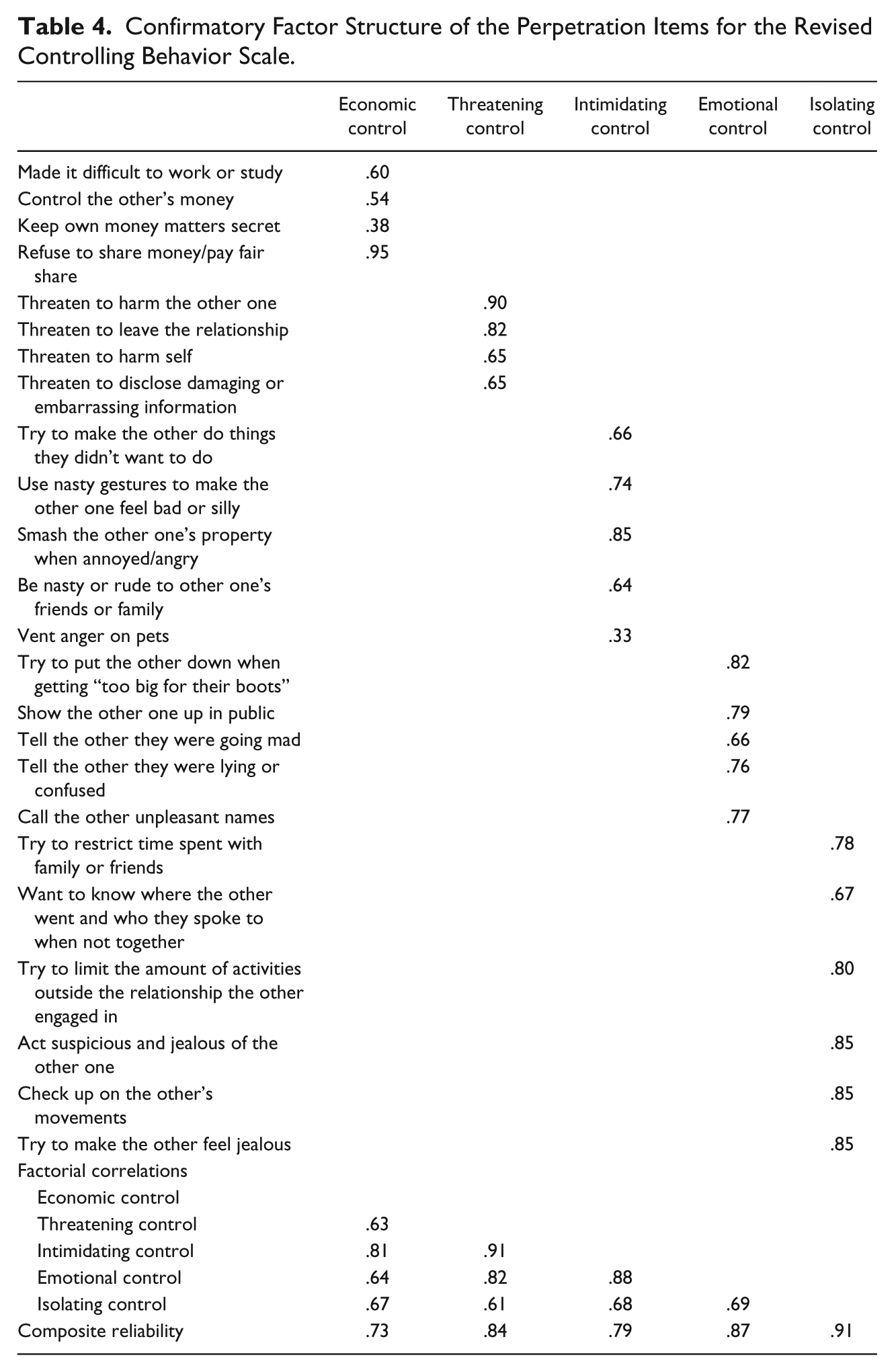
For the perpetrator version the fit was as follows: χ2 = 418.005 (df = 242; p < .001), RMSEA = .042 (CI [.036, .049]; p = .97); CFI = .958. Standardized factor loadings, factorial correlations, and composite reliability are summarized in Table 4.
Confirmatory Factor Structure of the Perpetration Items for the Revised Controlling Behavior Scale.
CTS2 Perpetration and Victimization Items
All the items for both scales, with exceptions being the six items measuring Negotiation and three out of the four items measuring Moderate Psychological Violence, were strongly skewed. As a result, the same method of analysis was used as with the CBS-R, with the CFA carried out in Mplus using weighted least squares estimation with mean adjustment, specifying all the items except the aforementioned items with a skewness lower than |1|.
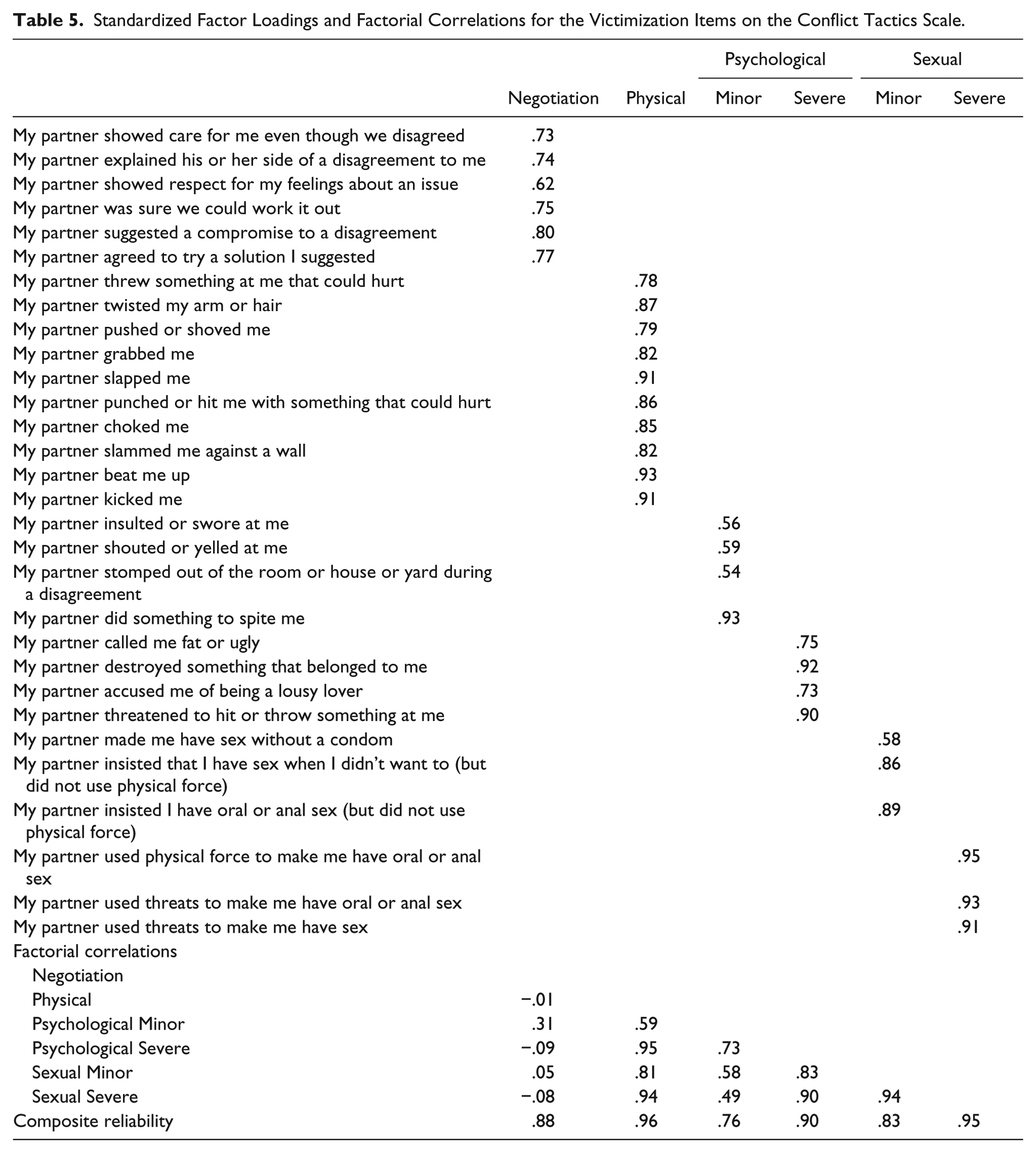
For the CTS2 victimization, five items (two items of the Injuries subscale, one item of the Sexual Severe subscale, and two items of the Physical Severe subscale) have a very limited variability (with more than 93% of the sample endorsing the option never) and were excluded from following analyses. The CFA model posited on the remainder items was good: χ2= 861.942 (df = 499; p < .001), RMSEA = .043 (CI [.038, .047]; p = 1.00); CFI = .979. However, the Latent Variable Covariance was not positive definite, and indeed the correlation between Physical Severe and Injuries dimensions was .986. Rather than combine these two dimensions in a unique factor it was decided to exclude from the analyses the items referring to Injuries. The fit for the respecified CFA model was good: χ2 = 716.130 (df = 384; p < .001), RMSEA = .046 (CI [.041, .052]; p = .87); CFI = .976. Nonetheless, the Latent Variable Covariance was still not positive definite. Physical Severe and Physical Minor dimension correlated .95 between each other, and they correlate, respectively, .97 with Sexual Severe and .97 with Psychological Severe. It was then respecified, a CFA model including six items assessing Negotiation, 10 items assessing Physical, four items assessing Psychological Minor, four items assessing Psychological Severe, three items assessing Sexual Minor, and three items assessing Sexual Severe. The fit was good: χ2 = 691.879 (df = 390; p < .001), RMSEA = .044 (CI [.039, .049]; p = .97); CFI = .973. No further warnings on the Latent Variable Covariance were highlighted. Standardized factor loadings and factorial correlations are summarized in Table 5.
Standardized Factor Loadings and Factorial Correlations for the Victimization Items on the Conflict Tactics Scale.
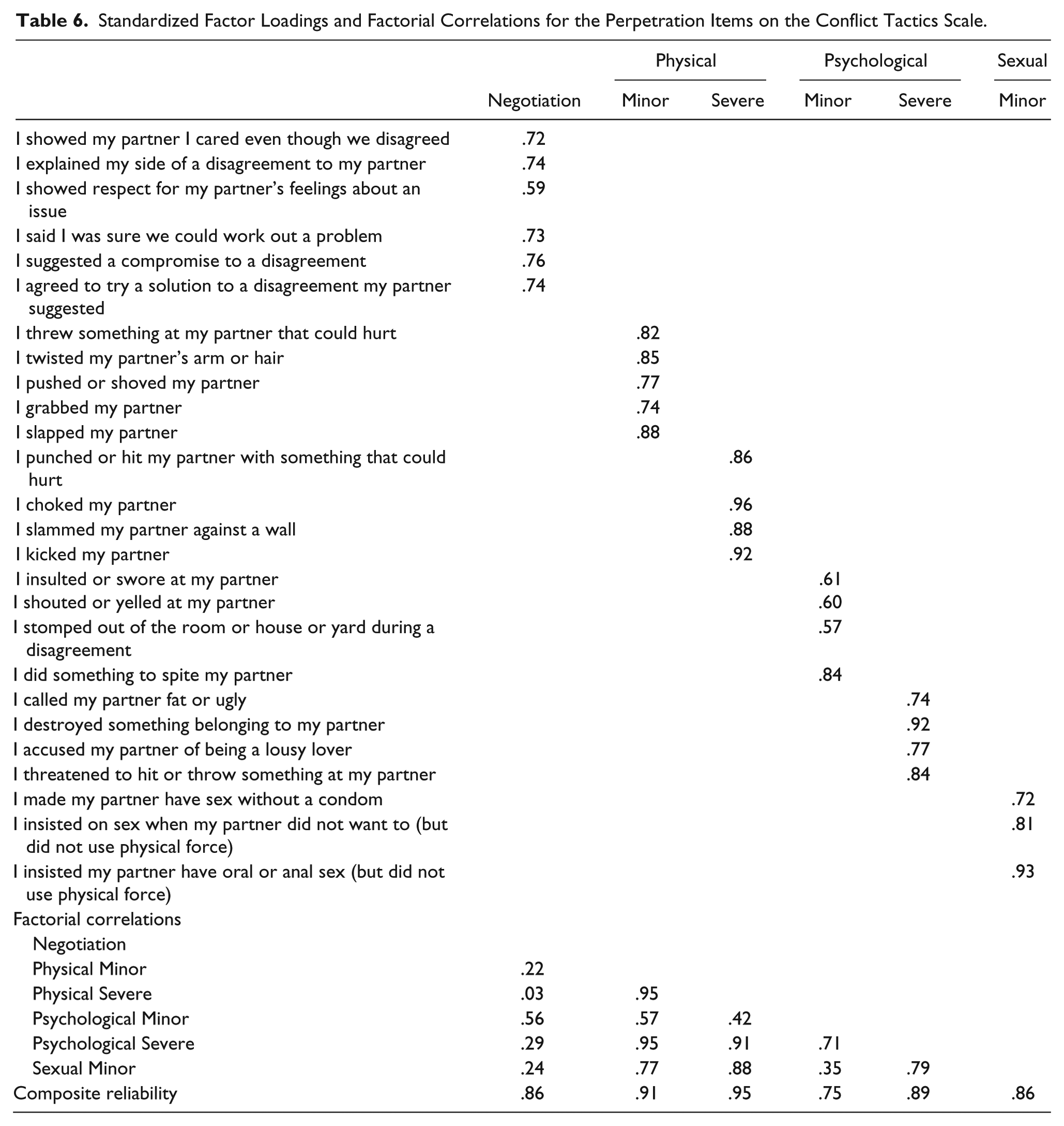
For CTS2 perpetration, 13 items (six items of the Injuries subscale, four items of the Sexual Severe subscale, and three items of the Physical Severe subscale) have a very limited variability (with more than 95% of the sample endorsing the option never) and therefore were excluded from following analyses. Therefore, the posited CFA model included six items assessing Negotiation, five items assessing Physical Minor, four items assessing Physical Severe, four items assessing Psychological Minor, four items assessing Psychological Severe, and finally three items assessing Sexual Minor violence. The resulting fit was good: χ2 = 411.738 (df = 284; p < .001), RMSEA = .033 (CI [.026, .040]; p = 1.00); CFI = .981. Standardized factor loadings and factorial correlations are summarized in Table 6.
Standardized Factor Loadings and Factorial Correlations for the Perpetration Items on the Conflict Tactics Scale.
Discussion
This study has reported the first known CFA of the CBS-R. The analysis confirmed the proposed five-factor structure as the best fit for this general population sample. Furthermore, levels of internal consistency were acceptable across the five subscales. This analysis supports the utility of this measure in assessing five aspects of controlling IPVA behaviors: economic, threatening, intimidating, emotional, and isolating behaviors. As such, this scale acknowledges the breadth of behaviors that can be involved in IPVA in assessing behaviors such as (a) keeping own money matters secret (economic), (b) threatening to disclose damaging or embarrassing information (threatening), (c) using nasty gestures to make the other one feel bad or silly (intimidating), (d) telling the other they were going mad (emotional), and (e) wanting to know where the other went and who they spoke to when not together (isolating). There are strong correlations between these types of controlling behaviors (in perpetration and victimization) as shown by the analysis. Validating this measure is particularly important given the context of the recent broadening of the U.K. government definition of IPVA (see Home Office, 2012). Furthermore, the findings of the current study assures researchers of the utility of this measure in broadening the perception of violence between intimate partners beyond that of physical violence. We know victims of IPVA experience and that perpetrators use a range of violent behaviors (e.g., Fanslow & Robinson, 2011), however, this is not always acknowledged within the research literature. Given that we know that victim well-being is affected just as much by nonphysical IPVA when compared with physical violence (Mechanic, Weaver, & Resnick, 2008), this emphasizes the importance of acknowledging the multiple forms that IPVA can encompass. The CBS-R can contribute to this knowledge by providing researchers with a tool that will assess the prevalence of controlling behaviors.
In relation to the CTS2, the analyses demonstrated that the factor structure, that best fit the data, varied according to whether perpetration or victimization of these behaviors was being assessed. In relation to perpetration, a six-factor model was established assessing prevalence of: negotiation, minor physical violence, severe physical violence, minor psychological violence, severe psychological violence, and minor sexual violence. In relation to victimization, a six-factor model was established assessing prevalence of: negotiation, physical violence, minor psychological violence, severe psychological violence, minor sexual violence, and severe sexual violence. Correlations between the subscales were high, apart from negotiation for both victimization and perpetration, which is a common finding (e.g., Calvete et al., 2007; Yun, 2011). Furthermore, the factor structure models for both perpetration and victimization demonstrated some evidence of being able to differentiate between minor and severe forms of IPVA, an aspect that the CTS2 can be criticized for. Similar findings were demonstrated by Calvete et al. (2007) who argued that, within their study, there was clear evidence of differentiation between minor and severe forms of IPVA through the pattern of correlations between the subscales. For example, correlations between severe psychological violence were higher with other forms of physical and sexual violence than they were with minor psychological violence. This pattern of findings is also demonstrated in this current study. For perpetration, severe psychological violence showed stronger correlations with minor physical violence, severe physical violence, and minor sexual violence, in comparison with correlations found between these variables and minor psychological violence. For victimization, severe psychological violence showed stronger correlations with physical violence, minor sexual violence, and severe sexual violence, in comparison with correlations found between these variables and minor psychological violence. As found in Calvete et al. (2007), this may demonstrate further evidence of the ability of the CTS2 to differentiate between different levels of severity of violence. Furthermore, composite reliability was in the acceptable to excellent range across both the perpetration and victimization items.
In comparing these finding with the prior literature, there have been a number of factor analyses of the CTS2 since its first introduction, although these have frequently been with either forensic/clinical populations or the analyses have been an exploratory factor methods (e.g., Anderson & Leigh, 2010). This current analysis is the first within a U.K. community-based sample using CFA. This may explain the variation in the factor structures that have been demonstrated. For example, Anderson and Leigh (2010) reported an exploratory factor analysis that reported five factors for victimization items and nine factors for perpetration items. Where CFAs have been carried out, a number of difficulties have been highlighted in the analysis process. For example, Lucente et al. (2001) found multiple examples of items cross-loading across factors. Yun (2011) reported similar challenges with cross-loadings between the factors and also a lack of distinction between minor and severe violence across the subscales. This current study experienced the same issue for victimization items for physical violence, where the items included both severe and minor physical violence. However, for the most part, the analysis within the current study was more successful in being able to determine factors that assessed both minor and severe forms of IPVA. These differences may have occurred because Yun’s (2011) sample contained only female participants, whereas the sample in the current study contains both male and female participants. This highlights the challenges of comparing findings in analyses of the factor structure of the CTS2, where populations are either limited, very specific, and/or forensic/clinical populations.
As with all studies, there are limitations to the current study. As noted in the data analysis section, a number of items had to be removed prior to the analysis. This may have distorted the factor structures that are reported within these analyses. This is not an uncommon problem in relation to CTS2, as noted by Calvete et al. (2007). Furthermore, this is not a weakness of the CTS2 itself, as it is common sense that some of the more severe behaviors within IPVA will be found in only a small percentage of the general population, leading to low response rates when assessing the prevalence of the behavior (see Anderson & Leigh, 2010).
In conclusion, this study has provided the first known factor validation of the CBS-R, a scale that will be useful to researchers and practitioners in assessing the prevalence of different types of controlling behaviors. It is hoped that such findings will continue to support the developing focus on IPVA behaviors beyond physical and sexual violence that has traditionally been focused on. In relation to the CTS2, the analysis reported within this current study contributes to a body of knowledge assessing the utility, validity, and reliability of this measure. Given the serious nature of the behaviors that this scale assesses, as Straus (2012) himself suggests, it is important that we continue to critically examine this measure.
Footnotes
Declaration of Conflicting Interests
The author(s) declared no potential conflicts of interest with respect to the research, authorship, and/or publication of this article.
Funding
The author(s) disclosed receipt of the following financial support for the research, authorship, and/or publication of this article: The author received funding through the Coventry University Pump Prime funding scheme.