






Abstract
Gender inequality has long been an important topic of concern. This article empirically measures whether there exists son preference and eldest son preference in China, from the perspective of an individual’s educational attainment, by using the data set of China Family Panel Studies in 2010. We find that (a) sons receive more education than daughters, and that the gender education gap for rural residents is greater than that of residents from urban areas; (b) regardless of the eldest or noneldest sons, the education received by sons is significantly higher than that of daughters, and there is no significant difference between the eldest and noneldest son’s education; (c) the gender education gap narrows over time, and expands as the number of sibling increases. Finally, we explore the multiple effect mechanisms.
Introduction
Since the founding of People’s Republic of China, China’s total fertility rate 1 has fallen sharply from 5.7 in 1960 to 1.6 in 2016. A similar situation occurred in other Asian countries. According to data released by the World Bank, India’s total fertility rate was 5.9 in 1960 and fell to 2.3 in 2016. Japan’s total fertility rate also fell from 2.0 in 1960 to 1.4 in 2016. Under these circumstances, the birth population’s sex ratio in China continued to climb, rising from the normal sex ratio before the implementation of family planning to 115.2 in 2016.
Many studies suggest that there exist obvious son preferences in Asian countries like China. Sen (1990) was concerned about the high-mortality rate among Asian women and concluded that if women were to be at the same levels of health and nutrition as men, then about 100 million women would be saved from death. Since then, a large number of studies have begun to focus on gender discrimination in Asian countries and have found that there are obvious preferences for boys in these countries and regions. They focus on gender selection and abortion (Arnold, Kishor, & Roy, 2002; Chen, Li, & Meng, 2013; M. J. Lin, Liu, & Qian, 2014; Robitaille & Chatterjee, 2018), high mortality among women (Arnold, Choe, & Roy, 1998; Rose, 1999), gender differences in family care and health status (Bo, 2018; Choi & Hwang, 2017; Jayachandran & Pande, 2017; Rose, 2000; Strauss & Thomas, 1995), fertility willingness (Kureishi & Wakabayashi, 2011; Larsen, Chung, & Gupta, 1998), and other research areas.
In addition, there are studies that focus on the gender differences in the final education level of individuals. For example, Beutel and Axinn (2002) used Nepal’s microsurvey data and found that men are more likely than women to go to school. Yu and Su (2006) used individuals born in Taiwan from 1935 to 1976 and concluded that men acquire 1.13 more years of education than women. Barro and Lee (2013) believed that women in most developing countries and regions are less educated than men.
Influenced by the family and traditional marriage system of “patriarchal, husband’s right being supreme and woman living with her husband,” 2 there exists a strong preference for sons in Chinese history. The tradition of son preference comes from multiple channels. First, sons and daughters have very different responsibilities with regard to parental support. The son has always been the main provider of parental financial support and life care, leaving the daughter to take the responsibility for supporting the parents only in absence of a son (Y. J., Lee, Parish, & Willis, 1994; I. F. Lin et al., 2003). Second, in traditional agricultural societies, men can earn much more than women. Even in current society, women face serious gender discrimination in the labor market of China (Ge & Zeng, 2011; Guo & Yan, 2015; Gustafsson & Li, 2000; S. Li, Song, & Liu, 2014; Wang, 2005). Furthermore, men retain the attributes of inheritance of property, surnames, carrying on the ancestral line, and improving the mother’s familial status (Bernhardt, 1995; Bray, 1997; X. Wu & Li, 2011). Finally, in China, funeral arrangements are traditionally attended to by men.
At the same time, the identity of the eldest and the noneldest son has different meanings in traditional Chinese culture. China began to emerge the “lineal primogeniture system” 3 from the Western Zhou Dynasty. Due to the inheritance of folk customs, compared with other sons, the eldest son often plays a hosting role related to items about parents’ disease, funeral, and so on in the families with many siblings in most areas of China. The sources of such preference are similar to those in Japan and India (Arnold et al., 1998; Dyson & Moore, 1983; Kureishi & Wakabayashi, 2011). More important, this preference still has an impact on the distribution of current household resources.
Studies on the gender education gap in mainland of China also draw the conclusion that men are better educated than women. Y. Wu (2012) used the Chinese General Social Survey data in 2008 and found the men’s educational attainment is 0.879 years higher than women’s. Also, the gender gap among rural residents is higher than that of urban residents. Zhong and Dong (2018) used multiple sets of household microsurvey data and found that there is an educational crowding effect between brothers and sisters, and find that when the individual is a female, the educational crowding-out effect of siblings is more serious than when the individual is male. At the same time, some studies have shown that the proportion of male children in the family is high or that there are male children in the family, which is not conducive to the improvement of women’s educational level (M. H. Lee, 2012; H. Li & Zhang, 2008; L. Zheng, 2013; X. Zheng & Lu, 2018).
Since the founding of People’s Republic of China in 1949, the state has implemented a series of educational policies to promote gender equality. The expansion of primary education in 1950s greatly increased the opportunities for women to enter school (Hannum & Xie, 1994; Lavely, Xiao, Li, & Freedman, 1990). The promulgation of the Compulsory Education Law in 1986 4 and the implementation of the university enrollment expansion in 1999 have prevented many girls from dropping out of school and provided more opportunities for girls to receive tertiary education. For example, S. Xie and Mo (2014) find that the implementation of the Compulsory Education Law has increased women’s schooling by more than 0.8 years. Z. S. Zhang and Chen (2013) show that the higher education expansion has doubled the chances of individuals receiving higher education. Especially in rural areas, before the expansion of enrollment, men’s chances of receiving higher education are more than three times those of women; after the expansion of enrollment, the gap in likelihood has reduced to males only being 1.57 times more likely. One can see that the higher education expansion has provided more opportunities for girls to receive tertiary education.
Under such a social environment, how is the gender education gap reflected in urban and rural areas? How does the gender education gap change with the backward movement of birth cohorts? When the number of siblings increases, how the gender gap between men and women changes? In addition, considering China’s national conditions, does the eldest son have an advantage over other noneldest sons; that is, does there exist an “eldest son preference” in China? It is still a proposition to be verified. At the same time, to our knowledge, there is probably no empirical explanation to how parents’ preference for sons affects the final educational attainment of the individual.
The income gap between urban and rural residents in China is huge. The ratio of per capita disposable income between urban and rural residents has increased from 2.57 in 1978 to 2.71 in 2017. At the same time, the educational level of urban and rural residents in China is also significantly different. According to the data of the sixth census in 2010, only 8% of rural residents aged 25 to 64 years complete high school education, while 37% of urban residents complete high school education. More important, it also shows that there is a more obvious phenomenon of son preference in rural China (Y. Wu, 2012; X. Zheng & Lu, 2018). Therefore, exploring the gender difference in education under different socioeconomic conditions through empirical analysis can also deepen our understanding of the gender gap in education in China.
Based on this, we use the China Family Panel Studies data from 2010 to try to answer the above questions. Through empirical estimation, we draw the conclusion that, regardless of being in an urban or rural area in China, there are son preferences from the educational attainment perspective. However, the gender education gap narrows with the delay of the birth cohorts. Furthermore, as the number of siblings increases, the gender education gap widens. We further find that there is no significant difference in the educational attainment indicators between the eldest and noneldest sons. By exploring the mechanisms of son preference for the gender education gap, we conclude that parents are more likely to have higher educational expectations for sons than for daughters in rural areas. However, point has not been held in urban areas. We also find that if the parents have a higher educational expectation for their child, they will invest more in their children’s education and provide a better learning environment for their child. In addition, parents’ preference for boys will not affect the separation behavior between parents and children who still at the early childhood or primary school age.
Compared with the existing research, the contributions of this article are mainly reflected in the following points. First, it empirically analyzes the size of the gender education gap in rural and urban China. This is different from previous studies, which focused only on the gender gap in education and neglected how the gender gap in education changes over time (Dong, Luo, Zhang, Liu, & Bai, 2019; Y. Wu, 2012; Zhong & Dong, 2018). Second, it verifies the disadvantages faced by women when the number of siblings have increased. This broadens the relevant content of quality–quantity theory, which was put forward by Becker and Lewis in 1973. Although many studies have shown that when one’s number of siblings increases, the educational attainments decrease in China (H. Li, Zhang, & Zhu, 2008; Zhong & Dong, 2018), our study complements the research on the differentiated situation faced by individuals of different genders as siblings increase. Third, although it is well known that traditional culture has given the eldest son a special role, there is no empirical analysis of whether this role makes the eldest son and noneldest son have significant differences in educational attainment. We conclude that there is no eldest son preference in China by using empirical analysis. Finally, this article explores the impact mechanisms behind these effects. On the whole, this article can provide a reference point for other developing countries or underdeveloped regions to improve their human capital.
The remainder of this article is organized as follows. In Section 2, we briefly introduce the data used in this study and present the descriptive statistical results. Section 3 describes our empirical methods and results. Sections 4 presents a discussion of mechanisms involved. Finally, a summary of the findings and discussion are presented in Section 5.
Theoretical Framework and Hypothesis
Early studies showed that boys and girls differ in cognitive abilities in different disciplines; for example, on average, boys are better at mathematics and physics, while girls are better at language, including reading and writing (Maccoby & Jacklin, 1974). However, recent empirical studies have found that girls’ performance in mathematics, biology, and chemistry has begun to narrow the gap, and even tends to exceed boys’ performance (Gallagher & Kaufman, 2005; Y. Xie & Shauman, 2003). In addition, a large number of empirical studies have shown that from kindergarten to university, there is no significant gender difference in students’ cognitive ability, school performance, and entrance examination scores, and girls are even better than boys in many aspects, such as learning attitude and studying habits (Buchmann, Diprete, & Mcdaniel, 2008). Therefore, if there are gender differences in educational outcomes, then cognitive ability, examination results, or comprehensive learning performance in school are not the main reasons. Instead, the differences are probably due to the unequal access to education between men and women, or more specifically to gender discrimination in the decision-making process of family education investment.
In the introduction part, we have explained how the educational gap between the sexes may be brought about by many factors, such as women being against in the labor market, the difference of roles entrusted to different sexes in traditional Chinese culture, the special family status of the eldest son, and so on. All of these give us reason to put forward Hypotheses 1 and 2.
With the passage of years, traditional cultural concepts are gradually broken down in China, and gender discrimination in the labor market is also gradually decreasing. At the same time, when the number of children in the family increases, there will usually be a squeeze on resources. In the case of resource constraints, we believe that women will usually be more affected. A higher proportion of household resources will be devoted to individual males rather than females. This leads to a wider gender gap in education. Moreover, this situation will be more evident in rural areas, with the prevailing cultural concepts of men being more important than women. Therefore, we propose Hypotheses 3, 4, and 5.
Data and Descriptive Statistics
Data
This study uses the China Family Panel Studies data set in 2010 collected by the Institute of Social Science Survey affiliated with Peking University, which is nationally representative. The data can be found on the website (http://www.isss.pku.edu.cn). The CFPS sample was designed to be multistage, both to reduce the operational costs of the survey and to represent the heterogeneity of social contexts. In each stage, implicit stratification was employed. Appropriate sampling weights have been constructed to adjust for both sampling design and survey nonresponses. The detail sampling and weight construction was discussed in Y. Xie and Lu (2015). The CFPS sample covers 25 provinces 5 (including provinces, municipalities, and autonomous regions), as well as 162 counties and districts, which represent 95% of China’s population. The target sample size is 16,000, and the survey targets all family members in the sample households. It mainly collects information pertaining to the economic and noneconomic welfares of Chinese residents, as well as to many research topics including economic activities, educational attainment, family relationships and dynamics, population migration, and health. This data set includes community, family and family relationship, adult, and child questionnaires. This study is mainly concerned with adult sample individuals who have graduated, and is supplemented by the children’s questionnaire when interpreting the mechanisms. Sampled individuals that are in school or older than 90 years are excluded from the adult sample. To more accurately reflect the number of individual brothers and sisters, this study only retains sampled individuals that do not have siblings living at home 6 , with a total of 31,059 available individuals.
Descriptive Statistics
The outcome variables in this article are the years of formal education, as well as the detailed education information collected in the questionnaire. In addition, the key variable we focus on is gender. Many studies show that an increase in the number of siblings leads to a decrease in the educational attainment of individuals (Becker & Lewis, 1973; J. Lee, 2008; H. Li et al., 2008; Zhong & Dong, 2018). Kantarevic and Mechoulan (2006) used microsurvey data from the United States and found that the first-born child had an advantage over subsequent children in terms of final educational achievement. de Haan (2010) also found that coming later in the birth order resulted in disadvantages to educational attainment. A study on China also found that birth order has an impact on education (Luo & Zhou, 2010), so we control for the number of siblings and birth order. Due to the existence of environmental differences at different age cohorts, we also further control for the dummy variables of individual’s age. In addition, we also account for ethnicity, Hukou status at the age of 3 years, the birth year of the father, and birth year of the mother to better estimate the impact of gender on education.
Descriptive statistics of the variables are shown in Table 1. The years of formal schooling of our sample is about 6, which indicates that the human capital accumulation is still insufficient in China. The proportion of male individuals is 48.5%. The proportions of eldest son and noneldest son are 28% and 20.5%, respectively. In addition, the proportion of individuals from urban areas was 45.6%. The average number of siblings is about three. In line with China’s population distribution, more than 90% of the population comes from the Han nationality. More than 10% of the fathers are party members, while only about 4% of the mothers are party members. The family net income of per capita is about 9,607 RMB.
Descriptive Statistics of Variables.
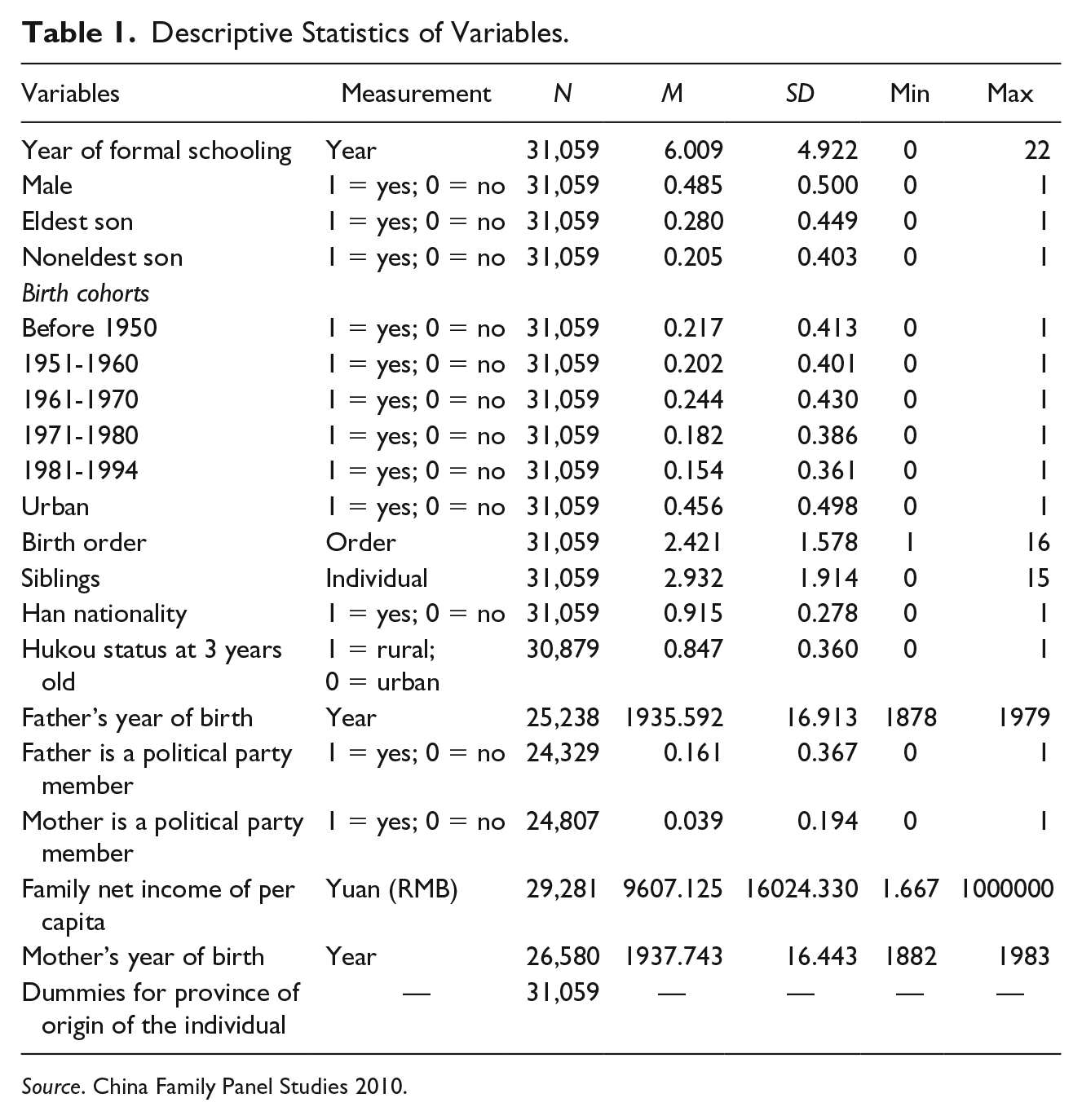
Source. China Family Panel Studies 2010.
As shown in Figure 1 and Figure 2, we find that the average schooling years of residents is rising regardless of whether being in urban or rural areas. For rural residents, the overall educational attainment is lower than that of urban residents. When we observed changes in the educational attainment of rural residents with delay of birth year, we found that after the founding of the country in 1949, although the continuous implementation of basic education has improved the overall education level of rural residents, the gender education gap does not seem to shrink. In the late 1950s, China experienced 3 years of natural disasters and the Great Leap Forward, and in the following years experienced a series of events such as the Cultural Revolution, which led to a decline in the overall educational level of children born during this period. But the gender education gap seems to have narrowed. Since then, China’s education system has been steadily developing. In particular, the Compulsory Education Law, implemented in 1986, has greatly improved the basic education of rural residents. The gender gap in education has gradually narrowed and even disappeared, especially for those born in 1980s.

The evolution of child’s schooling years by gender in rural China.

The evolution of child’s schooling years by gender in urban China.
When we focus on urban residents, we find that the educational level of urban and rural residents has a similar growth trend, but the growth volatility of urban residents’ education is not as strong as that witnessed in rural areas. Although the educational attainment of individuals born around the 1960s declined slightly; however, it quickly resumed and shown an upward trend after 1960s. The educational gender gap seems to have a downward trend.
For individuals born in the 1980s or later in both rural and urban area, it seems that women’s educational attainment surpasses men’s (Figures 1 and 2). This is also confirmed by the fact that the proportion of females in undergraduate and postgraduate students has exceeded 50% in recent years. 7 The reason might be the implementation of the one-child policy in China, between 1979 and 2015, has leaded to higher educational achievement for women through. Parents who do not have sons do not have the opportunity to discriminate on the basis of children’s gender, so they have to invest resources in their daughters. At the same time, some of the individuals born after 1980 have not graduated from colleges/universities, which may lead to a sudden drop in the average level of education.
We further classify men into eldest and noneldest sons. According to Figures 3 and 4, it seems that there is no significant difference in educational attainment between eldest and noneldest sons in rural and urban areas. However, the educational attainment of the eldest and the noneldest sons seems significantly higher than that of the daughters.

The evolution of eldest son, noneldest son, and daughters’ schooling years in rural China.

The evolution of eldest son, noneldest son, and girls’ schooling years in urban China.
Our data shows that there exists a clear negative correlation between the number of siblings an individual has and their educational attainment (Figure 5). However, the slope of the linear relationship between number of siblings and education seems to be dissimilar across different locational areas and genders. Specifically, we found that the line fitted for urban areas has a steeper slope than that fitted for rural China. Also, for each additional sibling, daughters had a greater education reduction than sons. This also gives us a signal that, as the number of sibling increases, girls’ resources are more likely to be crowded out, which results in a more significant decline in daughter’s education than son.

The relationship between sibling size and schooling years by gender.
As Figure 6 reports, when the number of siblings increases, the eldest and noneldest sons’ educational attainment decreases slightly, while the education of daughters decreases more significantly. In urban areas, with an increase in the number of siblings, it seems that the fitting line’s slope of noneldest sons is much steeper than eldest sons. In the meantime, it shows a significantly gentler slope than daughters. From this perspective, it seems that people from neither urban nor rural areas in China have an eldest son preference in terms of educational attainment.

The relationship between sibling size and schooling years in a more detailed division.
Multivariable Results
Gender and the Educational Attainment
We use regression equation (1) to measure the effect of gender differences on education:
Regression equation (2) is used to measure the effects of whether the individual is the eldest or noneldest son in terms of educational attainment:
Where i represents different individuals,
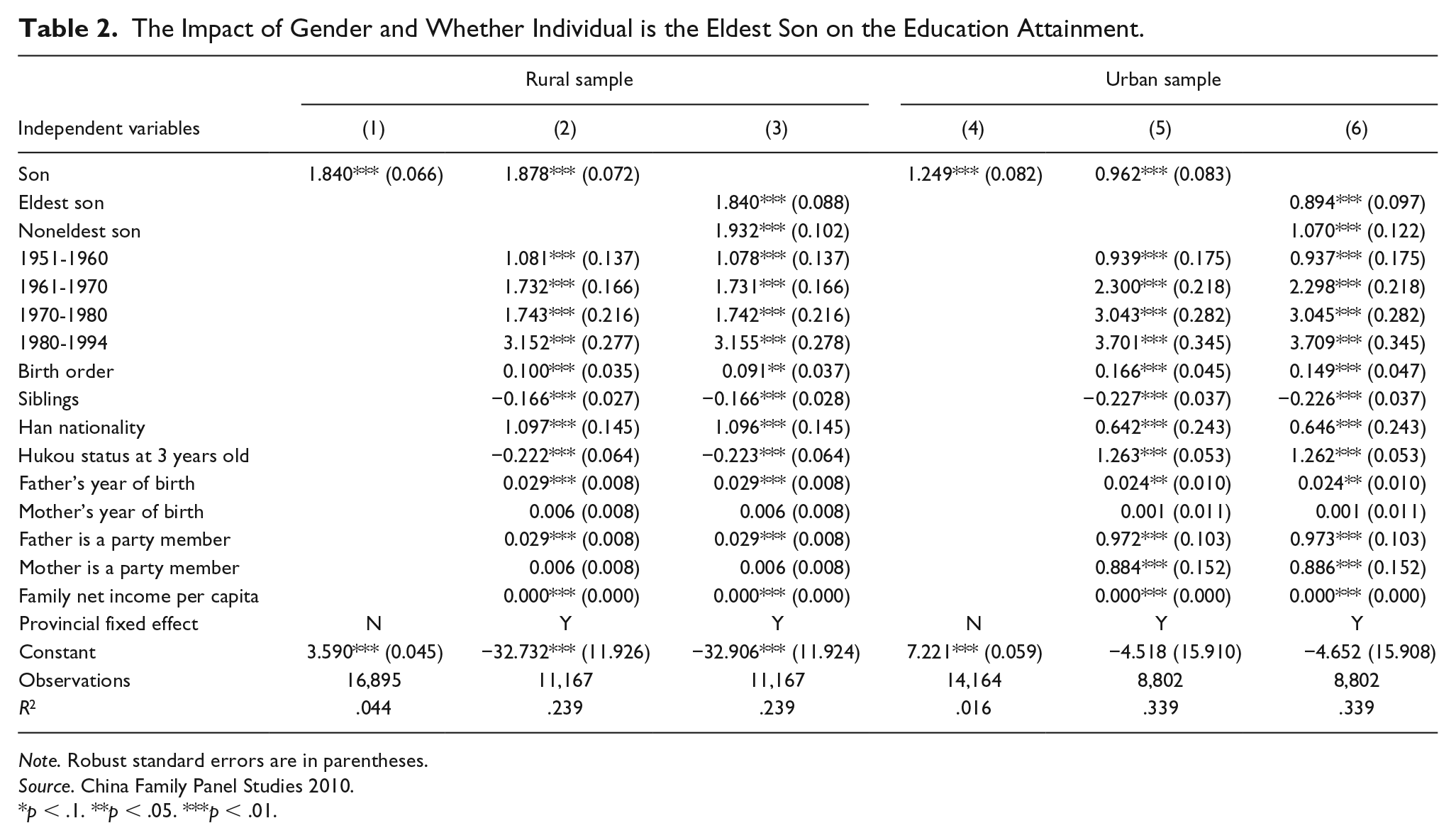
Table 2 shows the results from OLS estimation. When we run Model 1 and only include independent variables related to gender and educational attainment, we find that sons receive 1.84 more years of formal schooling than daughters in rural China, and this value lowers to 1.249 in urban China (row 1, columns 1 and 4). When we put the variables of other individual characteristics and family characteristics into the regression equation, the estimate for years of additional educational attainment of males over females increases to 1.878 in rural China and decreases to 0.962 in urban China (row 1, columns 2 and 5).
The Impact of Gender and Whether Individual is the Eldest Son on the Education Attainment.
Note. Robust standard errors are in parentheses.
Source. China Family Panel Studies 2010.
p < .1. **p < .05. ***p < .01.
Considering that we want to verify whether the eldest son will show an obvious advantage in educational attainment, we derive the results of columns (3) and (6) in Table 2 according to regression equation (2). The results suggest that both the eldest son and the other sons were significantly more educated than daughters. The estimate value is much higher in rural China than urban China, which shows that gender discrimination in rural China is more obviously represented in education than it is in urban areas. However, regardless of being in an urban or rural area, the eldest son does not show a higher educational attainment than other sons (row 1, columns 3 and 6).
In addition, we find that being earlier in the birth order implies a distinct educational advantage (row 8, columns 2, 3, 5, and 6). At the same time, the number of siblings has a negative impact on the educational attainment of individuals, which also validates the traditional “resource dilution” theory (row 9, columns 2, 3, 5, and 6). We also find that people of the Han nationality are better educated than those from ethnic minorities in both urban and rural areas (row 10, columns 2, 3, 5, and 6). We also find that parents who are party members can significantly improve their children’s final educational attainment (rows 14 and 15, columns 2, 3, 5, and 6). Individuals from wealthier families are also more educated (row 16, columns 2, 3, 5, and 6).
The Impact of Gender on Education Varies With the Birth Cohorts
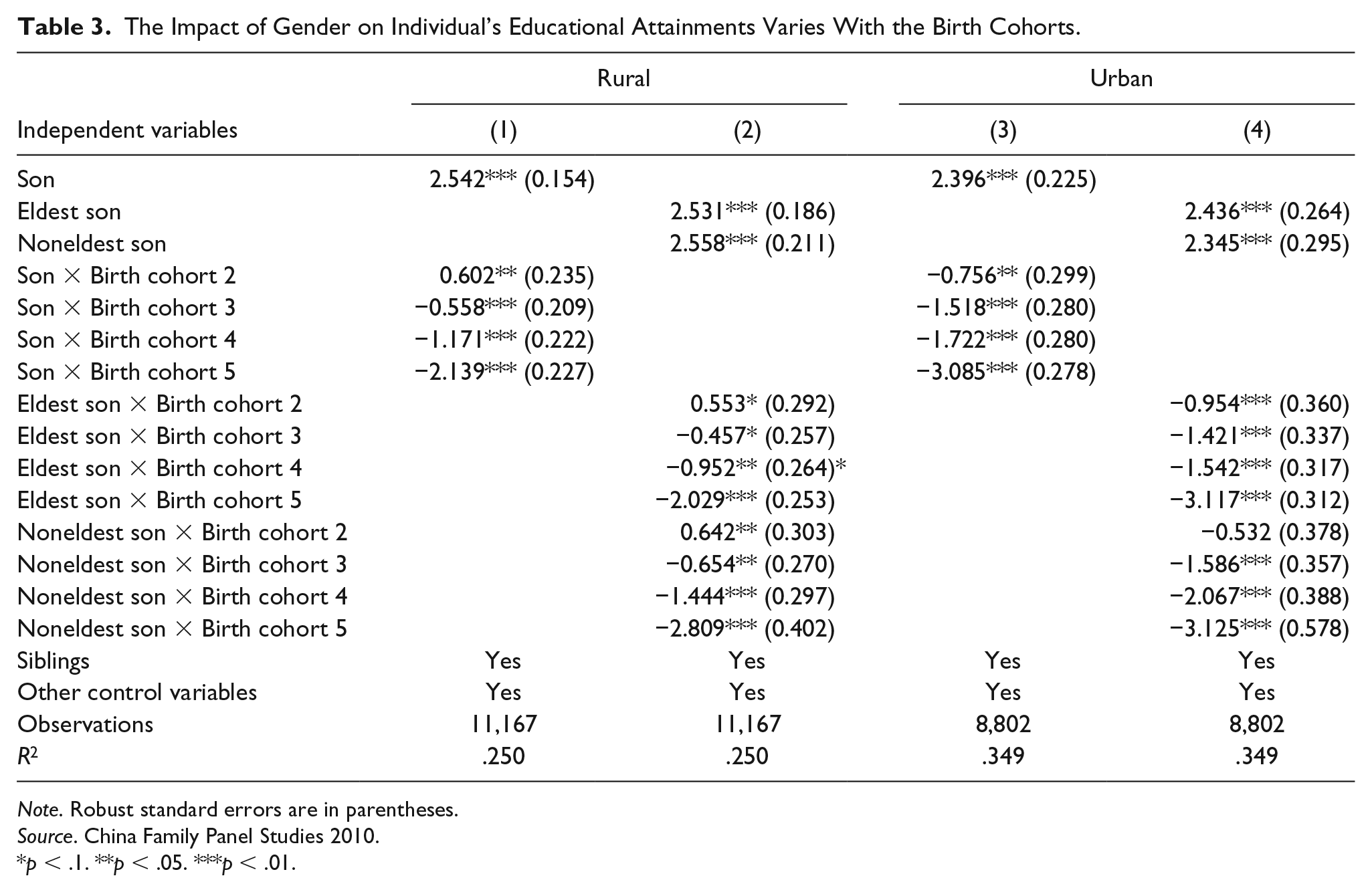
In the previous section, we verified the size of the gender education gap and whether the eldest and noneldest sons can attain higher levels of education. To better reflect the gender educational differences over time in urban and rural areas, we further explore gender education gap’s heterogeneity. To achieve this goal, we join the cross items of gender and birth cohorts. We divided the birth year of our samples into five birth cohorts: before 1950, 1951 to 1960, 1961 to 1970, 1971 to 1980, and 1980 to 1994. The same procedure is applied to those as to eldest and noneldest sons. The results are shown in Table 3.
The Impact of Gender on Individual’s Educational Attainments Varies With the Birth Cohorts.
Note. Robust standard errors are in parentheses.
Source. China Family Panel Studies 2010.
p < .1. **p < .05. ***p < .01.
In rural China, the gender education gap of individuals born in the 1950s has expanded compared with those born before the 1950s (row 4, column 1). Two possible reasons are that individuals born in the 1950s experienced serious “3-year natural disasters” and the “Great Leap Forward,” which have been proven to be detrimental to receiving primary and secondary education (Hannum & Xie, 1994). That is to say, in such an environment, although the educational attainment of boys and girls has improved, in the case of family resource constraints, the gender inequality in resource allocation is more obvious, which may lead to the expansion of gender education gap. However, with the succession of birth cohorts, the gender education gap gradually narrows (rows 5, 6, and 7, column 1). For example, the gender education gap in education was only 0.403 years (2.542 minus 2.139 years) for those individuals born in the 1980s and after (row 7, column 1). The trend of the education gap between the eldest son and the daughter and the education gap between the noneldest son and daughter are consistent with the trend of the gender education gap discussed above (rows 8 to 15, column 2).
In urban areas, the gender education gap has been narrowed with the succession of birth cohorts. It should be pointed out that individuals born in urban areas in the 1950s, despite facing 3 years of “3-year natural disasters,” are much less affected than those from rural areas, which is probably why the gender education gap is so different between urban and rural areas at this time (row 4, column 3). For individuals born in the 1980s, girls’ educational attainment has surpassed boys’. More specifically, daughters receive 0.293 years more education than sons (3.085 minus 2.396 years; row 7, column 3). In the meantime, compared with daughters, the eldest and noneldest sons are losing their advantages in educational attainment (rows 8-16, column 4). However, it should be pointed out that there is still a large number of individuals born in the 1980s or later who are students. Therefore, the educational attainment of these remaining individuals still does not fully represent all the sampled individuals born in the 1980s or later after excluding those students from this study. We continue to verify these results in subsequent robustness checks in the following sections. In addition, results of other explanatory variables are similar to those shown in Table 2, and we will not discuss it here any more.
Siblings and Gender Education Gap
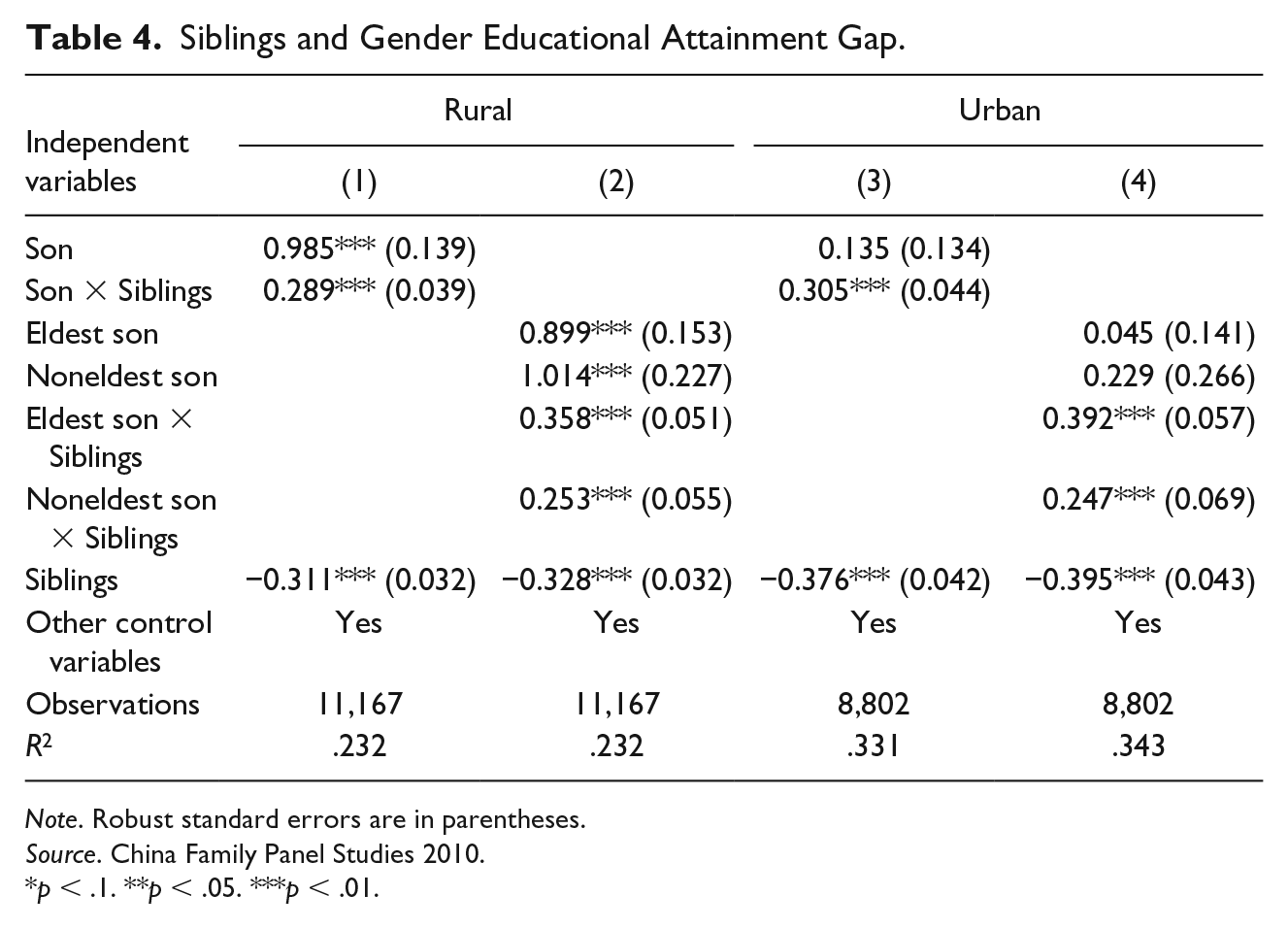
Next, we explore how the gender education gap is changing with number of siblings. We add the cross item of gender and the number of siblings in Model 1 and the cross item between eldest son, noneldest sons, and the number of siblings in Model 2. The regression results are shown in Table 4.
Siblings and Gender Educational Attainment Gap.
Note. Robust standard errors are in parentheses.
Source. China Family Panel Studies 2010.
p < .1. **p < .05. ***p < .01.
The results in the first and third columns of Table 4 show that an increase in the number of siblings, regardless of being from urban or rural areas, leads to an expansion of the gender education gap. It also shows that when families have financial or resource constraints, women’s resources will be more severely squeezed by an increase in the number of siblings. Specifically, each additional sibling will increase the gender education gap among rural and urban residents by 0.289 years and 0.305 years, respectively (row 2, columns 1 and 3). Furthermore, we found that, as the number of siblings increased in urban and rural areas, the educational gap between the eldest son and the daughter increased slightly more than that between noneldest son and daughter (rows 5 and 6, columns 2 and 4).
Robustness Check
Reduce the Sample to Those Born Before 1980
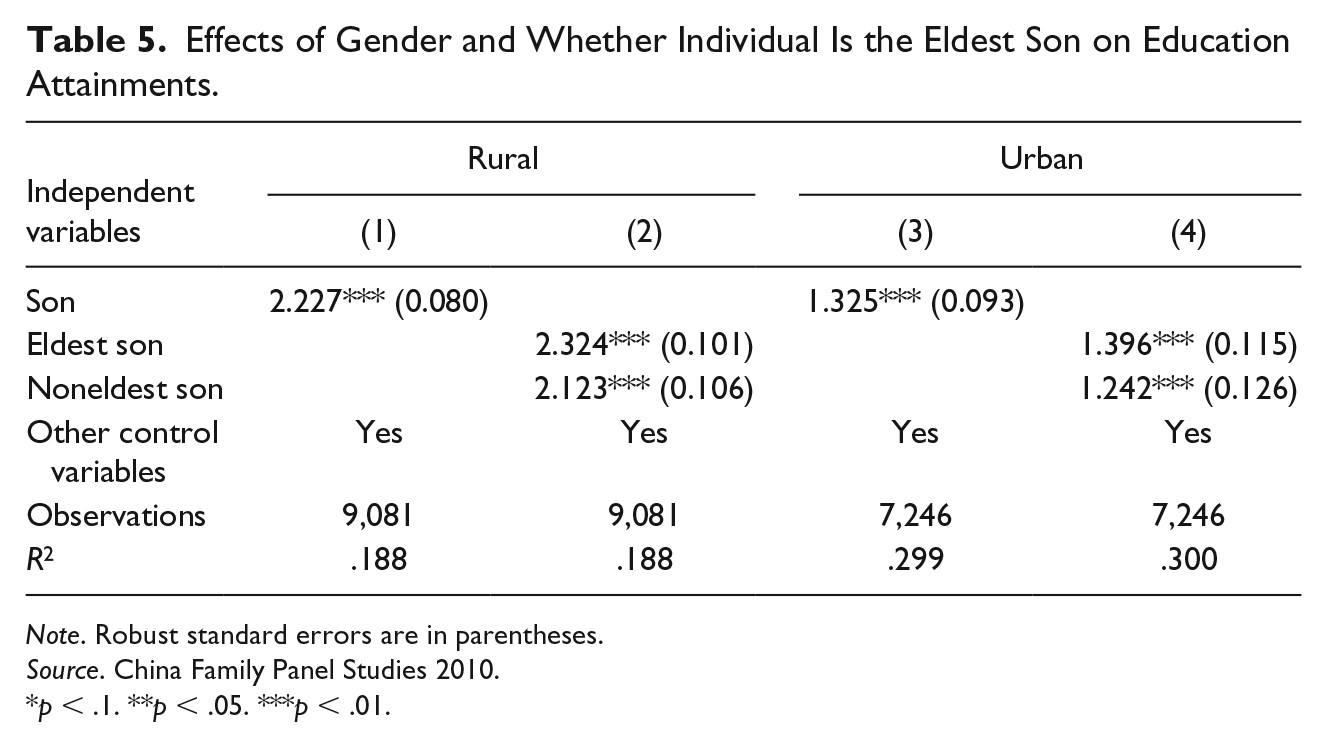
Given that the survey was conducted in 2010, many individuals still have not completed their studies or are likely to be released from regular work for study. Therefore, we will exclude samples born after 1980, and further explore the gender education differences. After doing so, there are 9,081 rural and 7,246 urban individuals in the sample. The detailed results are shown in Table 5.
Effects of Gender and Whether Individual Is the Eldest Son on Education Attainments.
Note. Robust standard errors are in parentheses.
Source. China Family Panel Studies 2010.
p < .1. **p < .05. ***p < .01.
The results suggest that the educational attainment of men is significantly higher than that of women in both urban and rural areas. There is a greater gender education gap after excluding individuals born after 1980 than previously estimated (row 1, columns 1 and 3). Both the eldest and noneldest sons were significantly better educated than daughters. Also, compared with the education gap between noneldest son and daughter, the education gap between eldest son and daughter seemed to be more pronounced. For example, the years of formal schooling of the eldest son in rural areas was 2.324 years higher than that of daughter, and that of noneldest males was 2.123 years higher; the regression results of urban samples had similar characteristics (rows 2 and 3, columns 2 and 4). This is somewhat different from the results shown in Table 2.
Different Measure of Educational Attainment
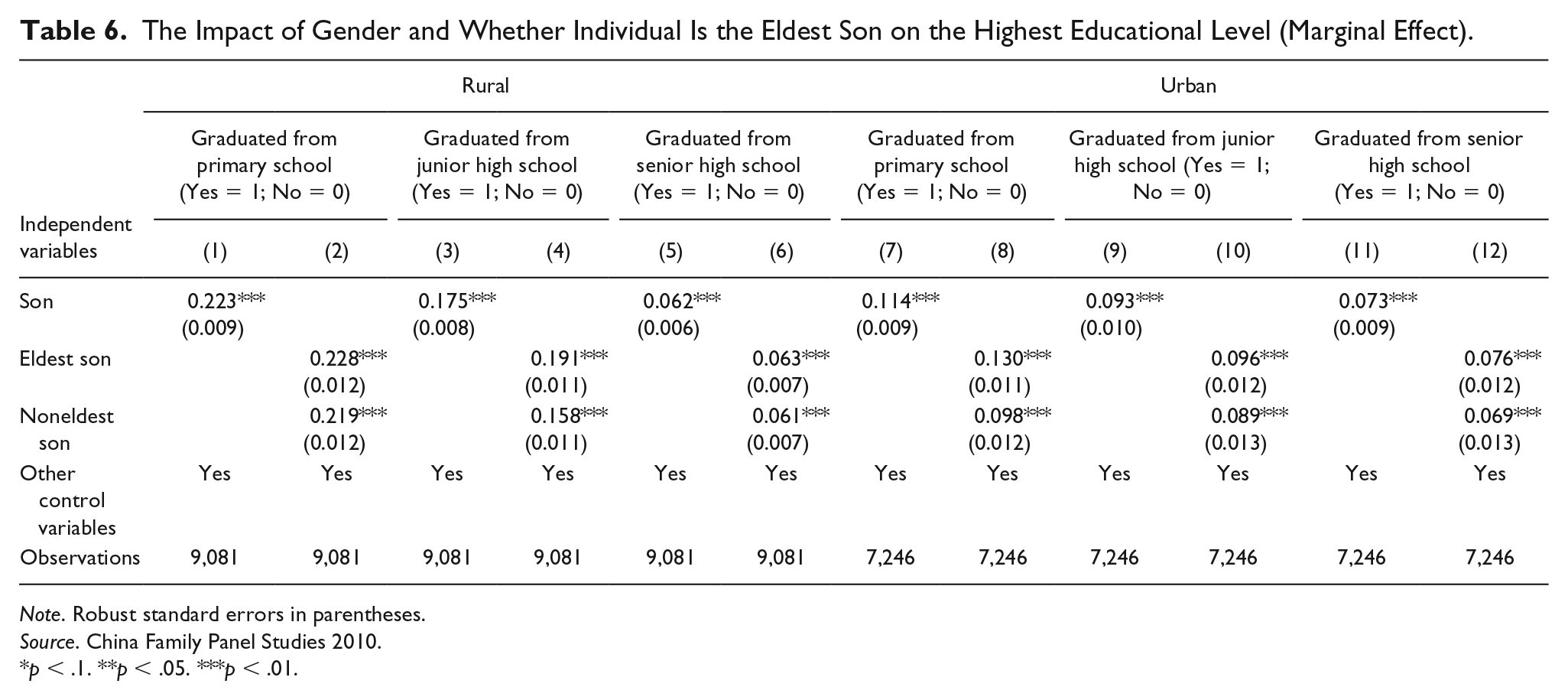
To verify the reliability of our results, we further separately use whether the individual graduated from primary school (Yes = 1; No = 0), whether the individual graduated from junior high school (Yes = 1; No = 0), and whether the individual graduated from senior high school (Yes = 1; No = 0) as dependent variable. In view of the dependent variable being a dummy variable, we use the Probit model to estimate the results.
According to Table 6, we find that both in urban and rural areas, males have a higher graduation rate than females at different stages of education. However, the lower the level of education, the greater the gender gap (row 1, columns 1, 3, 5, 7, 9, and 11). That is to say, compared with male individuals, female individuals face a higher risk of dropping out in lower educational levels. Furthermore, we find that sons were 22.3% more likely to graduate from primary school than were daughters in rural areas (row 1, column 1). This estimate was 11.4% in urban areas (row1, column 7). Also, sons were 17.5% more likely to graduate from junior high school than were daughters in rural areas (row 1, column 3), while this discrepancy was 9.3% in urban areas (row 1, column 9). Sons were 6.2% more likely to graduate from junior high school than were daughters in rural areas (row 1, column 5), while the difference was 7.3% in urban areas (row 1, column 11).
The Impact of Gender and Whether Individual Is the Eldest Son on the Highest Educational Level (Marginal Effect).
Note. Robust standard errors in parentheses.
Source. China Family Panel Studies 2010.
p < .1. **p < .05. ***p < .01.
The results also suggest that both the eldest and noneldest sons have a higher graduation rate than females at different stages of education. However, the lower the level of education, the greater the education gap between eldest son and daughter. This phenomenon is also true for noneldest sons. Furthermore, we find that in rural areas, eldest sons were 22.8% more likely to graduate from primary school than were daughters, and noneldest sons were 21.9% more likely to attend high school than were daughters in rural areas (rows 2 and 3, column 2). These estimates are 13% and 9.8%, respectively, in urban areas (rows 2 and 3, column 8). Also, eldest sons were 19.1% more likely to graduate from junior high school than were daughters, and noneldest sons were 15.8% more likely to attend high school than were daughters in rural areas (rows 2 and 3, column 4). These estimates are 9.6% and 8.9%, respectively, in urban areas (rows 2 and 3, column 10). Eldest sons were 6.3% more likely to graduate from junior high school than were daughters, and noneldest sons were 6.1% more likely to attend high school than were daughters in rural areas (rows 2 and 3, column 6). These estimates are 7.6% and 6.9%, respectively, in urban areas (rows 2 and 3, column 12).
Eldest Son Versus Noneldest Son
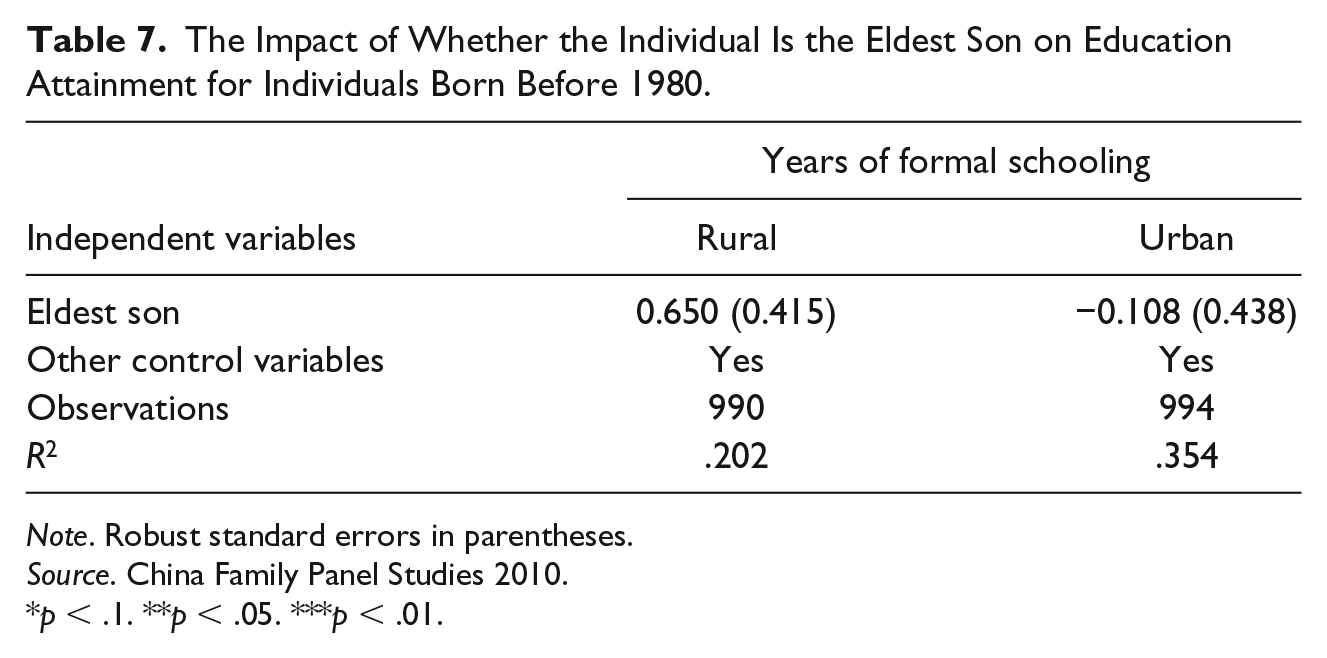
In order to better illustrate the educational gap between the eldest son and noneldest son, we only retain samples without sisters to illustrate in the most intuitive way whether there exist differences in the final educational attainment between the eldest and noneldest son.
According to Table 7, we can clearly draw the conclusion that the eldest son has no advantage over the noneldest son on the educational attainment, and this conclusion is true in both urban and rural areas (row 1, columns 1 and 2). Here we can say that, in China, son preference exists in the perspective of educational attainment, but there is no so-called eldest son preference compared with the noneldest sons. That is to say, both in urban and rural areas of China, there is a son preference, but within the gender, there is no difference in educational attainment between the first-born child and the succession children.
The Impact of Whether the Individual Is the Eldest Son on Education Attainment for Individuals Born Before 1980.
Note. Robust standard errors in parentheses.
Source. China Family Panel Studies 2010.
p < .1. **p < .05. ***p < .01.
Mechanism Discussion
We conclude that there is a son preference in China in terms of educational attainment. We then further explore how the son preference of parents affects the educational attainments for children. We mainly examine it from two aspects: whether gender affects the child’s early separation from their parents, and how the son preference influences parents’ educational expectations for their children.
Gender and Separation
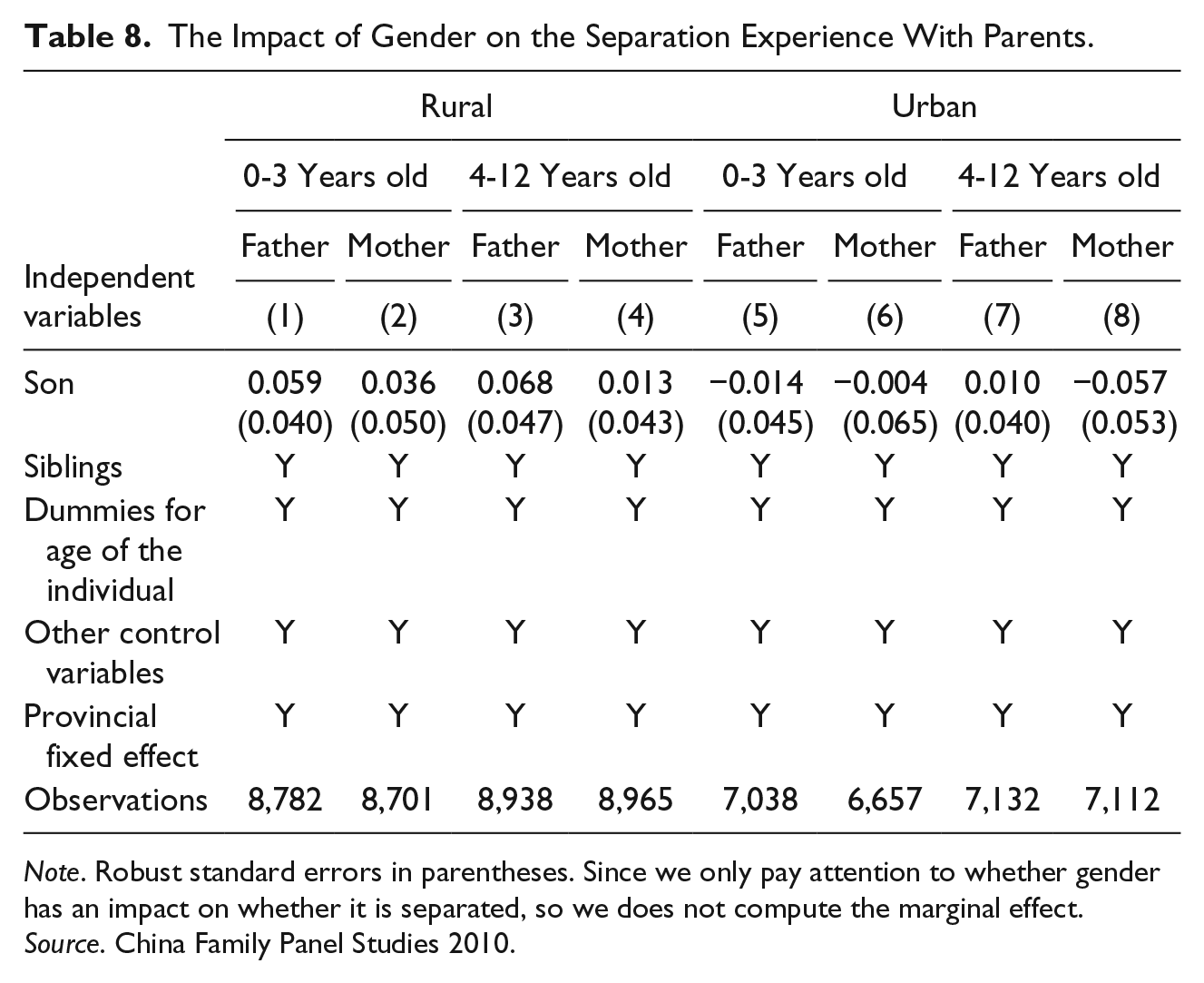
We measure the occurrence of separation behavior between parents and children as characterized by whether the individuals have not lived with their parents for more than 1 week in a year when they were 3 years old or younger (infancy), or between 4 and 12 years old (preschool and primary school age). 8 The sample distribution of the separation behavior between parents and children is given in the appendix, Table A1. The dependent variable is whether the separation behavior between parents and children occurs (1 means Yes and 0 means No). We estimate it using the Probit model.
As shown in Table 8, we find that children’s gender has no effect on whether the individual aged 3 years or younger is separated from the parents, nor did it have an effect for individuals between 4 and 12 years old, regardless being in rural or urban areas (row 1, columns 1-8). It may be because children in the both of two age groups are still quite young. Survival and growth of children in these age ranges requires undifferentiated parental care regardless of gender differences. That is to say, children’s gender does not play a significant role on the occurrence of separation between parents and children. So, there is no evidence here that son preference will lead to the separation behavior between parents and children of infantile stage, preschool, or primary school age.
The Impact of Gender on the Separation Experience With Parents.
Note. Robust standard errors in parentheses. Since we only pay attention to whether gender has an impact on whether it is separated, so we does not compute the marginal effect.
Source. China Family Panel Studies 2010.
Gender and Educational Expectations
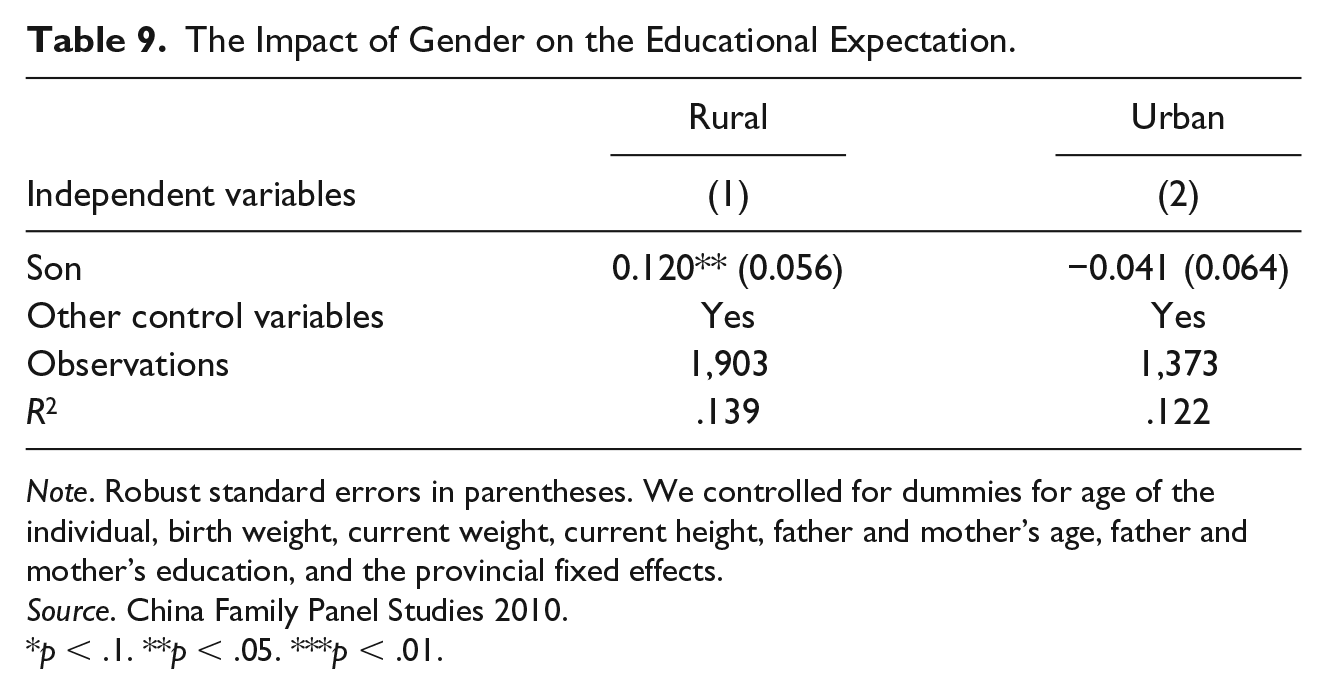
Studies have shown that parents’ educational expectations for their children affect individual academic performance (Bandura, Barbaranelli, Caprara, & Pastorelli, 2001; Froiland, 2015; Froiland & Davison, 2014; Y. Zhang, Haddad, Torres, & Chen, 2011). Since the data we have for adults does not include the information about their parents’ educational expectations, we could not empirically analyze whether children’s gender will affect parents’ educational expectations by using the adult sample. Rather, we used the data on the children’s questionnaire in CFPS2010 to reflect the impact of children’s gender on parents’ educational expectations for those children who are younger than 16 years. Considering the missing values of some variables, there are 1,903 rural and 1,373 urban sampled individuals.
Given that parental sexism has narrowed over time, it is reasonable to assume that the results of gender differences in educational expectations reflected in the data from the current Children’s questionnaire (0-14 years old) are slightly underestimated. Nevertheless, we can still get some evidence based on Table 9. In rural China, parents’ expectations for boys are significantly higher than that for girls’, while there is no difference in educational expectations of parents for children of different gender in urban China (row 1, columns 1 and 2). This means that in rural China, son preference has the significant impact on parents’ education expectations, which may ultimately lead to the higher educational attainment for sons.
The Impact of Gender on the Educational Expectation.
Note. Robust standard errors in parentheses. We controlled for dummies for age of the individual, birth weight, current weight, current height, father and mother’s age, father and mother’s education, and the provincial fixed effects.
Source. China Family Panel Studies 2010.
p < .1. **p < .05. ***p < .01.
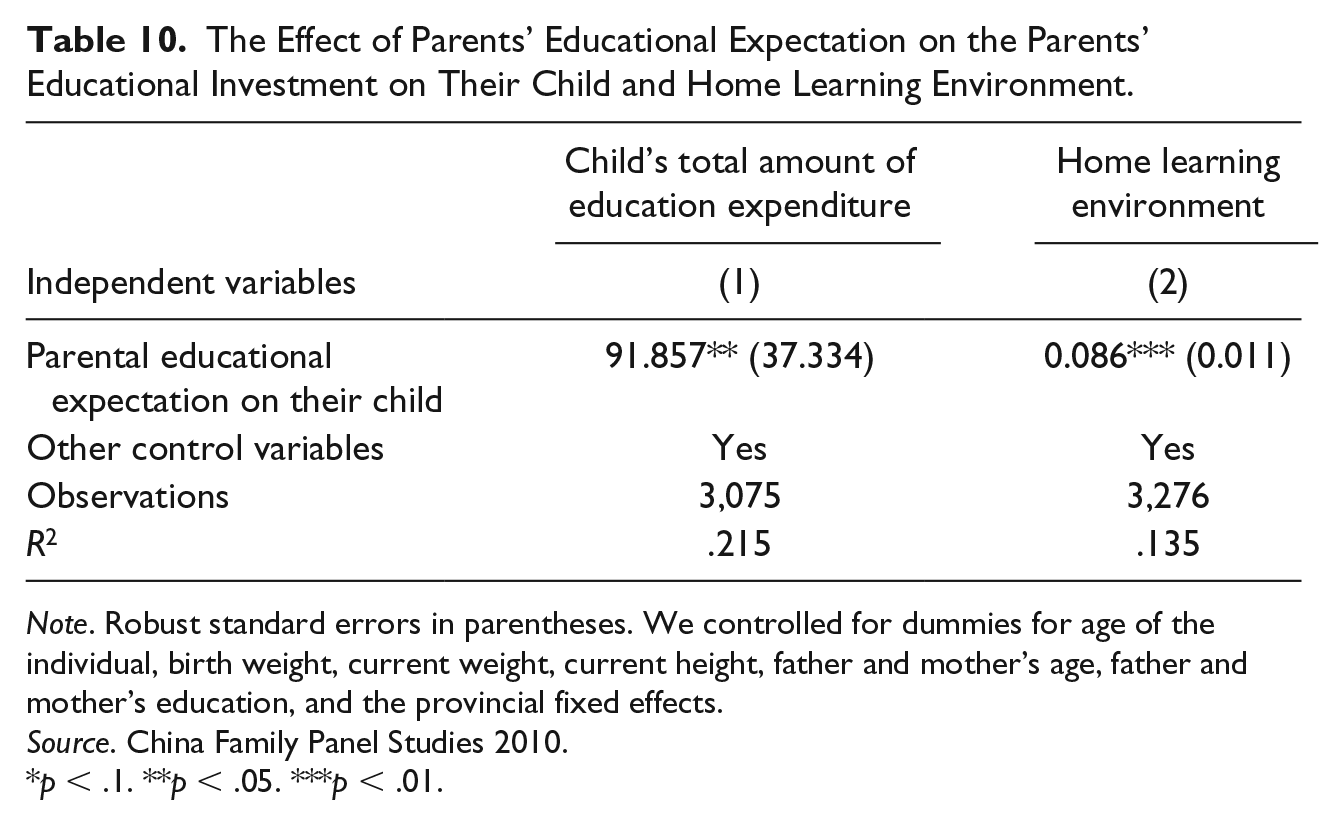
We further analyze how parental educational expectations affect their children’s academic performance. Considering the availability of the data, we provide answers from the perspective of the impact of parents’ educational expectations on children’s educational expenditure and the learning environment provided by families (Table 10). We should note that the learning environment is observed by the interviewers. A good home environment (with more books, pictorials, and other learning materials) indicates parents care about their child’s education. The value of home environment is from 1 (poor) to 5 (good). We find that if the parents have a higher educational expectation for their child, they will invest more in their children’s education and provide a better learning environment for their child. Unfortunately, the CFPS data set does not have indicators concerning children’s learning efforts.
The Effect of Parents’ Educational Expectation on the Parents’ Educational Investment on Their Child and Home Learning Environment.
Note. Robust standard errors in parentheses. We controlled for dummies for age of the individual, birth weight, current weight, current height, father and mother’s age, father and mother’s education, and the provincial fixed effects.
Source. China Family Panel Studies 2010.
p < .1. **p < .05. ***p < .01.
Conclusion and Discussion
This article uses the China Family Panel Studies 2010 data set to verify that son preference is prevalent in China in terms of educational attainment. In urban areas of China, men have 1.3 years of education more than women. In rural areas. The gender gap in education in mainland China is higher than that in Taiwan, at 1.13 years (Yu & Su, 2006). This is similar to the conclusion that men are more likely to go to school than women in studies using Nepalese data (Beutel & Axinn, 2002). We also conclude that, compared with noneldest son, the eldest son preference does not exist in this regard, although previous studies in Sweden have shown that eldest sons have higher noncognitive abilities and are more likely to engage in managerial work (Black, Grönqvist, & Öckert, 2018). Other studies using data from India and sub-Saharan Africa have found that preference for eldest son is the main source of the height gap between Indian and South African children (Jayachandran & Pande, 2017). But, we find that in a transitional economy like China, the eldest son did not show a higher level of education than other boys. We also find that the gender education gap narrows over time, and expands as the number of sibling increases. This is similar to previous studies, but the gap is slightly smaller here than in those (Y. Wu, 2012).
We further exploring the mechanisms on how gender influences individual’s educational attainment, we conclude that gender has no impact on the separation behavior between parents and children. In addition, parents’ expectations for boys are significantly higher than that for girls’ in rural China, while this result has not been verified for urban members of our data set. We also find that children whose parents have higher educational expectations will see more spending on their education and have a better family learning environment.
According to our conclusions, we come up with following ideas which might affect policy considerations. Above all, more attention should be paid to the unequal allocation of resources in the family. When the government has the desire to implement poverty alleviation measures or other projects to improve livelihoods, it should be clear in how resources are allocated among people. It is necessary to clarify who is in the advantage and who is at a disadvantage. For example, policy makers may choose to directly fund a family when in the process of implementing an educational poverty alleviation project. However, due to the son preference prevailing in China, boys are more likely to benefit from such a project than girls. As such, it may not be the best choice to do so without considering this imbalance. Therefore, people who develop the educational poverty alleviation plans should be clear in determining who is to be the real beneficiary.
Second, the pros and cons of the policy itself should be explored in multiple aspects. From the perspective of narrowing the gender education gap, the one-child policy has led to a rapid reduction in the size of families in China, which in fact has improved women’s educational attainment and narrowed the gender education gap. In October, 2015, China’s one-child policy was replaced by a universal two-child policy which is expected to liberalize birth restrictions. In fact, this may not necessarily have a great effect on stimulating fertility for many kinds of reasons, but it will still let families have more births in some poor or underdeveloped areas (Zeng & Hesketh, 2016). Hence, the girls in these families may be the target group for future poverty alleviation or other support projects.
However, this study still has some flaws. On the one hand, the family income status before children go to school is not well controlled for, as we only controlled for the family’s current income. On the other hand, the mechanisms behind how gender influences an individual’s final educational attainment need further discussion. Researchers may need to dig more into details regarding this aspect part when the appropriate data becomes available.
Footnotes
Appendix
Ratio of Children Separated From Their Parents by Age Group(%).

| Regions | 0-3 Years old |
4-12 Years old |
||
|---|---|---|---|---|
| Father | Mother | Father | Mother | |
| Rural | 9.44 | 5.74 | 15.37 | 9.66 |
| Urban | 9.17 | 3.97 | 13.76 | 6.96 |
Source. China Family Panel Studies 2010.
Declaration of Conflicting Interests
The author(s) declared no potential conflicts of interest with respect to the research, authorship, and/or publication of this article.
Funding
The authors disclosed receipt of the following financial support for the research, authorship, and/or publication of this article: This study was funded by the National Natural Science Foundation of China (Grant numbers 71333012) and China Postdoctoral Science Foundation (Grant numbers 2019M651046).
