







Abstract
The study examined parents’ perceptions of their children’s behavioral difficulties (CBD) and positive parent–child interaction (PCI) during the first COVID-19 lockdown in Israel, as well as the associations among parents’ psychological distress, parents’ COVID-19–related worries, parents’ coping, and parents’ resilience. Participants were 437 parents of minor children. Parents reported more behavioral and emotional difficulties alongside with more quality time with their children. Parents’ distress and COVID-19–related worries were positively related to CBD. Emotion-focused coping mediated the association between psychological distress and CBD, while resilience mediated the association between distress and PCI. The study results indicated that parents perceived their children as having greater difficulties, but they also perceived more positive parent–child interactions, during the lockdown. Parents’ distress appears to have been a significant variable in perceived child’s difficulties during the lockdown.
Introduction
The COVID-19 pandemic and the lockdown that was implemented in order to stop its spread led to the closing of schools and kindergartens. Parents were suddenly thrust into a situation in which they had to care for their children with no outside help, while also having to deal with fears of the disease as well as the resultant financial consequences. The sudden halt in the daily routine presented new challenges for parents and children alike, with no clear end in sight. Separating a family from the outside world, along with the lack of personal space in the home, can intensify stress within a family, potentially having an impact on the parent–child relationship and children’s emotional and behavioral difficulties (Cluver et al., 2020). In the current study, we examined Israeli parents’ reports during Israel’s first lockdown, implemented in March–April 2020, in terms of their perceived relationships with their children and their perceptions of their children’s difficulties.
Studies conducted during the COVID-19 outbreak have revealed intensified levels of mental health problems such as anxiety, depression, sleep disorders, and even symptoms of PTSD among adults (Gao et al., 2020; Huang & Zhao, 2020; Rajkumar, 2020). Among children and adolescents, being unable to go to school and being isolated from friends/teachers/social outlets have resulted in a variety of unhealthy behaviors—irregular sleep patterns, fewer physical activities, and more screen time have been reported (Guido et al., 2020; Wang et al., 2020).
Most of the studies examining the effect of the lockdown on children’s mental health found indications of elevated levels of stress, anxiety, and depression (Lee, 2020; Marques de Miranda et al., 2020; Nearchou et al., 2020; Racine et al., 2020; Spinelli et al., 2020). However, it appears that the most noted change was found in emotional and behavioral problems such as externalizing problematic behaviors, restless/attentional difficulties, and hyperactivity, which were reported by many parents (Christner et al., 2021; El-Osta et al., 2021; Mohler-Kuo et al., 2021). Most of the studies did not examine the possible positive effect of the lockdown. However, there are studies that found that during the lockdown, parents spent more quality time together with their children, indicative of positive parent–child interactions (Christner et al., 2021; Gadermann et al., 2021).
Parents’ reports of their children’s emotional and behavioral changes as well as regarding parent–child interactions are considered to be the most important and reliable sources of information (Achenbach et al., 1987). Parents’ reports regarding the effects of the lockdown on their children are important as they may tell us what is happening to their children, but even more so, they allow us to understand parents’ perceptions regarding their children during the lockdown. It is well established that during stressful situations, especially if the stress is chronic or ongoing, parental perceptions regarding a child’s behavior and the interaction with the child tend to be more negative (Cobham et al., 2016; Langberg et al., 2010; Laufer & Shechory Bitton, 2020; Shechory-Bitton, 2013).
In the current paper, the effect of stress on parental perceptions is viewed in accordance with the family systems perspective (Bernardon & Pernice-Duca, 2010; Cox & Paley, 1997; Minuchin, 1985). According to this perspective, a reciprocal connection exists between the different parts that comprise the family system. Parental stress and mental health problems have been found to influence the parent–child relationship (Murphy et al., 2018; Sanner & Neece, 2018), as well as the child’s well-being and problematic behaviors (Laufer & Shechory Bitton, 2020; Najman et al., 2010; Puff & Renk, 2014; Shechory-Bitton, 2013).
Studies conducted during the COVID-19 outbreak have indicated that worries due to the pandemic’s impact on one’s livelihood, one’s health, and the health of one’s loved ones constitute major risk factors for anxiety, depression, and insomnia (Guo et al., 2020; Song et al., 2020), potentially impairing a parent’s ability to respond to a child’s needs and to hinder the parent–child interaction (Guido et al., 2020; Prime et al., 2020). The stress of the parents’ worries may limit their ability to address the child’s needs and may lower the parent’s emotional availability to the child (Christner et al., 2021; Gadermann et al., 2021).
The family’s ability to withstand stressful situations is dependent on their resilience and coping (Prime et al., 2020). Resilience can be defined as the ability to cope successfully with stressful and traumatic events and retain a sense of equilibrium (Bonanno, 2004; Straud et al., 2018). There have been indications that during highly stressful situations, resilient parents are better at handling their children (Finklestein et al., 2020). Along the same lines, during the ongoing coronavirus pandemic, studies have found that people who are resilient, and individuals who use positive, active, or problem-focused coping, worry less and have fewer symptoms of anxiety and depression than people who are not (Barzilay et al., 2020; Haven et al., 2020; Munk et al., 2020; Song et al., 2020; Yu et al., 2020). Therefore, the role of parental resilience and parental coping techniques should be examined as possible mediating factors between parental distress and perceptions of their child.
The current pandemic and resultant lockdown represent a uniquely stressful situation that gives us an opportunity to investigate the way parents perceive their children’s difficulties during the lockdown. Understanding parents’ perceptions of their children is an important part of understanding the way the family as a system reacts to threats (Briegel et al., 2019; Sterian & Popescu Martin, 2016). Therefore, in the current study, we examined COVID-19–related parental worries, psychological distress, coping, and resilience, and the association between these factors and parents’ perceptions of their children’s behavioral difficulties (CBD) and their interactions with their children (parent–child interaction, PCI), during the first lockdown implemented in Israel, in March–April 2020. Accordingly, and in keeping with the literature review, we had several hypotheses: 1. there would be a negative association between parents’ COVID-19–related worries and parents’ perceptions of their children, 2. parents’ psychological distress would be associated with negative perceptions of CBD and PCI, and 3. coping strategies and personal resilience would mediate the association between parents’ psychological distress and parents’ perceptions of CBD and PCI.
Method
Participants
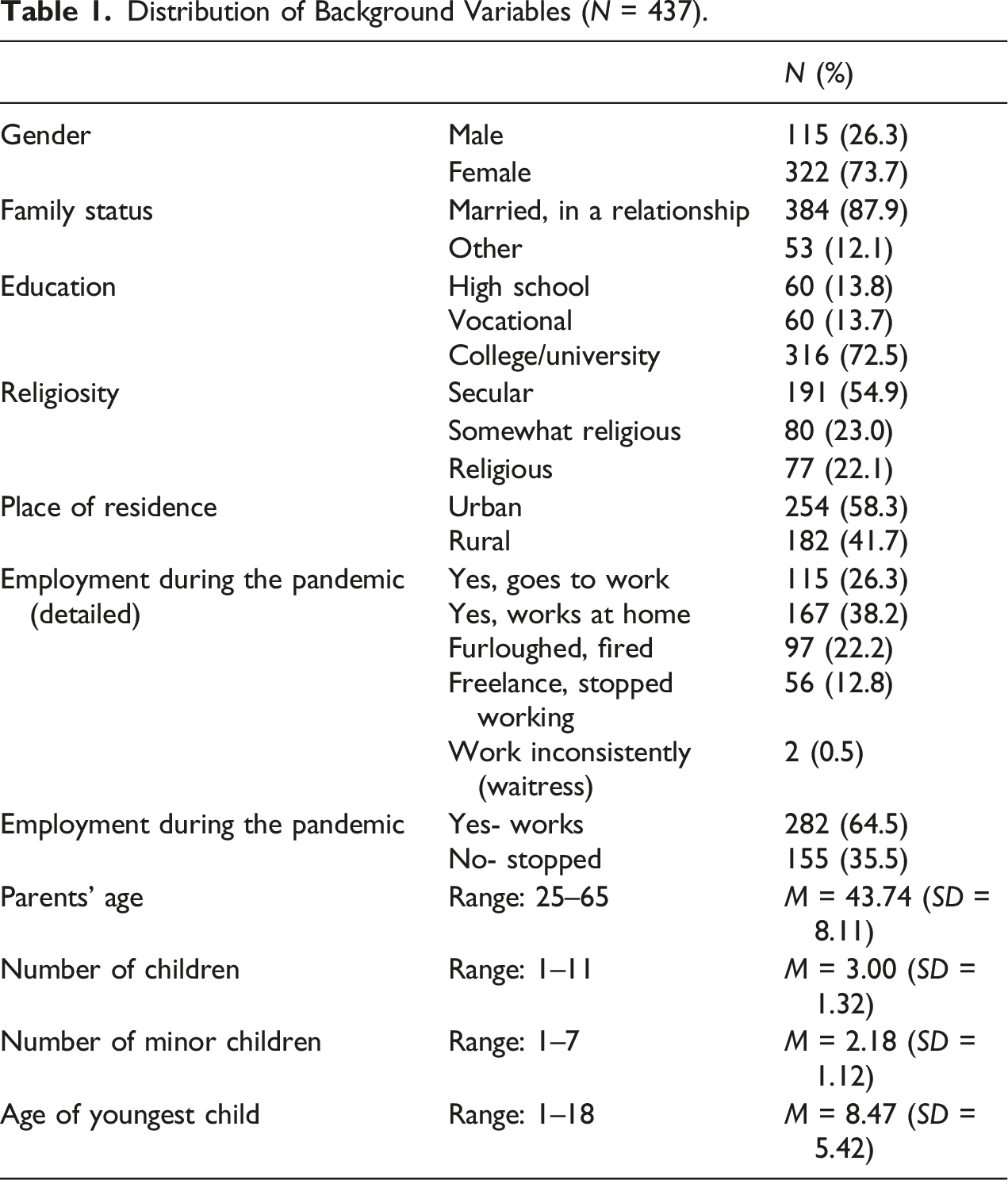
Distribution of Background Variables (N = 437).
Measurements
Personal data: Demographic measures were gathered regarding gender, age, number of children, and the age of the youngest child. Other measures gathered were parents’ level of education, religiosity, place of residence, and employment during the pandemic.
Objective and subjective exposure to COVID-19: For the purpose of the current study, participants were asked to rate their level of concern on a 5-point scale (1 = not at all to 5 = very much) regarding their own health, the health of their family members, and their finanacial situation due to COVID-19.
Parents’ perceptions of their children during the lockdown: Seven questions were devised for the purpose of the study. The first five questions measured behavioral and emotional difficulties; the last two measured positive parent–child interactions. The scale ranged from 1 (not at all) to 5 (very much). The seven questions began with the phrase, “Since the beginning of the COVID-19 pandemic” and were completed with: 1. “I find myself dealing with a lot more problem behaviors on the part of my children”; 2. “It is harder to engage the children”; 3. “The children are less disciplined”; 4. “The children are more irritated or moody”; 5. “The children need more attention”; 6. “I finally feel I have quality time with the children”; 7. “I find it is easier for me now with the children.” Child’s behavioral difficulties (CBD) was composed as a mean of the first five questions (α = .88) (the higher the score, the more difficulties), and positive parent–child interaction (PCI) was composed as a mean of the final two questions (r = .46, p<.001) (the higher the score, the more positive the interaction).
Coping strategies: Coping strategies were measured via use of the Hebrew version of the COPE scale (Carver et al., 1989; Shechory Bitton, 2014). The questionnaire has 30 items rated on a 4-point scale (1 = not at all to 4 = a great deal). Two coping strategies were composed: problem-focused (15 items) (α = 0.82) and emotion-focused (15 items) (α = 0.73). Higher scores indicated a higher use of the coping strategy.
Resilience: Resilience was measured via use of the Connor-Davidson Resilience Scale (CD-RISC; Connor & Davidson, 2003), which consists of 25 statements rated on a 5-point scale (0 = not at all to 4 = true nearly all the time). This scale has been used among the Israeli population and has shown good predictive validity and internal consistency (Bensimon, 2012; Thompson et al., 2018). The total CD-RISC score was built as a mean of all the items, with a higher score indicating higher resilience (α = 0.88).
Psychological distress: Psychological distress was assessed via use of the short form of the Brief Symptom Inventory (BSI; Derogatis, 1993), BSI-18 (Derogatis, 2000). BSI-18 is a self-report symptom checklist consisting of 18 items measuring three symptom clusters: depression, anxiety and somatization, and overall distress. The scale is a 5-point scale that examines the level to which the subject has suffered from the symptom in question during the previous week. Scores on the 18 items are summarized on the Global Severity Index (GSI) (α = 0.92) and three symptom scales each comprising six items: somatization (α = 0.84), depression (α = 0.77), and anxiety (α = 0.87).
Procedure
The data were collected between March 31 and April 8, 2020, a period during which the Israeli government had issued a mandatory lockdown for all civilians, except for those considered to be essential workers. As such, we used an online survey platform. The online questionnaire offered the necessary assurances of anonymity to allow respondents to provide accurate data surrounding sensitive issues, a particularly relevant concern in the field of mental health. Parents of children younger than 18 years were asked to take part in the study. All respondents had provided informed consent prior to answering the questionnaire. The study received ethical approval from the institutional review board (IRB) of the university.
Data Analysis
Data were analyzed with SPSS version 26. Internal consistencies were calculated for the study variables, and the study variables were computed with item means or sums. As BSI scores were positively skewed, they were log-transformed. Background characteristics of the respondents were described with means and SDs for continuous variables, and frequencies and percentages for categorical variables. Means, SDs, and intercorrelations for the study variables were described. Multiple hierarchical regressions for parental perceptions of the children were calculated. The first step included the number of children, age of the youngest child, and parents’ employment (1-yes, 0-no). The second step included the study variables of parents’ worries. The third step included the total BSI score, coping strategies, and the total personal resilience score. In order to assess the mediating effect of coping strategies and personal resilience in the relationship between the dimensions of BSI and parental perceptions of the children, several parallel mediation models were calculated, using Hayes’ (2018) Process Model 4, with 95% confidence intervals, and bootstrapping of 5000 samples. All continuous variables were standardized, and number of children, age of the youngest child, and parents’ employment were controlled for.
Results
First, parents’ reports regarding the effects of COVID-19 were examined. Worries regarding their own health were reported by 45.6% of the parents, 72.3% were worried about their family’s health, and 53.9% were worried due to financial issues stemming from the pandemic. Parents’ worries about their family’s health were significantly higher than their worries about finances, which were significantly higher than their worries about their own health, F (2, 872) = 79.81, p < .001, η2 = .155.
As for perceptions regarding their children, 51.6% reported that they had to deal with their children’s problem behaviors, 59.8% found it hard to engage the children, fewer than half (45.7%) reported that the children were less disciplined, 42.9% indicated that the children were more irritable or moody, 75.9% said that the children were more attention-seeking, 87.3% said that they now had more quality time with their children, and 62.2% reported that they felt it was easier for them to handle their children (during the lockdown).
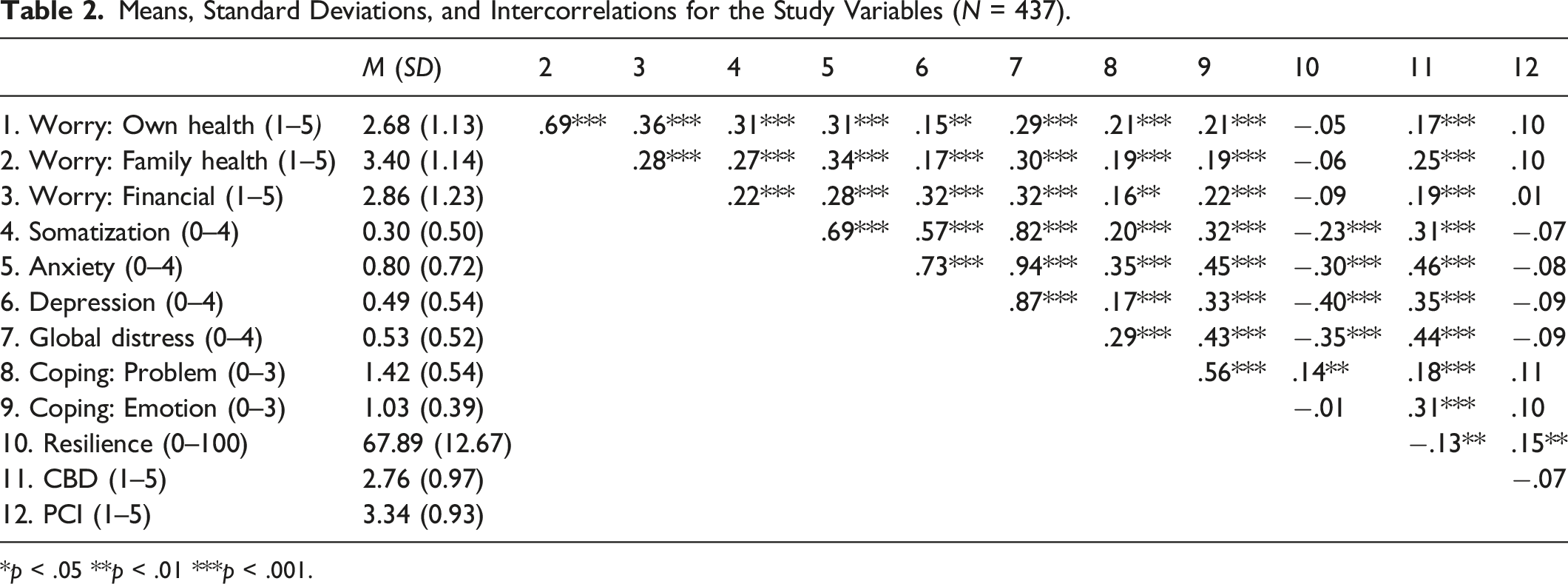
As noted in the Method section, the questions regarding parents’ perceptions of their children were classified into two variables: CBD (children’s behavioral difficulties) and positive PCI (parent–child interaction). Analysis of parents’ perceptions according to the demographic variables indicated that parents’ gender, education level, and religiosity level were not related to CBD or PCI. A significant negative correlation was found between the number of children and CBD (r = −.14, p = .003), indicating that having more children was associated with fewer reported behavioral problems among the children. Negative correlations were found between the age of the youngest child and CBD, and between the age of the youngest child and PCI (r = −.32, p < .001 and r = −.14, p = .004, respectively). In other words, having older children seemed to be associated with fewer behavioral difficulties among the children but also with fewer parent–child interactions. Parents who were working during the lockdown reported less PCI (M = 3.27, SD = 0.93) than those who were not working (M = 3.46, SD = 0.89), t (433) = 2.06, p = .040.
In light of these results, the analysis of the hypotheses was conducted while controlling for the number of children, age of the youngest child, and parents’ employment (1-yes and 0-no).
Means, Standard Deviations, and Intercorrelations for the Study Variables (N = 437).
*p < .05 **p < .01 ***p < .001.
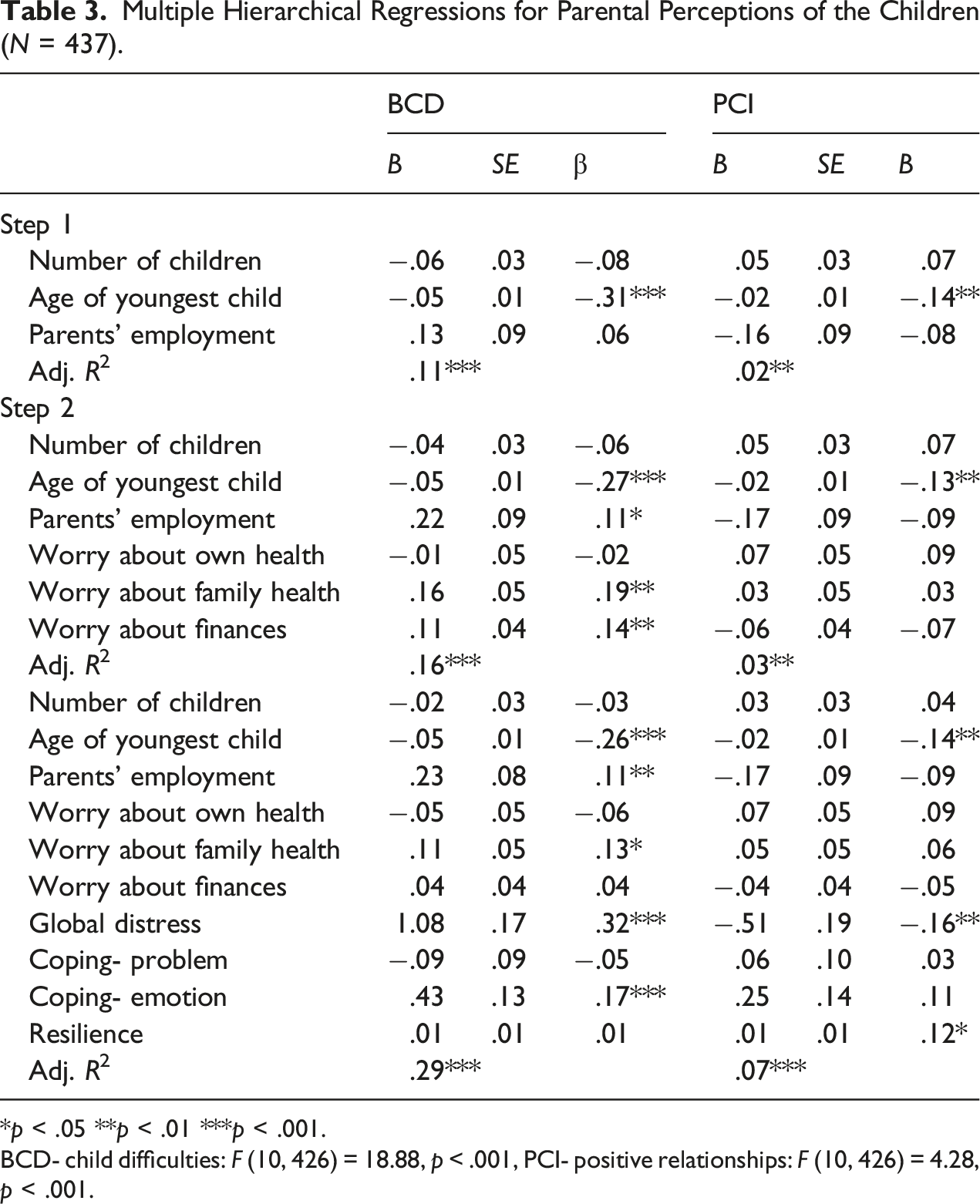
Multiple Hierarchical Regressions for Parental Perceptions of the Children (N = 437).
*p < .05 **p < .01 ***p < .001.
BCD- child difficulties: F (10, 426) = 18.88, p < .001, PCI- positive relationships: F (10, 426) = 4.28, p < .001.
No parent worries were significantly associated with PCI. Further, distress was negatively related to PCI, and resilience was positively related to PCI; that is, lower psychological distress and higher personal resilience were related to higher PCI.
In order to assess the mediating effect of coping strategies and resilience in the relation between the dimensions of CBD, PCI, and psychological distress, several parallel mediation models were calculated, using Hayes’ (2018) Process Model 4. All continuous variables were standardized, and the number of children, age of the youngest child, and parents’ employment were controlled for.
Emotion-focused coping was found to mediate the relation between psychological distress and CBD (Figure 1). The indirect effect for somatization was significant (effect = 0.06, SE = 0.02, p = .001, 95%CI = 0.03, 0.10), with a positive relation between somatization and emotion-focused coping (B = 0.27, SE = 0.05, p < .001, 95%CI = 0.17, 0.36), and a positive relation between emotion-focused coping and CBD (B = 0.22, SE = 0.05, p < .001, 95%CI = 0.12, 0.32) was observed. Likewise, the indirect effect for anxiety was significant (effect = 0.07, SE = 0.02, p = .002, 95%CI = 0.03, 0.11), with a positive relation between anxiety and emotion-focused coping (B = 0.42, SE = 0.05, p < .001, 95%CI = 0.33, 0.51), and a positive relation between emotion-focused coping and CBD (B = 0.16, SE = 0.05, p = .001, 95%CI = 0.07, 0.26). In addition, the indirect effect for depression was significant (effect = 0.06, SE = 0.02, p < .001, 95%CI = 0.03, 0.09), with a positive relation between depression and emotion-focused coping (B = 0.29, SE = 0.05, p < .001, 95%CI = 0.19, 0.39), and a positive relation between emotion-focused coping and CBD (B = 0.20, SE = 0.05, p < .001, 95%CI = 0.10, 0.30). Thus, higher parental distress was related to a greater use of emotion-focused coping, which was then related to higher levels of CBD. Emotion-focused coping and resilience as mediators between distress and parental perceptions of the children.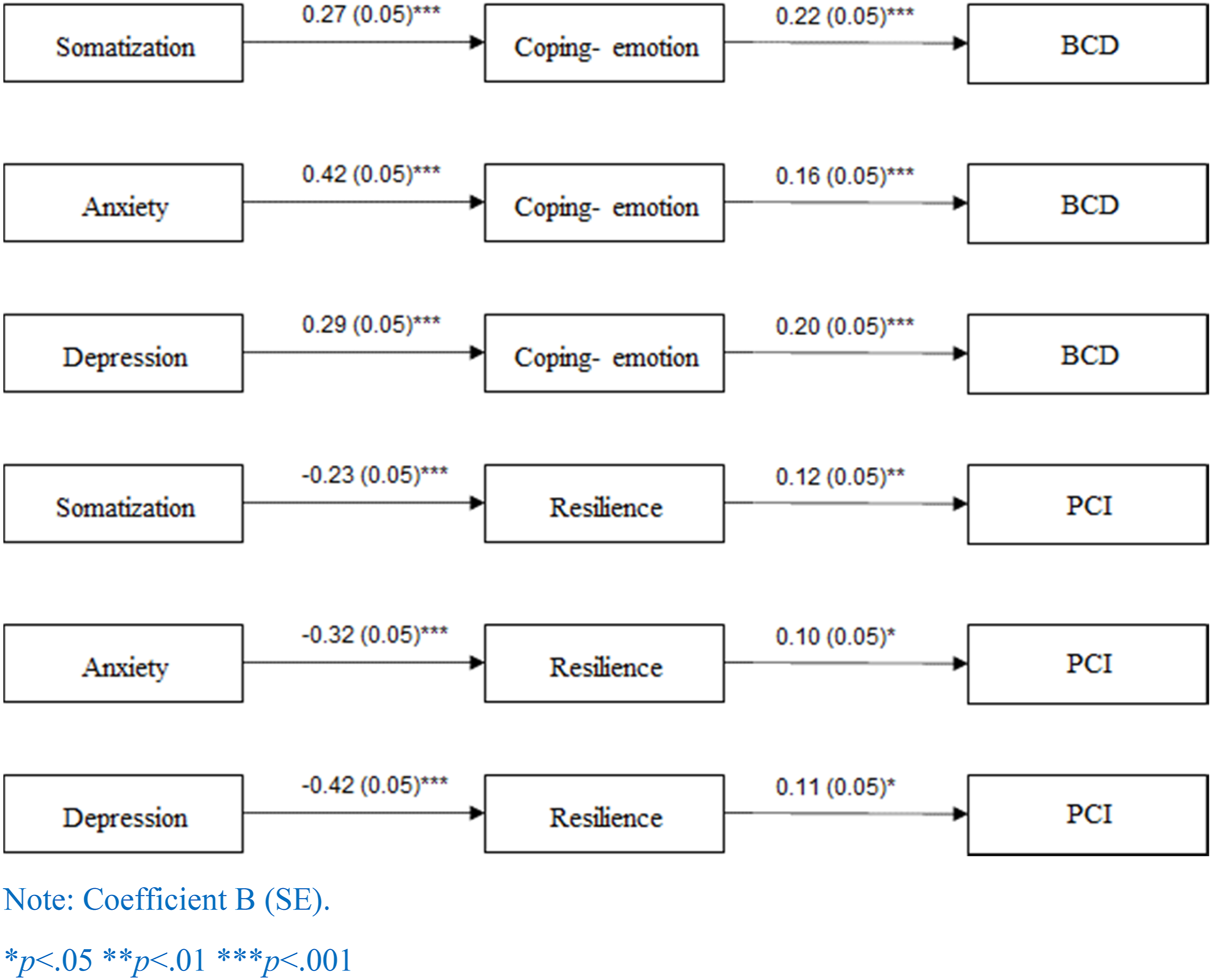
Resilience was found to mediate the relation between the dimensions of distress and PCI. The indirect effect for somatization was significant (effect = −0.03, SE = 0.01, p = .032, 95%CI = −0.06, −0.01), with a negative relation between somatization and resilience (B = −0.23, SE = 0.05, p < .001, 95%CI = −0.32, −0.13), and a positive relation between resilience and PCI (B = 0.12, SE = 0.05, p = .008, 95%CI = 0.03, 0.21). Similarly, the indirect effect for anxiety was significant (effect = −0.03, SE = 0.01, p = .043, 95%CI = −0.06, −0.01), with a negative relation between anxiety and resilience (B = −0.32, SE = 0.05, p < .001, 95%CI = −0.41, −0.22), and a positive relation between resilience and PCI (B = 0.10, SE = 0.05, p = .039, 95%CI = 0.01, 0.19). Finally, the indirect effect for depression was significant (effect = −0.05, SE = 0.02, p = .025, 95%CI = −0.08, −0.01), with a negative relation between depression and resilience (B = −0.42, SE = 0.05, p < .001, 95%CI = −0.51, −0.32), and a positive relation between resilience and PCI (B = 0.11, SE = 0.05, p = .026, 95%CI = 0.01, 0.20). Thus, lower distress was related to higher resilience, which was then related to higher PCI.
Discussion
The current study’s aim was to investigate parents’ perceptions of their children’s behavioral and emotional difficulties (CBD) as well as of parent–child interaction (PCI) during the lockdown. Results indicated that parents, regardless of gender, described their children as suffering from emotional and behavioral difficulties due to the lockdown. At the same time, parents also reported spending more quality time with their children, and finding it easier to handle them. These reports were found to be related to objective indicators such as the number of children in the family, age of the youngest child, and parents’ employment status, as well as to subjective indicators such as parents’ coronavirus-related worries and parents’ psychological distress.
Parents of large families and of older children reported fewer perceived difficulties among their children. This finding is similar to other findings that parents with only child tend to report more emotional and behavioral problems than parents of several children (Christner et al., 2021). This finding might be attributed to the possibility that children in large families have their siblings as a play group and therefore feel less socially isolated during situations such as the pandemic lockdown, thereby buffering the lockdown’s psychological effect. Another possibility is that parents who have more children are more skilled at handling their children’s behavior or that they have less of a tendency to perceive their children’s behavior as difficult. It may also be that parents of many children simply do not have the time to observe each child’s behavior and may be less sensitive in detecting behavioral and emotional changes. In addition, Christner et al. (2021) found that parents reported more conduct and behavioral problems during the lockdown among younger children than older ones. It may be that the lockdown, which forced older children to stay at home, resulted in less conflict with parents regarding the way they spent their time outside the house. It is also possible that older children are better at occupying themselves and therefore require less parental engagement. This last possibility goes hand in hand with the fact that parents of older children also reported lower levels of PCI. That is, the fact that older children are better at occupying themselves and therefore spend less time with their parents may result in parents’ perceptions of fewer difficulties, on the one hand, but fewer positive parent–child interactions, on the other hand. It is also noteworthy that Mazza and colleagues found that parents of older children had lower levels of distress during the lockdown. They speculated that this finding could be attributed to the fact that over the years, they gained more parenting knowledge and were therefore more skilled and competent in handling their children, and expressed less parenting stress (Mazza et al., 2020).
Unsurprisingly, parents who continued working during the lockdown reported less PCI than parents who had stopped working. However, interestingly, no differences were found regarding CBD. It seems that working parents did not enjoy the positive effects of the lockdown, which enabled non-working parents to spend more quality time with their children. However, the parents’ presence at home was unrelated to their perception of the child having difficulties.
Parents’ psychological distress and their COVID-19–related worries were all positively associated with CBD. This finding is in line with findings of several studies that found that the lockdown elevated parental stress and was associated with children’s elevated behavioral and emotional problems, especially hyperactivity and conduct problems (Christner et al., 2021; Spinelli et al., 2020). There are indications that parents who are confronted with high levels of stress and parents with psychological mental problems tend to perceive their children as more difficult and as having more problematic behaviors than do parents without these characteristics (Murphy et al., 2018; Watkins et al., 2013). Parents’ mental health issues and especially their depressive symptoms have been linked with a greater number of negative parenting behaviors including emotional withdrawal from the child, an increase in hostile reactions toward the child, hindered communication with the child, and decreased sensitivity to the child’s needs (Lovejoy et al., 2000; Wilson & Durbin, 2010), all of which may contribute to negative child behaviors (Cummings et al., 2010; Salloum et al., 2015). It has been suggested that the association between parent’s distress and child’s distress is reciprocal; namely, the distress of the parent has a negative effect on the behavior of the child, which becomes more attention-seeking and more demanding which, in and of itself, intensifies the parent’s stress and mental health burden (Neece et al., 2012).
According to the mediation model, it appears that distressed parents used more emotion-focused coping, which mediated the relation between psychological distress and CBD. On the other hand, resilience was found to mediate the association between psychological distress and perceived PCI. It seems that parents’ adjustment to a stressful situation is affected by their emotion regulation capacity which, in turn, affects the quality of family relationships. There are indications that parents’ negative life stressors impact children’s adjustment via the association between parents’ daily stress and mental health adjustment (Kronenberger et al., 1996; Puff & Renk, 2014). As the results of the current study indicated, parents’ distress level was associated with their perceptions of their child’s reaction to the lockdown via the use of emotion-focused coping and resilience. These findings may help us plan better intervention programs in which parental resilience and emotion regulation are the focus of the interventions. Teaching parents how to enhance their emotion regulation capacities and resilience will help parents in future stressful situations.
The current study had several limitations. First of all, parents’ perceptions were composed for the purpose of the study. Hence, the validity of this measurement should be viewed with caution. This caution should be exercised particularly in relation to the PCI variable, which was measured via two items that had a medium correlation. However, it should be noted that parental perception is a multidimensional concept which has been measured in a variety of ways, even as a binary item (Watkins et al., 2013), and in this study, it is similar to the one used in the stsudy by Christner et al. (2021). In addition, regarding the resilience scale, Bonanno (2021) has recently criticized this scale. According to Bonanno, the scale measures only a narrow aspect of resilience although there are multiple routes that might lead to resilience. Therefore, although this scale is very popular, it should be taken into consideration that it does not capture the overall concept of resilience and does not necessarily suggest that a person who was found to be resilient in one situation will be resilient in another, as it does not have predictive utility.
The second important limitation is the representativity and generalizability of the sample. The sample comprised parents who were recruited through a network invitation rather than via face-to-face random sampling. Therefore, the ability to generalize from the results to parents who do not use the internet, such as Ultraorthodox Jews, is limited. Moreover, despite the global nature of the pandemic, the study examined only Israeli parents; as such, differences due to cultural and behavioral variables may reduce the ability to generalize. In a study that was conducted at the same time as the current study (April 2020), Israeli subjects were found to have fewer COVID-19-related worries and to score higher on resilience compared to subjects from the U.S. (Barzilay et al., 2020). The higher resilience levels may be attributable to the fact that Israeli society as a whole deals with an overall higher level of stressful situations, especially political-conflict-related matters. Third, we used parents’ perceptions about the child as an indicator of the child’s actual behavior and of the parent–child interaction. Although previous studies have indicated that parents’ perceptions are an important objective source of information regarding the child’s behavior and the parent–child interaction (Briegel et al., 2019; Sanner & Neece, 2018); other objective measures may have provided a more accurate assessment of the child’s functioning. Moreover, although this study is based on the family systems perspective, it assessed only one part of the system: the parents. We did not address the issue of marital relationships, or of sibling relations, which are part of the overall family relationship that affects each member of the family and may have an impact on a child’s behaviors and emotions (Prime et al., 2020). Finally, as the study was cross-sectional, all reported associations could be bidirectional.
Despite these limitations, the study’s main strength lies in its snapshot picture of a unique situation in which Israel was under its first lockdown, as a result of the pandemic. This novel situation forced parents to stay at home with their children and react to a previously unknown stressor. This scenario allowed us to investigate how people in general, and parents in particular, react to a novel stressor and the variables that might explain their perceptions during such a period. Given that lockdowns seem to be a useful tool implemented worldwide to contain the spread of COVID-19, it seemed important to examine their possible effects on the individual as well as on the family and the community. Understanding the different variables that might account for people’s adjustment will enable us to build better interventions programs.
Footnotes
Declaration of Conflicting Interests
The author(s) declared no potential conflicts of interest with respect to the research, authorship, and/or publication of this article.
Funding
The author(s) received no financial support for the research, authorship, and/or publication of this article.
Data Availability
Data can be received from the first author.
