







Abstract
Mobile devices are changing society in different areas, including the family. This study analyses different types of parental mediation implemented in Spanish households in relation to Smartphones and Tablets. The participants in this study were 1082 parents from all the Spanish Autonomous Communities. The methodology used is quantitative (descriptive and inferential). The results show that the type of mediation most used by Spanish families is active mediation, followed by technical control, restrictive mediation and co-viewing. The application of one or another modality of mediation is conditioned by variables such as gender and age of the parents, number of children and educational stage of schooling or educational level of the mothers, among others. In conclusion, the research provides significant data on parental mediation for mobile devices in Spain.
Introduction
It is unquestionable that the world we know now has changed in recent years and this transformation has happened in a very short time. For López–Pérez (2017), this new context emerged after the end of the ‘cold war’ and the fall of the Berlin Wall, being called the Age of Globalisation and identified by three phenomena: liberalisation and privatisation in the political context, the considered ‘unique thinking’ that ‘legitimises the system as the only possible one’ (p. 69) as well as the extraordinary advance of telecommunications.
The survey of the Spanish National Institute of Statistics (INE) (2019) establishes a rate of Spanish households with 91.4% Internet connection, and a mobile phone provision of 98.5%, which indicates that the presence of the Internet in different areas of people’s daily lives is undeniable (Malak, Khalifeh and Shuhaiber, 2017). For its part, ‘Fundación Telefónica’ (2019, p.12) states that the Smartphone ‘continues to climb the ladder as the main device', a trend also reflected in the Key Takeaways from Mary Meeker’s 2019 Internet Trends Report. This indicates that, each time, there are fewer people to join Internet browsing and that the presence of the Internet in different areas of people’s daily lives is considered now as a fact.
In the same way, the study Menores de Edad y Conectividad Móvil (Minors and mobile connectivity) in Spain shows that children under the age of two and three usually access their parents’ mobile phones (Cánovas, 2014) or other mobile devices (Alfaro et al., 2015; Berríos, Buzarrais and Garcés, 2015). With regard to mobile phone ownership, the INE survey (2019) and the study by Garmendia, Jiménez, Casado and Mascheroni (2016) indicate that more than 70% of children between the ages of 10 and 15 have their own mobile phone and that this rate is the highest in Europe, on a par with that of the United States. The average age at which children get their first Smartphone is 10 years old (Ahad and Anshari, 2017), which reveals that children are using the Internet and Smartphones at increasingly younger ages (Zaman & Mifsud, 2017).
According to (Pfetsch 2018), mobile devices are frequently used by adults and minors, modifying the communication that takes place within the family (González-Fernández et al., 2020; Lemish et al., 2020; Storch & Ortiz, 2019). However, the factors that influence their usage in the home are unknown (Plowman, Stevenson, Stephen and McPake, 2012). The research presented aims to delve into certain factors that are influencing the management that Spanish families are carrying out with mobile devices.
Electronic devices at home
Research by Marsh, Hannon, Lewis and Ritchie (2017) showed that ‘digital literacy’ takes place at home. This causes that parents play a decisive role in shaping children’s experiences with digital media (Dias and Brito, 2020; Griffith and Arnold, 2019), as Bandura (1976) stated, they constitute transcendental models in the learning of minors.
Parents may intentionally guide their children’s use of mobile devices, but they may also act in a certain way or express opinions without being aware of it, affecting the development of minors. According to social cognitive theory, children learn through modelling and observational learning processes, with parents and the media being the significant sources of socialisation and learning in the family environment. The contact that children have with these devices depends on the quantity (number of screens in the home, time of daily use or family’s socioeconomic status) and quality (competence of the child, families, parents’ trust or mediation) of interactions with them (Elias, Lewmish, Dalyot and Floegel, 2020; Nikken, 2017).
At the same time, we must also consider the modelling that parents do through their own use of the Smartphone, simply by observing the children. In this sense, situations occur as distractions from parents when they are driving a car in which their child is in and they have any interaction with the Smartphone without using a hands-free device (Roney et al., 2013); the shift of attention from their children to the Smartphone when they are playing with them or supervising them in a playground (Hiniker, Schoenebeck and Kientz, 2016; Lemish, Elias and Floegel, 2020); the difficulty for parents themselves to disconnect from the phone for work reasons and therefore they limit the time for family interaction (Moser et al., 2016); or the use of mobile devices to entertain children while parents are engaged in other activities (Radesky, Peacock–Chambers, Zuckerman and Silverstein, 2016b).
Parental Mediation and Mobile Devices
The research presented here focuses on parental mediation in relation to mobile devices. This is defined by Livingstone and Helsper (2008) as well as the parental management of the relationship that children generate with the media. According to Jiow, Lim and Lin (2017), the theory of parental mediation is rooted in television studies. However, as Domoff et al. (2019) and Pfetsch (2018) state, there is a dearth of research addressing parental mediation on mobile devices (Chou and Chou, 2019; Dias and Brito, 2020) or online parental mediation (Dedkova and Smahel, 2019).
These means cause families to face new parenting issues (Duggan, Lenhart, Lampe and Ellison, 2015), including reducing or preventing the potential risks of mobile device use (Fest and Gniewosz, 2019; Liu et al., 2020), which they often face with a lack of resources and strategies to address.
Parental mediation is one of these strategies to face the technological challenge (Garmendia, Casado, Martínez and Garitaonandia, 2013; Lee, 2018; Ponte, Simões, Batista and Castro, 2019; Kwak, Kim and Yoon, 2018; Shin, 2018). Traditionally, three types of family mediation have been considered, linked to media such as television: (1) restrictive mediation, carried out by parents, which applies rules regarding time and content to limit as well as control the use of media by minors, (2) active mediation, in which parents encourage instructional or evaluative conversations with their children to explain or discuss the use of digital media and (3) shared use, established by parents who share media activities with their children, driven by a common interest.
Authors such as Zaman & Mifsud, 2017 state that after three decades of research on parental mediation it has repeatedly shown that these three types of mediation are a common identity mark of families in Western cultures, referring to children of different ages and the media in general, so in this case, Spanish families are not an exception.
However, Daneels & Vanwynsberghe, 2017, evidence the debate in the scientific community about whether these general mediation strategies are applicable to each type of media. For Brito et al., 2017; Lauricella et al., 2015; Troseth et al., 2016; Zaman & Mifsud, 2017, the research linked to parental mediation in the media has to address the technological evolution and the variety of ‘screen’ media that exists.
So, Symons, Ponnet, Emery, Walrave and Heirman (2017) identified six mediation strategies with respect to Internet use, coinciding with previous research by Livingstone, Haddon, Görzig and Olafsson (2011): (1) interaction restrictions, (2) monitoring, (3) access restriction, (4) supervision and sharing, (5) technical mediation and (6) interpretative mediation. Subsequently, Livingstone et al. (2017) concentrated the number of strategies into two groups – empowered mediation and restrictive mediation. Zaman et al. (2016) research analysed digital media parental mediation strategies with children aged 3–9 and concluded that five strategies exist: (1) restrictive; (2) active; (3) sharing; (4) participatory learning and (5) distance mediation.
In Spain, Bartau, Aierbe and Oregui’s (2018) research with primary school children spending time on the Internet revealed seven modes of parental mediation, subsequently reduced to three styles of parental mediation (instructional, shared and restrictive) (Bartau, Aierbe and Oregui, 2020).
The use and effectiveness of each of these parental mediation strategies versus others, according to Bartau, Aierbe and Oregui (2018), differ according to the research. For Marciales and Cabra (2011), they have not provided empirical evidence on the most effective mediation strategies. Thus, families choose to use active strategies in research such as Aierbe, Orozco and Medrano (2014), Garmendia, Garitaonandia, Martínez and Casado (2011) (EU Kids Online), Giménez, Luengo and Bartrina (2017) and Garmendia, Casado, Martínez and Garitaonandia (2013), while they employ more restrictive strategies in research such as those of Arango, Bringué and Sádaba (2010), Fletcher and Blair (2014), and Sureda, Comas and Morey (2010) or indiscriminately as revealed in the studies of Garmendia, Casado, Matrínez and Garitaonandia (2013), Helsper et al., (2013) and Martínez de Morentin and Medrano (2012). For their part, Yubero, Larrañaga, Navarro and Elche (2017) show a correlation between both extremes, as parents jointly employ active and restrictive mediation.
This work is based on two research questions: (1) What type of mediation do Spanish parents use to manage the relationship of minors with mobile devices? (2) What are the variables that determine the taking on of a certain type of mediation or other?
Therefore, the objectives of this research are (1) To determine the type of parental mediation carried out by Spanish families on the use of mobile devices – Smartphones and Tablets – and the possible existent relation between these two types; (2) To identify family variables that influence the adoption of one type or another of mediation, thus responding to the demands of Torrecillas–Lacave, Morales de Vega, and Vázquez–Barrio (2017), who state that studies on this subject ‘include few family variables’ (p. 664) and little further study.
The hypotheses derived from these objectives are the following: Hypothesis 1 (H1). Spanish families implement a type of active mediation with their children in the management of mobile devices. Hypothesis 2 (H2). There is a high correlation between the application of active mediation by families and mediation based on shared use. Hypothesis 3 (H3). There is a high correlation between the application of restrictive mediation by families and mediation based on technical control. Hypothesis 4 (H4). The gender, age and educational level of the parents are the sociodemographic variables of the families that to a greater extent, condition the type of mediation applied by them.
Method
Design and Participants
Independent Variables.
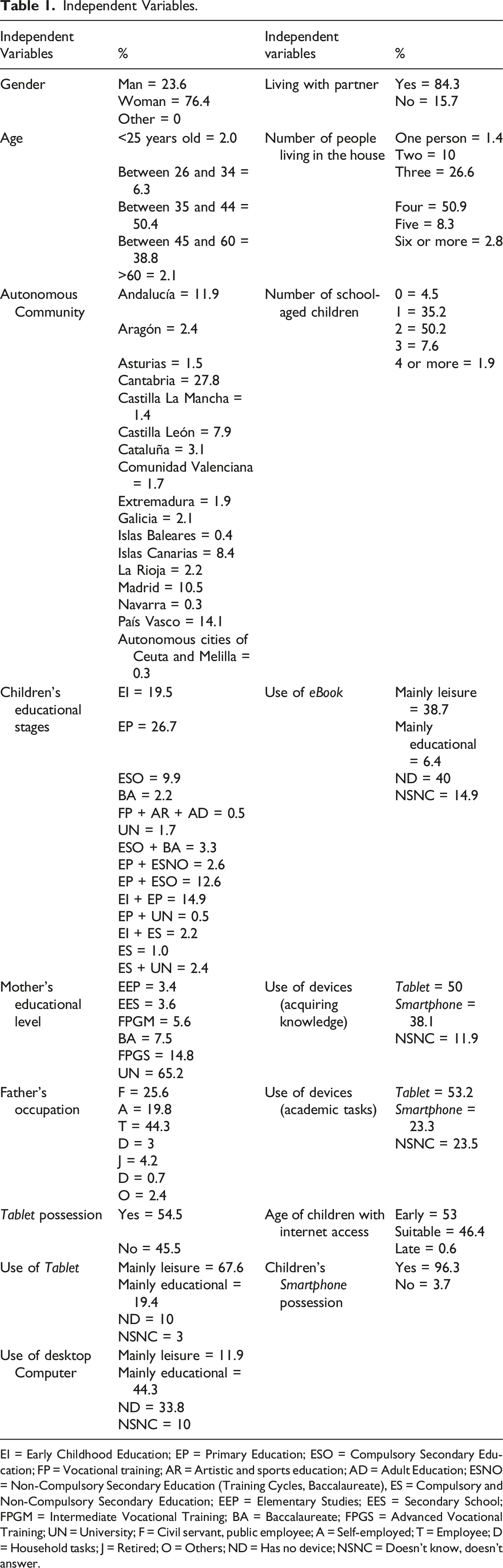
EI = Early Childhood Education; EP = Primary Education; ESO = Compulsory Secondary Education; FP = Vocational training; AR = Artistic and sports education; AD = Adult Education; ESNO = Non-Compulsory Secondary Education (Training Cycles, Baccalaureate), ES = Compulsory and Non-Compulsory Secondary Education; EEP = Elementary Studies; EES = Secondary School; FPGM = Intermediate Vocational Training; BA = Baccalaureate; FPGS = Advanced Vocational Training; UN = University; F = Civil servant, public employee; A = Self-employed; T = Employee; D = Household tasks; J = Retired; O = Others; ND = Has no device; NSNC = Doesn’t know, doesn’t answer.
Procedure
The survey was supplied online to Spanish families in two different stages, the first via the Smartphone and the second via e-mail to the associations of parents of students in schools and institutes in all the Autonomous Communities of Spain that had a website. The questionnaire requested informed consent and, at the same time, the possibility of entering the name of the associations in order to subsequently send them the results of the research.
Variables and instruments
The instrument used was a Likert ad hoc type scale built with five response options, from ‘strongly disagree’ to ‘strongly agree’. This scale has been previously validated (Salcines-Talledo et al., 2018).
The scale was composed of 12 items and obtained a Cronbach’s Alpha equal to .891. These items were grouped into four dimensions following the different types of mediation established in the EU Kids Online project and which constituted the dependent variables (active mediation, restrictive mediation, technical control and shared use).
Examples of items were (a) I have conversations with my child/children about the content they view on mobile devices (favourite youtubers, fashion challenges, games, etc.) (active mediation); (b) I frequently take measures to block and filter media content (web pages, videos, music, movies, etc.) that my child/children can access on their mobile devices (mediation based on the technical control); (c) I frequently have to take their mobile device away (s) from my child/children due to excessive or inappropriate use (restrictive mediation); (d) I carry out joint activities with my child/children using mobile devices (mediation based on shared use).
Along with the scale, a series of sociodemographic data were included and which constituted of independent variable: gender, age, Autonomous Community of origin, rural or urban context, being a father or mother, living with a partner, family modality, number of people who made up the family unit, number of school-aged children, educational stages in which the children were enrolled, educational level (father, mother and guardian), employment situation (father, mother and guardian), job employment (father, mother and guardian), economic income of the family unit, educational resources (space for study, Internet, reference books and/or school support, reading books, press and/or specialised magazines), home electronic devices (Tablet, laptop, desktop, eBook and Smartphone), use of electronic devices (Tablet, laptop, desktop, eBook and Smartphone), usefulness of mobile devices – Smartphones and Tablets – (knowledge acquisition, communication, management of family routines and habits, school/academic tasks), children’s Internet access age, respondent’s possession of Smartphone and Tablet and children’s possession of Smartphones.
Data Analysis
The statistical treatment of the data began with a descriptive analysis of the variables, another based on their normality using the Kolmogorov-Smirnov indexes, then bivariate correlations, parametric tests of hypothesis contrast and post hoc (Scheffé), as well as Cohen’s d and r to determine the statistically significant variables size of the effect.
Results
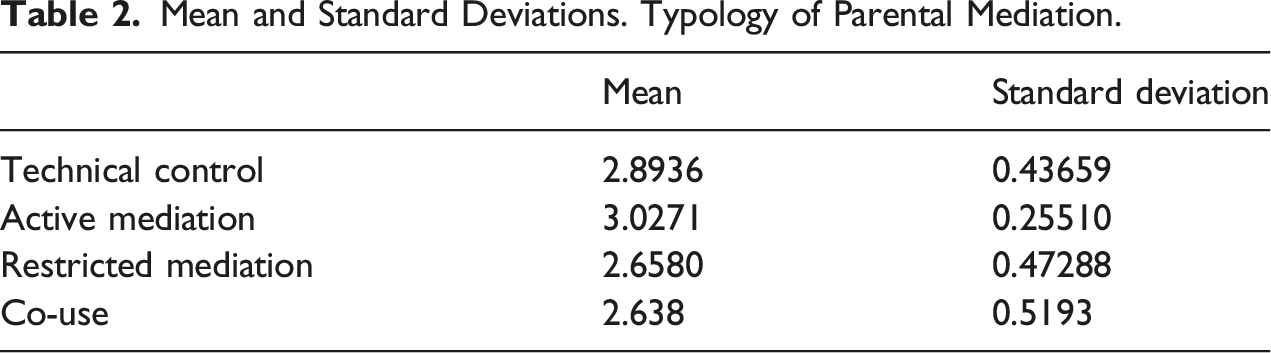
Mean and Standard Deviations. Typology of Parental Mediation.
H2 and H3 affirmed the existence of high correlations, respectively, between active mediation and mediation as well as the mediation based on shared use, in addition, between restrictive mediation and that which focused on technical control.
Pearson Correlation. Typology of Parental Mediation.
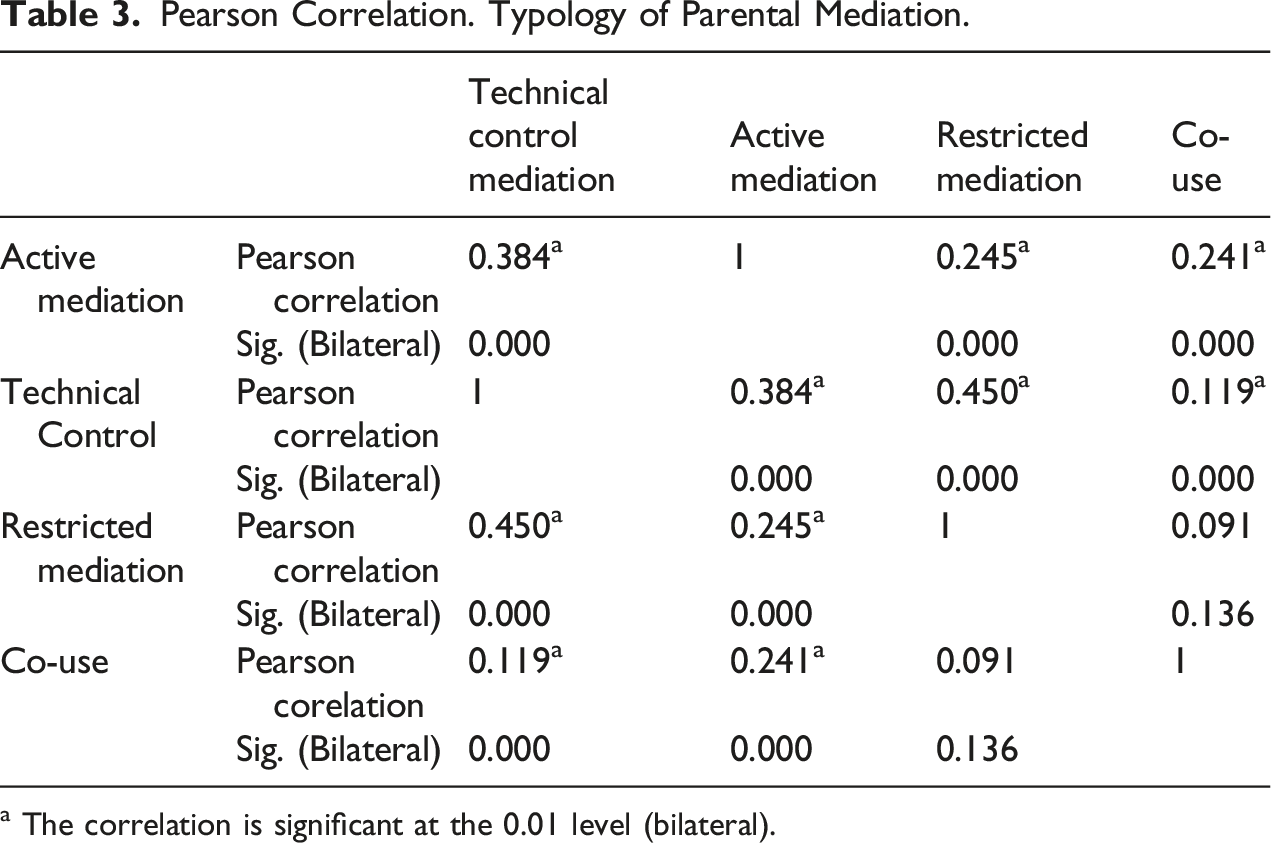
a The correlation is significant at the 0.01 level (bilateral).
H4 referred to the sociodemographic variables of the families that determine the type of mediation applied by them. In this sense, the results obtained show part of this conditioning. These are presented below, taking the different types of mediation analysed as a reference.
Conditioning Variables of Active Parental Mediation.
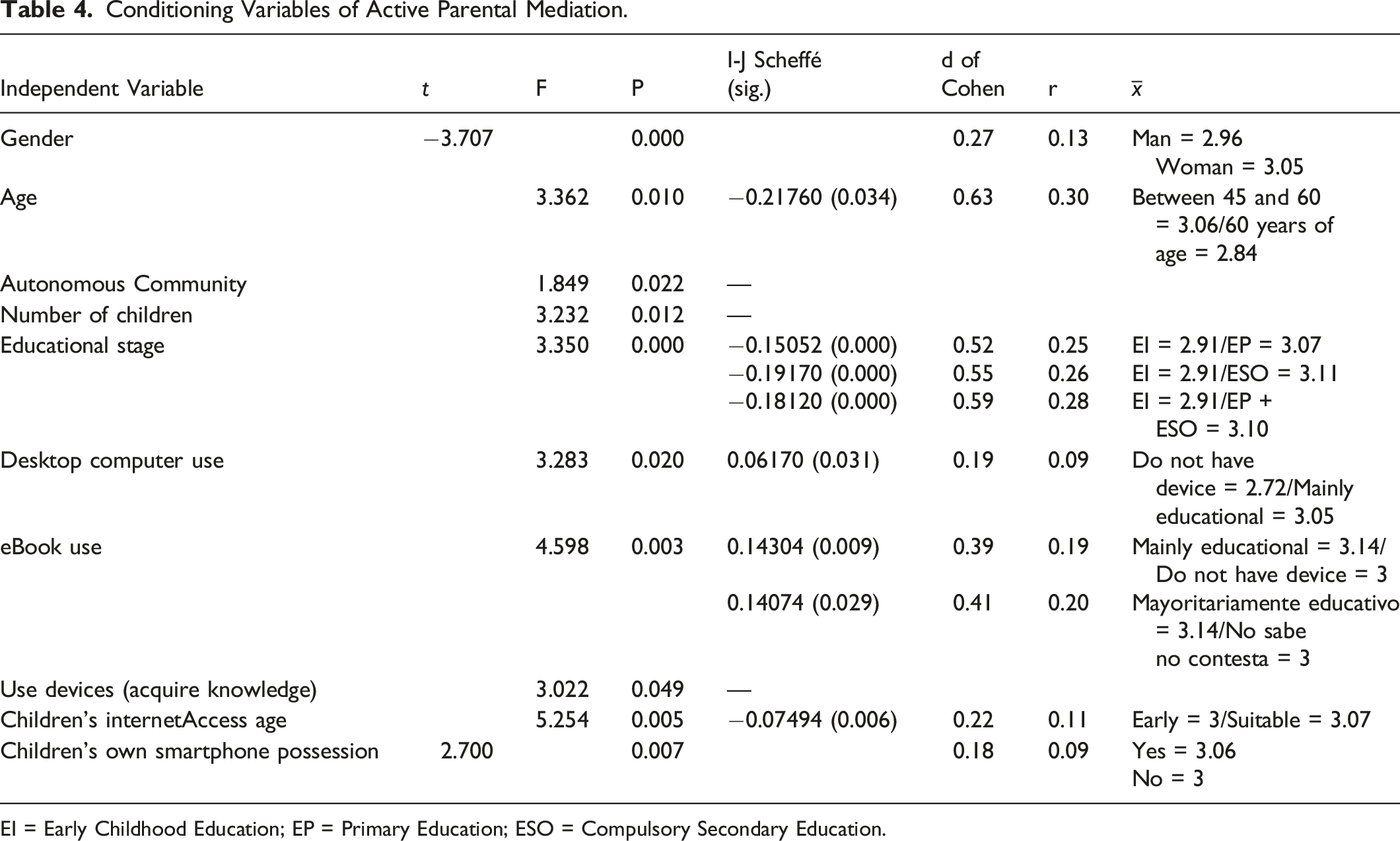
EI = Early Childhood Education; EP = Primary Education; ESO = Compulsory Secondary Education.
With respect to the Autonomous Community of origin, there are also statistically significant differences. However, the post-hoc tests do not show which Autonomous Community produces these. Likewise, the number of children is a conditioning factor for the use of active mediation strategies, but Scheffé’s test did not show differences between the different possibilities either.
The educational stage of the children’s schooling (thus, the age of the minors) is an important variable for determining statistically significant differences. Thus, families with children in Compulsory Secondary Education (
On the other hand, families that use the desktop computer mainly for educational activities (
When families use mobile devices to acquire knowledge rather than communicate, manage family routines and habits and/or schoolwork, they develop more active mediation strategies. However, post hoc tests showed no difference between which devices they are. In relation to the children’s Internet access age, families that develop more active mediation strategies are those who consider the age was appropriate (
Finally, families whose children have their own Smartphone tend to employ more active mediation strategies (
The size of the effect on these variables is, according to Cohen (1998), low, except in the case of the age of the parents and the stage of schooling of the children, which is moderate (see Table 4).
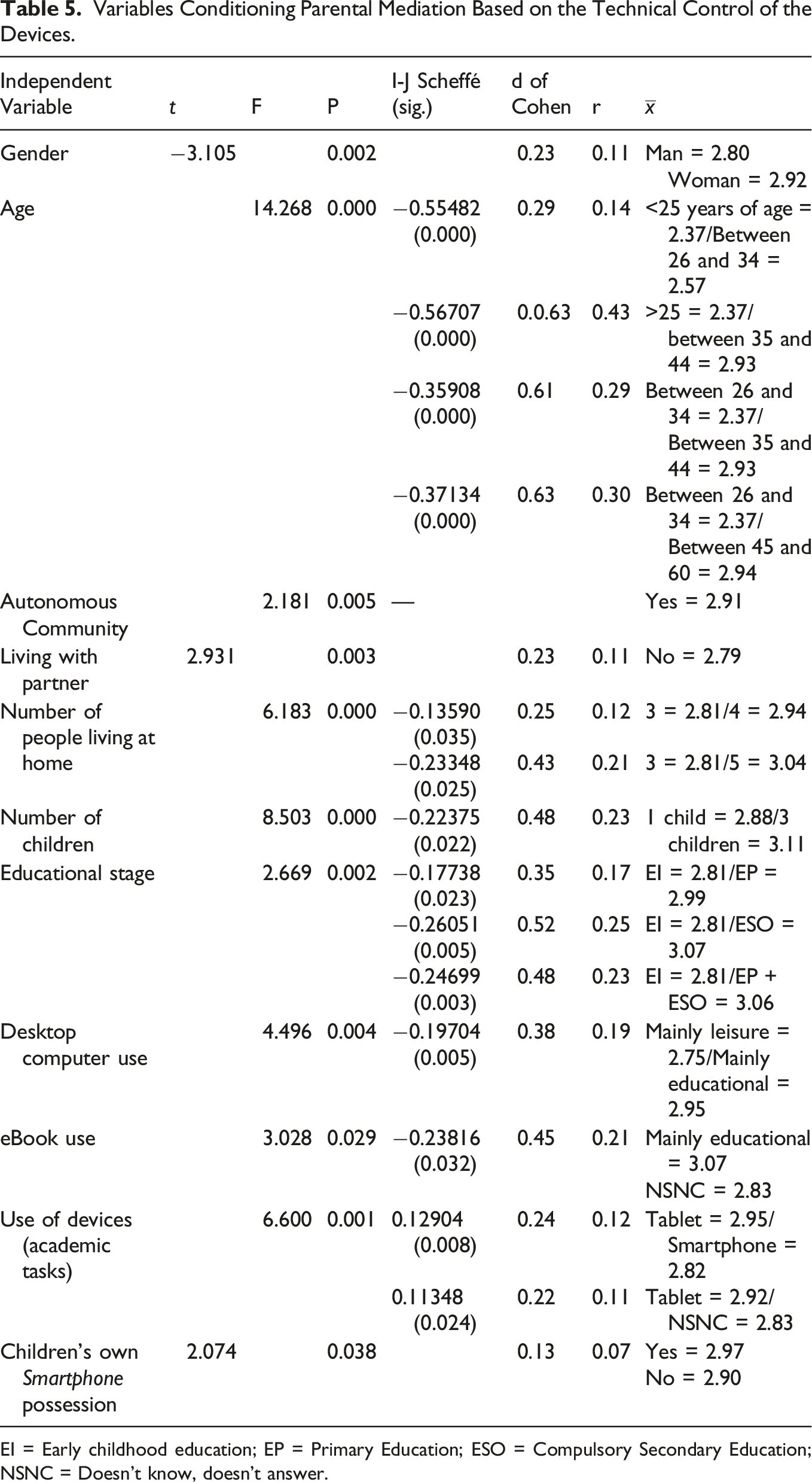
Variables Conditioning Parental Mediation Based on the Technical Control of the Devices.
EI = Early childhood education; EP = Primary Education; ESO = Compulsory Secondary Education; NSNC = Doesn’t know, doesn’t answer.
The Autonomous Community of origin is a determining variable for the use of technical control. However, it is not known between which Autonomous Communities the differences occur.
Living with a partner also leads to a greater use of this type of mediation (
The number of people living together in the household is a variable that also reflects the same trend as in the previous modality, since the greater the number of people living in the household (
In addition, parenting a higher number of children implies a higher degree of use of technical control strategies on the devices (
Families that use the desktop computer for mostly educational use (
In relation to the size of the effect, we must highlight large and medium levels in variables such as the age of the parents and the children’s educational stage, among others (see Table 5).
Regarding restricted mediation, the age of the parents shows statistically significant differences (F = 5.761; p < 0.01), but post hoc tests did not determine among which groups, the same happened with the variable number of children (F = 4.172; p < 0.01), educational stage in which the children are in school (F = 2.881; p < 0.01), father’s occupation (F = 2.226; p < 0.05) and the children’s Internet access age (F = 5.578; p < 0.01). The educational level of the mother (F = 3062; p < .05), on the other hand, establishes differences between those who have Higher Grade Vocational Training
As for co-use as a mediation strategy, it has been identified only in the use of Tablets, but not in the set of mobile devices. The variables that condition the adoption of this strategy are the possession of the device (t = 4439; p < .001), the fathers occupation (F = 2825; p < .05) and the children’s Internet access age (F = 3204; p < .05), but the post hoc tests did not show among which groups. This could only be possible in the variable linked to the type of use of the Tablet (F = 5691; p < .01), which showed that the families that mostly gave it a recreational use (
In Figure 1, the independent variables that determine the use of one type of mediation or another can be seen graphically. Independent variables that condition the different types of parental mediation.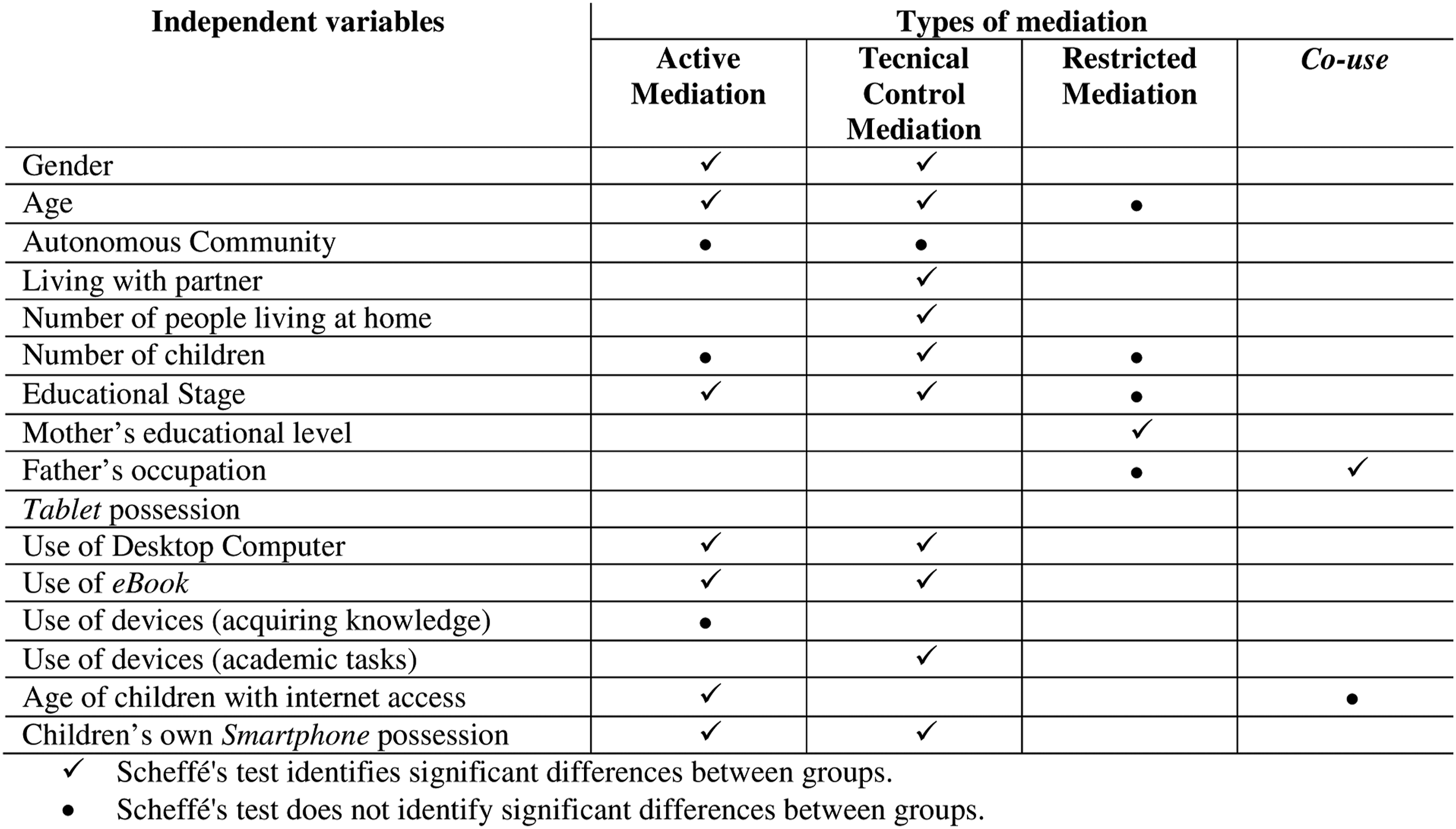
Discussion and Conclusions
This research was based on two research questions, which made reference to what type of mediation Spanish parents used to manage the relationship of minors with mobile devices and what the variables are that determine the adoption of one type of mediation or another. Regarding these issues, it can be stated that Spanish families apply mediation strategies, although it is necessary to clarify what type of mediation is developed and to what degree. Similarly, there are variables that condition the use of different types of mediation. These questions have been specified in two objectives. Firstly, to determine the type of parental mediation exercised by Spanish families in the use of mobile devices – Smartphones and Tablets – and the possible relationship between these types of mediation.
This objective is specified in three research hypotheses. H1 referred to the fact that Spanish families implement a type of active mediation with their children in the management of mobile devices. In this sense, it is worth mentioning that the families implement the four types of mediation recognised in scientific literature, although co-use is only applied in the use of the Tablet. The inherent characteristics of the Internet make it difficult to share activities with minors or to carry out a joint vision (Jiménez, Garmendia and Casado, 2015), therefore, it is not surprising that the mobile device that makes it most possible is the Tablet, especially due to its size. As the Smartphone is more focused on being for a more personalised use, it could make it difficult to exercise this type of mediation.
Although the levels of mediation are low, active mediation is the most used by Spanish families in line with the studies by Aierbe et al. (2014), Garmendia, Garitaonandia, Martínez and Casado (2011) (EU Kids Online), Giménez et al. (2017), Garmendia, Casado, Martínez and Garitaonandia (2013).
Therefore, it follows the trend set by other studies focused on the perception that minors have about the mediation exercised by their parents. While, this research focuses on the opinion of the families themselves, it is an aspect rarely covered in the scientific literature.
The second and third hypotheses alluded to the correlation between the different types of mediation. In this way, it can be stated that there is a moderate and positive correlation between the use of restrictive mediation and of that based on technical control. This implies that, the greater the implementation of restrictive mediation – based on the establishment of norms and/or the withdrawal of the device, among other issues – , the greater the use of strategies based on the technical control of the devices through the activation of the device with the parental control of the device, knowledge of the minor’s passwords and/or linking of email accounts, among other issues. The second objective focuses on identifying variables in the family context that affect the adoption of one type of mediation or another. In relation to this objective, the fourth hypothesis was raised being ‘the gender, age and educational level of the parents as the sociodemographic variables of the families that to a greater extent condition the type of mediation applied by them’, which is partially fulfilled.
So, it is necessary to point out that the age of the parents, the number of school-aged children and the educational stages in which they are in, are variables that influence both the development of active mediation strategies as well as technical and restricted control.
In the first case, it can be seen that the younger the parents are, the less technical control they have, for example, it may well be due to ignorance of the tools needed to do. A lower age on the part of parents would imply a reduction in the digital division with respect to their children, but Torrecillas and Monteagudo (2017) state that the debate on native or digital immigrant use of these mobile devices in parents under 45 is not justifiable.
In the second case, the greater the number of school-aged children, the more families tend to implement mediation strategies regardless of the modality, possibly because they are more aware of the different risks that their children may face in the use of mobile devices. According to Giménez et al. (2017, p. 545), ‘asking what is being done, limiting the time of connection to the Internet, checking the connection history or even linking the Facebook account (...), is not enough to prevent children from being exposed to risks’.
Likewise, the higher the educational stage, that is, the older the children, the more active mediation and technical control strategies are developed by the parents. In the case of restrictive mediation, it has not been possible to determine the same situation in favour of one stage or another.
With regard to the children’s Internet access age, the parents in many occasions do not usually remember the exact age in which their children began to surf the net, but they do value if this age was early, suitable or late. Families that consider this age to be early, offer less active mediation strategies to their children and apply more restrictive strategies, with no consideration given to coveting strategies.
The gender of the parent is also a conditioning factor in the implementation of active mediation and technical control strategies, with women developing them to a greater extent than men, so that women, once again and as in other aspects of domestic life, are taking charge of the upbringing and socialisation of children in terms of the use of mobile devices. Accordingly, the mother’s educational level is also linked to restrictive mediation strategies. Thus, mothers with university studies employ these types of strategies less than others with lower studies.
Regarding the father’s occupation, this also affects restrictive mediation and mediation based on co-use. However, statistical tests have not determined the occupations that generate the greatest strategies of this type.
Finally, it should be noted that the educational use of the desktop computer and the eBook in families also has an impact on the development of active mediation and technical control strategies.
All these data offer an in-depth analysis of the reality of Spanish families in relation to the exercise of parental mediation and the types of mediation implemented, highlighting the gender, age of the parent and the child’s schooling stage as conditioning factors in the implementation of the different types of mediation. At the same time, indicate that further research is needed on the family variables that affect the use and consumption made through mobile devices in the home, as recommended by Torrecillas–Lacave et al. (2017). Likewise, in future research it would be convenient to analyse the children’s own opinion about the mediation strategies implemented by their parents and to establish a comparison between both points of view. In order to deepen this issue, a qualitative research could be carried out involving both minors and parents of the same family, in order to study specific cases in more detail.
Similarly, it is necessary to deepen the idea that the current means are different, so the mediation strategies also differ (Pfetsch, 2018) and therefore the research has to be redefined. An example of this has been the EU Kids online II study which in 2019 has reconsidered the categorisation of parental mediation (Garmendia et al., 2019).
Simultaneously, it would be convenient to extend the study by taking the theory of self-determination (Self-Determination Theory) of Ryan and Deci (2000) as a conceptual framework of reference, since parents can be proactive or passive and alienated, depending on the environmental and personal social factors, in which they develop and function. In this research, the results also show a tendency towards the demotivation of families to implement some type of mediation. A kind of alienation that would be necessary to analyse in future studies, since from a preventive perspective one cannot look away from the problems caused by this type of pathology.
According to Giménez, Luengo and Bartrina (2017, p.545), ‘family involvement is a determining factor’ in the new socialisation of minors. Now, in the face of an e-Society which is hyperconnected through a multitude of screens and that encourages individualised consumption of digital content, any mediation process with mobile devices is limited by the characteristic of this media (Bringué, Sádaba and Tolsá, 2011; Livingstone, 2013). This responsibility also requires rethinking of the paternal and maternal role in relation to new devices, mostly aimed at the development of positive parenting in a context of active households (Ramírez-García et al., 2018), as opposed to family trends of inhibition or alienation.
In this way, and in line with what was expressed by Torrecillas-Lacave et al. (2017), family mediation constitutes one of the transcendental challenges of research in education and communication, but it is related to the processes of positive parenting, development of basic psychological needs (competence, autonomy and relationship) (Ryan and Deci, 2000), of empowerment of the virtues and strengths proposed by Positive Psychology and with a clear formative component of social transformation (Ramírez-García et al., 2020).
Footnotes
Acknowledgements
To the following school Parent’s Associations: CEIP La Almadraba (Alicante), Los Pinos de Huercal (CEIP Clara Campoamor, Almería), Asociación CEIP Santa María Coronada, Badajoz), Escola Itaca (Barcelona), Pere Vila (Barcelona), Paulo Freire (Burgos), Instituto Conde Diego Porcelos (Burgos),Cecilio Muñoz Fillol del IES Francisco Nieva (Ciudad Real), Juan de la Cosa (CEIP Prácticas, Huelva), CEIP Sancho Ramírez (Huesca), Gonzalo de Berceo (La Rioja), IES Escultor Daniel (Logroño), Carlos V (Madrid), Colegio Artica (Madrid), Colegio Enriqueta Aymer Sagrados Corazones (Madrid), Mijas Pueblo (IES Villa de Mijas, Málaga), Colegio Maestro Ávila (Salamanca), IES Cabrera Pinto (La Laguna, Tenerife), CEIP Narciso Brito (Santa Cruz de Tenerife), Zipifamiliak (Colegio Zipiriñe, Vizcaya), Los Ibones (Colegio Miralbueno, Zaragoza), la Almadraba, EGIBIDE and all those others who did not register their name.
Declaration of Conflicting Interests
The author(s) declared no potential conflicts of interest with respect to the research, authorship and/or publication of this article.
Funding
This work was supported by the R+D+I project ‘Media skills of citizens in emerging digital media (Smartphones and Tablets): innovative practices and educational-communicative strategies in multiple contexts’ (EDU2015-64015-C3-1-R) (MINECO/FEDER), and of the ‘Media Education Network’ of the State Program of Scientific-Technical Research of Excellence, State Subprogram of Knowledge Generation (EDU201681772-REDT), financed by the European Development Fund and R+D+I Project ‘Youtubers and Instagrammers: Media competition in emerging prosumers’ (RTI2018-093303-B-I00), financed by the State Agency for Research of the Spanish Ministry of Science, Innovation and Universities as well as the European Regional Development Fund (FEDER).
