







Abstract
The persistent issue of rising marriage payments in emerging market countries has recently garnered attention. Using the China Labor Dynamics Survey (CLDS), we discovered that bride prices have an inverted U-shaped nonlinear impact on individual subjective happiness, which suggests that the pursuit of happiness may be a pivotal factor propelling the continued escalation of bride prices. We discovered that paying a bride price on the left side of the turning point can provide start-up capital for new families and ensure fair distribution of household responsibilities, thereby facilitating an increase in the subjective happiness of both spouses. However, bride prices exceeding a certain value (about 50,200 USD) not only increase the economic burden on families but also force women to engage in more domestic labor, thereby detrimentally affecting the subjective happiness of both spouses. We also find that happiness “purchased” by bride price is in fact a form of intergenerational exploitation.
Introduction
Nowadays, in numerous developing countries, marriage payments remain a critical factor influencing the completion of marriages. Previous research suggests that marriage payments will gradually diminish with industrialization and urbanization (Goody, 1983), but for some emerging market countries, the evidence appear to be contrasting. In China, with the rapid GDP growth following its accession to the WTO, the average value of bride prices has also swiftly increased, this phenomenon has garnered particular attention in recent years. According to our data, the average bride price in China increased to around 150,000 yuan (about 21,500 USD) in 2018, reaching five times the per capita disposable income of that year (Figure 1). The high bride prices have directly or indirectly led to a range of family and societal issues, which include increased household borrowing (Jiang et al., 2015), reduced productive household investments (Wei et al., 2008), diminished parental health levels (Tan et al., 2021), intensified disputes over bride prices (Li & Li, 2021), reduced spending on children’s education (Zhang & Song, 2021), and even phenomena like “marriage-induced poverty” or “returning to poverty due to marriage” (He, 2017; Zhang & Tao, 2020). The Chinese government pays great attention to this phenomenon. Over the past 5 years, China’s “No. 1 Document” has mentioned the issue of bride prices four times. However, so far, no studies have confirmed the effectiveness of this policy, and the occurrence of exorbitant bride prices remains common. Annual Trend of Bride Price Variations. Note. We employ the locally weighted regression method (Lowess) to fit the annual trend of bride price variations.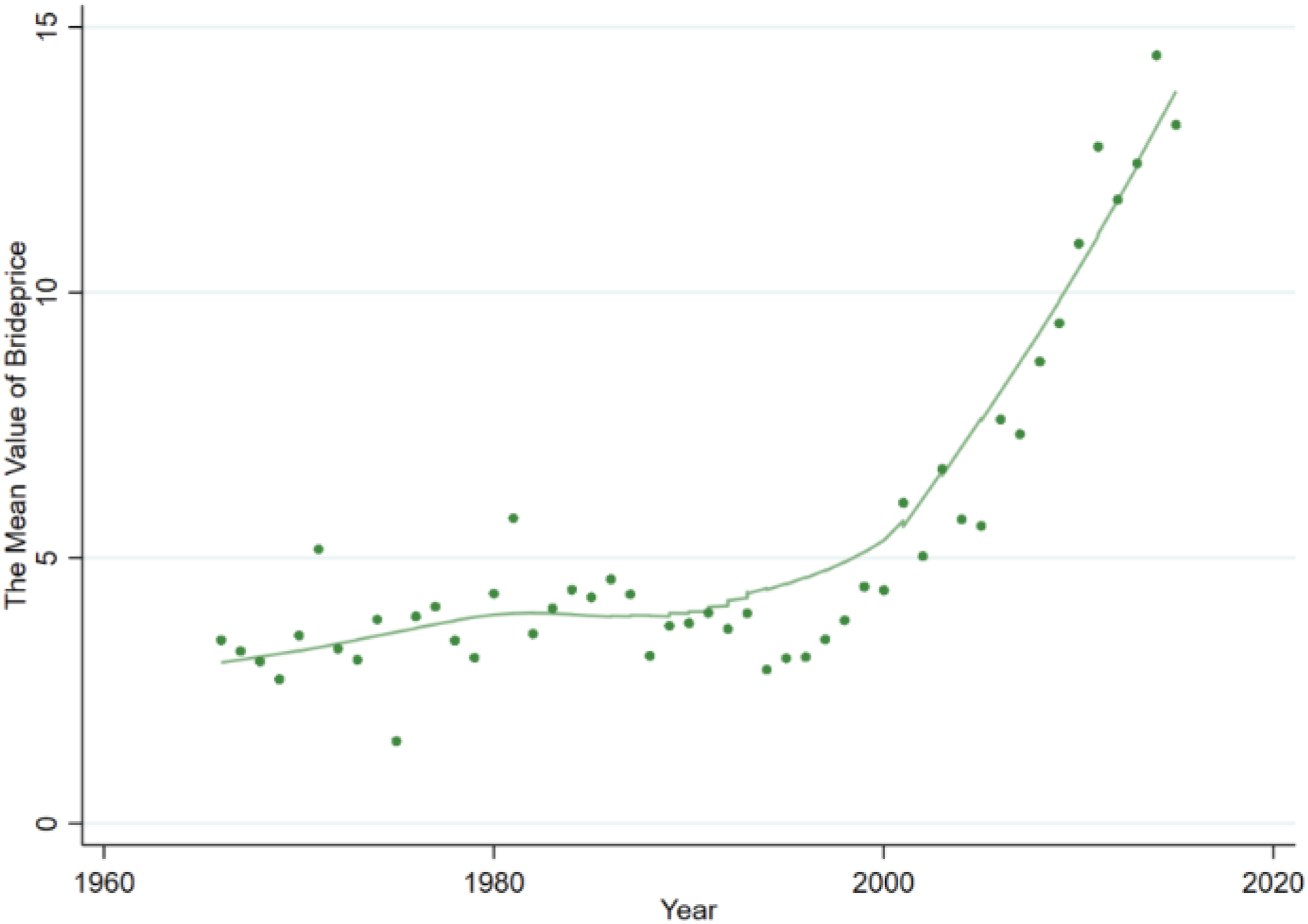
Logically, if the bride price does affect people’s subjective feelings, then the pursuit of happiness may be one of the key reasons for the continued rise in the bride price. Unfortunately, however, there is little literature investigating the effect of bride price on the subjective feelings of couples from a happiness perspective. While Lowes and Nunn (2017) investigate the experience of Congo in African countries, research on emerging market countries is largely absent. Taking China as an example, this paper explores the causes of the high bride price phenomenon in emerging market countries by examining the impact of bride price on the happiness of newcomers. Theoretically, the effect of bride price on subjective happiness could be twofold. On the one hand, as a form of “seed money” for the new family and a “face-saving” expense during marriage, the higher bride price can contribute to family stability and success in peer competition (Meng & Zhao, 2019). On the other hand, the negative effects of high bride prices, such as increased debt, intergenerational and intra-generational exploitation, and gender discrimination within families, could also engender unhappiness (Jiang et al., 2015; Tan et al., 2021). Given these considerations, the relationship between bride price and subjective happiness might not be a simple linear one. In this paper, we test the nonlinear effect of bride price on happiness using a variety of methods.
First, we have established a theoretical analysis framework based on the purpose of the bride price, grounded in economic and sociological theories. This framework analyzes how the bride price influences the subjective happiness of couples from three perspectives: the economic conditions of the new family, intergenerational family relationships, and the transfer and compensation of rights. Subsequently, using data from the CLDS from 2014 to 2018, we constructed a retrospective panel dataset that encompasses bride price, subjective happiness, and other personal characteristics, with the actual window period spanning from 1955 to 2018. We attempt to answer the following questions: (1) How does bride price affect subjective happiness? (2) Do the source and destination of bride price determine its impact on subjective happiness? (3) Does the impact of bride price on subjective happiness vary based on factors like gender, income, and educational level? Currently, the bride price paid by Chinese residents is not limited to cash but also includes a series of other expenses such as banquet costs and marriage housing (Li & Li, 2021). The role of these funds is analogous to that of the bride price. It is important to emphasize that, prior to the year 2000, people mostly relied on self-built houses for engagement agreements, so purchasing a house was not a prerequisite for marriage. However, since the early 21st century, with the rapid economic growth and urbanization in China, owning property in urban areas has become a necessary condition for a groom to get married (Feng et al., 2024). This implies that, without housing and a wedding banquet, marriage is often unattainable (Li & Li, 2021). A survey conducted in 2010 indicated that over 70% of women believed that a man must have a house before he can get married. To adapt to the contemporary Chinese context of the bride price concept, we not only examine the explicit cash payments but also include implicit expenses such as wedding banquets and marriage housing in the category of bride price. Thus, we can more comprehensively capture the actual value of marriage expenses.
This study focuses on the subjective well-being of married couples, specifically the “happiness of both wife and husband,” rather than just one party. This is because both are directly involved in the dynamics of marriage and are the primary stakeholders. Some literature suggests that the subjective well-being of husbands and wives may not be symmetrical (Platteau & Gaspart, 2007). To identify whether the impact of bride price differs between the wife and husband, we conducted corresponding exercises in the subsequent sections. It is important to note that, in the Chinese context, the source and destination of the bride price exhibit diversity. On one hand, the bride price is not only sourced from the groom’s parents but also partially from the groom himself. For example, Feng et al. (2024) found that over 30% of Chinese men need to pay the bride price themselves. On the other hand, the bride price may sometimes be transferred to the bride’s parents as “the price of the bride,” and at other times, it may serve as “start-up capital for the new family,” eventually flowing into the newly established household. Given that distinguishing the source and destination of the bride price is crucial for objectively understanding its impact on well-being, we discuss these phenomena in the following sections.
In our identification strategy, the retrospective panel data establishes a temporal order between the act of paying the bride price and the experience of subjective happiness. Therefore, our research takes advantage of the lack of a strong reciprocal causal relationship between the dependent and independent variables. The main challenges we face are potential omitted variables and selection bias. To address these, we include “prefecture-marriage year” fixed effects and apply the instrumental variable method to resolve endogeneity biases caused by omitted variables. We also use the Heckman two-step method to tackle the issue of selection bias.
Our study has yielded several interesting conclusions. First, we find that the bride price has an inverted U-shaped nonlinear impact on subjective happiness. On the left side of the inverted U-shaped curve, the bride price positively promotes subjective happiness, while on the right side, an increase in the bride price significantly suppresses subjective happiness. The value of the bride price is higher at the turning point, at about 350,000 yuan (50,200 USD), implies that the rise in the average value of the bride price may be related to people’s pursuit of happiness. Second, the mechanism analysis show that the bride price affects subjective happiness through two pathways: by influencing the economic conditions of the new family and the internal rights compensation and transfer within the new family. However, there is no evidence to suggest that the bride price impacts individual subjective happiness by affecting intergenerational relationships. Third, a bride price of an appropriate value not only benefits individual subjective happiness but also positively contributes to family stability, poverty alleviation within the family, and reducing inequality in family subjective happiness. However, a bride price exceeding a certain value (about 50,200 USD) is not only detrimental to family stability but also further exacerbates inequality in subjective happiness between spouses, widening the “subjective happiness gap” within families. Such evidence implies that the Chinese Government’s policy of banning the practice of bride price in a “one-size-fits-all” manner is likely to be inappropriate. Fourth, the source and destination of the bride price determine its impact on subjective happiness. When the bride price primarily originates from the parents and flows toward the new family after marriage, an increase in the value of the bride price significantly enhances the subjective happiness of the newlyweds. This implies that the subjective happiness “purchased” by the bride price is actually a form of “intergenerational exploitation.” Furthermore, our also found that the impact of the bride price on subjective happiness does not vary with gender or educational level, but it does exhibit significant heterogeneous effects on individuals with different income levels.
The marginal contribution of this paper is threefold. First, utilizing nationally representative CLDS data, we explore the question of whether bride price can affect residents’ subjective happiness. Our focus is on the subjective experiences of the parties involved in the marriage. By constructing a unique retrospective panel dataset from large-scale household survey data, we effectively overcame endogeneity issues and investigated the impact of bride price on the subjective happiness of those entering into marriage. In this respect, our study is closely connected with the work of Lowes and Nunn (2017). Their research on African societies found that despite the prevalent view in these societies that bride prices are a significant constraint on women’s rights, an increase in bride prices actually contributes to improved marital quality and subjective happiness for women. Our study further expands the scope of their research. We investigate the situation in emerging market countries and have found similar evidence. Our study thus provides new insights to explain the continuing rise in marriage payments in developing countries. Second, our study explains how bride price affects subjective happiness. Specifically, we constructed a theoretical analysis framework that includes mechanisms such as the economic conditions of the new family, intergenerational family relationships, and the transfer and compensation of rights based on the social purpose of bride price. We explored the heterogeneous effects of these three types of mechanism variables at different levels of bride price value, providing new insights and perspectives for further clarifying the connection and inherent contradictions between bride price and subjective happiness. Third, our study not only discusses the impact of bride price on individual subjective happiness but also provides a detailed analysis of its effects on various aspects of the new family. By identifying the source and destination of bride price payments, based on the economic conditions of the families of both marriage partners, we empirically substantiated the nature of “intergenerational exploitation” inherent in bride prices. This provides a realistic basis for a better understanding of the nature of bride prices and their impacts.
The structure of the remainder of this paper is organized as follows: section two describes the research background and theoretical framework of this paper; section three introduces the empirical identification strategy and research data; section four presents the baseline results of this study and provides a series of robustness tests; section five is dedicated to mechanism testing; section six to further research; section seven concludes with conclusions and implications.
Background and Theoretical Framework
The Custom of Bride Price in China
The marriage payment is an ancient traditional custom that exists in many countries, 1 but is expressed in very different ways. In Eastern Europe, India, and Pakistan, the dowry is the main manifestation of the marriage payment (Anderson, 2007; Anukriti et al., 2022). However, in Africa, Southeast Asia, and China, bride price is a major part of marriage payments (Cherlin & Chamratrithirong, 1988). 2 In Africa, the bride price is often paid in kind, such as cows and goats (Anderson, 2007). However, in China, the bride price mainly consists of cash, a house, and the cost of the wedding banquet, etc. (Feng et al., 2024; Li & Li, 2021).
The custom of marriage payments in China can be traced back to the Eastern Zhou era (770-256 BC) and has continued to the present day (Brown, 2009). Originally, the purpose of the bride price was to express respect, compensate for the loss of labor, and maintain family relationships. Since brides typically join the groom’s family upon marriage (living with the husband’s family), the bride price is often considered a compensation by the groom’s family to the bride’s parents in exchange for the bride’s labor and childbearing capabilities (Goody & Tambiah, 1973). In traditional Chinese marriage payment customs, the bride price is transferred from the groom’s family to the bride’s family, representing a transfer of wealth between families. In contrast, the dowry, perceived as a portion of assets given by the bride’s parents to their daughter, is an internal family financial transfer. It is ultimately used to enhance the post-marital welfare and familial decision-making power of the bride (Botticini & Siow, 2003; Zhang & Chan, 1999). In the early years after the founding of the People’s Republic of China, due to the state’s strong advocacy for simplifying marriage ceremonies, traditional marriage customs were resisted, and the issue of high bride prices was relatively uncommon. However, since 2000, the value of bride prices in China has rapidly increased. Existing literature suggests that with economic development and the rising cost of living, the bride price in China has evolved into an important source of support funds for newlywed families, a reflection of parental face-saving, and a manifestation of peer pressure. Driven by these factors, the bride price has become a means for men to enhance their competitiveness in the marriage market.
Currently, the role of dowry in Chinese marriage customs has relatively diminished, but the practice of paying bride prices remains widespread (Brown et al., 2011). Some international literature has documented the decline of bride price customs abroad with the intensification of modernization and urbanization processes (Goody, 1983; Lavrin & Couturier, 1979; Nazzari, 1991). However, in China, with the progress of opening up to the world and urbanization, the value of bride prices has not decreased but increased, gradually evolving into the current high bride prices. Notably, the phenomenon of high bride prices in China is not unique to rural areas but is also quite common in cities. According to the data in this paper, the value of bride prices in rural and urban areas in China can average about 5.51 and 5.82 times the annual family expenditure, respectively. Consequently, most families often need to save in advance to prepare for the bride price (Wei & Zhang, 2011). Faced with high bride prices, some people are forced to borrow from relatives or even financial institutions (Jiang et al., 2015), and some families have even experienced “poverty due to marriage” or “returning to poverty due to marriage” (Zhang and Tao, 2020). Although some local governments have started to attempt to ban the payment of bride prices with a one-size-fits-all approach, the overall effectiveness of these measures remains unsatisfactory.
Some literature points out that what drives the phenomenon of “sky-high bride prices” in China is not customary norms, but the underlying economic logic. According to existing research, the reasons for the emergence of “sky-high bride prices” can be summarized as follows: (1) blind competition (Meng & Zhao, 2019); (2) the cross-regional movement of female population leading to a gender imbalance in rural areas (Jiang et al., 2015); (3) the uneven development of urban and rural areas, where urban consumption concepts are transferred to rural areas (Lin & Huang, 2019; Xu, 2023); (4) the persistently high gender ratio in China, with women having pricing power in the marriage market (Jiang & Sánchez-Barricarte, 2012; Wei & Zhang, 2011); (5) the increasing costs of marriage and post-marriage life, particularly the necessity of owning a house as a prerequisite for marriage (Li & Li, 2021). Despite widespread attention to the issue of “sky-high bride prices” from the government and the public, how to rectify the problem of high bride prices remains unresolved. In fact, as early as 1950, the first “Marriage Law” issued by the Chinese government explicitly prohibited “demanding money or gifts in marriage.” However, the implementation of the law has not been significantly effective, especially in rural areas (Engel, 1984).
To curb the phenomenon of “sky-high bride prices,” the Chinese government, in its 2019 No. 1 Central Document, for the first time called for the regulation of this phenomenon and subsequently released a series of policy documents over the following years. Over the past 5 years, China’s No. 1 Central Document has mentioned “high bride prices” four times, reflecting the government’s level of concern and determination to address this issue. However, this also indirectly indicates the long-term nature, complexity, and systematic nature of tackling this problem.
Theoretical Framework and Hypothesis Development
The payment of bride price may influence individuals’ subjective experiences through various pathways, encompassing aspects of personal, familial, and even broader external social environments. We constructed a representative theoretical analysis framework to explain the mechanisms by which bride price influences subjective happiness. Since this paper aims to investigate whether the bride price can achieve its social objectives and bring subjective happiness to newlyweds, the ideal approach is to develop the theoretical framework based on the primary objectives of contemporary bride price practices. According to existing research, the primary functions of contemporary bride prices can be broadly divided into three categories: providing startup capital for the new family, strengthening intergenerational relationships, and marital compensation and transfer of rights (Becker, 1991; Brown, 2009; Cox, 1987; Ebrey, 1991). While we cannot exhaust all channels of influence, general empirical evidence can be provided by testing representative mechanisms. 3
Startup Capital for the New Family
The theory of marital support emphasizes the position of the new family within the community and highlights the important role of intergenerational relationships in marital exchange (Cohen, 1993). This theory posits that in most cases, both families of the bride and groom provide funds to fulfill the marriage agreement. In China, although the majority of the funds are usually provided by the groom’s family, in most instances, these funds are directed towards the offspring, that is, the new family. Since the bride price is primarily an intergenerational transfer from parents to offspring, the newlyweds can obtain startup capital for their family from it (Figure 2).
4
From Figure 2, it can be further observed that the samples where the groom himself pays the bride price are primarily concentrated below 200,000 yuan. In samples above 200,000 yuan, the main source of the bride price is from the parents. Based on the theory of marital support, we believe that the payment of the bride price may impact subjective happiness in various ways by influencing the economic conditions of the new family. Distribution of Bride Price Sources. Note. The X-axis represents the total amount of bride price paid by the individual, while the Y-axis represents the portion of the bride price paid by the parents. Each point in the graph corresponds to a sample observation.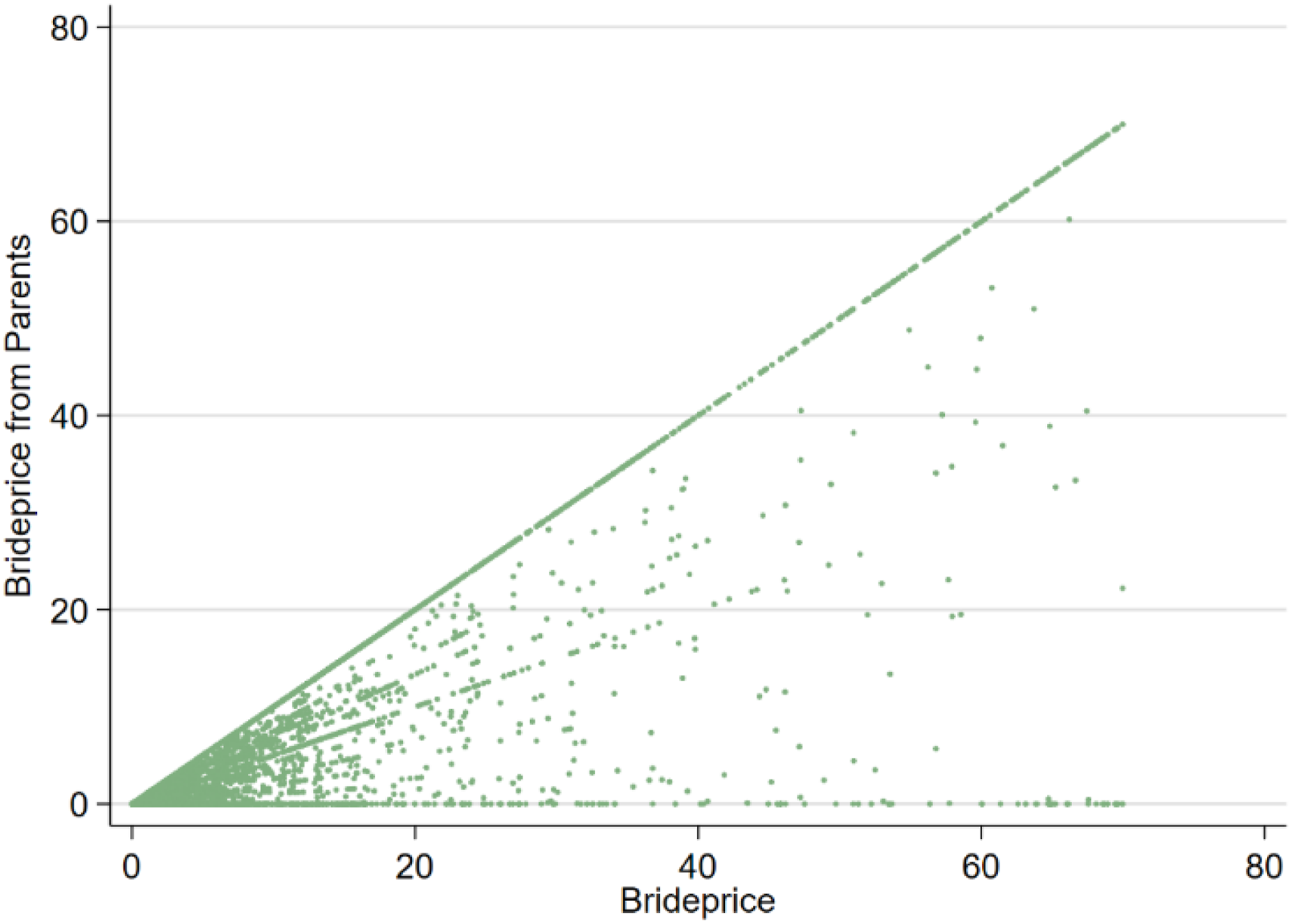
On the one hand, the payment of a bride price benefits the subjective happiness of the newlyweds. As financial support from the older generation for the new family, the higher the value of the bride price, the greater the paying capacity and quality of life for the new household. With economic growth and rising living costs, the bride price has become a major source for sharing the start-up costs of a new family. In this context, the increase in the value of the bride price facilitates the acquisition of essentials for newlyweds, such as housing, household goods, and transportation. This, in turn, enhances the quality of life of the marriage partners and contributes to the improvement of residents’ subjective happiness. Simultaneously, the bride price is incorporated into the new family’s savings pool. The higher the bride price, the greater the family’s liquidity, enhancing the new family’s ability to withstand external risks and unexpected events, thereby promoting family stability and subjective happiness. Furthermore, as start-up capital for the new family, the bride price can also be considered an investment in the couple’s future development. In the context of increasing external competitive pressures, the bride price can be used to enhance the educational and professional skills of both marriage partners. By improving long-term income and social status, it helps overcome peer pressure and market competition, thereby fostering an increase in subjective happiness. Therefore, it is anticipated that an appropriate bride price will contribute to the enhancement of the newlyweds’ subjective happiness.
On the other hand, a bride price exceeding a certain value can also give rise to economic risks and diminish individual subjective happiness. When the bride price exceeds a family’s consumption capacity, the family is forced to pay the bride price through borrowing from others or financial institutions. High levels of debt not only burden the older generation but also lead the younger generation to inherit this debt, thereby affecting the subjective happiness of the newlyweds. Particularly, with the acceleration of urbanization in China and rapidly rising housing prices, the increased living costs for newly married couples intensify the financial burden. Under the pressure of sharply increasing marriage costs and peer pressure, the total value of the bride price often surpasses the financial capabilities of many families, necessitating that most of them need to save in advance to prepare for the bride price. For instance, Wei and Zhang (2011) indicate that the value of the bride price in China can average around eight times the per capita income. Consequently, both parents and their offspring must increase their labor input to jointly repay loans. Joint debt repayment not only diminishes individual subjective happiness but can also trigger internal conflicts and financial crises in new families. Moreover, high bride prices not only increase the working hours of parents but may also lead to parents incurring substantial debts, resulting in debt-induced illness (Tan et al., 2021), which in turn indirectly reduces the subjective happiness of their offspring. Additionally, prematurely bearing debts can damage personal credit levels, reducing current and future borrowing capacity (Diamond, 1991), thereby weakening the new family’s future resilience to risks. In summary, we hypothesize that high bride prices could deteriorate the economic conditions and risk-resistance capabilities of new families, subsequently suppressing subjective happiness.
Based on the preceding analysis, we propose the following hypotheses:
The payment of a bride price can enhance the subjective happiness of newlyweds by offering financial security.
A bride price exceeding a certain value add to the economic burden on families, thus suppressing the subjective happiness of the newlyweds.
Strengthening Intergenerational Relationships
The theory of transactional motives in marriage payments suggests that the higher value of the bride price or dowry provided by parents to their offspring, the greater the likelihood of the children reciprocating to their parents after marriage (Becker, 1974; Cox, 1987; Ebrey, 1991; Goody & Tambiah, 1973; Schlegel & Eloul, 1988). This theory finds empirical support in Chinese societal experiences. For example, Zhang and Tao (2020) found that children who receive more bride price and dowry from their parents at the time of marriage tend to give more financial transfers and emotional support to their parents. Combining the previous discussion, since most of the bride price is provided by the groom’s parents as a form of intergenerational transfer payment, it is not difficult to further deduce that if transactional motives play a role in the payment of bride price, a larger bride price may facilitate the deepening of intergenerational relationships, thereby promoting the subjective happiness of the offspring. For instance, Ebrey (1991) points out that marriage payments in Chinese society aim to consolidate familial relationships by inheriting the social resources of the parents. At the time of marriage, both families transfer resources to the new family in the form of bride price or dowry, strengthening intergenerational ties through material connections. When intergenerational transfers, represented by the bride price, are minimal, intergenerational relationships may face uncertainty. On the one hand, the bride price often symbolizes the groom’s recognition of the bride, and a lower bride price may lead the newlyweds to feel that the marriage is not sufficiently valued by the parents, thus affecting intergenerational relationships and potentially reducing the offspring’s financial and emotional support to their parents (Zhang and Tao, 2020). On the other hand, when parents are unable to support the offspring’s bride price, the economic pressures, including the bride price, fall on the offspring, forcing the newlyweds to fend for themselves to overcome living costs, decreasing their reliance on their parents and thereby reducing the couple’s subjective happiness. Synthesizing the above analysis, it can be conjectured that the payment of the bride price may influence the subjective happiness of the marriage parties through its impact on intergenerational relationships. The more intergenerational transfer of bride price there is, the more harmonious the relationship between families, and the higher the subjective happiness of the newlyweds may be. Based on these discussions, we propose the following hypothesis:
The payment of a bride price can enhance the subjective happiness of newlyweds by improving intergenerational relationships.
Marital Compensation and Transfer of Rights
The theory of marital compensation posits that bride price, as a property transfer between families, functions to compensate for the loss of rights (Becker, 1991; Brown, 2009; Fei, 2001; Freedman, 1966; Goody & Tambiah, 1973; Ji, 2020). Due to the traditional patrilocal marriage system in China, the bride’s family loses a labor force upon her marriage, accompanied by the emotional loss of a family member leaving home. To compensate for these losses, the groom’s family pays a bride price to the bride’s family at the time of marriage. However, with the increasing freedom of young people in their marital choices and changes in family structure, the role of bride price as compensation for labor and emotional loss is gradually diminishing (Goody & Tambiah, 1973; Wei et al., 2008). Nevertheless, to this day, the payment of bride price is still seen as an important tool to compensate for the loss of women’s rights (such as reproductive rights and labor rights). As a traditional form of expression, the groom’s payment of the bride price can convey respect and recognition to the bride’s side, thereby contributing to the increase in the subjective happiness of the newlyweds. Specifically, On the one hand, paying the bride price can convey sincerity to the bride’s family, affirm the social value of the bride and her family, and communicate feelings of compensation and recognition. On the other hand, under peer pressure, paying the bride price helps maintain the “face” of the bride’s side, conveying respect and enhancing the social recognition of the bride’s family. Therefore, it can be argued that the payment of bride price compensates for the material and emotional losses of the bride and her family, expresses respect and recognition, promotes family harmony, and fosters an increase in subjective happiness.
However, recent studies indicate that the value of bride price intended for compensation is not necessarily better when higher. For instance, a high bride price is more likely to induce a “repayment” mentality in the groom, where he feels justified in demanding the bride to cede rights as compensation (Lin & Huang, 2019; Lowes & Nunn, 2017). Some evidence suggests that high bride prices often lead to biases against women (Das Gupta et al., 1997). On the one hand, when women’s social value is low, a high bride price is often seen as a “monopoly price” on women’s rights, whether in terms of labor or sexuality (Mbaye & Wagner, 2017). On the other hand, an increase in the bride price can diminish the bride’s status and bargaining power within the new family (Mansoor, 2018). For example, Beegle et al. (2001) showed that women with more assets have greater say in reproductive decisions. Faced with the temptation of a high bride price, the bride’s family is more likely to compel the woman to submit to a marriage dominated by the groom. Hague et al. (2011) in their survey in Africa found that a higher bride price reinforced men’s ownership over women (including labor, reproduction, and sexuality), increasing the likelihood of husbands abusing their wives. In situations where women want to divorce but their families cannot afford to return the high bride price, their parents often do not support their decision to divorce (Gaspart & Platteau, 2010). Thus, a high bride price, at the cost of depriving women of their rights, becomes a means to prevent divorce. For instance, in Senegal, 55% of respondents emphasized that a high bride price led to the “commodification” or “enslavement” of women (Gaspart & Platteau, 2010). Based on the above theories, we propose the following hypothesis:
The payment of a bride price is beneficial in compensating the bride’s family for their labor and emotional losses, thereby facilitating the enhancement of the newlyweds’ subjective happiness.
A bride price exceeding a certain value reinforce the groom’s ownership over the bride, exacerbating the deprivation of women’s rights, and thus can reduce the subjective happiness of the newlyweds.
Combining the above theoretical analyses, we believe that bride price may affect subjective happiness in various ways, and more importantly, different levels of bride price may have varying impacts on individual subjective happiness. On the one hand, a certain level of bride price payment can enhance individual subjective happiness through means such as providing financial security for the new family, improving intergenerational relationships, and compensating the bride’s family for labor and emotional losses. On the other hand, when the value of the bride price payment is high, it may reduce individual subjective happiness by increasing the economic burden on the new family and intensifying the deprivation of women’s rights by the groom. Therefore, we further propose the following hypothesis:
The effect of bride price on subjective happiness exhibits an inverted U-shaped nonlinear impact. That is, bride price payments within a certain range can enhance the subjective happiness of the newlyweds, but bride prices exceeding a certain value will suppress their subjective happiness.
Identification Strategy and Data
Empirical Strategy
To meet the research requirements, we establish an Ordered Probit model to estimate the impact of bride price expenditures on subjective happiness. The econometric equation is as follows:

We measure the expenditure of male respondents at the time of marriage using the CLDS questionnaire item “How much money did your family spend on your first marriage? (including building or buying a house for marriage, bride price, and wedding feast expenses).” This indicator captures the real economic value of the bride price paid by men at the time of marriage. It is important to emphasize that, prior to the year 2000, people mostly relied on self-built houses for engagement agreements, so purchasing a house was not a prerequisite for marriage. However, since the early 21st century, with the rapid economic growth and urbanization in China, owning property in urban areas has become a necessary condition for a groom to get married (Feng et al., 2024). For example, China’s mainstream media, “Xinhua News Agency,” refers to expenditures such as the wedding house and wedding banquet as the “new variants” of the bride price in contemporary China. 5 This implies that, without housing and a wedding banquet, marriage is often unattainable (Li & Li, 2021). To ensure the comparability of bride prices among respondents married in different years, we use the CPI index to adjust the bride price to the 2018 level. The unit of this indicator is in 100,000 yuan (about 15,000 USD).
It should be noted that due to the difficulty in obtaining historical variables related to newlyweds’ marriages, our identification strategy faces the challenge of potential omitted variable problems. Additionally, local characteristics in different regions vary, and factors such as customs, economic development, and local policies at the time of an individual’s marriage can influence decisions regarding bride price payments and may also affect subjective happiness. To further overcome these issues, we undertook the following measures. First, we brought regional fixed effects down to the prefecture-level city layer (
In addition, to further mitigate potential endogeneity issues caused by omitted variables, we included “prefecture - marriage year” fixed effects in our robustness tests. Moreover, we used the gender ratio of the unmarried population in the same age group in the same locality as an instrumental variable for 2SLS regression and employ the Heckman two-step method to alleviate estimation biases resulting from sample self-selection effects.
Data
The data used in this article comes from the CLDS, organized by the Center for Social Science Survey at Sun Yat-sen University. We selected data from the surveys conducted in 2014, 2016, and 2018 to construct retrospective panel data. The 2012 data was excluded due to the absence of relevant bride price questions. Since the CLDS uses a rotating sample tracking method, with new samples entering in each survey period, and adhering to the principle of retaining the maximum number of samples, it was not feasible to consider individual fixed effects in the regression model. Considering the research purpose of the article, the data was processed as follows: (1) Only samples with a marital status of first marriage were retained. The reasons are as follows: first, this article focuses on examining the impact of the bride price on future subjective happiness, and the mechanisms of action in the theoretical framework are all based on the existence of first-marriage families; second, samples with a marital status of first marriage account for more than 85% of the total sample, indicating strong representativeness; and most importantly, the CLDS database only inquires about expenditures at the time of first marriage. (2) Matching of various types of spouse pairs according to the relationship of the respondents and other family members, with the marriage expense data from the male samples being matched to their spouses. (3) To avoid the potential distortion of the estimation results by outliers, all continuous variables were subjected to trim at the 0.5% level at both ends. Ultimately, 34,991 valid sample data were retained. In the empirical analysis process, due to the slightly varying degrees of variable missingness, the sample size of different estimation results also varied.
Stylized Fact
Descriptive Statistics of the Variables
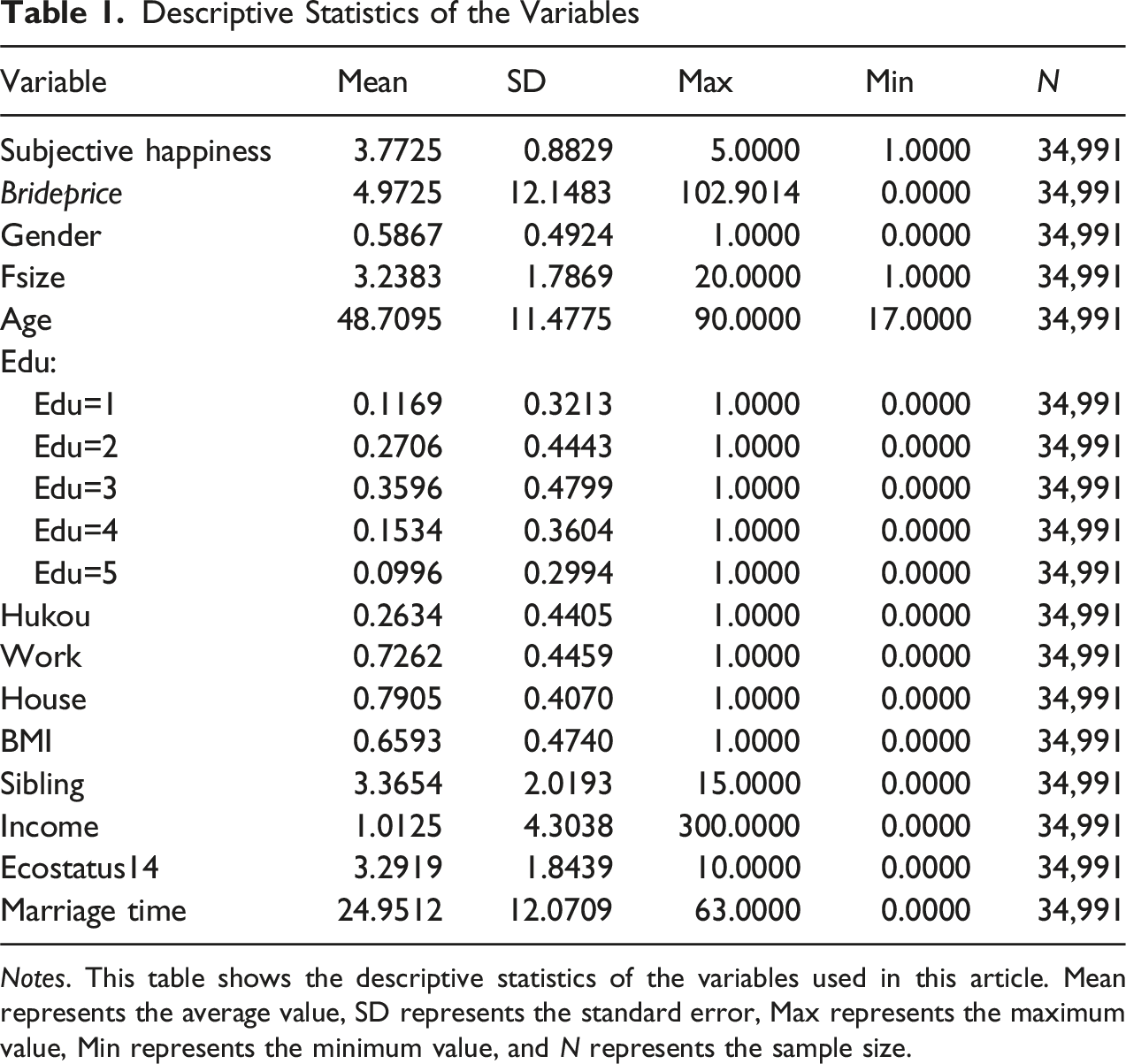
Notes. This table shows the descriptive statistics of the variables used in this article. Mean represents the average value, SD represents the standard error, Max represents the maximum value, Min represents the minimum value, and N represents the sample size.
Before conducting the formal regression, we first plotted the relationship between bride price and subjective happiness to visualize their correlation (Figure 3). For ease of observation and comparison, we also provided scatter plots of the sample distribution, a linear fitting graph, and a quadratic nonlinear fitting graph. The linear fitting results suggest a potential positive correlation between bride price and subjective happiness, with higher bride prices correlating with increased subjective happiness. The quadratic nonlinear fitting results indicate a possible inverted U-shaped nonlinear relationship between bride price and subjective happiness, that is, as the bride price increases, subjective happiness initially rises and then falls. Integrating these results, it can be observed that within a certain range, bride price can “purchase” subjective happiness, but a bride price exceeding a certain value might lead to a loss of subjective happiness. However, as other influencing factors have not yet been controlled and statistical evidence is not yet available, Figure 3 cannot accurately depict the exact causal relationship between bride price and subjective happiness. In the following sections, we introduce standard econometric specifications and further investigate the impact of bride price on subjective happiness from an empirical perspective. The Relationship Between Bride Price and Subjective Happiness. Notes. The scatter points in the graph represent observed values. The green line represents the quadratic fitting function, while the orange line represents the linear fitting function. The shaded area indicates the 95% confidence interval.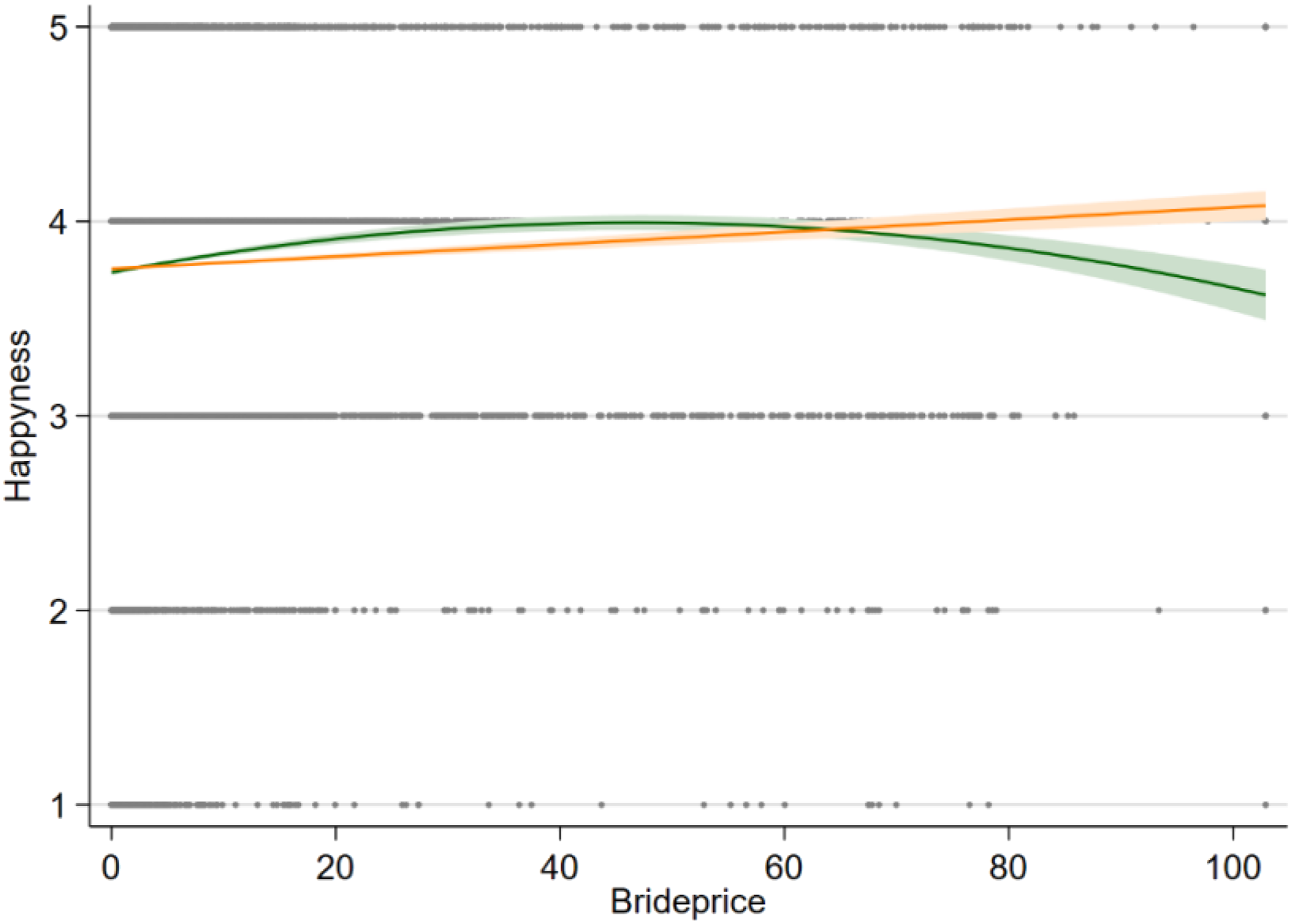
Empirical Results
Baseline Results
The Impact of Bride Price on Subjective Happiness
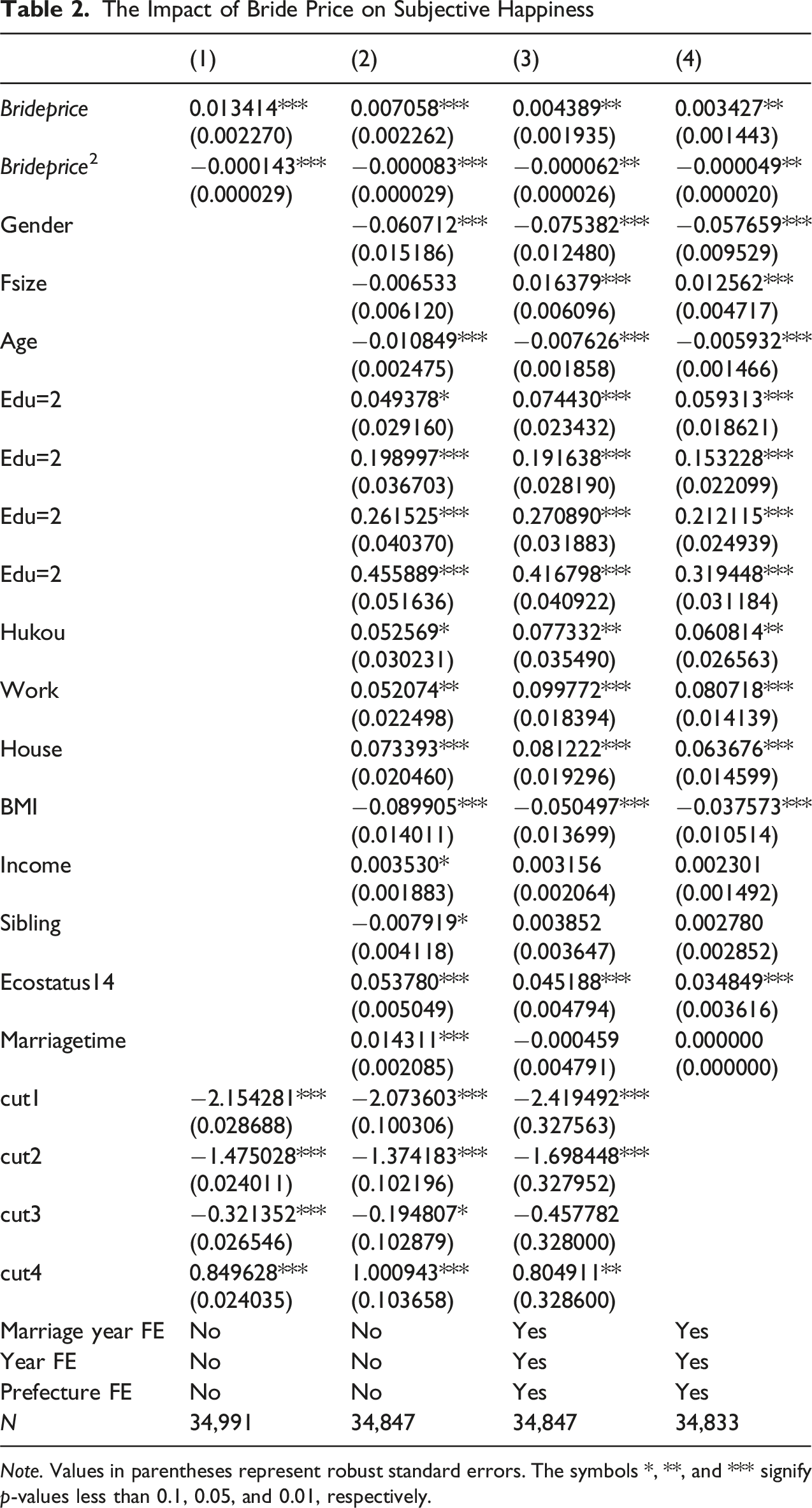
Note. Values in parentheses represent robust standard errors. The symbols *, **, and *** signify p-values less than 0.1, 0.05, and 0.01, respectively.
Our findings are similar to the study by Lowes and Nunn (2017) but differ from that of Mbaye and Wagner (2017). Lowes and Nunn (2017), in their survey of 320 people in the Democratic Republic of the Congo, found that despite the common perception in African societies that bride price is a significant constraint on women’s rights, an increase in bride price indeed benefits the quality of women’s marriages and their subjective happiness. Their study also noted that when the bride price is excessively high, women’s subjective happiness decreases. This is because a high bride price reinforces men’s ownership over women, exacerbating domestic violence. Furthermore, the need for women to return the bride price in case of divorce discourages them from considering it. Conversely, Mbaye and Wagner (2017) found that in Senegal, a higher bride price is often associated with poorer evaluations of wives by their husbands, implying that a high bride price suppresses family subjective happiness. In contrast, using large-scale survey data from China, our study confirms the inverted U-shaped impact of bride price on individual subjective happiness. We believe that the inconsistency in conclusions might be due to differences in the actual conditions of different countries. In modern China, high living costs (including rapidly increasing housing costs, prices, and the wealth gap) have become a significant barrier to marriage for young couples. As start-up capital for new families, bride price may play an important role in supporting the post-marital life of newlyweds.
Nonlinear Relationship Tests
To verify the accuracy of the main conclusions of this article, we refer to the study by Haans et al. (2016) and use five methods to test for a nonlinear relationship. These methods are: (1) observing the regression results when only the linear term of bride price is included in the model and when both the linear, quadratic, and cubic terms of bride price are included; (2) retesting based on the regression equation from the mechanism analysis; (3) examining the impact of bride price on subjective happiness on both sides of the peak of the inverted U-shaped curve; (4) conducting a linkage test on the regression equation between bride price and subjective happiness; (5) drawing the inverted U-shaped curve and observing the position of the inflection point.
First, we included only the linear term of the bride price variable in column (1) of Supplemental Table A2 to observe the linear fitting result. The estimated result shows that the regression coefficient of
Second, we retested the impact of bride price on subjective happiness according to equation (A1). The results, as shown in columns (2) and (3) of Supplemental Table A2, show that the coefficients
Third, we divided all samples into two parts according to the peak of the inverted U-shaped curve to separately test the nonlinear impact of bride price on subjective happiness. The results, as presented in columns (4) to (5) of Supplemental Table A2, show that the coefficient of
Fourth, we conducted a linkage test on the linear regression equation of bride price and subjective happiness. The core principle of the linkage test is to incorporate higher-order terms of the linear regression fitted values into the equation and assess the significance of their coefficients. The null assumption is that there are no omitted variables in the model. However, the test outcomes rejected this assumption, suggesting that the model lacks higher-order nonlinear terms. We then added the quadratic term of bride price as an independent variable and conducted another linkage test. The results of this test affirmed the assumption of “no omitted variables,” indicating the necessity of including the quadratic term in the model.
Fifth, based on the regression results from column (3) of Table 2, we drew the inverted U-shaped curve of bride price and subjective happiness (as shown in Figure 4). The green segment represents the samples sorted in the top 97.5% by bride price amount, and the red segment represents the bottom 2.5%. It is observable that the peak of the inverted U-shaped curve falls within the range of bride price distribution, confirming the existence of the inverted U-shaped relationship. Inverted U-Shaped Curve Based on Baseline Estimation. Note. This figure shown the inverted U-shaped curve of bride price and subjective happiness.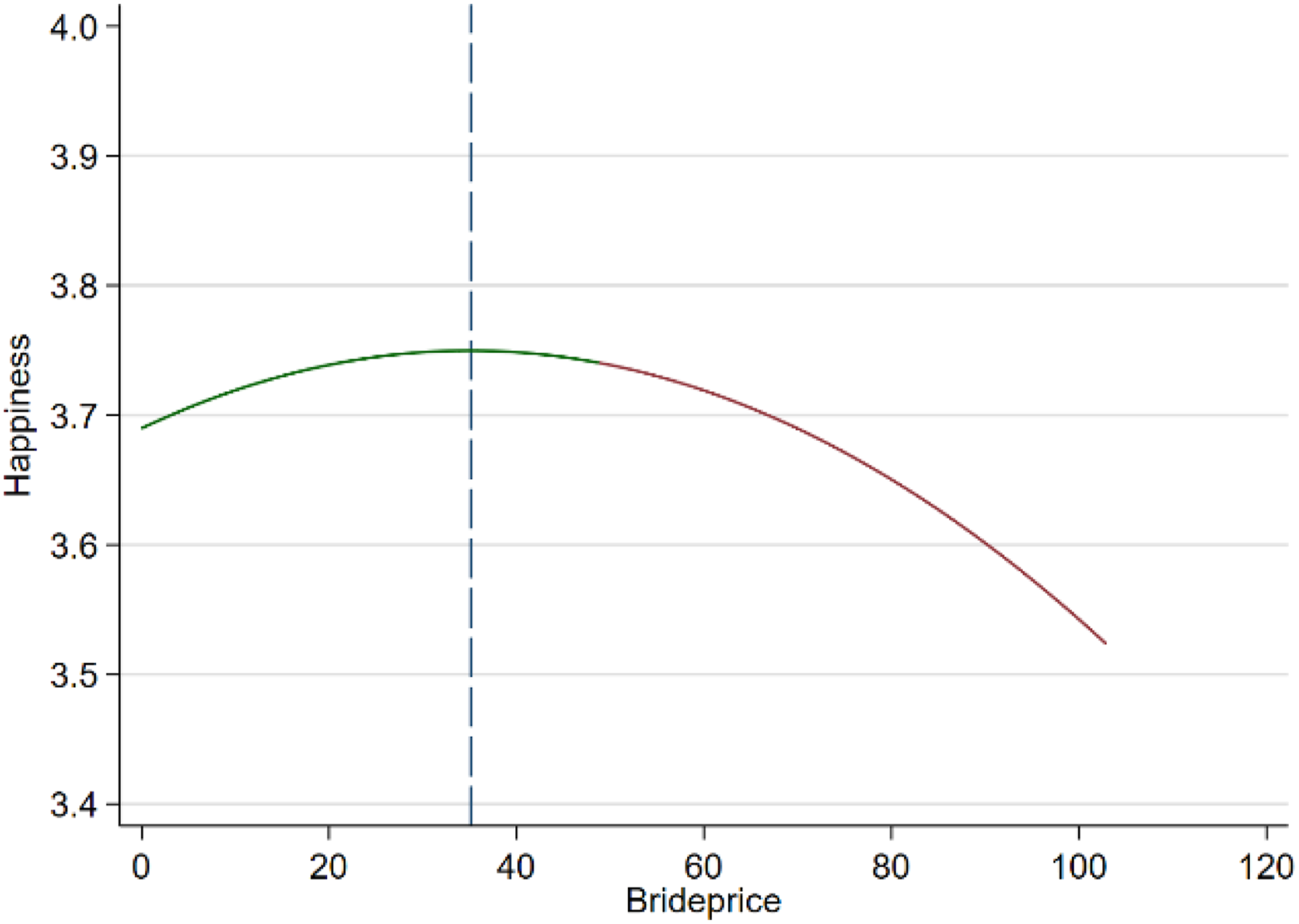
Robustness Tests
Discussion on Endogeneity Issues
Since we construct retrospective panel data, there are temporal sequential differences between the independent and dependent variables, thus reducing the likelihood of endogeneity bias due to causality between the independent and dependent variables. However, we still face challenges related to endogeneity issues caused by omitted variables and selection bias. To address these issues, we include “prefecture-marriage year” fixed effects and the method of instrumental variables. Additionally, we utilize the Heckman two-step method to resolve endogeneity biases arising from selection bias.
First, including “prefecture-marriage year” fixed effects can effectively control for the impact of local inherent characteristics in the year of the respondents’ marriage on the results. For instance, this includes the local customs, economic development level, the average level of bride price in the locality that year, and peer pressure, among others. The empirical test results, as shown in column (1) of Table A3, indicate that the inverted U-shaped relationship between bride price and subjective happiness remains valid.
Second, we selected the gender ratio of the unmarried population in the same age group as the respondent at the time of their marriage as an instrumental variable, applying the Two-Stage Least Squares (2SLS) strategy to further mitigate endogeneity bias. The rationale is that the local gender ratio at the time of a respondent’s marriage is a significant factor in determining the level of bride price. Generally, the higher the gender ratio in a locality, the higher the bride price that local men need to pay. However, an individual’s bride price behavior is unlikely to significantly impact the macro-level gender ratio (Wei & Zhang, 2011). Moreover, in this study, the current subjective happiness of respondents is unlikely to be influenced by the gender ratio of the area where they got married. Therefore, this variable satisfies both the relevance and exogeneity assumptions of an instrumental variable. The regression results using the instrumental variable method, as shown in column (2) of Table A3, indicate that the regression coefficients for
Specifically, local sex ratios may reflect entrenched son preferences and associated cultural attitudes, which can influence both the level of bride price and individual subjective well-being. This concern, however, does not significantly undermine our conclusions for two reasons. First, the ease of forming marriages may affect the sex ratio at birth. However, driven by exogenous factors such as family planning policies and population mobility, local sex ratios can undergo substantial changes. In other words, the sex ratio at the time of marriage may not effectively reflect local traditional culture. Second, due to a clear temporal sequence, the sex ratio in the year of marriage is unlikely to influence an individual’s SWB many years later. Thus, this instrumental variable largely satisfies the exclusion restriction. To account for the possibility that the sex ratio in the year of marriage might affect respondents’ SWB through certain channels, we excluded samples where the interval between the time of marriage and the time of survey was less than 5 years and re-conducted the analysis. As shown in column (3) of Table A3, the results are largely consistent with those in column (2), confirming that our conclusions remain robust after addressing this potential confounding factor.
Finally, the estimation results of our study might also be subject to sample selection bias. This is because some samples might not have married due to an inability to provide a sufficient bride price and thus could not be included in our sample set. To further mitigate potential sample selection bias, we selected the gender ratio of the unmarried population in the same age group locally as an exogenous variable in the decision equation and constructed a Heckman sample selection model to re-estimate the impact of bride price on subjective happiness. The regression results are shown in column (3) of Table A3. These results indicate that, after overcoming sample selection bias, the main conclusions of our study remain significantly valid.
Changing the Measurement Method for the Dependent Variable
To demonstrate that the basic conclusions of our article are not influenced by the choice of the dependent variable, we replaced subjective happiness with life satisfaction as the measure and conducted the regression again. The results, as shown in column (1) of Table A4 Panel A, indicate that the coefficient of
Exclusion of Samples with Zero Bride Price
In our dataset, there are 2,462 samples reporting a bride price value of zero. We excluded these samples to avoid the potential distortion of results by a large number of zero values. The regression results after this exclusion are shown in column (2) of Supplemental Table A4 Panel A. Observing these results, it is apparent that even after removing samples with a bride price of zero, the main conclusions of our study still hold true.
Exclusion of Duplicate Samples
Our sample consists of three waves of unbalanced panel data from the CLDS. Due to the rotating sample tracking method adopted by the CLDS, some respondents may appear multiple times in different years in our regression, while others may only appear in a single year. Although a larger number of observations can enhance the accuracy of the estimated results, including all samples could lead to a bias in the weight of the observations. Considering this, we eliminated duplicate samples and conducted the regression again. The results, as shown in column (3) of Supplemental Table A4 Panel A, reveal that even after removing duplicate samples, the main conclusions of our study remain valid.
Trimming of Sample Tails
To further eliminate the impact of outliers on the estimation results, we performed a 1.5% trimming at both ends for all continuous variables. The results of this procedure are presented in column (4) of Supplemental Table A4 Panel A. These results demonstrate that even after the tail-trimming of the sample, the main conclusions of our study still hold true.
Changing the Sample Interval
While discussing endogeneity issues, we noted that the estimation results for equation (1) are unlikely to be affected by endogeneity due to mutual causality, as individuals are unlikely to decide their current level of bride price based on future subjective happiness. However, some samples in our study were married in the year of the survey. Therefore, for these samples, their subjective happiness might be related to the amount of bride price paid, indicating a potential for minor endogeneity due to reciprocal causation. Additionally, marriages that occurred close to the time of the survey might lead to more severe omitted variable problems, while those with a longer interval between marriage and survey time might be subject to greater statistical errors. Considering that the issues might bias the estimation results, we conducted tests with samples segregated based on the interval between the time of marriage and the time of survey: greater than 5 years, less than 30 years, and between 5 and 30 years. The results are shown in columns (1)–(3) of Supplemental Table A4 Panel B. We find that, even after changing the sample intervals, the coefficients of the main explanatory variables remain significant, indicating that the main conclusions of our study still hold true.
Consider the Impact of Dowry
China is one of the few countries where both the customs of bride price and dowry coexist. Dowry, paid by the bride’s family to the groom’s side, is generally considered as a partial refund of the bride price paid by the groom and is ultimately used to improve the welfare and influence of the bride in her married life (Botticini & Siow, 2003; Zhang & Chan, 1999). Currently, bride price is one of the main causes of excessive borrowing, family disputes, and even “marriage-induced poverty” in Chinese families. In contrast, the role of dowry in Chinese marriage customs has relatively diminished. According to Baidu search index, from 2018 to the present, the daily average consultation index for bride price is nearly 20 times that of dowry. Although the issue of dowry in China is not as severe as that of bride price, to further consider the interference of the dowry paid by the bride’s side, we use the difference between bride price and dowry as a substitute for the main explanatory variable and re-conduct the regression. Using the net value of bride price after excluding dowry allows us to capture the actual amount paid by the groom. The results, as shown in column (4) of Supplemental Table A4 Panel B, indicate that the regression coefficients for
Addressing Sample Selection Bias
In the preceding regressions, samples of divorced and never-married individuals were excluded. This may raise concerns about “survivor bias.” For instance, both excessively high and excessively low bride prices may lead to divorce due to low subjective well-being (SWB), or individuals may choose divorce due to an inability to afford sufficient bride price. In other words, marital status may be implicitly correlated with bride price, potentially rendering the remaining sample unrepresentative of the broader population. To address this potential sample selection bias, we employed 1:3 propensity score matching to pair the existing sample with divorced and never-married individuals, retaining only those samples within the common support region. As shown in column (1) of Supplemental Table A4 Panel C, the coefficients for
Mechanisms Analysis
In our theoretical analysis, we proposed that bride price can affect subjective happiness through three pathways: impacting family economic conditions, strengthening intergenerational relationships, and fulfilling the functions of marital compensation and rights transfer. Additionally, we suggested that bride prices within different ranges might have varying effects on individual subjective happiness. Therefore, it is necessary to identify and examine how bride prices within different ranges impact individual subjective happiness. To test the validity of our theoretical hypotheses, we constructed empirical model (2):
In the above equation,
The Economic Conditions of the New Family
Mechanisms Analysis
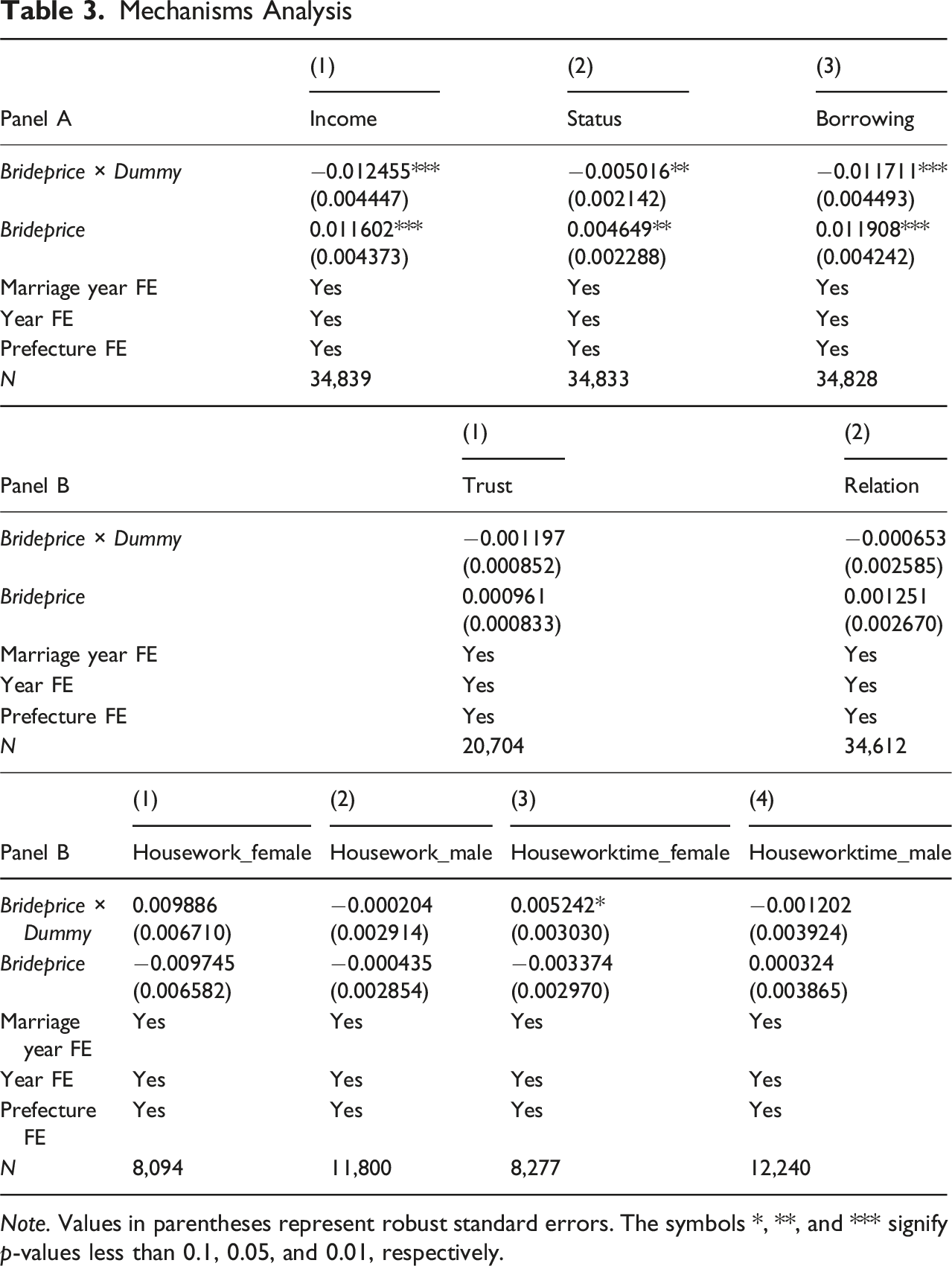
Note. Values in parentheses represent robust standard errors. The symbols *, **, and *** signify p-values less than 0.1, 0.05, and 0.01, respectively.
Taken together, these results indicate that a certain level of bride price can increase individual income, elevate family social status, and improve borrowing relationships. However, when the bride price is relatively high, its increase can have a negative impact on individual income, family status, and borrowing relationships. This evidence confirms the correctness of hypotheses H1a and H1b, suggesting that the channel of the economic conditions of the new family is one of the reasons why bride price affects subjective happiness and displays an inverted U-shaped relationship.
Strengthening Intergenerational Relationships
We evaluated whether bride price affects intergenerational family relations. The regression results presented in Table 3 Panel B columns (1) and (2) reveal that the coefficients of
Marital Compensation and Rights Transfer
We explored the marriage compensation and rights transfer mechanism associated with bride price. Our theoretical analysis suggests that paying a bride price serves as a gesture of respect from the groom’s side to the bride’s, thus acknowledging the bride’s rights. However, a high bride price is often viewed as a “purchase” of women’s rights, encompassing labor, reproduction, and sexuality, which may compel women to relinquish their rights within the marriage. With this in mind, we segregated our sample by gender to examine the marriage compensation and rights transfer mechanism. The empirical findings are shown in Table 3 Panel C columns (1) to (4). The results indicate that the coefficient of
From the above discussion, it is clear that the payment of bride price helps in alleviating women’s domestic burden, thus playing a role in respecting and protecting women’s rights. However, when the value of the bride price is high, it can reinforce the groom’s “monopolization” over the bride’s rights, increasing the intensity of women’s domestic labor, which is detrimental to the subjective happiness of the newlyweds. Therefore, the validity of Hypotheses H3a and H3b of this study is confirmed. This conclusion is in line with the research of Lowes and Nunn (2017) and Lin and Huang (2019). Their studies similarly indicate that a high bride price tends to instill a sense of “repayment” in men, thereby strengthening the groom’s control over the bride’s rights in marriage.
Discussion
The Flow and Source of Bride Price
Building upon the previous analysis and considering the actual situation in China, it’s reasonable to surmise that the source and direction of the bride price might directly affect its impact on subjective happiness. Consequently, we analyze the influence of bride price on subjective happiness under various conditions of its flow and source.
Direction of Bride Price Flow
Although the marriage support theory clarifies the destination of the bride price (ultimately to the offspring) and this has been supported by some empirical evidence in China, the phenomenon of bride price flowing to the bride’s parents still exists. It is reasonable to speculate that the impact of bride price on subjective happiness might vary when it does not support the new family. Due to data limitations, we are unable to precisely determine the proportion of bride price flowing to the bride’s parents or being brought into the new family. Therefore, we attempt to infer the distribution and destination of the bride price based on the family conditions of both parties, as follows.
First, if the bride’s family is economically inferior to the groom’s, it is more likely that the bride’s family retains most of the bride price. On the one hand, economically disadvantaged families of bride usually expect that groom’s families will be able to continue to provide more financial support to the new family. On the other hand, the economically weaker party prefers to exchange family members for wealth (Gui & Yu, 2010). Second, if the bride’s family is economically superior to the groom’s, most of the bride price is likely transferred to the new family. On the one hand, economically advantaged families of the bride are not motivated by economic reasons for marriage. Instead, to ensure their daughter’s standard of living in the new family, they often return the bride price to the new family (Wang, 2010). On the other hand, economically advantaged families of the bride are less likely to demand a high bride price that burdens the groom’s family with debt, affecting post-marriage family harmony (Li, 2020).
Empirical Estimation Results Regarding the Direction of Bride Price Flow
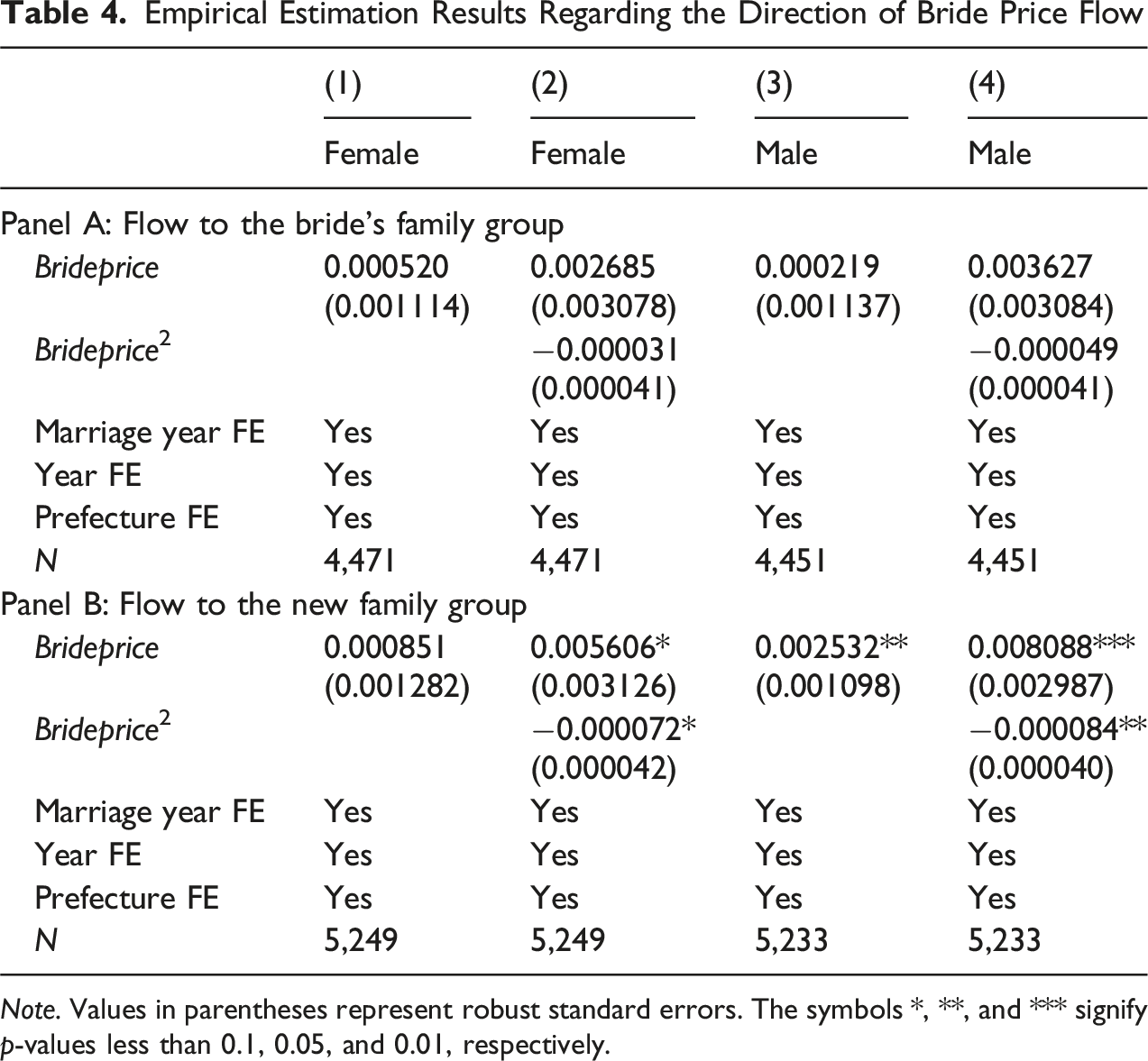
Note. Values in parentheses represent robust standard errors. The symbols *, **, and *** signify p-values less than 0.1, 0.05, and 0.01, respectively.
Source of Bride Price
The theoretical basis of this study is that most bride prices are paid by the older generation, signifying that the bride price constitutes a form of intergenerational transfer payment. It can be anticipated that bride prices originating from different sources may have varying impacts on the subjective happiness of the newlyweds. Specifically, when the economic burden of the bride price is directly borne by the groom himself rather than the groom’s family, meaning the new family must independently shoulder the initial capital, the bride price not only fails to “purchase” subjective happiness but might also suppress it. To validate this conjecture, we defined samples where more than 50% of the bride price value was paid by the parents as cases of parental payment, and the rest as cases of offspring payment. Categorizing samples based on the source of the bride price, we examined its impact on individual subjective happiness.
Empirical Estimation Results Regarding the Source of Bride Price
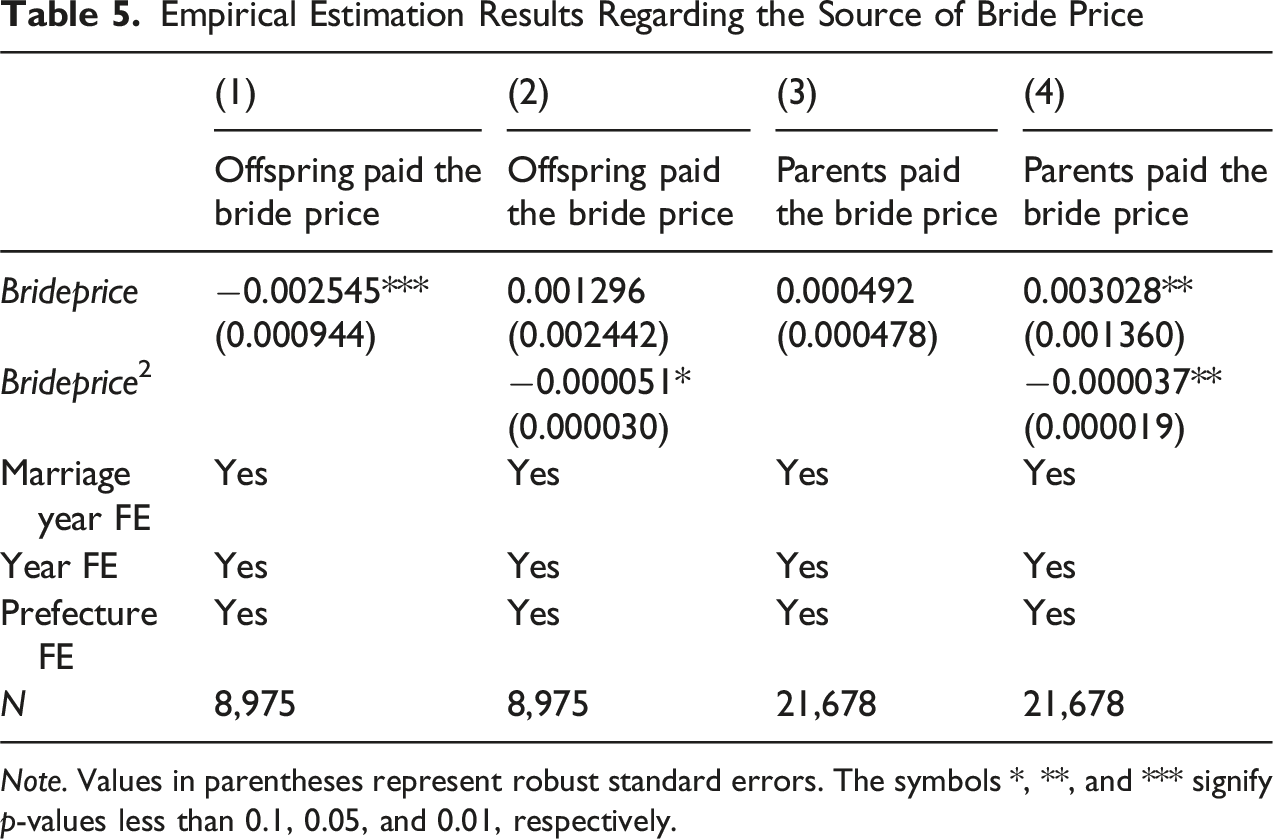
Note. Values in parentheses represent robust standard errors. The symbols *, **, and *** signify p-values less than 0.1, 0.05, and 0.01, respectively.
Heterogeneity Analysis
Considering the differences in gender, education level, economic status, and other aspects among respondents, we further explored the heterogeneous impact of bride price on individual subjective happiness.
Given that our main focus is on individual subjective happiness rather than the subjective happiness of a specific gender, a natural question arises: are there differences in the subjective happiness derived from bride price between male and female? Theoretically, since bride price is typically paid by the groom’s family, it’s possible that the subjective happiness of the bride comes at the cost of the groom’s subjective happiness. That is, a higher bride price might be associated with the groom’s unhappiness but correlated with the bride’s happiness. We first divided the sample by the gender of the respondents and examined the impact of bride price on the subjective happiness of male and female respondents. The results, as shown in Figure 5(a), indicate that in both male and female samples, the relationship between bride price and subjective happiness is inverted U-shaped. The peaks of the inverted U-shaped curves for male and female samples regarding bride price values are similar, and the coefficients of Heterogeneity Analysis.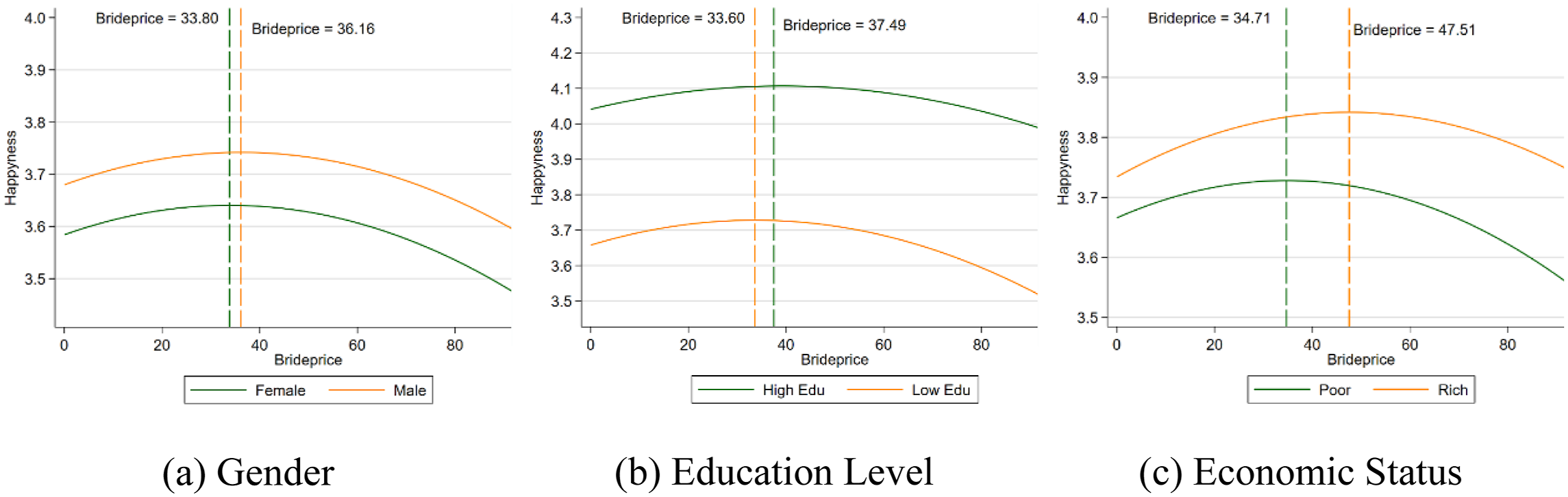
Next, considering the respondents’ differences in education levels, we further divided the entire sample into groups of highly educated and less educated respondents to conduct empirical tests. The estimation results, as shown in Figure 5(b), indicate that both for highly educated and less educated respondents, the relationship between bride price and subjective happiness is inverted U-shaped. The peaks of the inverted U-shaped curves for both highly educated and less educated respondents in terms of bride price values are similar. This result indicates that the relationship between bride price and subjective happiness is not affected by the educational level of the respondents. Additionally, observing the intercept term reveals a significant difference in the level of subjective happiness between samples with lower and higher education levels, underscoring the importance of education in enhancing the quality of life.
Finally, we divided the sample based on the median social status of respondents, creating groups of high and low economic level respondents, to examine the impact of bride price on the subjective happiness of individuals with different economic levels. The results, as depicted in Figure 5(c), show that the relationship between bride price and subjective happiness is inverted U-shaped for both high and low economic level respondents. The peaks of the inverted U-shaped curves for the high and low economic level groups differ by about 130,000 yuan, with the curve being steeper for the low economic level group. The coefficients of
Conclusion and Policy Implications
Research Conclusion
This study investigated the impact of the value of bride price on the subjective happiness of newlyweds. After outlining the current context of bride price customs in China, we proposed, based on relevant theories in economics and sociology, that bride price could affect individual subjective happiness through three theoretical mechanisms: the economic conditions of new families, intergenerational family relationships, and rights compensation and transfer. We empirically tested the impact of bride price value on individual subjective happiness. The study arrived at the following conclusions.
First, the subjective happiness that bride price brings to newlyweds may be the reason for the continuous increase in its value in current China. However, for newlyweds, a higher bride price is not necessarily better. Specifically, we found that the value of the bride price has an inverted U-shaped nonlinear relationship with individual subjective happiness. Within a certain range, an increase in the bride price is beneficial for enhancing the post-marital subjective happiness of the newlyweds. However, when the bride price is high, an increase in its value significantly suppresses individual subjective happiness. Upon examining the distribution of the samples, we discovered that most samples’ bride price values are still on the left side of the inverted U-shaped curve, which implies that, overall, bride price can purchase subjective happiness.
Second, the results of our mechanism examination reveal that providing start-up capital for new families and playing a role in marriage compensation and rights transfer are the main ways in which bride price positive affects individual subjective happiness. Specifically, when the value of the bride price is low, an increase in bride price can provide material support and risk resistance capabilities for the new family. It can also maintain individual rights through conveying respect and recognition, thereby enhancing individual subjective happiness. However, when the bride price is high, an increase in its value can reduce personal subjective happiness by suppressing future income and increasing debt pressure. Additionally, we did not find evidence that bride price can impact intergenerational relationships.
Third, after identifying the sources and destinations of the dowry, we find that the increase in the value of the bride price is conducive to happiness only if it comes mainly from the parents and flows to the new family after the marriage. This implies that the subjective happiness “purchased” by bride price is, in reality, a form of “intergenerational exploitation,” achieved by depleting the savings of the older generation to secure the subjective happiness of the younger generation. Additionally, we found no significant differences in the impact of bride price on subjective happiness across genders and educational levels, but there are significant heterogeneous effects for individuals with different economic conditions. Specifically, for respondents with better economic conditions, bride price can enhance post-marital subjective happiness over a wider range. However, for those with poorer economic levels, paying a bride price exceeding a certain value (about 50,200 USD) significantly suppresses their subjective happiness.
Policy Implications
Based on the findings of this paper, we have the following policy implications.
First, from a policy perspective, adopting a one-size-fits-all approach to completely prohibit or severely limit the amount of bride price is not the “optimal solution.” As a cultural and economic practice, an appropriate level of bride price plays a non-negligible role in enhancing the subjective happiness of newlywed families. Encouraging both parties in a marriage to agree upon a reasonable range of bride price, considering their respective family conditions and local cultural and economic backgrounds, can avoid the negative impacts of bride prices exceeding a certain value while preserving the positive role of the bride price system in promoting the subjective happiness of newlywed families. The government should enhance its efforts in promoting and educating about the rationality of bride prices, guiding the public to form a healthy understanding of marital values and economic practices.
Second, the primary mechanism through which bride price enhances subjective happiness lies in its function as start-up capital for new families. From a policy standpoint, it is advisable to encourage both families to share economic responsibilities and jointly provide financial support for the establishment and development of the new family. Specifically, promoting the concept of equivalence between bride price and dowry can be beneficial. This approach entails maintaining a relative balance in the economic value of the groom’s family’s bride price and the bride’s family’s dowry. Such a practice not only alleviates the issue of excessive unilateral pressure inherent in traditional bride price systems but also aligns more closely with modern societal norms of gender equality and economic rationality. This approach is conducive to fostering harmony and subjective happiness for both parties in the marriage.
Third, it is important to objectively recognize the nature of “intergenerational exploitation” inherent in the practice of bride price. From a policy perspective, On the one hand, young people of marriageable age should be encouraged to take responsibility for their own bride price, reducing dependence on intergenerational asset transfers and sharing the financial burden with their parents. On the other hand, government agencies should pay attention to the economic conditions of the parents of the newlyweds and provide support measures to prevent phenomena like “poverty due to marriage” or “returning to poverty due to marriage.” The research in this paper points out that while the younger generation may enjoy the subjective happiness brought by start-up capital like the bride price, it comes at the “expense” of their parents’ financial security. Surveys have shown that the bride price at the time of a child’s marriage can equate to approximately 5–8 years of savings for the parents’ household. This situation of “one side willing to give, the other willing to receive” not only significantly depletes the economic resources of the parents but may also pose a threat to their quality of life and health status (Tan et al., 2021).
Fourth, it is advisable to encourage the bride’s side to return a major portion of the bride price to the new family, supporting its establishment and development, alleviating potential family conflicts arising from the bride price, and promoting long-term harmony and stability for both parties in the marriage and their families. The research in this paper indicates that subjective happiness for the newlyweds is improved only when the bride price flows to the new family. If the bride price paid by the groom remains with the bride’s parental family, it does not bring beneficial improvements. Additionally, keeping the bride price within the bride’s parental family might also tend to create a “repayment” mentality among grooms, potentially leading to psychological stress and imbalance in the marriage.
Supplemental Material
Supplemental Material - Can Bride Price “Purchase” Happiness? Evidence From China
Supplemental Material for Can Bride Price “Purchase” Happiness? Evidence From China by Qiyangfan Feng, Ziyue Zhang, and Yiwen Shangguan in Journal of Family Issues
Footnotes

Funding
Qiyangfan Feng thanks financial support from Taishan Scholars Project Special Funds (Grant no: tsqnz20250725). Ziyue Zhang thanks financial support from Shandong Provincial Natural Science Foundation (Grant no: ZR2025QC1219).
Declaration of Conflicting Interests
The authors declared no potential conflicts of interest with respect to the research, authorship, and/or publication of this article.
Data Availability Statement
The data that support the findings of this study are available from the corresponding author upon reasonable request.
Supplemental Material
Supplemental material for this article is available online.
Notes
References
Supplementary Material
Please find the following supplemental material available below.
For Open Access articles published under a Creative Commons License, all supplemental material carries the same license as the article it is associated with.
For non-Open Access articles published, all supplemental material carries a non-exclusive license, and permission requests for re-use of supplemental material or any part of supplemental material shall be sent directly to the copyright owner as specified in the copyright notice associated with the article.
