







Abstract
As diverse family structures are increasingly prominent, the purpose of this study was to introduce the Coparenting Alliance Model (CAM) as a family framework. This qualitative research explored the lived experiences of five gay and lesbian individuals, coparenting children with a non-romantic partner, either homosexual or heterosexual. The aim was to gain insights into the interpersonal dynamics, logistical organization, challenges, and necessary skills involved in creating a cohesive unit focused on the well-being of the children. Using Interpretative Phenomenological Analysis (IPA), the analyzed data uncovered themes clustered around three distinct phases in participants’ path to coparenting: the initial desire for children and negotiation of family form; the structuring of the coparenting alliance; and the ongoing management of daily life. The research implications can be of significance for understanding and improving the dynamics of non-romantic parents raising children together.
Introduction
Family structures have diversified over recent decades, resulting in a variety of family profiles (Amato et al., 2007; Segal-Engelchin et al., 2005; Wasserman, 2020). In Western societies, divorce and remarriage rates have also altered family compositions, with nuclear families representing less than 18% of American households by 2021 (U.S. Census Bureau, 2021). Despite this diversification, the two-biological-parent household often remained the implicit benchmark for child-rearing success (Amato, 2005; Murry & Lippold, 2018), overlooking alternative structures that may offer equally supportive environments for children. Alongside these shifts, the increased sociopolitical acceptance of same-sex couples has encouraged LGBTQ+ individuals to pursue parenthood, creating intentional family constellations through donor insemination, surrogacy, or adoption (Biblarz & Savci, 2010; Moore & Stambolis-Ruhstorfer, 2013).
In line with current sociopolitical developments, the current qualitative study introduces the Coparenting Alliance Model (CAM), a new family structure focused on non-romantic partnerships between LGBTQ+ individuals and allies, specifically formed for the purpose of shared parenting. This research provides both a theoretical framework and empirical evidence to support the introduction and application of this specific model within the broader context of existing coparenting models. This work brings attention to an emerging family model that is attempted to be coined in the current study. It aims to enhance one’s understanding of the dynamics between parents who identify as LGBTQ+ and who share the responsibility of raising a child, regardless of their romantic involvement or co-residential status. By examining the unique elements and benefits of the CAM, the study seeks to offer valuable insights into how effective coparenting can be achieved and maintained, ultimately contributing to the overall well-being of children and their families.
Coparenting Configurations
Coparenting refers to the relationship between parents in the parental role capacity that occurs when adults have overlapping or shared responsibility for child-rearing (Eira Nunes et al., 2021; Feinberg, 2003). Coparenting encompasses romantic, sexual, companionate, emotional, financial, and legal facets of the parents’ relationship that only relate to child-rearing (Feinberg, 2003). In the available literature, various coparenting models have been proposed and examined as presented below.
Traditional Coparenting
Traditional coparenting often involves separated or divorced parents sharing custody, focusing on best practices for cooperative parenting (Goldberg & Carlson, 2015). To explore this model further—which often serves as the implicit benchmark—readers are encouraged to consult previous research by Van Egeren and Hawkins (2004) and Campbell (2022).
Platonic Coparenting
Platonic coparenting involves raising a child with someone without romantic involvement and often without cohabitation (Linton, 2020). Also referred to as elective coparenting, platonic coparenting is becoming increasingly prevalent among single individuals identifying as cishet (cisgender and heterosexual) (Bower-Brown et al., 2023; Golombok, 2015).
The Hetero-Gay Family
Segal-Engelchin et al. (2005) introduced the hetero-gay family configuration, in which a gay father and a heterosexual mother agree to conceive and raise children together while living separately. Their study examined why gay men and single heterosexual women choose this arrangement. Specifically, for women in their mid to late thirties, limited options for starting a family while valuing the biparental model led them to viewing marriage and motherhood separately; while for men, challenges in adoption and lack of a partner who shared their desire for children made coparenting appealing, allowing them to balance their personal lifestyles with parenthood (Segal-Engelchin et al., 2005).
Erera and Segal-Engelchin (2014) further explored the hetero-gay family model and found that gay fathers tended to recreate the dynamics of traditional families while defying heteronormativity. They challenged the single-dad, the emotionally distant father, and the masculine man-of-the-house stereotypes: they are simply “creating a new understanding of what it means to be a gay man” (p. 450) in general, and a gay father specifically (Erera & Segal-Engelchin, 2014). As liberated gay men, they choose to become nurturing fathers, unaffected by social expectations of a father’s role, freely engaging in degendered parenting (Berkowitz, 2011). The hetero-gay family model fulfills the desires of both partners, aligning with their values.
The Current Study: The Coparenting Alliance Model (CAM)
The CAM is a contemporary form of inclusive coparenting within the LGBTQ+ community. The term is coined in the current research as a new designation for a subcategory of coparenting family models, stemming from a similar shared desire to start a family and entailing a commitment to finding a custom structure evolving around the children. The model centers on non-romantic and non-intimate partnerships between members of LGBTQ+ communities and allies who may identify as heterosexual or non-heterosexual. The CAM differs from the hetero-gay model researched by Segal-Engelchin et al. (2005) in that it explores a broader spectrum of coparenting alliances beyond the specific dynamic of a gay father and a heterosexual mother living separately. This inclusive approach allows for a more holistic understanding of modern coparenting arrangements, highlighting the flexibility and adaptability of family models in contemporary society. The CAM could involve heterosexual or gay men with lesbian women or lesbian couples, heterosexual women with gay men or gay couples, as well as gay couples with lesbian women or lesbian couples, which would entail having a household comprised of up to four parental figures (Figure 1). To the authors’ knowledge and based on the available published literature, the CAM designation has not been employed in this context before and is now proposed to encompass eight sub-configurations. Family sub-configurations within the CAM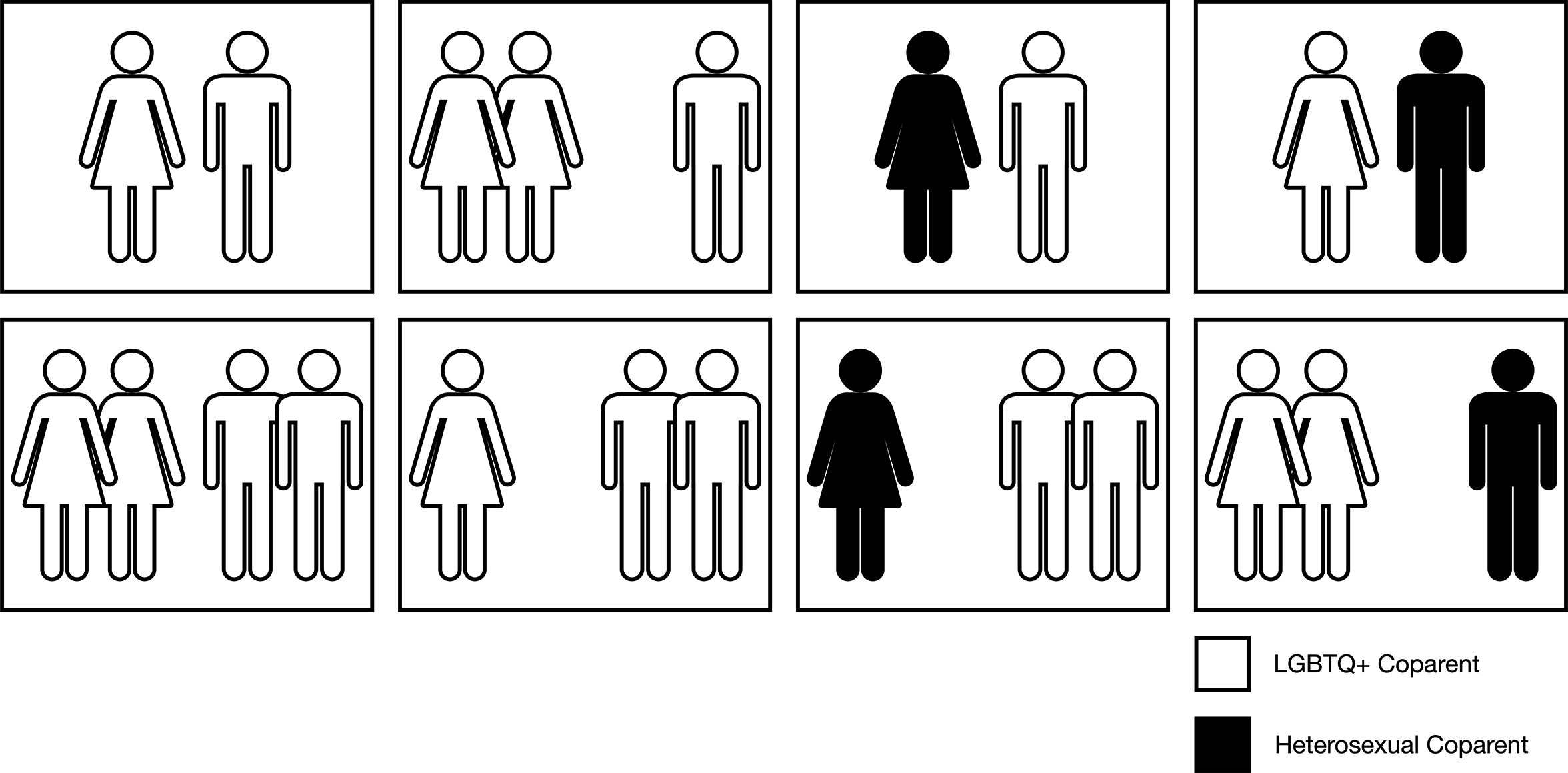
Establishing a coparenting alliance typically aligns with prevailing public policies, unlike same-sex households that often require new legal frameworks for marriage and parenthood rights (Segal-Engelchin et al., 2005). These families tend to blend easily into society, resembling amicably divorced households, which pragmatically reduces stigma and discrimination. The CAM is founded on strong mutual understanding and shared parenting goals, deliberately excluding romantic or intimate involvement to prevent transitional challenges. Notably, the CAM demonstrates greater inclusivity than hetero-gay family models, while intentionally excluding platonic coparenting arrangements between heterosexual men and women, where intimacy might eventually emerge and complicate the alliance. In the available literature, the CAM sub-configurations along with family dynamics and coparenting strategies have yet to be examined. This qualitative research aimed to capture the lived experiences of individuals in a CAM configuration to understand how the model operates, and identify the challenges faced along with the coping skills required.
Method
Process and Participants
The research received ethical approval from the Institution’s Review Board (IRB protocol #202212332). An Information Sheet was distributed through colleagues, contacts, mental health networks, and online forums specializing in coparenting, including PrideAngel.com. The selection criteria sought adults in coparenting alliances currently raising children in eight specific configurations involving heterosexual or gay men with lesbian women or lesbian couples, heterosexual women with gay men or gay couples, and gay couples with lesbian women or lesbian couples (Figure 1). Participants needed to understand and articulate in English or French, be willing to share their experiences, and have maintained the same family structure since their children’s birth. Those who transitioned into the model or changed their gender identity or sexual orientation after their children were born were excluded to maintain a clear analytical focus on the structural and functional aspects of the alliance. A key criterion was that the coparenting bond began and ended with the child, ensuring a stable benchmark for comparison, and allowing us to assess the model’s characteristics without the added complexity of additional variables affecting the experience. Same-sex couples raising children independently were also excluded in order to meet the CAM model parameters. Our research only interviewed the gay and lesbian coparents within a CAM.
Research Participants
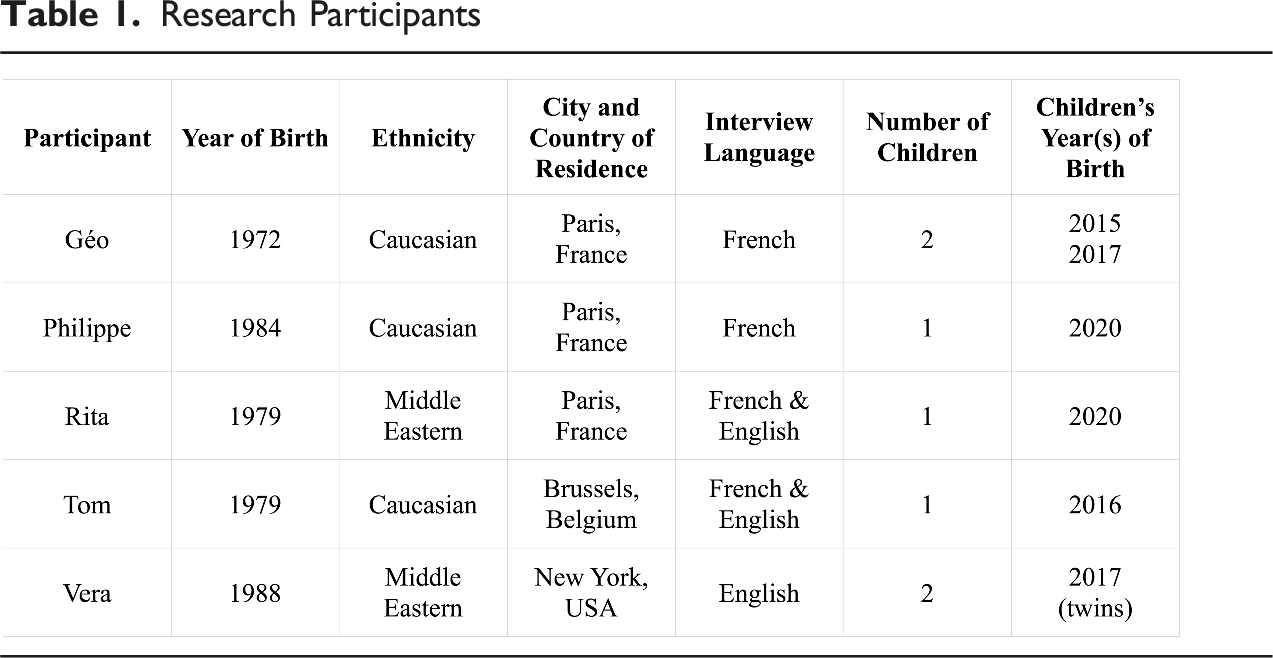
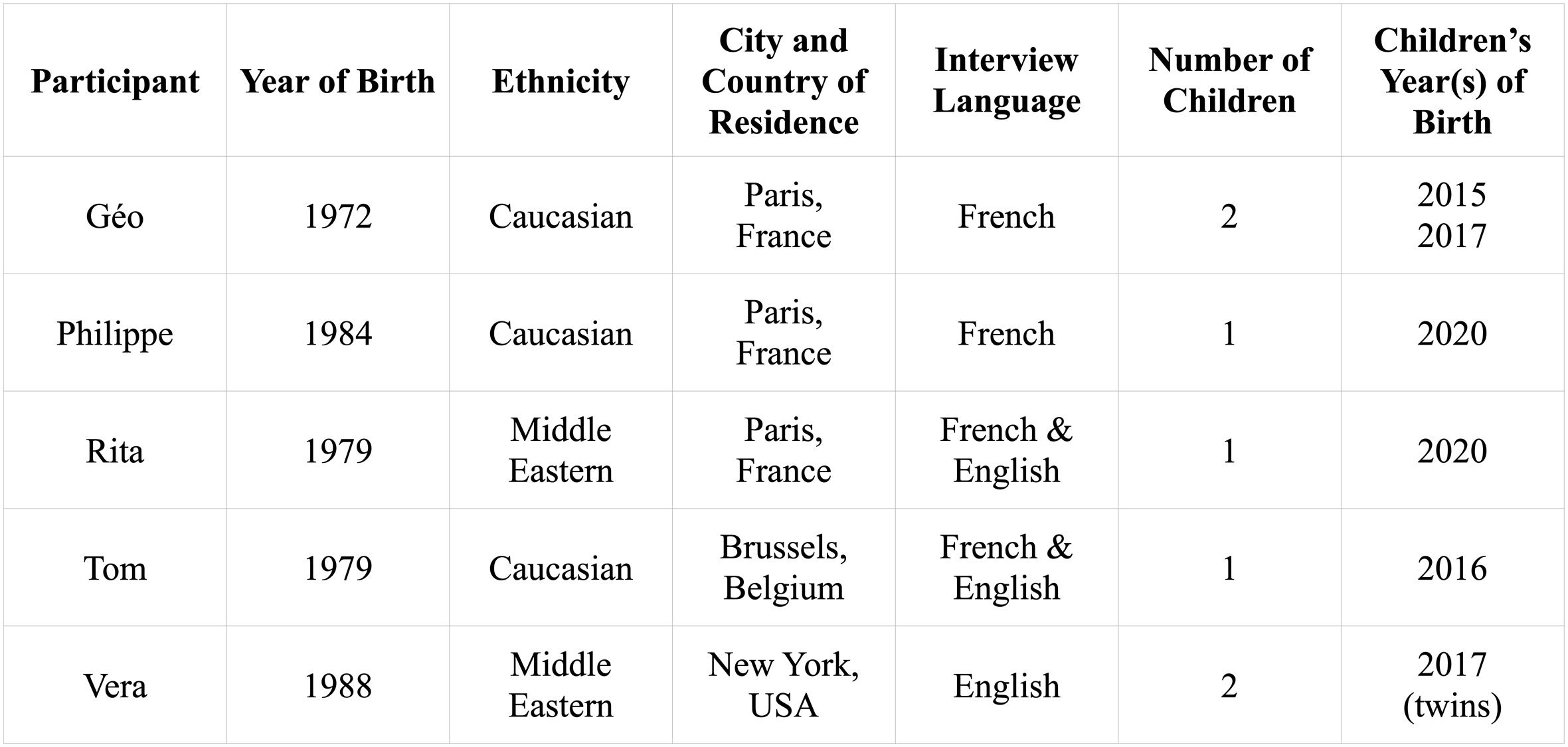
Even though this paper explored the components of successful coparenting among non-romantic partners to provide an optimal environment for raising children, no minors were interviewed. Given the limited LGBTQ+ rights in many countries, the research respected personal choices and ensured no discrimination against any participant.
Interview Guide
The interview guide was comprised of thirteen open-ended questions (Supplement B), meticulously selected from extensive lists in analogous studies on coparenting (e.g., Erera & Segal-Engelchin, 2014; Jadva et al., 2015; Segal-Engelchin et al., 2012). Given the novelty of the topic, questions aimed to provide a comprehensive understanding of the chosen family structure, enabling participants to articulate their narratives from inception in their own words. The expansive, open-ended, and non-leading questions facilitated discussion and theme exploration, beginning with ice-breaking queries like, “How are you doing? How are the kids?” Participants were then invited to draw a family diagram (Supplement A) to help understand who the members of the family are and how they refer to one another. Following a semi-structured interview format recommended for IPA methodology (Smith & Osborn, 2008), the questions explored participants’ desire for parenthood, their route to coparenting, and their criteria for selecting coparents. Additionally, the questions delved into parents’ relationships with their children, romantic partners, and coparents, the distribution of tasks and responsibilities, challenges faced, perspectives on the model, and broader societal experiences. The non-directive approach focused on participants’ lived experiences with coparenting and the overall quality of that experience (Pietkiewicz & Smith, 2014), allowing them to express feelings and share honest, spontaneous, and heartfelt testimonials.
Analysis
Interpretative Phenomenological Analysis (IPA) methodology seems beneficial in generating comprehensive insights in the absence of an extensive literature review (O’Mullan et al., 2019) on coparenting alliances. Given the exploratory nature of the research, IPA allows for an in-depth capturing and understanding of individuals’ lived experiences, allowing researchers to understand coparenting alliances from the participants’ unique perspectives (Smith & Osborn, 2008). Additionally, IPA’s flexibility and adaptability make it suitable for studying emerging areas, enabling researchers to remain open to diverse perspectives and unexpected findings.
Per Smith and Osborn (2008) guidelines, all interviews were audio-recorded and transcribed verbatim, capturing every spoken word, silence, pause, laughter, and significant hesitation, as recommended for IPA. Each interview lasted approximately 60 min. Following IPA methodology, the main author and interviewer produced personal notes after each interview. French interviews were translated, but the analysis was conducted in both languages to ensure the intended meaning was properly conveyed. The research used traditional paper-and-pencil methods, with standard office tools like Word and Excel. Transcript lines were numbered for ease of reference.
After repeatedly reading and analyzing the transcripts, significant information and insights on coparenting dynamics were highlighted. Descriptive labels, which evolved into standard keywords, were assigned to these phrases. Keywords were consistently applied across all transcripts, with multiple keywords assigned to a single sentence if necessary. A table was created with columns for selected phrases, assigned keywords, participant identification, and corresponding line numbers. Similar keywords were grouped to identify themes, ensuring that the context and meaning of each phrase were preserved. By sorting the data by keywords and themes, patterns and similarities were identified, leading to the formation of broader categories. Yardley’s (2000) characteristics of good qualitative research were used to ensure quality. Finally, Figure 2 summarizes all recurrent themes, clustered into their respective domains. The results, along with selected transcript extracts, are presented below, followed by a discussion. Constituent themes, grouped into domains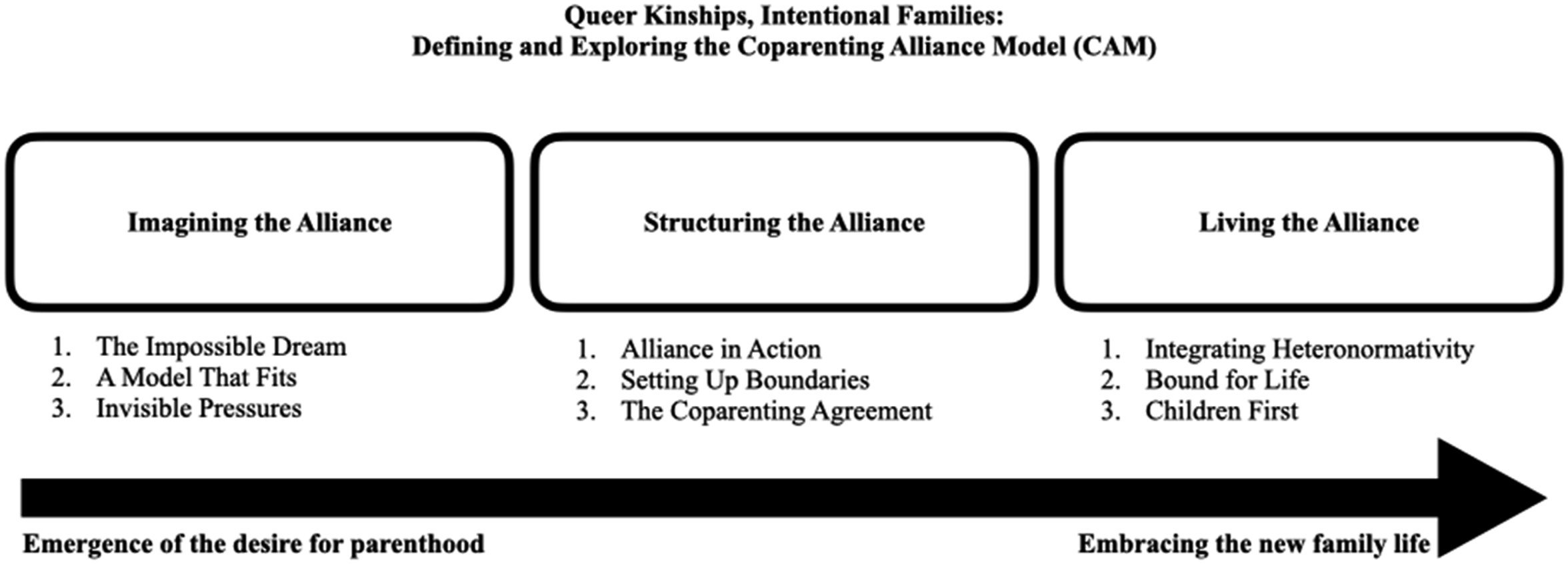
Personal Reflection
The first author and interviewer is a father of 6-year-old twins within a CAM. He hereby acknowledges the potential influence of personal opinions and experiences on the research. To build trust with participants, the first author revealed his own family status. The credibility of the research was ensured by strictly adhering to IPA methodology, which includes rigorous processes for data collection, analysis, and interpretation, maintaining objectivity and scientific rigor throughout the study. Additionally, we implemented measures to enhance trustworthiness, such as triangulation, in which peer debriefing and collaborative discussions among the research team were conducted to validate interpretations and ensure consistency. Authors also engaged in reflexive journaling throughout the study to remain mindful of personal biases and assumptions, thereby minimizing their influence on the research process. None of the authors wish to change people’s minds about modern families and no intention exists to persuade anyone regarding the validity of the CAM.
Results
The analyzed data revealed a concentration of themes that orbited around three successive phases of the CAM: imagining, structuring, and living the alliance. The first theme revolved around the realization that parenthood is an achievable option for people who once believed it was beyond their reach. This phase encompassed the initial excitement, dreams, and aspirations associated with the newfound possibility of becoming parents. The second theme delved into the intricate process of becoming parents. This process included navigating the complexities of coparenting dynamics, establishing roles, and adapting to the practical and emotional demands of raising a child together. Finally, the third theme addressed the long-term settlement into the parental role. It highlighted how individuals and couples adjusted to their permanent identities as parents, integrating parenthood into their everyday lives, and finding a balance between their new responsibilities and their pre-existing routines and relationships. Constituent themes and grouped domains are portrayed in Figure 2, noting that all five participants have almost equally contributed to every domain.
Imagining the Alliance
The emotional and societal complexity involved in LGBTQ+ individuals’ paths to parenthood was underscored in this domain, especially given participants’ reported formative years under homophobic and discriminative societal norms. In contrast to earlier studies that may have focused more on barriers, this domain highlighted a paradigm shift in which societal acceptance facilitated the pursuit of parenthood, albeit with lingering effects of past stigmatization. Eventually, participants transformed their past adversities into resilience, coming to terms with a profound desire for parenthood and recognizing the new possibilities available to them within a model that accommodates their needs and aspirations.
Subtheme 1: The Impossible Dream
Retrospectively, some participants recalled a dislike of children, which was later in their lives attributed to the perceived interdiction of starting a family. Others witnessed their desire for parenthood manifesting organically, as an innate yearning for a gratifying human existence. In both instances, it was assumed that children represented the forbidden fruit of LGBTQ+ experiences; the price to pay for adhering to a queer lifestyle. I never thought about having my own family. I never thought it was an option. A terrible feeling of poverty began to appear in me. The word, the word I… that I felt was a poverty in me, poverty of not transmitting, poverty of not having children.
Subtheme 2: A Model That Fits
For all participants, the CAM was not simply an alternative to traditional family structures—it was the only viable path that fully honored both their desire for parenthood and their lived realities. Some participants had researched or heard about coparenting alliances between queer and heterosexual individuals, while for others, the idea emerged intuitively as a convenient configuration. Once coparenting was recognized as the chosen path to family formation, participants began actively seeking a suitable ally among single and coupled friends, leveraging online platforms designed for this purpose, or engaging with specialized centers that facilitate coparenting connections. The process of forming these alliances was often marked by practical challenges, including legal frameworks, financial constraints tied to assisted reproduction, geographic proximity, and cultural considerations. Yet, participants consistently described the CAM as offering not only logistical flexibility, but personal liberation. By consciously separating romantic relationships from the parenting project, they were able to structure arrangements that accommodated both shared responsibilities and individual autonomy. Many viewed this model as more sustainable—and even more fulfilling—than normative family patterns, especially those that had historically excluded them. The CAM thus emerged as a framework rooted in both pragmatism and profound self-alignment. I consider myself very privileged. (…) the situation that was presented to me, the situation in which I could… I chose to have my son, is a very rare and privileged situation and uhm… I am very aware of that, like I… it’s just… I didn’t look for it, it just happened. It probably happened the best possible conditions. The good thing about coparenting, in my case, was not to be all the time with the other parent.
Subtheme 3: Invisible Pressures
Participants frequently hinted at feelings of self-doubt and societal mistrust while coming of age, in addition to decision-making regarding parenthood influenced by the weight of homophobia. This recurring theme suggested that, for LGBTQ+ individuals, external pressures may have played a crucial role in shaping their coparenting choices. This subtheme may suggest that, for some individuals who choose the CAM, the decision is partly shaped by a desire to align with more socially recognizable, and at times heteronormative, family structures. Someone can go get drunk and like knocked up, that’s fine. But when we are intentional about having a family, there’s all these layers that are added as burdens. Nobody has… never made fun of me being gay. So I, I’m very lucky in that department. And… even though… I experienced all that, I still have these pre molded ideas that sometimes make me uncertain about stuff, you know.
Structuring the Alliance
This domain captured the evolution from planning to practicing coparenting dynamics, with coparents envisioning their forthcoming family and working on their modus operandi. All participants opted for biological parenthood with their coparent through IVF, explicitly excluding sexual contact. After the birth, practical realities set in. Earlier studies often addressed coparenting as a theoretical or aspirational framework, while here, we observed the intricate balancing act required post-birth. Participants faced real-world adjustments that demanded patience, compromise, and emotional investments, which previous models may have only partially accounted for. These adjustments involved addressing logistical challenges, tending to the child’s well-being, maintaining clarity in communication, fostering tolerance and flexibility, and recognizing that the CAM necessitates a substantial emotional commitment.
Subtheme 1: Alliance in Action
Participants described a strong, ongoing commitment to the coparenting alliance—one that often required a reorientation of priorities away from external engagements and relationships, and toward the emerging family unit. This allegiance was expressed not only through consistent involvement and flexibility, but also through deliberate emotional investment and practical dedication to the coparent and the child. Sustaining this alliance depended on open, transparent, and often strategic communication. In the absence of romantic intimacy or conventional bonding rituals, coparents relied on clearly negotiated tools and routines—such as the “10-s breathing rule” —to manage disagreements, synchronize schedules, and maintain emotional clarity. These practices served as a relational glue, enabling the alliance to withstand everyday pressures and remain focused on the shared parenting mission. We definitely have rotation schedules, just because it’s almost impossible to have a life if we don’t have a schedule. And so, we have monthly schedules… (…) And we’re flexible about it. Like if something comes up, we can talk about it and adjust. Flexibility, flexibility. (…) we always try to make the other one’s life kind of easy.
Subtheme 2: Setting Up Boundaries
A defining feature of the CAM, consistently emphasized across participants’ experiences, is the establishment of clear boundaries that shape the coparenting dynamic. First, an intimacy boundary is firmly in place—as aforementioned, coparents do not engage in sexual relationships, and all participants’ children were conceived through IVF, reinforcing the model’s emphasis on biological ties and gestational roles while maintaining a non-romantic partnership. Beyond intimacy, a personal boundary ensured that each coparent retained full autonomy over their personal time and private life. Unlike more traditional parenting models that often intertwine romantic and family commitments, this structure seems to allow coparents to maintain individual lifestyles without obligations beyond their shared parenting responsibilities. Finally, a relational boundary defined the nature of their connection: the child is the sole binding factor. Participants described their relationship as structured partnership grounded in mutual respect, trust, and a shared commitment to raising their child. In some cases, even previous friendships were dissolved when they no longer aligned with the needs or boundaries of the CAM. This distinction underscored how the CAM enabled individuals to engage in parenting without the additional relational expectations typically associated with family life. Between us, well between us, we are not too... we are not very tactile anyway Rita, me, Amira, we are not very tactile. She’s the mother of my son before everything else. Before being my friend, before whatever. She’s my son’s mother. So yes, that person, that mother of my child is, I’m very protective of, more so than… of Louise basically. Interviewer: “What happened to your friend Louise?” Tom: “Oh! I guess she died in labor (laughing).”
Subtheme 3: The Coparenting Agreement
Our participants promptly engaged in discussions about their family vision with their potential allies once the CAM became a tangible possibility. Their ideas formed a custom preliminary agreement, which was then notarized according to laws in vigor in their respective countries. Financial arrangements were also addressed, as monetary matters were feared to be a point of divergence. For practicality purposes, participants rendered these agreements as comprehensive and precise as possible, while bearing in mind that terms could be modified over time, subject to the approval of the coparents. Notably, all of these arrangements were undertaken prior the birth of the child. We talked a lot before making the child. There were things that were prohibitive, that is to say that we, from the beginning, you know? We had nothing to lose, so we went up to “Do we circumcise or not?” you know? All the way to those questions. (…) The father said “Listen, it would be nice to have a regularity with him. I don’t want him to live with me, but, you know? Maybe one night a week to create a regularity in addition to every other weekend.” So, there you have it, we adopted all these things, but it was a two-year discussion, you know? I knew that there were charters, and I mixed a French charter, I think it was on the APGL website, Parents Gays et Lesbiens (FR: Gay and Lesbian Parents) which is very legal. And I found an American charter, I don’t know how, more legal, but also more… the values, why did you choose each other? What is important to you? A little bit more coaching, it seemed. (…)And we mixed the two, and very quickly we met once a week to fill out the charter.
Living the Alliance
This domain highlighted a distinctively personalized approach to parenting, in which participants created hybrid family structures that blended tradition with innovation. While previous research may view such choices as assimilative, in participant narratives, we interpreted a more nuanced intent: rather than merely conforming, these parents creatively reshaped family norms to reflect their unique values and needs. Becoming a parent represented a profound transformation and the fulfillment of a seemingly impossible dream, along with the formation of a collaborative coparenting framework. Despite this achievement, challenges persisted as new family practices evolved.
Reflecting on their initial fantasy of family dynamics, male participants disclosed envisioning a nurturing motherly presence for their children, while female participants expressed the desire to introduce a father figure. Whether influenced by pragmatism or a subconscious connection to traditional roles, some participants chose to revive beloved family customs, while others forged new traditions, such as celebrating “double Christmases” or establishing unique “tribe holidays.” This flexibility in family formation reflected a dynamic blend of honoring the past while innovating for the present.
Subtheme 1: Integrating Heteronormativity
Unlike same-sex couples, who might raise eyebrows and face more stigma, coparents in this arrangement blended into society more seamlessly and had no need to justify their relationship. They shared a harmonious relationship, much like divorced couples who maintain friendly relations, often planning extensive family gatherings and joint holiday celebrations. Additionally, they strategically navigated social perceptions, choosing when to disclose their arrangement or allowing society to assume a more conventional family dynamic to their advantage. I’m invisible. I mean, I come out whenever I want. Like… because for people, we are divorced parents. So, sometimes we feel the need to tell about our situation, because we feel more comfortable, because we get more intimate with people. (…) but otherwise it doesn’t come across (laughing). And there is no way for people to… to understand the situation. What I wanted was to be able to tell my son a story. And this story, I am perfectly capable of telling it because it is a very simple and natural story… It’s a real story, it’s a real encounter. This is a weekend when he’s normally with Philippe and Joseph, they offered us to come with them to Morocco, you know? There’s also this side, but it wasn’t like that at the beginning. At the beginning it was much more like a real divorced couple, you know?
Subtheme 2: Bound for Life
Surprisingly, most participants only realized the extent of their bond to their coparenting allies after leaving the maternity ward. What had started as a custodial arrangement was quickly assimilated as the parenting of children through health, education, discipline, play, bonding, and the expression of love. In essence, this signified a profound, long-term dedication to the coparenting “journey”. Like, I have no doubt in my mind, even though he can annoy me so much, is that he’s more my family than my own biological family. If I die, for instance, she will be the one who will empty my house.
Subtheme 3: Children First
The CAM is based on a parenthood initiative. Consequently, the golden rule is that children always come first. Whether coparents became embroiled in a disagreement or struggled to allocate time for personal or professional pursuits, they ensured that the children’s well-being remained the focal point of any decision-making process. First, the babies. First, the kids. Our first interest is always Roman and if that means that we hurt each other that’s… that’s not a priority.
Discussion
This study provides a nuanced portrayal of coparenting alliances among LGBTQ+ individuals. In specific, it presents a model that continues to emerge at the intersection of resilience, intentionality, and relational innovation. Participants’ narratives underscored the psychological and emotional labor required to move from exclusion to authorship—transforming a historically inaccessible dream into a lived reality. What was once a “forbidden fruit” of queer experience has become, for many, a carefully constructed and proudly claimed family model. The CAM, as explored here, was not only a matter of personal preference but often a response to structural exclusion—from legal frameworks to assisted reproduction systems and social stigmatization. Rather than wait for full societal inclusion, participants engineered their own paths to parenthood, sometimes working around limitations and other times using those very constraints to reimagine family life on their own terms. The CAM, thus, emerges as a hybrid form of kinship—part strategic workaround, part ethical commitment, and part emotional reconstruction.
Participants’ motivations were complex and deeply human. Some were single, others in relationships, yet all shared a desire for parenthood that had long been overshadowed by normative scripts. This study revealed a psychological shift: once the desire for a child was consciously owned, participants projected a family vision through an alliance rather than a romantic twosome, often decoupling emotional intimacy from parenting commitment. In doing so, they created families not founded on romantic love but on clarity, trust, and shared values. As Geo put it, they “separate love life and family life”. Yet these families were far from being emotionally detached. On the contrary, participants displayed an acute awareness of the emotional architecture needed to sustain the alliance: open communication, negotiation, emotional regulation, and shared practices. In the absence of romantic rituals, tools like conflict-resolution strategies or scheduled family rituals cemented the alliance. These were not superficial; they reflected intentional, emotionally intelligent caregiving. Their success was grounded as much in compatibility as in the psychological maturity and reflexivity of the coparents.
The boundaries set within CAMs—legal, emotional, and practical—were not restrictive, but vital frameworks for autonomy and trust. The coparenting agreements were central to this: they functioned less as rigid contracts and more as evolving roadmaps, articulating expectations around custody, education, finances, and crisis response. Coparents are not shielded from conflicts, which can arise despite the best intentions and necessitate ongoing dialogue and negotiation. However, the study also revealed a widespread underestimation of the legal weight (or limits) of such agreements in their respective countries, highlighting the importance of greater awareness of existing national legislation in order to navigate coparenting arrangements effectively.
At the core of every alliance was a deep commitment to the well-being of the child. Whether cohabiting or living separately, all participants prioritized the child’s needs in decision-making, communication, and personal sacrifices. The CAM allowed participants to maintain individual autonomy while building a stable and loving environment, often reported as more functional and fulfilling than traditional family structures from which they had once felt excluded. Participants seem to have integrated gendered roles and societal expectations. Male participants initially envisioned motherly figures for their children; while female participants consciously introduced father figures to their family constellation. These gestures may reflect internalized norms or pragmatic concerns about how families are perceived. Nonetheless, the narratives indicated that traditional roles were not passively adopted but selectively engaged with, revised, or replaced. As Rita later reflected, her initial belief that children “needed” a father was reconsidered, and she now sees two mothers as fully capable coparents.
The CAM offered participants a subtle way of navigating societal expectations. Unlike visibly same-sex couples, coparents often blended in, perceived as amicable ex-partners or even nuclear families. This “social camouflage” provided some protection from microaggressions, but it also raised questions about the emotional cost of remaining unseen. Participants described being “invisible” or choosing “when to come out” about their family structure—a constant negotiation between self-affirmation and social legibility.
The success of the CAM, as this study suggests, rests on a delicate balance of intentional structure and emotional flexibility. Participants reported satisfaction not only in fulfilling their dream of parenthood but also in building an arrangement that respected their boundaries, aspirations, and complex histories. In a few cases, such as Vera and Rita, life circumstances like financial realities or evolving beliefs about parenthood prompted adaptations to the model—whether through cohabitation with their ally (while maintaining boundaries) or a shift from an initial queer couple to a coparenting triad. These nuances point to the CAM’s elasticity and its potential to accommodate personal evolution over time.
What distinguishes the lived experiences of our participants is not the absence of difficulty, but the presence of deliberate, reflective, and emotionally acute partnership. Participants did not escape conflict or doubt; rather, they engaged them with a shared sense of purpose. In doing so, they forged a path that resonates with the findings of Amato (2005), Feinberg (2003), and Halford et al. (2018): that parenting quality and emotional coherence matter far more than structure alone. Our findings build upon Herbrand (2018) and Goldberg & Carlson (2015), suggesting that coparenting alliances rooted in intention, compatibility, and care can form a stable basis for modern family life. They also echo McDermott et al. (2008), whose work on internalized stigma remains pertinent. Despite progress, LGBTQ+ individuals continue to carry the weight of past exclusions. Some participants acknowledged that their alignment with heteronormative patterns—biological reproduction, gender complementarity, family narratives—may unconsciously seek social acceptance. But these patterns were not adopted wholesale. Instead, they were reassembled, sometimes challenged, and often instilled with new meaning.
Ultimately, the CAM can be more than a parenting strategy—it can be a testament to relational innovation. This study contributes to the understanding of modern kinship by mapping how LGBTQ+ individuals and their allies build, maintain, and emotionally invest in non-romantic, coparenting relationships. Our participants did not seek to imitate traditional families but seemed to expand the language of what family can be.
Limitations and Future Directions
Coparenting alliances challenge traditional notions and have the potential to provide children with a nurturing environment of love, stability, and belonging. Beyond convenience, compatibility, and teamwork, there is an unexplored aspect of the equation: the search for a mother or a father among candidates for coparenting models. While never truly addressed, this concept presents a fascinating scope for further exploration. Furthermore, our research investigated the coparenting alliance from the perspective of gay and lesbian coparents. To provide a more comprehensive understanding, future studies can include a wider range of LGBTQ+ orientations and cishet partners.
The study sample size, although sufficient for an IPA, was relatively small and may not fully represent the diversity within coparenting alliances. It is crucial to emphasize that the research participants resided in Western world cities where their family arrangements were legally recognized and socially accepted. Future studies could aim to expand sample size and for greater inclusivity in terms of both participants’ origins and their cities of residence to capture a broader spectrum of experiences and ensure more representative findings. Employing a mixed-method approach, combining quantitative measures with qualitative interviews, can provide a comprehensive understanding of coparenting dynamics and outcomes.
As societal attitudes and legal contexts evolve, the relevance of the current findings may shift. This study represented only the first step of an ongoing exploration. Thus far, interviewed families had schooled children of similar ages, providing with a snapshot of the family experiences at this stage. The CAM was referred to by participants as a “journey”, a “story”, an “adventure”, or even a “crazy adventure”. These terms hint at the transformational dimension of the CAM which plays a significant role in how participants perceived and narrated their experience. Yet, the future remains uncertain. As time progresses, and dynamics evolve the following questions arise: How will these alliances evolve as children grow, gain independence, and eventually move away? What will become of the relationships that were initially formed around shared caregiving? A longitudinal approach is essential to capturing the full impact of time on these alliances, particularly as children transition from adolescence to emerging adulthood and later adulthood. These developmental shifts may reshape the coparenting dynamic, influence the roles of each parent, and challenge the initial structure of the alliance. Future research will need to follow these families over time to gain a deeper understanding of how coparenting alliances adapt—or dissolve—beyond the early years of child-rearing.
Conclusion
This study affirms that a distinct and increasingly visible form of family structure exists—one that had not yet been clearly named or conceptualized. By identifying recurring patterns across narratives, we propose the term Coparenting Alliance Model (CAM) to define these non-romantic, intentional parenting partnerships. Naming this model allows us to move beyond anecdotal or marginal treatment of such arrangements and begin to understand them as coherent, meaningful relational forms in their own right.
What distinguished the CAM from other new forms of parenthood, is how LGBTQ+ coparents have separated romance from parenting, then carved out a space that balanced personal freedom, the fulfillment of their parenting aspirations, and the structural expectations of a heteronormative society. Participants found a sense of belonging—first for themselves, in environments where they felt secure and affirmed, and then for their children, whose well-being seemed to have been shaped by the stability and confidence of their caregivers. Our research offers a new lens for understanding how parenting partnerships can be formed and sustained outside the context of romantic or marital relationships. It highlights a deliberate, often pre-conception commitment between two or more individuals to raise a child together, based on mutual values, communication, and shared caregiving intentions. The CAM emerges as a response to evolving social realities in which friendship-based, non-romantic, and non-cohabiting parenting structures are increasingly visible yet lack formal recognition in psychological theory and clinical practice. By focusing on the relational dynamics and shared responsibilities at the heart of coparenting, the CAM invites a broader and more inclusive understanding of what makes a family.
Supplemental Material
Supplemental Material - Queer Kinships, Intentional Families: Defining and Exploring the Coparenting Alliance Model (CAM)
Supplemental Material for Queer Kinships, Intentional Families: Defining and Exploring the Coparenting Alliance Model (CAM) by Albert Thomey, Lito E. Michalopoulou, Remos Armaos and Alexandros Maragakis in Journal of Family Issues.
Footnotes
Acknowledgments
We would like to thank the participants who generously devoted their time, shared their lived experiences candidly, and willingly participated in the study. Their openness and sincerity have greatly contributed to the potential benefits this research may offer to others.

Funding
The authors disclosed receipt of the following financial support for the research, authorship, and/or publication of this article: This study was entirely self-funded, with no external financial support or grants.
Declaration of Conflicting Interests
The authors declared no potential conflicts of interest with respect to the research, authorship, and/or publication of this article.
Data Availability Statement
The data supporting the results and analyses presented in this study, which includes transcribed interviews, is available upon request. Interested parties may contact the corresponding author Albert Thomey by email:
Supplemental Material
Supplemental material for this article is available online.
References
Supplementary Material
Please find the following supplemental material available below.
For Open Access articles published under a Creative Commons License, all supplemental material carries the same license as the article it is associated with.
For non-Open Access articles published, all supplemental material carries a non-exclusive license, and permission requests for re-use of supplemental material or any part of supplemental material shall be sent directly to the copyright owner as specified in the copyright notice associated with the article.
