






Abstract
This study examines the associations between fathers’ perceptions of maternal behaviors (specifically encouragement, discouragement, and control) and their self-reported involvement in childcare. Drawing from social cognition theory, we reframed maternal gatekeeping as a subjective interpretation influencing paternal engagement. Data from 546 fathers (M age = 38.8) with children aged 6–12 were analyzed using multiple regression. Results showed that fathers’ perceptions accounted for 27.3% of the variance in involvement. Perceived maternal encouragement had the strongest positive association (
Introduction
Gender inequality remains a global issue of critical concern, as reflected in its inclusion in the United Nations’ Sustainable Development Goals (SDGs), which have been adopted by member countries including Indonesia. At the national level, gender equality continues to be a key area of focus for the Indonesian Ministry of Women Empowerment and Child Protection (KemenPPA). According to the Gender Development Index (GDI), Indonesia scored 0.941, placing the country at a medium level of gender equality and among the bottom three in the ASEAN region (KemenPPPA, 2023). Additionally, Indonesia’s Gender Inequality Index (GII) in 2023 was 0.447, where 0 represents full equality and 1 indicates extreme inequality (Setiawan et al., 2024). This placed Indonesia 110th out of 170 countries, indicating significant disparities between men and women in areas such as education, employment, and political participation (Wayan & Nyoman, 2020).
Gender inequality in Indonesia stems largely from male dominance across various aspects of life, commonly referred to as patriarchy, which in contemporary contexts places women in subordinate roles (Sakina and Siti A, 2017). Studies by Wayan and Nyoman (2020) and Sakina and Siti A (2017) indicate that local traditions and cultural norms that perpetuate male dominance continue to reinforce patriarchal systems in society. In addition, traditional gender ideologies and norms serve to further entrench inequality (Mensah, 2023). These traditional gender roles tend to divide labor dichotomously, and fathers are perceived as breadwinners while mothers are seen as primary caregivers (Lamb, 2000).
Historically, gender-based division of labor has existed since the hunting era, when men hunted while women cared for children and managed the group. During the agricultural era, men tended the fields while women processed the produce and maintained the household. These patterns have persisted into the present day, leading to the belief that each gender has inherent traits: women are associated with domestic behaviors such as caregiving, cooking, and sewing, while men are linked to economically productive activities. Over time, this division has shaped distinct gender roles in families and society (Van Lange et al., 2012). The concept of “role” in social sciences acts as a bridge between individuals and their social environments. When individuals share expectations about roles, these can develop into social consensus, leading to the formation of social and cultural structures (Gilbert & Malone, 1995; Soman, 2009).
These traditional gender roles have deeply influenced social expectations in Indonesian culture, especially in parenting. Empirical data from the Indonesia Child Protection Commission (KPAI) surveys in 2015 and 2021 indicate that fathers’ involvement in child-rearing remains low. These surveys also highlight the greater and more dominant role of mothers in caregiving (Pranawati & Zulkarnaen, 2015). However, research comparing mother and father reports suggests that mothers may systematically underestimate fathers’ involvement. For instance, Mikelson (2008) found that fathers reported 17.6% more involvement than mothers reported about them, indicating that fathers’ own accounts may reveal higher engagement than previously assumed. This discrepancy underscores the importance of directly assessing fathers’ perspectives, as they possess first-hand knowledge of their parenting behaviors.
Despite concerns about low paternal engagement, substantial evidence shows that father involvement is crucial for children’s social, behavioral, and psychological development (Sarkadi et al., 2008). Father involvement is positively associated with children’s cognitive development in areas such as memory, vocabulary, numeracy, classification, generalization, reading ability, and academic achievement (Rollè et al., 2019). Fathers who are actively involved during pregnancy tend to remain involved during the child’s first 2 years of life, and paternal involvement during the preschool years can predict father engagement during adolescence (Maroto-Navarro et al., 2013). Father involvement peaks during the preschool years, a crucial developmental period that serves as a predictor for later outcomes in cognitive and socio-emotional domains (Diniz et al., 2021).
Given the significance of father involvement, paternal absence can have negative effects on child development. For example, adolescents growing up without a father figure are at greater risk for behavioral issues, substance abuse, school dropout, teenage pregnancy, and criminal behavior leading to incarceration (East et al., 2006). Moreover, low father involvement affects not only children but also family dynamics. It is linked to postpartum depression in mothers, which can reduce caregiving quality and breastfeeding frequency (Lin et al., 2017). Low paternal involvement is also associated with increased parenting stress in mothers, which in turn is related to behavioral problems in children, such as aggression and oppositional behavior (Giannotti et al., 2022; Mak et al., 2020; Rothenberg et al., 2020).
Father involvement is shaped by multiple factors, including individual characteristics, work-family dynamics, cultural norms, and interpersonal dynamics within the family system (Cabrera et al., 2018; Diniz et al., 2021). Among these, fathers’ perceptions of maternal behaviors have emerged as a critical yet underexplored influence on paternal engagement.
Maternal gatekeeping, traditionally conceptualized as mothers’ beliefs and behaviors that either facilitate or restrict father’s involvement in childcare (Allen & Hawkins, 1999), has been identified as a significant factor in coparenting dynamics. However, most research has focused on maternal reports of their own gatekeeping behaviors, leaving a gap in understanding how fathers perceive and interpret these behaviors. This distinction is crucial because fathers’ subjective interpretations of maternal actions may be what ultimately shape their involvement decisions (Fagan & Barnett, 2003a; Gaunt, 2008).
Fathers may perceive maternal behaviors along three dimensions (Puhlman & Pasley, 2013). Encouragement refers to fathers’ perceptions that mothers express appreciation, invite their participation, and validate their parenting efforts. When fathers perceive high encouragement, they tend to feel competent and motivated to engage more actively in caregiving (Schoppe-sullivan et al., 2008). Discouragement reflects fathers’ perceptions that mothers criticize, blame, or exclude them from parenting decisions. Fathers who perceive high discouragement may feel undermined and withdraw from caregiving responsibilities, even when mothers did not intend to exclude them (Schoppe-Sullivan & Fagan, 2020). Control captures fathers’ perceptions that mothers set standards, manage routines, and dominate decision-making in parenting. While control has traditionally been conceptualized as restrictive, fathers’ interpretations of control may vary by cultural context—some may perceive it as coordination or shared responsibility rather than exclusion (Puhlman & Pasley, 2013).
The importance of fathers’ perceptions is further supported by research on coparenting quality, which emphasizes that subjective experiences of support or undermining are stronger predictors of paternal engagement than objective measures of partner behavior (d’Orsi et al., 2023; Jia & Schoppe-sullivan, 2011). This suggests that understanding father involvement requires examining not only what mothers do but also how fathers interpret and respond to those actions.
Understanding how fathers’ perceptions of maternal behaviors influence their involvement requires a theoretical lens that accounts for subjective interpretation and cognitive processing. Social cognition theory provides this framework, positing that individuals do not simply react to external stimuli, but actively perceive, interpret, and assign meaning to social cues based on their beliefs, schemas, and past experiences (Norouzi et al., 2015; Ziv & Arbel, 2020). This study reframes maternal gatekeeping as fathers’ perceptions of maternal behaviors, positioning fathers as active interpreters rather than passive recipients of maternal actions.
The importance of fathers’ perceptions is further supported by research demonstrating that subjective experiences of coparenting support or undermining are stronger predictors of paternal engagement than objective measures of partner behavior (Holland & McElwain, 2013; Jia & Schoppe-sullivan, 2011). For instance, Fischer (2022) found that in weeks when fathers perceived higher-than-usual maternal gatekeeping, they reported lower romantic relationship quality and greater feelings of family exclusion, demonstrating that perception has immediate, tangible effects on fathers’ psychological connection to the family. This underscores that understanding father involvement requires examining not only maternal behaviors themselves but also how fathers interpret and respond to those behaviors. By focusing on fathers’ perceptions, this study captures how fathers make sense of maternal behaviors in their daily coparenting experiences and how these interpretations relate to their involvement.
In collectivist cultures like Indonesia, where traditional gender norms often position mothers as primary caregivers (Kumalasari et al., 2023), fathers’ interpretations of maternal behaviors may carry additional weight. Cultural expectations may shape how fathers perceive encouragement (as validation of their evolving role) or control (as coordination rather than restriction). Thus, studying fathers’ perceptions offers a culturally sensitive lens for understanding involvement dynamics in contexts where coparenting norms are in transition.
While father involvement and maternal gatekeeping likely influence each other reciprocally over time. With fathers’ involvement potentially shaping how mothers behave, and maternal behaviors in turn affecting fathers’ subsequent engagement (Fagan & Barnett, 2003b; Schoppe-sullivan et al., 2008), this study captures a cross-sectional snapshot of how fathers currently perceive maternal behaviors and how these perceptions relate to their current involvement. This study do not claim causality or attempt to determine whether fathers’ perceptions drive their involvement or whether their involvement levels shape how they interpret maternal behaviors. Rather, we examine the associations between these constructs at one point in time, providing insights into the coparenting dynamics as experienced and reported by fathers.
This cross-sectional approach is a deliberate starting point for understanding fathers’ subjective experiences in the Indonesian context, where research on paternal perceptions of coparenting remains limited. Future longitudinal research would be needed to disentangle the directional and reciprocal effects between fathers’ perceptions and their involvement over time. Nevertheless, documenting these associations from fathers’ perspectives offers valuable insights into the relational dynamics that may support or hinder father engagement in collectivist cultural contexts.
Despite growing recognition of the importance of father involvement, research on the factors that shape paternal engagement in non-Western contexts remains limited. In Indonesia, a collectivist society where traditional gender norms often position mothers as primary caregivers and fathers as breadwinners (Kumalasari et al., 2023), understanding the dynamics of coparenting is particularly important as families navigate shifting expectations around fatherhood. While maternal gatekeeping has been studied extensively in Western contexts, few studies have examined how fathers perceive maternal behaviors and how these perceptions relate to their involvement, particularly in Southeast Asian cultural settings.
Moreover, existing research on maternal gatekeeping has predominantly relied on maternal self-reports, leaving fathers’ subjective experiences largely unexplored. This gap is significant because fathers’ interpretations of maternal behaviors, rather than mothers’ intentions, may be the more proximal influence on paternal engagement (Fagan & Barnett, 2003a; Jia & Schoppe-sullivan, 2011). This study addresses this gap by examining fathers’ perceptions of maternal behaviors (encouragement, discouragement, and control) and their associations with father involvement in a large sample of Indonesian fathers.
The present study aims to examine the associations between fathers’ perceptions of maternal behaviors and their self-reported involvement in childcare among Indonesian fathers. Specifically, we investigate how fathers’ perceptions of maternal encouragement, discouragement, and control relate to their engagement in various domains of father involvement.
Based on prior research and theoretical frameworks, we hypothesize the following: H1: Fathers who perceive higher levels of maternal encouragement will report higher levels of father involvement. H2: Fathers who perceive higher levels of maternal discouragement will report lower levels of father involvement. H3: Fathers who perceive higher levels of maternal control will report lower levels of father involvement.
Method
Participants
Demographic Data of Participants (N = 546)
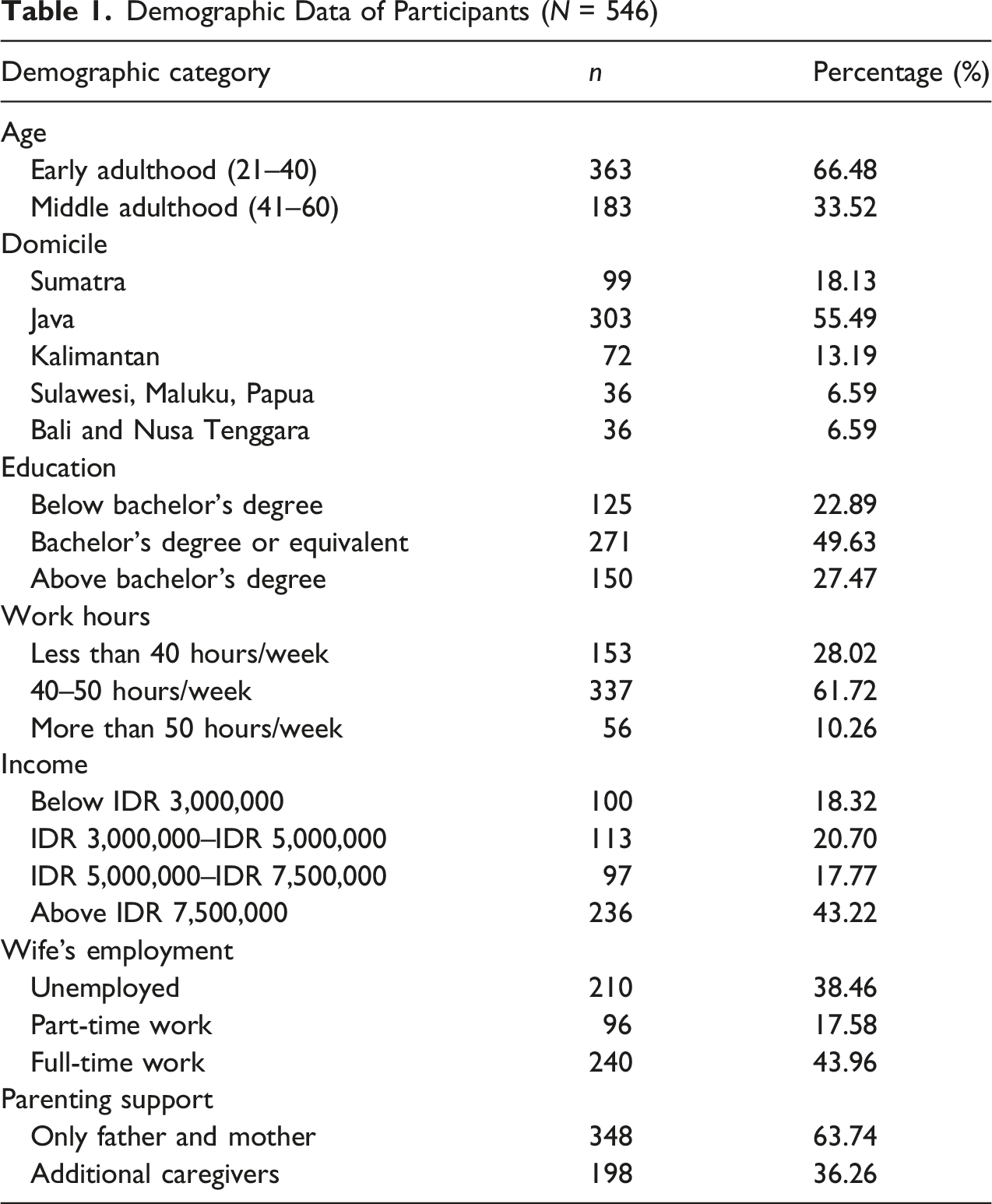
The average age of the 546 participants was 38.8 years (SD = 5.41), with a range of 36 to 59 years. Participants came from various provinces across Indonesia, with the majority residing in Java (55.49%). In terms of income, 43.22% of participants earned more than IDR 7,500,000 per month. Additionally, 77.11% of participants held at least a bachelor’s degree, and a small percentage (0.92%) had only completed elementary or junior high school.
Procedure
This study employed a non-experimental correlational design using questionnaires for data collection. Participants were recruited through a convenience sampling approach using online platforms. The study announcement, which included a link to the online questionnaire (Google Forms), was disseminated through multiple channels: (1) the researcher’s personal social media accounts (Facebook, Instagram, and X/Twitter), (2) reposting by the researcher’s network of friends and colleagues, (3) collaboration with social media influencers who shared the study announcement with their followers, and (4) posting in relevant Facebook community groups (e.g., fishing communities, Read Aloud Community, and West Java community groups). This multi-platform strategy was employed to maximize reach across diverse geographic regions and socioeconomic backgrounds within Indonesia.
The study was conducted online between 5 November and 7 December 2023. After accessing the survey link, participants were presented with an informed consent form explaining the study’s purpose, voluntary nature of participation, confidentiality measures, and their right to withdraw at any time. Only participants who provided informed consent proceeded to the questionnaire. The questionnaire took approximately 5–10 minutes to complete and included measures of father involvement, fathers’ perceptions of maternal behaviors, and demographic questions. No compensation was provided for participation. The study protocol was approved by the Ethics Committee of the Faculty of Psychology, Universitas Gadjah Mada, Indonesia, with reference number 13103/UN1/FPSi.1.3/SD/PT.01.04/2023.
Instruments
Father Involvement Scale
Father involvement was measured using The Inventory of Father Involvement (IFI) developed by Hawkins et al. (2002), which was adapted by Dannisworo and Amalia (2019) for use in Indonesia. The scale consists of 26 items covering nine dimensions: (i) discipline and responsibility, (ii) school encouragement, (iii) mother support, (iv) providing, (v) time and talking together, (vi) praise and affection, (vii) developing talents, (viii) reading/homework support, and (ix) attentiveness. Responses were rated on a Likert scale from 0 (very poor) to 6 (excellent). Aiken’s V showed item validity ranging from 0.83 to 0.98, and the reliability of the scale was 0.946.
Maternal Gatekeeping Scale
Maternal gatekeeping was measured using the Maternal Gatekeeping Scale (MGS) by Puhlman and Pasley (2017), which consists of three dimensions: control, encouragement, and discouragement. Each dimension contains five items, totaling 15 items. Since participants in this study were fathers, the Father version (MGS-F) was used. The scale was translated and adapted following Beaton’s Guidelines (Beaton et al., 2000).
Content validity was assessed by ten Subject Matter Experts (SMEs), nine of whom held Master’s degrees in Psychometrics and one of whom was a lecturer in Psychometrics, all affiliated with a large public university in Indonesia. SMEs independently rated each item for relevance, clarity, and readability, and provided qualitative feedback. Content validity was quantified using Aiken’s V, with items scoring above 0.78 considered valid. All items met the validity threshold. Based on SME feedback, minor revisions were made to improve readability and adapt the scale from a mother-report to a father-report format. For example, the original item “make him do what you want him to do with the child” was revised to “Makes me do what she wants me to do with our child,” and “Rolls her eyes at him when he talks or interacts with the child to show your frustration” was revised to “Rolls her eyes at me when I talk or interact with our child to show her frustration.” These adaptations ensured that fathers could respond from their own perspective rather than reporting on maternal behaviors indirectly. Aiken’s V for this scale ranged from 0.8 to 0.975, with reliability coefficients for control, encouragement, and discouragement at 0.917, 0.894, and 0.873, respectively.
Data Analysis
Data analysis was conducted using multiple regression analysis to examine the influence of each maternal gatekeeping dimension on father involvement. Assumption tests, including normality, linearity, and multicollinearity, were performed before hypothesis testing. The analysis was conducted with Jamovi version 2.3.28 for Windows.
Results
Preliminary Analysis
Data Categorization for Each Variable
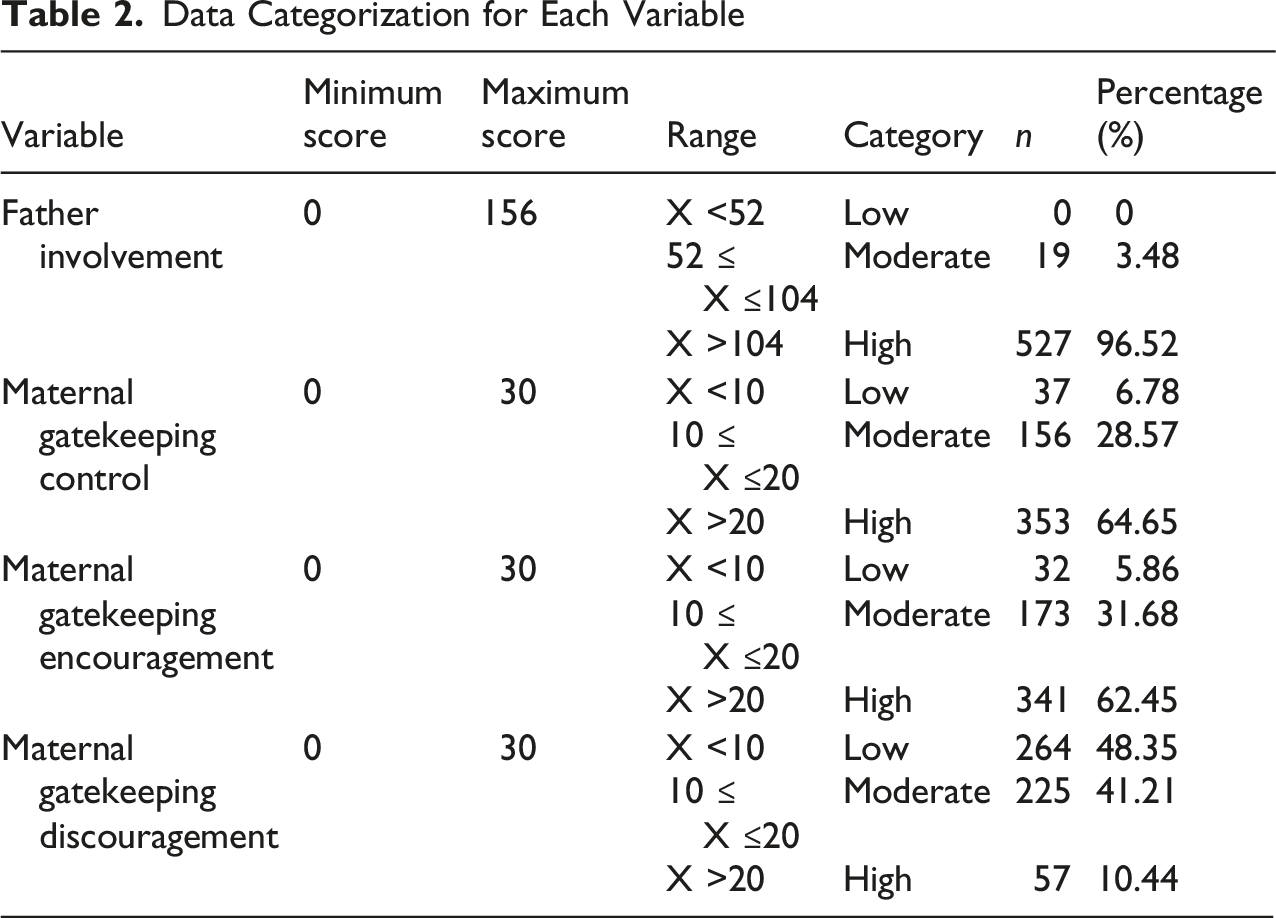
For the Father Involvement scale (possible range: 0–156), the theoretical mean was 78 and theoretical SD was 26, yielding cut-offs of low (<52), moderate (52-104), and high (>104). For the Maternal Gatekeeping dimensions (possible range: 0–30 per dimension), the theoretical mean was 15 and theoretical SD was 5, yielding cut-offs of low (<10), moderate (10–20), and high (>20).
The data categorization showed that the majority of participants (96.52%) reported high levels of father involvement, while 3.48% fell into the moderate category, and none were categorized as low. For maternal gatekeeping, the control and encouragement dimensions were predominantly in the high category, at 64.65% and 62.45%, respectively. In contrast, the discouragement dimension was mainly categorized as low (48.35%) and moderate (41.21%).
Demographic Analysis
Data Categorization for Each Variable
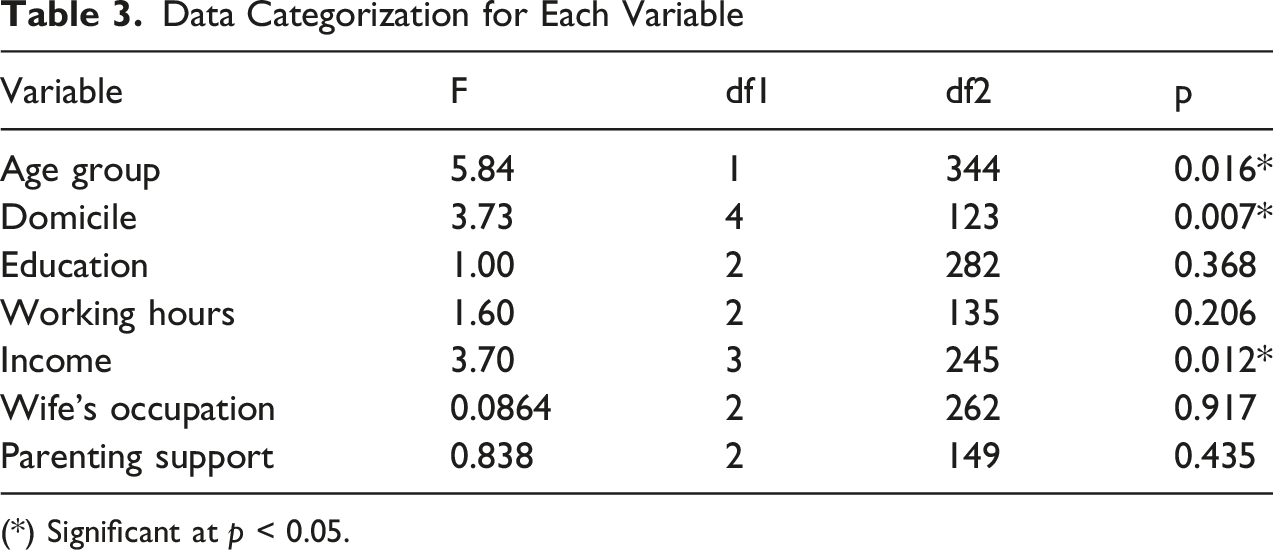
(*) Significant at p < 0.05.
Post-hoc tests indicated that older fathers reported higher involvement compared to younger fathers, and fathers with higher monthly income were more actively engaged in parenting. Additionally, fathers residing in Bali reported significantly greater involvement than those in Java.
Correlation Analysis
Normality assumptions were tested by calculating skewness and kurtosis values. The skewness was −0.628, and kurtosis was 1.1, indicating a normal distribution. Additionally, the assumption of no multicollinearity among independent variables was met, as the VIF values were below 4 and tolerance values were above 0.25.
Correlation Between Variables
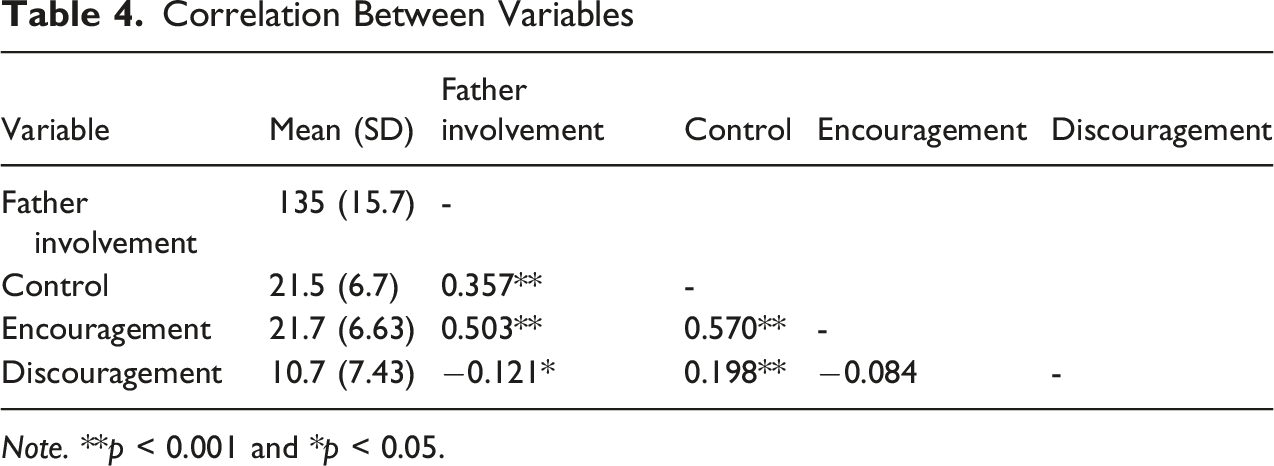
Note. **p < 0.001 and *p < 0.05.
Hypothesis Testing
Model accuracy was assessed to determine whether the multiple regression model, with three independent variables and one dependent variable, was appropriate and supported by the data.
Model Accuracy Test Results

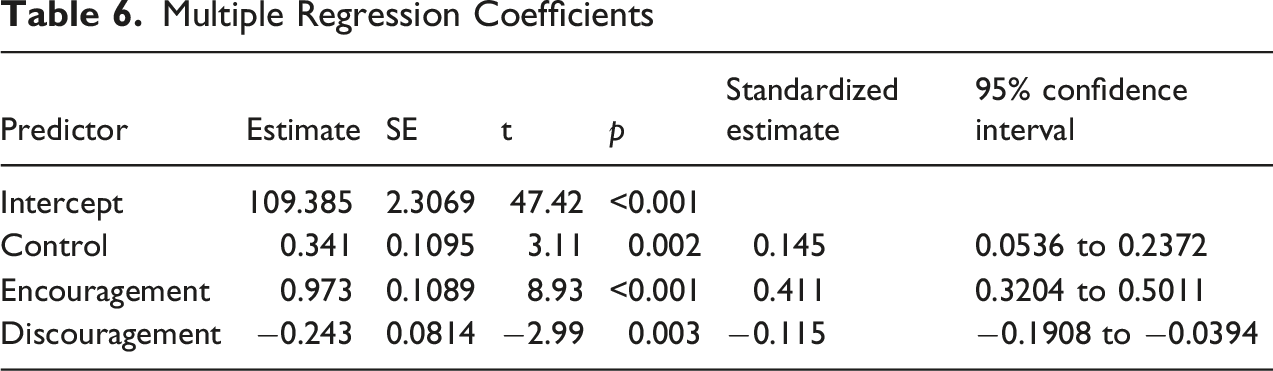
Multiple Regression Coefficients
Discussion
This study examined how fathers’ perceptions of maternal behaviors relate to their involvement in chidcare among Indonesian fathers. Specifically, we investigated fathers’ perceptions across three dimensions (encouragement, discouragement, and control) and their associations with self-reported father involvement. The findings revealed that fathers’ perceptions of maternal behaviors significantly related to their involvement, accounting for 27.3% of the variance. Among the three dimensions, fathers’ perceptions of maternal encouragement showed the strongest positive association with their involvement, followed by perceptions of control, while perceptions of discouragement showed a modest negative association.
The positive relationship between perceived maternal encouragement and father involvement aligns with previous research (Adamsons & Pasley, 2016; Puhlman & Pasley, 2013). When fathers perceive that mothers actively support their participation in parenting, they tend to feel more competent and motivated to engage with their children. In the context of Indonesian families, where traditional gender norms often position mothers as primary caregivers, fathers’ perception of maternal encouragement may be particularly important in validating their evolving role and fostering greater paternal involvement.
Interestingly, perceived maternal control also showed a positive relationship with father involvement, contrary to the initial hypothesis. This dimension was initially assumed to have a negative effect because mothers with high levels of control tend to dominate decision-making, especially in the context of parenting, and actively supervise interactions between fathers and children. This finding suggest that in the Indonesian context, fathers may interpret controlling behaviors as guidance or coordination rather than restriction, which suggest that maternal control can sometimes facilitate paternal involvement by providing clear expectations and structure. It may facilitate rather than hinder their engagement (Puhlman & Pasley, 2013). This interpretation aligns with collectivist cultural values, where maternal control perceived as a form of shared responsibility rather than a barrier, reflecting a more collaborative coparenting dynamic. Thus, fathers may view perceived control not as exclusion, but as an invitation to participate within an organized caregiving framework.
Fathers’ perceptions of maternal discouragement showed a significant but modest negative association with their involvement (β = −0.115). This finding is consistent with prior research suggesting that when fathers perceive discouraging behaviors (such as criticism or exclusion), they may feel undermined and less inclined to engage in parenting (Schoppe-Sullivan & Fagan, 2020). However, the relatively small effect size suggests that other factors may buffer against perceived discouragement. Internal factors such as paternal self-efficacy and attitudes toward the father role have been shown to strongly predict involvement (Kwok & Li, 2015), suggesting that fathers with strong confidence in their parenting abilities and a conviction about the importance of their role may remain engaged even when they perceive discouragement. This resilience highlights the importance of fostering fathers’ sense of competence and role value, alongside creating supportive coparenting environments.
The high levels of father involvement reported in this study offer an important counterpoint to the prevailing “fatherless country” narrative in Indonesia. In our sample of 546 fathers, 96.52% reported high levels of engagement in their children’s lives, suggesting that paternal involvement may be more substantial than public discourse often assumes, at least among fathers who are motivated to participate in research on parenting. This finding aligns with previous studies in urban Indonesian contexts, particularly in the Greater Jakarta area, where father involvement scores were similarly above average (Asy’ari & Ariyanto, 2019; Dannisworo & Amalia, 2019). This is also consistent with global trends showing increased father involvement over the past decade (Harrington, 2022; Olsavsky et al., 2020). However, it is important to note that our sample was predominantly composed of fathers with higher education levels (77.11% held at least a bachelor’s degree) and higher incomes (43.22% earned above IDR 7,500,000 per month), which may reflect a subgroup of Indonesian fathers who have greater resources and more egalitarian attitudes toward parenting.
Beyond fathers’ perceptions of maternal behaviors, several demographic factors emerged as influential in shaping father involvement. Detailed results of the ANOVA for demographic factors are provided in Supplemental Materials. Father involvement increased with age, as older fathers showed higher engagement, possibly due to greater parenting experience and emotional maturity (Adamsons & Pasley, 2016; Cabrera et al., 2018). These factors may boost their confidence and equip them with better skills to navigate various parenting situations, allowing them to be more patient, empathetic, and attuned to their children’s needs (Diniz et al., 2021; Trahan, 2018). Age-related differences in father involvement can also be interpreted through Erik Erikson’s Psychosocial Development Theory (1950), which suggests that middle-aged fathers, driven by generativity, may see parenting as a meaningful legacy (Fadjukoff et al., 2016).
Further analysis revealed that fathers in early adulthood, dominated by the millennial generation, showed lower involvement compared to those in middle adulthood. Millennials, despite valuing egalitarian roles, faced greater work-family conflicts, which in turn limited their involvement (Harrington, 2022; Harrington et al., 2016; Ray, 2013). Millennial fathers often face pressure to build successful careers, particularly in their children’s early years, and navigate a rapidly evolving job market that demands higher educational attainment and longer working hours, making it challenging to balance career ambitions with family responsibilities. Since early engagement is crucial in shaping long-term parenting involvement (Beutell & Behson, 2018; Maroto-Navarro et al., 2013), these work-family tensions may have lasting implications.
Income also influenced father involvement, with higher-income fathers reporting lower engagement. This pattern may reflect career demands during their children’s early years, when high-income fathers prioritize career trajectories, potentially missing formative bonding opportunities that serve as strong predictors of long-term engagement (Beutell & Behson, 2018; Maroto-Navarro et al., 2013).
Geographic differences also shaped father involvement, with fathers in Bali reporting significantly higher engagement than those in Java. In Bali, strong patrilineal traditions foster close father-child relationships, reinforced by cultural rituals where fathers play active roles in transmitting spiritual values. In contrast, Javanese parenting practices often emphasize the “asah, asih, asuh” philosophy, where caregiving responsibilities lean more heavily toward mothers (Efendy, 2023; Swarsi et al., 1999).
Though these findings were based on domicile rather than ethnicity, they align with the concept of situationism in social psychology, the idea that individual behaviors are shaped by their environment (Marjoribanks, 2017). Place attachment influences social expectations and norms, meaning that migrants may unconsciously adopt local parenting norms over time (Masterson et al., 2017). This suggests that cultural context plays a substantial role in shaping father involvement dynamics. These findings could inform the development of culturally sensitive parenting interventions, ensuring that programs align with local values and practices and create tailored strategies that promote greater father engagement and family well-being.
A key feature of this study is its focus on fathers’ perceptions of maternal behaviors rather than mothers’ reports. From a social cognition perspective, individuals’ behaviors are shaped not by objective reality, but by their subjective interpretations (Bandura, 1986). Research on partner discrepancies supports this perspective, showing that fathers and mothers often report different levels of paternal involvement (Mikelson, 2008; Naujoks, 2024). In collectivist cultures like Indonesia, where indirect communication and relational harmony are valued, fathers’ interpretations of maternal cues may be particularly salient. By centering fathers’ voices and perceptions, this study contributes to a more nuanced understanding of the psychological mechanisms underlying paternal engagement.
This study advances a social cognition perspective on coparenting dynamics, demonstrating that fathers’ subjective interpretations serve as proximal mechanisms linking coparenting to paternal engagement. The unexpected positive association between perceived maternal control and father involvement challenges Western-centric assumptions and highlights the need for cultural adaptation of theoretical models. These findings have direct implications for parenting programs in Indonesia: interventions should adopt coparenting-focused approaches that help couples develop shared expectations, improve communication, and foster mutual support. Programs targeting mothers to recognize and communicate appreciation for fathers’ contributions may indirectly promote paternal engagement. The demographic findings also point to the need for workplace policies supporting father involvement, particularly for younger, career-focused fathers. Flexible work arrangements, paternity leave policies, and organizational cultures valuing work-family balance may enable fathers to translate intentions into actual engagement. Finally, this study demonstrates the value of directly assessing fathers’ perspectives, contributing to a more balanced understanding of family dynamics and challenging the methodological practice of treating mothers as sole informants about fathers’ behavior.
Despite these contributions, several limitations should be acknowledged. The cross-sectional design precludes causal inferences about the direction of effects between fathers’ perceptions and their involvement; longitudinal research is needed to examine how these constructs co-evolve over time. While this study deliberately focused on fathers’ perceptions as a theoretically meaningful construct, future dyadic designs would provide insights into how partner discrepancies relate to coparenting quality and child outcomes. The sample was predominantly composed of fathers with higher education and income levels, recruited through online platforms and parenting communities, likely attracting fathers already motivated and engaged in parenting. This self-selection may limit generalizability to less engaged fathers, those in rural areas, or those facing greater structural barriers. The measurement of fathers’ perceptions relied on a researcher-adapted instrument validated through subject matter expert review; future studies should conduct more rigorous psychometric validation. Finally, since fathers’ perceptions explained 27.3% of variance in involvement, future research should adopt more comprehensive models integrating fathers’ perceptions alongside individual, relational, and contextual factors to provide a more complete understanding of paternal engagement in Indonesia.
Conclusion
As Indonesian society continues to navigate shifting gender norms and evolving family expectations, this study underscores fathers’ perceptions of maternal behaviors, particularly their interpretations of encouragement, control, and discouragement, are meaningfully associated with their caregiving engagement. By centering fathers’ subjective experiences, the finding reveals that cognitive appraisals, shaped by cultural context, serve as key mechanisms linking coparenting dynamics to paternal involvement. The high levels of engagement reported by the 546 participants challenge deficit-based narratives of Indonesian fatherhood and highlight a growing segment of men invested in their children’s development. Ultimately, these insights suggest that supporting fatherhood requires culturally sensitive, coparenting-focused interventions that foster mutual support and relational harmony, ensuring that both parents can participate fully in family life as gender equity continues to evolve.
Supplemental Material
Supplemental Material - Maternal Behavior Through Fathers’ Eyes: How Perceived Gatekeeping Relates to Father Involvement in Indonesia
Supplemental Material for Maternal Behavior Through Fathers’ Eyes: How Perceived Gatekeeping Relates to Father Involvement in Indonesia by Raden Roro Anisa Anggi Dinda and Sutarimah Ampuni in Journal of Family Issues
Footnotes
Acknowledgments
The authors thank the study participants for their time and contributions.

Ethical Considerations
The study was approved by the Research Ethics Committee of the Faculty of Psychology, Universitas Gadjah Mada (Approval No. 13103/UN1/FPSi.1.3/SD/PT.01.04/2023).
Consent to Participate
This research was conducted in accordance with institutional and international ethical standards for research involving human participants. Informed consent was obtained from all participants prior to data collection.
Author Contributions
Raden Roro Anisa Anggi Dinda: Conceptualization; methodology; investigation; data curation; formal analysis; visualization; writing—original draft. Sutarimah Ampuni: Supervision; conceptualization; methodology; validation; writing—review and editing.
Funding
This research received no specific grant from any funding agency in the public, commercial, or not-for-profit sectors.
Declaration of Conflicting Interests
The authors declare that they have no known conflicts of financial interest or personal relationships that could have appeared to influence the work reported in this paper.
Data Availability Statement
The anonymized dataset, codebook, and supplementary materials (including informed consent form and detailed ANOVA results for demographic analyses) are provided as supplemental files accompanying this manuscript. These materials are available for review and will be made accessible upon publication in accordance with the journal’s data sharing policy.
Pre-Registration
This study was not pre-registered.
Supplemental Material
Supplemental material for this article is available online.
References
Supplementary Material
Please find the following supplemental material available below.
For Open Access articles published under a Creative Commons License, all supplemental material carries the same license as the article it is associated with.
For non-Open Access articles published, all supplemental material carries a non-exclusive license, and permission requests for re-use of supplemental material or any part of supplemental material shall be sent directly to the copyright owner as specified in the copyright notice associated with the article.
