







Abstract
Whilst important and shaped by economic pressures, children’s subjective well-being (SWB) remains largely overlooked in low-income settings. This study examines: (i) whether economic shocks affect children’s SWB through caregivers’ well-being pathways, and (ii) differences in children’s SWB in relation to their health, caregivers’ education, and food insecurity. The study uses data from the younger cohort of the Young Lives longitudinal study, comprising 5,759 observations from 2006 to 2016, analysed using fixed-effects and structural equation models. Findings show that lower children’s SWB is associated with poorer health, lower caregiver education and well-being, and higher food insecurity. Economic shocks – such as rising food prices and job or enterprise loss – negatively affect both caregiver and child SWB, with job loss exerting strong indirect effects through caregiver–child pathways. Thus, findings highlight the need to strengthen family support systems, reduce economic stress, and improve caregiver education, food security, and resilience to shocks.
Introduction
In low-income contexts, economic pressures can significantly limit individuals’ ability to achieve sustainable well-being. Lower children’s subjective well-being, increased stress, and stigma have been associated with poverty (UNICEF, 2021); yet, the effects of economic pressures in resource-constrained settings remain underexplored. Promoting ‘Good Health and Well-Being’, the third of the United Nations’ Sustainable Development Goals (SDG 3), is therefore a critical step toward ensuring realized subjective well-being. Child wellbeing is described in subjective context like how individuals perceive and evaluate their own lives including feelings of happiness, life satisfaction, and emotional experiences (Diener, 2000; Western & Tomaszewski, 2016) and in objective context through external, quantifiable indicators such as income, health status, educational attainment, access to services, and living conditions (Alatartseva & Barysheva, 2015; Bradshaw, 2016; Fattore et al., 2009; MacLeod, 2015; Western & Tomaszewski, 2016). A growing body of literature emphasizes that ensuring child well-being involves supporting their physical, emotional, social, and cognitive development by providing access to safe, healthy, and educational environments (Benfield, 2008; Carlisle & Hanlon, 2014; Fattore et al., 2009; Tams, 2021; Uyan-Semerci et al., 2017) but it is highly unexplored in rural areas (Newland et al., 2014). Specifically, child subjective wellbeing plays a crucial role in shaping developmental trajectories, social functioning, and academic performance (Renshaw et al., 2024). Its contribution is extend to enriching human right when it has upheld by the environments of well-structured family systems, supportive communities, stable economic conditions, and strong institutional frameworks (Ben-Arieh, 2008). Subjective wellbeing has been varied across nations and communities due to differing in social, economic, and cultural contexts (Klocke et al., 2014), high subjective wellbeing is associated with improved mental and physical health, greater social engagement, and income growth (Joan et al., 2020; Steptoe et al., 2015). Sustainable development is advanced through the advancement of healthy life and welfare, which empowers individuals to participate in economic activities, pursue meaningful employment and education, and ultimately break the cycle of persistent poverty regardless of gender (Küfeoğlu, 2022).
Children’s subjective well-being (SWB) has long-term intergenerational impacts, but it remains underexplored (Yoo & Ahn, 2017). Regardless of whether households are objectively poor or subjectively deprived, children’s subjective well-being (SWB) is significantly shaped by structural household characteristics such as the gender of the household head, level of education, household size, number of dependents, and geographic location (Benfield, 2008; Rees, 2019); economic deprivation and inequality (Casas et al., 2022; Main, 2014); and objective wellbeing indicators such as material resources, health, education, behaviour, housing, and environmental (Bradshaw et al., 2013; Casas et al., 2020; Klocke et al., 2014). These effects are further compounded by psychosocial determinants, and SWB diverges across genders due to differences in family and school life experiences (Migliorini et al., 2019) and strong self-concept, supportive parent-child relationships, and positive peer interactions (Palomar-Lever & Victorio-Estrada, 2014). Moreover, an extending evidence features the determinants of children’s subjective well-being (SWB), showing it is influenced by family income levels (Yoo & Choi, 2016), material wellbeing (Gross-Manos & Bradshaw, 2022), and children’s awareness of their rights (Casas et al., 2018). Moreover, self-perception, sense of belonging with instructors, and sex play important roles in influencing shifts in academic-related emotional well-being, with their impacts differing across levels of schooling (Eckert et al., 2025), while lower safety and welfare negatively impact it (Uyan-Semerci et al., 2017).
A substantial body of evidence highlights the intricate links between children’s subjective well-being, caregiver characteristics, and socioeconomic conditions across diverse contexts. In Australia, caregiving for children with mental illness or disabilities significantly reduces caregivers’ subjective well-being (Hammond et al., 2014). In China, children’s social and emotional development is strongly associated with caregivers’ positive life evaluations (Luo et al., 2020). In South Africa, addressing structural inequalities by improving caregivers’ socioeconomic conditions has proven essential to strengthening parental capacity and enhancing child well-being (Turner, 2024). In the United States, material hardship and inadequate housing strongly impact children’s well-being, while family structure and school-level variables show limited influence (Bradshaw et al., 2011). Evidence on caregiving roles reveals mixed outcomes: caregiving for non-immediate relatives enhances life satisfaction, while spousal or child caregiving reduces quality of life; exiting caregiving increases depression in both cases (Rafnsson et al., 2017), and the overall, caregiver mental health and social support remain critical determinants of children’s emotional and psychological outcomes (Webster et al., 2019).
Although children generally report high SWB globally, socio-demographic factors explain only a small portion (10.9–20.2%) of its variance; country-level differences and broader contextual or psychological factors play a far greater role than basic demographics (Dinisman & Ben-Arieh, 2016). Maternal influences are also crucial: Mothers’ subjective well-being and education positively predict children’s SWB, whereas maternal health shows a weak negative association (Kućar et al., 2024). While limited, evidence suggests that during early childhood, a mother’s overall well-being significantly shapes her child’s motor, cognitive, and socioemotional development within the family context (Enelamah et al., 2024).
In Ethiopia, an increasing number of studies underscore the widespread occurrence of depression and anxiety among caregivers (Minichil et al., 2019, 2021; Tsehay et al., 2022), the influence of neurodevelopmental disorders on child growth across multiple domains (Dereje et al., 2024), and the widespread association of malnutrition with child development challenges (Mekuriaw et al., 2025). Furthermore, research explores caregiver psychological disorders during the COVID-19 pandemic (Abdeta & Desalegn, 2021), the burden on caregivers’ mental health (Sidamo et al., 2025), and emotional and behavioural problems among adolescents using cross-sectional data. Unlikely to these, global research consistently underscores the critical role of objective wellbeing and socioeconomic determinants in shaping children’s overall wellbeing (Enelamah et al., 2024; Forrester et al., 2024; Saha, 2024). In Ethiopia food price driven food insecurity affects children objective wellbeing (Hadley et al., 2012) particularly in urban poor households, the lower life satisfaction and anxiety is very closely associated with food price inflation (Alem, 2014); however, how economic shocks affect children’s subjective well-being through caregivers has not yet been addressed. This study investigates emotional connectedness between children and parents, economic pressures on parents, and the pathways through which these pressures influence children’s life satisfaction, considering health and parent–child characteristics. It addresses two key research questions: (i) Are the effects of economic shocks on caregivers’ subjective well-being transferred to children’s subjective well-being? and (ii) How do differences in children’s health, caregivers’ education levels, and experiences with food insecurity disproportionately affect children’s subjective well-being? The study aims to (a) examine the direct and indirect effects of economic pressures on children’s subjective well-being, and (b) assessed the differences in children’s subjective well-being in relation to their health, caregivers’ education levels, and experiences with food insecurity. This study contributes to the research literature by providing a foundation for examining similar socioeconomic contexts and exploring the interplay between parental well-being, economic shocks, and children’s subjective well-being. For policymakers and international organizations, it offers valuable insights into how economic pressures affect children’s subjective experiences, informing interventions and policies designed to enhance family resilience and promote child well-being in socioeconomically vulnerable settings. The paper is organized into five sections: introduction, literature review, methodology, results and discussion, and conclusions with policy implications.
Literature Review
Children’s subjective well-being (SWB) is a critical determinant of healthy development and long-term life outcomes. Yet existing evidence on children’s SWB remains sparse particularly in low- and middle-income countries limiting our understanding of the full scope of influences. Family dynamics exert a profound influence: for instance, children whose fathers are business owners consistently report markedly higher life satisfaction than those whose fathers engage in manual labour, while paternal loss is strongly correlated with diminished life satisfaction. Educational environments also hold significant weight; a robust sense of school connectedness emerges as a powerful predictor of children’s overall well-being (Lawler et al., 2018; Pongutta & Vithayarungruangsri, 2023). An individual’s subjective well-being in adulthood is positively associated with smooth and healthy relationships within their family, neighbourhood, and friendships in the community. Thus, adulthood subjective well-being tends to improve when these social relationships are strong and harmonious (Forrester et al., 2024). Studies that examined how childhood-related factors affect children’s subjective well-being and variations in emotional and behavioural outcomes. The findings indicated that child-related factors have a relatively small impact on children’s subjective well-being, but they play a significant role in influencing variations in children’s behaviour and emotions (Kim et al., 2019; Rees, 2018).
Economic factors such as material deprivation, family economic concerns, and the ability to afford sufficient food were found to be strongly associated with children’s subjective well-being in Bangladesh. However, rural versus urban residence had the greatest impact on children’s subjective well-being, followed closely by material deprivation, food affordability, and geographic region (Goswami, 2021), and income level (González-Carrasco et al., 2017), moreover, subjective wellbeing and psychological wellbeing are strongly with children age from 8 to 12 years (Moreta-Herrera et al., 2023). A cross-national decomposition study further reinforces that disparities in children’s well-being are predominantly driven by internal factors such as freedom of choice and self-perception while external domains like leisure, environment, education, finances, and relationships contribute marginally (Lee & Yoo, 2017). During the COVID-19 crisis, research across Europe and the Americas revealed that adolescents’ subjective well-being was most acutely affected by gender, socioeconomic status, intrapersonal traits, academic strain, and adult relationships, with fear of illness emerging as the most potent emotional determinant (Yoo & Ahn, 2017). Girls and low-income youth were disproportionately affected, yet modifiable drivers such as adult support, engagement with remote learning, and managing health-related fears presented critical leverage points for cross-cultural interventions (Engel de Abreu et al., 2021). Moreover, parents’ socioeconomic status decisively shaped both formal and informal caregiving practices during the pandemic, with digital literacy, child age, and gender playing significant roles in mediating informal learning experiences at home (Treviño et al., 2021). However, existing studies reveal varying patterns in the relationship between ageing and subjective well-being, including U-shaped, inverted U-shaped, or linear trends (López Ulloa et al., 2013).
Social participation and intergenerational solidarity both have significant protective effects on older adults’ subjective well-being (SWB). While social participation enhances SWB regardless of gender, the impact of intergenerational solidarity is moderated by gender particularly through functional and consensual dimensions indicating differential benefits for men and women (Saha, 2024), moreover; the greater social network size and more frequent interactions are strong predictors of improved future life satisfaction and quality of life, whereas the variety within social networks does not independently influence future subjective well-being (Rafnsson et al., 2015). Although traditional theories suggest people quickly adapt to life changes and return to a stable level of happiness, recent large-scale studies show that major negative events like divorce, losing a spouse, unemployment, or disability can cause long-lasting declines in subjective well-being (Lucas, 2007). The debate surrounding gender differences in subjective well-being (SWB) remains unresolved. This study firmly establishes that boys and girls exhibit largely comparable levels of SWB, with boys demonstrating only a marginally higher well-being at select points (Kaye-Tzadok et al., 2017), However, children’s subjective behaviours across genders are profoundly influenced by critical health-related factors such as self-respect, self-efficacy, and motivation each strongly shaped by health literacy (Fretian et al., 2020).
Extensive research underscores a multitude of critical factors intimately linked to adolescents’ subjective well-being (SWB), including robust social support, high self-esteem, strong perceived control, healthy family and peer relationships, academic achievement, self-efficacy, and resilient personality traits such as optimism (Fuller et al., 2019; Leung et al., 2011; Mesfin, 2018; Weber & Huebner, 2015). According to the insights of (J. A. Russell, 2003; Tomyn et al., 2013) core affect basic brain states underlying all moods and emotions is crucial in shaping adolescents’ overall well-being. According to the circumplex model (H. Russell et al., 2019), affect operates along two principal axes: positive–negative affect and activation deactivation, revealing the intricate dynamics of emotional experience (Yik et al., 2011).
Recent empirical studies strongly establish that caregiver subjective well-being (SWB) encompassing emotional health, life satisfaction, and resilience is a critical determinant of child subjective well-being (SWB). Across multiple countries and datasets, research shows that when caregivers experience stress, depression, or reduced life satisfaction, children are more likely to exhibit emotional distress, behavioural problems, and lower developmental scores. For instance, during the COVID-19 pandemic, studies from Italy (Spinelli et al., 2023), the U.S. (Patrick et al., 2020), and rural China (Wang et al., 2023) demonstrated a clear causal link between elevated parental distress and child developmental or behavioural decline. In panel data from China (J. Liu et al., 2023), higher caregiver life satisfaction significantly improved adolescent SWB, largely mediated by positive parent–child interactions. Moreover, the influence of caregiver SWB extends beyond mental health symptoms it is embedded in relational dynamics within the family. Multilevel evidence from China (J. Liu et al., 2023) and Western countries (Palomar-Lever & Victorio-Estrada, 2014) further underscores that emotional closeness, especially from fathers, and family resilience (e.g. problem-solving, resource access) serve as crucial buffers enhancing both caregiver and child well-being.
Socioeconomic factors such as household income, parental education, employment status, and housing stability are foundational determinants of child well-being, influencing children’s health, education, emotional resilience, and overall life satisfaction (OECD, 2020; Unicef, 2023). Children in socioeconomically disadvantaged households face a higher risk of food insecurity, inadequate healthcare, educational underachievement, and psychological distress (Gross-Manos & Bradshaw, 2022). These hardships often lead to long-term developmental setbacks. For example, longitudinal studies have shown that poverty in early childhood can reduce cognitive development, school readiness, and later economic outcomes (Ridley et al., 2020; Woodhead et al., 2023). Additionally, economic deprivation and inequality, coupled with unstable employment and housing, adversely affect children’s emotional security and mental health (McCabe et al., 2024). The issue in Ethiopian context highlight the critical need for integrated policies aimed at reducing socioeconomic disparities to promote equitable and sustainable child development (Mesfin, 2018).
Methods
About the Data
This dataset focuses on the study of childhood poverty and the pathways to adulthood in Ethiopia, India, Peru, and Vietnam. It draws on longitudinal panel data collected from around 12,000 children over a span of 15 years in these low- and middle-income countries. Generally, the young lives survey conducted from two cohorts: a younger cohort of 2,000 children starting at age one, and an older cohort of 1,000 children starting at age eight, over the period from 2002 to 2016 (Lives, 2018; Outes-Leon & Sanchez, 2008). It was collected through multi-stage sampling strategies. In the first stage, four major regions – Amhara, Oromia, SNNPR, and Tigray – along with the Addis Ababa city administration, were purposively selected based on population and state representation. In the second stage, 20 woredas (districts) were purposively chosen from these regions to capture diversity in poverty levels, urban-rural composition, and food security status. From each District (Woreda), at least one local administrative unit or Neighbourhood/Village (kebele) was considered as a sentinel site for data collection. Finally, 100 households with a 1-year-old child and 50 households with an 8-year-old child were randomly selected within each site (Outes-Leon & Sanchez, 2008). The dataset focuses on children’s well-being, food security, education, health, and caregivers’ well-being. For this study, the young cohort data from Waves 2–5 (2006, 2009, 2013, and 2016) were analysed due to missing information in some variables. This cohort is more strongly vulnerable subjective well-being and influenced by caregiver environments and relationships compared to older children (Bradley & Corwyn, 2002; Steinberg & Morris, 2001). After cleaning the data ethically using STATA, 5,759 young cohort children were used for analysis.
Estimation Strategies and the Variables
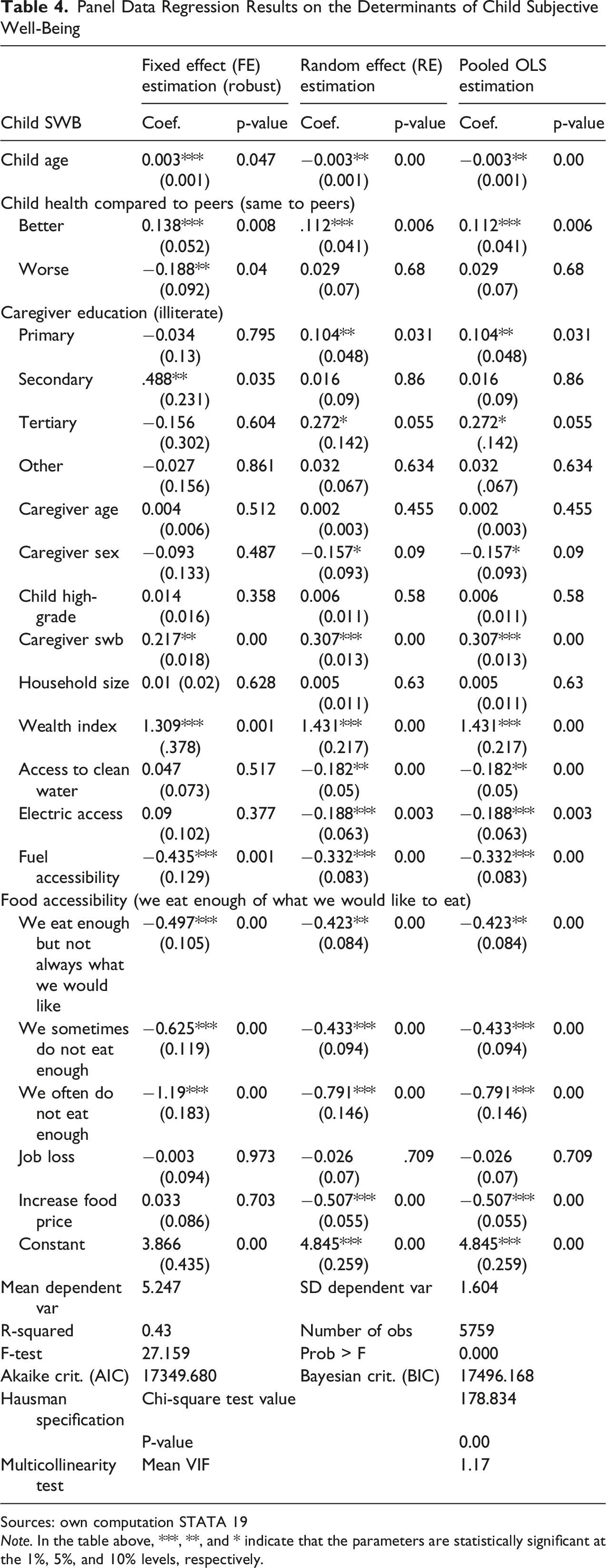
This study addressed two rigorous objectives. First, examined the linear effects of child characteristics, caregiver characteristics, and economic shock factors on child subjective well-being. To assess these effects, this study employed linear panel models, which are well-suited for controlling unobserved heterogeneity, capturing linear relationships, and strengthening causal inference (Reed & Ye, 2011). This study began with a baseline pooled OLS regression, which ignores unobserved heterogeneity (differences between individuals). However, this model is particularly useful when such factors are constant over time but vary across entities (Baltagi, 2008). To address this issue, this study considered both Random Effects (RE) and Fixed Effects (FE) models. The FE model controls for time-invariant unobserved heterogeneity by using only within-individual variation, assuming that individual effects are correlated with the regressors. In contrast, the RE model uses both within- and between-individual variation, assuming no correlation between individual effects and the regressors—an assumption that, if violated, can lead to biased estimates (Baltagi, 2008). To identify the best estimation the study used the Hausman specification, which is useful to decide whether the RF or FE is best suited to apply for static panel models(Clark & Linzer, 2015). Based on the Hausman test results in Table 4, the null hypothesis that the Random Effects (RE) estimator is consistent and efficient is rejected (p < 0.05), indicating that the Fixed Effects (FE) model is the appropriate choice and the results have used for analysis. The general panel model specified in equation (1)

This study rationalized that the fixed-effects (FE) approach captures only the direct effects, without accounting for potential mediation effects. Thus, this study further contextualizes how economic pressures may affect a child’s subjective well-being through the well-being of their caregivers. Theoretically, these pathways are captured in the Family Stress Model, which posits that economic hardship can lead to family distress, coercive parenting, and subsequent adolescent adjustment problems (Conger et al., 1994). To empirically examine these relationships, the study employed Structural Equation Modelling (SEM). It’s particularly useful for assessing complex theoretical or causal frameworks and allows simultaneous analysis of observed and latent variables, including mediators, moderators, and interrelated outcomes, providing more precise insights than traditional regression approaches (Bollen, 1989). It combines factor analysis for latent constructs with path analysis for structural relationships, enabling the estimation of multiple dependent relationships at once (Brunner, 2022). Additionally, SEM accounts for measurement error, making it a sophisticated method for modelling latent variable relationships (Fietzer et al., 2025). The path analysis corresponding model specified in equations (2) and (3)


Definitions of variables
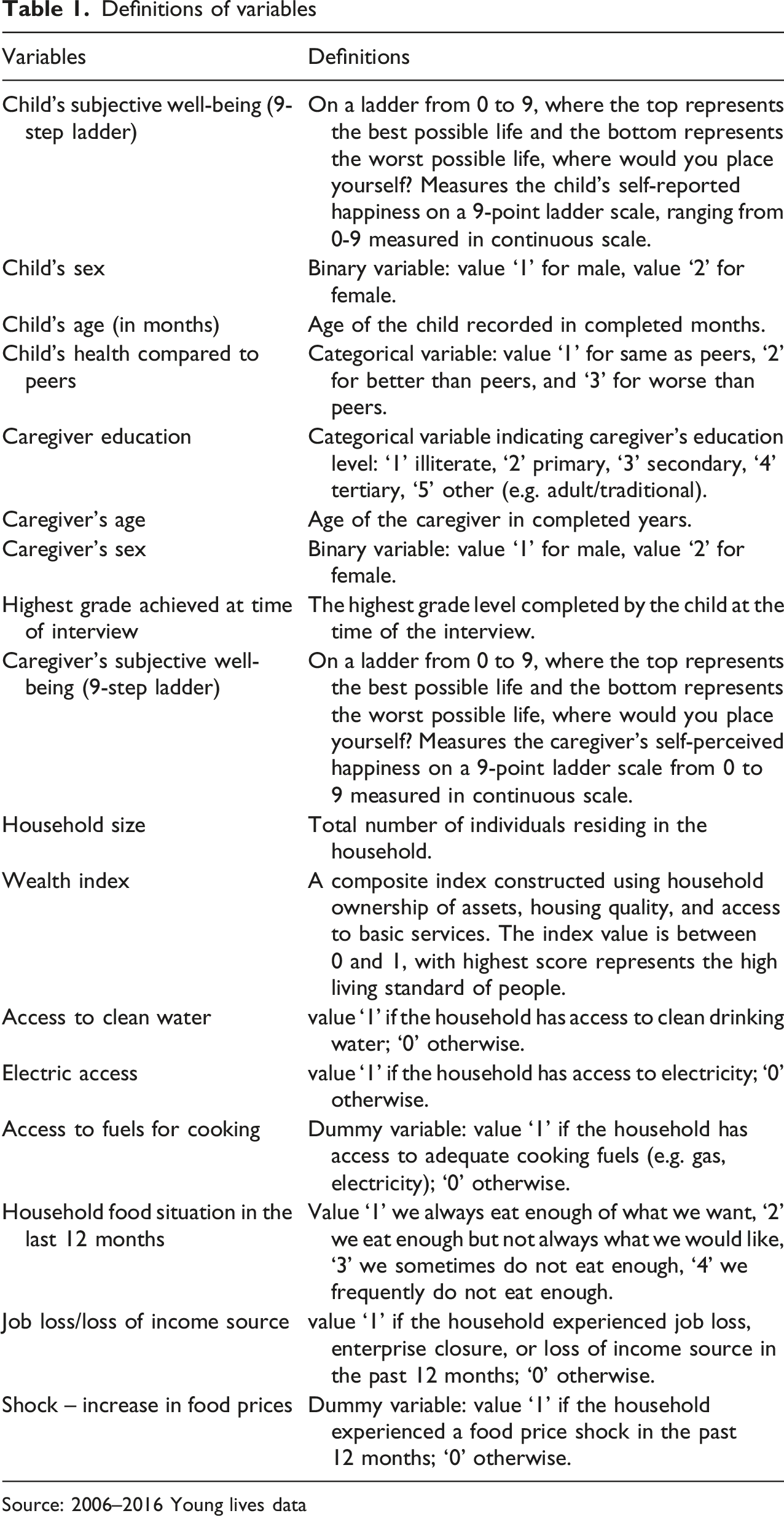
Source: 2006–2016 Young lives data
Results and Discussion
Results
Socioeconomic and Demographic Characteristics of the Study
Figure 1 presents a scatterplot matrix illustrating key relationships between child subjective well-being and various socioeconomic factors in Ethiopia. The figure confirms that improvements in caregiver well-being, particularly emotional health, are strongly associated with enhanced child well-being. In contrast, socioeconomic variables such as material wealth and household size show no significant correlation with child well-being, highlighting that economic status and family size alone are insufficient to shape children’s emotional experiences. Additionally, caregiver well-being is only weakly related to household wealth and size, suggesting that psychological well-being is driven more by non-material factors. Overall, the findings underscore that the emotional environment, especially caregiver well-being, plays a far more critical role than economic or demographic factors in shaping children’s subjective well-being. The scatter plot matrix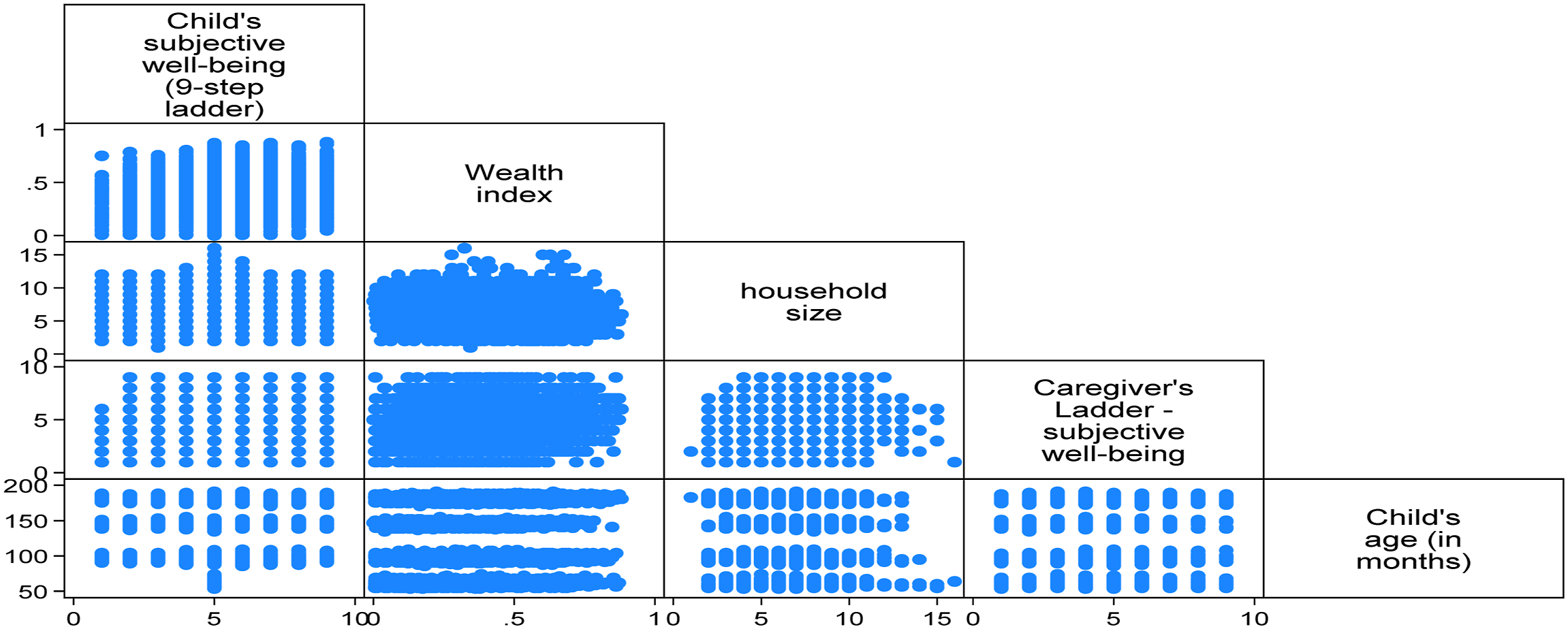
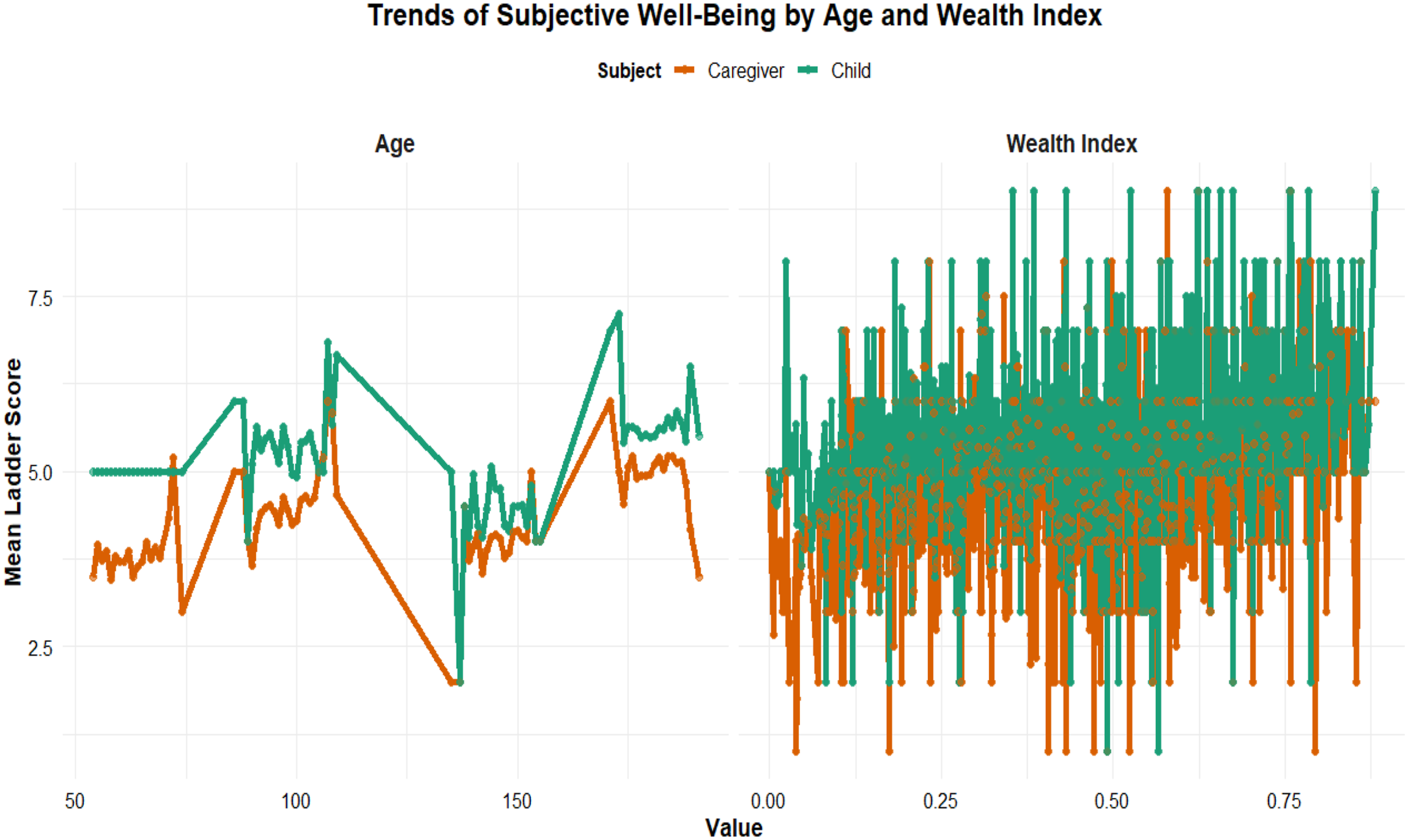
Figure 2 presents the distribution and associations between caregivers’ and children’s well-being, wealth, and household size. Existing literature shows strong links between children’s subjective well-being (SWB) and their caregivers’ well-being (Kućar et al., 2024), as well as evidence that caregivers’ positive socioemotional health increases the likelihood of child well-being in Uganda (Webster et al., 2019). The results corroborate these findings: children’s SWB is positively correlated with caregivers’ well-being, underscoring the importance of caregivers’ emotional happiness in fostering children’s subjective well-being. The results also support the positive role of wealth in promoting children’s well-being, consistent with previous research showing that children’s SWB is strongly associated with family income levels (Yoo & Choi, 2016) and material hardship and inadequate housing strongly affect children’s well-being in the UK (Bradshaw et al., 2011). Overall, this study findings confirm the positive contributions of both wealth and caregivers’ subjective well-being to children’s well-being. Also, Figure 3 presents the trends of caregivers’ and children’s subjective well-being by age and wealth index. It shows that both caregivers’ and children’s well-being increase as the wealth index approaches unity, but by age, the trend shows lower subjective well-being at age 12 (150 months). However, the association between household size and children’s subjective well-being was not significant. This suggests that children from emotionally supportive families with adequate financial resources tend to experience higher levels of subjective well-being. Scatter plot and histogram presenting distributions and associations between subjective well-being of children and caregivers and wealth Trends in caregivers’ and children’s subjective well-being by children’s age and household wealth index1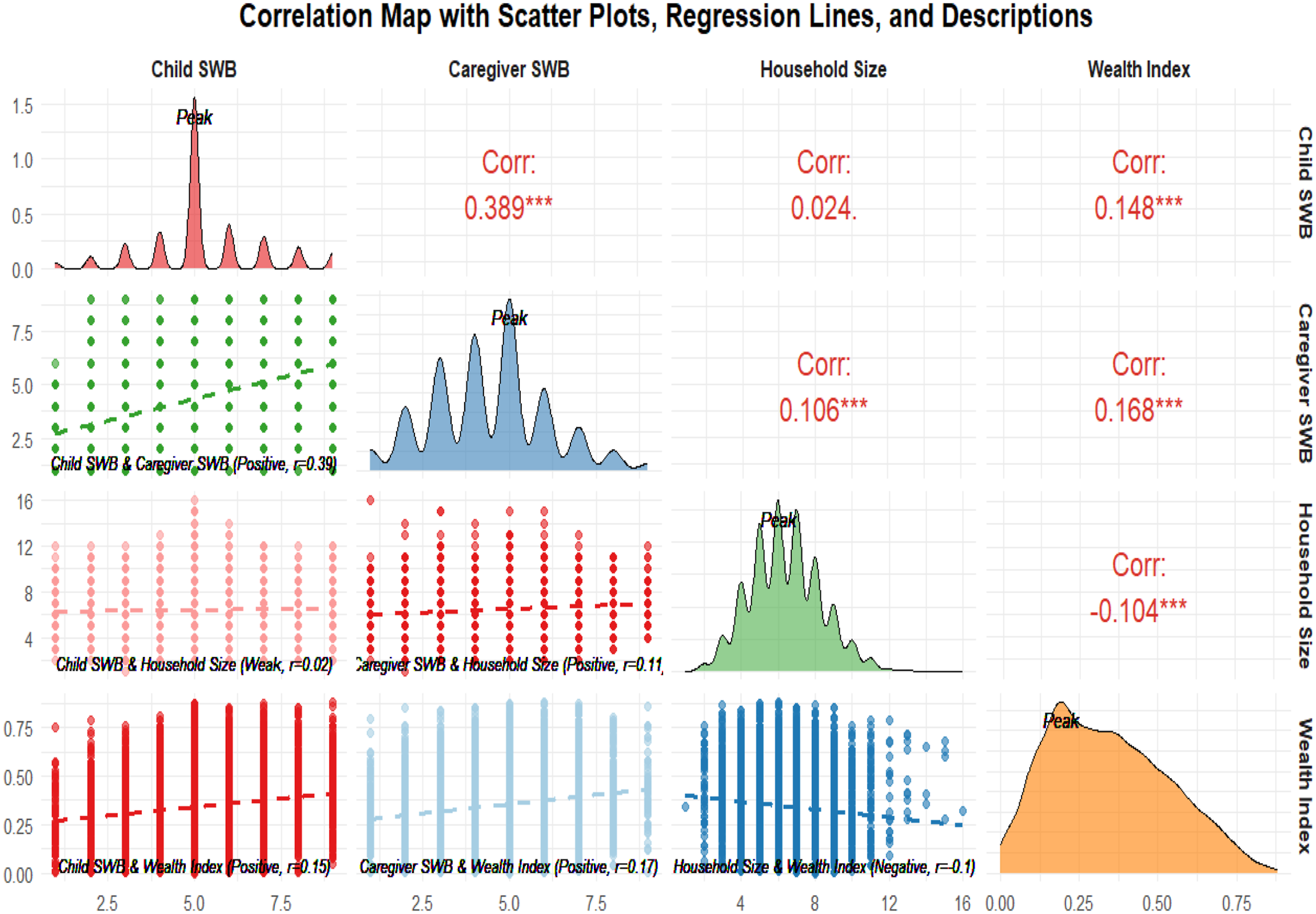
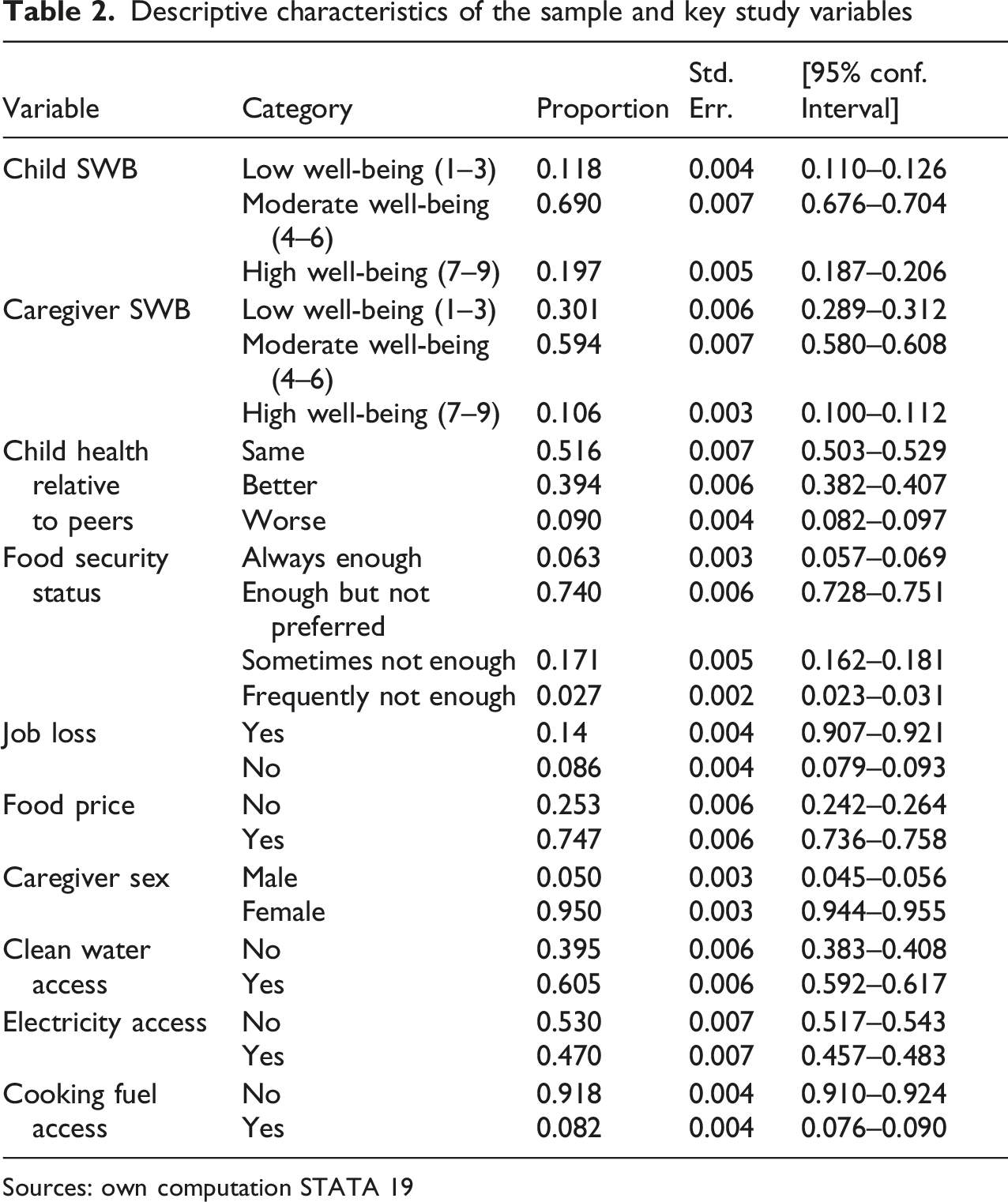
Descriptive characteristics of the sample and key study variables
Sources: own computation STATA 19
Economic Pressures, Caregivers Attributed, and Child Subjective Wellbeing
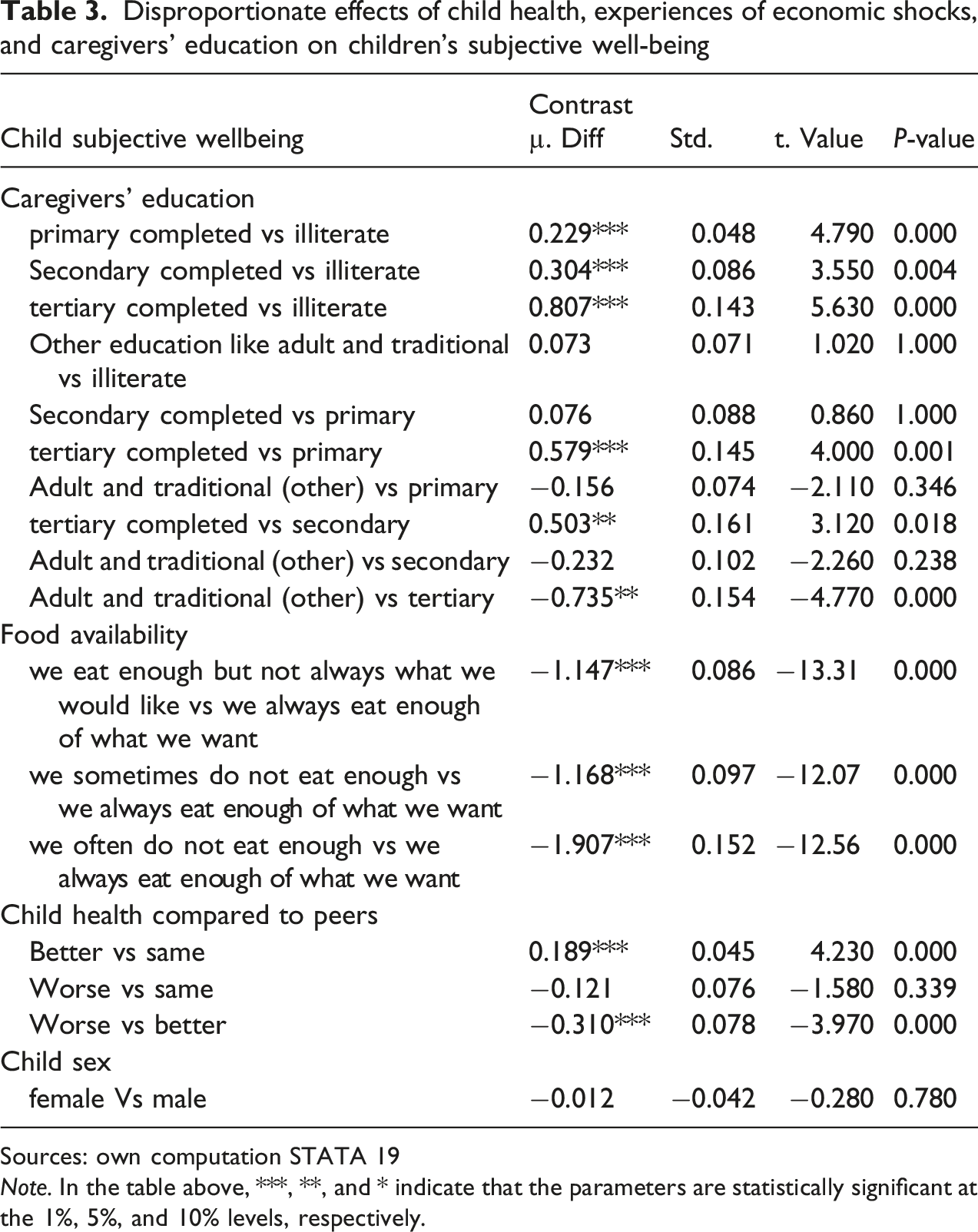
Disproportionate effects of child health, experiences of economic shocks, and caregivers’ education on children’s subjective well-being
Sources: own computation STATA 19
Note. In the table above, ***, **, and * indicate that the parameters are statistically significant at the 1%, 5%, and 10% levels, respectively.
Panel Data Regression Results on the Determinants of Child Subjective Well-Being
Sources: own computation STATA 19
Note. In the table above, ***, **, and * indicate that the parameters are statistically significant at the 1%, 5%, and 10% levels, respectively.
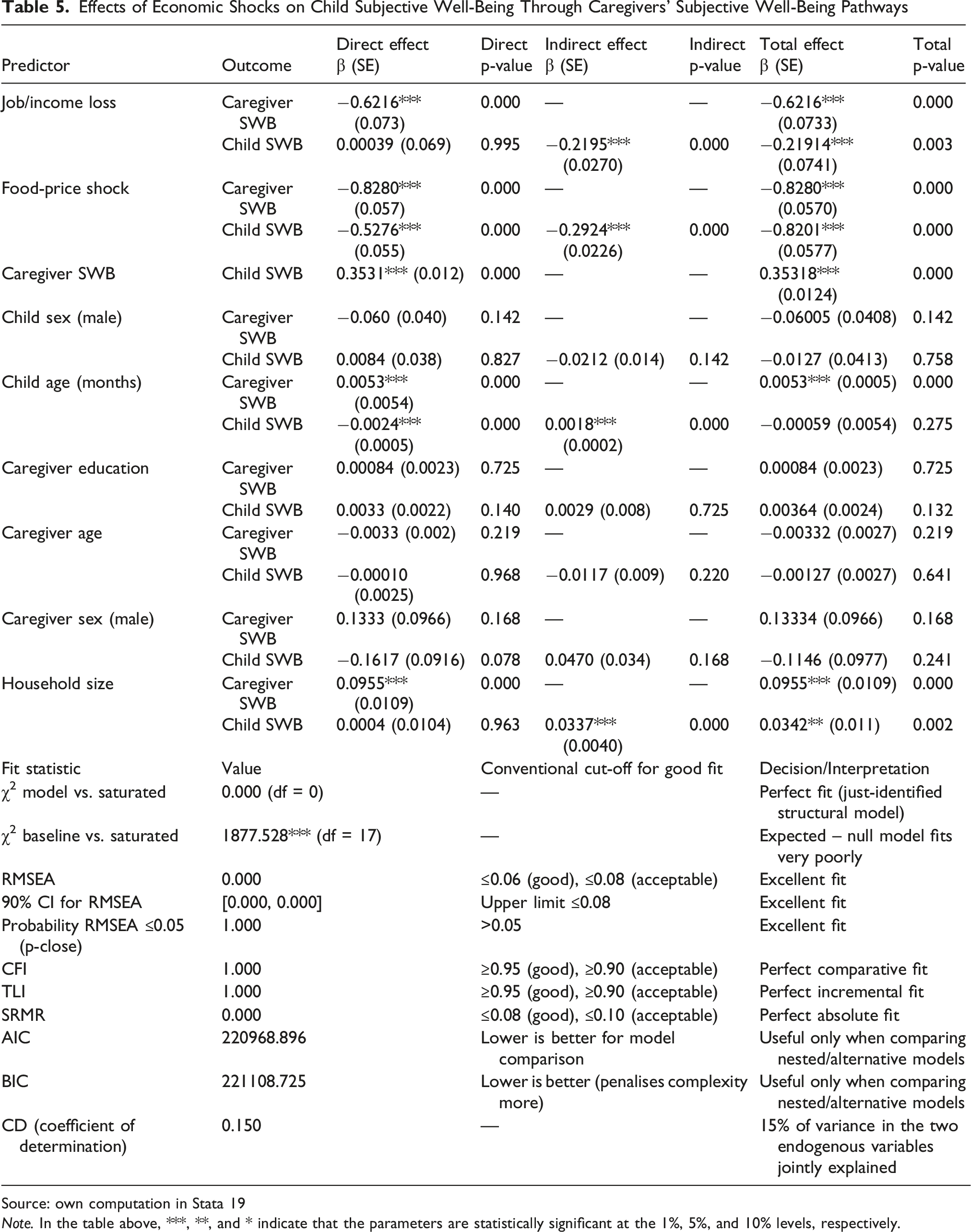
Effects of Economic Shocks on Child Subjective Well-Being Through Caregivers’ Subjective Well-Being Pathways
Source: own computation in Stata 19
Note. In the table above, ***, **, and * indicate that the parameters are statistically significant at the 1%, 5%, and 10% levels, respectively.
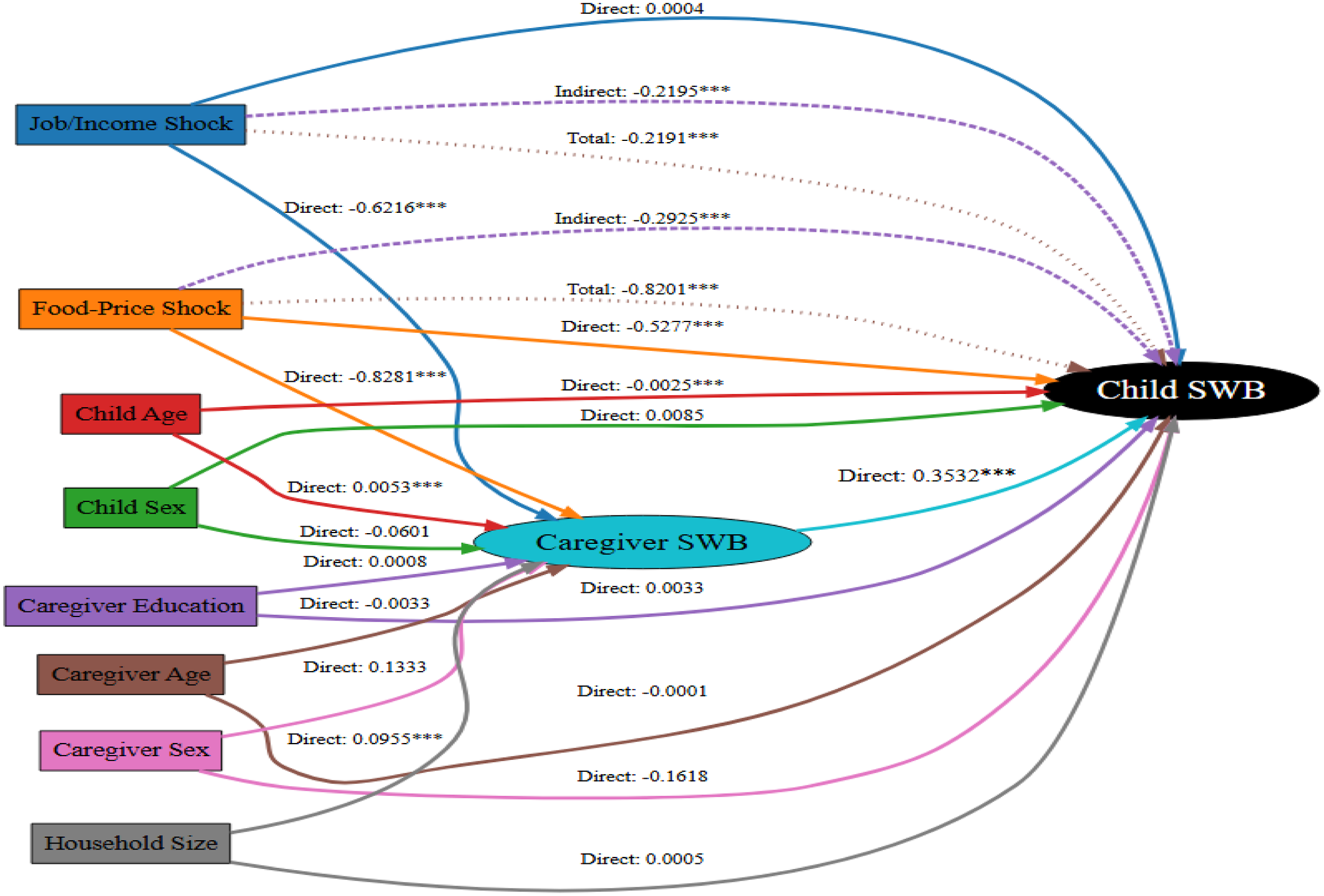
SEM path diagram results on the direct and indirect effects of economic shocks on child subjective well-being
Discussions
The discussion of this study has synthesized by using results the fixed effect and structural equation models presented in Figure 4 and Tables 3–5.
Do caregivers’ characteristics (education, sex, and life satisfaction) affect children’s subjective well-being? In this context, both the results presented in Tables 3 and 4 confirm that caregivers’ education and subjective well-being are positively associated with children’s subjective well-being. Caregivers’ experience or knowledge of supporting children (Evans et al., 2023), their active engagement (X. Liu et al., 2024), and their overall educational background all contribute to higher levels of child well-being. Corroborated to these studies, results in Table 4 confirm that children raised by caregivers who have completed secondary education have 0.448-unit higher subjective well-being compared to children raised by illiterate caregivers. These results show that educated caregivers have the experience and knowledge to take care of children, can easily identify what is right and wrong for children’s well-being, and are open to addressing children’s ideas, interests, and goals – all of which contribute to higher levels of children’s subjective well-being. Thus, the results in this study support existing literature suggesting that educated caregivers enhance children’s well-being through better engagement, problem-solving, and emotional support (Bornstein et al., 2015; Tighe & Davis-Kean, 2021). In low-income contexts, education alone is insufficient; it needs to be complemented by emotional awareness and structural support to effectively enhance child well-being (Hurwich-Reiss et al., 2019; Llosada-Gistau et al., 2017). The other caregivers’ characteristic this study examined is their subjective well-being and its role in children’s life satisfaction. The results are consistent with previous findings that caregivers’ subjective well-being is positively associated with children’s life satisfaction in Croatia (Kućar et al., 2024), Uganda (Webster et al., 2019), and in Spain, where children’s happiness is shaped by parental health and perceptions of future security (Casas et al., 2008, 2012). It generally supports child emotional development and happiness (Clair, 2012; Huang et al., 2024; Luo et al., 2020). Results in Tables 4 and 5 show that when caregivers’ subjective well-being increases by one unit, children’s subjective well-being increases by 0.217 units and 0.3531 units, respectively. This confirms previous empirical findings on the positive contributions of caregivers’ subjective well-being to children’s happiness. Thus, emotionally happier caregivers are more motivated to support children emotionally and work diligently for children’s life satisfaction, strengthening their connections and maintaining continuity in their relationships. So, caregivers’ emotional availability fosters warmth, stability, and attentiveness, forming a secure base for children’s development.
How do the child’s characteristics – such as age, sex, health, and education – affect their subjective well-being? The results confirmed that a child’s age in months is positively associated with the caregiver’s subjective well-being and negatively associated with the child’s own subjective well-being. Previous studies, parents’ life satisfaction tends to increase as their children move into later developmental stages (young adulthood) and often stabilizes or rises relative to the high-stress early parenting years (Meier et al., 2018). In contrast, children’s own subjective well-being (self-reported life satisfaction and emotional well-being) generally declines with age from childhood into adolescence (Gregory et al., 2021). Consistent with these findings, the study confirms that as children move toward adolescence and early adulthood, they become more worried and think more about becoming independent and engaging in life-course transitions, which decreases their subjective well-being. However, for caregivers, this stage provides space and relief from earlier parenting stress, and they may also begin to receive support from their children, which in turn increases caregivers’ subjective well-being. In addition to age, household size is also positively associated with both children’s and caregivers’ subjective well-being, although its effect on children’s well-being operates indirectly through the caregivers’ well-being pathway. Previous studies have stated that children’s health conditions, relative to their peers, make a positive contribution to their subjective well-being (Goswami et al., 2023; Klocke et al., 2014; Xu et al., 2024). This study also corroborated to the relative deprivation theory, which posits that people who judge themselves as worse off compared to their peers are less likely to report high life satisfaction (Bernstein & Crosby, 1980; Smith & Walker, 2002). Children who perceive themselves as healthier generally report higher well-being, as good health enhances their self-worth, physical and social competence, and active participation in school and social activities. In contrast, children who believe their health is poorer than that of their peers often report lower well-being, since feelings of inferiority can undermine their confidence and lead to emotional distress and social withdrawal.
Is children’s subjective well-being more affected by economic pressures in the Ethiopian context? In this study, economic factors – specifically the wealth index and fuel accessibility – showed significant associations with children’s subjective well-being in the fixed-effects model. A one-unit increase in the wealth index was associated with a 1.309-unit increase in children’s subjective well-being. Independent of momentary pleasures, family wealth is strongly linked to children’s happiness, as a higher wealth index reflects a better standard of living, which directly improves children’s subjective well-being. This aligns with previous studies showing that household wealth enhances access to healthcare, education, and safe living conditions, thereby fostering children’s sense of security and life satisfaction (Bradshaw et al., 2011). Similarly, children living in households without access to cooking fuel had 0.435 units lower subjective well-being. This finding is consistent with evidence that traditional cooking fuels negatively affect children’s well-being (Tang et al., 2024). Lack of modern fuel technology increases children’s burdens, as they often spend time collecting firewood for cooking, which reduces their time for play and leisure and, in turn, diminishes their happiness. Another socioeconomic pressure factor is households’ food security situations in 12 months. In the literature, food insecurity leads to physical discomfort, emotional distress, and reduced life satisfaction (Vaqué et al., 2012; Vaqué-Crusellas et al., 2023). Aligned with the previous study, the children in 12 months that always eat but not what they would like, sometimes do not eat, and often do not eat realized 0.497, 0.625, and 1.19 units lower subjective well-being compared to children who eat enough of what they want to eat. Thus, the results show that household food insecurity very strongly determines the child’s subjective well-being, which aligned to the empirically examined family stress model (Sengül-Inal et al., 2024) and the relative deprivation theory, which posits that people who judge themselves as worse off compared to their peers are less likely to report high life satisfaction (Bernstein & Crosby, 1980; Smith & Walker, 2002).
Are the effects of food price inflation and job-loss-related economic pressures on caregivers’ subjective well-being transmitted to children’s subjective well-being? In the structural equation model, the study examined the effects of economic shocks – such as food price increases and job or enterprise loss – on children’s subjective well-being through caregivers’ subjective well-being pathways in the Ethiopian context. The results are in line with the family stress model that economic pressures affect family happiness and the children (Conger et al., 1994), and subsequent study has empirically confirmed strong associations between negative emotions and hardship (Sengül-Inal et al., 2024). The results demonstrate a direct association between caregivers’ and children’s subjective well-being. Specifically, when caregivers’ self-perceived happiness on the ladder scale increases by one unit, children’s subjective well-being increases by 0.35 units. Moreover, it’s consistent with the Family Stress Model, which suggested that high economic pressures negatively affect caregivers’ well-being and, in turn, indirectly influence children’s subjective well-being. Food price shocks have 0.57 and 0.292 units direct and indirect effects on children’s subjective well-being, respectively, and caregivers’ well-being also decreases by 0.82 units compared to those who did not experience the food price shock. Children from households that experienced job loss have a total of 0.62 units lower child subjective well-being, but the effect is only through caregivers’ subjective well-being pathways. Accordingly, food price shocks have both direct and indirect negative effects on children’s subjective well-being, whereas the effects of job loss on children’s well-being in this study operate indirectly through caregivers’ subjective well-being. The results of this study show that caregivers’ attributes – such as education and subjective well-being – along with children’s characteristics, including health status and age in months, and broader economic pressures, deterministically affect children’s subjective well-being in Ethiopia. Children’s well-being is shaped by a combination of interconnected factors: their health, caregivers’ education and well-being, household wealth, food security, and access to clean cooking fuel, with individual characteristics such as child health play a central role.
Conclusions and Policy Implications
Realizing children’s life satisfaction is a crucial step toward achieving ‘Good Health and Well-being’, the third United Nations Sustainable Development Goal (SDG 3). Ensuring high levels of subjective well-being among children is essential for enhancing their cognitive skills and for fostering sustainable human development across nations. Existing literature documents strong connections between the subjective well-being of children and that of their caregivers, highlighting the significant role of parental attributes. In the context of developing countries, however, the child–caregiver well-being relationship is often strained by economic pressures. Against this backdrop, this study rigorously examines how economic pressures influence children’s subjective well-being through the subjective well-being of their caregivers. This study further investigates the differential effects of caregivers’ exposure to economic shocks and their educational attainment on children’s happiness.
Descriptive findings reveal that more than 69% of children rate their life satisfaction at a moderate level, while 19.7% and 11.8% perceive themselves as highly satisfied and as having low levels of happiness, respectively. Similarly, results in Table 2 indicate that 30.1% of caregivers reported low levels of well-being, whereas only 10.6% reported high well-being. Regarding children’s health conditions, this assessment shows that more than half of the children (51.6%) reported having health conditions like those of their peers, 39.4% perceived their health as better, and 9% viewed it as worse. These findings underscore the close association between children’s health status and caregivers’ overall life satisfaction and well-being. Results depicted that both children and caregivers perceive themselves at these levels of happiness despite facing considerable household constraints. Only 6.3% of households consistently had access to sufficient and preferred food, while 74.7% reported experiencing increases in food prices. Furthermore, these conditions exist alongside restricted access to basic services: only 60.5% of households had access to clean water, 47% to electricity, and just 8.2% to clean cooking fuel. The empirical results show that variations in children’s subjective well-being are strongly influenced by caregivers’ education levels, their exposure to food insecurity, and children’s own health conditions. Thus, food insecurity experiences in the past 12 months, caregivers with lower levels of education, and children whose health was worse than that of their peers faced disproportionately negative effects on children’s subjective well-being. Conversely, caregivers who are happier and more educated contribute positively to their children’s well-being. Such caregivers are more likely to provide supportive care, listen openly, and better understand their children, thereby fostering higher levels of subjective well-being among children.
Moreover, the results show that economic pressures – specifically food price increases and job or enterprise loss – are negatively associated with children’s subjective well-being. These shocks affect children not only directly but also indirectly through caregivers’ subjective well-being. Food price inflation has both direct and indirect effects on children’s happiness, whereas the impact of job loss on children occurs only indirectly through its negative influence on caregivers’ well-being. These findings demonstrate that economic pressures undermine the well-being of both caregivers and children, with food price shocks in particular contributing to heightened stress and reduced emotional stability among caregivers. Thus, children’s subjective well-being is positively associated with caregivers’ education, caregivers’ subjective well-being, household wealth, and children’s health status, and is negatively associated with economic pressures and age. This suggests that reducing economic strain and improving caregivers’ well-being are essential for enhancing children’s subjective well-being in the Ethiopian context. The study contributes to the literature by providing insights into how economic pressures shape the subjective well-being of both children and caregivers in developing countries such as Ethiopia. For policymakers, the findings highlight the importance of strengthening family support systems, reducing household economic stress, and promoting caregiver well-being. The study further advances child well-being research in low-income settings and underscores the need for integrated policies on mental health, food security, education, and infrastructure to help children thrive.
Supplemental Material
Supplemental Material - Subjective Well-Being of Children and Caregivers: The Role of Caregiver Traits and Socioeconomic Pressures in Ethiopia
Supplemental Material for Subjective Well-Being of Children and Caregivers: The Role of Caregiver Traits and Socioeconomic Pressures in Ethiopia by Ferede Mengistie Alemu in Journal of Family Issues
Footnotes

Ethical Considerations
The Young Lives study received ethical approval from the University of Oxford and relevant national committees, with informed consent obtained from caregivers and age-appropriate assent from children. For this study, the data were accessed ethically through the UK Data Service using the researcher ID, under strict licensing and confidentiality conditions. All data are anonymized and securely stored to protect participant identities. My assigned username was confidential, used solely for academic purposes, and subject to compliance with licensed terms.
Funding
The author received no financial support for the research, authorship, and/or publication of this article.
Declaration of Conflicting Interests
The author declared no potential conflicts of interest with respect to the research, authorship, and/or publication of this article.
Data Availability Statement
The data supporting this study is available from the corresponding author upon reasonable request.
Supplemental Material
Supplemental Material for this article is available online.
References
Supplementary Material
Please find the following supplemental material available below.
For Open Access articles published under a Creative Commons License, all supplemental material carries the same license as the article it is associated with.
For non-Open Access articles published, all supplemental material carries a non-exclusive license, and permission requests for re-use of supplemental material or any part of supplemental material shall be sent directly to the copyright owner as specified in the copyright notice associated with the article.
