






Abstract
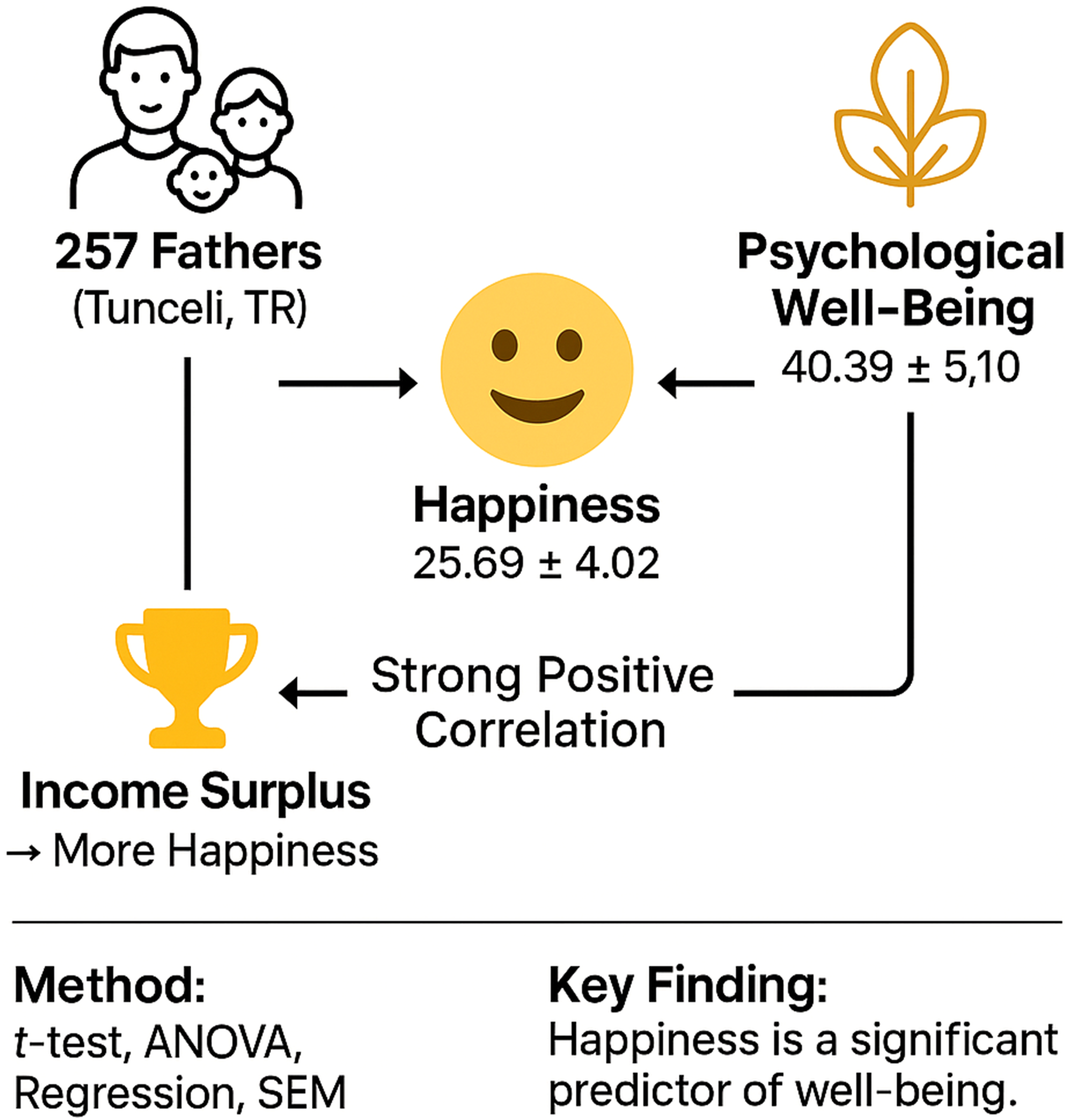
Fatherhood significantly influences psychological well-being and happiness, yet fathers particularly of young children are underrepresented in research. This study examines the relationship between happiness and psychological well-being in this group. This study aims to explore the relationship between happiness and psychological well-being among fathers of children in early childhood. A descriptive-correlational study was conducted with data collected online using validated self-report questionnaires on demographic characteristics, happiness, and psychological well-being from 257 participants. A statistically significant, strong, and positive relationship was found between happiness and psychological well-being (r = 0.626, p = 0.000). Regression analysis revealed that happiness explained 39.2% of the variance in psychological well-being and was a significant predictor (R2 = 0.392). Each unit increase in psychological well-being was associated with a 0.794-unit increase in happiness (β = 0.794; p < 0.05). Fathers’ happiness is a key determinant of their psychological well-being and psychosocial interventions targeting fathers may enhance both paternal and child well-being.
Introduction
Early childhood is a critical and significant period in individual development. The family environment and surroundings of the child influence all aspects of development and future life. During this period, parents play pivotal roles.
The parental role in early childhood is indispensable for the child’s healthy development and well-being (Bornstein, 2001). Although, traditionally and in many cultures, mothers are regarded as the primary figures in a child’s development, care, and education (Atzaba Poria et al., 2010; Güngörmüş Özkardeş, 2010; Ramchandani & Psychogiou, 2009; Tavecchio & Van IJzendoorn, 1987; Von Klitzing et al., 1999), the importance of fathers and the necessity for their active involvement have become increasingly emphasized in recent years (Coverman & Sheley, 1986; Sayer et al., 2004).
Fathers’ participation in family life has become an important topic, with direct or indirect effects on the economic, physical, and psychological well-being of children (Adamsons & Johnson, 2013; Allen & Daly, 2007; Bronte-Tinkew et al., 2008; Day & Lamb, 2004; Kuzucu, 2011; Lynn, 1974; Morgan & Young, 2017; Skouteris et al., 2011; Vollmer et al., 2015; Walsh et al., 2016, 2017). Specifically, fathers’ involvement in caregiving activities such as nutrition has been shown to positively influence children’s cognitive, emotional, and social development—including areas such as emotional regulation, social competence, and language acquisition (Adamsons & Johnson, 2013; Allen & Daly, 2007; Buss, 2000; Goncy & van Dulmen, 2010; Kuzucu, 2011; Lynn, 1974; Planalp & Braungart-Rieker, 2016; Rodrigues et al., 2021; Sarkadi et al., 2008). There is also a widespread belief that fathers have an emotional and formative role in their children’s development (Lamb & Tamis-Lemonda, 2004). The literature indicates that fathers play an important role in children’s cognitive, emotional, and social development (Lamb, 2010; Ramchandani & Psychogiou, 2009). While these studies emphasize the importance of fathers’ roles in early childhood, the happiness and psychological well-being of fathers are also considered crucial. In this context, the concepts of happiness and psychological well-being are discussed below.
Happiness, Psychological Well-Being, and Fathers
Happiness, as a fundamental component of subjective well-being, is understood as a state characterized by a cognitive and emotional evaluation of one’s life, positive affect, and life satisfaction (Lyubomirsky, 2001). Psychological well-being, while related to happiness, encompasses broader aspects of positive functioning, such as autonomy, competence, and relatedness (Nelson & Stewart, 2019). Findings in the field suggest that happiness is a predictor of psychological well-being (Hills & Argyle, 2002; Kaya & Orçan, 2019; Yeşiltepe, Sayar & Çal, 2022). In the context of parenthood, fathers’ sense of competence and positive relationships with their children contribute to the satisfaction of their psychological needs (Nelson et al., 2019). Although happiness (mainly affective/evaluative) and psychological well-being (mainly eudaimonic/functional) are often used interchangeably in everyday language, distinguishing between the two is critical for a nuanced understanding of fathers’ experiences.
The happiness of fathers with children in early childhood is shaped by a complex interplay of inner identity, relational dynamics, and external support systems. Fathers’ psychological well-being is intricately connected to their evolving roles within the family and their children’s lives. Their beliefs regarding their various roles (fatherhood, partner, financial provider, etc.) significantly guide their behavior and involvement with their children (Fox & Bruce, 2001). Compared to mothers, fathers generally display different parenting behaviors, and these behavioral differences provide unique benefits for child development. For example, fathers tend to engage in activities that encourage the use of gross motor skills, promote exploration, and support independent behaviors, differentiating them from mothers’ approaches (Chaq, 2024; Feldman, 2023; Fletcher et al., 2011). These complementary parenting styles prepare children for a range of social experiences outside the home and help them regulate their emotions and behaviors. Fathers’ behaviors are also instructive in teaching children socially acceptable ways of managing aggressive impulses (Chaq, 2024). The manner in which fathers interact with their children (e.g., rough-and-tumble play, encouraging risk-taking, using challenging language) is not only different but uniquely beneficial for child development—promoting resilience, emotional regulation, and independence (Feldman, 2023; Fletcher et al., 2011; Freeman & Robinson, 2022). Supporting these unique aspects of fathering can be a strong protective factor not only for their own well-being (through participation and flow) but also for their children’s holistic development. Overall, these findings highlight the need to understand and promote the diverse contributions fathers make to their children’s lives.
While the general relationship between happiness and psychological well-being is well-established in the literature, this dynamic has been less explored among fathers of young children, especially when considering demographic influences. Previous studies (Diener et al., 2010; Forgeard et al., 2011; Hyde et al., 2008; Kashdan et al., 2009; Kringelbach & Berridge, 2010; Maslow, 1962; Nelson et al., 2015; Olcay, 2024; Seligman, 2011; Seligman et al., 2005; Tugade & Fredrickson, 2004) support a broad connection between happiness and psychological well-being. However, the specific context of fathers with children in early childhood represents an important gap.
Given the increasing recognition of fathers’ roles in early childhood development, it is essential to investigate the happiness and psychological well-being of these fathers, as well as the effects of demographic factors on this interaction. In this regard, this study aims to fill a significant gap in the literature by empirically examining the levels of happiness and psychological well-being among fathers with children in early childhood and the relationship between them, in light of demographic variables.
Research Questions
(1) Is there a relationship between the psychological well-being and happiness of fathers with children in early childhood? (2) Do psychological well-being and happiness levels of these fathers differ according to demographic variables? (3) Does psychological well-being predict happiness among these fathers?
Method
Study Design and Sample
This research was designed as a descriptive-correlational study. The study population consisted of fathers residing in Tunceli in Turkiye who have children in early childhood. A total of 257 fathers who voluntarily agreed to participate in the study were included in the sample. Only those who resided in Tunceli, gave informed consent, and completed all required forms were included. Data was collected via Google Forms. Those who did not agree to participate were excluded. The correlation coefficient between the two scales was found to be r = 0.626, indicating a moderately strong positive relationship. Given the large sample size (n = 257), the statistical power of this analysis is very high, and the observed correlation is highly unlikely to be due to chance. This result suggests that as scores on one scale increase, scores on the other scale also tend to increase significantly. According to commonly accepted benchmarks (Cohen, 1988), a correlation above 0.5 is considered large, further supporting the practical significance of the relationship observed in this study. A statistical power of 0.80 or greater is generally considered sufficient to indicate an adequate sample size in the social and health sciences (Cohen, 1988).
Inclusion Criteria
(i) Being a father of at least one child aged 0–6 years (ii) Residing in Turkey (iii) Being 18 years of age or older (iv) Not having any communication barriers (v) Agreeing to participate in the study
Exclusion Criteria
(i) Not having a child in the 0–6 age group (ii) Being under 18 years of age (iii) Having a communication barrier (e.g., not being able to speak Turkish) (iv) Not willing to participate in the study
Data Collection
The data was collected online from individuals aged 18–79 who volunteered to participate in the study through a questionnaire (Google Forms). Only those who completed the form in full were included.
Data Collection Tools
The study used the Demographic Characteristics Questionnaire, the Turkish adaptation of the Oxford Happiness Questionnaire Short Form (Doğan & Akıncı Çötok, 2011; Hills & Argyle, 2002), and the Psychological Well-Being Scale (Diener et al., 2010).
Demographic Characteristics Questionnaire
This form, developed by the researchers, gathered demographic information such as age, marital status, education level, income, number of children, and whether participants received support for childcare.
Oxford Happiness Questionnaire Short Form
Developed by Hills and Argyle (2002), this 8-item short form was adapted and validated for Turkish by Doğan & Akıncı Çötok (2011). Psychometric properties were first examined, and its reliability and validity were assessed with 532 university students. The Turkish version showed internal consistency and test-retest reliability coefficients of .74 and .85, respectively. The scale is a 5-point Likert scale ranging from “strongly disagree” to “strongly agree.”
Psychological Well-Being Scale
To measure psychological well-being, the study used the scale developed by Diener et al. (2010), with Turkish adaptation by Telef (2013). The scale uses a 7-point Likert format ranging from “strongly disagree” to “strongly agree,” with scores ranging from 8 to 56. Higher scores indicate higher levels of psychological well-being.
Data Analysis
Analyses were conducted using AMOS, JASP 0.19, and SPSS 26. Normality of data distribution was tested using skewness and kurtosis. Student’s t-test and One Way ANOVA were used to examine group differences. Pearson correlation analysis was used to evaluate the direction and strength of linear relationships between variables. Simple linear regression analysis (Enter method) was used to determine the predictive power of happiness on psychological well-being. Normality of residuals and dependent variable distribution were checked prior to regression analysis. The Durbin-Watson test result was DW = 1.764, indicating no autocorrelation. Multicollinearity was assessed using VIF values (<5) and tolerance values (>0.20), confirming that no multicollinearity issues existed, which increases the reliability and internal validity of the regression results.
First-order confirmatory factor analysis (CFA) was conducted for both happiness and psychological well-being scales. Then, structural equation modeling (SEM) was used to examine the effect of happiness on psychological well-being. Items 1 and 7 of the happiness scale, with factor loadings below 0.40, were excluded from the SEM. The convergence of findings from both simple regression and SEM provides robust support for the predictive power of happiness on psychological well-being. All results were evaluated at a 95% confidence interval and p < 0.05 significance level.
Findings
Most participants were aged 31–35 (35.4%), indicating the sample mainly comprised early- and mid-adulthood individuals. Regarding education, 48.2% were university graduates, indicating a high education level. In terms of income, 55.6% earned more than 45,000 (currency unspecified), indicating a relatively high-income distribution. The largest group in terms of the number of children was fathers with one child (31.1%). Regarding childcare, 46.7% received support, indicating that a significant portion of fathers received assistance (Figure 1). Distribution of the fathers participating in the study according to demographic variables (n = 257)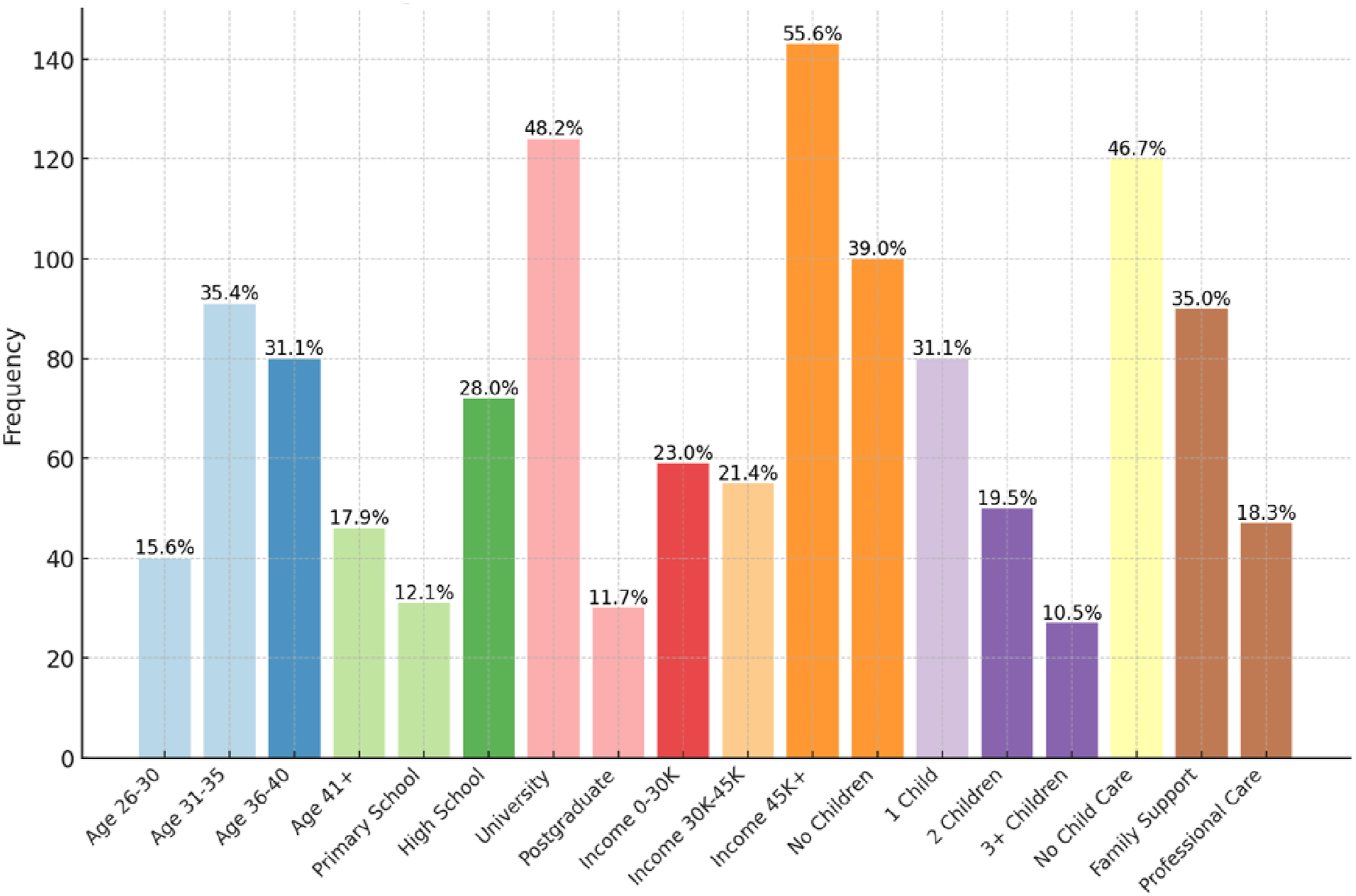
Mean Happiness Scale and Psychological Well Being Scores of the Participants and Reliability Coefficients of the Scales
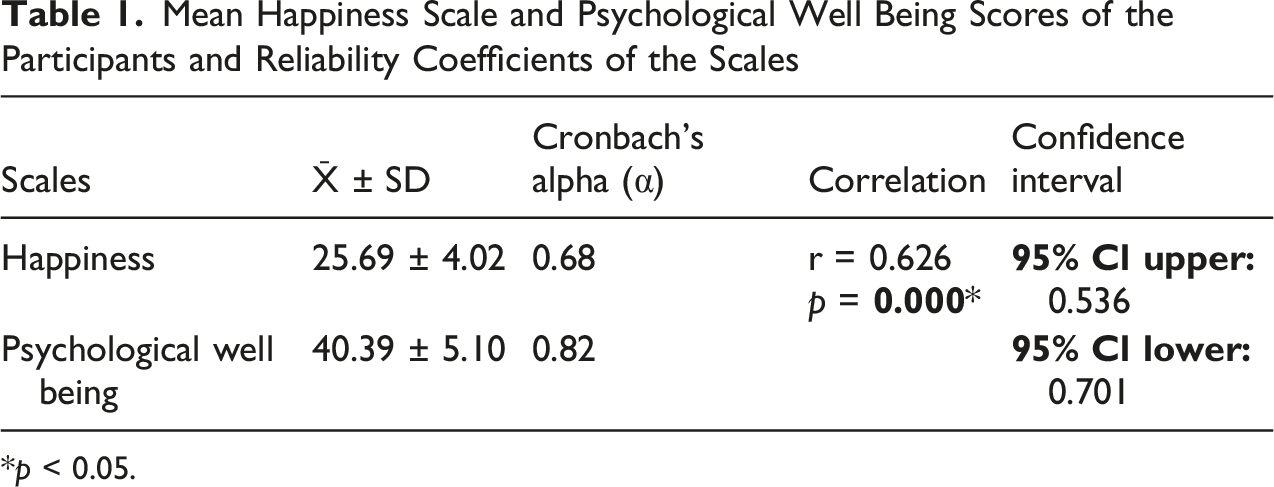
*p < 0.05.
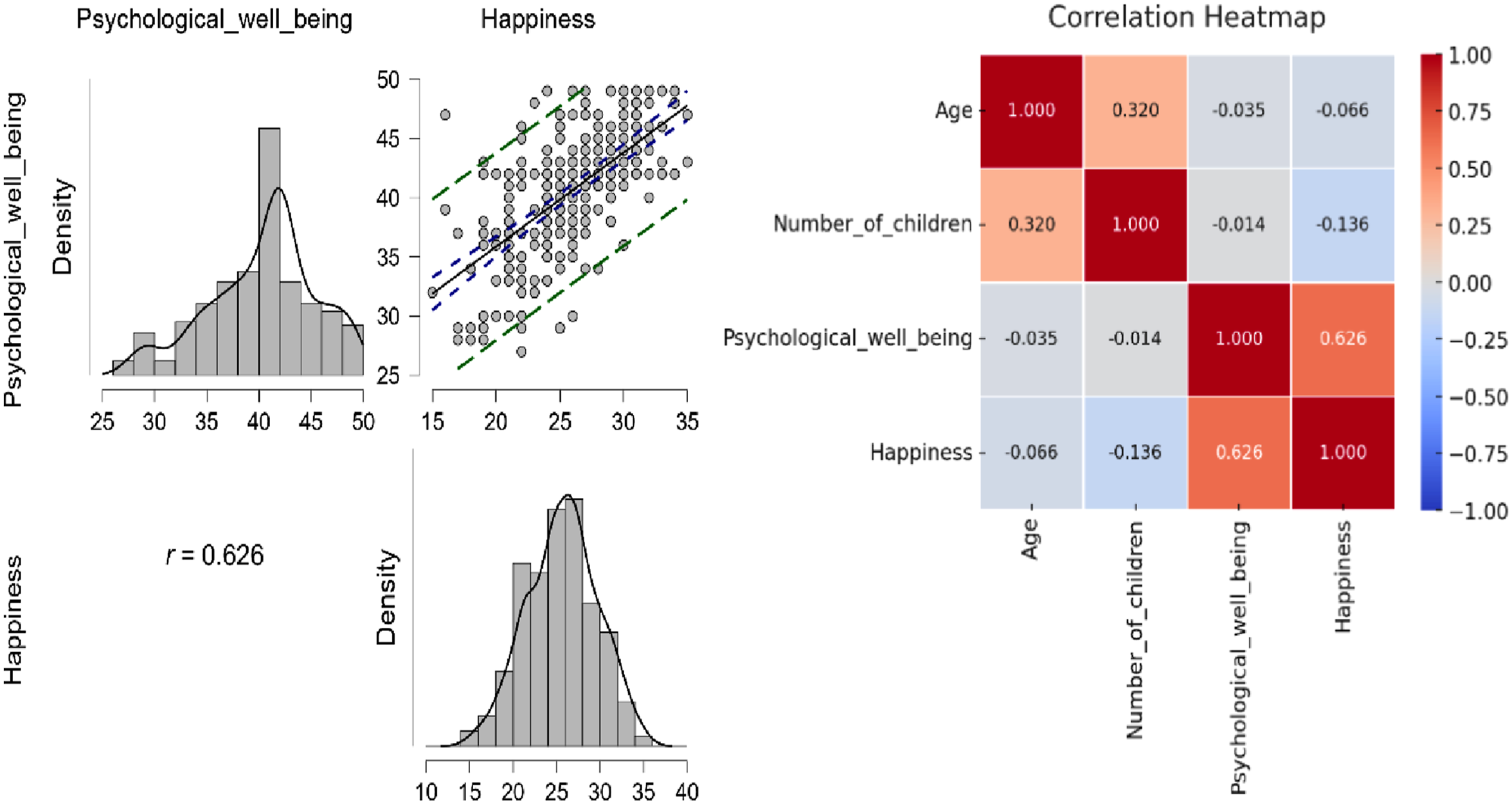
Density and scatter plots illustrating the relationships among the oxford happiness questionnaire, psychological well-being, and continuous variables
Results of the Simple Linear Regression Analysis Examining the Predictive role of Happiness on Psychological Well-Being

*p < 0.05.
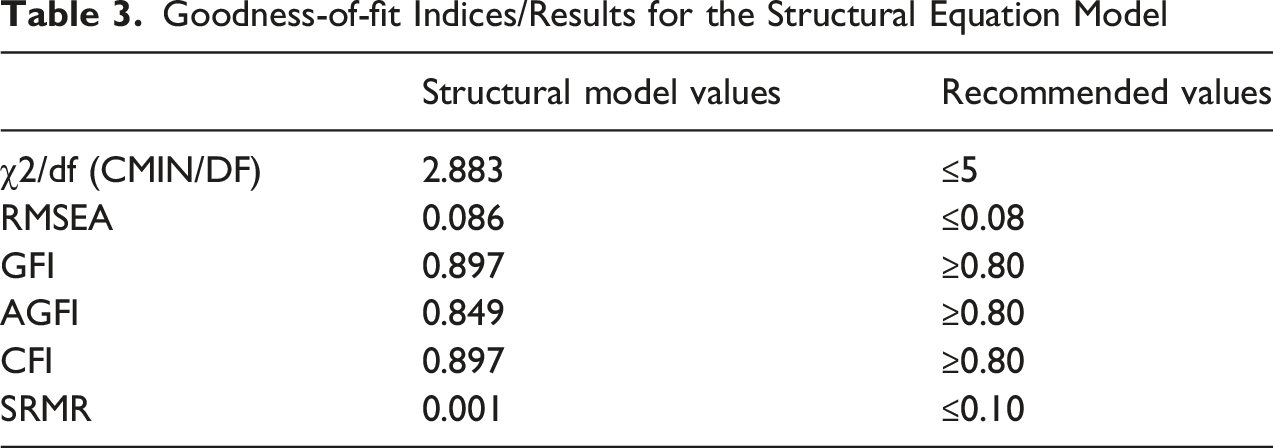
Goodness-of-fit Indices/Results for the Structural Equation Model
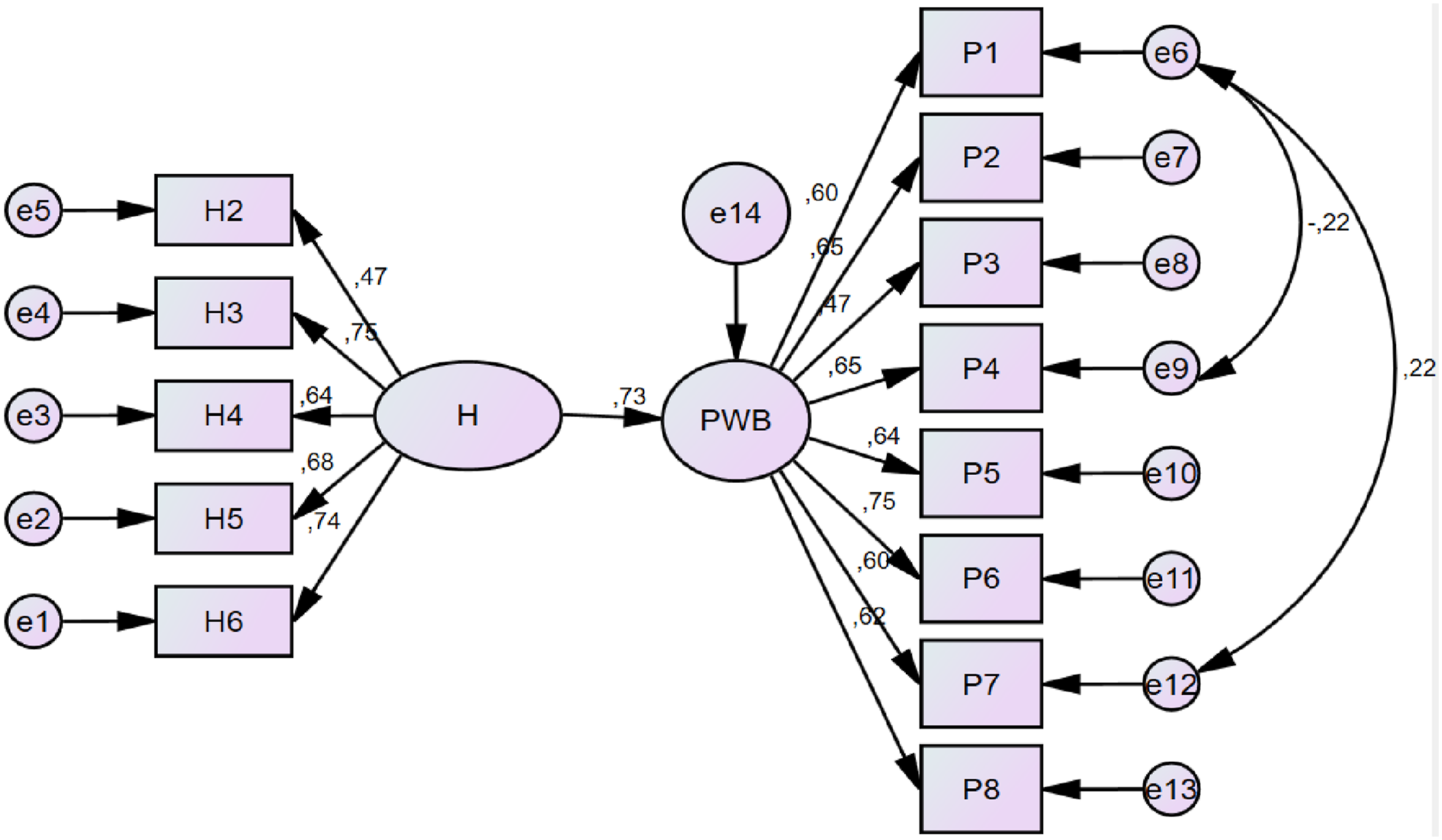
First-order single-factor confirmatory factor analysis of the oxford happiness questionnaire and the psychological well-being scale
SEM results confirmed the relationship (χ2/df (CMIN/DF) = 2.883; RMSEA = 0.086, slightly above the recommended 0.08; GFI = 0.897, AGFI = 0.849, CFI = 0.897—all above 0.80; SRMR = 0.001, below 0.10, indicating good fit) (Table 3).
Comparison of the Means of Happiness and Psychological Well-Being According to Socio-Demographic Characteristics
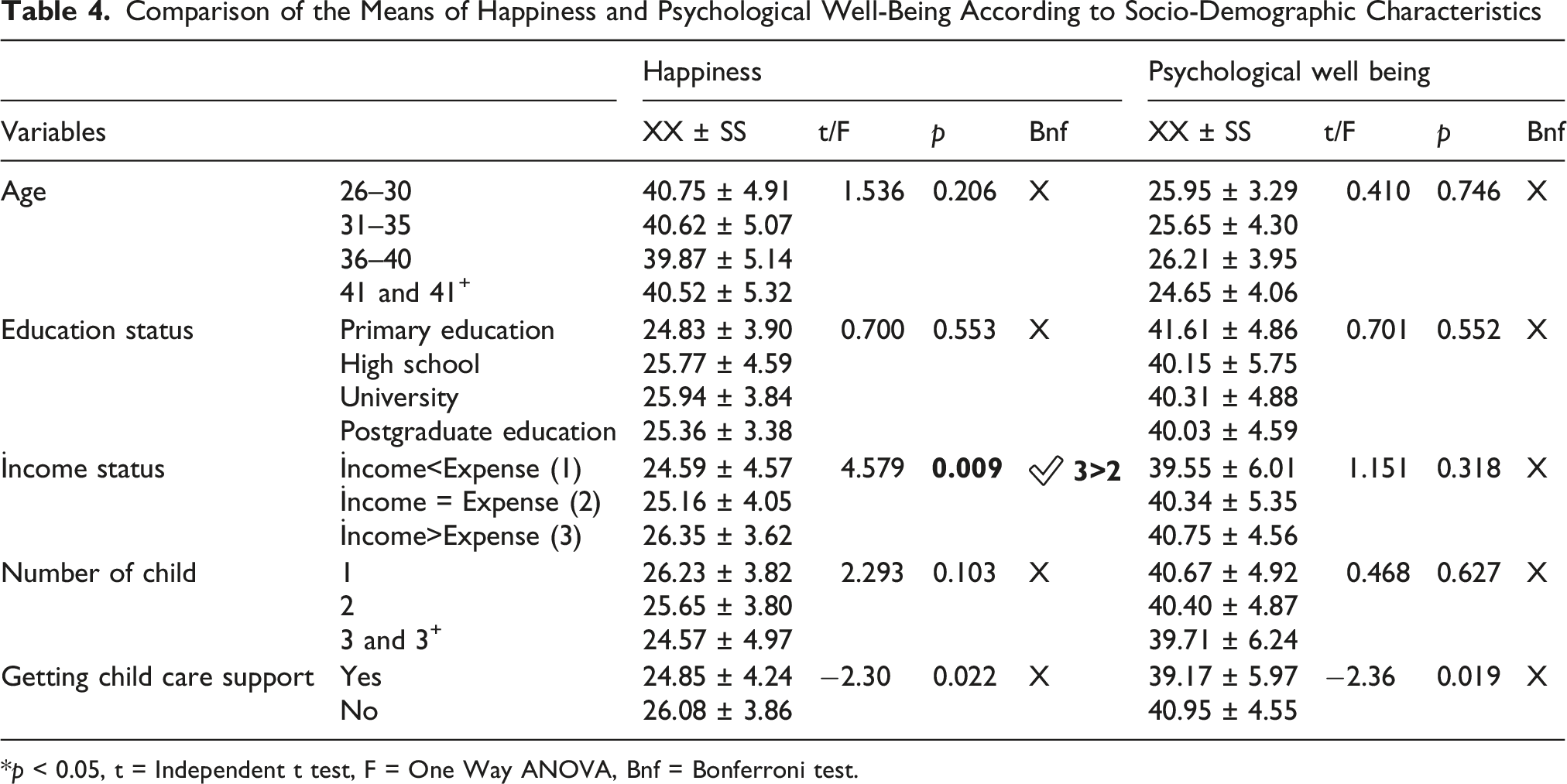
*p < 0.05, t = Independent t test, F = One Way ANOVA, Bnf = Bonferroni test.
Discussion
This study aimed to examine the relationship between happiness and psychological well-being among fathers with children in early childhood, the effect of demographic variables, and the predictive power of happiness on psychological well-being. Findings revealed a statistically significant, strong, and positive relationship between fathers’ happiness and psychological well-being. This result establishes happiness as a significant predictor of psychological well-being. The strength of this relationship was confirmed by both simple linear regression analysis and SEM (see Table 3 and Figure 3). These findings are consistent with previous research (Hills & Argyle, 2002; Kaya & Orçan, 2019; Yeşiltepe, Sayar & Çal, 2022).
One key finding is that fathers’ psychological well-being was “high,” while their happiness was “moderate.” As outlined in the introduction, while happiness and psychological well-being are often used interchangeably in daily language, they represent different constructs: happiness mainly reflects subjective evaluation based on positive affect and life satisfaction, while psychological well-being encompasses broader, more meaning-based (eudaimonic) dimensions such as autonomy, competence, and positive functioning. Therefore, while the momentary happiness of fathers may remain at a moderate level due to the challenges and responsibilities associated with fatherhood, this role may also provide a sense of purpose, competence, and meaningful relationships, thereby keeping their overall psychological well-being high. This is consistent with the idea that fathers’ psychological well-being is intricately linked to their evolving roles and the beliefs that guide their behavior.
Another important finding is that happiness accounted for 39.2% of the total variance in psychological well-being, highlighting its fundamental role in fathers’ overall psychological health. This result is consistent with the broader literature on the link between happiness and psychological well-being (Diener et al., 2010; Kashdan et al., 2009; Seligman, 2011). The unique contribution of this study, however, is that it addresses this relationship in a less explored population: fathers with young children in Turkey. With the growing emphasis on fathers’ roles in child development (Lamb, 2010), understanding the dynamics underpinning their psychological health is critical.
Analysis of demographic variables yielded some unexpected and intriguing results. Age, education, and number of children did not significantly affect happiness or psychological well-being, suggesting that the primary relationship between these two variables is robust regardless of these demographic factors. On the other hand, fathers whose income exceeded their expenses reported higher happiness, in line with existing evidence on the protective effects of financial security and reduced stress (Conger et al., 2010).
The most surprising finding was that fathers who did not receive external support for childcare reported significantly higher happiness and psychological well-being than those who did. At first glance, this seems counterintuitive. However, it may indicate that direct and intensive involvement in childcare strengthens fathers’ sense of competence and their bond with their children, positively contributing to their well-being and happiness. Given the unique developmental benefits associated with fathers’ engagement in physical activity, exploration, and the encouragement of independence (Chaq, 2024; Feldman, 2023; Fletcher et al., 2011; Freeman & Robinson, 2022), it seems plausible that unmediated paternal involvement enhances fathers’ happiness. This is indirectly consistent with studies demonstrating the positive effects of paternal involvement on child well-being (Baker, 2016; John & Halliburton, 2010; Rollè et al., 2019).
Strengths and Limitations
This study fills an important gap in the field by investigating happiness and psychological well-being among fathers with young children in Eastern Anatolia. Adequate sample size, reliable scales, and comprehensive statistical analyses increase the validity of the findings. However, its cross-sectional design limits causal inferences. The fact that most participants were university graduates and from high-income backgrounds limits the generalizability of results.
Conclusion
This study empirically demonstrated that, for fathers with children in early childhood, happiness is not merely a transient emotional state but a strong and meaningful predictor of psychological well-being. The findings highlight that the strong bond between fathers’ happiness and psychological health, combined with their indispensable role in their children’s lives, holds important implications for both family and societal health. Any psychosocial support or interventions aimed at increasing fathers’ happiness are likely to positively affect not only their own psychological well-being, but also, through the establishment of healthier and more constructive relationships with their children, the development of the children themselves.
Given that the sample mostly consisted of university-educated, high-income fathers, generalizability is limited. Future research should test these findings in more diverse samples with different socio-economic and cultural backgrounds. In particular, qualitative research exploring why fathers who do not receive childcare support are happier and have higher well-being may deepen understanding of the relevant dynamics. Ultimately, this study demonstrates with empirical evidence that the question, “Daddy, are you OK?” is not just about a father’s momentary mood, but concerns the well-being of the entire family—especially the child—and fills an important gap in the literature. By demonstrating that happiness is a strong predictor of psychological well-being, the study offers practical implications for interventions to improve fathers’ psychological health. It also draws attention to the potential effects of demographic characteristics on well-being, highlighting the importance of future studies with more diverse samples.
Ethical Considerations
Before starting the study, XXX University ethics committee approval (was obtained. The principles of the Declaration of Helsinki were followed throughout all stages of the study. At the beginning of the form sent to potential participants via Google Forms, the purpose of the study and the research team were introduced. The potential participants were informed that participation in the study was voluntary, they could withdraw from the study at any time if they wanted to, their information would be kept confidential, and their data would only be used for scientific purposes. Those who agreed to these terms provided informed consent.
Footnotes

Consent to Participate
Before data collection, all participants were provided with and signed informed consent google forms.
Funding
The authors received no financial support for the research, authorship, and/or publication of this article
Declaration of Conflicting Interests
The authors declared no potential conflicts of interest with respect to the research, authorship, and/or publication of this article.
Data Availability Statement
Data used to support the findings of this study will be provided by the corresponding author.