







Abstract
The desire for a second child is crucial to the effectiveness of China’s birth policies. However, it is unclear about the content or determinants of it among adults of childbearing age who were raised under the One-Child Policy period and have experienced profound birth policy and socio-cultural transformations since 1980s. Accordingly, this study employed a constructivist grounded theory (CGT) approach and conducted in-depth interviews with 46 participants (15 post-80s, 15 post-90s, and 16 post-00s). The findings revealed a three-dimensional structure of multiple fertility desires, encompassing motivations to have a second child for oneself, for one’s children, and as a symbolic expression of family cohesion. Among these, child-related considerations emerged as most central. Furthermore, the study categorized self-, family-, and socio-cultural factors shaping fertility desires, with “educational involution” highlighted as particularly distinctive within Chinese families. Cohort-based similarities and differences in both the content and factors of fertility desires were also delineated.
It has been a decade since the Chinese central government reversed the one-child policy (Xinhua, 2015, 2018), aiming to encourage adults to have more than one child. Nevertheless, the birth rate is still low (National Bureau of Statistics of China, 2024), and adults’ desired number of children remains below two (Basten & Jiang, 2015), leading to a puzzle that why the end of “one-child policy” does not guarantee a willingness of having a second child (Wang & Ye, 2023). While numerous studies have tried to solve this puzzle by conducting large-scale surveys on adults’ ideal number of children (i.e., an index of fertility intentions), by carefully investigating the costs and benefits of having a second child (e.g., Cai, 2010; Chen et al., 2019), and by examining potential predictors such as demographic (e.g., gender, age, education, hukou/birthplace; for meta-analyses, see Ren et al., 2024; Yang et al., 2023), economic (e.g., income, occupation; Cai, 2010; Chen et al., 2019) and social factors (e.g., local service provision and social-normative climates; Yu & Liang, 2022; Ullah, 2025), there is still a vacuum in understanding some fundamental questions regarding individuals’ basic beliefs and attitudes about the worth, usefulness, or importance of having (or not having) a second child. For instance, regardless of their status (e.g., whether being an only child/married/having children), do adults think having a second child is good or bad? How do they feel about having a second child? Why do they desire, or not desire a second child?
In the current study, we tried to address the fundamental questions about the desire for a second child and focused on adults who are of childbearing age (18–49 years of age). These adults’ perspectives on having two or more children are crucial to the effectiveness of the new birth policies, as well as the formation of a new birth culture accordingly. More importantly, they are in the front line of the collision of old and new social values on the fertility desire of the second child. Specifically, they are born and grow during the one-child policy period, including 40% of them who are the only children themselves. 1 Unsurprisingly, values of “being an only child is proud/good” and “it is ideal to have one and only one child” is so widely dominated in Chinese cultures between 1982 and 2012 (Cameron et al., 2013; Settles et al., 2013), leading to a lag, if not resistance, of the adapting to the new birth policies and culture accordingly. Thus, exploring their desire for two or more children not only addressed the practical question of how to lift the birth rate and maximize the effectiveness of new birth policies but also addressed the theoretical question of how individuals’ desires form and reform during the process of huge socio-cultural and policy changes. Specifically, how the generations of the only-child period view themselves in retrospect, plan their families and lives now, and in the future.
The Fertility Desire, From 0 to 1 and From 1 to Multiple
Fertility desire refers to an individual’s emotional and motivational inclination toward childbearing—what a person ideally wants, independent of practical constraints or external circumstances (Miller, 1995). It is relatively stable but keeps developing across the life course (Barber, 2001), as it is shaped by both internal psychological factors (e.g., own beliefs towards giving birth, living experiences) and sociocultural norms (Yeatman et al., 2020). Based on the Traits–Desires–Intentions–Behavior (TDIB) framework (Miller, 1995), the fertility desire is a precursor of fertility intention, which is more goal-directed and shaped by contextual feasibility (Miller, 2011). Also, the fertility desire is more fundamental to the fertility behaviors compared with fertility intention (Miller, 2011; Wang & Wang, 2016). Accordingly, even if these adults are capable of having children and live in supportive circumstances, those without fertility desires are unlikely to intend to give birth, let alone actually do so (Yeatman et al., 2020). This is exactly (part of) the case in the Chinese society now, namely, while the policy makers try hard to establish a fertility-friendly society, individuals just don’t respond to these establishments, implying a necessity of understanding the fertility desire. Despite a growing number of studies focused on this concept (e.g., Morgan & Rackin, 2010; Yeatman et al., 2020), there are two gaps in the literature that this study addressed. First, and methodologically, while researchers often use the number of ideal children as a measurement of fertility desire (Basten & Jiang, 2015; Bongaarts, 2001; Iacovou & Tavares, 2011), they fail to capture the motivational and affective nature of it, let alone its development throughout both individuals’ life course and socio-cultural shifts. Thus, qualitative studies that investigate the psychological nuances of fertility desire are warranted to complement demographic studies and provide insight into the motivational and affective underpinnings of fertility behavior, especially in the context of rapidly shifting cultural and policy environments (e.g., Chinese culture).
Second, and conceptually, we proposed that the multiple fertility desire (e.g., desire of having a second child, from 1 to 2) is distinct from the desire of the first child (e.g., 0–1) for two reasons. First, giving birth to the second child introduces a new relationship, siblingship, into the family system (Cox, 2010; Feinberg et al., 2012). Family members and subsystems are inextricably interconnected and interdependent, and changes at any level can trigger future changes in the relationships between individuals and different family subsystems, as well as changes in the family system as a whole (Cox & Paley, 2003). Thus, the desire for having another child is more complex than that for a first child, as adults must consider additional individuals (e.g., the existing child) and relationships (e.g., sibling bonds). Second, given that most married couples in China are accustomed to having one child, the birth of a first child may not involve much personal weighing, while the birth of a second child comes from a more personal choice (Zheng, 2021a). Accordingly, adults feel more personal and autonomous in deciding whether to have a second child than the first one. Overall, the desire behind giving birth to the first child and the second child is fundamentally different. However, previous studies have not yet focused on the multiple fertility desires.
Multiple Fertility Desire in the Post One-Child Policy Era
Despite the lack of knowledge of the content of the multiple fertility desire, scholars tend to agree that this desire is undergoing dramatic shifts in contemporary China (Lan, 2025; Yu & Liang, 2022). On the social level, the reversal of the one-child policy indicated the encouragement of having a second child (i.e., having a second child is good) from top to bottom, showing a complete reversal of the original values. Nevertheless, and from bottom to up, the negative value towards multi-child family have not yet been reversed (Lan, 2025; Yu & Liang, 2022; Tong & Zheng, 2024; Wang, 2024), as the influence of one-child policy on social values lingers (Cai & Feng, 2021; Settles et al., 2013; Zhang, 2017). After all, the value of having one child and one child only is promoted almost exclusively during the three decades of the one-child policy period. Even more, two- or multi-children families are a non-mainstream family structure and have long been absent from the mainstream family culture (Cai, 2010; Raymo et al., 2015). Thus, the cultural value of “have one and one only child is good enough” and “be proud to have only child in the family”, have been deeply rooted in Chinese society (e.g., Feng, 2021), lagging behind of reversal of birth policy (Cai, 2010; Greenhalgh, 2003; Raymo et al., 2015).
Adults in the child-bearing age descend, adjust, and incorporate social values based on their personal experiences, and eventually reform their desires towards having a second child (Basten & Gu, 2013; Guo et al., 2020; Groat et al., 1997). The collision of old and new social values exacerbates the complexity and intensity of this (re)formation. Furthermore, an individual’s personal experience is intertwined with the old (i.e., one-child culture) and new (i.e., multi-child culture) social values, leading to huge heterogeneity that should be considered in understanding the similarities and differences in fertility desires. The current study tried to focus on three groups of individuals (i.e., those born in the 1980s, 1990s, and 2000s, namely post-80s, 90s, and 00s). In the following, we introduce how focusing on them could deepen our understanding of the multiple fertility desires.
Post-80s, Post-90s, and Post-00s
Guided by life course theory (Elder, 1975, 1998; Elder et al., 2003), cohorts are defined by three dimensions: (1) individual lifespan (age-related physiological/psychological development), (2) social time (age-graded societal expectations), and (3) historical time (sociohistorical context). This study examines three Chinese birth cohorts (i.e., post-80s (1980–1989), post-90s (1990–1999), and post-00s (2000–present)), who grew up in distinct socio-economic contexts and now occupy different life stages. The post-80s are the last generation of the high-fertility period and the first generation born after the One-Child Policy and Reform and Opening-up. They navigated tensions between traditional and modern cultures (Greenhalgh, 2003), developing fertility values that balance child-rearing with self-actualization (Li & Luo, 2009; Song & Hu, 2022). The post-90s are the first generation of the fertility-decline era (Guo et al., 2020). They grew up amid normalized single-child families and display more self-oriented reproductive attitudes (Ning & Bai, 2023). The post-00s came of age during sustained low fertility. They witness successive policy adjustments and weakening single-child norms, and face sharper conflicts between traditional and individualistic cultures.
Previous studies mainly focused on post-80s and 90s and examined their ideal number of children, gender preferences, and desired timing of childbearing (e.g., Yang & Wu, 2021; Zheng, 2021b). Only a few in-depth qualitative studies addressed fertility desires and intergenerational differences among urban cohorts (Yang & Wu, 2021). Findings suggest that the post-80s moved away from traditional pronatalism (e.g., son preference), pursuing self-actualization through parenting (Li & Luo, 2009; Luo, 2008; Yang & Wu, 2021). The post-90s showed even weaker child-centered orientations, emphasizing parental happiness and self-worth, and framing reproduction as an individual choice grounded in economic independence and personality development rather than social obligation (Chen & Hu, 2020; Song & Hu, 2022).
However, previous studies focused almost exclusively on well-educated women (Li & Luo, 2009; Li & Wang, 2021; Luo, 2008; Yang & Wu, 2021), constraining the generalizability and raising questions regarding how multiple fertility desires are in diverse social groups, life stages, and relational contexts. To grasp a more comprehensive picture of how fertility desires are shaped, the current qualitative study seeks to take a step further by employing a more heterogeneous sample that includes women and men from diverse sibling backgrounds (only-child and non-only-child), cohorts (post-80s, post-90s, and post-00s).
The Current Study
Grounded in the life course theory (e.g., Elder, 1975, 1998; Elder et al., 2003), this study seeks to (1) explore the fundamental question of how Chinese adults of childbearing age (18-49 years) construct their multiple fertility desire of having two or more children. In addition, we seek to (2) capture both the differences and the similarities in three birth cohorts (post-80s, post-90s, and post-00s). Chinese adults of childbearing age are a special group of adults because they were born and grew up during the one-child policy period. Their desires for a second child are affected by both the one-child policy and the reversal of it. Nevertheless, the 30-year period of the one-child policy also witnessed the dramatic development of Chinese social changes, which may lead to distinct and unique characteristics of the multiple fertility values per birth cohort. Exploring these questions addresses a practical, social issue (i.e., how to improve the birth rate in China), and the findings could provide implications for policymakers to lift the multiple fertility desires and further construct a culture accordingly. In addition, theoretically, exploring these questions speaks to how individuals’ fertility desires develop throughout the course of birth-policy shifts, socio-cultural changes, and personal development. This is especially important nowadays because the rapidly evolving socio-demographic landscape has produced new forms of ambivalence, resistance, and negotiation around multi-fertility that have not been systematically captured or theorized. Methodologically, we took a grounded theory approach (Mohajan & Mohajan, 2022a; Nathaniel, 2023). As an addition to the quantitative measures on the multiple fertility (e.g., ideal number of children), the qualitative method helps to dig deeper into the motivations and desires of why people hope to have multiple children or not, and build an explanatory framework that accounts for how multiple fertility desires are co-constructed through life experiences and social change.
Method
Methodological Orientation
This study took a constructivist grounded theory (CGT) approach (Charmaz, 2006, 2017), which strengthened participants’ perspectives and treated theory as co-constructed through dialectical interaction between researchers and data. This orientation supports an inductive exploration of fertility desires across generational cohorts, focusing on how individuals conceptualize and negotiate fertility desires within developing sociocultural and policy contexts. The analytic process targeted two interrelated aspects: the conceptual meanings of fertility desire and the psychological and relational factors influencing these meanings. In addition to these two aspects, we attempted to organize and depict the broader sociocultural dynamics that frame fertility desires.
Participants, Sampling, and Ethical Approval
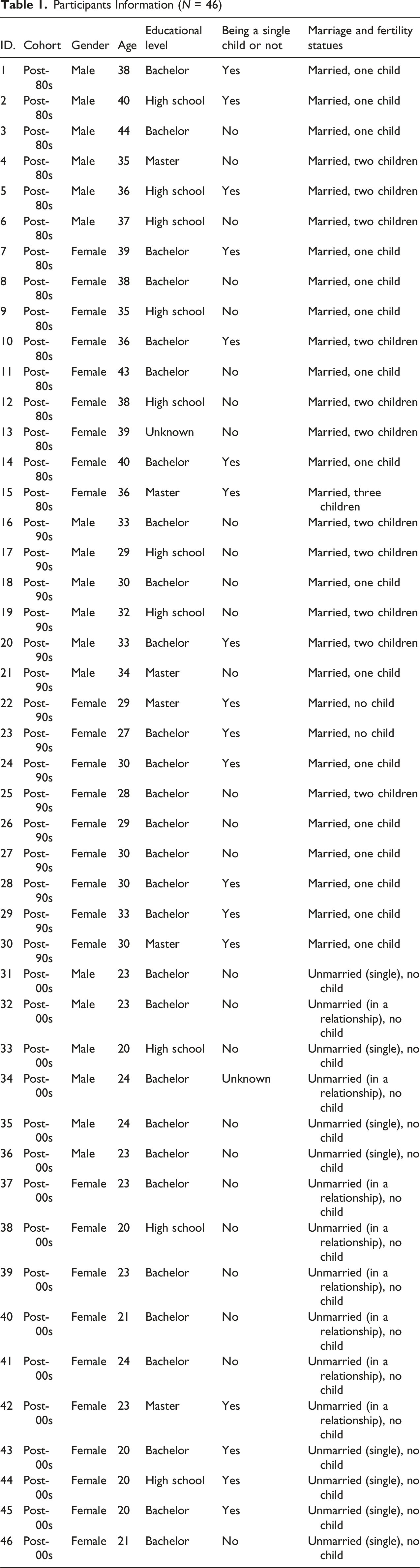
Participants Information (N = 46)
Reflexivity and Positionings
In order to incorporate the researcher’s subjectivity as a constitutive element of the research process (Charmaz, 2006), this study adopted a reflexive stance, explicitly incorporating the researcher’s subjectivity as a constitutive element of the research process (Charmaz, 2006). Methodological transparency was prioritized through the explicit acknowledgment of how the researchers’ social positions, lived experiences, and interpretive frameworks actively shaped research design, fieldwork, and data interpretation, moving beyond aspirations of neutrality. Researcher A, born in the 1980s and raised as an only child, possessed a normalized perception of single-child families during childhood, later disrupted upon encountering peers with siblings. Recent observations of peers navigating parenthood cultivated a reflective distance, sensitizing Researcher A to social scripts, ambivalences, and perceived contradictions within contemporary fertility narratives. Researcher B, born in the 1990s and raised in a two-child family, brought an appreciation for sibling relationships coupled with a firsthand understanding of the resource constraints faced by multi-child families. This background informed her capacity to recognize both the aspirational value and burdens associated with having multiple children, contributing interpretive sensitivity to narratives involving relational dynamics and reproductive compromise. The researchers’ contrasting positionalities created a productive analytical angle that enhanced theoretical reflexivity throughout the study. Both researchers identify as women of childbearing age, which facilitated rapport with participants, particularly female participants reflecting on reproductive experiences. However, this shared demographic identity necessitated heightened vigilance against over-identification or uncritical empathy.
To preserve analytic rigor, the researchers (1) used reflexive memo-writing to surface positional biases during data collection and interpretation (Mohajan & Mohajan, 2022b), (2) included peer debriefing sessions with external qualitative researchers to challenge interpretive assumptions; and (3) maintained audit trails documenting analytical decisions, code revisions, and theoretical development. These procedural safeguards ensured that insider knowledge functioned as an interpretive lens rather than an epistemic filter.
Data Collection
Participants took part in semi-structured interviews face-to-face (n = 24) or via videoconferencing (n = 22) with trained interviewers who are women in their 20s with a Bachelor’s or Master’s degree in psychology, and have conducted grounded theory studies beforehand. The interviewers used an interview guide developed by the first (a researcher familiar with the literature) and the second author (a researcher familiar with conducting grounded theory). Following principles of simplicity, thematic relevance, and openness (Charmaz & Belgrave, 2012), the guide included introductory questions focused on collecting sociodemographic information and on understanding their life history. These were followed by main questions informed by the research aim and relevant literature that explore (1) participants’ conceptualization of multiple fertility desire, and (2) perceived personal, siblingship-related, and social factors relevant to this desire, such as “How do you view the prospect of having more than one child (e.g., a second child)? What does having multiple children mean to you, your family, your children, or others? How have your current views on multi-child fertility been shaped?” The interview process was dynamically adapted to the real-time context and individual characteristics of each participant (e.g., marital status, gender), with probing questions utilized as necessary to elicit richer responses. Last, participants were asked for further reflection, depth, or context, and/or to clarify statements. Interviews ended with an opportunity for participants to make final comments and add additional information.
Data Transcription and Coding Analysis
Interview Transcription. All interviews were transcribed verbatim in Mandarin within 72 h of data collection, generating approximately 630,000 characters drawn from 48 h of recorded conversations. Transcription followed a standardized protocol to ensure fidelity to participants’ meaning-making processes and to facilitate close, line-by-line analysis. A tripartite indexing system was employed, tagging each semantic unit with an anonymized participant ID, page number, and line number (e.g., ND-05-19), thus supporting traceability and transparency throughout the analytic process (Charmaz, 2017). While transcription was primarily descriptive, the team remained reflexively attuned to nuances in tone, hesitations, and culturally embedded expressions, noting when interpretive dilemmas emerged (Birks & Mills, 2022). Transcripts were stored and managed using NVivo 11 Plus, maintaining strict data security protocols.
Grounded Theory Coding Procedure
Analysis progressed inductively through three recursive stages, including open coding, focused coding, and theoretical coding (Johnson, 2014). Throughout the coding, the researchers kept reflexive dialogue and iterative memo-writing to document analytic decisions, emotional responses, and emerging conceptual tensions. Stage 1: Open Coding. Initial coding was conducted line-by-line using NVivo 11 Plus, with particular emphasis on in vivo codes to preserve participants’ experiential language (e.g., “sibling dividend,” “generational sacrifice pressure”). This microanalytic process yielded over 3,500 preliminary meaning units, capturing diverse affective, behavioral, and cognitive dimensions of fertility-related dilemmas. Through constant comparison and weekly analytic meetings, overlapping or redundant codes were reviewed and consolidated into 2,679 unique conceptual labels. During this phase, the team employed bracketing strategies to suspend preconceptions and foreground participants’ voices (Charmaz, 2017; Tufford & Newman, 2012). Reflexive memos documented instances where researchers’ cultural assumptions intersected with participant narratives, serving as checkpoints for analytical transparency. Stage 2: Focused Coding. Building on the open codes, the team identified patterns and conceptual linkages across participants through focused coding. Codes were grouped into higher-order categories that reflected recurring tensions, such as economic precarity, intergenerational obligation, and shifting gender roles. Through categorization matrices, negative case analysis, and memo clusters, the team identified 54 focused codes. These were organized relationally to explore contextual conditions, mediating mechanisms, and participant strategies. The term “paradigm model” was intentionally avoided to remain consistent with CGT’s interpretivist stance (Charmaz, 2017). Instead, we explored how meanings were co-constructed in dynamic socio-cultural ecologies. Stage 3: Theoretical Coding. In the final analytic phase, theoretical coding synthesized focused codes into higher-order conceptual categories. Through constant comparative analysis, theoretical sampling, and peer debriefing, we identified 17 integrative codes with strong explanatory relevance. These were subsequently refined into nine core categories nested within two overarching theoretical domains: (1) the conceptual structure of multiple fertility desire (e.g., kinship expansion, moral recalibrations of intergenerational duty) and (2) factors shaping multiple fertility desires (e.g., gendered care economy, policy trust dynamics).
Reliability and Validity
To ensure methodological rigor, the study employed multiple verification strategies aligned with CGT’s constructivist orientation (Charmaz, 2017). (1) Intercoder reliability was assessed in early coding phases through independent coding by three trained analysts. A Category Agreement index of 0.709 was achieved, surpassing the threshold of 0.60 considered acceptable for reliability (Campion et al., 1997). Rather than treating convergence as validation, discrepancies were used as opportunities for critical dialogue, refining category boundaries and enhancing interpretive coherence (Barbour, 2001). (2) Theoretical sufficiency (Dey, 2004; Nelson, 2017) was evaluated through comparisons of later-stage interviews across generational cohorts. The analytic team determined that new interviews reproduced established conceptual patterns without introducing novel categories, suggesting sufficient scope and depth had been achieved. (3) The dialogic validity was supported through member involvement and external peer review (Maxwell, 2013). Three participants, one from each cohort, reviewed and synthesized findings and confirmed their resonance with lived realities (Birt et al., 2016). Two external experts with graduate-level training in psychology independently evaluated the findings using Maxwell’s (2013) framework, using a 5-point Likert scale (1 = Strongly Disagree to 5 = Strongly Agree). Ratings across descriptive, interpretive, and evaluative validity all exceeded 4.0 on a 5-point scale, affirming credibility. Expert feedback was also used to refine the clarity and precision of categories.
Results
The Conceptual Structure of Multiple Fertility Desire
Category 1, Giving Birth Again for Self: A Pathway to Self-Actualization and Reconstruction
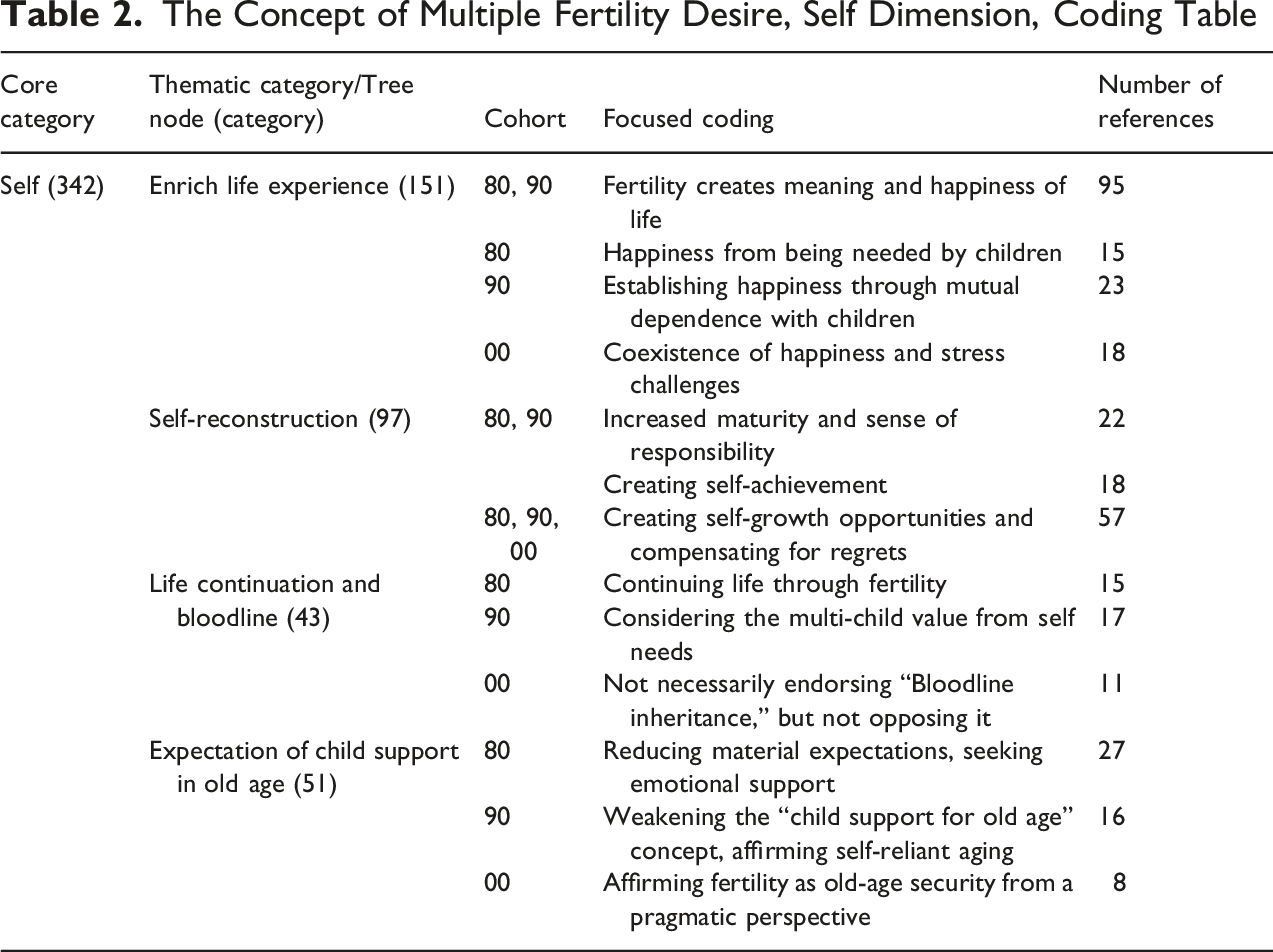
Enrich Life Experience
Participants framed having more than one child as a way to enrich life and multiply happiness. Larger families were seen as sources of vitality, joy, and hope for the future (e.g., “There is something perfect about having two—it gives people a sense of completeness and joy.”). However, the nature of this happiness diverged across cohorts. The post-80s emphasized the emotional gratification of being needed by young children, while the post-90s stress more on mutual dependence between parent and child, reflecting a shift from traditional caregiving roles toward relational reciprocity. In addition, the post-00s, all unmarried and childless, acknowledged the joys of parenting but also highlighted constraints on personal freedom. Overall, while for older cohorts, multi-child families reinforce parental identity and emotional purpose, for younger ones, the calculus includes lifestyle trade-offs. Additionally, giving birth again is a profound reconstruction of self, particularly for those who are single-children (e.g., “It feels like I am raising the child version of myself. Maybe that will help me heal from the traumas of my own childhood.”). These reflections suggest that multi-child fertility plays a reparative role in one’s personal development, and larger families offer opportunities for fulfilling the single-child parents’ willingness to have siblings.
Continuity of Life and Bloodline
Having multiple children was closely linked to biological and familial continuity. While the post-80s cohort framed multiple fertility as a way to extend one’s life and perpetuate family heritage (e.g., “I am the continuation of my father’s life, and my son is the continuation of mine. It is also a way of extending our family’s legacy.”), the post-90s rejected the idea of reproduction as a duty to preserve lineage and were more inclined to evaluate multi-child fertility in terms of its personal benefits (e.g., “There is no royal throne to inherit in our family.”). The post-00s adopted neither endorsing nor resisting them. Taken together, these differences illustrate an ongoing negotiation between traditional Chinese cultures and contemporary individualistic orientations.
Expectations of Children’s Support in Old Age
The Concept of Multiple Fertility Desire, Self Dimension, Coding Table
Category 2, Giving Birth Again for Children: A Support for Children
Emotional Companionship and Support
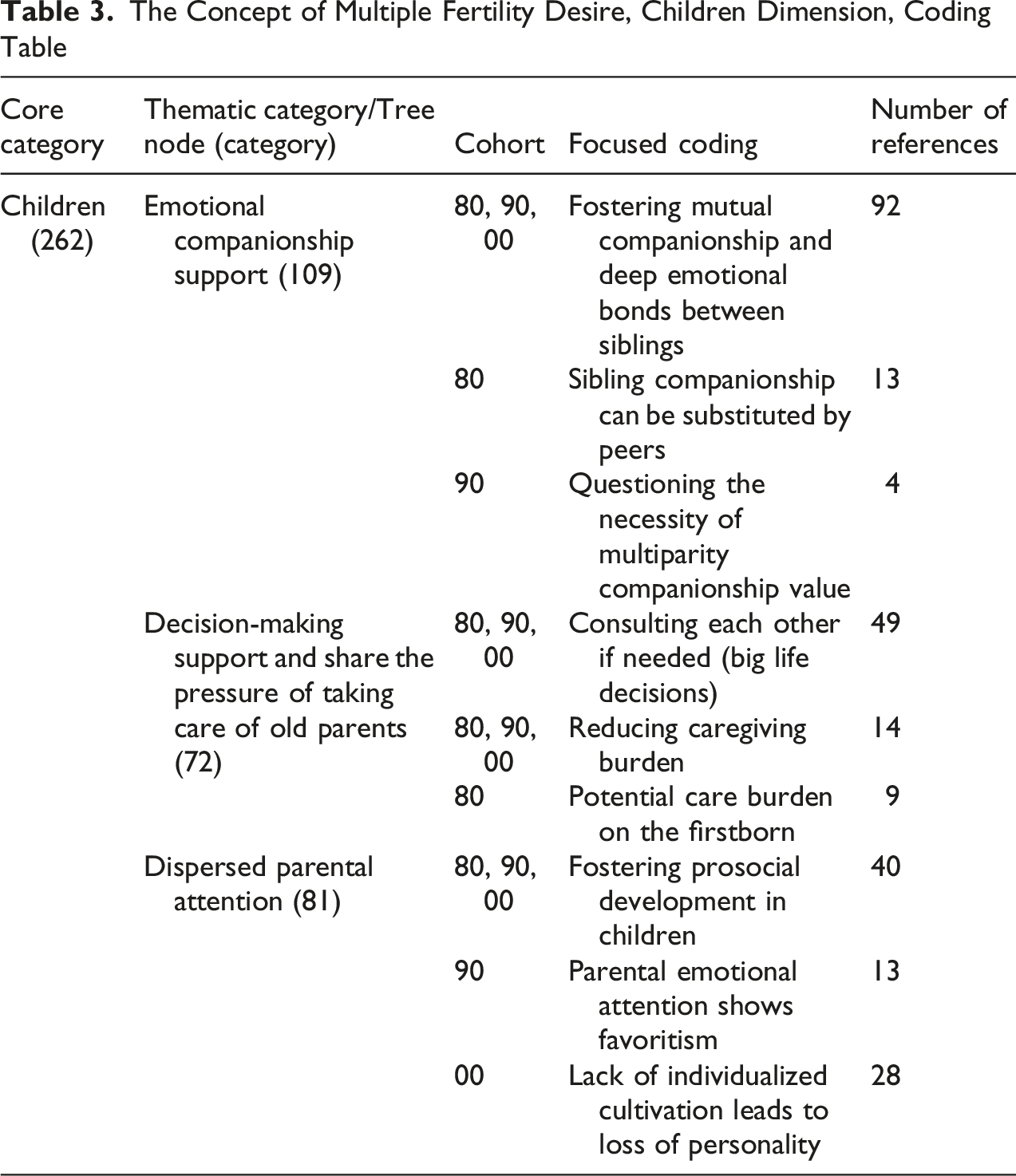
Participants across cohorts viewed sibling companionship as a long-term emotional resource, with siblings offering mutual support beyond childhood. However, the post-80s and 90s questioned the necessity of sibling companionship, as they are accustomed to single-child culture and have formed close peer networks outside the family (e.g., “Children can experience companionship through schoolmates or neighborhood friends—it is just the same.”). These results highlight a tension between viewing sibling bonds as an unquestioned good and adopting a more critical, child-centered evaluation
Collaborators in Decision-Making
The idea of mutual support extended beyond emotional life to practical cooperation, particularly in managing high-stakes family decisions such as eldercare or when parents are dead (e.g., “The real difficulty for only children comes when their parents face health problems—there is no one to discuss things with or share the burden. Nevertheless, when you have siblings, you can talk things through and figure out what to do together.”). The transition from companionship to collaboration underscores a pragmatic rationale for expanded family size. However, the post-80s who are at mid-30s when the single-child policy was revered, raised concerns about inequitable caregiving arrangements they have witnessed, particularly when the eldest child becomes a “parental surrogate” for much younger siblings (e.g., “I know someone almost 50 who had a second child. Who ended up raising that child? The eldest. Isn’t that unfair?”). This critical perspective may reflect their dual exposure to traditional filial obligations and the realities of intensive caregiving under China’s rapidly aging demographic.
Parental Attention Distribution
The Concept of Multiple Fertility Desire, Children Dimension, Coding Table
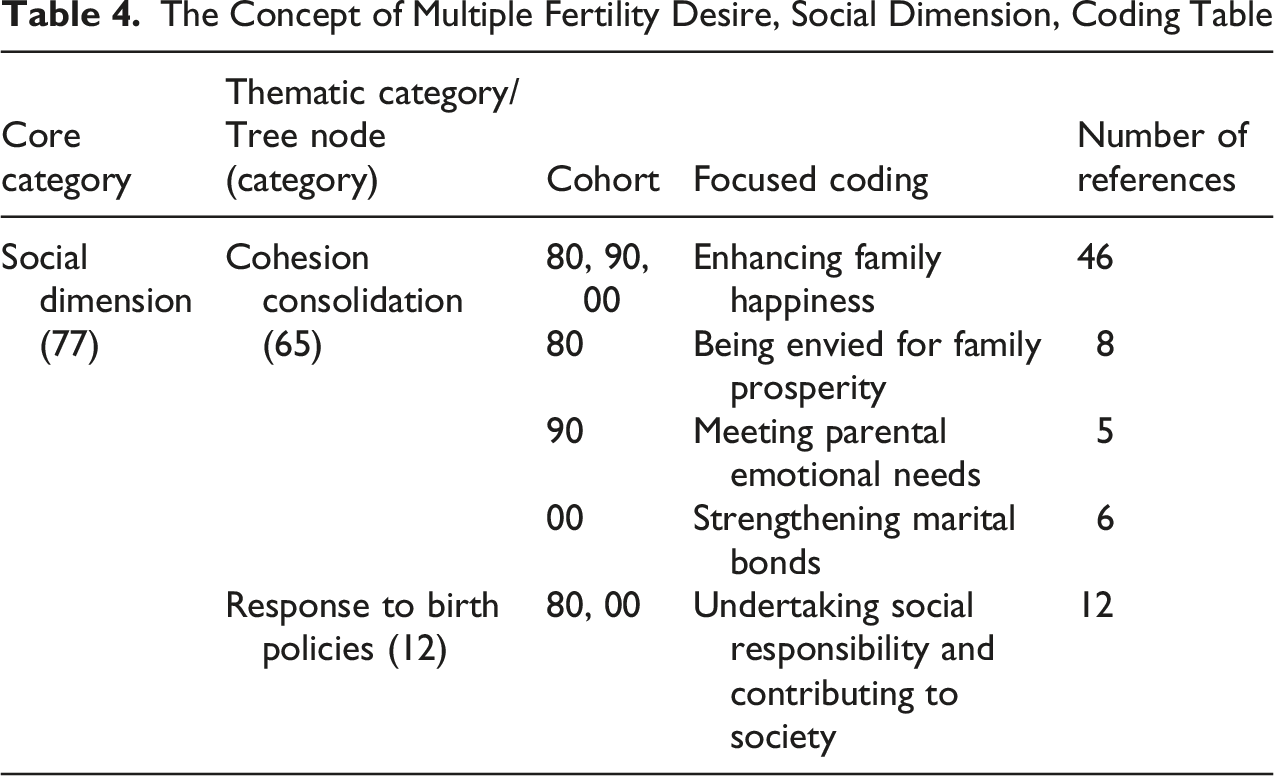
Category 3, Giving Birth Again for Sociality: A Fulfillment to Family Cohesion as a Social Symbol
The Concept of Multiple Fertility Desire, Social Dimension, Coding Table
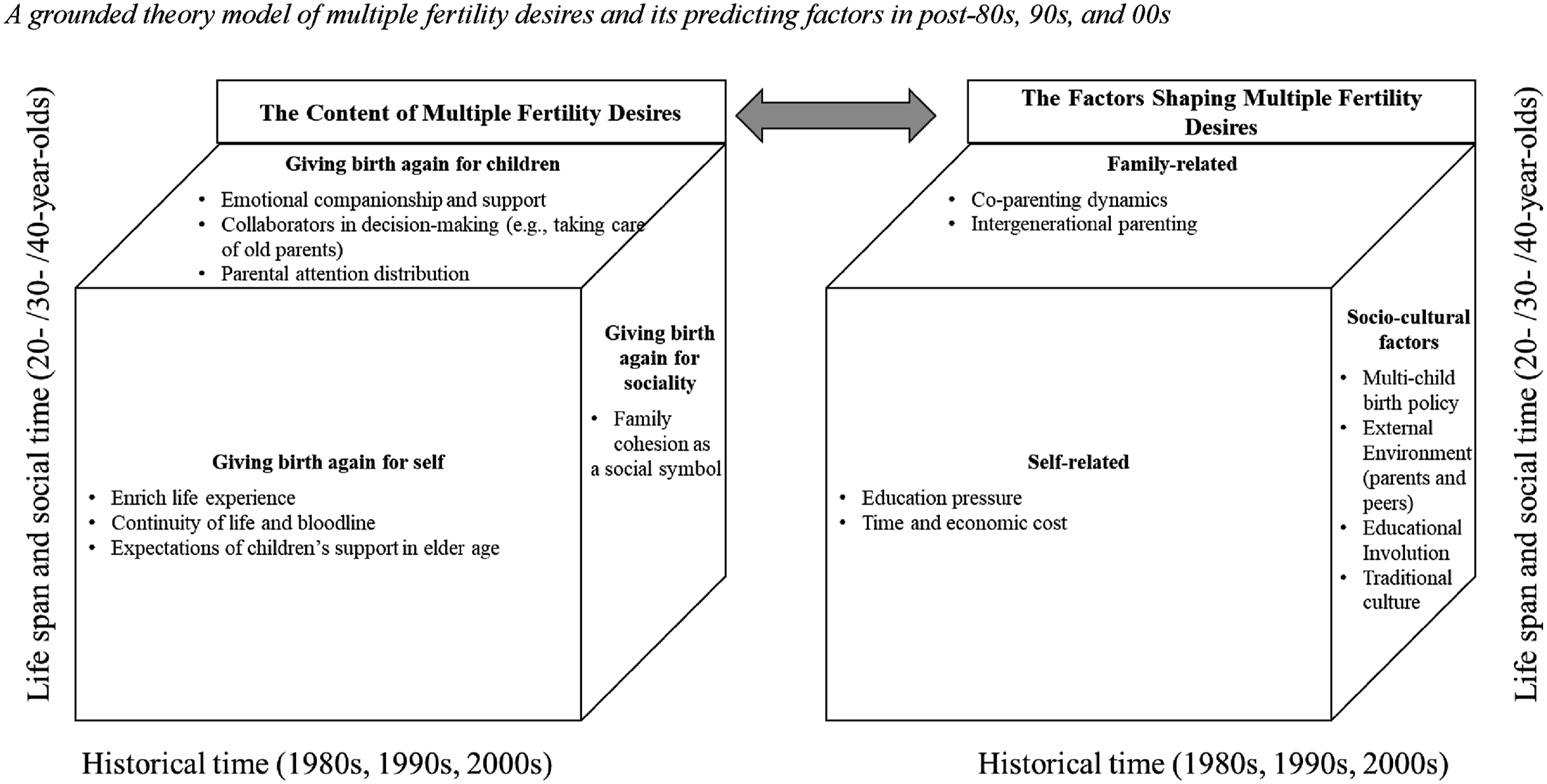
A grounded theory model of multiple fertility desires and its predicting factors in post-80s, 90s, and 00s
Factors Shaping Multiple Fertility Desires: Intergenerational Differences and Similarities
Category 1: Self-Related Factors
Education Pressure
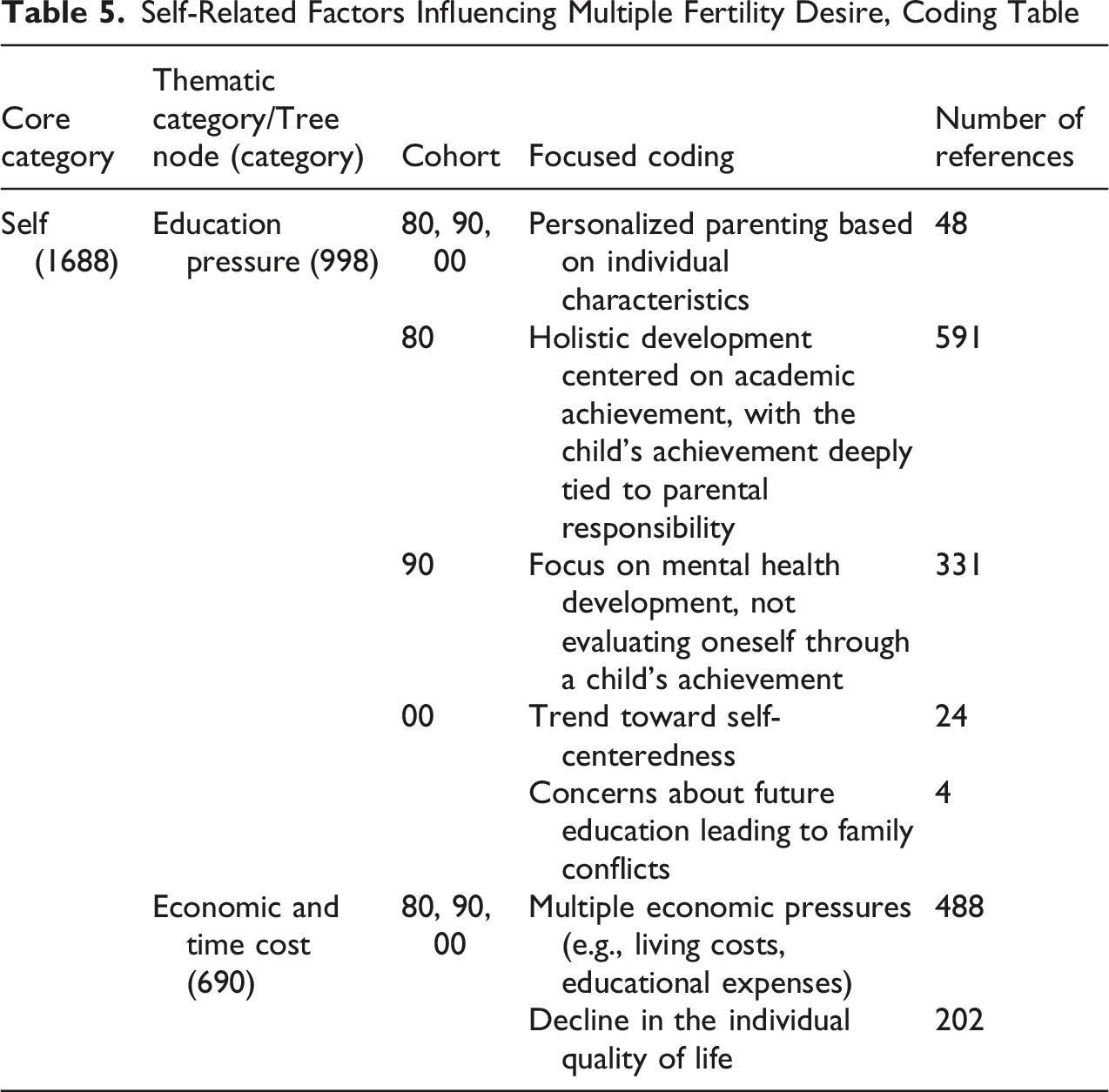
Despite this shared emphasis on education, cohort differences emerged in which parenting goals and educational values are prioritized. The post-80s’ educational aspirations were strongly centered on children’s academic achievement. Such high parental expectations amplified perceived burdens, leading many to reject the idea of “starting over” with a second child due to fears of being unable to sustain the same level of education commitment (e.g., “Going through this whole process again—starting over—I cannot accept it”). By contrast, the post-90s emphasized the importance of cultivating children’s individuality and mental health, and were less likely to equate children’s grades with personal success or failure as a parent, reflecting a more positive attitude toward giving birth again. The post-00s showed anxieties about the potential conflict of childrearing. However, they prioritized self-discovery and identity formation than thinking about child’s development (e.g., “At the age of 20, I am more focused on becoming the kind of person I want to be, rather than raising a child and helping them become who they are.”).
Time and Economic Cost of Raising a Child Again
Self-Related Factors Influencing Multiple Fertility Desire, Coding Table
Category 2: Family-Related Factors
Co-Parenting Dynamics
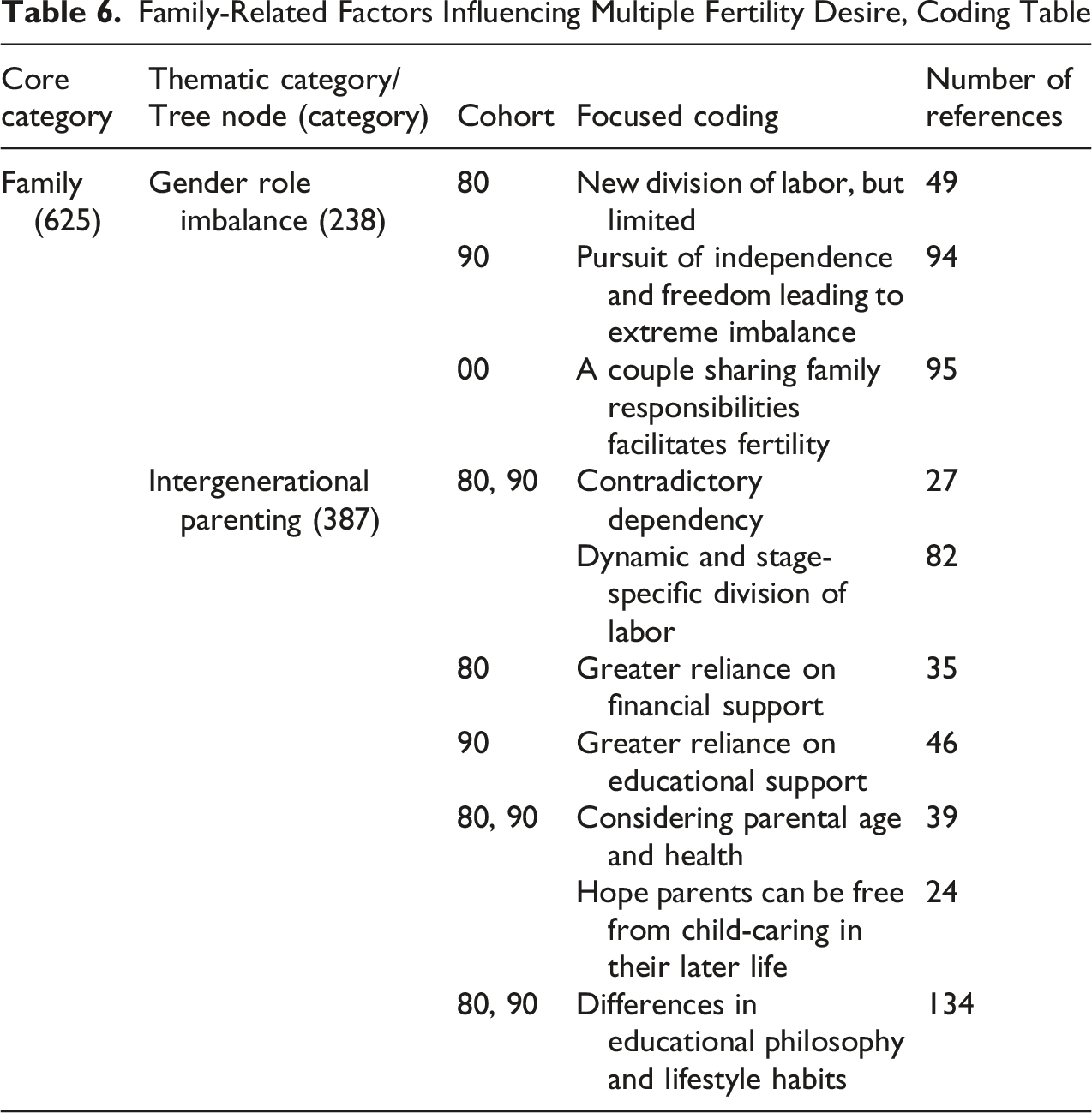
Imbalances in gendered parenting responsibilities consistently emerged as a core theme. For the post-80s, couples’ aspirations for egalitarian arrangements were frequently challenged by enduring structural and normative constraints, especially for men who faced intense work-related pressure. As a result, women are frequently getting through the emotional and practical burdens of child-rearing alone, heightening psychological stress and encouraging concentration on a single child rather than giving birth again. This illustrates the tension between ideal co-parenting and practical structural inequalities in contemporary Chinese families.
The post-90s displayed an even more pronounced imbalance in co-parenting, with mothers often assuming responsibility for both caregiving and education, while fathers playing a limited and distanced role, probably because these men are going through the working phase where the competition is most fierce. This asymmetry was normalized by children (e.g., “They always call for mom. Only when they cannot find her will they call [dad].”). Sometimes, paternal involvement had to be activated by the mother (e.g., “Sometimes I have to order him to interact with our child, like take him out for exercise.”). This pattern of imbalance reflects the burden both in and out of the family context for adults who are in their mid-30s.
The post-00s, though not yet parents, are highly aware of and critical to the inequitable distributions of co-parenting. They perceived women’s disproportionate family investment as a structural problem of modern Chinese families (e.g., “The wife is often more exhausted and worried than the husband.”). For this cohort, the anticipated inequities in co-parenting directly contributed to a reluctance toward multi-child family planning.
Intergenerational Parenting
Family-Related Factors Influencing Multiple Fertility Desire, Coding Table
Category 3: Socio-Cultural Factors
Multi-Child Birth Policy
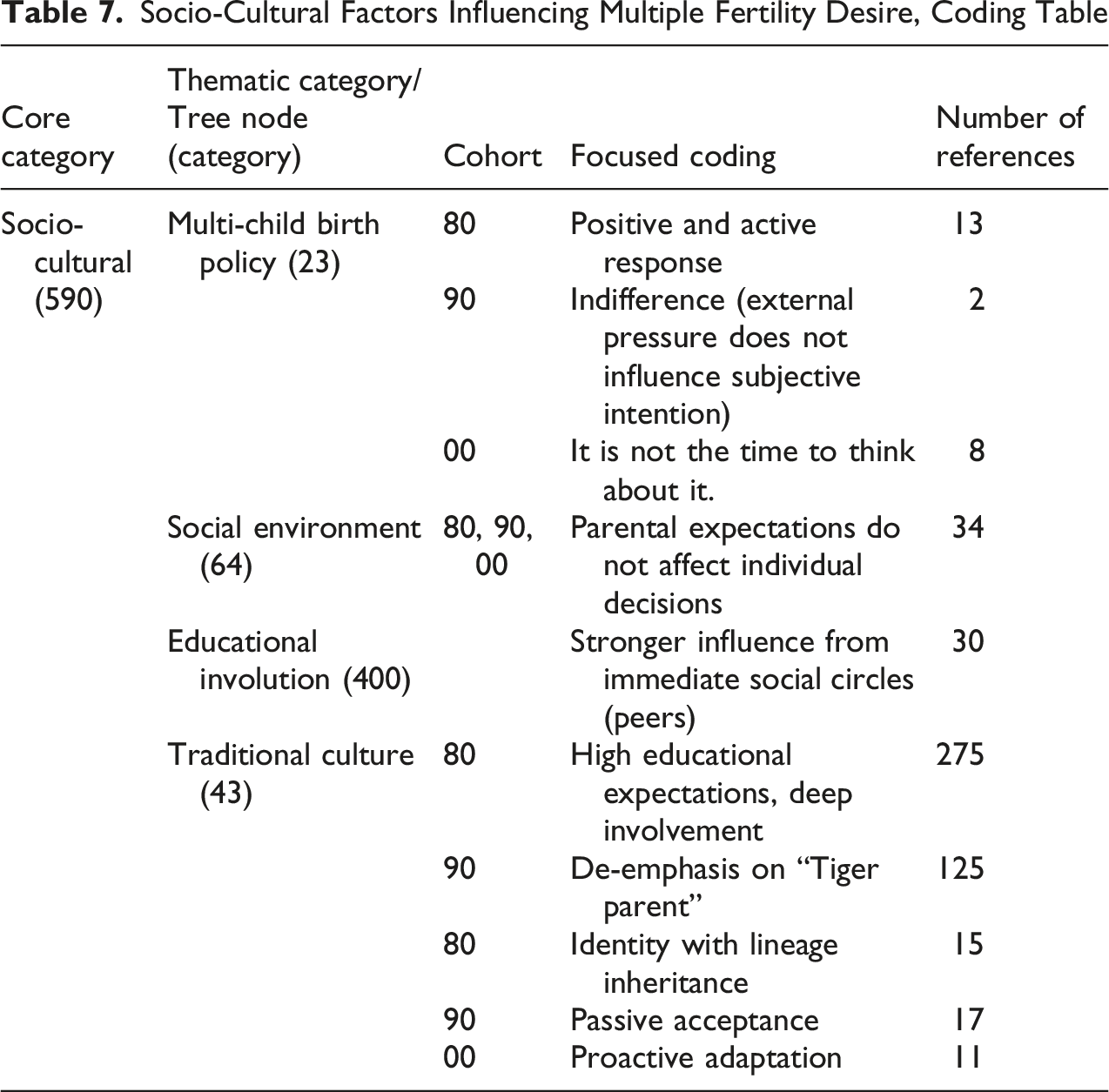
Participants’ responses to the changing fertility policies varied notably across cohorts. The post-80s generally welcomed the relaxation of the one-child policy, interpreting government initiatives as supportive encouragement and showing openness to another child (e.g., “The national policy is really good now, encouraging people to have a third child.”). In contrast, the post-90s perceived the policy as an external pressure that did not resonate with their priorities (e.g., “From my standpoint, I probably will not respond to the national policy”). Meanwhile, the post-00s are largely untouched by policy pressures (e.g., “The national policy focus on fertility has not yet reached us.”), and argued that effective incentives would need to alleviate the broader social and economic pressures (e.g., “If the state wants to encourage childbirth, then it has to gradually reduce the pressures we young people face.”). These differences might imply the role of life stages, as the post-80s are facing the closing chance of giving birth again and trying to grasp it, while the post-00s are beginning to enter the stage of considering being a parent and have not prioritized it yet.
External Environment
While elder family members (e.g., grandparents) commonly expressed preferences towards having multiple grandchildren, participants did not view them as decisive. Surprisingly, peers appeared to exert a more dominant influence on adults’ desires about having multiple children, highlighting the importance of peer comparisons to adults who grew up in the single-child policy period (e.g., “Seeing friends around me with two kids makes me want to have more too.”; “People around me all have two kids. Watching siblings play together seemed wonderful. So I really wanted to have a second child.”).
Educational Involution
The perceived need to provide high-quality educational resources further shaped multi-child fertility desires. The post-80s are highly engaged in academically intensive parenting, generating stress and tempered interest in giving birth again. The post-90s participants demonstrated a more balanced approach, reflecting a gradual “de-intensification” of educational expectations, while post-00s anticipated these pressures and expressed preemptive concern about potential conflicts between career, life satisfaction, and child-rearing.
Traditional Culture
Socio-Cultural Factors Influencing Multiple Fertility Desire, Coding Table
Discussion
In order to explore the content of fertility desires of having more than one child, and the cohort similarities and differences on the content and the shaping factors of these desires, this qualitative study took a life course theory approach (e.g., Elder, 1975, 1998; Elder et al., 2003) and interviewed individuals from three cohorts (i.e., the post-80s, 90s and 00s). These adults all grew up under the one-child policy and witnessed the reversal of the birth policy over the past 10 years.
Giving Birth Again for Whom: It is the Children That Matter Most
The fertility desires of Chinese individuals of childbearing age reflect a three-dimensional structure, consisting of self-related motivations (i.e., giving birth again for self), child-related expectations (for children), and socially embedded norms (for society). Specifically, self-related motivations are rooted in intrinsic traits and emotional inclinations, such as identity affirmation and perceived self-efficacy (Barber, 2001; Miller, 1995). Child-related expectations focus on the emotional and experiential value of raising multiple children, particularly for the firstborn. Additionally, socially embedded norms encompass familial and peer expectations that powerfully influence fertility intentions (e.g., Ajzen & Klobas, 2013; Lesthaeghe, 2011), often reflecting tensions between traditional and emerging reproductive cultures. These tensions manifest differently across generational cohorts and will be discussed under the next heading.
While the first and the third dimensions are commonly proposed in the literature (e.g., Cai & Feng, 2021; Groat et al., 1997; Guo et al., 2020; Ren et al., 2024; Tong & Zheng, 2024; Yang et al., 2023), the second dimension (i.e., giving birth again for the children) is unique and most frequently mentioned by the participants. This uniqueness is a continuation of the “all for the children” family value (一切为了孩子), which is predominant in parents in the one-child policy period (Falbo, 2012; Fong, 2004). In addition, both adults who grew up as single children and with siblings endorsed the importance of sibling relationships, especially when parents are old or dead. This endorsement is not merely based on the observed advantages of sibling relationships but also on the afraid/fear of disadvantages of being a single child, as many single-child participants are experiencing the burden of caring for elderly parents alone. Nevertheless, the long-standing absence of sibling relationships in contemporary Chinese culture may lead to an idealization of siblingship and an emotional revaluation of its meaning, raising the hesitation of whether it is a good reason to give birth again. Specifically, adults may over-glorify the advantages of sibling relationships while neglecting their disadvantages. As some participants worry, dealing with sibling conflict may be worse than being a single child, and other social relationships (e.g., friendship) may be an alternative solution. Despite these worries, in the post one-child policy era, the child remains central to family expectations (Fong, 2004). It is the child, rather than the parents themselves, who has become the key promoter for parental fertility desires to give birth again.
Cohort Differences in the Dimensions of Fertility Desires
The three-dimensional structure of multiple fertility desires also highlights that it is not merely an individual preference but emerges from dynamic interactions among an individual’s traits, anticipated relational experiences, and broader sociocultural contexts (Miller, 1995). While all three cohorts came of age under the one-child policy and during China’s period of reform and opening-up, they experienced distinct historical and cultural climates, implying a generational shift from instrumental to value- and emotion-based motivations for childbearing. Indeed, in this study, all three cohorts emphasized individual and child’s well-being, but showed different emphases on the content of multi-fertility desires.
For the post-80s, the desire to have more children is rooted in a sense of being needed. Childbearing is seen as affirming both self-worth and social value. These individuals derive meaning from their children’s dependency, which reinforces their identity as capable and needed parents. Additionally, the parenting role offers an avenue to empathize with and better understand their parents (Yang & Wu, 2021), reinforcing childbearing as a moral and familial duty. As a result, desires about having another child are closely tied to familial or societal expectations.
The post-90s are more likely to view childbearing as a self-initiated choice rather than a socially prescribed obligation, as they developed a strong sense of personal autonomy (Luo, 2008; Zheng, 2021b). While they value emotional reciprocity in the parent-child relationship, their motivations for having multiple children tend to be more introspective. Some wish to compensate for their solitary childhood by giving their children siblings, whereas others question whether their children would appreciate such a decision. Appeals to family legacy or national contribution rarely resonate with this cohort.
The post-00s exhibit a pragmatic and self-oriented perspective, even if they have not entered marriage or parenthood yet. They tend to reject reproduction as a duty to the family, yet do not perceive external expectations as coercive. Instead, they weigh the practical benefits of having more children (e.g., companionship, eldercare, and strengthened marital tie) against the material and emotional costs, especially in a competitive and resource-scarce social environment.
Factors Shaping Fertility Desires: Similarities and Differences Across Cohorts
Consistent with previous studies, participants from all three cohorts strengthened education pressure, financial costs, and time costs decreased their desire to have another child. However, there are between-cohort differences in the focus of these factors. The post-80s often evaluate themselves based on their children’s academic achievements. When such expectations are unmet, feelings of inadequacy may arise, undermining motivation for another child. However, the post-90s places greater emphasis on their children’s psychological well-being rather than academic success. Also, they experience greater tension between reproductive responsibilities and career development (Yang & Wu, 2021), which diminishes their inclination toward larger families. The post-00s have yet to begin child-rearing and thus rely on observation and introspection. They are acutely aware of the fierce educational competition that characterizes the current child-rearing climate (Zhang et al., 2024). These perceived demands often generate anticipatory anxiety and avoidance of parenthood. Moreover, aspirations for self-actualization frequently clash with traditional expectations around reproductive duty.
At the family level, support from spouses and grandparents is crucial (e.g., Liao et al., 2021; Wang et al., 2019). However, the unequal division between men and women in co-parenting decreases the desire and cannot be reconciled by couples alone. In addition, grandparenting emerged as a double-edged sword for post-80s and post-90s. Although grandparenting temporarily eases the burdens of parenting and is crucial to the family, it does not reliably facilitate greater fertility desires, especially when the grandparents are old and/or have tensions between grandparents and parents over parenting. These findings shed light on the intergenerational ambivalence in parenting from the life-course perspective (Cai & Xie, 2024; Ward et al., 2014; Zhang & Emery, 2023), highlighting how grandparental support can both facilitate and constrain fertility decisions by easing childcare demands while generating potential conflicts over parenting approaches (Chang et al., 2025).
As for the external factors, peer influence and the education involution are two shared factors across three cohorts. The education involution refers to a cycle where parents compete over limited educational advantages by increasing time, money, and effort in schooling, tutoring, and extracurricular activities (Wang, 2024). This competition often goes beyond what is rational or sustainable, tapping into deep anxieties about ensuring children’s future success in an intensely competitive system (Yu et al., 2022). This is especially the case for the post-80s cohort, as they are already highly involved throughout children’s education (i.e., their children have gone through the whole education process from primary school to high school/university). The post-90s who begin to enroll in children’s education are more reflexive and try to resist it. The post-00s cohort intended to distance themselves from the education involution and despise it, yet paradoxically, they also showed heightened emotional burnout even at the anticipation of future parental roles. Overall, having a second child is not simply a matter of economic feasibility, but of whether parents believe they can replicate a high-stakes involvement for another child without compromising their firstborn’s prospects.
In addition to similarities, there are cohort differences in policy interpretation and the endorsement of traditional culture. While the post-80s participants viewed the multi-child policy as a supportive signal, the post-90s framed it as a form of state-imposed pressure. The post-00s, by contrast, perceived the policy as distant and implementation-deficient, emphasizing the need for structural support such as reduced educational and economic pressures before they would consider parenthood. In addition, while post-80s often embraced traditional beliefs such as bloodline continuation, the post-90s and post-00s increasingly discard these traditional ideas.
Limitations and Future Directions
This study has several limitations. First, our sample was recruited primarily from the middle-class. This may limit the generalizability of findings to other social classes. Future studies could use comparative sampling across different social class or integrate multi-sited ethnographic methods to enhance contextual breadth. Second, recruiting participants from different cohorts and marital/parental statuses raises the concern of the coherence of the sample. However, the saturation test supports that the current data is sufficient (Nelson, 2017). Nevertheless, a more in-depth exploration in a larger sample is needed to investigate the difference per cohort further. In addition, because the marital/parental status and the cohort are intertwined with each other (e.g., not all post-00s are married and have no children), it is also plausible that marital/parental statuses are stronger factors than the cohort. Thus, future studies are needed to examine the interaction between personal status and cohort to systematically investigate the interactions between factors from individual, family, and historical levels. For instance, longitudinal qualitative designs could better track how fertility attitudes evolve across key life stages and sociocultural shifts.
By focusing on individuals born in the 1980s, 1990s, and 2000s, this study offers an in-depth understanding of the fertility desires of the second child in contemporary China, revealing how sociocultural, policy, and familial forces intersect with personal aspirations. In addition to pinpointing the three-dimensional structure of the multi-fertility desire, we also pinpointed the similarities and cohort-specific meanings of this structure, as well as the potential influencing factors on the individual (self), family, and social levels. In doing so, we are one step closer to understanding how individuals integrate their personal experiences and those of others into the context of social, historical, and cultural developments and policy changes, thereby forming and continually adjusting their desires for having another child.
Footnotes

Funding
The authors disclosed receipt of the following financial support for the research, authorship, and/or publication of this article: This work was supported by the National Social Science Fund of China (No. 22CSH049).
Declaration of Conflicting Interests
The authors declared no potential conflicts of interest with respect to the research, authorship, and/or publication of this article.