






Abstract
Using data from the 2023 Survey on the Status and Needs of Single Mothers in China (N = 3,167), this study examines the association between marital status and mothers’ subjective well-being from a life-course and cumulative disadvantage perspective. We compare life satisfaction among continuously married, divorced, widowed, and remarried mothers, examine variation by mothers’ age and children’s developmental stages, and analyze post-divorce co-parenting support among divorced mothers. Results show that continuously married mothers report the highest life satisfaction, divorced and widowed mothers report significantly lower levels, and remarried mothers occupy an intermediate position. Marital duration and time since divorce or widowhood are not significantly associated with life satisfaction. However, marital-status disparities vary across life-course contexts, especially among mothers in central adulthood and those with adolescent children. Among divorced mothers, regular child-support payment and fathers’ involvement in childrearing are positively associated with life satisfaction. These findings highlight marital status as an institutional position embedded in mothers’ life courses and show that the continuation of parental responsibility after divorce is closely linked to divorced mothers’ well-being.
Keywords
Introduction
Family structure has long been recognized as an important source of inequality in well-being. Marital status, in particular, is closely associated with access to economic resources, emotional support, caregiving assistance, and social recognition. Yet the implications of marital status are not gender neutral. This study focuses on mothers because marital status and caregiving are deeply intertwined in mothers’ family lives. In China, mothers remain disproportionately responsible for daily childcare, educational coordination, emotional labor, and family management. Therefore, marriage, divorce, widowhood, and remarriage may have distinctive consequences for mothers’ subjective well-being by shaping the resources, caregiving support, and family arrangements available to them.
Research on marital status and subjective well-being has produced mixed findings. Psychological perspectives, particularly set-point and adaptation theories, emphasize individuals’ capacity to adjust to major life events, suggesting that changes in marital status may have only temporary effects on well-being (Brickman & Campbell, 1971; Lucas et al., 2003; Lykken & Tellegen, 1996). In contrast, sociological and family studies highlight the protective functions of marriage, pointing to the long-term benefits of shared economic resources, emotional support, and institutional recognition (Burman & Margolin, 1992; Waite & Gallagher, 2000). More recent life-course research suggests that marital status may not uniformly affect well-being across adulthood, as the consequences of marital disruption can be amplified or mitigated by age-graded responsibilities, , caregiving demands, and accumulated disadvantages (Blanchflower & Oswald, 2008; Grover & Helliwell, 2019).
A life-course perspective helps clarify why the association between marital status and mothers’ well-being may vary across age and family stages. Rather than treating marital status as a static characteristic or a single transition, this study understands it as an institutional position embedded in mothers’ and children’s life courses. Cumulative disadvantage research suggests that disadvantages may unfold over time through unequal exposure to risks and unequal access to resources and opportunities (Ferraro & Shippee, 2009). Applied to mothers, divorce or widowhood may not only affect well-being at the moment of marital disruption, but may also reshape the resources and support available for sustaining work, caregiving, housing, and parenting over time. These processes may become more consequential as mothers age and as children move through developmental stages that require different forms of care, supervision, and emotional involvement.
The Chinese context provides an important setting for examining these processes. Much of the existing literature on marital status and well-being is based on Western societies, where welfare regimes and family norms differ substantially from those in East Asia (Dolan et al., 2008; Hansen, 2012). In China, family obligations, gendered caregiving expectations, and intergenerational dependencies remain strong, and children’s educational trajectories are closely tied to mothers’ daily responsibilities (Mu & Xie, 2014; Yu & Hu, 2025). Under these conditions, the consequences of marital disruption may be particularly enduring for mothers.
Despite growing interest in marital status and well-being, several gaps remain. First, prior studies often focus on general adult populations, paying limited attention to mothers as a distinct group whose well-being is closely tied to caregiving responsibilities (Nomaguchi & Milkie, 2003). Second, marital status is frequently treated as a static characteristic or a discrete transition, rather than as a condition embedded within mothers’ and children’s life courses (Galambos et al., 2020; Lucas et al., 2003). Third, relatively little is known about how post-divorce co-parenting arrangements, especially fathers’ continued involvement in childrearing and regular child-support payment, are associated with divorced mothers’ well-being. This issue is particularly important because marital dissolution ends the spousal relationship but does not necessarily end parental responsibilities.
Using data from a large-scale survey of mothers in China, this study examines the association between marital status and subjective well-being from a life-course and cumulative disadvantage perspective. We compare continuously married, divorced, widowed, and remarried mothers, and examine whether marital-status disparities in life satisfaction vary across mothers’ age groups and children’s developmental stages. We further analyze, among divorced mothers, whether post-divorce co-parenting support—measured by fathers’ involvement in childrearing and regular child-support payment—is associated with life satisfaction. By focusing on mothers in China, this study contributes to family research by conceptualizing marital status as an institutional position embedded in mothers’ life courses and by showing how the unequal continuation of parental responsibilities after divorce is linked to divorced mothers’ well-being.
Literature Review
Marital Status, Motherhood, and Subjective Well-Being
A substantial body of research has examined the association between marital status and subjective well-being, yet consensus remains elusive. One influential line of research, rooted in psychological approaches, emphasizes individuals’ capacity to adapt to life events. Set-point and adaptation theories suggest that subjective well-being is largely determined by stable personality traits and genetic predispositions, and that major life events—such as marriage or divorce—produce only temporary fluctuations before individuals return to a baseline level of well-being (Brickman & Campbell, 1971; Lykken & Tellegen, 1996).
However, the assumption of full adaptation has been increasingly questioned. The dynamic equilibrium perspective treats well-being as a shifting balance shaped by both personality and life circumstances (Headey and Wearing, 1989). Longitudinal evidence also shows substantial heterogeneity after marital transitions. Some individuals recover, while others, especially those experiencing widowhood, display persistent declines that do not return to pre-transition levels (Lucas et al., 2003).
In contrast to adaptation-oriented perspectives, sociological and family research emphasizes the protective functions of marriage. From this viewpoint, marriage operates as an institutionalized form of social support that facilitates resource sharing, emotional companionship, and mutual caregiving, thereby enhancing well-being over the long term (Waite & Gallagher, 2000). Empirical studies consistently show that married individuals, on average, report better economic outcomes, mental health, and subjective well-being than those who are divorced, widowed, or never married (Becker, 1993; Burman & Margolin, 1992).
Evidence from China largely aligns with the marriage protection perspective. CGSS-based studies similarly show that married respondents report higher well-being, whereas divorced respondents often report the lowest levels (Hu et al., 2022; Xu & Chen, 2020; Zhang, 2017). Research focusing on younger cohorts similarly indicates that marriage is positively associated with well-being, particularly when marital quality is high (Jin & Liu, 2025). .In East Asian societies, marriage may also confer social recognition and family legitimacy, further strengthening its association with well-being (Bessey, 2015).
Yet the well-being implications of marital status should not be treated as gender neutral. Gender scholarship on couple relationships has emphasized that paid work, caregiving, emotional support, and family responsibilities are unequally organized within intimate relationships (McHale et al., 2016). For mothers, marital status is closely tied to daily childcare, educational supervision, emotional labor, and family coordination. The question is therefore not simply whether marriage provides support, but how marital status organizes mothers’ access to resources and assistance for sustaining motherhood.
Taken Together, Existing Research Reveals Two Broad Perspectives
Adaptation-oriented approaches that emphasize short-term effects and recovery, and institutional perspectives that stress marriage’s long-term protective role. Both perspectives are useful, but neither fully explains mothers’ experiences in contexts where caregiving remains strongly gendered. For mothers, marital disruption may be especially consequential because economic resources, caregiving cooperation, and post-divorce parenting responsibilities are often reorganized at the same time.
Life Course, Cumulative Disadvantage, and Child Developmental Stages
An expanding literature highlights that subjective well-being is not static but varies systematically across the life course. Cross-national studies consistently document a U-shaped relationship between age and well-being, with relatively high levels in early adulthood, a midlife low point, and subsequent improvement in later life (Blanchflower & Oswald, 2008). More recent life-course research, however, suggests that age patterns are not uniform across social groups and may be shaped by institutional resources, family responsibilities, and accumulated disadvantages (Galambos et al., 2020). Marriage may also buffer midlife decline in life satisfaction, suggesting that marital status should be situated within broader age trajectories (Grover & Helliwell, 2019).
A cumulative disadvantage perspective further clarifies why marital status may have enduring implications for mothers’ well-being. The core insight of cumulative disadvantage research is that disadvantage does not remain confined to a single event; it may accumulate through unequal exposure to risks and unequal access to resources and opportunities. Dannefer (2003) defines cumulative advantage/disadvantage as the tendency for differences between individuals or groups to widen over time. O'Rand (1996) emphasizes that life-course inequalities are produced through institutional arrangements, social roles, and resource accumulation. Ferraro and Shippee (2009) further argue that social systems generate inequality across the life course, and that disadvantage increases exposure to risk while advantage increases exposure to opportunity.
Applied to mothers, marital disruption may reorganize income, caregiving support, parental cooperation, kin relations, and social recognition, rather than affecting well-being only at the moment of divorce or widowhood. Chronological time since marital dissolution therefore may not fully capture its consequences; what matters is whether financial and caregiving responsibilities are redistributed, compensated, or left concentrated on mothers.
Beyond age, children and caregiving responsibilities constitute another critical dimension of parents’ well-being. Parenthood often entails financial strain, time pressure, and role conflict, particularly when children are young and require intensive care. Empirical studies show that parents—especially mothers—tend to report lower well-being during periods of intensive childrearing compared to those without children (Nomaguchi & Milkie, 2003). Additional children do not necessarily increase average well-being and may increase stress in families with lower marital quality (Kohler et al., 2005). Parents’ well-being also tends to be lowest while children are minors and improves once children reach adulthood and become independent (Myers, 2000).
In China, childbearing and children’s development is shaped by distinctive cultural and institutional contexts. Children are often viewed as sources of familial continuity, social status, and intergenerational expectation. Empirical studies show that Chinese adults often perceive parenthood as enhancing happiness and life satisfaction (Mu & Xie, 2014; Wang, 2015). At the same time, the positive effects of childbirth may be short-lived, with well-being rising around birth and gradually declining thereafter (Zhang and Ma, 2024).
China’s family system is also characterized by strong intergenerational interdependence, which further links children’s life trajectories to parents’ well-being. Research shows that adult children’s marital satisfaction is positively associated with their parents’ well-being, particularly when parents hold high expectations for their children (Yu & Hu, 2025). Studies on older adults indicate that not co-residing with children is associated with lower subjective well-being unless sufficient financial and practical support is provided (Wang & Xu, 2020).
For mothers, children’s developmental stages should not be understood only as indicators of physical caregiving intensity. As children grow, maternal responsibilities may shift from physical care to educational supervision, emotional labor, parent–child negotiation, and future planning. This shift may be especially pronounced in China, where educational competition and parental responsibility for children’s success remain intense. Studies on “education-dependent motherhood” and “motherhood as educational brokerage” show that educational competition and marketized educational resources have expanded mothers’ responsibilities from care to educational planning and resource coordination (Jin & Yang, 2015; Ke, 2018). If divorce weakens co-parenting support or concentrates educational and emotional responsibilities on mothers, marital-status disparities in well-being may become especially salient when children enter school age and adolescence.
Post-Divorce Co-Parenting Support and Mothers’ Well-Being
Divorce dissolves the marital relationship, but it does not terminate parental responsibilities. For divorced mothers, well-being after marital dissolution may depend not only on whether they are no longer married, but also on whether childrearing and financial responsibilities continue to be shared. Post-divorce co-parenting support is therefore a crucial arrangement through which the consequences of divorce may be either buffered or intensified.
Father involvement is one central dimension of post-divorce co-parenting support. Research on father involvement in China shows that fathers’ participation in childcare is shaped by gender role attitudes, parenting skills, workplace demands, kin support, and mothers’ gatekeeping, rather than by paternal identity alone (Xu & Zhang, 2009; Zhang & Xu, 2008). International research similarly shows that nonresident fathers’ involvement, visitation, child-support payment, and interparental cooperation are important dimensions of post-divorce family life (Dushet al., 2011; Elam et al., 2016). These studies suggest that fatherhood after divorce is not simply a legal status, but an ongoing practice of responsibility.
For mothers, post-divorce paternal responsibility matters not only for children’s outcomes but also for the distribution of caregiving and financial responsibilities between parents. Father involvement and child-support payment represent two complementary dimensions of co-parenting support: the former captures practical and emotional participation in childrearing, while the latter reflects the continuation of financial responsibility. In China, where mothers are often expected to coordinate children’s daily care, schooling, emotional needs, and future planning, uneven paternal participation after divorce may place mothers in different positions of caregiving and economic responsibility. Examining these two dimensions therefore helps clarify how post-divorce responsibility sharing is associated with divorced mothers’ subjective well-being.
Existing research on marital status and well-being has rarely connected life-course patterns of marital-status disparities with post-divorce responsibility sharing. This study addresses this gap by examining not only whether marital-status differences vary across mothers’ and children’s life-course stages, but also whether, among divorced mothers, fathers’ involvement and child-support payment are associated with life satisfaction.
Research Framework and Hypotheses
Building on prior research, this study adopts life-course and cumulative disadvantage perspective to examine the association between marital status and subjective well-being among mothers in China. Rather than treating marital status as a discrete event or static attribute, we conceptualize it as an institutional position embedded within mothers’ and children’s life courses.
This framework allows us to examine three related issues: whether mothers’ well-being differs by marital status, whether such differences vary across mothers’ and children’s life-course stages, and whether post-divorce co-parenting support is associated with life satisfaction among divorced mothers. As a supplementary analysis, we also examine whether marital duration and time elapsed since marital dissolution are associated with life satisfaction.
Mothers’ subjective well-being differs significantly across marital status groups, with continuously married mothers expected to report higher life satisfaction than divorced and widowed mothers.
The association between marital status and mothers’ subjective well-being varies across mothers’ age groups.
The association between marital status and mothers’ subjective well-being varies across children’s developmental stages, reflecting changes in caregiving, educational, and emotional responsibilities.
Among divorced mothers, stronger post-divorce co-parenting support, indicated by fathers’ involvement in childrearing and regular child-support payment, is associated with higher life satisfaction.
Methods
Data and Sample
The data used in this study are drawn from the Single Mothers’ Status and Needs Survey conducted by the Fudan University Family Development Research Center. Between June and September 2023, the Center administered an online survey targeting women who had experienced divorce, while also recruiting a comparable number of continuously married women as a reference group for analysis. The survey aimed to examine women’s living conditions, caregiving responsibilities, and well-being across different marital statuses in mainland China.
Because the survey used online recruitment and distribution, a conventional response rate could not be calculated. Questionnaires with major internal inconsistencies were excluded during data cleaning.
After data cleaning and quality checks, the final analytic sample consisted of 3,167 mothers with at least one child, including 1,484 continuously married mothers, 1,262 divorced mothers, 137 widowed mothers, and 284 remarried mothers.
Measures of Dependent Variables
Subjective Well-Being. Subjective Well-Being is measured using a single-item indicator of life satisfaction, a commonly used proxy in large-scale social surveys. Respondents evaluated their overall life satisfaction on a five-point scale ranging from 1 (“very dissatisfied”) to 5 (“very satisfied”), with higher scores indicating greater subjective well-being.
Although subjective well-being conceptually includes both cognitive and affective components, prior research suggests that single-item life satisfaction measures demonstrate acceptable reliability, stability and cross-cultural comparability, particularly in large population-based studies (Diener & Diener, 1995; Helliwell & Putnam, 2004). Accordingly, this measure is widely used in family and well-being research.
Measures of Independent Variables
Marital Status
Marital Status is the key independent variable and is categorized into four groups: continuously married, divorced, widowed, and remarried. This classification captures heterogeneity in marital trajectories and avoids collapsing distinct nonmarital experiences into a single category.
Marital Duration and Time Since Marital Dissolution
To examine temporal variation in well-being, the analyses further incorporate indicators of marital duration and time elapsed since marital dissolution. For continuously married mothers, marital duration is measured as the number of years since marriage. For divorced and widowed mothers, time since marital dissolution is measured as the number of years since divorce or widowhood. These variables are included to assess whether subjective well-being changes over time following marital transitions.
Life-Course Indicators
To capture life-course variation, the analyses incorporate two indicators: mothers’ age and the age of the youngest child. Mothers’ age reflects individual life-course positioning, while the youngest child’s age serves as a proxy for caregiving intensity and family developmental stage.
Based on family life course theory, the age of the youngest child is grouped into five categories: 0–3 years (infancy), 4–6 years (preschool), 7–12 years (primary school), 13–17 years (adolescence), and 18 years or older (adulthood). These stages correspond to meaningful differences in caregiving demands, time allocation, financial pressure, and emotional labor, particularly for mothers.
Child Custody and Co-Parenting Variables Among Divorced Mothers
To further examine heterogeneity within divorced mothers, the analyses include several post-divorce parenting arrangement variables. First, child custody status is measured as a binary variable indicating whether the mother has legal or primary custody of her child(ren) (1 = yes, 0 = no). Custody status reflects the distribution of caregiving responsibilities following marital dissolution.
Second, payment of child support by the non-custodial parent is measured using a dichotomous indicator assessing whether child support is paid regularly and on time (1 = yes, 0 = no). This variable captures the stability of post-divorce economic support from former spouses.
Third, fathers’ involvement in childrearing is included to measure the extent to which children’s fathers participate in parenting responsibilities after divorce. Divorced mothers were asked to evaluate the former spouse’s level of involvement in childcare and parenting on a seven-point scale ranging from 1 (“very low involvement”) to 7 (“very high involvement”). Higher scores indicate greater paternal participation in children’s daily care, emotional support, and family responsibilities.
These variables are incorporated to assess whether differences in post-divorce parenting arrangements and paternal support are associated with variations in divorced mothers’ subjective well-being.
Measures of Control Variables
The analyses include a set of demographic, and socioeconomic controls commonly used in prior research on well-being. Demographic characteristics include only-child status, parental survival (whether at least one parent is alive), number of children, and self-rated health. Socioeconomic indicators include educational attainment, annual income (log-transformed to reduce skewness), and full-time employment status.
Descriptive Overview of Variables
Descriptive Overview of Variables
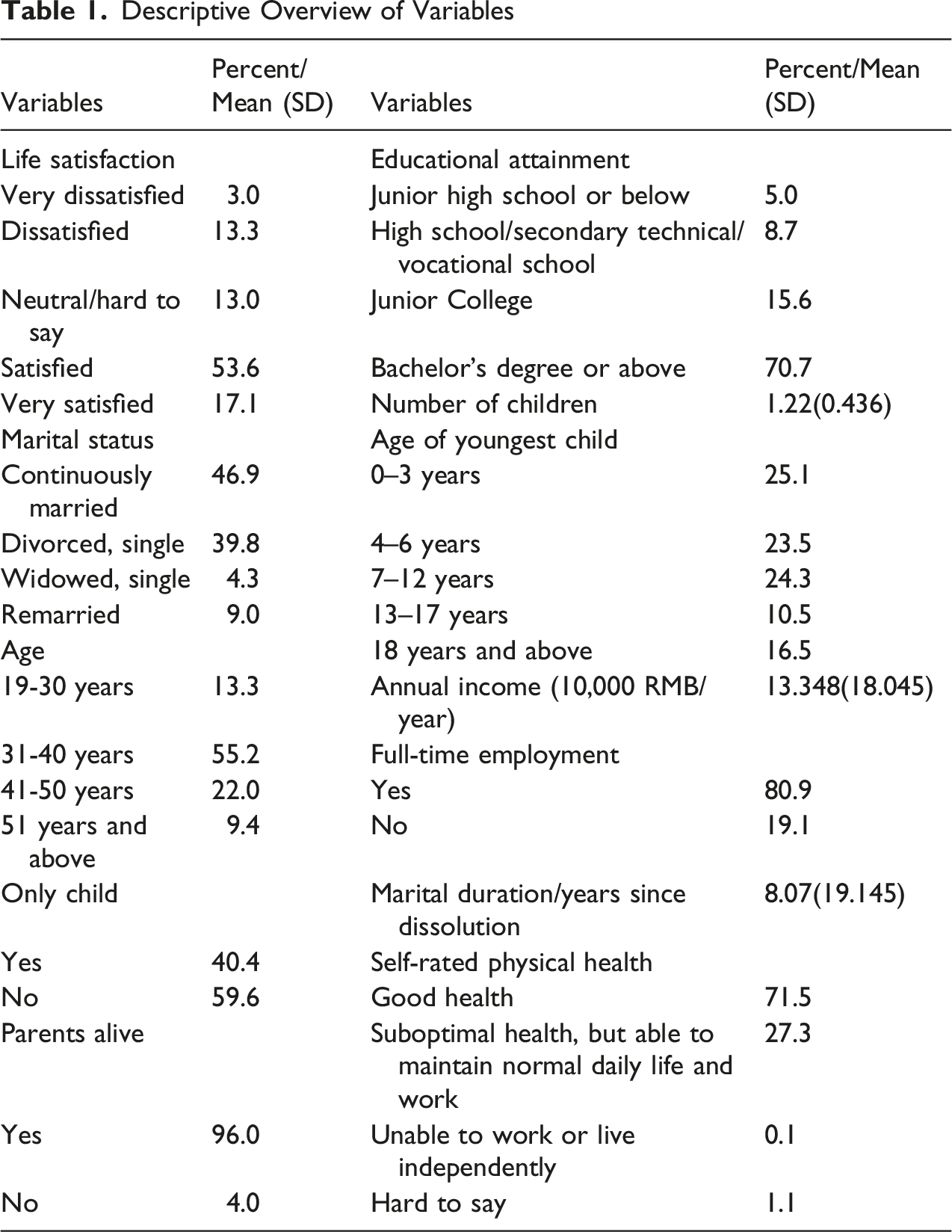
Regarding marital status, continuously married mothers constituted the largest group in the sample (46.9%), followed closely by divorced single mothers (39.8%). Widowed single mothers accounted for 4.3% of the sample, while remarried mothers represented 9.0%. The mean marital duration or years since marital dissolution was 8.07 years.
Most respondents were concentrated in the 31–40 age group (55.2%), followed by mothers aged 41–50 (22.0%). In terms of family structure, the average number of children was 1.22 (SD = 0.436). The age distribution of the youngest child was relatively balanced across early childhood and school-age stages, with approximately one quarter of respondents having children aged 0–3, 4–6, or 7–12 years.
Socioeconomically, the sample was characterized by relatively high educational attainment, with 70.7% holding a bachelor’s degree or above. The majority of respondents were employed full-time (80.9%), and average annual income was 133,480 RMB, although income variation was substantial (SD = 180,450 RMB). Most respondents also reported relatively good physical health, with 71.5% rating themselves as being in good health.
Child Custody and Co-Parenting Involvement Among Divorced Mothers
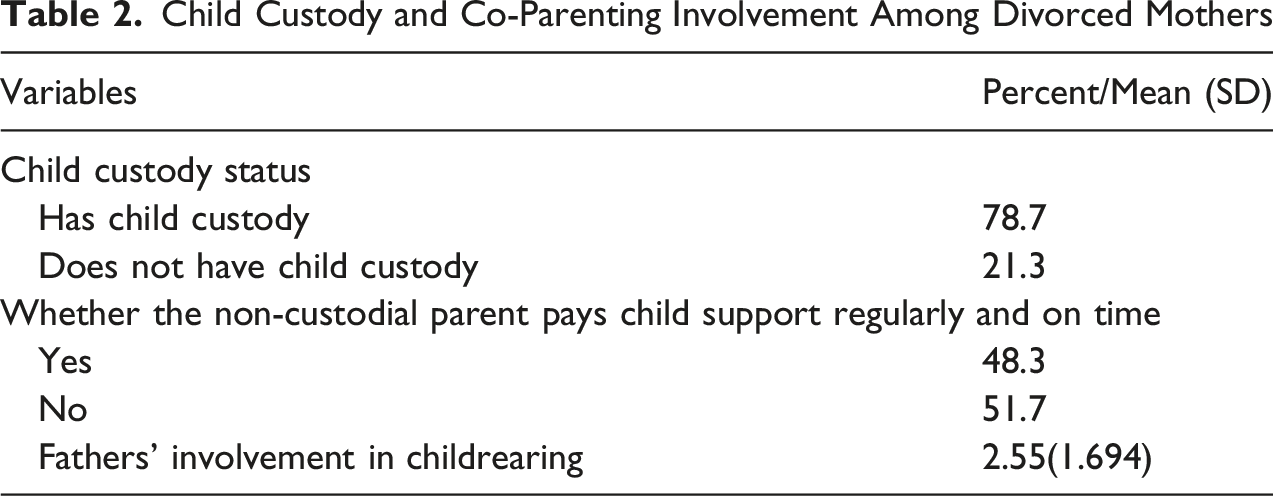
Among mothers whose former spouses are expected to provide child support, only 48.3% reported receiving child support regularly and on time, whereas 51.7% indicated irregular or absent payments. This finding reflects the instability of financial support from non-custodial parents after divorce and suggests that many divorced mothers may face considerable economic pressure in raising children.
In addition, the mean score for former spouses’ involvement in childrearing was 2.55 (SD = 1.694), indicating a relatively low to moderate level of paternal participation after divorce, alongside substantial variation across families. This suggests that while some former spouses remain actively involved in parenting, many provide limited support in everyday childrearing practices.
Overall, the findings reveal that divorced mothers often shoulder the primary caregiving burden, both financially and practically, in the post-divorce family context.
Analytic Strategy
The dependent variable, life satisfaction, is measured as an ordered categorical variable. Although ordinal logistic regression is theoretically appropriate for such outcomes, the proportional odds assumption was violated in the present study (χ2 = 673.307, p < .001). Supplementary analyses indicated that ordinal logistic regression and ordinary least squares (OLS) regression produced substantively consistent results in terms of coefficient direction and statistical significance. Compared with ordinal logistic regression, OLS models provide more intuitive interpretation of coefficients and facilitate the estimation of interaction effects and subgroup heterogeneity. Accordingly, OLS regression was adopted as the primary modeling strategy.
The empirical analysis proceeded in three stages.
First, baseline models estimated the association between marital status and mothers’ life satisfaction while controlling for demographic and socioeconomic characteristics. These analyses examined whether mothers in different marital statuses differed significantly in reported life satisfaction.
Second, heterogeneity analyses were conducted to examine whether the association between marital status and life satisfaction varied across different stages of the life course. Interaction terms between marital status and mothers’ age, as well as between marital status and the age of the youngest child, were introduced into the models. These analyses assessed whether marital status has differential implications for life satisfaction across mothers’ life-course positions and family developmental stages.
Third, supplementary analyses focused specifically on divorced mothers to examine whether post-divorce parenting arrangements and paternal support were associated with life satisfaction among this group. Separate regression models were estimated incorporating child custody status, regular payment of child support, and fathers’ involvement in childrearing. These analyses aimed to assess whether economic support and paternal participation after divorce are associated with variation in divorced mothers’ well-being.
Together, these analyses provide a multidimensional examination of how marital status, life-course position, and post-divorce parenting arrangements jointly shape mothers’ life satisfaction.
Results
Marital Status Differences in Life Satisfaction
Marital Status, Marital Duration, and Life Satisfaction
Note. Standard errors in parentheses.*p < .10; **p < .05; ***p < .01. The same notation applies to subsequent tables.
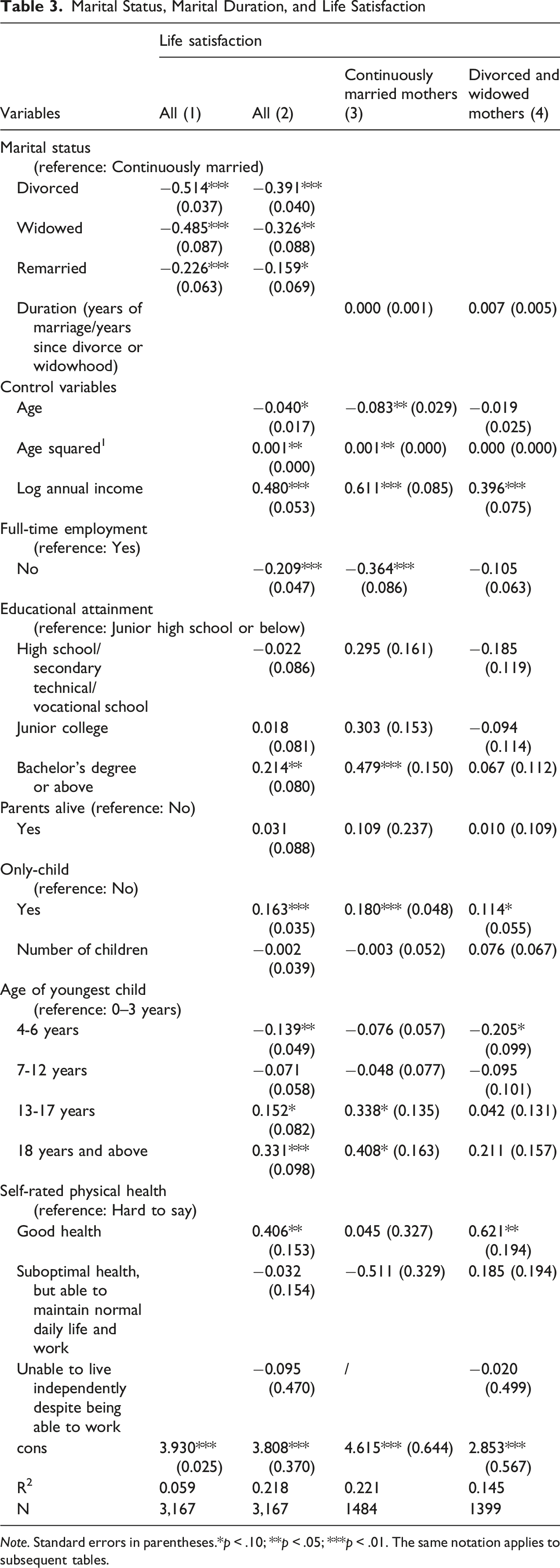
Regarding Hypothesis 1, the results indicate significant differences in life satisfaction across marital status groups. In Model 1, compared with continuously married mothers, divorced mothers report significantly lower levels of life satisfaction (b = −0.514, p < .001), followed by widowed mothers (b = −0.485, p < .001) and remarried mothers (b = −0.226, p < .001).
After introducing demographic, socioeconomic, and family-related control variables in Model 2, the coefficients decrease in magnitude but remain statistically significant. Divorced mothers continue to exhibit substantially lower life satisfaction than continuously married mothers (b = −0.391, p < .001), while widowed mothers (b = −0.326, p < .01) and remarried mothers (b = −0.159, p < .05) also report lower levels of well-being. These findings suggest that marital dissolution is associated with a persistent well-being disadvantage, even after accounting for differences in socioeconomic status, health, employment, and family characteristics. At the same time, the smaller coefficient observed among remarried mothers implies that remarriage may partially mitigate, but does not fully eliminate, the negative consequences associated with marital disruption.
Supplementary analyses examined whether mothers’ life satisfaction varied according to marital duration and time elapsed since marital dissolution. However, the results do not support this expectation. Among continuously married mothers (Continuously married Mothers 3), years of marriage are not significantly associated with life satisfaction, indicating that longer marital duration does not systematically improve or reduce life satisfaction. Similarly, among single mothers (divorced or widowed) in Single Mothers 4, years since divorce or widowhood show no statistically significant relationship with life satisfaction. These findings suggest that the passage of time alone does not substantially alleviate the well-being disadvantage associated with marital dissolution. In other words, the emotional, economic, and social consequences of divorce or widowhood may persist over time rather than gradually disappearing through temporal adaptation.
Several control variables are also significantly associated with life satisfaction. Higher annual income is consistently positively associated with life satisfaction across all models, while lack of full-time employment is negatively associated with life satisfaction, particularly among continuously married mothers. Higher educational attainment is positively related to well-being among continuously married mothers but not among single mothers, suggesting that educational resources may translate into subjective advantages differently across marital contexts. Being an only child is positively associated with life satisfaction in both the full sample and the single-mother subsample.
Life-course indicators also reveal notable patterns. Compared with mothers whose youngest child is aged 0–3 years, mothers with older children—particularly those whose youngest child is 18 years or older—report significantly higher levels of life satisfaction. This pattern is especially evident among continuously married mothers, implying that reductions in caregiving intensity across the family life course may improve maternal well-being. In addition, self-rated physical health is strongly associated with life satisfaction, especially among single mothers, for whom good health significantly predicts higher life satisfaction.
Overall, the findings demonstrate that marital status remains an important stratifying factor shaping mothers’ life satisfaction, whereas temporal duration alone does not appear to significantly alter these inequalities.
Marital Status Across the Life Course
Because age is closely tied to both life-course position and cumulative disadvantage, we next examine whether the association between marital status and well-being varies across mothers’ age groups.
Before presenting stratified models, it is important to note a practical constraint. The numbers of widowed (n = 137) and remarried (n = 284) mothers are modest in the full sample and become small in subgroup analyses by age or children’s developmental stage. Supplementary models that include widowed and remarried mothers yield substantively similar patterns. To avoid unstable estimates and improve comparability across groups, the stratified analyses focus on continuously married (n = 1484) and divorced mothers (n = 1262), which comprise the two largest groups in the sample.
Figure 1 shows age patterns in life satisfaction for continuously married and divorced mothers. Continuously married mothers display relatively high levels of life satisfaction across age groups, with a modest dip among those ages 41–50, followed by improvement at older ages. Divorced mothers report lower life satisfaction across most ages, though their average well-being appears to increase with age. The relationship between marital status and life satisfaction across different age groups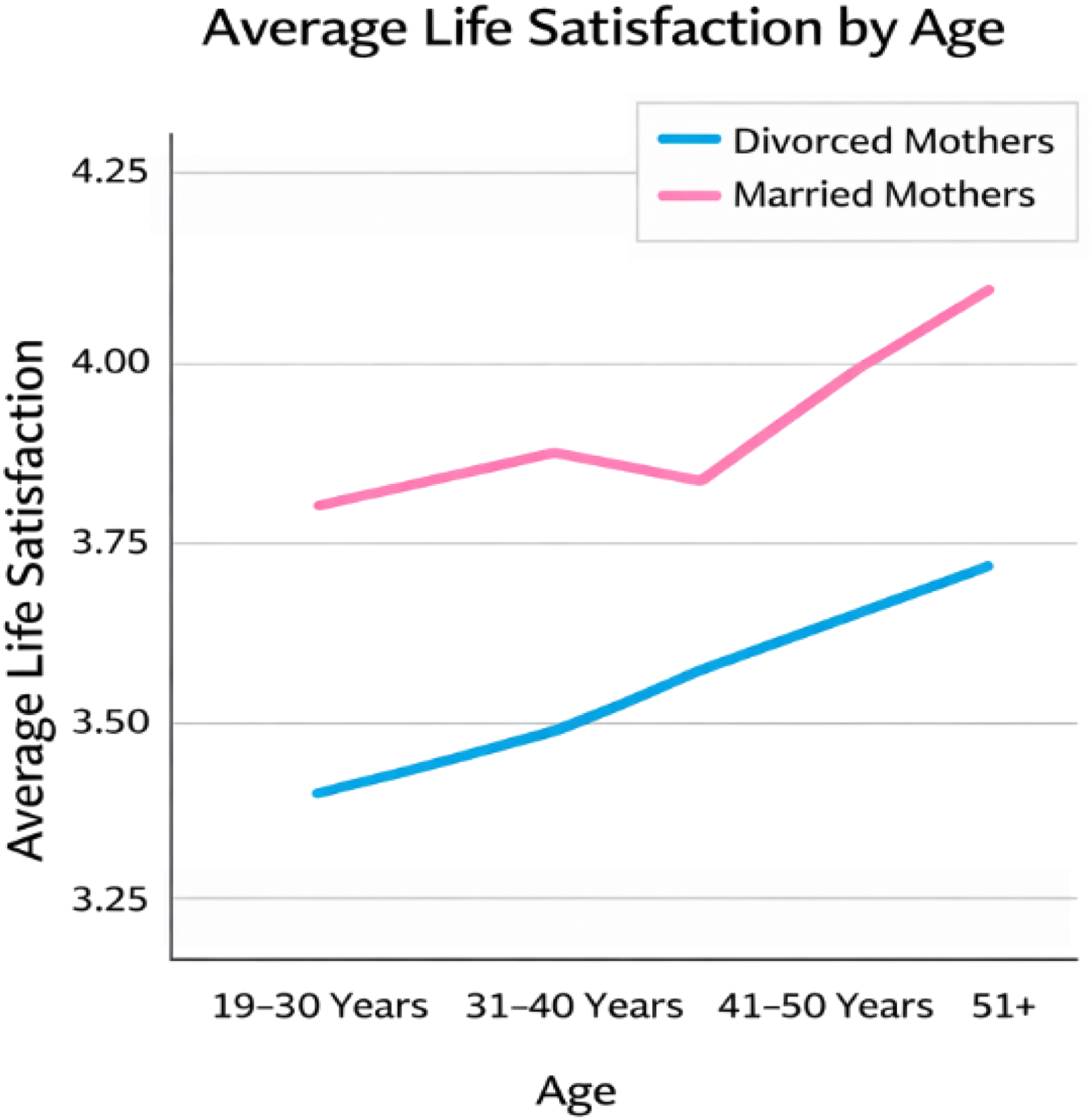
Associations Between Marital Status and Life Satisfaction Across Age Groups
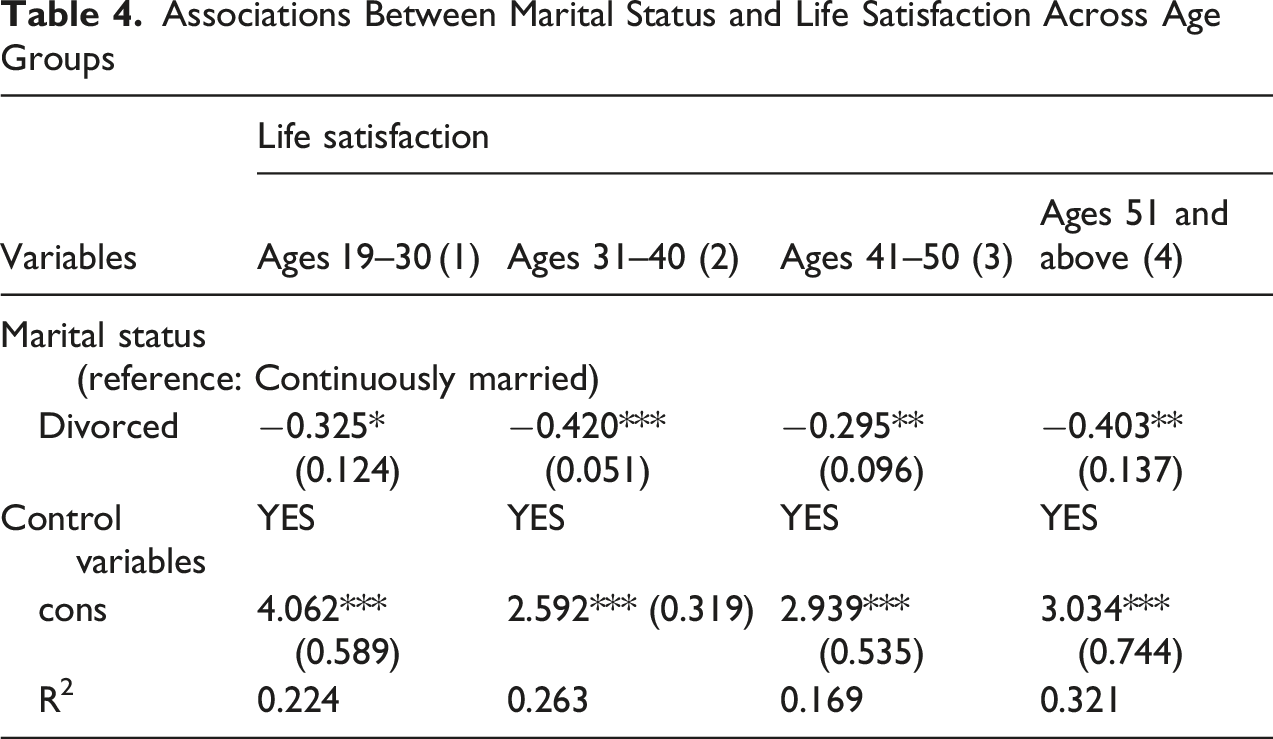
To further examine whether the association between marital status and life satisfaction varies across different stages of the life course, subgroup analyses were conducted by mothers’ age and the age of the youngest child. The results support Hypothesis 2, suggesting that the negative association between divorce and mothers’ life satisfaction differs across life-course contexts.
The Table 4 shows heterogeneity across mothers’ age groups. Across all age categories, divorced mothers consistently report lower levels of life satisfaction than continuously married mothers, indicating that the negative association between divorce and life satisfaction is broadly stable throughout the adult life course. However, the magnitude of the coefficients varies across age groups. The negative association with divorce is strongest among mothers aged 31–40, followed by mothers aged 51 and above. By comparison, the effect is somewhat smaller among mothers aged 19–30 and mothers aged 41–50.
These findings suggest that divorce may be particularly consequential during the central stages of adulthood, when mothers are simultaneously confronting intensive caregiving responsibilities, career pressures, and financial obligations. For mothers aged 31–40, divorced mothers may experience greater work–family conflict and economic insecurity during a period of peak family responsibility. The relatively large coefficient among mothers aged 51 and above further suggests that the long-term consequences of marital disruption may persist into later life, potentially reflecting accumulated economic disadvantage, reduced companionship, and weakened emotional support in older adulthood.
We next examine whether marital status disparities in well-being vary across children’s developmental stages, using the age of the youngest child as a proxy for caregiving intensity. As in the age-stratified analysis, subgroup models focus on continuously married and divorced mothers due to limited sample sizes for widowed and remarried mothers in some categories.
Figure 2 illustrates average life satisfaction by the youngest child’s age for continuously married and divorced mothers. Continuously married mothers report comparatively high life satisfaction across all stages, with the lowest point occurring when the youngest child is ages 7–12. Divorced mothers consistently report lower well-being, with particularly low levels when the youngest child is ages 4–6. Life satisfaction by marital status and youngest Child’s age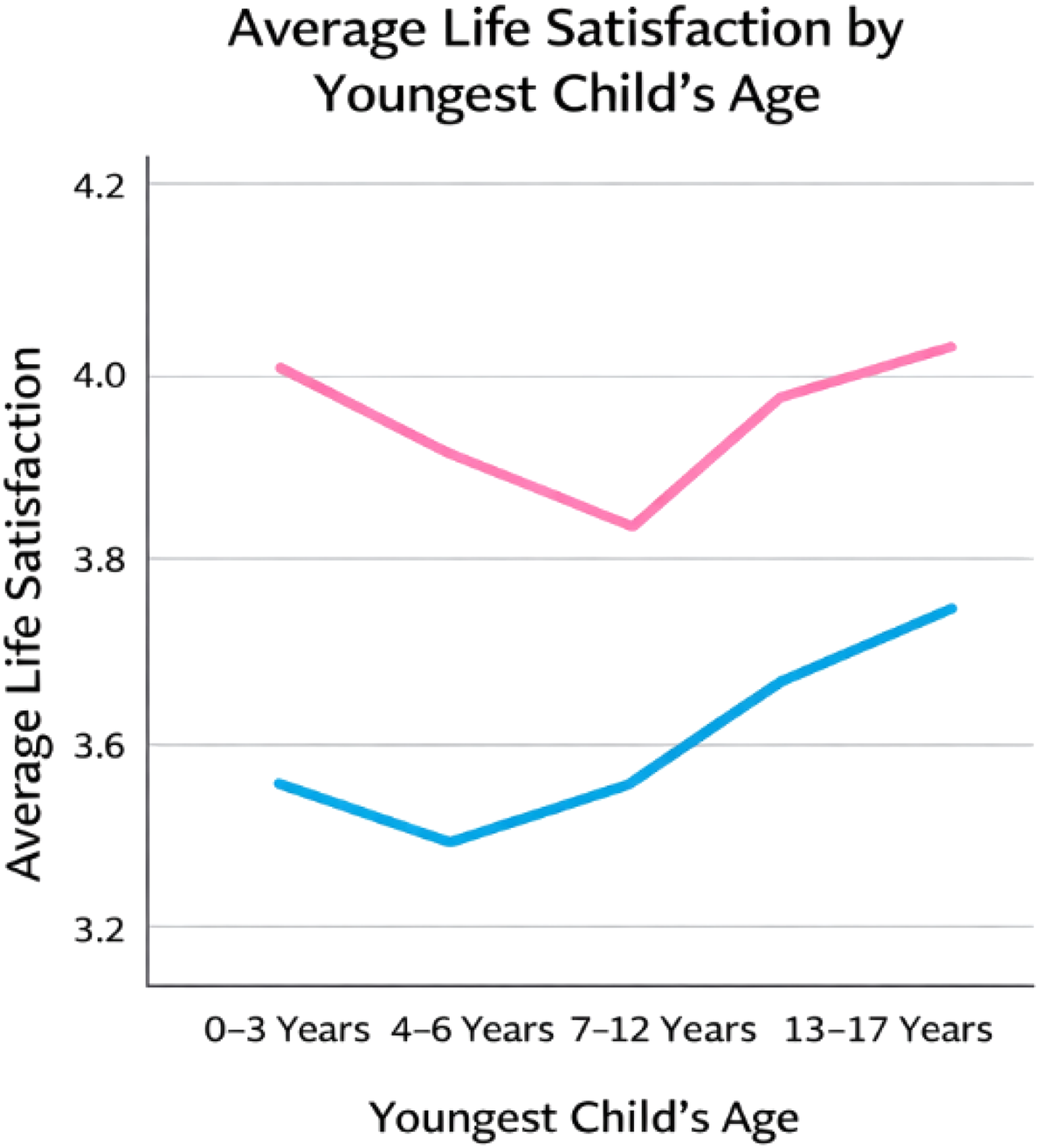
Associations Between Marital Status and Life Satisfaction Across Age of youngest child Groups
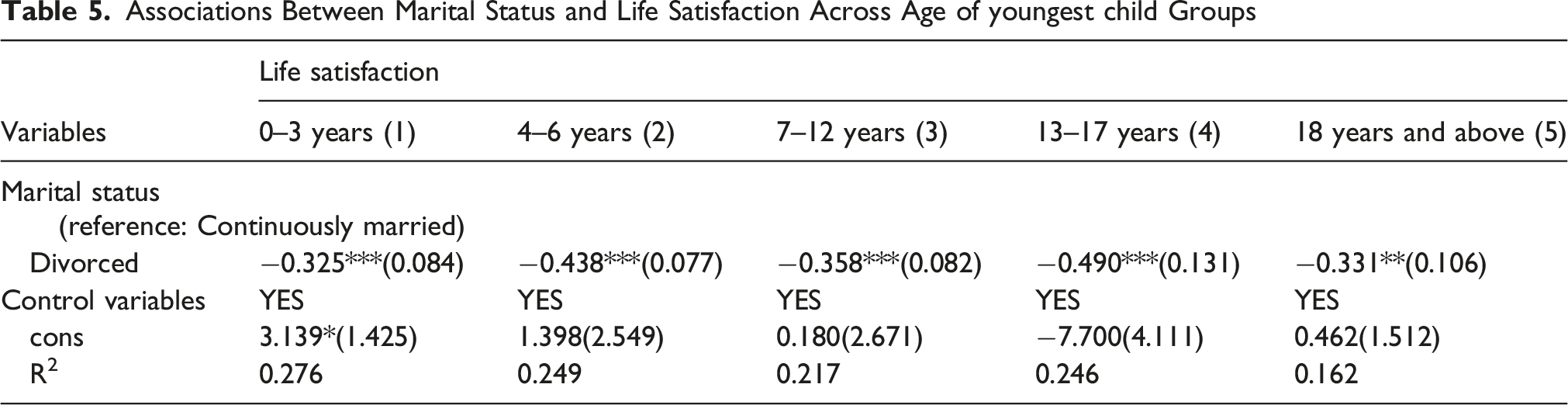
These patterns suggest that the consequences of divorce are shaped not only by mothers’ own life-course positioning but also by children’s developmental stages. The particularly strong negative effect observed among mothers of adolescents may reflect heightened educational pressure, emotional conflict, and parenting demands during children’s adolescence within the Chinese family context. Similarly, mothers with preschool-aged children may experience elevated caregiving burdens and reduced labor market flexibility following marital dissolution. By contrast, when children reach adulthood, caregiving intensity declines and mothers may regain greater autonomy and emotional stability, thereby partially reducing the negative association between divorce and life satisfaction.
Overall, the heterogeneity analyses indicate that the well-being consequences of marital dissolution are not uniform across the life course. Instead, they are shaped by the intersection of mothers’ age, caregiving demands, and family developmental stage, highlighting the importance of adopting a life-course perspective in understanding marital inequality and maternal well-being.
Post-Divorce Co-Parenting Support and Mothers’ Life Satisfaction
Associations of Child Custody, Child- Support Payment, and Fathers’ Involvement with Divorced Mothers’ Life Satisfaction
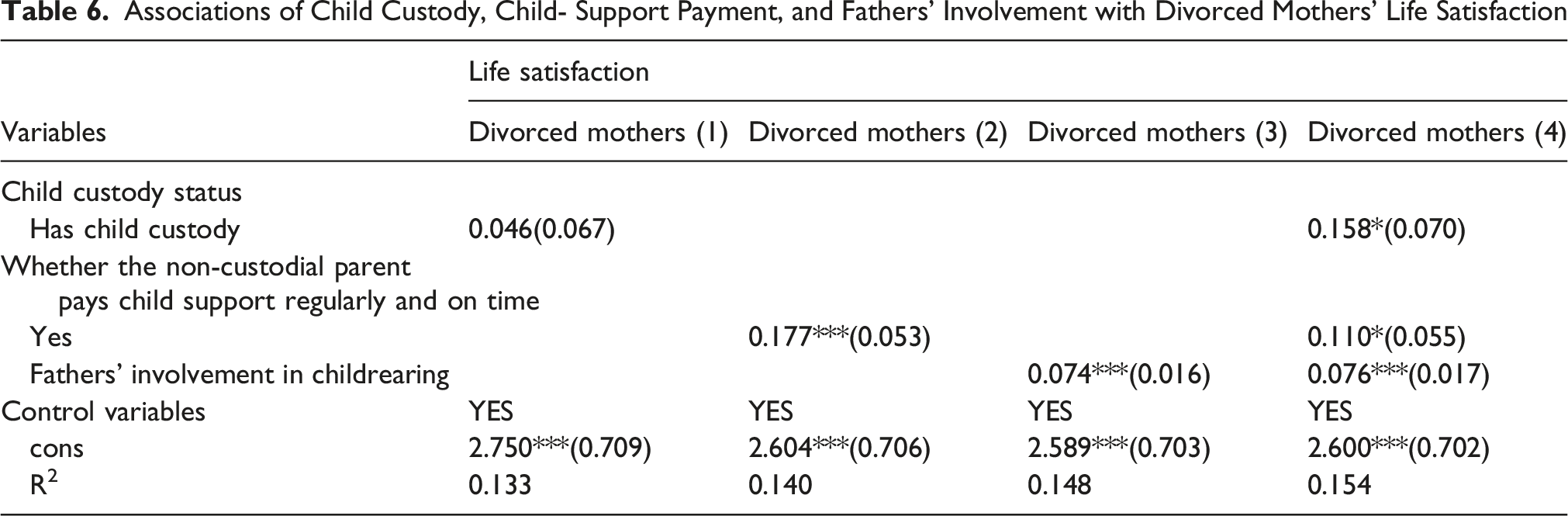
Model 1 examines child custody status. The coefficient for having child custody is positive but not statistically significant, suggesting that custody status alone is not strongly associated with divorced mothers’ life satisfaction after accounting for control variables.
Model 2 introduces whether the non-custodial parent pays child support regularly and on time. Regular child-support payment is positively associated with life satisfaction, indicating that the continuation of financial responsibility after divorce is linked to higher well-being among divorced mothers.
Model 3 examines fathers’ involvement in childrearing. Fathers’ involvement is also positively and significantly associated with divorced mothers’ life satisfaction, suggesting that practical participation in childcare and parenting remains an important dimension of post-divorce support.
Model 4 includes all three variables simultaneously. Regular child-support payment remains positively associated with life satisfaction, and fathers’ involvement in childrearing continues to show a robust positive association. The coefficient for child custody becomes marginally significant after child-support payment and father involvement are included, suggesting that custody status may matter in relation to broader post-divorce parenting arrangements. This result should be interpreted cautiously, given that custody may reflect both caregiving responsibility and mothers’ resources or preferences.
Overall, the findings suggest that post-divorce co-parenting support is not reducible to a single arrangement. Financial support and fathers’ involvement represent two distinct dimensions of continued parental responsibility after divorce, both of which are associated with divorced mothers’ life satisfaction. These results help clarify that the well-being of divorced mothers depends not only on marital status itself, but also on whether parenting and financial responsibilities continue to be shared after marital dissolution.
Results Summary
This study examined four hypotheses regarding the association between marital status and mothers’ life satisfaction across different stages of the life course.
First, Hypothesis 1 is strongly supported. The findings consistently demonstrate significant differences in life satisfaction across marital status groups. Compared with continuously married mothers, divorced, widowed, and remarried mothers all report significantly lower levels of life satisfaction, even after controlling for demographic, socioeconomic, and health-related factors. Among these groups, divorced mothers exhibit the largest well-being disadvantage.
Second, supplementary analyses examining marital duration and time since marital dissolution reveal no significant association with life satisfaction. These findings suggest that the passage of time alone does not substantially alleviate the well-being disadvantages associated with marital disruption.
Third, Hypothesis 2 and Hypothesis 3 are supported. The negative association between divorce and life satisfaction varies across mothers’ age groups and children’s developmental stages. Divorce appears to be particularly consequential for mothers aged 31–40 and for those raising adolescent children, indicating that the well-being consequences of marital disruption are shaped by caregiving intensity, educational pressure, and family life-course stage.
Finally, Hypothesis 4 is also supported. Among divorced mothers, regular child support payment and greater fathers’ involvement in childrearing are both positively associated with life satisfaction. These findings suggest that continued economic support and paternal participation after divorce play important roles in mitigating the well-being disadvantages experienced by divorced mothers. Although child custody status alone is not consistently associated with life satisfaction, its positive effect becomes significant after accounting for co-parenting support variables, indicating that parenting arrangements and post-divorce support structures jointly shape divorced mothers’ well-being.
Overall, the findings demonstrate that marital status remains an important source of stratification in mothers’ life satisfaction in contemporary China. More importantly, the consequences of marital disruption are not uniform across the life course, but instead vary according to mothers’ age, children’s developmental stage, and the availability of post-divorce parenting support.
Discussion
This study examines how marital status is associated with subjective well-being among mothers in China, drawing on data from the Single Mothers’ Status and Needs Survey. Results point to a broader theoretical claim: for mothers, marital status is not only a relationship status, but also an institutional position in family life. Continuously married, divorced, widowed, and remarried mothers are located differently in systems of care, responsibility, recognition, and support. Non-significant associations between marital duration, time since marital dissolution, and life satisfaction further suggest that marital-status disparities cannot be understood simply through temporal adaptation. Time passing after divorce or widowhood does not necessarily reorganize family responsibilities or restore lost forms of support. At the same time, findings should not be read as a simple confirmation of marriage protection. Marriage does not automatically produce well-being; rather, marital status organizes resources, obligations, and recognition in ways that matter differently for mothers.
Maternal age and children’s developmental stage should not be treated merely as demographic groupings. They mark changing configurations of responsibility. Central adulthood often combines employment pressure, childrearing, housing and financial obligations, and care for older generations. Children’s adolescence brings another form of intensity. Maternal responsibility may shift from physical care to educational supervision, emotional negotiation, and future planning. In this sense, children’s growth does not simply reduce care burdens. Growth may transform maternal responsibility into a more complex and less visible form. Life-course analysis therefore helps move beyond static comparison of marital statuses by showing when family responsibilities make marital disruption especially consequential.
Post-divorce co-parenting results deepen this interpretation. Regular child-support payment and fathers’ involvement in childrearing matter because they indicate whether parental responsibility continues after marriage ends. Child-support payment represents continued financial responsibility. Fathers’ involvement represents practical and emotional participation in parenting. Divorce therefore should not be understood only as dissolution of spousal relationship. It also reorganizes parenthood. A mother may share the same legal status of “divorced” with others, but her family position differs depending on whether parenting and financial responsibilities remain shared or become concentrated on her.
Theoretical significance of this finding lies in shifting attention from divorce as legal status to divorce as responsibility reallocation. In Chinese family life, motherhood remains strongly tied to children’s schooling, emotional needs, daily care, and family coordination. When paternal responsibility weakens after divorce, economic, practical, and emotional work of parenting becomes more likely to fall on mothers. Subjective well-being therefore reflects not only individual psychological adjustment, but also how family institutions allocate care and responsibility. Lower life satisfaction among divorced and widowed mothers should not be read as evidence that marital disruption mechanically reduces women’s well-being. A more sociological interpretation is that marital status continues to structure access to support and recognition across mothers’ life courses.
Several limitations should be acknowledged. First, the analyses focus exclusively on mothers. Gender comparison remains beyond the scope of the present study. Future research could examine whether marital status operates differently for men and women, especially when caregiving responsibilities are unequally distributed. (Second, the cross-sectional design limits the ability to trace individual well-being trajectories over time or to make strong causal claims about adaptation processes.) Longitudinal data would be better suited to examining changes in well-being before and after marital transitions, as well as changes in co-parenting arrangements after divorce. Third, although the sample of single mothers is unusually large relative to existing research in China, recruitment relied partly on targeted sampling and online surveys. Population representativeness therefore requires caution. Finally, analysis of post-divorce co-parenting support is limited to available survey measures of fathers’ involvement and child-support payment. Future research could examine quality of co-parenting relationships, conflict between former spouses, visitation arrangements, and mothers’ own understandings of responsibility after divorce.
Despite these limitations, this study shows that marital status remains a meaningful axis of inequality in mothers’ well-being in contemporary China. Significance of marital status lies not only in whether a mother is married, divorced, widowed, or remarried, but also in how each status is embedded in timing of motherhood, children’s developmental stages, and continuation of parental responsibility after divorce. Mothers’ subjective well-being should not be understood only as individual psychological outcome. It also reflects how family institutions organize care, responsibility, and recognition. Understanding divorced mothers’ well-being therefore requires asking not only whether marriage has ended, but also how parenthood continues after marriage ends.
Footnotes

Ethical Consideration
This research was approved by the Fudan University and adheres to ethical standards for social science research. All questionnaires began with an informed consent statement. Only respondents who provided consent were allowed to proceed to the subsequent questions.
Funding
The author received no financial support for the research, authorship, and/or publication of this article.
Declaration of conflicting interests
The author declared no potential conflicts of interest with respect to the research, authorship, and/or publication of this article.