






Abstract
Fertility intention is a critical forward-looking decision that profoundly shapes individuals’ time allocation. This study utilized panel data from the China Family Panel Studies 2020 and 2022 to examine the relationship between fertility intention and working hours in China and the moderating roles of gender, parental experience, and household income. The results estimated by the two-way fixed-effects model indicate that fertility intention is significantly associated with an increase in working hours, and fertility intention can prolong individuals’ working hours. This effect is particularly pronounced for men and for individuals who already have children, and weakens as household income rises. Robustness checks show that the main results are consistent across various models. Overall, this study demonstrates that increased working hours may act as a “time price” for fulfilling fertility intentions and highlights the need for policies that alleviate economic pressures on prospective parents to improve work-family balance in emerging economies.
Introduction
Work and family represent two important domains in most adults’ daily lives. Work-life balance is an important concern for individuals, a key factor for efficient work, and also a crucial topic on the public policy agenda (Allen et al., 2000; Ernst Kossek & Ozeki, 1998; Sweet, 2012). Work and family are in competition for an individual’s limited time resources, which lies at the core of work-family conflict (Becker, 1985). Consequently, working hours emerge as a pivotal indicator, representing a measure of the trade-off between career pursuits and family responsibilities (Kelly et al., 2014).
It is plausible that individuals with fertility intentions might prolong their working hours in advance to build a stronger financial foundation for their future children. In some developed countries, family-support policies such as baby bonuses (Boccuzzo et al., 2008), family allowances (Ekert-Jaffé, 1986; Gábos et al., 2009), and tax transfers (Chen, 2011; Zhang et al., 1994) can cushion the financial burden of raising children. These polices may reduce individuals’ need to extend work hours beforehand in response to their fertility plans (Thévenon & Gauthier, 2011). However, in China and many other emerging economies where comprehensive family-support systems are lacking, individuals often rely on their own economic efforts to raise a child. The relatively high costs of education and housing impose substantial financial burdens on many prospective parents (YuWa Population Research, 2024). Faced with these financial pressures, individuals generally respond by working longer hours, a strategy perceived as essential for accumulating the necessary capital before having a child.
Paradoxically, long working hours may reduce the possibility of fulfilling fertility intentions. Long working hours can lead to chronic fatigue, reduced opportunities for social and partner interaction, and increased physiological and psychological stress, all of which are detrimental to fertility intention fulfilling (Begall & Mills, 2011; Mills et al., 2011; Zhao et al., 2024). This creates a dilemma of “wanting children but lacking the means to have them.” Therefore, it is crucial to examine the relationship between fertility intentions and working hours to promote work-life balance and the construction of fertility-friendly societies in rapidly developing contexts.
While extant literature has extensively documented the ex-post effects of childbirth on working time, it has largely ignored the possibility of ex-ante adjustments that may occur upon the formation of fertility intentions. A consistent finding is the “motherhood penalty,” a significant decline in mothers’ working hours, whereas fathers typically experience a “fatherhood premium” with stable or increasing working hours (Angrist & Evans, 1998; Budig & England, 2001; Glauber, 2008; Killewald, 2012; Kleven et al., 2019). As household decisions may be driven by rational anticipations for future returns, associated costs, and resource distribution (Becker, 1993), behavioral adjustments accordingly may occur not only after childbirth but also before childbirth, starting as early as the formation of fertility intentions. Thus, this ex-post perspective fails to capture the reality that families may begin planning and changing their behavior as soon as they form the fertility intention.
Overall, from an ex-ante behavioral adjustment perspective, this study utilizes data from the 2020 and 2022 China Family Panel Studies (CFPS) to investigate the relationship between fertility intentions and working hours and examine whether increased working hours represent a “time price” for fulfilling fertility intentions. To promote more targeted policies, we further examined the moderating effects of gender, parental experience, and income in the relationship between fertility intention and working hours. The conclusions in this study may underscore that understanding how fertility intentions shape working hours is essential for designing effective, family-friendly policies and help individuals, particularly those in emerging economies, to achieve a sustainable work-life balance.
The remainder of this paper is organized as follows: Section 2 is a theoretical analysis. Section 3 details the data and methods. Section 4 reports the empirical findings, including benchmark regressions, moderating analyses, and robustness checks. Section 5 discusses the policy implications of our results, and Section 6 concludes the study.
Theoretical Analysis
Fertility Intention and Working Hours
The New Home Economics framework has proposed that household behaviors are rational and forward-looking (Becker, 1993). The key components of the New Home Economics framework are the theories of time allocation, the quantity–quality trade-off, and the intergenerational altruism, which together offer explanations for the relationship between fertility intentions and working hours (Figure 1). Hypotheses in this study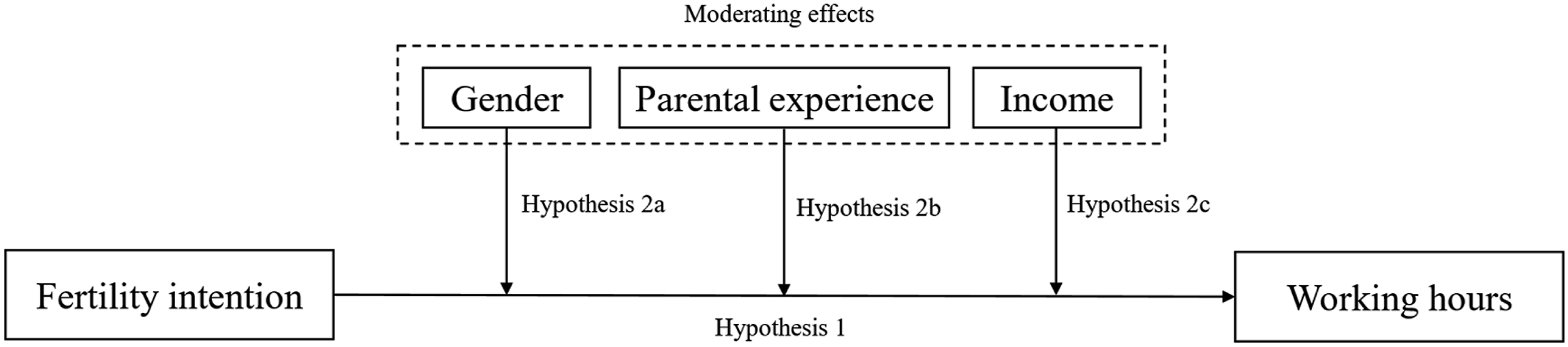
First, according to the theory of time allocation, rational households may increase time allocation in their current labor supply in response to future earnings shocks associated with fertility intentions. The theory of time allocation posits that time is a limited resource that rational households allocate across labor market participation, domestic and caregiving responsibilities (e.g., childcare and child education), and leisure activities (Becker, 1965). Fertility intention may signify a future surge in demand for domestic and caregiving responsibilities. This growing demand is expected to reduce the time available for labor market participation and may signal a prospective decline in earnings. To respond to the future shock of income decline, individuals may allocate more time to their current labor market participation and mainly work longer hours to increase their savings or earnings (Meghir & Pistaferri, 2011).
Second, based on the theory of quantity–quality trade-off, fertility intention may lead individuals to work more in the present to accumulate more economic resources for the costs of high-quality child-rearing in the future. The theory of quantity–quality trade-off suggests that modern parenthood is not merely about raising children (Becker & Lewis, 1973), the focus for many contemporary parents has shifted from the quantity of children to the quality of each child’s upbringing (Doepke, 2015; Kabeer, 2000). Raising high-quality children encompasses high and long-term investments, such as costs for high-quality education, extracurricular activities, and premium healthcare (Child Poverty Action Group, 2024; YuWa Population Research, 2024). These high and long-term investments may place significant financial demands on prospective parents. As a result, motivated by raising high-quality children in the future, individuals with fertility intentions find that it is necessary to increase their working hours to increase their current income and accumulate economic resources.
Finally, from the perspective of intergenerational altruism theory, the reduced leisure time and increased working hours of individuals with fertility intentions can be regarded as meaningful investments in their children’s future welfare. The intergenerational altruism theory suggests that parents derive utility directly from their children’s well-being (Becker, 1974), leading individuals with fertility intentions to naturally internalize their future children’s welfare as an extension of their own utility function. To maximize this utility, they need to project the substantial human capital investments for their children’s development, particularly in areas such as high-quality education and favorable living conditions. These anticipated financial needs create a direct incentive for individuals with fertility intentions to work longer hours to enhance their children’s future welfare.
Overall, the theories of time allocation, quantity–quality trade-off, and intergenerational altruism collectively indicate that individuals with fertility intentions may increase their working hours as a preparatory measure to meet the future financial demands of raising children (Meghir & Pistaferri, 2011). Drawing upon the aforementioned discussions, we could put forward the following hypothesis:
Individuals with fertility intention will prolong their working hours.
The Moderating Effects of Gender, Parental Experience, and Income
The Moderating Role of Gender
Due to long-standing gendered social norms surrounding parenthood (West & Zimmerman, 1987), the association between fertility intentions and working hours may not be uniform across genders. For men, fertility intention tends to activate and reinforce the traditional breadwinner role (Killewald, 2012; Townsend, 2010). This traditional breadwinner role for men is not just what society expects of men but also a component of their sense of self-worth and identity. Social norms often link good fatherhood with the ability to provide financial support for families (Connell, 2020). Consequently, men with fertility intentions are likely to prepare for fatherhood predominantly in an economic way, motivating them to increase their working hours.
Compared to men, women often face a more complex situation. Women not only face the economic pressures of raising a child, which brings a clear incentive to bolster their income as men (Bianchi et al., 2012), but also confront social expectations, positioning themselves as the primary caregiver for children (Hays, 1996; Williams, 2010). Because mothers are widely expected to be the main caregivers and primarily responsible for child-rearing (Li, 2022), women with fertility intentions may adjust their work patterns before childbirth. They may reduce their working hours to prepare for the physical demands of pregnancy or to mentally reorient towards the caregiver role of a child (Damaske, 2013). Therefore, as women generally are primary caregivers, their economic motivation may be weaker than that of men to some extent, who are traditionally the breadwinners. Consequently, the relationship between fertility intentions and working hours likely differs for women and men. Based on the aforementioned discussion, the following hypothesis can be proposed:
The effect of fertility intention on working hours is stronger for men than for women.
The Moderating Role of Parental Experience
The effect of fertility intention on individuals’ working hours can differ depending on an individual’s parental experience. For those individuals without children, the transition to first-time parenthood involves not only new economic responsibilities but also profound changes in identity (Gerson, 2009), daily routines (Daly, 2001), and marital satisfaction (Twenge et al., 2003). In response to these multifaceted changes, childless individuals with fertility intention often engage in various types of preparatory behaviors that go beyond financial planning (Nomaguchi & Milkie, 2020). Specifically, they may pay more attention to psychological preparation, adjust their relationship with their partner, and learn about parenting. At the same time, lacking the direct personal experience of parenthood, they may systematically underestimate the true financial costs of raising a child (Gustafsson & Kalwij, 2006). This underestimation may lead them to place less emphasis on financial preparation when making decisions about their work hours, focusing instead on other non-economic aspects of realizing their fertility intentions.
However, for individuals who have already been parents, their preparation behaviors are informed by their past personal experience. This experience reduces uncertainty about the financial costs of raising children and provides a more realistic understanding of both the financial and emotional demands of parenthood. They are more likely to focus their preparation on economic behaviors, such as increasing working hours to strengthen household financial capacity. According to the above discussions, the following hypothesis can be put forward:
The effect of fertility intention on working hours is stronger for individuals who already have children than for those who are childless.
The Moderating Role of Income
The households’ income level determines the individuals’ strength of economic accumulation motivation to a large extent, and it also serves as a critical factor to promote the feasibility of preparatory strategies for parenthood. For households with low income, the tight budget constraint makes them more sensitive to the costs associated with raising children, such as medical costs and ongoing expenses for childcare and education (Hardy, 2017). Thus, individuals in those low-income families may have strong economic accumulation motivation, and they tend to prolong their working hours if they have fertility intentions.
However, compared to low-income households, high-income households generally possess more savings and disposable income, and individuals in these households may accordingly have weaker economic accumulation motivation for realizing their fertility intentions to some extent. Thus, individuals in high-income households face a much lower urgency to increase income through additional work hours if they have fertility intentions. This freed capacity further allows them to invest more in non-economic forms of preparation, such as acquiring parenting knowledge and fostering psychological readiness for parenthood, instead of prolonging working hours for economic accumulation (Kalil, 2014). Drawing upon the aforementioned discussion, we could put forward the following hypothesis:
The effect of individuals’ fertility intentions on their working hours is stronger among lower-income families than among higher-income ones.
Methods
Data
This study used data from two waves of the Chinese Family Panel Studies (CFPS). The CFPS was conducted by Peking University to explore China’s social issues, with topics on society, economy, population, education, and health status. This study utilized the CFPS data from the 2020 and 2022 waves, and the CFPS 2022 was conducted as a follow-up survey of the CFPS 2020. After dropping samples with missing information, 6,912 valid observations remained in this study.
Measures
Explained Variable
The explained variable in this study was working hours, and it was a continuous variable. Respondents were asked the question, “Excluding lunch breaks but including all overtime hours, regardless of whether they were compensated, how many hours per week did you usually work over the past 12 months?” The variable for working hours per week was ultimately constrained to a valid range of 0 to 144 hr in this study.
Explanatory Variable
The explanatory variable in this study was the respondent’s fertility intention. Respondents were asked to answer the question, “Do you intend to have a child in the next 2 years?” If the respondent intends to have a child within the next 2 years, the explanatory variable of fertility intention was coded as 1; otherwise, it was coded as 0.
Moderating Variables
The moderating variables in this study were gender, parental experience, and income. Gender was a categorical variable. Men were coded as 1, and women were coded as 0. The number of children was used to represent individuals’ parental experience. The number of children can directly correspond to individuals’ depth of practical, responsibility-driven learning in household management and child care (Lazear & Michael, 1988). Additionally, the moderating variable of income was measured by the logarithm of individuals’ household annual income in the survey years.
Control Variables
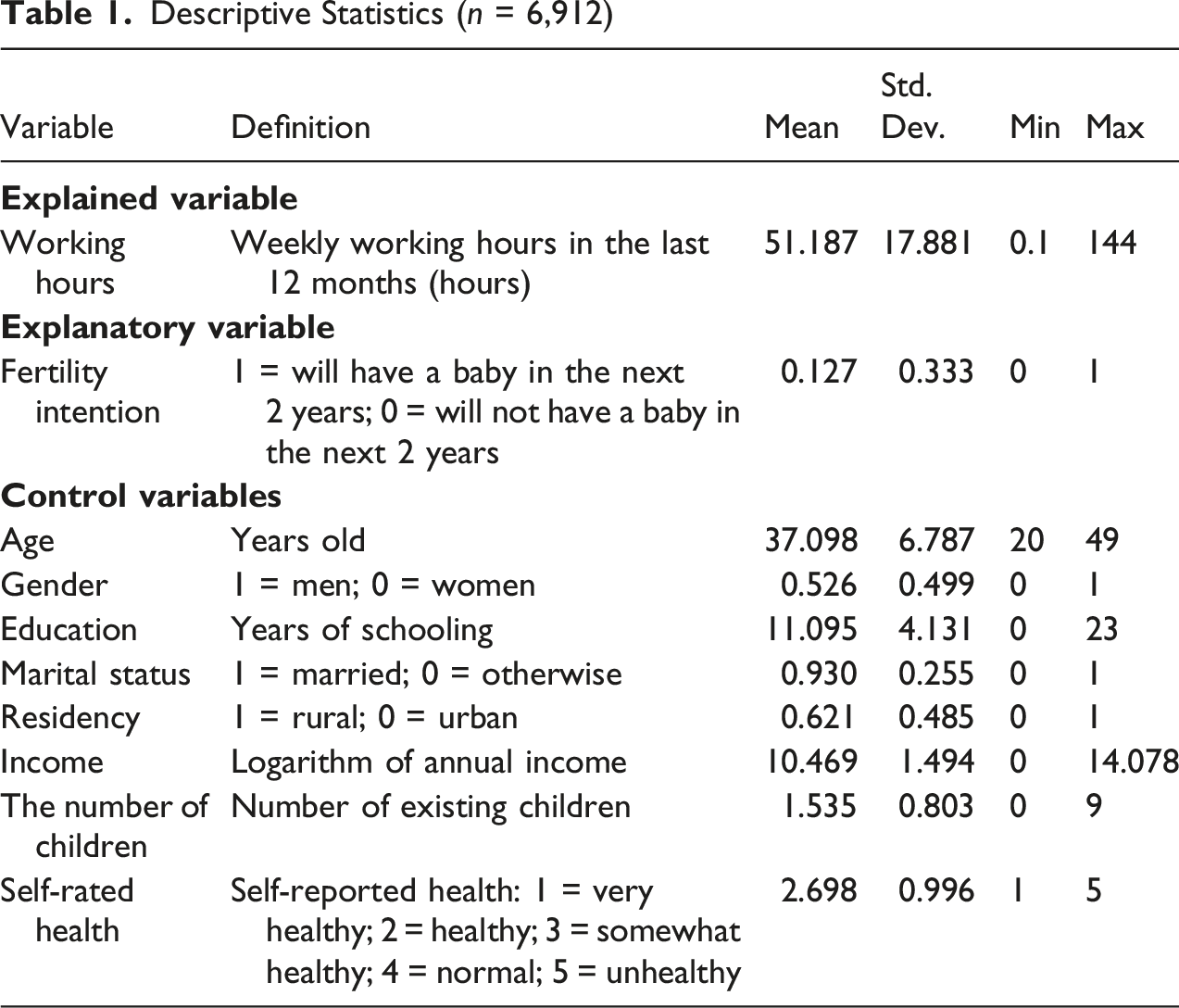
Descriptive Statistics (n = 6,912)
Analysis Strategy
Given that the working hours is a continuous variable, we employed the following two-way fixed effects ordinary least squares (OLS) model to investigate the relationship between fertility intention and working hours:
Although the two-way fixed effects OLS model can capture relationships between fertility intention and working hours to a certain extent, some unobserved factors can influence individuals’ fertility intention and working hours simultaneously. To overcome this endogeneity, we used the instrumental variable (IV) approach. The average fertility intention of other respondents within the same community (excluding the target individual) was employed as an IV. Theoretically, the average fertility intention of other respondents within the same community can appropriately meet the conditions of IV, the relevance and exclusion. For relevance, in community contexts in China, individuals’ fertility intention preferences are significantly shaped by prevailing cultural atmosphere, neighborhood ideologies, and broader societal expectations (Munshi & Myaux, 2006). Thus, an individual’s fertility intention should be closely related to the average fertility intention of other respondents within the same community. For the exclusion, the average fertility intention of other respondents within the same community is a community-level variable. It reflects the macro social environment and group behavioral tendencies that do not directly affect an individual’s working hours. To address the endogeneity issue, the specific two-stage least squares (2SLS) model was as follows:

Results
Descriptive Statistics
Table 1 presents a descriptive analysis of all variables (n = 6,912). For the explained variable, the average weekly working hours in the past 12 months were 51.187 hr (SD = 17.881), which is modestly above the limit of 44 hours per week stipulated by the Labor Law of the People’s Republic of China (The National People’s Congress of the People’s Republic of China, 2019). Regarding the explanatory variable, 12.7% of respondents reported that they intended to have a baby in the next 2 years, which reflects a relatively low fertility intention in the surveyed population.
In terms of control variables, the average age of respondents was 37.098 years old (SD = 6.787). Among them, 52.6% were men, and the average schooling years of respondents was 11.095 (SD = 4.131). 93% of the respondents were married, and approximately 62.1% of the respondents lived in rural areas. The mean logarithm of annual income was 10.469 (SD = 1.494). On average, respondents had 1.535 children (SD = 0.803). The self-rated health had a mean value of 2.698 (SD = 0.996), indicating that respondents’ self-rated health was between “healthy” and “somewhat healthy.”
Results of the Baseline Regression
Influence of Fertility Intention on Working Hours by Using Ordinary Least Squares Model (Fixed Effects)
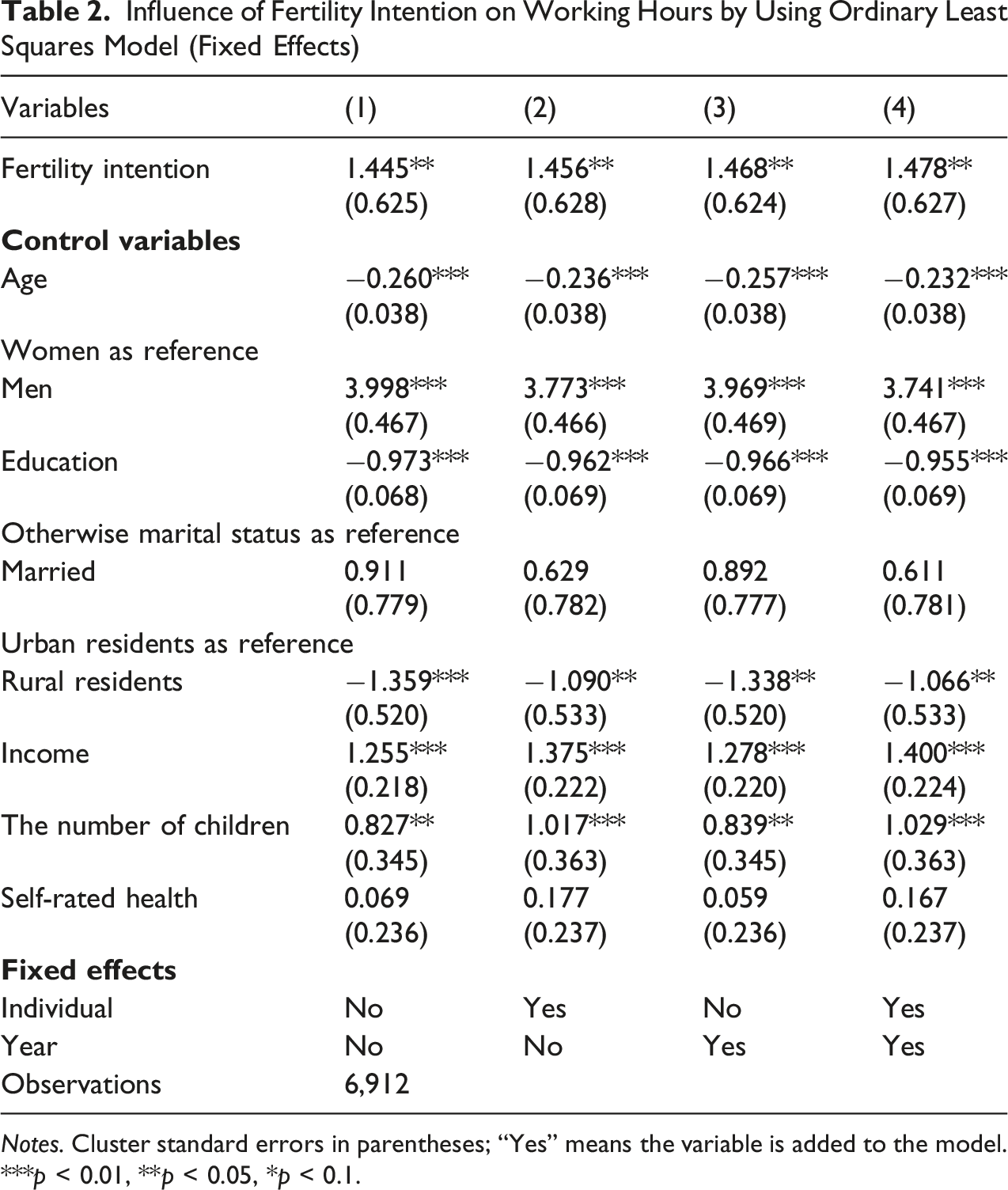
Notes. Cluster standard errors in parentheses; “Yes” means the variable is added to the model.
***p < 0.01, **p < 0.05, *p < 0.1.
The results of control variables indicated that, across all models, both age and education level were significant negative predictors of working hours, with older and more highly educated individuals tending to work less. Men, individuals with higher income, and those who already have children tend to work more hours. The rural residents worked fewer hours compared to the urban residents. However, marital status and self-reported health did not show significant effects on working hours.
Moderating Effect Analysis
As we analyzed in the section of theoretical analysis that fertility intention may exert differential effects on working hours depending on gender, parental experience, and income. To interpret the moderating effects of gender, parental experience, and income, we visualize these heterogeneities in the relationship between individuals’ fertility intention and working hours.
Figure 2 presents the average marginal effects of fertility intention on working hours with different gender, parental experience, and income level. It can be observed from Figure 2 that compared with women, the fertility intention can more significantly increase men’s working hours. The effect of fertility intention on working hours becomes more significant as the number of children increases, with individuals having more children showing a larger increase in working hours. Moreover, the effect of fertility intention is stronger among individuals who are in lower-income households. The moderating effects of gender, parental experience, and income in the relationship between fertility intention and working hours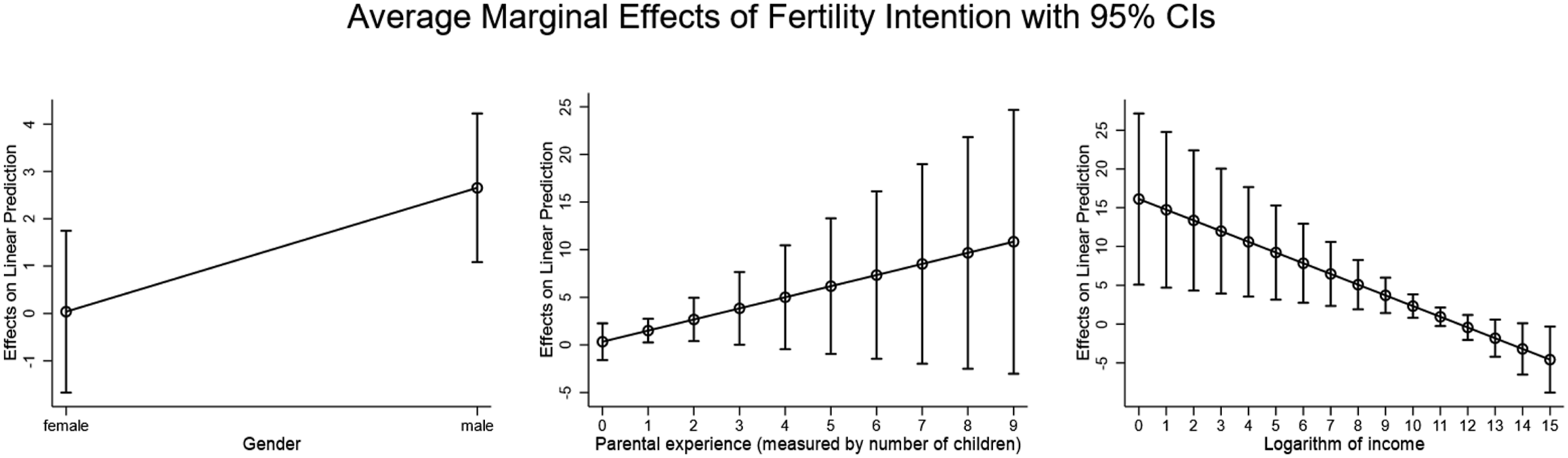
Overall, gender, parental experience, and income played significant moderating roles in the relationship between individuals’ fertility intention and working hours, and fertility intention was linked to longer working hours, specifically among men, individuals with parental experience, and those with lower income. The results of the moderating effect analysis supported our hypotheses 2a, 2b, and 2c.
Robustness Checks
IV-Two-Stage Least Squares Regression Results
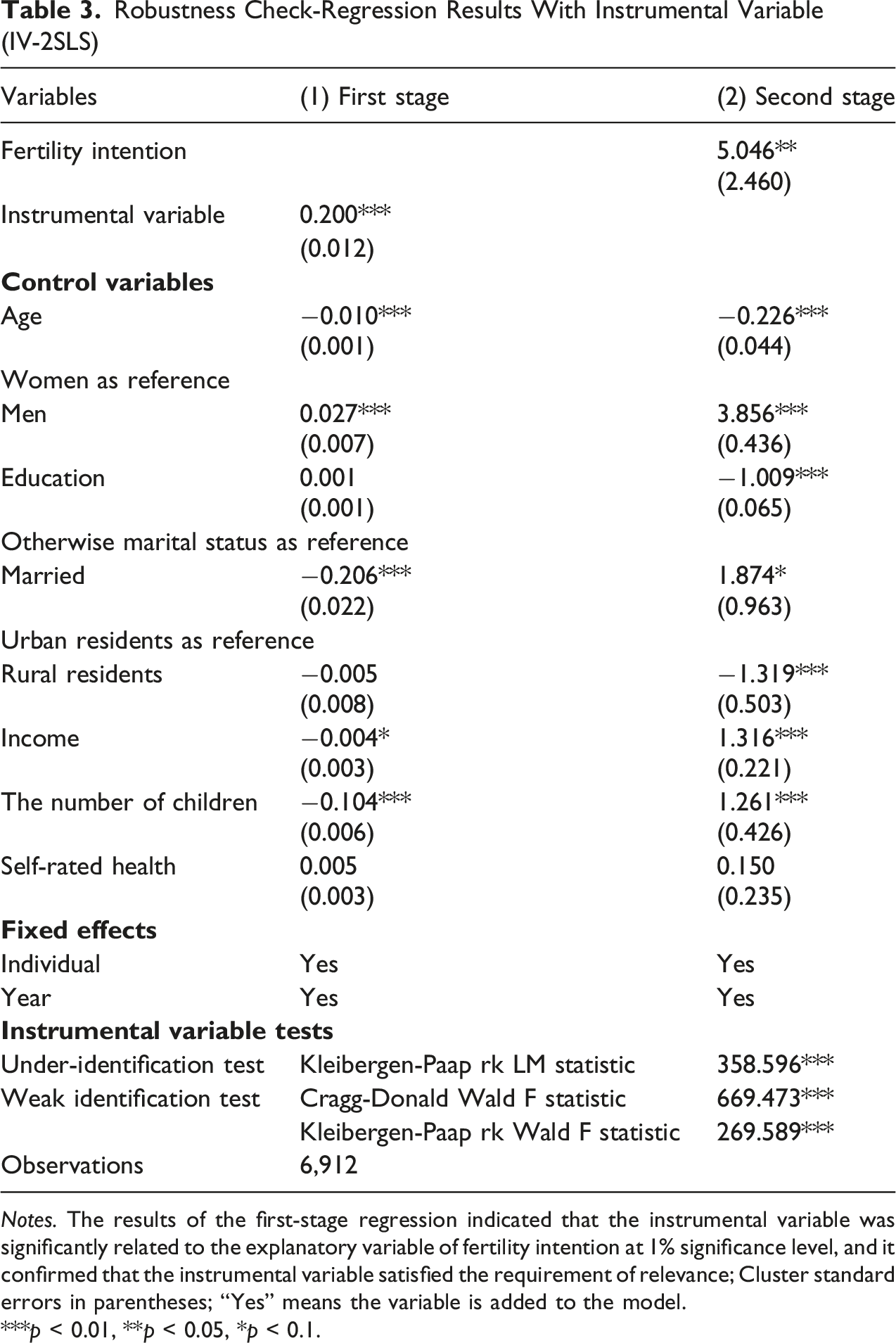
Robustness Check-Regression Results With Instrumental Variable (IV-2SLS)
Notes. The results of the first-stage regression indicated that the instrumental variable was significantly related to the explanatory variable of fertility intention at 1% significance level, and it confirmed that the instrumental variable satisfied the requirement of relevance; Cluster standard errors in parentheses; “Yes” means the variable is added to the model.
***p < 0.01, **p < 0.05, *p < 0.1.
As shown in Table 3, the results from the 2SLS model supported our hypothesis 1 again. It can be seen from Table 3 that the coefficient for fertility intention was 5.046, and it was significant at 5% statistical level. These results of 2SLS model indicated that individuals’ fertility intention can significantly affect their working hours, and individuals will work longer hours if they have fertility intentions.
Relaxing Instrument Exogeneity
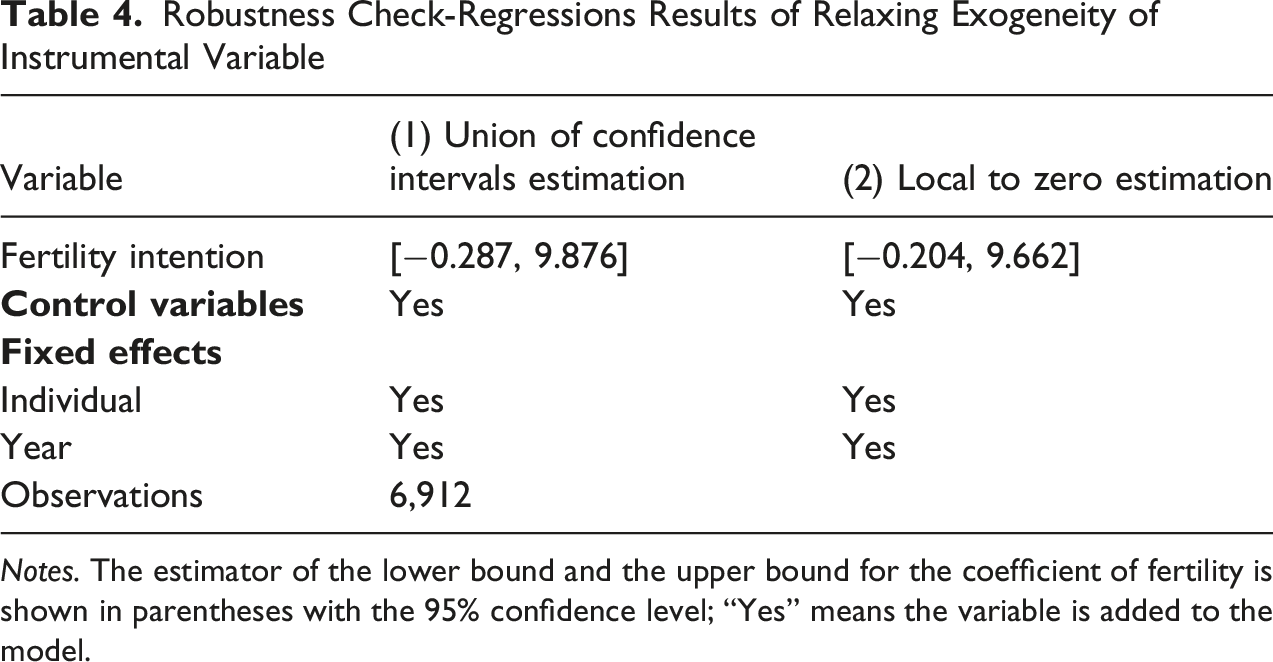
The selection of IV requires satisfying the conditions of relevance and exogeneity. To some extent, the relevance can be tested, while the exogeneity usually depends on theoretical assumptions. Therefore, we used the plausibly exogenous estimation method by Conley et al. (2012) to relax the strict exogeneity assumption of the IV and tested the sensitivity of the parameters.
Robustness Check-Regressions Results of Relaxing Exogeneity of Instrumental Variable
Notes. The estimator of the lower bound and the upper bound for the coefficient of fertility is shown in parentheses with the 95% confidence level; “Yes” means the variable is added to the model.
Discussion
For most adults, life is primarily structured around work and family, and understanding the relationship between family planning and labor behavior is crucial for both theory and policy practice (Zhang et al., 2012). Existing studies have mainly focused on how working hours change after childbirth, and they reached a consensus on the existence of “motherhood penalty” (Angrist & Evans, 1998; Budig & England, 2001; Budig & Hodges, 2014; Kleven et al., 2019) and “fatherhood premium” (Glauber, 2008, 2018; Killewald, 2012). Specifically, mothers experience significant declines in working hours following childbirth, and fathers’ working hours often remain stable or even increase. However, as a part of household decision-making, to a large extent, adjustments in working hours are rational and forward-looking, and they may occur before a child’s arrival or occur upon the formation of fertility intentions.
Yet, how fertility intentions influence working hours remains unclear. Utilizing nationally representative panel data from 6,912 respondents in China, this study investigated how fertility intentions shape individuals’ working hours and examined the moderating roles of gender, prenatal experience, and income. Our analysis found that individuals with fertility intentions tend to work longer hours, and increased working hours can act as a “time price” for fulfilling fertility intentions. This main finding was confirmed across a series of robustness checks, including an IV approach and relaxing the exogeneity assumption of the IV.
The finding that fertility intention leads to increased working hours carries important implications for social and labor policy. While this behavioral response is rational from a household perspective, a heavy reliance on extending working hours can lead to adverse outcomes, such as overwork and related health issues (Bannai & Tamakoshi, 2014; Jiang & Yang, 2025), work-family conflict (Adkins & Premeaux, 2012), and the reinforcement of traditional gender roles with men focusing on economic provision (Killewald, 2012; Townsend, 2010) and women on caregiving (Hays, 1996; Williams, 2010). Therefore, public policies aiming to encourage fertility should not be limited to post-birth subsidies but also include strategies that alleviate the anticipated economic pressures on some prospective parents. Policies aimed at reducing long-term child-rearing costs, such as expanding public childcare services, stabilizing housing prices, and regulating educational expenses, could ease the pressing need for economic accumulation. Furthermore, policies should focus on promoting flexible work arrangements and enforcing reasonable limits on working hours. Ultimately, reducing future financial uncertainty while fostering a supportive work-life environment would help individuals translate their fertility intentions into fertility behaviors.
The results of moderating analysis show that the effects of fertility intention on working hours are more significant among men. This finding aligns with our theoretical analysis based on traditional gender roles. Fatherhood is traditionally defined through economic achievement and the capacity to provide materially for the family (Killewald, 2012; Townsend, 2010). The fertility intention may strengthen men’s sense of responsibility as economic providers, motivating them to perform responsible fatherhood by working longer hours. However, women face a complex dilemma. On one hand, they also feel the need to prepare financially for the coming child. On the other hand, the social expectation of “intensive mothering” (Hays, 1996; Williams, 2010), combined with limited public childcare support, draws them back into the domestic domain (Damaske, 2013). This leads women to reduce their working hours to prepare for the physical demands of pregnancy and their future role as the primary caregiver. To foster a more gender equitable society, policies should dismantle these rigid gender roles and promote egalitarian co-parenting, such as promoting paternity leave, encouraging fathers to engage in caregiving. Additionally, ensuring flexible work arrangements for parents and creating a supportive environment where both parents can share the economic and caregiving responsibilities more equally are crucial.
The analysis further shows that the positive effects of fertility intention on working hours are more significant among those who already have children. For childless individuals, preparing for a first child is a transition filled with unknowns without prior experience, they may underestimate the full economic costs of raising a child (Gustafsson & Kalwij, 2006). In contrast, for parents who already have children, their preparation for another child or the next child is guided by direct experience. They have a clear, first-hand understanding of the actual costs and lifestyle changes involved. As a result, their preparatory strategy may be more explicit, with the economic accumulation motive becoming a clearer priority. Thus, the policy support for prospective parents should be tailored to their level of experience. For instance, first-time parents might benefit greatly from informational support, such as realistic parenting preparation courses on child-rearing. For families considering an additional child, the financial incentives and cost-reduction policies may be more effective.
Finally, the analysis further indicates that the effects of fertility intention on working hours are more significant among low-income households. For low-income households, financial preparation for childbearing is not a matter of choice but of necessity. They rely on the direct form, working longer hours, to secure their family’s financial future (Browning & Crossley, 2001; Conger & Donnellan, 2007; Hardy, 2017; Killewald, 2012). Conversely, higher-income households possess financial resources to cope with future costs (De Nardi, 2004). For the higher-income group, they may reduce work engagement to prepare for their future caregiving role (Kalil, 2014). They may prioritize gaining more leisure time over earning additional income (Bianchi, 2000; Guryan et al., 2008). From a policy perspective, direct financial transfers, including subsidies and tax credits, remain essential for low-income families. For higher-income groups, policies that enhance time flexibility may be more effective in supporting their fertility plans.
This study made efforts to examine the effect of fertility intention on working hours. There is still room for further improvement. First, our measure of fertility intention relied on a binary question in the CFPS survey (Do you intend to have a child in the next 2 years?). This dichotomous variable may not capture the nuances of family planning, such as the ideal number and the gender composition of children. Future research employing multi-dimensional measures of fertility intentions could provide a more detailed understanding of how different perspectives of family planning relate to labor market behavior. Second, individuals engaged in different types of occupations may also exhibit a moderating effect in the relationship between fertility intention and working hours. For instance, some individuals work in jobs with fixed schedules that cannot be easily adjusted, which may limit their ability to respond to fertility plans. Future research with richer occupational information could provide a deeper understanding of this relationship.
Conclusion
Fertility intention as a forward-looking indicator of family planning represents a critical yet understudied determinant of labor market behavior. Using panel data from the CFPS 2020 and 2022, this study found that fertility intention is significantly associated with individuals’ working hours, and increased working hours can act as a “time price” for fulfilling fertility intentions. This effect might be primarily driven by an economic accumulation motive, as prospective parents proactively increase their labor supply to prepare for the high costs of child-rearing. Our moderating analysis further reveals that this effect of fertility intention is stronger for men and for individuals who already have children, and weakens as income rises. To foster a more balanced work-family environment, policymakers should not only focus on post-birth support but also implement policies that alleviate the ex-ante economic pressures on prospective parents.
Footnotes

Ethical Considerations
This study has used secondary data, which is in the public domain. Therefore, ethical approval and consent to participate are not required.
Author Contributions
S. H. Y. and Y. J. proposed the idea and wrote the manuscript. S. H. Y. and X. Q. G. analyzed the data. X. Q. G and F. Y. critical feedback on the theory, methods, results, and discussions, and edited the manuscript.
Funding
The authors received no financial support for the research, authorship, and/or publication of this article.
Declaration of Conflicting Interests
The authors declared no potential conflicts of interest with respect to the research, authorship, and/or publication of this article.