






Abstract
In 2002, New Zealand became one of the last Organisation for Economic Co-operation (OECD) countries to pass a paid parental leave policy. As of 2025, the United States is the only remaining OECD nation to not offer a federal paid parental leave program. The following study is an effort to understand the benefits and discover the real-life impacts that the country’s Parental Leave & Employment Protection Act has on families through a set of interviews with mothers in New Zealand. In exploring these impacts and understanding experiences of mothers in New Zealand, the research was informed by a constructivist grounded theory approach (Charmaz) in a mixed-methods design consisting of a preliminary survey (n = 58) and semi-structured interviews (n = 11). By interviewing mothers about their experiences with maternity leave and how the policies available to them impact their experience with their newborns and personal well-being, the research identified four recurring and interconnected themes: a positive feeling about returning to work, increase in benefits to maternal and infant health care, an inherent need to manage finances, and the significant impact of external advantages within the community.
Keywords
Introduction
Located in the southwestern Pacific Ocean, New Zealand is a small island nation, just east of Australia. It has a population of 4.5 million (Cumming, 2015)—a population approximately half the size of New York City. While New Zealand is a small and isolated nation, it has an outsized influence in international affairs and plays a significant role in the world community (Hawke, 2020). However involved the island nation is in world politics, it is not the giant that is the United States. According to the 2020 Census, there were over 331 million people living in the United States, which represents a growth of 7.4% since 2010 (Jarmin, 2021).
A 2025 Global Life-Work balance index found that New Zealand is the best country for a life-work balance for the third consecutive year. This index measures the degree to which countries allow their workforce to “live and work well” in 60 countries with the largest economies in the world. The index measured factors ranging from paid leave, minimum wage, health care, happiness, working hours, inclusivity, and overall safety (Coacci, 2025).
In 2002, New Zealand became one of the last OECD countries to introduce national legislation for paid parental leave. In 2011, Australia introduced paid leave with the Paid Parental Leave Act which legislates for 18 weeks of paid leave at the national minimum wage. The United States has yet to pass any paid parental leave legislation (Ravenswood et al., 2012).
Paid leave in New Zealand was passed under the Parental and Employment Protection (Paid Parental Leave) Amendment Act, which provided 12 weeks of paid leave for the primary caregiver and another 2 weeks of unpaid partner leave. The legislation was expanded again in 2017 with an additional amendment that extended the entitlement in stages over a 3-year period, culminating with 26 weeks of paid leave that went into effect in July 2020 (Lockton, 2020).
Four types of parental leave are covered under the Parental and Employment Protection (Paid Parental Leave) Amendment Act: primary carer leave, partners leave, extended leave, and negotiated carer leave. The primary carer leave is 26 weeks’ leave from their jobs if they are pregnant or have given birth, including a surrogate. Uniquely, if an employee is eligible for primary carer leave and has a miscarriage, or their baby is stillborn or dies, they are still entitled to 26 weeks of parental leave (Employment New Zealand, 2025). Having been hailed by women’s rights groups for its female forward policies, the country is one of the world’s only countries to offer the paid bereavement leave benefit alongside India (Picheta, 2021).
While it has been characterized as fully paid leave, the New Zealand policy provides for a maximum of $788.66 NZD gross pay a week. This is equal to an annual wage of $41,010 and is well below the recorded minimum wage of a 40-hour week in New Zealand, which is $940 NZD (Employment New Zealand, 2025).
In order to provide workplace incentives, some employers provide extra benefits to their employees on paid maternity leave. According to a study of 307 employers by the company Crayon, 49% of employers provide a top-up which brings weekly pay up to equal the weekly salary of the employee on leave. An additional 37% of employers provide each employee with a full salary, rather than relying on the government pay (Crayon, 2024).
Employees who have worked for their employer for at least 12 months are eligible for extended leave. Extended leave is a period of extra unpaid parental leave usually taken after the paid leave for the primary caregiver ends. Under this policy, employers are required to allow their employees to take up to a year off to spend with their child. Employees that have worked in their current role for more than 6 months but less than year are eligible to take the extended leave if they negotiate it with their employer (Employment New Zealand, 2025).
Another tactic many employers in New Zealand take to differentiate themselves on the job market and support their employees’ return to the office is the offering of an ex-gratia payment. These payments are discretionary lump sums that are given to parents who take an extended period of leave while on parental leave. They are generally dispersed to the employee after a period of service following their return to work and are often around 6 weeks of pay (Te Kawa Mātaaho Public Service Commission, 2023).
In addition to pay during parental leave, New Zealand citizens and permanent residents have access to the publicly funded universal health care system. The system covers inpatient, outpatient, mental health, long-term care, prescription drugs, and, notably, maternal and infant care (Tikkanen, Osborn, et al., 2020). Unlike their adult counterparts, children under the age of 14 are not charged copayments for general practitioner visits, making childhood health care even more accessible for the growing family (Gauld, 2020). New Zealand distinguishes itself as the only high-income country to have a nationwide midwifery-led continuity of care model. Women in New Zealand start with a midwife at their first prenatal appointment and continue with that provider until their postnatal care is complete (Anderson et al., 2025).
This internationally unique system of autonomous lead maternity carers (LMCs) provides continuity of care for mothers and infants and has been shown to reduce inequalities. White women in New Zealand have a maternal mortality rate of 11.33 per 100,000. Their Native New Zealand counterpart, the Māori women, have a 23.48 maternal mortality rate. Considering the social determinants of health impacting these women, including access, cultural considerations, and political context, this is still relatively low (Dawson et al., 2022). Historically, the Māori people of New Zealand have experienced systematic health inequalities despite the universal health care system promised in the country. Research around this has attributed this to the government “failing to design and administer the current primary health care system” to actively address the differences in Māori culture and access to health care (Sheridan et al., 2024). Comparatively, White women in the United States have a mortality rate of 18.60 per 100,000, while Black women have a staggering 50.3 deaths per 100,000 (CDC 2023).
Similarly, the universal health care system in New Zealand provides for a decreased infant mortality rate, a rate that measures by the number of infants who die before they reach their first birthday, of 3.19 in 2025, which is a 2.5% decline from the previous year. In the United States, the infant mortality rate is 5.20 per 1,000 births (Macrotrends, 2025).
Another external factor that impacts a family during the first year of an infant’s life is the cost of living. New Zealand is home to a rising cost of living. In 2024, the annual consumer price index rose 2.7 % over the previous year. Economist Craig Renney noted that the increase is likely to put further pressure on households, particularly those who are minimum wage as they only received a pay raise of 1.5% in April of the same year (NZ CTU 2025). This is coupled with the rising cost of food, with the sharpest monthly increase in over 2 years since the beginning of 2025. Over 65% of items in the grocery store have become more expensive, putting increased pressure on New Zealand families (Lisay, 2025).
The cost-of-living crisis for the small and remote nation contributes to the fairly drastic change in New Zealand politics. A new main center-right party has reversed many of the policies of the previous administration led by Prime Minister Jacinda Ardern. A New York Times article on the change noted, “New Zealand bears little resemblance to the country recently led by Jacinda Ardern, whose brand of compassionate, progressive politics made her a global symbol of anti-Trump liberalism” (Zhueng 2025). At this point in the new administration, family forward policies, like that of paid maternity leave, have not been impacted by the change.
Methods
This project is mixed methods and was conducted in two stages: a preliminary survey and an interview. In the first stage of research, convenience sampling was used via social media and local parenting newsletter distributions to survey potential interview subjects and collect key demographic information. In the second stage, researchers employed purposive sampling to select interview subjects from the sample pool. The targeted population for both stages consisted of mothers with young children from two of the largest cities in the northern island of New Zealand, Auckland and Wellington. A total of eleven interviews were conducted in order to achieve thematic saturation (Guest, Bunce, and Johnson, 2006) and gather a sampling of demographics, including both White and Māori mothers.
The interviews were approached through both a qualitative and subjective lens. As the researcher, herself is a working mother of young children, she approached the interviews with relatability and curiosity, because the government support ensured the maternity leave experiences of these women were very different than her own.
Recruitment
With the author based in the United States, the recruitment was initiated through local outreach, including a parental leave advocate, Gillian Brooks, a working mother who had established a support network for working parents out of Auckland, New Zealand. Ms Brooks provided the researcher with knowledge of the parenting culture in New Zealand. With her help, the researcher put together a relatable and informative recruitment statement that Ms Brooks distributed via her working parents’ newsletter. Refer to Appendix A for the recruitment statement.
In addition to the outreach through Ms Brooks, the researcher reached out to working parents in the Wellington area, through the Wellington Parents Facebook group using the same recruitment pitch. This posting garnered much attention and support from fellow working parents in the area who expressed an eagerness to support mothers in the United States.
Out of the nearly 70 working mothers who participated in the survey, the researcher invited approximately 20 mothers to participate in the interview portion of the research. Twelve women responded to the outreach and eleven interviews were scheduled. Every mother that scheduled an interview was able to successfully participate at the scheduled date and time. There was no incentive (gift cards etc.) offered to any of the participants.
Instruments
The initial survey took approximately 5 min to complete and consisted of 20 questions, including employment status, highest level of education, age, occupation, amount of leave taken, additional benefits provided by employer, race or ethnicity, and number of children. Refer to Appendix B for a full list of the questions.
The women who agreed to be interviewed were given dates and times that accounted for the 18-hour time difference between New Zealand and St Louis, Missouri. All of the interviews were set up and took place on Zoom. With permission from the interviewees, all interviews were recorded and transcribed through the Zoom platform. Each interview followed the interview schedule in Appendix C.
Limitations
Being a mother herself, the study author was easily able to relate to the interview subjects. However, this shared experience may have introduced potential bias in the interpretation of the maternal experience. While each interview was conducted with a consistent schedule of questions, the natural flow of the conversation may have been influenced by these experiences.
Analysis
Preliminary quantitative analysis provided a comprehensive view of the data collected from the respondent pool. Descriptive statistics such as frequencies and modes of the categorical data were pulled and reported as percentages of the survey population.
Qualitative analysis of the interviews was informed by a Constructivist (Charmaz, 2014) Grounded Theory approach. Transcripts were uploaded and coded using classical grounded theory methods on Atlas.ti in three stages. The first stage included the use of open coding to review and analyze the transcripts. The codes were then reviewed, and “groups” of these codes were generated using axial coding. Finally, selective coding techniques were applied by reviewing groups and codes, major themes and connections, and reducing the number of codes and groups to highlight the most-essential information.
Results
Summary Statistics
Survey
The recruitment survey participants were a diverse group of career women with a high level of education. Careers ranged from school psychologists, government accountants, public policy analysts, communications and marketing, flight attendants, doctors, and town planners. Given that most of the women who participated in the survey were from Wellington, the capital of New Zealand, there was a high number of public servants. 14 of the 57 respondents (25%), who answered the question regarding occupation, worked for the New Zealand government in a variety of roles. The remaining breakdown of careers is 5% in education, 14% in the medical field, 20% in administration which includes HR, accountants, and executive assistants, 5% in communications and marketing, 2% legal, 5% in retail and hospitality, and the remaining in a variety of other occupations. Many of the women were also highly educated with over 70% of respondents holding degrees from a higher education institution, which includes 36% who held graduate degrees and 36% who received their bachelor’s degrees. The group of women were also mostly White with 53 of the respondents listing themselves as European and 2 who listed themselves Māori, the indigenous population of New Zealand.
Although primary carer leave provides for 26 weeks or 6 months of paid leave, a majority of the women took between 6 and 12 months of maternity leave (see Chart 1). The full 12 months include both paid and unpaid leave, depending on what is offered by their employer. Length of maternity leave for mothers surveyed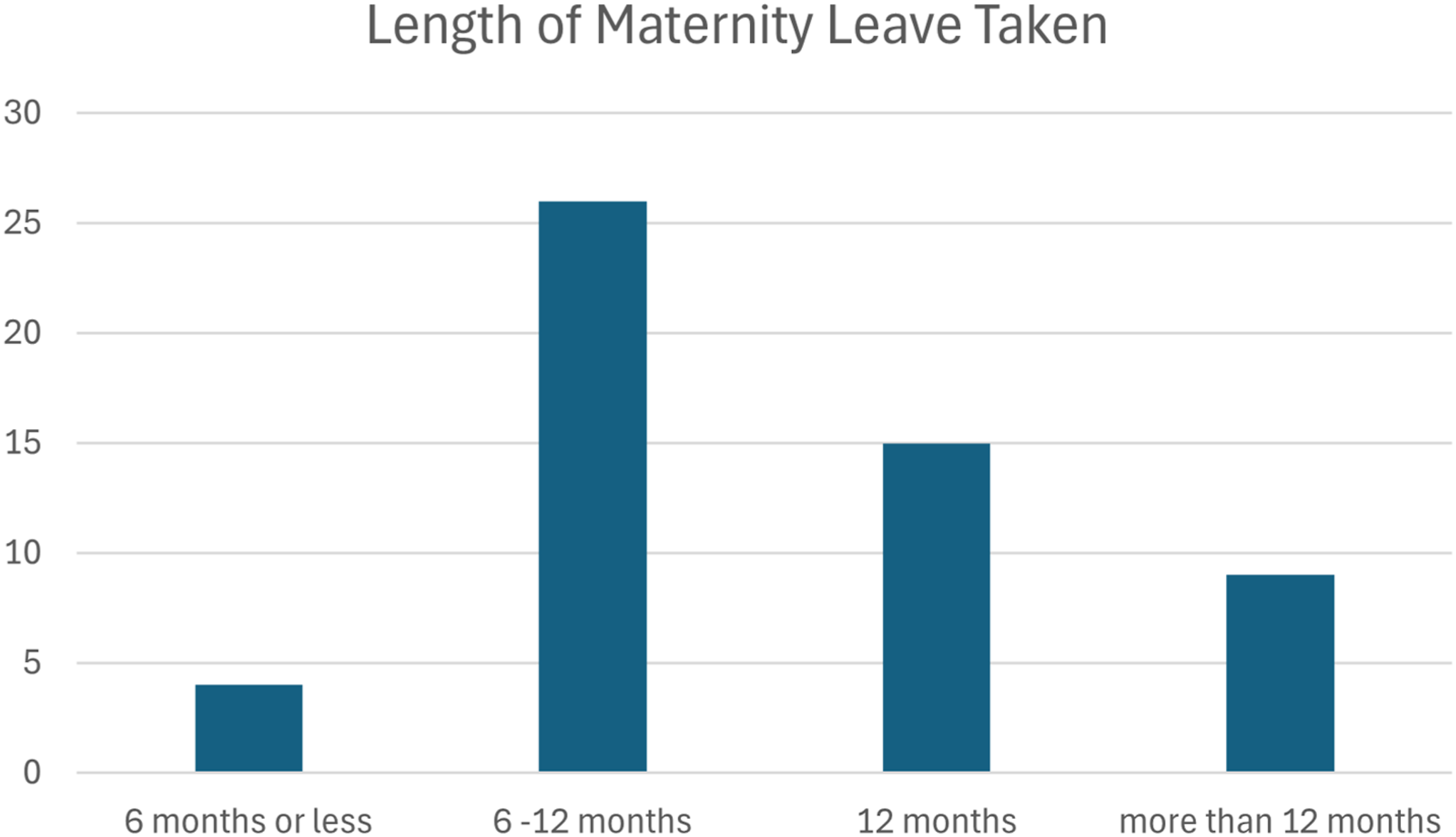
Interviews
Mother’s Interviewed
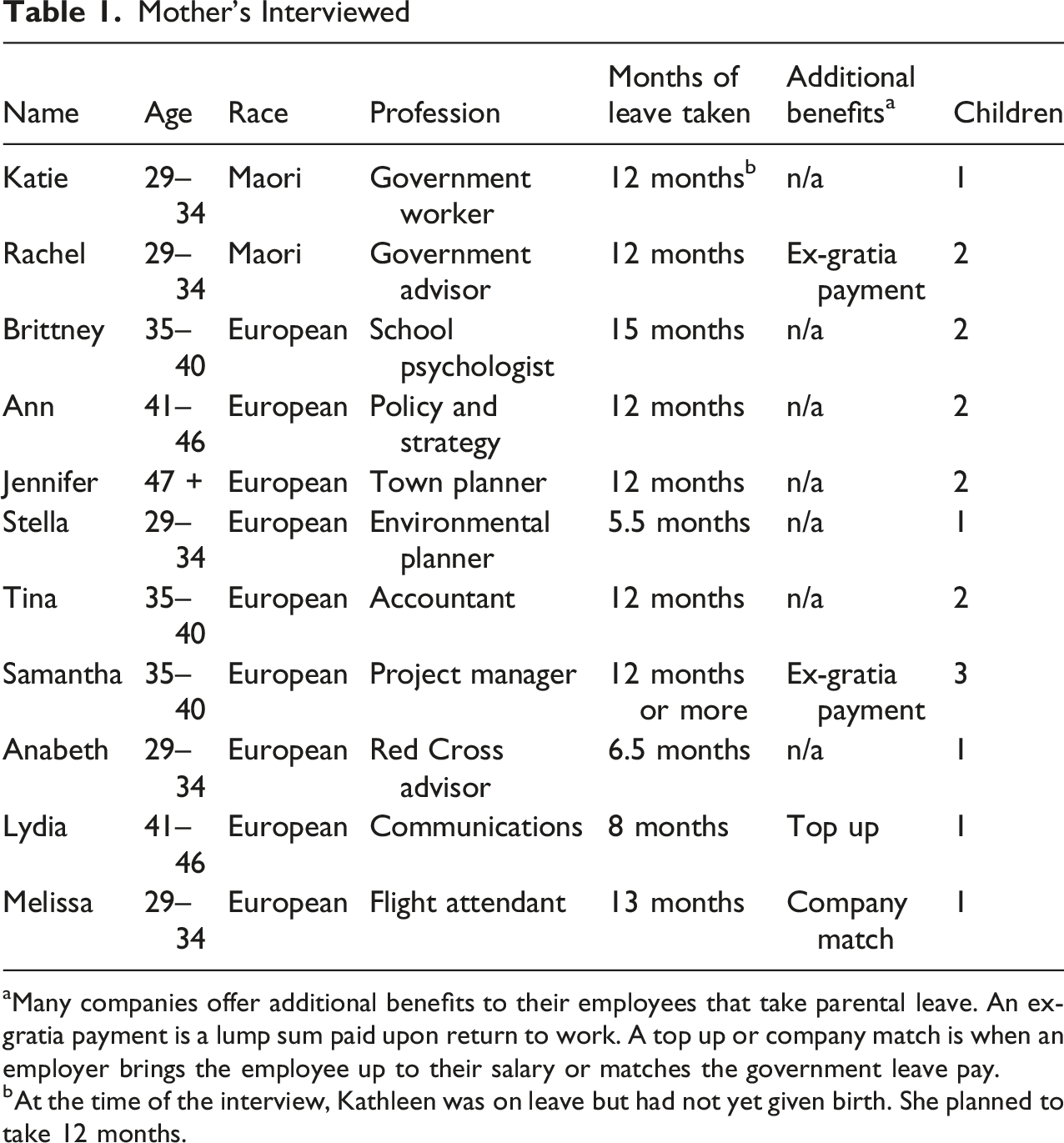
aMany companies offer additional benefits to their employees that take parental leave. An ex-gratia payment is a lump sum paid upon return to work. A top up or company match is when an employer brings the employee up to their salary or matches the government leave pay.
bAt the time of the interview, Kathleen was on leave but had not yet given birth. She planned to take 12 months.
Themes
Each interview was transcribed and recorded using the Zoom platform. To pull out the themes of each interview, each transcription includes a summary of the discussion and the women involved. For example: Rachel / Government Advisor/ Bachelor’s Degree/Māori/Unmarried, live in partner/Mother of 2 Rochelle is a mother of two sons. Her oldest son is 2 ½ and she is currently still on maternity leave with her second son. She is of Māori ethnicity and lives in Wellington with her partner. They are unmarried. She is a government advisor. She took a full 12 months for her first son but due to the unexpected nature and timing of her second son, she is unable to take the full 12 months as she has not been able to save for the unpaid portion of the leave.
With the coding and the summaries in place, four themes emerged from the interviews: return to work opportunities, ability to manage finances, benefits to maternal and infant health, and external advantages within the community.
Return to Work
Unlike many women that this researcher previously interviewed in the United States, most of the New Zealand mothers interviewed expressed an eagerness to return to work. They discussed how the year at home had provided them with plentiful time with their child and they wanted to return to the adult experiences of the workforce. Much of the guilt mothers described stemmed from feeling eager to return to work and leave their child. Some participants questioned whether this desire to resume work might reflect poorly on their maternal instincts or suggest that they were not sufficiently devoted to their child. With my son in particular, I struggled with a loss of identity. I really struggled with the transition to motherhood. And so going back to work kind of gave me that identity outside of the house and outside of the family, and you know, it just took a while to kind of get back into it and realize it was actually a good thing (Tina). I love what I do. I love and being challenged in that way. And yeah, so I felt, I think that was the biggest thing for me, feeling like I should feel bad about putting them in daycare (Stella). With the 1st year I feel like I was ready to go back, although it was obviously hard when you go back right like you feel mum guilt all over the shop (Samantha). I took 8 months mostly because I was not built to be a stay-at-home parent I think (Lydia).
Ability to Manage Finances
Out of the 11 mothers interviewed, only 3 of them received additional payment beyond the government paid leave allotted during the first 6 months of their parental leave. This left many of them with at least 3 months of unpaid leave. While most of the mothers felt grateful for the time that they were able to take and the pay they did receive, they also expressed an urgent need to budget, the occasional hardship due to the cost of living in New Zealand, and expressed the desire for an increase in the pay available to them. So I am taking 6 and a half months. So we get 6 months paid. But it's not paid at a hundred percent. It’s capped at a third of what they pay. So it’s about 750 New Zealand dollars a week. And that's before tax. So it’s nowhere near what my pay used to be. So without our spouses helping us. It’s actually, not possible. It’s not easy to get by and it doesn’t cover my mortgage and my taxes (Anabeth). It’s a bit of a setback financially, but we can survive, and then we can. And get back to it as soon as I’m as soon as I’m back working, but it’s yeah. It’s like, properly for us. Personally, it’s not a major financial burden on the flip side as well. I’m quite fortunate, too, because my partner, he also gets 14 weeks full paid child bonding leave (Katie). Yes, you’re paid, but it’s still not your usual income. So you do have to be strategic with your money and manage your finances, even though I was a lot luckier than most. It’s still less than what you would normally get each week. So, yeah, I mean, I did have savings. But they get depleted pretty quickly, because the cost of living has gone up a lot like it’s quite expensive. Especially in the last year or so (Melissa).
Infant and Maternal Health Benefits
The interviewed mothers expressed a belief that the extra time at home afforded them and their child added health benefits. From benefiting their mental health, to extending the time breastfeeding, and increasing their ability to bond with their child, most women reported being satisfied with the health and well-being of both themselves and their child. We had a really great year. And we did a lot together. And I think I just really immersed myself and did as much as I could for her. We did a lot of like extracurricular activities every day, just to like get out of the house and stay busy. So yeah, it was good for her. I think she was ready for more interaction with other kids at that age when she was one. We did put her into daycare a little bit earlier. So she actually started at 10 months part time and did part time for 2 months and then full time from a year, just to transition her into it. And that was good for both of us (Melissa). Our breastfeeding journey was really horrific. I had primary low supply and kind of refuse to accept that I was triple fed for months and months, and I remember thinking at the time, like God. If I was in the States I’d be going back to work next week, and my baby doesn't eat (Brittney). That was a really good time. I feel like around just over a year was like perfect like he was starting to get to that age where I just couldn’t entertain him. He was like, he’s the kind of kid that's full energy, like I was taking him to things all during the day, kids, activities and all that kind of thing (Rachel). [My poor mental health] I think it was probably a combination of leaving the kids feeling like I was doing the wrong thing by going back to work and particularly with my son. My mental health, I think it was my mental state that was probably not great. If I were to go back at 6 months, I would not have done well. But closer to that year it was amazing, the shift between 6 months and a year. I don't think I was ready to go back at 6 months, but definitely closer to the year. I can comfortably return (Tina).
Community Advantages
In addition to the pay provided by the government during parental leave, many women attributed their positive experiences to their universal health care system, which includes free maternity care, child immunizations, and free primary care visits for children up to age 14 (Gauld, 2020). The government’s collective focus on maternal and newborn care appears to have fostered a broader culture of support within the community. Has anyone told you about Plunket? Plunket is another government service. It’s a government paid for service, anyway, that so they, when you stop seeing your midwife after you've had the baby, which is about 3 weeks or something. They then transfer you to Plunkett, which has nurses all over the place and you have an appointment with them like maybe once a month, and take them in. They do all those checks like, right up until I think they’re one. They talk to you about, you know things like breastfeeding. How you’re feeling mentally, do you need any additional support? And they’re absolutely amazing. They do full checks over the phone about all these different things (Lydia). It is crazy to me that in the United States you have that you come out of the hospital and you’re dealing with everything that’s postpartum world. And then you've got to think about your bills, and when you go back to pay the bills, and how you’re going to manage financially, and I think that probably just affects things like the rates of breastfeeding are probably lower, because it’s a lot harder to do. Rates of like postnatal depression must be higher, because you guys don’t want to go back, but you have to. And all of those like cascades really (Samantha). I can't remember how many hours it is, but from 3 years onwards until 5 you get heavily discounted if not free, early childhood care. This happened under Prime Minister Jacinda Ardern. She bought on a great kind of working families benefit. That wasn't means tested [dependent on income] (Katie). I think I’m very conscious of how lucky New Zealanders are from a parental leave, and also, like a health care, viewpoint. We don’t have to have private insurance. We don’t have to like all of that is taken care of. We do pay for doctors and all that, but you know if I broke my leg it would be sorted. I insurance like, it's just. I’m very aware of. Yeah, how lucky we are here, because that is not the case in the States (Lydia).
Discussion
Despite limiting paid leave to 6 months at a rate lower than the minimum wage, the government’s consistent valuation of working mothers as a critical economic driver is producing a perceptible cultural paradigm shift. In comparison to their US (or American) counterparts from previous research, women in New Zealand expressed satisfaction with their parental leave despite the budget constraints on the family. These mothers emerge from their time at home with their children, generally ready to return to work enthusiastically.
The combination of paid parental leave, universal health care system, surrounding community benefits, and the unique approach to maternal and infant care provides a collective system and environment that places a value on motherhood. With the value placed on motherhood and women in the workplace, spending extra time at home, even when it is unpaid, is prioritized and normalized. Families spend time budgeting and saving to support their unpaid time, a cultural norm that would not be replicated in the United States.
Even with budget constraints, few women interviewed spent time discussing the negative impact on their finances. Only a few women mentioned needing the paycheck when discussing the return to work, most of them discussed how they wanted to return to work to exercise their brain and contribute to their family and society as a whole.
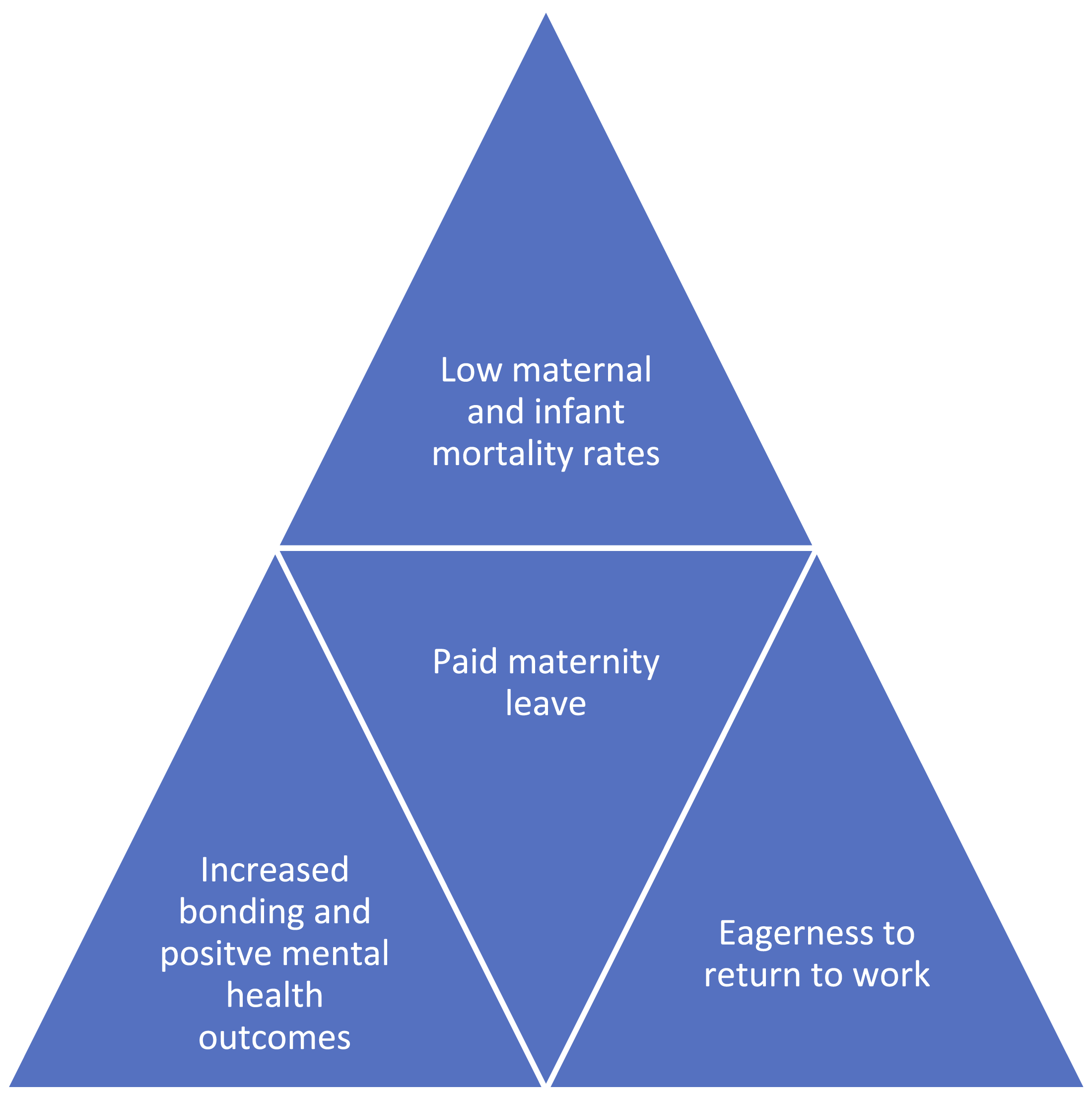
Given the similarities to countries the United States as far as a high cost of living, low housing stock, and a rise in inflation, this can be contributed to the external factors not found in the United States, particularly paid maternity leave and the network of support that it encourages in its wake. The graphic below illustrates the impact that paid maternity leave has on other maternal health and wellness outcomes as discovered through the course of this qualitative research.
Conclusion
Policy Recommendations
The examination of the New Zealand paid family leave policy enforces the fact that any pay, no matter the amount, goes far to enhance the infrastructure and cultural support for mothers, fathers, and their growing families. The expressed positive outcomes from working mothers in New Zealand should serve as an example of how the show of support enhances the quality of life of both mother and infant. A policy such as this is inherently prolife and could garner support in countries like the United States.
Though not all positive, in a study on the impact of maternity leave pay at New Zealand universities, researchers found that adequate paid paternal leave continues to be elusive for many parents, primary carers, and families. While New Zealand’s policy exceeds the recommended 14 week paid leave recommended for infant wellbeing by the International Labour Organization, capping the pay below minimum wage creates an undue hardship to families (McAllister et al., 2021). An increase in pay for primary carers would go a long way in easing the financial burden placed on families.
Ultimately, the New Zealand maternity leave experience demonstrates both the promise and limitations of paid parental leave policies. While the country’s approach represents meaningful commitment to family well-being and gender equity, it also reveals that insufficient pay levels stand to undermine those goals. As other nations—particularly the United States—continue to avoid the passage of equitable family leave policies, New Zealand offers valuable lessons that the true progress is not just allowing for the time off, but a broad span of resources that make that time sustainable.
Supplemental Material
Supplemental Material - Exploring the Promise of a Paid Family Leave Policy: The Maternal Experience in New Zealand
Supplemental Material for Exploring the Promise of a Paid Family Leave Policy: The Maternal Experience in New Zealand by Jessica L. Ciccone in Journal of Family Issues
Footnotes

Funding
The author received no financial support for the research, authorship, and/or publication of this article.
Declaration of Conflicting Interests
The author declared no potential conflicts of interest with respect to the research, authorship, and/or publication of this article.
Supplemental Material
Supplemental material for this article is available online.
References
Supplementary Material
Please find the following supplemental material available below.
For Open Access articles published under a Creative Commons License, all supplemental material carries the same license as the article it is associated with.
For non-Open Access articles published, all supplemental material carries a non-exclusive license, and permission requests for re-use of supplemental material or any part of supplemental material shall be sent directly to the copyright owner as specified in the copyright notice associated with the article.
