






Abstract
Shifts in work patterns have intensified interest in work-family conflict, highlighting the critical role of supervisors’ leadership behaviors in shaping such tension. Unlike Western leadership, which emphasizes job-related support, Chinese benevolent leadership provides holistic care across both work and personal domains, potentially offering distinctive benefits. Drawing on culture and leadership perspective, this study examines how the two dimensions of benevolent leadership—work-oriented and life-oriented care—influence subordinates’ work-family conflict and their underlying mechanisms. Specifically, it investigates whether these behaviors activate resources in corresponding role domains, revealing dual mechanisms of influence and the moderating role of role priority. Findings show that work-oriented care reduces conflict by enhancing perceived organizational support, regardless of subordinates’ role orientation. In contrast, life-oriented care reduces conflict only for family-prioritized employees, through increased perceived family support. Overall, this study demonstrates that benevolent leadership mitigates work-family conflict via two distinct yet complementary pathways, yielding synergistic effects shaped by subordinate value orientation and underscoring its culturally unique contribution beyond Western leadership models.
Keywords
Introduction
In contemporary society, the interplay between work and family has become increasingly complex and consequential. The rise of dual-income households, evolving gender roles, and the nuclear family structure have placed simultaneous and intensifying demands on individuals across both domains. At the same time, globalization, technological advancement, and the rise of nontraditional work arrangements have significantly increased workplace demands while blurring the boundaries between work and non-work domains (Allen et al., 2015; Allen & Martin, 2017). These shifts have contributed to a growing prevalence of work-family conflict, defined as inter-role conflict in which the demands of work and family roles are mutually incompatible (Ratnaningsih & Idris, 2025).
Work-family conflict has been shown to have far-reaching negative effects on employee and organizational outcomes. Meta-analytic evidence demonstrates its detrimental impact on job satisfaction, performance, organizational commitment, and citizenship behavior, while simultaneously increasing job stress, turnover intention, and absenteeism (Amstad et al., 2011). On the family side, it diminishes marital satisfaction, increases familial tension, and contributes to poor physical and psychological health outcomes, including anxiety, depression, and substance use (Amstad et al., 2011). Moreover, work-family conflict is persistent and cyclical, with escalating strain over time (Lu & Kao, 2013), underscoring the need for effective interventions.
Rooted in the role stress perspective, work-family conflict arises when participation in one role makes it more difficult to fulfill the demands of another (Kahn et al., 1964). This framework was later extended through the lens of conservation of resources (COR) theory, which posits that individuals strive to acquire, retain, and protect valued resources—such as time, energy, or emotional stability—to cope with stress (Hobfoll, 1989). When individuals engage in multiple roles, such as those at work and at home, they often experience accelerated depletion of these resources (Pleck, 1977), thereby exacerbating role strain and conflict (Grandey & Cropanzano, 1999).
A growing body of literature has identified various antecedents of work-family conflict (Agrawal & Mahajan, 2021; Allen et al., 2012; Michel et al., 2011), among which leadership has emerged as a critical organizational factor. Leaders, acting as agents of the organization (Levinson, 1965), play a pivotal role in shaping subordinates’ experiences of role conflict. Their behaviors—ranging from emotional support and communication to role modeling and the enactment of family-friendly policies—can enhance or deplete subordinates’ resources (Breaugh & Frye, 2008; Li et al., 2017). Empirical studies show that leadership styles such as transformational, authentic, servant leadership, and leader-member exchange (LMX) are associated with reduced work-family conflict (Braun & Nieberle, 2017; Morganson et al., 2017; Munir et al., 2012; Tang et al., 2016). More recently, the construct of family-supportive supervisor behaviors (FSSB) has received attention for its targeted impact on reducing work-family strain (Hammer et al., 2013; Kossek et al., 2011).
However, these leadership constructs are largely derived from Western frameworks and focus primarily on work-oriented support. They overlook the equally critical need to replenish resources in the family domain. In contrast, Chinese culture—shaped by Confucianism and holistic thinking—emphasizes the interconnectedness and balance between roles (Li, 1992). Within this cultural context, Paternalistic Leadership is especially salient, and benevolent leadership, one of its core dimensions, is of particular relevance. Defined as holistic, enduring, and individualized care for subordinates’ well-being (Farh & Cheng, 2000), benevolent leadership comprises both work-oriented and life-oriented care (Lin & Cheng, 2012).
This dual-dimensional structure presents a unique opportunity to address work-family conflict from a culturally contextualized leadership perspective. Unlike Western models that typically focus on workplace support, Chinese benevolent leaders extend their concern into the personal lives of employees, offering tangible and emotional resources that span both the work and family domains. Despite this theoretical promise, limited empirical research has examined how these dual dimensions operate to reduce work-family conflict and under what conditions they are most effective.
Building on role stress theory and COR theory, the present study investigates whether benevolent leadership mitigates subordinates’ work-family conflict through the enhancement of role-based resources—namely, perceived organizational support and perceived family support. Further, we examine whether the effectiveness of these pathways depends on subordinates’ role value orientation—specifically, the extent to which individuals prioritize work or family roles. This boundary condition recognizes that the utility of any given resource may depend on how it aligns with individuals’ personal values and role priorities (Halbesleben et al., 2014; Morelli & Cunningham, 2012).
By integrating cultural, theoretical, and individual-level perspectives, this study contributes to the work-family literature in three ways. First, it offers a culturally grounded approach to understanding leadership’s influence on work-family conflict. Second, it clarifies the dual mechanisms through which benevolent leadership operates by linking each dimension to distinct role-based resources. Third, it highlights the moderating role of individual’s work-role centrality, thereby expanding theoretical understanding of when and for whom leadership behaviors are most effective in resolving work-family tensions.
Literature Review
The Nature of Work-Family Conflict
The evolving structure of modern families and labor markets has intensified the interdependence between work and family domains, giving rise to the growing prevalence of work-family conflict (Allen & Martin, 2017). Early conceptualizations of this construct were rooted in role stress theory, which posits that engaging in multiple roles creates inherent tension due to conflicting expectations and limited role capacity (Kahn et al., 1964). From this view, work-family conflict is understood as inter-role conflict, emerging when the demands of work and family roles are mutually incompatible, thus producing strain (Greenhaus & Beutell, 1985).
To further explain the source of such strain, scholars introduced the scarcity hypothesis, which argues that individuals have a finite pool of resources, such as time and energy (Goode, 1960; Pleck, 1977). The simultaneous enactment of work and family roles can exhaust these resources, triggering role conflict when demands surpass what individuals can supply. Building upon this, conservation of resources (COR) theory has become a dominant framework in contemporary research, emphasizing that individuals are motivated to protect and accumulate valued resources—whether material (e.g., transportation), contextual (e.g., stable relationships), personal (e.g., self-efficacy), or interpersonal (e.g., social support) (Ten Brummelhuis & Bakker, 2012).
COR theory advances earlier models by recognizing that resource loss and gain occur dynamically across roles, and that these changes are often recursive, resulting in either spirals of loss or gain (Grandey & Cropanzano, 1999). This framework also accounts for individual differences, such as personal values and traits, as moderators in the resource exchange process. Accordingly, the current study defines work-family conflict as role-based stress stemming from resource competition between work and family roles (Grandey & Cropanzano, 1999), aligning with an integrative view that combines role stress and resource depletion perspectives.
While work-family conflict is theoretically multifaceted in direction and form, a meta-analysis by Mesmer-Magnus and Viswesvaran (2005), based on over 9,000 data points, demonstrated that these various directions and dimensions are consistently interrelated and produce similar patterns of antecedents and outcomes. Given that this study does not seek to distinguish among different forms of work-family conflict, all subsequent discussions and analyses treat it as a unified construct for the sake of conceptual parsimony.
Benevolent Leadership and Work-Family Conflict
Benevolent leadership, a culturally embedded leadership style in Chinese societies, has garnered growing scholarly interest for its potential to mitigate work-family conflict through holistic subordinate care. Rooted in Confucian ethics and familism, it is defined by leaders’ enduring, individualized concern for subordinates’ well-being—extending beyond the workplace into personal life (Farh & Cheng, 2000). As one of the three components of paternalistic leadership—alongside authoritarian and moral leadership—it is often expressed through face-preserving behaviors and emotional support, regarded as a moral obligation (Redding & Hsiao, 1990).
Its prominence in Chinese organizations is largely attributed to role-based obligation and the generalization of family structures into the workplace (Chiu & Yang, 1987). Supervisors often adopt a fatherly role, eliciting subordinates’ loyalty and trust (Cheng et al., 2004), which in turn strengthens leader identification and enhances outcomes like job satisfaction, organizational commitment, and extra-role behavior (Hiller et al., 2019). Unlike Western models—such as individualized consideration or family-supportive supervisor behaviors (FSSB), which focus on easing work-related strain—benevolent leadership emphasizes hierarchical relationships, long-term care, and support across both work and nonwork domains (Farh & Cheng, 2000; Lu et al., 2009). It recognizes subordinates as whole individuals whose work and family roles are interdependent, aligning with Confucian values of role fulfillment and mutual respect.
Recent research categorizes benevolent leadership into two dimensions: work-oriented care, including guidance, tolerance, and career development support; and life-oriented care, involving concern for personal and family well-being (Lin & Cheng, 2012). These forms of care lead to different outcomes, with work-oriented care improving in-role performance and life-oriented care promoting extra-role behavior. In mitigating work-family conflict, this dual structure serves a buffering function. Work-oriented care enhances perceived organizational support, while life-oriented care increases perceived family support. These role-specific resources reduce inter-role strain, offering two complementary and reinforcing mechanisms that reflect the culturally resonant value of benevolent leadership in Chinese organizational settings.
The Effect of Work-Oriented Care on Subordinates’ Work-Family Conflict
Work-oriented care, a key dimension of benevolent leadership, refers to a supervisor’s guidance and support in the work domain. Specifically, supervisors offer instruction and coaching, tolerate subordinates’ mistakes, and help them save face—all of which help alleviate work-related stress and enhance job performance (Lin & Cheng, 2012). This study argues that work-oriented care supplements subordinates’ work-role resources and increases their perceived organizational support (POS)—the general belief that the organization values their contributions and cares about their well-being (Eisenberger et al., 1986).
There are three theoretical justifications for this assertion. First, from the perspective of organizational agent theory (Levinson, 1965), a leader’s caring behaviors are interpreted as tangible enactments of organizational policies. Abstract organizational benefits and welfare initiatives are conveyed to employees through the leader’s actions, becoming perceived work-related resources. In this way, subordinates interpret work-oriented care as a reflection of organizational support. Second, since work-oriented care stems from the supervisor’s formal job responsibilities, it is closely tied to the organization’s structural policies and welfare. When supervisors demonstrate care through their authority and responsibilities, subordinates tend to attribute this behavior to the supervisor’s organizational role, thereby perceiving such actions as extensions of organizational support. Third, supervisors define subordinates’ task boundaries and provide continuous feedback and guidance. As a result, subordinates form interpretations of the broader organizational environment—including its systems and culture—based on their interactions with the supervisor. Thus, when leaders demonstrate care in the work domain, subordinates generalize this supportive experience to the organization, reinforcing their perceived organizational support. Supporting this line of reasoning, prior meta-analyses have found that supervisor support in the workplace is positively associated with subordinates’ perceived organizational support (Kossek et al., 2011).
According to role stress theory and COR theory (Greenhaus & Beutell, 1985; Hobfoll, 1989), perceived organizational support functions as a vital work-role resource. It enables subordinates to acquire more tangible or psychological energy from the organization, initiating a gain spiral (Rhoades & Eisenberger, 2002), and further helps them manage work stressors that may interfere with family life (Rhoades & Eisenberger, 2002), thereby reducing work-family conflict. Consistent with this view, previous studies have shown a negative relationship between perceived organizational support and work-family conflict (Foley et al., 2005; Gurbuz et al., 2013).
In sum, when supervisors—as agents of the organization—provide coaching, tolerate mistakes, and help subordinates maintain face, such work-oriented care leads subordinates to extend their sense of support to the broader organization, enhancing perceived organizational support. This resource, in turn, helps subordinates cope with work stress and reduce their experience of work-family conflict. Based on this reasoning, the following hypothesis is proposed:
Supervisors’ work-oriented care negatively predicts subordinates’ work-family conflict through the mediating effect of perceived organizational support.
The Effect of Life-Oriented Care on Subordinates’ Work-Family Conflict
Life-oriented care, another core dimension of benevolent leadership, refers to supervisors’ concern for the personal and family-related aspects of their subordinates’ lives—a culturally unique feature of Chinese leadership. Specifically, supervisors may express care for subordinates’ private lives, provide emergency assistance, or extend care to their family members. Such behaviors have been shown to increase employees’ willingness to exert extra effort at work (Lin & Cheng, 2012). This study proposes that life-oriented care enhances subordinates’ family-role resources by increasing their perceived family support (PFS), which refers to the support employees receive from their family members regarding their work roles (King et al., 1995).
Three theoretical justifications support this proposition. First, when supervisors help subordinates manage family-related issues, subordinates are more likely to fulfill their family responsibilities effectively. As a result, their family members may perceive their work as non-disruptive—or even beneficial—to family life, thereby providing greater support for the employee’s work role. Second, through communication and sharing, subordinates may convey their supervisors’ care to family members, generating a crossover effect (Westman, 2001). This diffusion of care fosters family members’ gratitude toward the supervisor, increasing their willingness to support the employee’s work role. Third, in some cases, supervisors’ life-oriented care may directly extend to subordinates’ family members—such as by visiting them, inquiring about their well-being, or offering tangible assistance (Cheng et al., 2000). As direct recipients of care, family members become more inclined to support the subordinate’s role at work. Consequently, supervisors’ life-oriented care can spill over into the family domain and elevate subordinates’ perceived family support.
Empirical research supports these claims. For example, supervisor support beyond the workplace has been shown to improve spouses’ marital satisfaction and commitment to the employee’s organization via work-family enrichment processes, with such positive effects subsequently feeding back to the employee (Carlson et al., 2019). Similarly, Ferguson et al. (2015) found that supervisor support for family-friendly policies enhanced organizational commitment among subordinates’ family members by increasing perceived work boundary flexibility. Although these studies did not directly examine life-oriented care or its effects on perceived family support, they highlight how nonwork-related supervisor behaviors can enhance employees’ access to family-based resources. In Chinese contexts—where supervisors’ personal involvement with family members is more common—these effects are expected to be even more pronounced.
It is important to note, however, that life-oriented care is unlikely to influence perceived organizational support. This is because such care is not typically viewed as part of a supervisor’s formal work duties. When Chinese supervisors exhibit behaviors related to personal and family care, their formal role boundaries are blurred. Subordinates tend to interpret these behaviors not as organizational extensions but as acts of familial benevolence, aligned with the role of a family patriarch. Since these actions go beyond formal job responsibilities, they are perceived as stemming from the supervisor’s personal intention rather than the organization. As a result, life-oriented care is expected to increase perceived family support but not perceived organizational support. Likewise, work-oriented care, which focuses on professional guidance, is not expected to affect perceived family support.
Once life-oriented care enhances perceived family support, it can help reduce work-family conflict. In Chinese societies, the family is regarded as the most important social unit (Grahame, 2003), and some individuals even view work as a means to support their families. Therefore, family support is particularly influential in shaping work-family conflict in Chinese cultural contexts. According to role stress and COR theory (Greenhaus & Beutell, 1985; Hobfoll, 1989), perceived family support constitutes a vital family-role resource (Yeh et al., 2006) that enables individuals to manage family stressors that might otherwise interfere with work, thereby reducing work-family conflict (Wayne et al., 2020).
In sum, life-oriented care reflects supervisors’ holistic respect for subordinates as complete individuals (Lu et al., 2009), aligning with the Chinese cultural norm of viewing leaders as family heads. Such caring behaviors can directly or indirectly spill over to other family members, enhancing subordinates’ perceived family support. As a critical family-role resource, this support helps reduce subordinates’ experience of work-family conflict. Based on this rationale, the following hypothesis is proposed:
Supervisors’ life-oriented care negatively predicts subordinates’ work-family conflict through the mediating effect of perceived family support.
The Moderating Role of Work-Role Centrality
The effects of stressors or resources are not uniform across individuals; rather, they are shaped by personal factors. A meta-analysis by Michel et al. (2011) found that personal characteristics and background variables significantly moderate the processes underlying work-family conflict, highlighting the critical role of individual differences. Among these, personal values—which serve as enduring foundations for perception and behavior (Rokeach, 1973)—play a particularly important role. When these values pertain to roles, they influence how individuals define, prioritize, and invest in various roles, thereby shaping how they interpret and utilize different role-based resources (Morelli & Cunningham, 2012). As such, values related to role identity are highly relevant to research on work-family conflict (Carlson & Kacmar, 2000).
Work-Role centrality, a stable value orientation, refers to the relative importance individuals place on their work versus family roles in life (Paullay et al., 1994). High work-role centrality reflects a work-first orientation, whereas low work-role centrality indicates a family-first orientation. Research shows that employees with low work-role centrality (i.e., family-oriented individuals) tend to experience lower job satisfaction and weaker retention intentions when work interferes with family (Carr et al., 2008). These employees are also more sensitive to work demands, thereby amplifying the positive relationship between job demands and work-family conflict (Boyar et al., 2008). Conversely, those with high work-role centrality (i.e., work-oriented individuals) typically report higher levels of work-family conflict and are more reactive to family-related stressors, which can lead to greater family-to-work conflict (Carlson & Kacmar, 2000). These findings suggest that work-role centrality critically shapes individuals’ interpretation and use of resources, thereby influencing the development and resolution of work-family conflict. Consequently, this study proposes that the effectiveness of role-based resources in reducing work-family conflict may be moderated by subordinates’ work-role centrality.
According to COR theory, individuals’ valuation and interpretation of resources are shaped by their personal value systems (Hobfoll, 1989; Morelli & Cunningham, 2012). When a resource aligns with an individual’s personal goals, it is perceived as more valuable and becomes more effective in relieving stress (Halbesleben et al., 2014). From a role-based perspective, resources are more impactful when they correspond to the role that the individual values most, thereby more effectively reducing role-related stress. In other words, when leaders display work-oriented or life-oriented care that enhances subordinates’ perceived organizational support (POS) or perceived family support (PFS), the effect of these role-based resources on work-family conflict may be contingent on subordinates’ work-role centrality. This, in turn, affects the effectiveness of benevolent leadership in mitigating work-family conflict.
Based on Hypothesis 1, supervisors’ work-oriented care enhances POS, which reduces subordinates’ work-family conflict. For individuals with high work-role centrality (i.e., work-first), this resource aligns with their core values and is thus perceived as more important, enhancing its stress-buffering effect. Therefore, the negative relationship between POS and work-family conflict is expected to be stronger for these individuals. In contrast, for those with low work-role centrality (i.e., family-first), work-related resources are less central and thus less effective in alleviating stress. As a result, the negative association between POS and work-family conflict is expected to be weaker. These observations suggest that the indirect effect of work-oriented care on work-family conflict via POS is moderated by subordinates’ work-role centrality—strengthened for those who prioritize work and weakened for those who prioritize family. Thus, we propose:
Subordinates’ work-role centrality moderates the indirect effect of work-oriented care on work-family conflict via perceived organizational support. This indirect relationship is strengthened when work-role centrality is high (work-prioritized) and weakened when it is low (family-prioritized).
Conversely, based on Hypothesis 2, supervisors’ life-oriented care enhances PFS, which reduces subordinates’ work-family conflict. When subordinates with low work-role centrality (i.e., family-prioritized) perceive strong family support, such resources are consistent with their values and more effective in reducing stress. Therefore, the negative relationship between PFS and work-family conflict should be stronger for these individuals. In contrast, for those with high work-role centrality (i.e., work-prioritized), family-role resources are perceived as less relevant, weakening their stress-buffering effect. Accordingly, the indirect effect of life-oriented care on work-family conflict via PFS is moderated by work-role centrality—strengthened among family-prioritized subordinates and weakened among work-prioritized subordinates. Thus, we propose:
Subordinates’ work-role centrality moderates the indirect effect of life-oriented care on work-family conflict via perceived family support. This indirect relationship is weakened when work-role centrality is high (work-prioritized) and strengthened when it is low (family-prioritized).
Method
Research Procedure
This study employed a three-wave questionnaire survey administered via an online platform. In the first wave, supervisors’ work-oriented and life-oriented care were measured. The second wave assessed subordinates’ perceived organizational support, perceived family support, and work-role centrality. The third wave captured data on work-family conflict. Each wave was spaced 1 month apart, following the temporal separation method to reduce common method variance (CMV) bias (Podsakoff et al., 2003). Respondents who completed all three waves received NT$250 in electronic convenience store vouchers.
A total of 305 responses were collected in wave one, 222 in wave two, and 203 in wave three, resulting in retention rates of 72.8% and 66.6%, respectively. After matching responses across waves via email addresses and excluding duplicates and careless responses, 200 valid matched cases remained, yielding an overall effective response rate of 65.6%.
Regarding demographics, 62% of respondents were female, with an average age of 35.3 years, average tenure of 9.5 years, and an average of 3.1 years working with their current supervisor. Most held a bachelor’s degree (50%) and were in non-managerial positions (70%). The main industries represented were public sector (24%), electronics and IT (22%), and general services (14%). In terms of family background, 38% were married, 34% had children, and 32% had caregiving responsibilities for elderly family members.
Measures
All variables in this study were assessed using self-report questionnaires drawn from validated existing scales. To ensure linguistic equivalence, all items underwent back translation procedures (Brislin, 1980). Given the tendency of Chinese respondents to prefer midpoint responses (Chiu & Yang, 1987), all items were measured on a 6-point Likert scale ranging from 1 (strongly disagree) to 6 (strongly agree).
Benevolent Leadership
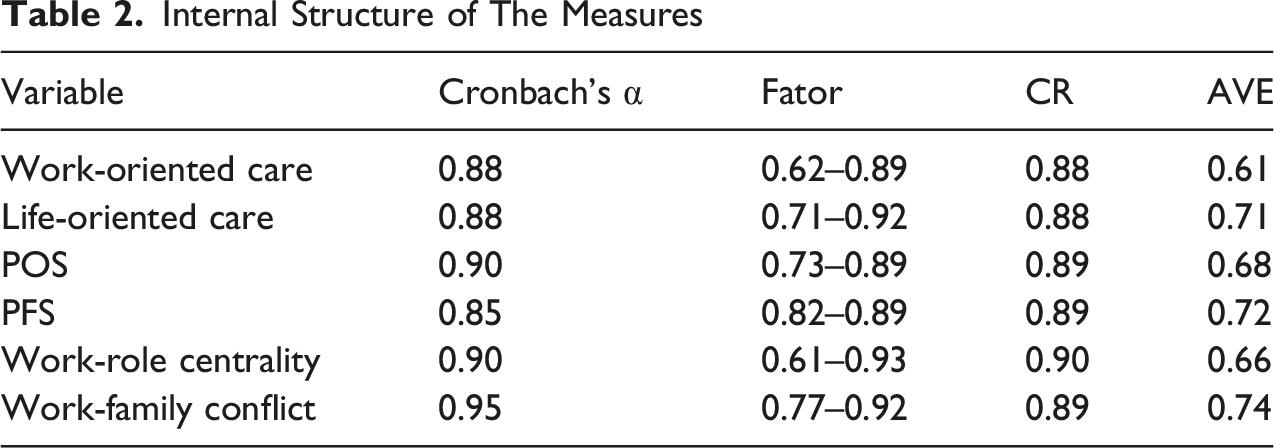
It was measured using a 10-item scale developed by Lin and Cheng (2012), comprising two subscales. Work-oriented care was assessed with five items, including a sample item: “My supervisor provides appropriate guidance and coaching for areas where I lack competence.” Life-oriented care was measured with the remaining five items, such as: “My supervisor’s care extends to my family.” Both subscales demonstrated strong internal consistency, with Cronbach’s alpha coefficients of .88 for each dimension.
Perceived Organizational Support
POS was measured using the short version of the survey of Perceived Organizational Support (Eisenberger et al., 1986, 1997), which consists of 8 items. Sample items include “My organization really cares about my well-being.” The scale exhibited high reliability in the present study, with a Cronbach’s alpha of .90.
Perceived Family Support
It was measured using the Family Support Inventory (FSI) developed by King et al. (1995), which consists of 44 items encompassing two dimensions: emotional support and instrumental support. Given the length of the original scale, King et al. recommended that researchers select items based on the specific focus of their studies. Since the current study emphasizes emotional support from family members for the employee’s work role—rather than instrumental assistance with work-related tasks—six items with high factor loadings and no cross-loadings were selected from the emotional support subscale. Sample items include: “My family is interested in my work.” The internal consistency of this scale was satisfactory, with a Cronbach’s alpha of .85 in the present study.
Work-Role Centrality
It was assessed using a 5-item scale adapted by Carr et al. (2008) from Paullay et al. (1994), which measures the relative importance individuals place on their work versus family roles. Higher scores indicate stronger identification with the work role, while lower scores indicate a family-oriented orientation. Sample items include “My sense of fulfillment in life comes primarily from my job, not my family.” In the current study, the scale demonstrated high internal consistency, with a Cronbach’s alpha of .90.
Work-Family Conflict
It was measured using Carlson et al (2000) 18-item scale, which covers both work-to-family conflict (WFC) and family-to-work conflict (FWC). Although the original scale distinguishes between direction of conflict, all items in this study were highly intercorrelated. Following the recommendation by Mesmer-Magnus and Viswesvaran (2005), the scale was treated as a unidimensional construct. Sample items include “My work keeps me from participating in family activities as much as I would like.” The scale demonstrated excellent internal consistency, with a Cronbach’s alpha of .95.
Control Variables
Based on prior research and theoretical relevance, this study included several demographic and contextual variables as control factors to account for their potential influence on work-family conflict. Gender was controlled given its impact on household responsibilities, and parenting roles, all of which shape work-family experiences (Allen & Finkelstein, 2014). Age was included due to evidence suggesting that older employees, equipped with greater life experience and resources, tend to experience lower levels of work-family conflict (Allen & Martin, 2017). Educational attainment reflects variation in knowledge, skills, and access to social networks, which can influence one’s ability to manage inter-role demands. Marital status was controlled based on findings that it exerts a modest effect on work-family dynamics (Byron, 2005). In addition, parental status and eldercare responsibility were considered, as caregiving demands from children and aging parents, respectively, contribute to increased family-related strain. This is particularly relevant in Chinese contexts, where eldercare is shaped by cultural expectations of filial piety. Job level was also controlled, as individuals in higher positions typically have greater access to organizational resources and autonomy, enabling more effective navigation of work-family boundaries. Finally, this study accounted for family-friendly organizational policies, which are known to buffer work-family conflict (Thompson et al., 1999). Because the focal interest lies in supervisor-level influences, organizational-level support was treated as a covariate to isolate the effects of leadership behavior.
Data Analysis Strategy
The data analysis in this study was conducted in three major stages. First, to assess the distinctiveness of each construct, a six-factor confirmatory factor analysis (CFA) was conducted for the hypothesized measurement model. As these constructs were measured with multiple items, we employed item parceling to reduce the number of observed indicators and enhance parameter stability (Sterba & Rights, 2017). Specifically, we used the partial disaggregation method (Coffman & MacCallum, 2005; Williams & O'Boyle, 2008) as follows: (1) Eight POS items were grouped into four latent indicators based on the factor loading. (2) Six PFS items were grouped into three latent indicators based on the factor loading. (3) Eighteen work family conflict items were grouped into two latent indicators based on the work-to-family conflict and family-to-work condflict.
The hypothesized model was then compared with alternative nested models to evaluate discriminant validity (Anderson & Gerbing, 1988). Second, descriptive statistics and correlation analyses were conducted to examine sample characteristics and the interrelationships among key variables. Third, to assess the overall model fit and test the hypothesized paths, structural path analysis was conducted using AMOS 26. Interaction terms were created using a matched-pair strategy (Marsh et al., 2004), wherein the indicators were mean-centered and then multiplied pairwise. After examining model fit indices, the bootstrapping technique was employed with 5,000 resamples to estimate the path coefficients, confidence intervals, and significance levels of the indirect effects.
Results
Measurement Validation
Comparison of Measurement Models for Main Variables Studied
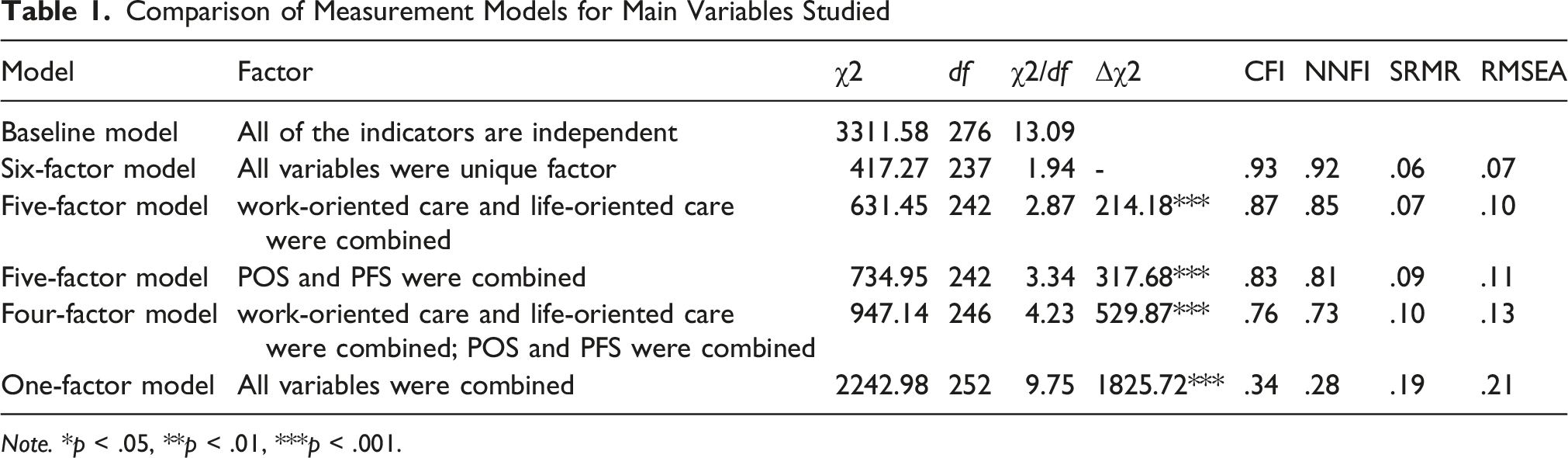
Note. *p < .05, **p < .01, ***p < .001.
Internal Structure of The Measures
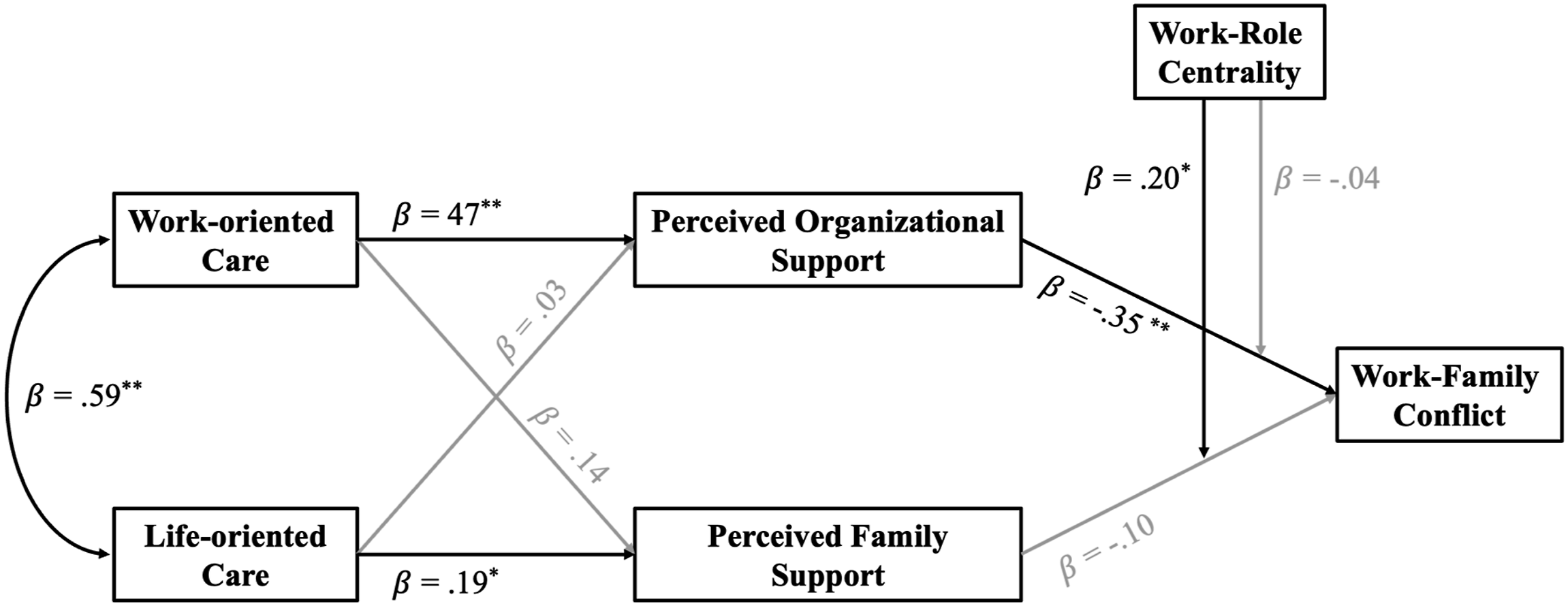
Result of structure equation modeling. Note. Bootstrap resampling was performed 10,000 times. Gray color represents the nonsignificant index. *p < .05, **p < .01, ***p < .001
Descriptive Statistics and Correlations
Mean, Standard deviations, and Correlations of The Variables in The Main Study
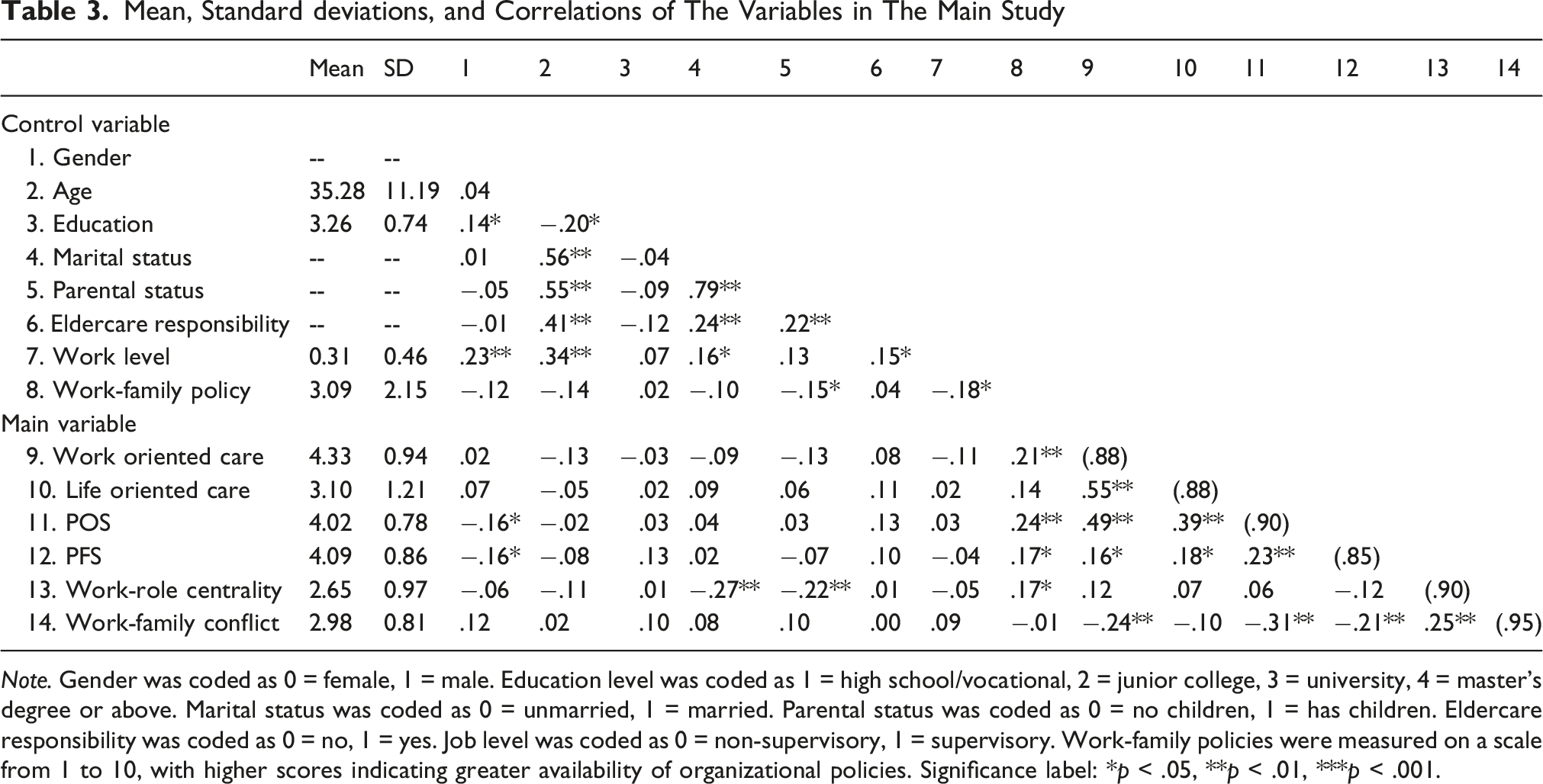
Note. Gender was coded as 0 = female, 1 = male. Education level was coded as 1 = high school/vocational, 2 = junior college, 3 = university, 4 = master’s degree or above. Marital status was coded as 0 = unmarried, 1 = married. Parental status was coded as 0 = no children, 1 = has children. Eldercare responsibility was coded as 0 = no, 1 = yes. Job level was coded as 0 = non-supervisory, 1 = supervisory. Work-family policies were measured on a scale from 1 to 10, with higher scores indicating greater availability of organizational policies. Significance label: *p < .05, **p < .01, ***p < .001.
Hypothesis Testing With Structural Model Analysis
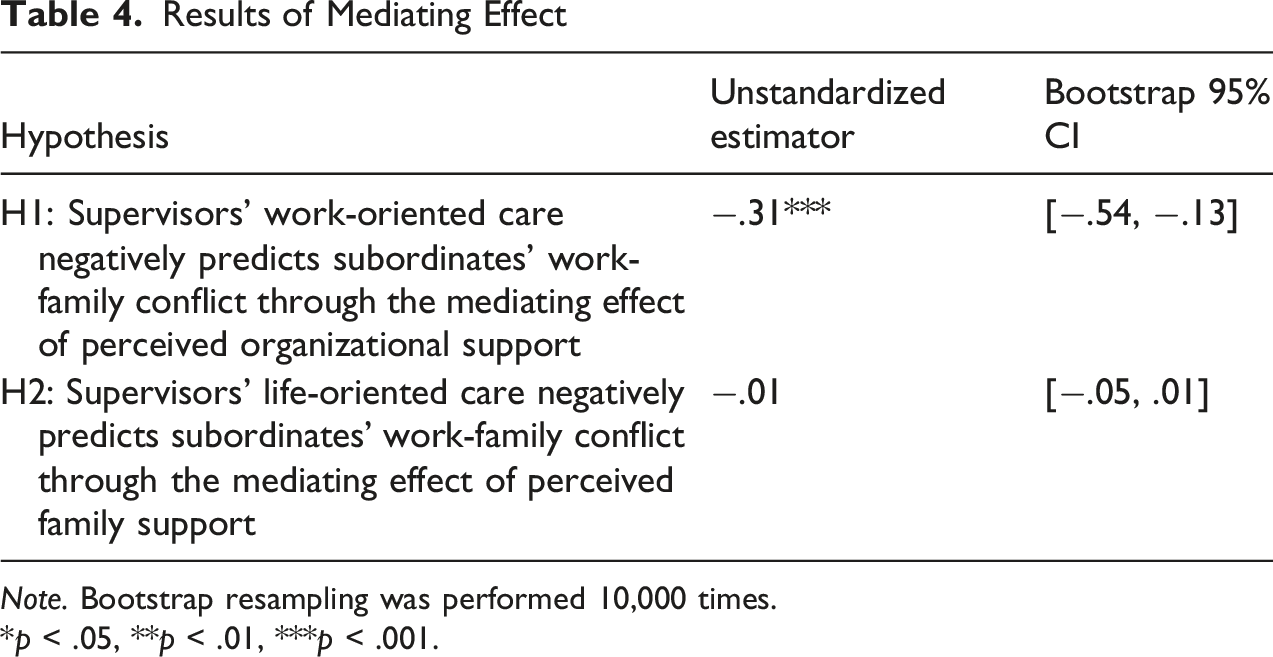
Results of Mediating Effect
Note. Bootstrap resampling was performed 10,000 times.
*p < .05, **p < .01, ***p < .001.
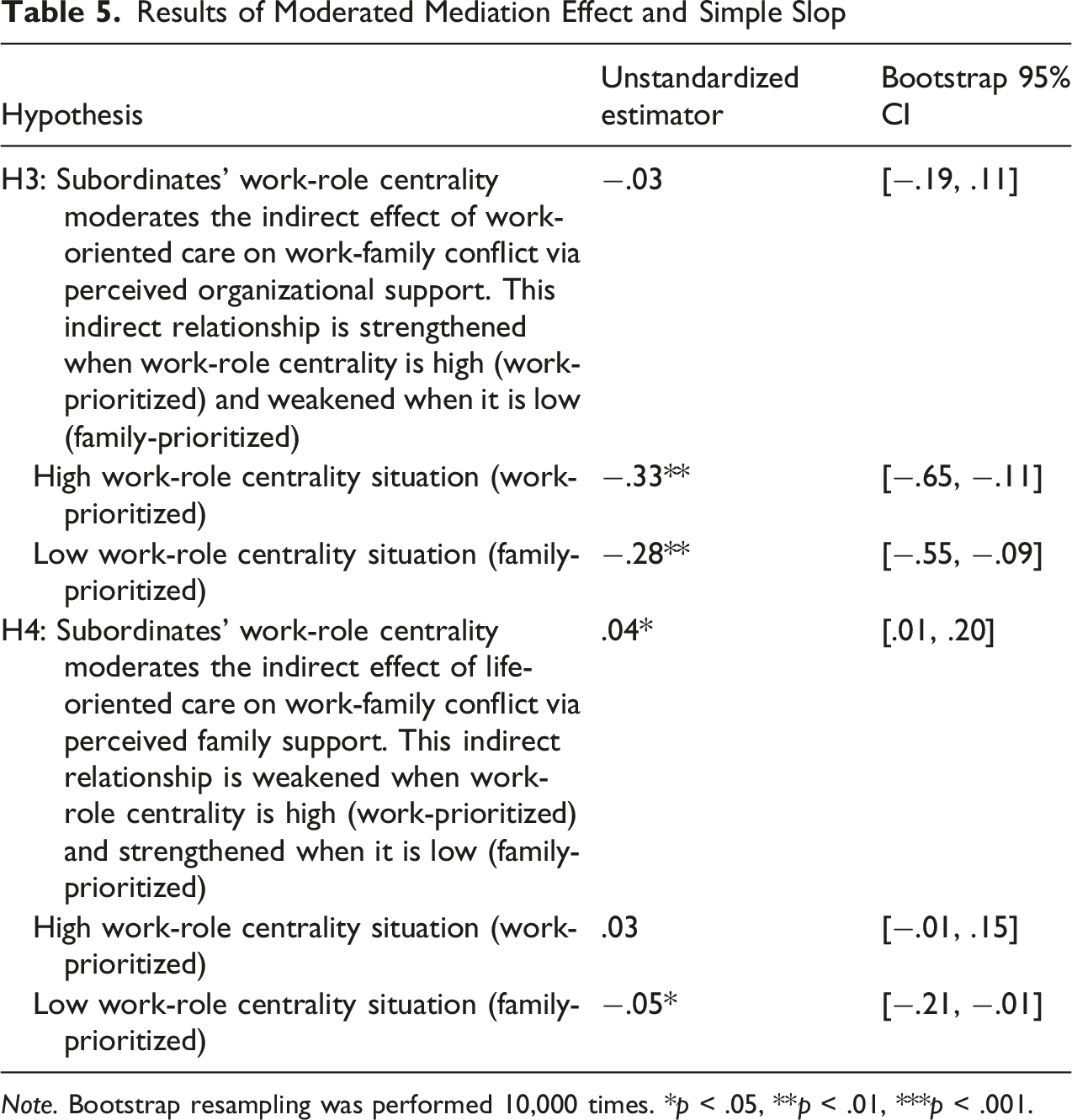
Results of Moderated Mediation Effect and Simple Slop
Note. Bootstrap resampling was performed 10,000 times. *p < .05, **p < .01, ***p < .001.
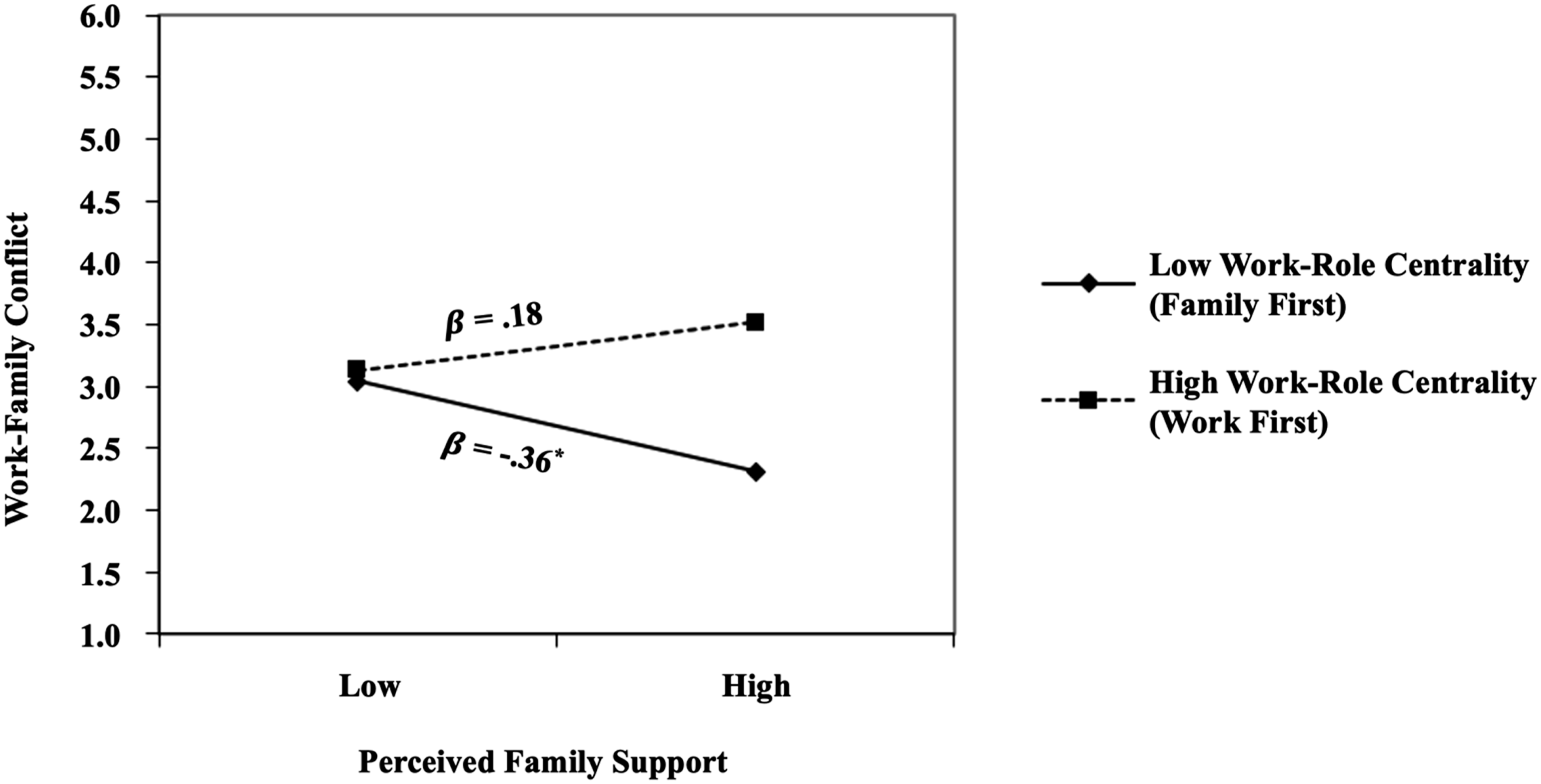
Interaction plot
Discussion
General Discussion
This study examined how the two dimensions of benevolent leadership—work-oriented and life-oriented care—influence subordinates’ work-family conflict, and whether these effects are moderated by subordinates’ work-role centrality.
First, work-oriented care was found to reduce work-family conflict via increased perceived organizational support, a pathway consistent with Western research emphasizing leaders’ role in enhancing work resources to mitigate conflict (Kossek et al., 2011). This indirect effect was not moderated by work-role centrality, indicating that regardless of whether subordinates prioritize work or family, supervisor support in the work domain consistently alleviates conflict. This may be because work support aligns with common expectations of supervisor responsibilities, and all employees, regardless of values, require such resources to manage job demands. Together, these results suggest that work-oriented care offers a stable and broadly effective means of reducing work-family conflict, independent of subordinates’ value orientations.
In contrast, life-oriented care did not yield a significant overall indirect effect through perceived family support. However, a significant moderated mediation effect emerged. Specifically, life-oriented care enhanced perceived family support only for subordinates with low work-role centrality (i.e., family-prioritized), and this support subsequently reduced conflict. For those with high work-role centrality (i.e., work-prioritized), life-oriented care had little effect, suggesting that family-related resources hold limited relevance for these individuals. Conversely, family-oriented employees perceive such care as congruent with their values, enabling spillover into the family domain and ultimately mitigating conflict.
Theoretical Contributions
This study offers three primary theoretical contributions. First, in response to repeated calls for research to more explicitly consider sociocultural and environmental contexts in understanding work-family conflict (Li et al., 2017), this study contributes a culturally grounded perspective rooted in Chinese society. Drawing on the construct of benevolent leadership—highly characteristic of Chinese managerial practices—the study investigates its impact on employees’ work-family conflict. This approach provides a meaningful supplement to the literature, which has traditionally focused on Western contexts. Given that work-family conflict inherently involves tension and balance between the work and family domains, examining both work-oriented and life-oriented care behaviors within benevolent leadership provides a conceptually fitting and theoretically novel approach. In contrast, prior Western research has largely concentrated on organizational policies, job design, workplace culture, or task-related support—failing to consider leadership’s influence on employees’ private lives, and thus offering a fragmented understanding of how to alleviate work-family conflict (Hammer et al., 2013; Kossek et al., 2011; Wayne et al., 2020). By shifting the analytical lens to a leadership style embedded in Confucian relational ethics and familialism, this study illuminates how Chinese leaders address work-family conflict from both domains simultaneously—work and home—thereby presenting an integrative and culturally unique leadership response to a bi-directional role strain.
Second, this study advances the theoretical understanding of work-family conflict by refining the resource-based perspective. Prior research has predominantly relied on Conservation of Resources (COR) theory to explain how leadership behaviors influence employees’ experience of work-family conflict. While COR theory is widely applicable, its conceptual breadth—encompassing tangible assets, life conditions, personal traits, energy, and resource-enabling agents (Hobfoll, 1989)—has made it difficult to generate specific predictions. Scholars have noted that COR’s broad definitional scope often results in fragmented research that focuses only on isolated resource types, without offering a unified framework for explaining how resources function in the leadership-work-family conflict nexus (Cropanzano et al., 2017; Li et al., 2017). Moreover, most COR-based studies neglect how individuals subjectively interpret and value these resources (Halbesleben et al., 2014). To address these gaps, this study integrates the role perspective alongside the resource-based view. By distinguishing between different types of care behaviors (work vs. life), it highlights the specific role-based resources being activated, and further incorporates the importance individuals place on these roles (work-role centrality) as a key moderator. This combined framework provides a more comprehensive understanding of how resources interact with personal values to shape work-family dynamics. The integration of resource and role perspectives allows for a more refined theoretical account that goes beyond the limitations of resource theory alone, and illustrates how roles, stress, and resources dynamically coalesce in the context of work-family conflict.
Third, this study sheds light on the dual-dimensionality of benevolent leadership by delineating how work-oriented and life-oriented care differentially influence work-family conflict. While both dimensions were hypothesized to alleviate conflict, the mechanisms and conditions under which they operate diverge significantly. Work-oriented care reduces work-family conflict through the enhancement of perceived organizational support—a key work-role resource. This pathway proved to be robust and consistent, regardless of subordinates’ role priorities. In contrast, the effect of life-oriented care operates through perceived family support—a family-role resource—and was only effective for subordinates who prioritized family roles. This finding underscores the boundary condition of benevolent leadership’s life dimension and reveals that its influence extends beyond the workplace only when aligned with the recipient’s values. These findings clarify that while work-oriented care offers a stable pathway for reducing work-family conflict, life-oriented care requires congruence with subordinates’ role identity (i.e., work-role centrality) to yield similar benefits. Thus, benevolent leadership is most effective in activating dual-role support mechanisms for subordinates who prioritize family life. In doing so, it creates a synergistic effect that addresses both domains of conflict. Moreover, by highlighting the role of subordinates’ value systems in shaping the leadership process, this study moves beyond a leader-centric view of leadership (Uhl-Bien et al., 2014). Subordinates are not passive recipients of leadership behaviors; rather, they function as active filters or “switches” that determine whether the leader’s support—particularly in the nonwork domain—translates into meaningful role-based resources. This perspective enriches the leadership literature by emphasizing the interactive dynamics between leader behaviors and follower interpretations, particularly in cultures where leadership is as much relational and moral as it is functional.
Practical Implications
Benevolent leadership is a prevalent leadership style in Chinese organizations. This study explored how this leadership approach affects employees’ work-family conflict. The findings revealed that supervisors’ work-oriented care can help reduce subordinates’ work-family conflict. Furthermore, for subordinates who prioritize family, a leadership approach that integrates both work and life support further alleviates such conflict. These findings highlight the significant influence of leadership behavior on work-family conflict and suggest that organizations should recognize this impact by providing leadership training that encourages supervisors to adopt benevolent leadership. Supervisors’ influence is not limited to work tasks but also extends into the private lives of employees, producing cross-boundary effects.
Since benevolent leadership alleviates work-family conflict by enhancing both work- and family-role resources, organizations must understand the applicability and limitations of this dual-path mechanism. Its effectiveness depends on subordinates’ work-role centrality. While work-oriented care is a basic leadership behavior that reduces work-family conflict for most employees, life-oriented care is only effective for employees who value the family role highly. Therefore, organizations should encourage supervisors to consistently demonstrate work-oriented care, and provide them with training to tailor their leadership based on individual employees’ values. Specifically, supervisors should be equipped to assess work-role centrality and provide life-oriented care only to those who prioritize family, fostering a positive and supportive workplace conducive to work-family balance in Chinese cultural contexts.
Research Limitations
Although this study was carefully designed to minimize foreseeable biases, it inevitably has certain limitations. First, regarding common method variance (CMV), all variables were based on self-reports, making it difficult to eliminate potential CMV from a single source (Podsakoff et al., 2003). To address this, the survey employed meaning obfuscation techniques, and data were collected in three waves spaced 1 month apart to reduce CMV via temporal separation. A post hoc Harman’s single-factor test indicated no serious CMV threat, and CFA results showed the hypothesized six-factor model had superior fit compared to alternatives, supporting construct distinctiveness. Nonetheless, future research is encouraged to adopt source separation, such as collecting dyadic data from supervisors and subordinates.
Second, concerning measurement tools, the benevolent leadership scale was originally developed by Cheng et al. (2000) and later divided into two subscales—work-oriented and life-oriented care—by Lin and Cheng (2012). However, the two subscales were created by reclassifying existing items rather than developing new ones tailored to each dimension. As a result, some life-oriented items lacked clear construct validity. To improve measurement quality, an exploratory factor analysis was conducted, and problematic items were removed. This yielded a three-item life-oriented care subscale, raising concerns about content breadth, especially as only one item directly referenced family-related care. Future studies should revise or redevelop the scale to better capture the distinctiveness of both care dimensions.
Third, this study treated work-family conflict as a unidimensional construct. However, scholars have emphasized the importance of distinguishing work-to-family conflict (WFC) from family-to-work conflict (FWC), as each has unique antecedents and consequences (Frone et al., 1992). Differentiating them could yield more nuanced insights, particularly regarding the moderating role of work-role centrality. Additionally, “family” represents just one part of nonwork life. Since other roles may also influence cross-domain conflict (Siegel et al., 2005), future research could explore the broader construct of work-life conflict for a more comprehensive understanding.
Future Research Directions
Based on the study’s findings, several promising directions for future research are identified. First, in comparing benevolent leadership and family-supportive supervisor behaviors (FSSB), prior Western research indicates that leadership behaviors addressing specific work-family challenges are more effective than general support (Kossek et al., 2011). Developed within this framework, FSSB has been consistently shown to reduce work-family conflict (Hammer et al., 2013; Kossek et al., 2011). Similarly, this study found benevolent leadership to have a mitigating effect. However, the two differ in mechanisms and focus. FSSB emphasizes work-based support, such as coverage during emergencies or modeling balance, aiming to reduce workplace barriers. In contrast, benevolent leadership, grounded in Confucian ethics, views the subordinate holistically and provides both work- and life-oriented care as a moral obligation. Given these distinctions in motivation and cultural context, future research should compare how each leadership approach functions across cultural settings and diverse employee needs.
Second, regarding life-oriented care—a defining aspect of benevolent leadership (Cheng et al., 2004)—this study found no significant direct effect on work-family conflict. One explanation may be the complexity of the psychological processes linking life-oriented care to perceived family support, which remain underexplored. For example, it is unclear whether supervisors’ care is conveyed to family members or if enhanced family-role performance improves support. Future studies should examine how such care diffuses into the family domain and the conditions that shape its effects. Follow-up interviews revealed mixed responses: while some appreciated the care, others felt discomfort or intrusiveness. These findings suggest that life-oriented care may conflict with modern values of privacy and autonomy, especially in hierarchical settings. Future work should explore both benefits and potential drawbacks, considering how individual and contextual differences shape employee perceptions.
Third, family-owned businesses offer a rich context for future research. In Taiwan, where such firms are common, family and business roles often overlap, creating blurred work-family boundaries (Han & Oh, 2025). Senior family members often act as both leaders and relatives, complicating role expectations. Future research could explore whether this dual-role structure intensifies work-family conflict and whether benevolent leadership has greater influence in such contexts. It would also be valuable to examine how business owners’ life-oriented care affects both employees and themselves. These insights could enrich understanding of leadership and work-family dynamics in family enterprises within Chinese cultural settings.
Footnotes

Funding
The authors received no financial support for the research, authorship, and/or publication of this article.
Declaration of Conflicting Interests
The authors declared the following potential conflicts of interest with respect to the research, authorship, and/or publication of this article: We have no known conflict of interest to disclosure. We confirm that the manuscript has been submitted solely to this journal and is not published, in press, or submitted elsewhere.
Data Availability Statement
The data that support the findings of this study are available from the corresponding author upon reasonable request.
Notification Regarding the Use of Generative Artificial Intelligence (AI)
This study uses ChatGPT 4o for text refinement and grammatical error correction.