






Abstract
This article examines how dog-owning women in Hungary make sense of childbearing in a strongly pronatalist context. Drawing on 28 semi-structured interviews with highly educated urban women aged 25–45 (childless or with one child) and using the Theory of Planned Behavior, we analyze how everyday dog care, emotional bonds, and constraints shape fertility intentions. Many participants described dogs as family members or “child zero,” and some as temporary substitutes within their reproductive trajectories. At the same time, women highlighted major barriers to having (more) children—financial insecurity, emotional overload, work–life conflict, and uncertainty about a reliable co-parent. Broader anxieties (e.g., climate change or war) intensified insecurity but rarely eliminated desires for motherhood. Overall, dog ownership did not replace motherhood; it offered a flexible, emotionally rewarding form of caregiving that can coexist with, and sometimes postpone, childbearing under uncertainty.
Keywords
Introduction
The role of pets has undergone substantial transformation in the 21st century across developed societies. Increasingly, they are conceptualized not merely as pets but as companion animals, emphasizing their social and emotional significance within households (Gillet & Kubinyi, 2025; Soares, 1985; Turner, 2006; Volsche, 2018). This shift coincides with broader demographic and cultural changes that have reshaped family formation.
From the 1960s and 1970s onward, the Second Demographic Transition (SDT) brought fundamental changes to partnership and fertility behaviors (Lesthaeghe & van de Kaa, 1986). Declining adherence to traditional and religious values fostered the rise of individualistic orientations centered on self-realization and personal fulfillment (Lesthaeghe & van de Kaa, 1986). As a result, many advanced societies experienced declining marriage rates, delayed motherhood, higher divorce rates, and increasing acceptance of childfree lifestyles. These trends have contributed to a growing population living alone or outside traditional family structures, contexts in which companion animals often provide social and emotional support (Kubinyi, 2025).
In parallel, scholars have observed new forms of intimacy between humans and companion animals, giving rise to “hybrid households” in which animals are integrated into family life (Charles, 2016; Franklin, 2006). Research shows that caregiving practices and emotional attachment to dogs are often particularly pronounced in childless households (Marionelli et al., 2007), and many dog owners ascribe quasi-child or child-like status to their pets (Laurent-Simpson, 2017; Owens & Grauerholz, 2018; Shir-Vertesh, 2012). These findings raise important questions for family scholars: How might emotional bonds and caregiving directed toward companion animals shape childbearing plans, and how do such relationships fit into family formation processes?
To address such questions, reproductive decision-making research increasingly draws on the Theory of Planned Behavior (TPB), which explains fertility intentions as the outcome of individuals’ evaluations of parenthood (attitudes), perceived social expectations (subjective norms), and perceived ability to meet the material and relational conditions required for childbearing (perceived behavioral control) (Ajzen & Klobas, 2013; Dommermuth et al., 2011; Williamson & Lawson, 2015). Despite the extensive use of TPB in fertility studies, to our knowledge, no prior study has examined how pet ownership as a new component may shape intention and behavior, particularly among women of reproductive age. Because reproductive decision-making and everyday care responsibilities remain strongly gendered, especially in heterosexual partnerships, focusing on women is theoretically warranted (Herzog, 2007; Owens & Grauerholz, 2018; Zhao & Basnyat, 2021).
Hungary offers a distinctive and theoretically meaningful context for such an investigation. As a strongly pronatalist welfare state, Hungary targets women—particularly middle-class women—with policies aimed at increasing birth rates (Fodor, 2022; Szalma et al., 2022). Yet despite extensive financial incentives, fertility rates remain low, while dog ownership continues to rise. Public discourse increasingly speculates about whether companion animals may substitute for children. Although recent qualitative research has begun to compare caregiving and emotional bonds in dog and child parenting (Udvarhelyi-Tóth et al., 2025), this article moves beyond descriptions of care to analyze how experiences of dog ownership shape fertility intentions and life-course decision-making. To our knowledge, no prior study has examined how dog ownership is implicated in women’s reproductive choices within a strongly pronatalist policy environment.
This study addresses this gap by examining how dog ownership relates to childbearing intentions and reproductive decision-making among Hungarian women, with particular attention to how caring for a dog may coexist with, contribute to deferring, or temporarily stand in for childbearing without replacing motherhood aspirations. Drawing on 28 semi-structured interviews with women who are either childless or have one child, we analyze how emotional bonds with dogs, caregiving practices, and structural constraints such as finances, work–life conflict, and partnership dynamics contribute to women’s attitudes, subjective norms, and perceived behavioral control regarding childbearing.
Theoretical Framework and Literature Review
The demographic literature has long examined why fewer children are born in Europe than individuals initially intend (Sobotka, 2009). Hungary is particularly noteworthy in this respect, as the gap between fertility intentions and outcomes is larger than in many Western European countries (Spéder & Kapitány, 2014). In former communist countries, the low realization of childbearing intentions is shaped by shifting value systems, changing fertility behaviors, and the strong influence of family policy and financial conditions. As structural constraints tend to change faster than values and attitudes, the resulting mismatch between expected and actual circumstances often contributes to the postponement or abandonment of childbearing. This persistent gap in Hungary underscores the need to examine the specific factors that shape reproductive decision-making in this context.
One of the most widely applied frameworks for understanding fertility intentions is the Theory of Planned Behavior. According to the TPB, intentions to engage in behavior such as childbearing are shaped by attitudes toward the behavior, perceived social norms, and perceived behavioral control (Ajzen & Klobas, 2013). While extensive empirical research has analyzed childbearing intentions within this model (Dommermuth et al., 2011; Williamson & Lawson, 2015), the potential influence of pet ownership on the TPB components has not been explored. Pet ownership may shape behavioral beliefs (e.g., the perceived emotional rewards or burdens of parenting), normative beliefs (e.g., expectations regarding motherhood), and control beliefs (e.g., perceived constraints such as finances, time, or partner availability). Thus, TPB provides a useful lens to understand how dog ownership may interact with reproductive decision-making and family dynamics.
In this study, we apply the TPB to explore how dog ownership intersects with women’s fertility intentions. We conceptualize attitudes as women’s evaluations of the emotional rewards and burdens of motherhood in comparison to caring for a dog; subjective norms as perceived expectations from partners, families, and the wider pronatalist context regarding “good motherhood” and appropriate timing of childbearing; and perceived behavioral control as women’s sense of having (or lacking) the financial, emotional, temporal, and relational resources needed to have (more) children. Dog ownership can influence each of these components by offering an alternative, more flexible form of caregiving that is embedded in everyday life (Laurent-Simpson, 2017).
Prior studies also highlight that some women may fulfill nurturing desires through relationships with companion animals, especially when they face barriers to childbearing. For individuals influenced by control beliefs, such as work–family conflict or financial instability, the decision not to have children may arise from the perceived difficulty of balancing parenthood with other life demands (Rojas Betancur et al., 2022; Sharif-Nia et al., 2024). Although they may value caregiving, they may choose a companion animal that offers emotional fulfillment without the substantial, long-term lifestyle changes associated with raising a child (Laurent-Simpson, 2017). Pets can also support family cohesion by facilitating communication and interaction among household members (Walsh, 2009), making them relevant to broader family-system processes.
Dogs as Companion Animals and Their Relevance for Reproductive Decision-Making
Shir-Vertesh’s (2012) longitudinal research identified several ways families conceptualize their dogs—as a pre-child, child substitute, semi-child, or distinctly different from a child—highlighting the flexible and context-dependent nature of pet–human relationships. Similar typologies appear across studies of dog ownership (Laurent-Simpson, 2017; Volsche, 2018), with dogs often taking on a surrogate child role in childless households. Major life transitions, such as the birth of a baby, may prompt owners to redefine their dog’s status, a phenomenon Shir-Vertesh describes as “flexible personhood.” Dogs may also become more central again in later life-course stages, such as the “empty nest” period, when parents often renew emotional bonds with companion animals (Turner, 2006).
A growing body of research suggests that for some individuals, dogs function as either an alternative or a complement to child rearing (Laurent-Simpson, 2017; Volsche et al., 2022). Human parenthood typically requires cooperative caregiving and substantial time, emotional, and financial investment (Kramer, 2010), whereas dog ownership is less dependent on such structures and is more compatible with work-oriented or autonomy-valuing lifestyles (Udvarhelyi-Tóth et al., 2025). Cost–benefit considerations are central: dogs are widely perceived as requiring significantly less time, emotional energy, and financial resources than raising a child, while still fulfilling nurturing desires. Emotional closeness and attachment patterns between owners and dogs often parallel those found in parent–child relationships (Ines et al., 2021). Prior research also suggests gendered dynamics, as women are more likely to interpret pet care through a parental lens and to bear the structural burdens of motherhood more heavily (Szalma et al., 2024).
Together, these strands of literature indicate that dog ownership may shape fertility intentions through its effects on attitudes, subjective norms, and perceived behavioral control, as outlined in the Theory of Planned Behavior. Building on these insights, our study investigates how emotional bonds with dogs, caregiving practices, and structural constraints interact to influence women’s reproductive decision-making in a strongly pronatalist context.
The Hungarian Context
Hungarian online media has increasingly speculated about possible connections between rising pet ownership and declining childbearing in recent years. The number of dogs has grown substantially, reaching an estimated 2.8 million in 2023 (Varga et al., 2023), while the number of children under 18 was 1.78 million in the same year (HCSO, 2023). Despite this rapid increase, no sociological research has examined whether the prominence of companion animals relates to fertility postponement in Hungary, even though international studies highlight the growing family role of pets (Szalma et al., 2023).
Survey data show that dog ownership is exceptionally widespread: a nationally representative study found that around 30% of Hungarian households keep a dog (Kubinyi & Varga, 2023), while industry estimates suggest the rate may approach 50% (FEDIAF, 2024). Emotional attachment is also pronounced: 66% of owners describe their dog as a family member, and 16% refer to their dog as a “furry kid” (Szalma et al., 2023). These patterns make Hungary a compelling site for exploring how dog ownership may shape reproductive choices.
Hungary is further characterized by a distinctive pronatalist policy environment. Building on a long history of pronatalist policymaking during the state socialist period (Haney, 2002), successive governments since 2010 have invested heavily in measures aimed at increasing birth rates, devoting around 5% of national GDP to population policy initiatives (Szikra, 2014). However, this policy framework is highly selective rather than universal. It primarily targets middle-class, heterosexual women with stable labor market attachment, while single parents, same-sex couples, Roma families, and low-income groups benefit to a much lesser extent from these incentives (Szalma et al., 2022; Cook et al., 2023). Hungary’s welfare system has been described as a “carefare regime” (Fodor, 2022), in which women are positioned as primary caregivers and their social citizenship is closely tied to motherhood and unpaid domestic labor. At the same time, policy support for work–life balance remains limited: affordable, high-quality childcare services are scarce and unevenly distributed, and existing policies provide few incentives for men’s involvement in childcare (Takács, 2021), thereby reinforcing traditional gender roles and gendered expectations surrounding reproduction and care.
Taken together, the combination of strong, selective pronatalist policies and the high prevalence of dog ownership makes Hungary an extreme but theoretically illuminating case for studying how alternative forms of caregiving shape women’s reproductive choices.
Data and Methods
Procedure
As this topic has received little empirical attention in the Hungarian context, we adopted an exploratory qualitative design using semi-structured interviews for data collection. We selected dog owners as the focus of our research, given that dogs represent the most prevalent type of household pet in Hungary (FEDIAF, 2024), and previous studies have indicated that women are more likely to perceive their dog as akin to a child (Herzog, 2007; Owens & Grauerholz, 2018). Accordingly, our study specifically focused on women.
Participants were highly educated women aged 25–45, residing in Budapest, the capital city of Hungary and in other urban centers, who had owned a dog for at least 1 year and primarily kept their dogs indoors. These criteria ensured that participants were dog owners who actively engaged in daily caregiving activities and were therefore likely to reflect on the role of dogs in their family lives. We included women who were either childless or had one child, as this allows us to examine fertility decision-making in a life stage when childbearing intentions are still relevant. In addition, earlier research indicates that the arrival of a child often transforms how dogs are perceived within families, making this group theoretically meaningful for our study (Shir-Vertesh, 2012; Udvarhelyi-Tóth et al., 2025).
The interview guide was developed collaboratively by the research team, focusing specifically on the influence of dog ownership on reproductive choices. A key aspect of the study’s novelty is that the research group consisted of both ethologists and sociologists, which enabled the integration of disciplinary perspectives already at the stage of research design. In line with the Theory of Planned Behavior, questions were designed to explore attitudes toward childbearing, perceived social expectations surrounding motherhood, and factors shaping women’s perceived control over reproductive decisions. The guide also included questions on emotional bonds with dogs, daily caregiving routines, and perceptions of how dog ownership fits with, or potentially constraints, future family plans.
In total, 28 interviews were conducted between December 2022 and April 2024. Most took place face-to-face, either in participants’ homes or in public locations, while a smaller number were completed online when an in-person meeting was not feasible. Interviews covered childhood and family background, educational and employment trajectories, relationship history, experiences of dog ownership, and views on childbearing. Recruitment occurred in two phases: initial participants were drawn from the authors’ personal networks, followed by snowball sampling. Before the interviews, all participants received detailed information about the study and provided written informed consent. Each participant chose a pseudonym to ensure anonymity. Interviews lasted 40–60 min, were audio-recorded, and subsequently transcribed verbatim.
The research team comprised four sociologists and two ethologists, both of whom have prior experience with companion animals and qualitative research. This interdisciplinary background informed the development of the interview protocol and contributed to reflexive discussions during coding. Interviews were conducted, transcribed, and coded in Hungarian. The quotes included in this article were translated by the authors.
Participants
Participant demographics
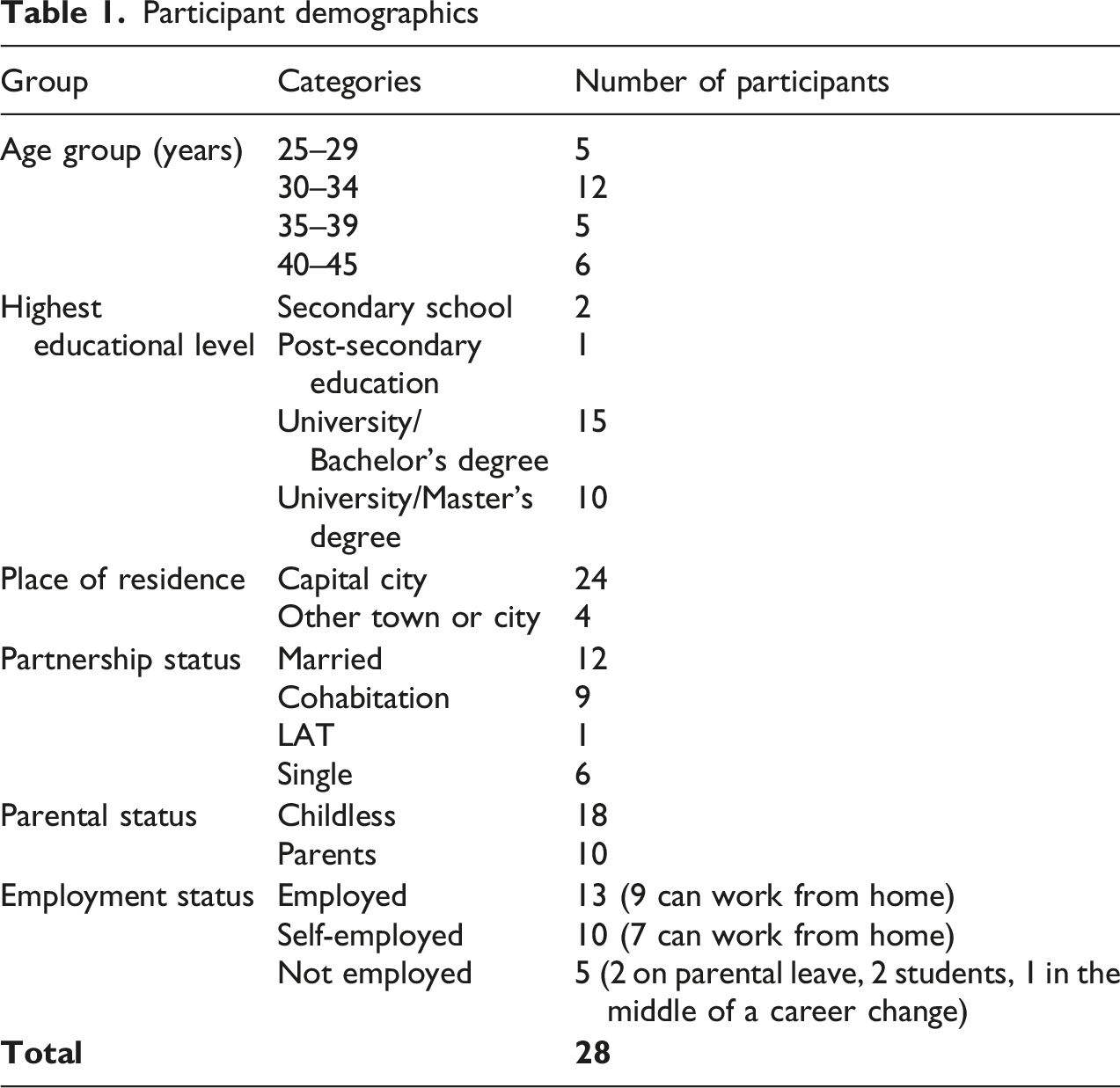
Most participants held higher education degrees: two had completed secondary school, one held a post-secondary vocational qualification, 15 had bachelor’s degrees, and 10 held master’s degrees. 23 women were employed—13 as employees and 10 as self-employed—while 5 were not in paid employment (two on parental leave, two PhD students, and one in the middle of a career change). 12 women were married, 9 cohabiting, 1 in a living-apart-together relationship, and 6 were single. 18 participants were childless, and 10 had one child (Table 1). Mothers of one child were included because, in the Hungarian context, the ideal family is perceived to include two children (Erát & Spéder, 2025), and these women were still of reproductive age, with their childbearing trajectories open.
In summary, the sample reflects highly educated, urban women with strong labor market attachment who provide daily caregiving for their dogs. These characteristics ensured that participants were both situated within the demographic groups most targeted by Hungarian family policy and actively engaged in the forms of companion-animal caregiving relevant to our research questions.
Data Analysis and Coding
After transcription, the authors coded the transcripts in an Excel document for further data analysis. The coding process aimed to identify key themes related to dog ownership and reproductive choices. We used thematic analysis (TA) following Braun and colleagues (2019). TA serves as an umbrella term, and its main purpose is “identifying patterns (‘themes’) across qualitative datasets” (Braun et al., 2019, p. 844). TA offers flexibility to researchers, and there are different schools of TA identified by Braun et al. (2019). We applied a fully qualitative approach. Initially, we read through the transcripts as a point of entry (familiarization) and collectively discussed emerging topics. Following this, an inductive process was used to create codes (generating codes), identifying meaning from the data. Each interview was coded independently by a sociologist and an ethologist, and coding decisions were discussed to ensure agreement between the two coders was achieved during the coding process. Subsequently, we employed an inductive approach to identify potential themes from the previously established codes (constructing themes). Finally, we discussed these themes in relation to their relevance to the research questions and the coded extracts with mutual agreement (revising & defining themes). Collaborative coding hence enhanced quality control through peer debriefing.
Primary themes were identified based on three main criteria: the frequency of occurrence across the interviews, their relevance to previously established topics in the literature, and their alignment with the research questions guiding the study. Themes that appeared most often in the data were prioritized, alongside those that aligned with existing research findings on dog ownership and reproductive choices. This approach allowed us to focus on both novel insights from the participants and key topics already recognized in prior studies, ensuring that our analysis was closely linked to the objectives of the research.
The final themes included the balance between work and family responsibilities, managing work commitments while caring for a dog, integrating dogs into family dynamics, common routines associated with dog ownership, perceptions of dog ownership, and comparisons between owning a dog and raising a child.
Themes related to fertility decisions captured views on the prerequisites for starting a family, perceived advantages and disadvantages of parenthood, challenges associated with raising children, and reflections on contemporary uncertainties such as climate change or financial instability.
Limitations
The study exclusively involved highly educated women living in urban areas. This focus is justified in terms of the research topic and comparability, as previous studies have also primarily concentrated on middle-class women, and in Hungary policy and social expectations specifically target this group to have more children. At the same time, the targeted sample means that our findings must be interpreted with caution, as they reflect the experiences of a relatively narrow demographic group rather than the Hungarian population as a whole. Future research should extend the analysis to women with lower levels of education and those living in rural areas and should also include men. In addition, it would be important to replicate this study with the same participants in the future in order to examine longitudinally how dog ownership may influence reproductive decisions, rather than relying solely on cross-sectional data.
Results
Dogs’ Roles in the Lives of the Participants
All interviewees described their dogs as family members, and some of them explicitly referred to them as children. For some childless women, dogs were framed as a “child zero,” a term that both expressed and channeled their desire for motherhood. Bianca, a 30-year-old midwife who is childless, explained: “We also say that he is child zero. We didn’t really get him ‘for practice’, but I think it’s not bad preparation for having a child. I’m sure this desire to have a baby appears in how we see the dog, a little bit.”
For mothers, dogs often shifted from the center to the periphery of family life after a baby was born. Participants linked this change mainly to limited time and emotional energy rather than to a loss of affection. Several mothers outsourced some dog-related tasks to extended family members and reported guilt about prioritizing their children over their dogs. Lucy, a 42-year-old mother expressed: “I feel guilty now because I feel that they have been pushed to the periphery.”
In a few cases, however, dogs regained importance in later life-course stages, especially when children became more independent, suggesting that companion animals can move in and out of a quasi-child position over time.
Alongside this “child zero” pattern, dogs also appeared as substitutes for children. Zoe, a 36-year-old married graphic designer who does not want children, described her dog in explicitly baby-like terms: “She’s like a newborn baby. I’ve got a baby to post photos of and show everyone how sweetly she sleeps.”
In such accounts, dogs fulfilled functions typically associated with children, such as providing an object of daily care, pride, and emotional investment. Pamela, a 26-year-old dietitian and web developer who is childless and whose partner works abroad part of each month, referred to her dog as both a child and a sibling substitute: “Currently, my partner and I regard him as a child… and for me, he is also a kind of sibling substitute.”
Unlike Zoe, Pamela intends to have children later, suggesting that for some women dogs act as temporary substitutes, occupying caregiving and companionship roles during periods of limited social support or partner absence.
Some participants, whether mothers or childless, positioned their dogs “somewhere in between” a child and a pet. Lucy, 42, who is married with one child, captured this ambivalence: “Since I’ve had kids, I know it’s not like having kids, but somehow it’s still like having kids.”
Others insisted that their dog was fundamentally different from a child, even while acknowledging similarities in care. Sophie, a 27-year-old single, childless student, was the most explicit: “For me, it has nothing to do with having children… I’ve been longing for children since I was little, and having children is so important in my plans that I could never imagine a dog replacing that.”
At the same time, she recognized parallels between caring for a dog and raising a child: “It’s a very interesting connection that when you have a child – that is, when you have someone smaller to take care of (…) A dog is somewhat similar in that role, because you take care of it, this small, vulnerable little being…”
Overall, these narratives highlight a continuum in how women construct their dogs’ roles from “child zero,” to child substitute, to clearly distinct from a child, revealing how companion animals can both express and shape women’s attitudes toward motherhood and family formation.
Having Children and Having Dogs: Cost–Benefit Analysis
Drawing on the TPB, the following sections show how women’s fertility evaluations are shaped by interrelated assessments of attitudes toward motherhood, perceived social expectations, and perceived behavioral control. Women’s accounts of financial difficulties, emotional burdens, work–life conflict, partnership dynamics, and macro-level uncertainties illustrate how these components intersect in everyday decision-making. Across these dimensions, dog ownership appears as an active reference point through which women assess the timing, feasibility, and perceived costs of childbearing in a strongly pronatalist context.
Financial Difficulties
Financial constraints emerged as one of the most frequently mentioned barriers to having children. Participants emphasized the rising cost of living, housing insecurity, and the long-term financial commitments associated with raising a child. These concerns reflect perceived behavioral control barriers within the TPB framework, as women often felt that the financial conditions needed for childbearing were not yet in place.
For example, Dolores, a 28-year-old interior designer living in cohabitation without children, highlighted the financial strain: “Well, the current situation, that everything is so costly, and that a child needs a lot of things, and that he has to be brought up, right. So I find the financial aspects of having children tough.”
As a result, Dolores has postponed parenthood until she can achieve more stable financial circumstances. For several women who intended to have children, secure housing was a central precondition. Eight participants argued that they would only consider having a child once they owned a home. Lisa, a 32-year-old craftswoman who is childless, shared how housing insecurity delayed their plans: “We were ready to start trying, but we were still renting. My partner didn’t want to raise a child in someone else’s home. So we put the child thing on the back burner.”
For Barbara, a 28-year-old financial officer living with her fiancé, stable housing was also a priority, but the financial burden itself felt even more decisive: “I don’t want to have a child in a rented flat. Now that it’s just the two of us, our income is enough, but for three it would be too little.”
Women often differentiated sharply between the costs of raising a child and those of keeping a dog. Several participants emphasized that dogs require far fewer financial resources. A few women, however, highlighted that the choice of dog may also depend on financial considerations. Margaret, a 27-year-old English tutor in an LAT relationship, explained why she opted for a smaller breed: “M. [dog’s name) should have been a Rottweiler, but that was out of my price range. A big dog eats a lot, and I didn’t have enough money. So I chose a smaller dog.”
Overall, participants framed financial stability as a key precondition for having children but not for owning a dog. This distinction reinforces the idea that dogs offer emotional fulfillment without the substantial financial commitment associated with childrearing, highlighting that dog ownership remains feasible even under economic uncertainty, whereas childbearing is perceived to require a far more secure financial foundation.
Emotional Labor
Emotional demands played a central role in how women evaluated childbearing. While participants frequently spoke about the emotional rewards and meaning of motherhood, this subsection focuses on emotional strain because it was the dimension most directly linked to reproductive decision-making in their accounts. Importantly, women did not contrast emotionally “empty” dog ownership with emotionally “rich” parenthood; rather, they compared two emotionally meaningful forms of caregiving that differed substantially in intensity, continuity, and the possibility of recovery from the demands of care work.
Among childless participants, parenthood was often framed as requiring constant emotional availability and vigilance, which was perceived as difficult to reconcile with personal well-being and autonomy. Dolores, a 27-year-old interior designer living in a cohabiting partnership, articulated this sense of overwhelming responsibility: “Having children means being available 24/7, which can be challenging.”
For mothers in the sample, emotional strain was described even more vividly, grounded in lived experience. Alice, a 34-year-old full-time mother of a 6-year-old child, described how the emotional demands of motherhood sometimes exceeded her coping capacity: “Emotionally, you have to be there all the time. I find it hard to put my own stuff on the back burner, so I freak-out every couple of months.”
For Alice, this emotional toll was a clear reason not to have a second child. Similarly, Khloe, a 40-year-old married woman working in international relations and raising a four-year-old child, highlighted the continuous nature of parental responsibility: “Being on call from 0–24 is very demanding physically and mentally.”
At the same time, mothers did not downplay the emotional rewards of parenthood. Several participants described their relationship with their child as deeply meaningful, emotionally fulfilling, and central to their sense of purpose. However, in their narratives, these rewards were often overshadowed by the constant emotional demands and the lack of recovery time, particularly when reflecting on the possibility of having additional children. In this sense, emotional fulfillment did not compensate for emotional exhaustion in narratives of reproductive decision-making.
Participants frequently contrasted these experiences with dog ownership. While caring for a dog also involved responsibility and emotional attachment, women emphasized that it required less constant attentiveness and allowed greater emotional autonomy. For Khloe, the fact that a dog could be left alone for several hours without concern symbolized a crucial difference: dog ownership did not require being emotionally “on” at all times.
Childless women also noted that dogs provided emotional support in their daily lives while still leaving room for autonomy, often helping them maintain their preferred routines and social interaction. Maya, a 30-year-old payroll administrator, described her dog as a crucial facilitator of social interactions, significantly expanding her social network: “Yes, well, actually, I mean with my more distant neighbors here, yes, we met like this, and since then we’ve become really good friends, we go hiking together, and of course we go out together, and well, this is because of the dog, because if it weren’t for him, we wouldn’t even know each other.”
Overall, participants viewed parenthood as emotionally intense and often overwhelming, despite its profound emotional rewards. In contrast, dog ownership was experienced as emotionally rewarding yet more compatible with personal well-being and autonomy. This contrast shaped women’s cost–benefit evaluations: while both forms of caregiving offered emotional meaning, the emotional labor associated with children was perceived as substantially higher and less negotiable than that associated with caring for a dog.
Work–Life Conflict
Work–life conflict was another recurrent theme explaining women’s reluctance to have children. Both mothers and childless participants described how raising a child can significantly constrain career progression, flexibility, and daily autonomy. Within the TPB framework, these accounts reflect barriers related to perceived behavioral control, as women felt that childrearing would be difficult to manage alongside professional ambitions.
Several childless women believed that not having children allowed them to prioritize their careers. Maya, a 30-year-old payroll administrator who is married and childless, noted that she had advanced professionally precisely because she did not yet have children: “One of my colleagues went on maternity leave, and I took over her place. She has since come back part-time, but she can’t do the training courses anymore, because she has a child.”
This example highlights how mothers may face reduced opportunities for skill development or advancement even after returning to the labor market.
Many participants worked in jobs that allowed for remote work or flexible scheduling, and they emphasized that such arrangements were highly compatible with dog ownership. 18 women worked from home at least some of the time, often describing this arrangement as a deliberate choice to maintain work–life balance. A number of participants explained that they avoided jobs requiring full-time office presence, not because of children, but because they wanted to ensure adequate care for their dogs.
Other participants emphasized that while home-based work is relatively easy to combine with dog ownership, it would be far more difficult to combine it with caring for a young child. Margaret, a 27-year-old English tutor who works in a home office and has no children, described her experience this way: “I teach English online from home—the best possible job because I have the dogs next to me. I don’t think I could teach if I had a child.”
These narratives illustrate that dog ownership is perceived as compatible with flexible or home-based employment, whereas raising a young child is perceived as far less compatible with paid work. For many participants, this difference reinforced the belief that becoming a mother would require significant career sacrifices, a restructuring of daily routines, or the loss of valued professional opportunities. Such considerations contributed to the postponement or reconsideration of childbearing.
Partnership and Parenthood vs. Owning a Dog Alone
A further barrier to childbearing concerned the difficulties of finding a reliable partner with whom to raise a child. Several participants emphasized that becoming a parent requires a committed and supportive partner, whereas owning a dog does not. These narratives reflect subjective norms within the TPB framework: women perceived strong social and relational expectations that childrearing must be a shared project, while dog ownership was seen as an individual responsibility that can be managed alone. Bella, a 33-year-old interior architect, explained: “It matters who you choose to have a child with – finding the right person, (…) and ensuring that person is in the right mental state.”
Other participants highlighted the emotional and practical uncertainty surrounding whether a partner would share childrearing responsibilities. Marie, a 27-year-old English tutor in a long-distance relationship, noted that many of her acquaintances struggled with unequal division of childcare, which shaped her own apprehensions: “For me, the question is whether I could raise a child alone, because my boyfriend might not fully take on the role of a father throughout.”
In contrast, several women pointed out that dog ownership does not require the same level of coordination or reliance on a partner. Five participants acquired their dogs while single and managed all related responsibilities without difficulty—something none of them would have considered with a child. The perceived need for a reliable co-parent, combined with the fear of unequal caregiving, made motherhood seem risky or emotionally burdensome, whereas dog ownership offered autonomy and greater predictability.
These accounts illustrate the gendered nature of reproductive decision-making: while women felt personally capable of caring for a dog on their own, motherhood was seen as dependent on securing a supportive and reliable partner. This difference further contributed to delaying or reconsidering childbearing, as participants evaluated the relational stability required for parenthood against the relative independence and lower emotional risk associated with dog ownership.
Macro-Level Factors Shaping Reproductive Intentions
Beyond individual and partnership considerations, several macro-level factors shaped how participants evaluated childbearing. Women referred to climate change, geopolitical instability, the COVID-19 pandemic, and Hungary’s family policy environment as broader contextual influences. These concerns primarily shaped attitudes toward the future and perceived control over childrearing conditions, yet they rarely lead participants to abandon the desire for children altogether. Climate change was mentioned most often by younger participants as a source of anxiety. Several women questioned whether having children was responsible given an uncertain environmental future. However, they ultimately concluded that climate-related fears did not override their desire for motherhood. Sophie, a 27-year-old student, articulated this ambivalence: “It affects my anxiety, but it doesn’t affect my motivation to have children. I can’t imagine that climate anxiety would determine whether I want to have children or not.”
These accounts suggest that climate-related concerns contributed more to a general sense of uncertainty than to decisions to forego childbearing. Participants also referred to the Russian–Ukrainian war and broader geopolitical instability, as Hungary and Ukraine are neighboring countries. For some participants, such as Margaret, a 27-year-old English tutor originally from Vojvodina, Serbia, memories of childhood war experiences shaped her concerns: “I wouldn’t want my child to have the childhood I had.”
Other participants acknowledged the war but did not view it as a decisive barrier to childbearing. As Khloe, a 40-year-old mother, explained, macro-level insecurity influenced their outlook but did not fundamentally change their intention to have a second child.
The COVID-19 pandemic did not affect whether participants wanted children, but it did alter the timing and circumstances of reproductive decisions. One interviewee, Fiona, a 38-year-old private tutor, experienced disruptions in accessing IVF treatment. Another participant, Lucy, became pregnant during the pandemic and reported heightened concern about her health. By contrast, the COVID-19 pandemic more directly influenced dog ownership, as several women adopted dogs while working remotely. Iris, a 33-year-old financial analyst, noted: “My dogs arrived when I started working from home because of COVID.”
In other words, a macro-level shock that made childbearing feel riskier and more complicated sometimes made dog ownership easier and more attractive because dogs could be integrated into home-based work routines without major life-course commitments. Participants did not frame dog ownership as contributing to overpopulation or environmental burden (themes described in the literature), and none of them linked dogs to the kinds of long-term existential fears they associated with childbearing.
Finally, participants commented on Hungary’s family policy context, although these reflections tended to appear more indirectly. Women recognized the state’s strong pronatalist orientation but often felt that financial incentives were insufficient to alleviate the personal, emotional, or structural barriers to childbearing described earlier.
Overall, macro-level concerns shaped how women imagined their futures and evaluated the broader conditions of parenthood. Yet these factors rarely acted as direct barriers to childbearing intentions. Instead, they formed a backdrop of uncertainty against which individual-level cost–benefit considerations, emotional burdens, and partnership dynamics played a more decisive role, while dog ownership was perceived as a comparatively low-risk and resilient form of caregiving that remained feasible even under these uncertain conditions.
Evaluating Motherhood Through Comparisons With Dog Care
Participants frequently contrasted the experience of owning a dog with that of raising a child, highlighting both similarities in caregiving and fundamental differences in the level of responsibility, emotional labor expectations, and long-term implications for their life course and well-being. These comparisons reveal how dogs contribute to women’s attitudes toward childbearing, a central component of the TPB framework.
Several interviewees described dogs as eliciting nurturing instincts similar to those associated with children. Fiona, a 38-year-old childless private tutor, framed dog care and parenthood as based on a shared desire to nurture: “It’s similar—wanting something in your life that you raise. It’s a kind of human need.”
Mothers in the sample also drew parallels. Emily, a 45-year-old entrepreneur with a teenage daughter, expressed that caregiving toward her dog triggered emotions comparable to maternal instincts: “There really are maternal instincts with the child, and I think with the dog as well.”
At the same time, participants highlighted several key differences that shaped their decisions about motherhood.
One commonly mentioned distinction concerned difference in lifespan. Many women felt that caring for a dog and later losing it posed a different emotional dynamic than raising a child who is expected to outlive the parent. Sophie, a 27-year-old childless student, described this as a defining contrast: “With a child, the one you look after will outlive you. With a dog, you’re caring for a small, defenseless being that is bound to die before you.”
This temporal dimension also influenced women who planned to have children later in life. Lucy, a 42-year-old mother, expressed uncertainty about her ability to remain healthy long enough to raise her child into adulthood, a concern she did not associate with dogs.
Another major theme concerned expectations of care in later life. Some participants acknowledged that children can, in theory, provide support in old age, while dogs cannot. However, this expectation was far from universal. Pamela, a 26-year-old childless woman, captured this contrast: “You can count on a child in retirement, but not on your dog.”
Yet several mothers explicitly rejected relying on their children as future caregivers, suggesting that perceived intergenerational obligations played only a limited role in their family planning considerations.
Overall, these comparisons demonstrate that while dogs can evoke caregiving desires and emotional bonds similar to those associated with children, participants viewed the long-term responsibilities of parenthood as qualitatively different and far more demanding. Through these contrasts, women evaluated the costs and benefits of becoming mothers and reflected on the meaning and implications of caregiving in their lives.
Discussion
The aim of this study was to explore how dog ownership intersects with reproductive decision-making among women in Hungary, a strongly pronatalist context. Drawing on 28 semi-structured interviews, we examined how women attached emotional meaning to their dogs, how they interpreted caregiving responsibilities, and how they talked about the structural, relational, and contextual factors shaping their fertility intentions. Our findings extend prior research on human–animal relationships (Laurent-Simpson, 2017; Shir-Vertesh, 2012; Udvarhelyi-Tóth et al., 2025; Volsche et al., 2022) by situating these dynamics within a demographic and policy environment that places substantial pressure on women to have children. Importantly, our findings do not suggest that Hungarian family policies directly produce dog-centered life choices; rather, pronatalist discourse shapes the normative backdrop against which women contrast socially idealized motherhood with the comparatively manageable, everyday caregiving involved in dog ownership.
Consistent with previous studies, all participants regarded their dogs as family members, and many attributed quasi-child statuses to them. Similar role categories identified by Shir-Vertesh (2012), such as “pre-child,” “child substitute,” and “semi-child,” appeared in our data. However, unlike previous international research, only one woman in our sample expressed a long-term intention to remain childfree. This is surprising given that highly educated Hungarian women are overrepresented among voluntarily childless individuals (Szalma & Takács, 2018). One explanation may lie in Hungary’s pronatalist political discourse, which strongly associates femininity with motherhood and reinforces the expectation that women should eventually have children, a pattern described as part of the “carefare” regime (Fodor, 2022). Such societal pressures may shape how women articulate fertility intentions, even when they experience ambivalence (Szalma & Szczuka, 2025).
Our findings show that dogs often served as “child zero” for women and couples preparing for parenthood, providing an initial experience of caregiving. Others, in particular, described dog ownership as a useful form of preparation for raising a child. Yet, consistent with Turner (2006) and Shir-Vertesh (2012), the arrival of a baby frequently repositioned dogs from the center of family life to a more peripheral role. Over the life course, however, this dynamic may shift again: for participants with older children, dogs often regained importance as sources of emotional closeness.
We also found that dog ownership is flexible and adaptable to women’s economic and lifestyle circumstances. Some participants selected dogs whose needs aligned with their work schedules or financial capacities—choosing older, calmer, or smaller breeds—suggesting that dog ownership can be more easily shaped to fit existing constraints, unlike childrearing. Conversely, a minority of women described their dogs as fundamentally different from children and rejected the idea of substitution. These women typically expressed strong, long-standing maternal desires and did not perceive dog ownership as connected to their reproductive goals.
Women identified numerous obstacles to having children, many of which did not arise in relation to dogs. Financial insecurity, unstable housing, difficulty reconciling work and family responsibilities, and emotional labor overload were among the most prominent barriers. Women did not describe dogs as a significant financial burden, and many noted that remote work during the COVID-19 pandemic made dog ownership easier. While dog ownership often provided emotional support and increased daily activity, childcare—according to both mothers and childless participants—was perceived as incompatible with full-time work, especially in a home-office setting. These findings illustrate how women assess behavioral and control beliefs (Ajzen & Klobas, 2013): childbearing was viewed as requiring substantial emotional, temporal, and financial investment, whereas dog ownership imposed fewer constraints on women’s time, work, and lifestyle choices.
A key distinction highlighted by all participants was that dog ownership could be managed individually, while motherhood was seen as requiring a reliable co-parent. None of the women considered raising a child alone, reflecting the importance of partnership and cooperative parenting (Kramer, 2010). This underscores the centrality of subjective norms in shaping fertility intentions: women viewed motherhood as a shared obligation, and the absence or unreliability of such a partner constituted a major barrier to childbearing.
Macro-level uncertainties, including climate change, the Russia–Ukraine war, and the fallout from COVID-19, were present in the narratives and contributed to a broader sense of insecurity. Importantly, these contextual pressures shaped the background against which women evaluated childbearing, but they did not explain why dog ownership, unlike parenthood, remained compatible with postponement rather than rejection of motherhood. Yet these factors rarely overrode participants’ desire for children. Women generally perceived their internal motivation for motherhood as stronger than these external threats, consistent with contemporary Hungarian qualitative research (Szalma & Szczuka, 2025). Notably, macro-level concerns did not emerge in relation to dog ownership; participants did not view dogs as contributing to overpopulation or ecological burden.
Our findings suggest that dog ownership may shape fertility intentions through all three components of the TPB. First, it influences attitudes by providing a form of caregiving that many women experience as emotionally rewarding but less demanding than motherhood, leading them to re-evaluate the perceived costs and benefits of having children. Second, it intersects with subjective norms, as women contrast the socially prescribed ideal of intensive mothering and couple-based parenting with the socially widely accepted and individually manageable responsibility of caring for a dog. Third, it affects perceived behavioral control, insofar as dog keeping fits more easily within women’s constrained financial, temporal and relational resources, while childbearing is seen as requiring stable housing, long-term financial security and a reliable co-parent. In combination, these mechanisms help explain why, in a strongly pronatalist context, caring for a dog can coexist with, postpone, or partially substitute for motherhood.
Taken together, the findings show that dog ownership intersects with fertility intentions not through direct substitution, but by reshaping women’s attitudes, perceived norms, and sense of control under pronatalist pressure. They highlight a complex landscape of reproductive choices among highly educated urban women in Hungary. Several key barriers, such as emotional labor overload, unreliable partners, limited childcare availability, and insufficient support for work–family reconciliation, fall outside the scope of current family policies or are inadequately addressed. Although these policies specifically target middle-class women through generous financial incentives, participants’ ongoing financial insecurities indicate that the existing measures do not fully meet their needs. At the same time, dog ownership provided emotional support, stability, and companionship that fit well within women’s daily constraints. Rather than hindering parenthood, dogs emerged as adaptive forms of caregiving that can coexist with, complement, or temporarily substitute for motherhood, depending on women’s circumstances and intentions.
Footnotes

Ethical Considerations
Ethical approval was granted by the Institutional Ethics Review Board of the HUN-REN Centre for Social Sciences (reference number: 1-FOIG/130-33/2022, on December 16, 2022). The study adhered to national research ethics guidelines and followed the principles outlined in the Declaration of Helsinki.
Consent for Publication
All of the authors.
Funding
The authors disclosed receipt of the following financial support for the research, authorship, and/or publication of this article: This research was funded by the Hungarian Academy Lendület “Momentum” Reproductive Sociology Research Group, grant number: LENDULET_2021-78 and the MTA-ELTE “Lendület/Momentum” Companion Animal Research Group (grant no. PH1404/21). Enikő Kubinyi has also been supported by the NKFIH NKKP ADVANCED 152298.
Declaration of Conflicting Interests
The authors declared no potential conflicts of interest with respect to the research, authorship, and/or publication of this article.
Data Availability Statement
The qualitative interview data supporting the findings of this study are available from the corresponding author upon reasonable request.