






Abstract
Little is known about how parents of preschool-aged children engage in conversations around race and ethnicity, and their perceptions of how these conversations influence children’s self-esteem. Parents (N = 16) of children ages 3–5 were interviewed for 30–60 min about their perspectives on how ethnic racial socialization contributes to their child’s overall social-emotional development, including self-esteem. Most participants were women (n = 13; 81%), White (n = 9; 56%), followed by Black/African American (n = 6; 38%), with an average age of 36.06 years (SD = 6.14). Interviews were coded using a hybrid approach; first, deductively, in which pre-determined codes were identified using preexisting theory on self-esteem, and then inductively, using thematic analysis. Results revealed the following main themes: (1) Encouragement of racial pride, (2) Teaching about White privilege, (3) Providing a space for emotional resiliency, (4) Protecting against racial discrimination, and (5) Promoting social acceptance and inclusion. Themes differed for parents of children of color versus White children.
Introduction
There are growing mental health concerns among children in the United States, with 1 in 5 children aged 3–17 having experienced a mental health disorder (CDC, 2025) and Black youth experiencing twice the amount of mental health needs compared to White youth (Casseus, 2024). Self-esteem is a huge driver of mental health outcomes among youth (Masselink et al., 2018). One point of intervention for Black, Indigenous, People of Color (BIPOC) youth’s self-esteem is their receipt of ethnic racial socialization (ERS) practices from their parents (Bracey et al., 2004; Hughes et al., 2009). There is also a growing body of literature to suggest direct and indirect influences of ERS practices on White children’s self-esteem (Hughes et al., 2009; Thomann & Suyemoto, 2018; Thompson, 2023; Wilson, 2018). Much of this body of research has focused on adolescents, yet it is known that self-esteem development can begin in preschool-aged children and lay the foundation for self-esteem across their lifespan (Pallas et al., 1990). This qualitative study addressed two research questions: (1) How do parents of preschool-aged children believe ERS practices with their preschool aged children will contribute to their child’s current and/or future self-esteem? and (2) How do these perspectives differ for parents of BIPOC children versus White children?
Mental Health Among Preschool-Aged Children
Although mental health concerns are more common among older children, mental health symptoms can develop in early childhood (CDC, 2025). Also, mental health challenges in early childhood are strongly linked to mental health outcomes for older youth (Robson et al., 2020). Disparities in mental health outcomes between White children and BIPOC children are shown as early as the age of three in part due to instances of racial discrimination from peers (Feagin & Van Ausdale, 2001; Connolly, 2002; Copenhaver-Johnson, 2006). Furthermore, an established body of work documents the negative impacts of structural racism on the mental health of BIPOC children from early childhood to later adolescents (Priest et al., 2024). Given the early onset of mental health challenges for preschool-aged children, it is paramount to explore points of intervention for protecting their mental health.
Children’s Self-Esteem
This study aims to take a strength-based approach to understanding children’s mental health by focusing on self-esteem. Self-esteem is an individual evaluation of a person’s sense of self-worth based on their sense of self or self-concept (Harter, 2015). Theorists have argued for the distinction between self-concept and self-esteem, with self-esteem being a branch to a wider set of factors contributing to our identity; however, these concepts are highly interconnected (Priest et al., 2024). In early childhood, self-esteem and self-concept are difficult constructs to measure given identity exploration is only just budding at this developmental stage (Pallas et al., 1990). Nonetheless, self-esteem in early childhood lays the foundations for self-esteem development into older childhood (Pallas et al., 1990) and thus warrants investigation in early childhood.
Self-Esteem Theory
Given the limited literature on self-esteem in early childhood (Pallas et al., 1990), the current study employs a broader self-esteem theory to explore this topic (Reitz, 2022). Reitz’s theory holds that one’s self-esteem is comprised of emotional, reflective, social, and competence-based processes (Reitz, 2022). All four elements influence how people generally develop and sustain their self-esteem, and can be impacted by major life events (Reitz, 2022). First, emotional processes (i.e., self-conscious emotions) may influence how people perceive and interpret a given experience. For example, emotional regulation processes are helpful in protecting self-esteem. Reflective processes, such as the use of narrative identity (i.e., the story we tell ourselves about who we are), play a vital role in how someone internalizes life experiences and can be promotive towards one’s self-esteem (McAdams, 2001; Pals, 2006). The use of cognitive reframing and meaning-making would be examples of reflective processes that inform self-esteem. Social influences refer to one’s interpersonal relations and how these may promote or obstruct self-esteem (Reitz, 2022). Children’s available social relationships can shape their ability to adapt to stressful life events and feel a sense of belonging which will inform self-concept and self-esteem. Finally, competence-based influences refer to one’s self-efficacy based on their own knowledge or skillsets. Domain-based self-esteem reflects a person’s capabilities in certain situations which can increase self-efficacy, self-confidence, and self-esteem. The examples listed are highly informed by children’s social environments, including peers, family, and larger society.
Parent–Child Interactions and Children’s Self-Concept
Spencer (1985) suggested that children’s self-concept is impacted by their ecosystems and their interactions within the ecosystem (Spencer, 1985). Parental, school, and community socialization practices broadly contribute to individuals’ identities, which are linked to their self-esteem (Zaff & Hair, 2003). More specifically, children’s self-esteem is heavily influenced by their environmental upbringing, such as their homes, neighborhoods, community spaces, and schools (Hosogi et al., 2012). Scholars note that a child’s self-concept initially stems from their parents, highlighting the salient role parents can have on preschoolers’ positive self-concept and self-esteem development (Morrison, 1995). In contrast, exposure to emotionally taxing and/or traumatic environmental circumstances, such as recurrent race-based discrimination, can negatively influence a child’s self-concept (Coyne-Beasley et al., 2024). Taken together, the early childhood years are formative for supporting positive self-concept generally, as well as a positive ethnic-racial identity for BIPOC children. However, much of the literature on self-concept and self-esteem does not consider early life influences on child self-esteem development.
Ethnic Racial Socialization and Child Development
ERS is defined as the way in which parents share information regarding the values, traditions, and practices of their cultural group and the cultural groups of others (Umaña-Taylor & Hill, 2020). Some ERS strategies include cultural socialization (e.g., teaching cultural values, traditions, and pride in one’s background), egalitarianism (e.g., valuing fairness and equality for all people), promotion of mistrust (e.g., instilling awareness of racial discrimination), and preparation for bias (e.g., teaching how to cope with racial discrimination; Yasui, 2015). These practices are commonly enacted by parents of BIPOC youth. While the literature is more limited with White families, White youth are also socialized to understand racism experienced by their BIPOC peers (Galán et al., 2022); however, these messages commonly veer towards egalitarian messages (Galán et al., 2022), sometimes minimize occurrences of racism (Galán et al., 2022), and can include conversations around White privilege (Freeman et al., 2022).
Aligning with the theoretical model of ethnic-racial protection (Neblett Jr. et al., 2012), these ERS practices are typically used to bolster ethnic-racial identity and cultural orientation which communicate to BIPOC children an adaptive concept of race and ethnicity. The combination of these cultural strengths promotes BIPOC children’s positive self-image and supports active coping (Umaña-Taylor & Hill, 2020). Other studies on ERS practices utilize the interactive model of minority child development (Coll et al., 1996) which holds that positive ERS messages (e.g., teaching youth about their heritage, offering coping strategies, and instilling pride in one’s identity) are associated with a family’s adaptive culture which in turn strengthens BIPOC youth’s self-image and their ability to handle discrimination. In contrast, ERS messages that promote mistrust and teach BIPOC children that they should be wary of other cultural groups are associated with poor mental health (e.g., more depression symptoms; Dunbar et al., 2015); these poorer outcomes could be due to limited coping efficacy following experiences of distress after receipt of these negative messages.
To date, research of ERS practices with White children are limited. Some parents are motivated to engage in ERS practices to reduce biases or discrimination enacted by their child, whereas others were hesitant to engage in ERS practices for fear that highlighting differences across races could contribute to biased attitudes and/or corrupt their innocence (Vittrup, 2018). Despite these hesitations from parents, there is also a growing body of literature suggesting positive effects of ERS practices for White children including improved understanding of disadvantages for BIPOC peers (Thompson, 2023), development of racially diverse friends (Wilson, 2018), greater ethnocultural empathy (Thomann & Suyemoto, 2018), increased academic engagement (Hughes et al., 2009), and greater prosocial behaviors (Hughes et al., 2009). However, all the aforementioned studies about ERS practices were explored in samples of older youth, whereas few studies have examined ERS messages and developmental outcomes among both BIPOC and White preschool-aged children. Of the available research, findings suggest that preschool-school aged children who receive a greater frequency of ERS messages report more school readiness and fewer behavioral problems (Caughy et al., 2002; Caughy & Owen, 2015). Given prior work demonstrating positive impacts of ERS practices on these early childhood outcomes which inform self-esteem (Cong et al., 2021; van der Cruijsen et al., 2023), it is expected that ERS practices would also have promotive qualities towards self-esteem itself.
Ethnic Racial Socialization and Self-Esteem
In the literature among adolescents, it is well known that ERS practices influence self-esteem outcomes. One study found that ERS practices of egalitarianism was associated with improvements in Latino youth self-esteem, while promotion of mistrust and preparation for bias was linked with worse self-esteem (McDonald et al., 2025). Similarly, studies conducted with Chinese youth and Black youth showed the same positive influences of ERS practices on self-esteem (Kuang & Nishikawa, 2021; Wang et al., 2020). More specifically, for Black youth, self-esteem was found to be a significant mediator between ERS practices and youth behavioral outcomes such as academic self-efficacy and prosocial behavior (Hughes et al., 2009; Murry et al., 2009). From a strength-based lens, ERS practices have also been shown to play a buffering role, mitigating the negative impacts of racial discrimination on self-esteem for Black youth (Harris-Britt et al., 2007). To date, the research studies examining associations between ERS practices and self-esteem have largely been done with BIPOC youth (Harris-Britt et al., 2007), with one study finding parallel protective benefits of ERS practices for White youth (Hughes et al., 2009). As such, more research is needed in this area, particularly qualitative research, to explore this unchartered topic with parents of White children.
Additionally, there is a gap in the research on how ERS messages are associated with children’s self-esteem for BIPOC and White preschool-aged children. One recent mixed-method study with Black mothers found that half of them reported engagement in regular ERS practices that encourage children to talk about race, while others discouraged their preschools from thinking about race, preferring to use egalitarian messages that highlight how everyone is human (Lloyd, 2022). Mothers who believed in using daily affirmations that celebrated children’s race and ethnicity shared they felt this would bolster children’s self-esteem while mothers who used egalitarian messages believed that fostering self-esteem would be achieved through minimizing racial differences. These results, while meaningful, are limited to experiences of Black mothers. Additional work is needed to better understand what ERS messages are communicated to preschoolers and how these messages could influence their self-esteem. Thus, the current study seeks to fill this research gap by examining parents’ perspectives of the impact of ERS conversations on their preschooler’s self-esteem among BIPOC and White children.
Conceptual Framework
To date, there has been no conceptual framework to embody relationships between ERS practices and preschool-aged children’s self-esteem. As such, we draw from theory highlighting key influences of parent–child interactions on children’s self-concept in early childhood. Additionally, we pull from literature with older youth which have discovered pathways between ERS practices and youth self-esteem. Finally, we incorporate broader self-esteem theory to determine categories of exploration potentially informed by parents’ ERS practices. An image of this conceptual model is shown in Figure 1. Based on this model, we would expect that ERS practices would likely inform self-esteem of younger children; however, given the exploratory nature of this research, this study does not have hypotheses about parents’ expectations of the influences of ERS practices on their child’s current and/or long-term self-esteem. It is important to understand parents’ perspectives on the influence of ERS practices for their children’s self-esteem, given their unique role in exposing children to ERS messaging, as well as the positive implications for BIPOC and White children’s mental health (Bell et al., 2025; Benner et al., 2018; Hughes et al., 2009). Conceptual model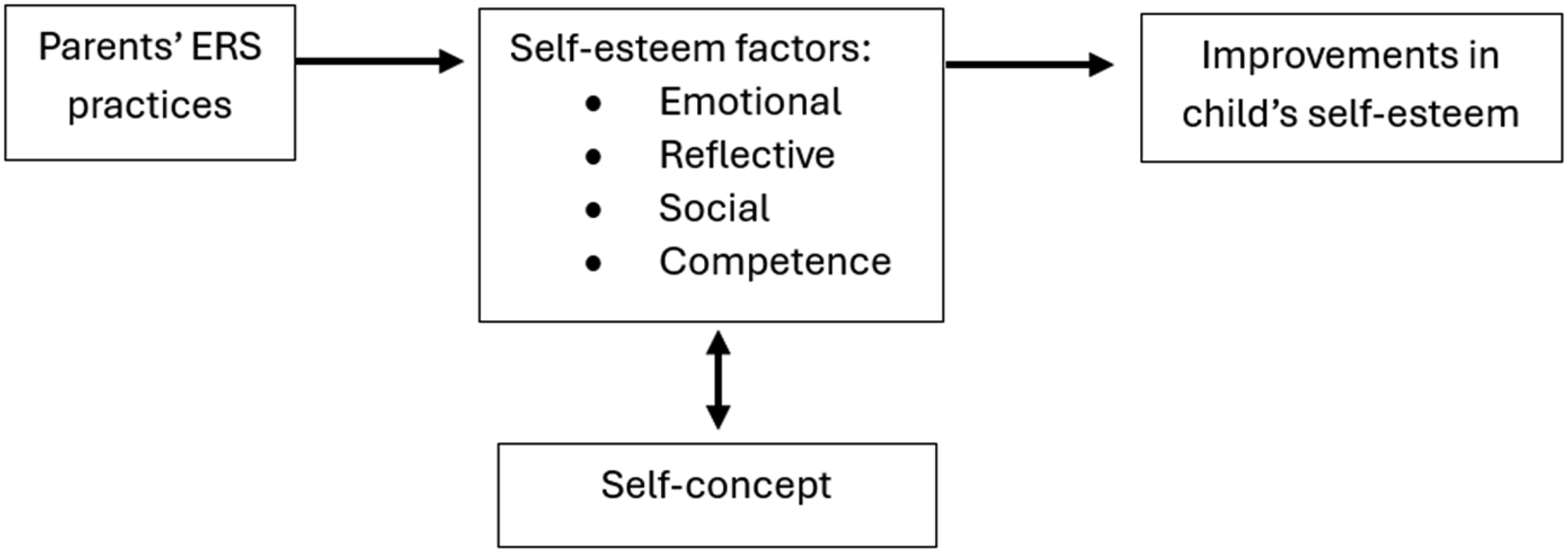
Methods
Study Design
Eligible participants were parents of children aged 3–5 years and English-speaking. Participants were recruited in a state in the Midwest through a local school and at community events geared toward parents of young children. Study information was distributed via flyers. At recruitment events, interested individuals filled out a sign-up sheet and were subsequently contacted by research staff. Verbal consent was obtained before starting data collection. Once enrolled, each participant completed a one-hour, semi-structured interview covering topics regarding parent perspectives on ERS practices and ERS strategies used with their child. Example questions included: (1) “In what ways do you communicate information, beliefs, and values to your child about race and ethnicity?”, (2) “In what ways do you think the conversation you have you’re your child about race affects their experience, expression, or management of their emotions and feelings?”, and (3) “In what ways do you think the conversation you have with your child about race affects their self-confidence and self-esteem?” Parents were encouraged at the onset of the interviews to only discuss ERS practices with their preschool-aged children if they also had older children. These interviews were conducted by graduate research assistants trained in qualitative data collection. All interviews were conducted by CS, AM, and AR and recorded via Zoom, transcribed, and later spot-checked by the interviewers for accuracy. Participants received $30 Amazon gift cards for their participation.
Sample
The majority of participants (N = 16) were women (n = 13; 81%), with an average age of 36.06 years (SD = 6.14). Most identified as White (n = 9; 56%), followed by Black/African American (n = 6; 38%), and Asian or Pacific Islander (n = 1). One person identified as Hispanic. Half of the participants were married (n = 8; 50%), while 44% were single (n = 7); one participant was cohabiting with a partner but not married. The median educational attainment was a 4-year college degree, and the median annual household income fell between $25,000 and $49,999. All participants had a child between the ages of 3–5 (M = 3.69 years; SD = 0.70). Parents’ children were a majority Black/African American (n = 6; 38%), followed by White (n = 5; 31%), Multiracial (n = 4; 25%), and Asian or Pacific Islander (n = 1). More than half of the children were boys (n = 9; 56%).
Analysis
The coding team consisted of three graduate students, CS, AM, and AR, who were trained in qualitative coding. Interviews were coded using a hybrid approach (Fereday & Muir-Cochrane, 2006); first, deductively, in which pre-determined codes were identified using preexisting theory on self-esteem. The theoretical framework utilized outlines four key processes of self-esteem: (1) emotional, (2) reflective, (3) social, and (4) competence-based (Reitz, 2022). These four elements were used to guide topic coding to capture participant responses relevant to children’s self-esteem. Then, interviews were inductively coded, using thematic content analysis, to explore non-pre-determined themes regarding self-esteem, as well as observe the occurrence of pre-determined codes within the bounds of these pre-identified topics, a qualitative analysis process outlined by Smith (1992). Braun and Clarke’s (2006) six-phase framework for thematic analysis guided the coding and theme development process. First, the coders read through the transcripts to become familiar with the data. Then, each transcript was independently coded. After coding the first five interviews, the team met to discuss initial codes and emerging themes. This iterative process continued with the next five transcripts, followed by another group discussion to compare findings and refine codes. Once all 16 interviews were coded, a final meeting was held to finalize the codebook and define the major themes. One team member drafted the final codebook which was reviewed and approved by the full coding team. Transcripts were uploaded into NVivo (Lumivero, 2017) for a final round of coding, and the finalized codebook was used to capture themes within the data and identify representative quotations. The coding team members were assigned interviews to code by the lead author. Each transcript was reviewed by two researchers for comparison.
Positionality and Reflexivity
Throughout the analysis process, the coding team reflected on how their own positionality informed their interpretations of the data (Berger, 2015). CS identifies as a White, cisgender woman and is a doctoral student in social work at a public R1 research institution. She participated in this project with the assumption that ERS practices would be beneficial towards children’s self-esteem but attempted to minimize her biases with self-reflection of how her privileged identities informed her interpretations of the data. ADG identifies as a Black, cisgender woman. She was a research assistant on this study, and she believed that ERS would support preschool-aged children’s identity development and self-esteem. TRN identifies as a White, cisgender woman, and is postdoctoral scholar at a public R1 research institution. She has a PhD in clinical psychology and her research centers on positive parenting practices among families exposed to adversity. She believed that ERS messages would be different based on the families’ racial and ethnic identities, and she made attempts to reduce this bias throughout the coding and writing process. AR identifies as a Black, cisgender woman and is a doctoral candidate at a public R1 research institution. She has an MSW and has research experience in racial disparities within child welfare and maternal health. She is also a parent of three BIPOC children, two who were preschool age when data was collected, and attempted to neutralize her subjectivity by removing its influence on the research process as much as possible. AM identifies as a South Asian, cisgender women, and is a doctoral student in social work at a public R1 research institution. AM participated in this project with the belief that ERS can play a critical role in supporting youth’s identity development, emotional well-being, and capacity to navigate systems shaped by structural inequities. SY identifies as an Asian American, cisgender woman and is a faculty member with research expertise in parenting and early child development. She is also a parent of two BIPOC children, and she attempted to alleviate her bias regarding the benefits of ERS practices on children’s identity development and self-esteem through ongoing reflection. SG identifies as a Black man and is a faculty member in the School Psychology program at a public R1 research institution. His scholarly work focuses on racialized educational experiences, early childhood development, and school-based mental health. As a professor, licensed psychologist, and current researcher committed to advancing racial equity in education, he entered this project with the belief that early conversations about racial identity are essential for the healthy development of minoritized children. He is also a father of four Black children.
Results
Thematic analysis revealed six major themes that mapped onto four prominent categories of self-esteem: emotional, reflective, social, and competence-based.
Concerning the emotional category, which emphasizes how feelings of self-consciousness and poor emotional regulation can diminish self-esteem, the theme (1) “providing a space for emotional resiliency” was found from parents of BIPOC children. This theme encapsulates parents creating a safe environment in their home for their children to share experiences of discrimination and uplifting them with coping tools. More specifically, the theme of (2) “encouragement of racial pride” was also observed for parents of BIPOC children. This theme emphasized parents’ intentions of instilling a sense of racial pride in their children by encouraging ERS conversations and individualized self-expression.
For White children, regarding the emotional category, the theme of (3) “teaching about White privilege” emerged. This theme encompassed parents’ sentiments that their child’s White privilege would likely contribute to feelings of self-consciousness (i.e., White shame) and how helping their children recognize their privilege would be important for their moral and emotional development.
Similarly to the emotional category, the reflective category refers to how our narratives about life experiences shape our self-concept and self-esteem. One theme that represented this category was (4) “protecting against racial discrimination” which was endorsed by parents of BIPOC children. The theme highlighted parents’ concerns of how experiences of racial discrimination could harm their child’s sense of self and their efforts to protect their child’s sense of self through conversations about racial discrimination.
For the social category, for BIPOC children and White children, parents endorsed the theme of (5) “promoting social acceptance and inclusion” for their children. This entailed exposing their children to diverse social networks to foster interracial social relationships and feelings of belonging in racially diverse spaces.
For the category of competency, which focuses on skills pertinent to establishing self-confidence, previous themes mentioned above also apply: “teaching acknowledgment and understanding of White privilege” and “providing a space for emotional resiliency”. The skills of cultural competence and emotional regulation contribute to self-esteem and thus overlap with the category of competence-based self-esteem. A visual map of how these themes are connected to self-esteem processes is shown in Figure 2. Theoretical self-esteem processes are represented in circles and qualitative themes and from the present study are embedded in squares. The horizontal lines indicate themes that overlap across two self-esteem processes. Visual map of qualitative themes and self-esteem processes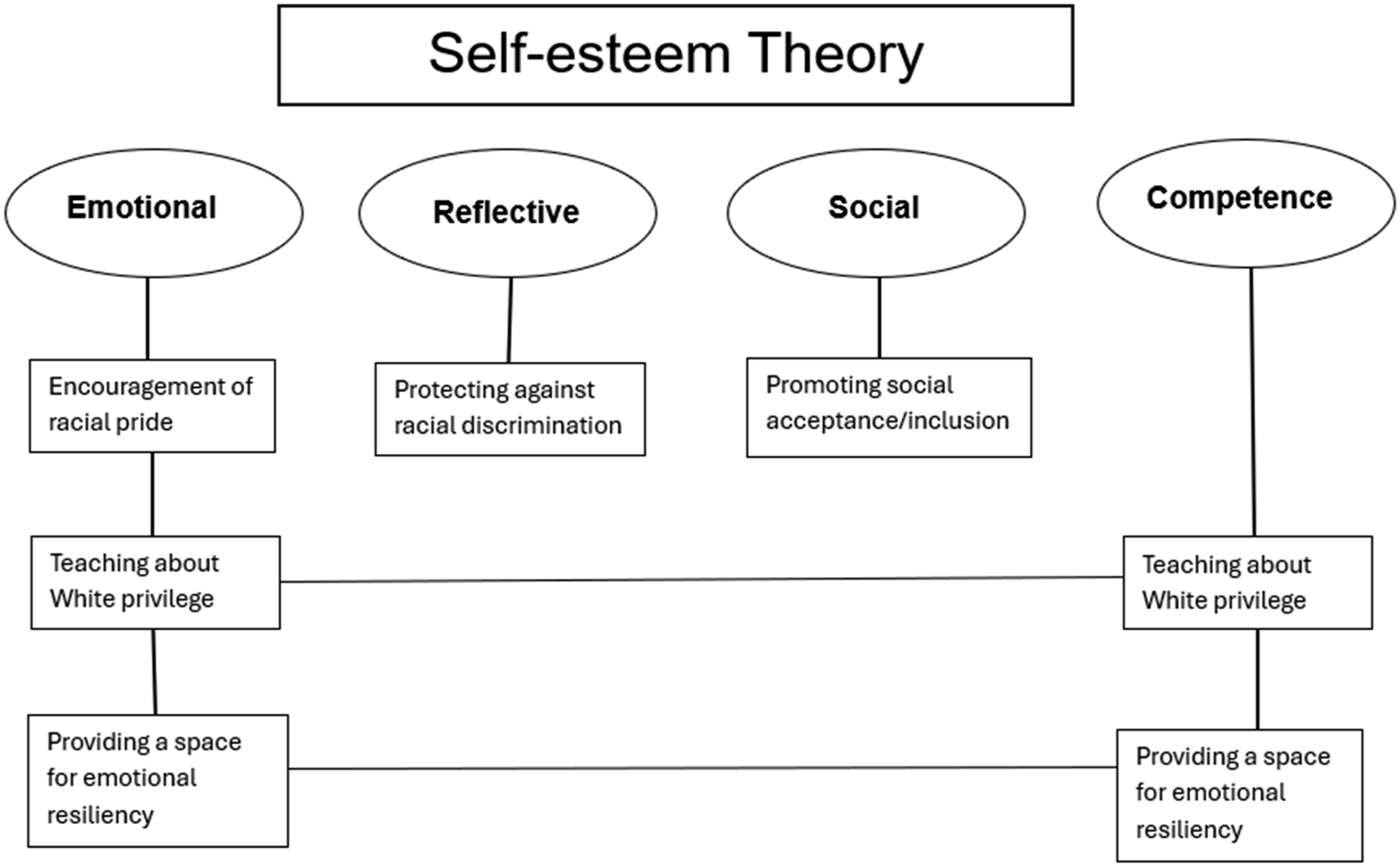
Emotional
Providing a Space for Emotional Resiliency
This theme referenced parents’ desires to help their BIPOC children emotionally regulate from stressful experiences of racial discrimination. Parents reported a desire to create a safe and welcoming home environment for children to discuss and process race-based topics, as well as helping them develop coping skills.
Parents shared that they wanted their kids to have a comfortable space to talk about any incidents regarding race. It was important for them to instill from a young age the idea that home is a safe environment. As a White mother of a Multiracial daughter explained: “I think conversations we have are all a part of a greater approach with our parenting of—there are times that we’re disappointed… but no matter what, you are a great kid, and we love you unconditionally. I think the race stuff is certainly part of that. There’ll be times when this is frustrating… no matter what, your feelings are always safe at home.”
Similarly, another White mother of a Multiracial son discussed building a narrative for his son that his mother is a safe person to bring issues to. She explained that she has built a trusting relationship with her children to the point where they think “Mom is right. I know I can talk to Mom if it [racial discrimination] does happen, and she’ll give me good advice.” This quote showcases parents’ perceived importance of fostering a positive parent–child relationship and cultivating a home environment that feels safe for their children to share within.
Parents of BIPOC children described their intentions of aiding their children in developing coping skills as a preventative resource to mitigate the impact of potential racial discrimination in the future. A few mothers shared that they instilled religious coping practices into their child’s life as a resource for them when they faced challenges. One Black mother of a Black daughter explained that she tells her: “When somebody tries to discriminate you, just asked a few questions. And then let the person know, well you are not my creator. You’re not my God. So, you can’t break me down. And then you leave the person with his judgment. That’s how I told them to face anybody. If you’re not my God, then they can’t touch you.”
Another strategy for helping children cope with potential discrimination was using cognitive strategies such as positive self-talk or cognitive reframing. For example, one White mother of a Multiracial daughter discussed: “I try to be really positive about focusing on the strengths” as opposed to how people might judge her. She shared how she would tell her daughter: “You’re special because you have this experience and background.”
Similarly, a Black mother of a Black male said she thinks it’s important to talk through experiences of racial discrimination to help him re-frame the event. She stated: “So, he doesn’t take stuff personal like, ‘Oh, it’s just like they hate me’. No, they might not like themselves or something may have happened to them, for them to not like a certain race or gender or whatever the case.”
Encouragement of Racial Pride
Many parents of BIPOC children anticipated that the conversations they had about race would impact either their child’s current self-confidence or future self-esteem. Underlying messages included fostering a sense of pride in children’s racial identity and contributing to their comfort in expressing themselves.
As one parent, the mother of a Multiracial boy shared about racial pride: “With racial pride, I have really been focusing on letting him take the lead on how he identifies. Sometimes he’ll say he’s brown, and sometimes he’ll say he’s black.” Other parents of Multiracial children employed a similar strategy of allowing their children to lean into whatever racial identity they wanted to. Parents additionally emphasized the beauty in diverse skin tones; as one mother of a Black girl said: “Black comes in a variety of shades. And just because you’re lighter or darker, it doesn’t make you any less pretty.” She explained that this strategy is important because “colorism is very real.”
Self-expression additionally came up as something that parents wanted to bolster in their children as a protective resource for their mental health growing up. One mother of a Multiracial daughter was talking about the symbolism of a character in an Asian film, “And she wants to get her hair cut like one of the characters, like shaved head on the side. And at first, I was kind of like ‘Oh, my god’ and then I was really thinking about it and it’s a character that looks like her, and she wants to look like this character. That’s great.”
Teaching About White Privilege
White shame or guilt was expressed by parents in relation to the responsibility to explain White privilege to their children. Parents of White children reflected on the complicated nature of wanting to instill confidence in their children while also juggling conversations about privilege. One parent shared, “We should all be proud of who we are, and I want him to feel that way, but he’s only three. So, it feels complicated and complex to explain… I’ve got to figure out how to talk to him about being proud of it [his race], because I have mixed feelings about it myself.”
Other White parents similarly talked about the complications of having conversations around Whiteness. As one White mother of a White daughter shared: “I don’t think we give her any messages about her race… Not that we should be ashamed of that, but God forbid we got into White pride territory.” A White father of a White son agreed: “There isn’t an element, I think, of Whiteness that needs to be rescued or celebrated because it’s not been delegitimized.” Unlike Whiteness, he explained, that there are other cultures that his family tries to acknowledge that have been delegitimized by society. He shared, “When we eat Thanksgiving, we try to talk about and eat Native American foods… And we try to talk about traditional Black foods during Black history month. Right, as a way of sort of uplifting or recognizing those cultures for their difference, more so than trying to instill a sense of pride about their Whiteness, which feels more problematic.”
Parents of White children hoped that having conversations about race would prepare them to be advocates. One White mother of a White daughter emphasized the importance of having conversations about racial disparities to prepare her daughter to be able to recognize these differences and speak up about them, “I have the privilege that I hadn’t even—I don’t need to have those conversations because it barely happens. But I know they’re important… so she can recognize when it’s happening right in front of her eyes… I want her to be able to articulate and just be an advocate for herself and for others around her.”
Reflective
Protecting Against Racial Discrimination
Parents of BIPOC children expressed wanting to develop a strong sense of self in their child that would serve as an emotional anchor to protect again racial discrimination and support their positive identity development. To this end, these parents, first, wanted to increase their child’s capacity to self-reflect on how conversations about race and exposure to racial discrimination might contribute to one’s self-concept. Second, parents of BIPOC children discussed wanting their child to be autonomous and fearlessly themselves even after exposure to racial discrimination.
One White mother of an adopted Black daughter shared it was particularly important to talk about race because “it impacts how kids see themselves and how they view others” and felt this might be particularly salient for her adopted daughter; she posed the rhetorical question: “How does she figure out who she is in the world when her skin color is not the same as the family that she is living with?” This mother talked about attempting to help her daughter with this self-exploration by exposing her to diverse media and helping her develop friendships with people in their community who look like her.
A Black mother of a Black son wanted him to think: “All right, I can do this. Nobody’s better than me. And I’m not better than anyone else. We’re all out here on our own journey.” She hoped that the conversations around his racial identity would instill confidence in him which could “help him be a better person overall.” She wanted him to know that everyone is “on their own journey” and that he needs to “just focus on himself.” These sentiments were shared by other parents who wanted their child’s pathway to be determined by their own interests and goals rather than reflections of the limitations imposed by others. One White mother of a multiracial daughter shared: “I’m just approaching any sort of racial bullying similar to any other bullying, So, I’m trying to just like make her very secure in who she is.” She hoped this messaging would lead to greater confidence and independence in her daughter and help her avoid instinctively following the actions of a group.
Social
Promoting Social Acceptance and Inclusion
This theme includes exposure to social resources that are inclusive and may contribute to feelings of social acceptance, inclusion, and belonging among all children. Broadly, parents preferred to introduce their children to diverse networks, such as their school or neighborhood. Parents’ intended goals in doing this was to cultivate comfort with diversity amongst their children, as well as contribute to a sense of belonging for BIPOC children in particular. Additionally, parents engaged in ERS practices with the aim of broadening their children’s cultural sensitivity to inform their social connections.
For both parents of BIPOC children and White children, exposure to diversity was important both for normalizing and celebrating it. One father of a Black son shared that he believed having racially diverse social networks impacts his son’s development: “I love that both of my kids have diverse friend groups. They seem comfortable in any situation that I take them to… I think that is has helped or impacted their development and outlook on life… they can just look more deeply at the person and try to understand their situation and ask questions about the how and why of it.” He anticipated that his son’s exposure to racial diversity would impact his empathy and worldview. Similarly, a White mother of a White son believed that sending her son to a racially diverse school would impact his perspective on authority. She mentioned that she was intentional about choosing a daycare where the main teachers in the classroom were not White “just so he would respect people in power positions who didn’t look like him.”
Additionally, both parents of BIPOC children and White children were cautious to not discourage interracial friendships. One Black father of a Multiracial son commented on how he, personally, sat with White, Jewish students or Arabic Christians during lunch in school and Black students would tell him he should be sitting with the other Black students. He said, “That always kind of bothered me, this high social pressure that you need to first and foremost be with the people that look like you.” He continued on to explain that he understands the historical context of why that might be, and he wants his child to understand that too—but he also wants his child to make decisions bad on his own interests rather than “social pressures,” meaning to be able to form relationships and connections with people that don’t necessarily look like him.
One White mother of a White daughter shared that she was cautious to point out differences in people because she didn’t want her daughter to misinterpret her message: “I don’t want her to think there’s only one way to be normal. That goes for a lot of things as well. Uh, you know, maybe kids with disabilities or something like that. I don’t want her to think that’s not normal.” This mother worried that pointing out differences about people might suggest there’s something wrong being different. She shared that her daughter is not currently noticing differences between people but she would be happy to discuss these differences if her daughter brought them up.
Discussion
Given the salience of ERS practices for self-esteem in older youth, this study aimed to expand the field’s understanding how ERS practices were considered and applied with preschool-aged children. Informed by Reitz’s (2022) theorized components of self-esteem including (1) emotional, (2) reflective, (3) social, and (4) competence-based, the present study highlighted various themes that aligned with these areas. In alignment with the current study’s conceptual model connecting ERS practices to self-esteem, many parents reflected on the implications of current or planned ERS strategies with their preschool-aged child on constructs known to influence self-esteem. Thematic analysis revealed the following themes: (1) Providing a space for emotional resiliency, (2) Encouragement of racial pride, (3) Teaching about White privilege, (4) Protecting against racial discrimination, and (5) Promoting social acceptance and inclusion.
In alignment with the emotional category of self-esteem (Reitz, 2022), parents of BIPOC children discussed the importance of fostering emotional resiliency in their children. Emotional resiliency broadly refers to the capacity to adapt to adversity, including knowledge and use of emotional regulation skills (Razak et al., 2025). Emotional regulation skills and resilience are directly associated with higher levels of self-esteem (Surzykiewicz et al., 2022). Since emotional regulation directly links to emotional processes of self-esteem, but also is informed by competencies in emotional regulation skills, it encompasses both emotional and competence-based factors of self-esteem (Reitz, 2022). In this study, parents discussed the role of positive self-talk and cognitive reframing as resources for coping with race-related stress. These strategies align with the Racial Encounter Coping Appraisal and Socialization Theory (RACAST; Anderson & Stevenson, 2019), which highlights how cognitive strategies buffer the negative impact of racial discrimination and other racial stressors. In our study, some parents mentioned the role of religion in coping with race-related stressors. This finding accords with previous work on spiritual-centered coping and religious problem-solving styles commonly used among BIPOC individuals (Lewis-Coles & Constantine, 2006). Furthermore, parents emphasized the importance of providing a safe and nurturing home environment for their children to be comfortable discussing race-related topics and processing negative experiences related to their race. These findings corroborate past work highlighting the importance of parent–child relationships and parenting practices in facilitating ERS (Coard et al., 2024; Dunbar et al., 2022).
Parents of BIPOC children also spoke about how ERS practices could instill a greater sense of racial pride in their children, which additionally falls into the category of emotional processes of self-esteem (Reitz, 2022). While links between racial pride and self-esteem have been observed in middle-school aged youth (Chandler, 1995; Harris-Britt et al., 2007; Hernández et al., 2017), less is known about the role of ERS practices in younger childhood. Our findings suggest that parents of BIPOC children begin to promote conversations around racial pride in early childhood, but they do not anticipate that it will impact their children’s self-esteem until later in life. Prior research suggests that preschool-aged children are capable of understanding racial differences, however, they may not internalize racial biases until they are older (Raabe & Beelmann, 2011). Nonetheless, as BIPOC children age and enter a school context, they require tools to prevent against internalizing experiences of racial prejudice on their self-concept (Swanson et al., 2009). Supporting BIPOC children in elevating their self-concept could help them establish positive self-esteem as these are interrelated constructs (Zaff & Hair, 2003).
In contrast, parents of White children acknowledged how their child’s self-esteem in part reflected privileges that they wanted their child to be aware of. Parents of White children also mentioned White shame or guilt that their child might experience, which accords with emotional processes contributing to self-esteem (Reitz, 2022). Aligning with previous research, parents in this study shared it was more developmentally appropriate to discuss White privilege with older children, while opting to focus on questions raised by their White children about race or ethnicity rather than prompting these conversations themselves (Freeman et al., 2022). Findings also support past work as parents in this study expressed caution around sharing messages that might communicate a shamefulness for being White (Freeman et al., 2022; Gillen-O’Neel et al., 2022). Perhaps parents would benefit from professional guidance regarding how and when to best communicate White privilege to their child in a way that moves them towards advocacy. Skill development in cultural competence and advocacy would also correspond with competence-informed self-esteem (Reitz, 2022).
In alignment with the reflective process of self-esteem outlined by Reitz (2022), parents of BIPOC children aimed to support their child in their adjustment to experiences of racial prejudice to preserve a positive self-concept. Positive self-concepts are linked with higher levels of self-esteem and self-worth (Uglanova, 2024) and are often lower among BIPOC individuals due to societal stigmatization and experiences of being othered (Hare, 1977). Parents of BIPOC children mentioned the importance of a positive self-concept for their child as it could protect against the negative effects of racism and feelings of low self-worth pertaining to their racial identity. Indeed, previous research shows that a positive racial identity is a protective factor for adolescent Black girls as it mitigates the negative influence of racial discrimination on their academic success (Butler-Barnes et al., 2018). Parents of BIPOC children also mentioned encouraging autonomy to protect against racial discrimination, so that their children are capable of maintaining their positive self-concept following instances of social comparison or bullying. Autonomy is also affiliated with general well-being (Uglanova, 2024) and is pertinent to the development of self-esteem in younger BIPOC children (Bruce, 2009) and older BIPOC adolescents (Bean & Northrup, 2009; Bynum & Kotchick, 2006). Thus, teaching autonomy in younger childhood could support foundational self-esteem development. Fostering autonomy may also represent the competency-based process of self-esteem as greater autonomy could bolster a child’s independence skills and their future goal-achievement (Reitz, 2022).
Regarding the social process of self-esteem (Reitz, 2022), a theme about promoting social acceptance and inclusion was observed. Parents talked about the benefits of surrounding their children with diverse social networks. For parents of BIPOC children, this was particularly important for developing a sense of belonging and inclusion within their child, whereas for parents of White children, cultural competence was perceived to be another tool for building friendships. Racial socialization is linked with higher levels of social support (Pernice-Duca & Owens, 2010). This is particularly important given that social support accounts for as much as 19% of the variance in resilience among BIPOC youth (Brown, 2008). In alignment with prior research, ERS practices among White families highlight that some families make intentional efforts to expose their children to diversity (Underhill, 2016). One study among White children as young as four-years-old found that greater exposure to neighborhood racial diversity contributed to reduced racial biases in friendships (Burke et al., 2023), supporting interracial social relationships. However, Underhill (2016) argue a level of performativity in White parents’ statements about valuing diversity given the known avoidance of discussing racial inequities. Further, most parents of White children in this study had not discussed racial discrimination with their preschooler, but they did share intentions of having these conversations when they were older; longitudinal work is needed to confirm the initiation of these conversations in later childhood.
Limitations
Findings should be interpreted in light of several limitations. Parents in this study were recruited locally; therefore, their perspectives may in part reflect their unique geographic location and not be generalizable to parents’ raising children in areas with different levels of racial diversity, as well as distinct political landscapes. Similarly, many parents’ children were attending racially diverse preschools and self-selected into this study; thus, these parents may have been biased towards valuing racial differences and engaging in racial socialization practices. The current study sample also had high levels of education which might have informed their motivations for initiating racial socialization practices or parents’ understanding of White privilege. More information on this topic could be gleaned from more diverse samples of parents (e.g., parents of Hispanic, multiracial, Asian, or indigenous children) across more demographic regions.
Practice and Research Implications
Given the desire of most parents to engage in ERS practices, the development of guidelines for both BIPOC and White parents on best practices for communicating these messages could be meaningful. Concrete and clear ways to navigate these conversations may help to reduce parental stress or anxiety and bolster their efficacy in promoting children’s self-esteem (Gillen-O’Neel et al., 2022). Additionally, while parents generally agreed that these conversations were important to have, many parents did not know when to initiate these conversations. Therefore, parents could benefit from psychoeducation from preschool staff (e.g., teachers or school counselors) or community parenting programs about the appropriate developmental age to begin racial socialization conversations. Furthermore, since parents spoke about a need to address instances of racial discrimination that had already occurred, parents and teachers in preschool should be prepared to address inappropriate behaviors of racial discrimination, as well as provide support to victimized children to mitigate the potential negative effects of discrimination on their self-esteem.
Given this study was qualitative in nature, the aim was not to generalize findings to all populations of parents, but rather to explore perspectives in a diverse sample of parents. However, further research among more parents, with differing family structures, educational backgrounds, races, and geographic regions would be helpful to clarify the role of ERS practices in supporting children’s self-esteem. Future research should examine experiences of racial discrimination from the perspective of children and explore the implications for their self-esteem. Additionally, future longitudinal quantitative studies examining parents’ use of ERS strategies in younger childhood and their associations with child-reported self-esteem across developmental periods could help confirm the utility of initiating ERS practices in early childhood.
Conclusion
The present study adds to the literature by offering insight on how parents engage in ERS practices with their preschoolers and how these conversations might inform their child’s current and/or future self-esteem. Parents of BIPOC children and parents of White children shared reasons for engaging in ERS practices with their children that aligned with the four components of self-esteem theorized by Reitz (2022). However, the motivations underlying these ERS practices and the specific ERS strategies looked different for parents of BIPOC children compared to parents of White children. Our findings suggest that parents generally want to use ERS practices with their children and find benefits to ERS practices for their children’s self-esteem; as such, programming and psychoeducation developed to support parents in these efforts is needed. Additionally, more work understanding how to prepare parents and educators in broaching these topics in early childhood is warranted (Gillen-O’Neel et al., 2022; White & Wanless, 2019).
Footnotes

Ethical Considerations
This study was declared exempt by The Ohio State University Institutional Review Board (Study 2022E1233) on 11/18/2022.
Consent to Participate
Informed written consent was obtained prior to enrollment and data collection.
Consent for Publication
Consent to publish was included in the consent forms signed prior to enrollment.
Funding
The authors disclosed receipt of the following financial support for the research, authorship, and/or publication of this article: This work was supported by the Schoenbaum Family Center (SFC) and a seed funding award from the Crane Center for Early Childhood Research and Policy (CCEC) at The Ohio State University to Scott Graves and Susan Yoon.
Declaration of Conflicting Interests
The authors declared no potential conflicts of interest with respect to the research, authorship, and/or publication of this article.
Data Availability Statement
Data are not made available in an effort to protect participants’ confidentiality.