






Abstract
Targeted protein degraders (TPDs) have recently emerged as a novel drug class. Targeted protein degraders engage E3 ubiquitin ligase complexes to degrade therapeutic proteins of interest via cereblon and other adapter proteins, acting as either molecular glue degraders (MGDs) or proteolysis-targeting chimeras (PROTACs). Several cereblon-based MGDs and PROTACs are in late-stage clinical development for oncology indications. However, as TPD drug discovery includes non-life-threatening indications, carcinogenicity risk assessment will be required. Although there is no regulatory requirement to treat TPDs differently from conventional small molecules in carcinogenesis risk assessment, several properties of TPDs could influence weight of evidence (WoE) assessments and carcinogenicity study design. A series of case studies is presented to provide examples for evolved, modified WoE approaches for carcinogenicity assessment that may be acceptable to health authorities and regulatory agencies. These examples also highlight that the biological assessment of E3 ligase is as critically important to the carcinogenicity and toxicology assessment as is the assessment of the primary target. Finally, drug developers must contend with limitations for early-generation cereblon MGDs related to the translatability of findings that may challenge traditional interpretation paradigms.
Keywords
Introduction
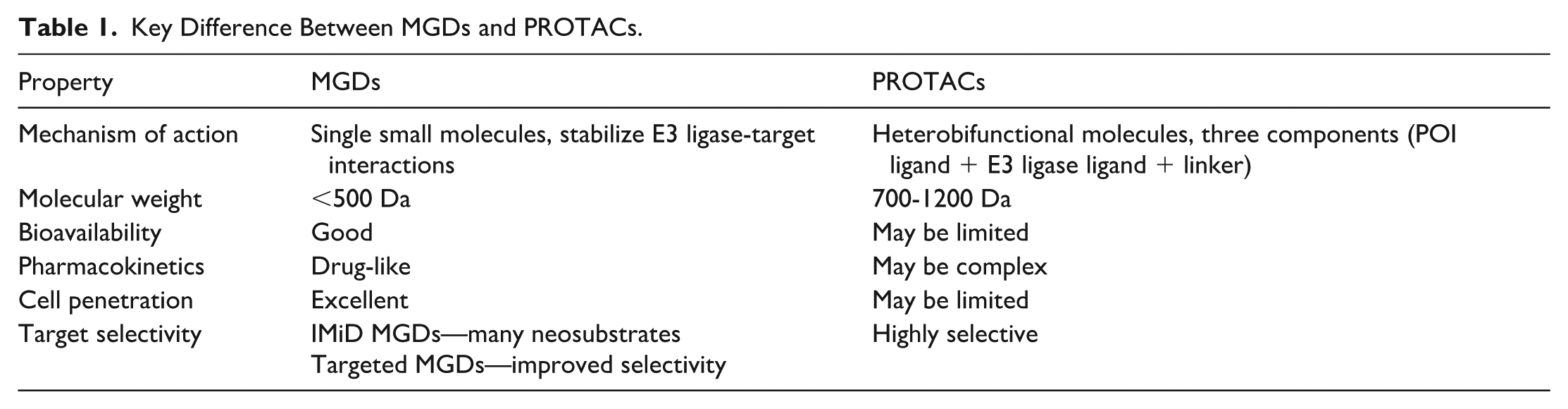
The mode of action of targeted protein degrader (TPD) molecules utilizes a specific E3 ubiquitin ligase complex to selectively degrade the therapeutic protein of interest (POI), offering excellent potential for targeting previously intractable drug targets. There are two main TPD classes (see Table 1). Molecular glue degraders (MGDs), originally exemplified by approved immunomodulatory imide drugs (IMiDs) such as thalidomide, pomalidomide, and lenalidomide. Molecular glue degraders have drug-like properties similar to conventional small molecules, constitute one group, while proteolysis-targeting chimeras (PROTACs), also termed heterobifunctional TPDs, that are typically higher molecular weight, constitute the other group.15,25 The cereblon E3 ligase complex is the most widely employed in drug discovery, and several cereblon-based TPDs are in late-stage clinical development for oncology, including the MGD iberdomide and the PROTAC vepdegestrant (data obtained from AdisInsight 9 September 2025, https://adis.springer.com). Approximately 15% of the 600 E3 ligases in the human genome, including von Hippel-Lindau (VHL), mouse double minute 2 (MDM2), DCAF15, IAP proteins (XIAP, cIAP1/2), have been exploited for TPD drug discovery, mainly using PROTAC-based approaches. 15
Key Difference Between MGDs and PROTACs.
Discussion and Case Studies
The primary safety concerns for any E3 ligase-based TPD are exaggerated toxicity associated with prolonged target degradation and the consequence of sequestration of the endogenous E3 ligase that could prevent it from carrying out normal cell homeostatic activities. For cereblon-based MGDs, a further primary concern is the degradation of unintended neosubstrates, resulting in off-target toxicity (Figure 1).9,11,20 Chemoproteomics and in silico modelling have resulted in the identification of approximately 2500 candidate cereblon neosubstrates to date; more information on this area is emerging.4,21,22,30
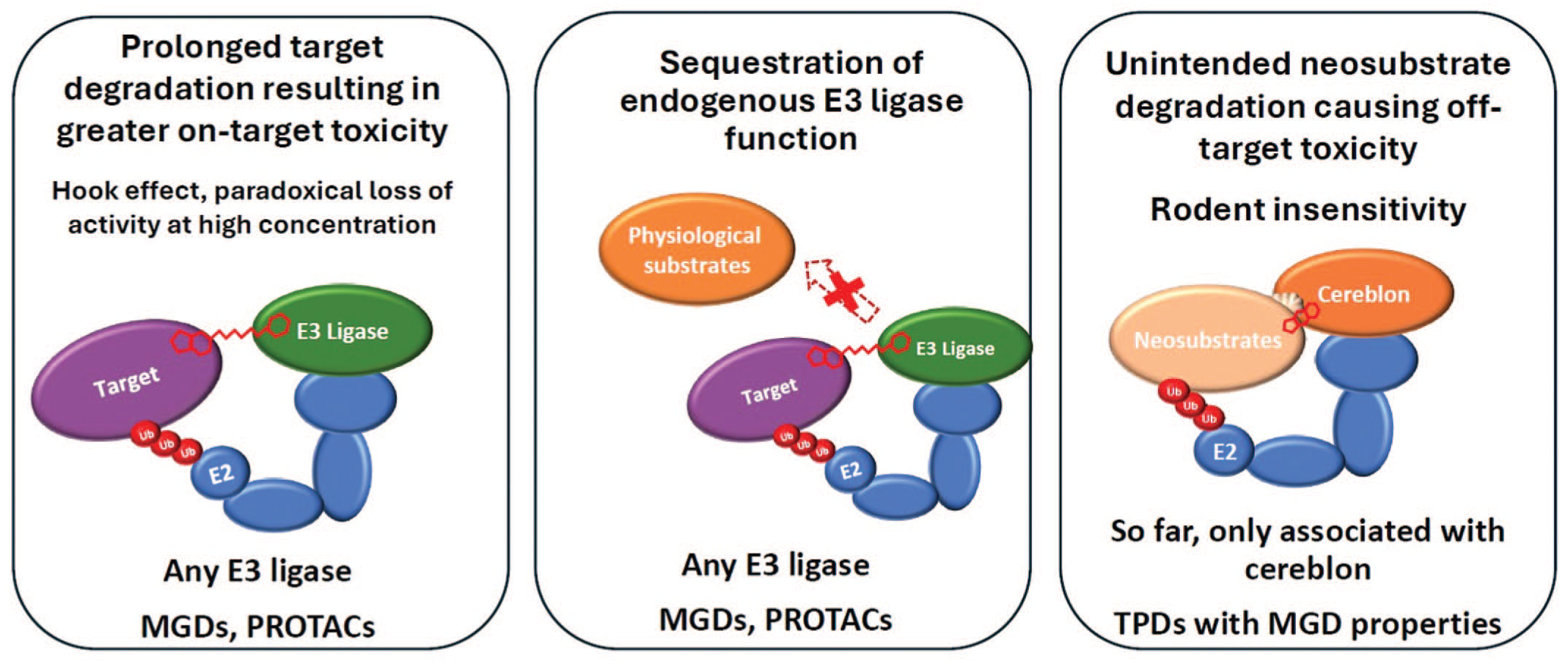
TPD safety mechanisms. E2, E2 subunit ligase; MGD, molecular glue degrader; PROTAC, proteolysis-targeting chimera; Ub, ubiquitin.
The safety concerns could impact the carcinogenicity assessment and carcinogenic potential of TPDs. First, and as with conventional small molecules, in the weight of evidence (WoE) assessment, a target carcinogenicity assessment (TCA) of the primary target cancer association should be conducted (summarized in next section).
Second, the carcinogenic potential of sequestration of the E3 ligase from its normal cellular function should also be considered in the TCA. For example, sequestration of cereblon may impact protein stability and localization, as well as transcription regulation and autophagy, which could influence carcinogenic pathways. While some of these effects have been observed in in vitro studies, they have not been observed in vivo. This may be because of their potent stoichiometric mechanism of action, TPDs never achieve sufficient cellular concentration in vivo to sequester the E3 ligase effectively. 5 However, because TPDs are a novel drug class, it is still essential to consider this mechanism in the carcinogenesis assessment by assuming complete inactivation due to sequestration of the E3 ligase. For cereblon, there is no obvious cancer link identified through loss of function genetic conditions in patients or in knock-out mouse models, there is a cancer progression association such that the IMiDs lenalidomide and pomalidomide are linked to a small increased risk of second primary malignancies, and cereblon gene expression is noted to be downregulated in various cancer types while cell migration has been noted as enhanced in several cancer cell lines.12,23,24,26 In contrast, VHL is a tumor suppressor gene with mutations in this gene resulting in VHL syndrome, with multisystemic neoplastic syndrome; heterozygous knockout mouse models are also susceptible to cancer. It is reasonable to associate inhibition of VHL with potentially uncontrolled cell proliferation and/or angiogenesis.7,8,13,31
Third, for cereblon-based MGDs, the association between the degradation of unintended neosubstrates and carcinogenesis should be assessed in the TCA. This is analogous to considering the secondary pharmacology profile of conventional small molecules. As proteomics of cell lines is commonly used to determine TPD selectivity, the range of off-targets for this drug class will likely be more extensively assessed than for conventional small molecules, which are screened in a relatively small panel of secondary pharmacology assays. It is important to note that the unintended neosubstrates are of greater concern for early-generation cereblon-based MGDs, such as IMiDs and derivative drugs. 5 More recent drug discovery has identified non-IMiD scaffolds that provide high selectivity for next-generation cereblon-based MGDs.21,22 Among the known cereblon neosubstrates, loss of function of ikaros (IKZ1), PAZTZ1, P63, and PLK1 are associated with mouse or human carcinogenic phenotypes.14,17,19,27 This approach can be applied to any new cereblon TPD neosubstrate or off-targets that occur with other E3 ligases that are identified during TPD drug discovery.
Finally, nonclinical safety considerations for TPDs must contend with translational issues, particularly the relative insensitivity of rodents to cereblon-based MGDs. This is due to two amino acid differences in the cereblon-MGD neosubstrate degron recognition domain that occur between rodents and humans. The degron recognition domain is conserved in rabbits and non-human primates and partially conserved in dogs.2,6 For carcinogenesis assessment, this insensitivity to TPD-mediated degradation may result in an absence of primary target pharmacology and off-target degradation in mouse and rat toxicology studies, which is an important factor in determining the likely value of the two-year rodent bioassay. Some cereblon-MGD neosubstrates, such as rodent Sal-like protein 4 (SALL4) and cytochrome P450 19A1, also exhibit significant sequence differences in their degron sites, which can dictate TPD degradation. 2 Although sequence variation between species is a significant issue for cereblon MGDs, missing orthologues and tissue gene expression differences between humans and toxicology species are further translational factors to consider for all TPDs.
Current Regulatory Landscape
Presently, there are no TPD-specific regulatory requirements and guidance documents for small molecules are considered the most applicable (eg, ICH M3, S1 (A/B, R1) and S9), including requirements for a standard two-year rodent bioassay paradigm. Carcinogenicity assessment becomes essential when expanding beyond cancer indications but a WoE approach, as outlined in ICH S1B(R1), may be undertaken, although currently no precedents are identified in publicly facing regulatory submissions. 10
A WoE approach for the TCA could be composed of the purported pharmacological mechanism of action of both the parent compound and any major metabolites, the pharmacological activity and potency in humans in rodents, as well as target cancer association including target distribution, biology and pathways in humans and rodents, available genetically engineered models, human genetic associations, and analysis of cancer gene databased as well as carcinogenicity class effects.
Key considerations for cereblon-based MGDs are the possible insensitivity of rodents to these molecules and the potential association between neosubstrates and carcinogenicity. For MGDs and PROTAC molecules, consideration of the possible cancer association between the primary target and the E3 ligase is necessary. Both of these aspects should be considered for first-in-class molecules. For E3 ligases such as cereblon with multiple approved TPDs, the E3 ligase part of the TCA may become less necessary once the cancer risk precedent has been established.
Case Studies
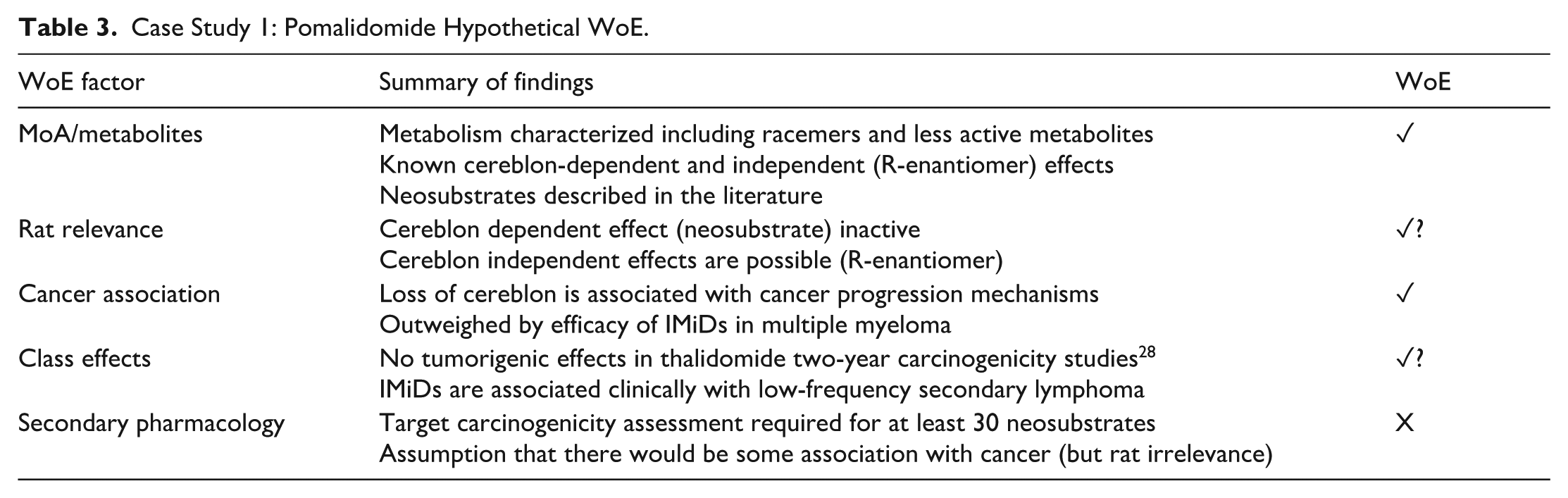
In Table 2, considerations that may weigh in favor of or against an investigative approach are summarized. Hypothetical case presentations are then briefly presented in a similar format in Tables 3-5.
TCA WoE Factors for TPD Case Studies.
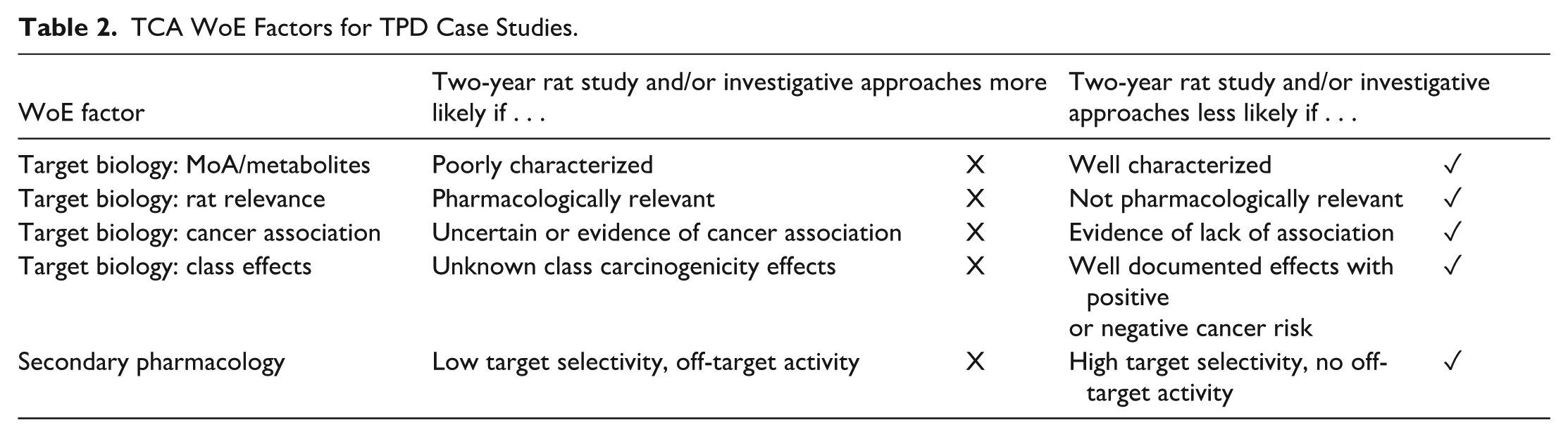
Case Study 1: Pomalidomide Hypothetical WoE.
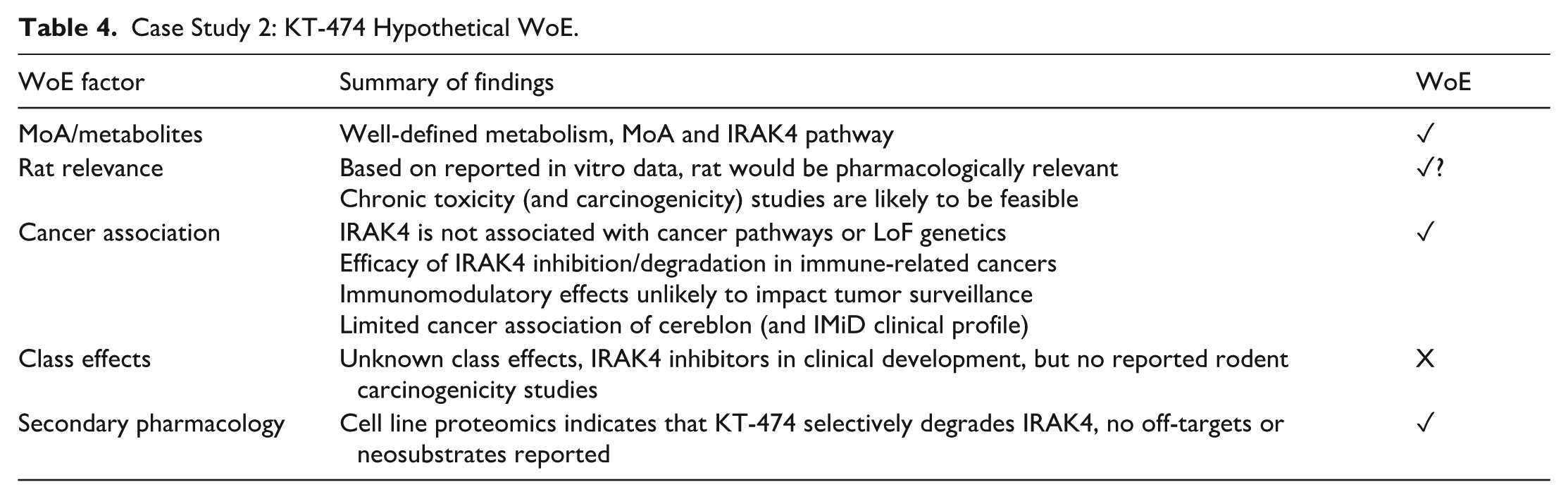
Case Study 2: KT-474 Hypothetical WoE.
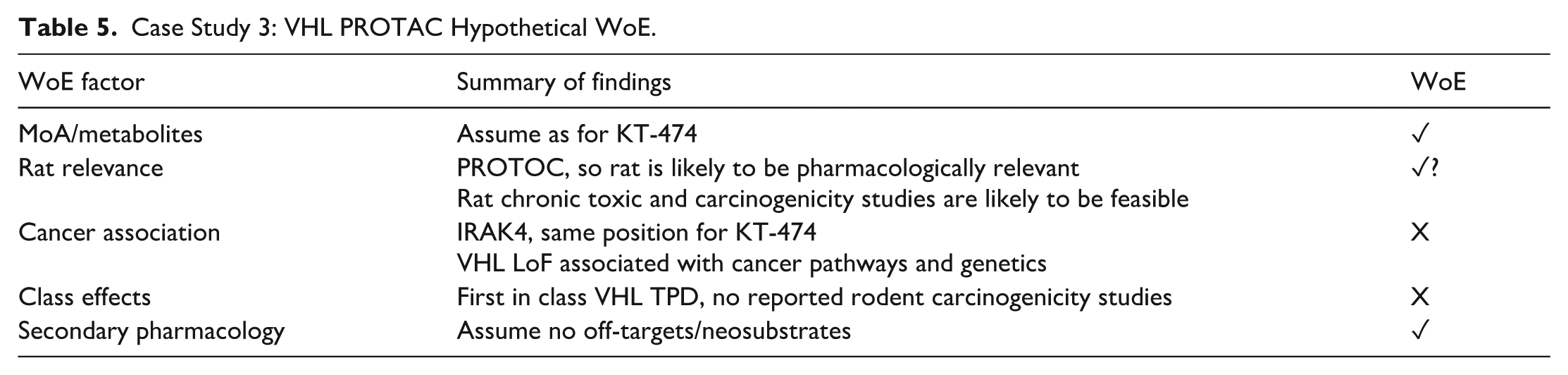
Case Study 3: VHL PROTAC Hypothetical WoE.
Case study 1: pomalidomide, a promiscuous MGD, an established oncology therapeutic, is under consideration for use for a non-oncology indication. See Table 3, which suggests that the lack of rat pharmacological mechanism may outweigh the human cancer risk and supports the conclusion that a two-year rat carcinogenicity study would not contribute to the human carcinogenicity risk assessment.
Case study 2: KT-474, a cereblon-based interleukin-1 receptor-related kinase (IRAK4) PROTAC, which has a favorable safety profile with demonstrated efficacy in phase II studies for inflammatory skin disease. Note that development of this compound was discontinued due to the emergence of an improved preclinical candidate. KT-474 is a PROTAC with a cereblon binding “warhead” and an IRAK4 binding and inhibitory moiety. In vitro pharmacology assays indicated equal potency in rodents, dogs, and cynomolgus monkeys, whereas secondary pharmacology indicated the compound was selective for IRAK4 with no evidence of SALL4 or other neosubstrate degradation. This was confirmed by proteomics in human-induced pluripotent stem cells.1,32 While there are several strong TCA WoE factors (Table 4), the outcome of rat chronic toxicity studies would be pivotal to this decision. Given the available evidence, a valid argument could be made that the 2-year rat study would not contribute value to human carcinogenicity risk assessment.
Case study 3 considers a theoretical VHL-based IRAK4 PROTAC for a non-oncology indication (Table 5). As a first-in-class mechanism of action, it is unlikely to be a WoE argument that would outweigh the regulatory and scientific imperative to conduct a 2-year rodent carcinogenicity study, which could contribute value to human carcinogenicity risk assessment.
To support the WoE position, collections can be made of appropriate tissues suitable for Western blot, proteomics, and ultrastructural analysis in repeat-dose toxicology studies, up to and including 6-month studies. These samples may open the option to assess E3 ligase, target protein, off-targets/neosubstrates, physiological substrate levels, and subtoxic organellar changes if findings are identified. Finally, these novel and challenging drug candidates may require bespoke investigative approaches, such as the use of the rat uterotrophic assay, which was used to demonstrate that vepdegestrant does not act as a selective oestrogen receptor modulator. 18
Further investigative approaches could be utilized to support WoE positions. For example, a humanized V338I cereblon mouse shows partial sensitivity to MGDs, with IKFZ1 degradation but SALL4 resistance due to mouse degron sequence differences. 2 It may be possible to introduce SALL4 sensitivity and further humanize cereblon through additional engineering. A fully humanized mouse could then be bred with the rasH2 mouse to create a more relevant 6-month transgenic carcinogenesis assay.
Summary and Conclusion
Drug development of cereblon-based TPDs has been challenged with a significant safety consideration regarding the degradation of unintended neosubstrates, in light of the teratogenicity findings associated with thalidomide and other IMiD drugs. 16 Teratogenic findings are thought to be mediated, at least in part, through a cereblon-neosubstrate mechanism. Due to the inherent complexity of TPD-mediated cereblon: neosubstrate binding, unintended neosubstrates are varied and challenging to predict. 3
As cereblon and other E3 ubiquitin ligase complexes advance in the process of drug discovery and development with indications for non-life-threatening indications, carcinogenicity risk assessment will be required, particularly in light of the reproductive toxicity findings and history of thalidomide. There is no regulatory requirement to treat this new drug class differently from conventional small molecules in carcinogenesis assessment. However, several specific or somewhat unique properties of TPDs could influence WoE assessments and carcinogenicity study design.
When conducting a WoE analysis for the carcinogenicity assessment of a new molecule, the association of both the primary target and the E3 ligase with cancer biology should be evaluated, as the latter may be hijacked from its normal cellular function. For cereblon-based MGDs, several potential neosubstrates are associated with cancer pathways, indicating potential off-target effects that will not be assessed in standard secondary pharmacology assays.3,16 Figure 2 outlines potential additional assessments that development teams may consider for the nonclinical safety assessment of TPD molecules.
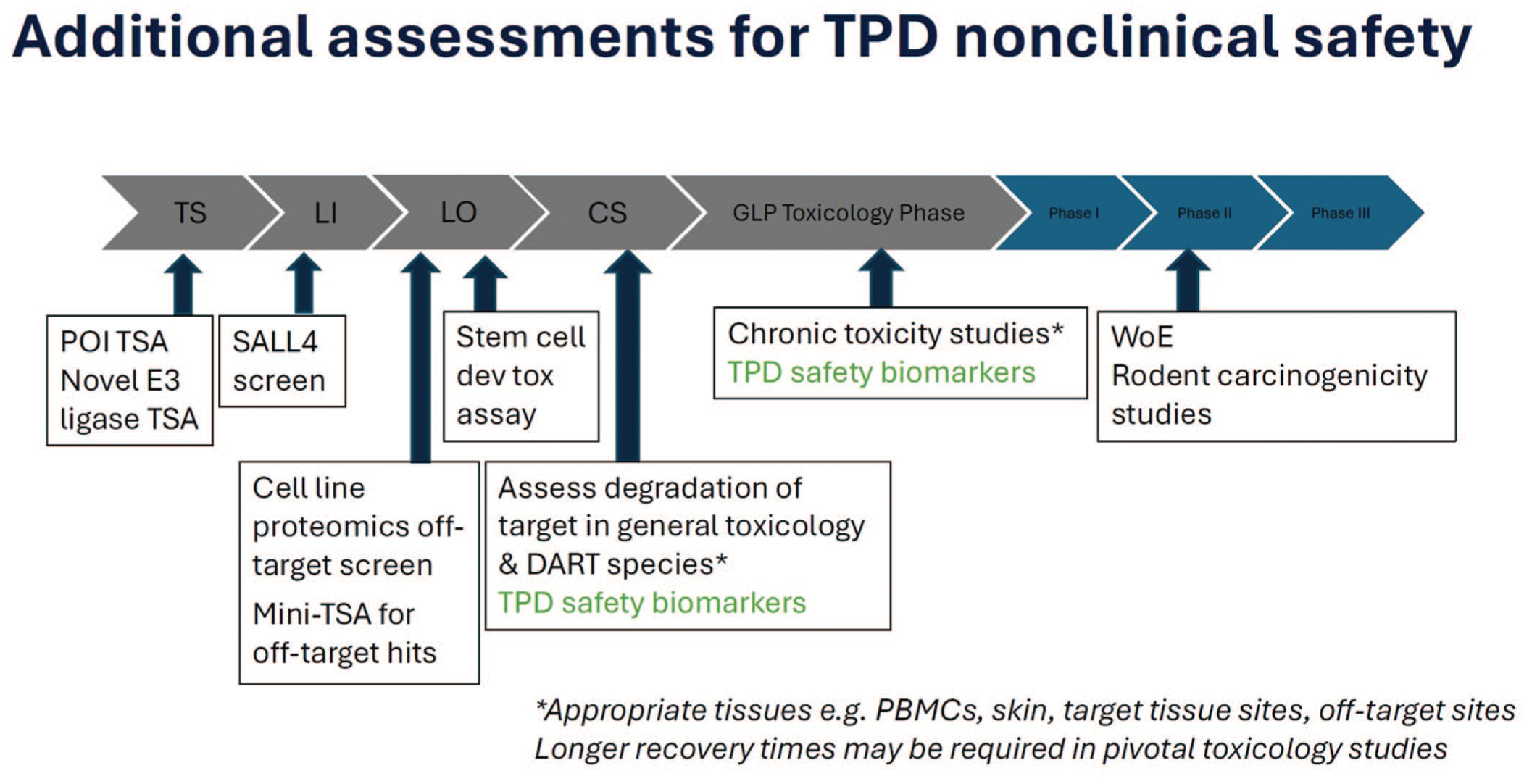
Additional assessment for TPD nonclinical safety. CS, candidate selection; DART, developmental and reproductive toxicology; GLP, good laboratory practice; LI, lead identification; LO, lead optimization; POI, protein of interest; SALL4, sal-like protein 4; TSA, target safety assessment; TS, target selection; WoE, weight of evidence.
Compared with functional small molecule inhibitors, toxicodynamics may be different for TPDs due to their catalytic degradation properties, and drug metabolism may be more complex for PROTACs, which may influence the design of toxicology studies and risk assessment.20,29 Furthermore, species differences in TPD interactions with cereblon and neosubstrates can complicate the translational safety of these interactions, including rodent carcinogenicity studies.
In summary, TPDs offer an exciting prospect for new drug discovery, but their differing properties from conventional small molecules should be taken into account in carcinogenicity risk assessment. This modality offers excellent potential for targeting previously intractable drug targets.
Footnotes
Author Contributions
Conceptualization (JS); Writing—review & editing (JS); Writing—original draft (EM).
Declaration of Conflicting Interests
The authors declared no potential conflicts of interest with respect to the research, authorship, and/or publication of this article.
Funding
The authors received no financial support for the research, authorship, and/or publication of this article.
