







Abstract
This paper has two purposes: First, we describe the components of the Student Ownership, Accountability, and Responsibility for School Safety (SOARS) framework in the context of the literature on school safety. Second, we offer outcomes from a pilot study testing the framework's impact on student perceptions of: (a) school belonging, (b) sense of personal safety, (c) level of disruption, (d) level of delinquency, (e) responsibility for school safety, (f) engagement in victimizing behavior, and (g) sense of being victimized by peers. We conducted a study with two conditions, intervention and control. The study was conducted in Oregon and Illinois. Four high schools participated in the study. Two high schools received access to the SOARS framework and two high schools served as controls. We collected usage data of the Advocatr app, the central components of the SOARS framework, as well as survey data from students. We examined Advocatr use by overall frequency as well as across student race and gender. Survey data were analyzed using an ANCOVA analytic approach. Almost all outcomes were in the desired direction. Intervention effects on student-reported school belonging, sense of personal safety, and level of disruption reached statistical significance. Effect sizes ranged from small to medium, with the largest effect in students’ perceptions of personal safety. We contextualize our study in the literature on school safety and describe the alignment of the SOARS components with existing recommendations for increasing students’ safety at school.
Reports of lethal violence inflicted upon students on school grounds tend to shake us to the core and renew our commitment to ending school violence. Based on data collected between 2000−2001 and 2020−2021, Irwin et al. (2022) document an increase in school shootings over the last 5 years. The literature suggests that many students who engage in violent behavior at school felt bullied and victimized by others, often over extended periods of time (Hornor, 2018; León-Moreno et al., 2019), and shared their plans to take revenge against individuals, groups, or entire school communities with friends, school mates, or siblings prior to carrying them out (Langman, 2017; Leary et al., 2003; Kalish & Kimmel, 2010; Katsiyannis et al., 2018; Mears et al., 2017; National Threat Assessment Center, 2019; Newman & Fox, 2009; Vossekuil et al., 2004). The literature also suggests that students who knew about planned violence did not share this information with adults due to fear of punitive consequences from adults (Syvertson et al., 2009), fear of retaliation from peers (Allnock & Atkinson, 2019; Espelage et al., 2022; Slocum et al., 2017), lack of confidence in adults to respond appropriately (Aceves et al., 2010; Astor & Benbenishty, 2018; Stone & Isaacs, 2002; Wilson-Simmons et al., 2006), and misjudging the likelihood that shared plans will actually be carried out (Federal Commission on School Safety, 2018). Within this context, the purpose of our study was to conduct an initial test of how a recently developed comprehensive school safety framework for high schools impacted peer victimization, students’ use of a tool to share critical safety information with local school adults, and school personnel's efforts to create positive school environments where students feel comfortable sharing information. The school safety framework was derived from existing recommendations to keep schools safe.
Recommendations to Promote School Safety
Given the role of peer victimization as a predictor of school violence, students’ tendency to confide in others about planned violence, and confidants’ reluctance to share information with adults due to lack of trust in adult responses, fear of being labeled a snitch, or disbelief that the plan would actually be carried out, the following recommendations for preventing violent behavior at school have been issued. First, school staff are encouraged to promote a positive, non-punitive, and trusting school climate to decrease peer victimization before it escalates into violence (Astor & Benbenishty, 2018) as well as encourage all students—regardless of their gender, race, sexual orientation, or disability status—to share threats of violence of which they might be aware (Eugene et al., 2021; Vossekuil et al., 2004). Second, while encouraging students to share information about potential safety threats is deemed imperative (National Threat Assessment Center, 2019), more research is recommended to examine how reporting tools, such as state-wide tiplines or school-based reporting apps, function in authentic school settings and across students from various demographic backgrounds (Cornell et al., 2018; Planty et al., 2018). Finally, if a threat to school safety is identified, school adults need to be able to assess the severity of the threat and respond appropriately (Cornell et al., 2012; Fein et al., 2004).
Promoting a Positive School Climate
The evidence-base for RP is emerging. RP has been associated with overall decreases in exclusionary discipline (Weber & Vereenooghe, 2020), decreases in racial-ethnic disparities in discipline (Gregory et al., 2016; Kline, 2016; Vincent et al., 2016), and improved student-teacher and peer relationships which are fundamental to academic success (Gomez et al., 2021; Lodi et al., 2021). A randomized controlled trial has linked RP to decreases in exclusionary discipline and decreases in racial disparities in discipline (Augustine et al., 2018); another randomized controlled trial did not yield significant intervention effects, but associated students’ perceptions of RP with improved school climate and connectedness and reduced victimization through cyber-bullying (Acosta et al., 2019).
Providing Access to Reporting Tools
To encourage students to make their voices heard, and especially to share important safety information, many states and districts have invested in statewide tiplines, e.g., Safe2Tell (CO, established after the Columbine shooting), Okay2Say, (MI), SafeUT (UT), Fortify Florida (FL, established after the Parkland shooting), and SafeOregon (OR). Most tiplines provide a choice between anonymous or non-anonymous reporting. Studies of statewide tiplines revealed that over half of public middle and high schools in the U.S. use tiplines, though most (60%) have been in operation for less than three years (Planty et al., 2015). School principals surveyed about tiplines’ effectiveness felt that the tiplines were mostly effective, but that insufficient or untimely information made responding challenging (Hendrix et al., 2022; Planty et al., 2015). There is little information about usage patterns of tiplines across student demographic groups.
Adult Responses to Safety Threats
Adolescent students tend to be wary of adult responses to concerns they might share with school personnel. One approach for school adults to respond to identified threats is conducting a threat assessment (Cornell, 2014). A threat assessment is a proactive and targeted measure carried out by a local school team whose purpose is to differentiate between serious and non-serious threats and then diffuse those threats. Evidence associates threat assessments with reductions in suspensions and improved school climates across all grade levels (Cornell et al., 2012; Cornell, Sheras, Gregory, & Fan, 2009; Nekvasil, Cornell, & Huang, 2015). There is concern about the potential impact of implicit bias and stereotyping based on profiling students against the characteristics of past school shooters (Randazzo et al., 2006); however, evidence suggests that there are few racial disparities in the use of threat assessments (Cornell et al., 2018)
To build on the practices recommended in the literature and respond to the identified challenges, we developed a comprehensive school safety framework for high schools intended to (a) provide students with the opportunity to share critical safety information with local school adults in a format that would allow local staff to follow-up and act as necessary, (b) engage teachers and students with restorative practices to build and repair relationships, and (c) encourages students to take ownership of school safety through promoting a positive and inclusive school culture.
SOARS Framework Overview
SOARS is a student-centered and technology-driven framework designed to respond to what the literature identifies as contributors to school violence and potential remedies: First, peer victimization (i.e., bullying, harassment, social isolation) is a prominent predictor of violent behavior in schools, much of which is revenge-driven (Langman, 2017). Second, high school students tend to be more knowledgeable about peer victimization in their school than school adults (Bradshaw et al., 2007), and therefore represent an important source of information. Third, students are more likely to share information with school adults when the school offers a restorative non-punitive approach to discipline (Allnock & Atkinson, 2019; Slocum et al., 2017; Syvertson et al., 2009). The SOARS framework is designed to provide school adults with actionable data to prevent violence predictors from escalating into violent behaviors affecting individual students, groups, or entire school communities. The SOARS framework consists of four components.
The first and central component of the SOARS framework is Advocatr, a confidential reporting tool that is accessible via a mobile app or website. Only students with a username and password can sign in and use the tool. As such, information submitted is not anonymous, but confidential. Advocatr has the following functions: It allows students to report “Something Wrong” (e.g., bullying, harassment, vandalism, substance use, planned violence) as well as “Something Right” (e.g., kindness, generosity, helping others). Students can choose from a menu of behaviors as well as describe their perception of and experience with them.
Students are prompted to indicate who has been impacted by the behavior, when, where, and how long it has been occurring, and how they have been emotionally affected. Once a report is filed, they can also check its status, and determine whether a report has been received, is in review, or is closed. When a student submits a report, the school-based SOARS coordinator (e.g., counselor, assistant principal) receives an alert and accesses the information through the Advocatr website. The SOARS coordinator addresses the concern as soon as possible within the school's disciplinary policy, and—with the reporting student's consent—can also reach out to that student to address the concern in person or to gather more information to resolve the issue.
The second SOARS component is a 9-week Everyday Restorative Practices curriculum delivered by teachers and designed to support students’ use of Advocatr. The curriculum broadly focuses on the concept of kindness to build strong and protective relationships among students and the concept of repair to rebuild those relationships once they have been harmed by inappropriate behavior. Specifically, the curriculum emphasizes the impact of behavior on self and others, the risks and rewards of advocacy and self-advocacy, understanding physical and emotional safety, conflict resolution through showing accountability for one's own behavior, and taking ownership of school safety through participating in a school-wide safety campaign. Each instructional activity in the curriculum is linked to a brief video and a one-page Did You Know? document (available on the Advocatr website) that illustrate and summarize key information relevant to the target concept.
The third SOARS component consists of informational briefs for teachers and parents. Although our framework is student-centered, our intent was to inform adults who support and care for students about the research base on which the SOARS framework is built and its key concepts. The informational briefs focus on how student learning is impacted by physical and emotional safety, the value of advocacy and self-advocacy, and introduce readers to restorative approaches to conflict resolution. All briefs are located on the public access tabs of the Advocatr website.
The fourth SOARS component consists of resources for a student-led, school-wide safety campaign as encouraged in the Everyday Restorative Practices curriculum. Safety campaign resources, including steps for planning, preparing, implementing, and evaluating a campaign, are available on the Advocatr website. Proposed campaign activities include generating data about how students experience their school environment, and addressing what students enjoy about school as well as any concerns they might have about their school's overall climate. The campaign's aim is to raise awareness of the Advocatr app, empower students to make their voices heard, and promote shared responsibility for the physical and emotional health and safety of all school community members.
The framework components were iteratively developed based on student feedback (Espelage et al., 2022), user acceptance testing, and field testing with a small number of classrooms (Vincent et al., 2022). At each phase in our development we refined the framework components based on study outcomes. We then conducted the current study to pilot test the entire framework, driven by the following research questions:
Do students use the Advocatr app to share information with school adults? Does SOARS implementation result in
reductions in student perceptions of peer victimization? improvements in student perceptions of school climate and safety? increased student ownership of school safety?
Study Context
The pilot test of the SOARS framework took place in the 2019−2020 school year when schools closed in mid-March due to the Covid-19 pandemic. All our participating schools, intervention as well as control, were affected by the school closure, and all participating students and teachers engaged in remote instruction after schools closed. All participating schools remained in the study and completed post data collection on schedule. Student response rates at the end of the year were likely affected by the school closure, which created significant stress for students and teachers.
Method
Design
We conducted a study with two conditions, intervention and control. Schools in the intervention condition received access to all framework components, while schools in the control condition conducted business as usual. We worked with a total of four high schools at two sites during the course of the entire project. Two of those schools (one at each site) participated in a feasibility test conducted in the 2018-2019 school year and were therefore familiar with the SOARS framework (Authors, 2022b). Because of their familiarity with the intervention, these two schools were not eligible to serve as controls and were assigned to the intervention condition in the current study. The remaining two schools were assigned to the control condition. There was no random assignment to condition.
Participants
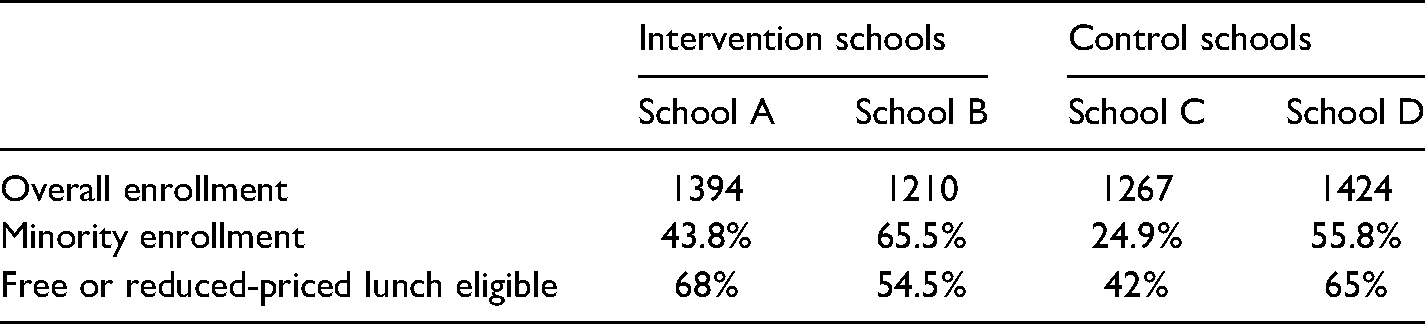
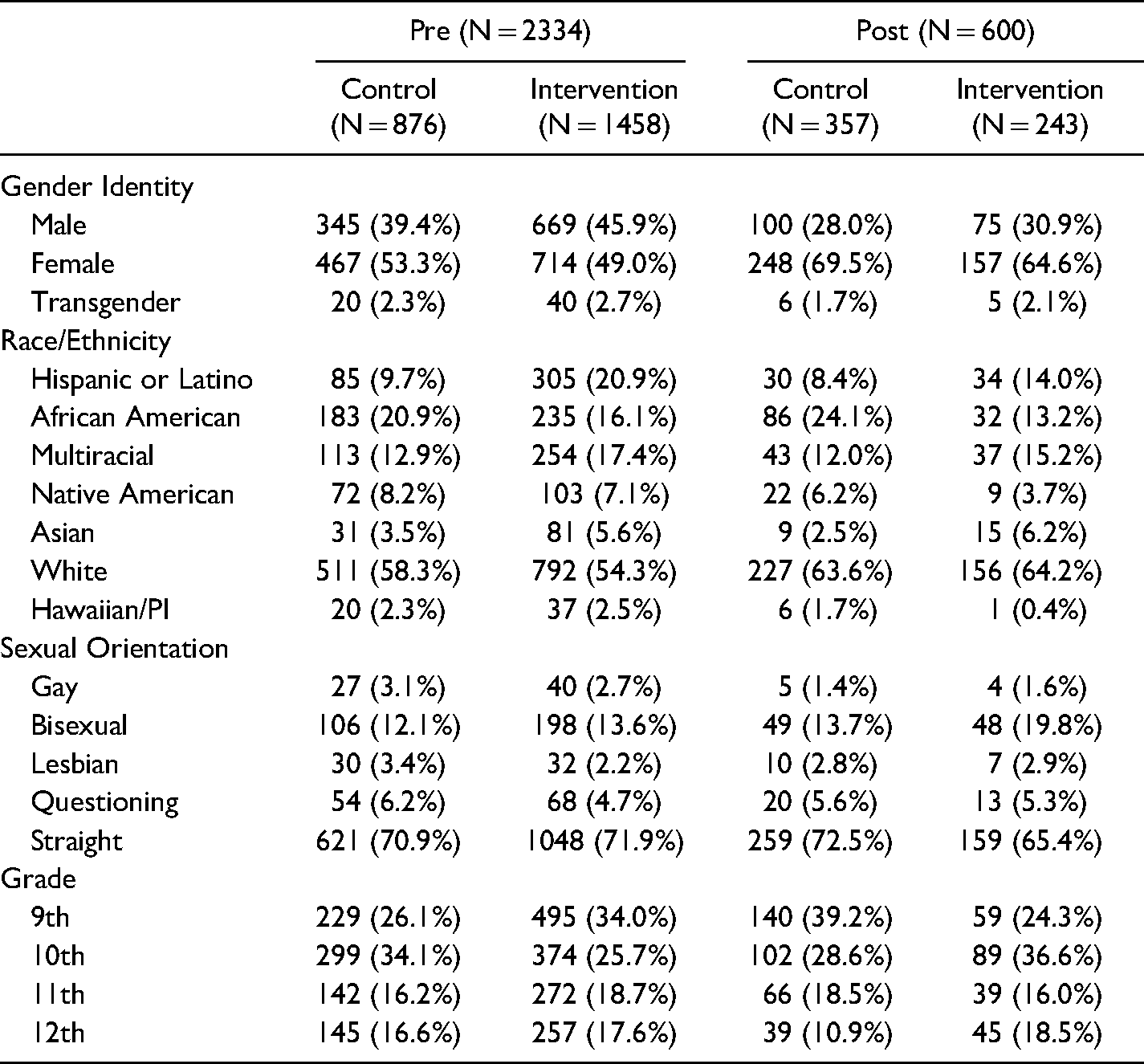
Four high schools (two in Oregon, two in Illinois) participated. Table 1 provides an overview of the participating schools’ demographics. The two interventions schools had an overall enrollment of 1,394 and 1,210 students, while the two control schools had an overall enrollment of 1,267 and 1,424 students. Minority enrollment in the intervention schools was 43.8% and 65.5%, and in the control schools 24.9% and 55.8%. The percentage of students eligible for free or reduced-price lunch was 68% and 54.5% in the intervention schools, and 42% and 65% in the control schools. Following consenting procedures, all students from intervention and control schools were encouraged to complete the student survey. Table 2 provides demographics for student participants at pre and at post by condition. At pre, 2,334 students completed the survey: 1,458 in the intervention schools and 876 in the control schools. At post, 600 students completed the survey: 243 in the intervention schools and 357 in the control schools. Post data collection occurred after schools had closed due to the pandemic, which likely contributed to the low participation at post.
Participating School Demographics.
Student Demographics.
Procedures
In collaboration with the administrator of each school, we obtained passive parental consent and active student assent for students to gain access to the Advocatr app (intervention condition only) and to complete the student surveys (intervention and control condition). We recruited and consented 10 staff at each intervention school to engage students with the Everyday Restorative Practices curriculum. Staff recruitment was driven by the school administrator who decided how to integrate the SOARS intervention with existing courses, policies, initiatives, and practices. In Oregon, participating staff included three classroom teachers, two PBIS coordinators, one dean of students, two campus monitors, one leadership advisor, and one in-school-suspension room supervisor. In Illinois, 10 English teachers participated. Each intervention school had a project-funded SOARS coordinator whose responsibility was to support the participating staff in their implementation of the curriculum and respond to student reports made via Advocatr.
To provide participating staff with ongoing support through the SOARS coordinator, project staff conducted a one-hour training with the site-based SOARS coordinators at the beginning of the school year. This training provided an introduction to the SOARS components, a review of how to monitor and respond to student reports made via Advocatr within the school's overall discipline policy, and a schedule for on-going check-ins with participating staff as well as project staff during the school year. Both intervention schools were supportive of a restorative approach to discipline and both SOARS coordinators were experienced in implementing restorative practices with students to respond to and defuse conflict (e.g., active listening, classroom circles, student conferences). The SOARS coordinators then interacted regularly with the participating school staff to monitor the curriculum implementation and with project personnel to address any questions or concerns related to implementation.
Classroom teachers presented the weekly lesson plans to students in their classes each semester. Non-classroom staff engaged students in conversation and discussions about the lesson content outside of instructional contexts (e.g., in leadership meetings, during in-school suspensions, after disciplinary incidents, during transition times) in each semester.
Prior to staff teaching the curriculum and students’ having access to Advocatr, we collected pre data. All students in both intervention and control schools whose parents did not opt them out of the study and who provided assent completed the Peer Experiences Questionnaire and the Safe School Survey (see below). After pre data were collected, all students in the intervention schools whose parents did not opt them out of the study were onboarded into Advocatr and received login information from the school-based SOARS coordinator. The participating staff in the intervention schools began implementing the Everyday Restorative Practices curriculum and encouraged students to participate in the school-wide safety campaign. All participating staff were asked to complete an Implementation Checklist to assess the extent to which they implemented the curriculum. Students in the intervention schools planned and implemented the campaigns under the supervision of school staff. At the end of the school year, we collected post data from students in the intervention and control schools whose parents did not opt them out of the study and who provided assent. At that time, students participated in distance learning due to the pandemic-related school closures. Fewer students participated in distance learning than in in-person instruction, and therefore fewer than anticipated students completed the surveys at post.
Measures
Teachers and school personnel implementing the Everyday Restorative Practices Curriculum were asked to complete an Implementation Checklist. Classroom teachers were asked to document how many of the nine weekly lessons they completed, and non-classroom school personnel were asked to document how many of the curriculum topics they addressed with how many students per month in non-classroom settings.
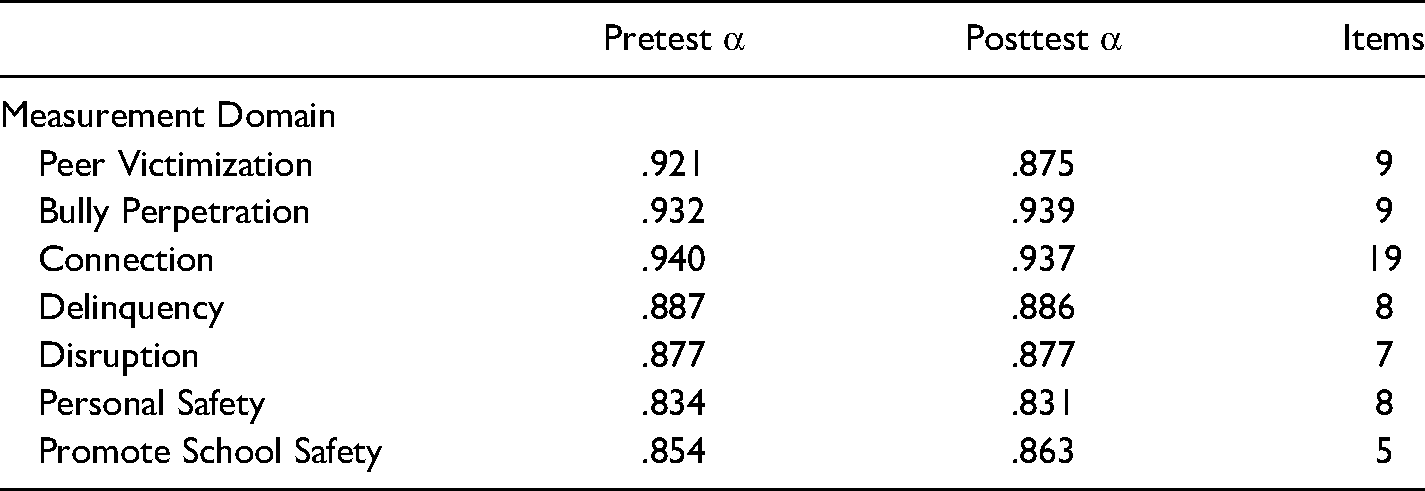
Students were asked to complete the Peer Experiences Questionnaire and the Safe School Survey and were asked to create their own participant code following precise instructions. We used those student-generated codes to link pre and post data. The Peer Experiences Questionnaire (Vernberg, et al., 1999) consists of 18 items that assess students’ experiences as both victims and perpetrators of different types of anti-social behaviors at school (e.g., hitting, rumor spreading, intimidation, threats, social exclusion). Nine items assessed perpetration (e.g., student engaging in these behaviors towards peers) and nine items assess victimization (e.g., student experiencing these behaviors from peers). The Safe School Survey (Skiba, et al., 2006) consists of 42 items that assess student perceptions across four scales: [1] Personal Safety, [2] Incivility/Disruption, [3] Delinquency/Major Safety, and [4] Connection to chool/Positive School Climate. Students were asked to indicate the extent to which they agreed with each statement. Response options ranged from 1 (Strongly Disagree) through 5 (Strongly Agree) on a 5-point Likert-type scale. Table 3 provides an overview of the internal reliability coefficients of the student measurement domains. At pretest, Cronbach's α ranged from .834 to .940, and posttest it ranged from .831 to .939.
Internal Reliability of Measurement Domains at Pre and Post.
Data Analysis
We examined Advocatr use by overall frequency as well as across student race and gender. Survey data were analyzed using an ANCOVA analytic approach. The ANCOVA analysis examined differences in each outcome at post-test while controlling for differences between intervention and control groups at pre-test. While the main analysis used only participants who completed both pre- and post-test (n = 201 students), we conducted a series of sensitivity analyzes using Full Information Maximum Likelihood (FIML) and a structural equation modeling approach using all data available. All models using FIML showed the same significant relationships as the ANCOVA design strengthening the validity of the findings. Partial Eta2 effect sizes were reported for each outcome. Eta2 of .14, .06, and .01 are considered large, medium, and small effect sizes (Cohen, 1988). We also examined variations in student outcomes across grade level, gender, and race/ethnicity.
Results
Implementation Fidelity
Of the ten school staff who implemented the Everyday Restorative Practices curriculum in School A, eight taught all nine lessons or engaged students with all topics covered by the curriculum, one taught eight lessons, and one taught seven lessons in the first semester of the school year. Non-classroom staff engaged 25 to 270 students per month in discussions about the curriculum content. In the second semester, the classroom teachers taught three weekly lessons before schools closed; once remote instruction was in place, classroom teachers made all lesson materials available to students in their virtual classrooms and engaged students in discussions about the lesson content. Non-classroom staff used the curriculum content to keep students engaged with school and maintain relationships across physical distance. Non-classroom staff engaged ten to 100 students per month in discussions about the curriculum content.
In School B, of the ten teachers who implemented the Everyday Restorative Practices curriculum, six taught all nine lessons or engaged students with all topics covered by the curriculum, three taught eight lessons, and one taught seven lessons across both semesters of the school year. Curriculum instructors engaged 120 to 150 students per month in discussion about the curriculum content. Additionally, all English teachers in the school taught an introductory lesson that covered how to use the app reaching approximately 1,000 to 1,100 students enrolled in the school across all grades. Once remote instruction commenced in the second semester, the ten classroom teachers continued teaching the curriculum lessons remotely and engaged students in discussions about the lesson content. Non-classroom staff were not part of the implementation in School B.
The implementation approach differed between the two schools, with School A engaging teaching as well as non-teaching staff and School B engaging teaching staff only. Teaching staff had the challenge to integrate the SOARS curriculum with their existing content area curriculum. Non-teaching staff seemed to utilize the SOARS curriculum to support their interactions with students, for example during follow-up to a discipline incident or during non-curricular activities. In the second semester of the school year, implementation fidelity was challenging due to the school closures and teachers and students having to pivot to remote instruction.
Advocatr Usage
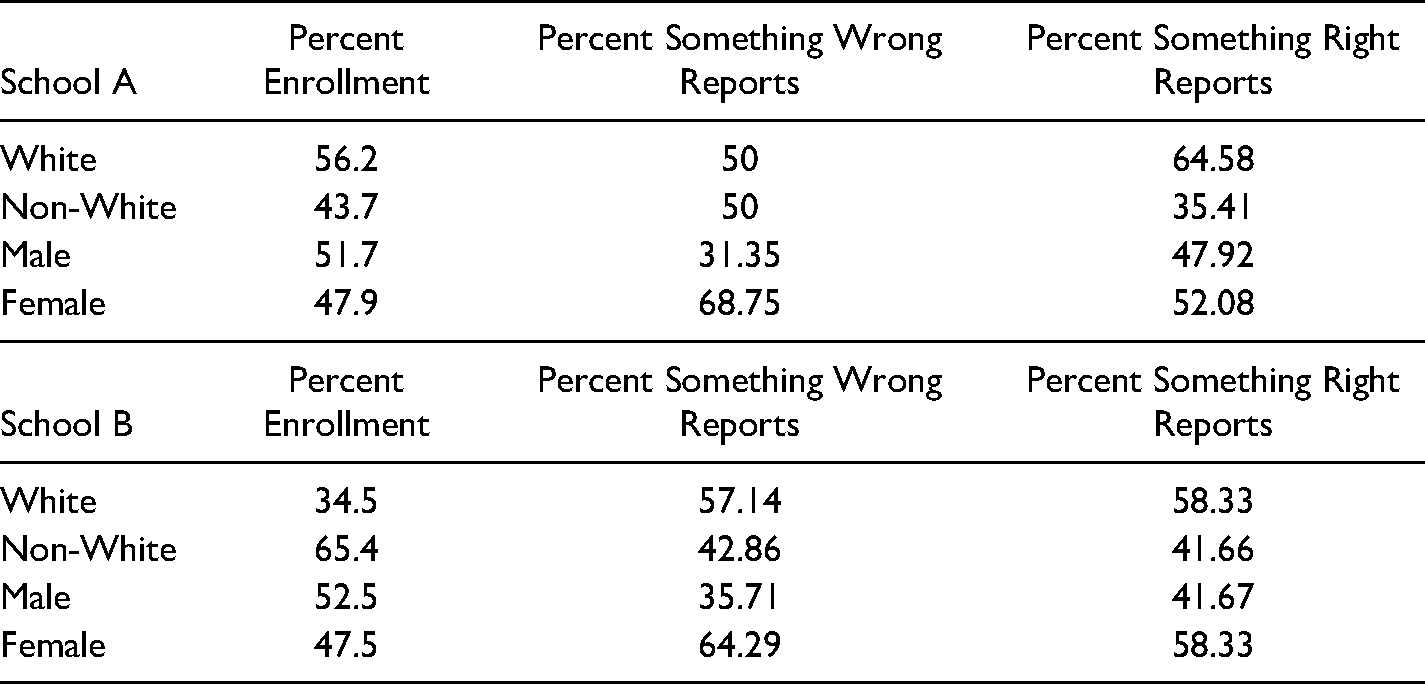
Students’ use of Advocatr was likely also affected by the school closures beginning in March 2020, which removed students from the classroom and school environments and drastically changed the way they interacted with peers. Therefore, we report Advocatr usage data only for the fall semester of the 2019−2020 school year. In school A during the fall 2019 semester, 0.93% of students reported safety concerns (Something Wrong), and 3.09% of students reported positive behavior (Something Right). Overall, 4.03% of students used Advocatr. In school B, 0.91% of students reported safety concerns (Something Wrong) and 0.82% of students reported positive behavior (Something Right). Overall, 1.81% of students used Advocatr. Table 4 provides an overview of both intervention schools’ enrollment and Advocatr reports by race/ethnicity and gender. We disaggregated Advocatr reports into two racial/ethnic groups: those generated by White and those generated by non-White students to protect the confidentiality of participants in racial/ethnic groups consisting of few members. In School A, where White students comprised 56.2% of the overall enrollment, 50% of Something Wrong reports and 64.58% of Something Right reports were generated by White students. Non-White students comprised 43.7% of the overall enrollment with Hispanic students being the largest minority group. A total of 50% of Something Wrong reports and 35.41% of Something Right reports were generated by non-White students. In School B, where White students comprised 34.5% of the overall enrollment, 57.14% of Something Wrong reports and 58.33% of Something Right reports were generated by White students. Non-White students comprised 65.4% of the overall enrollment with Black students being the largest racial/ethnic group. A total of 42.86% of Something Wrong reports and 41.66% of Something Right reports were generated by non-White students. In school A, 51.7% of the enrollment was male, and 31.35% of Something Wrong reports and 47.92% of Something Right reports were generated by male students. A total of 47.9% of the enrollment was female, and 68.75% of Something Wrong reports and 52.08% of Something Right reports were generated by female students. In school B, 52.5% of the enrollment was male, and 35.71% of Something Wrong reports and 41.67% of Something Right reports were generated by male students. A total of 47.5% of the enrollment was female, and 64.29% of Something Wrong reports and 58.33% of Something Right reports were generated by female students.
Advocatr Usage Patterns Across Student Race/Ethnicity for the Intervention Schools.
Student-Perceptions of Peer Victimization, School Climate and Safety, and Ownership of School Safety
Students in the intervention schools reported less bullying perpetration at post (M = 1.18, SD = .48) compared to pre (M = 1.28, SD = .64), while students in the control school reported slightly more bullying perpetration at post (M = 1.26, SD = .53) compared to pre (M = 1.23, SD = .46). This change did not reach statistical significance (p = .144). Students in the intervention schools reported a larger decrease in victimization from pre (M = 1.31, SD = .48) to post (M = 1.23, SD = .45) than students in the control schools (M = 1.45, SD.61 and M = 1.43, SD = .64 respectively. This change also did not reach statistical significance (p = .052). At post, students in the intervention condition reported statistically significantly higher connection with students and staff in their schools (change of + .23, p = .009) and a statistically significantly higher sense of personal safety (change of + .15, p = .003) than those in the control condition (change of -.02). At post, students in the intervention schools reported statistically significantly lower levels of disruption (change of -.13, p = .021) than students in the control condition (change of + .02). Students in the intervention and control condition reported slightly higher levels of delinquency at post (M = 3.24, SD = .77 and M = 3.33, SD = .86, respectively) compared to pre (M = 3.21, SD = .81 and M = 3.28, SD = .87, respectively). Finally, students in the intervention schools reported increased commitment to promoting school safety at post compared to pre (change of + .09), while students in the control school reported decreased commitment (change of -.17). Effect sizes were small, with the largest effect size occurring in personal safety (partial Eta2 = .043). Table 5 provides an overview of student outcomes.
Overview of Student Outcomes.
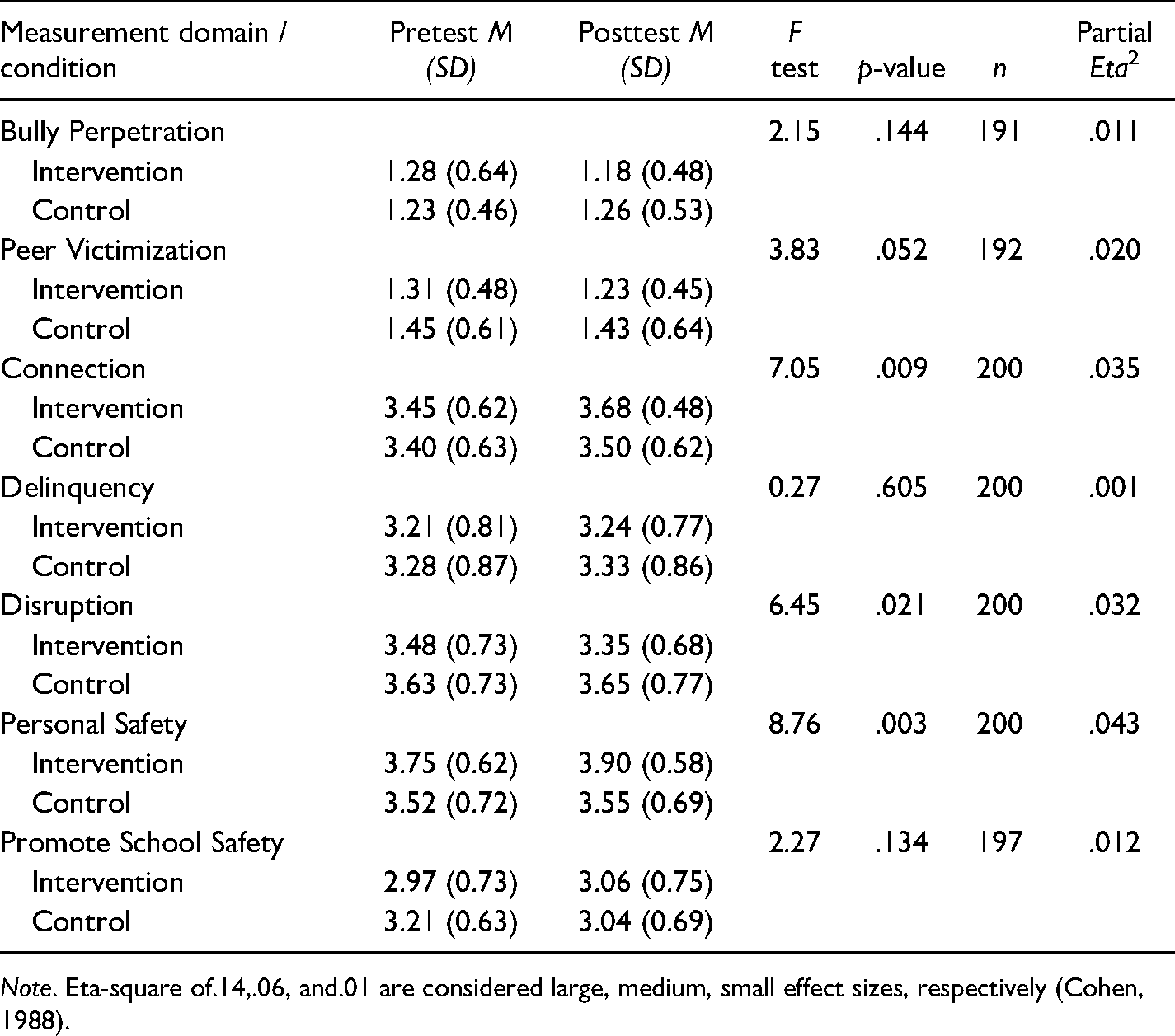
Note. Eta-square of.14,.06, and.01 are considered large, medium, small effect sizes, respectively (Cohen, 1988).
An analysis of student outcomes by grade level, gender, and race/ethnicity revealed no significant associations for any of the interactions between the intervention condition and demographic variables suggesting that the intervention effect on student outcomes did not vary across sociodemographic characteristics. Results of moderation analyses are presented in Table 6.
Moderation Analysis of Student Outcomes.
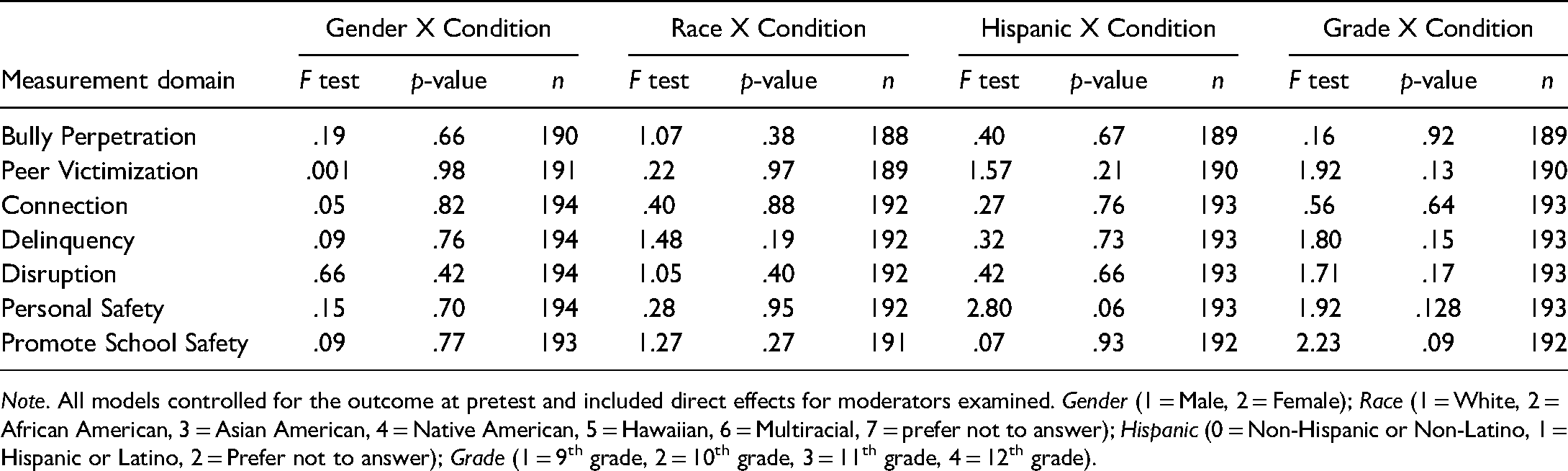
Note. All models controlled for the outcome at pretest and included direct effects for moderators examined. Gender (1 = Male, 2 = Female); Race (1 = White, 2 = African American, 3 = Asian American, 4 = Native American, 5 = Hawaiian, 6 = Multiracial, 7 = prefer not to answer); Hispanic (0 = Non-Hispanic or Non-Latino, 1 = Hispanic or Latino, 2 = Prefer not to answer); Grade (1 = 9th grade, 2 = 10th grade, 3 = 11th grade, 4 = 12th grade).
School-Wide Safety Campaign
Students in the School A mounted a successful school-wide safety campaign focused on the importance of kindness and thus reflecting one of the core concepts of the Everyday Restorative Practices curriculum. The “Growing Kindness” campaign supported use of the Advocatr Something Right reporting function and focused on norming prosocial behaviors through encouraging students to recognize peers for acts of kindness. Students created a kindness tree in the school's common area and encouraged students to write acts of kindness they witnessed on “kindness leaves” which were then posted on the tree. Each week, the leaves were entered into a drawing for small prizes. The campaign began in late February with the goal to reach 400 acts of kindness by the end of the year. When schools closed due to the pandemic one week prior to spring break, students had gathered 340 kindness leaves. Students also created a video describing the campaign, its rationale, and interviewing school staff about the importance of recognizing others’ acts of kindness.
In School B, the “Upstander” student group responded to something right reports made through the Advocatr app and delivered handwritten thank-you notes to students who were named by reporters. At the end of each month, they conducted a drawing for a gift card from the pool of something right reports, which was announced during morning announcements. Only the names of students that the reports were made about were revealed to the group; the names of something right reporters remained confidential.
Discussion
Our goal was to develop a comprehensive school safety framework responsive to the literature's recommendations for promoting school safety, namely (a) reducing peer victimization, (b) encouraging students to share safety threats they are aware of with adults, and (c) encouraging adult responses that promote trust and a non-retaliatory, restorative environment. Implementation of these recommendations reported in the literature identified students’ reluctance to avail themselves of tiplines and share information with adults and students’ distrust in adults’ responsiveness and fear of peer retaliation as major challenges. Our small-scale pilot test of the SOARS framework in authentic high school settings showed promising results for potentially addressing those challenges.
First, students made use of the Advocatr app to report safety concerns as well as positive behaviors. While overall usage rates were low, they seemed to be somewhat higher than usage rates of newly established statewide tiplines. In School A, .93% of students used the Advocatr to report Something Wrong in the fall of 2019. Based on publicly available reports, usage rates for statewide tiplines range from less than 0.2% of students for newly established tiplines to more than 2% of students for firmly established tiplines (Okay2Say, 2019; SafeOregon, 2019; Safe2Tell, 2019–2020). The overall usage rate of Advocatr might have been impacted by the fact that it allowed students to report positive as well as negative events. Students might be more interested in focusing on prosocial and positive events in their lives than threats to their safety. Merging those two functions in one tool might promote overall usage of the tool.
In School A, the percent of non-White students who used the Advocatr to report concerns was larger than the percent enrollment of those subgroups, while in school B, the percent of non-White students who used the Advocatr to report concerns was smaller than the percent enrollment of this subgroup. These differences are difficult to interpret. In School A, the largest minority group was Hispanic students, and in School B, Black students represented the largest racial/ethnic group. Dynamics between minority and majority groups, as well as levels of trust between racial groups and school personnel might impact students’ reporting patterns. In both schools, the percent of female students who used Advocatr to report concerns was larger than the percent of female enrollment, while the percent of male students who used Advocatr to report concerns was smaller than the percent of male enrollment. This might suggest that female students are more aware of concerns and more willing to share their concerns with school adults than male students. Similar patterns existed for Something Right reports. In both schools, the percent of Something Right reports generated by White students was larger than the percent of White students enrolled, while the percent of Something Right reports generated by non-White students was smaller than the percent of non-White students enrolled. This could suggest that non-White students are less aware of positive behaviors in their school environment or less willing to share positive behaviors they observed with school adults. In both schools, the percent of Something Right reports generated by female students was larger than the percent of female enrollment, while the percent of Something Right Report generated by male students was smaller than the percent of male enrollment. This might suggest that female students are more aware of prosocial behaviors and more willing to share their observations with school adults than male students. Overall reporting patterns might indicate that a reporting tool that keeps information local might be perceived as somewhat safer to use by students who are in the minority and perhaps vulnerable to peer victimization compared to a statewide tipline that forwards information to the state police.
Overall, however, Advocatr seemed underused. Although we embedded Advocatr in a curriculum that focused on student advocacy for self and others and restorative conflict resolution, and encouraged students to design their own school safety-campaigns, it seemed that Advocatr use was still hampered by a strong anti-snitching culture prevalent in the participating high schools (Authors, 2022a). During the development of the SOARS framework components, the authors conducted student focus groups to understand how high school students define snitching, what they perceive as the challenges to sharing information and the consequences of snitching, and when snitching is deemed acceptable and effective. Students defined snitching as reporting concerns to adults that students should have the efficacy to handle themselves. Students also described snitching as embedded within school and community cultures along with the perceived consequences of snitching. For example, snitches could be labelled by terms such as lame, untrustworthy, and outcast, and are at-risk for “endless” victimization both in-person and online. However, students in these focus groups agreed that the difference between snitching and reporting depends on the severity of the issue, confidentiality, and trusting relationships with adults.
Despite a strong anti-snitching culture potentially limiting student use of Advocatr, access to the Advocatr and exposure to the Everyday Restorative Practices curriculum was associated with desirable changes on the student survey measures. Almost all measurement domains showed changes in the desired direction for the intervention group. While not all changes reached statistical significance, they all indicated that students in the intervention group perceived themselves as less victimized, victimizing others less, more connected to school, personally safer at school, and less affected by incivility and disruption in the classroom. In short, they seemed to perceive their school environment as more supportive and themselves as having more positive relationships at the end of the study compared to students in the control group. Student perceptions of their school climate are one indicator of student alienation that might foster feelings of anger and revenge against others, which might escalate into violent behavior (Leon-Moreno et al., 2019). Reducing this alienation might be a first step towards reducing the likelihood of violent behavior against members of a school community.
Students in the intervention group also perceived a greater responsibility for promoting their school's safety compared to students in the control group. This suggests that providing adolescent students with a tool to make their voice heard and introducing them to the core concepts of advocacy and self-advocacy, physical and emotional safety, conflict resolution and accountability promotes their willingness to take ownership of their school's safety. Student buy-in and ownership of school safety is important to encourage adolescent students, who tend to desire autonomy from adults and independent decision-making, to share critical information with those adults they know and are willing to trust (Yeager et al., 2015; Vincent et al., 2022).
In both of our intervention schools, students successfully raised school-wide awareness of the SOARS framework through campaigns that focused on kindness and norming prosocial behavior. Students clearly felt that focusing on positive behaviors is more important that focusing on fear and anxiety.
While the observed changes in student perceptions of peer victimization were encouraging, they might be strengthened by greater engagement of students in curricular activities focused on building trust between adults and students and among peers, encouraging advocacy for self and others, and providing strategies for restorative conflict resolution. Implementation fidelity of the Everyday Restorative Practices student curriculum proved challenging. Given high schools’ focus on instruction in academic content and preparing students to meet graduation goals, finding the time to implement a curriculum focused on social-emotional skills can be problematic. Content area teachers tend to have little time to dedicate to instructional activities not directly related to their content area. Greater integration of social-emotional learning with content area curricula might be important to create relationships that build students’ resilience against peer victimization, to give students the skills to resolve conflict non-violently, and to promote trust in adults’ ability to help them negotiate threats of violence. Integrating social-emotional learning into non-curricular activities, such as social justice clubs or journalism clubs, might be easier. However, a focus on non-curricular activities might leave out many students who do not participate in those activities.
Limitations
Several limitations must be noted for this study. First, the school closures related to the COVID pandemic impacted several aspects of our study. Implementation fidelity decreased after schools closed because teachers had less on-line time with students and needed to focus on covering academic content during those remote classroom sessions. In addition, the sample size was limited between pre and post data collections due to school closures and other COVID related interruptions. The smaller sample size at post-test and the irregular circumstances associated with the pandemic could limit the generalizability of this study. However, to determine whether missing data influenced student outcomes we performed a series of sensitivity analysis using FIML and obtained similar results to the models with students who completed both time points. Also, because all schools were similarly affected by COVID school closures across intervention and control conditions and at both sites we suspect that this factor produced data missing at random and had a limited impact on the findings detected by this study.
Additionally, there were differences in the compositions of the school demographics between the intervention and control conditions which we were unable to control for due to the small sample of schools included in the study. However, each model did include a control variable for pre-test levels of the student outcome which potentially mitigates the differences in demographic characteristics between the intervention and control conditions. Additionally, we conducted a series of moderation analysis between gender, race/ethnicity, and grade and did not detect any significant interactions between the intervention condition and demographic characteristics (Table 6). These findings strengthen the main results of this study and suggest that demographic differences between the intervention and control conditions did not have an impact on student outcomes.
Finally, the small number of schools in our sample and lack of random assignment to condition precludes us from establishing causal relationships between the intervention and student outcomes. Our study is therefore largely descriptive.
Policy and Practice Implications
Reviewing approaches to school safety in the post-Columbine era, King and Bracy (2019) differentiate between visible and invisible as well as proactive and reactive security measures. They caution that many visible proactive security measures, such as increased police presence, surveillance, or active shooter drills, lack supportive evidence and have the potential to alienate students, criminalize non-violent behaviors, and stoke fear and anxiety. The SOARS framework offers an alternative that is focused on changing behavioral patterns and environmental factors that contribute to violent actions.
The SOARS framework components appear to align well with existing school safety recommendations, including ensuring easy access to reporting tools, reducing peer victimization that can escalate into violent behavior, promoting trusting relationships between students and school staff, and following up on students’ concerns, and creating a positive school culture (Federal Commission on School Safety, 2018; National Threat Assessment Center, 2019; Planty et al., 2018). The primary goal of the SOARS framework is to provide high school administrators with actionable data to prevent violence predictors from escalating to violent behaviors. Students’ intimate knowledge of peer victimization makes them an important source of information that often remains inaccessible to adults. Adolescent students’ distrust of authorities, including police, might make it less likely that students avail themselves of statewide tiplines commonly monitored by the state police, and perhaps more likely that they share information with local school personnel they know and trust. Creating trusting school climates that acknowledge student voice and encourage student participation in conflict resolution seems to be a critical component of encouraging students to share critical information that will allow school administrators to prevent violent behavior.
Students’ use of reporting apps such as Advocatr needs to be carefully balanced with school's cell phone policies. A ban of using cell phones in the classroom might results in delayed access to the reporting app. A hurtful event that students experience or witness might be quickly overshadowed by other events and remain unreported, even though it affected students’ sense of safety. How to balance instant access to a reporting tool with the disruptive nature of cell phone use needs to be further explored.
It seems to be important to embed reporting tools with efforts to create non-punitive and restorative classroom and school climates that are responsive to students’ concerns. Promoting students’ and school personnel's understanding of how behavior impacts self and others as well as accountability for one's behavior might promote trust among students as well as between students and school personnel. Providing professional training in restorative practices in conjunction with giving students access to a reporting tool might be useful.
Finally, it was encouraging to see that students availed themselves of the option to report prosocial behaviors. The high usage rates for “something right” reports might help build a positive school climate. This outcome should be of considerable value to school administrators in achieving the important goal of school safety. There are numerous obvious benefits to a positive school climate including a greater willingness by students to share critical safety information with school personnel.
Footnotes
Declaration of Conflicting Interests
The author(s) declared no potential conflicts of interest with respect to the research, authorship, and/or publication of this article.
Funding
The author(s) disclosed receipt of the following financial support for the research, authorship, and/or publication of this article: This work was supported by the National Institute of Justice, (grant number 2015-MU-MU-K003). The opinions, findings, and conclusions or recommendations expressed in this publication are those of the authors and do not necessarily reflect those of the Department of Justice.
