






Abstract
Women from culturally diverse backgrounds are underrepresented in sport leadership, often experiencing increased oppression and discrimination based on intersectionality. The aim of our paper was to scope the literature for facilitators and barriers that exist for women from culturally diverse backgrounds in sport leadership. Four databases with no limits on publication date were searched. A total of 1,838 articles were retrieved and screening revealed 12 eligible peer-reviewed journal articles. The review identified a dominant focus from the USA on experiences of Black or African American women, in basketball coaching or athletic director roles in college athletic departments. Key facilitators and barriers were entwined within four themes including personal characteristics, interpersonal support, organisational support and discrimination. Topics evolved from these themes to create a future research agenda.
Keywords
The Experience of Women from Culturally Diverse Backgrounds in Sport Leadership: A Scoping Review of Facilitators and Barriers
Diverse leadership teams have significant benefits for organisations, employees, and communities. Organisations with diverse leadership teams report higher employee satisfaction, reduced staff turnover and enhanced performance and innovation (Gonzalez & DeNisi, 2009; Groeneveld, 2011; Richard et al., 2004). Diverse genders and cultures can positively influence organisational inclusion, improve stakeholder relationships, and build organisational reputation and consumer interest (Catalyst, 2020). Recently in the sport sector, there has been a focus to increase the number of women and people from culturally diverse backgrounds as players and leaders.
Despite progress towards equity, parity in sport is yet to exist, particularly in leadership (Burton, 2015; Lapchick, 2020). In Australia, women account for only one quarter of CEOs across national sporting organisations, and only 15% of accredited high performance sport coaches (Palmer, 2019). In New Zealand, women hold around one third of paid leadership roles in sport (Angus & Associates, 2017), and generally across the globe less than 30% of Board Directors in Olympic sport organisations are women (Tranter et al., 2016). Culturally diverse groups are also underrepresented in sport leadership. In England, only 5% of newly qualified coaches were from culturally diverse backgrounds (Sport England, 2019), and in the United States of America less than 7% of athletic directors in college sport were Black or African American (Lapchick, 2020).
Gender and cultural diversity are largely measured and researched independently, in consequence figures related to women from culturally diverse backgrounds specifically in sport leadership are sparse (Borland & Bruening, 2010; Evans & Pfister, 2020; Kerr & Cervin, 2016; NCAA, 2018). Data from other sectors indicate that progress towards equity is most evident for white Anglo women and culturally diverse men (O’Leary et al., 2017). It is unknown if this is reflected across leadership in the sport sector based on the lack of data. Sport leadership at senior level is male dominated, and therefore it is likely the case. As an example, in NCAA Division I women's basketball, 51% of players are black women, and only 1% of Athletic Director positions are held by black women (cf to 13% black men and 7% white women; Staurowsky et al., 2020).
Historically, sport and leadership literature predominantly focused on the impact of one diversity dimension (e.g., gender or cultural background) and failed to consider the cumulative impact of additional oppressed identities (e.g., being a woman, and from a culturally diverse background). Intersectionality theory acknowledges the increased oppressions and discriminations people with multiple, intersecting identities experience (Melton & Bryant, 2017). In western countries, women from culturally diverse backgrounds experience compounding effects of multiple differentiated identities, whereby barriers to career success related to their gender (e.g., men typically earn more, and hold higher positions), and their culture (e.g., white people typically earn more, and hold higher positions) are experienced (Rankin-Wright et al., 2019; Sawrikar & Muir, 2010). These compounding effects hinder career progression and reduce the number of women from culturally diverse backgrounds in leadership positions in many employment sectors (Rosette et al., 2018). The few studies that have explored intersectionality in sport leadership offer a limited understanding of culturally diverse women's engagement and experience within sports leadership, including as a coach and CEO (e.g., Borland & Bruening, 2010).
Research to date has focused on the multi-dimensional factors contributing to the limited number of women more generally in sport leadership. A popular framework adopted and adapted has been Bronfenbrenner's (1977, 1979) ecological model which views development in light of complex interactions between multiple immediate and broad facets of an individual's environment. The Ecological-Intersectionality Model (EIM; LaVoi & Dutove, 2012), expanded the ecological model to enable the exploration of associated facilitators and barriers within the individual, interpersonal, organisational, and socio-cultural levels (Burton, 2015; Evans & Pfister, 2020; LaVoi & Dutove, 2012; Staurowsky et al., 2020). LaVoi and Dutove (2012) were the first to apply the EIM to women in sport leadership – specifically coaching. Example barriers aligned to the levels within the EIM experienced by women in sport leadership that have been identified (e.g., Kenttä et al., 2020) include: low confidence (individual); lack of support from colleagues (interpersonal); lack of opportunity for formal training and development (organisational); and dominant societal ideologies associating authority with men (socio-cultural). Understanding the barriers and facilitating factors interacting at each level is a preliminary and necessary step to progress women in sports leadership (Staurowsky et al., 2020).
Despite the active use of the EIM to gain understanding on facilitators and barriers for women generally in sport leadership, this focus is yet to be applied with an intersectional perspective related to women from culturally diverse backgrounds as leaders in sport. The aim of our paper was to provide a scoping review on the facilitators and barriers that exist for women from culturally diverse backgrounds as leaders in sport. In doing so, literature was synthesised and analysed to provide direction for future research mapped to the EIM.
Method
A review devoted to women from culturally diverse backgrounds as leaders in sport had not previously been conducted – as a result, a scoping review was favoured over other review types (Munn et al., 2018). Scoping reviews enable the identification of gaps in a research area and bring together various methods and sources of evidence that can inform future research, policy, and practice (Daudt et al., 2013). In our review, protocol (a priori) was completed following the Arksey and O’Malley (2005) five stages in conjunction with the Preferred Reporting Items for Systematic Reviews and Meta-analysis extension for Scoping Reviews Checklist (PRISMA-ScR; Munn et al., 2018; Tricco et al., 2018) and Joanna Briggs Institute (JBI, 2020). Therefore, the following steps guided the review: (i) identifying the research question, (ii) identifying relevant studies, (iii) selection of eligible studies, (iv) charting the data, and (v) collating and summarizing the results.
Identifying Research Question
The nature of scoping reviews allow for the exploration of more general research questions in the relevant literature than other review types (Arksey & O’Malley, 2005). To address the aim of our paper, this review was guided by the following questions:
What peer-reviewed literature has been published on facilitators and barriers for women from culturally diverse backgrounds as leaders in sport? What is known from existing literature on facilitators and barriers for women from culturally diverse backgrounds as leaders in sport? What gaps exist in research on the experiences of women from culturally diverse backgrounds as leaders in sport that can inform a future research agenda?
Identifying Relevant Studies
Search strategy
A spider formula was used to identify factors for the search protocol; S-Sample, P-Phenomenon of Interest, D-Design, E-Evaluation, R-Research Type (Cooke et al., 2012). First, four key terms, and associated words/phrases were identified for the search (Table 1). Next, key terms were used to conduct an online search in three scientific literature databases (Sport Discus, Psych Info, and Scopus). In each database all possible synonymous words/phrases were searched for by using “or” (e.g., women OR woman OR female), whilst each key term was combined with “and” (e.g., manage* AND cultur* AND women AND sport). All terms with applicable variations were searched using a * wildcard symbol to broaden the search (e.g., leader* captures leader, leaders, leadership). Reference lists of all eligible articles were also scanned. No date limits were put on the searches. The searches were conducted in June 2020 and updated in February 2022.
Key Search Terms for Database Search.

Note. CALD = Culturally and Linguistically Diverse, BAME = Black Asian Minority Ethnicity, BME = Black Minority Ethnicity, NESB = Non-English-Speaking Backgrounds.
Key Term 4 only for Psych Info, Scopus databases and Grey Literature.
Inclusion/exclusion criteria
The review included studies that primarily focused on facilitators and barriers for women from culturally diverse backgrounds as leaders in sport. Studies including participants who were not women from culturally diverse backgrounds (e.g., Anglo-persons, males, culturally diverse males) were only considered if used for comparative purposes or provided an informed opinion regarding equity (e.g., employed in an Equality Consultation role). Studies that only focussed on sport participatory roles (e.g., players, captains) were excluded. Peer reviewed qualitative and/or quantitative articles were considered for primary analysis if written in English. Finally, the review only considered papers from developed Western Countries including the United States of America, United Kingdom, and Australia. Western countries were considered more likely to have a significant proportion of the population who identify as having a culturally diverse background, attributable to high rates of migration to developed countries (Wahba, 2015).
Selection of Eligible Studies
Data screening
A two-stage data screening process was employed to reduce bias and improve consistency, transparency, and reliability (Edwards et al., 2002). A total of 1,838 articles were retrieved from the initial database searches, of which 327 were duplicates. In stage one, two researchers screened both titles and abstracts (n = 1,511) to preliminarily identify eligible studies. In stage two, these researchers then screened the full-texts of apparent eligible studies (n = 78) to confirm inclusion criteria was met. Eleven articles were unable to be acquired for full text review. Discrepancies between researchers were reviewed and deliberated at both stages until consensus was reached. A third reviewer was required to deliberate and clarify 13 study selections. A total of nine studies met inclusion criteria and were reviewed for full data extraction. Two articles from the reference list of included studies were identified that met the inclusion criteria. One additional article was identified during the updated search in February 2022. Therefore, the review included 12 unique peer-reviewed academic studies (Figure 1).
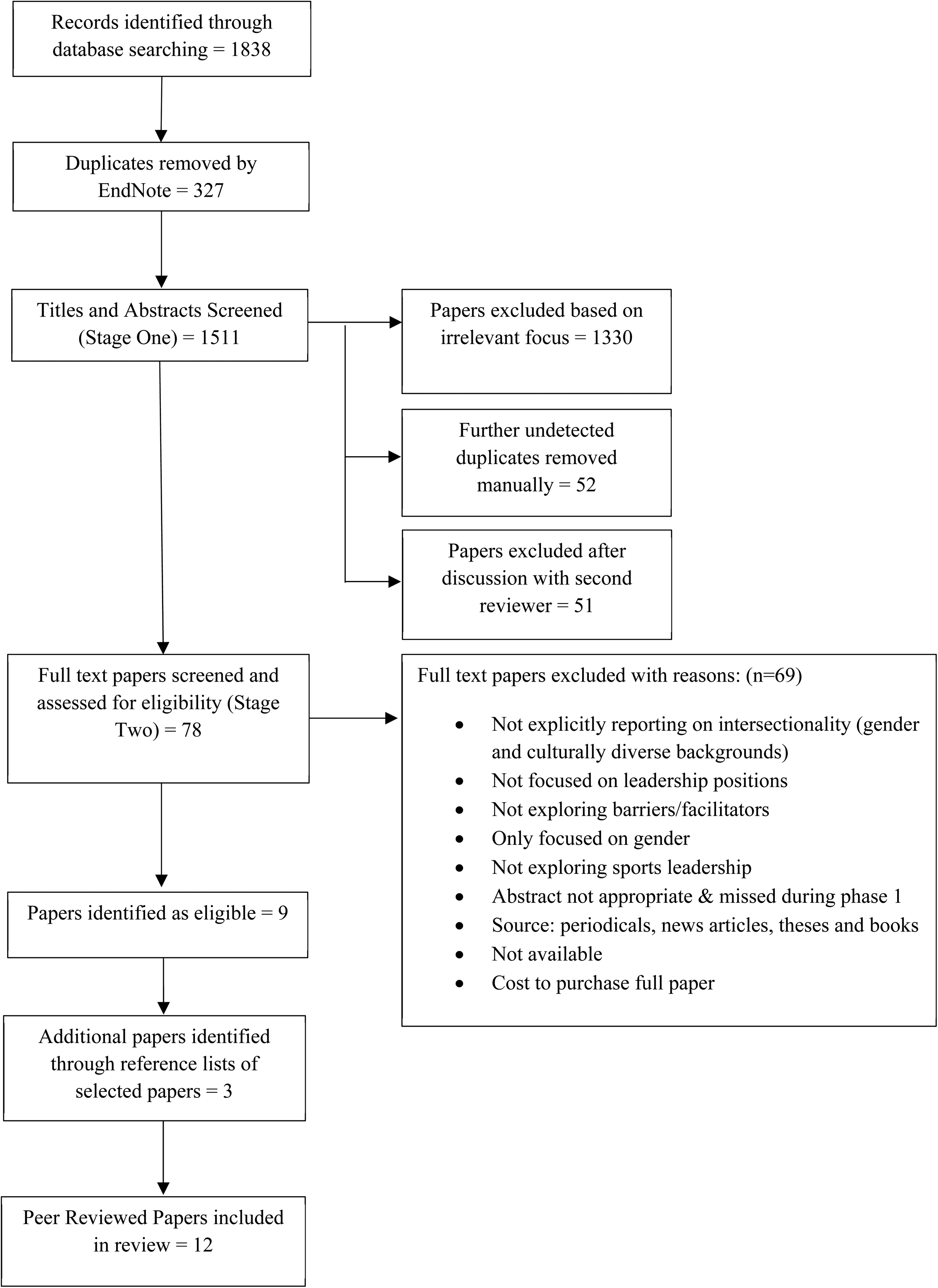
Search and screening process flow chart.
Results
Charting the Data
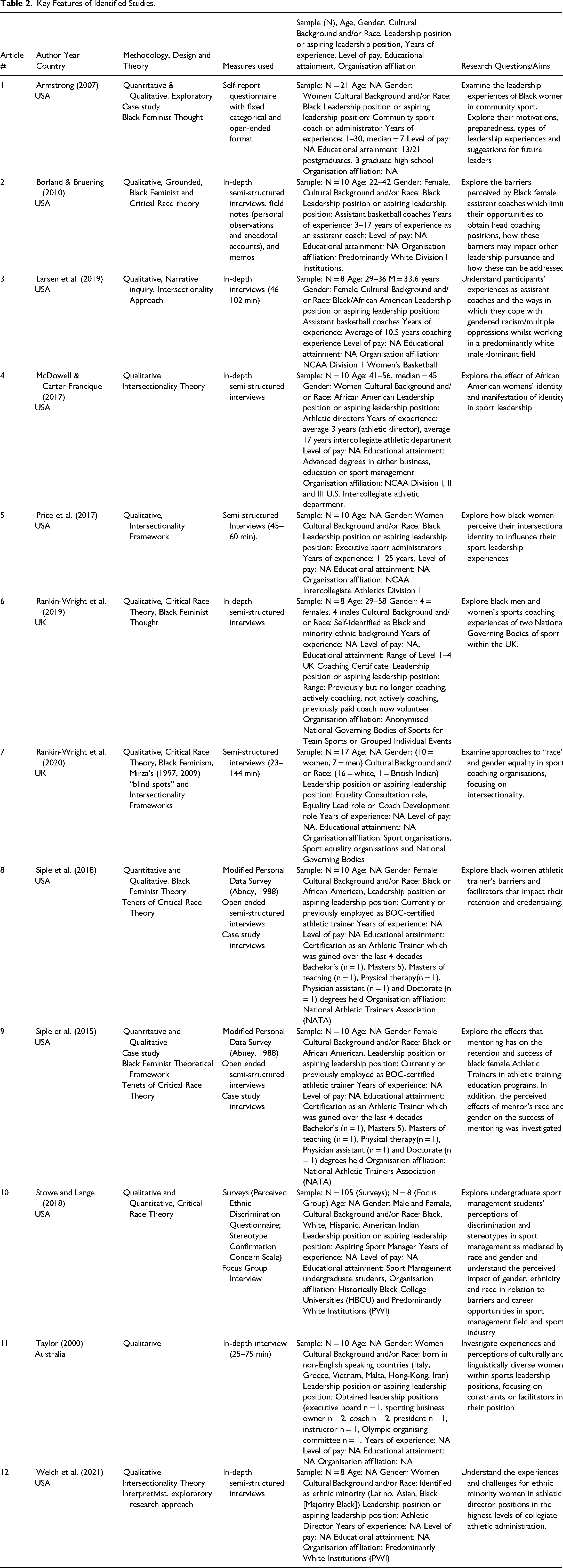
Data was charted by extracting key features (Ritchie & Spencer, 1994). This included the author, year, country, methodology, design and theory, measures, sample characteristics (e.g., number of participants, cultural background and/or race, leadership or aspiring leadership position, years of experience, level of pay, educational attainment and organisational affiliation) and research aims/questions (Table 2).
Key Features of Identified Studies.
Data Characterisation
The literature was published in the United States of America (USA) (n = 9), United Kingdom (UK) (n = 2) and Australia (n = 1). Eleven of the 12 studies were qualitative (including four mixed methods), and typically adopted semi-structured interviews grounded in Critical Race, Black Feminist, and Intersectionality theories. The age range of study participants was 22–56 years, whilst experience in sport leadership ranged from 1–30 years. Every USA study (n = 9) predominantly explored the experiences of Black or African American women in coaching positions for college basketball or as college athletic directors. The other three studies from the UK and Australia explored the experiences of women from a range of diverse backgrounds (e.g., Asian British Pakistani, Black British, Black Caribbean, Italian, Greek, Maltese, Vietnamese, Hong Kongese, Iranian) in varied leadership positions (e.g., executive, sporting business owner, coach, president, committee member). In every paper, intersectionality was recognized as having some negative impact on career progression in sport leadership.
Collating and Summarizing the Results
Following Arksey and O’Malley's (2005) recommendations, each study was summarised and findings grouped thematically, highlighting the prevalence of each theme and sub-theme (Table 3). In total facilitators, (F) and barriers (B) were identified 62 and 82 times respectively across studies that emerged into four key themes and 14 sub-themes. The majority of times the facilitators and barriers within sub-themes entwined, as a result overlap existed and themes were often viewed as a facilitator and barrier simultaneously. The key themes were: (1) Personal characteristics, (2) Interpersonal support, (3) Organisational support, and (4) Discrimination. Personal characteristics referred to factors within the person that assisted or hindered career opportunities and experiences of sport leadership. This was the most prevalent facilitation theme. These characteristics were presented solely as facilitators in three studies, barriers in one study, and facilitators and barriers in six studies. Interpersonal supports included relationships with people and groups within the field that played a role in sport leadership experiences. The supports were discussed solely as a barrier in three studies, a facilitator in two studies and as facilitators and barriers in a further six. Organisational support referred to factors within the organisation that facilitate or impede upon women from culturally diverse backgrounds in sport leadership (e.g., formal trainings, policies and procedures and workplace culture). The supports were discussed solely as a facilitator in one study, a barrier in three studies, and facilitator and barrier in eight studies. Discrimination referred to any damaging overt or covert behaviours, practices, perceptions or beliefs and stereotyping towards women from culturally diverse backgrounds based on intersectional identity that impacted their authentic career progression in sport. This was the most prevalent barrier theme and tended to permeate throughout the other three themes. Sub-themes under discrimination were presented solely as a barrier in five of 12 studies, and facilitator and barrier in six studies.
Thematic and Variable Analysis (Facilitators and Barriers).

Note. B = Barrier; F = Facilitator; TB = Total Barriers; TF = Total Facilitators; 1. Armstrong (2007); 2. Borland & Buening (2010); 3. Larsen et al. (2019); 4. McDowell & Carter-Francique (2017); 5. Price et al. (2017); 6. Rankin-Wright et al. (2019); 7. Rankin-Wright et al. (2020); 8. Siple et al. (2018); 9. Siple et al. (2015); 10. Stowe and Lange (2018); 11. Taylor (2000); 12. Welch et al. (2021).
Personal characteristics
Personal characteristics associated with personality, coping strategies, previous experiences and psychological wellbeing appeared in 10 of the 12 studies, and were impacted by interpersonal and organisational supports and discrimination. Certain personality traits or characteristics facilitated leadership by attracting women from culturally diverse backgrounds to become and continue as leaders in sport (n = 9). These included confidence (McDowell & Carter-Francique, 2017), determination (Armstrong, 2007; Siple et al., 2018), self-motivation (Siple et al., 2018), focus (Armstrong, 2007), hard work ethic (Rankin-Wright et al., 2019) and a caring nature (Armstrong, 2007). Confidence and career potential were impacted by discriminatory experiences; however, maturity offered a stance of accepting reality (e.g., “you can’t please everybody”; McDowell & Carter-Francique, 2017, pg. 400).
Coping strategies identified in seven studies primarily facilitated women to become and remain as leaders in sport and were largely focused on managing gendered racism. Strategies included the use of humour, downplaying the severity of discrimination, lowering expectations, dressing and acting professionally, relying on social supports and prayer (Larsen et al., 2019; McDowell & Carter-Francique, 2017; Welch et al., 2021). Professional development (e.g., seminars and workshops) supported women from culturally diverse backgrounds to independently explore strategies to improve their competence and prevent pigeonholing for certain roles (Larsen et al., 2019; Rankin-Wright et al., 2019). One woman stated she would “go out of [her] way to make [herself] qualified” to prove she attained the job on merit and not because of her black female identity (Larsen et al., 2019, pg. 646). Some women overcompensated to ‘prove’ capability by being highly knowledgeable in many sport topics (Rankin-Wright et al., 2019). One study discussed the potential negative psychological effects of relying on self-protective coping mechanisms (Larsen et al., 2019).
Women also used previous experience to their advantage (n = 5). Specifically, prior experience interacting with predominantly white cultures armoured women with coping skills to manage in similar settings, including sport (Siple et al., 2018). Prior athletic careers also facilitated career progression, self-worth, confidence and social skills (Larsen et al., 2019). In many instances, the women described experiences in sport as children, both positive and negative, as a driving force behind the pursuance of a career in sport (Armstrong, 2007; Taylor, 2000). A lack of previous experience in playing particular sports was identified as a barrier in one study (Welch et al., 2021). Specifically, the hypocrisy regarding the acceptability for men with no prior playing experience to coach women's sport, but unacceptability for women with no prior playing experience to coach men's sport was highlighted.
Psychological wellbeing was identified as a barrier in more than half of the studies (n = 6). Culturally diverse women often experienced feelings of loneliness, frustration, devaluation, deflation, or discouragement and these were particularly evident in an organisational culture that was not inclusive and had high levels of discriminatory experiences and stereotyping (Larsen et al., 2019). Ultimately, poor levels of psychological well-being may contribute to higher turnover rates. Positive psychological outcomes were reported (n = 3) when a sense of moral and social obligation was tied to the leadership roles affording the women a greater purpose. For example when women could support the community such as mentoring others (Taylor, 2000; Welch et al., 2021). Enjoyment within the leadership position also offered motivation to women to remain in leadership roles despite the obstacles faced (Armstrong, 2007).
Interpersonal supports
Interpersonal supports (or lack of) including mentors, networks and communities were reported in 11 of the 12 studies. The sub-theme mentor was referred to as any individual the mentee drew upon to set and achieve goals, seek advice, and/or sought support from when faced with barriers. When mentorship was available, it facilitated career progression (n = 7) and some women believed if mentorship had not been available, they would have ceased pursuing a leadership career in sport (Siple et al., 2015) or would not have reached a leadership position (Welch et al., 2021). Effective mentoring was related to accessibility (Borland & Bruening, 2010), and specific mentor characteristics (e.g., supportive, attentive, encouraging) (Siple et al., 2015). Mentors of similar race and gender were sometimes preferred based on the shared understanding of specific challenges; however, this was not considered a requirement for effective mentoring (Siple et al., 2015). Mentorship was discussed as a barrier in six of the 12 studies, generally because it was either not available (Borland & Bruening, 2010) or the recipient perceived there to be an inappropriate match between themselves and the mentor (McDowell & Carter-Francique, 2017).
Networks and communities encompass connections to multiple people and groups within the sport sector that were used as support resources. Networks provided links to relationships which individuals drew upon to seek support and specific information (i.e., professional, social/personal). Communities comprise different groups, associations or foundations of like-minded persons who connect through their interests, identity or other affiliations. As a facilitator (n = 6), networks and the communities offered women from culturally diverse backgrounds support, particularly in regards to experiencing racial discrimination in the workplace (Larsen et al., 2019). Women from culturally diverse backgrounds expressed the need to be involved with a sporting community that provided shared cultures and identities (Taylor, 2000). However this was a challenge with such low representation of culturally diverse women in sport leadership. The lack of networks, or exclusion from different networks (e.g., old-white-boys network) were reported as barriers (n = 6). To facilitate network relationships, it was recommended that women needed to proactively engage in networking by initiating contact with key stakeholders, rather than wait to be noticed (Borland & Bruening, 2010).
Organisational supports
Organisational supports were discussed in all studies (n = 12). Organisational supports included four sub-themes: leadership programs and training; policies; organisational culture; and employment diversity. Leadership programs and training were recommended by almost half of the sources (n = 5) to facilitate career progression for women from culturally diverse backgrounds. The Women's Basketball Coaches Association that provides “So You Want to be a Coach Program”, and the National Association of College Women Athletic Administrators that provide extensive training for career development are examples (Larsen et al., 2019). The programs were open to all women; however women from culturally diverse backgrounds were specifically encouraged to apply. Similarly, a lack of training opportunities and support was viewed as a barrier to leadership (n = 3).
Policies (or lack of) for racial and gender inclusion, equity and opportunity were considered a barrier in seven studies. Organisational policies either lacked, were not made a priority for discussion (Rankin-Wright et al., 2020), or appeared to be a ruse (e.g., quotas in hiring practices, impressions of diversity and inclusive statements incongruent to participant experiences; McDowell & Carter-Francique, 2017). Blind spots were also reported in equity policies. In particular, policies failed to address the complex nature of discrimination and only focused on one axis of a person's oppression (e.g., either race or gender), whilst other axis’ were excluded, thus giving privilege to some voices and reproducing inequality (Rankin-Wright et al., 2020). In some instances policy resulted in an “advantaged minority” stereotype where culturally diverse women were viewed as only successful in acquiring leadership due to equity initiatives (McDowell & Carter-Francique, 2017). When policies were reported as a facilitator (n = 4), strategies to improve inclusion and reduce discrimination existed. Examples include making a commitment to creating diverse applicant pools and transparent recruitment practices (Larsen et al., 2019; Rankin-Wright et al., 2019), and offering targeted educational opportunities for male and white staff members to strengthen an inclusive organisational culture (Larsen et al., 2019).
Organisational culture is underpinned by the values and traditions exhibited by the organisation's members (Wallace & Weese, 1995). It facilitated career progression (n = 6) when specific inclusive practices were employed, or the need for organisational cultural change to improve inclusivity and foster career progression was acknowledged (Larsen et al., 2019). Organisational culture was a barrier in two-thirds of the sources (n = 8), particularly when white male culture was continually valued more highly and considered the norm (McDowell & Carter-Francique, 2017).
A lack of employment diversity within sport leadership was considered an organisational barrier in seven articles. One study reported that it is not common for sport organisations to measure cultural indicators, making it difficult to identify the true representation of cultural diversity within leadership (Rankin-Wright et al., 2020). It was noted however, that seeing multiple women from culturally diverse backgrounds on staff was rare. For example, one women reported: If you are looking on a staff, and it is something that you really, really want, and you know you are qualified for it, but they already have a minority on the staff…it makes it a little bit difficult…I’ve been coaching right at 10 years, and I’ve yet to be on a staff with more than one African American (Larsen et al., 2019, pg. 642).
Feelings of tokenism with negative effects on mental health were reported as a result (Borland & Bruening, 2010; Larsen et al., 2019). Tokenism, as described by Kanter (1977) is when people who represent a social group (e.g., ethnic, sex) constitute less than 15% of an organisational group. Interestingly, in one study a lack of employment diversity was viewed as a facilitator because the women were able to offer an intersectional lens to the organisation (Price et al., 2017).
Discrimination
Discrimination was discussed in 11 of the 12 studies and mostly reported as a barrier to career progression. Although discrimination permeated across the other three themes, it was the most prevalent barrier theme and encompassed four sub-themes: explicit discrimination; implicit discrimination; stereotyping; and expression of identity. Explicit discrimination refers to obvious and apparent discrimination (Daumeyer et al., 2019) such as bullying, isolation, inequitable opportunities and distribution of resources, and biased hiring practices. It was discussed as a barrier in 11 studies. A perception existed that white women are afforded insider network privilege, which enabled progression in a coaching career ahead of women from colour (Borland & Bruening, 2010). Discriminatory experiences for women from culturally diverse backgrounds included bullying (Rankin-Wright et al., 2019), and a lack of available training (Stowe & Lange, 2018). Additionally, one study reported inequitable treatment for athletes trained by black female coaches (e.g., no incentives provided) compared to white male coaches (e.g., received physio, nutrition support, massage) (Rankin-Wright et al., 2019). Biased hiring strategies existed and included hiring the most convenient (e.g., interim coach) or popular candidate (e.g., white male) over women from culturally diverse backgrounds, and token hiring of the same (Borland & Bruening, 2010; McDowell & Carter-Francique, 2017). Instances of advantageous explicit discrimination were noted as a facilitator that encouraged leadership in sport. For example, the career progression of women from culturally diverse backgrounds was expedited in sport based on recognition that unique intersecting identities and the ability to connect with youth and families with shared identity were an asset to the sport (Larsen et al., 2019; Price et al., 2017). However, it was noted that this advantageous discrimination was only a facilitator if there were no other culturally diverse women on staff (Larsen et al., 2019).
Instances of implicit discrimination referred to here as automatic and generally unconscious reactions, behaviours or perceptions towards women from culturally diverse backgrounds (Daumeyer et al., 2019) were frequent. This most commonly occurred when explicit discriminatory practices become unknowingly or otherwise perpetually legitimised (Rankin-Wright et al., 2019). Instances of implicit discrimination as a barrier (n = 11) included, expectations that culturally diverse women would assimilate into the dominant white male sport culture, experiences of subtle alienation, and white people unconscious of their privilege (Larsen et al., 2019; Rankin-Wright et al., 2020). Compared to white men, women from culturally diverse backgrounds needed more years of professional experience and higher levels of competency in multiple areas (e.g., professional athlete, coach) to be considered for leadership positions, and were subject to more performance critique than their colleagues (Larsen et al., 2019). As exemplified by one woman who reported; Yes, I do think that there will be a challenge [to reach leadership] because of my race and gender, being that I’m an African American woman. The jobs that I may want to get may not be readily available because in the sport industry, they more than likely go to an older white male (Stowe & Lange, 2018, pg. 37).
A prevalent damaging experience for women from culturally diverse backgrounds was being stereotyped. Stereotypes were defined from the review as widely held images, beliefs or categorisation of people based on group membership which may be harmful or helpful (Eagly & Koenig, 2021). The experience of stereotyping was recognized in most of the sources (n = 10). Stereotyping examples included pigeonholing (e.g., belief that women from culturally diverse backgrounds should be able to make connections with culturally similar consumers/constituents), and/or presumptions that women must hold subordinate roles such as athletic player, recruiter, assistant recruiter, or assistant (Borland & Bruening, 2010; Larsen et al., 2019; McDowell & Carter-Francique, 2017). In some cases, stereotypes constrained and facilitated women from culturally diverse backgrounds. Stereotypes involved exclusion from certain sporting communities, which consequently motivated these women to begin their own business or support groups, and improve access to community sports for girls and women from culturally diverse backgrounds (Taylor, 2000).
The inability for women from culturally diverse backgrounds to freely express aspects of their identity (i.e., barrier) such as dress style or cultural identity was recognized in six studies. The oppressions of race and gender sometimes forced women to lead “double lives”, feeling a need to fit into role stereotypes (i.e., feminine, masculine, or black ideal; Borland & Bruening, 2010). Other women felt pressure to perform without error and were conscious of their dress (McDowell & Carter-Francique, 2017; Rankin-Wright et al., 2019) and conversation style (e.g., not being too expressive) (McDowell & Carter-Francique, 2017; Siple et al., 2018). For those who had gained leadership, some believed cultural identity was stifled (Price et al., 2017), while others were able to maintain it (McDowell & Carter-Francique, 2017). Expression of identity was not compromised in one study, and sport leadership was in fact pursued to promote equity and social justice rather than for the love of sport (Taylor, 2000). These women also possessed certain traits (e.g., strong sense of self) and attributes which allowed the maintenance of cultural integrity. One study cautioned women from culturally diverse backgrounds to be aware of organisations which flout uniqueness (e.g., pigeonhole to address cultural diversity issues) as career leadership may be limited (Price et al., 2017).
Discussion
Three questions were addressed in our scoping review: 1) What peer-reviewed literature has been published on facilitators and barriers for women from culturally diverse backgrounds as leaders in sport? 2) What is known from existing literature on facilitators and barriers for women from culturally diverse backgrounds as leaders in sport? 3) What gaps exist in research on the experiences of women from culturally diverse backgrounds as leaders in sport that can inform a future research agenda? Our findings highlighted that research on facilitators and barriers for women from culturally diverse backgrounds in sport leadership is sparse. In addition to the limited literature, the review identified a dominant focus on experiences of a specific cultural group (Black or African American women), leadership position (coach, athletic director), sports (basketball), and environments (college athletic departments). The sparseness of research in this field is recognized as a gap that can be translated to an opportunity to create a future research agenda, and in doing so address research question three. Prior to the presentation of a research agenda, it is important to recognize the dominant theories and methodologies identified from our review. This will assist sport scholars to reflect and move beyond the traditional approach to seek alternative forms of knowledge generation that could address aspects within the research agenda.
Dominant Theories and Methodology
Most studies reviewed were grounded in Critical Race, Black Feminist, and Intersectionality Theories using a qualitative methodology with semi-structured interviews or focus groups. Theory guides each step of the research process from formulating research questions, identifying variables of interest, measuring of variables and interpreting results (Post et al., 2020). However, the lens in which research is conducted inherently limits the conclusions that can be drawn. The potential consequence is providing an incomplete inquiry into women from culturally diverse backgrounds in sport leadership (Fullagar, 2017). If the sport phenomenon is to be more fully examined, broader theoretical perspectives need to be explored (Cunningham, 2013). The use of additional theories to expand knowledge and embed organisational strategies into sport, including organisational theories and the EIM is suggested.
In addition, this scoping review found a clear reliance on qualitative methodology and specific methods (e.g., interviews and focus groups). Despite the strengths of qualitative research (e.g., understanding experience, meaning and perspective in context), an over-reliance on one methodological approach may also present an incomplete picture of the problem (Fullagar, 2017). In the absence of other qualitative methods (i.e., beyond interviews and focus groups) or quantitative approaches, the knowledge gained to date is inherently limited. Moving forward, researchers in the field should consider drawing from a broader methodological toolbox when exploring sport leadership for women from culturally diverse backgrounds.
Narrow Focus on Cultural Group(s), Leadership Position(s), Sport(s) and Environment(s)
Despite the review focusing on developed western countries (recognized as a limitation), the locations where research was conducted was also limited with most (n = 9) from the USA and focused on the experiences of African American women as coaches of college basketball or college athletic directors. The dominance of this sub-group is most likely the result of Title IX. Title IX is federal legislation passed by U.S. congress in 1972 prohibiting sex-based discrimination in educational programs that receive federal funding (Druckman et al., 2018). Despite the broad focus of the legislation aimed at educational settings, the overwhelming inequity present in athletic opportunities between males and females led to a shift in focus towards college sport (Sharrow, 2017). Title IX played a pivotal role to increase the number of girls and women participating in sport, particularly in high schools and colleges in the USA (Stevenson, 2007). In addition, a 2014 report on women in intercollegiate sport identified that basketball was the number one most popular women's sport (Acosta & Carpenter, 2014). Therefore, the understanding of facilitators and barriers experienced by women from a broader range of western countries and cultural backgrounds who are representative across a range of leadership roles, sports, and sporting environments is largely unknown.
The literature that does exist on experiences of women from culturally diverse backgrounds in sport leadership provides important directions and opportunities that forms a benchmark to start a research agenda. Many facilitators and barriers identified in our review are similar for women in sport leadership more generally including interpersonal support, organisational culture, stereotyping, and discrimination (e.g., Burton, 2015; Evans & Pfister, 2020; Staurowsky et al., 2020). There are however, facilitators and barriers unique to the experiences of women from culturally diverse backgrounds in sport leadership that were identified in our review. These are recognized as opportunities to create a future research agenda.
Future Research Agenda
In an effort to look beyond the theoretical frameworks that have been applied in the literature reviewed and generate new knowledge, the EIM (LaVoi & Dutove, 2012) has been applied to guide a future research agenda on organisational strategies to encourage women from culturally diverse backgrounds as leaders in sport. Specifically, key facilitators and barriers unique to the experiences of women from culturally diverse backgrounds in sport leadership identified from our review are mapped into the four levels of the EIM, enabling the complex interaction of variables to be viewed simultaneously (Burton, 2015; Evans & Pfister, 2020; Larsen & Clayton, 2019; LaVoi & Dutove, 2012; Staurowsky et al., 2020). These four levels interact and for example in doing so, indicate that a white male sport culture (organisation) affects the psychological well-being (individual) of women from culturally diverse backgrounds based on their experiences of discrimination (interpersonal and/or organisational) and the associated unconscious privilege from white people and men (socio-cultural).
To expand the lens across the four levels of the EIM may assist to holistically address workplace barriers and facilitate organisational strategies to encourage women from culturally diverse backgrounds as leaders in sport. To apply the model in this context assists to guide future research in this field. The agenda provides research questions (Table 4) to address the barriers and facilitators identified in our review, associated with experiences of women from culturally diverse backgrounds as leaders in sport. These questions are structured under five broad topics including: policy and strategies; recruitment; retention; shared culture; and support. It is important to note these topics and questions are not exhaustive, instead they build from past knowledge to guide future research focused on women from culturally diverse backgrounds as leaders in sport.
Future Research Agenda for Women from Culturally Diverse Backgrounds as Leaders in Sport.

Conducting research to better understand what and how policy can better support women from culturally diverse backgrounds in sport leadership is critical for sporting organisations to develop and create inclusive policies. In particular, policies that use an intersectional lens and recognize how intersectionality can enhance employee and member experience. This will assist women from culturally diverse backgrounds to feel included and not inadvertently disadvantaged for ‘cutting across diversity axis’ (Carter-Francique & Olushola, 2016). In addition, exploring compliant diversity strategies and how these may or may not benefit women from culturally diverse backgrounds in sport leadership warrants greater attention.
The clear underrepresentation of women from culturally diverse background in sport leadership highlights a need for research to investigate recruitment. Our findings revealed attraction to sport leadership roles was largely the result of internal motivation that persisted despite significant barriers including racial and gender discrimination. Moreover, success in sport leadership largely fell on the women alone to navigate around the barriers in the system. Future research should investigate ways to improve attraction at the interpersonal, organisational and socio-cultural levels to break down external barriers and reduce the burden for women to draw on their internal resources as their main support. Exploring the role of “advantageous discrimination” where intersectional identity is viewed as an organisational asset (Price et al., 2017) is worthy of further attention based on its facilitating qualities.
Investigating retention strategies is equally important to increase the number of women from culturally diverse backgrounds in sport leadership. Evidence from the scoping review identified that for the women who hold leadership positions, a range of barriers to remain, advance and succeed in these roles exist. These barriers lead to workplace dissatisfaction. Satisfied employees are more likely to remain with their organisations for a longer time than those who are dissatisfied (Alshammari et al., 2016). These findings signify the importance of showcasing good practice strategies to assist employers retain women from culturally diverse backgrounds. A co-designed approach with these women and other senior leaders on the identification and development of good practice strategies could evolve.
Movement away from a dominant “white male” culture and towards a shared culture in sport is imperative to the improved experience for women from culturally diverse backgrounds in sport leadership. Calls for improving organisational culture to truly value diversity are not new (Doherty & Chelladurai, 1999). Over twenty years later however, our findings reinforce that work is still required.
Findings identified support, through the provision of interpersonal resources, internal and external to the workplace, created a positive impact for women from culturally diverse backgrounds to become leaders in sport. Mentors and networks were prime examples recognized. A number of barriers however prevented these women from garnering this type of support. An opportunity exists to build understanding on how to foster an environment that increases social capital and enables access to mentors and networks.
Limitations
Our review is not without limitations. Despite thorough protocols, human error when developing search terms, selecting databases, and completing searches, is possible. Literature was perhaps missed; however, it is unrealistic to locate and screen all relevant literature (Gentles et al., 2010). Further, to maintain rigour in inquiry, this scoping review focused on published peer reviewed studies. Hence, academic literature (e.g., books) and grey literature sources (e.g., dissertations, industry reports) were not included but may have offered additional understanding of the topic. Characterisation and theme development are subject to reviewer bias. It is also outside of a scoping review remit to critically appraise the evidence, therefore information on the quality of the review evidence has not been provided (Joanna Briggs Institute, 2020; Munn et al., 2018). Nonetheless, a scoping review remains an appropriate method as the purpose is to identify knowledge gaps (Tricco et al., 2016). Research was primarily conducted within USA and focused largely on African American women. It does not represent other western countries or women from a range of culturally diverse groups and in consequence data may be skewed. In time when research is conducted more intensely in this field will we then be able to identify how skewed this data may be.
Conclusions
In sport, men and white people are predominate to women and culturally diverse people. In this scoping review, the intersectionality of gender (women) and race (cultural diversity) is explored in regards the experience in sport leadership. The limited studies conducted in this field have identified that often the identity of women from culturally diverse backgrounds has been detrimental to their elevation within sporting hierarchies. The need is reinforced from our review for sport organisations to develop specific strategies to enhance the experience and representation of these women as leaders, and not merely purport to promote an associated inclusive culture. Poor representation of culturally diverse women in sport leadership is a reflection of deficiencies in the system, and not of the women. Therefore, work to improve and gain access to sport leadership should not fall on the shoulders of women from culturally diverse backgrounds, instead systems need to change at a macro level. The improvement of equity regulations and break down of patriarchy will potentially benefit women from culturally diverse backgrounds to lead in sport. In this case, open dialogue between women from culturally diverse backgrounds and others who may unwittingly engage in discriminatory behaviour can assist to ensure marginalisation is not perpetuated. The adoption of the EIM to guide future research topics that interact at various levels would assist to build knowledge. At the individual and organisation levels for example, there is an opportunity to enhance the desire of women from culturally diverse backgrounds to become leaders in sport. This could be achieved through the visibility of women from similar backgrounds in leadership positions (individual) broader than that of inclusion and diversity roles (organisational). In doing this showcases the belief that ‘you can be what you can see’, and it is possible to lead in sport. Support systems in the form of mentors and network communities to assist these women develop coping mechanisms and strategies to overcome potential career pathway barriers. Support provisions may also assist to ‘armour’ women from culturally diverse backgrounds with autonomy, knowledge and skills to manage challenges and improve psychological well-being. In doing so prevent occupational turnover, particularly since systemic and societal strategies are still catching up to eradicate intersectional discrimination within sports leadership.
Footnotes
Declaration of Conflicting Interests
The author(s) declared no potential conflicts of interest with respect to the research, authorship, and/or publication of this article.
Funding
The author(s) received no financial support for the research, authorship, and/or publication of this article.

CORRECTION (December 2022):
Article updated to correct Figure 1.