







Abstract
Despite notable progress, women in professional sports in India continue to encounter significant challenges, including limited financial viability of sports careers, inadequate visibility on social media and mainstream platforms, and persistently high dropout rates at early stages of participation. Female athletes also confront with conflicting societal expectations: they are often required to conform to traditional standards of femininity while simultaneously striving for peak athletic performance to secure scarce government jobs under sports quotas. To identify effective strategies for reducing early attrition among young female athletes, this study conducted a randomized experiment involving 508 girls actively engaged in sports across five selected Indian states. Participants were randomly assigned to one of three groups. Following a baseline survey, the first treatment group viewed a motivational video highlighting the struggles and achievements of prominent female athletes. The second treatment group viewed the same video and additionally received structured information about alternative career pathways within the broader sports ecosystem. The control group received no intervention. The end-line survey revealed that exposure to the motivational video alone had an unintended demotivating effect. In contrast, participants who received both the video and career information demonstrated a significant increase in their motivation to continue participating in sports over the next 5 years. Drawing on these findings and qualitative interviews, the study offers policy recommendations aimed at encouraging sustained sports participation among young women. Specifically, it suggests that athletes in top- and mid-tier training institutions should be systematically provided with information about secondary and allied career opportunities in sports to help them maintain long-term engagement in athletics.
Introduction
While female participation in sports has seen growing support and institutional encouragement across much of the developed world since the latter half of the 20th century (Acosta & Carpenter, 2014), comparable shifts in developing countries became more evident only in the early 2000s. Despite these advancements, women in professional sports continue to face several challenges: limited financial returns from athletic careers (Messner, 1988), underrepresentation on social media platforms (Sainz-de-Baranda et al., 2020), and high rates of early dropout (Guzmán & Kingston, 2012; Molinero et al., 2006).
These can result from either lower investment in sports for girls (by state and families/individuals) or lower motivation and aspiration to continue professional sports as a career (Hall & O’Mahony, 2006). Studies suggest that gender-prototypes influence individuals’ decisions to persist in or drop out of sports, with this effect operating indirectly through motivational factors like perceived competence and the value assigned to the activity (Eccles et al., 1983). Besides balancing work and family obligations, they encounter discrimination (Moran-Miller & Flores, 2011) and negative preconceptions about women in sports-management roles, where sports are largely viewed as masculine (Evans & Pfister, 2021).
This global trend is reflected in Indian sports industry as well, with female players often suffering from social discrimination (Woods & Butler, 2020). The Government of India encourages participation of women by investing around Rs. 9.5 Crore in 2020–2022 under “Sports for Women” component of Khelo India Scheme (https://www.pib.gov.in/PressReleaseIframePage.aspx?PRID=1845123). Sports Authority of India (SAI) 1 started several National Centres of Excellence (NCOE), especially for girls. In addition, both central and state governments offer secured jobs under sports quota for both men and women (Stephen, 2013). Nevertheless, entrenched patriarchy and gender inequality continue to restrict women's sustained participation. Personal, social, and cultural barriers often compel girls to withdraw from sports prematurely (Nanayakkara, 2012).
Women from culturally diverse backgrounds are underrepresented in sport leadership, often experiencing intersecting forms of discrimination (Dadswell et al., 2022). In India, the gendered structure of sports institutions—operating largely within masculine norms—limits women's representation in decision-making roles (Das et al., 2023; Nasim, 2015). Consequently, despite policy efforts and public investment, young females often fail to pursue long-term careers in sports. Evidence from South Asia reveals that although the region produces elite female athletes in the global arena, overall female participation rates remain low due to persistent social and cultural barriers (Nanayakkara, 2012). There are still significant differences between girls’ entry-level engagement in sports and their continued professional participation (Chelladurai & Kim, 2022). However, the incorporation of feminist theories in certain films like Chak De India (2007) surpasses mere entertainment, emerging as powerful platforms for social commentary and proponents of gender equality within the sports realm (Yadav & Jha, 2023). In spite of the growing professionalization of women's league competitions (for cricket, kabaddi, etc.) in India, women athletes continue to face sexual harassment, economic uncertainty, scarce career opportunities (Das et al., 2023), and insufficient institutional support for their complaints and adverse media exposure. The recent controversies involving high-profile wrestlers Phogat sisters and cricketer Smriti Mandhana further illustrate how gendered organizational practices in Indian sports continue to impact athletes’ experiences and demean their image in social media. The masculine settings of these organizations are framed through gendered logics that “accommodate” women, “leaving existing gendered structures, practices, and values intact” (Pape, 2020).
In this background of gendered norms, intense competition and dropout from sports at an early stage by young girls result in sheer loss of infrastructural investment and individual potential. Using a mixed method strategy combining experimental and qualitative narratives research design, this paper seeks to identify the primary obstacles and effective motivational strategies for promoting sustained sports participation among young girls in India. The remainder of the article is organized as follows: the “Theoretical Framework” section presents the theoretical framework for behavioral motivation and role-model theories, with particular relevance to women sports. The “Data and Methodology” section describes the details of data and methodology. Results are presented in the “Results and Discussion” section and their implications are discussed in the “Discussion of Results” section. The “Conclusion” section contains the conclusions and policy recommendations.
Theoretical Framework
Motivation and Its Sources
According to Self-Determination Theory (SDT), three fundamental psychological needs drive human behavior and sustain motivation in any task: autonomy, competence, and relatedness. Autonomy refers to feeling a sense of control and personal ownership over one's actions. Competence denotes the ability to achieve desired outcomes and feel effective and capable in one's work (Deci et al., 1991; Ryan & Deci, 2000), while relatedness involves feeling connected to others and to the broader social world (Ryan, 1993). Vallerand and Losier (1999) argue that social and environmental factors influence motivation through their impact on these three needs. When individuals perceive these needs as satisfied, their motivation increases; when the needs are obstructed, motivation declines.
Given that motivation is a multidimensional construct, it can arise from at least four distinct sources, each representing a different type of “reason” for acting (Ryan & Connell, 1989). External regulation occurs when behavior is driven by rewards or external pressures. Introjected regulation reflects actions driven by internal pressures, such as avoiding guilt or maintaining self-esteem. Identified regulation occurs when individuals personally endorse an activity, experiencing it as something they want to do rather than something they ought to do. Finally, intrinsic motivation refers to engaging in an activity purely for its own enjoyment or inherent satisfaction. Once again, type of outcome goals plays a significant role in shaping motivation. For instance, emphasizing competition and mastery through performance-oriented goals can redirect attention away from the activity itself and toward demonstrating superiority, which often undermines motivation (Nicholls, 1989). In contrast, emphasizing cooperation through mastery of goals tends to strengthen intrinsic motivation (Vallerand & Losier, 1999).
In the sporting context, external social factors (like relationship and behaviors of family members and coaches) along with inter-personal motivational mechanisms play significant roles in fostering overall aspiration (Bartholomew et al., 2009; Wang et al., 2009). Following self-determination theory, intrinsic motivation is recognized as a key driver of persistence and well-being in sports (Standage & Ryan, 2020). Contemporary perspectives on well-being extend beyond individual physical and mental health to include relational and communal dimensions, recognizing the importance of social belonging in sports participation (Thorpe et al., 2023).
Empirical research further highlights that athletes’ behavioral regulation is strongly influenced by coaches’ behavior, parental expectations, and peer goal structures. The contribution that social goal orientations work toward understanding the sport motivation among young sports persons (Hodge et al., 2008), particularly females (Keegan et al., 2010). Perceived availability of support from teammates, regardless of the actual support received, is also associated with lower burnout and higher self-determined motivation (DeFreese & Smith, 2013). In a study on motivation among three types of badminton players in West Bengal, India, it was found that the environment is most autonomy-supportive for recreational players and also for the potential professional players to some extent, and surprisingly least among the established players (Sengupta & and Mukherjee, 2021). Such inter-personal differences bear significant implications in terms of designing motivational interviewing and counselling programmes specific to various mental health issues faced by the players in Indian sport set ups. If left unaddressed, these pressures may adversely affect psychological well-being and athletic performance.
Role Model Effect
Role models can significantly influence individuals’ aspirations, self-perceptions, and behavior. Lockwood et al. (2002) argue that individuals with a promotion orientation—those focused on achieving positive outcomes—derive inspiration from successful role models who demonstrate pathways to achievement. In contrast, individuals with a prevention orientation—those focused on avoiding failure—may respond more strongly to cautionary examples that illustrate what to avoid. The effectiveness of role models depends largely on perceived similarity and attainability. Domain self-relevance determines whether self-perceptions will be positively or negatively impacted by psychologically close superior others. When the other person's success seems unachievable, the impact will possibly be negative. One will compare themselves to the unachievable superior and feel inadequate when the domain is pertinent. On the other hand, when the domain is unimportant, one may enjoy reflected glory rather than engage in comparison (Lockwood & Kunda, 1997).
Similarity between oneself and others enhances the chance of social contrast, according to the theories on social comparison theory (Lockwood, 2006). Individuals are especially prone to look for similarities with people who have their characteristics (Goethals & Darley, 1977; Wood, 1989). When someone outperforms them, they are more likely to think and respond defensively if they are similar to them in terms of age, color, gender, or personality (Tesser & Campbell, 1983). Therefore, the selection of role models must be carefully considered to ensure relatability rather than intimidation. The self-relevance of the superstar's sphere of excellence might also raise the possibility that one will compare oneself to the superstar (Brewer & Gardner, 1996; Major et al., 1993; Salovey & Rodin, 1984).
Young sports participants are prone to emulate those role models, from whom they observe, adapt, or reject specific attributes or behaviors (Gibson, 2003). Academic superstars are more likely to have an impact on university instructors’ self-perceptions than athletic ones because they are easier to map onto (Tesser, 1986). Gender-wise, women may benefit from the example of a female professional who shows that members of her own group may succeed because men have historically outnumbered women in the workplace (Ragins, 1997). Studies on social comparison and group membership show that members of minority groups often derive greater motivational benefits from in-group role models (Brewer & Weber, 1994) and hence it is possible that women, who are still underrepresented in many professional fields, might benefit more from exposure to a female role model than a male one. Studies of sporting role models in developed countries finds that success of the national soccer team members considerably increases the demand for participation of already active players by role-model effect (Mutter & Pawlowski, 2014). In short, role-model interventions are not universally effective. If the perceived gap between role models and aspiring athletes is too large, exposure may discourage rather than motivate participation. This ambiguity underscores the need to evaluate role-model strategies carefully within specific cultural and institutional contexts.
Gender and Motivation
Globally, women continue to encounter difficulties and barriers while attempting to obtain leadership roles in sport companies (Burton, 2015) because organizational practices often operate under a veneer of gender neutrality while implicitly reinforcing masculine norms and power structures (Acker, 1990). This institutional bias limits women's advancement and reduces the availability of female role models for younger athletes, who face the daunting task of challenging traditional gender norms and encounter unique hurdles that differ significantly from those faced by their male counterparts (Carson et al., 2020).
Such structural inequalities work to maintain, strengthen and naturalize gender differences shaping motivational outcomes. Gender norms and stereotypes frequently portray sports as masculine activities, discouraging girls from sustained participation and contributing to early attrition (Koivula, 1999). A key challenge for female athletes lies in navigating conflicting expectations of athleticism and conventional femininity. Women must simultaneously develop physical strength for performance by toning their bodies while conforming to societal standards of attractiveness and marriageability (Craike et al., 2009; Hall & O'Mahony, 2006; Hargreaves, 1990).
Women in sports struggle to demonstrate that female athletes can be both strong competitors and “authentically feminine” (Cooky, 2006; Lenskyi, 1994; Krane, 2001). They are often subject to body surveillance, body shaming, and criticism regarding their appearance, which can undermine self-esteem, and negatively affect mental health (Willson & Kerr, 2022). In addition to the gender discrimination in sports in general, women also face discouragement while playing certain sports which are considered masculine by societal gender norms due to anatomical differences and they are termed as gender-inappropriate. Certain physically demanding sports like combat sports (wrestling, boxing), contact team sports (football), endurance sports (weightlifting) are considered to be inappropriate for women (Postow, 1980). Though doctors and psychologists have tried to break this myth (Pfister, 2005), socially constructed ideas continue to label these sports as masculine and women are constantly dispirited to participate in these sports, which are not “socially approved.” Women sports persons in these so-called “gender-inappropriate” sports often experience greater tension between their identities as women and as athletes, compared to those engaged in “gender-appropriate” sports like gymnastic, badminton, tennis etc (Anthrop & Allison, 1983; Sage & Loudermilk, 1979).
It is still unclear how to effectively inspire young girls living and training in a patriarchal society to be motivated to adopt sports as a profession. Beyond just creating infrastructure for female participants, one might choose to focus on autonomy, competence, or relatedness to others, the three facets of SDT already discussed. Exposure to the difficult lives of accomplished sportswomen as role-model, who persevered in playing despite all obstacles and gained competence and autonomy, can be a useful tactic for fostering a sense of autonomy (Morgenroth et al., 2015). Since the girl's economic empowerment through employment in the formal sector is a key aspect of her relationships with others, within and outside the household, another kind of intervention can be informing them about the range of professional alternatives available, even outside her direct sports career involving extensive physical practice and mental pressure (Wikman et al., 2018).
Motivational Intervention
Because motivation is a proximal determinant of behavior, enhancing motivation is central to interventions aimed at sustaining participation. Various intervention strategies have been tested in sports psychology. Martin et al. (2005) reviewed several U.S.-based interventions designed to enhance motivation and performance, including imagery rehearsal, relaxation techniques, self-monitoring, biofeedback, and structured feedback mechanisms (ranging from checklist prompts to immediate coach feedback during practice and delayed feedback following games). Most interventions demonstrated partial or full improvements in outcomes. Spray et al. (2006) conducted a randomized experiment in which participants were exposed to either a task-involving or ego-involving induction, and were further provided with either autonomy-supportive or controlling communication. The manipulations of autonomy, control, and ego involvement were successful, though the task-involvement manipulation did not clearly distinguish between low and high task-involved groups. The systematic review and meta-regression analysis by Knittle et al. (2018) indicated that increases in intention, but not autonomous motivation, were significantly related to increases in physical activity. The intervention characteristics associated with changes in motivation seemed to form clusters related to behavioral experience and self-regulation.
In short, these findings suggest that effective interventions should address both psychological needs and contextual constraints. For girls in sports, motivational strategies may need to go beyond inspirational messaging to include practical support, actionable information, and empowerment pathways.
Contribution of the Study
Against this backdrop, the current study conducts a randomized control trial on young Indian women, engaged in sports actively, to identify the best possible ways to motivate them for delayed attrition from sports. The present study leverages a unique randomized experiment involving 508 young girls actively engaged in sports in five selected states in India to chalk out effective policy interventions that can identify and mitigate the key barriers hindering their pursuing supports as a profession/career. This study, using the stated preference to continue sports in the next 5 years, is one of its first in the global South in diagnosing women's motivation for a long-term career in sports, often without becoming top-performing players themselves. To the best of the available knowledge, no such attempt has been made previously to study the career motivation of women in the field of sports in Global South. It clearly demonstrates that unless young girls are made aware of their long-term career opportunities and are intrinsically motivated, external pressure and comparisons with so-called “role models” are unlikely to succeed in motivating them.
As an experimental methodology, the study was conducted over women engaged in sports, to test if watching a video on the successful women role models had any impact on their aspiration to play sports professionally. In addition, they were provided audiovisual information and discussions about sports-related allied careers, to examine if that increases their motivation to continue sports as a profession. We also examine the possible pathways to motivate when the young girls are exposed to these two types of interventions. The experiment used a baseline study, followed by the said interventions on the treatment group and an end-line study of the treatment and control group.
This study contributes to the existing literature on behavioral and psychological economics and sports management by highlighting the importance of intrinsic motivation and informed decision-making. Access to information on diverse career options allied to sports enables them to continue sports as a livelihood and to make informed decisions. Providing concrete information about diverse career pathways can expand young athletes’ “aspiration windows” (Ray, 2006). The high likelihood of not reaching the podiums of top levels of competition—and consequently, the slim chance of securing government jobs in the “sports quota”—along with persistent body-shaming, family discouragement, and social pressures, often lead young girls to abandon sports. These demotivating factors can only be effectively countered through relevant communication about alternative sports-related career paths. The study also makes a meaningful contribution to feminist economics by examining how young girls active in sports confront and navigate deeply ingrained gender norms. It sheds light on the ways they internalize societal expectations and often feel compelled to quit sports to appease family, friends, and community members, thereby reinforcing gendered roles embedded in social institutions. Finally, the research offers important insights for policy interventions aimed at reducing early dropout rates among girls, despite significant public investment in sports. It emphasizes the need to broaden the base of women's participation in sports by addressing structural barriers and reshaping the narrative around sports as a viable long-term career.
Data and Methodology
Data
For the purpose of conducting the experiment explained above, data has been collected through primary survey of 508 girls pursuing academics and sports simultaneously across the states of Assam, Uttar Pradesh, West Bengal and Odisha. In the absence of comprehensive state-wise data on girls’ participation in sports, the selection of states was based on two proxy variables: the proportion of youth in each state (as determined by the 2011 Census) and the participation of girls in Sports Authority of India (SAI) training institutions (both residents and nonresidents) in each of the sampled states, as obtained from the SAI website.
Based on the Census Report (2011), states are categorized in three groups, as per the share of youth aged 15–24 years: low in Haryana, Punjab and Uttar Pradesh; moderate in Andhra Pradesh, Assam, Chhattisgarh, Gujarat, J&K, Rajasthan, Karnataka, Madhya Pradesh, Maharashtra and West Bengal; and high in Bihar, Kerala, Tamil Nadu and Odisha. Figure 1 identifies the distribution of youth population (15–24 years) across states and three main groups: low, medium and high.
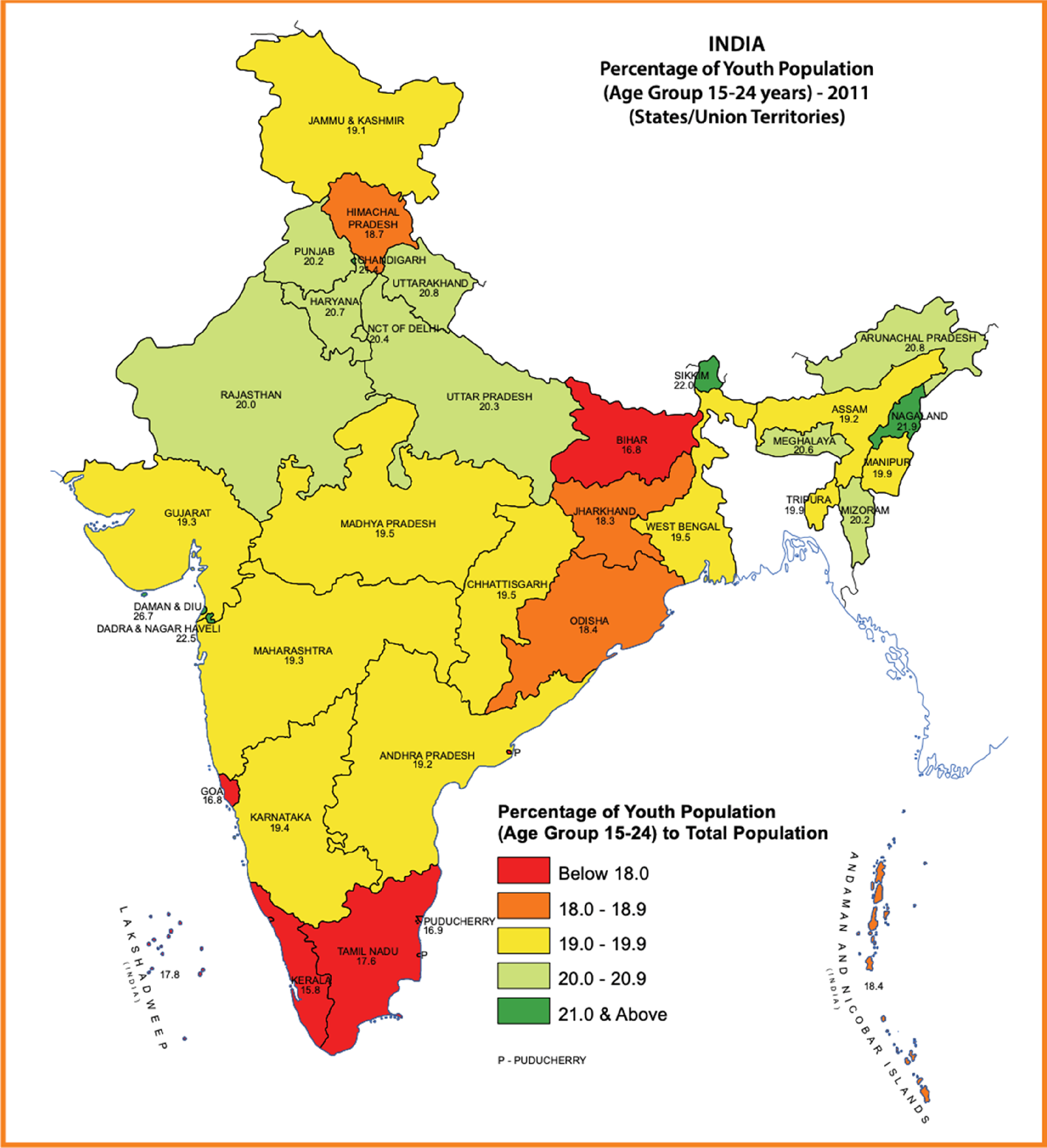
Percentage of youth population across states in India as per Census 2011. Source: UNFPA 2011 https://india.unfpa.org/sites/default/files/pubpdf/AProfileofAdolescentsandYouthinIndia_0.pdf.
For the second proxy, i.e., number of girls enrolled in SAI/availing schemes of SAI, again three groups of states are created: greater than 200 girls (high), 100–200 girls (moderate) and less than 100 girls (low). The states in the high group of SAI trainees includes Assam, Haryana, Kerala, Rajasthan and Uttar Pradesh and the moderate group includes Karnataka, Madhya Pradesh, Maharashtra, Orissa, Punjab, Tamil Nadu and West Bengal (Table 1). The states with low girls’ participation in SAI were excluded to ensure an adequate sampling frame of female athletes.
Number of Girls Trained Under Different Central Government Schemes in 2019–2020.
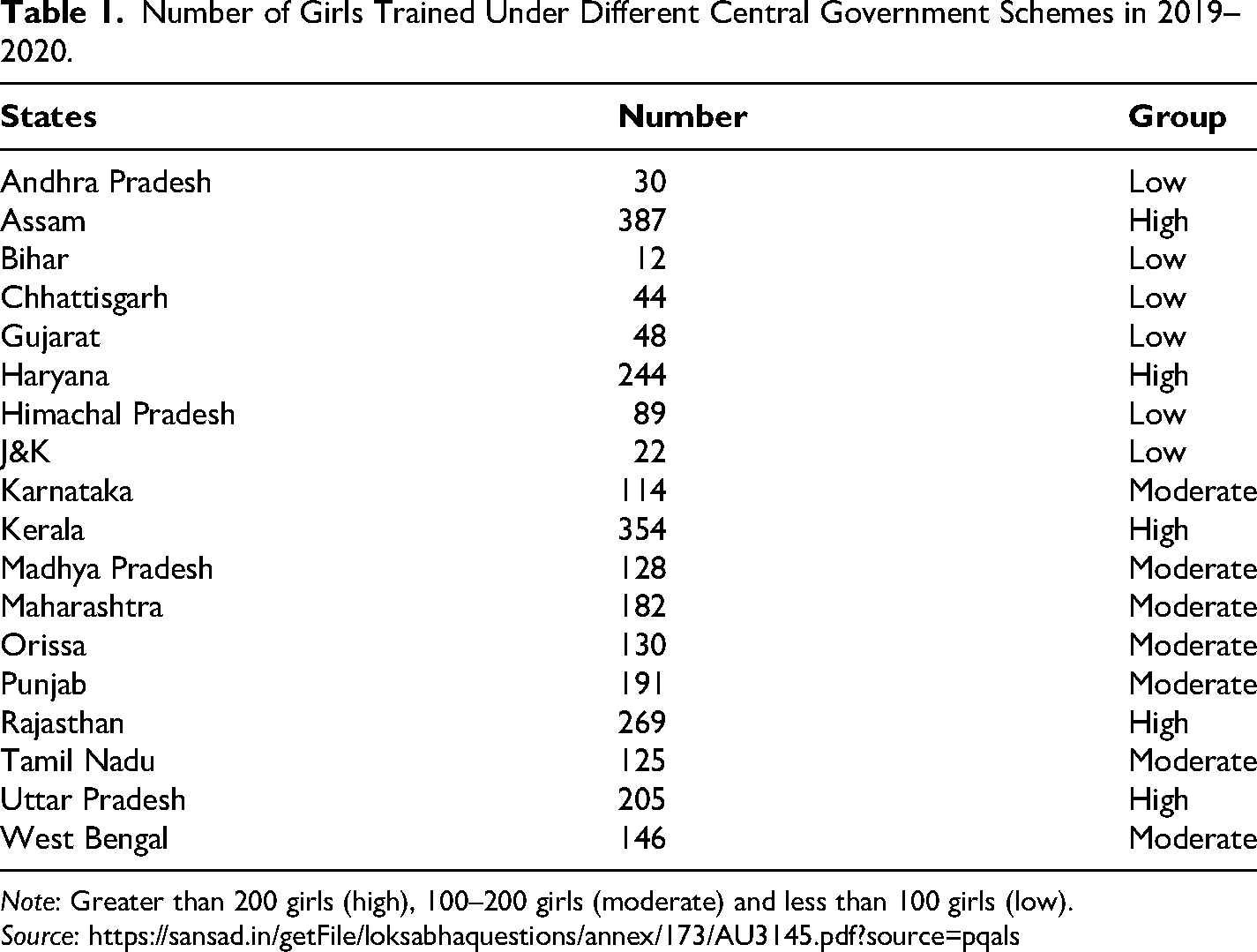
Note: Greater than 200 girls (high), 100–200 girls (moderate) and less than 100 girls (low).
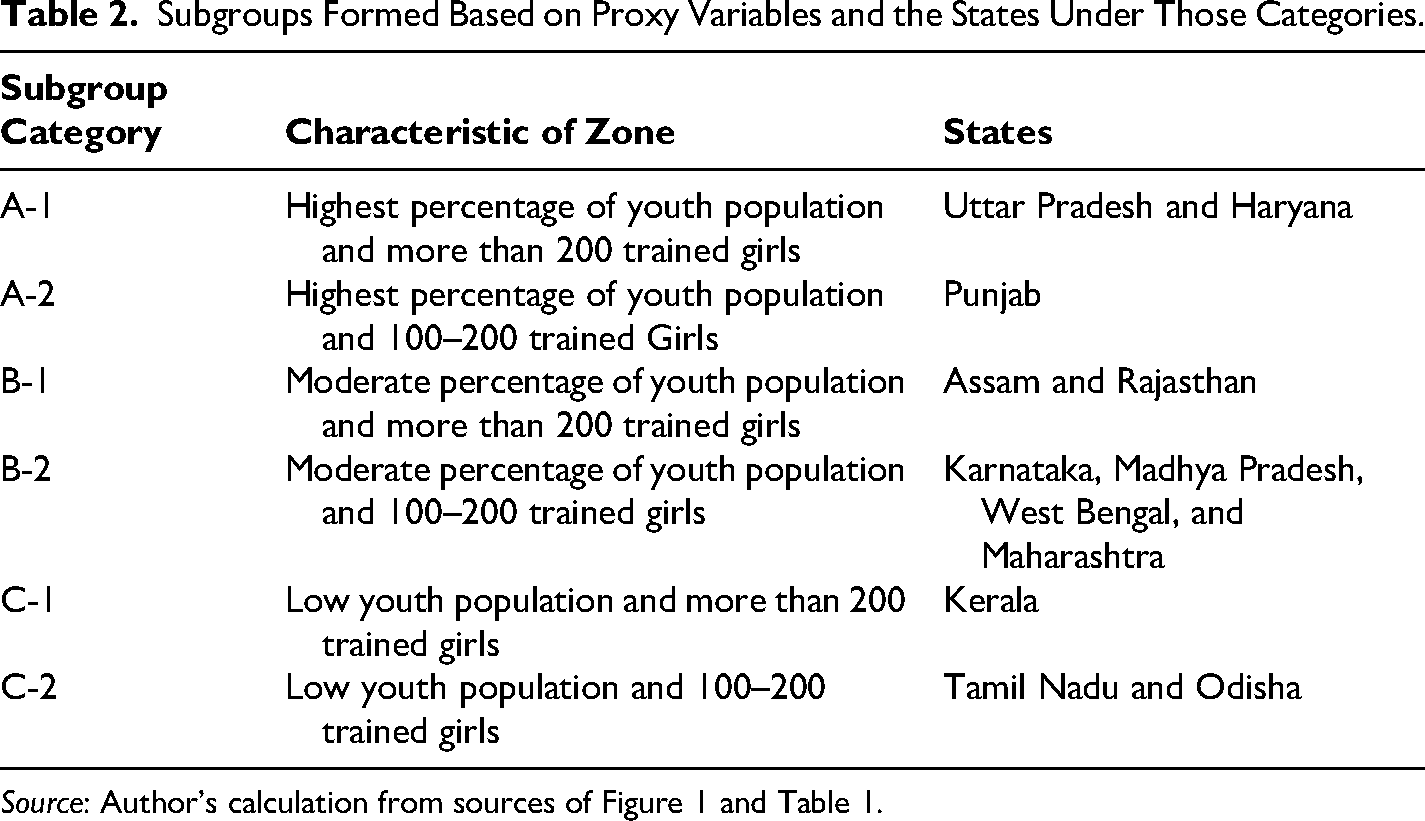
Six intersectional subgroups (A1, A2, B1, B2, C1, C2) are established by combining these two proxy variables, which represent the percentage of youth's population and the number of girls trained under Government of India sports schemes which is summarized in the Table 2.
Subgroups Formed Based on Proxy Variables and the States Under Those Categories.
Distribution of Responses on Social Empowerment.
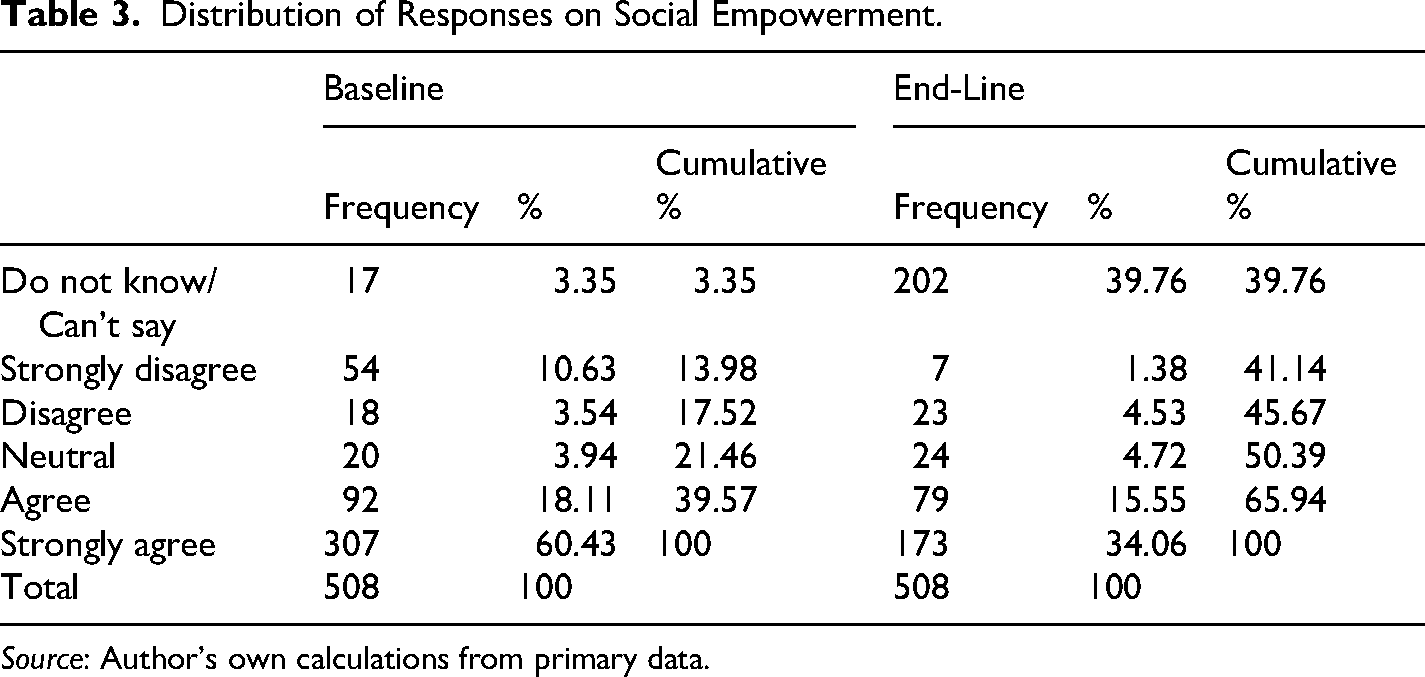
Source: Author's own calculations from primary data.
The groups with <100 trained girls (thus C1 and C2) are not considered further. By rules of proportion, 2 states from group B (Assam and West Bengal), 1 state from A (Uttar Pradesh) and 1 state from C (Odisha) are chosen. Selection of states is done randomly from respective strata. Girls aged between 18 and 22 years 2 were selected from two types of clusters or centers: SAI training institutions (both resident and nonresident trainee) and any other state or private academies, where they receive coaching. SAI resident trainees typically represent higher-performing athletes who undergo rigorous selection and receive advanced training at national or international levels. Normally, the girls who do not qualify for SAI training join state academies and private coaching camps and local clubs. In total we covered 50 clusters across four selected states of Assam, West Bengal, Uttar Pradesh, Odisha. Ethical approval for the questionnaire and experimental procedures was obtained from the relevant institutional ethics committee.
The sample consists of girls belonging to varied socioeconomic groups. Their average age is 19.79 years (SD 2.44), while majority of them are associated with educational institutions (school or colleges), their average years of education is 15 years (SD 1.72). Girls overwhelmingly belong to Hindu households (more than 75%), while 16.60% and 18.97% come from reserved social categories of (Scheduled Caste and Scheduled Tribe respectively). Nearly 33% of the girls believe that compared to their neighbors they are relatively prosperous. More that 65% of the respondents played team games (hockey, kho kho, rugby etc), while the rest participate in individual athletics, badminton, gymnastics etc.
Methodology and Empirical Strategy
Experimental Design
The study employs a single-blind randomized controlled trial. At baseline, 508 girls (aged 18–24 enrolled in sports and academics) completed a detailed survey on their individual, family, parents, households. Next, the girls were divided in three groups randomly. Two distinct types of treatment were planned and the first (T1) and the second (T2) groups were given exposure to these treatments. The third group receiving no treatment, constituted the control group C. T1 group received the first treatment where motivational videos of famous female athletes were shown, focusing on their struggles of penury, lack of infrastructure and fight against society and how eventually they overcame their hurdles to make it big in sports. The successful women athletes were seen narrating their difficulties and struggles they faced in the path of success in their careers. Clips from sports-themed films were also included to portray resilience against social barriers. While this video, made with the help of trained psychologists and multi-media interns, was shown to the girls in person, it was subsequently shared on their personal phones. Prior permission for that was taken from the girls and from their institutional coordinators. More generally, in this module participants were encouraged to consider role models and overcome their fears, aspire to be confident and pursue sports further, but this treatment was not particularly interactive and relied mainly on the respondents’ perception of the motivational videos.
Respondents in T2 received the same motivational video as in T1, while additionally being given an informative presentation on various careers that are possible as a sports enthusiast, based on a well-documented information module. The awareness module was administered over the workshop by trained female para-counsellors, with written support material subsequently shared with the participants. A discussion is made on the “career fork” (Kelling et al., 2016) which represents several career options related to sports. This included options for coaches, physiotherapists, sports journalists, sports nutritionists, masseurs, sports management specialists, sports data analysts etc. Detailed information was provided on where the girls can get enrolled for related courses, what are their basic requirements, how they can avail scholarships for studying these. Statistical data was shared on the jobs offered on these booming career options in recent times, which most students were not even aware of. The idea of T2 was to convey to them that a sports career does not necessarily finish if one does not become a successful or celebrated player. Additionally, it involved discussions on aspects like sexual harassment and how to identify or report them, as the respondents were encouraged to come up and share their experiences as opposed to silently perceiving a video and going home. The respondents were encouraged to share their stories of how they handled failure but did not quit, how they refuted difficult situations and body-shaming to continue playing.
The prime hypothesis behind these two experiments is that they would improve the motivation of the girls to continue their sports career. By T1, a comparative intervention, they would know that their successful seniors also faced hardships what they currently face and that the former group won their individual battles will bring courage to the respondents and ‘I too can do it’ effect would inspire them. T2 on the other hand is a systematic intervention to give information about their career options. This was hypothesized to improve the effect of T1 further as the social empowerment of the girls would improve and they would be confident of earning and supporting family.
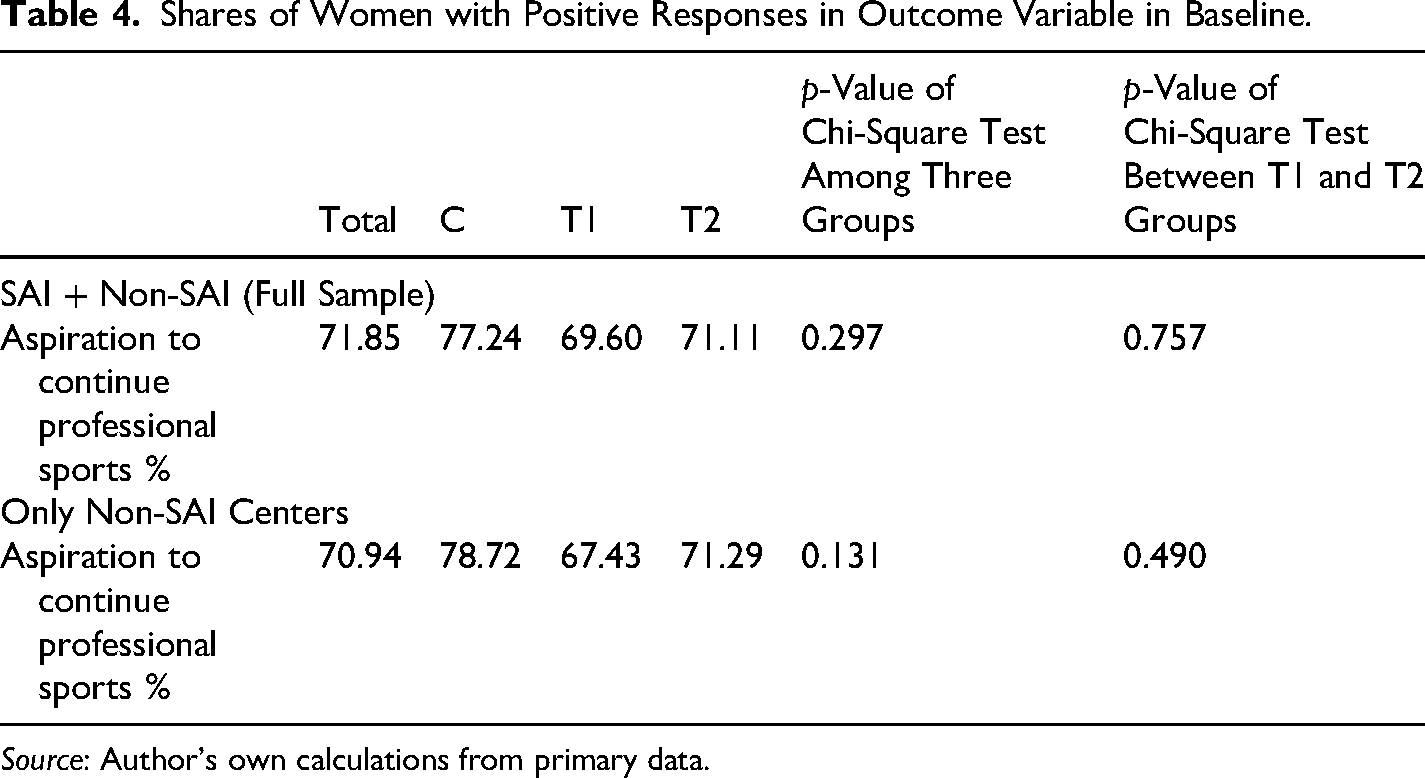
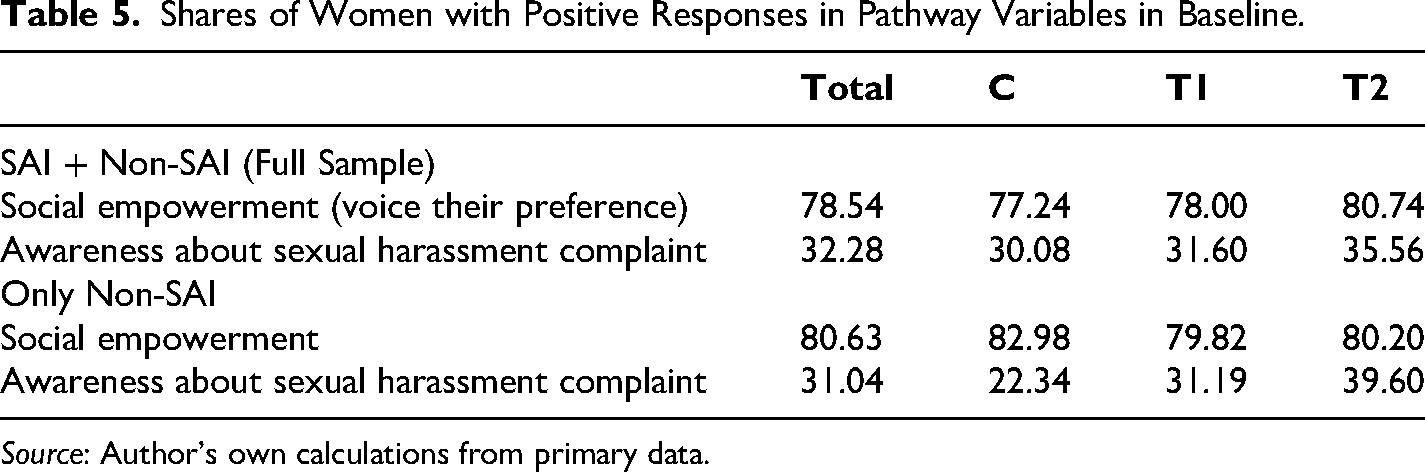
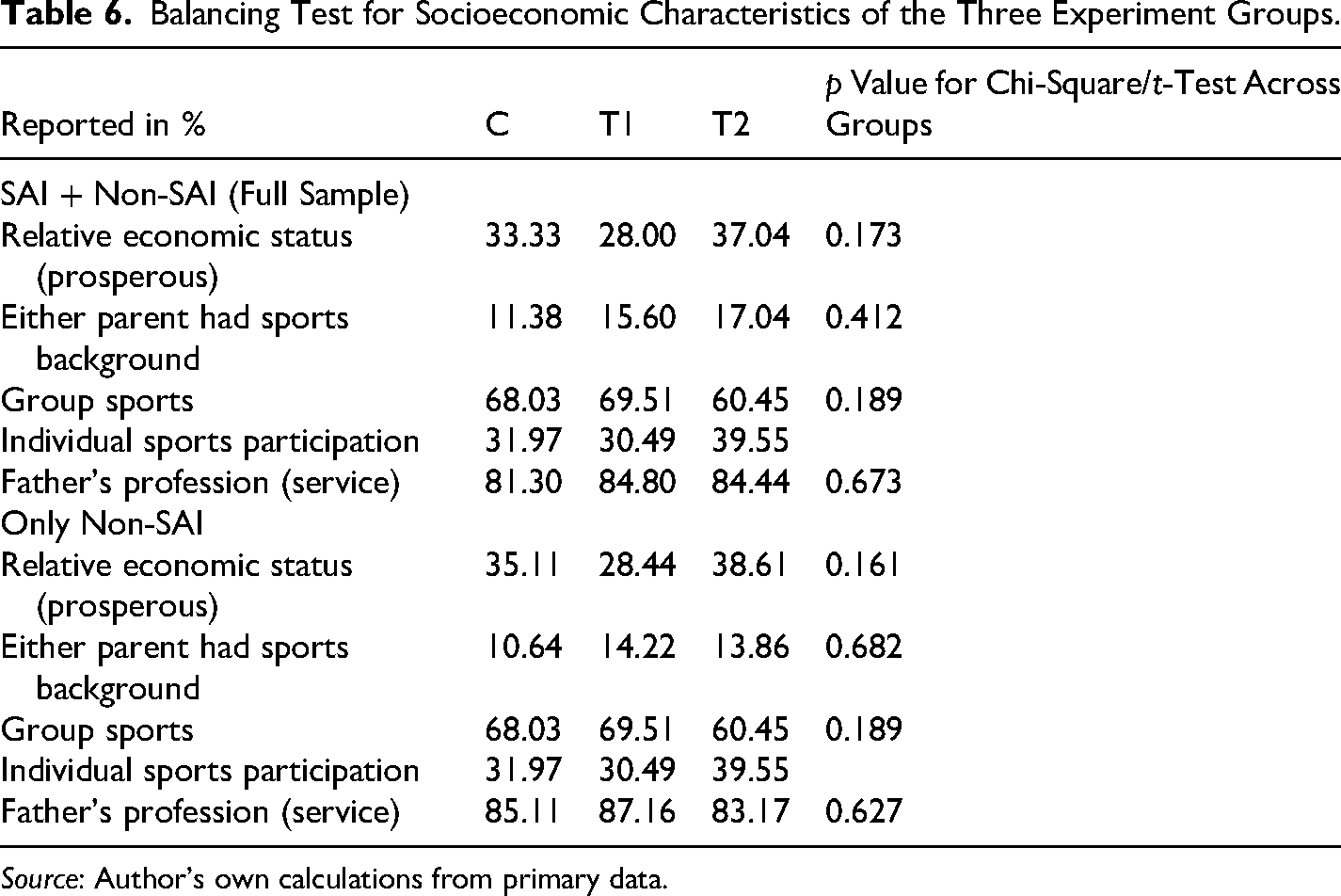
In this experimental study, the students were randomly assigned to either control, T1 or T2 groups while they were not aware of their cohort, but the researcher knew which group they belonged to. It is important to note that the selection of centers or clusters (colleges, universities, coaching camps) into the three groups—T1, T2, and C was randomly done. In order to minimize spillovers, the students from different groups were distantly located in terms of geography and belonged to different towns or cities. The clusters or the training institutions (SAI centres, colleges or private coaching centers) are randomly chosen for intervention. Though theoretically there was a chance of potential confounding factors at the individual levels, Tables 4 to 6 indicate that the individuals across two treatment and control groups are not different in terms of demographic characteristics, nor in relation to base-line outcome and the variables through which the outcome variables are changed. Also, randomization at cluster level was crucial to ensure limited or no spillover of information between individuals across the training institutions.
Shares of Women with Positive Responses in Outcome Variable in Baseline.
Source: Author's own calculations from primary data.
Shares of Women with Positive Responses in Pathway Variables in Baseline.
Source: Author's own calculations from primary data.
Balancing Test for Socioeconomic Characteristics of the Three Experiment Groups.
Source: Author's own calculations from primary data.
Out of the full experiment cohort of 508 respondents who completed both baseline and end-line survey, 250 belonged to T1 group (from 33 clusters), 135 in T2 group (from 10 clusters) and the rest 123 in control group (from 7 clusters). The follow-up end-line survey was completed 4–6 weeks after the baseline and treatment interventions for all these 508 respondents.
We use the following regression specification to estimate the treatment effects:

where yi1 is the outcome for participant i during the post-treatment period. T1 is an indicator for the motivational video-only treatment and T2 is an indicator for the motivation and information treatment. Our reference group is the control group. The vector
The main outcome variable to denote motivation in sports as a career is aspiration in sports which was measured by the question “Do you aspire to play sports professionally in the next 5 years”? Those who said yes were coded as 1 and 0 otherwise. Two other variables that are also important pathways to the main outcome variable are as follows:
Additionally, we consider two possible channels like improving social empowerment and awareness generation about reporting against sexual harassment, which can effectively improve motivation of the young girls. Social empowerment was measured on a Likert scale by asking whether they agree with the statement “Girls have the right to express her opinion even if she disagrees with what her family is saying, in case of family matters or sports.” Those who said agree/strongly agree were coded as 1 and those who said neutral/disagree/strongly disagree/not sure or do not know were coded as 0. The distribution of the responses in Likert scale ranged more than 60% for agree and strongly agree, both in baseline and end-line (Table 3).
The cumulative share of respondents saying do not know/not sure/disagree/strongly disagree/neutral remains less than 20% in baseline. Given this, the loss of information while transforming the variable into a binary variable is not much. However, to further check, we run ordered logistic regression for the variable with all categories used and the results are added in Table A8 in the Supplementary Files. The nature and implication of the result remains unaltered, confirming the robustness of econometric modelling.
Awareness about sexual harassment complaints was measured by the question “Do you know where can you go and complain against any sexual violence that you may face?” Those who said yes were coded as 1 and no were coded as 0.
Notably, a respondent's social empowerment and knowledge of where to report sexual harassment have an indirect impact on the outcome variable of aspiration in professional sports. This may occur through the covert channel of how much a respondent's opinion is valued in her home, which in turn influences her autonomy to play or not (indicating social empowerment), or because sexual harassment in sports is so prevalent and can deter participation by evoking emotions like guilt, shame, and fear. These two are not necessarily conditional upon aspiration to play professional sports, although the converse cannot be said. Therefore, variables of social empowerment and sexual harassment awareness are considered to be important pathways to the outcome variable in this study and these will be checked to explore the potential channels through which interventions can affect the motivation.
Three separate logistic regressions were run thereafter, with the same set of control variables and three different dependent variables (one being the main outcome variable and the two others being the variables representing the pathways). The ITT effect was estimated to see the impact of the two different sets of treatment on the respondents.
In order to test for the randomization of outcome variable, it is checked if the baseline values of outcome variable are alike through the group and do not vary significantly. In terms of outcomes in the baseline, the samples are found to be well balanced across all three outcome variables (Table 4). The treatment group distributions are not statistically different in comparison to the control group (here, p > .10) and the results hold for the full sample, as well as the non-SAI respondents. Also, more than one-fourth of the girls appear to be demotivated to continue sports in the table. The discussion on Table 5 is summarized in the following section.
Lastly, balancing tests confirm that treatment and control groups do not differ significantly in baseline characteristics, outcomes, or socioeconomic variables, indicating successful randomization. It was found that the samples are well balanced across all the control variables (Table 6). The treatment group distributions, both for the full sample and for non-SAI sample, are not statistically different in comparison to the control group, since for all tests probability for rejecting the null hypothesis of similar means is greater than 0.10 (10%). Consequently, any observed differences at end-line can be attributed to the interventions rather than pre-existing heterogeneity. Parental involvement—past or present—in any form of sports participation or engagement did not vary across the treatment groups. Therefore, any differences observed in the outcome variable at the end-line survey can be attributed to the treatment itself, rather than being confounded by this control variable.
To complement the quantitative analysis, qualitative interviews were conducted with over 100 stakeholders, including celebrity athletes, mid-level players, coaches, administrators, journalists, and technical experts.
Qualitative Analysis
Narratives were gathered from more than 100 interviews taken from celebrity players (19), mid-level players (56), coaches (11), sports administrative staff and officials (9), technical experts, journalists (5) and other community members of the respondents. These narratives were collected using an in-depth interview (IDI) guide on sub-themes of barriers to continuing sports as a career. Following protocols of survey, their interviews were recorded with consent and then transcribed verbatim. From the narratives, the software NVivo has been used to generate word clouds to get a thematic inference from the thoughts shared by the experts. Word clouds are considered as a simplistic and relevant visualization method for texts. They are used in various contexts in order to provide an overview by filtering the text so as to include those words that appear with highest frequency. Usually, this is done in a static way as pure text summarization.
Results and Discussion
Descriptive Results
Baseline descriptive statistics reveal an important concern: nearly one-fourth of the surveyed girls who were already actively participating in sports training reported that they did not intend to continue sports in the near future (Table 4). This proportion is similar across both SAI and non-SAI centers. Given the substantial public investment in sports infrastructure and training, such early attrition among mid- to high-level trainees signals potential aspiration failure, weaknesses in the broader sports ecosystem and highlights the need for targeted motivational interventions.
Additionally, in terms of the important pathways to the outcome, social empowerment and sexual harassment awareness, it was found that in the baseline about 20% of the girls feel that they have no right to voice their opinions if their family disagrees, which further indicates that social empowerment is not very high. Even more striking is the low level of awareness regarding sexual harassment grievance procedures: fewer than one-third of participants knew where or how to file a complaint (Table 5). Considering the documented prevalence of harassment in sports settings, this lack of information represents a critical vulnerability that may discourage continued participation. Given the frequent sexual abuse on the girls in general (by coaches, peer, etc.) as reported in media (Brackenridge et al., 2008) and also in our qualitative interviews, this poor information and awareness is critically low for their self-defense.
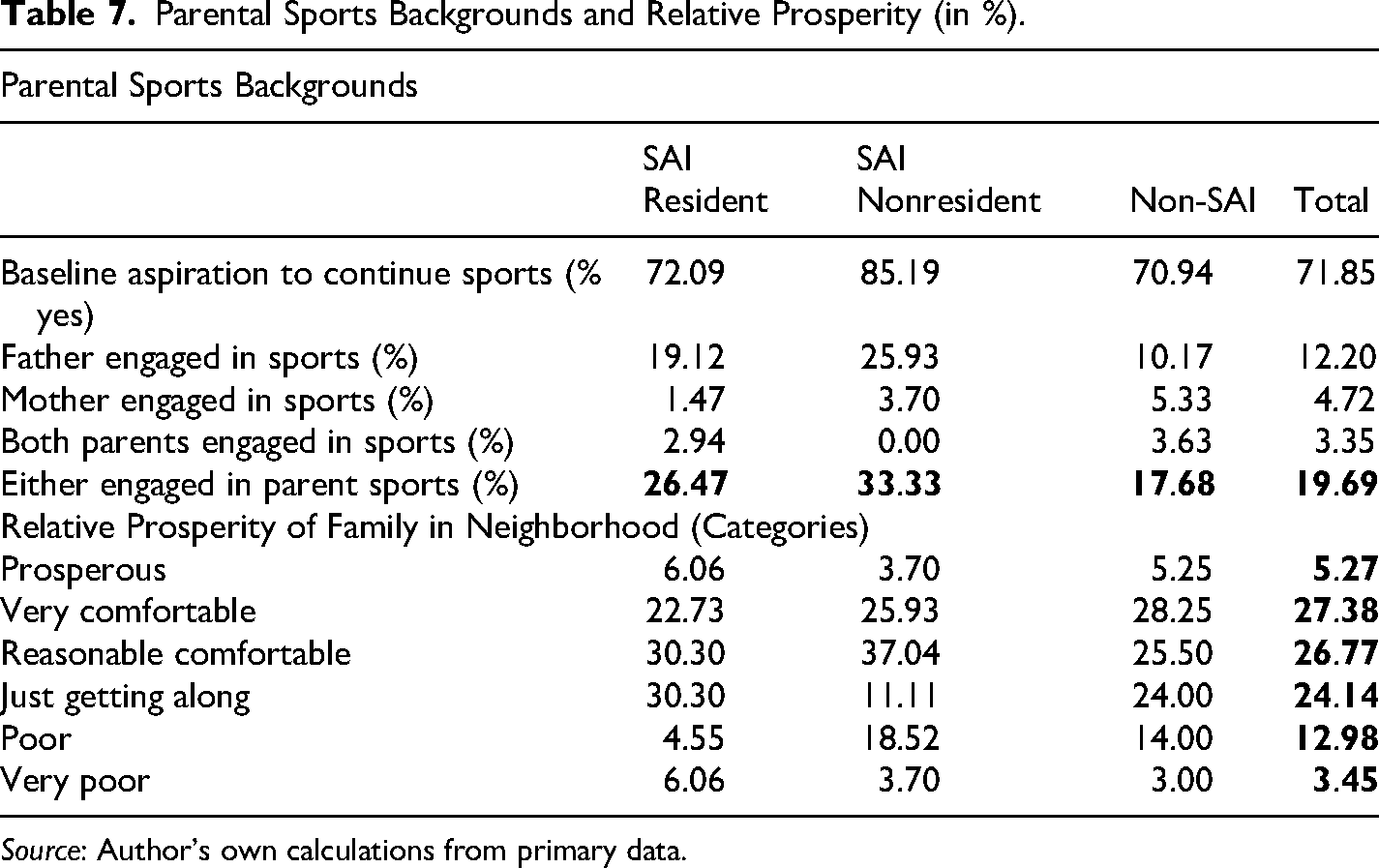
Parents’ involvement in sports and their occupation may be one of the key variables in girls’ decisions to pursue a career in sports (Table 7). The trainee girls at SAI centers seem to have unique familial background. 33.33% of SAI nonresidents and 26.47% of SAI resident respondents had a parent involved in sports, as opposed to the 17.68% of non-SAI respondents category.
Parental Sports Backgrounds and Relative Prosperity (in %).
Source: Author's own calculations from primary data.
Results From the Experiment
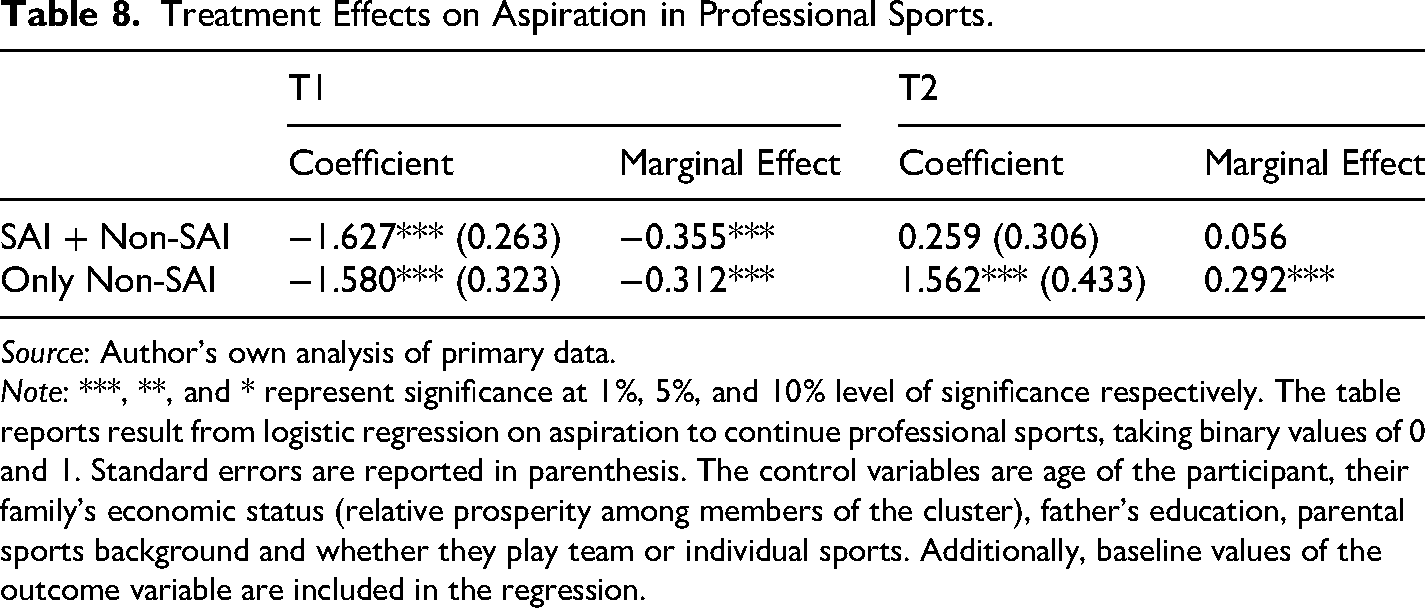
The first set of results found that for the outcome variable of aspiration in professional sports, T1 had a negative effect (marginal effect being −0.355, significant at 1% level of significance in Table 8), but T2 had no significant impact on the entire sample, the sample consisting of both SAI and non-SAI respondents. This is possibly because the SAI players, both residents and nonresidents are already more motivated to continue taking up sports professionally in the baseline (as identified from Table 6), and are informed about career option and thus the marginal effects of treatment are small. The nonresident SAI girls particularly had significantly high motivation to continue sports in the baseline, indicating little scope for further improvements. In order to test if the results are pushed by the SAI girls, we run the analysis again separately on non-SAI girls only.
Treatment Effects on Aspiration in Professional Sports.
Source: Author's own analysis of primary data.
Note: ***, **, and * represent significance at 1%, 5%, and 10% level of significance respectively. The table reports result from logistic regression on aspiration to continue professional sports, taking binary values of 0 and 1. Standard errors are reported in parenthesis. The control variables are age of the participant, their family's economic status (relative prosperity among members of the cluster), father's education, parental sports background and whether they play team or individual sports. Additionally, baseline values of the outcome variable are included in the regression.
Data analyses find that among non-SAI respondents, aspiration to play professional sports significantly fell among T1 respondents; whereas this indicator improved among T2 respondents, with a marginal effect of 0.292 significant at 1% level of significance (Table 8). Thus, compared to those who received no treatment, the girls with T2 had an increased aspiration of 29%. The full specification results are added in Tables A1–A6 in Appendix.
The results from this experiment hints that the role-model effects might have affected the belief of the young girls on themselves and thus created a negative impact on their aspiration. However, offering them the knowledge about possible career options beyond participation in sports, brings them a new hope that they can use their experience in sports for other related long-term livelihoods.
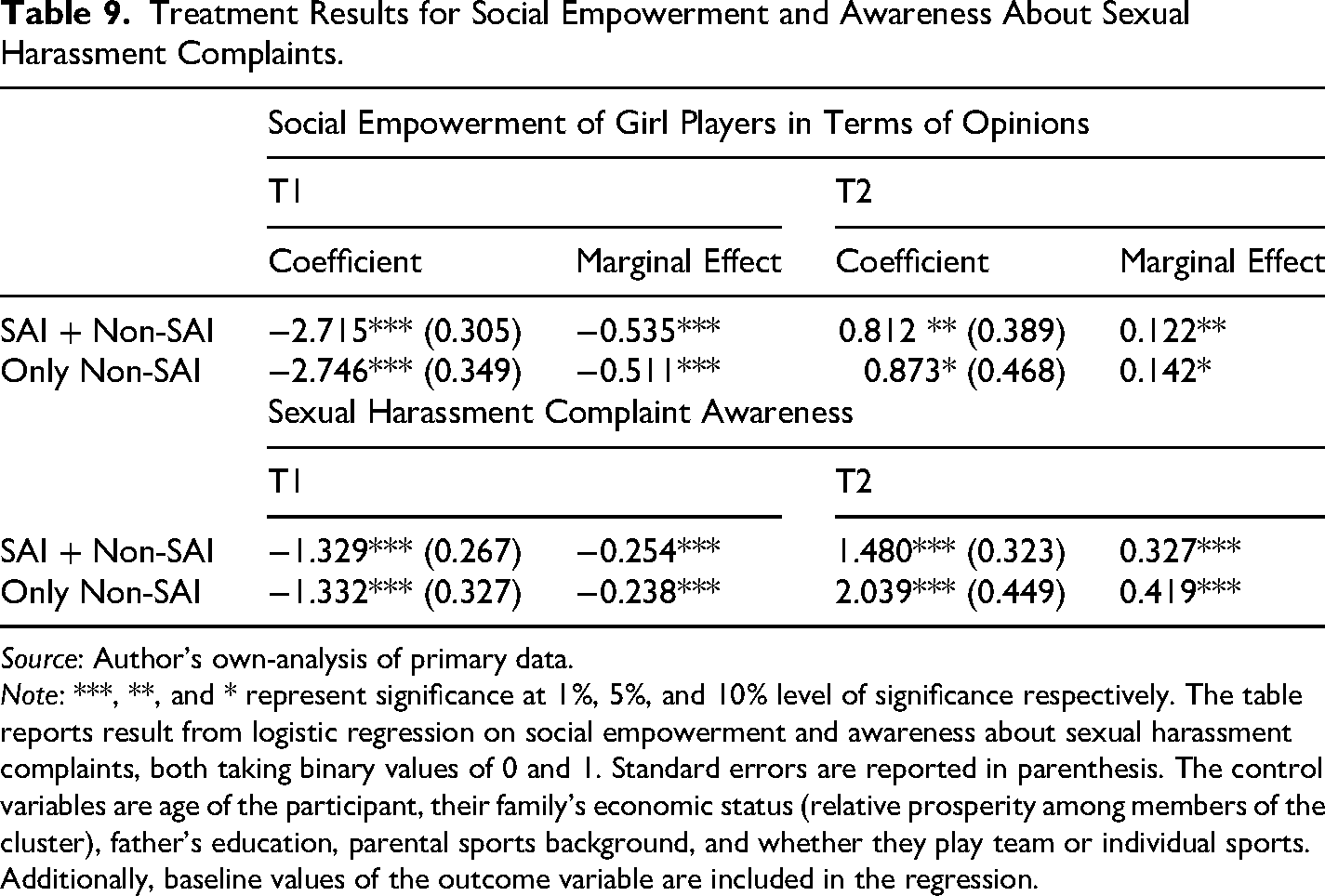
Lastly, two important pathway variables show potential channels to affect the main outcome variable. A similar treatment effect is computed on two variables: social empowerment and awareness in reporting sexual harassment (Table 9). For both the cohorts of full sample and only non-SAI respondents, the first treatment significantly reduces their social empowerment and awareness regarding report sexual harassment, while the second treatment significantly increases the same. It is worth mentioning here that in the first treatment, no dialogue or discussion with the girls was done. It showed motivational videos and a few clips from films denoting sexual harassment. This might have incited a sense of fear or under confidence that negatively affected both their awareness in handling sexual harassment, as well as casting their opinions at home, which in turn adversely affected their aspiration to professionally play. On the other hand, the narrative discussions about their own experiences of sexual harassments along with specific information on how and where to complain perhaps helped to improve their social empowerment and awareness, which in turn increased their motivation.
Treatment Results for Social Empowerment and Awareness About Sexual Harassment Complaints.
Source: Author's own-analysis of primary data.
Note: ***, **, and * represent significance at 1%, 5%, and 10% level of significance respectively. The table reports result from logistic regression on social empowerment and awareness about sexual harassment complaints, both taking binary values of 0 and 1. Standard errors are reported in parenthesis. The control variables are age of the participant, their family's economic status (relative prosperity among members of the cluster), father's education, parental sports background, and whether they play team or individual sports. Additionally, baseline values of the outcome variable are included in the regression.
However, in the second treatment, in addition to information on alternative careers in sports, information was disseminated about where and how to report sexual harassment and why it is required for them to be opinionated at home. This gave them a platform to be more aware, more vocal, and most importantly, instilled a sense of belief in themselves that they were not alone in their struggles. This is what possibly not only significantly improved the two pathway variables, but an improvement in their autonomy of giving opinions and confidence to handle sexual perpetrators, boosted their aspiration to continue in sports.
Qualitative Evidence
Interviews of 19 celebrity players across different disciplines in the selected states were conducted. All of them were SAI trainees, current or former. The instant reaction of all these players to the question ‘what challenges have you faced in your aspiration to pursue a career in sports, was, ‘no one ever asked us!’.” That was a signal to the importance of the study.
It is proved beyond doubt that successful players have reached the top and have overcome the hurdles, but the interview experience showed that in spite of reaching the apex of the sports domain and “being proud that the country tri-colour was flying high on foreign soil in my honour,” they feel the pangs of the struggle deep down and were keen to share their stories, so that the next generation of players may be prepared about it beforehand. The root of their primary challenge was their gender. Their gender identities pushed them to face humiliation through stigmatization and body shaming: “tum to mard jaisa” (you look like a man!). Though it is not spoken openly, but LGBTQ and socially unacceptable sexual preferences is one of the deep-rooted issues in the players’ community. One player mentioned that those who come out in the open about their sexual preferences are the privileged ones, many have won international medals, but those who play at district or state level do not have such luxury, they remain clouded under the mist of stigma and their families hide them in shame. Society is unkind to them. (Gymnast from SAI Centre, Kolkata, West Bengal)
Narration from 56 non-celebrity mid-level players is even more haunting. The word cloud of the narrations (Figure 2) of all players on the biggest barriers in their sports career pointed out that the two most crucial issues that the respondents faced were job crunch and gender aspect. These two things haunt them and at times they lose hope.
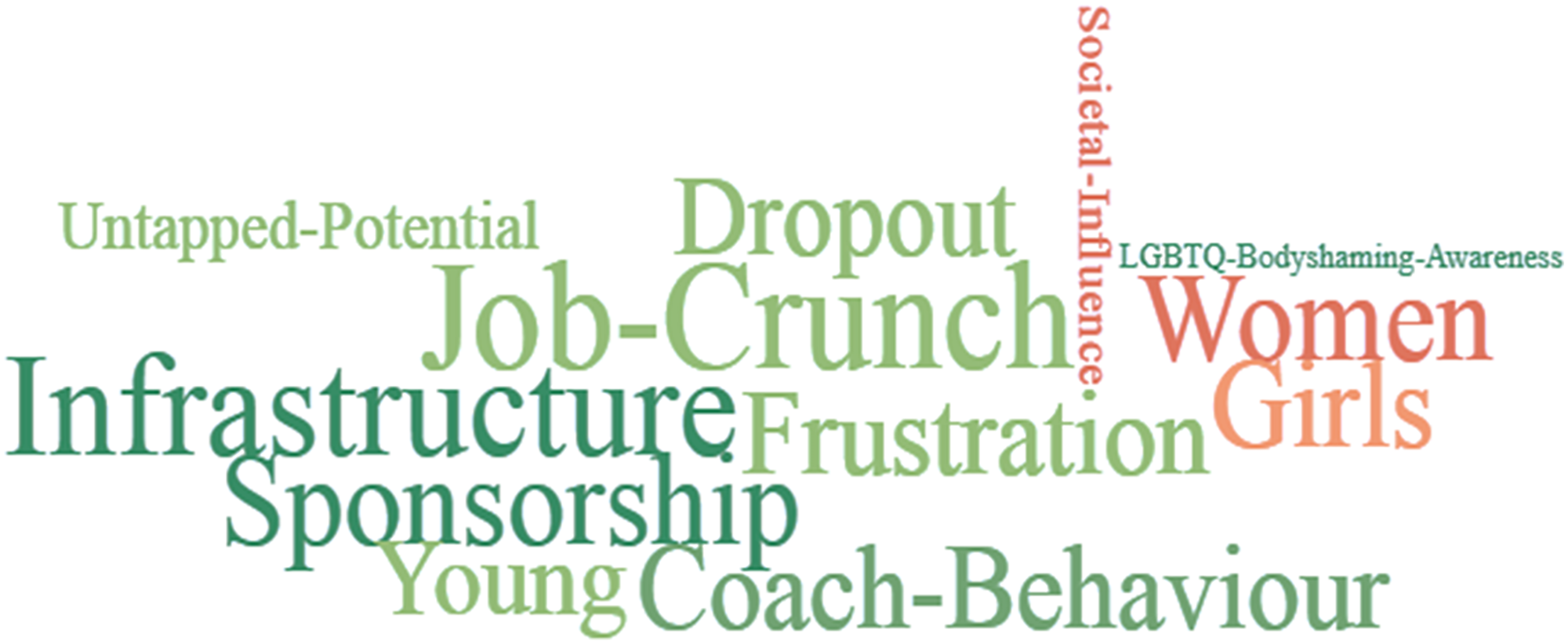
Word cloud from narratives of all players. Source: Analysis of narratives on NVivo.
A few of the experiences that the respondents have been summarized below under a few sub-themes:
Government Job: The Only Option
A state-level athlete expressed concerns about the challenges faced in securing jobs. She aimed to use her sports quota to secure a government job for her family. However, overcoming obstacles like poverty, sacrifices, and long hours of practice, such job is not guaranteed. The athlete was concerned about the possibility of never excelling in athletics to the extent she would land a job. I had never known that struggles of the celebrity sports women had been this tough. I always wanted to become like them. Winning medals and then getting a job at Railways services. But looking at their video, I understood that I might not be able to put up that effort or come out resilient like them! I am now in two minds to continue serious sports in near future. (State level non-SAI athlete, age 19 years, from Assam, T1 group)
Body Shaming
Body shaming is prevalent in both men's and women's sports, particularly in women's sports due to a lack of education about physiological differences and their impact on performance. It also affects female players in sports like cricket, hockey, wrestling, and football, who are often referred to as “muscular” (https://mse.dlapiper.com/post/102ivip/body-shaming-in-womens-sports). This is reflected is responses of young sports women in our sample. We face body shaming from our friends, both male and female, our relatives and even from our parents. They all think that my body has lost its feminine beauty and has been muscular like men. The story of the trans athlete is frightening. The society does not accept masculine female bodies. I am truly saddened. (State-level long distance runner, age 21, from Odisha, T1 group)
Additionally, it came up during their interviews that combat sports are considered highly inappropriate for women and those in boxing, wrestling, judo, karate are not always accepted as regular young girls mingling in society.
The Psychology of Fight, Flight or Freeze
Many players with higher inhibitions might not be able to fight back immediately and may instead opt to run away (flight) or be incapable of responding at all (freeze). A similar account has been narrated by a table tennis player from West Bengal. I had seen the Chak De India film (https://www.imdb.com/title/tt0871510/) many times earlier. I also enjoyed the scene of eve-teasing and the following male-bashing. But when this was shown as a motivating event, encouraging us to be similarly strong physically and mentally, to fight back the goons, I somehow felt nervous. I am teased and often verbally abused by boys in the locality because I wear tight-fitting short dresses during practice sessions. But I think I won’t be able to give them a similar treatment because I am not that powerful. (University level table tennis player, age 20, from West Bengal, T1 group)
Lack of Social Empowerment and Decision-Making Power
Given that marriages, in most Indian communities and social strata, are organized by family members, very often without considering any opinion of the girl, the sports women, especially the non-celebrity players at the state and district levels, commonly succumb to the pressure from the family members to leave sports career without reaching their optimum. Such is also the experience of an athlete from Uttar Pradesh. I never knew the story of the international athlete's family life (name not disclosed here). I found that she disobeyed her parents and joined training at the local club in spite of being treated badly by family. I felt nervous because I cannot put my opinion and decide about my life. My parents and other male family members decide what to do. They won’t allow me to play after my 18th birthday, because they will find it hard to find a match for me. I cannot say anything. (District level long jumper, age 17, from Uttar Pradesh, T1 group)
However, qualitative interviews from respondents of the second treatment group were encouraging, a few of which have been discussed below. Even if there are many chances in the direct and allied sports fields, prospective professionals frequently face difficult obstacles that call for perseverance and smart navigation. Thousands compete for few opportunities in the very competitive sports industry. To create a significant position distinguished far ahead of others, athletes and professionals need to demonstrate extraordinary talent, commitment, and constant progress. However, only a small number of people succeed at the professional level by continuously surpassing others. A lot of people think that being a professional player is the only way to pursue a career in sports. Lack of understanding and a failure to explore other careers including sports management, physiotherapy, analytics, and journalism are the results of an underdeveloped sports-education ecosystem. A lot of young athletes do not know how to choose their career routes. There is rarely any advice on training plans, scholarships, or sports-related education (https://careerplanb.co/career-in-sports-in-india/). This was corroborated by respondents of second treatment group who received an awareness about career fork and dual career in sports. When I learnt that there are options beyond sports quota government jobs, I was elated. Nobody gave us the details of this information before. While the motivational videos partially boosted my confidence, but I was in awe of their struggle, difficulties and fight; information about career fork actually opened up many avenues to me. It is no longer true that I will have to play at international level and win at least one medal for the job. Without that too I can become a sport journalist, because I am good at language. I now want to continue sports and study journalism after my boards. I am thrilled (State-level non-SAI hockey player, age 18, from Uttar Pradesh, T2 group). With the information provided, I learnt that even if I don’t win international tournaments, I can still pursue a profession as a trainer of physical education at college level and/or become coach. This was so relieving! I want to earn for myself and my family and not be economically dependent on others. (State-level badminton player, from Maharashtra, age 16, T2 group)
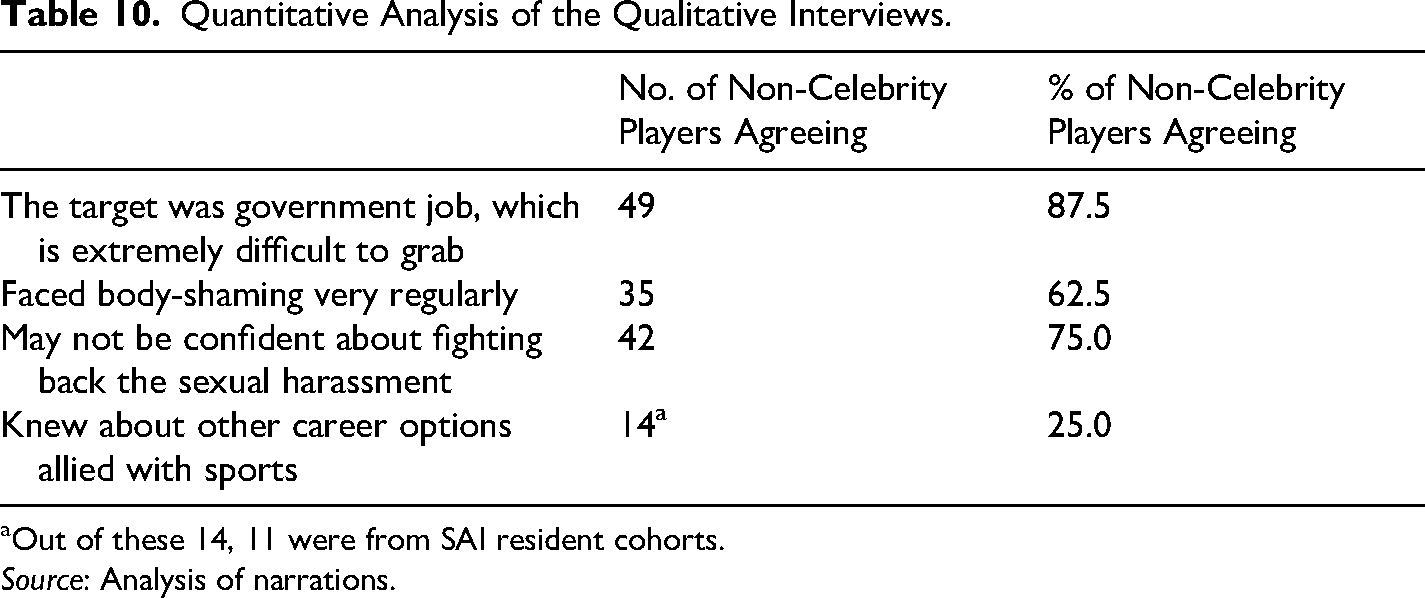
Below, we present the quantitative analysis of the narratives, which indicate that only one-fourth of the respondents (56 non-celebrity players) were aware of the allied careers before intervention, while the share is miniscule among non-SAI respondents (Table 10). 87.5% agreed that their only target was to get government jobs in sports quota, rather than enjoyment.
Quantitative Analysis of the Qualitative Interviews.
Out of these 14, 11 were from SAI resident cohorts.
Source: Analysis of narrations.
The administrators and other staffs who were interviewed were a heterogenous group, some from SAI and some others from private sports clubs, others from well-established academies. Their views however zeroed in on the nonavailability of technically qualified coaches, specialists like nutritionists, masseurs, physiotherapists, etc. Even SAI with its sufficient funding reported that the absence of supporting staffs, especially female coach, female masseur, female physiotherapist was a critical issue they faced. One of them also mentioned I often share the success stories of my erstwhile trainees, who played at national and international levels. Initially the current players get motivated that they are under good training facilities and able coach. Then very often the girls come to me in private and share that they might not be able to put up that intense physical and emotional fight. Handling their parents, who simultaneously pressurize for untimely withdrawal on one hand and intense training leading to government jobs on the other, becomes too difficult for these young players and they often quit. Idols can motivate only those who are free from these pressures. (Female Table Tennis coach, non-SAI training centre, West Bengal)
Discussion of Results
Which Intervention Worked and Which did not?
Given the high rate of early and premature dropout from sports among Indian girls—despite numerous public initiatives not sustaining participation and career progression—this study sought to identify strategies that could effectively motivate young girls to stay engaged in sports. At the baseline, more than one-fourth of the respondents were not inclined to continue sports in near future, though they were actively getting rigorous training and participating in sports at different levels. At a fundamental level, the results demonstrate that motivation in sports participation is not driven solely by inspiration or exposure to success stories. While popular narratives often assume that showcasing high-achieving role models will automatically encourage persistence, the evidence presented here challenges this assumption. Exploring further, it was found that some respondents remained silent and did not reply positively about aspiration, even after probing. Shying away from answering is taken as being fleeing behavior of the respondents to report against the socially desirable answer (Gilligan et al., 2024), not ready to continue sports in this case.
The discussion in T2 focused on career-fork wherein a time comes in every budding sports trainee's life, to choose between academics versus continuing in the field of sports. Thus, the realization that it is not an end in the field of sports if one does not necessarily become a celebrity player, coupled with the relief that the respondents do not inescapably have to choose between sports and traditional career paths is reflected in the improved outcomes in T2. In the regression on the pooled sample including SAI respondents, the effect remained insignificant for T2; one plausible explanation is that SAI trainees already exhibit relatively high baseline motivation and greater awareness of career options. Consequently, the additional information provided in T2 may yield limited marginal gains for this subgroup. To examine this possibility, the analysis is repeated for non-SAI participants only and for them, the effect of T2 was significant and positive. This result suggests that information operates as a critical enabling resource. When girls are equipped with knowledge about alternative career pathways, grievance mechanisms, and institutional support, they perceive greater control over their futures. Importantly, the positive effects become the strongest among non-SAI athletes, who typically have fewer institutional resources and weaker access to guidance. For these girls, uncertainty about career prospects and safety concerns constitute significant deterrents to continued participation.
Connecting to Social and Psychological Theories on Motivation and Sports
The negative impact on aspiration to continue sports as a profession can possibly be explained through the opposite role-model effect which was reflected during qualitative interviews with players and stakeholders like coaches, physiotherapists and the likes. Players face cut-throat competition and experience burn-out while playing professional sports. It is important to highlight here that the video shown in T1 mainly focused on the struggles of famous female players and the odds they had to fight and the resilience required to make it big. The struggles included social stigma, sexual targeting, burnout, lack of infrastructure and various other obstacles which are also faced by current players in practice. This possibly intimidated the respondents into making them doubt themselves while looking at the slim odds representing players who were successful in breaking those shackles. This observation matches the theoretical construct of social comparison theory, as discussed in Section 2.2. The intervention initially hypothesized that finding a superior senior with similar socio-economic-cultural strata and operating in similar domain would motivate the respondents to put in more efforts thinking “I can do it too!.” However, the celebrity players out-performed the respondents and hence they reacted defensively being unsure of further struggle. The motivational video alone seems to dampen the respondents’ spirits when girls go back to their homes after training and fight the same eco-systemic, social and psychological barriers (Hickey & Fitzclarence, 1998; Lines, 2001). Exposure to elite athletes’ stories, when presented without contextual support or actionable pathways, may unintentionally discourage participants. Rather than narrowing the perceived distance between themselves and successful athletes, many girls interpreted these narratives as highlighting insurmountable barriers. Issues such as drug abuse, misconduct, and bullying—particularly related to sexual orientation when girls participate in sports that challenge traditional feminine norms like wrestling or football—often dominate the public perception of role models. As a result, these role models can appear intimidating due to the negative media attention surrounding them, which can have a discouraging impact on young girls. The results confirm that the role modeling cannot be fully understood without examining the role aspirants themselves and the internal motivational processes they experience. By deepening our understanding of how the role model dynamic functions, this study also highlights practical implications for those designing role model interventions, hinting that the role models should be chosen optimally, who can be relatable, rather than comparable.
Notably a high share of players in India seems to strive in sports to get placed in government jobs through sports quota. This myopic vision of practicing sports for job security stems from the dearth of cognizance of the plethora of livelihood possibilities that this field has to offer. Thus, a significant improvement in the T2 group in non-SAI cohort might be explained by the dual-career awareness which expands their perspectives and inspires them to pursue jobs in sports as coaches, physiotherapists, nutritionists, sports journalists, sports data-analysts, mental health experts for players and several other diverse options.
Qualitative interviews partially helped us to identify the prime barriers in continuing sports and also led us to understand why the first treatment turned out to negatively affect their motivation to continue. These women are often told that becoming too masculine might result in loss of feminine charm and hence reduce their worth in the market for marriage. In addition to these, the struggle for transgender women is more difficult; the lines get greyer as transmen and transwomen want to compete with cismen and ciswomen (identifies with the gender that aligns with the sex assigned at birth). Debates of fair competition rules have been going on for years where the participation of trans people and female athletes with naturally occurring higher testosterone levels were criticized on grounds of unfair physical advantage (Karkazis & Jordan-Young, 2018; Weisman, 2022).
A sad reality of the society is that sexual harassment, such as eve-teasing, molestation, sexual abuse, domestic violence, and rape, are widespread and frequently reported offense (Shrivastava & Varoda, 2021). Sports women too are often subjected to sexual harassment, which degrades their performance standards (Gündüz et al., 2007). Many disciplines of sports require women to dress in short skirts or swimwear and other apparel that might expose skin. In that context, inappropriate remarks on physical attributes and opinions on the way they dress for a game often violate the modesty of sportswomen. Sexual harassment victims resist and complain only rarely, due to fear of backlash. Fear is innate and manifests as fight, flight, or freeze responses, with distinct dimensions linked to individual variations. It was discovered that while people with greater freeze or flight scores showed the opposite tendency, those with lower inhibition (avoidance) were more likely to exhibit general fight inclinations (protective approach) (Maack et al., 2015). Thus, even for girls in sports, the response to fear generated by a threat like sexual harassment is subjective. As discussed by Ryan & Connell (1989) in Section 2.1, external motivation of being pushed by family and by their introjected guilt for better performance often fail to bring out the best. Rather, their intrinsic motivation from potential information on careers and professions allied to sports aspire them to continue sports, with their personal happiness and inherent satisfaction.
Relating to Indian Sports Industry
In India, sports is often seen as a hobby rather than a viable professional path, with only cricket offering financial security and social prominence. Parents fear unknowns, short career spans, and intense rivalry. The educational system prioritizes academic performance, leading to students who excel in sports being asked to quit and focus on academics (https://www.hoogah.in/blogs/news/breaking-boundaries-or-building-stability-the-dilemma-of-indian-parents-on-sports-as-a-profession-and-education). Marriage is typically regarded as a major milestone in a woman's life, and the pressure to adhere to societal standards can be overpowering. Weddings arranged and decided by parents and family members are still common in most regions of India, and young women are frequently expected to accept their family's decisions taken for them (https://medium.com/@anshika.dhar/the-weight-of-traditions-how-societal-expectations-are-holding-back-the-growth-of-indian-women-b007243ba8f1).
These observations, which emerged as key barriers to sustaining a sports career, have a direct impact on early dropout among girls. Factors such as limited decision-making power within the family, persistent body-shaming, and the emotional distress of failure in competitive sports—which often dashes their hopes of securing government jobs, seen as a primary path to livelihood—leave many girls feeling demotivated and disheartened. In a context shaped by entrenched patriarchal norms, girls are simultaneously blamed for falling behind in competition and for compromising their perceived femininity in the marriage market. In such an environment, aspirations cannot be fostered merely by providing physical sports infrastructure or offering jobs to elite international players. Neither it can be tweaked by interventions such as bringing in role-models who succeeded in the past. Instead, sharing information about alternative careers in sports and accessible mechanisms for reporting sexual violence can empower girls to see viable livelihood opportunities through sports and to resist both physical and verbal abuse.
Limitations of the Study
This study is based on a randomized experiment on 508 girls belonging to selected states in India. The results cannot and should not be generalized for pan-India situation. Since no states from South India was covered, this definitely marks a limitation of the study. Also, the state-wise sample is not large enough to chalk out specific interventions for different states and different strata of the society wherein the girls belong to. In future, a larger study can be commissioned to handle these limitations. Secondly, in order to quantitatively capture the gender-bias in Indian sports with more precision, the sample could have included men respondents with similar characteristics to ensure comparability. Lastly, there are certain methodological limitations, which are commonly present in this kind of studies. The outcome variables considered are categorical and binary (Yes/No type) and hence usual ordinary least square regressions become inappropriate. Using Likert scale for social empowerment is also not free from criticism. But given the nature of the experiment with the target variable of measuring motivation, which itself involves qualitative and multi-dimensional content, categorical variables are mostly chosen in available literature. To avoid methodological complications regarding biased estimates, limited dependent models (Logistic or Probit) are used in econometric studies, as in here too.
Conclusion
Three cohorts of young ladies, aged 18–22, who participate actively in various sports have been taken into consideration for this study. Girls who are direct trainees of various SAI Centers and assigned to discipline-specific centers make up one cohort; girls who are also SAI trainees in centers located nearer to their homes make up the second cohort; and girls who train in private academies, participate in sports at the District (State or National) or University level while attending colleges to pursue academic degrees, but do not take training from SAI consist of the third cohort. The experimental study aimed to identify the strategy that can best encourage young athletes to pursue sports careers and reduce dropouts. Participants were randomly chosen for exposure to motivational videos and/or information about different careers in sports, while another random group was not given any treatment.
Taken together, the results reveal three central insights. First, the role-model exposure alone is insufficient and may even be counterproductive. When success appears unattainable or excessively costly, comparisons with elite athletes can reduce confidence and motivation. Second, information and empowerment matter critically. Providing practical knowledge about career pathways, rights, and support systems enhances autonomy, reduces fear, and strengthens intrinsic motivation. Lastly, the effects of interventions are strongest among relatively disadvantaged groups. Non-SAI athletes—who typically lack the best institutional guidance—benefit most from structured informational interventions.
The study's findings, along with qualitative interviews and field observations, lead to policy recommendations for encouraging young athletes to pursue sports careers. For the first time, an experiment-based study brings out the difference between the external motivation from family and intrinsic motivation that emerges from a better information system within themselves. Thus, it becomes clear why role-model interventions, which depend on external or societal perceptions, cannot work always. A broader aspect of social recognition and systematic support through allied livelihoods may work wonder in improving aspirations among young sports women.
The results indicate that it may be recommended that the girls in sports be made well aware about opportunities and encouraged to pursue different sports-centric secondary career options and continue their athletic journey beyond their active sports career. SAI centers should provide a variety of sports-related vocational courses to train the players for jobs as coaches and for other professions such as physiotherapists, masseurs, nutritionists, photographers, journalists, statisticians, umpires, referees, linesmen, etc. The insecurity that celebrity players have voiced may have diminished with such information dissemination. Players who have spent the majority of their youth at the SAI center and in training camps, concentrating solely on winning medals for the nation and the lure of a government job for herself, while not getting access to the more recent allied career options in sports alongside the sports practice, may receive special attention from a Training and Placement Cell associated with each SAI.
For non-SAI athletes who played at the district or university level and attended regular schools, quitting athletics due to subpar performance or family pressure to focus on grades is more common. In order to stop such experiences from spreading throughout society, since sports are perceived as an uncertain career, these girls can be encouraged to enroll in sports-related vocational courses to train as coaches and for other professions like physiotherapists, masseurs, nutritionists, photographers, journalists, statisticians, umpires, referees, linesmen, etc. These athletes might also be introduced to fellowships and scholarships to pursue sports-related courses. Sharing information that is relevant to both parties may need a close relationship with the university's placement and sports offices. It will be beneficial to provide additional chances for sport-related entrepreneurship growth and to establish relationships with banks that provide soft loans. Interactive and participatory mentoring models should replace purely inspirational approaches. Workshops that encourage dialogue, peer support, and problem-solving appear more effective than passive exposure to success stories.
As far as social awareness is concerned, parents must be the first to raise responsiveness of the need to encourage more females to participate in sports, and this can be done by a school teacher or panchayat member. Offering incentives in the form of cash transfers, soft loans, or infrastructure facilities to families of girls who are encouraged to compete in district/state level games or win prizes at the state/university level can help advance these awareness campaigns, which are primarily spearheaded in our nation.
A paradigm shift in societal thought process may act as a catalyst to eliminate socially ingrained taboos regarding traditionally acceptable feminine appearances, though it is not easy. In this sense, corporates, media agencies, advertising agencies etc. have a significant role to play. The male members of the family, male co-trainees, and male coaches should be included in the awareness net to reduce their combined pressure on the women athletes. In conclusion, enhancing women's participation in sports requires moving beyond narratives of exceptional success toward building everyday systems of support, security, and opportunity. Policies that strengthen autonomy, competence, and informed choice can transform sports from a precarious pursuit into a sustainable career choice. By demonstrating the value of combining behavioral insights with institutional reforms, this study offers a framework for designing more effective strategies to promote gender equity in sports and beyond.
Supplemental Material
sj-docx-1-jss-10.1177_01937235261457428 - Supplemental material for The Game Changer: An Experimental Study on Motivation and Retention of Girls in Indian Sports
Supplemental material, sj-docx-1-jss-10.1177_01937235261457428 for The Game Changer: An Experimental Study on Motivation and Retention of Girls in Indian Sports by Arijita Dutta, Poulomi Roy and Sharmistha Banerjee in Journal of Sport and Social Issues
Footnotes
Acknowledgments
The authors thankfully acknowledge the suggestions received from Prof Debayan Pakrashi, ISI Calcutta during finalizing the design of the experiment.
Ethical Considerations
Ethical approval of the study has been received from the Ethical Review Committee, University of Calcutta
Funding
The authors disclosed receipt of the following financial support for the research, authorship, and/or publication of this article: This work was supported by National Commission for Women, New Delhi, India.
Declaration of Conflicting Interests
The authors declared no potential conflicts of interest with respect to the research, authorship, and/or publication of this article.
Data Availability Statement
Since the data officially belong to the funding agency, we cannot share them here.
Supplemental Material
Supplemental material for this article is available online.

Notes
References
Supplementary Material
Please find the following supplemental material available below.
For Open Access articles published under a Creative Commons License, all supplemental material carries the same license as the article it is associated with.
For non-Open Access articles published, all supplemental material carries a non-exclusive license, and permission requests for re-use of supplemental material or any part of supplemental material shall be sent directly to the copyright owner as specified in the copyright notice associated with the article.
